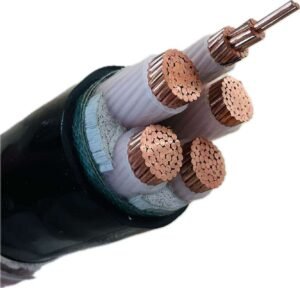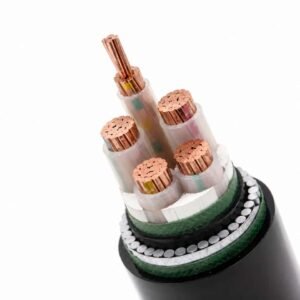
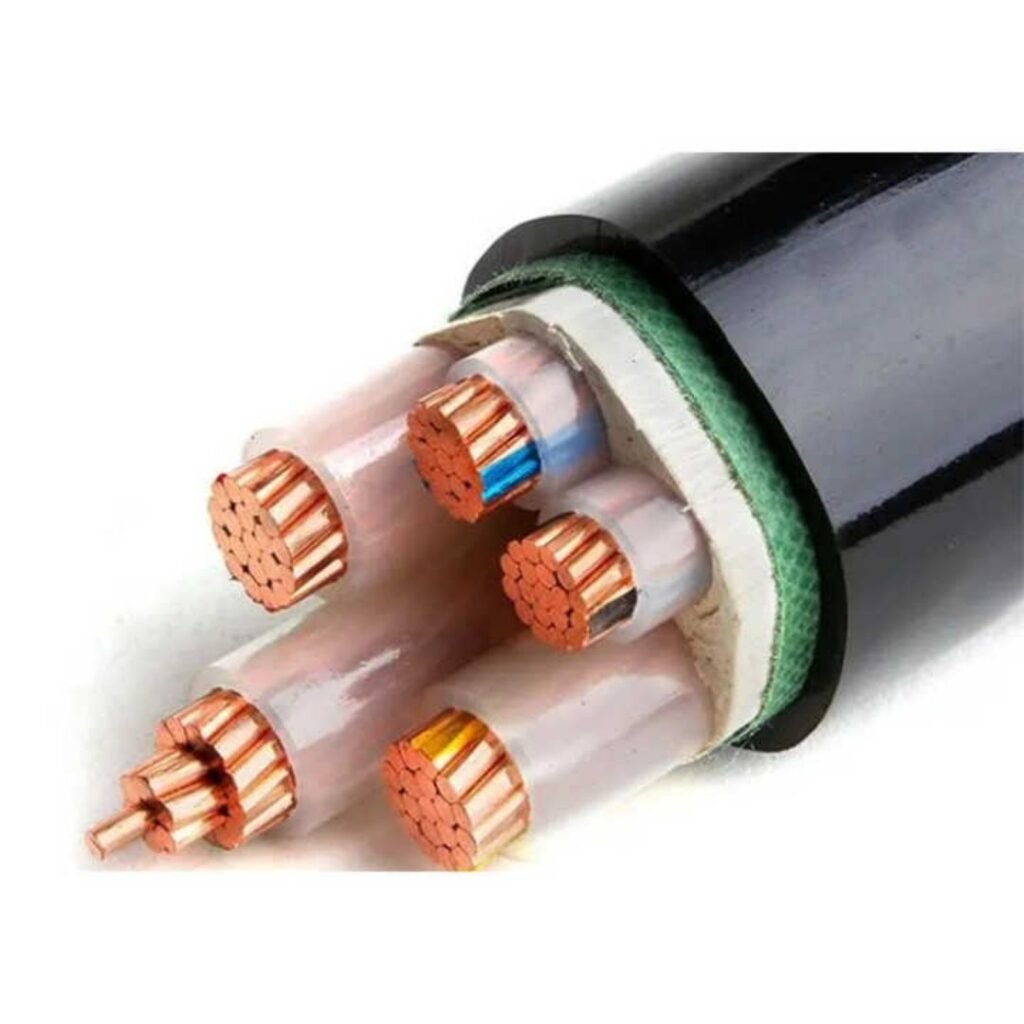
Mining Cable / 0.6/1kV
Mining XLPE Power Cable
Model: MYJV / Mining Cable
Mining XLPE power cable engineered for reliable power supply in mining and heavy industrial environments.
- Voltage Rating
- 0.6/1kV
- Number of Cores
- Array
- Cross Section
- 4–400 mm²
- Conductor
- Copper
- Armoring
- Unarmored
- MOQ
- ≥ 100 m
Standards & Certifications
- MT/T
- MT/T 818
Downloads
Specifications
Technical Specifications & Performance
Construction
- Model / Series
- MYJV / Mining Cable
- Voltage Rating
- 0.6/1kV
- Conductor Material
- Copper
- Conductor Class
- Class 2 Stranded
- Cross Section
- 4–400 mm²
- Number of Cores
- Array
- Insulation
- XLPE
- Sheath
- PVC
- Armoring
- Unarmored
- MOQ
- ≥ 100 m
Performance
- Max. Conductor Temp.
- 90°C
- Min. Bending Radius
- 12 × Cable Outer Diameter
About This Product
The Base Specification in the Mining XLPE Cable Family
Mining XLPE Power Cable (model designation MYJV) is the unarmored member of the MYJV family. Same XLPE insulation, same PVC sheath, same compliance to MT 818 and GB/T 12706 as its armored siblings — just without the steel tape (MYJV22) or steel wire (MYJV32) layer. The result is a lighter, smaller-OD, lower-cost cable for installations where the mechanical protection comes from something else: a steel conduit, a closed cable duct, a cable rack inside a substation enclosure, or a protected gallery with no risk of falling rock or vehicle impact.
Production follows MT 818 (the Chinese coal mine cable standard, classification 1-2 for mine-use power cable rated up to 8.7/15 kV) in combination with GB/T 12706 for the underlying XLPE insulation construction. As with the rest of the family, MYJV is suitable for fixed wiring inside mines but is not flame-retardant by default — specify MYJV-ZR if your mine safety regulations require IEC 60332-3 Category A bunched-cable performance, or MYJV-WDZ with LSZH outer sheath for confined manned spaces.
Jinda manufactures MYJV across all five production bases, with no armoring line in the schedule the lead time is the shortest in the family — typically 12 to 20 days for standard 0.6/1 kV copper configurations up to 240 mm². Sample factory test reports from prior shipments are available with every quotation, and MYJV-ZR and MYJV-WDZ variants are quoted alongside the standard product without changing the lead time.
Cable Structure
Four Layers, Stripped to What Actually Matters
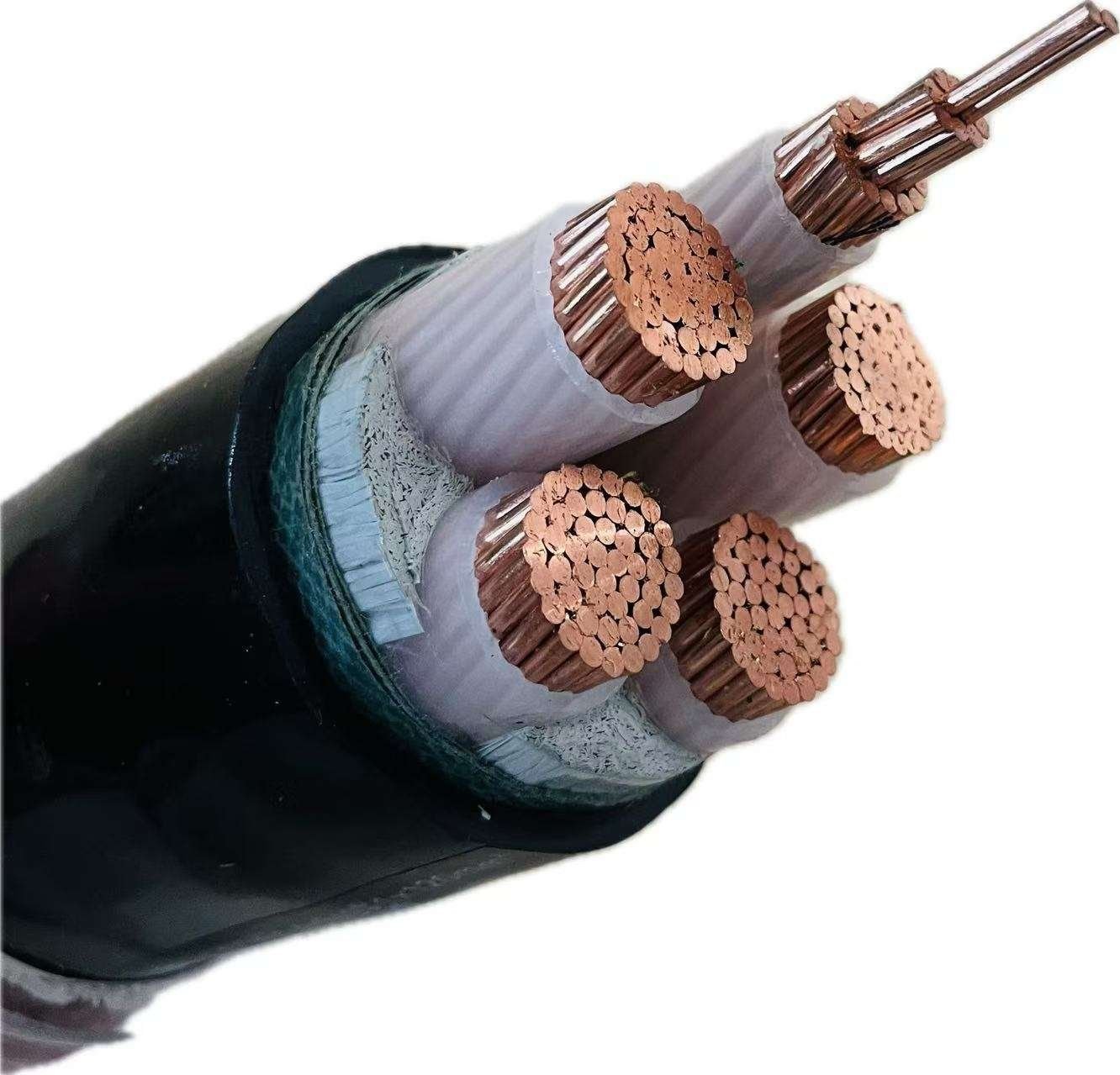
Take the MYJV22 / MYJV32 construction and remove the inner sheath and the steel armor — what remains is MYJV. Same electrical performance, lighter, smaller, cheaper. The trade is mechanical protection: nothing in this cable resists crushing or impact except the outer sheath, so the installation environment has to provide it instead.
-
1
Conductor — Stranded Bare Copper (Class 2)
Compact-stranded bare annealed copper conductor per IEC 60228 Class 2. Aluminum is offered on request for cross-sections of 25 mm² and above, with model designation changing to MLYJV. For applications requiring greater flexibility (e.g. inside substation cubicles with tight bends), Class 5 stranded copper is available on quotation.
-
2
Insulation — Cross-Linked Polyethylene (XLPE)
Dry-cured XLPE insulation, conductor operating temperature 90°C continuous, 250°C short-circuit. For 6/10 kV and above, semi-conducting layers are extruded over the conductor and outside the insulation in a triple-extrusion process, with a copper tape screen wrapped over each core before cabling.
-
3
Filler & Binding Tape
Non-hygroscopic PP filler fills the interstices between cores to produce a circular cross-section. A non-woven binding tape holds the cabled cores in place before the outer sheath is extruded directly over them — no separate inner sheath, since there is no armor layer to cushion.
-
4
Outer Sheath — PVC (Black)
Extruded PVC outer sheath, black, with surface print giving model, voltage, cores×cross-section, manufacturer, and length markers. This is the only mechanical protection the cable has — rated for normal handling, conduit pulling, and rack-mount installation, but not for crushing loads or impact. LSZH (MYJV-WDZ) and PE (MYJV-23) variants are available on specification.
Key Features
Why the Unarmored Option Is the Right Spec in the Right Place
MYJV is not a downgrade from MYJV22 — it is the right tool for installations where the cable is mechanically protected by something other than steel armor. Specifying armor where it isn’t needed wastes money on every meter and makes the cable harder to install. The features below are the reasons buyers spec MYJV deliberately.
Lowest Cost in the Family
No armor steel, no inner sheath, less PVC compound — MYJV runs roughly 20 to 35 percent cheaper than MYJV22 of equivalent cross-section, and 35 to 50 percent cheaper than MYJV32. For inside-substation racks and conduit pulls measured in tens or hundreds of meters, the savings are material.
Smaller OD, Easier Conduit Pulls
Without the armor and inner sheath, MYJV has roughly 8 to 12 percent smaller OD than MYJV22. That matters when pulling through conduit — the standard conduit fill rule (40 percent for three or more cables) is easier to satisfy, and the pulling tension stays well under the cable’s mechanical limit even on long runs.
Identical XLPE Electrical Performance
Same conductor stranding, same insulation, same 90°C continuous / 250°C short-circuit rating, same dielectric strength as MYJV22 / MYJV32. The current-carrying capacity and voltage drop characteristics are essentially identical — the only thing missing is the steel armor layer.
Shortest Lead Time in the Family
No armoring line scheduling, no extra inner sheath extrusion pass. Standard 0.6/1 kV configurations ship in 12 to 20 days — about a week faster than MYJV22, two weeks faster than MYJV32. Useful when project cable lists arrive late and the substation commissioning date won’t move.
Full Voltage Range, 0.6/1 kV to 8.7/15 kV
Same family voltage coverage as the armored variants. Cores from 1 to 5; cross-sections 1.5 to 400 mm². Single-core MYJV is also available in 500 / 630 / 800 mm² for high-current substation tie cables that would be impractical to make as armored multi-core.
Flame-Retardant and LSZH Variants Available
MYJV-ZR adds flame-retardant compounding to pass GB/T 19666 / IEC 60332-3 Category A — the most commonly specified variant for confined cable galleries shared with other circuits. MYJV-WDZ uses an LSZH sheath for personnel-occupied switch rooms and control rooms. Both are quoted alongside the standard product.
How to Choose
Six Decisions Before You Place the Order
Choosing MYJV correctly starts with one question: is the cable mechanically protected by the installation environment? If yes, MYJV is the cost-effective choice. If no, you need MYJV22 or MYJV32 instead. Walk through these six decisions before issuing the PO.
Confirm the cable will be mechanically protected
MYJV is appropriate only when the cable runs inside conduit, inside a closed cable duct, on a dedicated rack inside a substation enclosure, or in a protected gallery free from falling-rock and impact risk. If the cable will be exposed in a mine roadway or surface trench, specify MYJV22 instead. If the cable will hang vertically in a shaft, specify MYJV32. Getting this wrong leads to cable damage during the first year of service.
Confirm the voltage class
Match the system voltage U₀ / U to one of the standard grades: 0.6/1 kV for LV substation buswork and lighting, 3.6/6 kV or 6/10 kV for inside-substation MV jumpers and tie cables, 8.7/15 kV for deep mine main supply switchgear connections. For unearthed or impedance-earthed mine networks (common in MV), specify the higher grade to allow for sustained earth-fault voltage rise.
Size the cross-section
Pick the cross-section that satisfies both ampacity (under your installation method — in conduit is more derated than in free air) and voltage drop. Inside-substation runs are usually short enough that ampacity dominates; conduit fill is a related constraint — oversize the conduit before oversize the cable. Cross-check short-circuit thermal stress at MV: at 25 kA fault, conductors below 70 mm² are undersized.
Choose the number of cores
For inside-substation MV runs, single-core MYJV is common because it gives flexibility in cable tray routing and easier termination at switchgear. For LV three-phase circuits, 3-core or 4-core (3+N) is the default. Note: without armor, MYJV has no integral earth path — you always need a dedicated PE conductor (3+1, 3+2, or 4+1 configuration) or a separate parallel earth cable.
Specify flame-retardant if the cable shares a gallery
Standard MYJV is not flame-retardant by default. If the cable will be bundled with other circuits in a shared cable gallery or rack — very common inside underground substations — specify MYJV-ZR to pass IEC 60332-3 Category A. The cost premium is small (typically 8 to 15 percent) and many mine safety inspectorates make it mandatory for grouped MV cabling regardless of armor type.
Specify LSZH for manned switch rooms
Where the cable will pass through or terminate inside a personnel-occupied switch room, control room, or operator station, specify MYJV-WDZ with LSZH outer sheath. LSZH limits smoke density and acid-gas emission during a fire — what protects the personnel during evacuation, not the cable itself. This is the same rule used for high-rise building MV cabling and applies equally underground.
Applications
Where MYJV Is the Right Specification
MYJV is for the protected environments inside a mine — not the exposed roadways and shafts where the armored variants live. The four scenarios below cover roughly 90 percent of what unarmored mining XLPE cable gets used for.
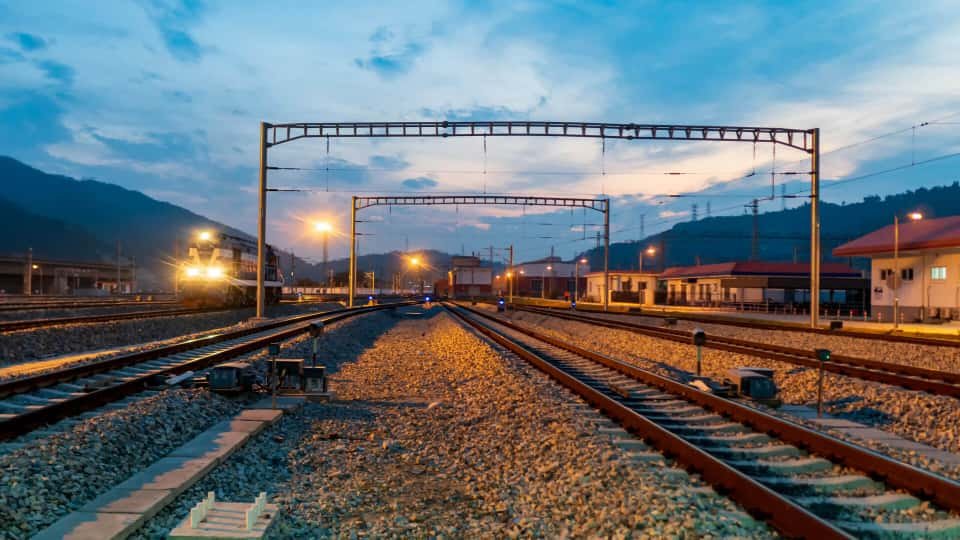
Underground Substation Internal Wiring
Switchgear-to-switchgear jumpers, MV transformer secondary connections, busbar feeders inside the substation enclosure. The substation walls and the enclosure itself provide the mechanical protection, so armor would be redundant cost.
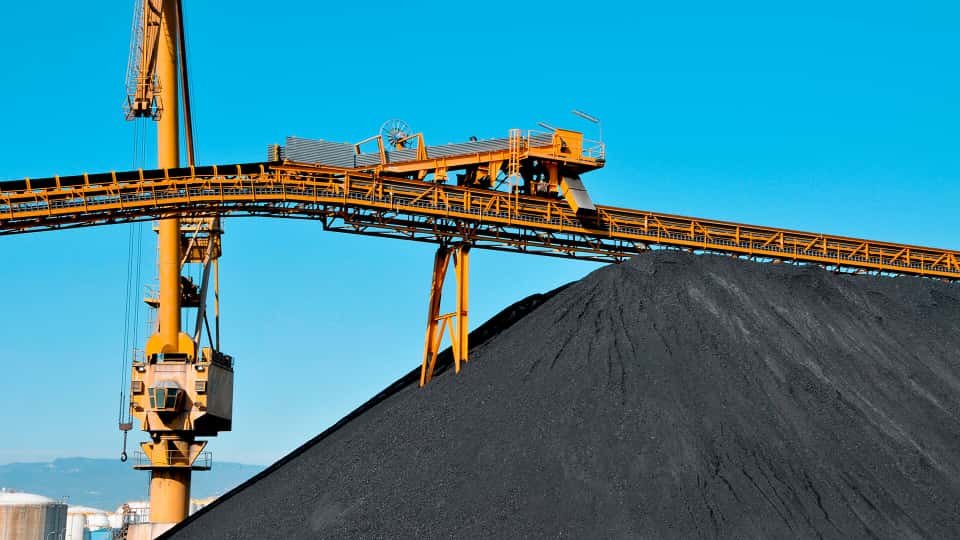
Cables Pulled Through Steel Conduit or Ducts
Where the project specifies steel conduit or closed cable duct for the cable run (common in surface mine buildings, fan houses, conveyor drive stations), MYJV is the right pick — the conduit is the armor. Smaller OD also makes conduit fill calculations friendlier.
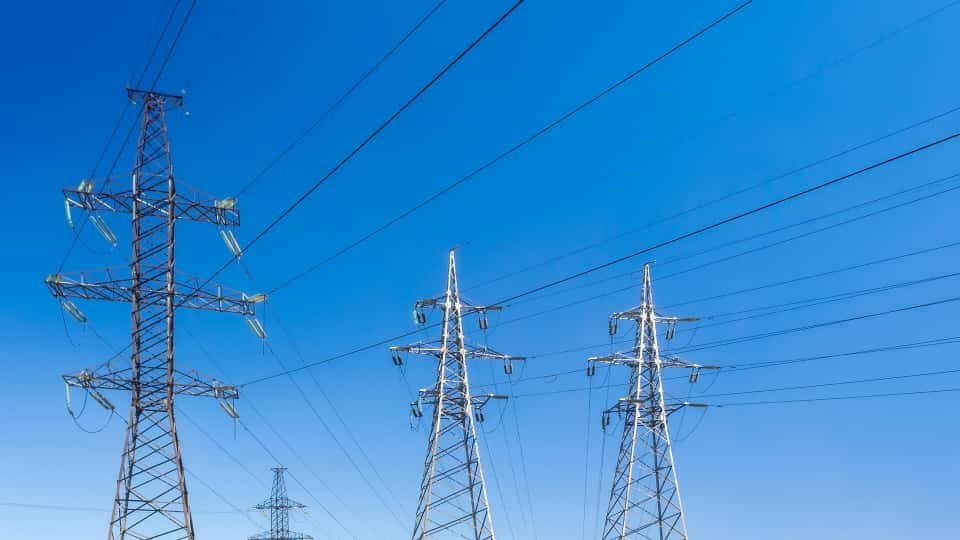
Protected Cable Galleries & Trays
Dedicated cable galleries with no rock-fall or vehicle-impact exposure, plus enclosed cable tray runs inside operations buildings. Specify MYJV-ZR for these where multiple circuits share the same gallery — flame-retardance matters more than armor here.
Control Rooms & MCC Terminations
Final-meter cabling from cable trays to motor control centers, switchgear bays, and operator panels. Short, flexible, easy to terminate — armor would just complicate the gland-up at the panel face. Specify MYJV-WDZ (LSZH) where the cable enters manned control rooms.
Not suitable for: Direct burial (use MYJV22 with steel tape armor — soil mechanical load and accidental excavator strikes require armor protection). Vertical shaft drops (use MYJV32 with round wire armor for axial tension). Exposed mine roadway runs (use MYJV22 for lateral crush protection). Mobile machinery (use MCP or MYP rubber-sheathed trailing cable, not any fixed-installation XLPE cable).
Technical Data
DC Resistance & Ampacity (3-Core 0.6/1 kV, Copper)
Reference values for the most-quoted variant: 3-core copper, 0.6/1 kV class, XLPE insulation, PVC outer sheath, no armor. Ampacity is for laid-in-air installation at 30°C ambient, per IEC 60364-5-52. Values for 6/10 kV and above, conduit installation, or single-core cables in trefoil are provided with the formal technical quotation.
| Cross Section | DC Resistance (max) | Ampacity (in air, 30°C) | Ampacity (in conduit, 30°C) | Approx. Weight |
|---|---|---|---|---|
| 10 mm² | 1.83 Ω/km | 67 A | 55 A | ~ 520 kg/km |
| 16 mm² | 1.15 Ω/km | 89 A | 73 A | ~ 660 kg/km |
| 25 mm² | 0.727 Ω/km | 118 A | 97 A | ~ 880 kg/km |
| 35 mm² | 0.524 Ω/km | 145 A | 119 A | ~ 1,080 kg/km |
| 50 mm² | 0.387 Ω/km | 175 A | 144 A | ~ 1,330 kg/km |
| 70 mm² | 0.268 Ω/km | 220 A | 180 A | ~ 1,770 kg/km |
| 95 mm² | 0.193 Ω/km | 265 A | 217 A | ~ 2,240 kg/km |
| 120 mm² | 0.153 Ω/km | 305 A | 250 A | ~ 2,700 kg/km |
| 150 mm² | 0.124 Ω/km | 350 A | 286 A | ~ 3,260 kg/km |
| 185 mm² | 0.0991 Ω/km | 400 A | 326 A | ~ 3,920 kg/km |
| 240 mm² | 0.0754 Ω/km | 465 A | 379 A | ~ 4,970 kg/km |
| 300 mm² | 0.0601 Ω/km | 530 A | 432 A | ~ 6,120 kg/km |
DC resistance values per IEC 60228 Class 2 stranded copper, 20°C. Ampacity reference per IEC 60364-5-52 Table B.52.4 / Method E (in air, multi-core cable, 30°C ambient) and Method B1 (enclosed in conduit, 30°C ambient). Conduit ampacity is roughly 82 percent of in-air at the same cross-section — design substantially around this if conduit is the installation method. Weights are approximately 18 to 22 percent lighter than the equivalent MYJV22 (steel tape armor) at each cross-section. For aluminum conductors, multiply DC resistance by 1.64 and ampacity by approximately 0.78. Always verify against factory test report before final specification.
Comparison
MYJV vs MYJV22 vs MYJV32 — Pick the Right Member of the Family
All three are mining XLPE power cables built to the same MT 818 / GB/T 12706 standards. They differ only in the armor layer, and that single difference decides which installation each one suits. Use this table to confirm you have specified the right one for the run.
| Attribute | MYJV (this product) | MYJV22 (steel tape) | MYJV32 (round wire) |
|---|---|---|---|
| Armor construction | None | Double galvanized steel tape | Single layer galvanized round wire |
| Inner sheath | No | Yes (PVC) | Yes (PVC) |
| Lateral crush resistance | Low — relies on environment | High | Very high |
| Axial tensile capacity | Low — pulling only | Low | High — designed for shafts |
| Typical installation | Conduit, ducts, substation racks | Horizontal mine roadways, trenches | Vertical shafts, steep drifts |
| Cable OD (relative) | 0.88 to 0.92 | 1.00 (baseline) | Approx. 1.08 to 1.12 |
| Weight (relative) | 0.78 to 0.82 | 1.00 (baseline) | Approx. 1.20 to 1.35 |
| Cost (relative) | 0.65 to 0.80 | 1.00 (baseline) | Approx. 1.25 to 1.40 |
| Suitable for direct burial | No (use MYJV22) | Yes | Yes |
| Suitable for shaft drop | No (use MYJV32) | No (use MYJV32) | Up to 300 m |
When to choose MYJV (this product)
The cable will be inside conduit, inside a closed duct, on a rack inside a substation enclosure, or in a protected gallery with no crush or impact exposure. Best cost-to-performance ratio for internal substation wiring, MV switchgear jumpers, and conduit-protected feeders. Lightest and easiest to terminate in the family.
When to choose an alternative
For exposed horizontal mine roadways, direct burial, or surface trenches — switch to MYJV22 with steel tape armor. For vertical shaft drops, steep inclined drifts, or any run where the cable will hang under its own weight — switch to MYJV32 with round wire armor. For mobile machinery (face conveyors, drum shearers, loaders) — use a rubber-sheathed trailing cable (MCP, MYP) instead.
Frequently Asked Questions
Common Questions From Mine Electrical Buyers
Is MYJV explosion-proof for gassy coal mines?
The cable itself is not flameproof certified — flameproof certification belongs to the connected equipment (junction boxes, switchgear), not the cable. What the cable contributes to mine safety is flame-retardance: standard MYJV is not flame-retardant; specify MYJV-ZR if your mine safety inspector requires GB/T 19666 / IEC 60332-3 Category A performance. Note that inside underground substations, MYJV-ZR is essentially mandatory because multiple circuits share the cable racks.
Can I use MYJV in a cable trench if I add a buried warning tape?
No. Warning tape protects against future excavator strikes but not against the normal soil mechanical loads, frost heave, and rock impingement that direct burial subjects cables to over a 25-year service life. For trenched runs, specify MYJV22 (steel tape armor) at a minimum — the cost difference is small relative to the cost of digging the trench up to replace a damaged cable. If MYJV must be used in a trench because of project specification, install it inside a continuous steel or HDPE conduit.
What earth conductor configuration do I need?
Because MYJV has no armor, it has no integral earth path. For three-phase circuits, always specify a 3+1 (3-core + reduced neutral) or 3+2 (3-core + neutral + earth) configuration so the PE conductor is built into the cable. Alternatives are a separate parallel earth cable (acceptable but more expensive over a long run) or a 4-core with one core used as PE (electrically valid but harder for the next electrician to identify in the field).
What is the minimum bending radius for installation?
Without armor, MYJV bends more easily than its armored siblings — useful for the tight terminations inside switchgear. For MV cable (above 1 kV): 12 × OD during installation, 10 × OD permanently installed. For LV multi-core (0.6/1 kV): 10 × OD during installation, 8 × OD installed. Single-core MYJV is more restrictive at MV: 15 × OD installation, 12 × OD installed. Pulling tighter than the install-time radius risks tearing the outer sheath where it bends over the support.
How does MYJV compare to civilian YJV for inside-substation use?
Construction is essentially identical — both are XLPE-insulated, PVC-sheathed, unarmored. The differences are the standards: civilian YJV is built to GB/T 12706 only, while MYJV adds the MT 818 mine-cable requirements (slightly stricter mechanical and dielectric tests, plus traceable batch documentation). If your mine’s safety inspector requires MT 818 compliance for all cabling within the mine boundary, you need MYJV regardless of whether the run is inside an enclosure. For surface buildings outside the mine boundary, YJV is acceptable.
What is the typical lead time and MOQ?
Standard 0.6/1 kV configurations in copper, up to 240 mm², typically ship in 12–20 days from order — the fastest in the MYJV family because there is no armoring line to schedule. MV grades (6/10 kV, 8.7/15 kV) and large cross-sections (300 / 400 / 500 mm²) need 20–35 days because of triple-extrusion line scheduling. MOQ is normally one drum (1,000 m for standard sizes; less for very large cross-sections); shorter runs are quoted for full project orders. For inside-substation use, short jumper lengths (under 100 m per piece) are also routine — tell us the cut lengths needed and we will pre-cut at the factory.
Installation & Handling Tips
Six Field Practices Specific to Unarmored Cable
MYJV is the easiest member of the family to install, but the lack of armor changes a few practices. The six items below cover the differences from armored cable installation that the field crew needs to know.
Verify conduit fill before pulling
For conduit installations, confirm the conduit is sized for the cable OD — standard rule is 40 percent fill for three or more cables, 31 percent for two, 53 percent for one. Pulling MYJV through a conduit that’s too tight can damage the outer sheath even though the cable seems to fit. If in doubt, go up one conduit size.
Cap maximum pulling tension
Unarmored cable cannot be pulled by the conductors — use a basket grip or pulling sock that distributes the load across the sheath. Maximum pulling tension is roughly 40 N/mm² of total conductor cross-section. For long conduit pulls, use cable lubricant and confirm tension stays below the limit, especially at bends.
Seal cable ends immediately
XLPE absorbs moisture if left exposed at cut ends. Reseal with heat-shrink caps within minutes of cutting, and check that the factory end-cap is intact on arrival. Wet insulation will pass first commissioning but degrade fast in service. Especially critical because MYJV has no armor or inner sheath to slow moisture ingress along the cable from a damaged end.
Use a dedicated PE conductor for earthing
Because MYJV has no armor, the cable provides no integral earth path. The PE conductor must be built into the cable as a 3+1 or 3+2 core configuration, or installed as a separate parallel earth cable. Decide which at the design stage and reflect it in the cable schedule — do not improvise on-site by adapting the neutral.
Use standard cable glands, no armor termination
Standard compression glands (BW, A2, CW types) work for MYJV — no armor termination kit needed, which speeds up the gland-up significantly compared to MYJV22 or MYJV32. For 6/10 kV and above, still use cold-shrink or heat-shrink termination kits matched to the cable voltage class for the stress relief over the XLPE.
Run a full commissioning test before energization
For MV cable, run insulation resistance (5 kV megger, 1 minute) and AC voltage withstand test per IEC 60502-2 commissioning values. Routine factory test passing is not a substitute for commissioning — mechanical damage during pull or termination only shows up under voltage stress, and finding it after the cable is energized inside a busy substation is exactly the kind of fault you want to avoid.
Safety note: Underground cable installation in coal mines must be carried out by certified electrical workers under a permit-to-work that accounts for methane gas levels, dust ignition risk, and confined-space hazards. The cable’s mechanical and electrical performance assumes installation per MT/T 1117 (Chinese mine cable installation specification) or your jurisdiction’s equivalent.
Manufacturing Capability
Why Source From Jinda Cable
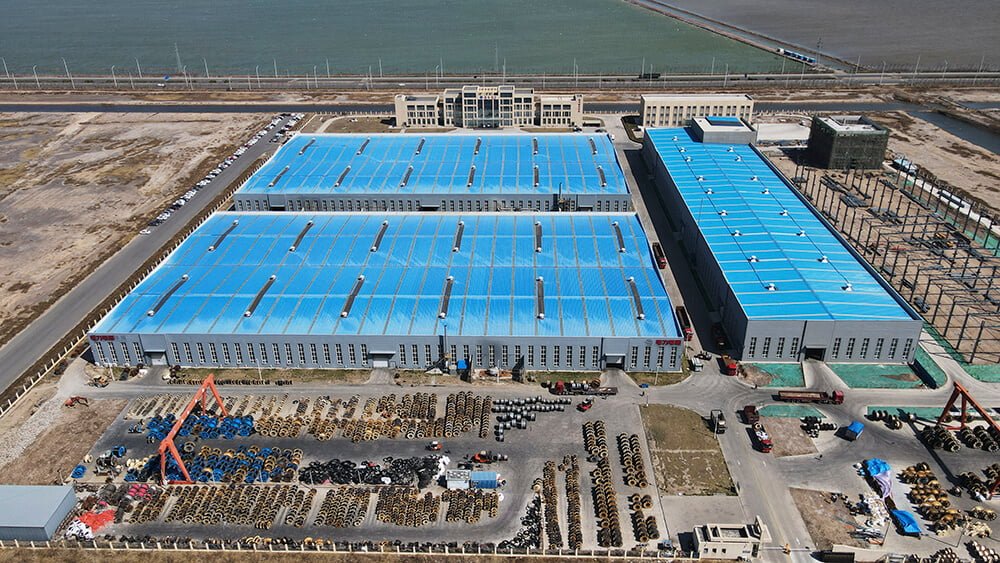
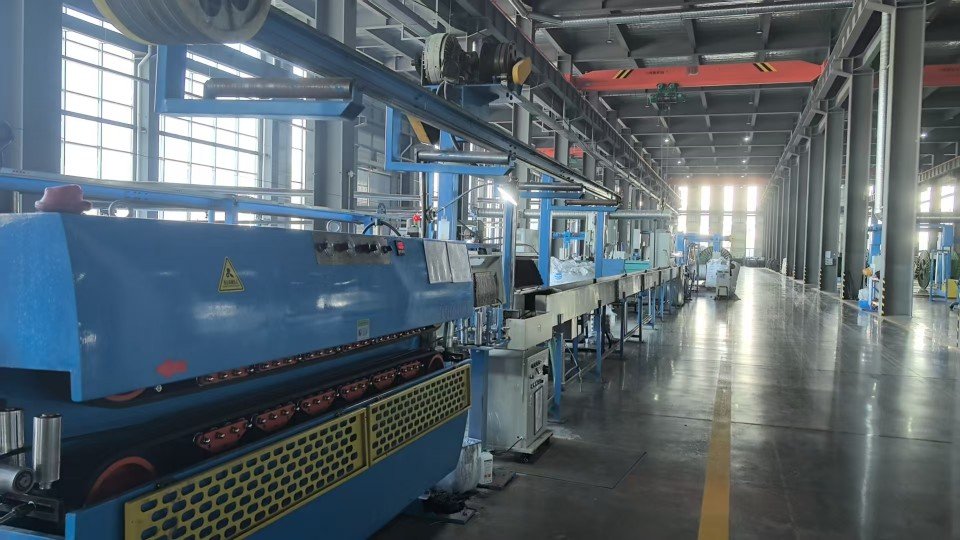
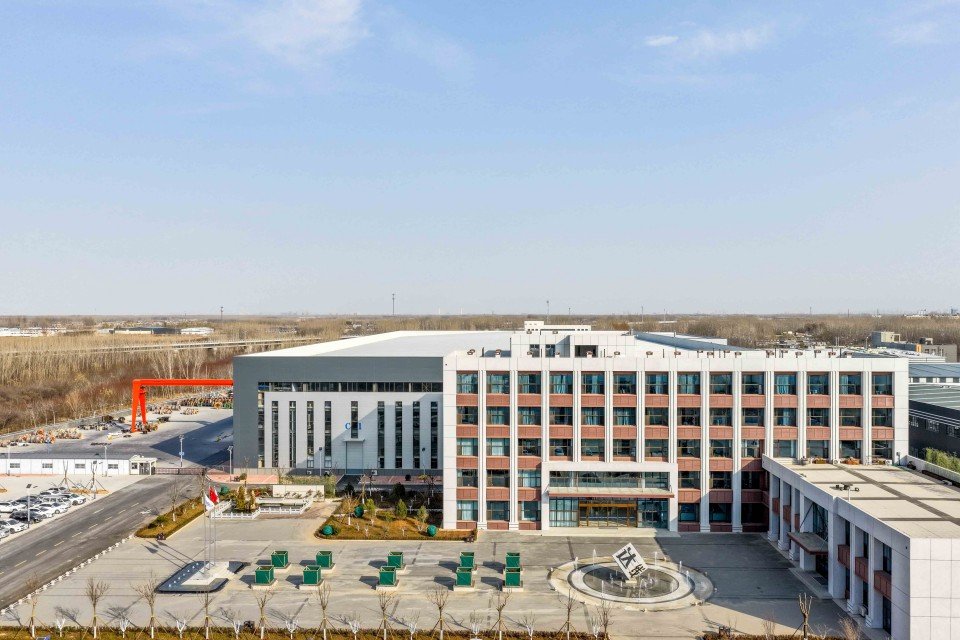
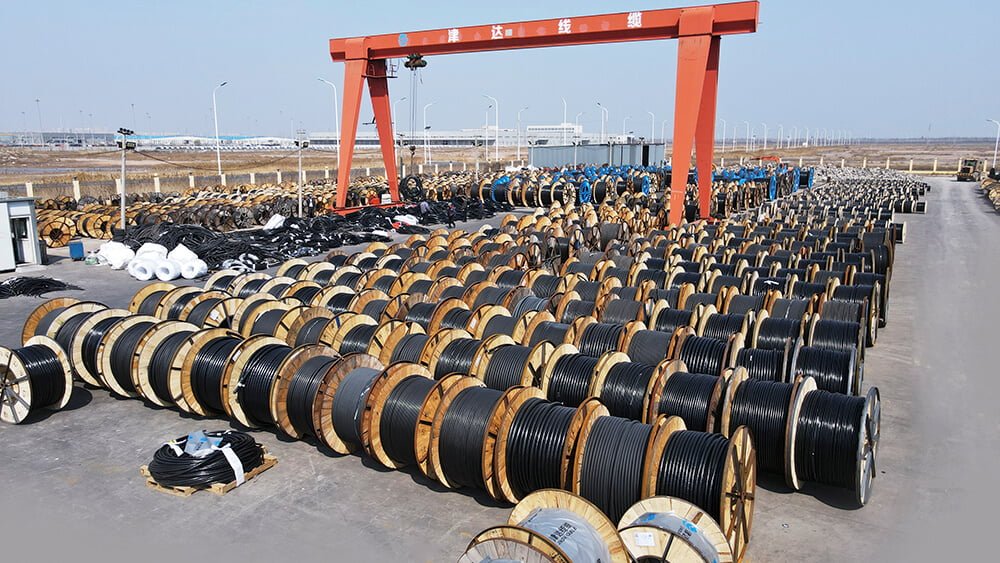
Behind every drum we ship sits a 38-year track record, five production bases under one MES system, and a documentation discipline that gets cables through customs without delays.
-
Every cable tested twice before shipping
Since 1987, our two-stage QC has been refined to a science: routine test on the production line, then full electrical and mechanical re-test before packing. Across 50+ export markets, our return rate stays under 0.3%.
-
Five production bases, 470,000 m², synced via MES
Tianjin, Liaoning, Heilongjiang, Shandong, and Xian — each base runs under one unified MES system. Same recipe, same protocols, same traceability, regardless of which plant ships your order.
-
3,000+ SKUs, custom configurations welcome
Standard sizes ship from inventory. Special voltage grades, color-coding, drum lengths, or armor configurations are routine — submit your spec and our team will quote the lead time honestly.
-
Trusted by EPC contractors in 50+ countries
We supply utilities, mining operators, port authorities, and large industrial OEMs across Europe, the Americas, Southeast Asia, the Middle East, and Africa.
-
Full paperwork shipped with every order
Every shipment includes factory test report, certificate of origin (COO), packing list, and bill of lading (B/L). Customer-nominated witness testing can be arranged before shipment.
Our Track Record
98.7%
On-time shipment rate (last 24 months)
< 0.3%
Return rate across export markets
25 days
Typical sea freight Tianjin → Rotterdam
100%
Shipments with routine test report attached
Logistics & Delivery
Packaging, Shipping & Documentation
What we handle on our side from production floor to the port of loading. Product-specific installation guidance is supplied with the datasheet that accompanies each order.
Packaging
- Wooden or steel drums per IEC 62004
- Coil packaging available for small cross-sections
- Standard drum lengths plus custom lengths on request
- Each drum labeled with type, voltage, cross-section, length, batch
- Waterproof wrapping for export shipments
- Cable ends sealed against moisture ingress
- Private-label / OEM packaging available under NDA
Shipping
- FCL / LCL sea freight, air freight on request
- Trade terms: EXW, FOB, CFR, CIF, DDP
- Ports of loading: Tianjin / Qingdao / Shanghai
- Typical sea freight to Rotterdam: 25 days
- Lead time confirmed at order acknowledgement
- Container loading photos sent before sailing
Documentation
- Factory routine test report (per applicable standard)
- Commercial invoice and packing list
- Certificate of origin (CO) — China Council, FORM A, FORM E available
- Bill of lading (B/L) — original or telex release
- Third-party inspection by SGS / BV / TÜV on request
- Customer-nominated witness testing arranged before shipment
Get in Touch
Request a Quote for
Mining XLPE Power Cable
What You'll Receive
- Technical quotation with itemized FOB / CIF pricing
- Sample factory test report from a previous shipment
- Realistic lead time including raw-material procurement
- Direct contact with the assigned sales engineer


Email
info@jindacablegroup.comResponse Time
Within 1 business day
Related Products