
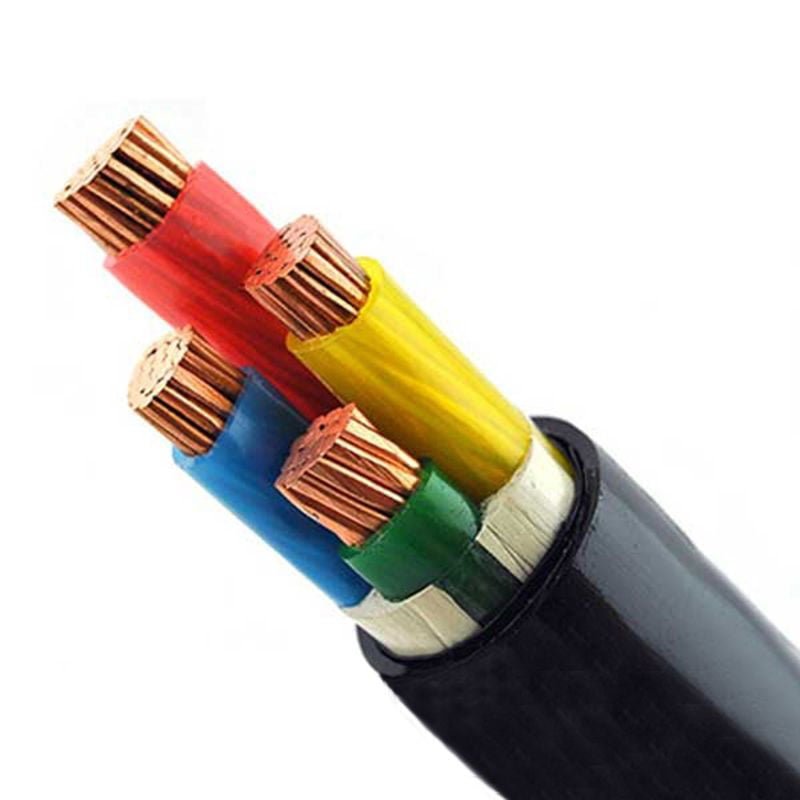
Low Voltage Power Cable / 0.6/1kV
PVC Insulated Power Cable
Model: VV / NYY / THWN-2 / GOST / V90 / BS 6243Y / YJV / VV22 / NYY / NYY-J
PVC insulated and PVC sheathed low voltage power cable for fixed installation and power distribution applications.
- Voltage Rating
- 0.6/1kV
- Cross Section
- 1.5 mm² ~ 400 mm²
- Conductor
- Copper
- Armoring
- Unarmored
- MOQ
- ≥ 100 m
Standards & Certifications
- BS
- GB/T
- GB/T 12706
- IEC
- VDE
Downloads
Specifications
Technical Specifications & Performance
Construction
- Model / Series
- VV / NYY / THWN-2 / GOST / V90 / BS 6243Y / YJV / VV22 / NYY / NYY-J
- Voltage Rating
- 0.6/1kV
- Conductor Material
- Copper
- Conductor Class
- Class 1 Solid
- Cross Section
- 1.5 mm² ~ 400 mm²
- Insulation
- PVC
- Sheath
- PVC
- Armoring
- Unarmored
- MOQ
- ≥ 100 m
Performance
- Max. Conductor Temp.
- 70°C
- Min. Bending Radius
- 10 × Cable Outer Diameter
About This Product
The Global Default for Low-Voltage Power Distribution
PVC Insulated Power Cable (universally known as NYY per the international IEC and German VDE designation, also called VV in many Asian markets, equivalent to BS 6346 Cu/PVC/PVC cable in the UK and AS/NZS 5000.1 in Australia and New Zealand) is the most widely installed low-voltage power distribution cable on the planet. Annual global production runs into millions of kilometres — it is the cable that connects the world’s utility transformers to its industrial plants, commercial buildings, residential developments, and infrastructure. The IEC 60502-1 specification that governs it dates from the 1960s and has been refined through eight decades of field experience; the cable construction is so mature that buyers everywhere read NYY and know exactly what they’re ordering.
The construction philosophy is deliberately simple and conservative. A round copper conductor (Class 1 solid for small sizes up to 16 mm², Class 2 stranded for 25 mm² and above) is insulated with a thick layer of PVC compound rated for 70°C continuous service. Two, three, four, or five insulated cores are cabled together with rubber-compatible filler material to maintain a circular cross-section, then jacketed with a tough PVC outer sheath. The result is a cable that costs significantly less than XLPE-insulated alternatives, installs and terminates with standard tools and techniques familiar to electricians worldwide, and delivers 25 to 40 years of reliable service in any normal indoor or protected outdoor installation.
Production follows IEC 60502-1 as the primary international reference, with parallel certifications to BS 6346 for the UK and Commonwealth markets, DIN VDE 0276-603 for the German and European markets, HD 603 S1 for the harmonised European market, AS/NZS 5000.1 for Australia and New Zealand, SASO 1694 for the Saudi Arabian and broader Gulf market, and additional regional standards on request. Jinda manufactures the NYY family at multiple production bases on high-volume PVC extrusion lines optimised for low unit cost. Standard lead time is 15 to 25 days for common configurations; container-load orders for utility-scale and infrastructure projects ship through Tianjin, Qingdao, and Shanghai ports.
Cable Structure
Four Layers Refined Over Eight Decades of Field Service
NYY cable construction is mature, conservative, and globally standardised. Every layer thickness, every material specification, every test parameter is defined to the nearest tenth of a millimetre in IEC 60502-1. The cable construction below is what buyers worldwide receive when they specify “NYY 4×25 mm² 0.6/1 kV” regardless of supplier — the standardisation is what makes NYY the universal default for low-voltage distribution.
-
1
Conductor — Class 1 Solid or Class 2 Stranded Copper
Plain annealed copper per IEC 60228. Class 1 solid for cross-sections 1.5 to 10 mm² (and optionally up to 16 mm²) — lower cost, simpler termination, suitable for fixed installation. Class 2 stranded for 16 mm² and above — circular compacted stranding for larger sizes (RM) or shaped sector conductors (SM) for 70 mm²+ multi-core cables. Aluminium conductor available as NAYY variant for utility applications where cost outweighs ampacity per unit area (typically 30 to 40 percent cheaper than copper for the same current capacity).
-
2
Insulation — PVC Compound Type A (IEC) / TI1 (BS)
Extruded PVC insulation per IEC 60502-1 Type A specification (equivalent to BS EN 50363 Type TI1, or DIN VDE 0207 Type Y1) rated for 70°C continuous conductor temperature. Wall thickness defined precisely in IEC 60502-1 Table 5 — from 0.8 mm at 1.5 mm² up to 2.4 mm at 1000 mm². Core identification follows HD 308 S2: brown/black/grey for phases, light blue for neutral, green-yellow striped for protective earth. For higher-temperature service up to +85°C continuous, SASO 1694 PVC compound available on special request.
-
3
Cabling & Filler — Rubber-Compatible Non-Hygroscopic
Insulated cores twisted together with a defined lay length (typically 35 to 50× cable diameter) for mechanical stability and thermal expansion accommodation. Non-hygroscopic filler material fills the interstices between cores to produce a circular cross-section — usually PVC compound rods or fillers, sometimes jute or polypropylene cord. A non-hygroscopic binder tape (typically polyester or polypropylene film) wraps over the cabled assembly before the outer sheath is extruded. The binder tape prevents the sheath PVC from sticking to the core insulation during cooling, allowing the cable to flex without insulation damage.
-
4
Outer Sheath — PVC Type ST2 (IEC) / Type 9 (BS)
Extruded PVC outer sheath per IEC 60502-1 Type ST2 specification (equivalent to BS 6346 Type 9, or DIN VDE 0207 Type YM1). The sheath provides mechanical protection, abrasion resistance, flame retardance per IEC 60332-1-2, and chemical resistance to most common industrial oils and chemicals. Wall thickness defined in IEC 60502-1 Table 12 — from 1.4 mm at the smallest sizes up to 3.1 mm at 1000 mm². Standard sheath colour is black for the global market (the universal low-voltage power cable identification colour); other colours including red, blue, and grey available on quotation. For special environments, the sheath can be specified as flame-retardant PVC, anti-termite, anti-rodent, UV-resistant, or oil-resistant compound on special request.
Key Features
Why NYY Is the Default and Stays the Default
The PVC power cable specification has survived 60+ years of competing alternatives (XLPE, EPR, LSZH, mineral) because it gets the basics right: cheap, easy to install, universally available, and field-proven. The six features below are what makes NYY remain the default low-voltage distribution cable across every region and industry sector, including markets that have access to more sophisticated alternatives.
Globally Standardised — Same Cable Everywhere
IEC 60502-1 plus its regional harmonisations (BS 6346, DIN VDE 0276-603, HD 603 S1, AS/NZS 5000.1, SASO 1694) define identical electrical, mechanical, and dimensional specifications worldwide. An NYY 4×25 mm² from one supplier is interchangeable with NYY 4×25 mm² from another. No surprises, no regional variations, no compatibility issues at termination — this is what makes NYY the cable that international EPC contractors specify when working across multiple jurisdictions.
Lower Cost Than XLPE Alternatives
PVC insulation costs 20 to 35 percent less per kilometre than the equivalent XLPE (N2XY) cable. For utility-scale and infrastructure projects ordering tens of kilometres, this is real money — spend the savings on transformers, switchgear, or installation labour rather than on insulation premium the application doesn’t need. NYY is the right choice whenever the conductor temperature will stay below 70°C in service, which covers the vast majority of low-voltage distribution applications.
25 to 40 Years Service Life Indoor / Buried
Properly installed NYY in conduit, cable tray, or direct-burial application delivers 25 to 40 years of service before insulation thermal aging requires consideration of replacement. Field data from European utilities going back to the 1960s shows median service life around 40 years for buried NYY-J distribution cable, longer for indoor installations. The conservative PVC compound chemistry and well-understood degradation mechanisms make the cable’s end-of-life behaviour predictable.
−15°C to +70°C Operating Range
Continuous service from −15°C minimum installation temperature up to +70°C conductor temperature under full load. Short-circuit conductor temperature 160°C for 5 seconds (per IEC 60502-1). The temperature limits constrain installation in particularly cold climates (use rubber-insulated cable for −25°C+ installations) and in high-ambient environments (use XLPE-insulated N2XY for areas where ambient exceeds 35-40°C continuously). For most regional climates, the NYY temperature range is more than adequate.
Flame Retardant per IEC 60332-1-2
Standard NYY satisfies IEC 60332-1-2 single-cable flame propagation test — the cable self-extinguishes within 70 cm above the flame application point. For cable-tray bundled installations, specify the flame-retardant FR-NYY variant per IEC 60332-3-22 (Category A bundled-cable test). For higher fire performance with low-smoke halogen-free properties (data centres, hospitals, metro stations), specify N2XH (XLPE + LSZH sheath) instead. For European projects requiring CPR classification, NYY typically achieves Eca; FR-NYY can reach Dca or higher with appropriate compound selection.
Multi-Standard Certified for Global Markets
Production certified to IEC 60502-1 as primary international reference, plus BS 6346 (UK), DIN VDE 0276-603 (Germany), HD 603 S1 (CENELEC harmonised European), AS/NZS 5000.1 (Australia / New Zealand), SASO 1694 (Saudi Arabian and broader Gulf), and additional regional standards on request. CE, CB, KEMA, BASEC, and SGS test reports available alongside the standard certifications. For projects exporting across multiple markets, dual or triple certification on a single cable run is straightforward — specify all target markets at order.
How to Choose
Six Decisions Before You Place the Order
NYY selection comes down to confirming the basic application parameters: copper or aluminium conductor, the right cross-section for the load, the appropriate core count, armoured or unarmoured variant for the installation environment, and the target-market certification. Walk through these six decisions before issuing the purchase order to avoid the most common specification errors.
Confirm NYY is the right insulation choice
NYY at 70°C conductor temperature is the right specification for the vast majority of low-voltage distribution. Upgrade to N2XY (XLPE insulation, 90°C conductor) for cable runs through hot environments (boiler rooms, steel mills, near furnaces) or where the ampacity advantage of higher conductor temperature justifies the cost premium. Upgrade to N2XH (LSZH sheath) for data centres, hospitals, metro stations, and any installation where smoke and acid gas during a fire is a concern. For continuous outdoor exposure with direct UV, specify UV-stabilised PVC sheath compound or run NYY in conduit.
Copper or aluminium conductor
Copper (NYY) is the default for indoor distribution, industrial plants, and short-run feeders. Higher current density per cross-section, lower voltage drop per metre, easier termination with standard lugs. Aluminium (NAYY) is 30 to 40 percent cheaper for the same current capacity (when sized one or two steps larger), making it the dominant choice for utility distribution networks, long-run feeders, and any application where the cable cost is a meaningful project line item. Aluminium termination requires aluminium-rated lugs and antioxidant compound — specify these are included in the project bill of materials.
Size the cross-section for ampacity and voltage drop
Typical NYY copper ampacity at 30°C ambient, in air, 4-core: 4 mm² ~34 A, 6 mm² ~43 A, 10 mm² ~60 A, 16 mm² ~80 A, 25 mm² ~106 A, 35 mm² ~131 A, 50 mm² ~159 A, 70 mm² ~202 A, 95 mm² ~245 A, 120 mm² ~284 A. Apply derating factors per IEC 60364-5-52 for grouped installation, buried installation, and elevated ambient temperatures. For long cable runs, voltage drop becomes the limit before thermal capacity — oversize by one or two cross-section steps to keep total voltage drop under 4 percent end-to-end per IEC 60364-5-52.
Pick the core count: 2 / 3 / 4 / 5 / 3+1
2-core for single-phase circuits (L+N). 3-core for single-phase with earth (L+N+E) or balanced three-phase without neutral (L1+L2+L3). 4-core for three-phase + neutral (3+N) or three-phase + earth (3+E). 5-core for three-phase + neutral + earth (3+N+E) — the modern standard for three-phase distribution under TN-S earthing systems. 3+1 reduced-neutral configuration (e.g., 3×120+1×70 mm²) for utility feeders where neutral current is expected to be much smaller than phase current — saves cable cost on long runs.
Armoured or unarmoured for the installation
Unarmoured NYY for indoor cable tray, conduit, and trench installations where there is no risk of mechanical damage. For direct-burial in soft soil with risk of digger damage, specify NYBY (steel tape armour) for general buried installation, or NYFGbY (steel wire armour) for installations in rocky soil or where ground movement is expected. Steel wire armour also provides mechanical protection in cable shafts and risers in high-rise buildings. For single-core cables carrying high three-phase currents, use aluminium wire armour (NYBA) to avoid eddy current losses in steel armour.
Specify the target-market certification
For most international markets, IEC 60502-1 certification is the universal acceptance reference. For UK projects, add BS 6346 certification. For German and Northern European projects, add DIN VDE 0276-603. For European Construction Products Regulation (CPR) compliance, specify the required CPR class (typically Eca for general use, Dca or higher for public buildings). For Middle East projects, SASO 1694 is the dominant standard. For Australian and NZ projects, AS/NZS 5000.1 certification with the RCM mark is required. Multi-market certification on a single physical cable run is straightforward; specify all target markets at order.
Applications
The Cable Behind Almost Every Low-Voltage Power Installation
NYY appears in essentially every infrastructure, industrial, and building services project worldwide at the 0.6/1 kV distribution level. The four scenarios below cover the dominant high-volume applications — the projects that drive the millions of kilometres of NYY production globally each year. Specific cross-section, core count, and certification regime varies, but the underlying NYY construction is the same across all of them.
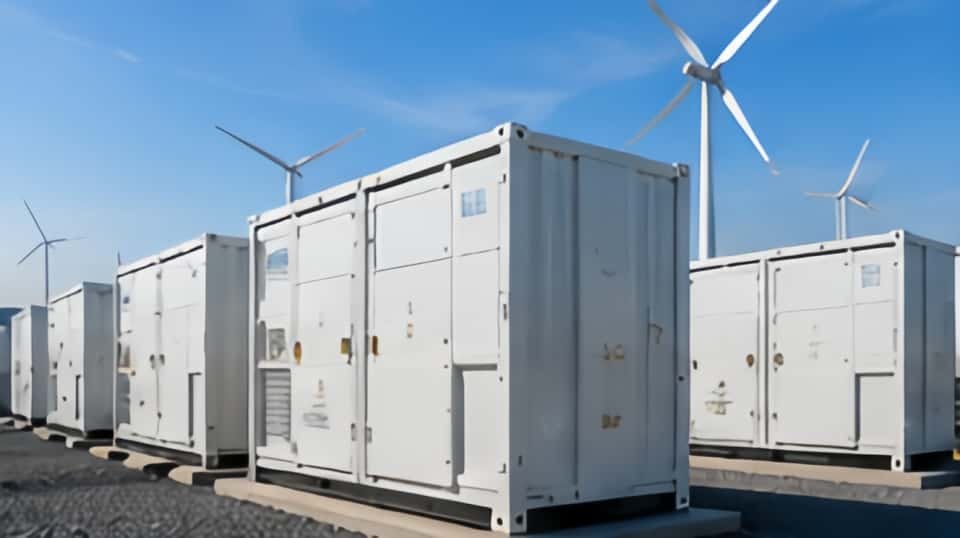
Utility Distribution & Service Drops
Urban and suburban low-voltage distribution from transformer secondary to residential, commercial, and industrial service entrances. Typically NAYY aluminium 4×95 to 4×240 mm² for street feeders, NYY copper 4×25 to 4×70 mm² for service drops to individual buildings. The dominant cable on European, African, Latin American, and Asian utility networks — billions of metres in service worldwide.
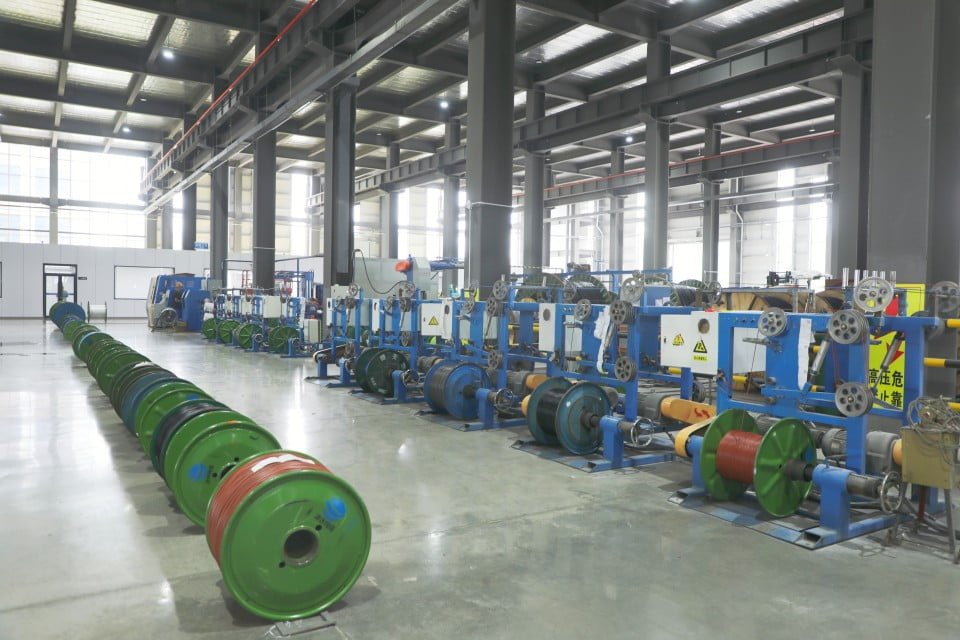
Industrial Plant Power Distribution
Factory main distribution boards to motor control centres, MCC to individual motor starters, plant sub-distribution feeders, machine power feeders. Typically NYY 4-core or 5-core 16 to 240 mm² for the main runs, scaling down to 2.5-6 mm² for individual motor and equipment feeders. NYBY armoured variant for outdoor plant areas, between buildings, and in cable trenches subject to ground disturbance.

Commercial & Residential Building Services
Building main service entrance to distribution board, riser feeders in high-rise buildings, floor distribution to local panels, branch circuits to lighting and power outlets. Typically 4-core 16-95 mm² for risers, 3-core 2.5-10 mm² for branch circuits. For modern buildings with stricter fire-safety requirements, the LSZH variant N2XH is increasingly specified instead of standard NYY — check the local building code before ordering.
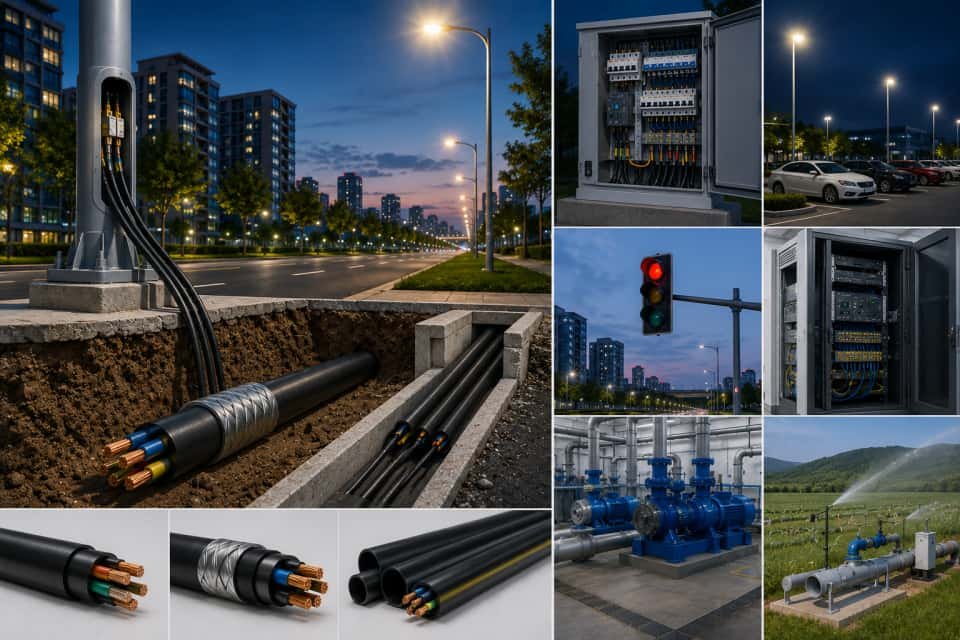
Street Lighting & Infrastructure
Street lighting circuits (4-core 6-25 mm² NYY or NYBY), parking garage lighting feeders, traffic signal power supply, telecom equipment cabinet power, water and wastewater pump station feeders, irrigation pumping stations. Typically NYBY armoured for direct-burial street lighting circuits; unarmoured NYY in conduit for indoor installations. The cable’s 25-40 year service life matches the typical infrastructure project lifecycle.
Not appropriate for: Continuous outdoor exposure with direct UV (use UV-stabilised sheath variant or run inside conduit). Direct burial in soft soil without armour (use NYBY steel tape armour or NYFGbY steel wire armour). Mobile or flexing applications (use rubber-insulated YC or YCW instead). Areas with continuous oil immersion or aggressive chemicals (specify oil-resistant PVC compound or chloroprene-sheathed cable). Mining underground (use MYJV mining cable with MT 818 compliance). Public spaces with strict fire-safety codes (use LSZH N2XH instead). Continuous temperatures above +70°C conductor (use XLPE-insulated N2XY at +90°C). Submersible installations (use dedicated submersible pump cable).
Technical Data
NYY 4-Core 0.6/1 kV Standard Sizes
Reference values for 4-core NYY (Cu/PVC/PVC, 3+E configuration, 0.6/1 kV) per IEC 60502-1. Ampacity values are per IEC 60364-5-52 installation method E (in air, cable tray, 30°C ambient). For buried installation (method D), grouped installation (multiple cables in conduit), or non-30°C ambient, apply the appropriate derating factors. Single-core, 2-core, 3-core, 5-core, and 3+1-core variants quoted alongside on request. Aluminium-conductor NAYY variant available at the same cross-sections with approximately 60-65 percent of the copper ampacity.
| Cores & Size | Conductor Construction | Approx. Cable OD | DC Resistance (max, 20°C) | Ampacity (air, 30°C) | Approx. Weight |
|---|---|---|---|---|---|
| 4×1.5 mm² | Solid (RE) | ~ 11.5 mm | 12.1 Ω/km | 20 A | ~ 220 kg/km |
| 4×2.5 mm² | Solid (RE) | ~ 12.5 mm | 7.41 Ω/km | 27 A | ~ 295 kg/km |
| 4×4 mm² | Solid (RE) | ~ 14.0 mm | 4.61 Ω/km | 36 A | ~ 400 kg/km |
| 4×6 mm² | Solid (RE) | ~ 15.5 mm | 3.08 Ω/km | 46 A | ~ 525 kg/km |
| 4×10 mm² | Solid (RE) / Stranded (RM) | ~ 17.5 mm | 1.83 Ω/km | 63 A | ~ 770 kg/km |
| 4×16 mm² | Stranded compacted (CM) | ~ 20.0 mm | 1.15 Ω/km | 85 A | ~ 1,100 kg/km |
| 4×25 mm² | Stranded compacted (CM) | ~ 24.0 mm | 0.727 Ω/km | 112 A | ~ 1,620 kg/km |
| 4×35 mm² | Stranded compacted (CM) | ~ 26.5 mm | 0.524 Ω/km | 138 A | ~ 2,180 kg/km |
| 4×50 mm² | Sector compacted (SM) | ~ 28.5 mm | 0.387 Ω/km | 168 A | ~ 2,860 kg/km |
| 4×70 mm² | Sector compacted (SM) | ~ 32.5 mm | 0.268 Ω/km | 213 A | ~ 4,030 kg/km |
| 4×95 mm² | Sector compacted (SM) | ~ 36.5 mm | 0.193 Ω/km | 258 A | ~ 5,300 kg/km |
| 4×120 mm² | Sector compacted (SM) | ~ 40.0 mm | 0.153 Ω/km | 299 A | ~ 6,620 kg/km |
| 4×150 mm² | Sector compacted (SM) | ~ 43.5 mm | 0.124 Ω/km | 344 A | ~ 8,170 kg/km |
| 4×185 mm² | Sector compacted (SM) | ~ 48.0 mm | 0.0991 Ω/km | 392 A | ~ 10,050 kg/km |
| 4×240 mm² | Sector compacted (SM) | ~ 53.5 mm | 0.0754 Ω/km | 461 A | ~ 13,000 kg/km |
| 4×300 mm² | Sector compacted (SM) | ~ 59.0 mm | 0.0601 Ω/km | 530 A | ~ 16,100 kg/km |
DC resistance per IEC 60228 plain annealed copper, 20°C. Ampacity per IEC 60364-5-52 installation method E (single 4-core cable in free air on cable tray, 30°C ambient, 70°C conductor). For installation in conduit, apply derating factor 0.85. For grouped installation in cable trays, apply derating per Table B.52.20 of IEC 60364-5-52 (typically 0.80 for 3 cables, 0.70 for 6 cables, 0.65 for 12 cables). For buried installation (method D), ampacity is approximately 10-15 percent higher than air installation due to better thermal coupling to soil. For ambient temperatures other than 30°C, apply temperature derating per IEC 60364-5-52 Table B.52.14.
Insulation voltage: 0.6/1 kV per IEC 60502-1 (U₀/U — 0.6 kV phase to earth, 1 kV phase to phase). Operating temperature: −15°C to +70°C continuous conductor; short-circuit 160°C for 5 seconds. Minimum bending radius: 12× OD during installation, 8× OD for final fixed installation. Standard sheath colour black for global market identification. Flame test: IEC 60332-1-2 standard / IEC 60332-3-22 Cat. A for FR-NYY variant. CPR classification typically Eca / Dca for flame-retardant variants.
Comparison
The Low-Voltage Power Cable Family Tree
The IEC 60502-1 low-voltage power cable family follows a systematic VDE/CENELEC naming convention: prefix letters indicate conductor and insulation material, suffix letters indicate sheath, armour, and special features. The four most commonly compared variants below cover the bulk of practical specification decisions. NYY is the baseline; the others are upgrades for specific installation challenges.
| Attribute | NYY (this product) | N2XY (XLPE) | NYBY (steel tape armour) | NAYY (aluminium) |
|---|---|---|---|---|
| Conductor | Copper (Cu) | Copper (Cu) | Copper (Cu) | Aluminium (Al) |
| Insulation | PVC Type A (70°C) | XLPE Type 2 (90°C) | PVC Type A (70°C) | PVC Type A (70°C) |
| Outer sheath | PVC Type ST2 | PVC Type ST2 | PVC Type ST2 | PVC Type ST2 |
| Armour | None | None | Double steel tape | None |
| Conductor temp (continuous) | 70°C | 90°C | 70°C | 70°C |
| Conductor temp (short circ.) | 160°C / 5s | 250°C / 5s | 160°C / 5s | 160°C / 5s |
| Standard | IEC 60502-1 | IEC 60502-1 | IEC 60502-1 | IEC 60502-1 |
| Ampacity at 4×25 mm² | ~ 112 A (air, 30°C) | ~ 132 A (air, 30°C) | ~ 112 A (air, 30°C) | ~ 87 A (4×25) |
| Direct burial without conduit | Not recommended | Not recommended | Yes (armoured) | Not recommended |
| Typical application | Indoor / tray / trench | High-temp / hot environment | Direct burial / mech. protect | Utility distribution |
| Cost (relative to NYY) | 1.00 (baseline) | 1.20 to 1.35 (XLPE premium) | 1.30 to 1.50 (armour) | 0.60 to 0.70 (per equivalent A) |
When to choose NYY (this product)
The default specification for low-voltage distribution at 0.6/1 kV in any normal indoor or protected outdoor installation: industrial plant power, building services, urban distribution from transformer to service entrance, cable tray and conduit installations, trench installations with protective conduit. The conservative, cost-effective, globally interoperable choice for the vast majority of low-voltage power applications.
When to choose an alternative
For high-temperature installations or where higher ampacity at the same cross-section is needed, upgrade to N2XY (XLPE insulation, 90°C). For direct-burial in soil without conduit, specify NYBY (steel-tape armoured) or NYFGbY (steel-wire armoured). For utility distribution where cable cost is dominant, use NAYY aluminium variant at the same ampacity for 30-40 percent savings. For data centres, hospitals, and metro stations with strict fire-safety codes, specify N2XH low-smoke halogen-free variant. For installations in continuously hot, oily, or chemically aggressive environments, specify chloroprene-sheathed rubber cable instead.
Frequently Asked Questions
Common Questions From Electrical Engineers and Project Buyers
What does NYY stand for?
NYY follows the German VDE/CENELEC cable type code convention used internationally: N = Normenleitung (standard cable per DIN VDE), Y = PVC insulation (the second letter), Y = PVC outer sheath (the third letter). Variants extend the code with additional letters: NYY-J adds J for “mit grün-gelben Schutzleiter” (with green-yellow protective earth conductor), NAYY uses A for aluminium conductor, N2XY uses 2X for cross-linked polyethylene (XLPE) insulation instead of PVC, NYBY adds B for steel tape armour, NYFGbY uses FGb for galvanised steel flat wire armour. Once you know the code system, you can read cable construction from the type designation alone.
When should I choose NYY vs N2XY (XLPE)?
The conductor temperature rating is the defining difference. NYY is rated 70°C continuous conductor temperature, sufficient for the vast majority of low-voltage distribution where actual conductor temperature stays well below the limit. N2XY is rated 90°C, giving roughly 15-20 percent higher ampacity at the same cross-section and tolerating hotter ambient conditions. Choose N2XY for: cable runs through hot industrial environments (boiler rooms, steel mills, near furnaces), installations where ampacity per cross-section matters for cost (smaller cable for same load), or where short-circuit thermal capability matters (XLPE survives 250°C for 5 seconds vs 160°C for PVC). For standard indoor and protected outdoor installations at normal ambient temperatures, NYY is the cost-effective default.
Can NYY be directly buried in the ground?
Standard unarmoured NYY can technically be buried with sand bedding and warning tape, but most utility and infrastructure codes require armoured cable for direct burial in soil due to mechanical damage risk from later digging. Specify NYBY (steel-tape armoured) for general buried installation in stable soil, or NYFGbY (steel-wire armoured) for installations in rocky soil, areas subject to ground movement, or where high mechanical strength is needed. The armoured variant is 30-50 percent more expensive than plain NYY but eliminates the conduit cost for buried runs and provides much better damage tolerance.
Is NYY the same as BS 6346 cable?
Functionally equivalent at the construction level. IEC 60502-1 NYY and BS 6346 Cu/PVC/PVC cable are essentially the same product specified by different regional standards bodies. Most production lines run the cable to both certifications simultaneously — the dimensional and electrical parameters are identical, the test methods are aligned, and the cable can be marked with both standards numbers on the same physical product. For projects accepting either IEC or BS, specify both certifications at order so the cable can be deployed regardless of which authority inspects the installation. Other equivalent regional standards include DIN VDE 0276-603 (Germany), HD 603 S1 (CENELEC harmonised), AS/NZS 5000.1 (Australia/NZ), and SASO 1694 (Saudi Arabia).
When should I specify aluminium NAYY instead of copper NYY?
Aluminium NAYY at the same cross-section carries approximately 78 percent of the ampacity of copper NYY. To match the ampacity of a copper cable, aluminium needs to be sized roughly 1.6× the cross-section area. After this upsizing, aluminium cable still costs 30 to 40 percent less than copper because the raw aluminium price per kilogramme is far below copper. Choose aluminium for: utility distribution feeders (the dominant choice on most utility networks worldwide), long-run plant feeders where conductor cost is the dominant project line item, and any application where the cable is fixed in place and termination labour is a one-time cost. Stay with copper for short runs (the upsizing penalty negates the savings), in vibration environments (aluminium is more susceptible to fatigue), and where termination space is limited.
What is the typical lead time and MOQ?
Standard NYY configurations in common sizes (4-core 4 to 70 mm²) typically ship in 15–25 days from order — these run on continuous production lines and have stable raw material inventory. Larger cross-sections (95-300 mm²) take 20-30 days; the largest sizes (400-1000 mm²) take 30-45 days. Armoured variants (NYBY, NYFGbY) add 5-10 days for the armouring pass. Multi-market certification adds 3-5 days for documentation processing. MOQ is normally 1,000 m per cross-section + core count combination; smaller trial orders (down to 500 m) accepted with a small setup fee. For utility-scale and infrastructure projects ordering 50 km+ across multiple cross-sections, container-load shipping delivers 10-15 percent unit-price reduction vs LCL. Long-term blanket purchase orders accepted for distributors and EPC contractors with stable monthly consumption.
Installation & Handling Tips
Six Practices for NYY That Add Decades to Service Life
NYY is forgiving cable — mature, well-understood, with predictable failure modes. But the difference between 25-year service life and 40-year service life comes down to installation quality. The six practices below cover the field-level details that consistently separate well-installed NYY from cable that gets replaced inside one or two decades.
Respect the minimum bending radius during pulling
Minimum bending radius for NYY is 12× OD during installation (active pulling) and 8× OD for final fixed installation. Tighter bends during pulling permanently deform the PVC insulation and crack the conductor strands — the damage is invisible from outside but causes voltage breakdown at the bend years later. Use proper cable rollers at corners during pulling, not manual force around tight bends. The bending limits are particularly important at building entry points and switchgear terminations where space is constrained.
Don’t install NYY below −15°C ambient
PVC insulation becomes brittle below −15°C and cracks during cable pulling and bending. For cold-weather installations in northern climates, either warm the cable drums in a heated enclosure for 24 hours before installation, or specify rubber-insulated cable (YC, YCW, H07RN-F) rated to −25°C or lower. Once installed and energised, the cable conductor heating keeps the PVC above the brittle point even in cold ambient — the installation-day temperature is the critical limit, not the operating temperature.
Apply derating factors for grouped installation
Multiple cables grouped in a cable tray or conduit share thermal load — ampacity drops accordingly. IEC 60364-5-52 specifies derating factors: 0.80 for 3 cables grouped, 0.72 for 4 cables, 0.65 for 6 cables, 0.57 for 9 cables, 0.50 for 16+ cables. Apply these to the free-air ampacity values from datasheets to get the actual installed-condition ampacity. Most cable failures in over-loaded installations trace back to designers using free-air ampacity values without applying grouping factors — the cables overheat slowly and fail prematurely.
Use proper terminations for the conductor class
Class 1 solid conductors terminate well with screw terminals and pin lugs — tighten to the equipment-specified torque. Class 2 stranded conductors require either compression lugs (crimped with calibrated hydraulic crimper) or screw terminals with proper preparation (twist the strands tight, fold over for small sizes, or use ferrules). Sector-shaped large conductors (50 mm²+) need lugs specifically designed for the sector profile — circular lugs deform the conductor and create poor contact. Loose terminations are the most common LV cable failure mode in the field.
Seal cable ends during storage and after cutting
Cable ends left exposed to humid air allow water to wick into the cable through the filler material and conductor strands — the moisture sits in the cable for years and degrades the insulation resistance from the inside. Always cap cable ends with heat-shrink end caps or self-amalgamating tape immediately after cutting, both for cables in storage and for cable runs awaiting termination. Apply waterproof end caps before backfilling buried cable trenches if final terminations will be delayed. The cost of end caps is trivial vs the cost of replacing a moisture-damaged cable run.
Test insulation resistance before energising
Megger test (insulation resistance test at 500V DC for 0.6/1 kV cable) between every core and earth, and between adjacent cores, before energising. Expected reading for new cable is > 100 MΩ per km; readings below 10 MΩ per km indicate water ingress, damaged insulation, or installation faults that should be investigated before applying mains voltage. Document the megger results in the project handover package — the baseline values are useful for comparison during future maintenance to detect insulation degradation. Repeat the test after the first year of service for high-criticality installations to verify the cable is performing as installed.
Safety note: Low-voltage power cable installation must follow the applicable national wiring code (IEC 60364 international, BS 7671 in the UK, NFPA 70 in the US, AS/NZS 3000 in Australia/NZ). The cable’s 0.6/1 kV rating is lethal at any unprotected conductor exposure; never energise cable with visible insulation damage or incomplete terminations. Apply earth-fault protection (RCD/GFCI) at the supply end per the relevant wiring code. For projects in fire-regulated buildings (hospitals, schools, public buildings, high-rise residential), verify the local code requirements regarding LSZH performance and fire propagation classification before ordering — standard NYY may not satisfy modern fire-safety requirements in those settings.
Manufacturing Capability
Why Source From Jinda Cable
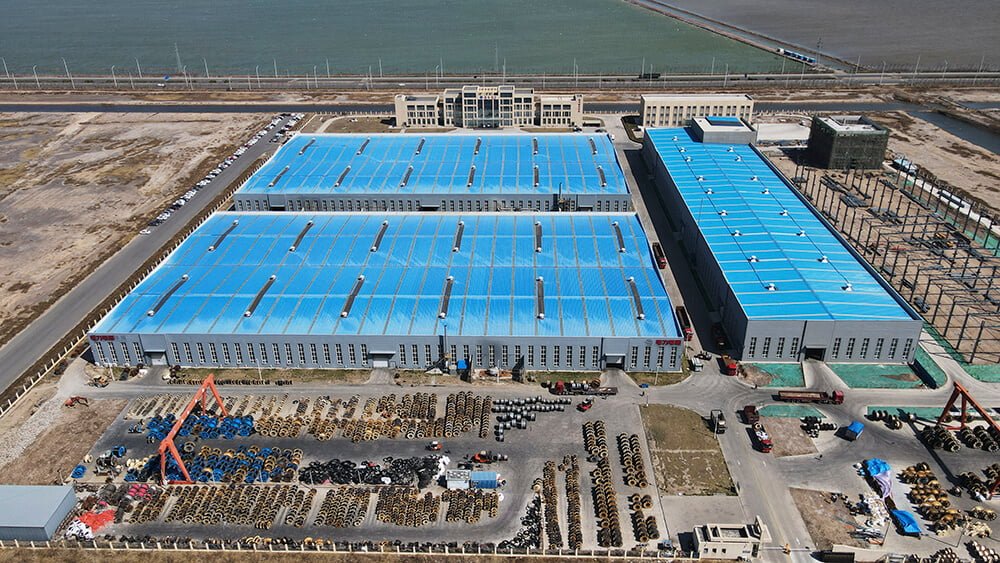
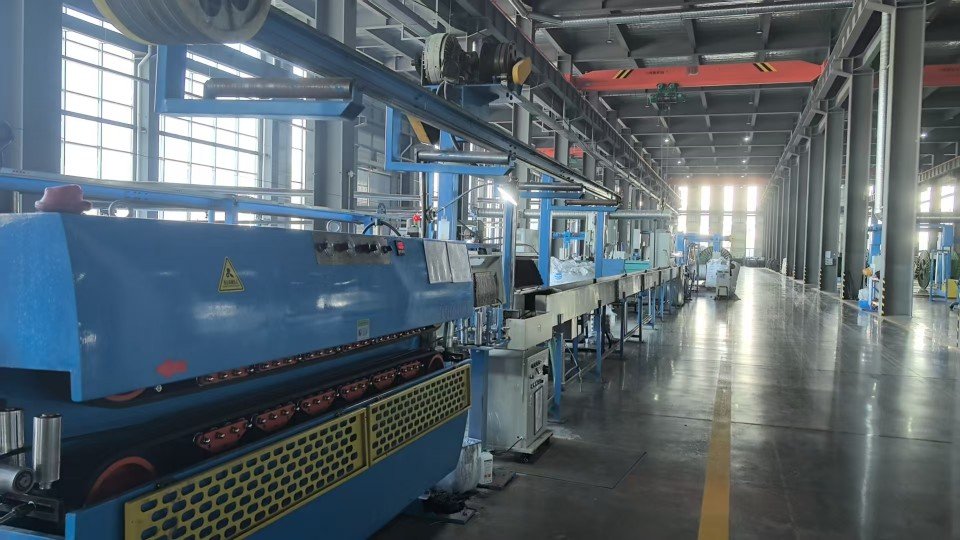
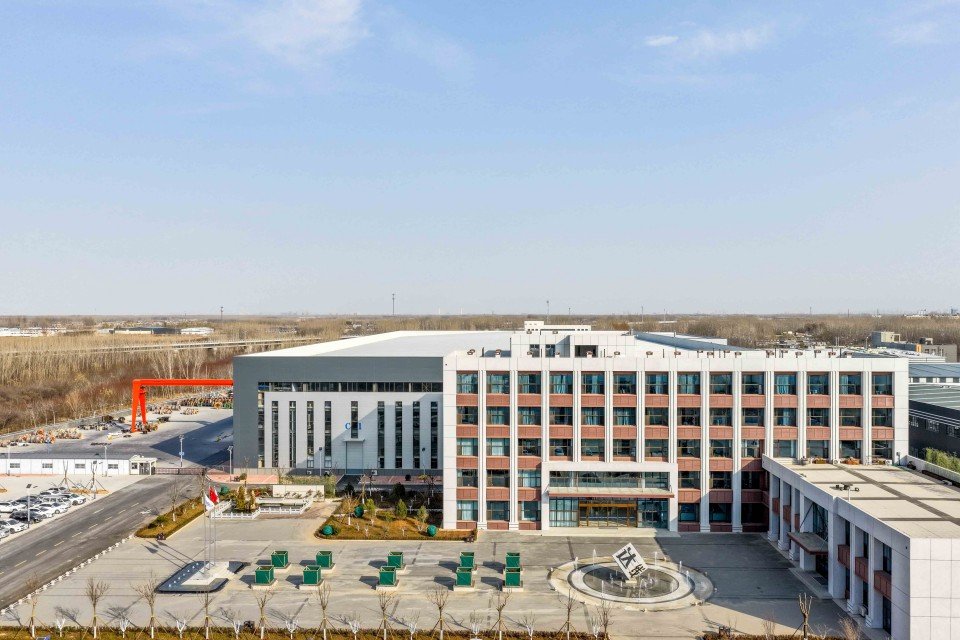
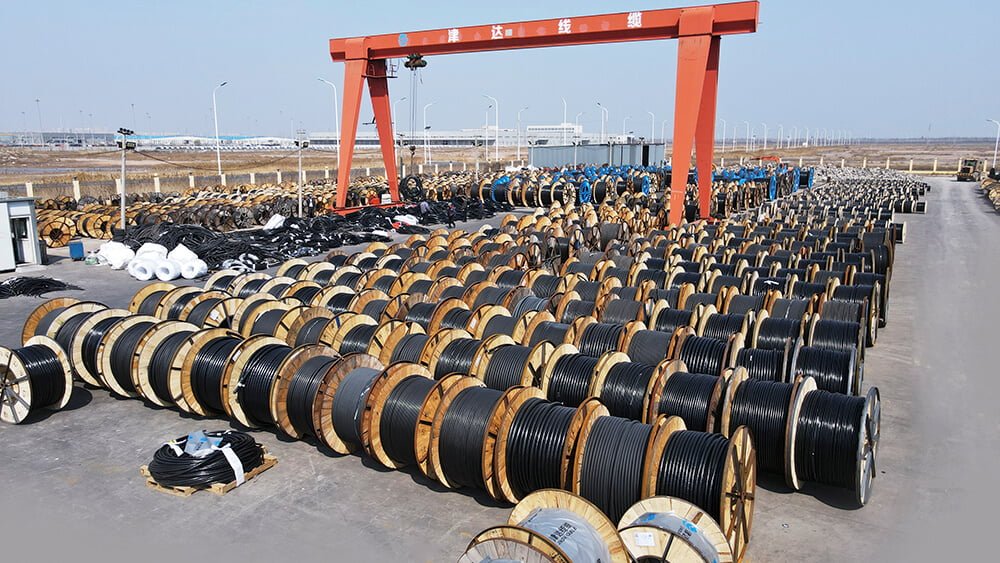
Behind every drum we ship sits a 38-year track record, five production bases under one MES system, and a documentation discipline that gets cables through customs without delays.
-
Every cable tested twice before shipping
Since 1987, our two-stage QC has been refined to a science: routine test on the production line, then full electrical and mechanical re-test before packing. Across 50+ export markets, our return rate stays under 0.3%.
-
Five production bases, 470,000 m², synced via MES
Tianjin, Liaoning, Heilongjiang, Shandong, and Xian — each base runs under one unified MES system. Same recipe, same protocols, same traceability, regardless of which plant ships your order.
-
3,000+ SKUs, custom configurations welcome
Standard sizes ship from inventory. Special voltage grades, color-coding, drum lengths, or armor configurations are routine — submit your spec and our team will quote the lead time honestly.
-
Trusted by EPC contractors in 50+ countries
We supply utilities, mining operators, port authorities, and large industrial OEMs across Europe, the Americas, Southeast Asia, the Middle East, and Africa.
-
Full paperwork shipped with every order
Every shipment includes factory test report, certificate of origin (COO), packing list, and bill of lading (B/L). Customer-nominated witness testing can be arranged before shipment.
Our Track Record
98.7%
On-time shipment rate (last 24 months)
< 0.3%
Return rate across export markets
25 days
Typical sea freight Tianjin → Rotterdam
100%
Shipments with routine test report attached
Logistics & Delivery
Packaging, Shipping & Documentation
What we handle on our side from production floor to the port of loading. Product-specific installation guidance is supplied with the datasheet that accompanies each order.
Packaging
- Wooden or steel drums per IEC 62004
- Coil packaging available for small cross-sections
- Standard drum lengths plus custom lengths on request
- Each drum labeled with type, voltage, cross-section, length, batch
- Waterproof wrapping for export shipments
- Cable ends sealed against moisture ingress
- Private-label / OEM packaging available under NDA
Shipping
- FCL / LCL sea freight, air freight on request
- Trade terms: EXW, FOB, CFR, CIF, DDP
- Ports of loading: Tianjin / Qingdao / Shanghai
- Typical sea freight to Rotterdam: 25 days
- Lead time confirmed at order acknowledgement
- Container loading photos sent before sailing
Documentation
- Factory routine test report (per applicable standard)
- Commercial invoice and packing list
- Certificate of origin (CO) — China Council, FORM A, FORM E available
- Bill of lading (B/L) — original or telex release
- Third-party inspection by SGS / BV / TÜV on request
- Customer-nominated witness testing arranged before shipment