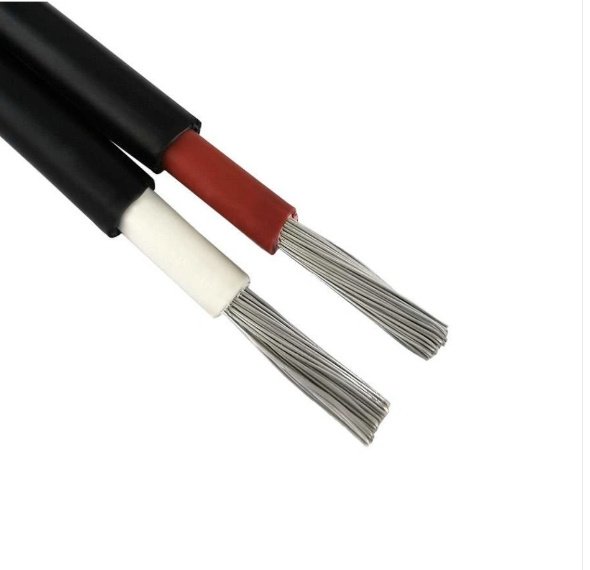
Solar Cable / DC 1500V
Solar PV Cable
Model: PV1-F / H1Z2Z2-K
Solar PV cable designed for photovoltaic systems with excellent UV resistance, weather resistance, and long-term outdoor durability.
- Voltage Rating
- DC 1500V
- Number of Cores
- Array
- Cross Section
- 1.5–35 mm²
- Conductor
- Copper
- Armoring
- Unarmored
- MOQ
- ≥ 100 m
Standards & Certifications
- EN
- EN 50618
- IEC
- IEC 62930
Downloads
Specifications
Technical Specifications & Performance
Construction
- Model / Series
- PV1-F / H1Z2Z2-K
- Voltage Rating
- DC 1500V
- Conductor Material
- Copper
- Conductor Class
- Class 6 Extra Flexible
- Cross Section
- 1.5–35 mm²
- Number of Cores
- Array
- Insulation
- PVC
- Sheath
- PVC
- Armoring
- Unarmored
- MOQ
- ≥ 100 m
Performance
- Max. Conductor Temp.
- 90°C / 120°C
- Min. Bending Radius
- 6 × Cable Outer Diameter
About This Product
25 Years Outdoors Under Direct Sun — Engineered for Solar Farm Life
Solar PV Cable (model designation H1Z2Z2-K per the European harmonised standard EN 50618, equivalent to PV Wire per UL 4703 in North America, also marketed historically as PV1-F) is the dedicated DC string cable that connects solar panels to combiner boxes and combiner boxes to inverters in photovoltaic systems. Unlike any other building or industrial cable in the Jinda catalogue, this product spends its entire 25-year service life outdoors, fully exposed to UV radiation, ozone, thermal cycling, salt spray, and ice loading. The cable is designed and tested for that environment specifically — standard XLPE or PVC building cable will visibly crack and embrittle within 5 to 8 years in the same exposure.
The construction is double-insulated: a flexible Class 5 tinned-copper conductor (the tin coating prevents copper sulfide corrosion in humid and saline environments), then a cross-linked polyolefin (XLPO) primary insulation, then a second cross-linked halogen-free polyolefin outer sheath. The double-insulation architecture is mandated by EN 50618 and is what gives the cable its IEC class II (basic + supplementary protection) safety rating, allowing installation without separate sheath earthing on PV system DC strings.
Jinda manufactures H1Z2Z2-K at our Shandong base with full TÜV Rheinland certification (2 Pfg 1169/08.2007) plus EN 50618 / IEC 62930 compliance. For projects in North America, we produce the UL 4703 dual-listed variant with USE-2 (UL 854) and RHH/RHW-2 (UL 44) markings. For Chinese domestic projects, GB/T 32129 certification is standard. The full set of project documentation — TÜV certificate, UL listing, CPR Declaration of Performance, RoHS, REACH — is supplied with every shipment. Standard lead time is 12 to 20 days for 1500 V DC configurations in cross-sections 4 to 16 mm², which cover roughly 90 percent of PV string requirements.
Cable Structure
Three Layers Tuned for 25-Year UV Survival
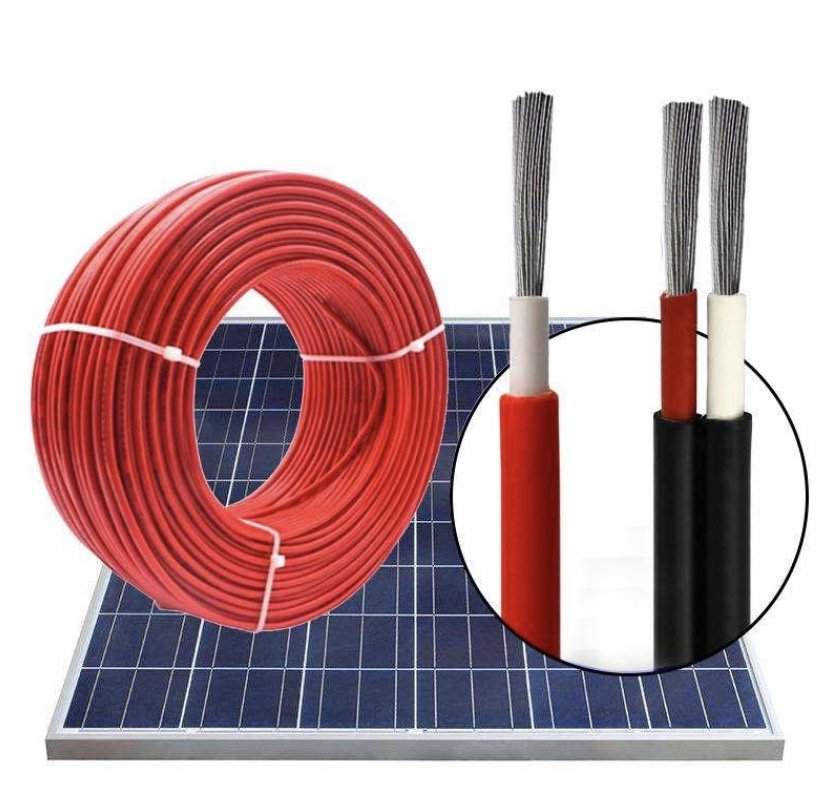
PV cable construction looks simple from outside — conductor, insulation, sheath — but each layer uses a specific polymer chemistry to survive sunlight, ozone, and thermal cycling for two and a half decades. Generic XLPE building cable used in the same exposure will fail at year 6 to 8. The differences are in the formulation, not the obvious geometry.
-
1
Conductor — Tinned Copper, Class 5 Flexible
Finely-stranded annealed copper conductor per IEC 60228 Class 5 (60 to 200+ individual wire strands depending on cross-section). The Class 5 stranding gives the cable its required field flexibility — PV cables get bent and re-bent repeatedly during install and on tracker-mounted systems during daily motion. Each individual strand is electroplated with a thin layer of tin to prevent copper sulfide and copper oxide corrosion, the slow degradation mode that kills bare copper in humid and saline atmospheres. Tinning is non-negotiable for cables installed near coasts or in industrial atmospheres.
-
2
Primary Insulation — Cross-Linked Polyolefin (XLPO)
Cross-linked halogen-free polyolefin (XLPO), distinct from the XLPE used in building cable. The polyolefin base is naturally more UV- and ozone-stable than polyethylene; the cross-linking step (electron-beam or peroxide cure) gives the insulation thermomechanical stability up to 120°C without melt or creep. Wall thickness is meaningfully larger than for an equivalent voltage XLPE cable — the EN 50618 standard mandates this extra thickness specifically to suppress partial discharge at 1500 V DC over 25-year service.
-
3
Outer Sheath — Cross-Linked Halogen-Free Flame-Retardant Polyolefin
A second extruded XLPO sheath, with additional UV stabilizers (carbon black for the black variant; cobalt complex stabilizers for the red variant) and flame retardant additives. The outer sheath provides the EN 50618-mandated double-insulation safety (IEC class II), mechanical abrasion resistance against panel-frame edges and roof tile corners, and the cable’s identifiable colour: red for positive (+) and black for negative (−) per international PV convention. Standard sheath colour matches DC polarity; custom colours (blue, yellow, green) are available for specific project labelling on quotation.
Key Features
What "25-Year Outdoor Rating" Actually Tests Against
EN 50618 and UL 4703 specify a battery of accelerated-aging and environmental tests that translate into the headline 25-year service-life claim. The six features below are what those tests verify, and what differentiates a real PV cable from generic XLPE building wire that happens to be black.
1500 V DC Continuous, UV-Stabilized for 25 Years
EN 50618 / IEC 62930 require accelerated UV testing per HD 605 / EN 60216 — typically 1,000+ hours of high-intensity UV exposure with insulation maintaining elongation properties post-test. PV cable jackets contain 2 to 3 percent carbon black (the black variant) or specific cobalt-complex stabilizers (the red variant) to absorb UV before it reaches the polymer backbone.
TÜV Rheinland Certified + UL 4703 Dual-Listed
Our H1Z2Z2-K production line carries TÜV Rheinland 2 Pfg 1169 / 08.2007 certification, which is the de-facto entry ticket for European PV projects. For North American export, the same cable can be supplied as UL 4703 PV Wire with dual listings as USE-2 (UL 854) and RHH/RHW-2 (UL 44). Specify the target market at order — you cannot use EN 50618 cable on US/Canada projects (NEC requires UL listing) or vice versa.
Double-Insulated, IEC Class II Safety
The two-layer XLPO construction is what EN 50618 calls double insulation — primary insulation plus an electrically independent outer sheath, each rated for full system voltage. This delivers IEC class II protection (basic + supplementary), allowing PV system DC strings to be routed without separate sheath earthing or armored conduit. Saves significant installation labour on rooftop arrays.
−40°C to +90°C (+120°C Short-Term)
Continuous service from −40°C alpine winter to +90°C desert rooftop conduit temperatures. Short-term excursions to +120°C (UL 4703 dry-rated to 150°C) are acceptable. The cable’s service-life curve is largely set by the upper temperature limit — 90°C continuous corresponds to the 25-year claim; running constantly at 120°C shortens it dramatically. Verify ampacity against the installation ambient with proper derating.
Halogen-Free, Low-Smoke, Flame-Retardant
XLPO sheath compound satisfies IEC 60754-1/-2 (halogen acid gas < 5 mg/g, pH ≥ 4.3), IEC 61034 (smoke transmittance ≥ 60 percent), and IEC 60332-1 single-cable flame test. CPR classification typically achieves Cca-s1b,d2,a1 (LSZH-tier performance). Important for rooftop arrays where a fire in one string could otherwise propagate down riser cables into the building proper.
Ozone, Salt Spray, Ammonia & Chemical Resistant
EN 50396 ozone resistance, salt spray testing per IEC 60068-2-52 (relevant for coastal and floating PV installations), and ammonia resistance for agricultural / livestock area arrays. The XLPO sheath chemistry also resists most agrochemicals and oils — useful for ground-mount farms with herbicide spraying operations. Specify which environmental conditions apply at order; project-specific test reports are available.
How to Choose
Six Decisions Before You Place the Order
PV cable selection is driven by the target market’s certification regime as much as by the electrical numbers. Get the market certification right first — pulling a project off site because the cable carries TÜV but not UL listing is an expensive mistake. Walk through these six decisions before issuing the PO.
Identify the target market certification
European, Middle East, Africa, Latin America, Southeast Asia, Australia — EN 50618 / TÜV / H1Z2Z2-K is the right specification. North America (US, Canada) — UL 4703 PV Wire, often dual-listed USE-2 and RHH/RHW-2 for NEC compliance. China domestic — GB/T 32129. These are not interchangeable: an EN 50618-only cable cannot be installed on a US project, and a UL 4703-only cable cannot be installed on an EU project. Multi-listed cable is more expensive; specify only the listings you need.
Choose voltage class: 1.0 kV vs 1.5 kV vs 2 kV
Modern utility-scale PV is universally 1500 V DC — specify H1Z2Z2-K (EN 50618) or UL 4703 at 2 kV rating accordingly. Residential rooftop systems may still be 1000 V DC, where the legacy PV1-F remains adequate (and cheaper). Don’t use 1000 V cable on a 1500 V system — the insulation is undersized for the partial-discharge regime and will fail prematurely. Check the inverter MPPT range and the maximum string open-circuit voltage at lowest expected ambient temperature.
Size the cross-section: 2.5, 4, 6, 10, 16 mm²
4 mm² is the most common string cable size globally, covering most module-to-combiner runs at typical 9 to 15 A string currents. 6 mm² for higher-current strings or longer runs requiring lower voltage drop. 10 mm² and 16 mm² for combiner-to-inverter cabling carrying combined string currents. 2.5 mm² is uncommon on modern systems but available for legacy retrofits. Size to NEC 690 (US, 125 percent Isc safety factor) or local equivalent — voltage drop < 2 percent end-to-end is the typical target for utility-scale projects.
Pick the colour: red for plus, black for minus
International PV convention is red for the positive (+) conductor and black for the negative (−) conductor. Order half the project quantity in red, half in black. The colour difference matters at install time when crews are connecting hundreds of strings — mis-polarity is the most common rework cause. Some projects also specify blue or yellow for monitoring / equipment-ground conductors; specify if needed. Sheath compounds for all colours pass the same UV and ozone tests.
Account for the environment
Desert (UV intensity, thermal cycling): standard H1Z2Z2-K is rated for this and routinely deployed in MENA and Atacama solar farms. Coastal / floating PV: confirm salt-spray test data (IEC 60068-2-52) is in the supplied test reports. Agricultural / livestock proximity (agrivoltaics): ammonia resistance matters — ask for the specific ammonia immersion test data. Alpine: low-temperature flexibility — the cable must remain bendable at −40°C for installation in mountain projects.
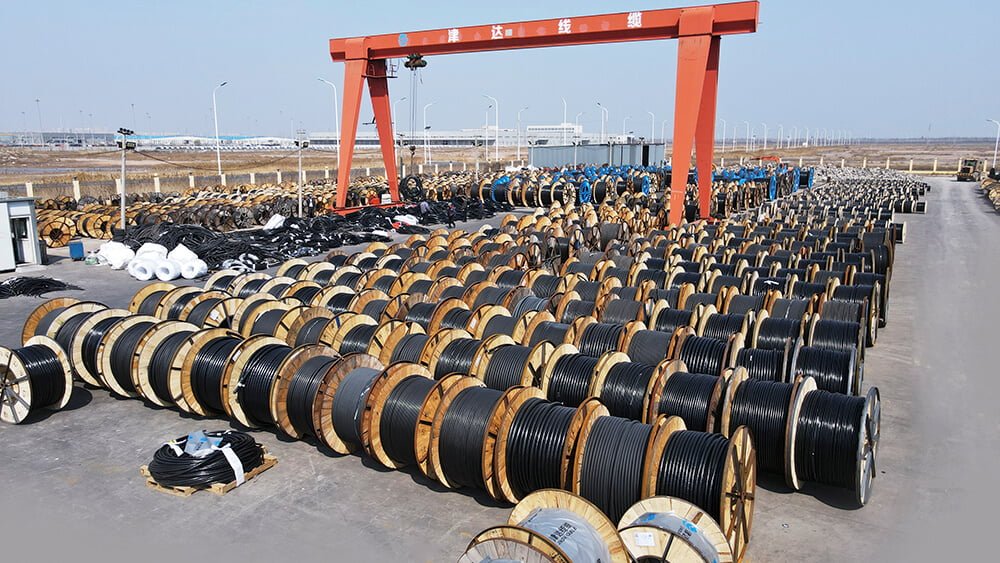
Plan packaging: cut lengths or 500 m drums
For utility-scale projects, 500 m and 1,000 m drums minimise on-site jointing. For residential rooftop projects, pre-cut lengths matched to typical string sizes (15 m, 25 m, 50 m coils) reduce field labour. We supply both formats; specify at order. For projects with hundreds of identical strings, we can pre-terminate cable assemblies with MC4 connectors at the factory — saves on-site connector installation time and reduces field-connector failures.
Applications
Every Type of Solar System Uses This Cable Differently
PV cable is the universal DC string conductor across the entire solar industry, but the specific cross-section, voltage class, and environmental certification needed varies dramatically by project type. The four scenarios below cover the bulk of our shipment volume; the inquiry form takes the project specifics so we can match the cable to the install conditions.
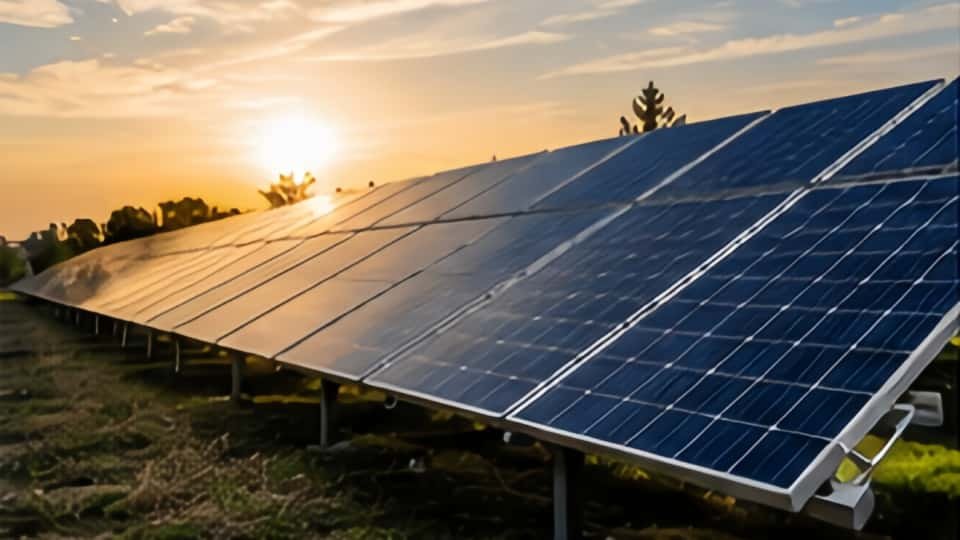
Utility-Scale Ground-Mount Farms
100 MW+ ground-mount installations — deserts (MENA, Mojave, Atacama, Australia), plains, abandoned mining land. Typically 1500 V DC strings using 4 or 6 mm² H1Z2Z2-K; combiner-to-inverter runs use 10 or 16 mm². Bulk shipment in 1,000 m drums. Environmental priorities: UV, thermal cycling, sand abrasion in desert installations.

Commercial & Industrial Rooftops
Warehouses, distribution centres, factories, supermarkets, parking-lot canopies. Typically 1000 to 1500 V DC, 4 mm² cable, pre-cut lengths matched to typical 14 to 20-module strings. Fire-safety LSZH performance becomes important here because the cable enters the building proper at the inverter end; CPR Cca-s1b classification is project-typical.

Residential Rooftop Arrays
Family homes and small multi-unit buildings, 3 to 15 kW arrays. Typically 1000 V DC (consumer-scale inverter limit), 4 mm² cable in 50 to 100 m coils. Often supplied as pre-terminated MC4 connector assemblies in 1 to 5 m extension lengths plus longer continuous runs for the panel-to-inverter feed. Aesthetics matter — cable runs are often visible from the ground.
Floating PV & Coastal / Agrivoltaic
Floating solar (lakes, reservoirs), coastal ground-mount installations, agrivoltaic (solar plus crops or livestock). Salt-spray and ammonia resistance test data is critical. The tinned-copper conductor is essential — bare copper conductors fail by sulfide corrosion within 3 to 5 years in these atmospheres. Confirm IEC 60068-2-52 salt-spray and project-specific ammonia immersion test data in supplied documentation.
Not appropriate for: AC building distribution downstream of the inverter — once DC is converted to grid AC, use standard WDZ-YJY LSZH cable or local equivalent for the building feed. Indoor non-PV applications — the price premium for the UV-stable XLPO compound is wasted indoors. Industrial DC drive systems — use dedicated motor cable instead. Concentrated solar (CSP) high-temperature areas — specify high-temperature silicone or PTFE cable, not standard PV cable.
Technical Data
H1Z2Z2-K 1500 V DC Standard Sizes & Ampacity
Reference values for single-core H1Z2Z2-K solar PV cable at 1.5 kV DC per EN 50618:2014. Ampacity values are per EN 50618 Table 4 for free-air installation (typical PV array routing) at 60°C ambient and 90°C conductor temperature — this is the working condition that most PV installations actually experience. Lower-ambient and bundled-installation derating factors are supplied with the formal technical quotation.
| Cross Section | Strand Count (Class 5) | Approx. Cable OD | DC Resistance (max, 20°C) | Ampacity (free air, 60°C) |
|---|---|---|---|---|
| 1.5 mm² | 30 strands | ~ 5.3 mm | 13.3 Ω/km | 30 A |
| 2.5 mm² | 50 strands | ~ 6.0 mm | 7.98 Ω/km | 41 A |
| 4 mm² | 56 strands | ~ 6.6 mm | 4.95 Ω/km | 55 A |
| 6 mm² | 84 strands | ~ 7.3 mm | 3.30 Ω/km | 70 A |
| 10 mm² | 80 strands | ~ 8.7 mm | 1.91 Ω/km | 98 A |
| 16 mm² | 128 strands | ~ 10.0 mm | 1.21 Ω/km | 132 A |
| 25 mm² | 196 strands | ~ 12.0 mm | 0.780 Ω/km | 176 A |
| 35 mm² | 276 strands | ~ 13.5 mm | 0.554 Ω/km | 218 A |
| 50 mm² | 396 strands | ~ 15.5 mm | 0.386 Ω/km | 276 A |
| 70 mm² | 360 strands | ~ 17.5 mm | 0.272 Ω/km | 347 A |
| 95 mm² | 475 strands | ~ 20.0 mm | 0.206 Ω/km | 416 A |
| 120 mm² | 608 strands | ~ 22.0 mm | 0.161 Ω/km | 488 A |
DC resistance per IEC 60228 Class 5 stranded annealed tinned copper, 20°C. Ampacity per EN 50618 Table 4 (single-core, free-air installation, 60°C ambient, 90°C conductor). For installations where two cables are routed touching (typical for PV string + and − pair), apply a derating factor of 0.92. For cables bundled in conduit, apply derating per IEC 60364-5-52 (typically 0.7 to 0.8 for 4-6 cables in conduit). Verify maximum string voltage and current against the inverter MPPT range and the lowest expected ambient (Isc and Voc at the coldest expected temperature).
Certification typical results: TÜV Rheinland 2 Pfg 1169/08.2007 (full PV cable cert), EN 50618:2014, IEC 62930. Aging tests: 20,000 h at 120°C (EN 60216 thermal endurance), 720 h xenon-arc UV (HD 605/A1), ozone resistance per EN 50396, ammonia resistance per ISO 175, low-temperature winding at −40°C. Fire performance: IEC 60332-1 single cable, IEC 60332-3 Cat. C bundled, IEC 60754-1/-2 acid gas, IEC 61034 smoke density. CPR Cca-s1b,d2,a1 available on request.
Comparison
H1Z2Z2-K vs PV1-F vs UL 4703 vs Generic XLPE
Three legitimate PV cable specifications plus one common substitution mistake. The differences are about which market certifies it, what voltage class it’s rated for, and whether it can actually survive 25 years outdoors. Using the wrong one is a costly mistake either at the certification stage (project rejection) or at year 6 (premature cable failure).
| Attribute | H1Z2Z2-K (this product) | PV1-F (legacy EU) | UL 4703 (US) | Generic XLPE (wrong) |
|---|---|---|---|---|
| Governing standard | EN 50618:2014 / IEC 62930 | TUV 2 Pfg 1169 (older) | UL 4703 + NEC 690 | IEC 60502 / GB/T 12706 |
| Target market | EU, MENA, APAC, LatAm | EU legacy / retrofits | US, Canada | General industry (wrong) |
| Max DC voltage | 1500 V | 1000 V | 600 / 1000 / 2000 V | 1000 V AC (not DC rated) |
| Insulation material | Cross-linked XLPO | Cross-linked XLPO | Cross-linked XLP | Cross-linked XLPE |
| Conductor | Class 5 tinned copper | Class 5 tinned copper | Class B/C stranded Cu | Class 2 bare copper |
| Double insulation | Yes (Class II) | Yes (Class II) | Yes (per UL) | No (single insulation) |
| UV test (hours xenon-arc) | 720 h pass | 720 h pass | 720 h pass | None (untested) |
| Service life claim | 25 years outdoor | 20-25 years outdoor | 25 years outdoor | 5-8 years outdoor (fail) |
| Certifications carried | TUV, CPR, IEC, GB/T 32129 | TUV (older revision) | UL 4703, USE-2, RHH/RHW-2 | None for PV use |
| Cost (relative to H1Z2Z2-K) | 1.00 (baseline) | 0.85 to 0.95 | 1.05 to 1.20 | 0.55 to 0.65 (false economy) |
When to choose H1Z2Z2-K (this product)
All EU, Middle East, Africa, Asia-Pacific (except North America), Latin America, and Australian PV projects. New utility-scale 1500 V DC installations regardless of region. Any project requiring TÜV Rheinland certification, EN 50618, or IEC 62930 compliance. The current global mainstream PV cable spec — if your project does not specifically mandate UL 4703, this is the right choice.
When to choose an alternative
For US and Canadian PV projects, you need UL 4703 PV Wire — the NEC 690 will not accept EN 50618 certification. For EU retrofits to existing 1000 V DC installations where matching the original cable spec is required, PV1-F is still available. Never substitute generic XLPE building cable for PV cable — the UV degradation will appear after 5 to 8 years as visible jacket cracking, followed by insulation breakdown, ground faults, and arc-fault tripping. Replacing failed cables on an active solar farm costs orders of magnitude more than specifying the right cable at the start.
Frequently Asked Questions
Common Questions From PV System Designers and EPC Buyers
What is the difference between H1Z2Z2-K and PV1-F?
PV1-F was the original TÜV-certified European solar cable spec, mainstream from the early 2000s through about 2015. Rated for 1000 V DC. H1Z2Z2-K is the harmonised European standard introduced by EN 50618:2014 specifically to support the industry transition to 1500 V DC utility-scale systems. The newer standard mandates thicker XLPO insulation for partial-discharge suppression at 1500 V, stricter accelerated-aging tests, and the harmonised type designation H1Z2Z2-K. For new projects, specify H1Z2Z2-K — PV1-F remains available for matching legacy retrofits.
Can I use EN 50618 cable on a US project, or UL 4703 cable on an EU project?
No. The certification regimes are entirely separate and not mutually recognised. NEC 690 (the US National Electrical Code section for PV) requires UL listing per UL 4703; EN 50618 / TÜV certification does not satisfy this requirement, and the project AHJ (Authority Having Jurisdiction) will reject the install. Conversely, EU project codes specify EN 50618 or IEC 62930; UL 4703 listing alone does not satisfy these. For projects that may export to both markets, we can produce dual-listed cable carrying TÜV + UL marking — specify dual-listing at order. This adds approximately 10 to 20 percent to cable cost but eliminates the certification risk on mixed-market projects.
Why is the conductor tinned and not bare copper?
Bare copper develops copper sulfide (Cu₂S) corrosion when exposed to atmospheric sulfur compounds — common at coastal sites, near industrial atmospheres, in agricultural areas (fertilizers), and in many urban locations. The corrosion penetrates through the conductor strands by capillary action, raising conductor resistance, generating local heating, and eventually leading to thermal runaway and cable failure. A thin tin coating on each strand passivates the copper surface and stops this corrosion mechanism. The cost premium is a few percent of total cable cost — mandatory for the 25-year service life claim in any realistic outdoor environment.
Can I just use my existing XLPE building cable for the PV array?
Don’t. Standard XLPE building cable (YJV, NYY) is not UV-stabilized; its jacket will visibly crack and embrittle within 5 to 8 years of continuous sunlight exposure, followed by insulation breakdown and eventual ground faults. It’s also typically AC-voltage-rated, not DC-rated; PV systems operate as DC at voltage levels that produce different partial-discharge stresses than AC cables are designed for. The cost saving on cable is roughly 40 percent up-front but you’ll spend 10-20 times that on cable replacement plus lost generation when the array fails prematurely. Specify proper EN 50618 or UL 4703 PV cable from day one.
Do you supply pre-terminated MC4 connector assemblies?
Yes — for projects with hundreds of identical strings, we factory-terminate H1Z2Z2-K cable with MC4 connectors (or MC4-compatible from approved manufacturers Stäubli, Amphenol, Sungrow, etc.) in standard 0.5 / 1 / 2 / 3 / 5 m extension lengths plus longer continuous strings. Factory crimping with calibrated tools eliminates the most common field failure mode — cold-pressed connectors with high contact resistance that develop hot-spots and eventually arc. Tell us the project string layout and connector preference at order; we can supply pre-terminated bundles labelled by string number.
What is the typical lead time and MOQ?
Standard H1Z2Z2-K configurations in 4 and 6 mm² (the bulk of the market) typically ship in 12–20 days from order. UL 4703 dual-listed cable adds 5 to 7 days for the additional UL stamping pass. Pre-terminated MC4 assemblies add 7 to 10 days depending on quantity. MOQ is normally 1,000 m per cross-section, supplied in 500 m or 1,000 m drums; smaller orders accepted with a cutting fee. For utility-scale projects ordering 50 km+ of cable, container-load economics typically deliver 8 to 15 percent unit-price reduction — ask for the project quotation explicitly when you have the full string layout.
Installation & Handling Tips
Six Practices for PV Cable That Add Years of Service Life
A 25-year cable life depends on the cable being treated well at install time. The six items below cover the most common field practices that turn a properly-specified PV cable into a premature failure. They apply to all PV cable types, but are particularly important for utility-scale installations where individual string failures are hard to find and expensive to repair.
Use only matched-brand MC4 connectors with calibrated crimp
PV cables fail more often at connectors than in the cable itself. Use original-brand MC4 connectors (Stäubli MC4, Amphenol H4) from the actual manufacturer — counterfeit connectors that look identical have different contact-spring metallurgy and fail at 5 to 8 years. Match the connector brand on both sides of any joint. Use the manufacturer’s calibrated crimp tool, not generic crimpers — under-crimped connectors develop high contact resistance and burn out.
Maintain minimum bending radius at every routing change
EN 50618 specifies minimum bending radius of 4 × OD for fixed installation and 5 × OD with dynamic flexing (trackers). Tighter bends crack the XLPO insulation internally — the damage is invisible from outside but causes premature dielectric breakdown years later. Pay particular attention at module-frame edges and tracker pivot points where the cable is forced into tight bends during routine operation.
Don’t leave loose cable lying on the ground
Cable in direct ground contact gets attacked by rodents, abraded by gravel, and pinned by vegetation during ground-cover management. Use cable trays, conduit, or UV-rated cable ties to keep cable suspended off the ground at all times — even short slack loops. For ground-mount arrays, route cable along module rails or pile-driven supports, not loose on the soil. This is the single most common installation defect on utility-scale projects.
Verify polarity before energizing — every string
Crews wiring hundreds of strings per day will swap polarity occasionally. A reverse-polarity string drives current backward through the inverter MPPT input and can damage the inverter input stage — expensive to replace and not covered by warranty. Insist on a polarity check (DC voltmeter at the inverter input combiner) for every string before the system is energized. Red is plus, black is minus — don’t deviate from this convention even for “just one” string.
Use UV-rated cable ties, never standard nylon
Standard black nylon cable ties last about 2 to 3 years in direct sunlight before they crack and snap, dropping the cable into the elements. Use UV-stabilized ties (typically thicker, with explicit UV rating from Hellermann-Tyton, Panduit, or equivalent) for all PV cable management. Stainless steel ties for high-temperature or high-UV environments. Check the UV rating spec sheet on the cable tie — not all black ties are UV-rated, despite the colour suggesting so.
Archive the cable test reports with the asset record
The TÜV certificate, EN 50618 test reports, and (if applicable) UL 4703 listing should be filed with the project asset record — not just delivered with the cable drums and discarded. PV asset owners often resell projects to new owners after 5 to 10 years, and the new owner’s technical due-diligence will want to confirm the cable specifications. Missing cable certs typically force the buyer to assume worst case (cable not properly rated, derate the asset). Keep the paperwork.
Safety note: PV system DC voltages of 1000 to 1500 V cannot be safely interrupted by switching alone (DC arcs sustain themselves); always isolate at the inverter end before working on string cabling. Apply the “no live work” rule even on small residential arrays — energized PV strings have killed installers as recently as last year. Install per the applicable code: NEC 690 (US), IEC 60364-7-712 (most other markets), GB 50797 (China). Coordinate with the project AHJ for inspections and acceptance testing.
Manufacturing Capability
Why Source From Jinda Cable
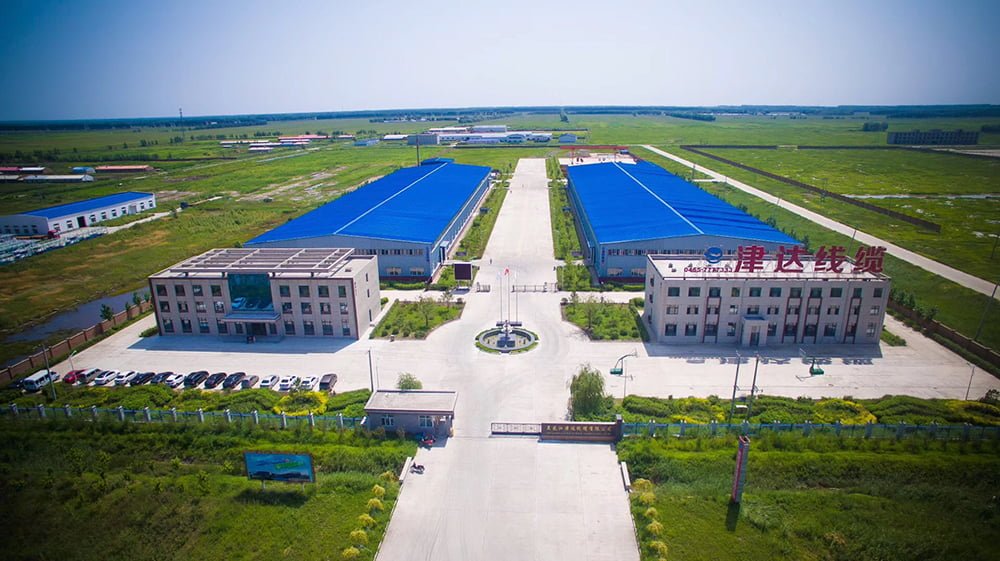
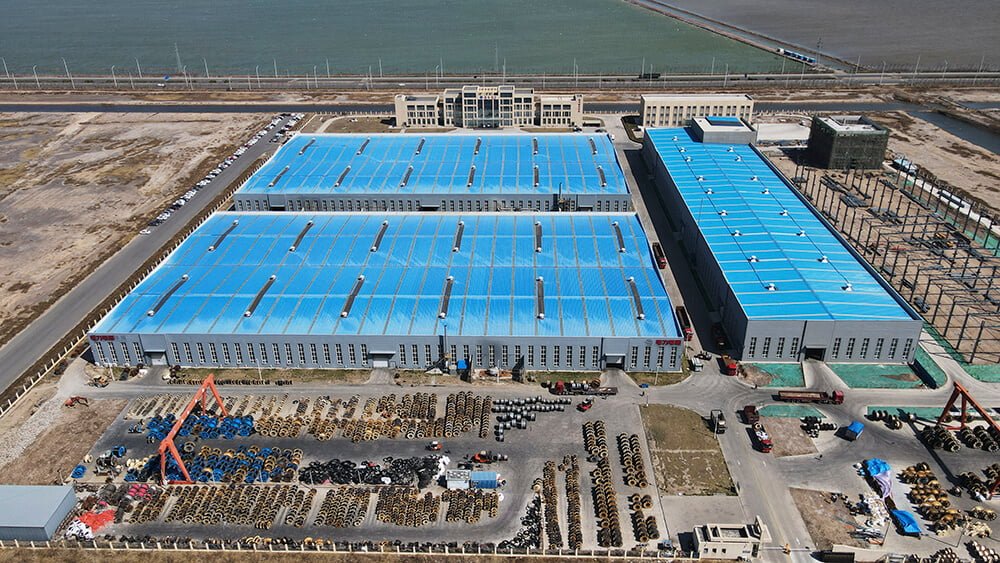
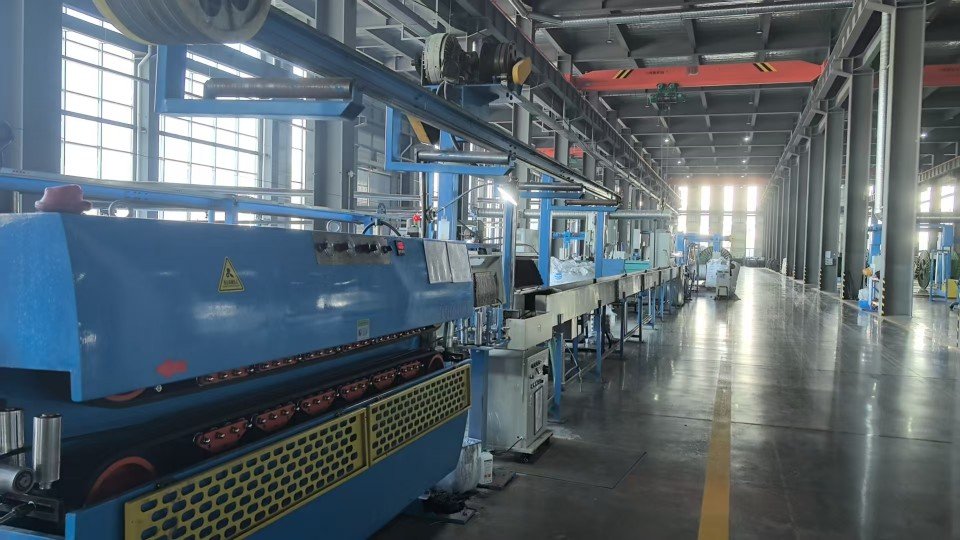
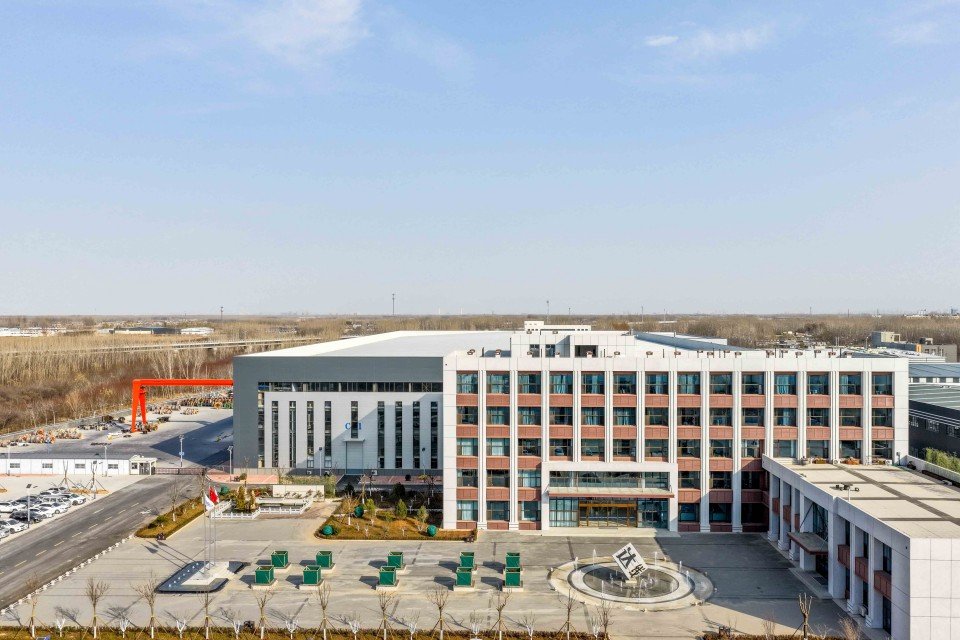
Behind every drum we ship sits a 38-year track record, five production bases under one MES system, and a documentation discipline that gets cables through customs without delays.
-
Every cable tested twice before shipping
Since 1987, our two-stage QC has been refined to a science: routine test on the production line, then full electrical and mechanical re-test before packing. Across 50+ export markets, our return rate stays under 0.3%.
-
Five production bases, 470,000 m², synced via MES
Tianjin, Liaoning, Heilongjiang, Shandong, and Xian — each base runs under one unified MES system. Same recipe, same protocols, same traceability, regardless of which plant ships your order.
-
3,000+ SKUs, custom configurations welcome
Standard sizes ship from inventory. Special voltage grades, color-coding, drum lengths, or armor configurations are routine — submit your spec and our team will quote the lead time honestly.
-
Trusted by EPC contractors in 50+ countries
We supply utilities, mining operators, port authorities, and large industrial OEMs across Europe, the Americas, Southeast Asia, the Middle East, and Africa.
-
Full paperwork shipped with every order
Every shipment includes factory test report, certificate of origin (COO), packing list, and bill of lading (B/L). Customer-nominated witness testing can be arranged before shipment.
Our Track Record
98.7%
On-time shipment rate (last 24 months)
< 0.3%
Return rate across export markets
25 days
Typical sea freight Tianjin → Rotterdam
100%
Shipments with routine test report attached
Logistics & Delivery
Packaging, Shipping & Documentation
What we handle on our side from production floor to the port of loading. Product-specific installation guidance is supplied with the datasheet that accompanies each order.
Packaging
- Wooden or steel drums per IEC 62004
- Coil packaging available for small cross-sections
- Standard drum lengths plus custom lengths on request
- Each drum labeled with type, voltage, cross-section, length, batch
- Waterproof wrapping for export shipments
- Cable ends sealed against moisture ingress
- Private-label / OEM packaging available under NDA
Shipping
- FCL / LCL sea freight, air freight on request
- Trade terms: EXW, FOB, CFR, CIF, DDP
- Ports of loading: Tianjin / Qingdao / Shanghai
- Typical sea freight to Rotterdam: 25 days
- Lead time confirmed at order acknowledgement
- Container loading photos sent before sailing
Documentation
- Factory routine test report (per applicable standard)
- Commercial invoice and packing list
- Certificate of origin (CO) — China Council, FORM A, FORM E available
- Bill of lading (B/L) — original or telex release
- Third-party inspection by SGS / BV / TÜV on request
- Customer-nominated witness testing arranged before shipment