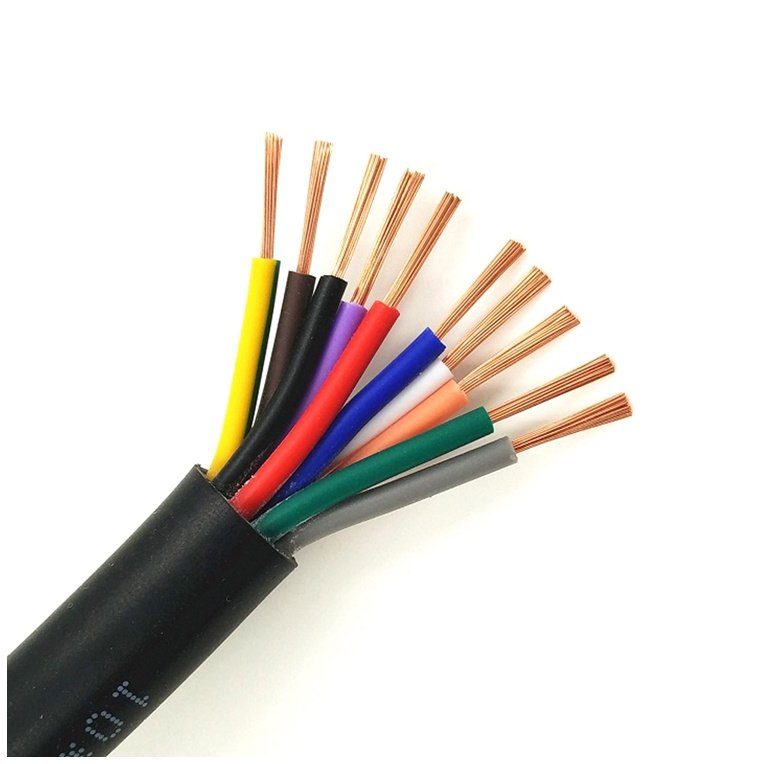
/ 450/750V
Flexible Control Cable
Model: KVVR / Flexible Control Wire
Flexible control cable suitable for dynamic control systems and electrical equipment requiring repeated movement.
- Voltage Rating
- 450/750V
- Number of Cores
- Array
- Cross Section
- 0.75–10 mm²
- Conductor
- Copper
- Armoring
- Unarmored
- MOQ
- ≥ 100 m
Standards & Certifications
- GB/T
- GB/T 9330
Downloads
Specifications
Technical Specifications & Performance
Construction
- Model / Series
- KVVR / Flexible Control Wire
- Voltage Rating
- 450/750V
- Conductor Material
- Copper
- Conductor Class
- Class 5 Flexible
- Cross Section
- 0.75–10 mm²
- Number of Cores
- Array
- Insulation
- PVC
- Sheath
- PVC
- Armoring
- Unarmored
- MOQ
- ≥ 100 m
Performance
- Max. Conductor Temp.
- 70°C
- Min. Bending Radius
- 6 × Cable Outer Diameter
About This Product
Unscreened Flexible Control Wiring for Machines, Panels, and Automation
Flexible Control Cable is the general-purpose, unscreened member of the industrial control-cable family. It is used for control circuits, interlock wiring, machine interconnection, cabinet-to-equipment links, and low-voltage auxiliary circuits where the cable needs to be flexible enough for routing and maintenance, but does not require a copper EMC screen.
For global customers, the common market names include YY control cable, YSLY / JZ-YY / OZ-YY, H05VV5-F when supplied as a harmonised oil-resistant PVC control cable under EN 50525-2-51, and RVV in Chinese-style PVC flexible cable ranges. These names are related, but they are not automatically identical. The purchase order should state voltage rating, core count, conductor size, core identification, sheath material, oil resistance, flame requirement, and certification documents.
The typical industrial version uses IEC 60228 Class 5 flexible copper conductors, PVC insulation, numbered or colour-coded cores, and a PVC or oil-resistant PVC outer sheath. It is normally selected where YY / H05VV5-F is electrically sufficient and where the installation is not exposed to serious electromagnetic interference. If the control circuit runs near inverter outputs, servo drives, welding cables, or other noise sources, step up to a screened CY / H05VVC4V5-K cable. If the cable faces continuous drag-chain movement, specify a purpose-built high-flex chain cable instead.
Cable Structure
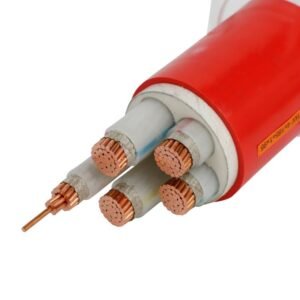
Class 5 Copper, PVC Core Insulation, Laid-Up Cores, PVC Sheath
Flexible control cable keeps the construction deliberately simple: fine-strand conductors for easy routing, compact PVC insulation, multi-core lay-up for control-circuit organisation, and a protective PVC sheath. It is a wiring and interconnection cable, not a heavy-duty power feeder or an EMC-screened drive cable.
-
1
Conductors — Flexible Copper
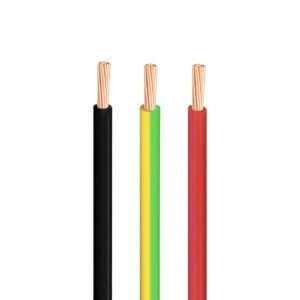
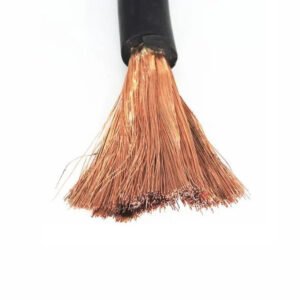
Fine-stranded annealed copper conductors, normally IEC / EN 60228 Class 5, give the cable the flexibility needed for machine frames, cabinets, trays, and terminal boxes. Bare copper is standard for most YY / H05VV5-F control cables; tinned copper can be quoted for specific environments or customer standards.
-
2
Core Insulation — PVC
PVC insulation provides a compact and economical solution for multi-core control wiring. European machine-control cables often use black numbered cores, with green-yellow included in G-type versions. RVV-style cables may use colour-coded cores, so the core identification system should be specified before production.
-
3
Core Lay-Up — Multi-Core Control Format
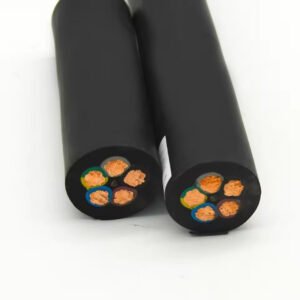
Insulated cores are laid up in layers to maintain a round cable shape and simplify stripping and termination. Higher core counts are useful for PLC I/O bundles and machine modules, while low core counts cover simple interlocks, pilot lamps, sensors, and auxiliary control power.
-
4
Outer Sheath — PVC or Oil-Resistant PVC
The outer sheath protects the cores from normal workshop abrasion and handling. Harmonised H05VV5-F versions use an oil-resistant PVC sheath for industrial applications. Standard sheath colours are usually grey, black, or customer-specified; UV-resistant, LSZH, PUR, or cold-flex compounds require a different specification.
Key Features
Clean, Flexible, Economical Control-Circuit Cable
Flexible control cable is chosen when the application needs organised multi-core wiring and easy routing, but does not need a metallic screen or mechanical armour. It is the baseline control cable from which CY and SY variants are selected when extra protection is needed.
Flexible for Routing and Maintenance
Class 5 copper conductors allow the cable to bend around machine frames, cabinet entries, and cable trays more easily than rigid conductors. It is suitable for flexible installation and occasional movement, but not for continuous guided motion in a cable chain unless a high-flex version is specified.
Numbered Multi-Core Options
Numbered black cores make cabinet wiring and troubleshooting faster because terminal numbers can be matched directly to drawings. G-type versions include a green-yellow protective conductor; X-type versions are supplied without green-yellow where the circuit does not require it.
300/500V Control-Circuit Rating
H05VV5-F and many YY / YSLY industrial control cables are commonly specified at 300/500V. RVV and other regional designations can have different ratings, so the project datasheet and local code should govern any substitution.
Harmonised Options Available
Where European certification matters, specify H05VV5-F under EN 50525-2-51 with HAR marking. For other markets, YY, YSLY, JZ-YY, OZ-YY, or RVV can be supplied with requested factory test reports and compliance documents.
Lower Cost Than Screened CY
Without copper braid or foil screening, flexible control cable is lighter, easier to terminate, and more economical than CY. It is the right default when electromagnetic interference is not a concern and mechanical risk is moderate.
OEM Lengths and Marking
Machine builders can specify drum lengths, metre marking, sheath colour, core numbering, and private sheath legends. For repeat production, fixed drum lengths reduce cutting waste and simplify control-panel assembly planning.
How to Choose
Six Decisions Before Ordering Flexible Control Cable
The key decision is whether an unscreened flexible control cable is enough. If the route is electrically quiet and the cable is used for ordinary control circuits, YY / H05VV5-F is often the cleanest and most economical choice.
Confirm unscreened cable is acceptable
Use flexible control cable where electromagnetic interference is not the dominant risk. If the cable runs close to VFD outputs, servo drives, welding equipment, or high-current switching cables, consider CY / H05VVC4V5-K screened control cable instead.
Choose the market designation
H05VV5-F is the clearest choice when harmonised European documentation is required. YY / YSLY / JZ-YY / OZ-YY are common commercial control-cable names. RVV is common in China and many export markets, but the requested standard and voltage rating should be written explicitly.
Select conductor size by load and voltage drop
Common sizes are 0.5, 0.75, 1.0, 1.5, and 2.5 mm². Small I/O and signal circuits often use 0.5 or 0.75 mm²; auxiliary control power and longer routes may need 1.0, 1.5, or 2.5 mm². The wiring diagram and protective device rating should govern final selection.
Define core count and identification
Choose core count from the terminal schedule, not from a generic catalogue assumption. Specify numbered cores, colour-coded cores, G-type with green-yellow earth, or X-type without green-yellow. For machine builders, numbered cores usually reduce installation and troubleshooting time.
Check oil, temperature, and motion conditions
Standard PVC control cable is mainly for indoor industrial environments. If the cable faces cutting oil, coolant, outdoor sunlight, low-temperature bending, washdown, or continuous motion, specify oil-resistant PVC, PUR, UV-resistant, cold-flex, LSZH, or drag-chain-rated construction as appropriate.
State documentation and packaging
List required documents before ordering: EN 50525-2-51 declaration, IEC 60228 conductor confirmation, IEC 60332-1-2 flame test, RoHS / REACH, factory test report, COO, or third-party inspection. Also specify drum length, cut length, sheath colour, and print legend if the cable feeds an OEM production line.
Applications
Where Flexible Control Cable Works Best
Flexible control cable is a practical default for indoor industrial control circuits where the route is known, the environment is moderate, and the cable does not need screen, armour, or fire-survival performance.
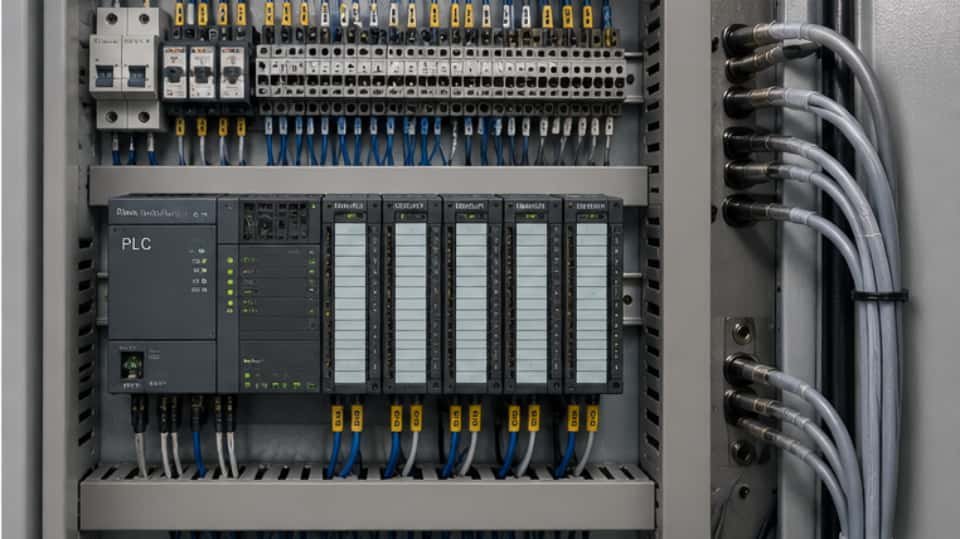
Control Cabinets & Panels
Internal and external cabinet wiring, terminal box links, pilot lights, relays, interlocks, and auxiliary controls. Numbered multi-core cable keeps wiring schedules clean and reduces field wiring errors.
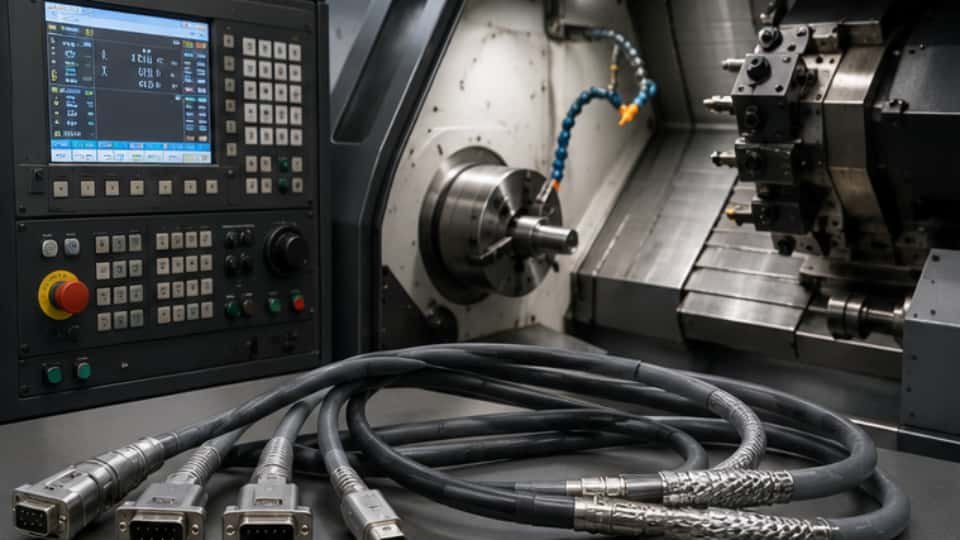
Machine Interconnection
Connections between a main control panel and machine modules, sensors, solenoid valves, limit switches, and operator stations. The cable is easy to route during assembly and maintenance.
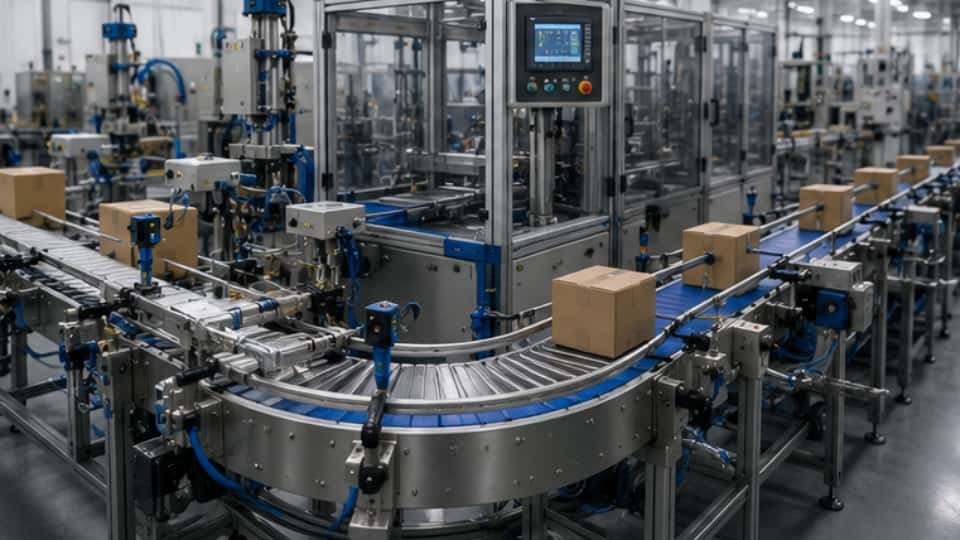
Packaging & Production Lines
Conveyors, filling lines, packaging machines, light assembly equipment, and general factory automation use YY / H05VV5-F for ordinary control circuits where screened cable is unnecessary.

HVAC & Building Controls
Control wiring for air-handling units, pumps, dampers, actuators, and building-control panels where the installation is protected and the electrical noise level is moderate.
Not appropriate for: EMI-sensitive signal circuits near drives or welding equipment (use screened CY / H05VVC4V5-K). VFD motor output (use dedicated EMC motor cable). Continuous drag-chain motion (use high-flex chain cable). Outdoor UV exposure unless UV-resistant sheath is confirmed. Heavy mechanical impact (use SY or armoured cable). Fire survival, mining, welding, or submersible applications require dedicated cable types.
Technical Data
Flexible Control Cable Selection Reference
Use this table as a purchasing guide. Exact outside diameter, weight, current capacity, and bend radius depend on core count, conductor size, sheath compound, and certification route, so final values should come from the issued datasheet.
| Item | Typical Specification | Engineering Note |
|---|---|---|
| Product names | YY, YSLY, JZ-YY, OZ-YY, H05VV5-F, RVV | Names vary by market; always define construction and standard. |
| Rated voltage | 300/500V common for H05VV5-F and many YY ranges | RVV and local variants must be checked against the requested standard. |
| Conductor | IEC / EN 60228 Class 5 flexible copper | Bare copper standard; tinned copper on request. |
| Cross-section | 0.5 to 2.5 mm² common; larger sizes quoted by range | Select by circuit current, protection, voltage drop, and terminal size. |
| Core count | 2 to high multi-core counts depending on series | Use the terminal schedule; include spare cores only when useful. |
| Core identification | Numbered black cores or colour-coded cores | Specify G-type with green-yellow or X-type without green-yellow. |
| Screen | None | If EMC protection is needed, choose CY / H05VVC4V5-K instead. |
| Insulation / sheath | PVC / PVC; oil-resistant PVC for H05VV5-F | PUR, LSZH, UV-resistant, or cold-flex compounds require separate specification. |
| Operating temperature | Typical PVC flexible-service range around -5°C to +70°C | Final range depends on compound and certification. |
| Flame behaviour | IEC / EN 60332-1-2 when specified | Do not assume LSZH or fire survival performance from PVC cable. |
| Packaging | Coils, reels, or drums by size and order length | Custom drum length and sheath printing available on request. |
H05VV5-F is a harmonised, oil-resistant PVC flexible control cable under EN 50525-2-51 at 300/500V when supplied with the correct certification. YY / YSLY / RVV equivalents should be checked against the project datasheet before substitution.
For electrically noisy routes, do not rely on unscreened flexible control cable. Use a screened CY / H05VVC4V5-K cable or another EMC-specified construction according to the equipment manufacturer’s installation instructions.
Comparison
Choosing Between YY, CY, SY, and High-Flex Chain Cable
Flexible control cable is the baseline unscreened product. The alternatives add EMC protection, mechanical protection, or motion performance. Selecting the right family prevents both under-specification and unnecessary cost.
| Attribute | YY / Flexible Control | CY / Screened Control | SY / Steel Wire Braid Control | High-Flex Chain Cable |
|---|---|---|---|---|
| Primary purpose | General flexible control wiring | Control wiring with EMC screen | Control wiring with extra mechanical protection | Continuous guided movement |
| Screen / protection | No screen | Copper braid or foil screen | Steel wire braid, mainly mechanical | Special strand, insulation, and sheath design |
| Typical use | Panels, machines, auxiliary controls | Noisy control circuits, sensors, PLC I/O near drives | Factory floors with abrasion risk | Drag chains, moving axes, automated handling |
| Cost level | Lowest in the family | Higher because of copper screen | Higher because of braid and diameter | Highest because of motion design and testing |
| Do not use when | EMC or heavy mechanical risk dominates | Armour or continuous flexing is required | EMC screen performance is the main requirement | Static general wiring can use lower-cost YY |
When to choose this product
Choose flexible control cable when the circuit is ordinary control, interlock, auxiliary power, panel wiring, or machine interconnection, and the installation is protected from serious EMI, crushing, outdoor weather, and continuous motion.
When to choose an alternative
Use CY for EMC-sensitive circuits, SY for mechanical abrasion risk, PUR chain cable for continuous motion, LSZH control cable for public-building fire requirements, and dedicated EMC motor cable for inverter-to-motor output.
Frequently Asked Questions
Common Questions From Machine Builders and Panel Manufacturers
Is Flexible Control Cable the same as YY cable?
In many English-language catalogues, yes: YY is the common commercial name for unscreened flexible PVC control cable. However, YY is not a single universal standard. For export orders, specify the construction and standard, such as H05VV5-F to EN 50525-2-51 when harmonised European certification is required.
When should I choose CY instead?
Choose CY when the control circuit is vulnerable to electromagnetic interference or routed close to drives, servo equipment, contactors, welding equipment, or high-current switching cables. CY adds an overall screen; YY / flexible control cable is unscreened and should be used only where that is acceptable.
Is H05VV5-F always oil-resistant?
H05VV5-F is normally specified as a harmonised flexible PVC control cable with oil-resistant sheath under EN 50525-2-51. Still, the actual oil test, sheath compound, and approval documents should be confirmed on the datasheet and factory declaration, especially for OEM export projects.
Can it be used in drag chains?
Standard flexible control cable is not a continuous drag-chain cable. It can handle installation bending and occasional movement, but repeated guided motion requires a high-flex chain cable with suitable conductor stranding, insulation, sheath material, bend radius, and tested cycle life.
Can RVV replace H05VV5-F?
Only after checking the required standard, voltage rating, conductor class, oil resistance, flame test, core identification, and approval marks. RVV is a broad Chinese-style PVC flexible cable designation; H05VV5-F is a harmonised European control cable designation. They should not be substituted by name alone.
What information should I send for quotation?
Send model or standard, voltage rating, core count, conductor size, G-type or X-type core arrangement, sheath colour, oil or flame requirements, order length, drum length, destination country, and required certificates. If replacing an existing cable, send a photo of the sheath marking or the original datasheet.
Installation & Handling Tips
Six Practices for Reliable Control-Cable Installations
Flexible control cable is easy to install, but failures still happen when it is pulled, bent, routed, or specified like a different cable family. These practices keep the installation clean and predictable.
Keep noisy power cables separate
Because the cable is unscreened, route it away from VFD outputs, welding cables, large motor feeders, and high-current switching circuits. If separation is impossible, use a screened control cable instead.
Respect bending radius at glands
Tight bends at cabinet entries and cable glands stress the conductor strands and sheath. Use the datasheet bend radius and allow extra space for high-core-count cables.
Use strain relief at moving equipment
At doors, operator stations, and machine modules, use proper clamps or glands so the cable is not hanging from the conductor terminations. Most field failures start at unsupported entry points.
Do not use standard YY in cable chains
A cable chain bends the cable thousands or millions of times. Standard flexible control cable is not designed for that duty. Specify high-flex chain cable when the machine axis moves every cycle.
Match sheath to oils and cleaners
If the cable is exposed to cutting oil, coolant, lubricants, or cleaning chemicals, specify oil-resistant PVC or another suitable compound. Generic PVC may harden, swell, or crack in the wrong chemical environment.
Test before commissioning
After installation, verify conductor continuity, insulation resistance, terminal identification, and protective conductor continuity where applicable. Testing catches crushed cores, wrong terminations, and cut-sheath damage before the machine is energised.
Safety note: Final cable selection and installation must follow the electrical code, machinery standard, and documentation requirements of the destination market. Flexible control cable is for control and auxiliary circuits; do not substitute it for screened, armoured, fire-rated, VFD, or continuous-motion cable where those functions are required.
Manufacturing Capability
Why Source From Jinda Cable
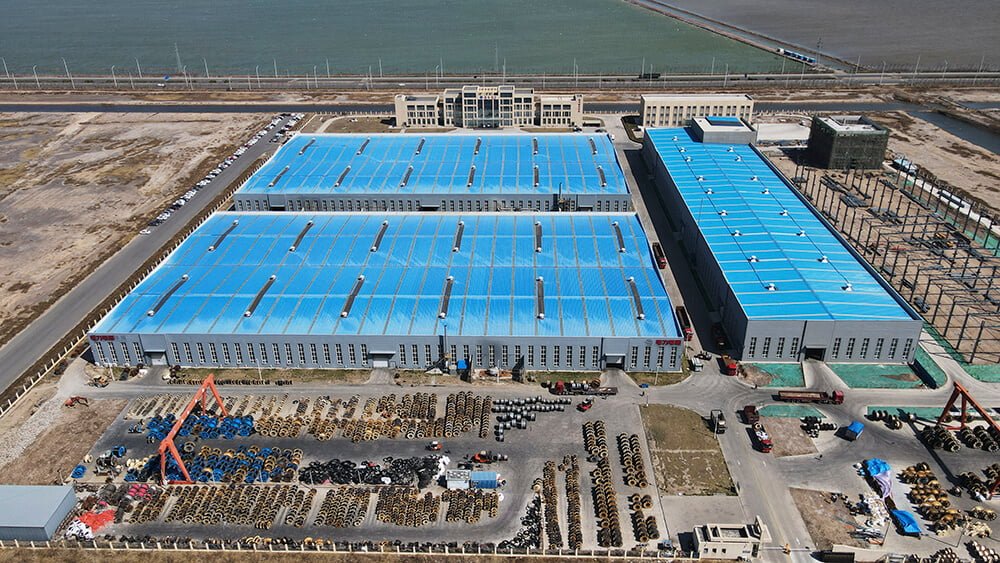
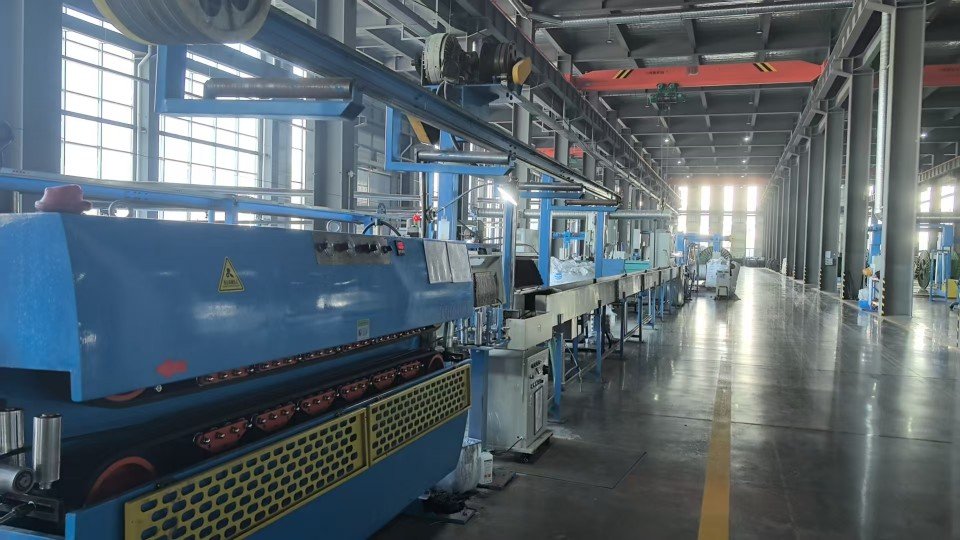
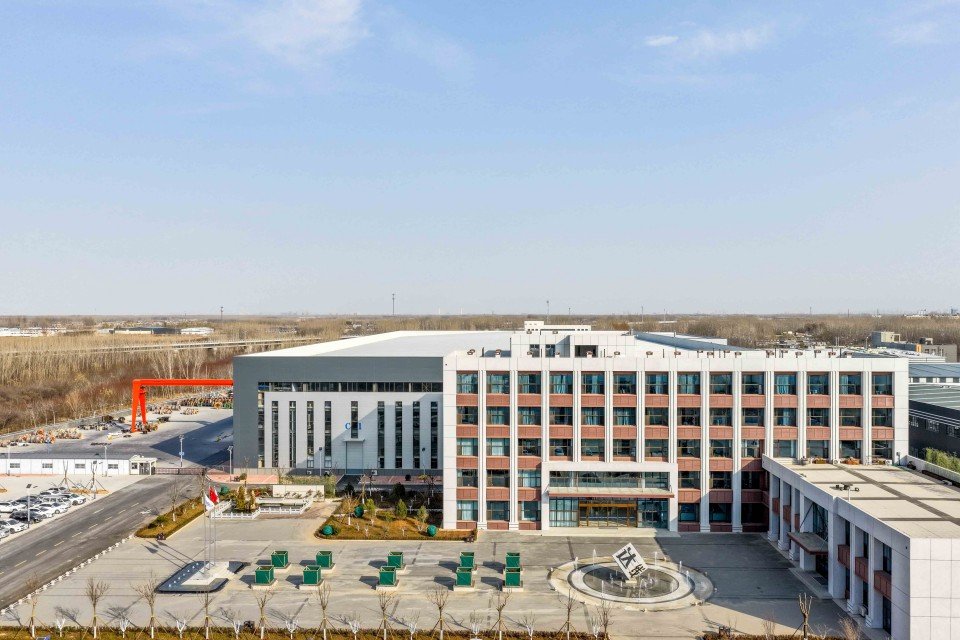
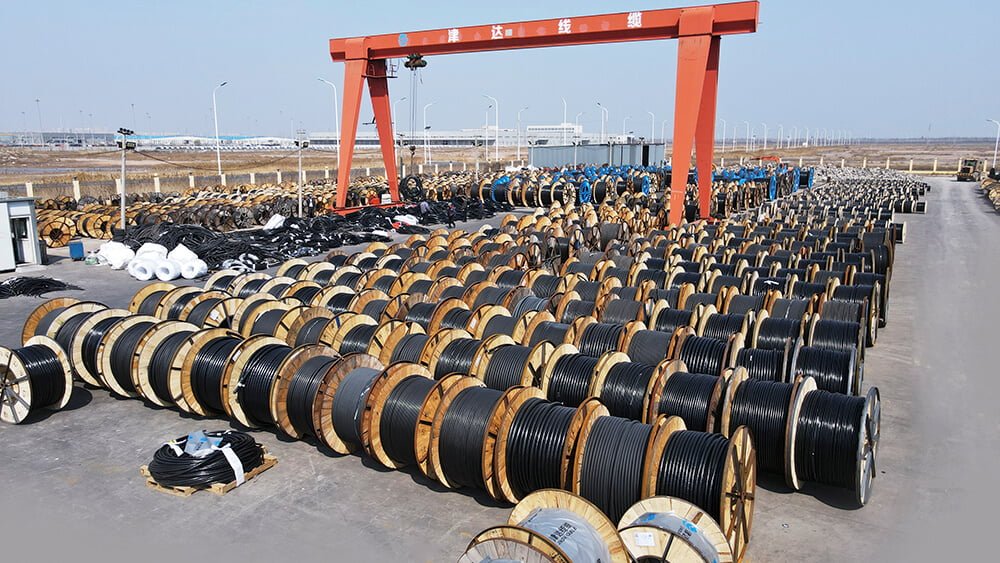
Behind every drum we ship sits a 38-year track record, five production bases under one MES system, and a documentation discipline that gets cables through customs without delays.
-
Every cable tested twice before shipping
Since 1987, our two-stage QC has been refined to a science: routine test on the production line, then full electrical and mechanical re-test before packing. Across 50+ export markets, our return rate stays under 0.3%.
-
Five production bases, 470,000 m², synced via MES
Tianjin, Liaoning, Heilongjiang, Shandong, and Xian — each base runs under one unified MES system. Same recipe, same protocols, same traceability, regardless of which plant ships your order.
-
3,000+ SKUs, custom configurations welcome
Standard sizes ship from inventory. Special voltage grades, color-coding, drum lengths, or armor configurations are routine — submit your spec and our team will quote the lead time honestly.
-
Trusted by EPC contractors in 50+ countries
We supply utilities, mining operators, port authorities, and large industrial OEMs across Europe, the Americas, Southeast Asia, the Middle East, and Africa.
-
Full paperwork shipped with every order
Every shipment includes factory test report, certificate of origin (COO), packing list, and bill of lading (B/L). Customer-nominated witness testing can be arranged before shipment.
Our Track Record
98.7%
On-time shipment rate (last 24 months)
< 0.3%
Return rate across export markets
25 days
Typical sea freight Tianjin → Rotterdam
100%
Shipments with routine test report attached
Logistics & Delivery
Packaging, Shipping & Documentation
What we handle on our side from production floor to the port of loading. Product-specific installation guidance is supplied with the datasheet that accompanies each order.
Packaging
- Wooden or steel drums per IEC 62004
- Coil packaging available for small cross-sections
- Standard drum lengths plus custom lengths on request
- Each drum labeled with type, voltage, cross-section, length, batch
- Waterproof wrapping for export shipments
- Cable ends sealed against moisture ingress
- Private-label / OEM packaging available under NDA
Shipping
- FCL / LCL sea freight, air freight on request
- Trade terms: EXW, FOB, CFR, CIF, DDP
- Ports of loading: Tianjin / Qingdao / Shanghai
- Typical sea freight to Rotterdam: 25 days
- Lead time confirmed at order acknowledgement
- Container loading photos sent before sailing
Documentation
- Factory routine test report (per applicable standard)
- Commercial invoice and packing list
- Certificate of origin (CO) — China Council, FORM A, FORM E available
- Bill of lading (B/L) — original or telex release
- Third-party inspection by SGS / BV / TÜV on request
- Customer-nominated witness testing arranged before shipment
Get in Touch
Request a Quote for
Flexible Control Cable
What You'll Receive
- Technical quotation with itemized FOB / CIF pricing
- Sample factory test report from a previous shipment
- Realistic lead time including raw-material procurement
- Direct contact with the assigned sales engineer


Email
info@jindacablegroup.comResponse Time
Within 1 business day
Related Products