/ 450/750V
Heavy Duty Rubber Weather-Resistant Cable
Model: YCW / SOOW
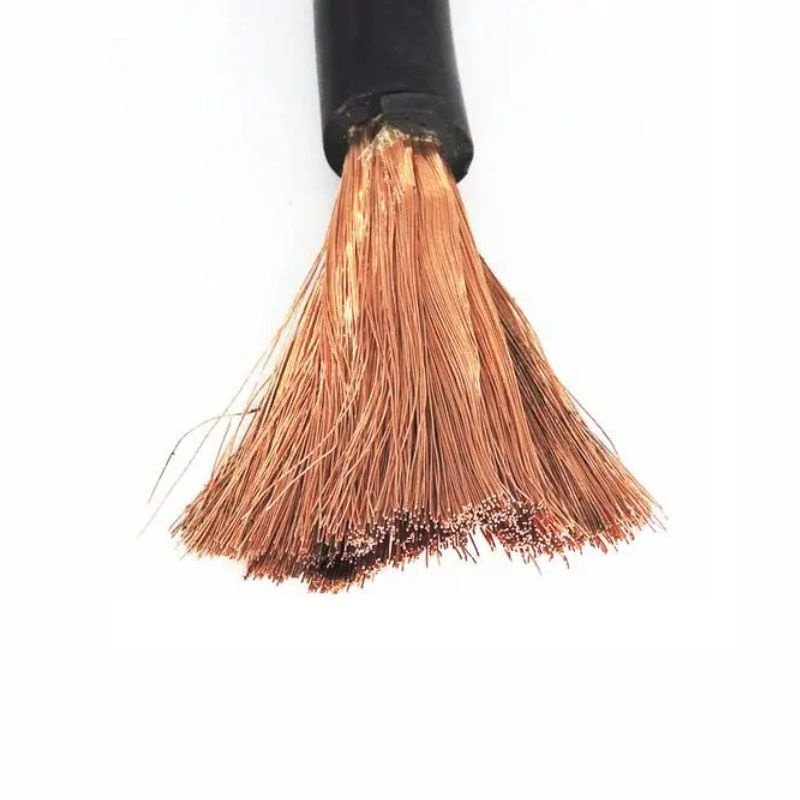
Heavy duty weather-resistant rubber cable designed for outdoor industrial applications with excellent durability and flexibility.
- Voltage Rating
- 450/750V
- Number of Cores
- Array
- Cross Section
- 1.5–240 mm²
- Conductor
- Copper
- Armoring
- Unarmored
- MOQ
- ≥ 100 m
Standards & Certifications
- IEC
Downloads
Specifications
Technical Specifications & Performance
Construction
- Model / Series
- YCW / SOOW
- Voltage Rating
- 450/750V
- Conductor Material
- Copper
- Conductor Class
- Class 5 Flexible
- Cross Section
- 1.5–240 mm²
- Number of Cores
- Array
- Insulation
- Rubber
- Sheath
- Rubber
- Armoring
- Unarmored
- MOQ
- ≥ 100 m
Performance
- Max. Conductor Temp.
- 60°C
- Min. Bending Radius
- 6 × Cable Outer Diameter
About This Product
The Workhorse Rubber Cable for Mobile Industrial Power
Heavy Duty Rubber Weather-Resistant Cable (model designation YCW per the Chinese national standard GB/T 5013.4 — Y=rubber, C=heavy duty, W=weather resistant; internationally known as H07RN-F per EN 50525-2-21 and 60245 IEC 66 per IEC 60245-4) is the standard heavy-duty multi-core flexible power cable used worldwide for any mobile, outdoor, or temporary 450/750V industrial AC distribution. Where the YH welding cable in the family is a single-core conductor for low-voltage high-current welding work, YCW is the multi-core power cable for three-phase industrial loads on the move — port cranes, mobile generators, construction-site distribution, agricultural pumps, outdoor stage lighting, mining surface equipment.
The construction follows the same Class 5 flexible copper conductor philosophy as YH, but adds the multi-core cabling and the dedicated weather-resistant chloroprene rubber (CR/PCP) outer sheath that distinguishes the "W" variant from indoor-only YC. The sheath compound resists UV degradation, ozone cracking, oil contamination, abrasion against concrete and steel, and the freeze-thaw cycling that destroys thermoplastic-jacketed cables in outdoor service. EPR insulation rated to 90°C conductor temperature gives generous ampacity headroom; the rubber stays flexible from −25°C upward, so the cable installs and operates through Northern Hemisphere winters without becoming brittle.
Production follows GB/T 5013.4-2008 (Chinese national standard, harmonised with IEC 60245-4) plus JB/T 8735.2-2016 for the rubber compound additional requirements. Export to European markets follows EN 50525-2-21 and carries the HAR certification mark. Jinda manufactures the YCW / H07RN-F family at our Tianjin and Henan bases on the same dedicated rubber-extrusion and vulcanisation lines used for the YH welding cable family. Standard lead time is 15 to 25 days; supplied in 100 m or 200 m coils for small-quantity orders and 500 m or 1,000 m drums for industrial projects.
Cable Structure
Multi-Core Construction Engineered to Drag Through Anything
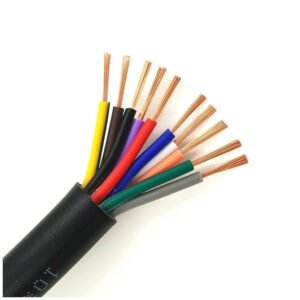
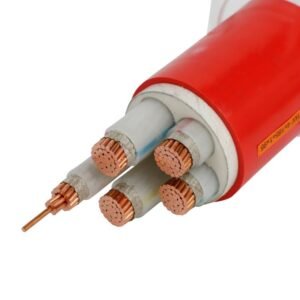
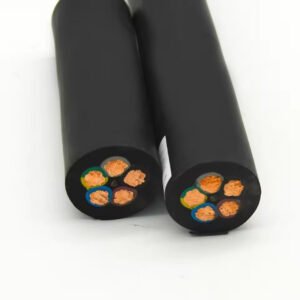
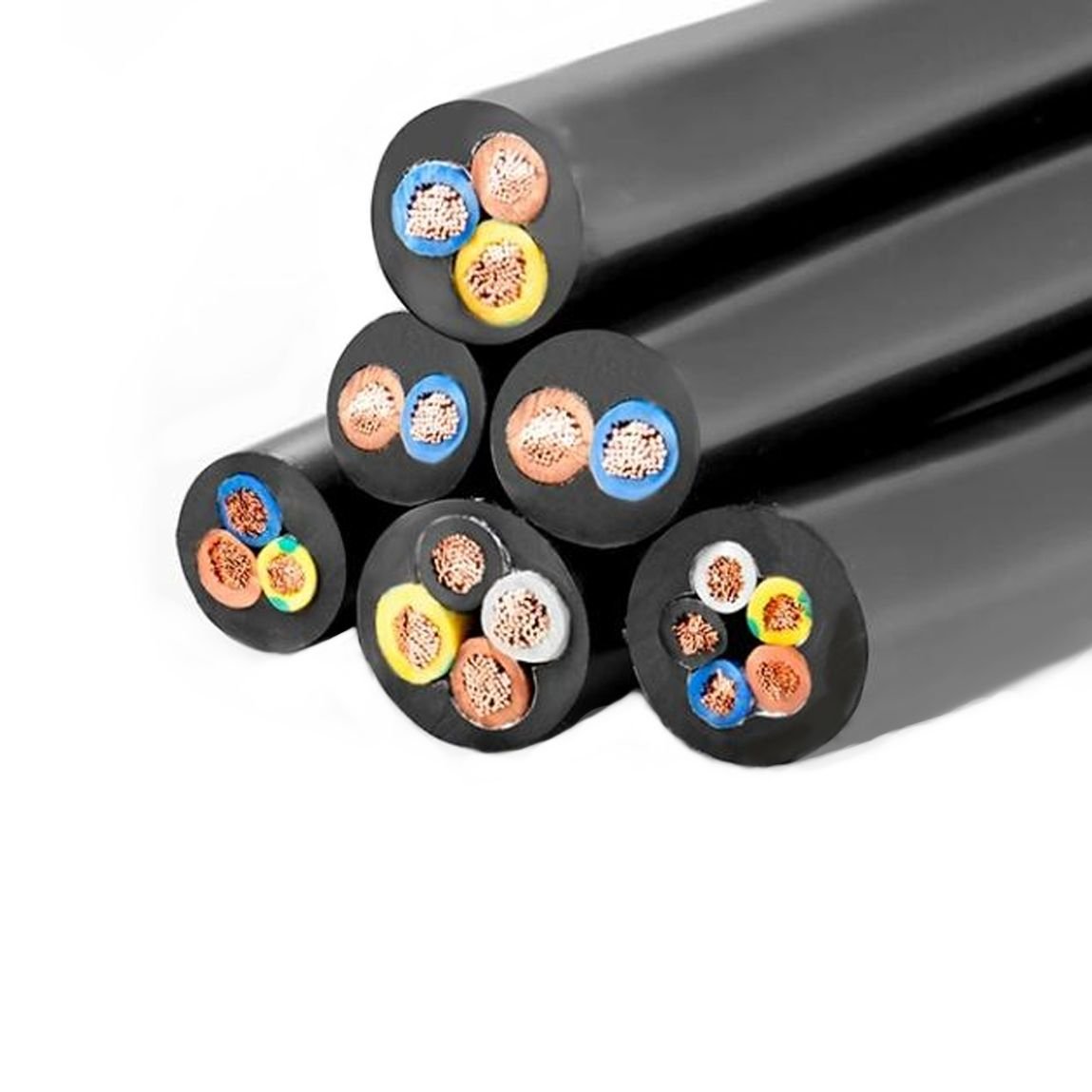
YCW is the standard heavy-duty rubber cable construction: stranded copper cores, individually insulated with EPR, twisted together with filler, then jacketed in a thick weather-resistant chloroprene rubber sheath. Every layer is chosen to survive abuse rather than to optimise electrical performance — the cable accepts being dragged, walked-on, run-over, oil-soaked, frozen, and UV-baked, and keeps delivering three-phase power.
-
1
Conductors — Class 5 Flexible Copper
Annealed bare copper (or tinned copper for export markets and corrosive environments), fine-strand construction per IEC 60228 Class 5. Each core is stranded from 0.20 mm individual wires — typically 56 strands for 4 mm², 200+ strands for 25 mm², 400+ for 50 mm². The fine-strand construction is what gives the cable its drag-and-bend capability without strand fracture or work-hardening.
-
2
Insulation — Ethylene Propylene Rubber (EPR)
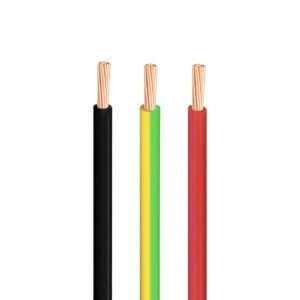
Vulcanised EPR insulation per IEC type EI 4. Each core gets its own colour-coded insulation layer per HD 308 S2: brown/black/grey for phases, blue for neutral, green-yellow for protective earth (PE). EPR retains its dielectric and mechanical properties through the full −25°C to +90°C service range, far better than PVC at temperature extremes.
-
3
Cabling & Filler — Rubber-Compatible
Insulated cores are twisted together with a lay length tuned for flexibility (shorter lay = more flexible cable, more copper per metre). Rubber-compatible fillers fill the interstices between cores to give the cable a circular cross-section and ensure all cores share mechanical load when the cable bends. A non-hygroscopic separator tape wraps over the cabled cores before the outer sheath is extruded.
-
4
Outer Sheath — Chloroprene Rubber (CR / PCP) Heavy-Duty
Vulcanised chloroprene (polychloroprene, PCP, also known as neoprene) outer sheath per IEC type EM 2. The chloroprene compound is what makes YCW genuinely weather-resistant: excellent UV stability (the trade-name “neoprene” was originally an aerospace material for this reason), resistance to ozone cracking, resistance to mineral oils and fuels, flame retardant per IEC 60332-1-2, and AD8 water resistance. Sheath colour is typically black; orange available on request for high-visibility applications (event power, construction site temporary distribution).
Key Features
Why YCW Is the Default Outdoor Industrial Power Cable
PVC cable can be flexible. PVC cable can be heavy-duty. PVC cable can be weather-resistant. But no single PVC cable construction delivers all three at once at this price point, which is why YCW / H07RN-F has dominated mobile industrial power for four decades. The six features below are what the GB/T 5013.4 / IEC 60245-4 / EN 50525-2-21 standards collectively guarantee.
UV, Ozone & Weather Resistant
The chloroprene rubber sheath was originally formulated by DuPont in 1930 as a UV-stable, oil-resistant synthetic rubber for aerospace and outdoor industrial applications. Its weather performance is the defining advantage over PVC-sheathed cables: 5+ years of continuous direct sunlight without surface cracking, no ozone-induced surface fissures, no flexibility loss under freeze-thaw cycling.
AD8 Water Resistant, Suitable for Wet Sites
AD8 classification per IEC 60364-5-51 covers occasional immersion and water-jet exposure — construction sites in rain, port equipment in salt spray, sewage and water treatment plant operations. The submersion variant H07RN-8-F (suffix “8”) extends this to continuous immersion up to 10 m water depth on request, for fountain pumps and submersible mobile equipment.
Extra-Flexible Class 5 Multi-Core
Fine-strand Class 5 copper in each core plus a thick rubber sheath gives the cable the flexibility needed for cable reels, cable drums, and dragged-along installations. Minimum bending radius is 6× OD for flexing service and 4× OD for fixed installation — significantly tighter than typical XLPE armored cable, allowing routing through tighter equipment compartments.
−25°C to +60°C Flexing / +90°C Fixed
Continuous flexing service from −25°C winter to +60°C conductor temperature; fixed installation up to +90°C (the EPR insulation rating). Short-circuit rating 250°C for 5 seconds. Rubber compounds stay genuinely flexible at −25°C — standard PVC turns brittle and cracks below −10°C, making it unsuitable for outdoor winter use in temperate climates.
Oil, Grease & Chemical Resistance
Chloroprene rubber sheath resists mineral oils, hydraulic fluids, motor oils, diesel fuel, lubricating greases, and most agricultural chemicals without swelling or stress cracking. Critical for port machinery (hydraulic spills), agricultural irrigation pumps (fertilizer runoff), construction-site mobile generators (diesel handling), and any environment where the cable contacts industrial fluids.
CCC, HAR & CPR Multi-Market Certified
YCW per GB/T 5013.4-2008 with CCC certification for the Chinese domestic market. H07RN-F per EN 50525-2-21 with HAR mark for the EU market and CPR Eca classification per EN 50575. 60245 IEC 66 for international harmonised export markets. CE, CB, SAA (Australia), SGS, BV available on quotation. Specify which markets at order so the testing and stamping happen on the same production run.
How to Choose
Six Decisions Before You Place the Order
YCW selection comes down to ampacity, core count, environmental exposure, and target-market certification. Get the cross-section right for the actual load (rubber cable derates more than PVC under bundled conditions), pick W (weather-resistant) for any outdoor use, and specify the right certification mark for the destination market.
Choose YCW (weather-resistant) over YC (indoor)
If the cable will see any outdoor exposure — even occasional — specify YCW with the W (weather-resistant) suffix and chloroprene outer sheath. The non-W YC variant uses natural rubber compound and degrades within a year of outdoor UV exposure. The cost premium for the W variant is typically 5 to 10 percent — trivial compared to the cost of cable replacement after weather damage. Reserve YC for purely indoor shop-floor use where the cable never leaves the building.
Pick the core count for the load type
3-core (3+E or 3G) for three-phase loads up to ~50 A: most portable industrial tools, smaller mobile generators, basic site distribution. 4-core (3+N+E or 4G) for three-phase + neutral loads: workshop temporary supply, agricultural pumps, larger portable generators. 5-core (3+N+E) for larger three-phase circuits requiring full neutral plus separate PE. Single-core 16-400 mm² for high-current battery interconnects, large mobile generator outputs, and substation tie-in cables. 7+ cores in small cross-section for control wiring and instrumentation.
Size the cross-section for ampacity AND voltage drop
Typical YCW ampacities at 30°C ambient: 4 mm² ~32 A, 6 mm² ~41 A, 10 mm² ~57 A, 16 mm² ~76 A, 25 mm² ~101 A, 35 mm² ~125 A, 50 mm² ~151 A, 70 mm² ~192 A. For long temporary-power runs (over 30 m), voltage drop is usually the limiting factor before thermal capacity — oversize by one cross-section step to keep voltage drop under 5 percent end-to-end. Coiled-on-drum installation reduces ampacity by 30 to 50 percent vs uncoiled — never operate a cable still wound on its reel at full ampacity, the heat builds up inside the coil.
YCW vs H07RN-F: same cable, different market certification
For Chinese domestic projects, specify YCW per GB/T 5013.4-2008 with CCC mark. For European export, specify H07RN-F per EN 50525-2-21 with HAR mark and CPR classification. For Middle East, Asia, Latin America, and African export, 60245 IEC 66 per IEC 60245-4 is the international harmonised designation. We can produce the same physical cable carrying multiple certifications at once if the buyer needs cross-market flexibility — tell us all target markets at order.
Decide on conductor: bare or tinned copper
Bare annealed copper is the default and works well for normal indoor and outdoor industrial environments. Tinned copper adds approximately 10 to 15 percent to cable cost and is necessary for: port equipment (continuous salt spray), shipyard temporary power (marine atmosphere), agricultural buildings near livestock (ammonia), chemical plants (acidic vapors), or any installation where the cable may be cut and left with exposed strand ends during work breaks. Tinning prevents copper sulfide corrosion that would otherwise creep through the strands by capillary action.
Specify packaging based on use case
100 m / 200 m coils for distribution stock and small site quantities — deployable by one or two workers without specialised equipment. 500 m / 1,000 m drums for project sites where cable is cut to length on site and installed in long runs. 305 m coils for North American export (1,000 ft equivalent). For container-load utility-scale orders, mixed-cross-section pallets reduce shipping cost; ask for the full project quotation when ordering 30 km+ of cable across multiple cross-sections.
Applications
Wherever Mobile Industrial Power Has To Survive Outdoor Service
YCW / H07RN-F is the universal mobile-power cable across heavy industry. The four scenarios below cover the bulk of demand; the cable construction is the same across them, only the cross-section, core count, and certification regime varies by project. The HAR-marked variant is one of the highest-volume cable products in European industrial supply by metres shipped per year.
Port Machinery & Container Handlers
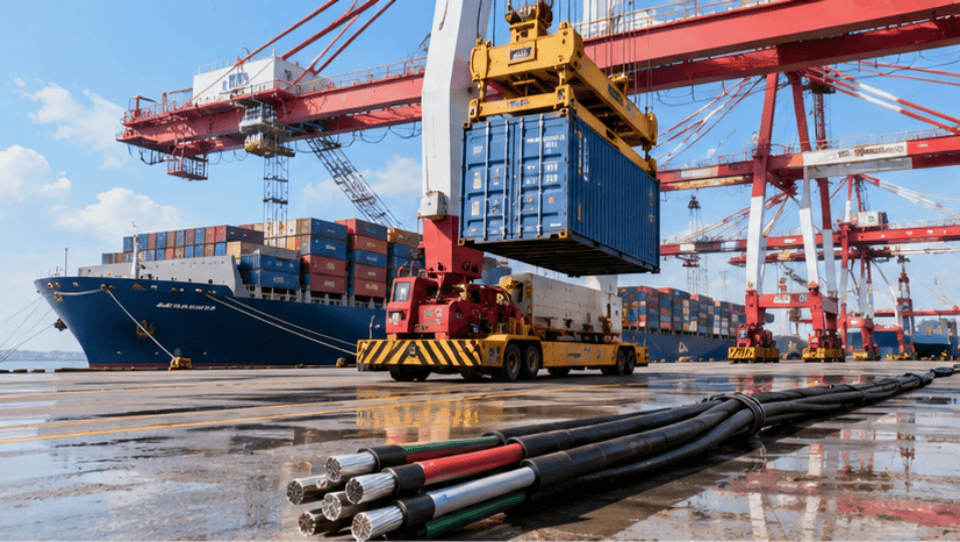
Container gantry cranes, ship-to-shore loaders, reach stackers, port mobile cranes. Salt-spray atmosphere mandates tinned copper conductor. The cable spends its life dragged across concrete and steel quay surfaces during equipment repositioning, demanding the heavy chloroprene sheath. 4-core or 5-core 25 to 95 mm² for crane motor feeders is the typical specification.

Construction Site Temporary Power
Tower-crane power feeders, concrete pump distribution, site office and welfare power, large portable tools, tower lighting. Cables are dragged through mud, walked-on by site traffic, and frozen-thawed through winter construction. 3-core 2.5 to 16 mm² for general site distribution, 5-core 25 to 50 mm² for tower-crane main feed. Orange sheath colour is common for visibility on busy sites.
Agriculture, Irrigation & Water Treatment
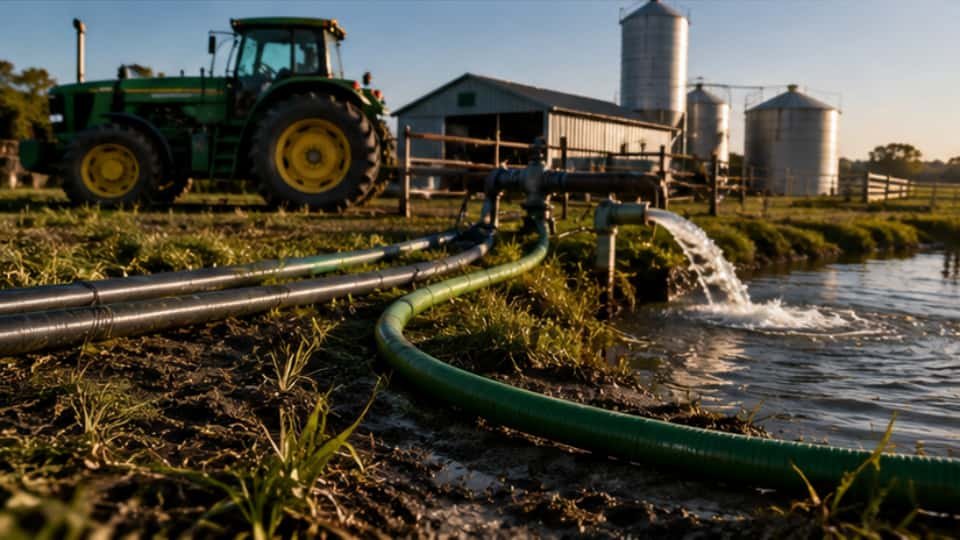
Large-scale irrigation pumps, livestock barn equipment, grain handling machinery, dairy parlour milking systems, fish-farm aerators. Outdoor exposure plus contact with fertilizer, manure, and process water demands the chloroprene jacket. Water treatment plants and sewage works use YCW for portable pumps, mixers, and aeration equipment in wet sumps. Tinned copper for livestock environments (ammonia atmosphere).
Events, Stage Power & Mobile Gensets
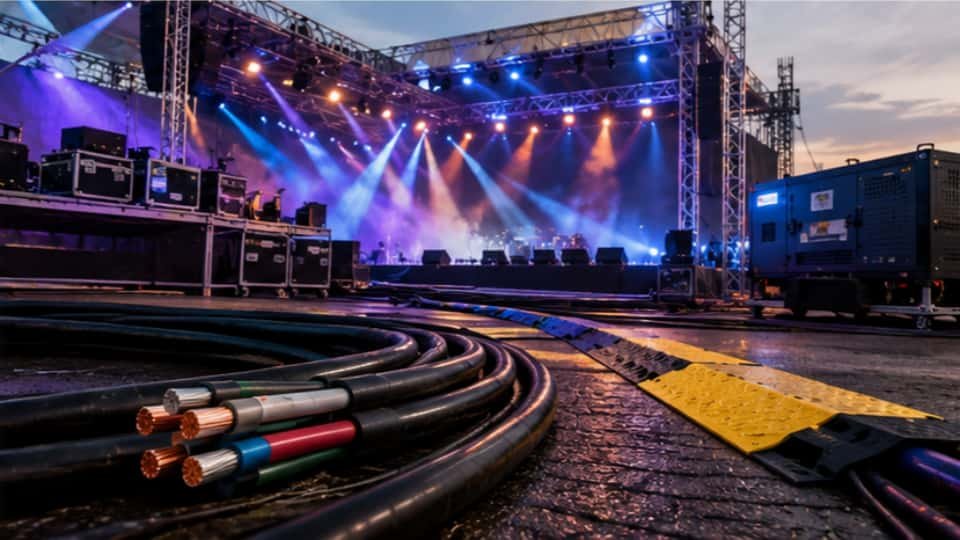
Concert stage power distribution, outdoor festival mains supply, broadcast OB-van feeders, theatrical lighting trusses, mobile diesel generator outputs. Often run across pedestrian areas (cable ramps required), exposed to weather, deployed and recoiled repeatedly. 3 or 5-core in 4 to 35 mm² for most distribution; single-core 50 to 185 mm² for high-current festival main supply. Compliance with CPR Eca minimum is mandatory for EU events.
Not appropriate for: Permanent building wiring (use WDZ-YJY LSZH cable — YCW is wasteful for static installations and the rubber sheath is harder to terminate at fixed switchgear). Arc welding circuits (use the dedicated YH / H01N2-D single-core welding cable). Coal mine portable equipment (use MCP / MYPT mining trailing cable with MT 818 compliance and built-in screening). Direct burial without protection (the chloroprene jacket survives ground contact but not rodent attack; bury in conduit). High-voltage applications above 1 kV (specify YCJ or YJV armored cable instead).
Technical Data
YCW / H07RN-F 4-Core 450/750V Standard Sizes
Reference values for 4-core YCW (3+E configuration, 450/750V) per GB/T 5013.4-2008 / EN 50525-2-21. Ampacity is for free-air installation at 30°C ambient with 60°C conductor temperature (the flexing-service rating). For fixed installation at +90°C conductor temperature, ampacity rises by approximately 15 to 20 percent — consult the formal technical quotation. Single-core, 3-core, 5-core, and submersible variants are quoted alongside on request.
| Cores & Size | Strand Construction | Approx. Cable OD | DC Resistance (max, 20°C) | Ampacity (free air, 30°C) | Approx. Weight |
|---|---|---|---|---|---|
| 4G1.5 mm² | 30 / 0.25 mm | ~ 12.8 mm | 13.3 Ω/km | 18 A | ~ 260 kg/km |
| 4G2.5 mm² | 50 / 0.25 mm | ~ 14.4 mm | 7.98 Ω/km | 25 A | ~ 370 kg/km |
| 4G4 mm² | 56 / 0.30 mm | ~ 16.0 mm | 4.95 Ω/km | 32 A | ~ 510 kg/km |
| 4G6 mm² | 84 / 0.30 mm | ~ 17.8 mm | 3.30 Ω/km | 41 A | ~ 690 kg/km |
| 4G10 mm² | 80 / 0.40 mm | ~ 20.5 mm | 1.91 Ω/km | 57 A | ~ 1,000 kg/km |
| 4G16 mm² | 128 / 0.40 mm | ~ 23.5 mm | 1.21 Ω/km | 76 A | ~ 1,400 kg/km |
| 4G25 mm² | 196 / 0.40 mm | ~ 28.0 mm | 0.780 Ω/km | 101 A | ~ 2,070 kg/km |
| 4G35 mm² | 276 / 0.40 mm | ~ 31.5 mm | 0.554 Ω/km | 125 A | ~ 2,800 kg/km |
| 4G50 mm² | 396 / 0.40 mm | ~ 36.0 mm | 0.386 Ω/km | 151 A | ~ 3,850 kg/km |
| 4G70 mm² | 360 / 0.50 mm | ~ 41.0 mm | 0.272 Ω/km | 192 A | ~ 5,300 kg/km |
| 4G95 mm² | 475 / 0.50 mm | ~ 46.5 mm | 0.206 Ω/km | 232 A | ~ 6,950 kg/km |
| 4G120 mm² | 608 / 0.50 mm | ~ 51.5 mm | 0.161 Ω/km | 269 A | ~ 8,700 kg/km |
| 4G150 mm² | 760 / 0.50 mm | ~ 56.5 mm | 0.129 Ω/km | 309 A | ~ 10,500 kg/km |
| 4G185 mm² | 925 / 0.50 mm | ~ 62.5 mm | 0.106 Ω/km | 353 A | ~ 12,800 kg/km |
DC resistance per IEC 60228 Class 5 stranded annealed bare copper, 20°C. For tinned copper, resistance is approximately 1.5 to 2 percent higher than the bare-copper values shown. Ampacity per IEC 60245-4 / EN 50525-2-21 (4-core in free air, 30°C ambient, 60°C conductor for flexing service). For coiled-on-drum installation, derate by 35 to 50 percent — never operate at full ampacity with cable still on the reel. For bundled cables, apply IEC 60364-5-52 derating factors (typically 0.7 to 0.8 for 4-6 cables grouped).
Insulation voltage: 450/750V per GB/T 5013.4 / EN 50525-2-21. Operating temperature: −25°C to +60°C continuous flexing, +90°C fixed installation, −40°C minimum storage. Short-circuit: 250°C for 5 seconds. Minimum bending radius: 6× OD for flexing, 4× OD for fixed installation. Standard sheath colour black; orange for high-visibility applications. Flame test: IEC 60332-1-2. Water resistance: AD8 (IEC 60364-5-51). CPR classification: Eca per EN 50575.
Comparison
Heavy / Medium / Light Rubber Cable — What Each One Is For
The Chinese GB/T 5013 rubber cable family has three weight classes that look similar but serve different load levels. Picking the right weight class avoids over-paying for unnecessary robustness on light-duty applications and undersizing for heavy industrial use. The table below covers the three weight classes plus the European H07RN-F equivalent and standard PVC building cable for reference.
| Attribute | YCW (heavy, this product) | YC (heavy, indoor) | YZW / YZ (medium) | YQ (light) |
|---|---|---|---|---|
| Standard | GB/T 5013.4 / IEC 60245-4 | GB/T 5013.4 / IEC 60245-4 | GB/T 5013.4 / IEC 60245-4 | GB/T 5013.3 / IEC 60245-3 |
| International equiv. | H07RN-F (EN 50525-2-21) | H07RR-F (indoor variant) | H05RN-F / H05RR-F | H03RR-F |
| Voltage rating | 450/750 V | 450/750 V | 300/500 V (Y) or 450/750 | 300/300 V |
| Sheath compound | Chloroprene (CR/PCP) | Natural rubber | CR (W) or NR | Natural rubber |
| Weather resistance | Yes (W suffix) | No (indoor only) | Yes (W) / No | No |
| Service environment | Outdoor industrial mobile | Indoor shop floor mobile | Light mobile (indoor/out.) | Domestic appliances |
| Operating temperature | −25°C to +60°C (flex) | −15°C to +60°C | −20°C to +60°C | −5°C to +60°C |
| Typical core count | 1 to 5 cores | 1 to 5 cores | 2 to 5 cores | 2 or 3 cores |
| Cross-section range | 1.5 to 400 mm² (1C) | 1.5 to 400 mm² (1C) | 0.75 to 6 mm² | 0.5 to 0.75 mm² |
| Typical use | Port cranes, site power, mobile gens | Indoor mobile machinery | Power tools, light equipment | Vacuum cleaners, irons |
| Cost (relative) | 1.00 (baseline) | 0.90 to 0.95 | 0.45 to 0.65 | 0.20 to 0.30 |
When to choose YCW (this product)
Outdoor industrial mobile power applications at 450/750V three-phase or single-phase: port equipment, construction sites, mobile generators, agricultural pumps, water treatment plants, outdoor stage and event power. The default specification when mobile rubber cable will see any combination of weather exposure, mechanical abuse, and oil contact. For European projects, the equivalent H07RN-F with HAR mark is the right specification.
When to choose an alternative
For purely indoor mobile machinery (no rain or UV exposure), YC is 5 to 10 percent cheaper. For light-duty portable tools and equipment at 300/500V, YZW or YZ (medium-duty) is the right specification at roughly half the cost. For arc welding work specifically, use the dedicated YH / H01N2-D single-core welding cable. For coal mine portable equipment requiring built-in screening and 0.66/1.14 kV insulation, use MCP / MYPT mining trailing cable with MT 818 compliance. For permanent fixed building wiring, standard YJV or WDZ-YJY LSZH is more economical.
Frequently Asked Questions
Common Questions From Industrial Buyers and Distributors
What is the difference between YC and YCW?
Same conductor and insulation. The difference is the outer sheath compound. YC uses natural rubber or general-purpose synthetic rubber for the outer sheath — cheaper, mechanically robust, but degrades within a year of continuous outdoor UV exposure. YCW uses chloroprene rubber (polychloroprene / neoprene) for the outer sheath — the W suffix means weather-resistant, and the chloroprene compound is engineered specifically for UV stability, ozone resistance, and oil resistance. Cost premium for YCW is typically 5 to 10 percent. Specify YCW for any outdoor or industrial-fluid environment; reserve YC for purely indoor shop-floor use.
Is YCW the same cable as H07RN-F?
Functionally identical, with the same construction (Class 5 copper + EPR insulation + chloroprene sheath) and the same 450/750V rating. The difference is the certification regime: YCW follows GB/T 5013.4-2008 with CCC certification for the Chinese market; H07RN-F follows EN 50525-2-21 with HAR mark for the European market. For projects exporting to both markets, we can produce a single cable carrying both certifications at once — specify dual-certification at order. The underlying cable is the same; only the test reports, marking, and packaging language differ.
Why does ampacity drop so much when the cable is coiled?
Coiled cable can’t dissipate heat to ambient air the way a stretched-out cable can — the inner layers of the coil are surrounded by other heated cable, not by cooling air. A 6 mm² YCW rated 41 A laid out straight will overheat at around 20-25 A when still coiled on its delivery drum. Always uncoil cable before operating it at full ampacity, or specify a one-step-larger cross-section if the cable must remain coiled in service. This is one of the most common causes of jacket melt-down on event-power and construction site temporary distribution — cable left coiled on the drum for convenience overheats and fails.
Can YCW be buried directly in the ground?
The chloroprene rubber sheath survives ground contact and short-term burial without degradation. However, the cable has no mechanical armor and no rodent protection — mice, rats, moles, and ground squirrels chew through it within weeks in many environments. For temporary buried installations (typically less than 6 months), YCW in dug trenches works fine if the trench is backfilled with clean sand. For permanent direct-burial installations, specify steel-tape armored cable (YJV22 or equivalent) instead, or run YCW inside protective conduit. For mining applications, the dedicated MCP / MYPT mining trailing cable family includes built-in steel-cord screening.
Can YCW be used for submersible pumps?
For occasional or shallow submersion (water sumps, construction site dewatering, agricultural pump feeders entering a well casing), standard YCW with AD8 water resistance is acceptable. For continuous immersion at depth (well pumps, fountain pumps, fish-farm aerators below water level), specify the submersible variant H07RN-8-F (suffix “8”) which is rated for continuous immersion up to 10 m depth. The submersible variant uses a modified chloroprene compound with enhanced water resistance and adds a moisture barrier under the outer sheath. Cost premium is roughly 10 to 15 percent over standard YCW / H07RN-F.
What is the typical lead time and MOQ?
Standard YCW configurations in 3-core and 4-core 2.5 to 25 mm² (the highest-volume sizes) typically ship in 15–25 days from order. Larger cross-sections (50-185 mm²) take 25-35 days due to rubber compounding line scheduling. H07RN-F with HAR mark adds 3 to 5 days for the certification documentation pass. MOQ is normally 1,000 m per cross-section; smaller orders (down to 100 m) accepted for trial shipments with a small setup fee. Container-load utility-scale orders typically deliver 8 to 12 percent unit-price reduction — ask for the full project quotation when ordering 30 km+ of cable across multiple sizes.
Installation & Handling Tips
Six Practices to Get the Full Service Life Out of YCW
YCW is engineered to be abused but treating it well still pays dividends. Properly handled cable lasts 8 to 10 years on rotating port-equipment service; poorly handled cable can be scrap inside 18 months. The six items below cover the practices most consistently associated with extended cable life in our customer fleets.
Never operate cable that is still coiled on the reel
Always uncoil before energising — or accept the 35-50 percent ampacity derating that coiled service requires. Most cable failures in temporary-power applications come from leaving cable wound on its delivery drum “just for tonight” while the connected load is at full ampacity. The inner coil layers can’t shed heat to ambient air, the conductor temperature climbs, the rubber starts smoking, and the cable is scrap within hours. If you must run coiled, use a higher cross-section.
Use proper rubber-compatible terminations
Standard PVC-cable lugs and glands don’t seal properly around rubber-sheathed cable — the rubber compresses differently and the sealing washers don’t maintain contact pressure over time. Use cable glands specifically rated for rubber cable (typically marked “for elastomer cable”) with EPDM sealing washers. Terminate the conductors with hex-barrel crimp lugs using a calibrated crimp tool, and verify the crimp with a continuity test before placing the cable into service.
Use cable ramps over pedestrian and vehicle traffic
YCW survives being walked-on, but repeated forklift and vehicle traffic crushes the conductor strands and tears the sheath. Use yellow cable ramps (rubber or polymer bridge sections) at any point where the cable crosses a traffic lane — including pedestrian walkways in event settings. The ramps cost a fraction of cable replacement and prevent the trip-hazard liability that loose cable creates.
Maintain minimum bending radius at every turn
EN 50525-2-21 specifies 6× OD minimum for flexing service and 4× OD for fixed installation. Tighter bends crack the chloroprene sheath internally — the damage is invisible from outside but causes premature insulation breakdown years later. Pay particular attention at cable reels and drums where cable enters under tension at a sharp angle — use proper reel-entry guides rather than letting cable enter at random angles.
Inspect daily for sheath cuts and conductor damage
Daily visual inspection on rotation-service cable (port equipment, mobile generators) catches small problems before they become hazards. Small surface scuffs are cosmetic; cuts that expose copper strands require immediate sheath repair with self-amalgamating tape and rubber-bonded electrical tape, or complete cable replacement. Bulging or blackened sections near terminations indicate overcurrent or bad crimps. Build a weekly inspection log into your maintenance routine; the documentation also supports insurance claims if the cable is damaged by third-party events.
Store on cable reels off the ground, away from solvents
Cable not in active use should be wound on its delivery reel and stored off the floor on a cable rack, vertical reel stand, or wall hook. Storing loose on the floor lets the cable absorb solvents from spilled paint thinner, parts cleaner, and brake fluid — chemicals that degrade the chloroprene sheath chemistry over weeks. Keep stored cable away from ozone-generating equipment (large electric motors, arc welders, ozone-treatment units). Properly stored YCW can sit unused for 5+ years and remain ready for full-load service.
Safety note: Heavy-duty rubber cable installation must follow the applicable wiring code (GB 50217 in China, BS 7671 in the UK, NFPA 70 in the US, etc.). For temporary-power installations on construction sites and events, additional codes apply (BS 7909 for events in the UK, OSHA 1926 Subpart K in the US). The cable’s 450/750V rating is enough to be lethal through wet skin contact; never energize cable with visible conductor exposure or damaged terminations. Use RCD / GFCI protection at the supply end for portable distribution.
Manufacturing Capability
Why Source From Jinda Cable
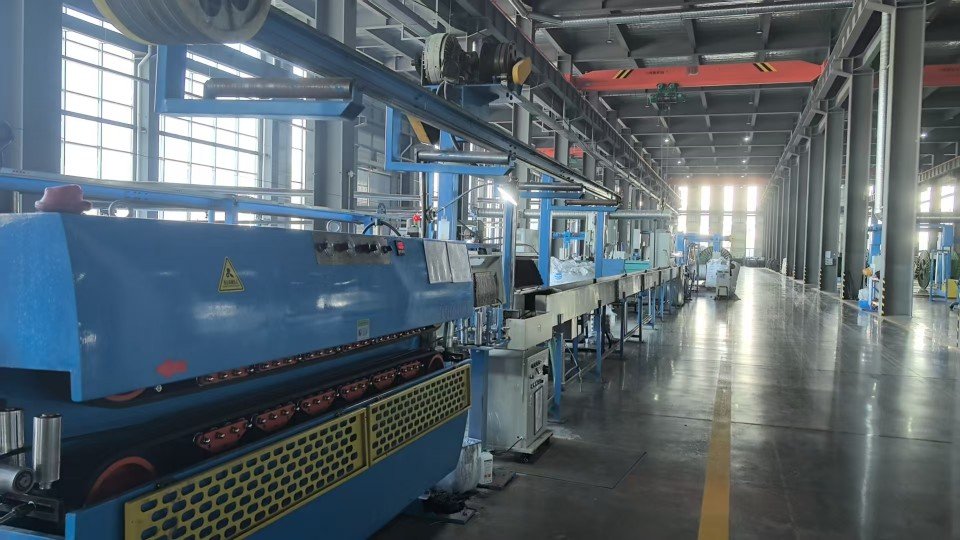
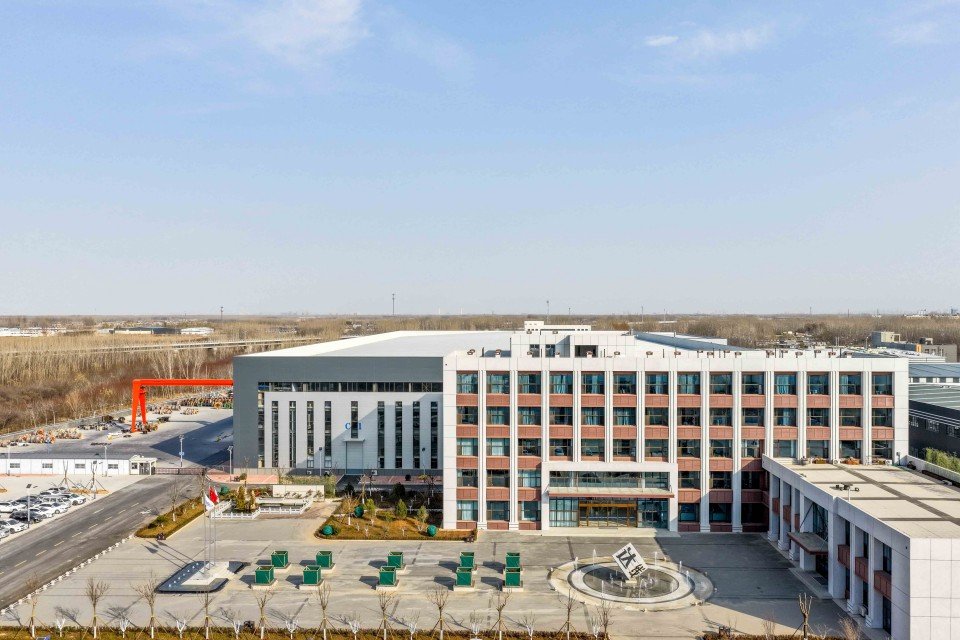
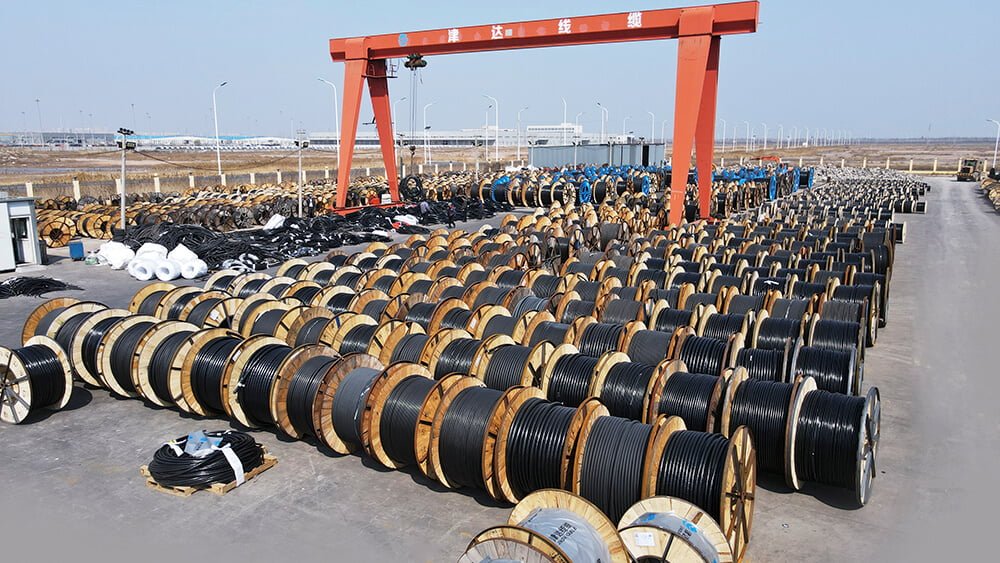
Behind every drum we ship sits a 38-year track record, five production bases under one MES system, and a documentation discipline that gets cables through customs without delays.
-
Every cable tested twice before shipping
Since 1987, our two-stage QC has been refined to a science: routine test on the production line, then full electrical and mechanical re-test before packing. Across 50+ export markets, our return rate stays under 0.3%.
-
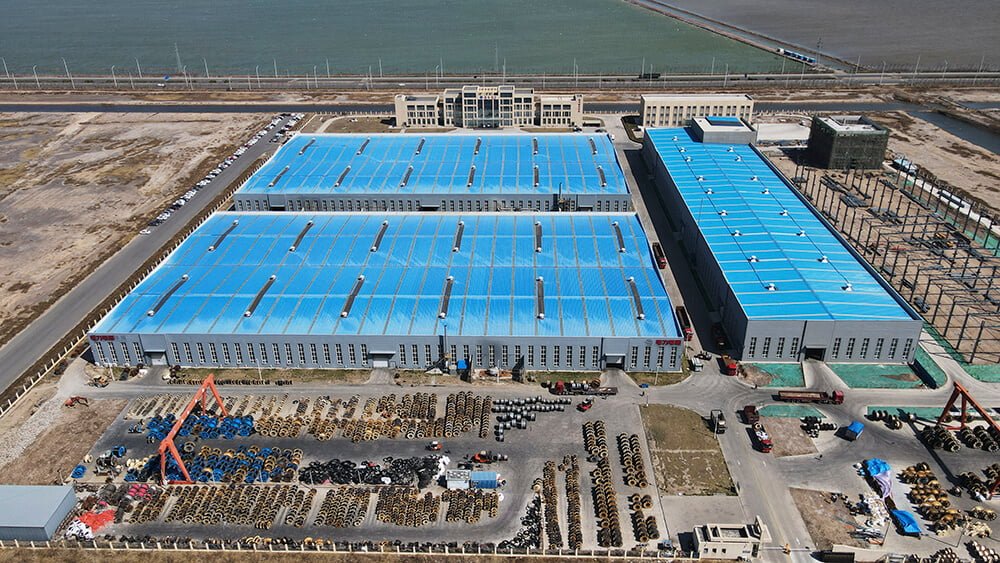
Five production bases, 470,000 m², synced via MES
Tianjin, Liaoning, Heilongjiang, Shandong, and Xian — each base runs under one unified MES system. Same recipe, same protocols, same traceability, regardless of which plant ships your order.
-
3,000+ SKUs, custom configurations welcome
Standard sizes ship from inventory. Special voltage grades, color-coding, drum lengths, or armor configurations are routine — submit your spec and our team will quote the lead time honestly.
-
Trusted by EPC contractors in 50+ countries
We supply utilities, mining operators, port authorities, and large industrial OEMs across Europe, the Americas, Southeast Asia, the Middle East, and Africa.
-
Full paperwork shipped with every order
Every shipment includes factory test report, certificate of origin (COO), packing list, and bill of lading (B/L). Customer-nominated witness testing can be arranged before shipment.
Our Track Record
98.7%
On-time shipment rate (last 24 months)
< 0.3%
Return rate across export markets
25 days
Typical sea freight Tianjin → Rotterdam
100%
Shipments with routine test report attached
Logistics & Delivery
Packaging, Shipping & Documentation
What we handle on our side from production floor to the port of loading. Product-specific installation guidance is supplied with the datasheet that accompanies each order.
Packaging
- Wooden or steel drums per IEC 62004
- Coil packaging available for small cross-sections
- Standard drum lengths plus custom lengths on request
- Each drum labeled with type, voltage, cross-section, length, batch
- Waterproof wrapping for export shipments
- Cable ends sealed against moisture ingress
- Private-label / OEM packaging available under NDA
Shipping
- FCL / LCL sea freight, air freight on request
- Trade terms: EXW, FOB, CFR, CIF, DDP
- Ports of loading: Tianjin / Qingdao / Shanghai
- Typical sea freight to Rotterdam: 25 days
- Lead time confirmed at order acknowledgement
- Container loading photos sent before sailing
Documentation
- Factory routine test report (per applicable standard)
- Commercial invoice and packing list
- Certificate of origin (CO) — China Council, FORM A, FORM E available
- Bill of lading (B/L) — original or telex release
- Third-party inspection by SGS / BV / TÜV on request
- Customer-nominated witness testing arranged before shipment
Related Products