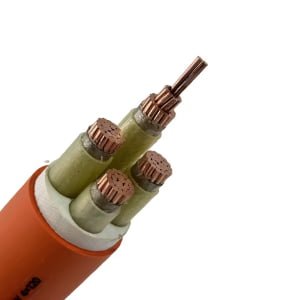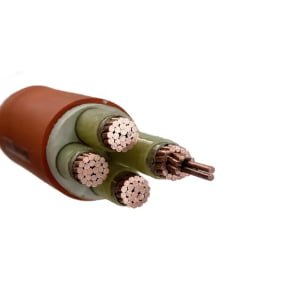
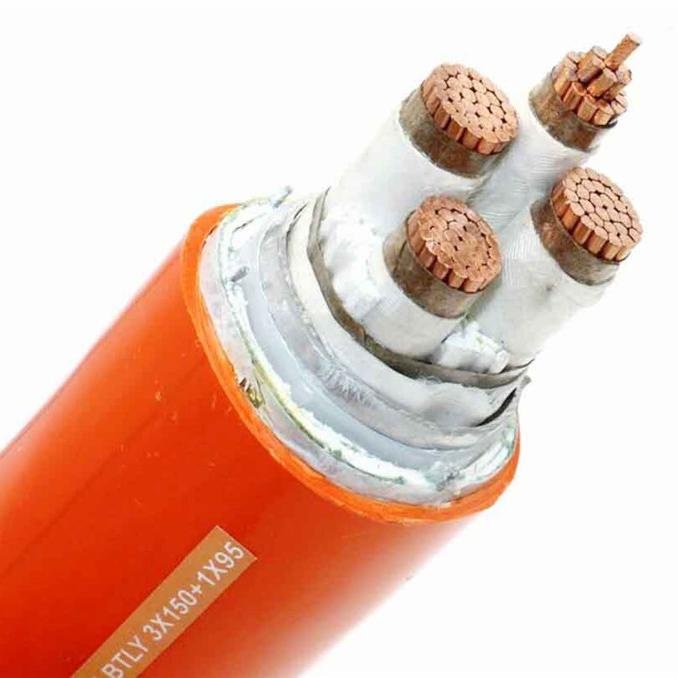
Fire Resistant Cable / 0.6/1kV
Mineral Insulated Copper Clad Cable
Model: BTTZ / MICC
Mineral insulated copper clad cable offering superior fire resistance, high temperature resistance, and circuit integrity.
- Voltage Rating
- 0.6/1kV
- Number of Cores
- Array
- Cross Section
- 1.5–240 mm²
- Conductor
- Copper
- Armoring
- Steel Tape Armored
- MOQ
- ≥ 100 m
Standards & Certifications
- IEC
- IEC 60702
Downloads
Specifications
Technical Specifications & Performance
Construction
- Model / Series
- BTTZ / MICC
- Voltage Rating
- 0.6/1kV
- Conductor Material
- Copper
- Conductor Class
- Class 1 Solid
- Cross Section
- 1.5–240 mm²
- Number of Cores
- Array
- Insulation
- PVC
- Sheath
- PVC
- Armoring
- Steel Tape Armored
- MOQ
- ≥ 100 m
Performance
- Max. Conductor Temp.
- 250°C+
- Min. Bending Radius
- 6 × Cable Outer Diameter
About This Product
Flexible MICC with the Full Copper Sheath, Built Continuously to Drum Length
Mineral Insulated Copper Clad Cable (model designation YTTW, also known as RTTZ per the 2017 national standard rename) is the flexible MICC architecture that solves the two problems that limited classic rigid BTTVZ: the 100-metre length ceiling and the impossibility of routing around tight bends. Stranded copper conductors wrapped in synthetic mica tape, with a longitudinally wrapped copper tape sheath continuously welded into a corrugated copper tube — the corrugation gives the tube enough flexibility to be reeled to drum length without losing the metallic sheath that makes it a true MICC cable.
The construction was developed in China during the late 1990s specifically to bring the performance of BTTZ (the original Swiss-British rigid MICC, in production since 1934) into modern long-run building projects where a 100-metre length limit and rigid construction made BTTZ prohibitive. The 1996 fire in the English Channel Tunnel between the UK and France is the case study every fire-safety engineer cites: classic MICC cables kept emergency lighting functioning through a fire that destroyed reinforced concrete and welded steel rails. YTTW carries the same architectural lineage with flexible installation.
Production follows GB/T 34926-2017 — the dedicated Chinese national standard for mica-tape mineral insulated corrugated copper sheath cable — in combination with GB/T 19216 / IEC 60331 (950°C / 180-minute fire integrity) and BS 6387 Categories C, W, Z (fire alone, fire with water spray, fire with mechanical shock). Jinda manufactures YTTW at our Tianjin base on a dedicated continuous-welding line, with standard lead time 20 to 30 days. LSZH-jacketed YTTWY and PVC-jacketed YTTWV variants are quoted alongside the bare-copper YTTW — choose the outer covering based on whether the cable will be visible in occupied spaces.
Cable Structure
Four Layers, Continuously Welded Into a Corrugated Copper Tube
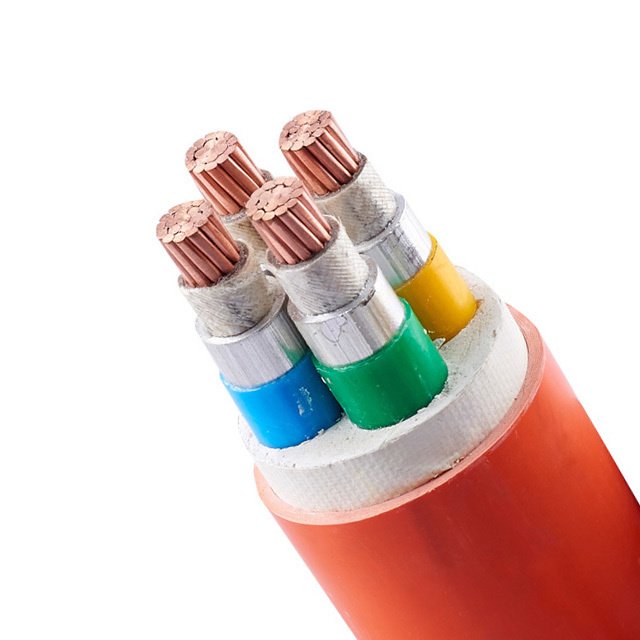
YTTW’s defining feature is its sheath construction: a strip of copper tape is wrapped longitudinally around the cabled cores, welded along the seam in a continuous laser-welding pass, then corrugated to give the resulting tube the flexibility a smooth wall would not have. The result is a fully metallic cable sheath that bends, reels, and installs like a standard armored cable.
-
1
Conductor — Stranded Bare Copper (Class 2)
Compact-stranded bare annealed copper conductor per IEC 60228 Class 2. Stranded construction (rather than the solid Class 1 used in rigid BTTZ) is what gives the cable its bending capability. Single-core and multi-core configurations (up to 5 cores) are standard; 7-core for fire-alarm and signal applications on request.
-
2
Insulation — Synthetic Mica Tape (Multi-Layer)
Two or more layers of synthetic mica tape (mica flakes on a glass-fibre carrier) wrapped helically around each conductor with overlap. The mica tape replaces the MgO powder used in rigid BTTZ — mica is also inorganic and equally fire-resistant, but as a tape it can flex without crumbling. Insulation rated to 1,300°C without breakdown.
-
3
Filler — Alkali-Free Glass Fibre
Alkali-free glass-fibre filling fills the interstices between insulated cores to produce a circular cross-section and add an additional inorganic thermal barrier. Replaces the polypropylene filler used in standard XLPE cable, because PP would melt and create voids in the cable during the fire-survival period.
-
4
Sheath — Continuously Welded Corrugated Copper Tube
A longitudinally-applied copper tape is laser-welded along its seam in a continuous pass, producing a seamless copper tube around the cable cores. The tube is then mechanically corrugated — the resulting wave pattern gives the wall enough bending capability to be reeled while preserving the metallic continuity. The copper sheath does triple duty: mechanical protection (excellent crush and abrasion resistance), integral PE conductor (no separate earth core needed), and electromagnetic shield. Standard YTTW has the bare copper sheath as its exterior; YTTWY adds a LSZH polyolefin outer jacket (orange/red) for occupied indoor environments, and YTTWV uses a PVC outer jacket.
Key Features
The Best of Both Worlds — Metallic Sheath With Flexible Construction
Specifiers reach for YTTW when they need everything BBTRZ offers (flexible, drum-length, standard accessories) plus everything classic BTTVZ offers (continuous metallic sheath, integral PE, electromagnetic shielding, 100-year track record). The six features below are why YTTW captures the premium segment of the fire-survival cable market.
950°C / 180 Minutes Circuit Integrity
Full Class A fire-resistance per GB/T 19216 and IEC 60331. The copper sheath survives to 1,083°C melt point and the mica tape insulation survives to 1,300°C — the cable maintains rated voltage and current at 950°C for at least 3 hours, validated in 1996 when MICC cable kept lighting on through the English Channel Tunnel fire that destroyed surrounding concrete.
Continuous Drum-Length Manufacture
Unlike rigid BTTVZ’s 100-metre piece limit, YTTW is made continuously on a welding line and reels onto standard cable drums. 500 m and 1,000 m drums are routine; longer drums on request for specific project runs. Eliminating intermediate joints removes the most-failed component in fire-survival circuits.
Continuous Metallic Earth & EMI Shielding
The welded copper sheath provides an unbroken metallic PE path along the entire cable length — saves the cost of a separate earth conductor. Continuous metallic shielding gives excellent EMI suppression, valuable for circuits routed near sensitive medical, broadcast, or instrumentation equipment, and for lightning protection on rooftop and tower installations.
Superior Crush and Impact Resistance
The corrugated copper sheath gives YTTW dramatically better mechanical protection than BBTRZ (non-metallic sheath) at any given cable OD. Useful for cable runs through structural penetrations, in dense cable trays where mechanical contact is unavoidable, and in tunnel installations where rock falls and vehicle strikes are routine.
No Moisture Sensitivity at Cut Ends
Synthetic mica tape is far less hygroscopic than the MgO powder used in rigid BTTZ. Cut ends remain serviceable for hours rather than minutes, and standard cable accessories can be used without specialist MI sealing pots. Installation labour cost is dramatically lower than BTTVZ even though the cable price is comparable.
Dedicated GB/T 34926-2017 National Standard
YTTW (renamed RTTZ under the standard) is the only flexible mineral cable architecture with its own dedicated Chinese national standard, GB/T 34926-2017. This translates to consistent build quality across manufacturers and unambiguous specification language for project tenders — specifying “YTTW per GB/T 34926” eliminates the ambiguity that plagues some other “flexible mineral” designations.
How to Choose
Six Decisions Before You Place the Order
YTTW occupies the premium tier of the flexible fire-survival cable market — more expensive than BBTRZ but with continuous metallic sheath and integral PE. Specifying it deliberately is a value judgment about which trade-offs matter most for the project. Walk through these six decisions before issuing the PO.
Confirm metallic sheath is actually required
YTTW costs roughly 50 to 80 percent more than BBTRZ at the same conductor cross-section. The cost premium is paying for the metallic copper sheath, which delivers: continuous integral PE conductor (saves a separate earth wire), EMI/lightning shielding, superior crush resistance, and moisture barrier. If none of these matter for your circuit, BBTRZ delivers the same 950°C / 180-minute fire rating at lower cost. If at least one matters, YTTW is the right choice.
Decide on the outer jacket: bare, LSZH, or PVC
YTTW with bare copper sheath exterior is the industrial default — cheapest, used in tunnels, plant rooms, cable galleries, anywhere the cable is not in direct contact with people. YTTWY adds a halogen-free polyolefin (LSZH) outer jacket (typically orange or red) — specify this for high-rises, hospitals, schools, and any occupied indoor space where visible bright-copper cables and code-mandated LSZH conditions both apply. YTTWV uses a PVC outer jacket — cheaper than LSZH, fine for outdoor and utility installations.
Confirm the voltage class
Standard YTTW per GB/T 34926-2017 is rated 0.6/1 kV — this covers virtually all building emergency circuits. Higher MV grades (3.6/6 kV, 6/10 kV) are made on quotation for direct-from-substation fire pump and smoke-fan supplies in larger sites, but they fall outside the dedicated national standard and require specific project agreement on test procedures.
Choose the number of cores
1 to 5 cores are standard; 7-core for fire-alarm bus and signal applications on request. For three-phase distribution where the copper sheath serves as PE, a 3-core or 4-core (3+N) configuration is typical. If your local code requires a dedicated PE conductor in addition to the metallic sheath earth (some jurisdictions do), specify a 3+1, 3+2, or 4+1 configuration. Note that large cross-sections (above 240 mm²) are typically single-core only — multi-core construction becomes impractical.
Size the cross-section with PE current path in mind
Ampacity per GB/T 34926-2017 is published for typical building installation methods. If the copper sheath serves as PE, verify the calculated earth-fault loop impedance against the upstream protection-device tripping time — the corrugated copper sheath has slightly higher resistance per length than the equivalent solid copper tube of BTTVZ, because the corrugations add path length. For most building circuits the difference is negligible; for very high prospective fault currents (above 25 kA), check the calculation.
Specify the fire-test certification required
Chinese building projects typically require GB/T 34926-2017 plus GB/T 19216 / GB 31247 Class B1 (Class A1 for the most critical circuits) certification. International projects often add BS 6387 Category CWZ (fire + water + mechanical shock) and IEC 60331 reports. For EU projects, request CPR (Construction Products Regulation) classification, typically Aca or B2ca. Specify which reports at order — some require third-party witness testing that adds 2 to 3 weeks of lead time.
Applications
Where Flexible Plus Metallic Sheath Is the Right Answer
YTTW captures the premium tier of fire-survival applications: projects where both flexible installation and metallic copper sheath properties matter. The four scenarios below are the dominant ones, and each one is a specific reason BBTRZ (non-metallic sheath) or BTTVZ (rigid) would be the wrong call.
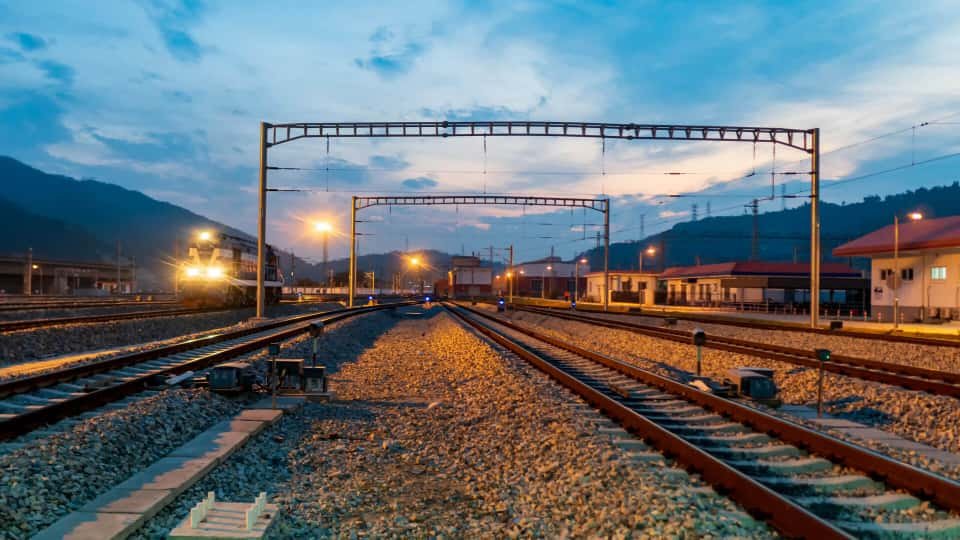
Metros, Subways & Highway Tunnels
Underground transit and road tunnels have the strictest fire-survival requirements globally, and the most demanding mechanical environments. The corrugated copper sheath provides crush resistance against rock fall and vehicle strike, plus continuous earth path for traction-current isolation. The 1996 Channel Tunnel fire validated MICC for these applications.

High-Rise Emergency Risers
Vertical emergency feeders running 30+ storeys through riser shafts — fire pumps, smoke fans, emergency lighting backbones. Continuous drum-length YTTW eliminates the multiple joints that plague long runs of rigid BTTVZ. The metallic copper sheath provides EMI shielding against the high-current bus risers running in the same shaft.
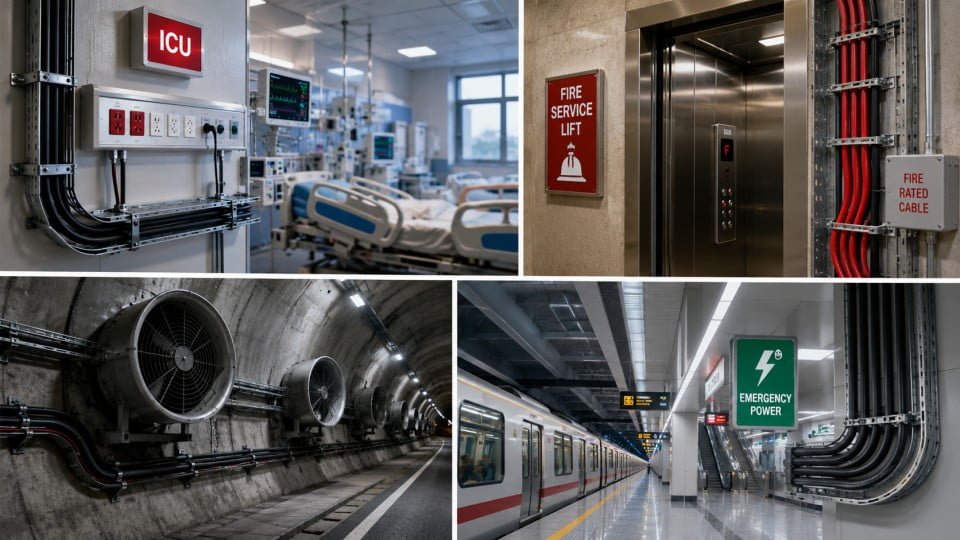
Hospitals & Data Centers
Hospital ICU and operating room emergency feeders where EMI from the copper sheath protects sensitive medical imaging equipment. Data center critical UPS and generator backbones where the metallic sheath provides lightning surge protection from rooftop equipment back to the substation room. Both applications value the metallic shield as much as the fire survival.

Petrochemical, Oil & Gas Facilities
Refineries, gas processing plants, offshore platforms — environments where the cable must survive both fire and the corrosive atmosphere that exists before any fire starts. The metallic copper sheath resists chemical attack better than polymer sheaths, and provides explosion-rated mechanical isolation. Used for emergency shutdown systems, fire-pump feeders, and gas-detection circuits.
Choose an alternative if: The circuit just needs general-purpose fire survival without metallic sheath benefits (use BBTRZ at one-third lower cost). The project specification or local fire code explicitly calls for rigid MI / BTTVZ / BS 6207 construction (use BTTVZ). The circuit needs only 90-minute fire resistance per code (use WDZN-YJY at much lower cost). The cable is in direct burial requiring steel armor (specify the YTTWY23 steel-tape armored variant on quotation).
Technical Data
Multi-Core YTTW 0.6/1 kV Standard Sizes & Ratings
Reference values for 4-core YTTW (3+1, copper sheath serving as PE) at 0.6/1 kV per GB/T 34926-2017. Ampacity is for installation in air at 30°C ambient, cable sheath operating at 105°C continuous. Single-core configurations, YTTWY (LSZH outer jacket) variants, and conduit installation ampacity are supplied with the formal technical quotation.
| Cross Section | Approx. Cable OD | DC Resistance (max) | Ampacity (in air, 30°C) | Approx. Weight |
|---|---|---|---|---|
| 4×2.5 mm² | ~ 15.5 mm | 7.41 Ω/km | 28 A | ~ 530 kg/km |
| 4×4 mm² | ~ 16.5 mm | 4.61 Ω/km | 37 A | ~ 640 kg/km |
| 4×6 mm² | ~ 17.8 mm | 3.08 Ω/km | 48 A | ~ 790 kg/km |
| 4×10 mm² | ~ 19.5 mm | 1.83 Ω/km | 66 A | ~ 1,030 kg/km |
| 4×16 mm² | ~ 22.0 mm | 1.15 Ω/km | 88 A | ~ 1,380 kg/km |
| 4×25 mm² | ~ 25.5 mm | 0.727 Ω/km | 118 A | ~ 1,900 kg/km |
| 4×35 mm² | ~ 28.5 mm | 0.524 Ω/km | 145 A | ~ 2,450 kg/km |
| 4×50 mm² | ~ 32.0 mm | 0.387 Ω/km | 180 A | ~ 3,150 kg/km |
| 4×70 mm² | ~ 36.5 mm | 0.268 Ω/km | 225 A | ~ 4,100 kg/km |
| 4×95 mm² | ~ 41.0 mm | 0.193 Ω/km | 272 A | ~ 5,250 kg/km |
| 4×120 mm² | ~ 45.0 mm | 0.153 Ω/km | 316 A | ~ 6,400 kg/km |
| 4×150 mm² | ~ 49.0 mm | 0.124 Ω/km | 362 A | ~ 7,750 kg/km |
| 4×185 mm² | ~ 54.0 mm | 0.0991 Ω/km | 413 A | ~ 9,400 kg/km |
| 4×240 mm² | ~ 60.5 mm | 0.0754 Ω/km | 480 A | ~ 11,800 kg/km |
DC resistance per IEC 60228 Class 2 stranded annealed copper, 20°C. Ampacity per GB/T 34926-2017 (4-core, laid in air, 30°C ambient, sheath at 105°C continuous). Cable OD includes the corrugated copper sheath but no outer jacket — YTTWY (LSZH jacket) adds approximately 1.5 to 2.5 mm to OD, YTTWV (PVC jacket) similar. Weights are approximate and include the copper sheath. The PE function is provided by the corrugated copper sheath in standard 3-core / 4-core configurations — verify earth-fault loop calculation against your prospective short-circuit current before specifying.
Fire-resistance certification: GB/T 19216 / IEC 60331 (950°C / 180 min circuit integrity), BS 6387 Categories C, W, Z (fire alone, fire + water spray, fire + mechanical shock), GB/T 34926-2017 (the dedicated Chinese standard for YTTW/RTTZ). LSZH outer jacket performance (YTTWY variant): IEC 60754-1/-2 acid gas, IEC 61034 smoke density. Batch test reports issued with every shipment.
Comparison
YTTW vs BTTVZ vs BBTRZ — The Three Modern MICC Choices
All three deliver 950°C / 180-minute fire integrity. The differences are construction architecture (rigid vs flexible), sheath material (copper vs non-metallic), and consequently price. The table below shows where each one fits.
| Attribute | YTTW (this product) | BTTVZ (rigid MI) | BBTRZ (flex non-metallic) |
|---|---|---|---|
| Construction style | Flexible (corrugated Cu tube) | Rigid (drawn Cu tube) | Flexible (non-metallic) |
| Conductor type | Stranded copper (Class 2) | Solid copper (Class 1) | Stranded copper (Class 2) |
| Insulation | Synthetic mica tape | Compressed MgO powder | Mineral compound + mica |
| Metallic sheath | Continuously-welded Cu tube | Seamless drawn Cu tube | None |
| Fire-survival rating | 950°C / 180 min | 950°C / 180 min | 950°C / 180 min |
| Max length per piece | Drum-length (500-1000 m) | ~ 100 m max | Drum-length (500-1000 m) |
| Integral PE conductor | Yes (Cu sheath) | Yes (Cu tube) | No (separate PE needed) |
| EMI / lightning shielding | Good | Excellent | None |
| Crush resistance | Good | Excellent | Moderate |
| Moisture sensitivity at cut | Low (mica tape) | High (MgO hygroscopic) | Low (mineral compound) |
| Installation complexity | Medium | High (specialist skill) | Low (standard accessories) |
| Cost (relative) | 1.00 (baseline) | 1.20 to 1.40 | 0.55 to 0.70 |
| Dedicated Chinese standard | GB/T 34926-2017 | GB/T 13033-2007 | No (manufacturer-specific) |
When to choose YTTW (this product)
Projects that need a continuous metallic copper sheath (for integral PE, EMI shielding, lightning protection, crush resistance, or chemical resistance) AND drum-length flexible construction AND full 950°C / 180-minute fire integrity. Tunnels, metros, high-rise emergency risers, hospitals near medical imaging, data centers, petrochemical facilities. The premium choice when both flexible installation and metallic sheath benefits matter.
When to choose an alternative
For general fire-survival circuits where metallic sheath benefits don’t apply, BBTRZ delivers the same fire rating at roughly 35 to 45 percent lower cost. For projects explicitly specifying rigid MI / BS 6207 / IEC 60702 construction, or circuits running continuously above 90°C ambient (steel mills, glassworks), specify BTTVZ. For circuits requiring only 90-minute fire resistance (sufficient under many local codes), WDZN-YJY is a small fraction of the cost.
Frequently Asked Questions
Common Questions From Fire-Safety Engineers and Buyers
What is the difference between YTTW and RTTZ?
Same cable. YTTW is the original Chinese designation for the corrugated-copper-sheath flexible MICC architecture, in use since the late 1990s. RTTZ is the newer designation introduced by national standard GB/T 34926-2017 to align Chinese MI cable nomenclature more consistently. Manufacturers and specifiers use both terms interchangeably in practice, and project tenders sometimes mix the names. Make sure your tender language references GB/T 34926-2017 to eliminate any ambiguity about exactly what construction you’re ordering.
Why is YTTW more expensive than BBTRZ when the fire rating is the same?
The cost difference is mostly raw copper. YTTW’s continuously-welded corrugated copper sheath uses 2 to 3 times the copper of BBTRZ’s non-metallic sheath. The premium buys: continuous integral PE (saves a separate earth wire), EMI/lightning shielding, superior crush resistance, hermetic moisture barrier. If your project needs none of these — for example, indoor riser shafts with separate PE conductors and no EMI sensitivity — BBTRZ delivers the same fire-survival outcome at lower cost. If even one of the metallic-sheath benefits applies to your circuit, YTTW is worth the premium.
Can YTTW really be reeled to drum length? What about the welded seam?
Yes — this is the architectural breakthrough that makes YTTW practical. The copper tape is wrapped longitudinally around the cabled cores, the seam is laser-welded in a continuous pass running through the welding station, and the resulting tube is then corrugated. The corrugation does two things: it shortens the effective wall length of the tube (allowing it to bend without the metal yielding) and it places the welded seam on the neutral axis of the corrugation, so the seam isn’t stressed when the cable bends. Welded-seam integrity is verified during manufacture by air pressure leak test (typical 200 kPa hold for 1 minute) before the cable is taken off the line.
Should I specify YTTW, YTTWY, or YTTWV?
All three are the same cable underneath — the difference is the outer covering over the corrugated copper sheath. YTTW (bare copper) is industrial: tunnels, plant rooms, mechanical galleries, anywhere the cable is not in direct contact with occupants. YTTWY (LSZH polyolefin jacket, halogen-free) is the building-code default for occupied indoor environments where the cable will be visible — satisfies IEC 60754 and IEC 61034 LSZH requirements during the early minutes of fire exposure. YTTWV (PVC jacket) is cheaper than YTTWY and fine for outdoor and utility installations where LSZH is not mandated. Cost premium: YTTWY is roughly 8 to 15 percent over bare YTTW; YTTWV is roughly 5 to 8 percent.
What is the minimum bending radius?
Per GB/T 34926-2017: 12 × OD during installation, 8 × OD permanently installed. This is significantly tighter than the rigid BTTVZ values (15-20 × OD) because the corrugated sheath bends much more readily than a smooth-wall drawn copper tube. Useful for routing around column footings, through structural penetrations, and into tight switchgear bays. Don’t bend tighter than 12 × OD even briefly — the corrugations can collapse on the inside of an over-tight bend, locally pinching the mica tape and risking dielectric breakdown.
What is the typical lead time and MOQ?
Standard 0.6/1 kV YTTW configurations typically ship in 20–30 days from order. The continuous welding process is the rate-limiting step — faster than rigid MI cable but slower than standard cable extrusion. YTTWY (LSZH jacket) and YTTWV (PVC jacket) add 3 to 5 days for the outer extrusion pass. MOQ is normally one drum (500 m for cross-sections up to 70 mm², 250 m for larger sizes); shorter cuts available for project-specific runs at no significant lead-time penalty. For high-rise building risers, tell us the cable schedule at order so we can pre-cut to circuit length — minimising in-line joints is critical for fire-survival reliability.
Installation & Handling Tips
Six Practices for YTTW Installation Specifically
YTTW installs much like standard armored cable with a few specific differences. The corrugated copper sheath needs slightly different handling from solid metal armor, and the integral PE function changes how you size the earthing system. The six items below cover the differences experienced installers learn quickly and inexperienced ones miss.
Use proper roller supports during pulling
The corrugated copper sheath has a wave pattern that can catch on rough cable-tray edges and conduit lip surfaces during pulling. Use proper cable rollers at every direction change, with the roller groove wider than the cable OD. Pulling tension should stay below 40 N/mm² of total conductor cross-section — the corrugated sheath transmits pulling force, but only up to the point where the corrugations start to flatten.
Use armored-cable glands sized for corrugated sheath
YTTW takes standard BW or A2 type compression glands for armored cable, but the gland must be specifically sized for the OD measured over the corrugation peaks (not the valleys). The gland body provides the mechanical termination of the copper sheath and the electrical bond to the equipment earth bar. Fire-rated glands (stainless steel body, refractory seal) are required for fire-survival circuits.
Earth the copper sheath at both ends
For LV building circuits, bond the corrugated copper sheath to PE at both terminations through the cable glands. The sheath provides the integral PE path, so bonding integrity at the gland is the entire earthing system for that circuit. Verify earth continuity with a low-resistance ohmmeter after installation. For very long single-circuit runs (above 100 m), evaluate the earth-fault loop impedance against the upstream protection-device tripping time.
Seal cable ends within minutes of cutting
YTTW’s mica-tape insulation is less hygroscopic than MgO but still moisture-sensitive. Reseal cut ends with heat-shrink caps within 30 minutes of cutting, and verify the factory end-cap is intact on arrival. Wet insulation will pass first commissioning but degrade in service. Megger-test (500V or 1000V, 1 minute) before energizing to confirm insulation integrity.
Use steel cable supports rated for fire conditions
The cable’s 950°C / 180-minute fire rating only delivers if the supports survive too. Use galvanized steel cable ties, steel hangers, and steel-strap supports — never plastic ties or nylon hangers, which fail at 150°C. Support intervals per GB/T 34926: 600 mm horizontal, 800 mm vertical, closer at terminations and direction changes. For escape-route routing, use fire-rated cable tray (typically 2-hour rated to match the building’s fire compartmentation).
Document fire-rated penetration seals
Every wall and floor penetration on a fire-survival circuit must be sealed with a tested fire-stop system rated for the same fire-resistance period as the wall (typically 2 hours). The cable is rated to keep working, but if the penetration leaks smoke or flame, the building’s fire compartmentation fails regardless. Document each penetration with photographs and the certified fire-stop product reference for the fire-authority handover audit.
Safety note: Fire-survival cable installation must follow the project’s fire-engineering design and the applicable national fire codes (GB 50016 in China, BS 7671 + BS 9999 in the UK, NFPA 70 + NFPA 13 in the US). The cable’s 950°C / 180-minute rating only translates to system-level fire-safety if the entire route — cable, glands, supports, penetration seals — is equally fire-rated. Acceptance testing by the local fire authority is the final check; coordinate with them during design, not just at handover.
Manufacturing Capability
Why Source From Jinda Cable
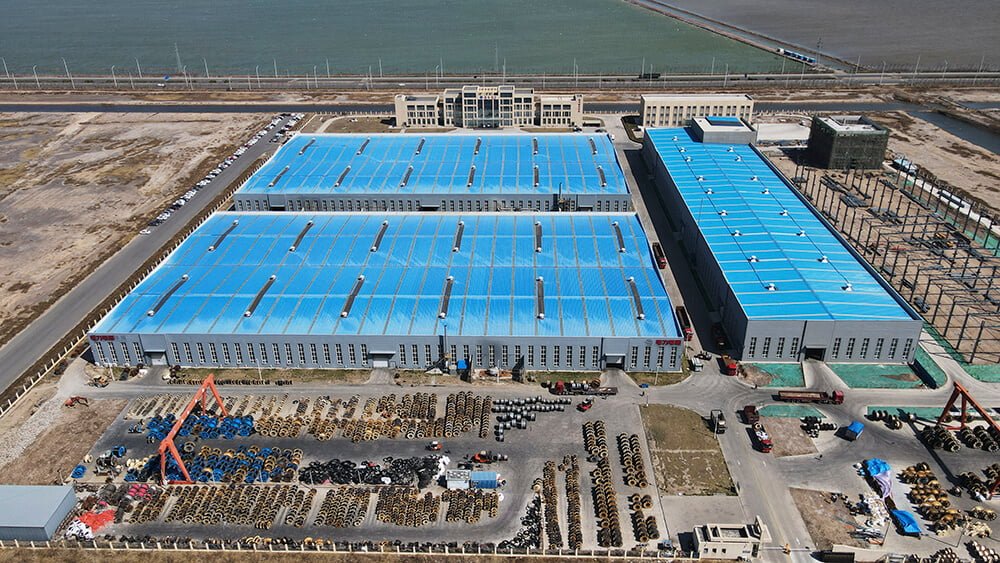
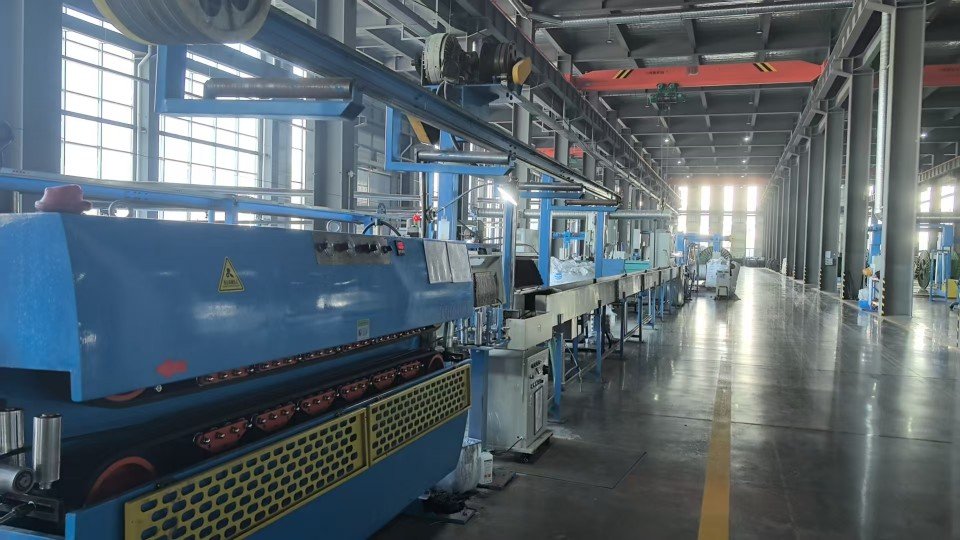
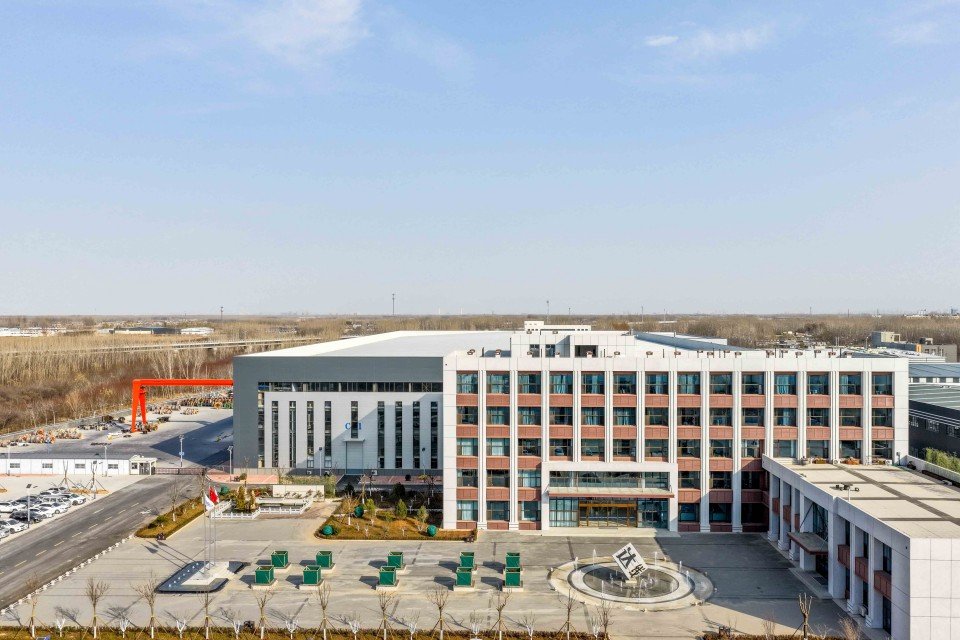
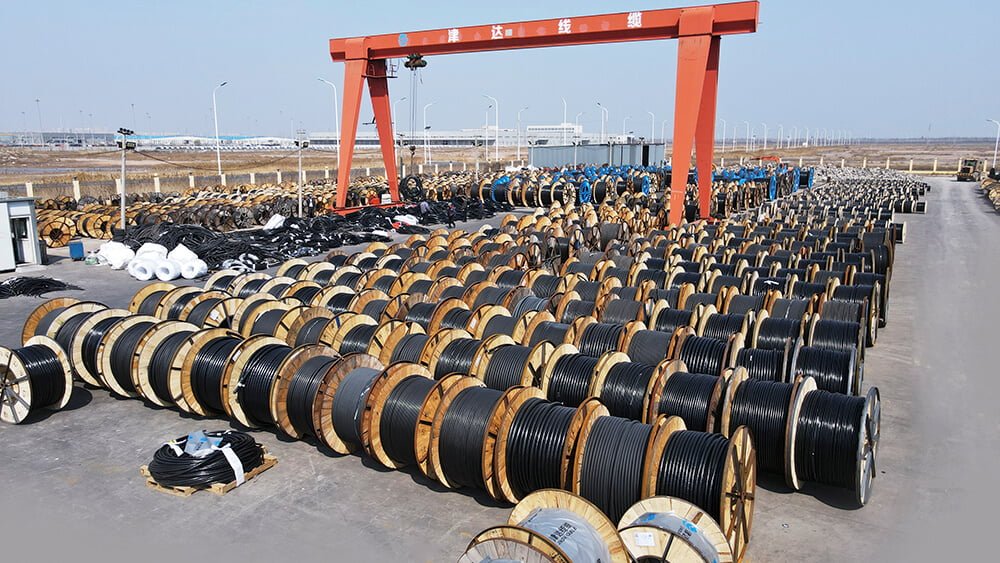
Behind every drum we ship sits a 38-year track record, five production bases under one MES system, and a documentation discipline that gets cables through customs without delays.
-
Every cable tested twice before shipping
Since 1987, our two-stage QC has been refined to a science: routine test on the production line, then full electrical and mechanical re-test before packing. Across 50+ export markets, our return rate stays under 0.3%.
-
Five production bases, 470,000 m², synced via MES
Tianjin, Liaoning, Heilongjiang, Shandong, and Xian — each base runs under one unified MES system. Same recipe, same protocols, same traceability, regardless of which plant ships your order.
-
3,000+ SKUs, custom configurations welcome
Standard sizes ship from inventory. Special voltage grades, color-coding, drum lengths, or armor configurations are routine — submit your spec and our team will quote the lead time honestly.
-
Trusted by EPC contractors in 50+ countries
We supply utilities, mining operators, port authorities, and large industrial OEMs across Europe, the Americas, Southeast Asia, the Middle East, and Africa.
-
Full paperwork shipped with every order
Every shipment includes factory test report, certificate of origin (COO), packing list, and bill of lading (B/L). Customer-nominated witness testing can be arranged before shipment.
Our Track Record
98.7%
On-time shipment rate (last 24 months)
< 0.3%
Return rate across export markets
25 days
Typical sea freight Tianjin → Rotterdam
100%
Shipments with routine test report attached
Logistics & Delivery
Packaging, Shipping & Documentation
What we handle on our side from production floor to the port of loading. Product-specific installation guidance is supplied with the datasheet that accompanies each order.
Packaging
- Wooden or steel drums per IEC 62004
- Coil packaging available for small cross-sections
- Standard drum lengths plus custom lengths on request
- Each drum labeled with type, voltage, cross-section, length, batch
- Waterproof wrapping for export shipments
- Cable ends sealed against moisture ingress
- Private-label / OEM packaging available under NDA
Shipping
- FCL / LCL sea freight, air freight on request
- Trade terms: EXW, FOB, CFR, CIF, DDP
- Ports of loading: Tianjin / Qingdao / Shanghai
- Typical sea freight to Rotterdam: 25 days
- Lead time confirmed at order acknowledgement
- Container loading photos sent before sailing
Documentation
- Factory routine test report (per applicable standard)
- Commercial invoice and packing list
- Certificate of origin (CO) — China Council, FORM A, FORM E available
- Bill of lading (B/L) — original or telex release
- Third-party inspection by SGS / BV / TÜV on request
- Customer-nominated witness testing arranged before shipment
Related Products