Building Wire / 0.6/1kV
PVC Sheathed Mineral Insulated Cable
Model: BTTVZ / PVC MICC Cable
PVC sheathed mineral insulated cable providing enhanced environmental protection and mechanical durability for fire-resistant applications.
- Voltage Rating
- 0.6/1kV
- Number of Cores
- Array
- Cross Section
- 1.5–240 mm²
- Conductor
- Copper
- Armoring
- Steel Tape Armored
- MOQ
- ≥ 100 m
Standards & Certifications
- IEC
- IEC 60702
Downloads
Specifications
Technical Specifications & Performance
Construction
- Model / Series
- BTTVZ / PVC MICC Cable
- Voltage Rating
- 0.6/1kV
- Conductor Material
- Copper
- Conductor Class
- Class 1 Solid
- Cross Section
- 1.5–240 mm²
- Number of Cores
- Array
- Insulation
- PVC
- Sheath
- PVC
- Armoring
- Steel Tape Armored
- MOQ
- ≥ 100 m
Performance
- Max. Conductor Temp.
- 90°C
- Min. Bending Radius
- 6 × Cable Outer Diameter
About This Product
The Original Fire-Survival Cable, Still the Reference Standard
PVC Sheathed Mineral Insulated Cable (model designation BTTVZ for the heavy-duty 750V version, BTTVQ for the light-duty 500V version) is the classic rigid mineral-insulated cable architecture — a solid copper conductor surrounded by highly compressed magnesium oxide powder inside a seamless drawn copper tube, then sleeved in a PVC outer sheath. Invented in 1896 by Swiss engineer Arnold Borel and in commercial production since 1934, this construction has remained the international reference standard for fire-survival cable for nearly a century. Every modern flexible mineral cable (BBTRZ, BTTRZ, YTTW) exists because manufacturers tried to keep BTTVZ’s fire performance while removing its rigidity.
The PVC outer sheath is what distinguishes BTTVZ from the bare-copper BTTZ. The sheath does three jobs: protects the soft copper tube from mechanical damage and surface corrosion during installation; provides electrical insulation so the cable can be touched safely and run on common cable trays without bonding the copper sheath at every support; and gives a visible coloured surface (typically red, orange, or black) for clear identification in the field. For halogen-free projects, specify the WD-BTTYZ variant with LSZH outer sheath in place of PVC.
Production follows GB/T 13033-2007 (Chinese MI cable standard) and complies with BS 6207 (UK standard, the original product specification) and IEC 60702. The cable carries the highest fire-resistance rating available: 950°C / 180 minutes per GB/T 19216 / IEC 60331, plus BS 6387 Categories C, W, and Z (fire alone, fire + water spray, fire + mechanical shock) on the same sample. Jinda manufactures BTTVZ at our Tianjin base on a dedicated MI cable line — copper-tube drawing, MgO powder filling under controlled humidity, and continuous reduction-annealing. Standard lead time is 25 to 40 days; lengths are limited to roughly 100 metres per piece because the rigid copper tube cannot be reeled.
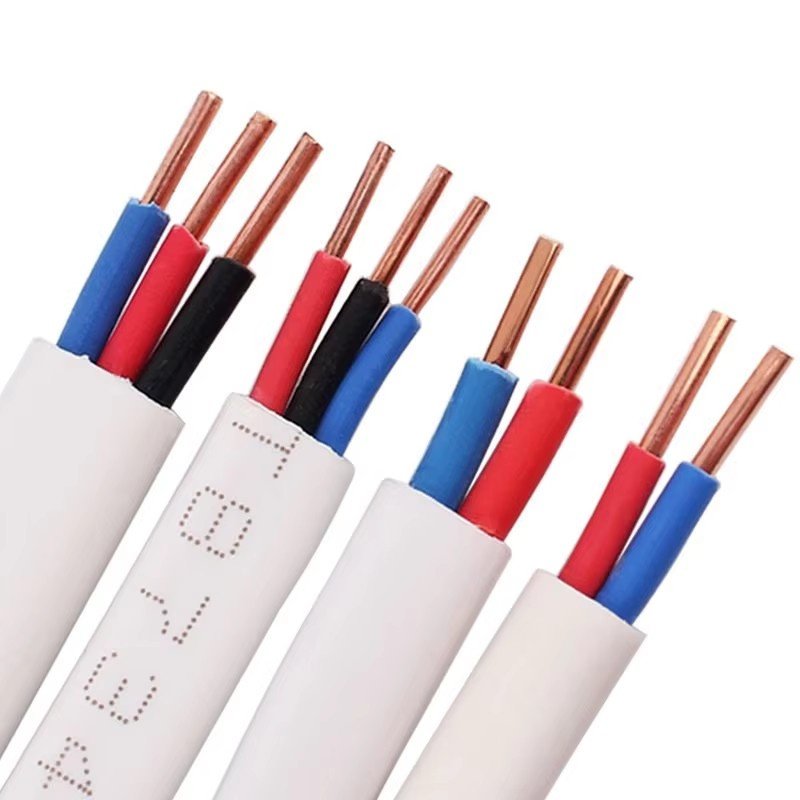
Cable Structure
Four Layers, Three of Them Inorganic
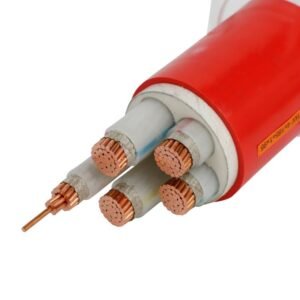
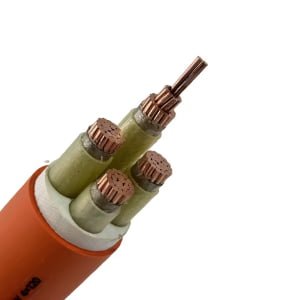
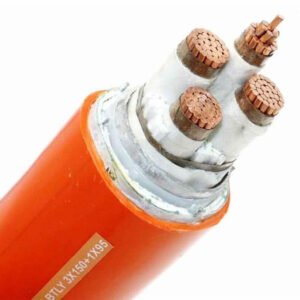
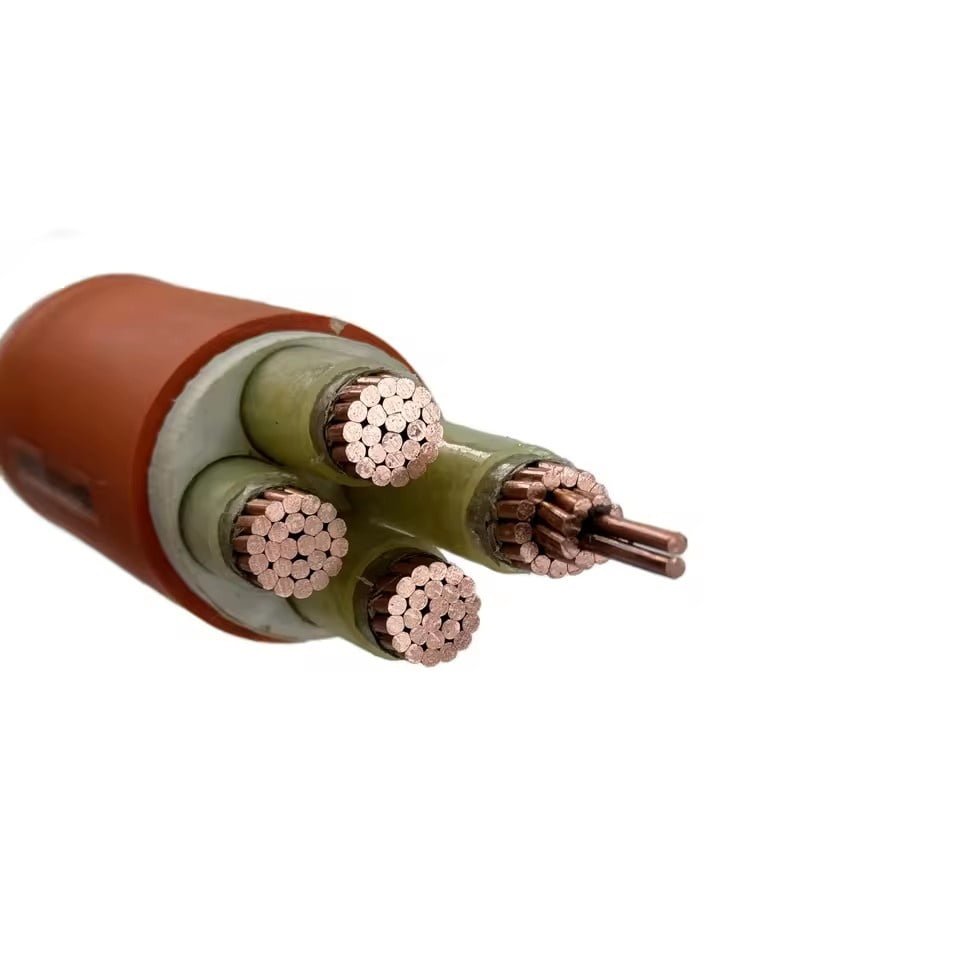
The current-carrying construction of BTTVZ is entirely inorganic — solid copper, MgO ceramic powder, and a copper tube. Only the outer PVC sheath is organic, and it’s outside the electrical envelope. This is why MI cable can operate continuously at 250°C ambient (or up to 1,000°C briefly) without losing dielectric strength — no other cable construction comes close to that thermal margin.
-
1
Conductor — Solid Oxygen-Free Copper
Solid annealed oxygen-free copper rod per IEC 60228 Class 1. Stranded conductors are not used in rigid MI cable — the cable’s reduction-drawing process compresses everything into a solid metallic structure, and a stranded conductor would either get crushed flat or work-harden into something unworkable. Single-core and multi-core (up to 7 cores) are standard.
-
2
Insulation — Compressed Magnesium Oxide (MgO) Powder
High-purity (typically 96 to 98 percent MgO) electrically-fused magnesium oxide powder, packed around the conductors and compressed during the cable’s reduction-drawing process. MgO is a ceramic with melting point 2,852°C, dielectric strength up to 20 kV/mm even at high temperature, and excellent thermal conductivity (so the cable runs cooler than equivalent XLPE at the same current). MgO is hygroscopic — the compressed powder will absorb moisture if exposed to air for more than a few minutes, which is why cut ends must be sealed immediately.
-
3
Inner Sheath — Seamless Drawn Copper Tube
Annealed oxygen-free copper tube, drawn seamless without longitudinal welds. The copper tube performs four functions simultaneously: it’s the mechanical containment for the MgO insulation, it’s the moisture barrier (when ends are properly sealed), it’s the integral protective earth (PE) conductor — saving the need for a separate earth core — and it’s a continuous electromagnetic shield. BTTVZ (heavy duty 750V) uses thicker copper tube than BTTVQ (light duty 500V); the voltage difference is primarily about sheath wall thickness.
-
4
Outer Sheath — Extruded PVC (or LSZH for WD-BTTYZ)
Extruded PVC outer sheath, typically red or orange (per Chinese fire-cable colour convention) for visible identification. Sheath thickness is approximately 1 to 2 mm depending on cable diameter. The PVC protects the copper from mechanical scuffing and atmospheric corrosion, electrically isolates the copper from cable trays and supports, and burns away in the early minutes of a fire — the inorganic core takes over from there. For halogen-free projects, the LSZH variant WD-BTTYZ substitutes a halogen-free polyolefin sheath without changing any other layer.
Key Features
Why MI Cable Remains the Reference Standard After 90 Years
Newer flexible alternatives (BBTRZ, BTTRZ, YTTW) match BTTVZ’s 950°C / 180-minute fire rating, but only the classic rigid MI architecture delivers the full set of properties below. For the most demanding applications, the rigidity remains a feature rather than a defect.
950°C / 180 Minutes Circuit Integrity
Full Class A fire-resistance per GB/T 19216 and IEC 60331 — the cable maintains rated voltage and current at 950°C flame exposure for at least 3 hours. MgO has a melting point of 2,852°C; the limiting factor is the copper sheath (1,085°C melt). For the cable’s rated duration the entire current-carrying construction stays intact.
Continuous 250°C Operation, Briefly to 1,000°C
Unique among power cables, BTTVZ can run continuously at 250°C copper-sheath temperature without de-rating its dielectric strength. For brief overload or fire exposure, the copper can reach 1,000°C without losing its electrical function. This makes MI cable the only viable choice for circuits inside steel mills, glass furnaces, and similar high-temperature process plants.
Inorganic, Non-Toxic, Non-Combustible
MgO insulation, copper conductor, copper sheath — the entire current-carrying construction is non-combustible. No smoke, no halogen acid gas, no toxic emissions from the cable core when exposed to fire. The PVC outer sheath does burn during fire (the WD-BTTYZ LSZH variant addresses this), but it’s a small fraction of the cable mass and outside the electrical envelope.
Copper Sheath Doubles as Integral PE Conductor
The seamless copper tube provides a continuous metallic earth path with much larger cross-section than a typical separate PE conductor would have. This is a meaningful project-cost saving: you specify a single-core MI cable for phase, the copper sheath serves as PE, no separate earth core required. Continuous metallic shield also provides excellent EMI/lightning protection for sensitive load equipment.
Smallest OD in Its Performance Class
Compressed MgO is roughly 60 to 70 percent the volume of equivalent organic insulation at the same dielectric rating. The result: BTTVZ has the smallest OD of any cable construction with the same conductor cross-section and voltage class. Useful for retrofit projects routing through existing conduit, and for high-density cable tray installations.
100-Year Track Record, Universally Code-Accepted
Every national fire-safety code that mentions fire-survival cable accepts MI cable. BS 6207, IEC 60702, GB/T 13033, NFPA 70 (Article 332), CSA C22.2 No.124 — the standards are old, well-established, and harmonised. Project fire-safety auditors recognise BTTVZ immediately. Specifying it eliminates the certification debate that newer flexible products sometimes face on conservative projects.
How to Choose
Six Decisions Before You Place the Order
BTTVZ is the most expensive cable in the fire-survival category. Specifying it is a deliberate choice for projects that value the 100-year track record, the continuous high-temperature capability, or both. Walk through these six decisions before issuing the PO.
Confirm rigid MI is the right answer
BTTVZ is the right specification when one of three conditions applies: the project spec explicitly calls out BTTVZ or BS 6207 / IEC 60702 MI cable; the operating temperature exceeds 90°C continuously (steel mills, glassworks, petrochemical hot zones); or the cable run is short and straight enough that rigidity is not a logistical problem. For typical building fire-survival circuits with normal indoor environments and complex routes, flexible BBTRZ is usually the more economical pick at the same 950°C / 180-minute fire rating.
Choose heavy duty (BTTVZ) vs light duty (BTTVQ)
BTTVZ is rated 750V to ground and uses a thicker copper sheath — the standard pick for all power and lighting distribution, and for most fire-safety circuits. BTTVQ is rated 500V, has a thinner copper sheath, is lighter and cheaper, and is suitable only for low-voltage signal and control circuits (fire-alarm bus, intercom, lighting control). For any circuit carrying 230V/400V mains supply, specify BTTVZ regardless of the load current — the voltage class, not the current, decides which one is correct.
PVC or LSZH outer sheath?
BTTVZ (PVC sheath) is mechanically robust and cheaper — fine for outdoor and utility installations where smoke and acid gas during a sheath fire is acceptable. WD-BTTYZ (LSZH polyolefin sheath) is the building-code default for occupied indoor environments — satisfies IEC 60754 acid-gas and IEC 61034 smoke-density requirements during the short period when the outer sheath is burning. Cost premium for the LSZH version is roughly 10 to 20 percent.
Choose the number of cores
1, 2, 3, 4, or 7 cores are standard. Single-core BTTVZ relies on the copper sheath as the PE conductor, which is electrically robust and saves a separate earth cable. Multi-core (3-core, 4-core) carries phase + neutral inside the same sheath, with the sheath still providing the PE path. 7-core is used for fire-alarm and signal applications. Note: large MI cables (above 95 mm² conductor) are typically supplied single-core only — multi-core construction becomes impractical at large sizes.
Size the conductor with high-temp operation in mind
Standard ampacity tables (per BS 6207 / IEC 60702) assume the copper sheath runs at 105°C maximum continuous. For installations where the cable will operate near its 250°C high-temp limit, derate the ampacity by 30 to 40 percent and confirm with the manufacturer’s thermal data. The cable’s upper limit is set by the PVC outer sheath (90°C continuous for PVC; specify the bare BTTZ or use LSZH for higher continuous temperature).
Plan the route accepting ~100 m length limit
Rigid MI cable cannot be reeled, so maximum length per piece is approximately 100 m (limited by what fits on the cable-making mandrel). Long runs are made up from multiple pieces joined with specialist MI sealing kits at intermediate points. These joints require trained installers and add 2 to 3 hours each — plan the route to minimise joints, prefer straight runs, and accept that BTTVZ installation is a craft job rather than a routine cable-pull. For long flexible-friendly routes, BBTRZ is the better choice.
Applications
Where Only Rigid MI Cable Will Do the Job
For typical fire-survival circuits in normal indoor environments, flexible BBTRZ is the modern default. The applications below are where BTTVZ’s specific properties — continuous high-temperature operation, decades-long track record, integral copper-sheath earth — make rigid MI cable worth the cost and the installation effort.
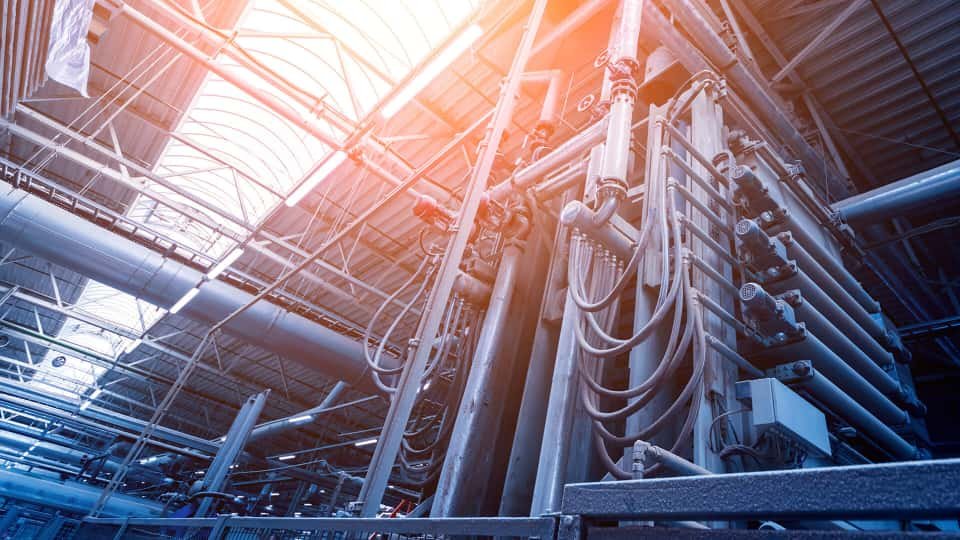
High-Temperature Process Plants
Steel mills (rolling mill walkways, blast-furnace gantries), glass-making furnaces, aluminum smelters, cement kiln drives, petrochemical hot zones. Continuous ambient over 90°C disqualifies XLPE cable; MI cable is the only construction that handles 250°C continuous and 1,000°C brief excursions.
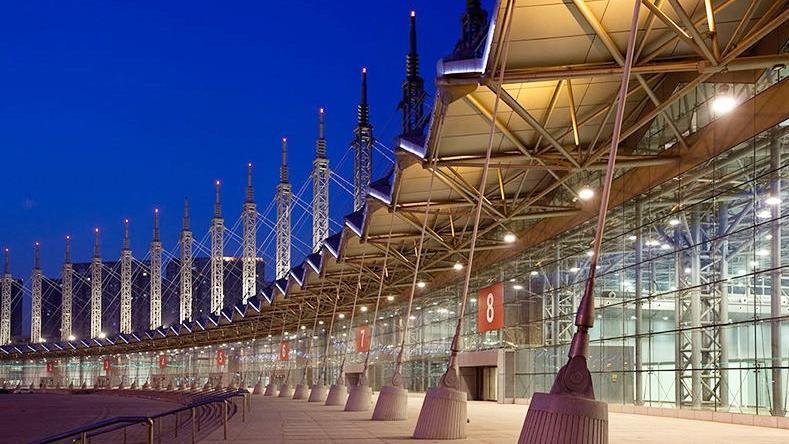
Heritage, Iconic, Premium Buildings
Government buildings, opera houses, museums, premium hotels, and projects where the cable specification carries reputational weight. BTTVZ is what specifiers reach for when the project description includes the words “state-of-the-art” or “irreplaceable” — its 100-year fire-survival track record is unmatched by any newer construction.
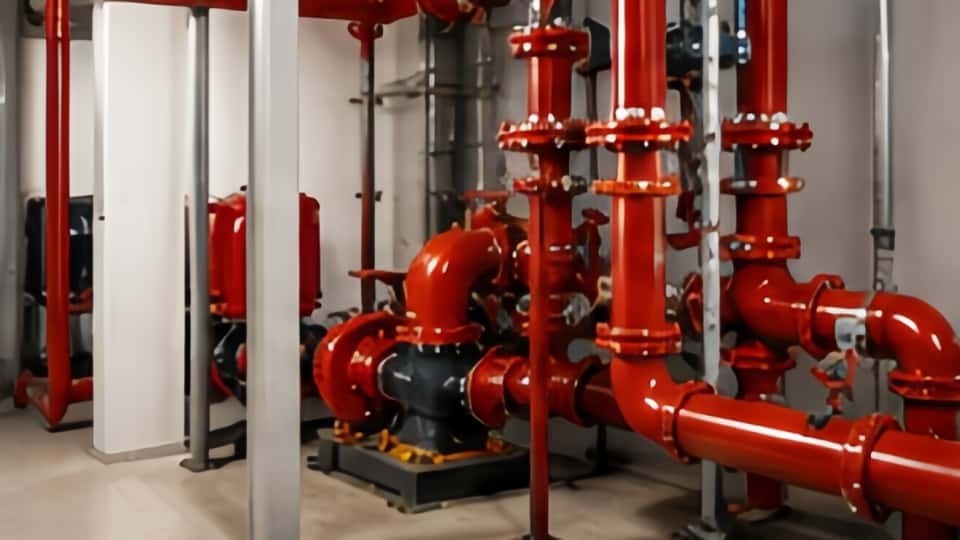
Critical Fire-Safety Circuits
Fire pumps, sprinkler controllers, smoke evacuation fans — the same applications as BBTRZ, but specifically on projects where the consulting fire-safety engineer requires the rigid MI architecture for code or risk-management reasons. Some Chinese fire authorities still treat rigid MI as the only fully-validated solution for Class A fire-resistance.

EMI-Sensitive & Lightning-Exposed Sites
Broadcast stations, radar facilities, medical imaging suites, sensitive instrumentation rooms. The continuous copper sheath provides excellent electromagnetic shielding and lightning surge protection. Also valuable for cable runs through lightning-exposed outdoor portions of building services — on rooftops, between towers, and across atria with metal-frame supports.
Not appropriate for: Routes with complex bends or long flexible runs (the 100-m piece-length limit and rigid construction will multiply joint count and installation cost — use BBTRZ instead). General building distribution that just needs LSZH fire-safety properties without 950°C survival (use WDZ-YJY at one-third the cost). Mobile machinery and equipment requiring repeated flexing (use rubber-sheathed cable).
Technical Data
Single-Core BTTVZ 750V Standard Sizes & Ampacity
Reference values for single-core BTTVZ at 750V to ground, per GB/T 13033-2007 / BS 6207 / IEC 60702. Ampacity is for installation in air at 30°C ambient, sheath operating at 105°C continuous. Multi-core, light-duty BTTVQ, and high-temperature derated values are supplied with the formal technical quotation.
| Conductor | Approx. Cable OD | DC Resistance (max) | Ampacity (single-core, in air) | Approx. Weight |
|---|---|---|---|---|
| 1.5 mm² | ~ 7.0 mm | 12.1 Ω/km | 23 A | ~ 175 kg/km |
| 2.5 mm² | ~ 7.7 mm | 7.41 Ω/km | 31 A | ~ 215 kg/km |
| 4 mm² | ~ 8.6 mm | 4.61 Ω/km | 41 A | ~ 270 kg/km |
| 6 mm² | ~ 9.5 mm | 3.08 Ω/km | 53 A | ~ 335 kg/km |
| 10 mm² | ~ 11.0 mm | 1.83 Ω/km | 74 A | ~ 485 kg/km |
| 16 mm² | ~ 12.5 mm | 1.15 Ω/km | 99 A | ~ 670 kg/km |
| 25 mm² | ~ 14.5 mm | 0.727 Ω/km | 131 A | ~ 920 kg/km |
| 35 mm² | ~ 16.0 mm | 0.524 Ω/km | 162 A | ~ 1,180 kg/km |
| 50 mm² | ~ 18.0 mm | 0.387 Ω/km | 202 A | ~ 1,530 kg/km |
| 70 mm² | ~ 20.5 mm | 0.268 Ω/km | 252 A | ~ 2,030 kg/km |
| 95 mm² | ~ 23.0 mm | 0.193 Ω/km | 305 A | ~ 2,650 kg/km |
| 120 mm² | ~ 25.5 mm | 0.153 Ω/km | 353 A | ~ 3,240 kg/km |
| 150 mm² | ~ 28.0 mm | 0.124 Ω/km | 405 A | ~ 3,900 kg/km |
| 185 mm² | ~ 31.0 mm | 0.0991 Ω/km | 465 A | ~ 4,720 kg/km |
| 240 mm² | ~ 34.5 mm | 0.0754 Ω/km | 540 A | ~ 5,920 kg/km |
| 300 mm² | ~ 38.0 mm | 0.0601 Ω/km | 620 A | ~ 7,200 kg/km |
DC resistance per IEC 60228 Class 1 solid annealed copper, 20°C. Ampacity per BS 6207-1 Table 4 (single-core, laid in air, 30°C ambient, sheath at 105°C continuous). Cable OD and weight are approximate — MI cable dimensions vary slightly between manufacturers due to differences in copper sheath wall thickness and MgO compression ratio; verify against batch dimensional report. For installations operating at 250°C continuous (high-temperature applications without PVC outer sheath), derate ampacity by 30 to 40 percent and contact our technical team for the specific de-rating curve.
Fire-resistance certification: GB/T 19216 / IEC 60331 (950°C / 180 min circuit integrity), BS 6387 Categories C, W, Z (fire alone, fire + water spray, fire + mechanical shock). LSZH outer sheath performance (WD-BTTYZ variant): IEC 60754-1/-2 acid gas, IEC 61034 smoke density. Batch test reports issued with every shipment.
Comparison
BTTVZ vs the Modern Flexible Alternatives
For 80 years BTTVZ was the only choice. Since the 2000s, manufacturers have developed flexible alternatives that match the fire performance while reducing installation cost. The table below shows where each fits.
| Attribute | BTTVZ (this product) | BTTRZ (flex Cu sheath) | BBTRZ (flex non-metal) | WDZN-YJY (LSZH+mica) |
|---|---|---|---|---|
| Construction style | Rigid (drawn copper tube) | Flexible | Flexible | Flexible |
| Insulation | Compressed MgO powder | Mica tape | Mineral compound + mica | Mica tape under XLPE |
| Metallic sheath | Seamless drawn Cu tube | Laser-welded Cu tape | None | None |
| Fire-survival rating | 950°C / 180 min | 950°C / 180 min | 950°C / 180 min | 750°C / 90 min |
| Continuous operating temp | 105°C (PVC limit) / 250°C (BTTZ) | 105°C (LSZH limit) | 90°C | 90°C |
| Max length per piece | ~ 100 m (rigid) | Drum-length | Drum-length | Drum-length |
| Integral PE conductor | Yes (Cu tube) | Yes (Cu tape) | No (separate PE) | No (separate PE) |
| EMI / lightning shielding | Excellent | Good | None | None |
| Installation complexity | High (craft skill) | Medium | Low (standard) | Low (standard) |
| Cost (relative to BTTVZ) | 1.00 (baseline) | 0.75 to 0.90 | 0.50 to 0.65 | 0.25 to 0.35 |
When to choose BTTVZ (this product)
Projects with explicit BTTVZ / BS 6207 / IEC 60702 specifications; circuits operating continuously above 90°C ambient (steel mills, glassworks, petrochemical plants); heritage and iconic buildings where the 100-year track record carries reputational weight; EMI- and lightning-sensitive installations where the continuous copper sheath is the engineering advantage. Short, straight cable runs where rigid construction is logistically fine.
When to choose an alternative
For typical building fire-survival circuits with complex routes and many bends, BBTRZ delivers the same 950°C / 180-minute fire rating at roughly half the cost and dramatically easier installation. For projects requiring a metallic sheath but accepting flexible construction, BTTRZ (laser-welded copper tape) is the modern alternative. For 90-minute (not 180-minute) fire resistance — sufficient under many fire codes — WDZN-YJY is one-quarter the cost.
Frequently Asked Questions
Common Questions From Fire-Safety Engineers and Buyers
What is the difference between BTTVZ and BTTZ?
Same MI cable underneath. BTTZ is the bare cable — copper conductor + MgO + copper tube with no outer covering, exposing the bright copper sheath. BTTVZ adds an extruded PVC outer sheath over the copper tube. The PVC provides mechanical scuff protection, atmospheric corrosion resistance, electrical isolation from cable supports, and visible identification colour. BTTVZ is the building-installation default; BTTZ is used inside enclosures or process areas where the bare copper finish is acceptable. For halogen-free buildings, specify WD-BTTYZ with LSZH outer sheath instead of PVC.
Should I choose BTTVZ or the flexible BBTRZ for a fire-pump circuit?
Both meet the 950°C / 180-minute fire-survival requirement. For a typical building fire-pump circuit, BBTRZ is the practical default — lower cost, easier installation, longer continuous lengths, fewer joints. Choose BTTVZ when one of these applies: the project specification explicitly calls out rigid MI; the route is short, straight, and accessible (substation room to nearby fire-pump room); the consulting fire engineer treats rigid MI as the only validated solution for the local code; or the cable run passes through a high-temperature environment in addition to its fire-survival function. For long building risers, BBTRZ almost always wins on installed cost.
Why is the maximum length per piece only about 100 m?
BTTVZ manufacture starts with a copper tube of fixed length (typically 5 to 6 m), filled with MgO powder around the conductor, then drawn down through progressively smaller dies. The reduction ratio of about 15:1 to 20:1 turns the initial 5 m tube into roughly 80 to 120 m of finished cable. Because the copper sheath becomes a rigid metal pipe that cannot be reeled, the length is also limited by what fits in a straight line on the factory floor and on a transport truck — usually no more than 100 m per piece. Longer runs are made up from multiple pieces with specialist MI joints. This is the fundamental architectural difference between rigid MI and the modern flexible alternatives that can be reeled to drum lengths.
Why are the cut ends so critical?
MgO is intensely hygroscopic — the compressed powder will absorb atmospheric moisture within minutes of being exposed at a cut end. Wet MgO loses dielectric strength rapidly: a cable that passed factory test will fail an insulation-resistance megger reading after just a few hours of exposed-end storage. Termination procedure for MI cable involves stripping the copper sheath back to expose the MgO, applying a specialist sealing pot (gland kit) with a moisture-impermeable resin seal, and re-megger-testing before the cable is energized. Trained MI cable installers handle this routinely; less-experienced electricians have ruined many cables by leaving the ends open overnight.
Can I really use the copper sheath as the PE conductor?
Yes, and this is one of MI cable’s major project-cost advantages. The seamless copper tube provides a continuous metallic earth path with cross-section large enough to handle the prospective short-circuit current of most building distribution systems (typically 50 to 150 percent of the phase conductor cross-section, depending on size). For a 50 mm² single-core BTTVZ, the copper sheath alone carries roughly 50 to 60 mm² equivalent PE capacity — sufficient for most building circuits without a separate PE conductor. Verify the calculated earth-fault loop impedance against your protection-device tripping time at the design stage; that’s the same calculation you would do for any other PE arrangement.
What is the typical lead time and MOQ?
Standard BTTVZ configurations typically ship in 25–40 days from order — longer than other cable types because of the slow drawing-reduction manufacturing process. The MI cable line cannot match the throughput of standard cable extrusion lines. MOQ is normally 500 m total order quantity, made up of multiple ~100 m pieces or shorter lengths cut to your circuit schedule. For long building risers, tell us the cable schedule at order — we can pre-cut and label pieces for each circuit, which saves significant field labour given the joint complexity. Termination kits, sealing pots, and specialist installation tools are available alongside the cable on request.
Installation & Handling Tips
Six Practices That Make MI Cable Installation Succeed
Rigid MI cable is a craft job, not a routine cable pull. The six items below are non-negotiable for getting the installation through commissioning. They’re also the differences between MI installation and standard armored-cable installation that crews experienced with the latter sometimes miss.
Use trained MI cable installers
MI cable termination requires specific training and specific tools (stripping tools, sealing-pot crimps, moisture-resin kits). A general electrician who hasn’t worked with MI cable will struggle and is likely to ruin cable lengths through bad terminations. Either use a contractor with MI cable experience, or budget for a one-day training session before installation starts.
Seal cut ends within minutes, not hours
The cut MgO end will absorb enough moisture to fail the insulation-resistance test within about 30 minutes in normal indoor humidity. Plan the work so cuts happen immediately before terminations are made up, or seal cut ends with heat-shrink caps if work has to pause. Megger-test before energizing — a dropped insulation reading is the visible symptom of moisture ingress.
Respect the bending radius limits
MI cable bends, but only at controlled radii: minimum 6 times OD for cables under 9 mm OD, 8 times OD for 9-15 mm, and 10 times OD for larger sizes (BS 6207-1 table 9). Use a bending tool for accurate radii on larger cables — sharp kinks crack the MgO insulation internally and the damage is invisible until megger testing. Allow extra cable at each termination so you can re-bend if needed.
Use non-combustible cable supports
The cable’s 950°C / 180-minute fire rating only delivers if the supports holding it up survive too. Use galvanized steel clips, stainless saddles, or steel-strap supports — never plastic clips or nylon ties, which fail at 150°C. Support intervals: 600 mm for horizontal runs, 800 mm for vertical, closer at terminations and direction changes (BS 6207 Annex C).
Allow for thermal expansion on long runs
Copper expands roughly 1.7 mm per metre per 100°C temperature rise. A 50 m run going from 20°C cold to 100°C operating temperature will grow by about 70 mm. Build expansion loops at the ends of long runs, especially between substation enclosures and equipment terminations. Failing to do this transfers thermal stress into the terminations and eventually fractures the seals.
Megger-test before, during, and after each termination
Standard practice for MI cable: megger-test (500V or 1000V, 1 minute) before stripping, immediately after stripping but before sealing, after sealing, and after final connection. Drops in insulation resistance indicate moisture in the MgO — catch it early before the cable is buried inside a finished wall. Maintain the test records as part of the project handover; the local fire authority typically wants them.
Safety note: MI cable installation must follow the project’s fire-engineering design and the applicable national fire codes (GB 50016 in China, BS 7671 + BS 9999 in the UK, NFPA 70 Article 332 in the US). Use only termination accessories matched to the cable construction and certified to the same fire-resistance standard. The cable’s fire-survival rating depends on the entire installed system — cable, joints, terminations, supports, and penetration seals all need to perform.
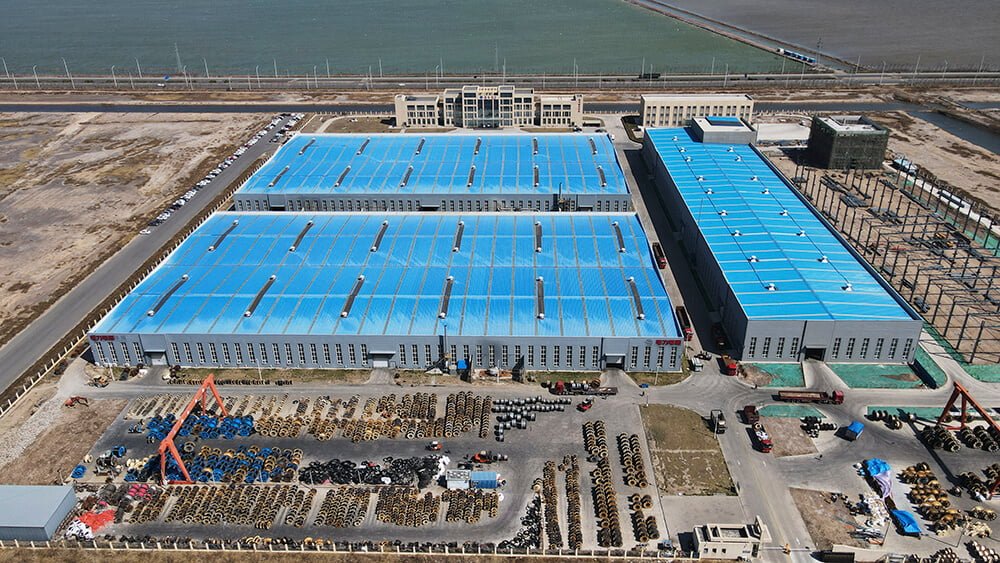
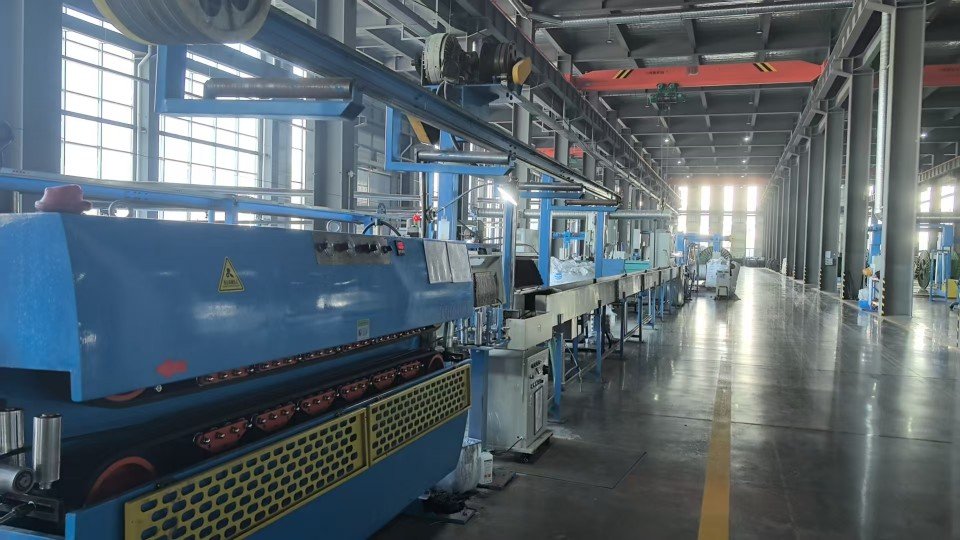
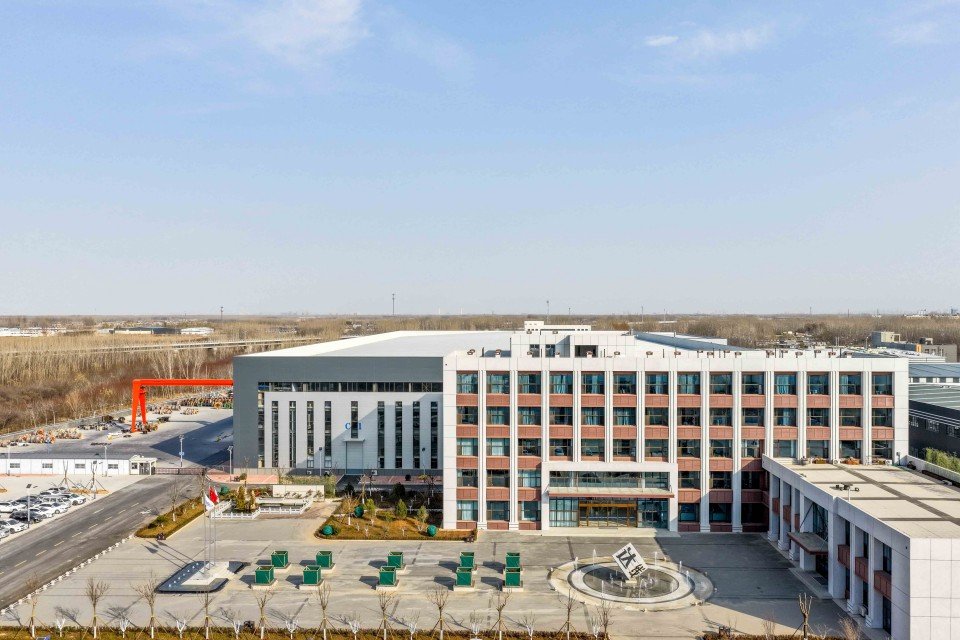
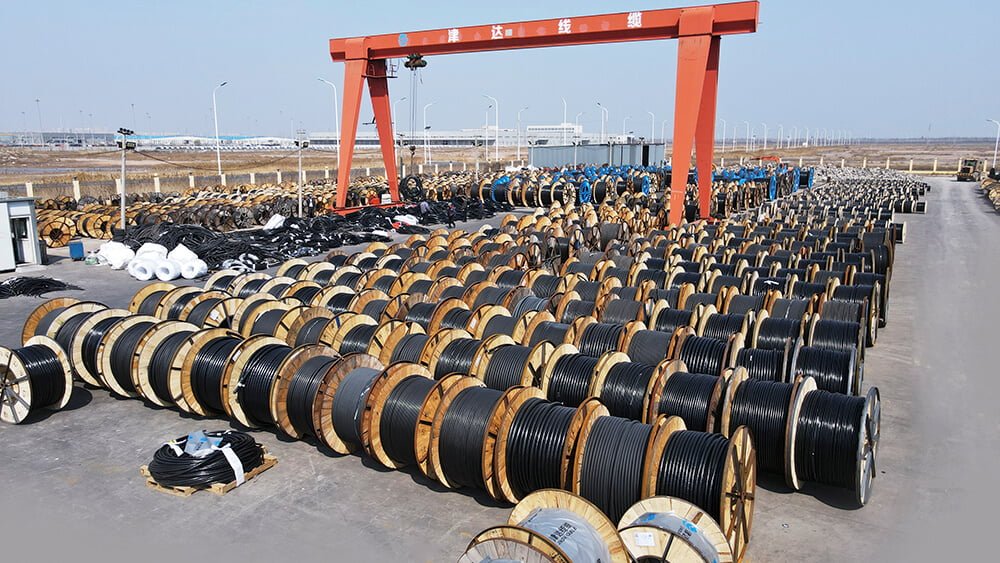
Manufacturing Capability
Why Source From Jinda Cable
Behind every drum we ship sits a 38-year track record, five production bases under one MES system, and a documentation discipline that gets cables through customs without delays.
-
Every cable tested twice before shipping
Since 1987, our two-stage QC has been refined to a science: routine test on the production line, then full electrical and mechanical re-test before packing. Across 50+ export markets, our return rate stays under 0.3%.
-
Five production bases, 470,000 m², synced via MES
Tianjin, Liaoning, Heilongjiang, Shandong, and Xian — each base runs under one unified MES system. Same recipe, same protocols, same traceability, regardless of which plant ships your order.
-
3,000+ SKUs, custom configurations welcome
Standard sizes ship from inventory. Special voltage grades, color-coding, drum lengths, or armor configurations are routine — submit your spec and our team will quote the lead time honestly.
-
Trusted by EPC contractors in 50+ countries
We supply utilities, mining operators, port authorities, and large industrial OEMs across Europe, the Americas, Southeast Asia, the Middle East, and Africa.
-
Full paperwork shipped with every order
Every shipment includes factory test report, certificate of origin (COO), packing list, and bill of lading (B/L). Customer-nominated witness testing can be arranged before shipment.
Our Track Record
98.7%
On-time shipment rate (last 24 months)
< 0.3%
Return rate across export markets
25 days
Typical sea freight Tianjin → Rotterdam
100%
Shipments with routine test report attached
Logistics & Delivery
Packaging, Shipping & Documentation
What we handle on our side from production floor to the port of loading. Product-specific installation guidance is supplied with the datasheet that accompanies each order.
Packaging
- Wooden or steel drums per IEC 62004
- Coil packaging available for small cross-sections
- Standard drum lengths plus custom lengths on request
- Each drum labeled with type, voltage, cross-section, length, batch
- Waterproof wrapping for export shipments
- Cable ends sealed against moisture ingress
- Private-label / OEM packaging available under NDA
Shipping
- FCL / LCL sea freight, air freight on request
- Trade terms: EXW, FOB, CFR, CIF, DDP
- Ports of loading: Tianjin / Qingdao / Shanghai
- Typical sea freight to Rotterdam: 25 days
- Lead time confirmed at order acknowledgement
- Container loading photos sent before sailing
Documentation
- Factory routine test report (per applicable standard)
- Commercial invoice and packing list
- Certificate of origin (CO) — China Council, FORM A, FORM E available
- Bill of lading (B/L) — original or telex release
- Third-party inspection by SGS / BV / TÜV on request
- Customer-nominated witness testing arranged before shipment
Related Products