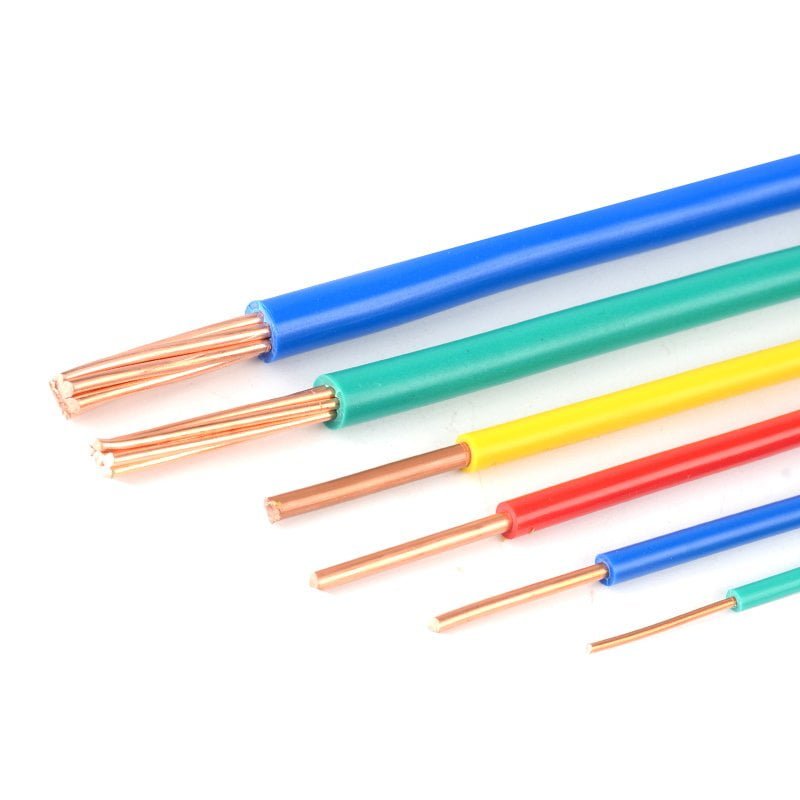
/ 450/750V
PVC Insulated Building Wire
Model: BV / H07V-U / H07V-R
General-purpose PVC insulated building wire designed for fixed electrical installations in residential, commercial, and industrial buildings.
- Voltage Rating
- 450/750V
- Number of Cores
- Array
- Cross Section
- 0.5–240 mm²
- Conductor
- Copper Clad Aluminum
- Armoring
- Unarmored
- MOQ
- ≥ 100 m
Downloads
Specifications
Technical Specifications & Performance
Construction
- Model / Series
- BV / H07V-U / H07V-R
- Voltage Rating
- 450/750V
- Conductor Material
- Copper Clad Aluminum
- Conductor Class
- Class 1 Solid
- Cross Section
- 0.5–240 mm²
- Number of Cores
- Array
- Insulation
- PVC
- Sheath
- PVC
- Armoring
- Unarmored
- MOQ
- ≥ 100 m
Performance
- Max. Conductor Temp.
- 70°C
- Min. Bending Radius
- 6 × Cable Outer Diameter
About This Product
Fixed Building Wire for Protected Conduit and Distribution Wiring
PVC Insulated Building Wire is a single-core, non-sheathed installation wire used for fixed wiring in residential, commercial, and light industrial buildings. In the Chinese market it is commonly specified as BV for copper conductor PVC insulated wire; in IEC and European export projects it corresponds to 60227 IEC 01, H07V-U for solid Class 1 conductor, and H07V-R for stranded Class 2 conductor. Small internal or light-duty sizes may also be specified as H05V-U, but the mainstream building-wire grade for power and lighting circuits is 450/750V.
This product is designed for fixed protected installation: pulled through conduit, laid in trunking, installed inside distribution boards, or routed in cable ducts where the insulation is protected from direct mechanical damage. It is not a portable cord, not a multi-core cable, and not an exposed outdoor cable. The simplicity of the construction — copper conductor plus PVC insulation — makes it economical, easy to terminate, easy to colour-identify, and suitable for high-volume building projects.
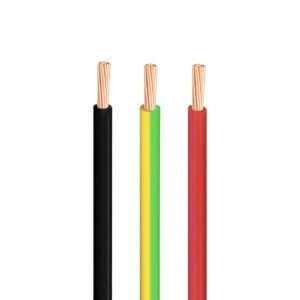
Jinda manufactures PVC insulated building wire for global wholesalers, contractors, and project distributors, with conductor class, colour, voltage grade, packing, and printed legend matched to the destination market. Typical standards include GB/T 5023.3, IEC 60227-3, EN 50525-2-31, and IEC 60228 for conductor class and DC resistance. Standard colours include red, yellow, blue, green, black, brown, grey, white, and green-yellow protective earth.
Wire Structure
Rigid Copper Conductor with 70°C PVC Insulation
Building wire uses a deliberately simple non-sheathed structure. The conductor carries the circuit load; the PVC insulation provides electrical separation and colour identification. The surrounding conduit, trunking, or enclosure provides the mechanical protection that a sheath would otherwise provide.
-
1
Conductor — Solid or Stranded Copper
Annealed copper conductor per IEC 60228. H07V-U / BV uses a Class 1 solid conductor for small and medium fixed wiring; H07V-R uses a Class 2 stranded rigid conductor for larger cross-sections where bending a single solid conductor would be impractical. Both are for fixed installation, not repeated movement.
-
2
Insulation — PVC for 70°C Continuous Operation
PVC insulation is extruded directly over the conductor. Standard building-wire PVC is rated for 70°C maximum conductor temperature in normal service and provides flame-retardant behaviour suitable for many protected fixed wiring applications. Heat-resistant PVC and LSZH alternatives should be specified separately when the project requires them.
-
3
Colour Coding — Circuit Identification
Colour is chosen according to national wiring rules and customer practice. IEC markets typically reserve green-yellow for protective earth and blue for neutral; phase colours vary by country and project. China-market building projects commonly order red, yellow, green, blue, and black according to local design drawings.
-
4
No Outer Sheath — Protection Comes from the Installation
BV / H07V-U / H07V-R is an insulated wire, not a sheathed cable. It should be installed in conduit, trunking, cable duct, wall channel, distribution board, or other protected wiring system. For direct burial, outdoor exposure, flexible equipment leads, or cable trays with abrasion risk, select a sheathed cable family instead.
Key Features
Economical, Code-Friendly Wire for Fixed Indoor Circuits
PVC insulated building wire is one of the highest-volume electrical products in construction. Its value comes from consistent conductor resistance, reliable insulation thickness, easy pulling through conduit, clean colour identification, and compatibility with standard building wiring accessories.
Built for Fixed Building Wiring
Designed for lighting circuits, socket circuits, distribution boards, and protected indoor wiring systems. It is the right product when conductors are installed once and remain fixed inside conduit, trunking, or an electrical enclosure.
450/750V Mainstream Rating
The mainstream BV / 60227 IEC 01 / H07V-U / H07V-R family is rated 450/750V, suitable for low-voltage AC building wiring systems when installed according to local rules. Smaller H05V-U variants may be used where 300/500V is specified.
Solid and Stranded Options
Solid conductor wire is economical and easy to terminate in smaller sizes. Class 2 stranded wire is more practical for larger sections and distribution-board links. Both provide stable electrical performance in fixed protected installations.
IEC and EN Recognised Formats
Can be supplied to GB/T 5023.3, IEC 60227-3, EN 50525-2-31, and IEC 60228 conductor classes, depending on market requirements. Printed legends can show BV, 60227 IEC 01, H07V-U, H07V-R, or customer-specific marking.
Cost-Effective PVC Insulation
PVC gives building-wire projects an economical balance of insulation performance, flame retardance, colour stability, processing speed, and easy stripping. It is the normal choice for ordinary indoor fixed wiring unless LSZH or higher-temperature insulation is specified.
Easy Packing for Wholesale
Small and medium sizes can be supplied in 100 m coils or cartons for electrical distributors. Larger sizes are packed on drums. Colour-coded labels and batch traceability help wholesalers manage project deliveries across many sizes.
How to Choose
Six Decisions Before Ordering Building Wire
Building-wire selection is governed by local electrical code first, then conductor size, installation method, colour, packing, and certification. Use this checklist to turn a generic enquiry into a precise order.
Confirm the installation is fixed and protected
Use BV / H07V-U / H07V-R only where the conductor will be installed inside conduit, trunking, cable duct, distribution board, or another protected wiring system. If the cable will be exposed, buried, moved, dragged, or used as a portable lead, select a sheathed or application-specific cable instead.
Choose conductor class: U or R
H07V-U uses Class 1 solid copper and is common in smaller fixed wiring sizes. H07V-R uses Class 2 stranded copper and is common in larger cross-sections where the installer needs a rigid but bendable conductor. For truly flexible Class 5 cabinet wire, choose H07V-K / RV instead; that is a different product family.
Size the conductor according to code
Common building sizes include 1.5 mm² for lighting circuits, 2.5 mm² for many socket circuits, 4 and 6 mm² for larger branch circuits, and 10 mm² or above for feeders and distribution links. Final sizing must account for local regulations, circuit protection, installation method, grouping, ambient temperature, voltage drop, and fault-loop requirements.
Define colours by destination market
Colour rules differ by country. IEC markets commonly use green-yellow for protective earth and blue for neutral, while phase colours vary. China-market projects often use red, yellow, green, blue, and black according to project drawings. Confirm colour and quantity per size before production to avoid site-level confusion.
Choose the correct standard marking
For China, specify BV and GB/T 5023.3 / 60227 IEC 01 as needed. For European or harmonised markets, specify H07V-U or H07V-R to EN 50525-2-31. For international projects, IEC 60227-3 and IEC 60228 references are often requested in the documentation package.
Select packing for distribution or project use
Electrical wholesalers usually prefer 100 m coils or cartons for 1.5 to 6 mm². Contractors ordering for large projects may request palletised coils by colour and floor zone. Larger cross-sections are normally supplied on drums. Specify label language, barcode, metre marking, and private-brand packaging at quotation stage.
Applications
Where PVC Insulated Building Wire Is Used
This product is made for protected fixed wiring, especially where contractors need large quantities of reliable, colour-coded single-core conductors for standard building circuits.
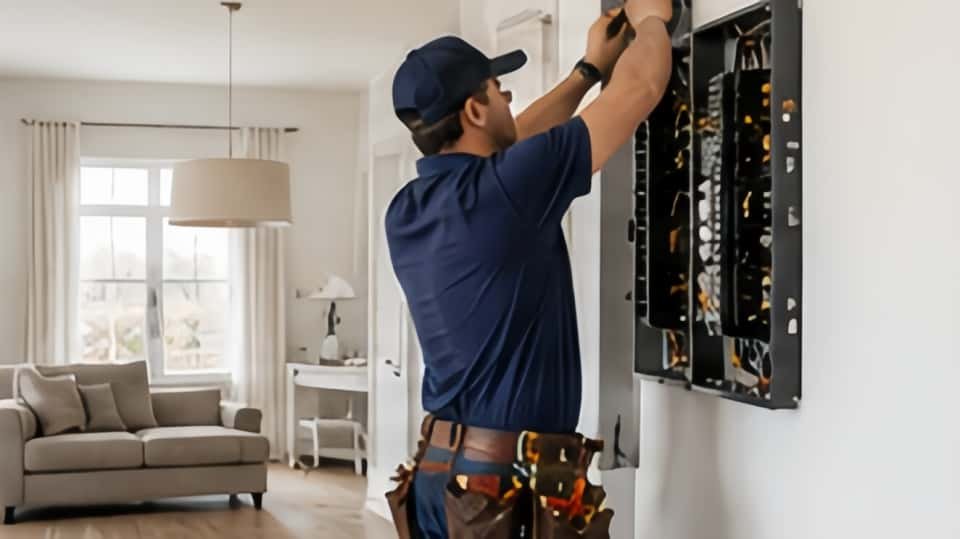
Residential Lighting & Socket Circuits
Apartment, villa, and housing-project wiring for lighting, sockets, small fixed appliances, and distribution-board connections. Installed in conduit or wall trunking according to the local electrical code.

Commercial Buildings
Office buildings, retail stores, schools, hotels, hospitals, and public buildings where branch circuits are pulled through conduit, cable trunking, and ceiling or wall wiring systems.
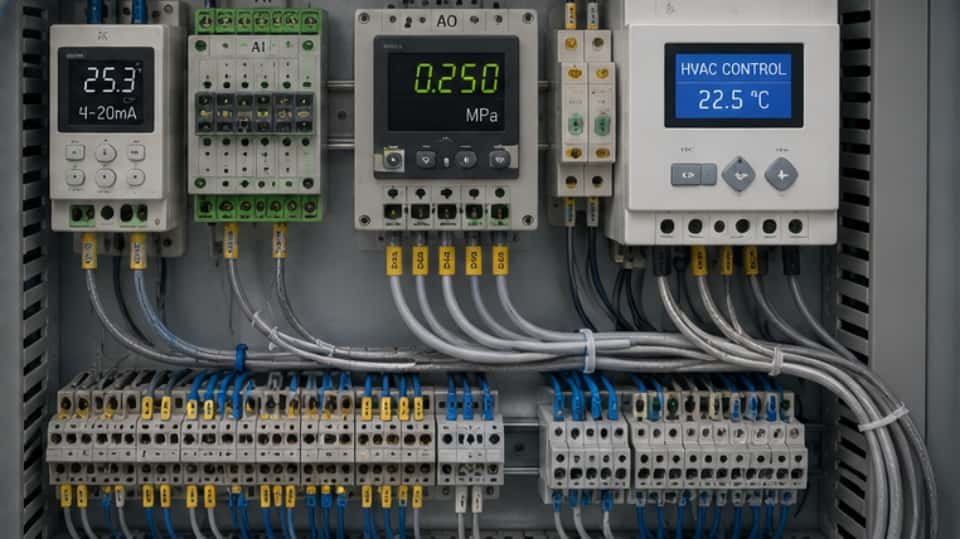
Distribution Boards & Panel Links
Internal connections, phase links, neutral links, protective earth conductors, and short fixed connections inside consumer units, sub-distribution boards, and low-voltage panels.
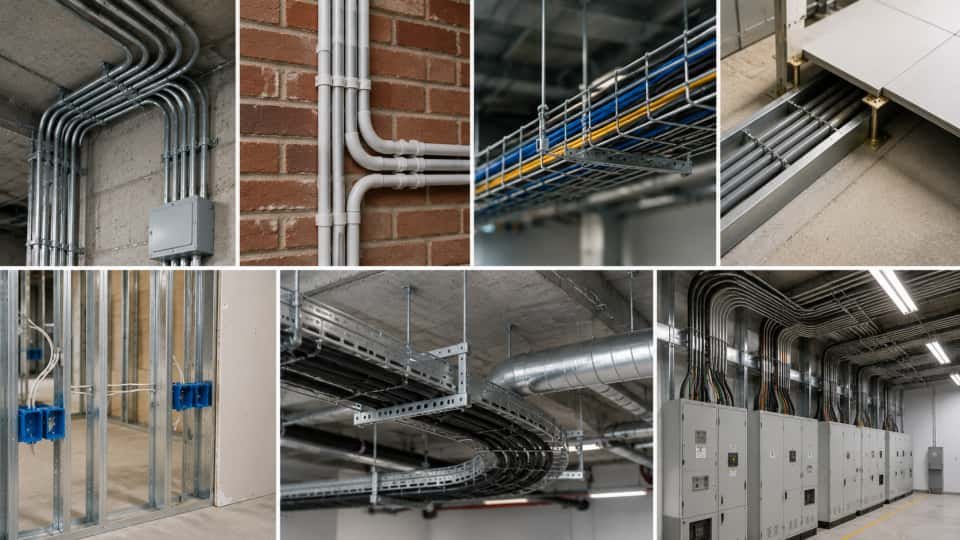
Conduit, Trunking & Cable Ducts
Protected raceway systems in concrete, masonry, drywall, raised floors, ceiling spaces, and electrical rooms. The raceway protects the non-sheathed wire from abrasion and mechanical damage.
Not appropriate for: Portable appliance cords, extension leads, machinery in repeated motion, outdoor exposed runs, direct burial, wet locations without suitable enclosure, solar PV strings, fire-survival circuits, data transmission, or any installation requiring a common outer sheath. Use RVV / H05VV-F, NYM, YJV, WDZ-YJY, rubber cable, LSZH wire, or fire-resistant cable according to the application.
Technical Data
BV / 60227 IEC 01 / H07V-U / H07V-R Reference Range
Reference values for single-core PVC insulated building wire. DC resistance follows IEC 60228 copper conductor limits at 20°C. Outside diameter and weight vary by standard, insulation thickness, colour, and factory drawing; order-specific datasheets should be used for final engineering approval.
| Nominal Section | Common Model | Voltage Grade | Conductor Class | Max DC Resistance at 20°C | Typical Building Use |
|---|---|---|---|---|---|
| 1 x 1.5 mm² | BV / 60227 IEC 01 / H07V-U | 450/750 V | Class 1 solid copper | 12.1 Ω/km | Lighting circuits, controls |
| 1 x 2.5 mm² | BV / 60227 IEC 01 / H07V-U | 450/750 V | Class 1 solid copper | 7.41 Ω/km | Socket circuits, branch wiring |
| 1 x 4 mm² | BV / H07V-U | 450/750 V | Class 1 solid copper | 4.61 Ω/km | Larger branch circuits |
| 1 x 6 mm² | BV / H07V-U | 450/750 V | Class 1 solid copper | 3.08 Ω/km | Cooker, AC, small feeders |
| 1 x 10 mm² | BV / H07V-R | 450/750 V | Class 2 stranded copper | 1.83 Ω/km | Feeders, distribution links |
| 1 x 16 mm² | BV / H07V-R | 450/750 V | Class 2 stranded copper | 1.15 Ω/km | Main board links, PE conductors |
| 1 x 25 mm² | H07V-R | 450/750 V | Class 2 stranded copper | 0.727 Ω/km | Large feeders, bonding |
| 1 x 35 mm² | H07V-R | 450/750 V | Class 2 stranded copper | 0.524 Ω/km | Sub-main links |
| 1 x 50 to 240 mm² | H07V-R | 450/750 V | Class 2 stranded copper | 0.387 to 0.0754 Ω/km | Large distribution boards |
DC resistance values are IEC 60228 copper conductor limits at 20°C for Class 1 or Class 2 conductors. Current rating is not shown as a universal fixed value because ampacity depends on conduit fill, grouping, installation method, insulation temperature, ambient temperature, and local wiring code.
Typical standards and references: GB/T 5023.3, IEC 60227-3, EN 50525-2-31, IEC 60228, and IEC 60332-1-2 where flame propagation testing is specified. Standard PVC operating temperature is 70°C; short-circuit limits and protective-device coordination must follow the project standard.
Comparison
Building Wire vs Flexible Wire vs Sheathed Cable
Single-core PVC building wire is often confused with flexible cabinet wire and multi-core sheathed cable. The correct choice depends on conductor flexibility, protection method, and whether the installation is fixed or portable.
| Attribute | BV / H07V-U / H07V-R | RV / H07V-K | RVV / H05VV-F | NYM / YJV / WDZ-YJY |
|---|---|---|---|---|
| Construction | Single-core PVC insulated, no sheath | Single-core flexible PVC insulated, no sheath | Multi-core PVC insulated and sheathed | Multi-core fixed installation cable |
| Conductor class | Class 1 solid or Class 2 stranded | Class 5 flexible | Usually Class 5 flexible | Solid or stranded depending on design |
| Main use | Fixed building circuits in conduit or trunking | Cabinet wiring and equipment internal wiring | Indoor appliance cords and light flexible leads | Fixed cable runs needing a common sheath |
| Mechanical protection | Provided by conduit, trunking, or enclosure | Requires cabinet duct or enclosure | Basic protection from outer sheath | Outer sheath and cable construction |
| Typical voltage | 450/750 V | 300/500 V or 450/750 V | 300/500 V | 300/500 V to 0.6/1 kV |
| When to avoid | Portable, exposed, wet, or moving applications | Fixed conduit jobs where rigid wire is preferred | Permanent building circuits requiring code-listed installation wire | When single cores in conduit are required by design |
Choose PVC insulated building wire when
The design calls for individual single-core conductors in conduit, trunking, distribution boards, or other protected fixed wiring systems. This is the correct product for many lighting, socket, branch circuit, and panel-link applications in buildings.
Choose another product when
The circuit needs a sheath, outdoor resistance, direct burial, flexible movement, fire survival, LSZH performance, or multi-core factory assembly. In those cases, use a sheathed installation cable, LSZH wire, flexible cord, armoured power cable, rubber cable, or fire-resistant cable according to the project specification.
Frequently Asked Questions
Common Questions About PVC Building Wire
Is BV the same as H07V-U?
They are equivalent in application but not always identical in marking rules. BV is the common Chinese designation for copper conductor PVC insulated building wire. H07V-U is the European harmonised designation for a 450/750V PVC insulated single-core wire with a solid Class 1 conductor. For export, specify the standard and printed marking required by the destination market.
What is the difference between H07V-U and H07V-R?
H07V-U uses a solid Class 1 copper conductor. H07V-R uses a rigid stranded Class 2 copper conductor. H07V-U is common in smaller building-wire sizes; H07V-R is more practical for larger cross-sections because it is easier to bend and install while still being intended for fixed wiring.
Can this wire be pulled directly through walls without conduit?
That depends on the local wiring code and the wall system, but as a product principle this is a non-sheathed insulated wire and should be protected by conduit, trunking, duct, or an enclosure. If the installation method requires a sheathed building cable, choose the appropriate sheathed fixed wiring cable rather than single-core building wire.
Is this wire suitable for outdoor installation?
Not as an exposed wire. Standard PVC building wire is not designed for direct UV, rain, abrasion, or physical impact. It may be used in outdoor electrical work only when installed inside suitable weatherproof conduit or enclosure systems approved by the project standard. For exposed outdoor routes, use an outdoor-rated cable.
Should I choose BV or BVR / H07V-K?
Choose BV / H07V-U / H07V-R for ordinary fixed building wiring where rigid conductors are preferred by code or installation practice. Choose BVR / RV / H07V-K when the conductor needs Class 5 flexibility, such as cabinet wiring, equipment internal wiring, or tight terminal work. Do not substitute one for the other without checking the project specification.
What information should I include in an enquiry?
Please provide model or standard, voltage grade, cross-section, conductor class, colour list, quantity by colour, packing length, printed marking, destination market, and required documents. A clear enquiry example is: BV / 60227 IEC 01, 1 x 2.5 mm², 450/750V, copper Class 1, red / blue / green-yellow, 100 m coils, GB/T 5023.3 and IEC 60227 documents, 50,000 m per colour.
Installation & Handling Tips
Six Practices for Safe Fixed Wiring
Building wire is simple, but installation quality determines safety. The points below are written for contractors, wholesalers, and project buyers who need predictable site performance.
Size by code, not by habit
Do not select conductor size only from common practice. Confirm circuit breaker rating, load current, voltage drop, installation method, grouping, ambient temperature, and protective-device disconnection requirements according to the local wiring code.
Avoid overfilled conduit
Overfilled conduit makes pulling difficult, damages insulation, increases heat build-up, and complicates future replacement. Follow conduit-fill rules and use lubricant compatible with PVC insulation where long pulls or bends are involved.
Keep bends reasonable
Rigid building wire can be damaged by sharp bends, especially in larger sections. Use proper bend radii, avoid repeated re-bending at the same point, and choose Class 2 stranded conductor where large sizes need easier routing.
Strip cleanly before termination
Use a stripping tool that matches the conductor size. Nicked copper or cut strands reduce conductor area and create hot spots at terminals. After tightening, inspect that no bare copper is exposed outside the terminal zone.
Respect colour identification
Do not reuse protective-earth or neutral colours for unrelated live conductors unless the local code explicitly allows re-identification. Consistent colour use is essential for maintenance safety and inspection approval.
Store coils away from heat and sunlight
PVC insulation should be stored indoors, dry, and away from direct sunlight or high heat before installation. Keep colour and batch labels intact so site teams can trace each coil to the correct circuit schedule.
Safety note: Fixed wiring must be designed, installed, tested, and inspected according to the applicable national electrical code and project specification. This page describes the product family; it does not replace conductor-sizing calculations, protective-device coordination, earthing design, insulation testing, or local inspection requirements.
Manufacturing Capability
Why Source From Jinda Cable
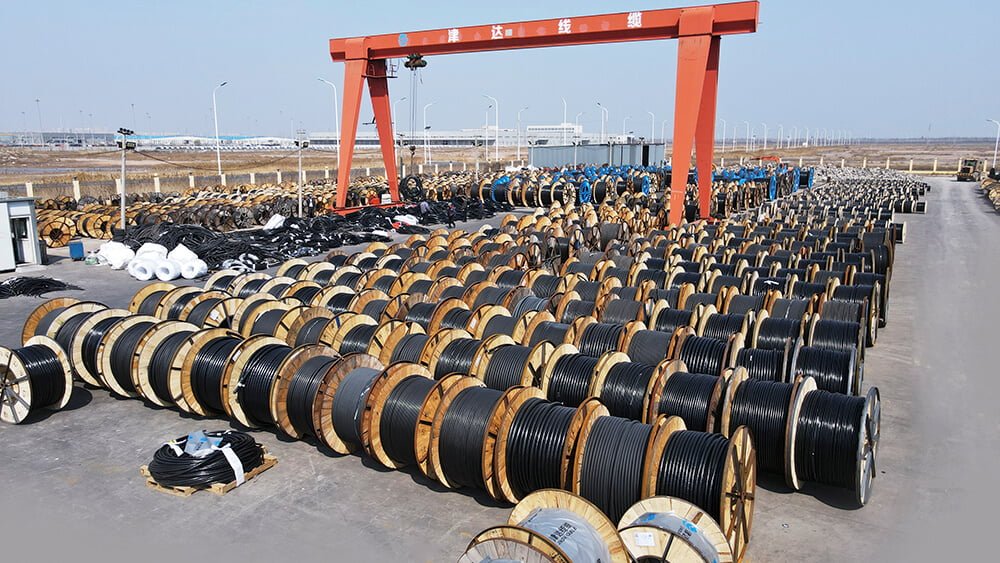
Behind every drum we ship sits a 38-year track record, five production bases under one MES system, and a documentation discipline that gets cables through customs without delays.
-
Every cable tested twice before shipping
Since 1987, our two-stage QC has been refined to a science: routine test on the production line, then full electrical and mechanical re-test before packing. Across 50+ export markets, our return rate stays under 0.3%.
-
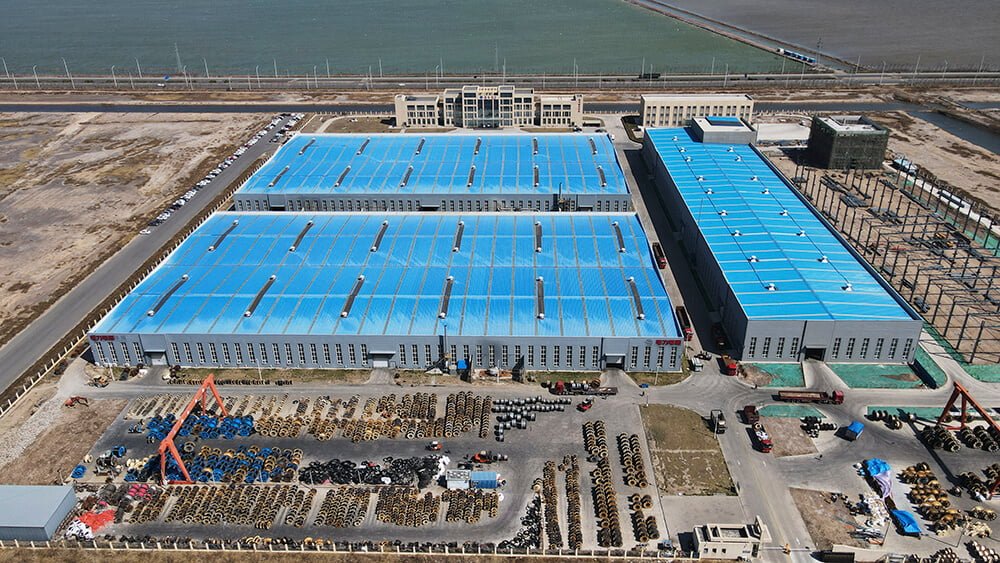
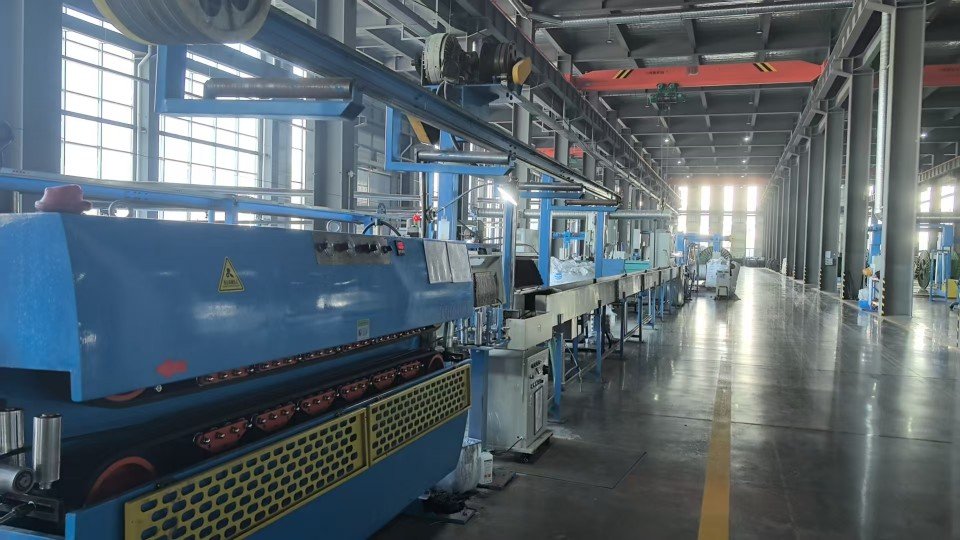
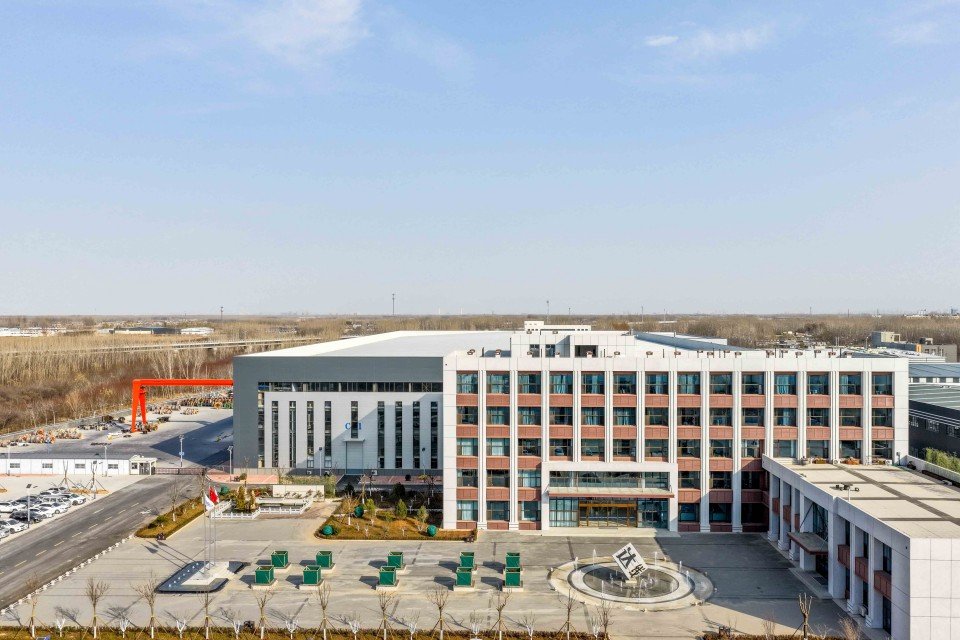
Five production bases, 470,000 m², synced via MES
Tianjin, Liaoning, Heilongjiang, Shandong, and Xian — each base runs under one unified MES system. Same recipe, same protocols, same traceability, regardless of which plant ships your order.
-
3,000+ SKUs, custom configurations welcome
Standard sizes ship from inventory. Special voltage grades, color-coding, drum lengths, or armor configurations are routine — submit your spec and our team will quote the lead time honestly.
-
Trusted by EPC contractors in 50+ countries
We supply utilities, mining operators, port authorities, and large industrial OEMs across Europe, the Americas, Southeast Asia, the Middle East, and Africa.
-
Full paperwork shipped with every order
Every shipment includes factory test report, certificate of origin (COO), packing list, and bill of lading (B/L). Customer-nominated witness testing can be arranged before shipment.
Our Track Record
98.7%
On-time shipment rate (last 24 months)
< 0.3%
Return rate across export markets
25 days
Typical sea freight Tianjin → Rotterdam
100%
Shipments with routine test report attached
Logistics & Delivery
Packaging, Shipping & Documentation
What we handle on our side from production floor to the port of loading. Product-specific installation guidance is supplied with the datasheet that accompanies each order.
Packaging
- Wooden or steel drums per IEC 62004
- Coil packaging available for small cross-sections
- Standard drum lengths plus custom lengths on request
- Each drum labeled with type, voltage, cross-section, length, batch
- Waterproof wrapping for export shipments
- Cable ends sealed against moisture ingress
- Private-label / OEM packaging available under NDA
Shipping
- FCL / LCL sea freight, air freight on request
- Trade terms: EXW, FOB, CFR, CIF, DDP
- Ports of loading: Tianjin / Qingdao / Shanghai
- Typical sea freight to Rotterdam: 25 days
- Lead time confirmed at order acknowledgement
- Container loading photos sent before sailing
Documentation
- Factory routine test report (per applicable standard)
- Commercial invoice and packing list
- Certificate of origin (CO) — China Council, FORM A, FORM E available
- Bill of lading (B/L) — original or telex release
- Third-party inspection by SGS / BV / TÜV on request
- Customer-nominated witness testing arranged before shipment
Related Products