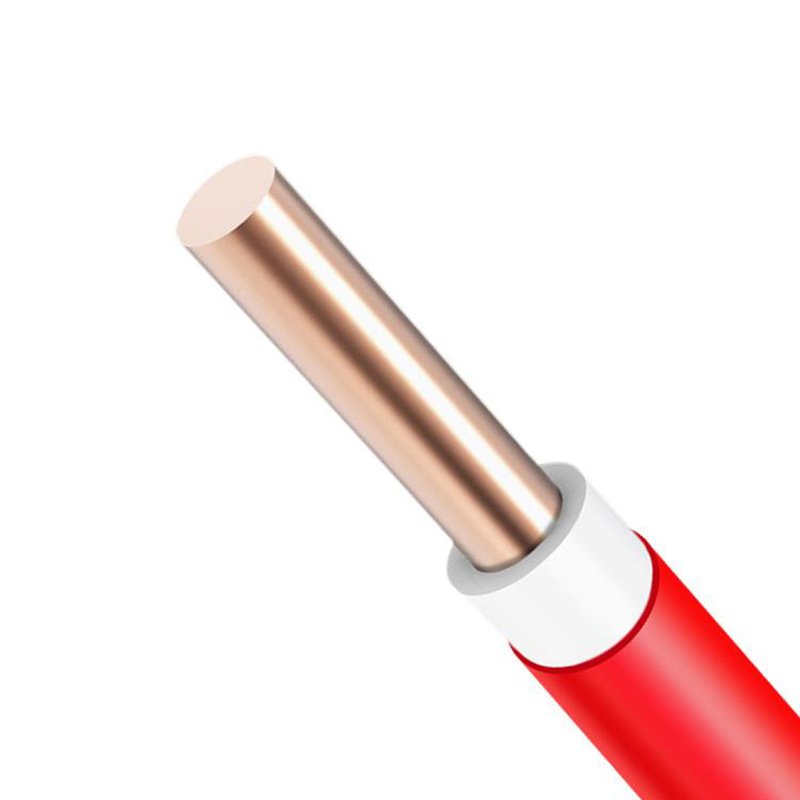
/ 300/500V
PVC Insulated & Sheathed Building Cable
Model: BVV / NYM
PVC insulated and sheathed building cable designed for safe and durable power distribution in building wiring systems.
- Voltage Rating
- 300/500V
- Number of Cores
- Array
- Cross Section
- 1.5–35 mm²
- Conductor
- Copper
- Armoring
- Unarmored
- MOQ
- ≥ 100 m
Downloads
Specifications
Technical Specifications & Performance
Construction
- Model / Series
- BVV / NYM
- Voltage Rating
- 300/500V
- Conductor Material
- Copper
- Conductor Class
- Class 1 Solid
- Cross Section
- 1.5–35 mm²
- Number of Cores
- Array
- Insulation
- PVC
- Sheath
- PVC
- Armoring
- Unarmored
- MOQ
- ≥ 100 m
Performance
- Max. Conductor Temp.
- 70°C
- Min. Bending Radius
- 8 × Cable Outer Diameter
About This Product
PVC/PVC Fixed Wiring Cable for Buildings and Light Industrial Circuits
PVC Insulated & Sheathed Building Cable is a fixed installation cable with copper conductors, PVC core insulation, and an overall PVC outer sheath. In the Chinese and IEC cable vocabulary it is commonly specified as BVV or 60227 IEC 10 for light PVC sheathed cable; in European building projects it is often cross-referenced with NYM-J and NYM-O installation cable; in the UK market, flat PVC insulated and sheathed building cables are often specified under BS 6004 families such as 624-Y twin-and-earth constructions. The shared idea is a 300/500V PVC/PVC cable for fixed wiring, not a portable flexible cord.
This product is used where a project needs more mechanical protection and easier installation management than individual single-core wires in conduit. The PVC sheath holds the cores together, protects the insulated conductors from normal installation abrasion, and allows the cable to be clipped, routed in trunking, installed in walls, or run in building voids where local rules allow. It is commonly used for lighting, small power, socket final circuits, distribution inside buildings, and indoor fixed wiring in residential, commercial, and light industrial projects.
The product should not be confused with BV / H07V-U single-core building wire, BVR / H07V-K flexible single-core building wire, RVV / H05VV-F flexible appliance cord, or VV / NYY 0.6/1kV power cable. Jinda can manufacture round and flat PVC/PVC building cable formats according to customer drawings, with core colours, conductor class, sheath colour, printed legend, packing length, and certification documents matched to the destination market.
Cable Structure
Copper Conductors, PVC Insulation, Fillers, and PVC Sheath
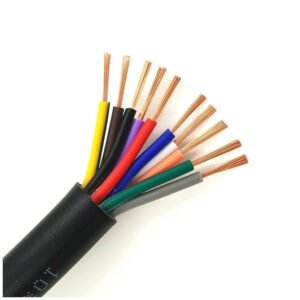
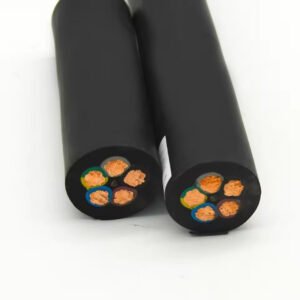
Unlike single-core BV or BVR wire, PVC insulated and sheathed building cable combines multiple insulated conductors under one outer sheath. The cable may be round, flat, or twin-and-earth style depending on the market and installation method.
-
1
Conductors — Solid or Stranded Copper
Annealed copper conductors per IEC 60228. Small sizes are commonly Class 1 solid conductors for fixed wiring. Larger sections may use Class 2 stranded conductors for easier installation. Class 5 flexible conductor is normally reserved for flexible cords or special project drawings, not ordinary fixed building cable.
-
2
Core Insulation — PVC for 70°C Service
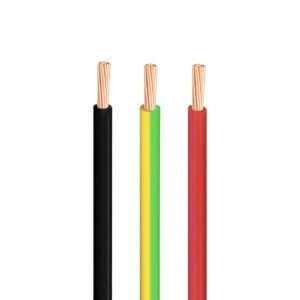
Each conductor is insulated with PVC compound. Standard PVC building cable is rated for 70°C maximum conductor temperature in normal service. Core colours follow the project market, such as brown / blue / green-yellow in many IEC applications or red / yellow / blue / green / black combinations in China-market drawings.
-
3
Assembly — Round, Flat, or Twin-and-Earth
Round NYM / BVV-style cables use assembled insulated cores with fillers or bedding to create a stable circular profile. Flat building cables place cores side by side for shallow wall and ceiling routes. UK-style twin-and-earth includes a circuit protective conductor according to the relevant BS construction.
-
4
Outer Sheath — PVC Mechanical Protection
The PVC outer sheath binds the cores together, provides basic mechanical protection during installation, and gives the cable its visible outer colour. Grey and white are common for round NYM-style cable; white, grey, or black are common for flat building cable depending on market. The sheath does not make the cable a heavy-duty outdoor, direct-burial, or armoured cable.
Key Features
More Protected Than Single Wires, Simpler Than Power Cable
PVC/PVC building cable is popular because it packages several conductors into one manageable cable while staying economical for ordinary fixed wiring. It is a middle ground between single-core wires in conduit and heavier 0.6/1kV power cables.
Designed for Fixed Building Installation
Used for domestic, commercial, and light industrial fixed wiring where local rules allow sheathed building cable. Typical routes include walls, ceilings, trunking, cable ducts, distribution boards, and protected building voids.
300/500V Final-Circuit Rating
BVV, 60227 IEC 10, NYM-J / NYM-O, and many BS 6004 PVC/PVC fixed wiring cables are commonly rated 300/500V. This is suitable for many low-voltage final circuits, but it is not the same rating class as 0.6/1kV VV, NYY, or armoured power cable.
Multi-Core Cable Management
The sheath keeps live, neutral, and protective conductors together. This improves routing discipline, reduces site handling time, and makes prefabricated wiring sections easier to plan compared with pulling individual single cores separately.
Round and Flat Variants
Round BVV / NYM-style cable is useful for trunking, wall voids, and general protected routes. Flat BVVB / 624-Y-style cable is useful for shallow runs, ceiling routes, and domestic final circuits where the local market accepts flat fixed wiring cable.
Economical PVC/PVC Construction
PVC insulation and sheath keep the cable cost-effective for large building projects. It strips cleanly, prints well, and has adequate flame behaviour for many ordinary fixed wiring applications when installed according to the applicable code.
Project and Wholesale Friendly
Standard sizes can be supplied in coils, drums, or cartons with clear model, core count, cross-section, voltage, length, batch, and destination-market labels. Private-label printing is available for distributors and building-material channels.
How to Choose
Six Decisions Before Ordering PVC/PVC Building Cable
The important selection questions are installation method, market standard, cable shape, core count, conductor size, and fire or environmental requirements. Answer these before requesting price.
Confirm fixed building installation
Choose BVV / NYM / BS 6004-style building cable only for fixed wiring routes allowed by the local electrical code. Do not use it as a portable cord, drag-chain cable, direct-burial cable, heavy outdoor cable, or industrial power feeder unless the specific construction and standard permit that use.
Choose the market standard and model name
For China and IEC-influenced enquiries, specify BVV, BVVB, or 60227 IEC 10. For Europe, specify NYM-J when a green-yellow protective conductor is included and NYM-O when it is not. For the UK, specify the relevant BS 6004 type such as 624-Y twin-and-earth if the market requires it.
Pick round or flat construction
Round cable is a good general choice for trunking, conduits, surface clipping, and distribution inside buildings. Flat cable is often selected for domestic lighting and socket circuits where local practice favours shallow routes. The cable shape should follow the installation method and the destination country’s normal wiring practice.
Select core count and protective conductor arrangement
Common versions include 2-core, 3-core, 4-core, 5-core, and twin-and-earth styles. For NYM, the J suffix indicates a green-yellow protective conductor; O indicates no green-yellow conductor. For BS-style twin-and-earth, confirm whether the circuit protective conductor is bare or insulated according to the applicable construction.
Size the conductors by the circuit design
Typical final-circuit sizes include 1.5 mm² for lighting, 2.5 mm² for many socket circuits, and 4 to 6 mm² for higher-current branch loads. Larger NYM / BVV sizes can be supplied for distribution links where permitted. Final sizing must follow current, protection device, installation method, grouping, voltage drop, and national code requirements.
Check fire, smoke, and outdoor requirements
Ordinary PVC/PVC building cable is suitable for many standard indoor fixed wiring applications. If the building specification requires LSZH behaviour, CPR class beyond basic PVC, fire survival, UV resistance, burial resistance, or armouring, select a different cable family or special construction. Do not force ordinary PVC/PVC building cable into a high-risk environment.
Applications
Where PVC/PVC Building Cable Fits Best
This cable family is used when the building wiring method benefits from a complete sheathed cable rather than loose single-core wires. It is strongest in ordinary indoor fixed wiring projects where cost, installation speed, and familiar construction matter.
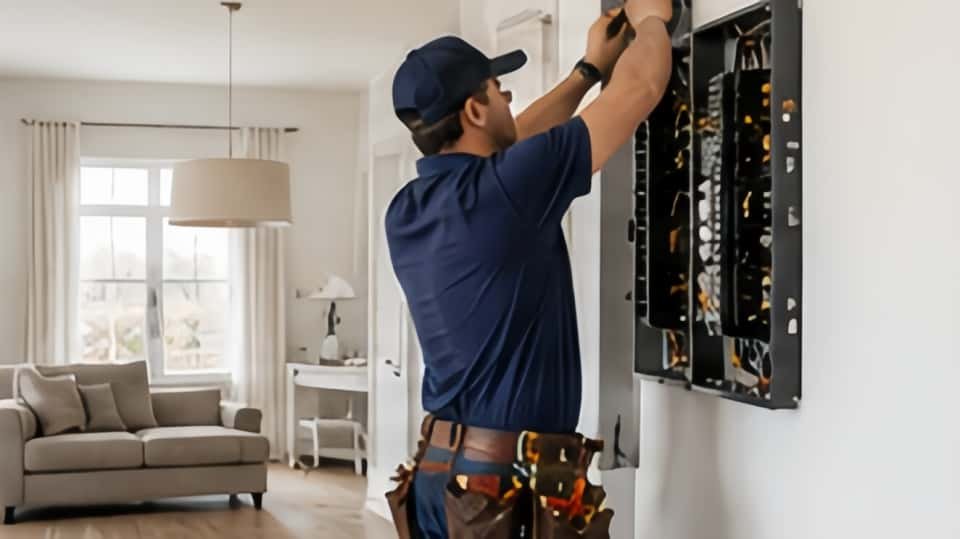
Residential Final Circuits
Lighting circuits, socket circuits, small fixed appliances, and internal wiring in apartments, houses, villas, and residential developments where sheathed building cable is accepted by the local code.

Commercial and Public Buildings
Offices, shops, hotels, schools, clinics, and public buildings for lighting, small power, and protected internal wiring routes. LSZH alternatives should be used where the project fire strategy requires low-smoke halogen-free cable.
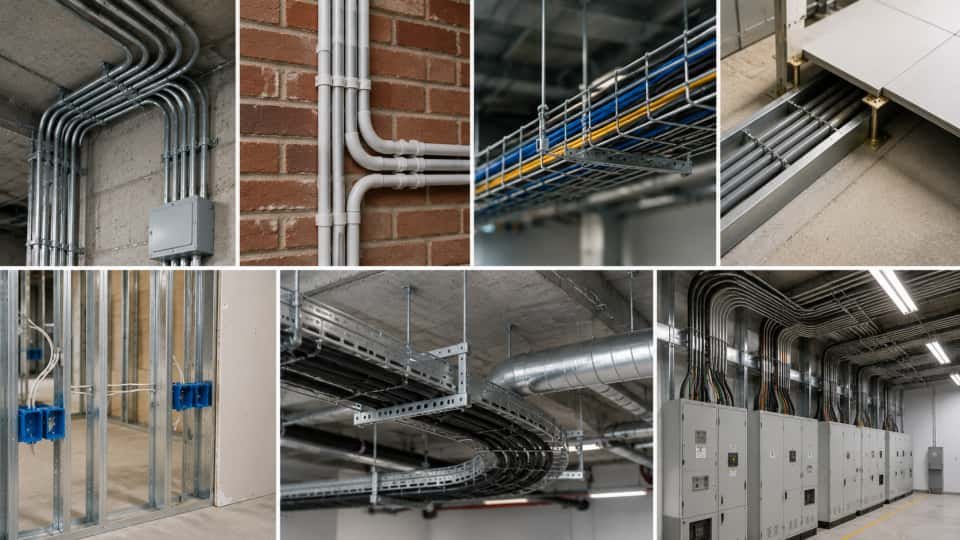
Surface, Wall, and Trunking Routes
Round NYM-style cable is commonly used in, on, and under plaster, in walls, in cable ducts, and on protected surfaces. The cable must be protected from direct sunlight and mechanical abuse where required by the local rules.
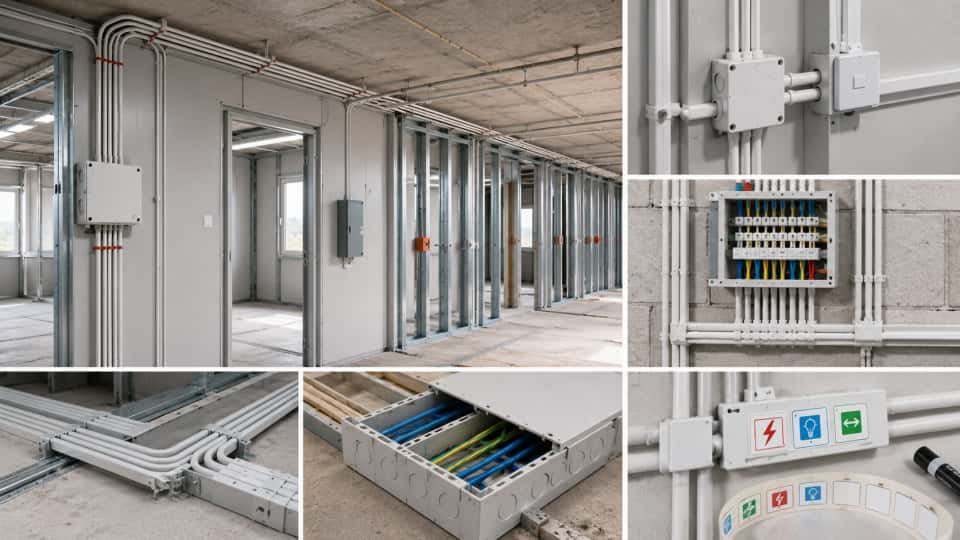
Prefabricated and Modular Wiring
Useful for modular buildings, prefabricated wall sections, container units, and repeatable building projects where a sheathed cable simplifies cutting, routing, labelling, and installation management.
Not appropriate for: Portable appliance cords, extension leads, drag chains, continuously moving equipment, direct burial unless a specific buried-rated type is selected, unprotected direct sunlight, heavy industrial feeders, high fire-survival circuits, solar PV strings, and areas requiring armoured or LSZH cable by code. Use RVV / H05VV-F, rubber cable, NYY / VV, SWA / armoured cable, LSZH building cable, or fire-resistant cable as required.
Technical Data
BVV / 60227 IEC 10 / NYM Reference Range
Reference values for PVC insulated and PVC sheathed fixed building cable. DC resistance follows IEC 60228 copper conductor values at 20°C. Actual outside diameter and weight depend on the exact cable shape, core count, sheath thickness, filler design, and national standard.
| Typical Size | Common Model | Voltage Grade | Conductor Class | Max DC Resistance at 20°C | Typical Use |
|---|---|---|---|---|---|
| 2 x 1.5 mm² | BVV / NYM-O / 6192Y style | 300/500 V | Class 1 solid copper | 12.1 Ω/km | Lighting, simple final circuits |
| 3 x 1.5 mm² | BVV / NYM-J / 6242Y style | 300/500 V | Class 1 solid copper | 12.1 Ω/km | Lighting with protective conductor |
| 2 x 2.5 mm² | BVV / NYM-O / 6192Y style | 300/500 V | Class 1 solid copper | 7.41 Ω/km | Socket and small power circuits |
| 3 x 2.5 mm² | BVV / NYM-J / 6242Y style | 300/500 V | Class 1 solid copper | 7.41 Ω/km | Socket circuits with PE |
| 3 x 4 mm² | BVV / NYM-J | 300/500 V | Class 1 solid or Class 2 stranded | 4.61 Ω/km | Higher-current branch circuits |
| 3 x 6 mm² | BVV / NYM-J | 300/500 V | Class 1 solid or Class 2 stranded | 3.08 Ω/km | Cooker, HVAC, small feeders |
| 4 x 1.5 to 6 mm² | BVV / NYM-O | 300/500 V | Class 1 or Class 2 copper | By conductor size | Three-phase without neutral, controls |
| 5 x 1.5 to 6 mm² | BVV / NYM-J | 300/500 V | Class 1 or Class 2 copper | By conductor size | Three-phase + neutral + PE |
The table shows conductor resistance by nominal section, not full cable ampacity. Current-carrying capacity must be calculated according to installation method, grouping, ambient temperature, thermal insulation, protective device, and the applicable national wiring code.
Typical references include IEC 60227 light PVC sheathed cable families, 60227 IEC 10, EN / DIN / HD documents used for NYM-J and NYM-O, BS 6004 for UK PVC insulated and sheathed fixed wiring cable, IEC 60228 for conductor resistance, and IEC / EN 60332-1-2 where single-cable flame propagation is specified.
Comparison
Positioning the Sheathed Building Cable Family
PVC insulated and sheathed building cable is often confused with single-core building wire, flexible appliance cord, and 0.6/1kV power cable. The right choice depends on whether the installation is fixed, whether a sheath is needed, and what voltage and mechanical rating the project requires.
| Attribute | BVV / NYM / 60227 IEC 10 | BV / H07V-U | BVR / H07V-K | RVV / H05VV-F | VV / NYY |
|---|---|---|---|---|---|
| Construction | PVC insulated cores + PVC sheath | Single-core PVC insulated, no sheath | Single-core flexible PVC insulated, no sheath | Flexible multi-core PVC cord | 0.6/1kV PVC power cable |
| Typical voltage | 300/500 V | 450/750 V | 450/750 V | 300/500 V | 0.6/1 kV |
| Main use | Fixed building final circuits | Single-core conduit wiring | Flexible fixed single-core wiring | Indoor appliance leads | Power feeders and distribution |
| Outer sheath | Yes | No | No | Yes, flexible cord sheath | Yes, heavier power-cable sheath |
| Installation character | Fixed | Fixed, protected | Fixed, protected, easier bending | Flexible cord, light-duty movement | Fixed power distribution |
| When to avoid | Portable, buried, UV-exposed, heavy industrial loads | Routes needing a common sheath | Exposed runs or sheathed routes | Permanent building circuits where not code-listed | Simple final circuits where 0.6/1kV cable is unnecessary |
Choose PVC/PVC building cable when
The wiring method calls for a complete sheathed cable in ordinary indoor fixed building circuits. It is ideal for lighting, socket final circuits, protected wall or ceiling routes, distribution-board connections, and project installations where handling a multi-core cable is more efficient than pulling separate single cores.
Choose another product when
Use BV / BVR when the project requires individual single cores in conduit. Use RVV / H05VV-F for indoor appliance cords. Use VV / NYY / YJV / WDZ-YJY for higher-rated feeders. Use armoured, rubber, LSZH, or fire-resistant cable where mechanical, environmental, smoke, or fire-survival requirements demand it.
Frequently Asked Questions
Common Questions About PVC/PVC Building Cable
Is BVV the same as NYM-J?
They are similar in application and general construction, but not always identical in detailed standard, dimensions, and marking. BVV / 60227 IEC 10 is the common China / IEC light PVC sheathed cable reference. NYM-J and NYM-O are European installation cable designations, with J indicating a green-yellow protective conductor and O indicating no green-yellow core. For export, specify the exact market standard, core colours, and printed legend.
Can this cable replace BV wires in conduit?
Only if the local code and installation design allow a sheathed cable in that route. BV single-core wire is normally pulled through conduit as individual conductors. BVV / NYM-style cable already has a sheath and may be clipped, routed, or installed differently depending on national rules. The wiring method must match the project standard, not only the electrical load.
Is this cable suitable outdoors?
Ordinary PVC/PVC building cable should not be exposed permanently to direct sunlight or heavy mechanical abuse unless the specific product and local rules permit it. Some NYM-style cables can be used in damp or protected outdoor locations, but direct UV exposure normally requires additional protection. For outdoor feeders, use an outdoor-rated cable such as NYY / VV, armoured cable, rubber cable, or another approved construction.
What is the difference between RVV and BVV?
RVV is a flexible PVC sheathed cable with fine-stranded conductors, mainly used for indoor appliance cords, control leads, and light flexible connections. BVV is a fixed building cable with PVC insulation and PVC sheath, normally using solid or stranded rigid conductors. RVV is about flexibility; BVV is about fixed building installation.
Can this cable be used for fire alarm or emergency circuits?
Only if the system standard allows ordinary PVC fixed wiring, which is not common for fire-survival circuits. Many fire alarm, smoke control, emergency lighting, and life-safety systems require fire-resistant or LSZH cables with specific circuit integrity performance. Do not use ordinary PVC/PVC building cable where the project calls for fire-resistant cable.
What information should I include in an enquiry?
Please provide model or standard, voltage grade, cable shape, core count, cross-section, conductor class, core colour arrangement, sheath colour, packing length, printed legend, destination market, and required documents. A clear example is: NYM-J / BVV 3 x 2.5 mm², 300/500V, solid copper, brown / blue / green-yellow cores, grey PVC sheath, 100 m coils, EN / IEC documents required.
Installation & Handling Tips
Six Practices for PVC/PVC Building Cable
Correct installation depends on the national wiring code and building method. These practices help buyers and contractors avoid the most common misuse of sheathed building cable.
Follow the permitted wiring method
Some markets allow sheathed building cable clipped or embedded in specific ways; others require conduit or special protection. Confirm the local code before substituting BVV / NYM-style cable for single cores or heavier power cable.
Avoid sharp bends and crushed sheath
Do not force the cable around tight corners or under sharp clips. A crushed sheath can damage core insulation beneath it. Use appropriate bend radius, clips, grommets, bushings, and edge protection at penetrations.
Protect from sunlight unless rated
Ordinary PVC sheath can degrade under long-term UV exposure. For outdoor or sunlit routes, use conduit, trunking, UV-protected installation, or a cable type specifically approved for outdoor service.
Do not overload bundled routes
Bundled cables in trunking, ceiling voids, or thermal insulation may need current derating. Calculate final ampacity using the local wiring standard, not only the nominal conductor cross-section printed on the sheath.
Strip sheath without cutting insulation
Use a proper sheath stripping tool. Knife damage to the core insulation is a common hidden defect at socket boxes and distribution boards. After stripping, inspect all cores before termination and insulation testing.
Match cable type to fire strategy
Ordinary PVC/PVC cable is not the same as LSZH or fire-resistant cable. If the project has smoke toxicity, evacuation, circuit integrity, or CPR class requirements, confirm the required cable family before procurement.
Safety note: Fixed building wiring must be designed, installed, tested, and inspected under the applicable national electrical code. This page explains the product family; it does not replace conductor sizing, protective-device selection, earthing design, RCD requirements, voltage-drop calculation, insulation resistance testing, or fire-safety specification.
Manufacturing Capability
Why Source From Jinda Cable
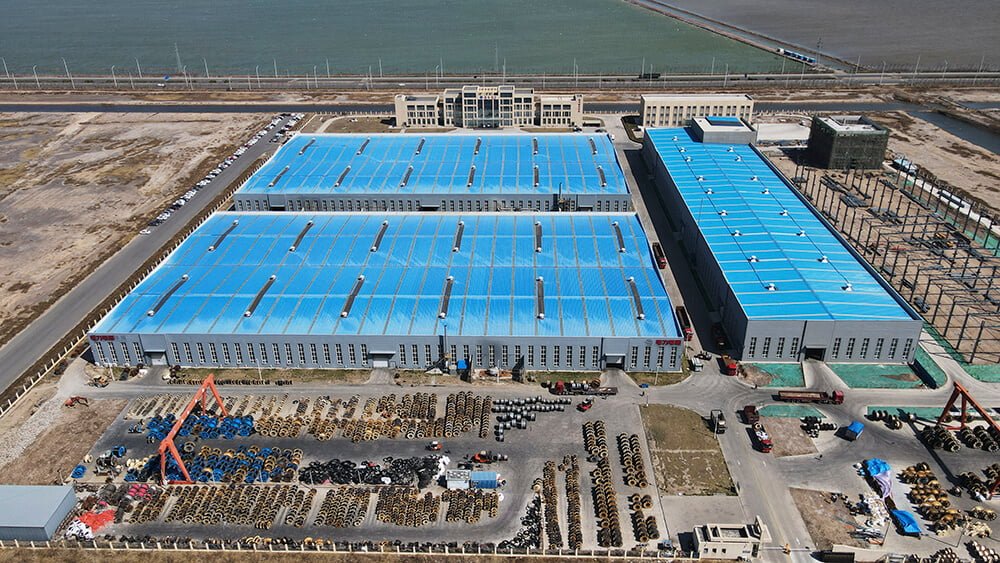
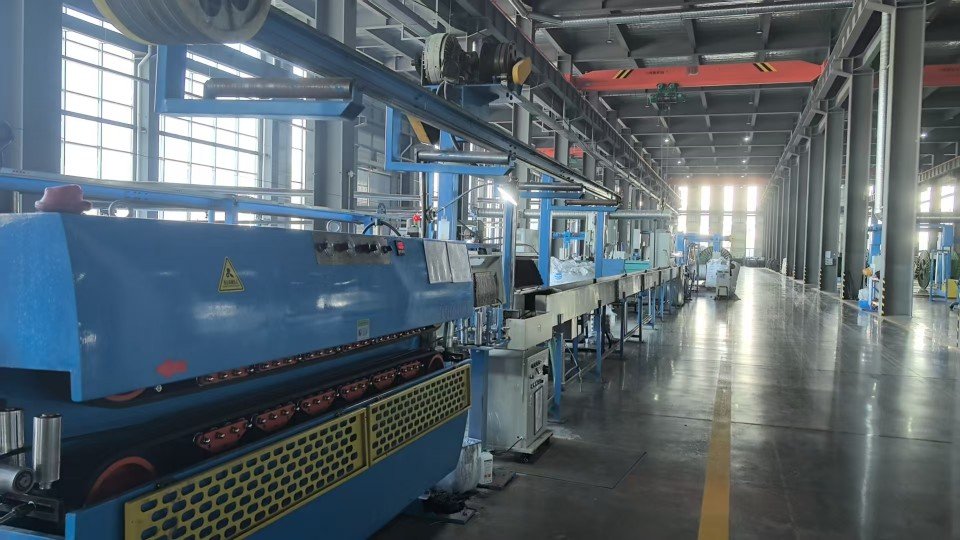
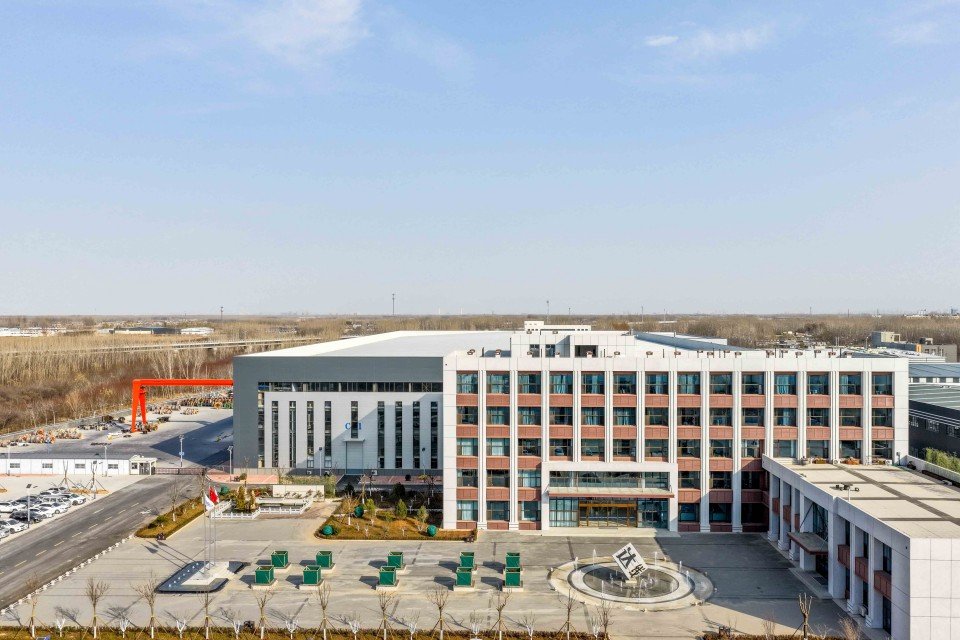
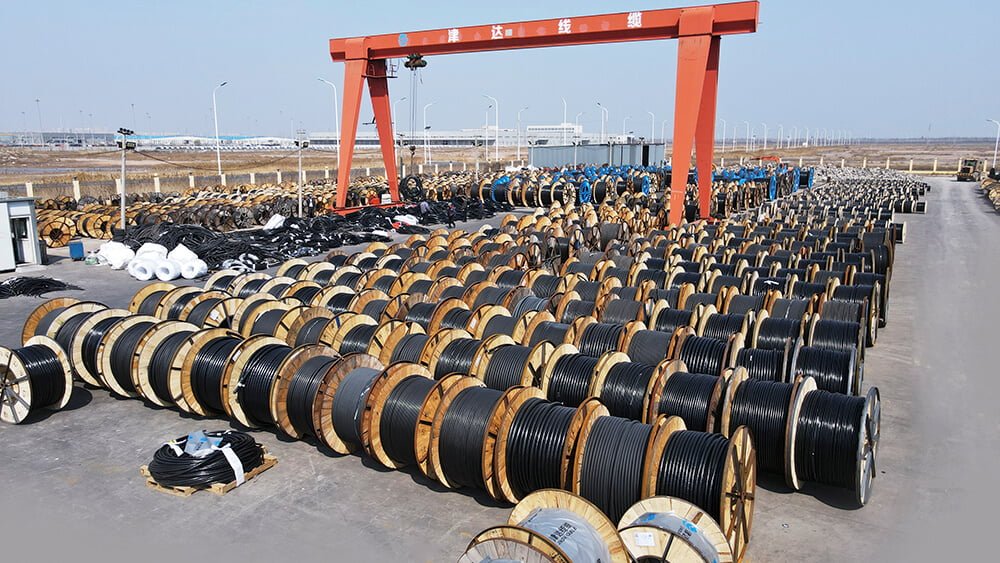
Behind every drum we ship sits a 38-year track record, five production bases under one MES system, and a documentation discipline that gets cables through customs without delays.
-
Every cable tested twice before shipping
Since 1987, our two-stage QC has been refined to a science: routine test on the production line, then full electrical and mechanical re-test before packing. Across 50+ export markets, our return rate stays under 0.3%.
-
Five production bases, 470,000 m², synced via MES
Tianjin, Liaoning, Heilongjiang, Shandong, and Xian — each base runs under one unified MES system. Same recipe, same protocols, same traceability, regardless of which plant ships your order.
-
3,000+ SKUs, custom configurations welcome
Standard sizes ship from inventory. Special voltage grades, color-coding, drum lengths, or armor configurations are routine — submit your spec and our team will quote the lead time honestly.
-
Trusted by EPC contractors in 50+ countries
We supply utilities, mining operators, port authorities, and large industrial OEMs across Europe, the Americas, Southeast Asia, the Middle East, and Africa.
-
Full paperwork shipped with every order
Every shipment includes factory test report, certificate of origin (COO), packing list, and bill of lading (B/L). Customer-nominated witness testing can be arranged before shipment.
Our Track Record
98.7%
On-time shipment rate (last 24 months)
< 0.3%
Return rate across export markets
25 days
Typical sea freight Tianjin → Rotterdam
100%
Shipments with routine test report attached
Logistics & Delivery
Packaging, Shipping & Documentation
What we handle on our side from production floor to the port of loading. Product-specific installation guidance is supplied with the datasheet that accompanies each order.
Packaging
- Wooden or steel drums per IEC 62004
- Coil packaging available for small cross-sections
- Standard drum lengths plus custom lengths on request
- Each drum labeled with type, voltage, cross-section, length, batch
- Waterproof wrapping for export shipments
- Cable ends sealed against moisture ingress
- Private-label / OEM packaging available under NDA
Shipping
- FCL / LCL sea freight, air freight on request
- Trade terms: EXW, FOB, CFR, CIF, DDP
- Ports of loading: Tianjin / Qingdao / Shanghai
- Typical sea freight to Rotterdam: 25 days
- Lead time confirmed at order acknowledgement
- Container loading photos sent before sailing
Documentation
- Factory routine test report (per applicable standard)
- Commercial invoice and packing list
- Certificate of origin (CO) — China Council, FORM A, FORM E available
- Bill of lading (B/L) — original or telex release
- Third-party inspection by SGS / BV / TÜV on request
- Customer-nominated witness testing arranged before shipment
Related Products