/ 0.6/1kV
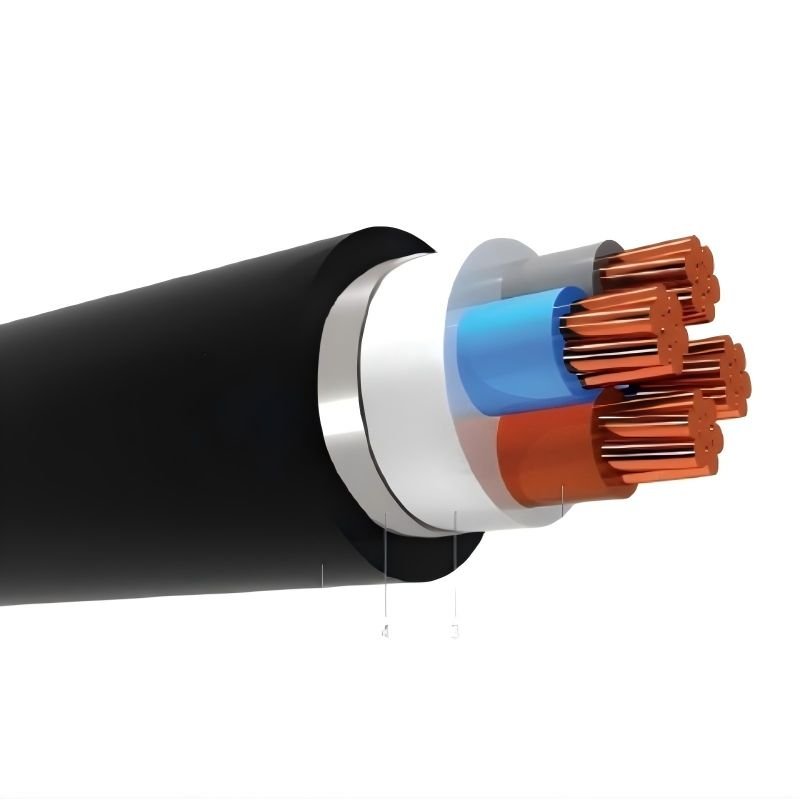
PVC Steel Tape Armored Power Cable
Model: VV22 / NYBY
PVC insulated steel tape armored power cable providing enhanced mechanical protection for underground and industrial applications.
- Voltage Rating
- 0.6/1kV
- Number of Cores
- Array
- Cross Section
- 1.5–400 mm²
- Conductor
- Copper Clad Aluminum
- Armoring
- Steel Tape Armored
- MOQ
- ≥ 100 m
Standards & Certifications
- GB/T
- GB/T 12706
- IEC
Downloads
Specifications
Technical Specifications & Performance
Construction
- Model / Series
- VV22 / NYBY
- Voltage Rating
- 0.6/1kV
- Conductor Material
- Copper Clad Aluminum
- Conductor Class
- Class 2 Stranded
- Cross Section
- 1.5–400 mm²
- Number of Cores
- Array
- Insulation
- PVC
- Sheath
- PVC
- Armoring
- Steel Tape Armored
- MOQ
- ≥ 100 m
Performance
- Max. Conductor Temp.
- 70°C
- Min. Bending Radius
- 12 × Cable Outer Diameter
About This Product
The Lowest-Cost Armoured Cable: PVC Insulation, Steel Tape Protection, Maximum Value
PVC Steel Tape Armoured Power Cable (model designation VV22 for the copper-conductor variant, VLV22 for aluminium; internationally equivalent to NYBY per the European VDE/IEC code and NAYBY for the aluminium variant; formerly manufactured to the British BS 6346 STA designation, now largely superseded by BS 5467 XLPE STA for new work) is the most economical armoured power cable in the full product catalogue. It combines two cost-reducing choices — PVC insulation instead of XLPE, and steel tape armour instead of steel wire — to produce a cable that delivers reliable direct-burial performance at the lowest possible armoured-cable unit cost. The trade-offs are well-understood: 30-40 percent lower ampacity than XLPE at the same cross-section (from the PVC 70°C limit), and no meaningful tensile strength for vertical or submarine installations (from the tape armour construction).
For the applications where VV22 is the right specification — horizontal direct burial in stable soft soil, outdoor distribution trench runs between buildings, municipal utility feeders in price-sensitive markets, rural electrification projects, and like-for-like replacement of ageing BS 6346 STA cable — neither of those trade-offs is binding. The load current keeps the conductor well within 70°C, the cable runs horizontal with no vertical tensile loading, and the project budget genuinely requires the most economical option available. In those contexts, specifying the more expensive XLPE STA (YJV22) or XLPE SWA (YJV32) adds cost without adding any benefit that the application actually needs.
Production follows IEC 60502-1 as the primary international reference, with parallel certifications to BS 6346 for legacy UK-market replacement work and AS/NZS 5000.1 for the Australian and New Zealand market. For new installations without strict budget constraint, YJV22 with XLPE insulation is the recommended upgrade; the additional cost is modest and the benefits (higher ampacity, longer service life, 90°C conductor temperature) are material for most project designs. Standard lead time is 12 to 20 days; produced in container-load quantities for utility-scale projects.
Cable Structure
Two Cost-Reduction Choices Combined in One Cable
VV22 reaches its low unit cost through two parallel design choices: PVC insulation instead of XLPE (reducing insulation material and process cost), and double steel tape armour instead of steel wire (reducing armour material cost and mass). Each choice individually reduces cost but with a specific performance trade-off. Understanding both trade-offs together is the basis for correct VV22 specification: it is the right cable when neither trade-off is binding for the application.
-
1
Conductor — Class 1 Solid or Class 2 Stranded Copper (or Aluminium)
Plain annealed copper per IEC 60228 Class 1 solid (1.5 to 16 mm²) or Class 2 stranded compacted circular (16 mm² and above); sector-shaped (SM) for three-core 50 mm² and above. Hard-drawn aluminium Class 2 for VLV22 / NAYBY. The conductor specification is identical to YJV22 — only the layers above it differ between the two products.
-
2
Insulation — PVC Type A, 70°C Continuous (Trade-Off 1)
Extruded PVC insulation per IEC 60502-1 Type A, rated 70°C continuous, 140°C emergency (limited duration), 160°C short-circuit for 5 seconds. The 70°C limit delivers 30-40 percent lower ampacity than the XLPE insulation in YJV22 at the same cross-section — the primary performance trade-off for the insulation cost saving. Wall thickness 0.7 to 2.8 mm per IEC 60502-1, identical specification to NYY. Always size from 70°C PVC ampacity tables; never use XLPE tables for VV22.
-
3
Inner Sheath — Extruded PVC Bedding
Insulated cores cabled together with PVC filler rods, bound with tape, then bedded with an extruded PVC inner sheath. Provides the smooth cylindrical surface for the steel tape armour layer, preventing tape edges from cutting into the core insulation and distributing compressive loads from the armour uniformly to the cable core. Wall typically 0.8 to 1.4 mm. Identical construction to YJV22 inner sheath, with PVC filler instead of the polypropylene used in XLPE cable (PVC filler is chemically compatible with PVC insulation).
-
4
Steel Tape Armour — Double Cross-Helical Galvanised Tape (Trade-Off 2)
Two layers of galvanised steel tape wound helically over the inner sheath with the second layer in the opposite direction to the first, at minimum 15 percent overlap — mechanically identical to YJV22 STA construction, and to the STA in NYY22 and NYBY. Provides good compressive crush resistance for direct burial in stable soil. The trade-off vs SWA (VV32): the tape layers separate under longitudinal tension — VV22 has essentially no tensile strength and must not be specified for vertical shafts, submarine crossings, or any installation imposing tensile loads on the cable. 10-15 percent cheaper and 5-8 percent lighter than VV32 at the same cross-section.
-
5
Outer Sheath — PVC Type ST2, Black
Extruded black PVC Type ST2 outer sheath over the steel tape armour. Identical specification to NYY, VV32, and YJV22 outer sheath. Provides mechanical protection for the armour layer, abrasion resistance, and flame retardance per IEC 60332-1-2. VV22 is a LV-only (0.6/1 kV) product — the outer sheath is universally black (no MV red convention). For fire-sensitive installations, note that the PVC insulation inside the cable prevents full LSZH performance even if an LSZH outer sheath is fitted; for complete halogen-free performance, upgrade to XLPE-insulated YJV22 with LSZH outer sheath.
Key Features
Lowest-Cost Armoured Cable: What You Get and What You Give Up
VV22 is the most cost-effective way to provide underground mechanical protection for power cable distribution. The six features below are honest about both the genuine advantages and the clear limitations — because VV22 specified in the wrong application is a maintenance liability, while VV22 specified in the right application is simply the correct engineering and economic choice.
Lowest Unit Cost in the Armoured Cable Family
VV22 is consistently the lowest-cost armoured power cable across all cross-sections: approximately 20-25 percent cheaper than YJV22 (XLPE STA), 30-35 percent cheaper than YJV32 (XLPE SWA), and 20-25 percent cheaper than VV32 (PVC SWA). On utility-scale distribution projects ordering tens or hundreds of kilometres, this is a significant budget difference. For projects in price-sensitive markets where the load and installation conditions genuinely do not require XLPE or SWA, VV22 is the correct engineering and economic specification.
Direct Burial Without Conduit in Stable Soft Soil
The double steel tape armour satisfies the mechanical protection requirement for direct burial in stable, soft-to-medium soil per IEC 60364-5-52. For horizontal runs in cable trenches with sand bedding at the required depth (600 mm without traffic, 900 mm under roads), no conduit is required — the tape armour provides the code-required protection. The conduit cost saving is typically 30-50 percent of the cable cost itself, making armoured direct-burial cable significantly cheaper than unarmoured cable in conduit.
Like-for-Like Replacement of BS 6346 STA Cable
Enormous quantities of BS 6346 PVC STA cable were installed globally across the UK, Commonwealth countries, and export markets from the 1950s through the 1990s. Much of this cable is now reaching end-of-life and requires replacement. VV22 / NYBY provides correct like-for-like jointing into BS 6346 STA installations: matching PVC insulation (avoiding the thermal mismatch at joints between 70°C PVC and 90°C XLPE), matching tape armour construction, and interchangeable terminations. The like-for-like replacement case is the strongest argument for VV22 in developed markets where YJV22 would otherwise be specified for new work.
Armour as Circuit Earth Path (Same as YJV22)
The double steel tape armour provides a low-resistance earth-continuity path between cable terminations when bonded to earth at both ends via STA armour cable glands. For LV installations, the armour is typically used as the circuit protective conductor (CPC), eliminating the need for a separate earth conductor in most 3-core and 4-core configurations. Verify the armour cross-sectional area satisfies BS 7671 Table 54.7 or IEC 60364-5-54 for the circuit’s earth-fault current and disconnection time. The armour earth path is a function of the steel tape construction, unchanged by the PVC vs XLPE insulation material.
Key Limitation: No Tensile Strength, 70°C Ampacity Only
VV22 has two clear limitations that must be understood before specification. (1) No tensile strength: the double tape layers separate under longitudinal tension — never specify VV22 for vertical shafts, submarine crossings, sloped terrain, or any installation imposing tensile loads. Use VV32 (PVC SWA) or YJV32 (XLPE SWA) for those applications. (2) 70°C ampacity limit: PVC insulation limits conductor temperature to 70°C, producing 30-40 percent lower ampacity than the 90°C XLPE-insulated YJV22 at the same cross-section. Always size from 70°C PVC tables — never XLPE tables.
IEC 60502-1 and BS 6346 Certified
Production certified to IEC 60502-1 as primary international reference for the VV22 / NYBY designation, plus BS 6346 for UK and Commonwealth replacement-installation acceptance and AS/NZS 5000.1 for the Australian and New Zealand market. For European projects, the cable can be designated NYBY (copper) or NAYBY (aluminium) per the VDE/IEC naming convention. Note that BS 6346 STA has been superseded by BS 5467 XLPE STA for new UK utility and industrial installations; BS 6346 certification is primarily requested for legacy replacement and repair.
How to Choose
Six Decisions Before You Place the Order
VV22 selection is the simplest in the armoured cable family: confirm that two conditions are both true — the installation is horizontal and tensile-load-free (STA is adequate, no SWA needed) and the load current is well within the 70°C PVC limit (no cross-section step-up needed). If both conditions hold, VV22 is the correct budget-optimised specification. The remaining decisions follow the same pattern as all armoured cable.
Confirm both: PVC adequate AND STA adequate
VV22 is correct when both of the following are true: (a) the load current keeps the conductor within 70°C at the available cross-sections without a step-up; and (b) the installation is horizontal in stable soil with no vertical tensile load. If either condition fails — if the load requires more ampacity (upgrade insulation to XLPE → YJV22), or if the installation is vertical or in rocky soil (upgrade armour to SWA → VV32 or YJV32) — VV22 is the wrong specification. For like-for-like replacement of BS 6346 STA, both conditions are typically met by definition.
Copper VV22 or aluminium VLV22
Copper VV22 / NYBY for short-to-medium distribution runs, industrial plant installations, and applications requiring higher ampacity per cross-section or vibration-tolerant conductors. Aluminium VLV22 / NAYBY for long utility distribution feeders in price-sensitive markets where the conductor cost saving (30-40 percent at equivalent ampacity) significantly impacts the project budget. Combined with the STA armour cost saving over SWA and PVC saving over XLPE, VLV22 is the absolute lowest-cost underground power distribution cable available. Aluminium requires aluminium-compatible compression lugs and antioxidant compound at terminations.
Size from 70°C PVC tables — not XLPE tables
VV22 must be sized from the 70°C PVC conductor temperature tables in IEC 60364-5-52 — the same tables used for NYY and VV32. Typical VV22 copper 4-core free-air ampacity at 30°C ambient: 16 mm² ~80 A, 25 mm² ~106 A, 35 mm² ~131 A, 50 mm² ~160 A, 70 mm² ~202 A, 95 mm² ~245 A. For direct-buried installation, ampacity is approximately 10-15 percent higher. Never use 90°C XLPE tables for VV22 — using those tables will produce a cross-section too small for the 70°C PVC limit, leading to overloading and premature insulation failure.
Core count and cross-section
Core count: 2-core for single-phase, 3-core for balanced three-phase, 4-core (3+N or 3+E) for three-phase with neutral or earth, 5-core (3+N+E) for TN-S earthing, 3+1 reduced-neutral for utility feeders where neutral current is low. Cross-section: size for 70°C ampacity per IEC 60364-5-52 with appropriate derating for installation method. For direct-buried installation (method D) in soft soil at 20°C ground temperature, ampacity is 10-15 percent above the free-air values; account for this in the sizing. STA cable has a small additional thermal resistance vs unarmoured — apply a 3-5 percent derating on the table values when installing in conditions matching the free-air reference.
Calculate the full-cycle cost vs YJV22
Before committing to VV22, calculate the full-cycle cost comparison against YJV22: if the 70°C limit requires one cross-section step up (e.g., 120 mm² VV22 vs 95 mm² YJV22 for the same load), the additional conductor cost may approach or exceed the insulation and armour savings. On long runs with high conductor cost, XLPE frequently breaks even or wins on total cost despite the higher per-metre insulation price. VV22 is most clearly cost-effective when: (a) the load is well within the 70°C limit at the chosen cross-section; (b) service life of 25 years is acceptable rather than 40 years; and (c) the cable runs are long enough for the per-metre saving to accumulate meaningfully.
Target-market certification
For most global markets: IEC 60502-1 as VV22 / NYBY is the universal acceptance reference. For UK and Commonwealth legacy replacement work: add BS 6346 certification alongside IEC. For Australian and NZ projects: AS/NZS 5000.1 with RCM mark. For European projects using the VDE naming: specify NYBY (copper) or NAYBY (aluminium) alongside the IEC designation. Dual certification — IEC 60502-1 + BS 6346 — is the most common combination for projects in markets where BS 6346 legacy installations are being maintained or extended, covering both new extensions and like-for-like replacement sections.
Applications
Budget-Optimised Underground Distribution Wherever the Conditions Allow
VV22 is the right cable in applications where the installation conditions genuinely allow both the 70°C ampacity limit and the STA compression-only protection — horizontal direct burial in stable soil with no vertical loading. The four scenarios below cover the highest-volume applications where this combination of conditions applies and the budget saving is material.
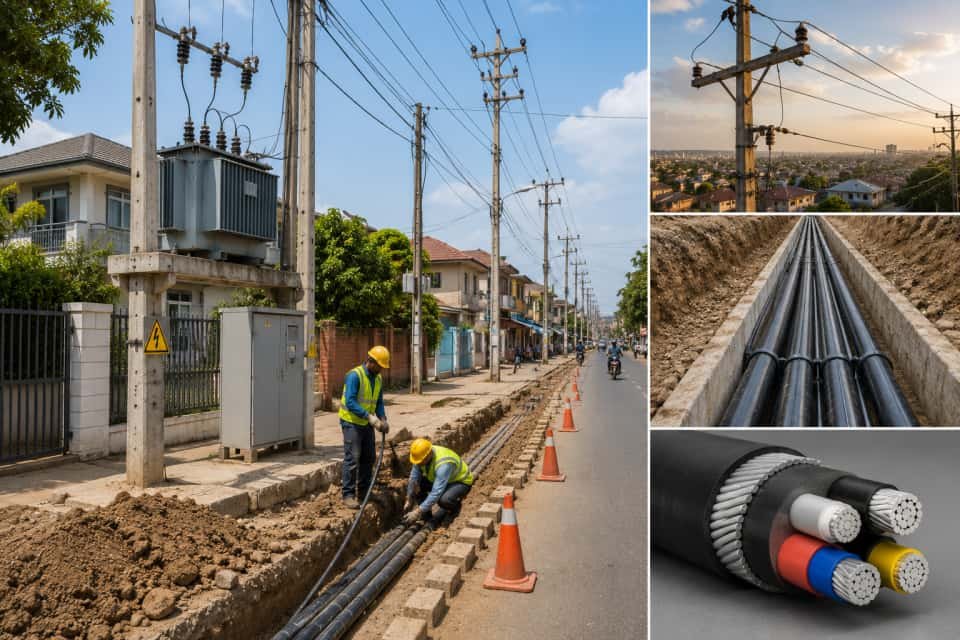
Urban LV Distribution in Price-Sensitive Markets
Low-voltage utility distribution feeder cables from pad-mounted or pole-mounted transformers to consumer service pillars and sub-distribution boards in Africa, South Asia, Southeast Asia, Latin America, and other emerging-market regions where project cost per kilometre is the dominant specification driver. Typically VLV22 aluminium 4-core or 3+1 core at 95-240 mm² direct-buried in urban cable trenches. VLV22 at large cross-sections is the absolute lowest-cost armoured distribution cable available globally.
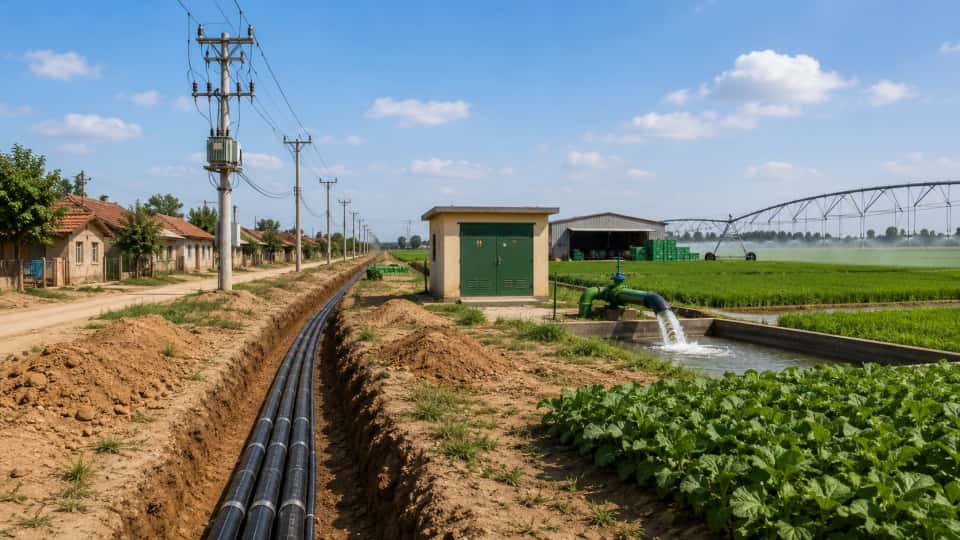
Rural Electrification & Agricultural Projects
Rural electrification schemes connecting villages and agricultural areas to the main grid, irrigation pump station power supply, agricultural storage and processing facility distribution. Load factors are typically modest (below 60 percent of rated ampacity) and the flat terrain means no vertical tensile loading. Typically VLV22 aluminium 4-core 35-150 mm² buried in sandy alluvial soil. The 70°C PVC limit is rarely binding in agricultural environments where ambient soil temperature is moderate and load diversity is high.
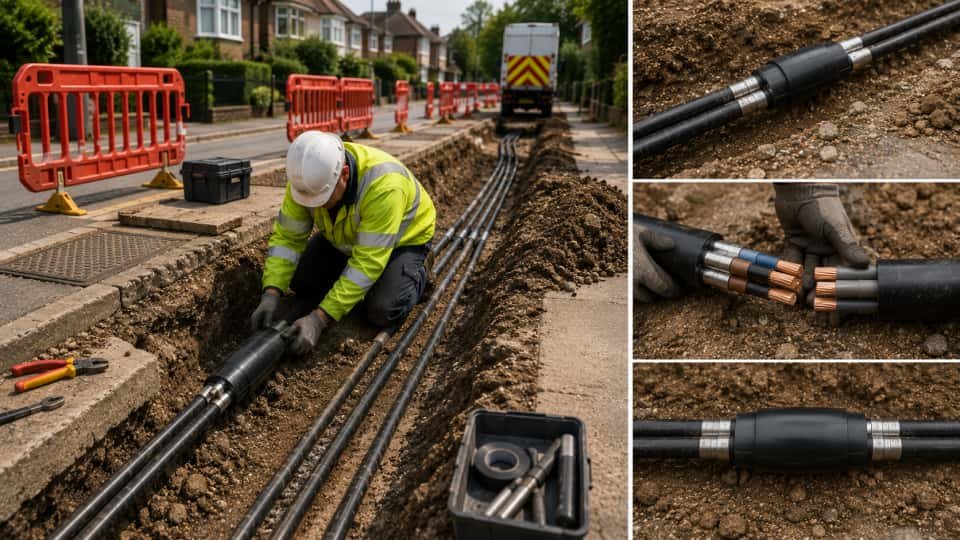
Legacy BS 6346 STA Replacement
Maintenance replacement, extensions, and joint repairs on existing BS 6346 PVC STA cable networks across the UK, Commonwealth countries, and export markets where BS 6346 was the historic utility standard. VV22 / NYBY provides correct like-for-like replacement at joints: matching 70°C PVC insulation (no thermal mismatch), matching tape armour construction, interchangeable glands and terminations. New cable installed alongside existing BS 6346 does not create the ampacity bottleneck that joining XLPE into PVC would cause.
Municipal & Light Infrastructure
Street lighting distribution cables, traffic signal power supply, small pumping station feeders, park and recreation facility supply, temporary power supply for construction sites. Typically copper VV22 3-core or 4-core 10-70 mm² in urban cable trenches. Load factors for street lighting and traffic control are well within the 70°C PVC limit. The municipal and infrastructure procurement process in many countries still nominally references BS 6346 or equivalent PVC STA, making VV22 the natural specification match.
Not appropriate for: New installations where budget allows XLPE — upgrade to YJV22 for 30-40% more ampacity and 40-50 year service life. Vertical shafts, submarine crossings, rocky soil, or any installation with tensile loading — use VV32 (PVC SWA) or YJV32 (XLPE SWA). Circuits where the 70°C limit requires a cross-section step-up that erases the cost saving — calculate the break-even before ordering. Fire-sensitive installations requiring full LSZH performance — use YJV22 with LSZH outer sheath (PVC insulation in VV22 prevents complete halogen-free compliance). Single-core AC circuits requiring armour — use non-magnetic aluminium wire armour (AWA). High-temperature industrial environments above 35°C ambient — the derating reduces VV22 PVC ampacity faster than XLPE.
Technical Data
VV22 4-Core 0.6/1 kV Standard Sizes vs YJV22
Reference values for 4-core VV22 (Cu/PVC/STA/PVC, 0.6/1 kV) per IEC 60502-1. Ampacity per IEC 60364-5-52 method D (direct buried in soil, 20°C ground temperature, 1.0 K·m/W thermal resistivity, 70°C conductor temperature). Direct-buried ampacity is approximately 10-15 percent higher than free-air for the same cable. YJV22 equivalent ampacity at 90°C shown for comparison. VLV22 aluminium carries approximately 79 percent of copper VV22 ampacity at the same cross-section.
| Cores & Size | Conductor Construction | Approx. Cable OD | DC Resistance (per core) | VV22 Ampacity (70°C, buried) | YJV22 Ampacity (90°C, buried) |
|---|---|---|---|---|---|
| 4×16 mm² | CM | ~ 24 mm | 1.15 Ω/km | 108 A | 135 A |
| 4×25 mm² | CM | ~ 27 mm | 0.727 Ω/km | 135 A | 165 A |
| 4×35 mm² | CM | ~ 29 mm | 0.524 Ω/km | 168 A | 207 A |
| 4×50 mm² | SM | ~ 32 mm | 0.387 Ω/km | 206 A | 253 A |
| 4×70 mm² | SM | ~ 36 mm | 0.268 Ω/km | 257 A | 316 A |
| 4×95 mm² | SM | ~ 40 mm | 0.193 Ω/km | 313 A | 385 A |
| 4×120 mm² | SM | ~ 44 mm | 0.153 Ω/km | 359 A | 442 A |
| 4×150 mm² | SM | ~ 48 mm | 0.124 Ω/km | 411 A | 506 A |
| 4×185 mm² | SM | ~ 52 mm | 0.0991 Ω/km | 470 A | 579 A |
| 4×240 mm² | SM | ~ 59 mm | 0.0754 Ω/km | 550 A | 677 A |
| 4×300 mm² | SM | ~ 64 mm | 0.0601 Ω/km | 630 A | 776 A |
| 3×95+1×50 mm² | SM | ~ 42 mm | 0.193/0.387 Ω/km | 323 A | 398 A |
| 3×120+1×70 mm² | SM | ~ 46 mm | 0.153/0.268 Ω/km | 373 A | 460 A |
| 3×185+1×95 mm² | SM | ~ 55 mm | 0.0991/0.193 Ω/km | 487 A | 600 A |
| 3×240+1×120 mm² | SM | ~ 62 mm | 0.0754/0.153 Ω/km | 573 A | 706 A |
DC resistance per IEC 60228 plain annealed copper Class 2, 20°C. VV22 ampacity per IEC 60364-5-52 method D (direct buried in soil, 20°C, 1.0 K·m/W, 70°C conductor temperature). YJV22 reference ampacity at 90°C for comparison — the buried-soil advantage of XLPE is proportionally the same as in air. For free-air (method E) installation, reduce ampacity by approximately 12 percent vs buried values shown. For VLV22 aluminium, apply factor 0.79 on copper values. Always use 70°C tables — never 90°C XLPE tables for VV22 sizing.
Insulation voltage: 0.6/1 kV per IEC 60502-1. PVC insulation wall: 0.7 mm (1.5-4 mm²) to 2.8 mm (630 mm²). Operating temperature: 70°C continuous / 140°C emergency (limited) / 160°C short-circuit (5s). Minimum bending radius: 12× OD during installation (tighter than 15× OD for SWA). Outer sheath black (LV only). Flame test: IEC 60332-1-2. Steel tape armour galvanised per IEC 60502; double cross-helical ≥15% overlap. Service life: 25-35 years in buried service (shorter than 40-50 years for XLPE). Conductor shape codes: CM=compacted circular, SM=sector-shaped compacted.
Comparison
The Complete LV Armoured and Unarmoured Power Cable Selection Matrix
With VV22 added to the catalogue, the entire low-voltage armoured power cable decision space is covered. The six cables below span every combination of insulation (PVC vs XLPE), armour (none vs STA vs SWA), and conductor (copper vs aluminium). VV22 occupies the lowest-cost corner: PVC insulation + STA armour + copper or aluminium conductor. The selection decision is a simple 2×2 matrix: ampacity need (70°C PVC vs 90°C XLPE) against tensile need (STA horizontal vs SWA vertical/rocky).
| Attribute | VV22 (this product) | YJV22 (XLPE STA) | VV32 (PVC SWA) | YJV32 (XLPE SWA) |
|---|---|---|---|---|
| Standard | IEC 60502-1 / BS 6346 | IEC 60502-1 / BS 5467 | IEC 60502-1 / BS 6346 | IEC 60502-1 / BS 5467 |
| European equiv. | NYBY / NAYBY | N2XBY / NA2XBY | NYRY / NAYRY | N2XRY / NA2XRY |
| Insulation material | PVC (70°C) | XLPE (90°C) | PVC (70°C) | XLPE (90°C) |
| Armour type | Double steel tape | Double steel tape | Helical steel wire | Helical steel wire |
| Conductor temp (continuous) | 70°C | 90°C | 70°C | 90°C |
| Ampacity 4×95 mm² | ~ 313 A (buried) | ~ 385 A (buried) | ~ 245 A (air) | ~ 293 A (air) |
| Tensile strength | Low (tapes separate) | Low (tapes separate) | High (wire hangs) | High (wire hangs) |
| Vertical riser >10 m | Not recommended | Not recommended | Yes | Yes |
| Direct burial (soft soil) | Yes | Yes | Yes | Yes |
| Direct burial (rocky soil) | Marginal | Marginal | Yes | Yes |
| Service life | 25-35 years | 40-50 years | 25-35 years | 40-50 years |
| Cost (relative to VV22) | 1.00 (baseline — lowest) | 1.20 to 1.28 (XLPE prem.) | 1.20 to 1.25 (SWA prem.) | 1.40 to 1.52 (both prem.) |
When to choose VV22 (this product)
Budget-optimised horizontal direct burial in stable soft soil — utility LV feeders in price-sensitive markets, rural electrification, municipal infrastructure, and like-for-like BS 6346 STA replacement — where the 70°C ampacity is sufficient without cross-section step-up and no tensile loading is present. The lowest-cost armoured cable in the catalogue; VLV22 aluminium is the absolute lowest-cost underground power distribution cable available for any specification.
The 2×2 selection rule
The armoured cable family follows a clean 2×2 logic: Insulation? If 70°C PVC is sufficient → VV. If 90°C XLPE is needed → YJV. Armour? If horizontal stable soil → 22 (STA). If vertical/rocky/submarine → 32 (SWA). Combining: VV22 (PVC+STA), VV32 (PVC+SWA), YJV22 (XLPE+STA), YJV32 (XLPE+SWA). VV22 is the bottom-left corner of this matrix — lowest performance requirement, lowest cost. YJV32 is the top-right corner — highest performance, highest cost. Every project fits one of the four cells; the correct specification is the cell whose requirements match the application, not the highest-performance or lowest-cost cell unconditionally.
Frequently Asked Questions
Common Questions From Procurement Teams, Utilities, and Distribution Contractors
When is VV22 the right choice over YJV22?
VV22 is the right choice when three conditions hold simultaneously: (1) the load current stays within the 70°C PVC ampacity limit at the available cross-sections without requiring a step-up; (2) the installation is horizontal in stable soil with no vertical tensile loading; and (3) the project budget is constrained enough that the 20-25 percent cost saving over YJV22 is material to the project decision. If any one of these conditions fails, YJV22 produces better value: it costs 20-25 percent more but delivers 30-40 percent more ampacity (eliminating the step-up need), 40-50 year service life (vs 25-35 for PVC), and eliminates the risk of exceeding the 70°C limit as load grows over the cable lifetime. For projects in developed markets without strict budget constraints, YJV22 is usually the rational choice.
Can VV22 be jointed into an existing YJV22 run?
Technically possible but creates a thermal bottleneck. Jointing PVC (70°C) cable into an XLPE (90°C) run means the PVC section limits the entire circuit to 70°C — the 90°C XLPE sections cannot be loaded above the PVC ampacity limit without overloading the PVC section. If the XLPE circuit was sized on 90°C tables, introducing a VV22 section means re-sizing the circuit from the 70°C tables for the entire run. The preferred approach for extending XLPE STA cable is to use YJV22 for the extension, maintaining the 90°C rating throughout. VV22 jointing into YJV22 is only acceptable if the circuit is simultaneously re-rated from 70°C tables and this is confirmed as adequate for the load.
Is VV22 / NYBY the same as BS 6346 STA cable?
Functionally equivalent at the construction level. VV22 per IEC 60502-1 and BS 6346 PVC STA both describe copper-conductor PVC-insulated double-steel-tape-armoured PVC-sheathed 0.6/1 kV cable. BS 6346 is a withdrawn British Standard superseded by BS 5467 (XLPE STA) for new work; it is no longer actively maintained. For UK and Commonwealth maintenance and repair work on existing BS 6346 networks, VV22 / NYBY with BS 6346 certification provides correct like-for-like replacement material. For new utility installations in the UK, most distribution network operators (DNOs) specify BS 5467 XLPE cable; check the network operator’s material specifications before assuming VV22 is acceptable for a new connection on an existing utility network.
What burial depth is required for VV22 direct burial?
Same burial depth requirements as YJV22 and YJV32: typically 600 mm minimum in areas without vehicular traffic, 900 mm under roads with vehicular traffic, and 450 mm in pedestrian-only areas per BS 7671 Table 52.2. Warning tape or concrete tiles at 100-150 mm above the cable is good practice. The STA construction satisfies the mechanical protection requirement at these depths without conduit in soft-to-medium soil. For rocky ground, use a 100 mm sand or fine-soil bedding layer below the cable to prevent angular stones from concentrating compressive load on the tape armour. Note that STA provides good compressive crush resistance but limited protection against sharp stone edges — if the ground is predominantly rocky, upgrade to VV32 SWA or YJV32 SWA instead.
Why does VV22 provide higher ampacity buried than in air?
This is counterintuitive but correct: buried cable typically has higher continuous ampacity than the same cable in free air at the same ambient temperature. The reason is thermal coupling — soil is a better thermal conductor than still air when the cable is buried at 600-900 mm depth in typical soil (thermal resistivity 1.0 K·m/W). The soil provides a large thermal mass that conducts heat away from the cable more efficiently than natural convection in air. The ampacity advantage is approximately 10-15 percent for buried vs free-air at 20°C ground temperature and 30°C air temperature. As soil dries out (dry thermal resistivity up to 2.5 K·m/W), the advantage reduces or reverses — apply the appropriate soil thermal resistivity correction from IEC 60287 when local soil conditions differ from the 1.0 K·m/W standard reference.
What is the typical lead time and MOQ?
VV22 in common cross-sections (4-core 25-240 mm²) typically ships in 12–18 days from order — the PVC extrusion line runs faster than the XLPE CV-cure process, and the STA armouring line is simpler than SWA, making VV22 the shortest lead-time armoured cable in the catalogue. BS 6346 certification documentation adds 3-5 days for the historical standard review. MOQ is 1,000 m for standard copper sizes; VLV22 aluminium in large cross-sections (95-300 mm²) typically 1,000 m MOQ for utility-scale order quantities. For container-load utility projects ordering 20 km+ of a single specification, unit pricing is 10-15 percent below LCL pricing with dedicated production runs. VLV22 aluminium at 120-240 mm² for developing-market utility distribution is the most frequently ordered single product configuration in terms of total cable metres shipped.
Installation & Handling Tips
Six Practices That Apply to All STA Cable Including VV22
VV22 installation practices are identical to YJV22 because both are STA cable — the insulation material difference between PVC and XLPE does not change the mechanical installation requirements for the armour, glands, burial preparation, or testing. The differences from YJV22 that do matter are the sizing table used (70°C not 90°C), the 0°C installation temperature minimum (same as XLPE, both require pre-heating in cold weather), and the slightly lower insulation resistance baseline for megger testing (PVC has higher inherent moisture permeability than XLPE).
Use STA armour cable glands at every termination
STA cable requires armour cable glands — not standard PVC glands — that grip the steel tape layer and provide both a mechanical strain relief and an earth-bonding connection. The gland must contact the steel tape layer circumferentially to provide a low-resistance earth path. Pigtail connections from individual tape strips have high contact resistance and poor mechanical retention. Specify the gland size from the cable OD (VV22 OD at the same cross-section is similar to YJV22; verify actual OD before ordering glands). Brass glands for standard use; stainless for corrosive outdoor or marine environments.
Always size from 70°C tables (critical)
The single most important VV22-specific practice. Every cable sizing calculation for VV22 must use the 70°C PVC conductor temperature tables in IEC 60364-5-52 (or BS 7671 Appendix 4 for UK projects). Using the 90°C XLPE tables that apply to YJV22 produces a cross-section 15-20 percent too small for PVC — the cable will exceed 70°C under continuous full-rated load and suffer accelerated insulation degradation. This error is most likely to occur when a project specification switches from YJV22 to VV22 for cost reasons without re-doing the ampacity calculation. Always re-size from scratch using 70°C tables when switching insulation specification.
Prepare the trench for direct burial correctly
For direct burial, prepare the trench with 100 mm sand or fine-soil bedding below the cable, remove all angular stones and foreign material from the cable zone, and lay the cable in a gentle S-curve (snaking) to allow 2-3 percent thermal expansion without pulling the terminations. Apply 150-300 mm fine-soil cover above the cable before backfilling with native soil. Warning tape or concrete tiles at 100-150 mm above the cable provides excavator warning. Cable route marker posts at changes of direction allow future locating without cable detection equipment. For soft waterlogged soil, check whether the soil thermal resistivity exceeds 1.0 K·m/W and apply the IEC 60287 correction if necessary.
Maintain 12× OD minimum bending radius
STA cable minimum bending radius is 12× OD per IEC 60502 (tighter than 15× OD for SWA, because tape bends more readily than round wire). Bending tighter than 12× OD permanently kinks the tape layers and creates gaps in the armour coverage at the kink. Gaps in STA coverage leave the cable locally unprotected against compressive loads — an angular stone at the kink location could puncture the cable over time. Use proper cable rollers at duct bends during pulling, not manual force. The tighter bending radius of STA vs SWA is one of the installation advantages of the tape construction for conduit and duct work with tight bends.
Seal cable ends to prevent moisture ingress
The steel tape armour is not watertight — moisture enters through the inter-tape gaps. Apply heat-shrink end caps or self-amalgamating tape to cable ends immediately after cutting, before moving the cut section to the installation site. For cables in open trenches awaiting backfill, seal both ends before any rain event. For cables pulled into conduit or duct before final termination, seal the exposed end at the duct entry. PVC cable absorbs moisture more readily than XLPE — moisture in a VV22 cut end wicks more aggressively and degrades insulation resistance more rapidly. This makes end sealing particularly important for VV22 compared to YJV22 or YJV32.
Megger test before energising — use 70°C baseline
Insulation resistance test (megger at 1 kV DC) between every conductor and earth (armour) and between adjacent conductors before energising. Expected reading for new VV22 is > 100 MΩ per km — lower than the > 1000 MΩ baseline for XLPE cable, because PVC has inherently higher moisture permeability. Readings below 20 MΩ per km indicate water ingress or damage requiring investigation. Document the baseline test results in the project handover; PVC insulation resistance decreases more with age than XLPE, making the baseline record essential for condition monitoring and maintenance planning over the cable’s 25-35 year service life.
Safety note: VV22 installation must comply with the applicable national wiring code (IEC 60364 internationally, BS 7671 in the UK, AS/NZS 3000 in Australia/NZ). The steel tape armour must be earthed at all terminations — an unearthed armour is a safety hazard and a code violation. For installations using the armour as the circuit protective conductor, verify the armour cross-section satisfies BS 7671 Table 54.7 or IEC 60364-5-54 for the circuit’s earth-fault current and disconnection time. For all STA cable installation safety practices including trench preparation, armour gland selection, and earth-bonding procedures, refer to the YJV22 product page, where the same practices are described in full detail.
Manufacturing Capability
Why Source From Jinda Cable
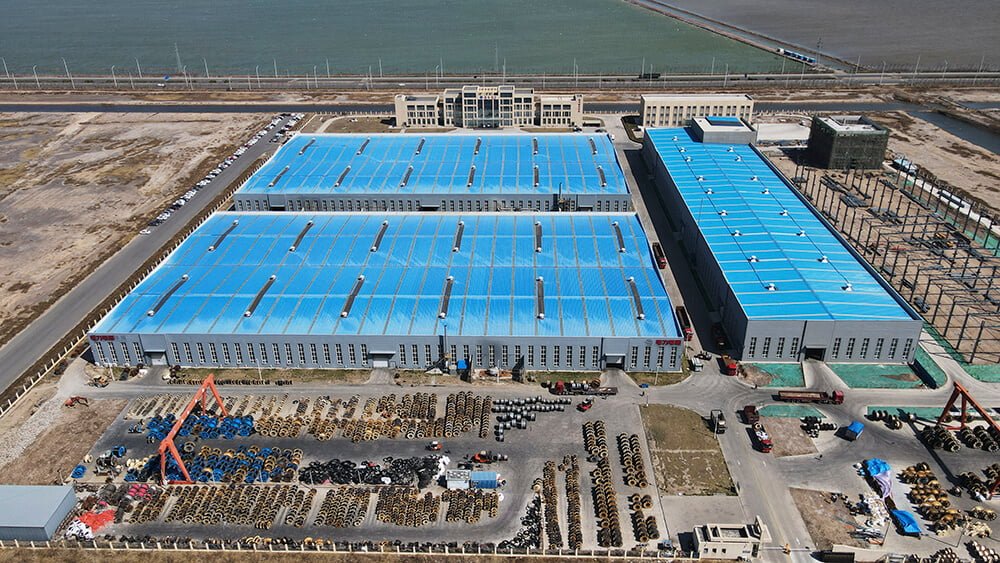
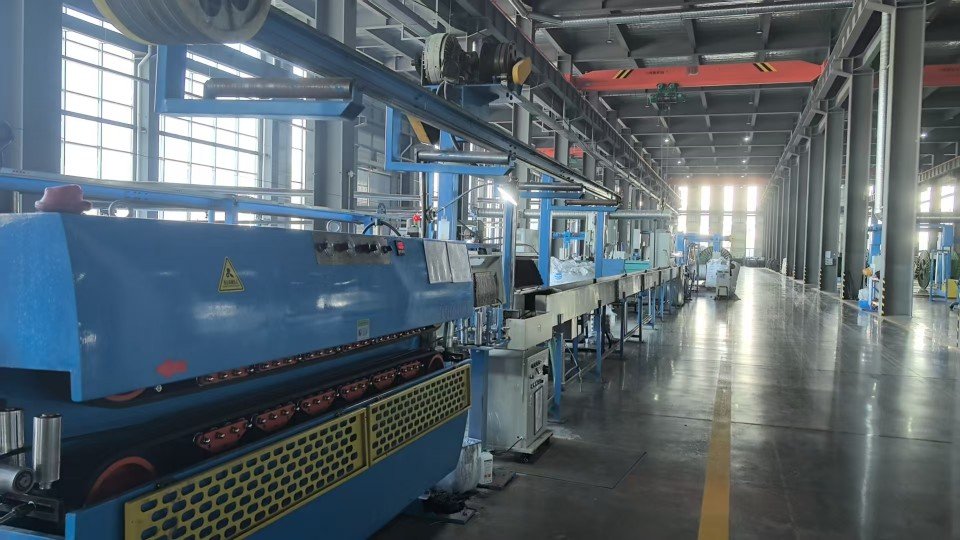
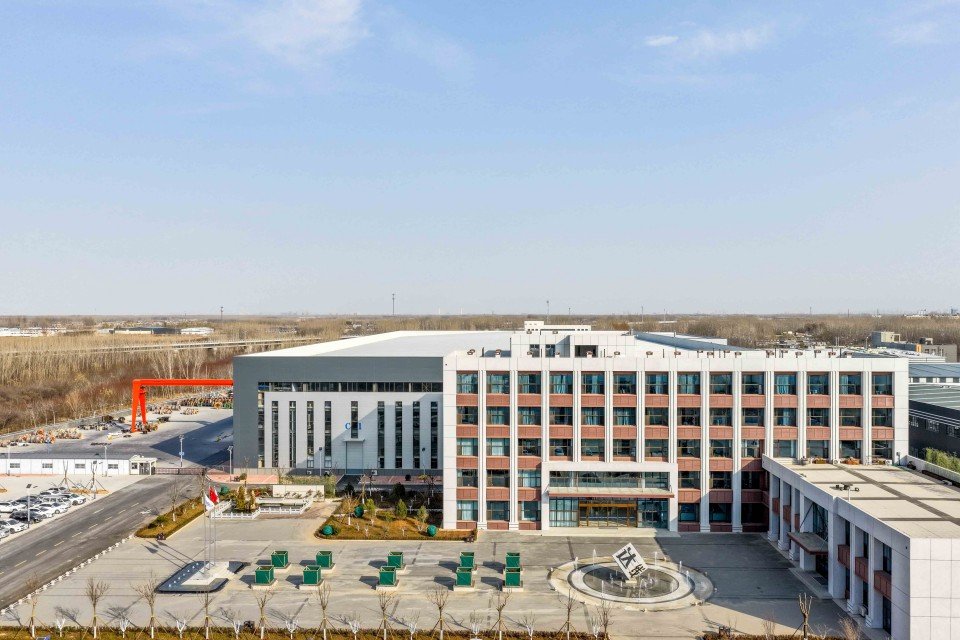
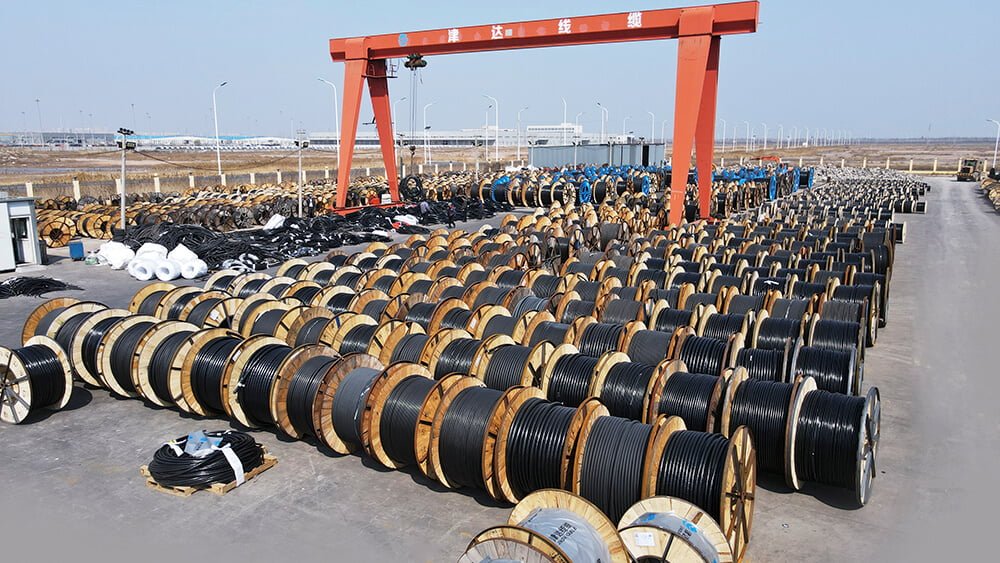
Behind every drum we ship sits a 38-year track record, five production bases under one MES system, and a documentation discipline that gets cables through customs without delays.
-
Every cable tested twice before shipping
Since 1987, our two-stage QC has been refined to a science: routine test on the production line, then full electrical and mechanical re-test before packing. Across 50+ export markets, our return rate stays under 0.3%.
-
Five production bases, 470,000 m², synced via MES
Tianjin, Liaoning, Heilongjiang, Shandong, and Xian — each base runs under one unified MES system. Same recipe, same protocols, same traceability, regardless of which plant ships your order.
-
3,000+ SKUs, custom configurations welcome
Standard sizes ship from inventory. Special voltage grades, color-coding, drum lengths, or armor configurations are routine — submit your spec and our team will quote the lead time honestly.
-
Trusted by EPC contractors in 50+ countries
We supply utilities, mining operators, port authorities, and large industrial OEMs across Europe, the Americas, Southeast Asia, the Middle East, and Africa.
-
Full paperwork shipped with every order
Every shipment includes factory test report, certificate of origin (COO), packing list, and bill of lading (B/L). Customer-nominated witness testing can be arranged before shipment.
Our Track Record
98.7%
On-time shipment rate (last 24 months)
< 0.3%
Return rate across export markets
25 days
Typical sea freight Tianjin → Rotterdam
100%
Shipments with routine test report attached
Logistics & Delivery
Packaging, Shipping & Documentation
What we handle on our side from production floor to the port of loading. Product-specific installation guidance is supplied with the datasheet that accompanies each order.
Packaging
- Wooden or steel drums per IEC 62004
- Coil packaging available for small cross-sections
- Standard drum lengths plus custom lengths on request
- Each drum labeled with type, voltage, cross-section, length, batch
- Waterproof wrapping for export shipments
- Cable ends sealed against moisture ingress
- Private-label / OEM packaging available under NDA
Shipping
- FCL / LCL sea freight, air freight on request
- Trade terms: EXW, FOB, CFR, CIF, DDP
- Ports of loading: Tianjin / Qingdao / Shanghai
- Typical sea freight to Rotterdam: 25 days
- Lead time confirmed at order acknowledgement
- Container loading photos sent before sailing
Documentation
- Factory routine test report (per applicable standard)
- Commercial invoice and packing list
- Certificate of origin (CO) — China Council, FORM A, FORM E available
- Bill of lading (B/L) — original or telex release
- Third-party inspection by SGS / BV / TÜV on request
- Customer-nominated witness testing arranged before shipment
Get in Touch
Request a Quote for
PVC Steel Tape Armored Power Cable
What You'll Receive
- Technical quotation with itemized FOB / CIF pricing
- Sample factory test report from a previous shipment
- Realistic lead time including raw-material procurement
- Direct contact with the assigned sales engineer

Email
info@jindacablegroup.comResponse Time
Within 1 business day
Related Products