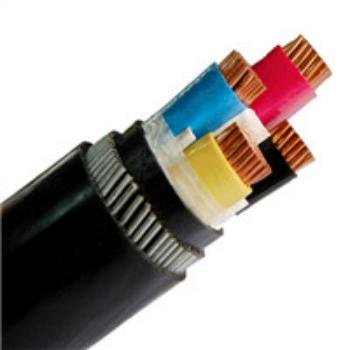
/ 0.6/1kV
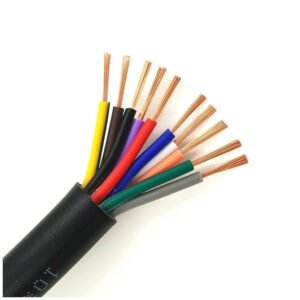
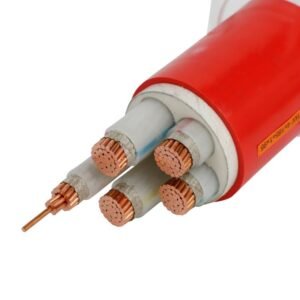
PVC Steel Wire Armored Power Cable
Model: VV32 / SWA Power Cable
PVC insulated steel wire armored power cable designed for high mechanical strength and reliable power transmission.
- Voltage Rating
- 0.6/1kV
- Number of Cores
- Array
- Cross Section
- 10–400 mm²
- Conductor
- Copper Clad Aluminum
- Armoring
- Steel Wire Armored
- MOQ
- ≥ 100 m
Standards & Certifications
- GB/T
- GB/T 12706
- IEC
- IEC 60502
Downloads
Specifications
Technical Specifications & Performance
Construction
- Model / Series
- VV32 / SWA Power Cable
- Voltage Rating
- 0.6/1kV
- Conductor Material
- Copper Clad Aluminum
- Conductor Class
- Class 2 Stranded
- Cross Section
- 10–400 mm²
- Number of Cores
- Array
- Insulation
- PVC
- Sheath
- PVC
- Armoring
- Steel Wire Armored
- MOQ
- ≥ 100 m
Performance
- Max. Conductor Temp.
- 70°C
- Min. Bending Radius
- 15 × Cable Outer Diameter
About This Product
SWA Mechanical Strength at PVC Insulation Cost: The Budget-Conscious Armoured Option
PVC Steel Wire Armoured Power Cable (model designation VV32 for the copper-conductor variant, VLV32 for aluminium; internationally equivalent to NYRY per the European VDE/IEC code and NAYRY for the aluminium variant; superseding the British BS 6346 SWA legacy designation) is the cost-optimised alternative to XLPE steel wire armoured cable (YJV32) for installations where the full tensile strength and mechanical protection of steel wire armour is required but where the 90°C conductor rating of XLPE insulation is not needed. PVC insulation limits the conductor to 70°C continuous — 20°C less thermal headroom than XLPE — producing ampacity that is 30-40 percent lower at the same cross-section. But PVC insulation also costs 10-15 percent less than XLPE, making VV32 the rational choice in price-sensitive applications where the load is well within the 70°C ampacity limit and specifying XLPE would simply add cost without adding utility.
The steel wire armour construction is identical to YJV32 — single layer of G1A grade galvanised round steel wires applied helically over the PVC inner sheath, providing the same tensile strength for vertical shaft installations, the same torsional tolerance for submarine crossings, and the same crush resistance for rocky-soil direct burial. The only difference from YJV32 is the insulation material above the conductor: PVC rather than XLPE. The mechanical performance of the cable is unchanged; only the thermal and electrical performance of the insulation differs. For applications where the load current keeps the conductor below 70°C — which covers many mine shaft riser cables, waterway crossings, and budget-constrained infrastructure projects in emerging markets — VV32 delivers the required performance at lower unit cost.
Production follows IEC 60502-1 as the primary international standard, with parallel availability to BS 6346 for like-for-like replacement of legacy UK installations and AS/NZS 5000.1 for the Australian and New Zealand markets. For new installations with no budget constraint, YJV32 / YJLV32 with XLPE insulation is the recommended specification wherever the higher ampacity or longer service life of XLPE is beneficial. Standard lead time is 15 to 25 days; supplied on wooden drums.
Cable Structure
Identical to YJV32 in Every Layer Except One: the Insulation Material
VV32 and YJV32 are structurally identical cables with one material substitution: PVC insulation in place of XLPE. The conductor, inner sheath, steel wire armour layer, and outer sheath are the same in both. The insulation change reduces the conductor temperature limit from 90°C to 70°C — which reduces ampacity and service life while also reducing manufacturing cost. Understanding this single material difference is the entire basis for the VV32 vs YJV32 specification decision.
-
1
Conductor — Class 1 Solid or Class 2 Stranded Copper (or Aluminium)
Plain annealed copper per IEC 60228 Class 1 solid (1.5 to 16 mm²) or Class 2 stranded compacted circular (16 mm² and above); sector-shaped (SM) for three-core 50 mm² and above. Hard-drawn aluminium Class 2 for VLV32 / NAYRY. Construction identical to the equivalent YJV32 conductor — the conductor material and geometry are unchanged between PVC and XLPE variants.
-
2
Insulation — PVC Compound Type A, 70°C Continuous
The defining difference from YJV32. Extruded PVC insulation per IEC 60502-1 Type A specification, rated for 70°C continuous conductor temperature, 140°C emergency (limited duration), and 160°C short-circuit for 5 seconds. The 70°C rating produces 30-40 percent lower ampacity than the 90°C XLPE insulation used in YJV32 at the same cross-section. PVC is a thermoplastic — it maintains its properties up to 70°C but softens and degrades above this. Wall thickness: 0.7 to 2.8 mm per IEC 60502-1 Table 5 (same wall thickness specification as NYY).
-
3
Cabling & Inner Sheath — Non-Hygroscopic Filler + PVC Bedding
Insulated cores cabled together with PVC or polypropylene filler rods (PVC filler is compatible with PVC insulation — there is no XLPE contact-chemistry constraint), bound with a binder tape, then bedded with an extruded PVC inner sheath. The inner sheath provides the smooth cylindrical surface for the steel wire armour layer and distributes compressive and bending loads from the armour to the cable core. Wall typically 0.8 to 1.4 mm.
-
4
Steel Wire Armour — Helical Galvanised Steel Wires (G1A) — Same as YJV32
Single layer of G1A grade galvanised round steel wires applied helically over the inner sheath — mechanically identical to the steel wire armour used in YJV32. Wire diameter 0.8 to 2.5 mm selected to match the cable outer diameter for uniform coverage. Provides the same high tensile strength (hanging in vertical shafts), crush resistance (rocky direct burial), and torsional tolerance (submarine crossings) as YJV32. The PVC insulation inside does not affect the armour performance — the armour mechanical performance is entirely independent of the insulation material choice.
-
5
Outer Sheath — PVC Type ST2, Black
Extruded black PVC Type ST2 outer sheath over the steel wire armour layer, identical specification to NYY and YJV32 outer sheath. Provides mechanical and environmental protection for the armour layer, abrasion resistance, and flame retardance per IEC 60332-1-2. VV32 is a LV-only product (0.6/1 kV) so there is no MV red-sheath convention — the outer sheath is universally black. LSZH outer sheath variants available on quotation for installations in fire-sensitive locations, though the PVC insulation inside means the cable is not fully halogen-free; for full LSZH performance, upgrade to N2XH or WDZ-YJV XLPE cable.
Key Features
Full SWA Mechanical Protection, PVC Insulation Cost
VV32 delivers identical mechanical performance to YJV32 at lower unit cost, with the trade-off of lower ampacity and shorter service life from the PVC insulation. The six features below quantify exactly what you get and what you give up versus XLPE SWA, so the specification choice can be made on real engineering and economic grounds rather than default habit.
Same Tensile Strength as YJV32 for Vertical Installations
The steel wire armour is identical to YJV32 — same wire diameter series (0.8 to 2.5 mm), same G1A grade galvanised steel, same helical application. The tensile strength for vertical shaft hanging, the crush resistance for rocky direct burial, and the torsional tolerance for submarine crossings are all unchanged from the XLPE equivalent. Choosing VV32 over YJV32 does not compromise the mechanical performance; it only reduces the thermal performance of the insulation. For shaft depths and hanging-weight calculations, use the same armour tensile data as published for YJV32 at the same overall cable diameter.
10-15% Lower Unit Cost Than YJV32 at the Same Cross-Section
PVC insulation compound costs less than XLPE because it doesn’t require the peroxide cross-linking chemistry and continuous vulcanisation (CV) line production process. At the same cross-section, VV32 consistently costs 10-15 percent less per metre than YJV32. For large cable runs on budget-constrained infrastructure projects — typical in emerging markets where mine shaft power, waterway crossings, and basic industrial distribution are being built — this is a real saving. The caveat: if the load current requires a larger cross-section to stay within 70°C, the conductor cost premium for the larger VV32 may exceed the 10-15 percent insulation saving.
Direct Replacement for Legacy BS 6346 SWA Cable
BS 6346 — the British Standard for PVC-insulated SWA cable that was the dominant UK and Commonwealth armoured cable specification for decades — has been superseded by BS 5467 XLPE SWA for new installations, but large quantities of BS 6346 SWA remain in service globally. VV32 / NYRY is the like-for-like replacement cable for maintenance and repair work on BS 6346 installations: same 70°C insulation rating, same construction philosophy, interchangeable at joints and terminations without requiring the re-engineering that upgrading to XLPE would entail. For replacement jointing into existing BS 6346 runs, matching the insulation material avoids the different thermal ratings problem at the joint interface.
Armour Earthing Path as Circuit Protective Conductor
As with YJV32, the steel wire armour layer provides a low-resistance earth-continuity path when bonded to earth at both cable terminations via SWA armour glands. For LV installations, the armour is typically used as the circuit protective conductor (CPC), eliminating the need for a separate earth conductor in most 3-core or 4-core installations. Verify the armour cross-section satisfies BS 7671 Table 54.7 or IEC 60364-5-54 for the circuit’s earth-fault current and disconnection time. The armour earth path is a function of the steel wire construction; PVC vs XLPE insulation doesn’t affect the earth-path resistance.
Ampacity 30-40% Lower Than YJV32: Understand the Trade-Off
The critical disadvantage vs YJV32. PVC insulation rated at 70°C conductor temperature produces ampacity 30-40 percent lower than XLPE rated at 90°C at the same cross-section. A 4-core 95 mm² YJV32 in air carries approximately 293 A; the equivalent VV32 carries approximately 246 A. If the required current cannot be carried within the VV32 70°C limit at the available cross-sections, a larger cross-section must be specified — potentially erasing the insulation-cost saving. Always size VV32 from 70°C ampacity tables (not the 90°C XLPE tables used for YJV32) to ensure the conductor temperature limit is not exceeded.
IEC 60502-1 and BS 6346 Certified
Production certified to IEC 60502-1 as primary international reference for the VV32 / NYRY designation, plus BS 6346 for UK and Commonwealth replacement-installation acceptance, and AS/NZS 5000.1 for the Australian and New Zealand market. For European projects, the cable can be marked as NYRY per the European VDE/IEC designation. Note that BS 6346 is a superseded standard; UK electricity distribution network operators (DNOs) and most new UK installations specify BS 5467 XLPE cable for new work. BS 6346 certification is primarily relevant for replacement and repair work on existing legacy installations.
How to Choose
Six Decisions Before You Place the Order
VV32 selection starts with the critical first decision: does this application justify the PVC insulation choice, or should XLPE (YJV32) be specified instead? The remaining five decisions follow the same logic as YJV32 selection. For any installation where the load current keeps the conductor comfortably within 70°C, VV32 is the rational budget choice. For installations where ampacity is tight, the 70°C limit may force a larger cross-section that erases the cost saving.
Confirm PVC insulation is the right choice (not XLPE)
Specify VV32 when: the load current keeps the conductor clearly within 70°C at the available cross-sections (no cross-section upsizing needed); the project is replacing legacy BS 6346 SWA cable on a like-for-like basis; budget is constrained and the 10-15 percent insulation saving matters at project scale; or the local market or project specification calls for PVC-insulated SWA cable. Specify YJV32 instead when: the 90°C conductor rating is needed for higher ampacity (avoids cross-section upsizing); service life above 25 years is a design requirement; or the installation is in a high-temperature environment where 70°C would be limiting at ambient temperatures above 25-30°C.
Confirm SWA is needed over STA
Steel wire armour (VV32, suffix 32) for: vertical shafts, submarine crossings, rocky direct burial, sloped terrain, or overhead spans where tensile loading is present. Steel tape armour (VV22, suffix 22) for: horizontal direct burial in stable soft soil where compressive protection is sufficient and tensile loading is absent. VV22 is 8-15 percent cheaper than VV32. For the majority of standard direct-burial utility distribution in soft soil, VV22 is adequate and the right choice economically; VV32 is the upgrade specifically for installations that impose tensile loads on the cable.
Copper VV32 or aluminium VLV32
Copper VV32 / NYRY for industrial plant, building services, and applications where higher ampacity per cross-section or vibration tolerance (aluminium fatigues more easily in vibrating environments) matters. Aluminium VLV32 / NAYRY for utility distribution feeders and long cable runs where the conductor cost saving (30-40 percent at equivalent ampacity) is material to the project budget. Aluminium termination requires aluminium-compatible compression lugs and antioxidant compound; verify these are included in the project bill of materials.
Size for 70°C ampacity — not 90°C XLPE tables
Always size VV32 from the 70°C PVC ampacity tables per IEC 60364-5-52 — not the 90°C XLPE tables used for YJV32 and YJV. Typical VV32 copper 4-core ampacity in free air at 30°C: 16 mm² ~80 A, 25 mm² ~106 A, 35 mm² ~131 A, 50 mm² ~160 A, 70 mm² ~202 A, 95 mm² ~245 A, 120 mm² ~284 A. These are the same as NYY (NYY and VV32 share the same insulation type and conductor temperature rating). Using XLPE tables for PVC cable sizing causes over-loading and premature failure.
Calculate the cross-section economics carefully
Before committing to VV32, calculate the break-even: if the 70°C ampacity limit requires one cross-section step up vs the XLPE (e.g., 120 mm² VV32 vs 95 mm² YJV32 for the same load), the extra conductor cost at the larger cross-section may exceed the 10-15 percent insulation saving. Break-even example: 4-core 120 mm² VV32 vs 4-core 95 mm² YJV32 for a 280 A load. The YJV32 uses 20 percent less conductor volume — on a 500 m run with copper at current commodity prices, the conductor saving typically exceeds the insulation premium. VV32 is most cost-effective when the load is well within the 70°C limit and no cross-section step-up is needed.
Target-market certification and core count
For most markets: IEC 60502-1 is the universal acceptance standard for VV32 / NYRY. For UK replacement and maintenance work: specify BS 6346 alongside IEC 60502-1. For Australian and NZ projects: AS/NZS 5000.1 with RCM mark. Core count: 2-core for single-phase, 3-core for three-phase without separate neutral, 4-core (3+N or 3+E), 5-core (3+N+E), 3+1 reduced-neutral for utility feeders where neutral current is low. For European projects, specify NYRY (copper) or NAYRY (aluminium) as the VDE-compatible designation alongside the IEC reference.
Applications
Where SWA Strength Is Required and PVC Cost Savings Are Welcome
VV32 is the correct specification when the installation demands steel wire armour for mechanical reasons but the load current can be accommodated within the 70°C PVC ampacity limit. The four scenarios below cover the applications where this combination of requirements most commonly arises in practice — cost-constrained infrastructure projects and legacy cable replacement work globally.
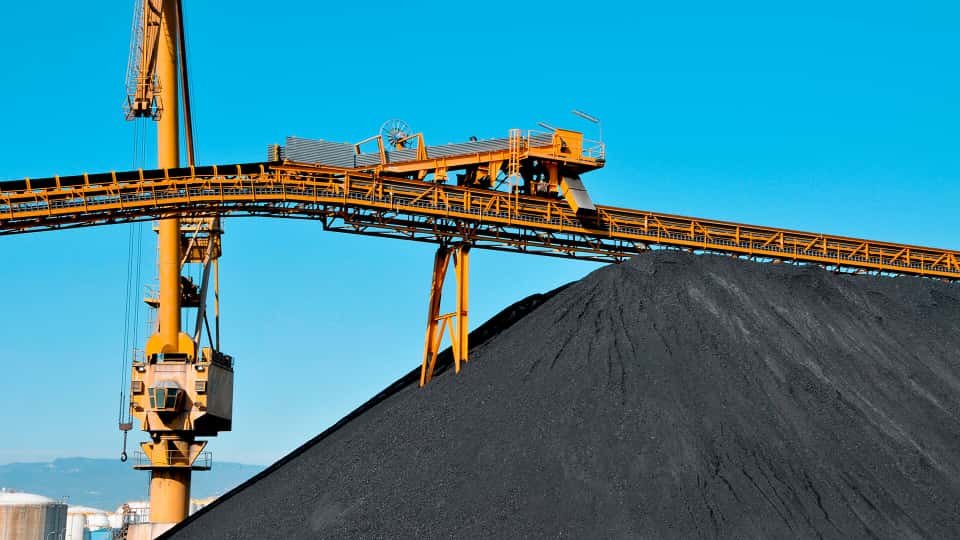
Mine Shaft Risers in Emerging Markets
Power supply riser cables down mine shafts in Africa, Latin America, Southeast Asia, and other emerging-market mining regions where project budgets are more constrained and the XLPE premium is scrutinised carefully. The shaft operating temperature is typically moderate (most mine air conditioning keeps shaft ambient below 25°C) and load factors rarely approach the cable’s full rating, making the 70°C PVC limit rarely binding. Copper VV32 3-core or 4-core 35-185 mm² with SWA rated for the shaft depth and cable weight.
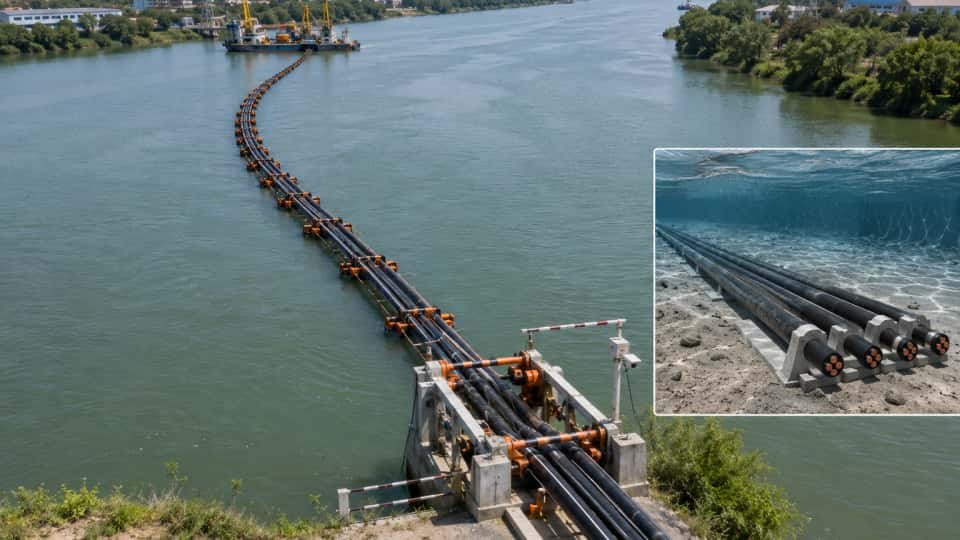
River & Waterway Crossings
Short river and waterway crossing cables in project regions where BS 6346 is the local utility specification or where XLPE premium is not in the project budget. The cable lies on the river or canal bed where water keeps ambient below 20°C continuously — the cold water actually benefits PVC cable by providing excellent thermal coupling and keeping conductor temperature well below the 70°C limit. VLV32 aluminium 3-core 95-240 mm² is the typical utility-feeder crossing specification.
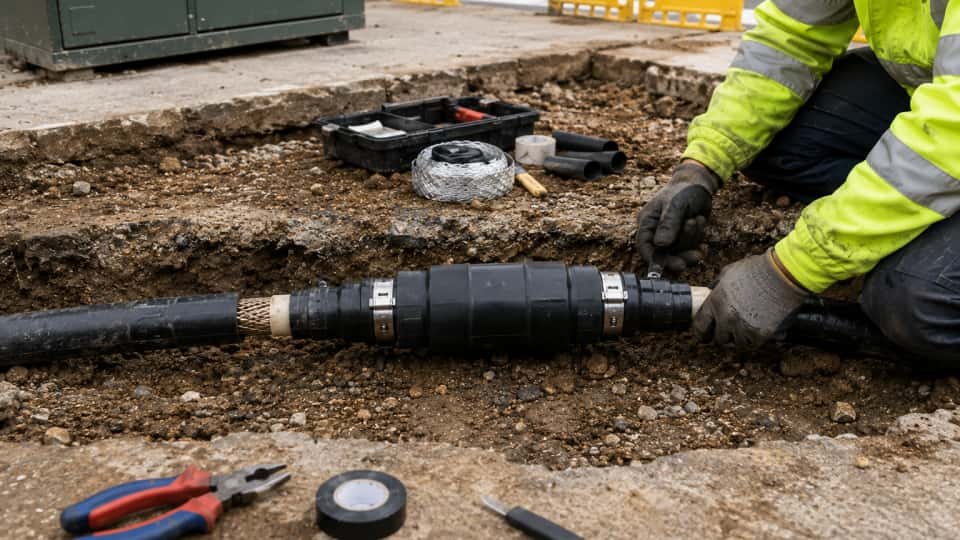
Like-for-Like BS 6346 Replacement
Maintenance and repair jointing into existing BS 6346 PVC SWA cable runs in the UK, Commonwealth countries, and export markets where BS 6346 SWA was the historic specification. Matching PVC insulation at the joint avoids the thermal rating mismatch that occurs when jointing XLPE (90°C) into PVC (70°C) — the PVC section remains the thermal limit regardless, and upgrading to XLPE at a single joint doesn’t provide the expected ampacity improvement. VV32 provides correct like-for-like replacement at joints in legacy BS 6346 networks.
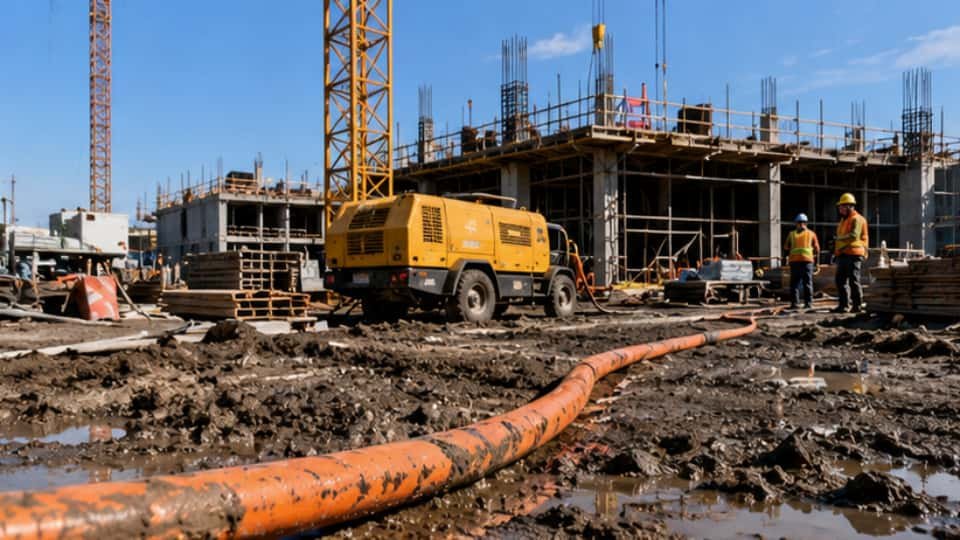
Budget-Constrained Infrastructure Projects
Port and harbour shore-power cables, small hydroelectric plant feeder cables, rural electrification cables over rough terrain, light industrial plant feeder cables in developing economies, and any infrastructure project where the combination of SWA mechanical protection and PVC cost savings is explicitly part of the project budget calculus. Typically VLV32 aluminium 3-core or 4-core 50-185 mm² for the main distribution runs where ampacity requirements are moderate and civil works budget is limited.
Not appropriate for: New installations where XLPE (YJV32) is affordable and the higher ampacity or longer service life is beneficial — the 10-15 percent insulation saving is rarely compelling enough to justify PVC over XLPE in new work. High-temperature industrial environments where ambient temperature is above 30°C continuously (reduces PVC ampacity further via temperature derating). Fire-sensitive installations requiring LSZH performance (PVC insulation makes full LSZH impossible — use N2XH or WDZ-YJV XLPE LSZH cable). Single-core AC circuits requiring armour (use non-magnetic aluminium wire armour AWA to avoid eddy current losses). Mining underground mobile equipment (use MYJV / MYJV32 mining-specific cable). Any circuit where the 70°C limit requires a cross-section step-up that exceeds the 10-15 percent insulation cost saving.
Technical Data
VV32 4-Core 0.6/1 kV Standard Sizes vs YJV32 Equivalent
Reference values for 4-core VV32 (Cu/PVC/SWA/PVC, 0.6/1 kV) per IEC 60502-1. Ampacity per IEC 60364-5-52 installation method E (free air, cable tray, 30°C ambient, 70°C conductor temperature — PVC insulation limit). The equivalent YJV32 ampacity at 90°C XLPE is shown for comparison — the gap widens at larger cross-sections. For direct-buried installation (method D), apply appropriate derating. Aluminium VLV32 carries approximately 79 percent of copper VV32 ampacity at the same cross-section.
| Cores & Size | SWA Wire Dia. | Approx. Cable OD | DC Resistance (per core) | VV32 Ampacity (70°C) | YJV32 Ampacity (90°C) |
|---|---|---|---|---|---|
| 4×16 mm² | 0.8 mm | ~ 29 mm | 1.15 Ω/km | 80 A | 100 A |
| 4×25 mm² | 0.8 mm | ~ 32 mm | 0.727 Ω/km | 106 A | 127 A |
| 4×35 mm² | 1.25 mm | ~ 35 mm | 0.524 Ω/km | 131 A | 158 A |
| 4×50 mm² | 1.25 mm | ~ 39 mm | 0.387 Ω/km | 160 A | 192 A |
| 4×70 mm² | 1.25 mm | ~ 43 mm | 0.268 Ω/km | 202 A | 242 A |
| 4×95 mm² | 1.6 mm | ~ 48 mm | 0.193 Ω/km | 245 A | 293 A |
| 4×120 mm² | 1.6 mm | ~ 52 mm | 0.153 Ω/km | 284 A | 340 A |
| 4×150 mm² | 1.6 mm | ~ 57 mm | 0.124 Ω/km | 327 A | 390 A |
| 4×185 mm² | 2.0 mm | ~ 62 mm | 0.0991 Ω/km | 374 A | 447 A |
| 4×240 mm² | 2.0 mm | ~ 69 mm | 0.0754 Ω/km | 441 A | 527 A |
| 4×300 mm² | 2.0 mm | ~ 75 mm | 0.0601 Ω/km | 510 A | 610 A |
| 3×95+1×50 mm² | 1.6 mm | ~ 51 mm | 0.193/0.387 Ω/km | 254 A | 305 A |
| 3×120+1×70 mm² | 1.6 mm | ~ 56 mm | 0.153/0.268 Ω/km | 296 A | 353 A |
| 3×185+1×95 mm² | 2.0 mm | ~ 66 mm | 0.0991/0.193 Ω/km | 389 A | 465 A |
DC resistance per IEC 60228 plain annealed copper Class 2, 20°C. VV32 ampacity per IEC 60364-5-52 method E (free air, 30°C ambient, 70°C conductor temperature — PVC insulation limit). YJV32 reference ampacity at 90°C XLPE for direct comparison. The ampacity gap is consistent across all cross-sections: VV32 provides approximately 83-85 percent of YJV32 ampacity at the same cross-section. For buried installation, apply method D correction. For VLV32 aluminium, apply factor 0.79 on copper VV32 values. Do not use YJV32 / XLPE ampacity tables for sizing VV32 — this will result in overloading the PVC insulation.
Insulation voltage: 0.6/1 kV per IEC 60502-1. PVC insulation wall: 0.7 mm (1.5-4 mm²) to 2.8 mm (630 mm²). Operating temperature: 70°C continuous / 140°C emergency (limited) / 160°C short-circuit (5s). Minimum bending radius: 15× OD during installation / 12× OD fixed. Outer sheath black (LV — VV32 is LV-only product). Flame test: IEC 60332-1-2. SWA wire diameter from 0.8 mm (small cables) to 2.5 mm (large cables), G1A grade galvanised.
Comparison
VV32 vs the Full PVC and XLPE Armoured Cable Family
Five cables cover the LV armoured power cable decision space. The axes are insulation material (PVC vs XLPE), armour type (STA vs SWA), and conductor material (copper vs aluminium). VV32 occupies the “PVC insulation + SWA armour + copper conductor” niche — the one combination that is appropriate when both SWA mechanical performance and minimum insulation cost are design requirements simultaneously.
| Attribute | VV32 (this product) | YJV32 (XLPE SWA) | VV22 (PVC STA) | NYY (PVC, no armour) |
|---|---|---|---|---|
| Standard | IEC 60502-1 / BS 6346 | IEC 60502-1 / BS 5467 | IEC 60502-1 / BS 6346 | IEC 60502-1 / BS 6346 |
| International equiv. | NYRY / NAYRY | N2XRY / NA2XRY | NYBY / NAYBY | NYY / NAYY |
| Insulation material | PVC (70°C) | XLPE (90°C) | PVC (70°C) | PVC (70°C) |
| Armour type | Steel wire SWA | Steel wire SWA | Steel tape STA | None |
| Conductor temp (continuous) | 70°C | 90°C | 70°C | 70°C |
| Ampacity 4×95 mm² | ~ 245 A (air) | ~ 293 A (air) | ~ 238 A (air, slight derat) | ~ 245 A (air) |
| Short-circuit temp (5s) | 160°C | 250°C | 160°C | 160°C |
| Tensile strength | High (vertical shafts) | High (vertical shafts) | Low (tapes separate) | None |
| Direct burial (rocky soil) | Yes (wire spreads load) | Yes | Marginal | No |
| Submarine crossing | Yes | Yes | Not recommended | No |
| Service life | 25-35 years | 40-50 years | 25-35 years | 25-35 years |
| Cost (relative to VV32) | 1.00 (baseline) | 1.10 to 1.15 (XLPE prem.) | 0.88 to 0.92 (lighter) | 0.75 to 0.82 (no armour) |
When to choose VV32 (this product)
Cost-constrained projects requiring SWA tensile strength (mine shafts, waterway crossings, rocky terrain) where the 70°C PVC ampacity limit is not binding and the 10-15 percent insulation saving is material to the project budget. Like-for-like replacement of ageing BS 6346 SWA cable. Utility-scale distribution in emerging markets where BS 6346 remains the local project standard. Always verify the 70°C ampacity is sufficient before committing; if a cross-section step-up is required, the economics usually favour YJV32 instead.
When to choose an alternative
For new installations without a strict budget constraint, upgrade to YJV32 for the higher ampacity, shorter cross-section, and 40-50 year service life. For horizontal direct burial in stable soil without vertical tensile loading, specify lighter and cheaper VV22 (STA). For indoor cable tray installations without mechanical damage risk, save the armour cost with unarmoured NYY. For utility distribution feeders where conductor cost dominates, specify aluminium VLV32. For fire-sensitive installations requiring LSZH performance, use YJV32 with LSZH outer sheath or N2XH rather than VV32 (PVC insulation prevents full LSZH compliance).
Frequently Asked Questions
Common Questions From Contractors, Procurement Teams, and Project Engineers
When is VV32 the right choice over YJV32?
Three conditions must all hold for VV32 to be the rational choice: (1) SWA tensile strength is required by the installation — vertical shaft, submarine crossing, rocky terrain, or a project specification calling for SWA; (2) the load current keeps the conductor clearly within 70°C at the available cross-sections without requiring a cross-section step-up; and (3) the project budget is tight enough that the 10-15 percent insulation cost saving is material to the project decision. If any one of these conditions is absent — if STA would serve the installation, if the load requires XLPE’s higher ampacity, or if budget is not constrained — YJV32 is the better specification for the same or lower total installed cost.
Can I joint VV32 into an existing YJV32 run?
Technically possible but not recommended. Jointing PVC (70°C) cable into an XLPE (90°C) run means the PVC section becomes the thermal bottleneck for the entire cable circuit — the ampacity of the combined run is limited to the 70°C rating of the PVC section, not the 90°C rating of the XLPE. If the circuit was sized on XLPE ampacity tables, it will be overloaded at the PVC joint section. The joint itself is straightforward mechanically, but the circuit re-rating is essential before energising. The reverse (jointing YJV32 XLPE into a VV32 PVC run) has the same bottleneck problem but is less likely to cause immediate overloading if the existing run was conservatively sized.
Is VV32 the same as BS 6346 SWA cable?
Closely equivalent at the construction level, with some specification differences. VV32 per IEC 60502-1 and BS 6346 SWA both describe copper-conductor PVC-insulated steel-wire-armoured PVC-sheathed 0.6/1 kV cable. BS 6346 is a British Standard that has been withdrawn and superseded by BS 5467 (XLPE SWA) for new installations — it is no longer actively maintained. However, large quantities of BS 6346 cable remain in service globally, and BS 6346 certification is still requested for replacement and repair work in legacy installations. For new installations in the UK and Commonwealth, specify BS 5467 XLPE SWA (YJV32 equivalent) rather than BS 6346 VV32 unless a specific like-for-like replacement case exists.
What ampacity tables should I use for VV32 sizing?
Always use the 70°C PVC conductor temperature rating tables in IEC 60364-5-52 (or BS 7671 Appendix 4 for UK projects). These are the same tables used for NYY and other PVC-insulated cables. Never use the 90°C XLPE tables that apply to YJV32 and YJV — using those tables for VV32 will result in a conductor temperature exceeding 70°C under continuous full-rated-current operation, gradually degrading the PVC insulation and eventually causing premature breakdown. The ampacity values in the data table above and in IEC 60364-5-52 are the correct references. For SWA cable, apply the same small derating (approximately 3-5 percent) for the additional thermal resistance of the armour and outer sheath versus unarmoured cable.
Does the PVC insulation restrict VV32 to 0.6/1 kV only?
Yes — VV32 is a LV 0.6/1 kV product only. PVC insulation cannot reliably manage the electric field stress at medium voltages (above 1 kV) because it is a thermoplastic that can develop electrical treeing (partial discharge channel growth) under sustained high-voltage stress at MV levels. For medium-voltage SWA cable (3.6/6 kV and above), XLPE insulation with triple-extruded semi-conducting screens is mandatory per IEC 60502-2 — this is YJV32 / YJLV32 territory, not VV32. If a project specifies PVC SWA cable at medium voltage, the specification should be reviewed — PVC is not the correct insulation material for sustained operation above 1 kV.
What is the typical lead time and MOQ?
VV32 in common cross-sections (4-core 25-185 mm²) typically ships in 15–25 days from order — the PVC extrusion line runs faster than the XLPE CV-cure line, so VV32 lead time is slightly shorter than YJV32 at the same cross-section. BS 6346 certification documentation adds 3-5 days for the historical standard review. MOQ is 1,000 m for standard sizes; smaller orders (down to 500 m) accepted with a setup fee. For utility-scale projects ordering 20 km+ for mine infrastructure or waterway crossings, container-load pricing delivers 10-15 percent unit cost reduction. Standard packing on heavy-duty wooden drums; drum size and drum weight documented on the drum label for customs clearance and site logistics planning.
Installation & Handling Tips
Six Practices for VV32 That Are Different From YJV32
VV32 installation follows the same SWA practices as YJV32 — armour glands, pulling grip, minimum bending radius, cable cleats, megger testing, and cable-end sealing. The differences from YJV32 installation are driven by the PVC insulation properties: pre-heat requirements, ampacity table selection, and the critical importance of not exceeding the 70°C conductor temperature limit in service.
Pre-heat below −5°C, install above 0°C
PVC insulation becomes brittle below −5°C and cracks during cable pulling and bending. For cold-weather installation, store the cable drum in a heated enclosure for 24 hours before installation day, and install the cable immediately after moving outside into cold ambient. The minimum installation temperature is 0°C for VV32; this is slightly less restrictive than XLPE (which is also 0°C) but both should be pre-heated in very cold conditions. Once the cable is installed and energised, conductor heating keeps the insulation above the brittle-point temperature during operating condition.
Always size from 70°C ampacity tables
The single most important VV32-specific practice. Always size VV32 from the 70°C PVC conductor temperature tables — the same tables used for NYY. Never use the 90°C XLPE tables that apply to YJV32. Using the wrong tables consistently produces a cross-section one step smaller than needed for PVC, which will overheat in service within months. For any project switching from YJV32 specification to VV32, re-size all cable cross-sections from scratch using 70°C tables before ordering. A simple check: VV32 ampacity should be approximately 83-85 percent of the YJV32 value at the same cross-section — if the published value matches, you are using the correct table.
Use 360-degree SWA armour glands at all terminations
Identical requirement to YJV32: SWA cable termination requires proper armour cable glands that grip the steel wire layer circumferentially, providing both mechanical cable anchorage and a low-resistance earth-bonding connection. The gland body has an internal cone that compresses against the wire layer when the nut is tightened. Do not use standard PVC cable glands on SWA cable, and do not pigtail individual armour wires to a lug. The gland size is selected for the VV32 cable OD — at the same cross-section, VV32 is slightly larger OD than YJV32 (PVC insulation wall is slightly thicker than XLPE for the same voltage rating); verify the gland size against actual cable OD before ordering.
Apply all YJV32 SWA installation practices
All the SWA-specific installation practices for YJV32 apply equally to VV32: pulling grip on the outer sheath (not conductor ends), 15× OD minimum bending radius during pulling, cable cleats and support clamps for vertical shaft installations, mid-span grip clamps for long vertical runs, sand bedding for direct-buried installations, warning tape above buried cable, and cable-end sealing immediately after cutting. The PVC insulation does not change any of these SWA armour installation requirements. Refer to the YJV32 product page installation tips for the full detail on SWA-specific practices.
Monitor conductor temperature in high-load service
PVC insulation has a sharper failure mode than XLPE when the temperature limit is approached: PVC softens progressively above 70°C, accelerating plasticiser migration and insulation degradation in a self-reinforcing cycle. For VV32 circuits that regularly operate above 80 percent of rated ampacity, measure the cable sheath temperature during full-load operation (with a surface thermometer or thermal camera) to confirm the design sizing is correct in the actual installation environment. If sheath temperatures significantly exceed expectations, reduce load or improve ventilation before PVC degradation reaches an irreversible level.
Megger test before energising and document baseline
Insulation resistance test (megger at 1 kV DC) between every conductor and earth (armour), and between adjacent conductors, before energising. For new VV32, expected reading is > 100 MΩ per km (lower baseline than XLPE, which is > 1000 MΩ — PVC has higher inherent moisture permeability than XLPE). Readings below 20 MΩ per km indicate water ingress or installation damage requiring investigation before energising. Document the test results in the project handover as the baseline; repeat annually or on any event suggesting cable damage. PVC cable insulation resistance tends to decrease more with age than XLPE, making the baseline record particularly valuable for VV32 maintenance planning.
Safety note: VV32 installation must comply with the applicable national wiring code (IEC 60364 internationally, BS 7671 in the UK, AS/NZS 3000 in Australia/NZ). The steel wire armour must be earthed at all terminations — an unearthed armour is a safety hazard and a code violation. For installations using the armour as the circuit protective conductor, verify the armour cross-section satisfies BS 7671 Table 54.7 or IEC 60364-5-54. For all SWA cable installation safety, refer to the additional safety notes in the YJV32 and YJV22 product pages — SWA safety practices apply equally to VV32 regardless of the insulation type.
Manufacturing Capability
Why Source From Jinda Cable
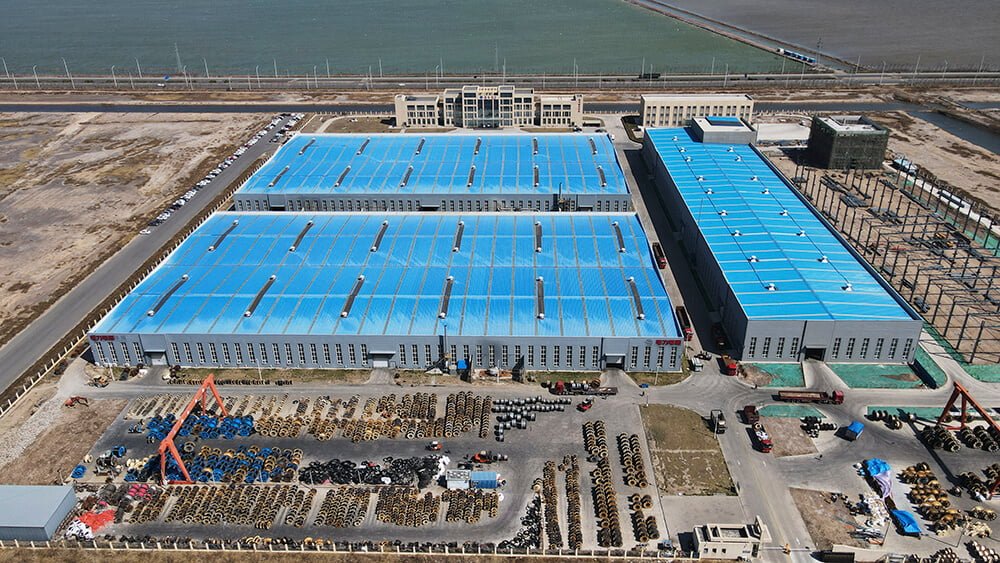
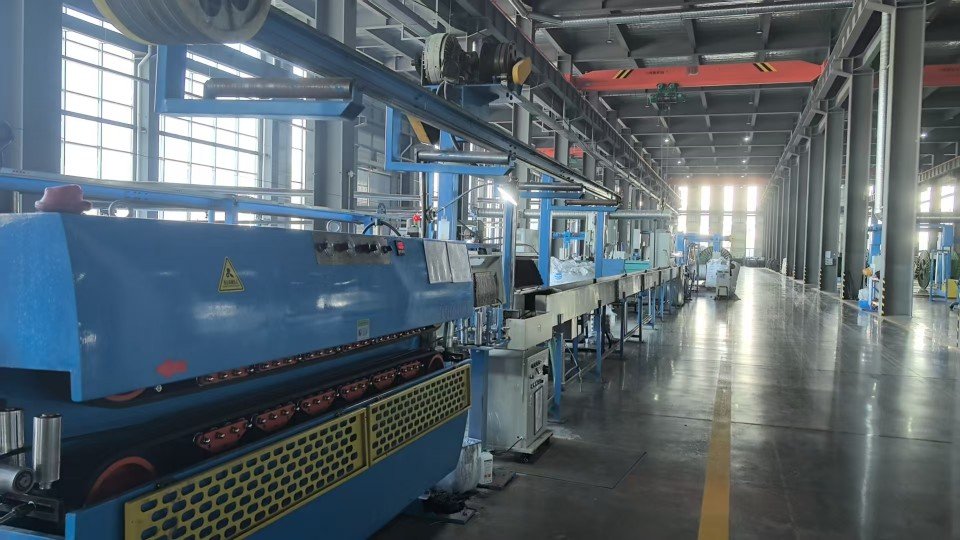
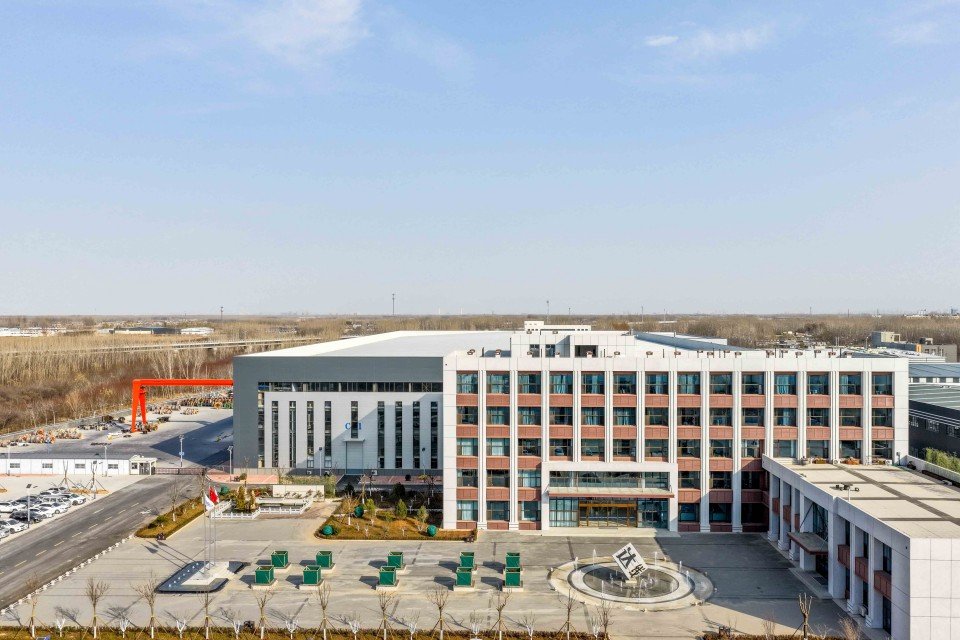
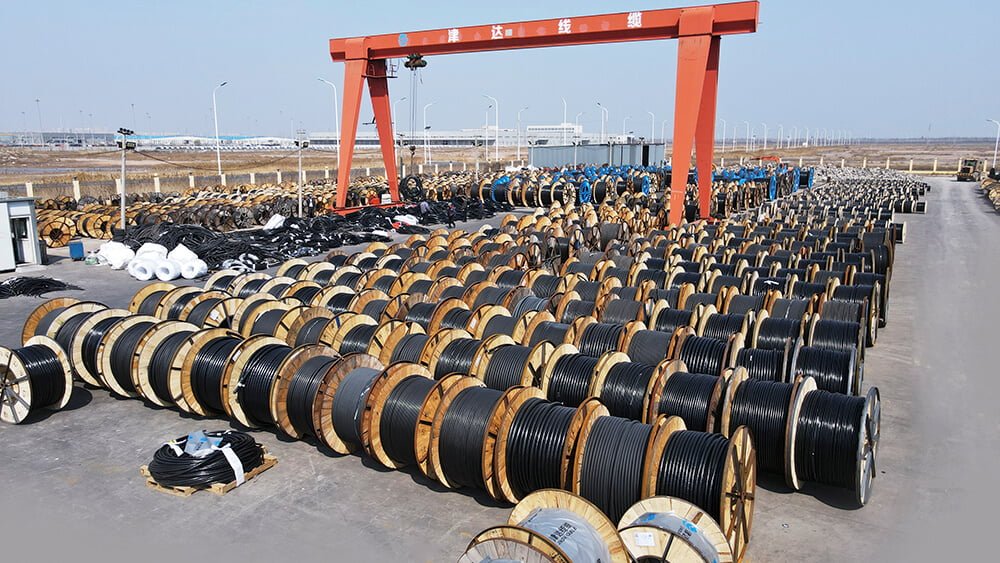
Behind every drum we ship sits a 38-year track record, five production bases under one MES system, and a documentation discipline that gets cables through customs without delays.
-
Every cable tested twice before shipping
Since 1987, our two-stage QC has been refined to a science: routine test on the production line, then full electrical and mechanical re-test before packing. Across 50+ export markets, our return rate stays under 0.3%.
-
Five production bases, 470,000 m², synced via MES
Tianjin, Liaoning, Heilongjiang, Shandong, and Xian — each base runs under one unified MES system. Same recipe, same protocols, same traceability, regardless of which plant ships your order.
-
3,000+ SKUs, custom configurations welcome
Standard sizes ship from inventory. Special voltage grades, color-coding, drum lengths, or armor configurations are routine — submit your spec and our team will quote the lead time honestly.
-
Trusted by EPC contractors in 50+ countries
We supply utilities, mining operators, port authorities, and large industrial OEMs across Europe, the Americas, Southeast Asia, the Middle East, and Africa.
-
Full paperwork shipped with every order
Every shipment includes factory test report, certificate of origin (COO), packing list, and bill of lading (B/L). Customer-nominated witness testing can be arranged before shipment.
Our Track Record
98.7%
On-time shipment rate (last 24 months)
< 0.3%
Return rate across export markets
25 days
Typical sea freight Tianjin → Rotterdam
100%
Shipments with routine test report attached
Logistics & Delivery
Packaging, Shipping & Documentation
What we handle on our side from production floor to the port of loading. Product-specific installation guidance is supplied with the datasheet that accompanies each order.
Packaging
- Wooden or steel drums per IEC 62004
- Coil packaging available for small cross-sections
- Standard drum lengths plus custom lengths on request
- Each drum labeled with type, voltage, cross-section, length, batch
- Waterproof wrapping for export shipments
- Cable ends sealed against moisture ingress
- Private-label / OEM packaging available under NDA
Shipping
- FCL / LCL sea freight, air freight on request
- Trade terms: EXW, FOB, CFR, CIF, DDP
- Ports of loading: Tianjin / Qingdao / Shanghai
- Typical sea freight to Rotterdam: 25 days
- Lead time confirmed at order acknowledgement
- Container loading photos sent before sailing
Documentation
- Factory routine test report (per applicable standard)
- Commercial invoice and packing list
- Certificate of origin (CO) — China Council, FORM A, FORM E available
- Bill of lading (B/L) — original or telex release
- Third-party inspection by SGS / BV / TÜV on request
- Customer-nominated witness testing arranged before shipment
Get in Touch
Request a Quote for
PVC Steel Wire Armored Power Cable
What You'll Receive
- Technical quotation with itemized FOB / CIF pricing
- Sample factory test report from a previous shipment
- Realistic lead time including raw-material procurement
- Direct contact with the assigned sales engineer

Email
info@jindacablegroup.comResponse Time
Within 1 business day
Related Products