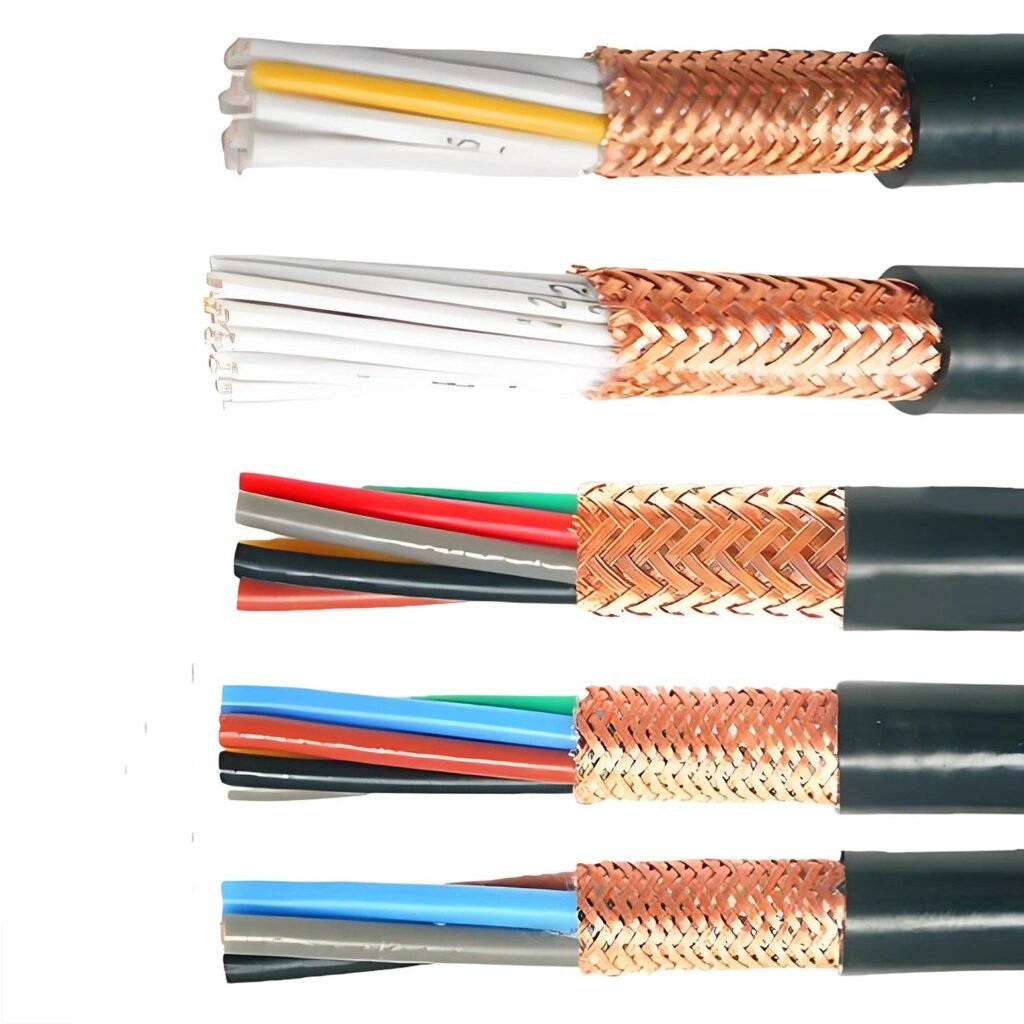
/ 300/500V
Shielded PVC Flexible Cable
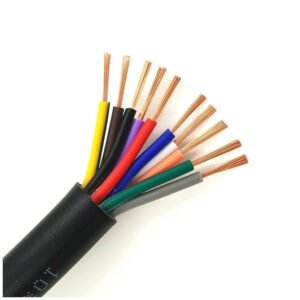
Model: RVVP / Shielded Flexible Cable
Shielded PVC flexible cable designed to reduce electromagnetic interference in control and signal transmission systems.
- Voltage Rating
- 300/500V
- Number of Cores
- Array
- Cross Section
- 0.5–25 mm²
- Conductor
- Copper
- Armoring
- Unarmored
- MOQ
- ≥ 100 m
Standards & Certifications
- GB/T
- GB/T 5023
Downloads
Specifications
Technical Specifications & Performance
Construction
- Model / Series
- RVVP / Shielded Flexible Cable
- Voltage Rating
- 300/500V
- Conductor Material
- Copper
- Conductor Class
- Class 5 Flexible
- Cross Section
- 0.5–25 mm²
- Number of Cores
- Array
- Insulation
- PVC
- Sheath
- PVC
- Armoring
- Unarmored
- MOQ
- ≥ 100 m
Performance
- Max. Conductor Temp.
- 70°C
- Min. Bending Radius
- 8 × Cable Outer Diameter
About This Product
The Commercial-Grade Sibling of the Industrial KVVP Family
Shielded PVC Flexible Cable (model designation RVVP — R for flexible, V for PVC insulation, V for PVC sheath, P for shielded; internationally equivalent to LiYY-CY per DIN VDE 0812, also marketed as YSLCY-OZ per DIN VDE 0250-602 for lighter-duty European industrial automation) is the consumer-electronics and commercial-installation sibling of the heavier-duty industrial KVVP control cable. Same conceptual construction — multi-core PVC insulated, tinned copper braid shield, PVC sheath — but built for the audio, security, broadcast, building intercom, and inside-equipment signal-wiring market rather than for industrial control panels and PLC I/O cabling.
The defining differences from KVVP are the flexibility class (Class 5 fine-strand copper rather than Class 2 rigid), the lower voltage rating (300/300V or 300/500V rather than 450/750V), the smaller cross-section range (0.3 to 4 mm² rather than 0.5 to 10 mm²), the fewer cores (typically 2 to 19 rather than up to 61), and the tighter minimum bending radius (15× OD per JB/T 8734.5, allowing routing through tighter spaces inside equipment cabinets). The tinned copper braid shield is the same in principle as KVVP, just sized for the smaller cable diameter — typical coverage 70 to 85 percent depending on cross-section and cost target.
Production follows JB/T 8734.5-2016 as the primary reference for the RVVP family, with parallel certifications to IEC 60227 for international harmonisation, DIN VDE 0812 for the LiYY-CY European equivalent, and DIN VDE 0250-602 for the YSLCY-OZ industrial automation variant. Jinda manufactures the RVVP family on shared production lines with the KVVP industrial control cable — the equipment and processes are similar enough that production switches are quick. Standard lead time is 12 to 20 days; supplied in 100 m or 200 m coils for distribution stock and 500 m drums for OEM and integrator customers.
Cable Structure
Five Layers Sized for Signal Integrity in Commercial Installations
RVVP shares the five-layer architecture of the industrial KVVP family (conductor, insulation, cabling and separator, shield, sheath) with every layer dimensionally smaller and the conductor switched from rigid Class 2 to flexible Class 5. The cable handles the same EMI-rejection job as KVVP for signal-level circuits but at lower material cost and with much tighter bending radius for routing through equipment chassis, conduit boxes, and behind-wall installations.
-
1
Conductors — Class 5 Flexible Copper, 0.20 mm Strands
Plain annealed copper per IEC 60228 Class 5, fine-strand construction with 0.20 mm individual wires — typically 16 strands for 0.5 mm², 30 strands for 1.5 mm², 50 strands for 2.5 mm². The fine stranding gives RVVP its signature easy-bend feel — meaningfully more flexible than the Class 2 rigid conductor used in industrial KVVP. For cables that need even higher flexibility (continuous flexing in robotic cable carriers), Class 6 stranding is available on request.
-
2
Insulation — PVC Compound, Lighter Wall Than KVVP
Extruded PVC insulation per IEC 60227 specification, sized for the 300/300V or 300/500V voltage rating — wall thickness typically 0.4 to 0.7 mm depending on cross-section, vs 0.8 to 1.2 mm for the heavier 450/750V KVVP family. Core identification by colour per the JB/T 8734.5 standard (red, black, blue, yellow, green, white, brown for typical 7-core configurations) or numbered with white-on-black printing for higher core counts where unique colour combinations become difficult.
-
3
Cabling & Separator Tape
Insulated cores twisted into layers with a defined lay length tuned for flexibility (shorter lay = more flexible cable). For the RVSP twisted-pair variant, cores are first twisted into pairs (for balanced signal applications like RS-485 differential, audio balanced lines, microphone cables) and then the pairs are cabled into layers. PET (polyester) film separator tape wraps over the cabled cores to provide mechanical separation between the cores and the shield braid.
-
4
Shield — Tinned Copper Wire Braid, 70-85% Coverage
Tinned copper wire braid wrapped helically over the separator tape. Coverage density is typically 70 to 85 percent — the lower end of the KVVP range, optimised for cost in consumer-electronics and commercial installations rather than the maximum-density 85-95 percent used for severe industrial EMI environments. The tinning prevents copper sulfide corrosion of the shield over the cable’s service life. RVVPS variants use combined twisted-pair plus overall braid shielding for the most sensitive analog signal applications (broadcast studios, instrumentation). For cost-sensitive applications, an aluminium-foil shield with drain wire substitutes for braid with adequate low-frequency shielding performance at significantly lower cable cost.
-
5
Outer Sheath — PVC, Grey or Black
Extruded PVC outer sheath, thinner than the industrial KVVP sheath because the application doesn’t demand the same level of mechanical abuse tolerance. Sheath wall typically 0.6 to 1.0 mm. Standard colour is grey for commercial signal applications (matches the visual identification of audio/AV and security cabling) or black for security camera and CCTV applications where the cable runs externally and benefits from UV stability. For special installations, the sheath can be specified as flame-retardant FR-RVVP per IEC 60332-1-2, or low-smoke halogen-free WDZ-RVVP for hospital and data centre installations.
Key Features
Commercial-Grade Signal Cable That Actually Rejects Interference
RVVP is the right answer for commercial signal-wiring applications that need real EMI rejection but don’t need the industrial-control duty rating of KVVP. The six features below are what JB/T 8734.5 collectively guarantees, and what separates a proper shielded signal cable from cheap unshielded RVV multi-core sold as “the same thing” on consumer marketplaces.
Tinned Copper Braid for Real EMI Rejection
The shield braid is the defining feature — without it the cable is just RVV and rejects no EMI at all. Tinned copper braid at 70 to 85 percent coverage density blocks induced interference from nearby mains wiring, fluorescent ballasts, mobile-phone transmitters, and wireless equipment. Critical for analog audio, balanced microphone lines, and low-current control signals where induced noise corrupts the signal at the destination.
Class 5 Flexibility, 15× OD Bend Radius
Fine-strand Class 5 copper construction allows minimum bending radius of 15× OD per JB/T 8734.5 — tighter than industrial KVVP’s 12× OD because the smaller cable diameter compensates for the stricter strand-bending constraint. In practical terms, RVVP routes through 90-degree corners inside equipment chassis, behind wall plates, and through conduit boxes that wouldn’t accept rigid KVVP. Easier to install in retrofit work where existing conduit must be reused.
300/300V or 300/500V Insulation
Rated 300/300V (standard RVVP) or 300/500V (heavier variant) per IEC 60227 — appropriate for signal-level circuits (24V DC, 4-20 mA, audio, video baseband) and light control circuits (24V or 110V relay coil supplies). For higher-voltage control circuits up to 230V AC or 400V three-phase, use the heavier KVVRP / KVVP family. Choosing the right voltage class keeps cable cost down without sacrificing safety margin.
2 to 19 Cores in a Small-Diameter Cable
Multi-core construction without the bulk of industrial KVVP. A 7-core RVVP 0.5 mm² runs about 7 mm OD vs a 12-core KVVP at the same cross-section running about 12 mm OD — the difference matters when routing through wall plates, conduit fittings, and equipment chassis. The 2 to 8 core range covers most common commercial signal applications; higher core counts up to 19 cores available for multi-channel audio, multi-zone alarm systems, and similar applications.
Lower Cost Than Industrial KVVP
RVVP unit cost is typically 50 to 70 percent of equivalent core-count KVVP because of the smaller conductor cross-sections, lighter insulation walls, and thinner sheath. For commercial-grade signal applications where the heavier industrial rating isn’t needed, this is real savings on bulk orders — spend the difference on better connectors and termination labour rather than on over-specified cable.
Twisted-Pair Variants for Balanced Signals
RVSP (twisted pair without overall shield) for short-distance RS-485, balanced audio, and similar differential signal applications. RVVPS (twisted pair PLUS overall braid shield) for the most demanding analog applications where both differential-mode noise rejection and common-mode shielding matter. The twisted-pair construction reduces cross-talk between channels and improves common-mode noise rejection at the differential receiver — essential for microphone-level audio and long-line analog signals.
How to Choose
Six Decisions Before You Place the Order
RVVP selection comes down to confirming the application actually needs commercial-grade rather than industrial-grade cable, then picking the right voltage class, shield type, and core count. The most common selection error is over-specifying KVVP for a security camera installation that would have run perfectly on RVVP — or, less commonly, under-specifying RVVP for an industrial control circuit that needs the heavier KVVP rating.
Confirm RVVP is the right level (not KVVP)
RVVP is for signal-level circuits at 300/300V or 300/500V: security cameras, alarm systems, audio, broadcast, building intercom, smart home, internal equipment wiring. KVVP is for industrial control circuits at 450/750V: PLC I/O, VFD signals, motor control, substation protection, machine tool cabinets. If the circuit operates at 230V AC or higher, or is part of a PLC-controlled industrial automation system, use KVVP. If the circuit operates at 24V DC, carries audio, video, or low-current data, use RVVP and save 30 to 50 percent on cable cost.
Choose shield type: braid, foil, or both
Tinned copper braid (standard RVVP) — effective up to several MHz, mechanically robust, the universal default for most signal applications. Aluminium-foil + drain wire (cost-optimised variant) — lighter and cheaper, 100% coverage, but lower mechanical durability and lower frequency range; suitable for low-frequency analog signals and short cable runs. Combined foil + braid (premium variant) — best-in-class shielding for sensitive analog applications like broadcast studio interconnects and high-quality audio. For RS-485 and other digital differential signals, the RVSP twisted-pair construction without shield may be sufficient.
Size the cross-section for the signal type
0.3 mm² for very-low-current signals (4-20 mA analog loops, RTD/thermocouple sensor pairs). 0.5 mm² for typical 24V DC signal and alarm system wiring — the dominant cross-section for the commercial security and AV market. 0.75 mm² for slightly higher-current signals and short power+signal combined cables (camera power up to ~3 A). 1.0-1.5 mm² for combined power + signal cables to PoE++ cameras and intercom panels. 2.5-4 mm² for low-frequency switching circuits where the cable is doing power-cable work in a shielded form factor.
Pick the core count for the application
2-core for two-wire signal (4-20 mA loop, RS-485 differential pair, simple audio line). 3-core for L+N+E supply, or single-channel audio with separate shield drain. 4-core for combined video+power CCTV (2 power + 2 signal), or four-zone alarm panel. 6-8 core for multi-channel audio mixing console interconnects, multi-zone security systems. 10-19 core for multi-channel professional audio, telephony cross-connect, or large alarm panel installations. Add 15-20 percent spare cores for future expansion at original-order time — significantly cheaper than pulling new cable later.
Standard vs twisted-pair construction
Standard RVVP with cores cabled in concentric layers — works for most single-ended signals (24V control, single-ended audio, video baseband). For differential signals (RS-485, balanced audio, microphone lines), specify RVSP with twisted-pair construction — pairs are twisted together with a defined lay length that cancels common-mode noise at the differential receiver. For the most demanding analog signal applications, RVVPS combines twisted pairs with overall braid shield. The cost premium for twisted-pair construction is typically 10-15 percent over standard RVVP.
Specify fire performance for the installation
Standard RVVP per IEC 60332-1-2 (single-cable flame test) — sufficient for most installations. For cable-tray bundled installations or commercial buildings, specify FR-RVVP with flame-retardant PVC sheath. For data centres, hospitals, hotels, and any installation under modern building fire-safety codes, specify WDZ-RVVP low-smoke halogen-free variant — the LSZH compound dramatically reduces smoke density and eliminates the acid gas (HCl) that standard PVC produces during fires. For European market export, specify CPR Eca or higher classification per EN 50575.
Applications
Commercial Signal Wiring Across Audio, Video, Security, and Building Systems
RVVP is the dominant shielded cable across the entire commercial signal-wiring market — security and surveillance, audio and broadcast, building intercom, smart home, and inside-equipment signal cabling. The four scenarios below cover the highest-volume applications globally; the underlying RVVP construction is the same across them, only the cross-section, core count, and shield variant changes by project.
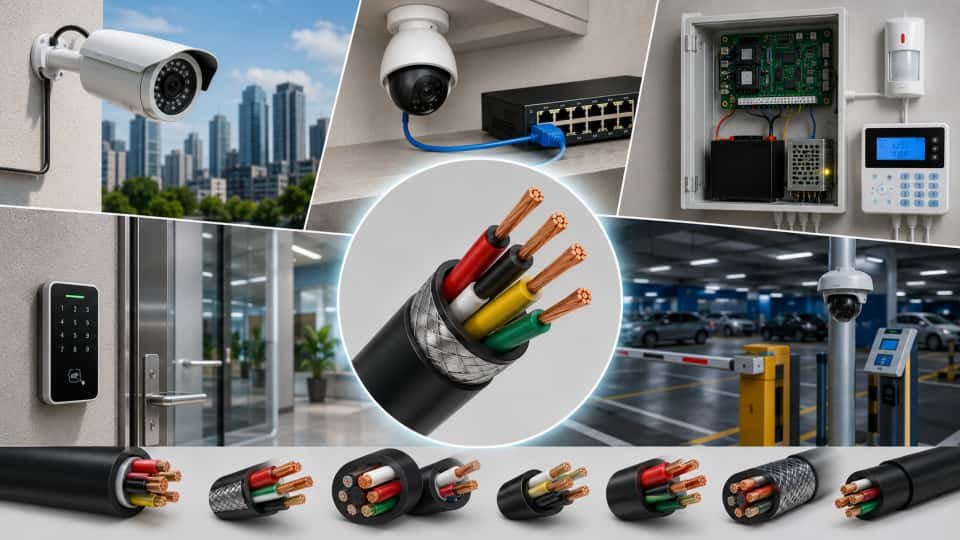
Security & Surveillance (CCTV, Alarm)
Analog CCTV camera coaxial alternative (combined video + power on 4-core RVVP 0.5 mm² runs), IP camera PoE+ feeder cables, intrusion alarm system multi-zone wiring, access control panel wiring, parking lot security camera feeds. Typically 2-6 core RVVP 0.3-0.75 mm², with combined video + power configurations for camera installations replacing separate coax and DC power cables.
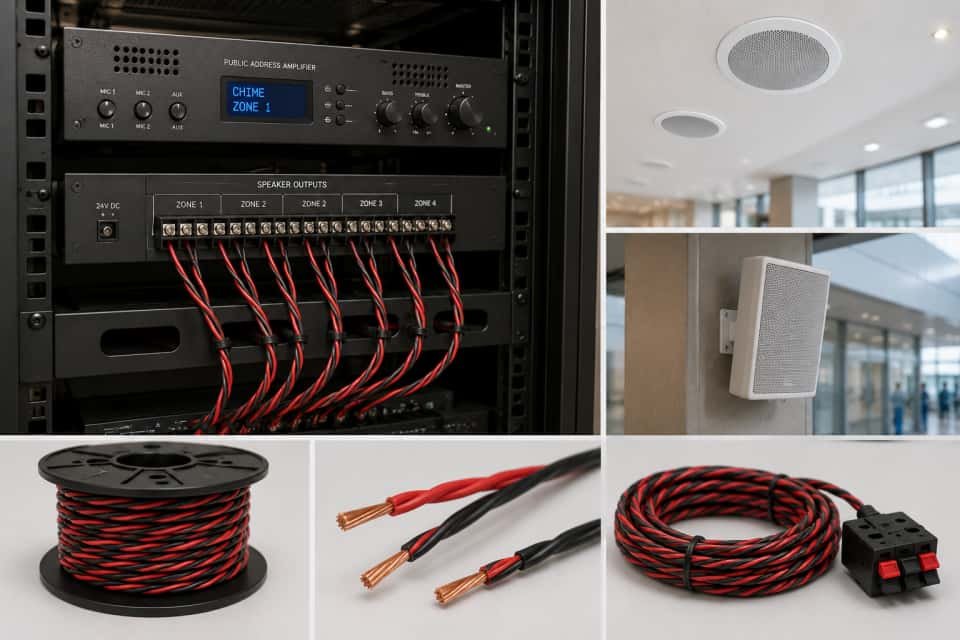
Audio, Broadcast & AV Systems
Microphone cables (RVSP twisted-pair for balanced lines), studio monitor speaker interconnects, mixing console multi-channel feeds, broadcast studio equipment racks, KTV and karaoke equipment wiring, conference room AV systems, hotel guest room AV installations. Typically 2-8 core RVVP 0.3-0.5 mm²; RVSP twisted-pair variants for balanced audio applications where 60Hz mains hum rejection is critical.
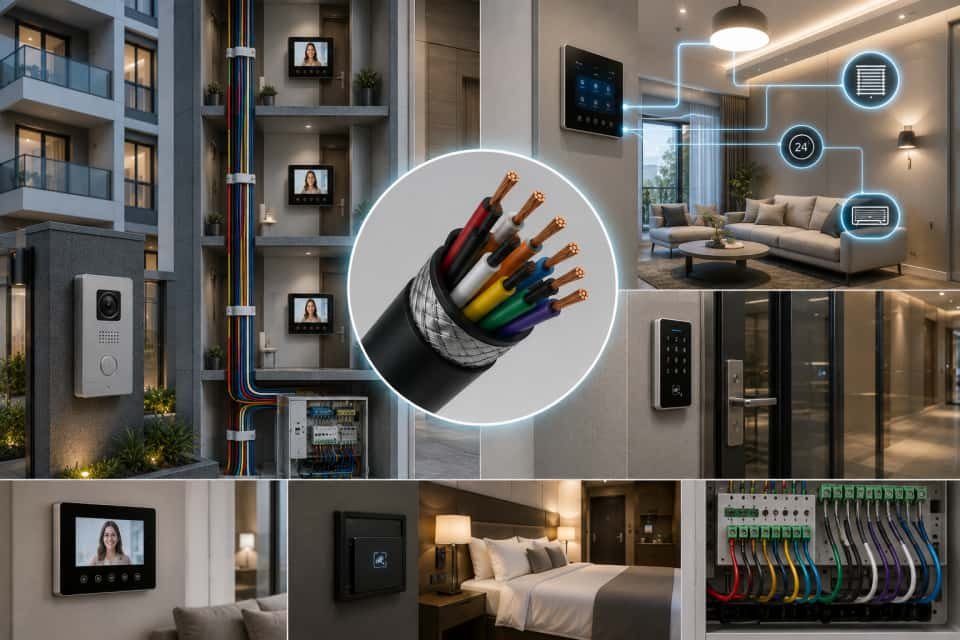
Building Intercom & Smart Home
Apartment building intercom riser cables, video door phone installations, smart home device interconnects (lighting, blinds, HVAC zone controls), apartment access control panels, hotel room signaling. Typically 4-8 core RVVP 0.5-0.75 mm², often combined power + signal in a single cable to reduce installation labour. WDZ-RVVP low-smoke halogen-free variant is required by modern building codes in many jurisdictions for riser installations.
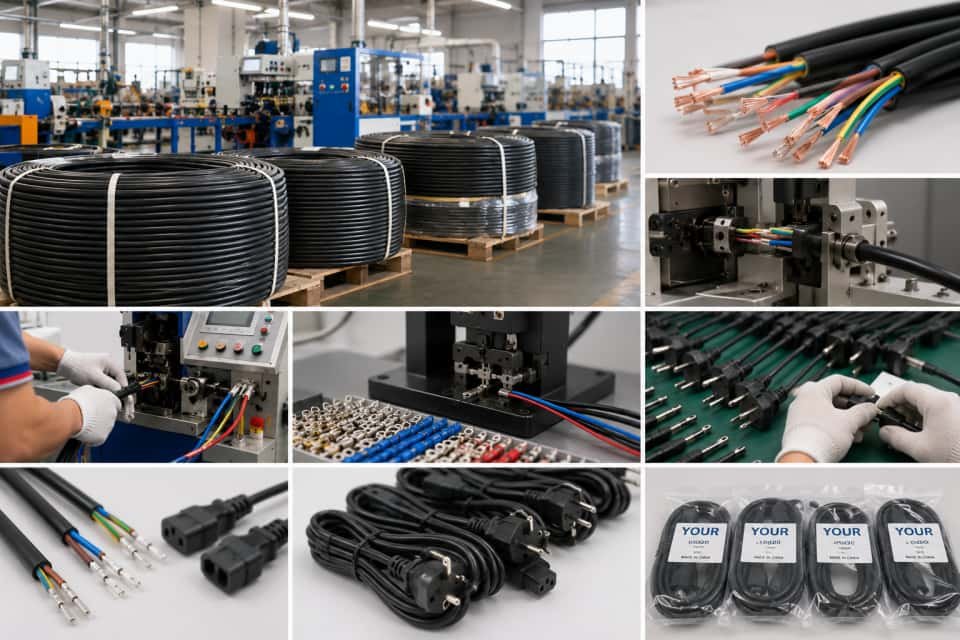
Inside-Equipment & OEM Wiring
Internal wiring of electronic instruments, medical equipment signal cabling, point-of-sale (POS) system wiring, vending machine controls, ATM internal wiring, light commercial machine controls, instrumentation panel wiring. Typically 2-6 core RVVP 0.3-0.75 mm², often supplied as pre-cut and pre-terminated assemblies for OEM customers with high-volume production. Custom sheath colours and printed branding available for OEM identification.
Not appropriate for: Industrial PLC I/O cabling at 450/750V (use KVVP or KVVRP instead). Variable-frequency drive (VFD) output cables (use dedicated VFD cable with copper tape shielding). Outdoor permanent installation with UV exposure (use UV-stabilised outdoor variant or run inside conduit). Direct burial (use armoured KVVP2-22). Mobile or continuous-flex applications in cable carriers (use dedicated drag-chain cable). High-speed network data above 100 Mbps (use Cat 5e/Cat 6 Ethernet cable). Power circuits above 4 A continuous (use rated power cable instead of signal cable).
Technical Data
RVVP Standard Sizes & Cable Dimensions
Reference values for RVVP at 300/300V per JB/T 8734.5-2016 with tinned copper braid shield (typical 75 percent coverage for commercial-grade installations). The table below covers the highest-volume size and core-count combinations for security, audio, and building-systems applications. Other cross-sections and higher core counts available on request; for unusually large core counts, the industrial KVVP family becomes more economical.
| Cores & Size | Strand Construction | Approx. Cable OD | DC Resistance (per core) | Ampacity (typical) | Approx. Weight |
|---|---|---|---|---|---|
| 2 × 0.3 mm² | 16 / 0.15 mm | ~ 4.8 mm | 64.8 Ω/km | 3 A | ~ 32 kg/km |
| 2 × 0.5 mm² | 16 / 0.20 mm | ~ 5.2 mm | 39.0 Ω/km | 5 A | ~ 42 kg/km |
| 2 × 0.75 mm² | 24 / 0.20 mm | ~ 5.8 mm | 26.0 Ω/km | 7 A | ~ 58 kg/km |
| 2 × 1.0 mm² | 32 / 0.20 mm | ~ 6.2 mm | 19.5 Ω/km | 9 A | ~ 70 kg/km |
| 3 × 0.3 mm² | 16 / 0.15 mm | ~ 5.2 mm | 64.8 Ω/km | 3 A | ~ 42 kg/km |
| 3 × 0.5 mm² | 16 / 0.20 mm | ~ 5.6 mm | 39.0 Ω/km | 5 A | ~ 56 kg/km |
| 3 × 0.75 mm² | 24 / 0.20 mm | ~ 6.3 mm | 26.0 Ω/km | 7 A | ~ 77 kg/km |
| 3 × 1.0 mm² | 32 / 0.20 mm | ~ 6.8 mm | 19.5 Ω/km | 9 A | ~ 92 kg/km |
| 3 × 1.5 mm² | 30 / 0.25 mm | ~ 7.5 mm | 13.3 Ω/km | 12 A | ~ 125 kg/km |
| 4 × 0.3 mm² | 16 / 0.15 mm | ~ 5.6 mm | 64.8 Ω/km | 3 A | ~ 50 kg/km |
| 4 × 0.5 mm² | 16 / 0.20 mm | ~ 6.0 mm | 39.0 Ω/km | 5 A | ~ 68 kg/km |
| 4 × 0.75 mm² | 24 / 0.20 mm | ~ 6.8 mm | 26.0 Ω/km | 7 A | ~ 92 kg/km |
| 4 × 1.0 mm² | 32 / 0.20 mm | ~ 7.3 mm | 19.5 Ω/km | 9 A | ~ 110 kg/km |
| 5 × 0.5 mm² | 16 / 0.20 mm | ~ 6.5 mm | 39.0 Ω/km | 5 A | ~ 80 kg/km |
| 6 × 0.5 mm² | 16 / 0.20 mm | ~ 7.0 mm | 39.0 Ω/km | 5 A | ~ 92 kg/km |
| 7 × 0.5 mm² | 16 / 0.20 mm | ~ 7.5 mm | 39.0 Ω/km | 5 A | ~ 105 kg/km |
| 8 × 0.5 mm² | 16 / 0.20 mm | ~ 8.2 mm | 39.0 Ω/km | 5 A | ~ 120 kg/km |
| 10 × 0.5 mm² | 16 / 0.20 mm | ~ 9.0 mm | 39.0 Ω/km | 5 A | ~ 145 kg/km |
| 12 × 0.5 mm² | 16 / 0.20 mm | ~ 9.8 mm | 39.0 Ω/km | 5 A | ~ 175 kg/km |
| 16 × 0.5 mm² | 16 / 0.20 mm | ~ 11.0 mm | 39.0 Ω/km | 5 A | ~ 225 kg/km |
| 19 × 0.5 mm² | 16 / 0.20 mm | ~ 11.8 mm | 39.0 Ω/km | 5 A | ~ 260 kg/km |
DC resistance per IEC 60228 Class 5 stranded annealed bare copper, 20°C. Tinned copper braid shield coverage typically 70 to 85 percent depending on cross-section — the cost-optimised commercial grade. Ampacity values are typical safe-current ratings for signal and light-control applications at 30°C ambient; RVVP is not intended as a primary power cable, but the low-current ratings make it useful for combined power+signal applications where the power draw is modest (e.g., camera power, smart home device power).
Insulation voltage: 300/300V per JB/T 8734.5 (300/500V available on request for higher-rated variants). Operating temperature: −15°C to +70°C continuous conductor; short-circuit 160°C for 5 seconds. Minimum bending radius: 15× OD per JB/T 8734.5 (more flexible than 12× OD for industrial KVVP). Standard sheath colour grey for AV/security applications or black for outdoor camera installations. Flame test: IEC 60332-1-2 standard / FR-RVVP variant for cable-tray installations / WDZ-RVVP LSZH variant for hospital, hotel, data centre installations under modern building fire codes.
Comparison
RVVP vs Its Closest Alternatives in the Shielded Cable Family
The shielded flexible cable market has four closely-related products with overlapping use cases. Picking the right one avoids the two most common errors: over-paying for industrial-grade KVVP on a security camera installation, or under-specifying RVV without shielding for a circuit that gets EMI corruption. The table below clarifies which variant fits which job.
| Attribute | RVVP (this product) | RVV (unshielded) | RVSP (twisted pair) | KVVP (industrial) |
|---|---|---|---|---|
| Standard | JB/T 8734.5-2016 | JB/T 8734.5-2016 | JB/T 8734.5-2016 | GB/T 9330-2020 |
| International equiv. | LiYY-CY / YSLCY-OZ | YY (unscreened) | LiYCY-TP / LiYY-CY-TP | LiYCY / YSLCY |
| Conductor class | Class 5 flexible | Class 5 flexible | Class 5 flexible | Class 2 rigid |
| Voltage rating | 300/300 V or 300/500 V | 300/300 V or 300/500 V | 300/300 V or 300/500 V | 450/750 V |
| Shielding | Tinned Cu braid 70-85% | None | Twisted pairs (no overall) | Tinned Cu braid 85%+ |
| EMI resistance | Good for commercial signal | Poor — no shield | Excellent for differential | Excellent for industrial |
| Cross-section range | 0.3 to 4 mm² | 0.3 to 4 mm² | 0.3 to 2.5 mm² | 0.5 to 10 mm² |
| Typical core count | 2 to 19 cores | 2 to 19 cores | 2 to 8 pairs | 2 to 61 cores |
| Min bending radius | 15× OD | 6× OD | 15× OD | 12× OD |
| Typical use | CCTV, audio, intercom | Lamps, appliances, basic | RS-485, balanced audio | PLC I/O, industrial control |
| Cost (relative to RVVP) | 1.00 (baseline) | 0.70 to 0.80 | 1.10 to 1.20 | 1.40 to 1.80 |
When to choose RVVP (this product)
Commercial-grade signal and light-control wiring at 300/300V or 300/500V where EMI rejection matters: security cameras and surveillance systems, audio and broadcast equipment, building intercoms, smart home installations, inside-equipment OEM wiring, hotel and conference room AV. The right choice when KVVP would be over-specified but RVV (unshielded) would leave signals vulnerable to mains hum and switching noise.
When to choose an alternative
For non-interfered environments where shielding is not needed (basic lamp and appliance wiring), RVV unshielded is 20-30 percent cheaper. For differential signals (RS-485, balanced audio), use RVSP twisted-pair construction for better common-mode noise rejection. For industrial control applications at 450/750V (PLC I/O, VFD signals, motor control), step up to KVVP or KVVRP. For high-speed network data above 100 Mbps, use dedicated Cat 5e / Cat 6 Ethernet cable. For coal mine intrinsic-safety circuits, use the dedicated MHYV mining communications cable family.
Frequently Asked Questions
Common Questions From Installers, OEM Buyers, and Distributors
What does RVVP stand for?
The RVVP cable code follows a systematic naming convention: R = flexible conductor (Class 5 fine-strand copper), V = PVC insulation, V = PVC outer sheath, P = shielded (typically tinned copper braid). Related variants extend the code: RVV (no P) is the unshielded version — same construction without the braid shield, 20-30 percent cheaper. RVSP adds S for “Shuangjiao” twisted-pair construction — pairs are twisted together for balanced signal applications. RVVPS combines both twisted pairs and overall shield — the premium variant for sensitive analog signal work. Once you know the code, you can read off the construction directly.
When should I choose RVVP vs KVVP?
The defining differences are voltage class and application duty. RVVP is rated 300/300V or 300/500V, uses flexible Class 5 conductor, and is intended for signal-level commercial applications (audio, video, security, building intercom, OEM internal wiring). KVVP is rated 450/750V, uses rigid Class 2 conductor, and is intended for industrial control circuits (PLC I/O, VFD signals, motor control panels, substation protection). For circuits operating at 24V DC, audio signal levels, or video baseband — use RVVP and save 30-50 percent. For circuits operating at 230V AC control voltage or in industrial PLC environments — use KVVP. Don’t mix them up; using RVVP for 230V control circuits violates voltage ratings, using KVVP for security camera installations wastes 30-50 percent on over-rated cable.
Is RVVP cable the same as LiYY-CY?
Very similar at the construction level. RVVP follows JB/T 8734.5-2016 with Class 5 flexible copper, PVC insulation, copper braid shield, PVC sheath. LiYY-CY follows DIN VDE 0812 with the same construction philosophy: Li (flexible) + Y (PVC insulation) + Y (PVC sheath) with C (copper braid screen) Y (PVC outer sheath after the screen). Both target the same application space — commercial flexible signal cabling with EMI shielding. Dual-certification on a single production run is straightforward; specify both JB/T 8734.5 and DIN VDE 0812 markings at order for products supplying mixed Asian and European markets.
Can I use RVVP for combined power + signal in security cameras?
Yes — this is one of the dominant RVVP applications. A typical CCTV installation uses 4-core RVVP 0.5 mm² with two cores carrying 12V or 24V DC camera power and two cores carrying the video baseband signal, all inside one cable with overall braid shielding. The shield protects the video signal from EMI while the cable carries both power and signal in a single run — replaces separate RG-59 coax + DC power cable installations with one cable that’s easier to install. For higher-resolution IP cameras with PoE power requirements, step up to 0.75 mm² or 1.0 mm² cross-section to handle the higher current. Verify the camera’s power requirements (12V vs 24V vs PoE/PoE+/PoE++) before specifying the cable.
How should the shield be earthed on RVVP runs?
Same earthing rules as industrial KVVP, scaled for commercial applications. For analog signal cables (audio, video, 4-20 mA), earth the shield at one end only (typically the receiving / control-room end) to avoid ground loops that inject mains-frequency hum into the signal. For digital signal cables (RS-485, RS-422), earthing the shield at both ends through low-impedance connections is acceptable and sometimes required by the protocol specification. For inside-equipment installations, the shield is typically tied to the equipment chassis at one end. The shield must always be earthed somewhere — an unconnected floating shield doesn’t reject EMI and can actually act as an antenna picking up interference.
What is the typical lead time and MOQ?
Standard RVVP configurations in common sizes (2-4 core 0.5-1.0 mm²) typically ship in 12–20 days from order — these run continuously on shared production lines with KVVRP and have stable raw material inventory. Higher core counts (12-19 cores) take 18-25 days. WDZ-RVVP low-smoke halogen-free variant adds 5-7 days for compound preparation. MOQ is normally 500 m per cross-section + core count combination; smaller trial orders (down to 100 m) accepted with a small setup fee. For OEM customers ordering 50 km+ across multiple configurations in a single container, unit-price reduction is typically 10-15 percent vs LCL shipment. Custom sheath colour and printed branding available with 5,000 m MOQ for OEM identification.
Installation & Handling Tips
Six Practices for RVVP That Actually Deliver Clean Signals
RVVP that’s improperly terminated or carelessly installed rejects no more EMI than unshielded RVV — you pay the shielding premium and get none of the benefit. The six practices below cover the installation details that consistently separate noise-free commercial signal installations from systems that get intermittent interference and crackling audio after a few months of service.
Earth the shield at one end only for analog signals
For analog audio, video baseband, microphone signals, and 4-20 mA loops, earth the cable shield at the receiving / control room end only — never both ends. Earthing both ends creates a ground loop that injects mains-frequency hum into the signal. For digital differential signals (RS-485, RS-422), both-end earthing through proper EMC connectors is the standard approach. The shield must always be earthed somewhere — a floating shield provides no EMI rejection benefit.
Don’t run RVVP parallel to mains wiring
Even shielded RVVP picks up some interference when run parallel to mains power cables for long distances — the shield reduces but doesn’t eliminate induced noise. Maintain at least 100 mm separation between RVVP signal cables and AC mains cables wherever possible; cross at 90 degrees rather than running parallel. For runs through structured cabling pathways, use the dedicated signal-cable tray with metal-tray separation from power cable tray.
Use proper crimped connectors, not solder joints
Class 5 fine-strand copper terminates best with crimped pin connectors, ring lugs, or ferrule-and-screw-terminal combinations. Solder joints on fine-strand copper concentrate mechanical stress at the joint root and fatigue-fracture over time — particularly bad for cables that see vibration. For RJ-style connectors on RVVP cables used as data cables, use the proper crimp tool for the specific connector type rather than improvising with pliers. Loose connections at terminations cause intermittent signal problems that are very hard to diagnose in the field.
Maintain minimum bending radius during pulling
RVVP minimum bending radius is 15× OD per JB/T 8734.5. Tighter bends during cable pulling permanently damage the braid shield — individual braid wires fracture and gaps open up in shield coverage. The damage is invisible from outside but shows up as intermittent noise pickup months or years later. Particularly important at panel entry points and connector backshells where space is constrained; use proper service loops rather than forcing tight bends.
Test continuity AND insulation before energising
Test conductor-to-conductor continuity (resistance check, expected within nominal cable resistance) and insulation resistance (megger test at 500V DC, expected > 100 MΩ per km) between every core and earth, and between adjacent cores, before placing cable into service. RVVP is more vulnerable than KVVP to insulation damage from over-tight bends and pinch points because the wall thickness is smaller; testing catches problems before they cause intermittent signal failures in service.
Label terminations clearly for future maintenance
Multi-core RVVP installations routinely have 6, 8, or 19 cores carrying different signals to different equipment — identifying which core goes where during a fault-finding call out is nearly impossible without clear labelling. Use heat-shrink cable labels at both ends of every cable run, individual core ferrule sleeves printed with the signal function (e.g., “CAM-3 VIDEO+”), and maintain the cable schedule documentation in the project handover package. The five minutes of labelling at installation pays back many times over in maintenance time savings.
Safety note: Although RVVP typically carries low-voltage signals (24V DC, audio levels, video baseband, 4-20 mA), the 300/300V or 300/500V insulation rating means the cable can also be used for 110V or 230V AC light-control circuits if the wiring code permits. Verify the target circuit voltage matches the cable rating at design time. For installations in residential buildings, hospitals, hotels, and any public-access space, check the local building code regarding LSZH (low-smoke halogen-free) requirements — standard PVC-sheathed RVVP may not satisfy modern fire-safety regulations; specify the WDZ-RVVP variant instead.
Manufacturing Capability
Why Source From Jinda Cable
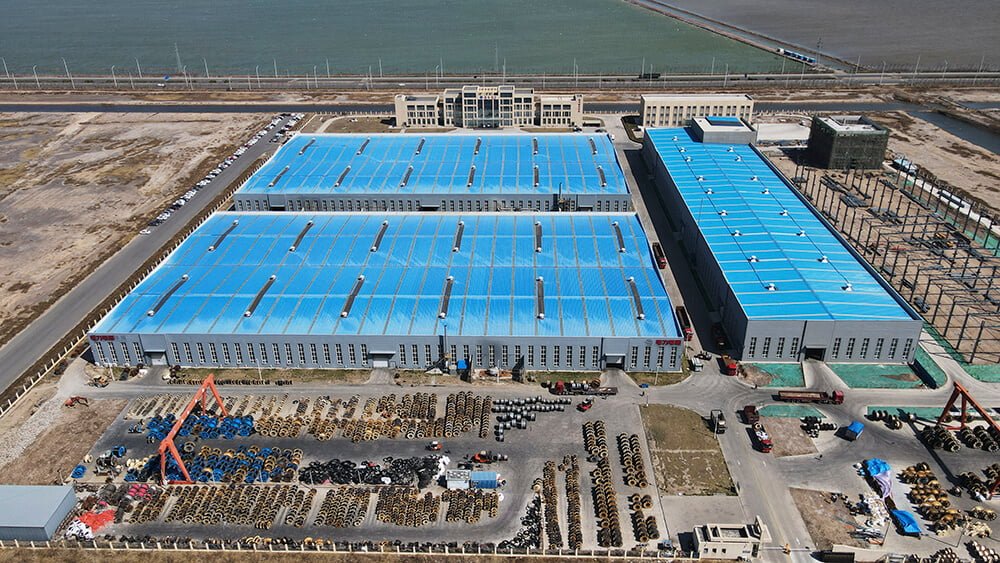
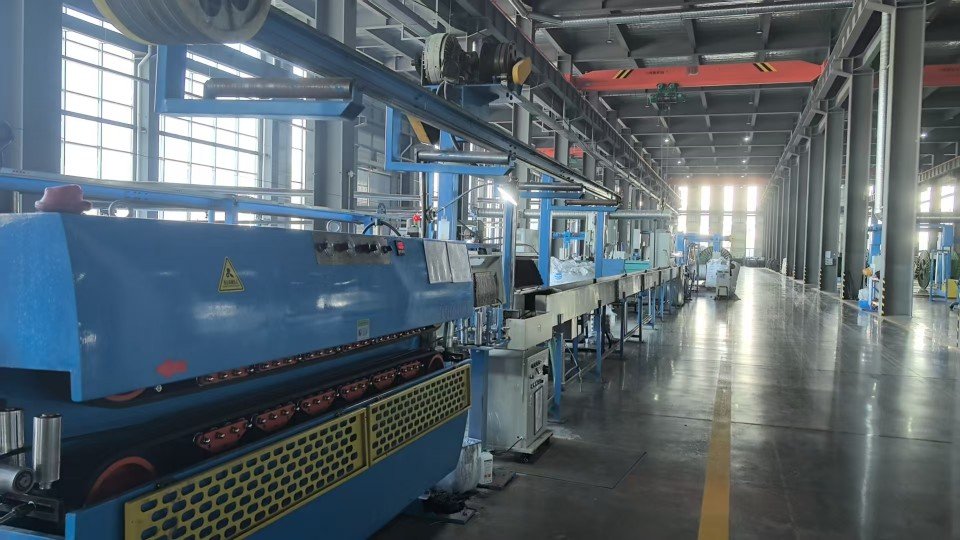
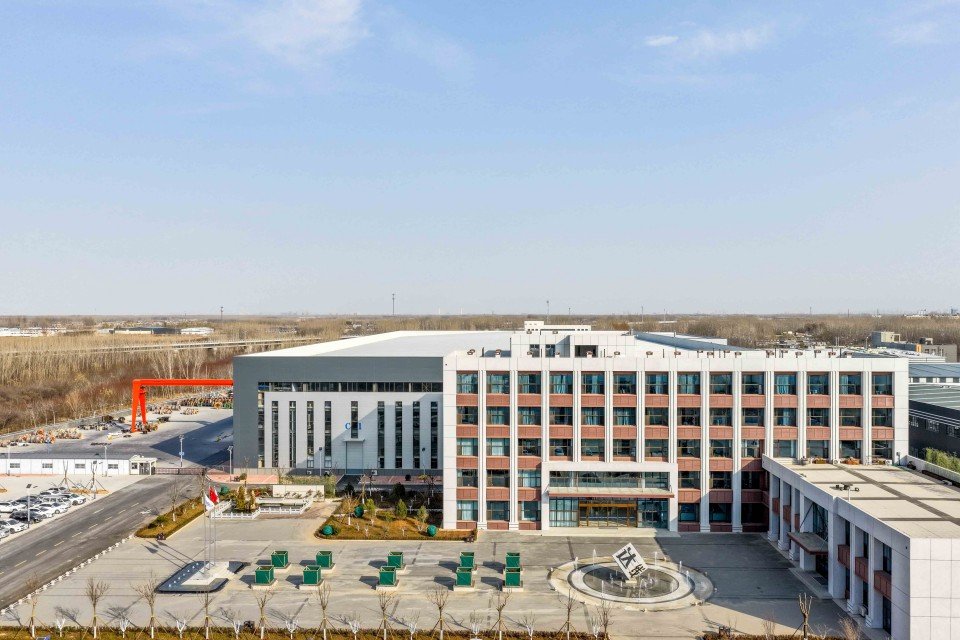
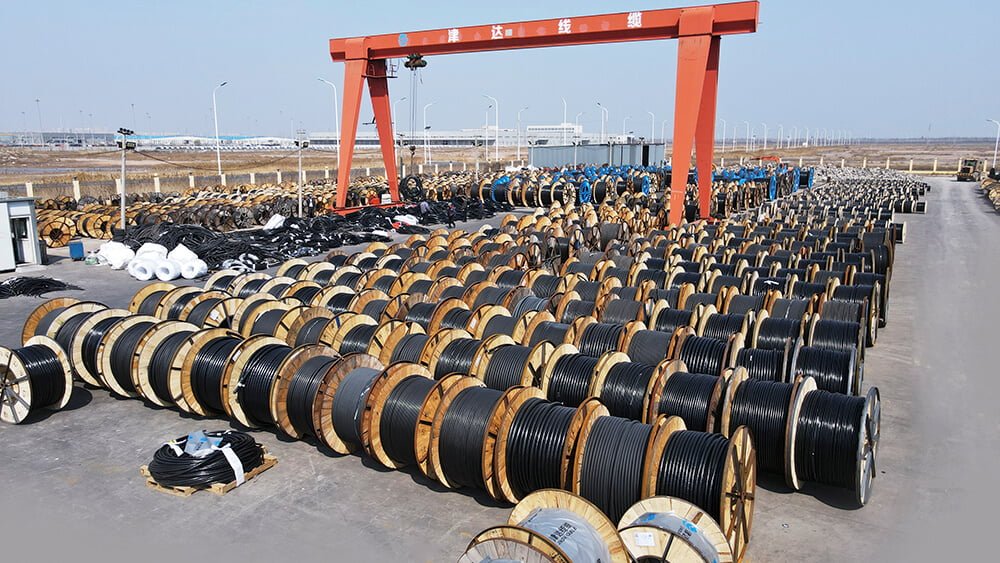
Behind every drum we ship sits a 38-year track record, five production bases under one MES system, and a documentation discipline that gets cables through customs without delays.
-
Every cable tested twice before shipping
Since 1987, our two-stage QC has been refined to a science: routine test on the production line, then full electrical and mechanical re-test before packing. Across 50+ export markets, our return rate stays under 0.3%.
-
Five production bases, 470,000 m², synced via MES
Tianjin, Liaoning, Heilongjiang, Shandong, and Xian — each base runs under one unified MES system. Same recipe, same protocols, same traceability, regardless of which plant ships your order.
-
3,000+ SKUs, custom configurations welcome
Standard sizes ship from inventory. Special voltage grades, color-coding, drum lengths, or armor configurations are routine — submit your spec and our team will quote the lead time honestly.
-
Trusted by EPC contractors in 50+ countries
We supply utilities, mining operators, port authorities, and large industrial OEMs across Europe, the Americas, Southeast Asia, the Middle East, and Africa.
-
Full paperwork shipped with every order
Every shipment includes factory test report, certificate of origin (COO), packing list, and bill of lading (B/L). Customer-nominated witness testing can be arranged before shipment.
Our Track Record
98.7%
On-time shipment rate (last 24 months)
< 0.3%
Return rate across export markets
25 days
Typical sea freight Tianjin → Rotterdam
100%
Shipments with routine test report attached
Logistics & Delivery
Packaging, Shipping & Documentation
What we handle on our side from production floor to the port of loading. Product-specific installation guidance is supplied with the datasheet that accompanies each order.
Packaging
- Wooden or steel drums per IEC 62004
- Coil packaging available for small cross-sections
- Standard drum lengths plus custom lengths on request
- Each drum labeled with type, voltage, cross-section, length, batch
- Waterproof wrapping for export shipments
- Cable ends sealed against moisture ingress
- Private-label / OEM packaging available under NDA
Shipping
- FCL / LCL sea freight, air freight on request
- Trade terms: EXW, FOB, CFR, CIF, DDP
- Ports of loading: Tianjin / Qingdao / Shanghai
- Typical sea freight to Rotterdam: 25 days
- Lead time confirmed at order acknowledgement
- Container loading photos sent before sailing
Documentation
- Factory routine test report (per applicable standard)
- Commercial invoice and packing list
- Certificate of origin (CO) — China Council, FORM A, FORM E available
- Bill of lading (B/L) — original or telex release
- Third-party inspection by SGS / BV / TÜV on request
- Customer-nominated witness testing arranged before shipment
Related Products