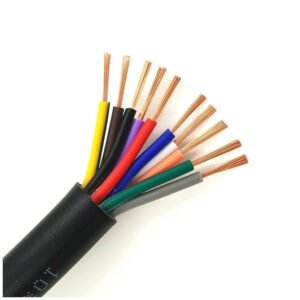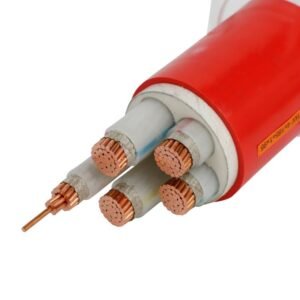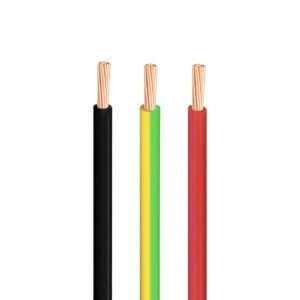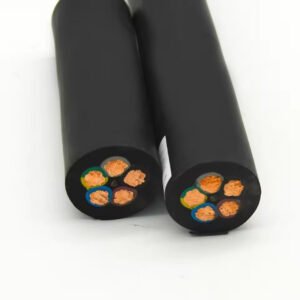
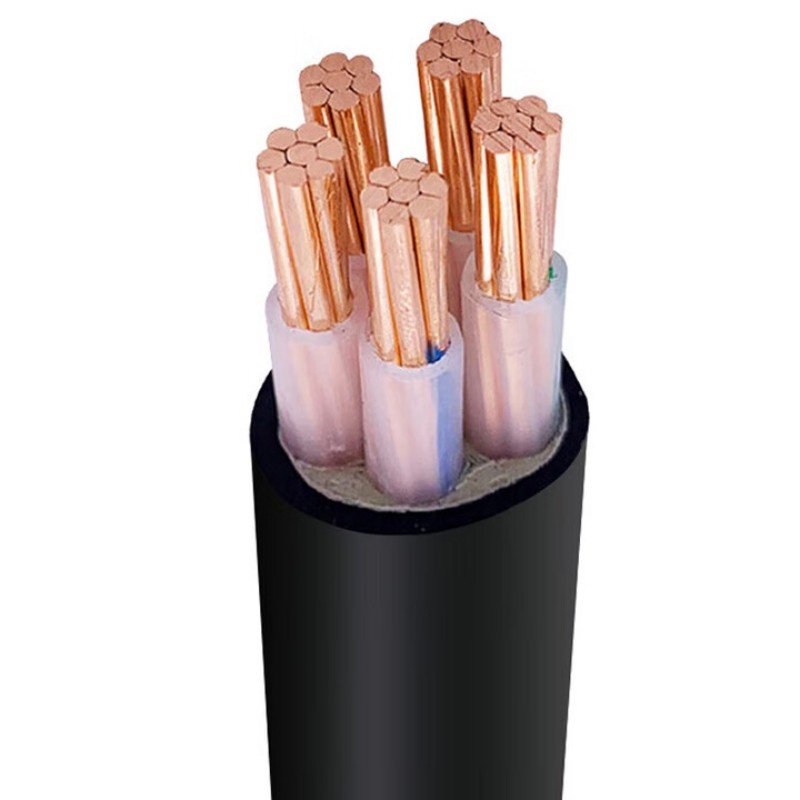
/ 0.6/1kV
XLPE Insulated Power Cable
Model: YJV / N2XY
XLPE insulated power cable offering excellent electrical performance, thermal resistance, and long service life.
- Voltage Rating
- 0.6/1kV
- Number of Cores
- Array
- Cross Section
- 1.5–630 mm²
- Conductor
- Copper Clad Aluminum
- Armoring
- Unarmored
- MOQ
- ≥ 100 m
Standards & Certifications
- GB/T
- GB/T 12706
- IEC
Downloads
Specifications
Technical Specifications & Performance
Construction
- Model / Series
- YJV / N2XY
- Voltage Rating
- 0.6/1kV
- Conductor Material
- Copper Clad Aluminum
- Conductor Class
- Class 2 Stranded
- Cross Section
- 1.5–630 mm²
- Number of Cores
- Array
- Insulation
- XLPE
- Sheath
- PVC
- Armoring
- Unarmored
- MOQ
- ≥ 100 m
Performance
- Max. Conductor Temp.
- 90°C
- Min. Bending Radius
- 12 × Cable Outer Diameter
About This Product
Same Cable as NYY, 30-40% More Ampacity: Why XLPE Wins Where It Counts
XLPE Insulated Power Cable (model designation YJV for the copper-conductor variant and YJLV for aluminium in the Asian market; internationally equivalent to N2XY per the European VDE/IEC code — N for normal, 2X for XLPE insulation, Y for PVC sheath — and NA2XY for the aluminium-conductor European variant) is the direct high-performance alternative to PVC-insulated NYY cable for the same 0.6/1 kV fixed-installation applications. The construction is nearly identical — conductor, insulation, filler, outer sheath — but the insulation material changes from PVC (rated 70°C continuous) to cross-linked polyethylene XLPE (rated 90°C continuous), and that temperature difference changes everything else: higher ampacity, better short-circuit tolerance, longer service life.
The economic case for YJV over NYY is straightforward in the majority of industrial and commercial installations: XLPE insulation costs 5-10 percent more per metre than PVC, but the 30-40 percent ampacity advantage means the same load can be carried by a cross-section one or two sizes smaller. A 70 A load that requires 16 mm² NYY requires only 10 mm² YJV — the conductor cost reduction more than offsets the insulation premium. For large installations with many cable runs — industrial plants, commercial buildings, data centres, hospitals — this cross-section optimisation reduces both cable cost and cable tray fill significantly. The only scenarios where NYY remains the rational choice over YJV are very short low-current branch circuits where the cross-section is already at the minimum (1.5 or 2.5 mm²) and the insulation premium isn’t offset by any conductor saving.
Production follows IEC 60502-1 as the primary international reference, with parallel certifications to DIN VDE 0276-603 (Germany, the N2XY standard), HD 603 S1 (CENELEC harmonised European), BS 5467 (UK, both armoured and unarmoured), AS/NZS 5000.1 (Australia/NZ), SASO 1694 (Saudi Arabia and Gulf). Standard lead time is 12 to 20 days for common cross-sections; container-load orders for infrastructure and industrial projects ship through Tianjin, Qingdao, and Shanghai ports.
Cable Structure
Four Layers, One Critical Difference From NYY: The Insulation Material
YJV / N2XY construction is almost identical to PVC-insulated NYY at first glance — four layers, same conductor options, same PVC outer sheath. The one material change, from PVC insulation to XLPE insulation, is responsible for all the performance advantages. Understanding exactly why the insulation material matters so much, and what changes with it, makes the specification decision between NYY and YJV straightforward rather than arbitrary.
-
1
Conductor — Class 1 Solid or Class 2 Stranded Copper (or Aluminium)
Plain annealed copper per IEC 60228 Class 1 solid (1.5 to 16 mm², optionally up to 25 mm²) or Class 2 stranded compacted (16 mm² and above, mandatory above 25 mm²). Sector-shaped compacted conductors (SM) for three-core 50 mm² and above reduce overall cable diameter vs circular (CM) construction. Aluminium Class 2 stranded for YJLV / NA2XY variants — 30-40 percent lower conductor cost per equivalent ampacity, but larger cross-section required. Identical conductor specification to NYY — the conductor is unchanged, only the insulation above it differs.
-
2
Insulation — Cross-Linked Polyethylene XLPE, 90°C Continuous
The defining material difference. Extruded XLPE insulation per IEC 60502-1 Type XLPE — polyethylene cross-linked by peroxide cure during the production process to convert the thermoplastic base material into a thermoset polymer. Rated for 90°C continuous conductor temperature, 130°C emergency overload (typically 100 hours per year), and 250°C short-circuit for 5 seconds. The cross-linking creates a three-dimensional polymer network that cannot melt at operating temperature — XLPE does not plasticise, does not develop the voids and dendrites that cause PVC insulation to degrade under sustained load, and retains its electrical properties across a wider temperature range. Wall thickness: 0.7 mm (1.5-4 mm²) to 2.8 mm (800 mm² and above) per IEC 60502-1 Table 5.
-
3
Cabling, Filler & Binder Tape
Insulated cores cabled together with polypropylene fillers (preferred over PVC filler for XLPE cable — PP is compatible with XLPE chemistry and doesn’t plasticise into the XLPE surface), bound with a polypropylene or polyester tape. The binder tape wraps over the cabled assembly to hold the circular cross-section before the outer sheath is extruded. XLPE cable filler and tape chemistry is specified to avoid contact-induced degradation of the XLPE insulation surface — a detail that PVC cable doesn’t need to worry about because PVC is chemically stable against most filler compounds.
-
4
Outer Sheath — PVC Type ST2, Black
Extruded PVC outer sheath per IEC 60502-1 Type ST2 (same specification as NYY) — tough, oil-resistant, abrasion-resistant, flame-retardant per IEC 60332-1-2. Standard colour black for the global market (universal LV power cable identification colour). For fire-sensitive installations (data centres, hospitals, tunnels, metro stations, public buildings), specify the N2XH (LSZH) variant per HD 603 S1 or the Chinese equivalent WDZ-YJV per GB/T 19666 — the LSZH sheath is halogen-free and produces dramatically less smoke and toxic gas in a fire than standard PVC. For European projects, the N2XH LSZH variant carries CPR Dca or higher classification; standard N2XY/YJV typically achieves CPR Eca.
Key Features
Six Reasons XLPE Beats PVC in Every Technically-Aware Specification
The persistent use of PVC-insulated NYY in situations where YJV would deliver better value is almost entirely driven by historical specification inertia — engineers specifying what they always have specified. The six features below quantify specifically what changes when you switch from NYY to YJV, and why the cost premium for XLPE insulation delivers a return almost universally across indoor and protected-outdoor power distribution applications.
30-40% Higher Ampacity Than PVC at the Same Cross-Section
YJV / N2XY operates at 90°C continuous conductor temperature; NYY operates at 70°C. The 20°C thermal headroom advantage translates directly to 30-40 percent higher steady-state ampacity. A 4-core 25 mm² NYY carries approximately 112 A in free air; the same cross-section in YJV carries approximately 132 A — the same as 4-core 35 mm² NYY. For large installations with dozens of cable runs, selecting YJV and stepping down by one cross-section size produces a net saving on conductor cost, tray fill, and cable weight that more than offsets the XLPE insulation premium.
Superior Short-Circuit Thermal Performance
XLPE withstands 250°C conductor temperature for up to 5 seconds during a short circuit; PVC withstands only 160°C. The higher limit means the cable survives more severe fault events without permanent insulation damage, and allows the use of smaller-cross-section cable for a given fault-level protection scheme without exceeding the insulation thermal limit. Critical for installations near large transformers and switchgear with high prospective fault currents, where short-circuit thermal capacity often drives cable sizing more than steady-state ampacity.
40-50 Year Service Life vs 25-35 Year for PVC
XLPE is a thermoset polymer — the cross-linking prevents the plasticiser migration and thermal degradation that progressively hardens PVC insulation over 25-35 years of service. Field data from European utilities shows median XLPE cable life of 40-50 years in conduit and cable-tray installations; equivalent PVC cable life is 25-35 years. For new infrastructure with a 40-year design life (data centres, hospital buildings, transit infrastructure), specifying XLPE from the start eliminates the in-service replacement cost before the end of the design life.
Better Moisture and Chemical Resistance
XLPE has significantly lower moisture permeability than PVC — useful for cable routes through damp basements, external cable conduits exposed to ground water, and humid industrial environments. XLPE also resists a wider range of industrial chemicals than PVC, particularly hydrocarbons and chlorinated solvents that cause PVC insulation to soften and degrade. For cable routes through areas with potential chemical exposure (chemical plants, refineries, food processing), XLPE insulation provides better long-term resistance than the standard PVC compound used in NYY.
IEC + VDE + BS + AS/NZS Multi-Market Certified
Production certified to IEC 60502-1 as primary international reference, plus DIN VDE 0276-603 for the N2XY European designation, HD 603 S1 for the CENELEC harmonised European market, BS 5467 for the UK market, AS/NZS 5000.1 for Australia and New Zealand, and SASO 1694 for the Saudi Arabian and Gulf market. For European CPR compliance, standard YJV / N2XY achieves CPR Eca; LSZH N2XH variant achieves Dca or higher. Dual or triple certification on a single production run is standard practice for global project supply.
LSZH Variant (N2XH / WDZ-YJV) for Fire-Sensitive Installations
The standard YJV / N2XY has a PVC outer sheath that produces smoke and hydrogen chloride gas when burning — adequate for most industrial and outdoor installations but increasingly non-compliant with modern fire codes in public buildings, transit systems, and data centres. The LSZH-sheathed N2XH (Europe) or WDZ-YJV (China) variant replaces the PVC sheath with a halogen-free compound that produces minimal smoke and no acid gas during fire — mandatory under most modern building regulations for any cable route in a public-access space or fire-escape route. The XLPE insulation itself is already halogen-free; only the sheath changes between YJV and WDZ-YJV.
How to Choose
Six Decisions Before You Place the Order
YJV / N2XY selection follows the same logical flow as NYY: confirm the installation is protected (no mechanical armour needed), then choose copper or aluminium, size the cross-section for ampacity and voltage drop, pick the core count, and specify the certification target. The key difference from NYY selection is the consistently smaller cross-section that XLPE allows for the same load — always check whether a cross-section step-down is economical before finalising the order.
Confirm the installation is mechanically protected
YJV / N2XY is unarmoured — specify it only for installations where the environment provides mechanical protection: cable trays and ladders, conduit and duct, cable ducts in concrete, enclosed raceways, and any route where mechanical impact or digging risk is absent. For direct burial in soil, use the armoured YJV22 (STA, soft soil) or YJV32 (SWA, rocky soil or vertical). For outdoor routes without conduit, specify the appropriate armoured variant. Unarmoured cable in a direct-burial trench without conduit or concrete encasement may be permitted by some national codes with warning tape, but the risk of accidental damage makes it an unwise specification regardless.
Choose copper YJV or aluminium YJLV
Copper YJV / N2XY for industrial plant power distribution, commercial building services, data centres, hospitals, and any installation where higher ampacity per cross-section (compact cable size) or easier aluminium-free termination matters. Aluminium YJLV / NA2XY for long-run utility feeders and power distribution where the conductor cost saving (30-40 percent at equivalent ampacity) is significant. Aluminium requires one or two cross-section steps up from copper for the same ampacity: 4-core 35 mm² aluminium ≈ 4-core 25 mm² copper in ampacity. Aluminium termination requires aluminium-compatible lugs and antioxidant compound.
Size the cross-section — and check the XLPE step-down
Typical YJV copper 4-core ampacity in free air at 30°C ambient, 90°C conductor: 10 mm² ~73 A, 16 mm² ~97 A, 25 mm² ~132 A, 35 mm² ~161 A, 50 mm² ~197 A, 70 mm² ~251 A, 95 mm² ~304 A, 120 mm² ~351 A. These are consistently 15-20 percent higher than 4-core NYY at the same cross-section. After sizing for ampacity per IEC 60364-5-52, check whether the load could be carried by the next-smaller standard cross-section — the saving on conductor cost often pays for itself in a single cross-section step on large runs.
Pick the core count for the circuit configuration
2-core for single-phase (L+N). 3-core for three-phase without separate neutral (L1+L2+L3), or single-phase with earth (L+N+E). 4-core for three-phase + neutral (L1+L2+L3+N) or three-phase + earth (L1+L2+L3+E). 5-core for three-phase + neutral + earth (L1+L2+L3+N+E) per TN-S earthing system. 3+1 reduced-neutral (e.g., 3×95+1×50 mm²) for long utility feeders where neutral current is low. 3+2 for three-phase with reduced neutral and separate earth. Core colour identification per HD 308 S2 (European) or as ordered.
Standard PVC sheath or LSZH (N2XH / WDZ-YJV)?
Standard PVC-sheathed YJV / N2XY for industrial plants, outdoor conduit installations, most commercial buildings where fire-code LSZH requirements don’t apply. LSZH-sheathed N2XH / WDZ-YJV for: hospitals and healthcare buildings (fire smoke is a patient-safety issue), data centres (equipment protection during fire), metro and railway stations (evacuation smoke management), hotels and public buildings in many jurisdictions (building regulations increasingly mandate LSZH in occupied public spaces), and any installation where the project specification explicitly calls for “halogen-free” or “LSZH” cable. The LSZH sheath adds 10-15 percent to cable unit cost.
Target-market certification
For most global markets, IEC 60502-1 certification is the universal acceptance reference. For European projects, add DIN VDE 0276-603 certification (the N2XY standard) and specify CPR classification (typically Eca for standard PVC sheath, Dca for LSZH). For UK projects, add BS 5467. For Australian and NZ projects, AS/NZS 5000.1 with RCM mark. For Middle East and Gulf projects, SASO 1694. Specify all target markets at order — dual or triple certification on a single production run is standard and adds 3-5 days for documentation.
Applications
The Performance Upgrade for Every Protected-Installation Power Run
YJV / N2XY is the correct specification wherever NYY is being used today in a cable-tray, conduit, or duct installation — the XLPE insulation delivers real performance advantages at a modest cost premium, and the cross-section optimisation typically produces a net saving on total installation cost for any run longer than a few metres. The four scenarios below cover the highest-volume applications where the XLPE performance advantages translate directly to cost and performance benefits.
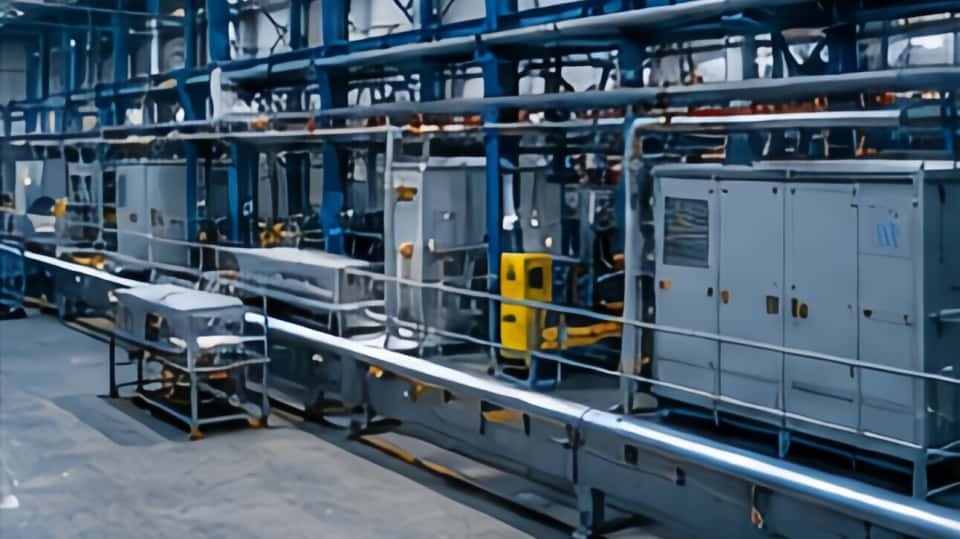
Industrial Plant Cable-Tray Power Distribution
Main distribution board to motor control centres, MCC to individual motor feeders, sub-distribution to process equipment, switchroom internal cabling. Typically copper YJV 4-core 10-240 mm² on perforated steel cable trays — the dominant installation method for industrial plant power. The XLPE ampacity advantage is most valuable here because MCC and process equipment often operate at or near rated capacity for long periods, making the thermal headroom genuinely useful rather than theoretical.

Commercial Building Risers & Feeders
High-rise building main supply from basement substation to floor distribution boards, riser cables through building cable shafts, feeder cables to tenant electrical panels, data-centre main power distribution feeders, hospital primary feeders in cable trays in plant rooms. N2XH LSZH variant is the correct specification for hospital and public-access building routes under modern fire codes. The compact XLPE cross-section reduces cable shaft fill and leaves room for future capacity expansion.
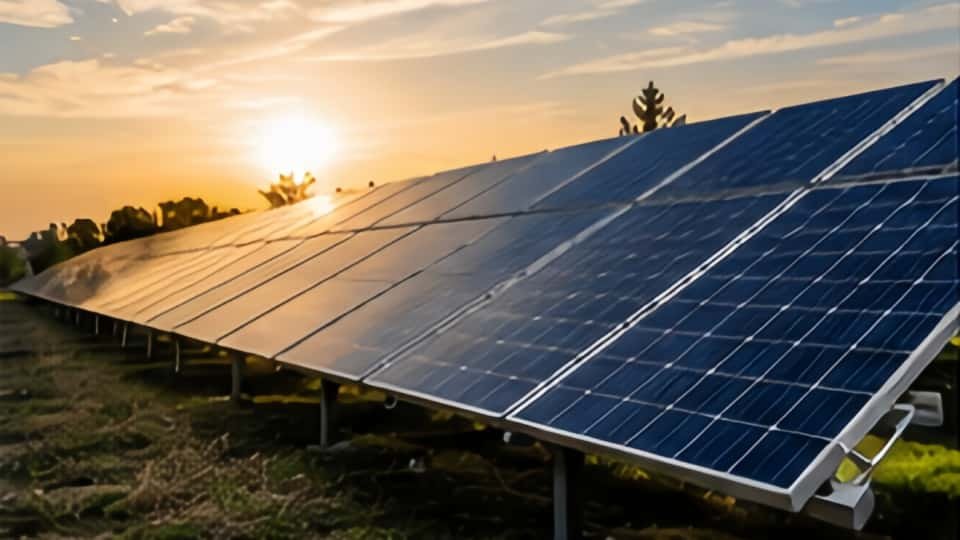
Renewable Energy & Infrastructure Substations
Solar farm and wind farm substation internal cabling (LV distribution from auxiliary transformer to station service loads), outdoor switchyard LV cables in concrete-encased duct, airport and transit terminal power distribution within cable trays in secure plant rooms, water treatment plant MCC cabling. Typically YJLV aluminium for long feeder runs, copper YJV for critical plant room circuits. The 90°C rating provides tolerance for the warm outdoor substation environments common in solar farm and industrial applications.
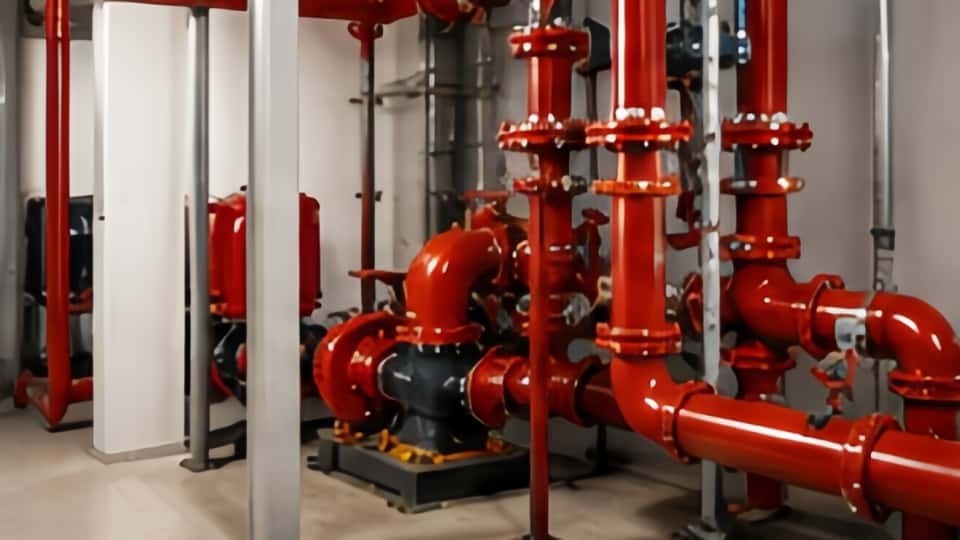
Conduit & Duct Installations
Cable in PVC or steel conduit for building branch circuits, cable in concrete-encased duct for site distribution between buildings (where conduit provides mechanical protection making armour unnecessary), cable in underground cable ducts for car park and campus lighting circuits. For conduit installation, XLPE cable has a thinner insulation wall than PVC at the same voltage rating, making more conductors fit per conduit — a real advantage when retrofitting additional circuits through existing conduit runs.
Not appropriate for: Direct burial in soil without armour or conduit (use armoured YJV22 or YJV32 instead). Mobile or flexing applications (use rubber-insulated YCW / YC). Mineral-insulated cable applications where fire resistance above 90°C conductor temperature is required (use BBTRZ / BTTVZ / YTTW). Medium-voltage distribution above 1 kV (use YJLV / YJV22 / YJV32 per IEC 60502-2 with triple-extruded insulation and copper screen). Mining underground (use MYJV family). Public-space installations in most jurisdictions now require LSZH sheath: specify N2XH / WDZ-YJV rather than standard YJV. Any installation where the project specification calls for NYY — evaluate whether the XLPE cross-section step-down makes YJV more cost-effective before ordering NYY.
Technical Data
YJV 4-Core 0.6/1 kV Standard Sizes vs Equivalent NYY
Reference values for 4-core YJV (Cu/XLPE/PVC, 0.6/1 kV) per IEC 60502-1. Ampacity per IEC 60364-5-52 installation method E (in free air on cable tray, 30°C ambient, 90°C conductor temperature). For direct comparison, the equivalent NYY ampacity (70°C conductor) is shown alongside — the XLPE advantage is consistent across all cross-sections. For conduit installation, apply grouping and conduit derating factors per IEC 60364-5-52. For underground installation in duct, ampacity is approximately 10-15 percent higher than free-air. Aluminium YJLV carries approximately 79 percent of copper YJV ampacity at the same cross-section.
| Cores & Size | Conductor Construction | Approx. Cable OD | DC Resistance (per core) | YJV Ampacity (90°C) | NYY Ampacity (70°C) |
|---|---|---|---|---|---|
| 4×1.5 mm² | Solid (RE) | ~ 11.0 mm | 12.1 Ω/km | 24 A | 20 A |
| 4×2.5 mm² | Solid (RE) | ~ 12.0 mm | 7.41 Ω/km | 33 A | 27 A |
| 4×4 mm² | Solid (RE) | ~ 13.2 mm | 4.61 Ω/km | 45 A | 36 A |
| 4×6 mm² | Solid (RE) | ~ 14.5 mm | 3.08 Ω/km | 57 A | 46 A |
| 4×10 mm² | Stranded (RM) | ~ 16.5 mm | 1.83 Ω/km | 75 A | 63 A |
| 4×16 mm² | Compacted (CM) | ~ 19.0 mm | 1.15 Ω/km | 100 A | 80 A |
| 4×25 mm² | Compacted (CM) | ~ 22.5 mm | 0.727 Ω/km | 127 A | 106 A |
| 4×35 mm² | Compacted (CM) | ~ 25.0 mm | 0.524 Ω/km | 158 A | 131 A |
| 4×50 mm² | Sector compacted (SM) | ~ 27.0 mm | 0.387 Ω/km | 192 A | 160 A |
| 4×70 mm² | Sector compacted (SM) | ~ 31.0 mm | 0.268 Ω/km | 242 A | 202 A |
| 4×95 mm² | Sector compacted (SM) | ~ 35.0 mm | 0.193 Ω/km | 293 A | 245 A |
| 4×120 mm² | Sector compacted (SM) | ~ 38.5 mm | 0.153 Ω/km | 340 A | 284 A |
| 4×150 mm² | Sector compacted (SM) | ~ 41.5 mm | 0.124 Ω/km | 390 A | 327 A |
| 4×185 mm² | Sector compacted (SM) | ~ 46.0 mm | 0.0991 Ω/km | 447 A | 374 A |
| 4×240 mm² | Sector compacted (SM) | ~ 51.0 mm | 0.0754 Ω/km | 527 A | 441 A |
| 4×300 mm² | Sector compacted (SM) | ~ 56.5 mm | 0.0601 Ω/km | 610 A | 510 A |
DC resistance per IEC 60228 plain annealed copper, 20°C. YJV ampacity per IEC 60364-5-52 installation method E (single 4-core cable in free air on cable tray, 30°C ambient, 90°C conductor). NYY reference ampacity at 70°C conductor, same installation method, for comparison. Apply grouping derating factors per IEC 60364-5-52 Table B.52.20 for multiple cables on the same tray or in the same conduit. For installation in conduit, apply derating factor 0.85 on top of the free-air value. The XLPE ampacity advantage is maintained proportionally across all cross-sections and installation methods.
Insulation voltage: 0.6/1 kV per IEC 60502-1. XLPE insulation wall: 0.7 mm (1.5-4 mm²) to 2.8 mm (630 mm² and above). Operating temperature: 90°C continuous / 130°C emergency (max 100 h/year) / 250°C short-circuit (5s). Minimum bending radius: 15× OD during installation / 8× OD fixed. Outer sheath black PVC standard; LSZH N2XH variant for fire-safety installations. Flame test: IEC 60332-1-2 standard PVC sheath; IEC 60332-3-22 Cat. A + IEC 60754 + IEC 61034 for LSZH N2XH variant. CPR classification: Eca (PVC sheath) / Dca or higher (LSZH sheath).
Comparison
YJV vs Its Closest Alternatives: The Complete LV Power Cable Decision Matrix
Four unarmoured and one armoured cable cover the overwhelming majority of LV power distribution decisions. The key variables are insulation material (PVC vs XLPE), sheath material (PVC vs LSZH), conductor material (copper vs aluminium), and armour (none vs STA). The table below provides the complete head-to-head comparison so the correct cable for any project condition can be read off directly.
| Attribute | YJV (this product) | NYY (PVC insulated) | N2XH (XLPE + LSZH) | YJV22 (XLPE + STA) |
|---|---|---|---|---|
| Standard | IEC 60502-1 / N2XY | IEC 60502-1 / NYY | HD 603 S1 / IEC 60502-1 | IEC 60502-1 / BS 5467 |
| Conductor temp (continuous) | 90°C | 70°C | 90°C | 90°C |
| Insulation material | XLPE (cross-linked) | PVC (thermoplastic) | XLPE (cross-linked) | XLPE (cross-linked) |
| Sheath material | PVC Type ST2 | PVC Type ST2 | LSZH (halogen-free) | PVC Type ST2 + STA |
| Armour | None | None | None | Double steel tape |
| Ampacity 4×25 mm² | ~ 127 A (air) | ~ 106 A (air) | ~ 127 A (air) | ~ 118 A (air) |
| Short-circuit temp (5s) | 250°C | 160°C | 250°C | 250°C |
| Service life | 40-50 years | 25-35 years | 40-50 years | 40-50 years |
| Direct burial without conduit | Not recommended | Not recommended | Not recommended | Yes (STA protection) |
| Fire smoke / toxic gas | PVC smoke on burning | PVC smoke on burning | Minimal smoke, no HCl | PVC smoke on burning |
| CPR classification | Eca (standard) | Eca (standard) | Dca / Cca (LSZH) | Eca (standard) |
| Cost (relative to YJV) | 1.00 (baseline) | 0.90 to 0.95 (lower ins.) | 1.10 to 1.20 (LSZH prem.) | 1.15 to 1.30 (armour) |
When to choose YJV / N2XY (this product)
Cable-tray, conduit, and duct installations in industrial plants, commercial buildings, data centres, infrastructure substations, and any protected-installation context where the XLPE ampacity advantage (30-40 percent over PVC) allows cross-section optimisation. The standard XLPE choice for any new installation where NYY has historically been specified — evaluate the cross-section step-down economics for any run above 10 metres before defaulting to the PVC alternative.
When to choose an alternative
For fire-sensitive public buildings, hospitals, metro stations, and data centres where smoke and halogen-free performance is required, upgrade to N2XH / WDZ-YJV LSZH. For direct-burial installations, specify armoured YJV22 (STA, stable soil) or YJV32 (SWA, rocky soil or vertical). For utility distribution where conductor cost dominates, use aluminium YJLV / NA2XY. For the lowest-cost basic installation where 40-year service life and 90°C ampacity aren’t needed, NYY is a rational choice for very short, low-current branch circuits where the cross-section is already at the minimum code size.
Frequently Asked Questions
Common Questions From Electrical Engineers, M&E Contractors, and Project Buyers
Is YJV the same as N2XY?
Functionally equivalent in construction, with the same copper conductor + XLPE insulation + PVC sheath configuration at 0.6/1 kV — but built and tested against different national implementations of IEC 60502-1. YJV follows the Chinese and Asian-market conventions for dimensional tolerances, test protocols, and quality control. N2XY follows DIN VDE 0276-603 and HD 603 S1 (CENELEC harmonised European standard). A European project inspector will not accept a cable marked only “YJV” as compliant with DIN VDE or BS 5467 without additional certification documentation. Specify dual marking — both YJV (or IEC 60502-1) and N2XY (or DIN VDE 0276-603) — at order for projects requiring acceptance under both regimes. Most production runs satisfy both simultaneously with minor documentation overhead.
Can I substitute YJV for NYY on the same project?
Yes — in the vast majority of cases, YJV at the same cross-section is a straightforward upgrade from NYY. The physical dimensions are almost identical at small cross-sections (up to 25 mm²); at larger cross-sections, YJV may be slightly smaller OD than the equivalent NYY because the XLPE insulation wall is thinner at the same voltage rating. Both terminate with the same lugs and connector types. The two cables can coexist on the same cable tray without any special precaution. The only project-specific check required is that the YJV cross-section is adequate for the load — if the NYY cross-section was already optimised for the 70°C rating, the same cross-section in YJV at 90°C will be more than adequate. If the NYY was oversized for other reasons, consider taking the cross-section step-down with YJV.
When is the LSZH variant N2XH / WDZ-YJV required?
LSZH (low-smoke halogen-free) sheath is increasingly mandatory under modern building regulations for cable routes in fire-escape routes, occupied spaces, and evacuation paths. The specific requirement varies by jurisdiction: in the UK, IET Guidance Note 4 recommends LSZH wherever PVC smoke would affect evacuation or firefighting; many EU member states mandate LSZH for CPR Dca or higher in specified building classes. Practically: specify N2XH / WDZ-YJV for hospital main distribution cables, data-centre power feeds, metro and railway terminal cabling, hotel power risers, shopping centre distribution, any cable route in a fire-escape corridor, and any project where the specification document explicitly calls for “halogen-free” or “LSZH”. For outdoor industrial plants and external infrastructure, standard PVC-sheathed YJV is typically acceptable.
Does the XLPE insulation actually allow one cross-section smaller than NYY?
Yes, in most practical cases. The XLPE ampacity advantage vs PVC at the same cross-section is approximately 20-25 percent higher, which means the next smaller standard cross-section in XLPE often exceeds the load that a given size in PVC was specified for. Example: a 100 A load in cable tray at 30°C requires 4-core 25 mm² NYY (106 A). The same load is carried by 4-core 16 mm² YJV (100 A) — one standard cross-section step smaller, with a conductor cost saving of approximately 35 percent. For a 200-metre run, this saving typically exceeds the total insulation premium cost for the entire XLPE cable. The cross-section step-down doesn’t always apply — if voltage drop rather than thermal capacity is the binding constraint, or if the cross-section is already at minimum code size, the step-down doesn’t work. But when it does apply, it’s the primary economic argument for XLPE over PVC.
Can YJV be used for direct burial?
Some national codes permit unarmoured cable for direct burial with appropriate depth, sand bedding, and warning tape — but this is not standard practice and not recommended as a first choice. The risk of accidental excavation damage to unarmoured buried cable is real; YJV without armour has no mechanical resistance to a spade or mechanical digger. For direct burial in soft, stable soil, specify the armoured YJV22 (STA) variant instead — the armour cost adds 15-30 percent but eliminates the damage risk and conduit requirement. For rocky or difficult soil, specify YJV32 (SWA). For underground cable in concrete-encased duct, unarmoured YJV is appropriate because the concrete duct provides the mechanical protection that armour would otherwise supply.
What is the typical lead time and MOQ?
Standard YJV configurations in common cross-sections (4-core 4 to 240 mm²) typically ship in 12–20 days from order — XLPE extrusion lines run continuously for these standard sizes. Larger cross-sections (300-1000 mm²) take 18-28 days. N2XH LSZH variant adds 5-7 days for compound preparation. Multi-market certification (IEC + VDE + BS) adds 3-5 days for documentation processing. MOQ is normally 1,000 m per cross-section + core-count combination for standard sizes; smaller trial orders (down to 500 m) accepted with a setup fee. For large infrastructure and building-services projects ordering 20 km+ across multiple cross-sections, container-load shipment delivers 10-15 percent unit price reduction vs LCL. Annual blanket purchase orders are welcome for M&E contractors and wholesalers with stable monthly consumption.
Installation & Handling Tips
Six Practices to Get 40-50 Years From Your XLPE Power Cable
XLPE cable is more tolerant of installation errors than PVC cable because its superior insulation chemistry and higher thermal rating provide more safety margin. But the long service life that justifies the XLPE choice requires correct installation from day one. These six practices cover the specific differences from NYY installation that matter for XLPE, drawn from manufacturer field experience and IEC 60364 installation guidance.
Pre-heat the cable if ambient is below 0°C
XLPE insulation becomes less flexible below 0°C than PVC — the minimum installation temperature for YJV is 0°C compared to −15°C for NYY. In cold climates, store cable drums in a heated space for at least 24 hours before installation in sub-zero ambient temperatures, and install the cable immediately after moving the drum outside. Once the cable is energised and conductor heating begins, the 0°C limit no longer applies to the installed cable — only to the active installation process.
Verify ampacity sizing uses 90°C tables, not 70°C
The single most common error when transitioning a project from NYY to YJV is carrying over the 70°C ampacity values that were used for NYY sizing. IEC 60364-5-52 provides separate ampacity tables for 70°C PVC and 90°C XLPE cables — always use the 90°C XLPE tables for YJV sizing. Using the 70°C tables for XLPE cable results in unnecessarily over-sized cross-sections that eliminate the cross-section step-down saving that was the original justification for specifying XLPE. The 90°C tables typically allow one standard cross-section step smaller than the 70°C equivalent.
Maintain minimum bending radius
YJV minimum bending radius is 15× OD during installation (active pulling) and 8× OD for final fixed installation — the same as NYY. Tighter bends permanently damage the XLPE insulation at the bend point; XLPE is somewhat less pliable than PVC at installation temperatures, making over-bending more likely when rushing the cable into tight spaces. Use proper cable rollers at corners during pulling, not manual force. For conduit installations, ensure the conduit bend radius is at least 15× the cable OD before pulling — conduit manufacturers specify minimum bend radii for the conduit itself, which must accommodate the cable’s minimum bending requirement.
Apply grouping derating rigorously on cable trays
The thermal benefits of XLPE are only realised when the cable can shed heat to its surroundings. On heavily-loaded cable trays with multiple circuits side-by-side, the mutual heating from adjacent cables reduces the effective ampacity significantly — IEC 60364-5-52 Table B.52.20 specifies derating factors: 0.87 for 2 cables, 0.79 for 3, 0.72 for 4, and 0.64 for 6 cables touching on a tray. XLPE cable on an over-loaded tray suffers the same over-temperature problem as PVC; the 20°C thermal advantage is absorbed by poor grouping practice. Leave space between cables wherever possible, or use ladder tray (better ventilation) rather than perforated tray when groups are dense.
Seal cable ends immediately after cutting
XLPE is more permeable to water vapour than PVC — moisture can slowly diffuse into cut cable ends if they are left unsealed. Apply heat-shrink end caps or self-amalgamating tape to cable ends immediately after cutting, before moving the cable to the installation site. For cables stored outdoors between delivery and installation, maintain the factory end caps. For cables pulled into conduit or cable duct before final termination, seal the exposed end. While XLPE has better long-term moisture resistance than PVC under normal in-service conditions, cut-end moisture ingress during construction creates a different problem — elevated insulation resistance readings at final testing that clear slowly as the cable dries out in service.
Megger test before energising
Insulation resistance test (megger at 1 kV DC) between every conductor and earth, and between adjacent conductors, before energising. Expected reading for new YJV is > 1000 MΩ per km; XLPE insulation has higher baseline insulation resistance than PVC, so readings well above 1000 MΩ are typical for new cable. Readings below 100 MΩ indicate installation damage, water ingress, or termination faults. Document the test results in the project handover — they become the baseline for future maintenance comparisons. Repeat megger testing after the first year of service for critical circuits to confirm the baseline remains stable as the cable settles into its installed position.
Safety note: YJV / N2XY power cable installation must comply with the applicable national wiring code (IEC 60364 internationally, BS 7671 in the UK, AS/NZS 3000 in Australia/NZ, NFPA 70 in the US). The 0.6/1 kV cable insulation rating is lethal at any unprotected conductor exposure; never energise cable with visible insulation damage or incomplete terminations. Always apply earth-fault protection (RCD/GFCI) at the supply end per the relevant wiring code. For projects in fire-regulated buildings (hospitals, schools, public buildings, high-rise residential), verify the local code requirements for LSZH / CPR classification before ordering — standard PVC-sheathed YJV may not satisfy the fire-safety specifications for those installation locations; specify N2XH or WDZ-YJV instead.
Manufacturing Capability
Why Source From Jinda Cable
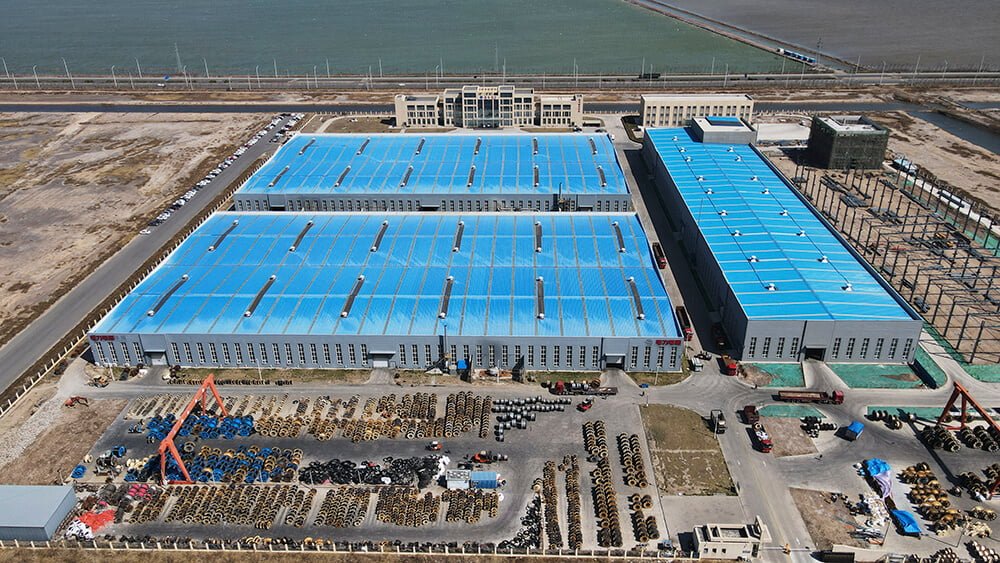
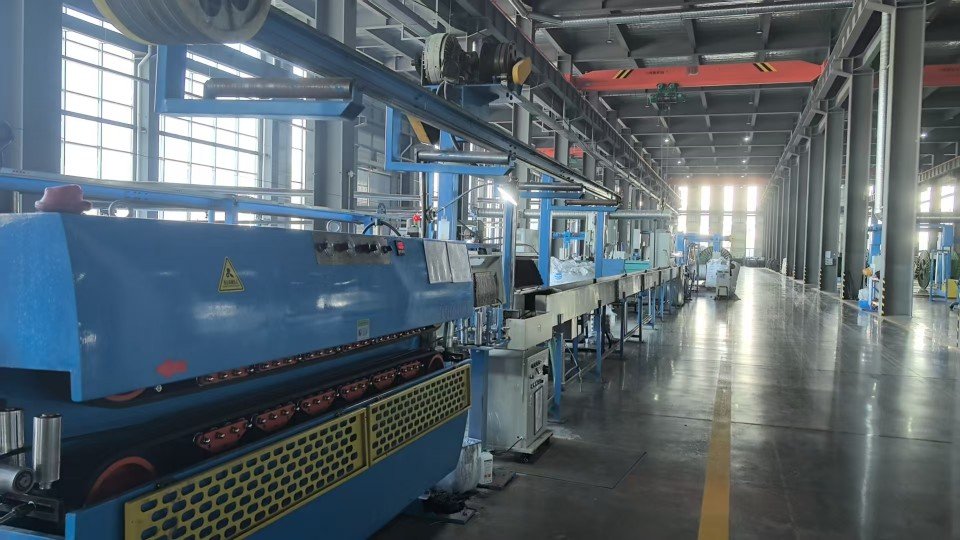
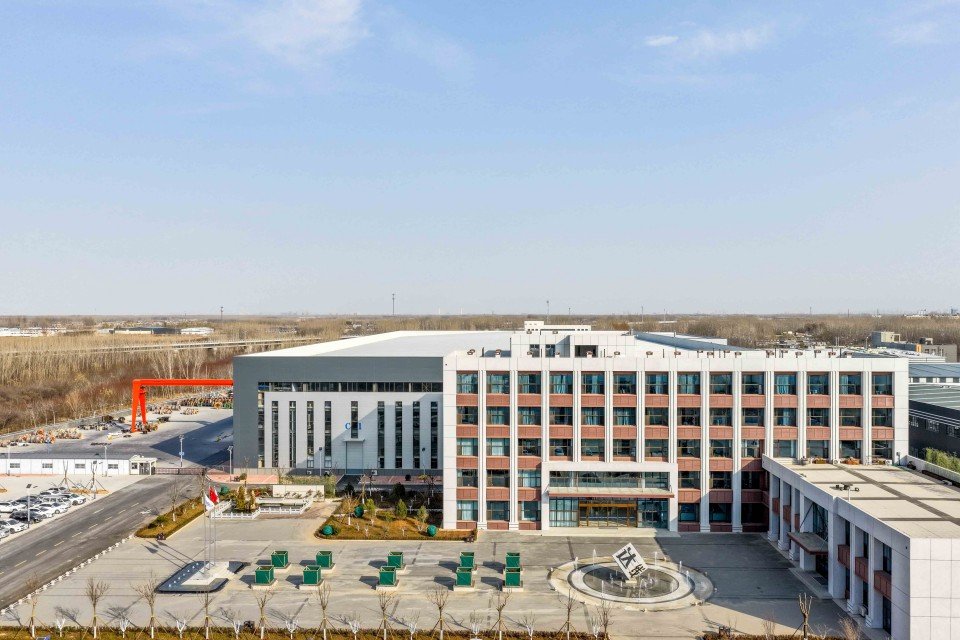
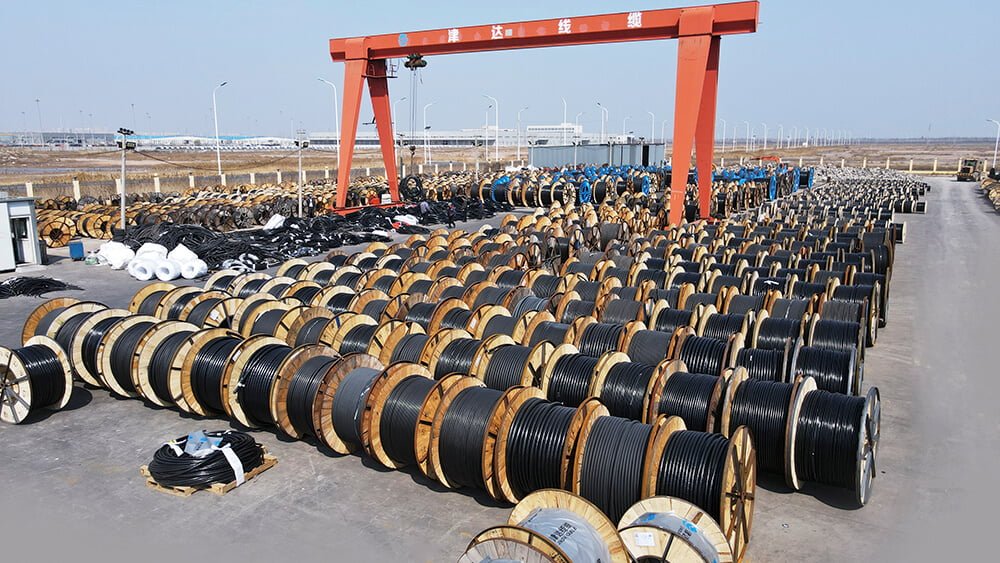
Behind every drum we ship sits a 38-year track record, five production bases under one MES system, and a documentation discipline that gets cables through customs without delays.
-
Every cable tested twice before shipping
Since 1987, our two-stage QC has been refined to a science: routine test on the production line, then full electrical and mechanical re-test before packing. Across 50+ export markets, our return rate stays under 0.3%.
-
Five production bases, 470,000 m², synced via MES
Tianjin, Liaoning, Heilongjiang, Shandong, and Xian — each base runs under one unified MES system. Same recipe, same protocols, same traceability, regardless of which plant ships your order.
-
3,000+ SKUs, custom configurations welcome
Standard sizes ship from inventory. Special voltage grades, color-coding, drum lengths, or armor configurations are routine — submit your spec and our team will quote the lead time honestly.
-
Trusted by EPC contractors in 50+ countries
We supply utilities, mining operators, port authorities, and large industrial OEMs across Europe, the Americas, Southeast Asia, the Middle East, and Africa.
-
Full paperwork shipped with every order
Every shipment includes factory test report, certificate of origin (COO), packing list, and bill of lading (B/L). Customer-nominated witness testing can be arranged before shipment.
Our Track Record
98.7%
On-time shipment rate (last 24 months)
< 0.3%
Return rate across export markets
25 days
Typical sea freight Tianjin → Rotterdam
100%
Shipments with routine test report attached
Logistics & Delivery
Packaging, Shipping & Documentation
What we handle on our side from production floor to the port of loading. Product-specific installation guidance is supplied with the datasheet that accompanies each order.
Packaging
- Wooden or steel drums per IEC 62004
- Coil packaging available for small cross-sections
- Standard drum lengths plus custom lengths on request
- Each drum labeled with type, voltage, cross-section, length, batch
- Waterproof wrapping for export shipments
- Cable ends sealed against moisture ingress
- Private-label / OEM packaging available under NDA
Shipping
- FCL / LCL sea freight, air freight on request
- Trade terms: EXW, FOB, CFR, CIF, DDP
- Ports of loading: Tianjin / Qingdao / Shanghai
- Typical sea freight to Rotterdam: 25 days
- Lead time confirmed at order acknowledgement
- Container loading photos sent before sailing
Documentation
- Factory routine test report (per applicable standard)
- Commercial invoice and packing list
- Certificate of origin (CO) — China Council, FORM A, FORM E available
- Bill of lading (B/L) — original or telex release
- Third-party inspection by SGS / BV / TÜV on request
- Customer-nominated witness testing arranged before shipment
Get in Touch
Request a Quote for
XLPE Insulated Power Cable
What You'll Receive
- Technical quotation with itemized FOB / CIF pricing
- Sample factory test report from a previous shipment
- Realistic lead time including raw-material procurement
- Direct contact with the assigned sales engineer


Email
info@jindacablegroup.comResponse Time
Within 1 business day
Related Products