What Are the 6 Types of Wire? A Practical Guide for Electricians and Homeowners
Wire is one of those products where a single mistake at the supply counter can cost a weekend, a permit, or a wall. Distilling the field into six core categories gives you a map that covers most residential and light commercial situations. The six types below are the ones a working electrician reaches for again and again, and they are the ones a homeowner is most likely to recognize on a hardware store shelf.
1. THHN/THWN Building Wire
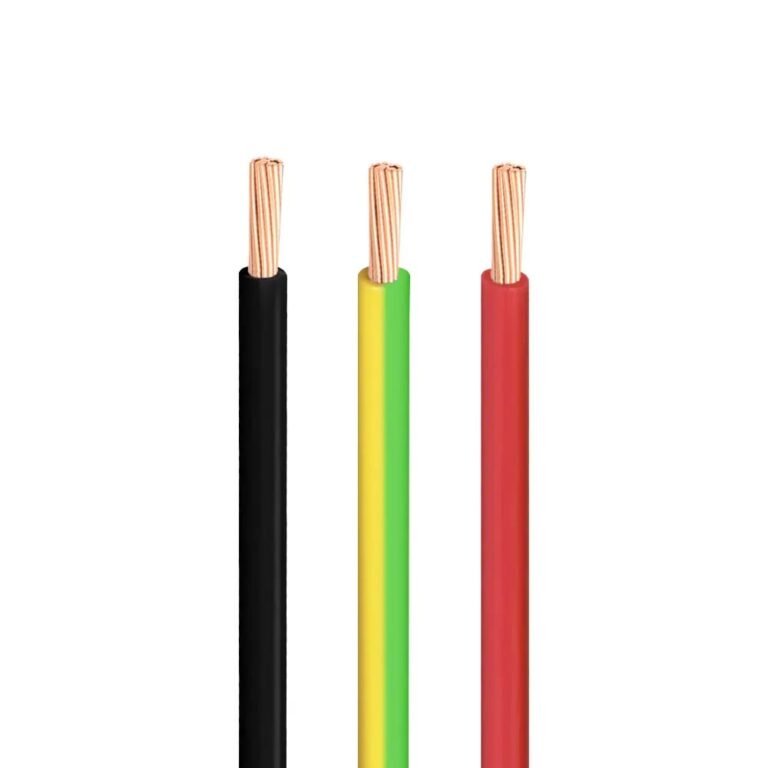
THHN, and its moisture-rated cousin THWN, is the most widely pulled single conductor in North American buildings. The letters describe the insulation: Thermoplastic High Heat-resistant Nylon-coated. The nylon outer layer lets the wire slide through conduit without binding, and the PVC insulation underneath handles up to 90 degrees Celsius in dry locations or 75 degrees in wet ones for the THWN variant.
You use THHN/THWN when you are pulling individual conductors through metal or plastic conduit, EMT, or flexible raceways. It is sold in spools and pulled in whatever combination the circuit needs: a hot, a neutral, and a ground for a typical branch circuit, or several hots for a three-phase feeder. Sizes from 14 AWG up to 750 kcmil are standard.
2. NM-B Nonmetallic Sheathed Cable (Romex)
NM-B, almost universally known by the Southwire trade name Romex, is the flat plastic-jacketed cable you see threaded through stud bays in any modern wood-frame house. Inside the jacket are two or three insulated conductors plus a bare copper ground. The name describes the construction: Nonmetallic sheathing, B-grade thermoplastic insulation, rated for 90 degrees Celsius dry.
NM-B is intended for indoor dry locations only. It is not legal in conduit (in most jurisdictions, though local codes vary), not legal in wet locations, and not legal exposed to sunlight. Within those limits it is fast to install, easy to staple, and inexpensive. The colored outer jacket tells you the size at a glance: white for 14 AWG, yellow for 12 AWG, orange for 10 AWG, black for 8 AWG and 6 AWG, and grey for many specialty variants.
3. UF-B Underground Feeder Cable
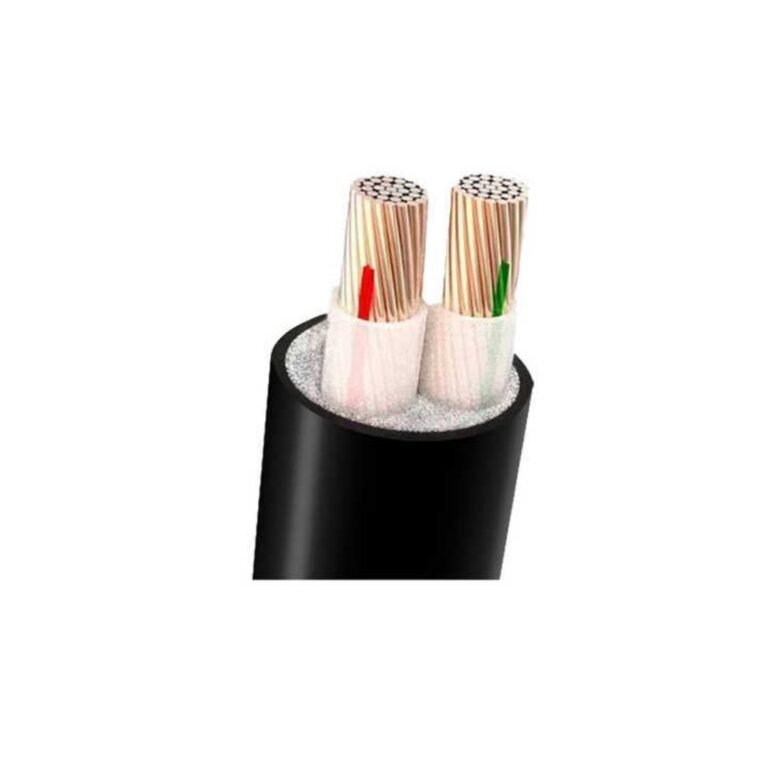
UF-B looks superficially like NM-B but the conductors are embedded in a solid plastic block rather than loose inside a jacket. That solid encapsulation lets UF survive direct burial without conduit. You will see it running from a house to a detached garage, a yard light, a well pump, or a garden outlet.
UF can also be used indoors in damp or wet locations where NM-B is not allowed. Its jacket resists sunlight better than NM-B’s, though it should still be protected from UV with conduit where it emerges above ground. The trade-off for that ruggedness is stiffness; UF is harder to strip and harder to bend than NM-B, and it costs more per foot.
4. Low-Voltage Wire
This category covers the wires that run doorbells, thermostats, landscape lighting, security sensors, garage door openers, and a long list of small loads at 50 volts or less. Common variants include solid 18 AWG to 22 AWG bell wire, two- and four-conductor thermostat cable, and direct-burial landscape lighting cable in the 12 AWG to 16 AWG range.
Low-voltage cable is not held to the same insulation standards as line-voltage wire because the shock hazard is minimal. It is also exempt from many conduit and box-fill rules, which is why technicians can run it freely along baseboards or staple it to joists. The catch is that low-voltage circuits often suffer from voltage drop over long runs, so larger conductors matter more than the small loads might suggest.
5. Single-Strand (Solid) Wire
Solid wire is exactly what it sounds like: one continuous metal strand under the insulation. It dominates inside walls and inside electrical boxes because it sits cleanly under screw terminals and holds its shape when you bend it into a J-hook around a binding post. Most NM-B cables in 14 and 12 AWG sizes are solid. THHN at 10 AWG and smaller is also commonly solid.
The strength of solid wire is the stiffness; the weakness is the same. Repeated flexing work-hardens the metal until it cracks. That is why you never see solid wire in extension cords, appliance leads, or robotic cable trays.
6. Stranded Wire
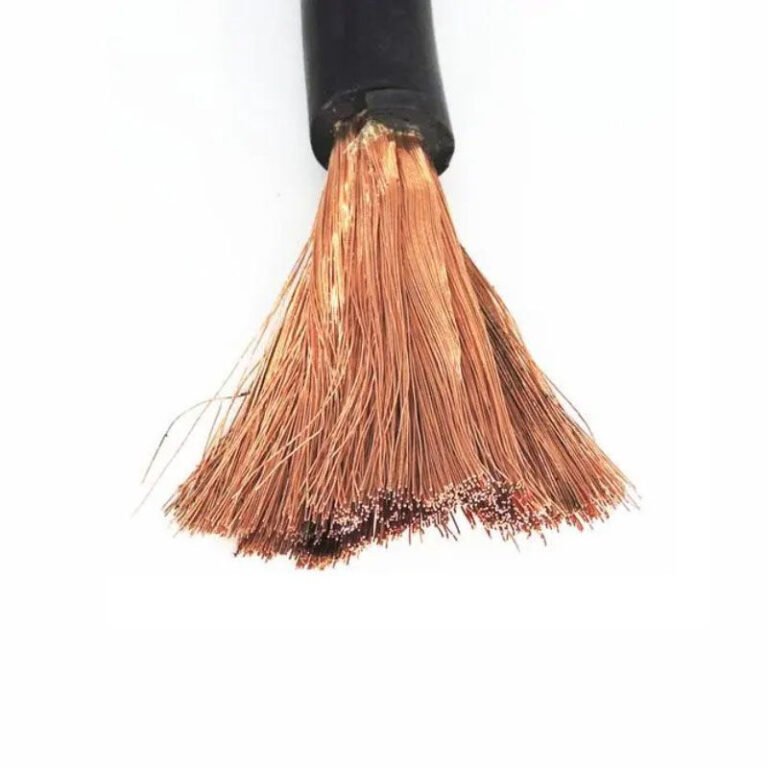
Stranded wire takes the same total cross-section and breaks it into many fine filaments twisted together. The result is a conductor that bends easily, tolerates vibration, and dissipates heat slightly better at the surface. Stranded conductors fill extension cords, welding leads, automotive harnesses, speaker wires, and any THHN larger than about 8 AWG, where solid wire would simply be too stiff to pull.
When terminating stranded wire under a screw, you need either a ferrule, a fork or ring terminal, or a connector specifically rated for stranded conductors. Twisting bare strands and shoving them under a screw is a common shortcut that fails over time as the strands spread and loosen.
Choosing Among the Six
The decision tree is shorter than it looks. If the wire is going through conduit, you want THHN or THWN. If it is going through a stud bay in a dry house, you want NM-B. If it is going underground or in a wet location without conduit, you want UF-B. If it is carrying signal or low-voltage power, you want a low-voltage cable matched to the device. And whether you choose solid or stranded depends on whether the wire will stay still or move.
Six categories will not cover every job, but they cover the ones you are most likely to encounter. Mastering them gives you a working vocabulary for almost any project that involves running power or signal through a building.