Is a Wire or Cable Romex? Demystifying America’s Most Common Building Wiring
Walk into any North American hardware store, ask for “wire” for a new circuit, and you will almost certainly leave with a coil of Romex. The product itself is a cable, even though almost everyone, including many electricians, calls it wire. The confusion is forgivable. The brand name is so dominant that it has slid into generic usage in the same way that Kleenex covers all facial tissues and Band-Aid covers all adhesive bandages. The truth is more interesting and worth knowing.
Romex Is a Brand, NM-B Is the Product
Romex is a registered trademark owned by Southwire, the Georgia-based manufacturer that has produced it since acquiring the line from General Cable in 2001. The original name comes from the Rome Wire Company of Rome, New York, which began making this style of cable in 1922 as a substitute for the knob-and-tube wiring that dominated American homes at the time. The cable was so successful that the name became shorthand for the entire category.
The generic technical designation for what most people call Romex is NM-B, short for Nonmetallic-sheathed cable, B-grade insulation. The B refers to the temperature rating of the insulation: 90 degrees Celsius dry. Other manufacturers produce equivalent NM-B cable under their own brand names, and on a job site any of them can be used interchangeably. The cable specification is what matters; the brand on the spool does not change the electrical or code requirements.
Why Romex Is a Cable, Not a Wire
Strip the outer jacket off a piece of NM-B and you will find three or four individual conductors inside. A “14/2 with ground” Romex contains two insulated 14 AWG copper conductors (typically one black for hot and one white for neutral) plus one bare copper grounding wire. A “12/3 with ground” Romex contains three insulated 12 AWG conductors (black hot, red hot, white neutral) plus the bare ground.
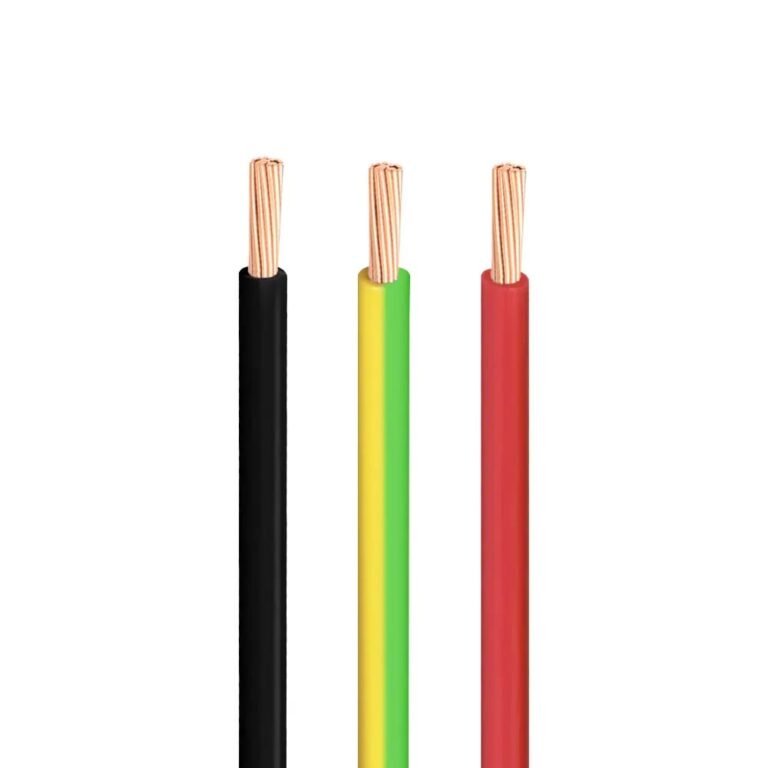
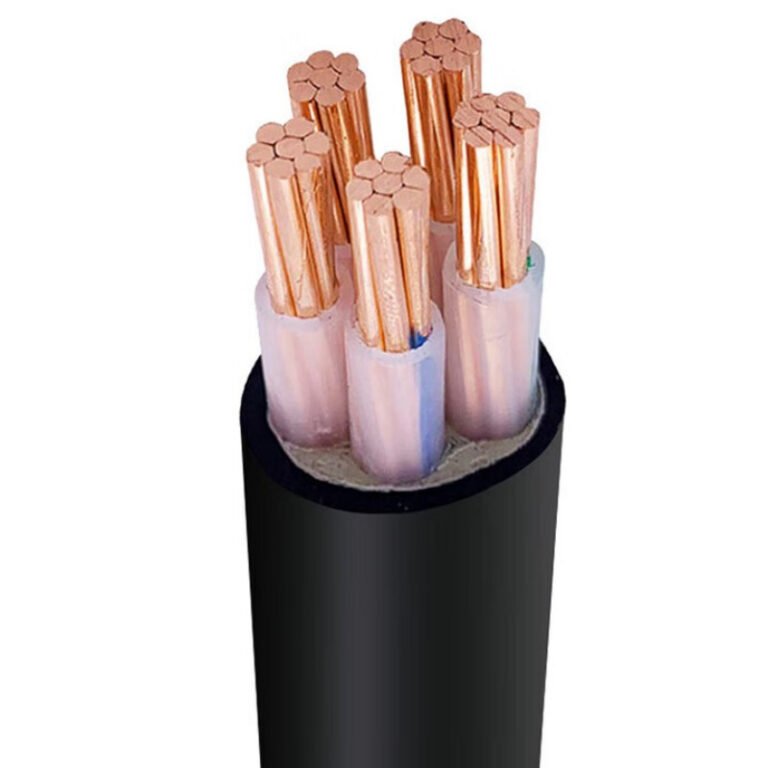
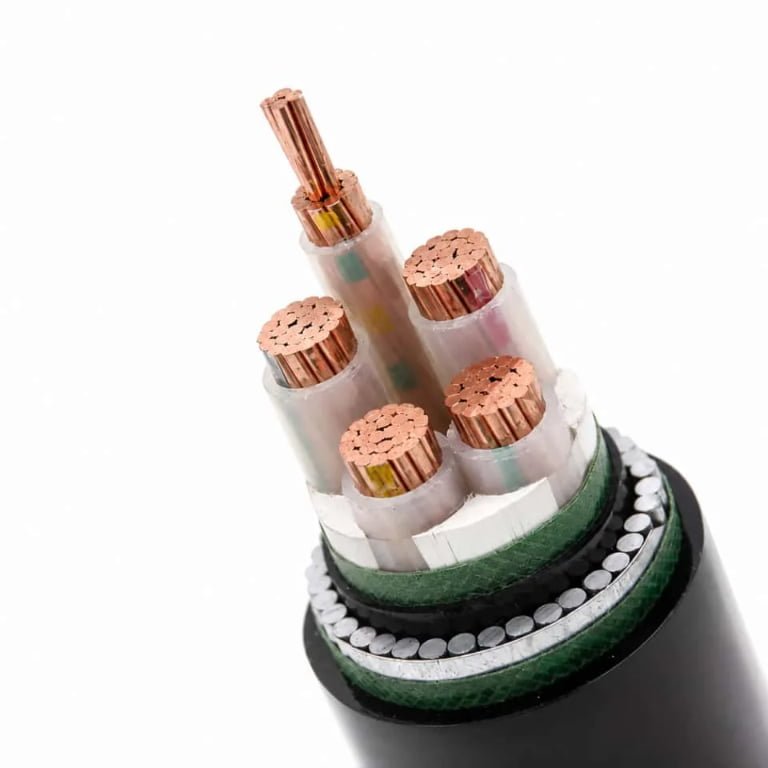
That bundle of multiple conductors inside a single jacket is exactly what defines a cable in the electrical industry. A wire, by contrast, is a single conductor. When you call Romex a wire, you are technically describing only one of the strands inside. The whole assembly is a cable, and the National Electrical Code treats it as such, with its own dedicated installation rules under Article 334.
What Romex Is Designed For
NM-B is designed for permanent installation in interior dry locations of residential and small commercial buildings. The flat oval cross-section makes it easy to staple to a stud, fish through joist bays, and pull through holes drilled in framing. The plastic jacket is rugged enough to handle the typical hazards of construction (drywall screws, framing nails, foot traffic during a remodel) but is not designed for the more severe conditions found outdoors, in conduit, or in wet locations.
The color coding of the jacket tells you the conductor size at a glance. White jacket means 14 AWG, rated for 15-amp circuits. Yellow means 12 AWG, rated for 20-amp circuits. Orange means 10 AWG, rated for 30-amp circuits. Black means 8 AWG and 6 AWG for higher-amperage feeders. Grey means specialty variants like UF-B for underground use. This color system was introduced in the early 2000s and applies to NM-B made by all manufacturers, not just Southwire.
Where Romex Is Not Allowed
The “indoor dry residential” boundary matters. NM-B is not permitted in any location that the NEC considers wet or damp. It is not allowed exposed to sunlight, including outdoor walls. It is not allowed in commercial buildings taller than three stories in most jurisdictions, and many local codes restrict it further in any commercial application. It is not allowed inside conduit (with some exceptions for short transitions), which surprises people who try to add a layer of “extra protection” by sleeving Romex in EMT.
For locations where NM-B is forbidden, you switch to a related cable type. UF-B for underground or wet locations. AC or MC armored cable for commercial work. Individual THHN conductors pulled through conduit for any flexible or future-proofed installation. Each of these is a different product with its own code rules, even though all of them contain copper conductors and insulation.
Reading the Print Legend
A typical Romex jacket reads something like: “12/2 WITH GROUND, TYPE NM-B, 600V, (UL) E12345, MADE IN USA, ROMEX BRAND SIMpull.” That single line tells you everything you need to know. The 12/2 with ground means two 12 AWG insulated conductors plus a bare 12 AWG ground. The NM-B confirms the cable type and indoor dry rating. The 600V is the maximum circuit voltage rating, which gives plenty of headroom over the 120 to 240 volts used in residential circuits. The UL listing means an independent testing lab has verified the cable meets safety standards. The SIMpull notation is a specific Romex feature that uses a slick jacket coating to reduce pulling friction.
If the cable in your hand does not say “NM-B” somewhere on the jacket, it is not Romex (or its equivalent). It might be a related product like UF-B, AC, or MC, each with different installation rules.
The Practical Answer
Romex is a cable, not a wire. It is the most common brand name for NM-B nonmetallic sheathed cable, which contains multiple individual conductors inside a single plastic jacket. The word “cable” applies because of that multi-conductor construction; the word “wire” technically applies only to the individual conductors inside. In casual conversation, no one will correct you for using either word. In technical writing, in code references, and in conversations with inspectors or supply houses, calling it cable is correct.