What Is a Cable Wire Used For? Every Major Application in One Place
A cable wire is one of those products you stop noticing precisely because it is everywhere. The cables in your walls, behind your TV, under your floors, inside your appliances, and stretched between utility poles on your street collectively make modern life work. Listing every application would fill a textbook. But the major categories fit comfortably into one tour, and seeing them laid out together is a useful exercise. It changes the way you look at the built environment.
Delivering Electrical Power
The most familiar use of cable wire is moving electricity from where it is generated to where it is used. This chain has several links, each using different cables for different reasons.
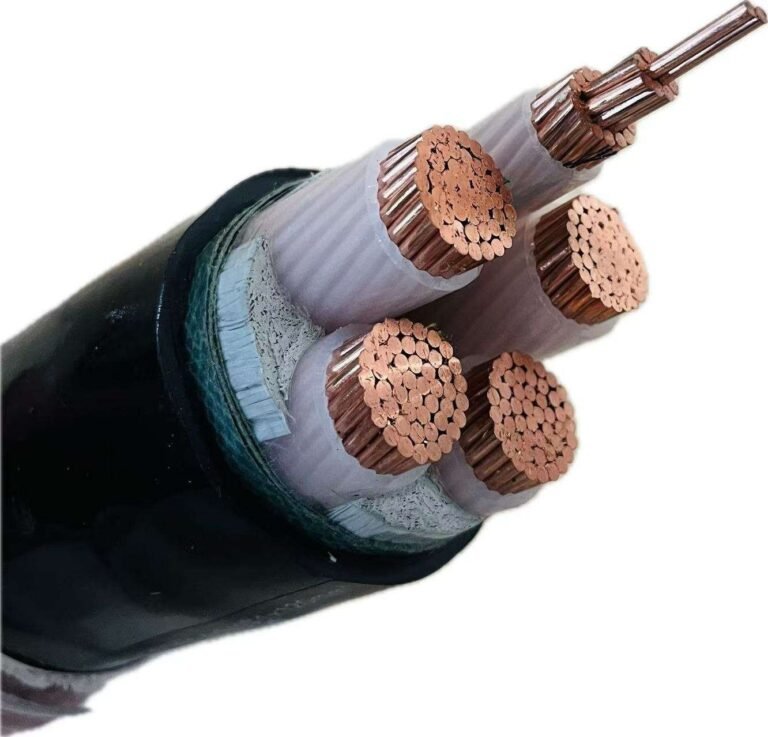
Transmission cables on tall steel towers carry voltage from generating plants to substations, often at 138,000 volts or higher. These cables are typically aluminum conductor steel-reinforced (ACSR), a composite of aluminum strands wrapped around a steel core for strength. From substations, distribution cables fan out at 4,160 to 35,000 volts to local transformers on utility poles or in underground vaults. From the transformer, service drop cables carry 240 volts to individual buildings.
Inside the building, service entrance cable runs from the meter to the main panel. From the panel, branch circuit cables (typically NM-B in residential, MC or AC in commercial) carry 120 or 240 volts to outlets, switches, and hardwired appliances. Each step uses a cable engineered for the voltage, current, and environment of that specific link.
The cables in your appliance cords are a final step in the chain. Lamp cords, refrigerator power cords, computer power cords, extension cords: all of them are short, flexible cables that move the building’s power into the device that uses it.
Carrying Data and Communications
The second major application is moving information rather than energy. Twisted-pair Ethernet cable runs through nearly every modern office and increasingly through every modern home, connecting computers, printers, phones, security cameras, and access points to switches and routers. Inside data centers, the cabling becomes denser and faster, with bundles of fiber optic patch cables interconnecting servers, switches, and storage arrays.
Long-distance telecommunications now rides on fiber optic cable almost exclusively. Submarine cables crossing the oceans carry essentially all intercontinental internet traffic. Terrestrial fiber backbones link cities. Fiber to the premises (FTTP) and fiber to the home (FTTH) connect individual buildings to the broader network. The same physical cable type, with different terminations and equipment, serves every stage of the journey.
Wireless networking gets the credit for connecting devices, but the wireless link is only the last 10 meters of a connection that runs on cable for the other 10,000 kilometers.
Distributing Video and Audio
Coaxial cable distributes broadcast and cable television, both over the air via antenna feed lines and through cable system networks from the head-end to the subscriber. The same coax style carries broadband internet from the cable modem head-end to the residential modem. Even satellite television uses coax between the dish and the receiver.
For consumer video, HDMI cable now carries the bulk of short-distance digital video and audio between sources and displays. DisplayPort handles most computer-to-monitor connections. Older composite video, S-Video, and component video cables linger in legacy installations, mostly nostalgic now.
Professional audio installations use shielded twisted-pair microphone cables, balanced line-level interconnect cables, and bulky multipair snake cables that carry dozens of channels at once. Studios route audio over digital cables like AES/EBU, MADI, and increasingly over standard Ethernet using Dante or AVB protocols. The cabling underneath the audio mixer at a concert is itself an entire small infrastructure.
Running Machinery and Process Control
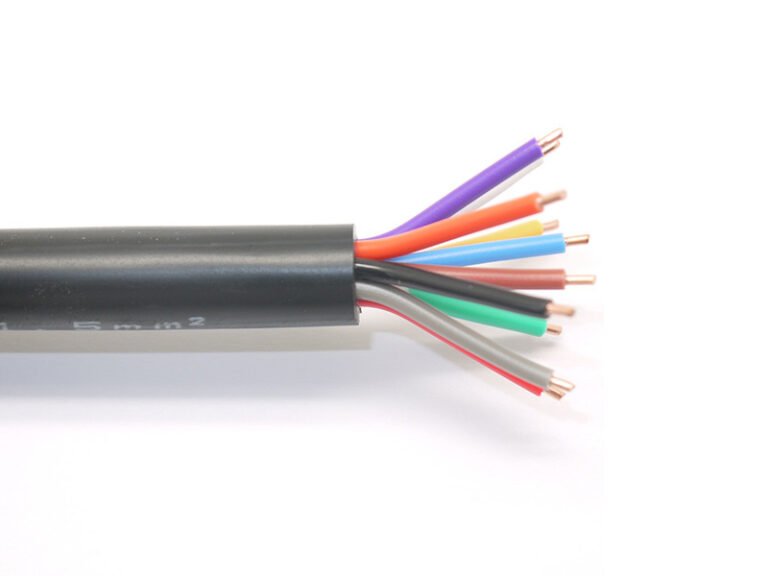
In industrial environments, cable wires take on tougher jobs. Tray cable and control cable run between programmable logic controllers, motor starters, sensors, and field devices. Variable frequency drive (VFD) cable handles the high-frequency switching output of modern motor drives without coupling noise into nearby instrumentation. Thermocouple extension cable carries millivolt-level temperature signals from sensors back to the control room.
Heavy machinery uses thick power cables to feed motors and welders. Robotic arms use specialized continuous-flex cables designed to survive millions of bending cycles. Mining cables, ship cables, and locomotive cables each address the brutal mechanical and environmental stresses of their domains. A typical petrochemical plant or steel mill contains hundreds of miles of cable, each piece selected for a specific role.
Powering Vehicles and Mobile Equipment
Cars, trucks, aircraft, ships, and trains all run on internal wiring harnesses that are essentially custom cable assemblies. A modern automobile contains over a mile of wiring, broken into dozens of harnesses that connect the battery, alternator, computer, sensors, lights, motors, infotainment system, and dozens of comfort and safety subsystems. Wire gauge ranges from 22 AWG for low-current signal circuits to 4/0 AWG for the cables feeding starter motors.
Aircraft wiring is even more stringent. Every cable on a commercial airliner is rated for high temperature, low smoke, and minimal weight, with strict requirements for chafing resistance and fire performance. The total wire weight on a modern jet exceeds several tons.
Electric vehicles bring a new wrinkle: high-voltage DC cables connecting battery packs to inverters and motors, often at 400 or 800 volts. These cables use orange jackets as a universal warning and are engineered to manage both the electrical and the thermal demands of fast charging.
Specialty Applications
Beyond the major categories, cable wire shows up in surprising places. Medical cables connect monitoring electrodes, imaging probes, and surgical instruments to the equipment that interprets their signals. The cables are designed for repeated sterilization and for absolute reliability during a procedure.
Geophysical cables tow seismic sensors behind survey ships. Downhole cables carry instruments and power thousands of feet into oil and gas wells. Submersible pump cables operate underwater for years. Heating cables warm pipes, gutters, and floors. Spark plug cables carry pulses of tens of thousands of volts inside engines.
In each case the cable is engineered for an environment that would destroy a general-purpose cable in minutes.
At Home
Bring the survey back to a typical house and the inventory is still impressive. Building wiring in the walls. Service entrance from the meter. Cable television and broadband from the curb. Telephone (or its remaining trace). Ethernet to the home office. Coaxial behind the TV. HDMI between the TV and every source. USB charging everywhere. Speaker wire to the home theater. Doorbell wire. Thermostat wire. Garage door opener wire. Landscape lighting wire. Solar panel feeder cables for the growing number of homes with PV systems. Charging cables for electric vehicles. The sheer variety reflects how many separate things modern households expect to do at once.
The Bottom Line
Cable wire is used for almost every situation where energy or information needs to move from one place to another in a controlled, repeatable, safe way. The specific cable changes based on what is being moved, how far, and through what environment, but the underlying job is the same. Pull all the cable wire out of the world and most of the technology we depend on would stop working in minutes. The fact that it works so well, so quietly, and so reliably is one of the modest miracles of modern engineering.