What Kind of Wire Is a Cable? Understanding Conductors Inside Modern Cables
When someone asks what kind of wire is inside a cable, they are really asking three overlapping questions at once. What metal is the conductor made of? Is it a single solid strand or many fine ones twisted together? And what is the wire sized for? The answers shape everything from how flexible the cable is, to how much current it can carry, to how long it will last in a damp basement or a hot attic.
A Cable Is a Container; the Wire Is What Carries Current
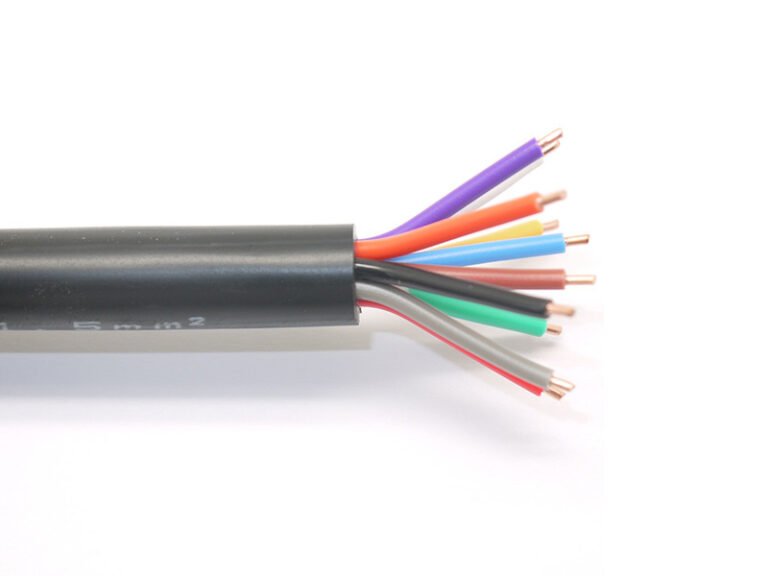
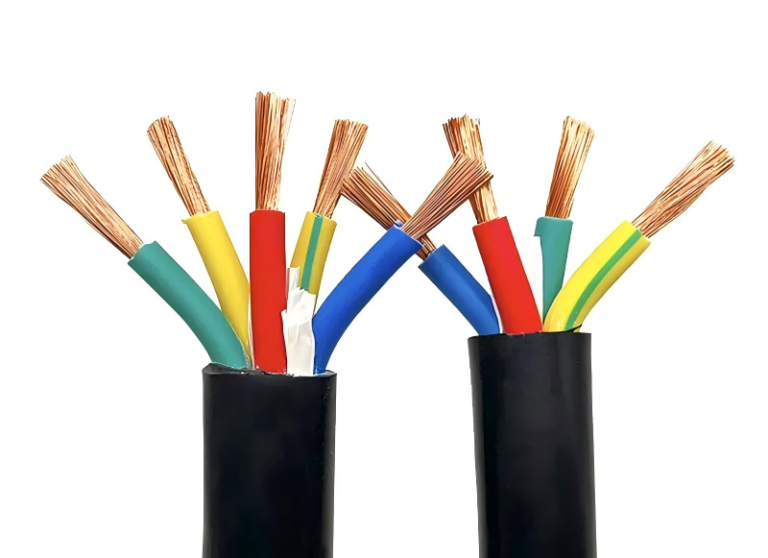
Strip the jacket off any cable and you will find one or more individual wires inside, each wrapped in its own colored insulation. Those wires are the working part of the assembly. The cable’s outer jacket, the inner fillers, and the optional shielding all exist to protect and organize those conductors. So when people ask what kind of wire a cable is, the honest answer is that a cable is not a wire at all; it is a finished product that holds wires.
That said, the wires inside follow predictable patterns. Knowing those patterns lets you read a cable’s spec sheet and understand what you are looking at.
Copper: The Default Conductor
The vast majority of cables sold for residential, commercial, and light industrial work use copper wire. Copper conducts electricity extremely well, second only to silver among practical metals, and it resists corrosion enough that a properly installed copper conductor can last decades inside a wall. It also bends without snapping and accepts solder and crimp connections cleanly.
You will see two flavors of copper. Bare copper has a bright pinkish-orange color and is the standard for general wiring. Tinned copper, which has a silvery coating of tin over each strand, resists corrosion much better and is used in marine cables, outdoor speaker wire, and any environment where humidity or salt air would otherwise eat the metal. Tinned conductors also solder more easily, which is why they show up in audio gear and laboratory equipment.
Aluminum: The Lightweight Workhorse
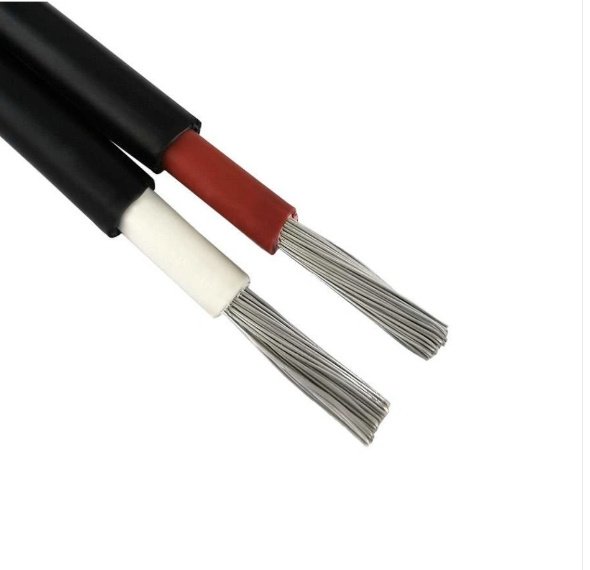
Aluminum conductors appear most often in service entrance cables, large feeder cables, and overhead transmission lines. Aluminum carries about 61 percent as much current as copper for the same cross-section, which means an aluminum wire has to be one or two AWG sizes larger to match a copper wire’s capacity. The trade-off is weight and cost: aluminum weighs roughly a third of copper for the same volume and costs significantly less, which is why utilities use it for the long wires strung between poles.
Modern aluminum building wire is alloyed (often AA-8000 series) and paired with anti-oxidant compounds and listed connectors. The notorious failures of solid aluminum branch circuits in the 1960s and 1970s have been addressed by these newer materials and installation practices, but aluminum still demands more attention to termination than copper does.
Solid Versus Stranded
The next question is whether the conductor is a single thick wire or a bundle of thin ones. Solid conductors are stiffer and hold their shape, which makes them ideal inside walls and conduit where the cable will be pulled into position once and then never moved. They also accept terminal screws very cleanly because the screw cannot deform a bundle of wandering strands.
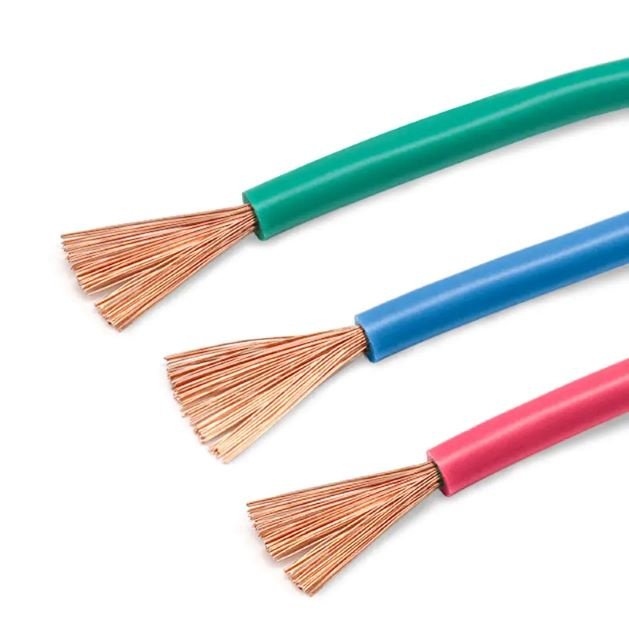
Stranded conductors, in contrast, are built from anywhere between seven and several hundred individual filaments twisted together. They flex repeatedly without breaking, which is why they show up in extension cords, robotic arms, headphones, automotive harnesses, and anywhere movement is part of the job. The fineness of the strands also matters; ultra-fine stranding, sometimes called rope-lay or Type K stranding, gives a cable a soft, almost cloth-like flexibility.
A useful rule of thumb: solid for fixed, stranded for flexible.
How Conductor Size Is Described
In North America, conductor size is expressed in American Wire Gauge (AWG). Counterintuitively, the higher the AWG number, the smaller the conductor. A 14 AWG wire is thinner than a 10 AWG wire. Once you get past 1 AWG, sizes are written as 1/0, 2/0, 3/0, and 4/0, pronounced “one-aught” through “four-aught,” followed by thousand circular mils (kcmil) for the largest conductors used in service feeders and transmission.
In the rest of the world, conductor size is given in square millimeters (mm²) of cross-sectional area. A 2.5 mm² conductor is roughly equivalent to 14 AWG; a 6 mm² conductor is roughly 10 AWG. Both systems describe the same physical thing in different units.
Specialty Conductors Inside Specialty Cables
Not every cable uses plain copper or aluminum. Coaxial cables center on a solid copper or copper-clad steel conductor surrounded by a foamed dielectric. Data cables for Power-over-Ethernet use slightly larger conductors than older voice cables so they can carry both signal and meaningful current. Thermocouple cables use exotic alloys such as chromel and alumel because the wire itself generates the measurement voltage. Submarine and downhole cables use heavily armored copper conductors with specialty insulation that survives crushing pressure.
In each case, the wire kind is matched to the job. There is no universal “cable wire” any more than there is a universal screw.
Reading the Label
If you want to know exactly what kind of wire is inside the cable in your hand, look at the print legend on the jacket. A typical line might read: “12/2 WITH GROUND, TYPE NM-B, 600V, 90°C, CU.” That tells you the cable contains two 12 AWG insulated copper conductors plus a bare copper ground, rated for 600 volts and 90 degrees Celsius, jacketed for nonmetallic indoor use. Every cable manufacturer is required to print that information, and once you can read it, you no longer have to guess.
In Short
The wire inside a cable is almost always copper or aluminum, either solid for fixed installations or stranded for flexible ones, sized by AWG or mm² and chosen for the job the cable will do. The cable assembles those conductors into a single product that is easier to handle, safer to install, and tougher in the real world than any bare wire could ever be.