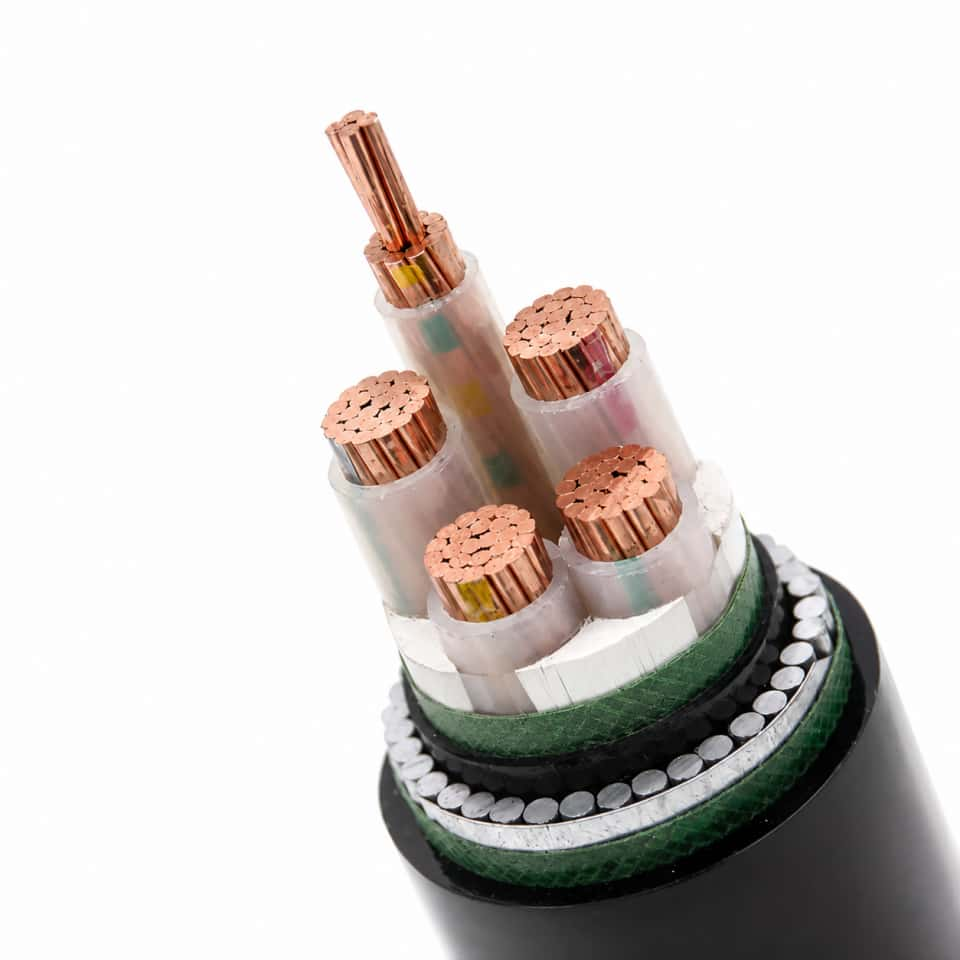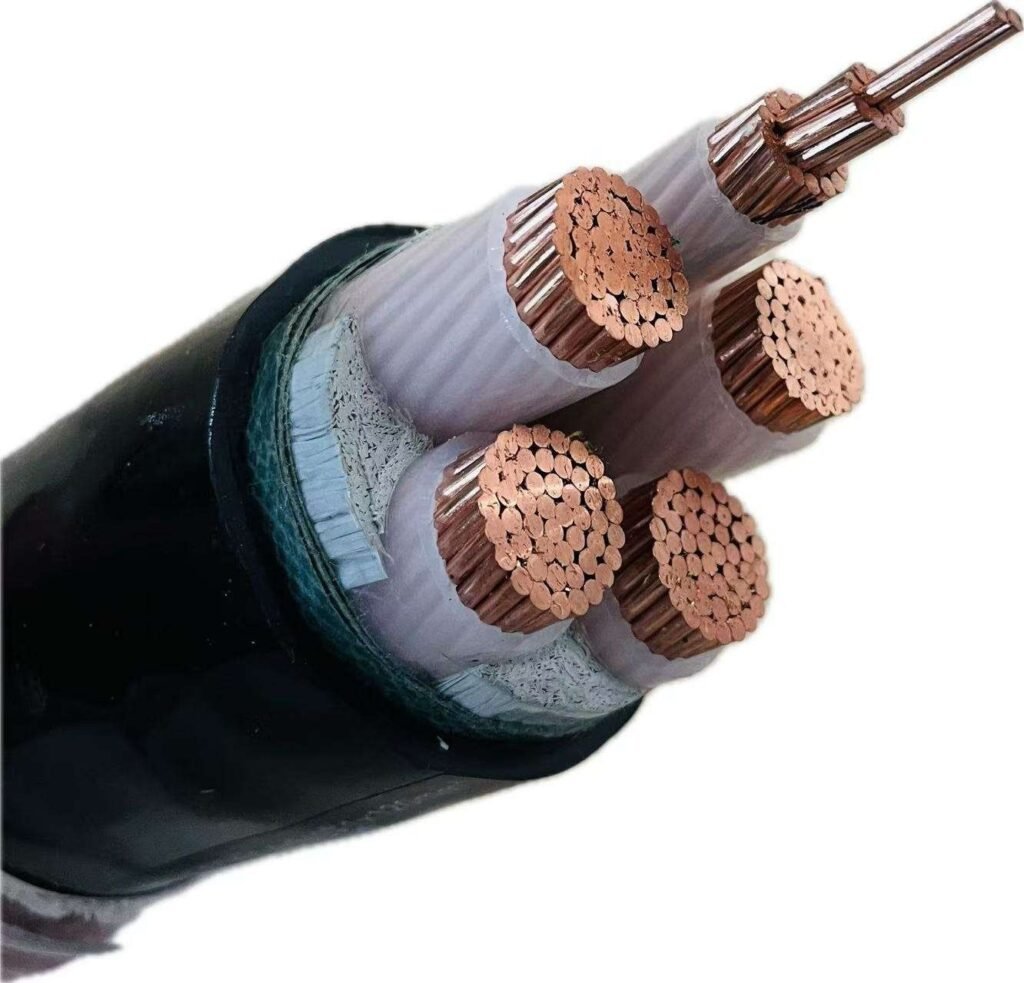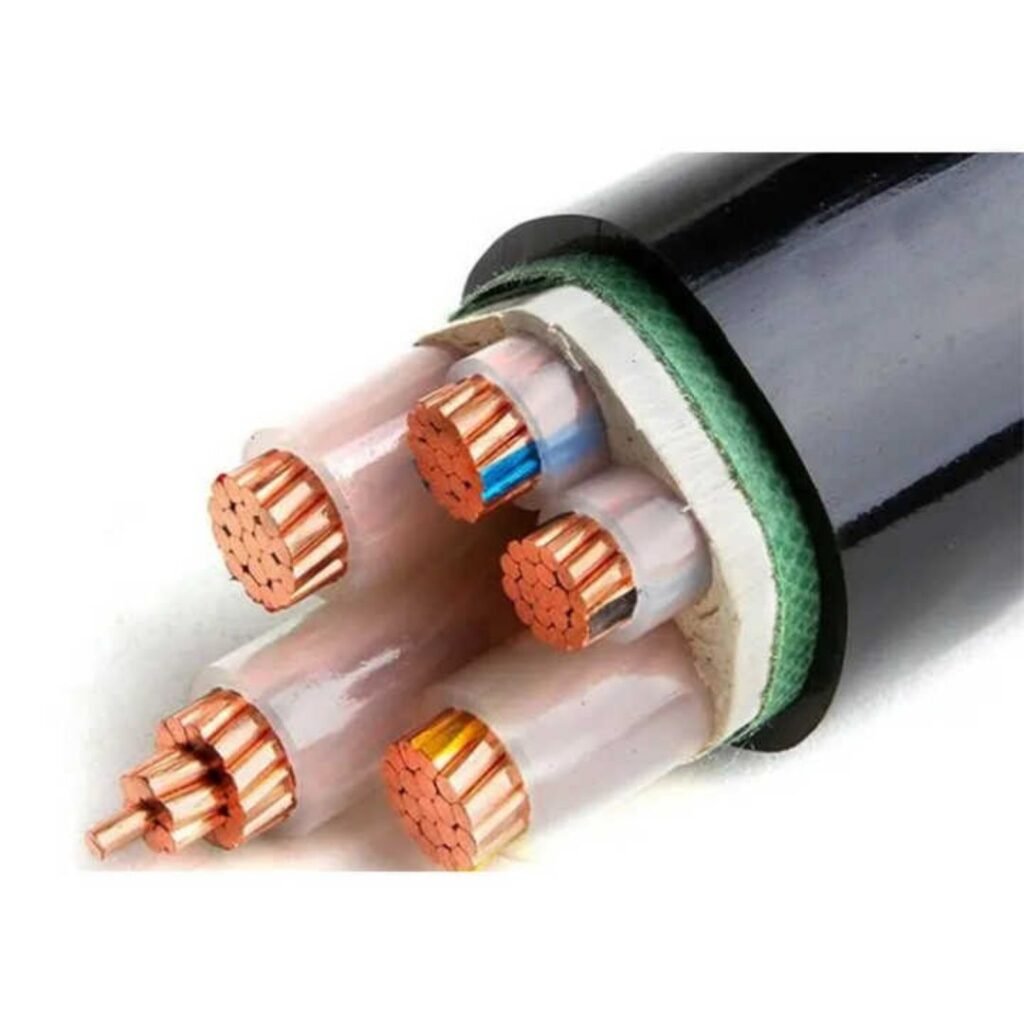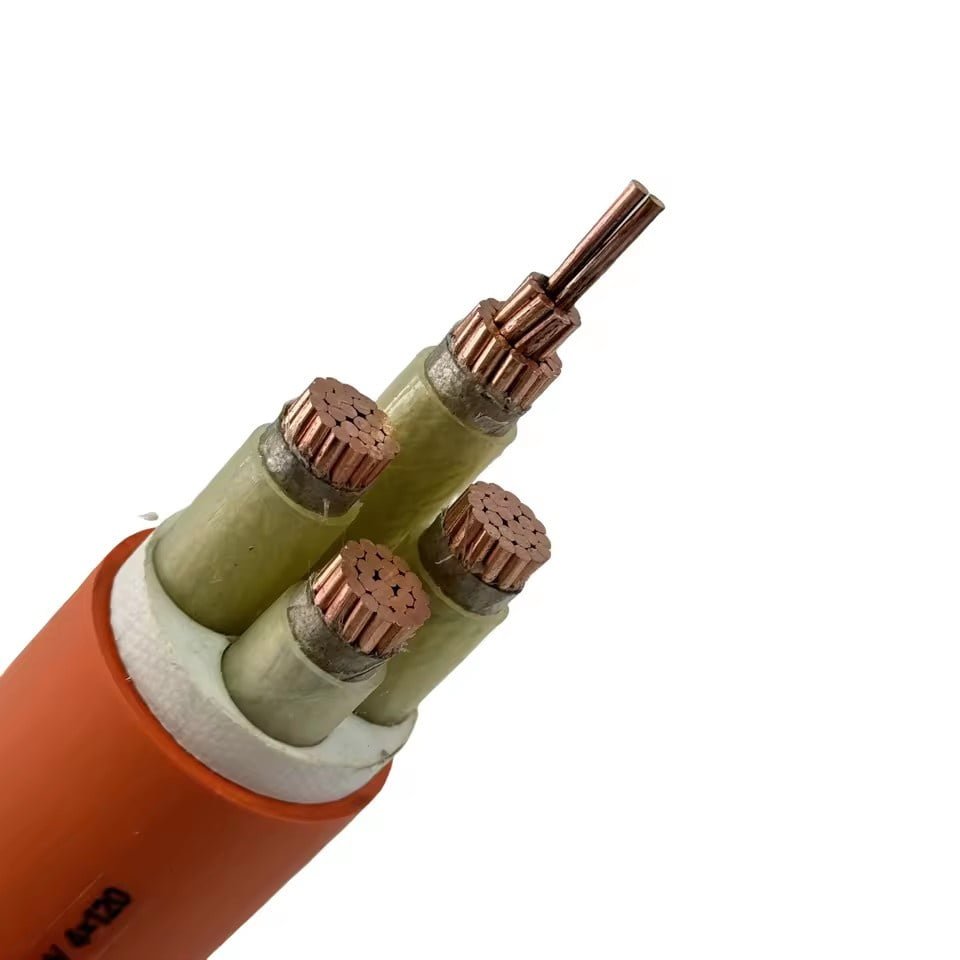
A cable that looks acceptable on a datasheet can become a maintenance problem once it is pulled through a hot tray, buried beside other loaded circuits, or exposed to oil, sunlight, and poor ventilation. The usual result is derating, nuisance failures, brittle insulation, or conservative oversizing that quietly burns budget. The better choice starts with operating temperature, fault duty, installation conditions, fire requirements, and total installed cost—not insulation name alone.
XLPE is usually better for higher ampacity, longer service life, and stronger short-circuit tolerance; PVC is often better where cost, flame behavior, flexibility, and general low-voltage building use dominate. Typical PVC insulation is rated 70 °C or 90 °C, while XLPE is commonly 90 °C, with higher short-circuit limits.
The awkward part is that both answers can be right on different jobs. A plant utility feeder, a cold-weather construction pull, a control cable in a panel, and a medium-voltage circuit in a cable trench are not asking the same question, even if purchasing sees the same cable schedule line.

Material behavior differences
XLPE and PVC behave differently because they are not just two “plastic names”; they are different polymer systems. XLPE is a cross-linked insulation that holds shape and electrical properties better at elevated conductor temperature, while PVC is a formulated thermoplastic compound whose performance depends heavily on additives, grade, and test standard.
What XLPE is doing inside the cable
XLPE means cross-linked polyethylene. Ordinary polyethylene is a thermoplastic: long polymer chains sit next to each other and can slide when heat and stress are applied. In XLPE, those chains are chemically or physically tied together at many points, forming a three-dimensional network. That network is the reason XLPE cable insulation is usually selected for higher ampacity, medium-voltage insulation systems, and applications where conductor temperature may sit near its rating for long periods.
The mechanism is simple enough, but it matters on the plant floor. When a cable runs heavily loaded in a tray, underground duct, or warm electrical room, the conductor heats the insulation from the inside. In a cross-linked material, the polymer chains cannot flow in the same way a thermoplastic can. That improves resistance to thermal deformation, helps maintain insulation thickness around the conductor, and supports better dielectric performance over time.
Typical continuous conductor temperature ratings are often around 90 °C for XLPE insulation, with some special designs rated higher depending on the applicable standard and construction. Short-circuit conductor temperature limits are commonly around 250 °C for XLPE, again subject to the cable standard and test method. Those numbers should not be copied blindly into a specification, but they explain why XLPE is common in power distribution cables where fault withstand and thermal aging matter.
What PVC really is
PVC means polyvinyl chloride, but cable PVC is not just base PVC resin. It is a compound built from resin plus plasticizers, stabilizers, fillers, flame retardants, pigments, processing aids, and sometimes oil-resistant or low-temperature modifiers. A cable buyer sees “PVC” on a datasheet; a cable compounder sees a recipe.
That recipe controls flexibility, flame behavior, cost, surface toughness, extrusion speed, color stability, and resistance to oil or chemicals. A soft flexible control cable jacket and a tougher power cable sheath may both be called PVC, but they are not the same compound in service. I have seen buyers reject PVC as “cheap plastic” while their actual problem was a poor compound choice for oil exposure, ultraviolet exposure, or winter handling.
PVC insulation commonly carries continuous conductor temperature ratings of 70 °C or 90 °C, depending on grade and standard. Its short-circuit conductor temperature limit is often around 160 °C. These are typical comparison figures, not universal guarantees. The correct value comes from the actual cable construction, standard, and certified test report.
Thermoset versus thermoplastic behavior
XLPE is normally treated as a thermoset insulation after cross-linking. It does not melt and flow in normal cable service. If overheated badly enough, it degrades, but it does not simply soften back into a processable melt like ordinary polyethylene.
PVC remains a thermoplastic compound. As temperature rises, it softens. Under sustained pressure, especially at elevated temperature, PVC insulation or sheath can deform. The common shop-floor examples are not dramatic laboratory failures; they are flattened spots under tight cleats, jacket creep at over-tight cable ties, insulation distortion near hot terminations, or deformation where cables are crushed in a congested tray bend.
The trade-off is practical. PVC is easier to process, usually economical, and can be made very flexible. XLPE gives better thermal stability and deformation resistance, but it is less forgiving to manufacture because cross-linking must be controlled, and it is not simply remelted like a thermoplastic scrap stream. If the cable will operate warm, heavily loaded, or close to thermal limits, XLPE’s structure gives it an advantage that PVC formulation cannot fully erase. If the job is a low-voltage control circuit in a protected indoor panel, that advantage may not justify the cost or handling differences.
PVC is not automatically mechanically weak
A common mistake is to compare XLPE insulation with the worst PVC jacket someone has seen cracked in a yard. That is not fair engineering. Well-formulated PVC sheaths can be tough, abrasion resistant, flame retardant, and suitable for many industrial environments. For cable outer sheaths, PVC remains widely used because it balances mechanical protection, flame performance, color marking, and installed cost.
Where PVC is weaker is high-temperature stability, especially as insulation under sustained electrical and thermal stress. Plasticizers can migrate over time depending on compound quality, temperature, oil contact, and service environment. Stabilizer systems also matter because PVC must resist heat during extrusion and during service. A good PVC sheath on an XLPE-insulated cable is a perfectly sensible construction in many plants: XLPE carries the electrical and thermal insulation duty, while PVC provides economical outer protection.
The selection flips when the sheath environment becomes the dominant risk. In an oily machine bay, an oil-resistant PVC sheath may outperform a generic sheath material. In a tunnel or public building with strict smoke and acid gas limits, low-smoke halogen-free compounds may be required instead of standard PVC. On an exposed outdoor run, sunlight, temperature cycling, and jacket cracking resistance may matter more than the insulation family alone.
Compound formulation can change the comparison
The words XLPE and PVC describe broad material families, not finished cable performance. Within those families, there are important variants:
- Standard XLPE insulation: common for power cables requiring good thermal and dielectric performance.
- Water-tree-resistant XLPE: used where moisture exposure and medium-voltage aging are concerns; the compound and screen system both matter.
- Flame-retardant XLPE constructions: selected when the insulation system needs improved fire performance, though the overall cable flame result also depends on sheath, fillers, tapes, and geometry.
- General-purpose PVC: economical and widely used where temperature, oil, and smoke requirements are not severe.
- Oil-resistant PVC: useful around machine tools, rolling mills, and processing lines where lubricant mist or hydraulic oil exposure is routine.
- Low-smoke halogen-free compounds: not PVC in the usual sense; selected where smoke density and acid gas release are tightly controlled.
- Special sheath materials: such as polyethylene-based, elastomeric, or other compounds when abrasion, water resistance, temperature, or chemical exposure dominates the specification.
This is why a one-line material comparison can mislead procurement. A premium 90 °C PVC cable from a qualified manufacturer may be a better purchase than an unverified “XLPE cable” with weak documentation, poor conductor sizing control, or unsuitable flame performance. The reverse is also common: a buyer accepts PVC because it is cheaper, then finds the cable running too hot in a loaded tray where ampacity margin was already thin.
XLPE is always better than PVC cable.False
XLPE usually has better high-temperature insulation performance, deformation resistance, and short-circuit thermal margin, but PVC can be the right sheath or insulation choice where flexibility, flame behavior, cost, chemical resistance, or project standards favor a specific PVC compound.
Trust standards and test reports more than material labels
Material names are useful for early screening, not final approval. The same “XLPE” or “PVC” label can cover different voltage classes, conductor temperature ratings, flame tests, smoke requirements, insulation thicknesses, sheath compounds, and manufacturing controls. For serious procurement, the datasheet should identify the applicable cable standard, voltage rating, conductor class, insulation and sheath material grade, temperature rating, flame or smoke test requirement, and any special exposure rating being claimed.
Factory owners and technical buyers should ask for documentation that matches the intended service, not a generic certificate from a different cable family. If the cable will be installed in trays, ducts, underground runs, outdoor racks, hazardous process areas, or dense public-building routes, the material decision should be checked against the relevant installation code, project specification, and supplier test reports. The safest commercial assumption is that “XLPE” and “PVC” describe potential performance; the approved cable construction proves actual performance.
Electrical and thermal performance
XLPE usually has the stronger electrical and thermal envelope: it commonly supports 90 °C continuous conductor operation, better fault-temperature withstand, and lower dielectric loss, especially as voltage stress rises. PVC remains a practical low-voltage insulation where the temperature rating, installation conditions, fire behavior, and budget match the duty, but it leaves less margin in hot, heavily loaded, or fault-demanding circuits.
Continuous operating temperature and what it really buys you
The nameplate insulation temperature is not the temperature of the cable tray, room air, or soil. It is the maximum allowable conductor temperature under defined operating conditions, with heat flowing outward through insulation, bedding, sheath, conduit, air, soil, and nearby loaded cables. That path is where many sizing mistakes happen.
Typical ratings look like this, subject to the applicable cable standard, compound, and construction:
| Performance item | PVC insulation | XLPE insulation | Practical effect |
|---|---|---|---|
| Common continuous conductor temperature | 70 °C or 90 °C | Usually 90 °C; special designs may be higher | A higher rating can improve ampacity, but only after derating is applied |
| Common short-circuit conductor temperature limit | Around 160 °C | Around 250 °C | XLPE generally gives more thermal margin during faults |
| Voltage stress suitability | Strong in many low-voltage applications | Strong from low voltage into medium-voltage and high-voltage designs | XLPE is usually preferred as voltage class rises |
| Heat deformation resistance | Compound-dependent; can soften or creep under heat and pressure | Better resistance to thermal deformation | Matters at clamps, glands, tight bends, and loaded trays |
PVC cable specified for 70 °C service can be perfectly reliable in lighting, small power, control wiring, and ordinary low-voltage feeders. A 90 °C PVC compound narrows the thermal gap for some applications. XLPE, though, more consistently starts from a 90 °C conductor rating and keeps its shape and insulation properties better under sustained heat.
The mechanism is simple enough: current creates I²R losses in the conductor, and that heat must escape through every layer and surrounding medium. If the insulation system is allowed to run hotter, the same conductor may carry more current before reaching its permitted temperature. The trade-off is that running hotter also increases conductor resistance, raises energy loss, warms terminations, and can age adjacent materials faster if the whole system is not rated for that temperature.
A 90 °C cable connected to a lug, breaker, gland, or terminal chamber rated only for 70 °C may still have to be sized as a 70 °C circuit at the termination. That is not a paperwork detail; I have seen panels with good cable and cooked terminal blocks because the accessories were the weak link.
Ampacity is not decided by insulation alone
A higher insulation temperature rating may allow a smaller conductor, but it does not automatically make a smaller cable acceptable. Ampacity tables are only valid after the installation conditions match the assumptions, or after correction factors are applied.
The main derating drivers are usually:
- Installation method: open tray, ladder rack, conduit, direct burial, duct bank, riser shaft, or cable trench all remove heat differently.
- Cable grouping: several loaded circuits tied together with nylon straps or packed in a tray can behave like a thermal blanket.
- Ambient temperature: a cable in a 28 °C electrical room is not doing the same job as one above a furnace bay roof at 45 °C.
- Soil thermal resistivity: buried cable ampacity can collapse in dry, sandy, backfilled, or seasonally baked soil.
- Duct filling and spacing: full conduits, congested ducts, and tight bends raise both pulling damage risk and operating temperature.
- Load profile: a motor feeder with cyclic starts and a continuously loaded process heater feeder do not age the same way.
- Permitted voltage drop: long runs often need a larger conductor even when ampacity says a smaller one is thermally acceptable.
- Fault rating: the conductor and screen must survive the available short-circuit current for the protective device clearing time.
- Mechanical robustness: pulling tension, impact risk, tray support spacing, armor selection, and site abuse may set a practical minimum size.
This is the counter-intuitive part buyers sometimes dislike: XLPE may support higher ampacity on paper, yet the correct conductor size may not change. A long conveyor feeder, for example, may be governed by starting voltage drop rather than thermal ampacity. A main LV feeder close to a transformer may be governed by short-circuit withstand. A cable in a petrochemical rack may be governed by sheath, flame, smoke, and gland requirements before conductor temperature becomes the deciding factor.
A 90 °C XLPE cable can always replace a 70 °C PVC cable with a smaller conductor size.False
The insulation rating is only one constraint. Voltage drop, protective-device clearing time, short-circuit withstand, installation derating, termination temperature limits, and local electrical code requirements can all force the original or a larger conductor size.
Overload and short-circuit behavior
XLPE normally has a clear advantage under fault conditions. Many XLPE power cable designs use a short-circuit conductor temperature limit around 250 °C, while PVC designs are commonly around 160 °C, depending on the standard and test basis. That higher fault limit can be valuable where available fault current is high or breaker clearing time is not especially fast.
During a short circuit, the cable does not have time to shed much heat to the environment. The conductor temperature rises almost adiabatically for the brief event, so the allowable final temperature becomes a major part of the withstand calculation. XLPE’s higher thermal endurance gives the designer more room before insulation damage, deformation, or loss of dielectric integrity becomes likely.
That does not mean XLPE is a substitute for proper protection coordination. The cable still needs to be checked against:
- available fault current at the installation point;
- protective device clearing time;
- conductor material and cross-section;
- screen, shield, or armor fault-current path;
- earthing arrangement;
- thermal limits from the current cable standard;
- termination and joint ratings.
For medium-voltage systems, screen or metallic shield sizing is not a minor accessory question. A phase-to-earth fault may push heavy current through the screen, copper tape, wires, or armor depending on bonding practice. If procurement only compares conductor size and insulation type, the purchased cable can be thermally strong in the phase conductor and still weak in the fault-return path.
Overload is a different case from short circuit. A short overload lasting minutes or hours allows heat to move through the cable layers and into the surroundings. XLPE tends to tolerate these thermal excursions better, but repeated operation above normal design loading still consumes life. PVC, especially lower-grade or poorly compounded PVC, is more likely to show softening, indentation under cleats, sheath marking, or long-term hardening after repeated heat exposure.
Dielectric performance and voltage class
XLPE generally offers high insulation resistance, low dielectric loss, and strong dielectric strength, which is why it is widely used in medium-voltage and high-voltage power cables. At higher voltage stress, small losses and stable insulation behavior matter because electrical stress is continuous, not occasional. Heat generated inside the insulation by dielectric loss is usually small compared with conductor heating in low-voltage work, but it becomes more relevant as voltage class and insulation thickness increase.
PVC is widely used in low-voltage cable because it is economical, processable, mechanically useful, and available in many flame-retardant and sheath compounds. It is less favored where voltage stress is high, where partial discharge control is critical, or where long-term dielectric stability under elevated electrical stress is the primary design concern. That is why a plant may use PVC-insulated control and auxiliary cables on the same site where XLPE-insulated power feeders serve transformers, large motors, and distribution switchgear.
The boundary is voltage class and duty severity. For a short, protected low-voltage branch circuit in a clean indoor tray, PVC may be the sensible purchase. For a medium-voltage feeder with screened cores, joints, terminations, and a high consequence of failure, XLPE is normally the more appropriate insulation family, provided the full cable design is specified correctly.

Heat aging, deformation, and system coordination
Thermal aging is rarely dramatic on day one. It shows up years later as brittle insulation, sheath cracking near glands, flattened cable under tight cleats, discolored cores inside panels, or insulation resistance readings that trend downward after shutdown moisture cycles. In maintenance records, it may look like “random” nuisance trips after summer peaks.
PVC can soften under heat and pressure, especially around tight bends, over-tightened cleats, hot glands, or crowded panel entries. Over time, some PVC compounds can also harden as plasticizers migrate or as heat exposure changes the material. Compound quality matters; not every PVC cable behaves the same. Still, compared with XLPE, PVC is more sensitive to heat deformation and long-term plasticizer-related aging mechanisms.
XLPE is better at holding its form under thermal load because its crosslinked structure resists flow. That helps in heavily loaded feeders, warmer ambient locations, and installations where cables are clamped or supported over long service periods. The sacrifice is that XLPE cable is not automatically the lowest-cost or easiest-to-handle option, and some constructions can be less forgiving during installation if bending radius, pulling tension, or cold-weather handling instructions are ignored.
A good cable specification coordinates more than “PVC versus XLPE.” It should tie together:
- insulation rating and voltage class;
- conductor material, class, and cross-sectional area;
- conductor screen and insulation screen for MV designs;
- metallic screen, shield, or armor fault-current capacity;
- bedding and separation layers;
- outer sheath material for UV, oil, chemical, water, or abrasion exposure;
- flame, smoke, and halogen requirements where applicable;
- glands, lugs, joints, terminations, and heat-shrink or cold-shrink kits;
- installation method, bending radius, pulling tension, and support spacing;
- supplier qualifications, type-test evidence, and project documentation.
That coordination is where many bid comparisons become misleading. One quotation may offer XLPE insulation but a light sheath, undersized screen, or accessories excluded from scope. Another may offer PVC insulation that is entirely adequate for a low-voltage indoor duty, with better commercial sense for a large quantity of auxiliary circuits. The right comparison is not just polymer against polymer; it is the complete cable system against the actual electrical duty, fault level, route, environment, installation workmanship, and inspection regime.
Fire and environmental behavior
PVC often has the easier starting point for flame resistance because its chlorine content helps inhibit combustion, but that does not make it automatically acceptable for enclosed or public areas. XLPE usually needs the right flame-retardant compound, bedding, or sheath system to pass the required fire test, while smoke, acid gas, and project fire-code limits may override the basic XLPE-versus-PVC choice.
PVC insulation is generally more inherently flame-retardant than standard XLPE because PVC contains chlorine.True
Chlorine in PVC contributes to self-extinguishing behavior, although final cable fire performance still depends on cable construction, sheath material, installation grouping, and the test standard used.
Flame spread, smoke, and acid gas are separate approval questions
Do not buy fire cable by asking only whether the insulation is XLPE or PVC. On a plant project, the approval usually comes down to several different fire behaviors, and they do not always move in the same direction:
- Flame spread: whether the cable keeps burning or propagates fire along a tray, riser, shaft, or bundle.
- Smoke density: whether personnel can see exit routes and emergency teams can work.
- Acid gas and halogen content: whether combustion gases attack switchgear, controls, stainless panels, copper bus, server racks, or ventilation equipment.
- Toxicity requirements: project-specific limits, especially in transport, offshore, hospitals, tunnels, and high-occupancy buildings.
- Circuit integrity: whether the cable must continue operating during fire, which is a different requirement from ordinary flame retardance.
PVC tends to char and self-extinguish better than untreated polyethylene-based materials, so it can be attractive in general industrial wiring, utility areas, and cost-sensitive projects where the fire standard permits it. The trade-off is that burning PVC can release dense smoke and hydrogen chloride gas. Anyone who has opened an MCC room after a small cable fire knows the issue: the fire damage may be local, but the acidic soot can ruin contactors, PLC racks, terminals, and instrument cards far beyond the flame path.
Standard XLPE is halogen-free in the polymer itself, so it does not generate the same chlorine-based acid gas as PVC. That advantage has limits. A finished XLPE cable may still include halogenated flame-retardant additives, PVC bedding, PVC sheath, tapes, fillers, or printing materials unless the full cable design is specified as low-smoke halogen-free. Fire performance is a cable-system property, not an insulation-name property.
Where LSZH materials change the specification
Low-smoke halogen-free materials are often the right answer when evacuation and asset protection matter more than the lowest cable purchase price. In specifications they may appear as LSZH, LSOH, HFFR, or similar wording, depending on the region and standard. The practical intent is the same: reduce smoke and halogen acid gas during fire.
LSZH sheath or insulation systems are commonly considered for:
- Metro rail, tunnels, airports, and public buildings.
- Hospitals, schools, hotels, and high-rise commercial buildings.
- Data centers, control rooms, battery rooms, and telecom spaces.
- Ships, offshore platforms, and enclosed industrial modules.
- Emergency power, fire alarm, smoke control, and life-safety circuits.
The cost and handling penalties are not imaginary. Some LSZH compounds are stiffer than PVC, more sensitive to jacket damage during pulling, and less forgiving when crews drag cable over tray edges or through dusty conduits. In colder installation weather, that can matter. I have seen good cable made to look bad because the pulling contractor treated LSZH like soft PVC and ignored minimum bend radius and roller spacing.
Moisture, water trees, and wet service
For moisture resistance, XLPE is generally strong, especially compared with many older insulation systems. But medium-voltage XLPE cable in wet ducts, direct burial, flooded trenches, or coastal substations needs more than “XLPE” printed on the datasheet. Water-treeing is a long-term electrical aging mechanism where moisture and electrical stress create microscopic tree-like defects in the insulation. Over years, those defects reduce dielectric strength and can lead to failure during switching surges or high-load periods.
For wet MV service, buyers should look at the complete construction:
- Water-tree-retardant XLPE compound where required by the standard or utility practice.
- Conductor water blocking to prevent longitudinal water travel inside the conductor.
- Metallic screen water blocking to stop water moving under the copper tape or wire screen.
- Radial moisture barrier if the environment justifies it.
- Sealed joints and terminations, because a premium cable can still fail early if the termination lets water wick into the screen.
PVC does not disappear from wet locations, especially as a sheath material, but it is not a magic waterproofing layer. Jacket cuts, poor glands, unsealed ducts, and sun-cracked outer sheaths are usually the path that starts trouble.
Chemical, oil, abrasion, and sunlight exposure
PVC sheaths can be formulated to perform well in many industrial environments, including moderate oil exposure, acids, alkalis, and general plant contamination. That is one reason PVC-jacketed control, power, and instrumentation cables remain common in factories. The formulation matters: a cheap general-purpose PVC jacket and an oil-resistant industrial PVC jacket are not the same product.
XLPE insulation is not normally chosen as the outer defense against the plant environment. If the cable will sit in a cable tray above a machining line, cross a washdown area, run beside diesel equipment, or pass through a chemical dosing room, the sheath material becomes the front-line decision. Depending on exposure, the better answer may be:
| Exposure condition | Often suitable direction | Procurement caution |
|---|---|---|
| General indoor industrial use | PVC sheath or LSZH sheath | Confirm flame class and oil rating, not just insulation type |
| Hydrocarbon oil or grease | Oil-resistant PVC, CPE, CSP, TPU, or other specialized sheath | Ask for the actual oil test method and temperature |
| Outdoor sunlight | UV-stabilized sheath, often with carbon black for black jackets | Insulation material alone does not prove outdoor life |
| Severe abrasion or reeling | Rubber, PUR/TPU, or mining/trailing cable construction | Standard fixed-installation PVC or XLPE cable may crack or wear through |
| Chemical splash | Material selected against the chemical list | “Chemical resistant” without concentration and temperature is too vague |
UV exposure is a common procurement miss. A cable may have excellent XLPE insulation and still age poorly outdoors if the jacket lacks carbon black, UV stabilizers, or a sheath compound intended for sunlight. Black PE jackets often perform well outdoors, but fire performance and indoor smoke rules may then become harder. That is the usual engineering trade-off: the jacket that survives sun and water best is not always the jacket that gives the cleanest fire behavior inside a building.
Environmental procurement factors
Environmental approval is becoming more specific, especially on export projects and public infrastructure. Buyers may need to check:
- Halogen-free requirements.
- RoHS restricted substances.
- REACH declarations for the European market.
- Local fire code and building authority requirements.
- Project sustainability or material reporting rules.
- Recyclability and end-of-life handling.
- Lead-free or heavy-metal-free compound requirements.
- Site restrictions on corrosive smoke near electronics or coated assets.
The boundary is straightforward: if the cable is going outdoors in open industrial tray with low occupancy, UV, water, and chemical resistance may dominate. If it is routed through occupied buildings, tunnels, hospitals, data halls, or enclosed substations, smoke and acid gas behavior can become the approval driver even when PVC looks attractive on flame spread and price. The correct purchase specification should name the required fire tests, sheath compound, UV or oil rating, and environmental declarations, not merely ask for “XLPE cable” or “PVC cable.”
Installation and handling conditions
XLPE is usually the tougher choice for heat and electrical duty, but PVC often wins on day-to-day handling in low-voltage building work, especially where cable routes are tight and labor is pulling by hand. The better cable is the one that survives the actual installation: temperature during laying, bend radius, pulling force, tray edges, glands, joints, and the people doing the work.
For small low-voltage circuits, PVC-insulated or PVC-sheathed cables can be pleasantly forgiving. Electricians can route them through panels, risers, ceiling voids, junction boxes, and short conduit runs without fighting the cable every meter. That does not mean PVC is always “more flexible” as a material decision; cable construction matters more than the name on the insulation. A multi-core XLPE/SWA/PVC power cable with steel wire armor will feel like a steel hose compared with a small PVC building wire, while an unarmored XLPE low-voltage cable with a suitable sheath may handle perfectly well.
The handling difference usually comes from the full stack-up:
- Conductor size and class: large solid or compacted conductors resist bending far more than fine-stranded conductors.
- Armor: steel wire armor, steel tape armor, or aluminum wire armor can dominate stiffness.
- Metallic screen or shield: common on medium-voltage cables, it adds handling care and affects bending behavior.
- Outer sheath compound: PVC, PE, LSZH, chlorinated compounds, or cold-resistant sheaths can change surface drag and flexibility.
- Cable geometry: single-core cables, three-core cables, sector conductors, fillers, and bedding all behave differently on rollers and around bends.
Cold-weather installation is where many buyers get caught. Standard PVC can harden as temperature drops, and if the cable is bent, struck, or pulled off a drum too aggressively in cold conditions, the sheath or insulation may crack. Cold-resistant PVC formulations exist, so this is not a simple material verdict. XLPE insulation generally maintains better dimensional and dielectric stability under low-temperature stress, but the installer still handles the outer sheath first; if that sheath is ordinary PVC and the site is below its installation temperature limit, the cable can still be damaged before XLPE has any chance to prove itself.
XLPE cables are always easier to install in cold weather than PVC cables.False
XLPE insulation usually has better thermal stability, but installation handling is strongly controlled by sheath compound, cable construction, drum storage, bending radius, and the manufacturer's minimum installation temperature.
Bending radius and pulling tension are not paperwork details. They are failure controls. Exceeding the minimum bend radius can deform insulation, open gaps at bedding layers, disturb screens, or create local stress points that will not show up until the circuit is loaded or moisture gets in. Excessive pulling tension can neck down conductors, drag armor into the bedding, damage the jacket at duct mouths, or crush the cable over a poorly placed roller. I have seen perfectly good cable blamed for a failure that started with one sharp tray edge and a crew in a hurry.
For purchasing and site planning, separate the route into its mechanical environments:
| Installation environment | What usually matters most | Practical buying or installation check |
|---|---|---|
| Direct burial | Crush resistance, moisture ingress, soil chemicals, rodent risk, thermal resistivity | Specify suitable armor, sheath, bedding, warning tape, and water-blocking where needed |
| Underground ducts | Pulling friction, duct fill, bend count, water accumulation | Confirm pulling tension, sidewall pressure, lubricant compatibility, and sealed duct ends |
| Cable trays | UV exposure, tray edges, grouping heat, mechanical impact | Check sheath UV rating, cleats, spacing, tray fill, and derating assumptions |
| Risers and shafts | Vertical support, fire behavior, gland sealing, cable weight | Use proper cleats/supports and fire-stopping systems approved for the cable type |
| Tunnels and enclosed plants | Smoke, corrosion, heat buildup, maintenance access | Match sheath and fire performance to project rules; do not assume generic PVC is acceptable |
| Overhead or exposed runs | Sunlight, wind movement, temperature cycling, mechanical abuse | Confirm UV-resistant sheath, support spacing, and movement allowance |
Termination and jointing sensitivity is a major difference, especially as voltage rises. Low-voltage PVC and XLPE cables still need correct stripping, lugging, crimping, gland selection, and sealing, but medium-voltage XLPE cables are less tolerant of casual workmanship. Screen stripping must be clean. The insulation surface needs proper preparation. Stress-control tubes, cones, tapes, or molded accessories must match the cable size and standard. Dirt, knife marks, semi-conductive residue, trapped air, or the wrong heat-shrink accessory can defeat the advantage of high-quality XLPE insulation. The mechanism is simple enough: electric stress concentrates at defects and screen cutbacks, then partial discharge or tracking starts where the joint should have been strongest.
Installation damage is often a bigger reliability risk than the choice between XLPE and PVC. Crushed jackets, over-tightened cleats, poor gland sealing, incompatible joint kits, undersized bending space inside panels, and careless drum handling can shorten the life of either cable. The trade-off is practical: XLPE may justify its cost where thermal loading, voltage class, and service life matter, while PVC may reduce labor friction in simpler low-voltage routing. That preference stops holding when the installation environment demands special sheath performance, armor, water-blocking, fire behavior, or a termination system that the contractor cannot install correctly.

Best uses by project
XLPE is usually the safer default for higher-load feeders, medium-voltage circuits, outdoor infrastructure, and projects where thermal margin or fault withstand matters. PVC still earns its place in cost-sensitive low-voltage wiring, protective sheathing, and controlled indoor environments, provided the fire rating, temperature rating, and local code requirements are properly matched.

| Project type | More typical choice | Why it tends to fit | Watch before specifying |
|---|---|---|---|
| Low-voltage building wiring | PVC or XLPE | PVC can be economical for moderate loads; XLPE gives more temperature margin | Fire rating, smoke limits, conduit fill, ambient temperature |
| Industrial feeders and motors | XLPE insulation, often with PVC sheath | Better thermal and short-circuit headroom for heavy circuits | Starting current, VFD harmonics, oil exposure, mechanical protection |
| Medium-voltage distribution | XLPE | Strong dielectric performance and established service history | Water treeing protection, screen design, jointing quality |
| Solar, wind, substations, rail, ports, airports | XLPE or special cross-linked compounds | Outdoor durability, higher ratings, project certification needs | UV, water blocking, flame tests, national standards |
| Control and instrumentation | Depends on full cable design | Shielding, EMC, flexibility, and flame behavior may matter more than insulation name | Pair shielding, drain wire, oil resistance, panel heat |
| Temporary power and mobile equipment | Often neither standard PVC nor standard XLPE | Flexing, abrasion, oil, and dragging abuse need elastomeric designs | Bend cycles, plug handling, cable reel heating |
| Marine, mining, petrochemical, hazardous areas | Specialized certified cable | Application standards control the choice | Fire survival, mud resistance, armor, approvals |
Low-voltage buildings and general construction
PVC can be a perfectly reasonable choice for low-voltage building wiring where the circuit loading is moderate, installation temperatures are controlled, and the local electrical code accepts the selected cable construction. It keeps purchase cost down, is widely available, and is familiar to installers. The catch is that “PVC cable” is not one universal product; flame retardant grade, smoke behavior, conductor temperature rating, and sheath compound all need to match the building specification.
XLPE becomes attractive in the same building if riser loads are high, ambient temperature is elevated, or the owner wants extra aging margin. A crowded electrical riser in a hotel or commercial block is a good example: the installed ampacity may be limited by grouping, not just conductor size. Higher insulation temperature capability can help the design, though the engineer still has to calculate derating properly rather than assume XLPE magically fixes a tight tray.
Industrial power distribution
For plant feeders, large motors, pumps, compressors, process heaters, and MCC supply circuits, XLPE is often the better insulation choice. The reason is not just the 90 °C continuous rating often associated with XLPE; the bigger plant-floor advantage is how the insulation behaves under overloads, motor starts, and short-circuit events. During a fault, conductor temperature rises fast before protection clears. XLPE’s commonly higher short-circuit temperature limit gives the protection engineer more room, subject to the actual cable standard and test basis.
PVC is still common as a sheath over XLPE-insulated power cables because it is economical, easy to process, and offers decent general-purpose mechanical protection. In a dry indoor cable tray feeding pumps, XLPE/PVC armored cable may be a more commercially sensible choice than a premium compound throughout the cable. In an oily rolling mill basement, chemical exposure and abrasion may push the sheath toward oil-resistant PVC, PE, CPE, or another compound depending on the specification.
The practical trade-off is simple: XLPE usually buys thermal and fault margin, while PVC often buys lower initial cost and easier availability. That preference stops holding when the circuit is lightly loaded, the environment is benign, the code permits PVC, and the buyer is mainly optimizing installed cost rather than long-term loading flexibility.
XLPE is commonly used for modern medium-voltage power cables, while PVC is more often selected in low-voltage and sheathing applications.True
This reflects common industry practice, but final selection still depends on the applicable cable standard, voltage class, fire requirements, installation environment, and project specification.
Medium-voltage distribution
For medium-voltage distribution, XLPE is the normal modern answer in many utility and industrial projects. Its dielectric strength, thermal rating, and long operating record make it suitable for feeders, substations, ring networks, and plant distribution systems. At these voltages, insulation cleanliness, extrusion quality, conductor screen, insulation screen, metallic screen, and moisture protection matter as much as the polymer family.
This is where procurement needs to slow down. A medium-voltage cable is not selected by saying “XLPE” and stopping there. Buyers should check:
- Voltage designation and insulation level
- Conductor material and class
- Metallic screen type and fault current capacity
- Water blocking requirement, if buried or in wet ducts
- Armor type, if mechanical damage is credible
- Applicable IEC, BS, ICEA, or project-specific standard
- Approved jointing and termination system
A cheap MV cable with poor screen design or unsuitable water protection can cost far more in outages and joint failures than it saves on purchase price.
Renewable energy and public infrastructure
Solar farms, wind projects, substations, rail systems, ports, airports, tunnels, and public works tend to push the specification toward XLPE or special cross-linked insulation systems. These projects usually combine long cable runs, outdoor exposure, certification requirements, and limited tolerance for unplanned maintenance. In solar, UV resistance and DC suitability must be verified. In wind, torsion, low-temperature handling, and nacelle oil exposure may matter. In rail or tunnels, flame spread, smoke density, and halogen acid gas limits can dominate the insulation discussion.
For export procurement, this is also where paperwork becomes part of the product. Type test reports, factory test routines, CPR or regional fire classifications where applicable, third-party approvals, packing method, drum size, and traceability can decide whether the cable is accepted at site. A technically good cable that arrives without the required certificate set can sit in a port or warehouse while the project burns schedule.
Control, instrumentation, and auxiliary circuits
Control and instrumentation cables should not be chosen by insulation material alone. The deciding factors are often shielding, pair or triad layout, capacitance, flame rating, flexibility, oil exposure, and electromagnetic compatibility. A PVC-insulated control cable may work well inside a clean panel room. A field instrument cable beside VFD motor leads, hot piping, or oily skids may need screened pairs, overall shield, drain wire, armor, and a sheath selected for the actual exposure.
In practice, I would rather see a buyer specify the signal type, interference risk, routing, and panel environment than simply ask for “XLPE control cable.” For 4-20 mA instruments, thermocouples, encoder feedback, emergency-stop circuits, and PLC I/O, construction details can matter more than the insulation label printed on the datasheet.
Temporary power, mobile equipment, and harsh special areas
Temporary power and mobile equipment are where both standard PVC and standard XLPE can be the wrong answer. Repeated flexing, dragging over concrete, cable reel heating, diesel spills, welding sparks, and outdoor abuse often call for rubber or elastomeric flexible cables rather than fixed-installation power cable. PVC can crack or abrade if misapplied; XLPE has good thermal properties but is not automatically a high-flex material.
Marine, mining, petrochemical, offshore, and hazardous-area projects need a standards-led selection. The insulation and sheath may need fire survival, low smoke zero halogen behavior, oil and mud resistance, hydrocarbon resistance, armor, screen continuity, anti-termite protection, or explosion-risk area certification. Here, the better cable is the one that satisfies the governing standard and site hazard study, not the one with the more familiar material name.
Cost and lifecycle value
For simple low-voltage circuits in benign conditions, PVC cable is usually the lower purchase-price option. XLPE normally costs more because the insulation compound, cross-linking process, production control, and performance requirements are higher, but the cheaper drum is not always the cheaper installed circuit once ampacity, downtime exposure, replacement access, and project documentation are counted.
The first quote comparison is often misleading because cable is only one line in the installed-cost stack. On a plant expansion, the purchase order may show a comfortable PVC saving, while the job cost is dominated by items that do not shrink just because the insulation is cheaper:
- Trenching, backfilling, duct bank work, or cable tray installation
- Pulling labor, lifting equipment, rollers, lubricants, and supervision
- Glands, lugs, joints, terminations, cleats, and identification systems
- Site acceptance testing, insulation resistance testing, continuity checks, and energization support
- Shutdown windows, hot-work permits, access scaffolds, and weekend labor premiums
- Freight, storage, drum handling, export packing, and damage risk during movement
- Future replacement difficulty, especially where cables are buried, cast into routes, or installed above running production lines
A cable that is easy to replace in an office riser is a different economic decision from one feeding a mixer, crusher, pump station, or furnace fan where a failed feeder stops output. I have seen procurement teams argue hard over a small unit-price delta and then spend far more on one emergency crane booking because the installed route was treated as permanent but the cable choice was treated as a commodity.
Sizing economics need careful handling. XLPE’s common 90 °C continuous conductor rating can allow higher ampacity than a 70 °C PVC design under some standards and installation conditions. That may permit a smaller conductor, fewer parallel runs, or easier tray loading. The mechanism is straightforward: higher allowable conductor temperature gives the designer more thermal headroom before insulation ageing limits are reached, so the same copper or aluminum cross-section can sometimes carry more current.
That saving is not automatic. Designers still have to verify:
- Voltage drop at full load and during motor starting
- Short-circuit withstand, including conductor temperature limits and clearing time
- Grouping, ambient temperature, soil thermal resistivity, duct fill, and tray ventilation derating
- Termination temperature limits, since lugs, breakers, and switchgear may not accept the same operating temperature as the cable insulation
- Local code, client specification, and standard acceptance for the proposed cable construction
- Future load growth, which is where a “just enough” cable becomes expensive later
XLPE can reduce installed cost when its thermal rating genuinely reduces conductor size or route quantity, but that claim stops holding when voltage drop, derating, termination limits, or project rules force the same conductor size anyway. In that case, XLPE is being bought mainly for reliability margin and service conditions, not for copper or aluminum saving.
A practical commercial comparison looks more like this:
| Cost factor | PVC cable tendency | XLPE cable tendency | Procurement comment |
|---|---|---|---|
| Initial cable price | Usually lower in simple LV applications | Usually higher | Compare against the same conductor, voltage class, sheath, flame rating, and standard |
| Ampacity opportunity | Often limited by lower thermal rating | May allow higher loading | Only valid after full design derating and voltage-drop checks |
| Failure consequence | Acceptable where loads are non-critical and access is easy | Better suited where heat, load, or replacement risk is high | The value depends on outage cost, not just cable cost |
| Installation accessories | Similar in many routes | Similar in many routes | Termination compatibility must be checked, especially at higher operating temperature |
| Documentation burden | May be lighter for routine local jobs | Often specified for higher-duty projects | Export and infrastructure projects usually require stronger traceability |
Reliability economics are where the spreadsheet often changes tone. Premature cable failure does not only mean buying another cable. It can mean lost production, damaged connected equipment, emergency fault location, overtime labor, unplanned shutdown negotiation, safety investigation, and a very uncomfortable conversation with the end user. For critical feeders, mining equipment, process plants, utilities, and export projects, the material price difference is usually smaller than the cost of one serious outage.
PVC cable is always cheaper than XLPE cable over the full project life.False
PVC is often cheaper at purchase for simple low-voltage use, but lifecycle cost depends on installation cost, load current, derating, outage consequence, replacement access, and required documentation.
For international procurement, supplier capability also has a direct cost effect. Consistent batch quality, routine test records, type test documentation where required, standard compliance, custom drum marking, export packaging, and delivery capacity reduce the hidden costs of inspection holds, customs delays, site mismatches, and rejected material. A cable package for one warehouse is one thing; a multi-country project with staged shipments, multilingual markings, and tight commissioning dates is another.
Jinda’s scale is relevant in that second case. With five production bases, 470,000 m² of manufacturing space, more than 1,000 employees, and an integrated system covering R&D, production, sales, technical support, and after-sales service, the company is positioned for bulk procurement, project-specific cable review, and long-term supply arrangements rather than one-off commodity buying. For a buyer, that matters most when the cable schedule includes mixed voltage classes, custom markings, documentation packs, export logistics, and repeat deliveries that must match the original approved construction.
Frequently asked questions
Is XLPE always better than PVC?
No. XLPE is usually the stronger choice for higher conductor temperature, higher electrical stress, heavier loading, and better short-circuit withstand. That does not make it automatically better for every purchase order.
For many low-voltage indoor circuits, control wiring, lighting feeders, temporary utility loads, and cost-sensitive building runs, PVC-insulated cable can be a perfectly sensible choice if the temperature rating, voltage class, fire requirement, and installation environment fit. I have seen buyers overspecify XLPE where the cable sat in a cool tray at modest load for its whole life; the extra money bought little practical value. The bad decision is not “PVC” or “XLPE” by itself — it is using either one outside its tested construction and service limits.
Can a cable have XLPE insulation and PVC sheath?
Yes. XLPE insulation with a PVC outer sheath is a very common construction in power cables. The insulation carries the electrical and thermal duty, while the sheath provides external mechanical protection, flame behavior, abrasion resistance, moisture protection, and project marking.
This combination is popular because it balances performance and cost. XLPE gives the conductor insulation system the higher operating temperature capability commonly associated with 90 °C designs, while PVC keeps the jacket economical and familiar for installers. The exact suitability still depends on the cable standard, sheath compound, installation temperature, oil or chemical exposure, sunlight rating, and whether the project requires low-smoke zero-halogen materials instead of PVC.
A cable may use XLPE insulation and a PVC sheath in the same construction.True
This is a common power cable design; the two layers perform different functions and must be evaluated against the applicable cable standard and project environment.
Which cable lasts longer?
XLPE often has the advantage where the cable is exposed to sustained heat, higher electrical stress, cyclic loading, or tougher short-circuit duty. Cross-linked insulation is less prone to softening at elevated conductor temperatures than ordinary thermoplastic PVC.
Service life, though, is not decided by insulation material alone. It depends on:
- conductor operating temperature over time, not just nameplate rating;
- voltage stress and insulation thickness;
- sheath quality and water resistance;
- installation damage during pulling or bending;
- tray ventilation, soil thermal resistivity, and grouping with other loaded cables;
- jointing and termination workmanship;
- maintenance practices, especially thermal scanning and overload control.
A well-made PVC cable used within rating in a clean indoor installation may outlast a poorly installed XLPE cable with bad terminations, water ingress, or chronic overload.
Which is safer in fire?
Fire safety cannot be answered by insulation name alone. The buyer has to separate flame spread, smoke density, halogen acid gas, toxicity requirements, circuit integrity, and local code approval.
PVC is naturally flame-retardant compared with many polymers, which is one reason it remains widely used. Its weakness is that burning PVC can release dense smoke and corrosive halogen acid gases, which can damage switchgear, control panels, and evacuation routes. XLPE by itself is not automatically a low-smoke or flame-retardant solution; XLPE cable systems may need flame-retardant sheath compounds, LSZH materials, fire-resistant mica tape, or circuit integrity certification depending on the application.
For tunnels, hospitals, data centers, airports, ships, and crowded public buildings, do not buy from a catalog description only. Ask for the exact fire performance classification required by the project specification and verify it against current local rules.
Which is better for underground cables?
XLPE is very common for underground power distribution, especially medium-voltage feeders, because it performs well under electrical and thermal stress. That is only part of the underground decision.
Underground reliability also depends on:
- outer sheath material and thickness;
- armor or metallic screen design;
- water-blocking tape, powder, or longitudinal sealing;
- radial moisture barrier requirements;
- soil thermal resistivity and seasonal moisture;
- burial depth and duct bank arrangement;
- termite, rodent, oil, or chemical exposure;
- joint bay workmanship and test discipline.
In practice, many underground failures blamed on “bad cable” start at a damaged sheath, a wet joint, poor backfill, or an overheated duct bank. XLPE helps, but it does not rescue a weak installation design.
Which is better for high current?
XLPE is often preferred for high-current power feeders because common XLPE designs allow higher continuous conductor temperature than common 70 °C PVC designs, and typical short-circuit conductor temperature limits are also higher. That can support better ampacity or a stronger safety margin in the same general cable size.
Final ampacity still has to be calculated. The answer changes with conductor material, insulation rating, ambient temperature, tray or duct installation, grouping, soil data, harmonic heating, load profile, and allowable voltage drop. A buyer should be cautious with any supplier who quotes one “ampacity” without asking how and where the cable will be installed.
What documents should buyers request?
For a serious cable purchase, ask for the document set before production approval, not after the containers are already booked.
- Technical datasheet showing voltage grade, conductor, insulation, sheath, armor, screen, dimensions, weight, and ratings.
- Applicable manufacturing and testing standard.
- Type test reports for the cable design where required.
- Routine test records for the supplied batch.
- Conductor certificate or conductor material confirmation.
- Insulation, sheath, flame, smoke, halogen, or environmental compliance documents where specified.
- Packing list with drum numbers, lengths, gross weight, and net weight.
- Cable marking confirmation, including project name, standard, size, voltage, manufacturer, and meter marking if required.
- Installation guidance covering pulling tension, bending radius, storage, temperature limits, termination notes, and handling precautions.
Your specification verification step
The buying conclusion is simple enough to put on a purchase review slide: choose XLPE when the project needs higher load capacity, stronger thermal margin, medium-voltage suitability, better dielectric behavior, or longer service reliability; choose PVC when the job is a compliant, moderate-duty, cost-sensitive low-voltage installation and PVC fully satisfies the applicable standard. The mistake is treating either material name as a complete specification. It is not.
Before issuing an RFQ or freezing a bill of materials, verify the full cable construction and the duty conditions it must survive. A plant cable that looks acceptable in a catalogue can become the wrong buy after derating, tray fill, ambient temperature, chemical exposure, or local fire-code requirements are applied.

Use this checklist before deciding between XLPE and PVC:
- Voltage rating
- Confirm rated voltage, system voltage, earthing arrangement, and whether the circuit is low-voltage or medium-voltage.
- For medium-voltage work, the choice normally moves toward XLPE, but the final construction still depends on screen, sheath, standard, and test requirements.
- Conductor material and size
- State copper or aluminum.
- Provide conductor cross-section, or provide load current, route length, voltage drop limit, and installation method so the size can be checked.
- Do not size only from nameplate load; starting current, harmonics, diversity, and future expansion can change the answer.
- Number of cores and circuit arrangement
- Specify single-core, multi-core, neutral, earth conductor, control cores, or special core identification.
- Single-core armored cables need care around magnetic armor materials; this is one of those details that causes heat problems later if it is missed at procurement stage.
- Insulation and sheath type
- Confirm XLPE or PVC insulation.
- Confirm sheath material based on outdoor exposure, oil, water, soil, sunlight, abrasion, and fire performance requirements.
- In practice, a good insulation choice can be weakened by the wrong outer sheath.
- Armor, screen, or metallic layer
- State whether the cable needs steel wire armor, steel tape armor, copper tape screen, copper wire screen, metallic sheath, or no armor.
- The right answer depends on mechanical risk, fault current path, installation environment, and grounding design.
- Fire rating and smoke requirements
- Identify flame-retardant, fire-resistant, low-smoke, halogen-free, or other project-specific fire performance requirements.
- Do not assume “PVC” or “XLPE” alone answers the fire question; compounds and cable construction matter.
- Operating and ambient temperature
- Provide expected conductor loading, ambient air or soil temperature, grouping conditions, tray arrangement, burial depth, ventilation, and seasonal extremes.
- The thermal margin of XLPE is useful only if the installation is assessed correctly; a crowded tray in a hot compressor room can erase paper margins quickly.
- Installation method
- State whether the cable will be in tray, conduit, duct bank, direct burial, tunnel, building riser, flexible connection, or open air.
- Include pulling distance, bend points, minimum bending radius, and any difficult routing. A cable that is electrically suitable but too stiff for the route becomes an installation problem, not a design success.
- Chemical, moisture, and UV exposure
- List oils, fuels, solvents, acids, alkalis, salt spray, process washdown, standing water, or sunlight exposure.
- Be specific. “Chemical area” is not enough for a cable engineer to select a sheath with confidence.
- Applicable standards and certificates
- Confirm the required cable standard, test standard, destination country, project specification, third-party inspection need, and documentation package.
- If the buyer needs certificates for customs clearance, owner approval, utility acceptance, or EPC handover, state that before production planning.
- Packaging, drum, and delivery schedule
- Provide required lengths, drum type, maximum drum size, shipping method, marking language, destination port or site, and delivery deadline.
- Long lengths and heavy armored cables are not just production questions; they affect drum design, container loading, site handling, and installation sequencing.
For a project-based recommendation or quotation, send Jinda the load data, single-line diagram if available, cable schedule, installation drawings, destination country, required standards, environmental conditions, and certificate requirements. Clear photos of the route, tray, trench, duct, or termination area help too, especially for retrofit plants where drawings are often cleaner than the actual site.
Jinda can review the requested cable construction, applicable standard, derating assumptions, sheath and armor selection, production feasibility, testing plan, export documentation, labeling, packing method, and long-term supply capacity. With five production bases, integrated R&D, production, sales, technical support, and after-sales service, the company is set up for international cable projects and bulk procurement programs rather than one-line catalogue quoting.
Request a project-based cable recommendation or quotation from Jinda before locking the material choice. The final XLPE-versus-PVC decision should be based on operating conditions, compliance requirements, installation risk, and lifecycle value — not on the insulation name alone.