Specify XLPE when the project actually requires XHHW, or buy XHHW assuming it covers every XLPE cable duty, and the problem may not show up until submittal review, inspection, or energization planning. That can mean rejected cable, wrong wet-location ampacity assumptions, schedule slips, and expensive re-pulls. The fix is to separate the insulation material from the wire type and then match both to the code, voltage class, environment, and listing.
No, XLPE is not the same as XHHW. XLPE is a cross-linked polyethylene insulation material, while XHHW is a UL building wire type designation that commonly uses thermoset insulation. XHHW and XHHW-2 have specific temperature, wet-location, voltage, and marking requirements that plain “XLPE” does not define.
That distinction matters because the two terms live in different parts of the buying conversation. One tells you what the insulation is made from; the other tells an inspector, designer, and purchasing team what application the conductor is approved and marked for. Once that is clear, the usual confusion around XHHW, XHHW-2, 600 V versus 1000 V, and low-voltage versus medium-voltage XLPE cable becomes much easier to sort out.
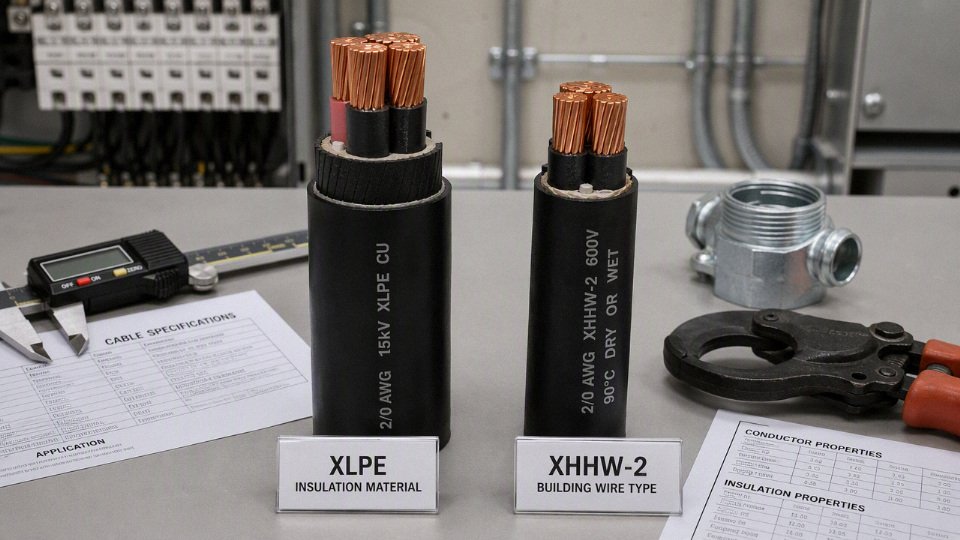
XLPE and XHHW meanings
XLPE means cross-linked polyethylene; it is the insulation material. XHHW is a North American building-wire type designation that tells you how that insulated conductor has been tested and where it may be installed. In procurement terms, XLPE describes what the insulation is made from, while XHHW describes a listed wire construction and its permitted service conditions.
What XLPE actually means
XLPE is polyethylene whose molecular chains have been cross-linked by chemical or physical processes so the insulation behaves more like a thermoset than ordinary thermoplastic polyethylene. That cross-linking is not just a chemistry footnote. It changes how the insulation handles heat, deformation, electrical stress, and long service exposure.
On the plant floor, the difference shows up in practical ways:
- Heat resistance: Cross-linking helps the insulation keep its shape at elevated conductor temperatures instead of softening like a normal thermoplastic.
- Mechanical stability: Properly cured XLPE resists creep and deformation under pressure from pulling, cleats, clamps, glands, and terminations better than basic polyethylene.
- Dielectric performance: XLPE is widely used because it can provide strong insulation resistance and low dielectric losses when compounded, extruded, cured, and tested correctly.
- Ageing behavior: Good XLPE systems are chosen for long service life, but performance still depends on compound quality, curing control, cleanliness during extrusion, moisture management, and the cable design around it.
The mechanism is simple enough: cross-linking ties polyethylene chains together so heat and electrical stress do not let the polymer move as freely. That improves thermal stability, but it also means XLPE cannot be remelted and reshaped like a thermoplastic. From a manufacturing and recycling perspective, that is a trade-off: you gain thermal and electrical performance, but you lose easy melt reprocessing and need tighter extrusion and curing control.
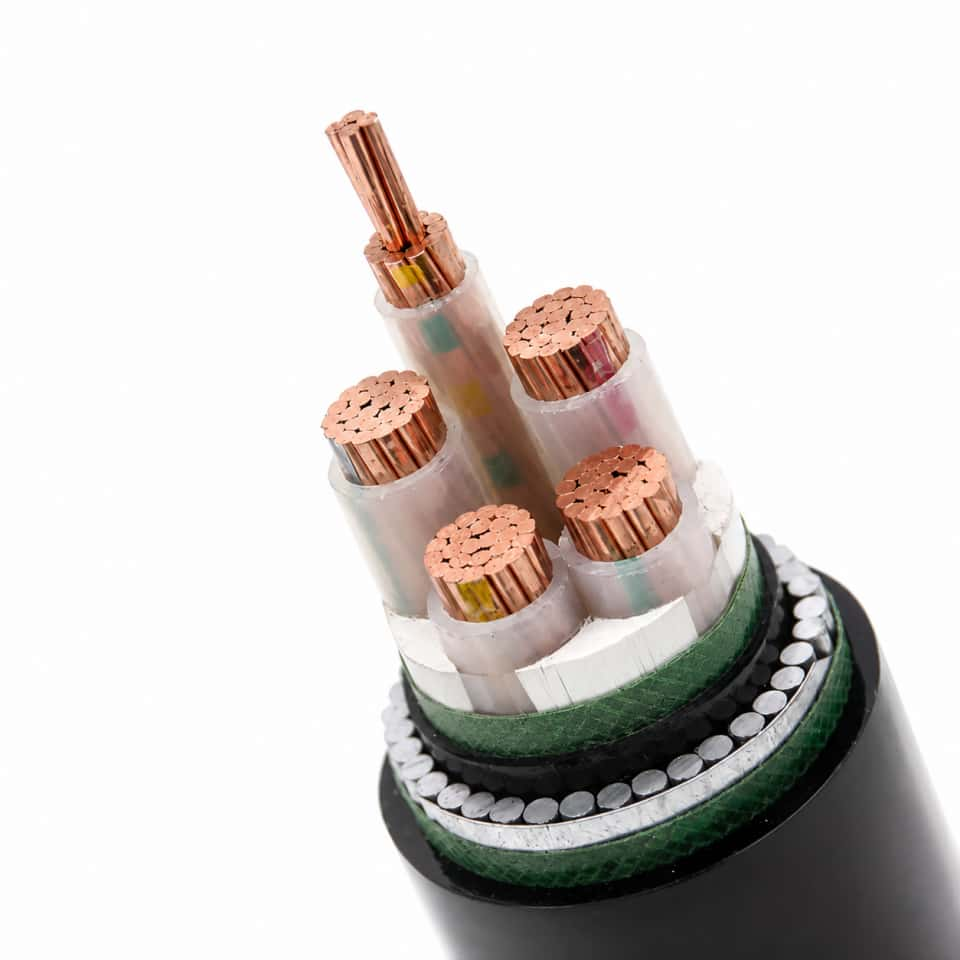
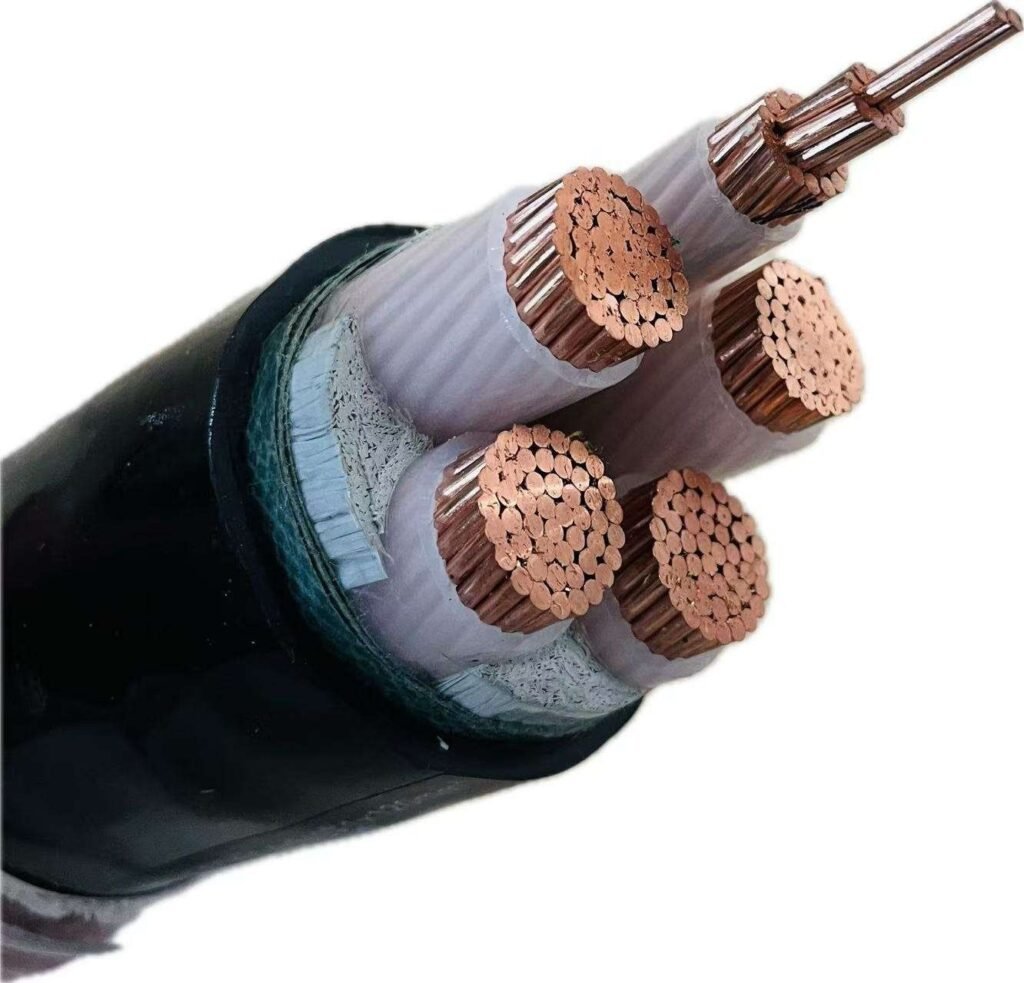
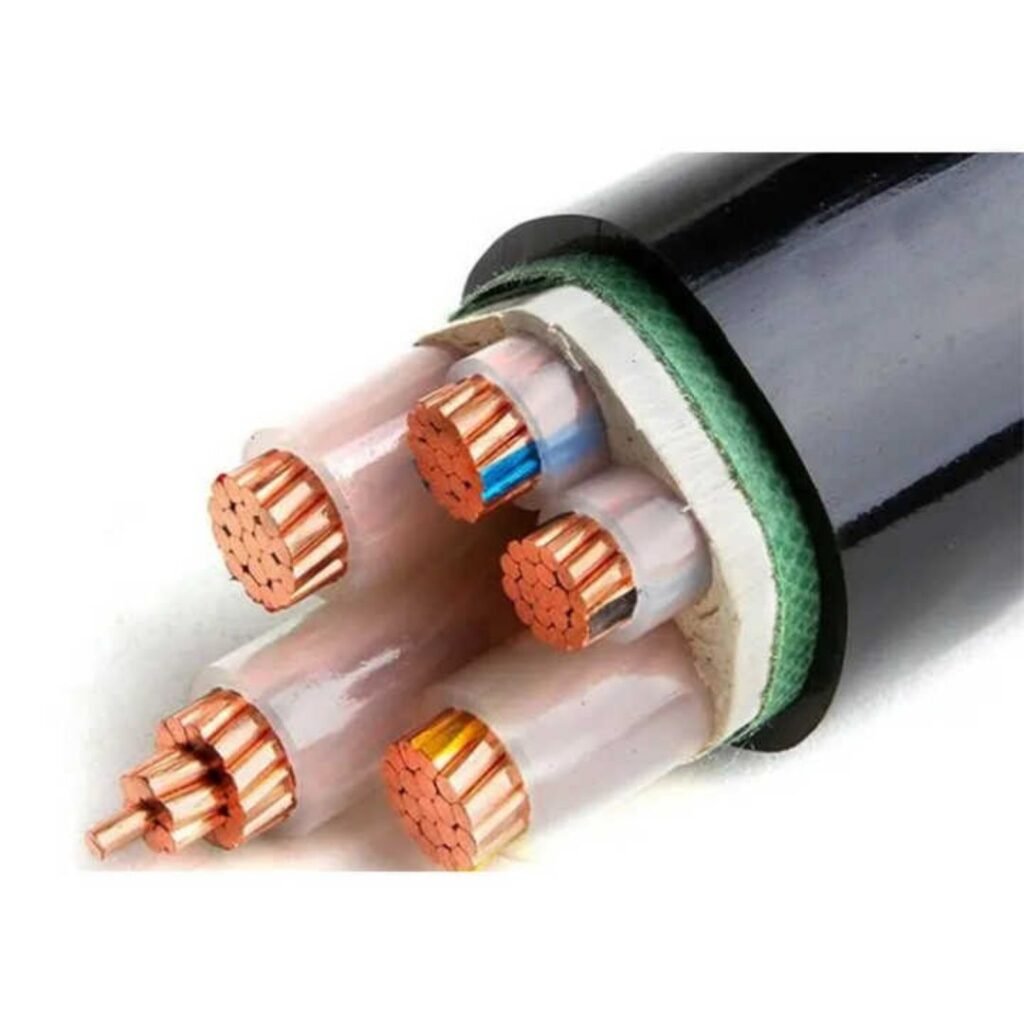
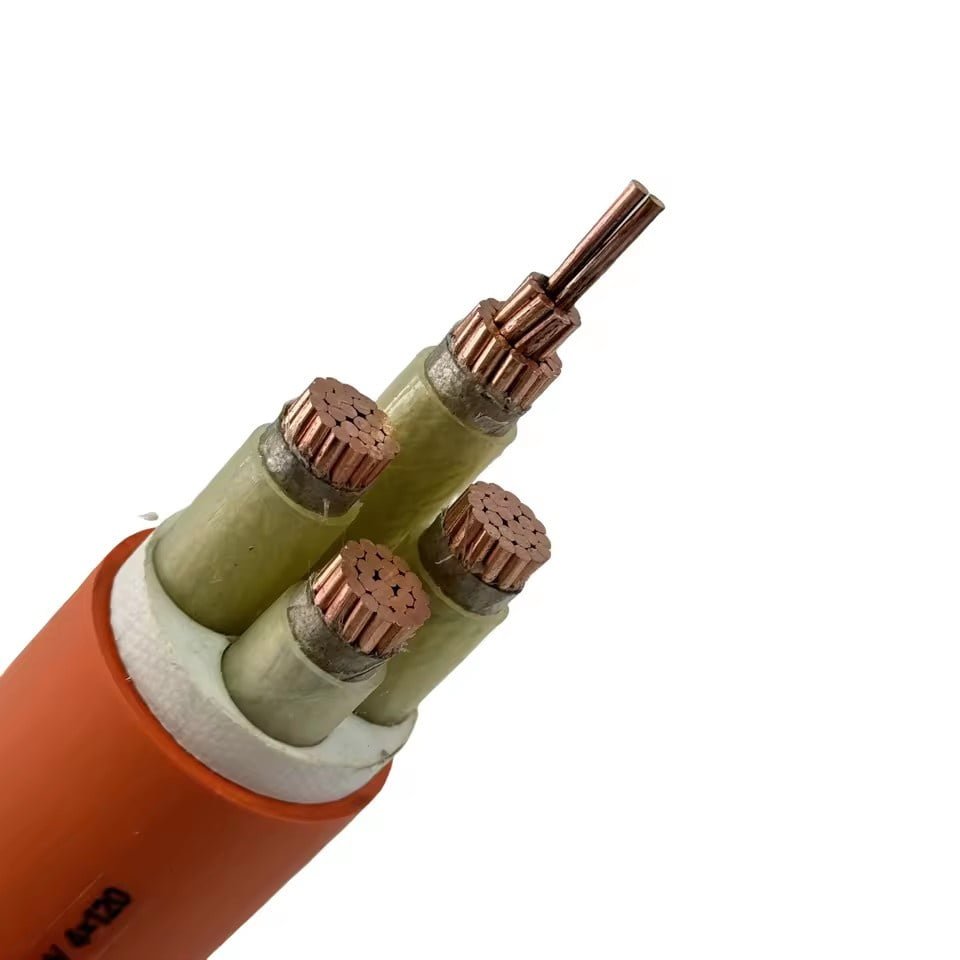
XLPE appears in many cable families, not just building wire. It may be used in low-voltage power cable, medium-voltage feeder cable, mining cable, control cable, armoured cable, tray cable, and high-voltage transmission designs. Common project voltage classes range from 0.6/1 kV low-voltage systems through medium-voltage classes such as 5 kV, 15 kV, and 35 kV, with higher-voltage XLPE designs used for transmission projects. The exact construction still has to be read from the data sheet, not guessed from the insulation material.
What XHHW means on a conductor
XHHW is a type designation used for insulated building wire, commonly interpreted as cross-linked, high heat-resistant, water-resistant insulated wire. In the North American context, it normally points buyers toward a listed conductor type used in raceways, ducts, and approved wiring methods under the applicable product standard and electrical code.
The letters are not decorative catalog language. They connect the product to a tested performance category, including temperature rating, wet or dry location suitability, flame behavior where required, insulation thickness rules, marking requirements, and other construction checks defined by the relevant standard.
A typical interpretation is:
- X: Cross-linked insulation.
- HH: High heat-resistant rating, commonly associated with 90 degrees C dry use for Type XHHW.
- W: Water-resistant construction for wet-location use within the marked rating and approved installation method.
Type XHHW is commonly rated 90 degrees C dry and 75 degrees C wet. Type XHHW-2 is the related designation buyers often look for when they need 90 degrees C in both wet and dry locations, provided the conductor is properly marked and applied under the governing standard, code, and project specification. XHHW and XHHW-2 building wire is commonly specified at 600 V or 1000 V depending on the listing, project standard, and manufacturer data sheet.
If a cable uses XLPE insulation, it is automatically XHHW.False
XLPE is an insulation material. XHHW is a specific building-wire type designation tied to tested construction, marking, and approved uses. Many XLPE-insulated cables are not XHHW.
This is where purchase mistakes happen. A buyer may send an RFQ asking for “XLPE cable” when the site actually needs “copper XHHW-2, 600 V, green insulation, stranded, for conduit.” Those are different levels of specification. One names a material family; the other defines a listed product type, conductor material, voltage class, color, stranding, and installation context.
Nearby wire markings that should not be blurred together
North American building-wire markings look similar, but they do not mean the same thing. In practice, I treat the marking as a short code that must be backed up by the listing file, manufacturer data sheet, and the job specification.
| Marking | General meaning in procurement language | Common place of confusion |
|---|---|---|
| XHHW | Cross-linked, high heat-resistant, water-resistant building wire | Mistaken for any XLPE-insulated cable |
| XHHW-2 | Related XHHW designation typically rated 90 degrees C wet and dry | Assumed acceptable without checking code, listing, and terminal temperature limits |
| THHN | Thermoplastic high heat-resistant nylon-jacketed wire | Often supplied when the spec actually requires wet-location performance |
| THWN-2 | Thermoplastic heat- and water-resistant nylon-jacketed wire, commonly with 90 degrees C wet/dry rating when marked | Sometimes treated as identical to THHN because many products are dual-marked |
| RHH | Rubber or thermoset high heat-resistant wire, generally dry-location oriented unless otherwise marked | Confused with RHW/RHW-2 because the letters are close |
| RHW-2 | Rubber or thermoset heat- and water-resistant wire, with “-2” commonly indicating 90 degrees C wet/dry use | Selected where a different insulation or physical toughness is actually specified |
| USE-2 | Underground service entrance cable type for direct burial or specific service entrance applications | Misapplied inside buildings where code restrictions may apply |
| SIS | Switchboard wire, typically used within switchgear and control equipment | Incorrectly substituted for general branch-circuit or feeder wiring |
The trade-off among these types is not only price. THHN/THWN-2 may be common, compact, and easy to source. XHHW-2 often gives good moisture and abrasion resistance in conduit pulls and may be preferred for feeders, industrial panels, and service conductors. RHW-2 or RHH may be chosen where the specification wants a different thermoset system. USE-2 suits underground service entrance applications, but that does not make it a universal building wire. SIS belongs in equipment wiring contexts, not as a casual substitute for field-installed feeders.
Terminal temperature limits can override the apparent insulation rating. A conductor marked 90 degrees C does not mean the installer can automatically ampacity-calculate everything at 90 degrees C. The final allowable ampacity depends on the electrical code, conductor size, equipment terminal ratings, adjustment factors, ambient temperature, raceway fill, and the authority having jurisdiction. That is the part procurement teams sometimes miss because the catalog marking looks so definitive.
Product standards are not the same as installation codes
The manufacturer builds and tests the wire to applicable product standards. The installer applies that wire according to the electrical code, local authority requirements, engineering drawings, and job specifications. Both sides matter, and neither one replaces the other.
A practical review should separate three questions:
- What is the product?
Check conductor material, insulation type, voltage rating, temperature rating, size, stranding, color, packaging, and listing or certification. - What standard is it built to?
Verify the applicable UL, CSA, IEC, BS, AS/NZS, or other standard named in the project documents and supplier data sheet. Where and how will it be installed?
Confirm wet or dry location, raceway or tray use, direct burial permission, indoor restrictions, sunlight exposure, oil exposure, ambient temperature, fault duty, bend radius, pulling tension, and termination temperature rating.
This split saves trouble during submittal review. I have seen technically good cable rejected because it met the material expectation but not the specified marking. I have also seen buyers overpay for a cable family that sounded stronger than required, while the actual installation code permitted a simpler listed building wire.
International projects make the language problem worse. A project using IEC, BS, AS/NZS, or other standards may specify XLPE-insulated cable without using the term XHHW at all. The same insulation material may appear under designations such as low-voltage power cable, armoured XLPE cable, LSZH building cable, or medium-voltage XLPE cable, depending on the standard system and construction. That does not mean the cables are interchangeable; it means the naming framework has changed.
The safe reading method is to treat XLPE as the material clue and XHHW as the North American type-designation clue. Once the project leaves that terminology system, compare the actual requirements: voltage rating, conductor class, insulation and sheath material, fire performance, wet-location suitability, installation method, certification, and local approval path. That is where an engineer or technical buyer can make a defensible substitution decision instead of matching letters that were never meant to cross standards one-for-one.
Material versus product rating
XLPE is a material choice; XHHW is a finished wire identity. In procurement terms, “XLPE insulation” tells you one part of the cable recipe, while “Type XHHW” or “Type XHHW-2” tells you the product is built, marked, tested, and allowed for a defined electrical installation category.
A useful plant-floor analogy is stainless steel. If a maintenance buyer asks for “stainless,” that does not tell the supplier whether the job needs 304 sheet, 316 threaded rod, a pressure-rated pipe spool, or a certified food-contact fitting. XLPE works the same way. It is a polymer insulation family, not a complete purchasing specification by itself. XHHW is closer to calling out a recognized electrical component type, where the market expects a defined conductor arrangement, insulation wall, voltage rating, temperature rating, marking, and listing basis.
A cable with XLPE insulation is automatically XHHW.False
XLPE describes the insulation material. XHHW requires the correct listed construction, product marking, voltage and temperature rating, test compliance, and permitted installation use.
What XHHW adds beyond the insulation compound
A finished XHHW building wire is not just “copper or aluminum plus XLPE.” The designation packages several decisions that matter to the installer, inspector, and owner after the cable leaves the factory.
A proper product description normally has to answer at least these points:
- Conductor material and construction
Copper or aluminum, solid or stranded, compact or compressed stranding where applicable. This affects pulling tension, termination fit, lug selection, bend handling, and heat dissipation. A fine-stranded flexible cable may feel nicer in the hand but may not be accepted under the same termination assumptions as a listed building wire unless the full construction is approved for that use. Insulation system and wall thickness
The insulation material is only one piece. Wall thickness, cure quality, eccentricity control, and compound formulation affect dielectric margin, cut-through resistance, aging, and water exposure performance. Two cables may both say XLPE and still have very different insulation designs.Voltage rating
XHHW and XHHW-2 building wire is commonly specified at 600 V or 1000 V, depending on the applicable listing, project standard, and manufacturer data sheet. XLPE power cables, by contrast, can run from 0.6/1 kV low-voltage systems into medium-voltage classes such as 5 kV, 15 kV, and 35 kV, with specialized XLPE designs used above that in transmission work.Temperature and wet-location rating
UL Type XHHW is commonly associated with 90 degrees C dry and 75 degrees C wet ratings, while XHHW-2 is commonly 90 degrees C in both wet and dry locations when properly marked. The printed marking and certificate matter; a verbal “XLPE, 90 C” statement is not enough for code-based acceptance.Flame, sunlight, oil, and environmental claims
These are not automatically inherited from the word XLPE. They depend on the tested cable design and marking. A plant that runs feeders across a rooftop tray, through a wet utility trench, or near cutting oil mist needs those exposure claims checked directly against the cable data sheet and installation rules.Listing, marking, and permitted use
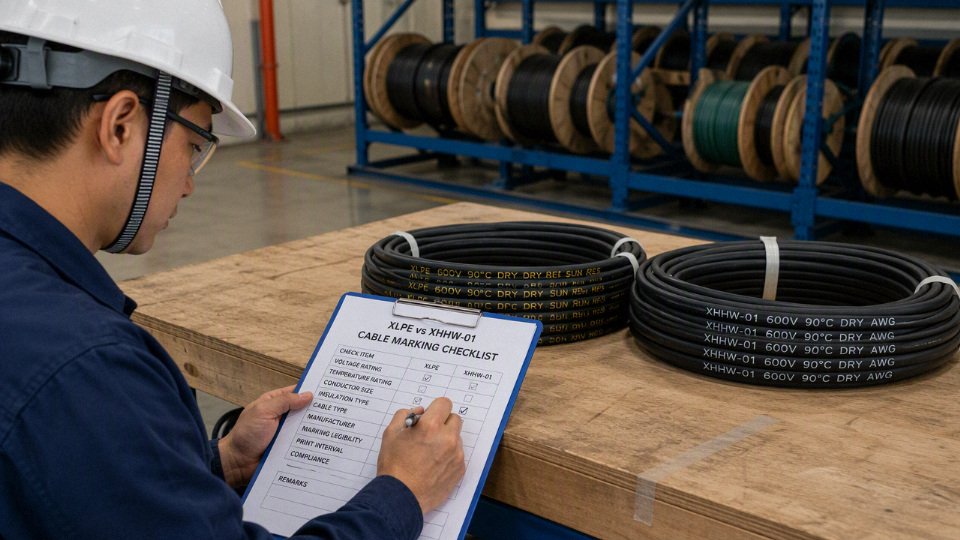
The cable jacket or insulation print is what the receiving inspector, electrical contractor, and maintenance team can verify on site. If the marking does not show the required type and rating, the purchasing intent may not survive installation review.
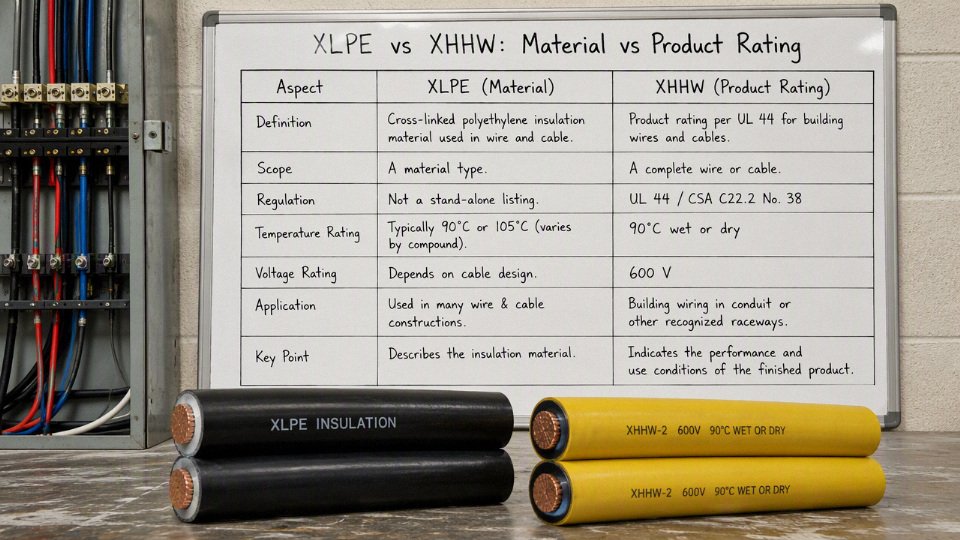
The mechanism is straightforward: the polymer compound contributes thermal endurance and dielectric behavior, but the product rating is created by the full design and verified by the applicable test program. Change the conductor class, insulation thickness, shield system, jacket, or flame package, and the same base insulation family can move into a different product category entirely. That is why a cable factory can run multiple XLPE-insulated products on similar extrusion equipment but release them under very different specifications.
XLPE appears in many cable families
XLPE is widely used because it offers good thermal resistance, dielectric strength, and aging performance compared with many general-purpose thermoplastics. That does not make every XLPE cable interchangeable. It means the same insulation family can be engineered into many constructions.
Common XLPE-insulated cable families include:
| Cable family | What XLPE contributes | Why it still may not be XHHW |
|---|---|---|
| Building wire | Heat-resistant insulation for branch circuits, feeders, and service conductors when built to the required type | Only XHHW/XHHW-2 if the construction is listed and marked that way |
| Low-voltage power cable | Dielectric insulation for 0.6/1 kV or similar systems | May be built to IEC, BS, AS/NZS, or project-specific standards rather than UL building wire type |
| Medium-voltage shielded cable | Insulation layer in a screened cable system | Requires conductor shield, insulation shield, metallic screen, jacket, and MV test regime; not building wire |
| Control cable | Insulation for multi-core control circuits | Core identification, jacket, flame rating, and tray approval drive the product identity |
| Instrumentation cable | Stable insulation for signal pairs or triads | Shielding, pair twisting, capacitance, and noise control are usually more important than the generic insulation name |
| Mining cable | Tough insulation within heavy-duty portable or fixed mining constructions | Needs mining-specific approvals, flexibility, jacket toughness, and sometimes pilot/core arrangements |
| Marine cable | Insulation within shipboard or offshore cable designs | Fire performance, smoke, halogen, oil resistance, and marine approvals define acceptance |
| Aerial bundled cable | Insulation or covering for overhead distribution assemblies | UV exposure, messenger design, phase identification, and utility standards control suitability |
| Renewable energy cable | Insulation in solar, wind, or energy-storage cable designs | UV, ozone, temperature cycling, DC rating, and connector compatibility may govern selection |
This is where buyers get caught. A cable schedule that says “1/C 500 kcmil copper XLPE” could mean several things depending on the project country, installation method, voltage class, and standard. Is it a 600 V building wire for conduit? A 0.6/1 kV power cable for tray? A 15 kV shielded feeder? A solar collection cable? Those are not small paperwork differences. They affect pulling equipment, gland selection, termination kits, test voltage, stock spares, and whether the installation passes inspection.
Why two XLPE cables can behave differently in service
The counter-intuitive part is that two cables with the same insulation label can age, pull, terminate, and fail in different ways. XLPE is not a magic equalizer.
Several design variables change service behavior:
- Conductor class and stranding
A rigid stranded building wire, a compact power conductor, and a flexible portable cable conductor do not handle the same in tray, conduit, or moving service. In practice, this shows up as pulled strands at terminations, oversized bend radius problems, or lugs that never quite torque cleanly. Insulation formulation
Crosslinking chemistry, fillers, scorch control, and additives influence heat aging, cut-through resistance, and surface condition. A compound optimized for extrusion speed is not automatically the same as one optimized for wet electrical aging or sunlight exposure.Shield design
Medium-voltage XLPE cable depends on conductor shields, insulation shields, and metallic screens to control electrical stress. Remove that system and the cable is no longer suitable for the same voltage stress, even if the insulation layer itself is XLPE.Jacket compound
PVC, PE, LSZH, CPE, or other jacket materials change oil resistance, flame spread, sunlight performance, abrasion resistance, and low-temperature handling. I have seen good insulation hidden inside a jacket that cracked early because the outdoor exposure was never specified properly.Water-blocking system
Longitudinal water-blocking tapes, powders, swelling yarns, and metallic moisture barriers matter in ducts, trenches, and flooded cable basements. XLPE can be part of a wet-rated design, but wet performance belongs to the whole cable system.Installation method
Conduit, tray, direct burial, duct bank, rooftop support, and free-air installation all change ampacity assumptions, mechanical abuse, and approval requirements. A cable acceptable in one route may be wrong ten meters later if it leaves conduit and enters tray.
The trade-off is familiar to anyone who has had to keep both purchasing and maintenance happy. A generic “XLPE cable” description may give procurement more supplier options and a lower first quoted price, but it sacrifices control over compliance, installation approval, and long-term failure risk. A tighter product designation such as XHHW-2, with the required voltage, conductor, size, color, standard, and marking, narrows the supplier pool but gives the contractor and inspector something concrete to verify.
That preference flips only when the project is intentionally engineered around a different cable standard. For example, an IEC low-voltage power cable or a medium-voltage shielded XLPE feeder should not be forced into XHHW language just because both use crosslinked insulation. In that case, the correct buying term is the applicable cable standard and construction, not the North American building wire type.
Why markings and data sheets beat verbal shorthand
On the shop floor, shorthand is convenient. People say “XLPE feeder,” “rubber cord,” or “PVC control cable” because everyone is trying to move the job along. That shorthand becomes risky when it enters a purchase order.
For XHHW-type procurement, the safe check is the printed and documented identity:
- Cable type designation — for example, Type XHHW or Type XHHW-2 where required.
- Conductor material and size — copper or aluminum, AWG/kcmil or metric size as applicable.
- Voltage rating — such as 600 V or 1000 V only when supported by the listing and data sheet.
- Temperature rating — dry and wet ratings must match the installation requirement.
- Wet-location, sunlight, oil, flame, or other markings — only count them if they are printed or documented under the relevant standard.
- Applicable standard and certification — verify against the current project specification, local code, and supplier certificate.
- Installation approval — conduit, raceway, tray, direct burial, duct, marine, mining, or other use as applicable.
- Manufacturer data sheet revision — old PDFs floating in a purchasing folder cause more confusion than people admit.
Procurement errors usually start with under-specified material language. A schedule that lists only “XLPE,” “PVC,” or “rubber” leaves the supplier guessing about the actual cable family. Some suppliers will quote the lowest compliant-looking option; others will ask questions; a few will assume the local default standard. None of those outcomes is reliable enough for an international project with inspection hold points, packing deadlines, and site crews waiting for cable drums.
The practical specification should name both levels where needed: the material system and the product identity. For a North American-style building wire requirement, that may mean calling out Type XHHW-2, conductor, size, voltage, color, rating, certification, and packaging. For a power cable project, it may mean specifying XLPE insulation within a complete standard such as a low-voltage or medium-voltage cable construction. The word XLPE belongs in the specification, but it should not be asked to do the job of the whole cable designation.
Performance limits that matter
The usable choice is not “XLPE or XHHW” on the drawing; it is whether the marked cable construction matches the heat, moisture, voltage, flame, mechanical, and exposure conditions of the installation. XLPE can be part of a very robust cable system, but XHHW/XHHW-2 gives the buyer a specific building-wire designation with defined ratings only when the conductor is listed and marked that way.
Temperature rating is a system limit, not just an insulation property
XLPE compounds are widely used because crosslinking improves thermal stability compared with many thermoplastic insulations. That does not mean every XLPE-insulated cable may be loaded to the same conductor temperature. The allowable operating temperature comes from the product standard, cable design, conductor size, listing, installation code, and the temperature rating of the equipment terminals.
For building wire, the practical distinction is usually this:
| Product marking | Common temperature use | What must still be checked |
|---|---|---|
| XHHW | Commonly 90°C dry and 75°C wet | Exact marking, listing, code application, termination limits |
| XHHW-2 | Commonly 90°C wet and dry | Exact marking, project specification, manufacturer data sheet |
| XLPE-insulated power cable | Varies by design and standard | Cable standard, voltage class, shield/jacket system, emergency rating if applicable |
The mechanism is simple but often ignored during purchasing. Higher insulation temperature rating can allow a higher ampacity table basis, but the weakest thermal element controls the final installation. A 90°C insulated conductor landed on equipment with 75°C terminals is commonly limited by the terminal temperature rule, not by the insulation. In practice, this catches people on switchgear, molded-case breakers, motor control centers, and older panelboards where the lug rating is not what the buyer assumed from the wire catalog.
The trade-off is that higher-temperature insulation may give design flexibility, but it does not erase heat from crowded conduits, bundled tray runs, sunny rooftops, or warm mechanical rooms. Once correction and adjustment factors are applied, the apparent advantage can shrink quickly.
Wet-location rating needs exact language
A generic “XLPE insulation” description does not automatically prove suitability for wet, submerged, direct-buried, or duct-bank service. XHHW and XHHW-2 have specific meanings tied to listed building wire performance, and the “-2” marking is especially important where 90°C operation in wet locations is expected. The difference matters in underground raceways because a conduit that was dry on installation day is often wet six months later.
Moisture performance depends on more than whether the polymer dislikes water. Water can migrate along conductor strands, under shields, through jacket defects, and into terminations. In medium-voltage service, water trees and electrical stress at contaminants or voids are not theoretical concerns; they are a common reason utilities and plants pay close attention to insulation cleanliness, shields, jackets, and tested accessories.
For a wet or underground purchase, the buyer should confirm:
- Listed wet-location marking, not only “XLPE insulation”
- Direct-burial approval if the cable will be placed in soil
- Submersible or continuously wet rating if cable will sit in water
- Jacket material and thickness for abrasion and water protection
- Compatibility with duct-bank temperatures and pulling conditions
- Approved splices, terminations, and sealing methods
A cable described only as XLPE-insulated is automatically suitable for wet underground service.False
XLPE describes insulation material, but wet-location, direct-burial, submersible, and duct-bank suitability depend on the complete cable construction, listing, marking, jacket system, and installation standard.
Voltage class changes the whole cable architecture
XHHW and XHHW-2 are commonly specified as low-voltage building wire products, often at 600 V or 1000 V depending on the applicable listing, project standard, and manufacturer data sheet. XLPE insulation is used much more broadly: low-voltage 0.6/1 kV power cables, medium-voltage classes such as 5 kV, 15 kV, and 35 kV, and higher-voltage transmission designs.
That voltage difference is not just a number on a quote sheet. At medium voltage, the cable normally requires conductor shields, insulation shields, metallic screens or tapes, jacket systems, stress-control terminations, tested splices, and trained installation practices. A 15 kV XLPE cable is not “a thicker version of XHHW.” It is a different electrical system.
The cost trade-off is obvious once accessories are included. Medium-voltage XLPE cable may be the correct engineering choice for feeders, wind or solar collection systems, substations, and heavy industrial distribution, but it brings higher accessory cost, longer termination time, test requirements, and more severe workmanship consequences. The preferred choice flips back to listed low-voltage building wire where the system is within its rating, installed in raceway, and governed by standard building wiring methods.
Flame, smoke, and fire behavior must be specified separately
XLPE is not automatically low-smoke, zero-halogen, plenum-rated, tray-rated, fire-resistant, or circuit-integrity cable. Those properties come from the full compound package, fillers, jacket material, cable geometry, flame test standard, and listing. I have seen specifications that say “XLPE flame retardant cable” with no test reference; that is not enough for a refinery cable tray, a tunnel, a data hall, or a high-occupancy building.
Fire-related purchasing language should identify the required category, such as:
- Flame-retardant cable for general industrial use
- Tray-rated cable where installed in cable tray
- Low-smoke zero-halogen construction where smoke and acid gas are restricted
- Plenum-rated cable where the building code requires it
- Fire-resistant or circuit-integrity cable where operation during fire is required
- Oil- and flame-resistant constructions for some industrial control or power applications
There is a real formulation trade-off here. Compounds optimized for low smoke or halogen-free performance may behave differently in abrasion, flexibility, cold bending, or cost than conventional jacket systems. Do not let a purchasing shortcut turn into a site rejection after the cable has already landed at the receiving dock.
Mechanical installation limits decide whether the cable survives pulling
A conductor that meets the electrical requirement can still be damaged during installation. Pulling tension, sidewall pressure, bend radius, conduit fill, lubrication, reel handling, and jacket protection are not paperwork details; they decide whether insulation is stretched, flattened, scraped, or cut before energization.
Individual XHHW/XHHW-2 building wires are commonly pulled through conduit as separate conductors. Multiconductor XLPE power cables behave differently because the jacket, fillers, armor if present, and conductor assembly affect diameter, stiffness, weight, and minimum bend radius. A big multiconductor cable in a long tray run may be easier to dress neatly than multiple singles, but it can be harder to pull through tight bends and harder to repair if one phase is damaged.
Installation checks should include:
- Maximum pulling tension from the manufacturer, based on conductor material and pulling method.
- Maximum sidewall pressure at bends, especially with large conductors and long pulls.
- Minimum bend radius during pulling and final installed position.
- Conduit fill and jam ratio for raceway pulls.
- Jacket requirement for tray, burial, sunlight, abrasion, or chemical exposure.
- Reel orientation, payoff method, and storage condition before installation.
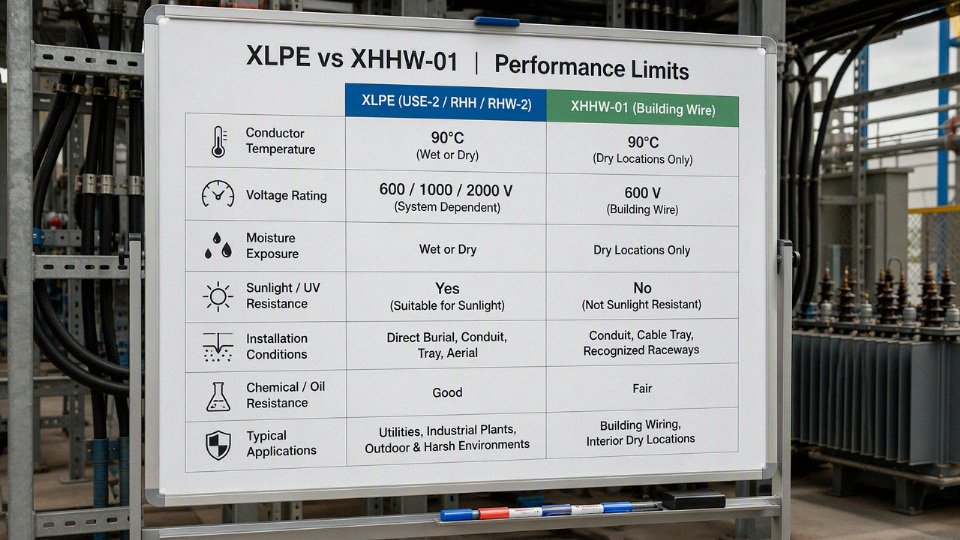
Exposure categories are not covered by the words alone
Outdoor and industrial sites add exposure that a clean electrical room never sees. Sunlight, oil mist, cutting fluids, solvents, washdown chemicals, fertilizer dust, salt air, cement dust, rodent damage, and vibration all change the cable choice.
The buyer should treat each exposure as a separate requirement:
| Exposure | Procurement check |
|---|---|
| Sunlight | Sunlight-resistant marking or outdoor-rated jacket |
| Oil and hydrocarbons | Oil-resistant insulation or jacket rating where required |
| Chemical splash | Compatibility with the actual chemical, concentration, and temperature |
| Abrasion | Tough jacket, armor, tray suitability, or mechanical guarding |
| Direct burial | Cable marked and constructed for burial, not merely wet-rated |
| Aerial service | UV, temperature cycling, messenger/support method, mechanical load |
| Underground duct | Wet rating, pulling limits, duct temperature, sealing practices |
| Industrial tray | Tray rating, flame test, sunlight and oil exposure where present |
| Corrosive areas | Jacket and metallic component compatibility, including shields or armor |
This conclusion stops holding where the environment is mild, controlled, and fully inside a standard wiring method. In a dry indoor conduit run from a panelboard to a motor starter, the exposure question may be straightforward. In a wastewater plant, mine, port, chemical plant, or rooftop solar installation, it becomes one of the main procurement risks.
Ampacity depends on the installation, not the label alone
Insulation rating influences which ampacity tables and correction factors may be used, but final ampacity depends on conductor material, conductor size, number of current-carrying conductors, ambient temperature, raceway or cable tray installation, grouping, soil thermal resistivity for buried runs, and terminal limits. Copper versus aluminum also changes lug selection, termination preparation, conductor diameter, and sometimes the economics of the feeder.
The commercial trap is buying cable from a schedule line that only states size and insulation, then discovering the installation requires derating. Six current-carrying conductors in a warm conduit bank are not the same as three conductors in a ventilated tray. A duct bank under sun-baked pavement is not the same as a short indoor conduit nipple.
For procurement, “XLPE” and “XHHW” are not performance approvals by themselves; the controlling evidence is the exact printed cable marking, applicable standard, manufacturer data sheet, and installation assumption used for the ampacity and environment. Before issuing a purchase order, match the quote against the cable schedule, code basis, termination temperature, wet/dry location, voltage class, flame requirement, installation method, and site exposure. That check is slower than copying a catalog phrase, but it is much cheaper than replacing a feeder after inspection, pulling damage, or failed commissioning.
Installation choices by environment
Choose XHHW or XHHW-2 when the job is a code-governed building-wire installation and the documents call for that type in an approved wiring method. Choose a more fully defined XLPE-insulated cable when the environment adds medium voltage, direct burial, tray use, shielding, oil, flame, outdoor exposure, or project-specific certification requirements.
Commercial buildings: where XHHW-2 usually fits
In commercial work, XHHW-2 is often a practical choice for copper or aluminum conductors used in feeders, services, and branch circuits installed in raceway, provided the governing electrical code, listing, voltage rating, conductor size, and project specifications all line up. The “-2” marking matters because it commonly supports 90°C wet and dry ratings when properly listed and marked, while older or different XHHW markings may not give the same wet-location temperature rating.
Typical building uses include:
- Service entrance conductors in conduit, where the service equipment and local code permit the type.
- Feeder conductors from switchboards to panelboards, motor control centers, or distribution panels.
- Branch circuits in raceway, especially where insulation toughness and moisture performance are desired.
- Large aluminum conductors, where pulling tension, conduit fill, and termination temperature limits need checking before purchase.
The practical limit is that XHHW-2 is still a building wire designation, not a complete answer for every harsh location inside a building. A parking structure, rooftop equipment run, wet mechanical room, or long underground conduit may introduce corrosion, water migration, UV exposure at stub-ups, or pulling damage that the cable schedule must address directly. In practice, I would not approve a substitution on the word “XLPE” alone; I would want to see the actual type marking, listing, voltage rating, conductor class, and installation method.
Industrial plants: why “just XHHW” is often too thin a specification
Industrial buyers usually need to specify the whole cable construction, not only the insulation. A refinery pipe rack, food plant washdown area, cement plant cable tray, or steel mill basement creates failure modes that ordinary building wire language does not cover well enough.
Common plant requirements include:
- Tray cable ratings for open tray installation, vertical tray runs, and plant cable management standards.
- Oil-resistant jackets where lubricants, hydraulic oil, cutting fluid, or fuel mist can contact the cable.
- Armored constructions, such as interlocked armor or wire armor, where impact, rodents, or routing through congested areas are concerns.
- Instrumentation shielding for analog signals, VFD feedback, weighing systems, thermocouples, and low-level control signals.
- Control cores and multi-core constructions to reduce tray congestion and simplify panel wiring.
- Integrated grounding conductors where the design requires a dedicated equipment grounding path in the cable assembly.
- Plant-specific flame tests, smoke requirements, or petrochemical owner specifications that go beyond a generic insulation material callout.
The mechanism is simple enough: insulation handles dielectric stress and conductor temperature, but the jacket, shield, armor, bedding, and fillers handle the plant. Oil can soften or swell the wrong jacket. A VFD output circuit can inject noise into a nearby instrument pair if shielding and grounding are poorly chosen. A tray cable without the required flame rating can pass an electrical check and still fail the owner’s safety review.
The trade-off is cost and handling. A rugged armored, shielded, oil-resistant XLPE cable may last longer and reduce nuisance faults, but it is heavier, stiffer, slower to terminate, and more expensive to ship. For clean electrical rooms with conduit throughout, that extra construction may be wasted.
Underground distribution and medium voltage
For underground distribution, a medium-voltage XLPE cable is normally a screened cable system, not a simple insulated building wire. Once voltage class rises into common medium-voltage levels such as 5 kV, 15 kV, or 35 kV, the cable must control electrical stress in a very different way.
A typical medium-voltage XLPE cable may require:
- Conductor screen to smooth the electric field around the conductor strands.
- XLPE insulation sized and tested for the voltage class and system grounding method.
- Insulation screen to create a controlled outer electrical surface.
- Metallic shield or concentric neutral to carry charging current, fault current, or grounding function as designed.
- Outer jacket for moisture, abrasion, sunlight, chemical, or termite resistance.
- Water-blocking tapes, powders, or longitudinal barriers where wet ducts or direct burial are expected.
- Compatible separable connectors, stress cones, terminations, and splices matched to the cable shield system.
This is where a lot of procurement mistakes get expensive. If the shield system, jacket, and terminations are not designed together, the cable may test fine on a reel but fail after energization, switching surges, or water ingress. Medium-voltage cable performance depends on the whole accessory system, installer workmanship, and field testing, not only the XLPE compound.
Renewable energy projects
Solar, wind, and battery projects often use XLPE-insulated power cables, but that does not make them interchangeable with photovoltaic wire, DC collection cable, grounding cable, or inverter output cable. The project voltage, polarity, exposure, and installation method drive the correct selection.
Key distinctions include:
- Photovoltaic wire for module and string wiring, usually selected for outdoor UV exposure, elevated rooftop or array temperatures, wet service, and DC ratings accepted by the governing code.
- DC collection cable from combiner boxes or string inverters, where polarity identification, temperature rise, routing, and possible direct burial need review.
- Grounding and bonding conductors, which may have different bare, insulated, green, or green-yellow identification requirements depending on the standard.
- Inverter output cable on the AC side, where ampacity, harmonics, equipment terminals, and routing through trays, ducts, or raceways influence the choice.
- Wind turbine tower and nacelle cables, where torsion, vibration, oil exposure, low temperature, and flame behavior may matter more than they do in a fixed indoor feeder.
Heat is the quiet issue in renewable work. Cable on a rooftop, in a combiner box, or inside a packed trench can operate at a much higher ambient temperature than the neat ampacity table suggests. Oversizing helps, but only after the cable type, rating, installation spacing, and derating method are accepted by the engineer and authority.
Utilities, infrastructure, and export tenders
Utilities and infrastructure owners rarely buy by insulation name alone. Duct banks, substations, tunnels, bridges, rail systems, airports, ports, wastewater plants, and district energy networks each bring their own standards for fire behavior, mechanical protection, water resistance, corrosion, pulling loads, sheath bonding, and documentation.
A North American XHHW designation may also be the wrong language for an IEC-based tender. It might be acceptable only if the owner, consultant, or authority explicitly accepts equivalency, including test reports, certification marks, conductor sizing conversion, voltage designation, flame performance, marking, and factory documentation. Without that acceptance, offering XHHW because it has XLPE insulation is not a compliant substitution; it is a commercial risk waiting for the technical bid review.
When not to choose by material alone
Do not specify only “XLPE cable” for applications where the installation environment defines the safety and service life. At minimum, the buyer should name the applicable cable type, standard, construction, voltage class, and approval route for:
- Direct burial, including soil condition, water exposure, rodent risk, and mechanical protection.
- Fire survival circuits, where circuit integrity during fire is the requirement, not just flame retardance.
- Low-smoke evacuation routes, tunnels, hospitals, metros, and public buildings with smoke and toxicity limits.
- Hazardous locations, where area classification and permitted wiring methods control the cable choice.
- Marine service, where salt, oil, vibration, shipboard standards, and flame behavior can dominate the design.
- Mining service, where trailing duty, abrasion, crush, flame, grounding, and inspection rules are specialized.
- Medium-voltage circuits, where screens, shields, jackets, terminations, and field testing are part of the cable system.
The safe procurement rule is to buy the listed or standardized cable construction for the installation, then verify whether XLPE is the right insulation within that construction. That rule stops holding only when the owner’s specification already defines a proven equivalent path and the authority responsible for acceptance agrees in writing.
Specification and substitution risks
Most disputes around XLPE and XHHW start with an incomplete specification, not a bad cable. If the purchase order says only “XLPE wire,” the supplier is being asked to guess the product type, standard, voltage class, conductor construction, markings, and documentation package — and those guesses may not match the inspector, owner, or code requirement.
A usable cable line item needs to define the product, not just the polymer family. At minimum, buyers should lock down:
- Conductor size and unit system, such as AWG/kcmil, mm², or project-specific schedule reference
- Conductor metal, including copper, aluminum, tinned copper, compact aluminum, or another required construction
- Stranding class or flexibility requirement, especially where lugs, glands, or tight bends are involved
- Voltage rating, such as 600 V, 1000 V, 0.6/1 kV, 5 kV, 15 kV, or another system class
- Recognized standard and cable type designation, such as XHHW-2, RHW-2, USE-2, TC-ER, or a project standard
- Insulation thickness and insulation system, where the standard allows more than one construction
- Jacket requirement, if any, including PVC, LSZH, CPE, PE, or no jacket
- Flame, smoke, sunlight, oil, or chemical resistance requirements
- Wet/dry temperature rating and installation location
- Certification mark, test report, and inspection document requirements
- Packing form, drum length tolerance, drum schedule, and identification marking
That sounds basic, but I have seen “equivalent XLPE cable” become a three-week argument because the buyer meant UL-listed XHHW-2 building wire and the exporter quoted a 0.6/1 kV IEC-style XLPE insulated power cable. Both could be perfectly legitimate products. They are not the same procurement item.
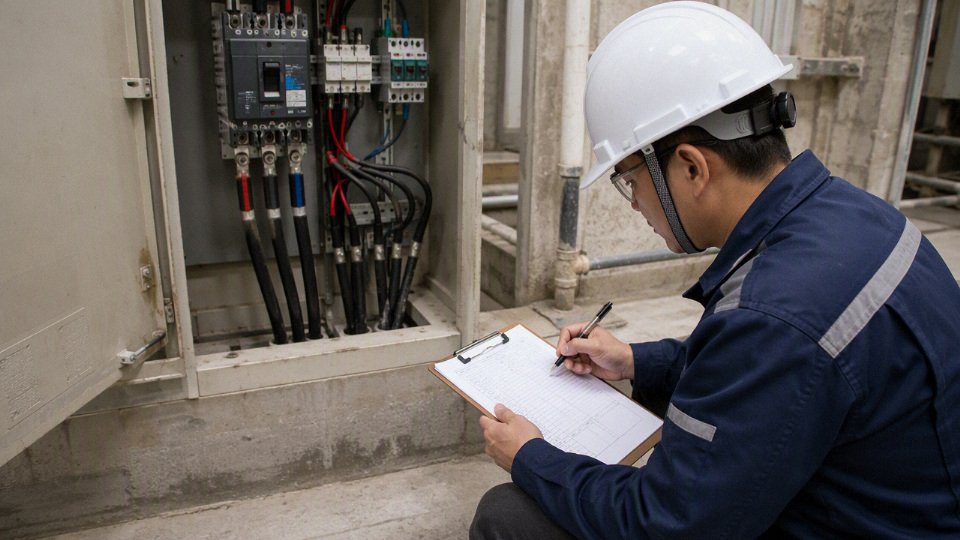
Do not treat XHHW, XHHW-2, RHW-2, USE-2, THHN, THWN-2, and tray cable as automatic substitutes just because some versions use cross-linked insulation or show a similar temperature number on a catalog page. The type marking carries installation permissions and limitations that the insulation chemistry alone does not carry.
| Marking or cable type | Common substitution trap | What must be checked before acceptance |
|---|---|---|
| XHHW | Assumed equal to XHHW-2 | Wet-location temperature rating, exact listing, voltage rating, and project code basis |
| XHHW-2 | Treated as suitable anywhere because it is 90 degrees C wet/dry when properly marked | Raceway use, conductor material, certification mark, and terminal temperature limits |
| RHW-2 | Swapped for XHHW-2 without checking construction | Moisture rating, flame test, listing scope, and whether the project specification allows it |
| USE-2 | Pulled inside buildings as if it were ordinary building wire | Indoor-use restrictions and transition requirements under the applicable code |
| THHN | Used where wet-location performance is needed | Whether the product is also marked THWN or THWN-2 |
| THWN-2 | Assumed mechanically equivalent to XHHW-2 | Insulation/jacket construction, abrasion behavior during pulling, and owner preference |
| Tray cable | Replaced with single conductors because voltage and insulation look similar | Tray rating, jacket, flame test, sunlight resistance, crush/impact requirements, and installation method |
The mechanism behind many failures is simple: a material property is being used as a shortcut for a listed use. XLPE can provide good thermal and dielectric performance, but wet-location approval, flame performance, sunlight resistance, direct-burial suitability, and raceway-only limitations come from the full cable construction tested under a defined standard. A black XLPE insulation does not automatically mean sunlight-resistant. A cable with a moisture-resistant insulation does not automatically become direct-burial cable. A conductor rated 90 degrees C does not automatically let the equipment run at 90 degrees C.
Termination temperature is a classic field surprise. A 90 degrees C insulated conductor may still have its ampacity limited by 60 degrees C or 75 degrees C terminals, depending on equipment rating, conductor size, and the applicable electrical code. The insulation can survive the heat, but the lug, breaker, switchgear terminal, or molded-case device may not be listed for that conductor temperature. Ampacity is constrained by the weakest approved part of the installed circuit, not by the highest temperature printed on the cable.
Cross-border projects add another layer. A cable compliant with one national or regional standard can still be rejected if the contract requires a different certification mark, language of marking, test sequence, factory audit basis, or third-party report format. For example, a project written around UL Type XHHW-2 should not be filled with an IEC low-voltage power cable unless the engineer of record and authority having jurisdiction accept that substitution in writing. The reverse is also true: a UL-style building wire may not satisfy an IEC-based project package if the owner requires IEC test reports, CPR-related documentation, local civil-defense approval, or a nominated inspection body.
Documentation gaps create nearly as much damage as physical nonconformance. For bulk cable orders, especially export shipments, the technical offer should identify what records will ship with the goods and what can be retained for traceability:
- Type test reports for the claimed standard or listing scope
- Routine test records for the supplied batch
- Conductor resistance, voltage withstand, spark test, dimensional, and visual inspection records where applicable
- Material declarations, such as RoHS, REACH, halogen-free, or project-specific chemical statements when required
- Factory quality records or inspection release notes
- Packing lists matched to drum numbers
- Drum schedules with length, net weight, gross weight, and dimensions
- Batch, lot, or production traceability linking cable markings to factory records
- Certificates of origin, legalization documents, or shipping documents required by the destination country
The lowest-cost compliant-looking cable can still be commercially unacceptable. Some owners require a named listing, a specific third-party certification, witness testing, factory audit approval, country-of-origin documentation, consistent drum lengths, or repeat supply from the same production base across several project phases. A substitute that saves a few percent on unit price can burn that saving quickly through quarantine storage, reinspection, re-export, liquidated delay, or contractor claims.
A disciplined substitution process is not complicated, but it has to happen before production and shipment:
- Copy the original specification line by line, including drawings, notes, standards, and purchase order clauses.
- Identify every difference in conductor, insulation, jacket, voltage, marking, certification, test, packing, and documentation.
- Separate true equivalents from “close enough” items that need engineering judgment.
- Confirm code-sensitive points with the engineer of record or authority having jurisdiction.
- Submit the manufacturer data sheet, construction drawing, certificates, and test-document list for review.
- Obtain written approval before manufacturing, cutting cable to length, marking drums, or booking freight.
- Keep the approval tied to the actual batch, drum schedule, and shipped documents.
The trade-off is speed versus certainty. Fast substitutions can rescue a schedule when the original cable is unavailable, but only if the replacement is checked against the standard, installation method, and documentation requirements with the same discipline as the original design. That conclusion stops holding where the owner specification says “no substitutions” or where the authority having jurisdiction requires a particular listed type; in those cases, commercial pressure does not convert a near match into an approved cable.
Frequently asked questions
Is XLPE the same as XHHW?
No. XLPE is the insulation material, while XHHW is a recognized building wire type designation with defined ratings, markings, and installation rules. A cable can use XLPE insulation without being XHHW, and an XHHW purchase should be checked against the listing, standard, and manufacturer data sheet.
XLPE and XHHW are interchangeable procurement terms.False
XLPE identifies a cross-linked polyethylene insulation material. XHHW identifies a listed wire type with specific temperature, voltage, wet/dry location, and application requirements.
Is XHHW always made with XLPE?
Not safely by assumption. Many XHHW and XHHW-2 building wires use cross-linked polyethylene insulation, but the buyer should confirm the actual construction from the manufacturer’s data sheet, product marking, and applicable standard.
This matters during procurement because “XLPE insulated copper wire” on a quotation is not automatically the same as “UL Type XHHW-2 copper building wire.” If the job specification calls for XHHW-2, the quotation should state XHHW-2, the voltage rating, conductor class, temperature rating, and listing mark clearly enough that the receiving inspector does not have to guess.
Is XHHW-2 better than XHHW?
XHHW-2 is often preferred where a 90°C wet-location rating is needed, while XHHW is commonly associated with 90°C dry and 75°C wet ratings. That does not make XHHW-2 automatically acceptable for every feeder, conduit run, or panel termination.
Check these before substituting XHHW-2 for XHHW, or the other way around:
- The installation code used on the project
- The conductor size and material
- The voltage rating, commonly 600 V or 1000 V depending on the listing and data sheet
- Wet, dry, damp, duct, tray, or conduit exposure
- Termination temperature limits, often the quiet constraint in panel work
- Engineer-of-record and owner specification requirements
In practice, a wire rated 90°C does not mean the whole circuit can be loaded as if every lug, breaker, and enclosure is also a 90°C system.
Can XLPE cable be used in wet locations?
Yes, but only when the complete cable design and applicable standard support the service condition. XLPE as an insulation material does not, by itself, prove suitability for wet conduit, direct burial, flooded duct banks, or submerged service.
For wet or underground work, confirm the full construction:
- Insulation compound and wall thickness
- Jacket material, if any
- Water-blocking features, where required
- Metallic shield or armor design, for medium-voltage cables
- Marked wet-location rating
- Direct-burial or duct rating
- Required tests and certificates
- Compatibility with glands, terminations, and splices
A plant maintenance crew may see “XLPE” and think it is rugged enough for a damp cable trench. Sometimes it is. Sometimes the missing part is the jacket, water blocking, or listed wet-location marking.
Can XHHW be used for medium voltage?
Generally, no. XHHW is normally treated as a low-voltage building wire type, while medium-voltage circuits usually require shielded XLPE power cable designed for the voltage class, such as 5 kV, 15 kV, or 35 kV systems.
Medium-voltage cable selection is not just about thicker insulation. It involves conductor shielding, insulation shielding, metallic screen or tape shield, jacket design, stress cones, terminations, splices, fault-current duty, and testing practice. Buying “XHHW” for a medium-voltage feeder is the kind of mistake that can stop a project at submittal review before the cable ever reaches site.
Can XHHW replace THHN or THWN-2?
Sometimes, but only after review. A project may allow one listed building wire type instead of another if the code, environment, raceway fill, pulling conditions, and engineer approval all line up.
Compare at least these items before approving the substitution:
- Wet and dry temperature ratings
- Nylon jacket requirement, if specified
- Outside diameter and conduit fill
- Pulling friction and bend behavior
- Oil, gasoline, sunlight, or chemical exposure ratings where relevant
- Color coding and phase identification
- Listing mark and local inspection expectations
The awkward part is usually not electrical capacity; it is compliance. If the drawing says THWN-2 and the delivery arrives as XHHW-2, even a technically sound substitution can become a paperwork delay without written approval.
What should be printed on the cable?
The cable marking should give enough information for receiving inspection, installation verification, and future maintenance. Exact marking rules depend on the governing standard and listing, but buyers should expect the key identifiers to be visible and consistent with the purchase order.
Typical marking elements include:
- Manufacturer name or identification
- Conductor size, such as AWG or mm²
- Conductor material, where required
- Cable or wire type, such as XHHW, XHHW-2, or another specified type
- Insulation or construction reference where applicable
- Voltage rating
- Temperature rating
- Standard, listing, or certification mark
- Flame, sunlight, oil, or wet-location markings where required
- Production traceability information, if specified
What should buyers send to a cable manufacturer?
Send the information that controls design, compliance, packing, and commercial risk. A vague request for “XLPE cable” or “XHHW wire” usually leads to clarification cycles, and in bulk procurement those cycles cost more time than the original technical review.
A useful inquiry package includes:
- Cable schedule or bill of quantities
- Applicable standard or project specification
- Rated voltage and system voltage
- Conductor material, size, and stranding
- Required wire or cable type, if already specified
- Installation environment: conduit, tray, duct bank, direct burial, indoor, outdoor, wet, dry, or corrosive area
- Required temperature rating
- Flame, oil, sunlight, low-smoke, halogen-free, or fire-performance requirements
- Required certificates, listings, test reports, and inspection documents
- Drum length, packing method, and labeling requirements
- Delivery destination, incoterms, and schedule
- Owner-specific technical clauses or approved vendor requirements
- Photos, drawings, or samples when matching an existing cable
For replacement work, send a clear photo of the old cable marking if it is still readable. A five-second phone picture can prevent a long argument over whether the existing feeder was actually XHHW-2, tray cable, or a shielded XLPE power cable.
Verify the marking before purchase
Before releasing a purchase order, decide whether the project is asking for an insulation family, a listed building wire type, or a complete cable construction. If the schedule says “XLPE” but the installation actually needs XHHW-2, or if it says “wet location power cable” without a listing or voltage class, the buying description is not yet tight enough for a clean procurement.
Use the printed marking on the cable, the drum tag, and the manufacturer’s data sheet as the commercial truth set. A submittal may look acceptable on the first page, but inspectors and site engineers usually check the jacket or insulation print when the reels arrive.
Check these items before approving the offer:
- Cable schedule wording: Does it call for XLPE, XHHW, XHHW-2, USE-2, tray cable, low-voltage power cable, medium-voltage cable, or another defined category?
- Applicable standard or listing: Confirm the UL, IEC, ICEA, CSA, project, or utility requirement stated in the specification. Do not assume “XLPE insulated” satisfies a listed building wire requirement.
- Voltage rating: Match the required system class to the marked cable rating, such as 600 V, 1000 V, 0.6/1 kV, 5 kV, 15 kV, or 35 kV where applicable.
- Temperature rating: Verify the marked dry and wet ratings, especially where XHHW versus XHHW-2 affects acceptance.
- Wet or dry location approval: Underground ducts, damp risers, pull boxes, and outdoor terminations can turn a casual wording issue into a rejected installation.
- Installation method: Conduit, tray, direct burial, aerial service, equipment wiring, and utility distribution each point to different cable constructions.
- Certification and documentation: Ask for the data sheet, certificate, test report, packing list, and marking confirmation before shipment, not after the reels are already on the dock.
Ambiguous phrases deserve cleanup before money changes hands. Watch for terms such as “XLPE cable,” “insulated wire,” “power cable,” “wet location,” “equivalent,” or “same as XHHW” with no standard, voltage, temperature, conductor, sheath, or installation detail attached.
For bulk buyers, contractors, utilities, and EPC teams, the practical next step is to send the drawings, cable schedule, technical clauses, required certification, quantities, destination, and delivery window for review. Jinda can align the quotation to the specified cable category, supported by integrated R&D, manufacturing, testing, documentation, logistics coordination, and long-term after-sales service for international project supply.