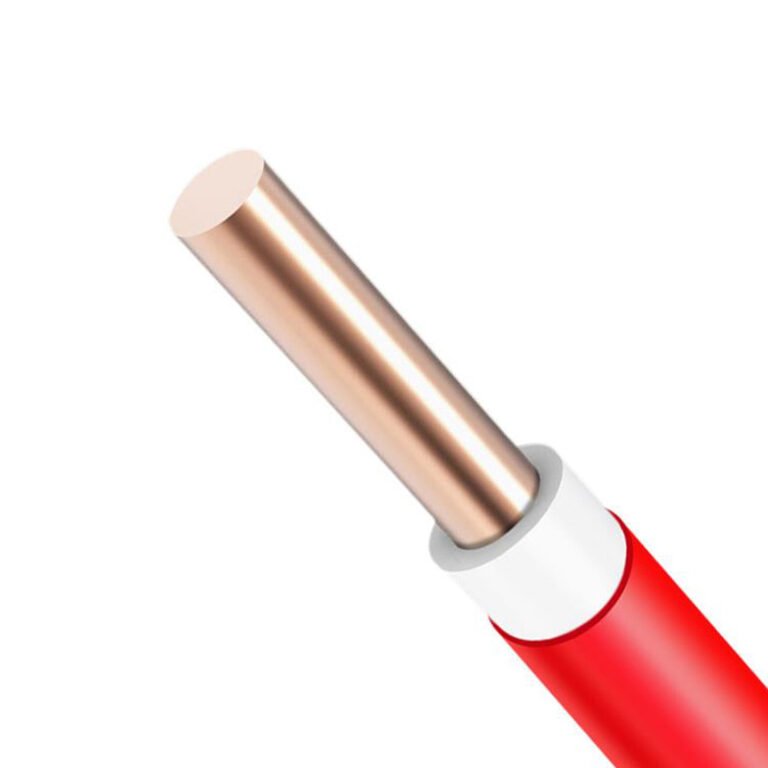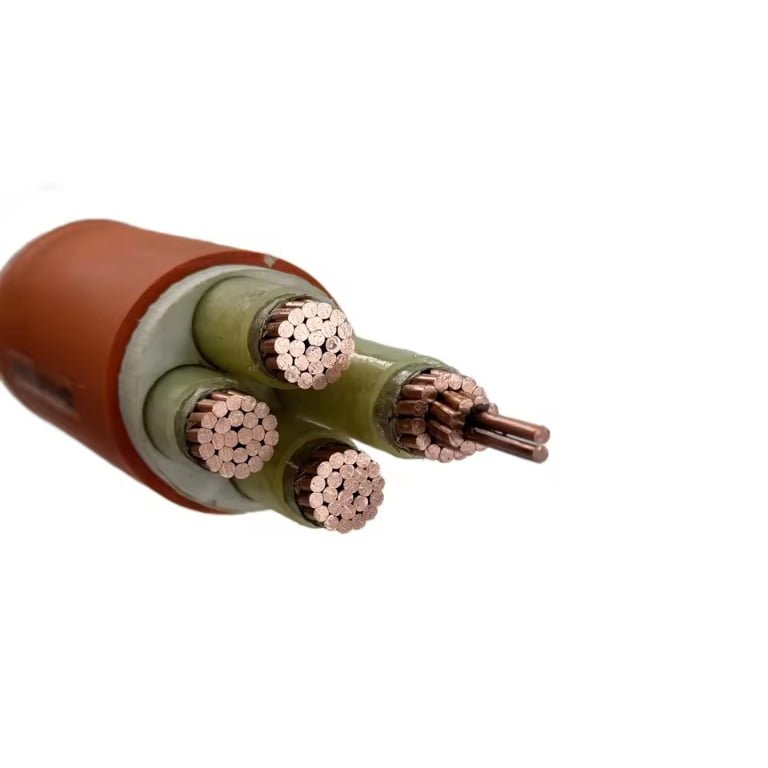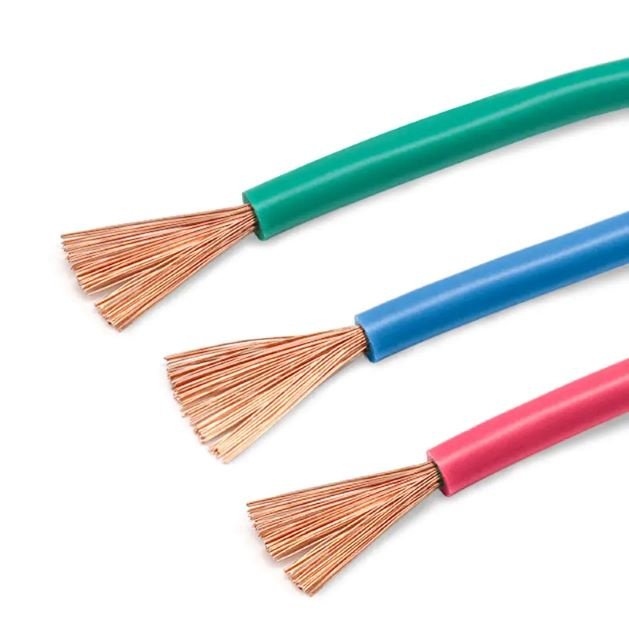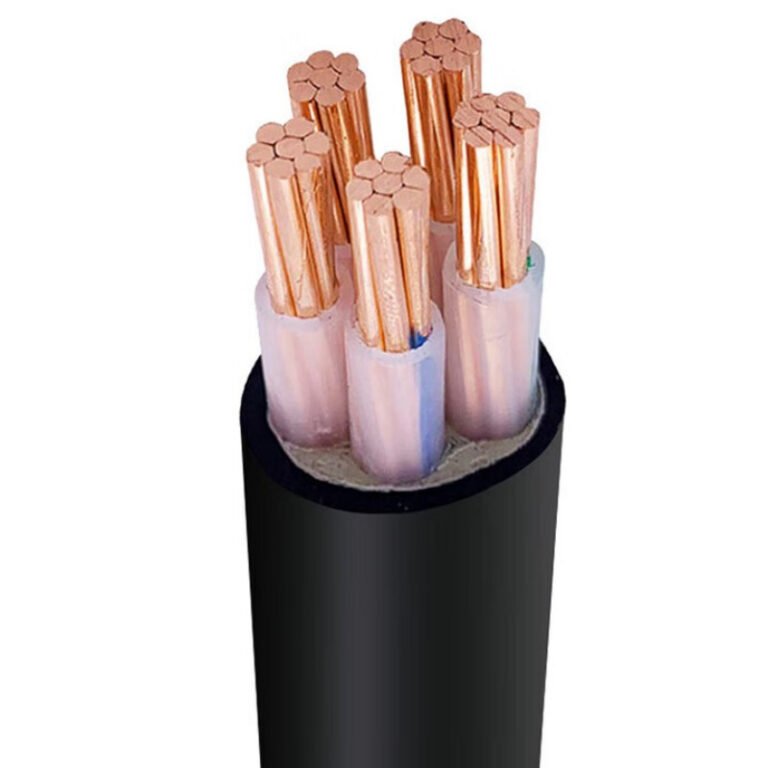
Plug a 240V tool into a 120V circuit and it limps along at half power, overheats, or simply refuses to start. Reverse that mistake — running a 120V-rated cord on a 240V supply — and you’re looking at insulation breakdown, a potential arc fault, and quite possibly a fire. Either way, the cost isn’t just a tripped breaker; it’s unplanned downtime, scrapped product, a warranty dispute, or worse, a failed inspection. Getting voltage compatibility right before equipment ships or a production line goes live is not a minor detail.
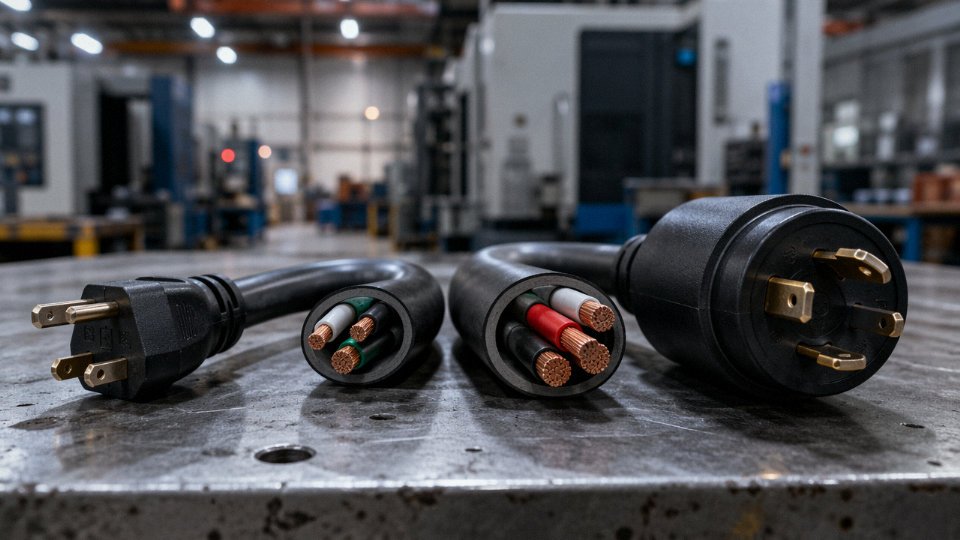
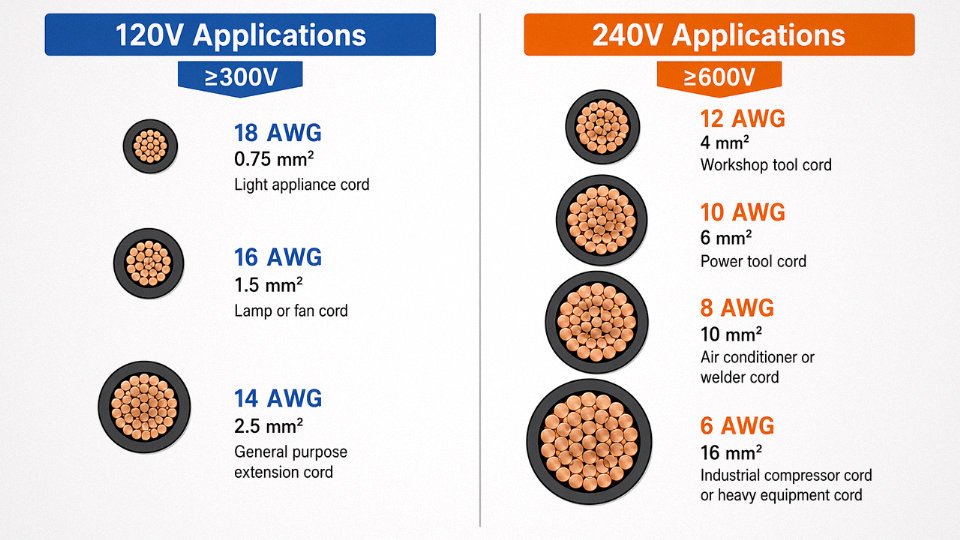
A 120V power cord operates on a single hot conductor at roughly 120V to neutral, typically rated for 15–20A and conductors from 18 AWG down to 14 AWG, with 300V-rated insulation. A 240V cord uses two hot conductors at higher combined voltage, commonly rated 20–50A, requires conductors from 12 AWG to 6 AWG, and must carry insulation rated at 600V or above. They are not interchangeable.
What makes this more than a simple voltage number is everything that cascades from it — conductor cross-section, plug geometry, insulation grade, connector standard, and how all of those interact across different national grids and certification regimes. A cord that is perfectly legal and safe in one application can fail a compliance audit or cause a thermal event in another, sometimes without any obvious visible difference between the two cables.
Core Electrical Principles: How Voltage Level Reshapes Every Cord Parameter
Start with the power equation and everything else follows. P = V × I means that to deliver 1,200 W at 120V you need 10A flowing through that cord. Deliver the same 1,200 W at 240V and you only need 5A. Half the current. That single fact cascades through every design decision a cord engineer or procurement manager has to make — conductor cross-section, insulation grade, connector rating, even the diameter of the finished assembly.
Why Lower Current Changes the Conductor Equation
Resistive heating in a conductor follows P_heat = I² × R. Square the current term and you see immediately why it dominates: cutting current in half reduces resistive heat loss by roughly 75%. That is why a 240V cord feeding a 6 kW workshop compressor can use 10 AWG (about 6 mm²) where the equivalent 120V circuit — if it could even run that load, which most branch circuits cannot — would demand something considerably heavier. In practice, standard 120V cords run 18 AWG down to 14 AWG for loads up to about 1,800–2,000 W. Once you step to 240V, you are typically in the 12 AWG to 6 AWG range (2.5 mm² to 16 mm²), depending on ampacity requirements, cord length, and ambient temperature in the installation.
Voltage drop deserves its own mention here because it catches people out on long runs. A 120V circuit loses twice the percentage voltage per ohm of conductor resistance compared to a 240V circuit carrying equivalent power. Run a 50-foot extension to a 120V power tool and the drop can be significant enough to overheat the motor; the same run at 240V is far less punishing. This makes gauge selection disproportionately critical at 120V, especially in temporary plant-floor setups where someone has daisy-chained two 16 AWG cords together. Not a theoretical risk — it happens constantly.
Insulation Is Not Just Thicker; It Is a Different Stress Regime
Higher voltage imposes higher electric field stress across the insulation wall. At 240V the dielectric stress is roughly double what the same insulation geometry sees at 120V. This is why UL, IEC, and CSA standards draw a hard line: 300V-rated insulation is acceptable for 120V cord applications, but 240V cords require insulation rated at 600V or higher. The margin exists for transient overvoltages, switching spikes, and the slow degradation that happens in industrial environments — heat cycling, oil exposure, UV on outdoor cords. Using a 300V-rated cord on a 240V circuit is not a conservative choice; it is a latent failure waiting for the wrong day.
A 300V-rated power cord insulation is sufficient for use on 240V circuitsFalse
300V insulation ratings are designed for 120V-class circuits. At 240V, the electric field stress across the insulation wall roughly doubles, and standards such as UL 62, IEC 60245, and CSA C22.2 No. 49 explicitly require a minimum 600V insulation rating for 240V cord applications. Using under-rated insulation risks dielectric breakdown, especially under transient overvoltages or thermal aging.
Single-Phase, Split-Phase, and What That Means When You Source Internationally
North American 240V is technically split-phase — two 120V legs 180° apart, derived from a center-tapped transformer. European and most international 240V (or 230V nominal) is single-phase referenced to neutral. Industrial sites also run three-phase 240V or 208V configurations. These are not interchangeable cord specifications. A cord built and rated for North American split-phase service has a different plug standard (NEMA 6-series or 14-series), different grounding configuration, and may see different fault current characteristics than a cord destined for IEC 60309 industrial service in a European plant. Procurement teams sourcing internationally need to specify the system type, not just the voltage number.
| Application | Typical Voltage | Typical Current Draw | Conductor Size (AWG / mm²) | Insulation Rating |
|---|---|---|---|---|
| Household appliance (kettle, lamp) | 120V | 5–13A | 16–14 AWG / 1.5–2.5 mm² | ≥300V |
| Workshop power tool (drill, saw) | 120V | 10–15A | 14 AWG / 2.5 mm² | ≥300V |
| Workshop tool / compressor | 240V | 15–30A | 12–8 AWG / 4–10 mm² | ≥600V |
| Residential HVAC unit | 240V | 20–40A | 10–8 AWG / 6–10 mm² | ≥600V |
| Industrial resistance heater | 240V | 30–50A | 8–6 AWG / 10–16 mm² | ≥600V |
Current ranges depend on equipment efficiency rating, duty cycle, and whether the load is resistive or motor-driven. Always verify against the equipment nameplate, not a generic table.
Physical Construction Differences: Conductors, Insulation Layers, and Jacket Materials
The gap between a 120V cord and a 240V cord isn’t just a voltage rating stamped on the jacket. Open both up and you’ll find a different bill of materials at nearly every layer — conductor count, wire gauge, insulation compound, jacket wall thickness, stranding class. Getting any one of those wrong creates problems ranging from nuisance tripping to insulation breakdown under load.
Conductor Count and Grounding Arrangements
A standard 120V cord is almost always 3-conductor: line, neutral, ground. Simple, consistent, rarely varies.
240V is messier. A purely resistive load — an electric heater, a welder, a pump motor — typically runs on a 3-conductor arrangement: two line conductors (L1 and L2, each 120V to ground, 240V between them) plus a ground. No neutral needed because the load never draws current on a neutral. Add any control circuit, timer relay, or digital display that needs a 120V reference, and you need a 4-conductor cord: L1, L2, neutral, ground. Procurement teams sometimes order the cheaper 3-conductor version and then wonder why the machine’s control panel is dead on arrival. Always check the load’s wiring diagram before specifying conductor count.
Conductor Cross-Section and AWG-to-mm² Mapping
120V cords span a fairly narrow range. Light-duty extension leads and small appliance cords typically use 18 AWG (roughly 0.75 mm²). Cords for 15A branch circuits step up to 14 AWG (about 2.5 mm²). That’s the working range for most residential and light commercial 120V applications.
240V cords start where 120V cords top out. The common industrial range runs from 12 AWG (≈ 4 mm²) for moderate loads — think a 20A dryer circuit or a mid-size compressor — up to 6 AWG (≈ 16 mm²) for heavy machinery drawing 40–50A continuously. The AWG scale runs backward from metric intuition: smaller AWG number means larger wire. Engineers used to IEC metric sizing sometimes mis-specify a cord by confusing the number direction, which is an easy mistake with real consequences for voltage drop and heat buildup at full load.
Using undersized conductors on a 240V cord will cause the cord to run hot and may result in insulation degradation or fire hazard over time.True
Conductor resistance increases as cross-section decreases; under sustained high current, I²R heating exceeds the insulation's thermal rating, accelerating degradation and creating a fire risk consistent with NEC, IEC, and UL findings.
Insulation Compound and Temperature Ratings
Standard 120V cords use PVC compounds rated at 300V. That’s fine for the application — the insulation sees well under half its rated stress in normal service. For 240V cords, the minimum insulation voltage rating steps up to 600V (common in UL and CSA-listed products) or 1000V for IEC industrial cords. Higher-grade PVC handles this at the economy end; XLPE and rubber compounds are used where you also need better heat resistance or flexibility at low temperatures.
Temperature class matters more than people realize. A 60°C-rated insulation derated for conduit fill or ambient temperature can force you to upsize the conductor to stay within ampacity limits. Moving to a 75°C or 90°C-rated compound on a 240V cord often lets you maintain a smaller cross-section — relevant when weight or bend radius is constrained on a portable machine.
Jacket and Outer Sheath Selection
Household 120V cords usually get away with lightweight PVC or TPE jackets. They sit behind appliances, rarely see oil, and aren’t dragged across concrete.
240V cords on a plant floor live a harder life. Industrial specifications typically call for thermoplastic rubber (TPR) or neoprene jackets with heavier wall thickness — usually in the range of 1.5 mm to 3 mm depending on cord diameter and application severity. These compounds resist cutting oils, hydraulic fluid, and repeated flexing over cable tracks. A neoprene-jacketed cord on a welding machine or CNC tool changer is not over-engineering; it’s the expected minimum. Using a standard PVC-jacketed cord in that environment typically means jacket cracking within a season, sometimes sooner in cold facilities where PVC gets brittle.
Stranding Class and Flexibility
Fixed wiring can use Class 1 or Class 2 stranding — fewer, thicker strands, lower cost. Portable cords that flex regularly need Class 5 or Class 6 stranding (fine-wire, extra-flexible) to resist work-hardening and wire breakage at the termination. 240V cords for portable industrial equipment — welders, portable compressors, service drops to machinery — almost always specify Class 5 or Class 6 to IEC 60228. A Class 2 conductor in a repeatedly flexed application will develop broken strands at the plug end within months, increasing local resistance and generating heat right where it’s hardest to detect.
Jinda’s production lines cover Class 2 through Class 6 stranding across both voltage categories, which matters when a procurement order spans multiple cord types for a single facility — consistent supplier, traceable production batches, one quality audit instead of three.
Plug, Receptacle, and Connector Standards That Enforce Voltage Separation
The physical plug is the last line of defense. Everything upstream — wire gauge, insulation rating, overcurrent protection — can be correctly specified, and a wrong plug will still let someone connect a 120V cord to a 240V circuit. Standards bodies understood this early, which is why North American and international connector systems are designed with geometry that makes cross-voltage mating mechanically impossible. For global sourcing teams, understanding this system is not optional background knowledge; it determines which SKUs you order, how you write purchase orders, and what certifications your customs documentation needs to reference.
North American 120V Connectors: NEMA 5-Series and Their Locking Variants
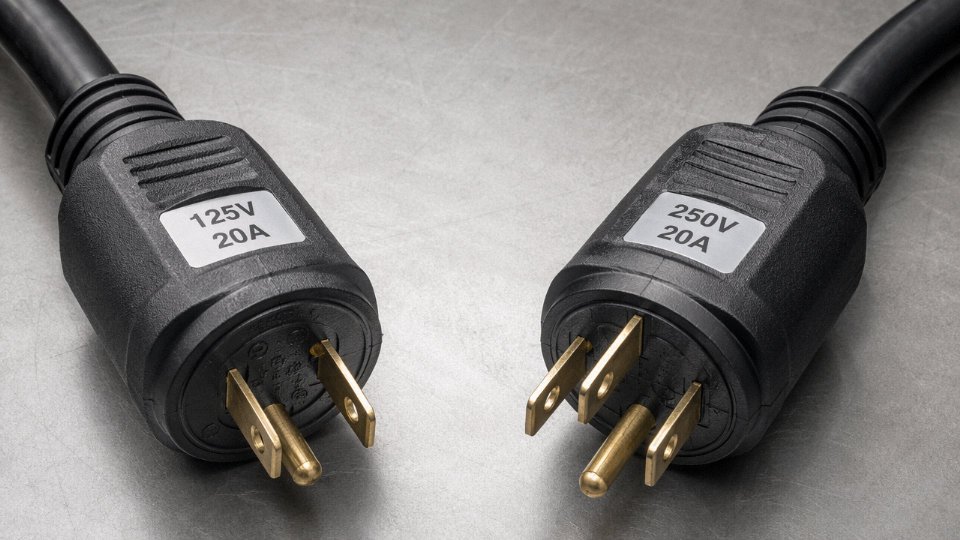
The NEMA 5-15 is the standard North American 15A, 125V plug — the one on virtually every lamp, phone charger, and small appliance. Its two parallel flat blades, one slightly wider than the other (the neutral blade), enforce polarity and physically cannot seat into a NEMA 6-series receptacle because the blade orientation is wrong. The NEMA 5-20 adds a horizontal T-slot on the neutral blade to accept both 15A and 20A plugs, and is common on dedicated kitchen and workshop circuits. Current capacity runs 15–20A depending on the specific device rating and circuit breaker.
Locking variants — NEMA L5-15 and L5-20 — use curved blades that rotate and lock once inserted, preventing accidental disconnection on equipment like portable generators or stage lighting rigs. In practice, L5-series connectors show up wherever vibration or cable tension is a concern. The locking geometry also differs enough from straight-blade NEMA 5 connectors that cross-insertion is not a real risk.
North American 240V Connectors: NEMA 6 and NEMA 14 Series
NEMA 6-series connectors (6-15, 6-20, 6-30, 6-50) handle 240V two-wire loads — no neutral, just two hots and a ground. The blade configuration is rotated roughly 90° relative to NEMA 5, making 120V/240V cross-insertion physically impossible without forcing something that visibly does not fit. NEMA 6-50 is the dominant connector for EV Level 2 charging and plasma cutting equipment, rated up to 50A.
The NEMA 14 series (14-30 and 14-50 are the common ones) adds a neutral conductor for four-wire service — two hots, one neutral, one ground. This matters for residential electric dryers and ranges, which need 240V for heating elements but 120V for timers, controls, and lights. A 14-30 runs dryers; a 14-50 handles ranges and, increasingly, EV chargers in residential settings. The four-blade geometry is distinct enough from both NEMA 5 and NEMA 6 that accidental mating is not a realistic failure mode.
IEC and European Standards for 230V Cords
IEC 60320 governs appliance couplers — the detachable connectors on equipment power inlets rather than wall plugs. The C13/C14 pair (the familiar “kettle connector” on computers and monitors) is rated 10A at 250V and ubiquitous in IT equipment. C19/C20 handles higher-current server and PDU loads up to 16A or 20A depending on the standard revision. The C15/C16 pair looks nearly identical to C13/C14 but carries a temperature rating to 120°C rather than 70°C — it exists specifically for equipment like electric kettles and fan heaters that generate localized heat at the inlet. Mixing C13 into a C16 application is a real field error; the notch on the C15 plug prevents reverse insertion, but C13 will still physically mate with a C16 inlet, which is the dangerous direction.
IEC 60320 C13 connectors are rated for 250V and can be safely used on both 120V and 240V/230V circuitsTrue
C13/C14 couplers carry a 250V voltage rating, which covers both 120V North American and 230V European nominal voltages. However, the current rating (10A per IEC, sometimes derated to 7A or 10A by specific national standards) and the equipment's own power requirements must still be verified independently.
Wall plug standards in Europe vary by country in ways that frustrate procurement teams every time. The CEE 7/4 Schuko plug (Germany, Austria, Netherlands, most of Eastern Europe) is unpolarized and ungrounded via the plug pins — grounding happens through side contact clips. The CEE 7/5 French plug adds a grounding pin protruding from the receptacle rather than the plug, which means a Schuko plug will fit a French outlet but a French plug won’t seat fully in a Schuko outlet. Both operate at 230V, 50Hz. The BS 1363 UK plug is a different animal entirely: three rectangular pins in a specific triangular arrangement, mandatory sleeving on live and neutral pins, and — uniquely — a fuse built into the plug itself, typically 3A or 13A. The fuse requirement is not just bureaucratic overhead; it means the cord itself carries fault protection independent of the circuit breaker, which affects how you spec and test cord sets destined for the UK market.
Industrial Connectors: IEC 60309 Color-Coding and Keying
On construction sites, in factories, and at temporary power installations, IEC 60309 connectors (often called CEE-form or by the Mennekes brand name in casual conversation) provide a robust mating system with mechanical keying that prevents wrong-voltage connections. The color coding is standardized: blue for 230V single-phase 50/60Hz, red for 400V three-phase, yellow for 110–130V (common on UK job sites as a safety voltage). The key position — a notch at a specific clock position on the circular connector body — varies by voltage and frequency, so a 230V blue plug physically cannot mate with a 400V red socket. In practice this system works well, though I’ve seen connectors painted over or damaged enough that the color cue is lost; the mechanical key remains the reliable failsafe.
Current ratings within each voltage class run 16A, 32A, 63A, and 125A, with pin count and diameter scaling accordingly.
What This Means for International Procurement
When you’re sourcing cord sets for multi-country distribution, listing “240V power cord” on a purchase order is not sufficient. A well-written line item specifies: connector standard and configuration (e.g., IEC 60320 C19 inlet / IEC 60309 2P+E 32A blue plug), voltage class, current rating, conductor cross-section or AWG, insulation and jacket material, and applicable certification marks (UL, CSA, CE, UKCA, SAA depending on destination market). Missing any one of these will generate RFI delays at best, a rejected shipment at worst.
Jinda’s export documentation process addresses this directly for customers shipping into multiple regulatory markets simultaneously. Cord sets are produced against destination-specific bill-of-materials configurations, with certification documentation packaged by market rather than by product line, which simplifies customs clearance and third-party inspection. For customers running, say, a single equipment platform destined for North America, Germany, and the UK, that typically means three distinct cord variants managed as separate line items in the same purchase order — not one cord with adapters, which introduces its own compliance and warranty complications.
Safety Certifications and Compliance Marks Required for Each Voltage Class
Choosing the right cord construction is only half the job. Getting the certification wrong — or sourcing from a factory that has the paperwork but not the process — is where procurement teams and compliance officers get burned. Here’s what actually matters, market by market.
United States and Canada
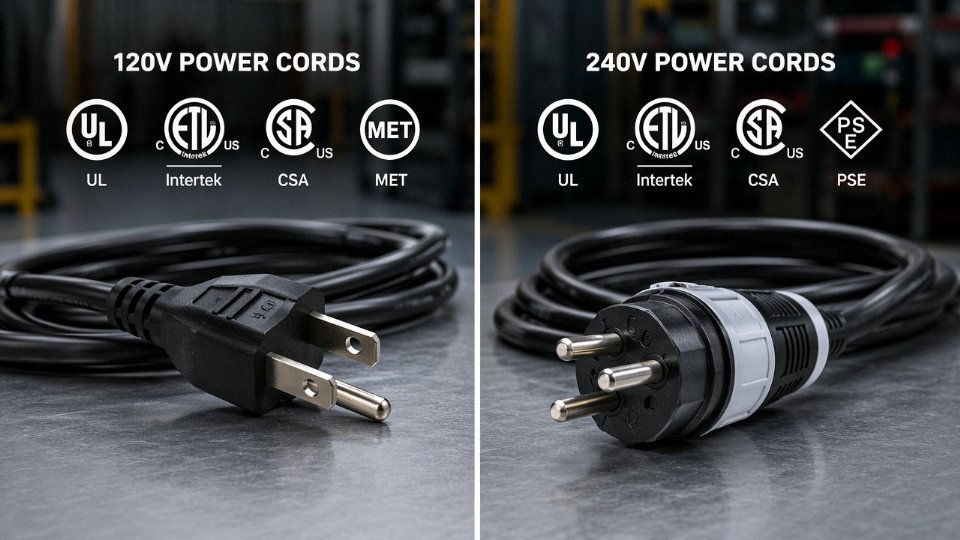
In the US, flexible cords fall under UL 62, which covers the cord itself as a component, while UL 817 applies to assembled cord sets and power supply cords. Both standards are administered by UL or any recognized Nationally Recognized Testing Laboratory (NRTL) — Intertek (ETL mark), CSA Group, and MET Labs are common alternatives. Either way, the test requirements are the same; the mark just differs.
For cross-border sales into Canada, CSA C22.2 No. 49 is the corresponding standard. In practice, most manufacturers targeting North America pursue the cULus combined mark, which satisfies both US and Canadian requirements under a single certification file. Carrying separate UL and CSA marks is technically valid but operationally messier — more certificates to track, more renewal cycles to manage.
One thing worth noting: the voltage rating stamped on the cord and the certification standard listed aren’t redundant. A cord certified to UL 62 for 300V service is not automatically suitable for a 240V US dryer circuit. You need to confirm the cord’s listed ampacity, conductor gauge, and insulation voltage class all match the circuit’s actual parameters. A 120V/15A cord mistakenly wired into a 240V/30A appliance application will pass a visual inspection and still fail catastrophically under load.
European Union and the HAR Mark
The EU harmonizes flexible cord requirements under EN 50525, a family of standards that covers conductor sizing, insulation materials, and voltage classes including the 300/500V and 450/750V designations relevant to 230V mains equipment. The HAR mark (CENELEC harmonization) is the key mechanism: a cord tested and approved by any recognized national body — VDE in Germany, KEMA-KEUR in the Netherlands, ASTA in the UK (pre-Brexit), CEBEC in Belgium — carries the HAR mark and is legally marketable across all EU member states without re-testing.
In practice, VDE-certified cords from German-approved factories carry significant weight with European buyers, even when the HAR mark alone would suffice legally.
China CCC and Its Relevance to International Sourcing
Cord sets sold or manufactured in China for the domestic market require China Compulsory Certification (CCC), administered by CNCA. For international buyers sourcing from Chinese manufacturers, CCC documentation matters beyond the domestic market — customs authorities in several markets treat it as baseline evidence of production compliance, and it simplifies customs clearance when importing into Southeast Asian markets that reference GB standards. Jinda holds CCC certification across its cord set product lines, and the documentation is available as part of the standard export package, which typically reduces back-and-forth during letter of credit and import clearance processes.
CCC certification held by a Chinese cord manufacturer means the product automatically meets European CE requirements.False
CCC and CE are separate certification regimes with different technical standards, test methods, and issuing bodies. A CCC mark does not substitute for EN 50525 compliance or CE marking in the EU market. Buyers need separate certification pathways for each target market.
Australia, New Zealand, and Japan
Australia and New Zealand require the RCM mark (formerly SAA) for 230V cord sets, administered through the Electrical Equipment Safety System (EESS). Japan is a special case — its 100V system is technically closer to the 120V family than the 230V world, and cord sets require the PSE mark under the Electrical Appliances and Materials Safety Act. Japanese cord current ratings and plug configurations differ enough that sourcing a “120V-type” cord from North American or Chinese stock without Japan-specific certification is a compliance failure waiting to happen.
What Buyers Should Actually Verify on a Cord Label
A compliant certification label should show: rated voltage, rated current, temperature rating (commonly 60°C or 75°C for PVC-jacketed cords, 90°C for rubber or XLPE), conductor cross-section or AWG, the applicable standard number, and the certification body’s identifier or license number. Vague or missing standard references, certification marks without a license number traceable to the issuing body’s online database, and conductor sizes printed in a font smaller than the rest of the label — these are the red flags worth acting on. Counterfeit UL marks in particular tend to use an incorrect typeface on the “UL” circle or omit the file number entirely.
Jinda’s Internal QC as a Second Line of Defense
Certification marks tell buyers the design was validated. Production QC tells buyers whether each reel or cord set was actually made to that design. Jinda’s manufacturing process includes ISO 9001-aligned quality management, in-house high-voltage withstand testing, conductor resistance measurement per IEC 60228 class requirements, insulation resistance testing, and flame-retardancy testing to IEC 60332. These aren’t tests run on representative samples once a year for a certification audit — they’re part of the standard production routing. For procurement managers placing large orders, this matters: it’s the difference between a certificate on file and actual lot-to-lot consistency.
Application Mapping: Which Voltage Cord Belongs on Which Equipment
Knowing the electrical theory is one thing. Knowing which cord to spec for a specific machine on the floor — or in a product BOM — is where mistakes actually happen. This section works through the common equipment categories systematically.
120V Cord Applications (North American Market)
Most residential and light commercial equipment in North America runs on 120V single-phase: refrigerators, microwave ovens, washing machines, dishwashers, and the bulk of consumer electronics. Office equipment — monitors, desktop PCs, laser printers — falls here too, typically on 18 AWG to 16 AWG SVT or SJT cord sets with a NEMA 5-15 plug, rated 300V insulation per UL 62. Portable power tools rated under roughly 1,800W (drills, sanders, most circular saws in the consumer segment) are in this class as well.
EV Level 1 charging is the newest and sometimes overlooked 120V application. A Level 1 EVSE cord set runs at 120V/12A to 16A — that’s only 1,440W to 1,920W — and while it charges slowly, the cord itself must still be purpose-built: flexible jacket for outdoor flex-life, ground-fault protection integrated in the control box, and typically a 14 AWG or 12 AWG conductor to keep resistive heating manageable over several-hour sessions. Don’t let anyone substitute a generic appliance cord here. The duty cycle is sustained in a way most household cords never see.
240V Cord Applications
Electric dryers and ranges are the most familiar 240V residential loads. NEMA 14-30 (dryers, 30A) and NEMA 14-50 (ranges and EV Level 2, 50A) are the dominant configurations; conductor sizing typically runs 10 AWG to 6 AWG depending on circuit length and load.
Workshop equipment — table saws in the 3–5 kW range, rotary-screw air compressors, large dust collectors — usually arrives with a 240V cord or a pigtail expecting a hardwired connection. Using an undersized cord here causes exactly the kind of progressive insulation degradation that goes unnoticed until something fails catastrophically mid-cut.
EV Level 2 charging represents the high-growth segment. SAE J1772 and IEC 62196 Type 2 cord sets operate at 240V/32A up to 80A for residential and commercial chargers. These cords carry 600V-rated insulation, flexible TPU or TPE jackets rated for UV and cold-temperature flex, and conductor cross-sections from roughly 6 mm² to 16 mm² depending on current rating. This is a category worth paying attention to if you’re sourcing at volume — specification errors here have real liability consequences.
HVAC units (central air handlers, heat pumps), commercial kitchen equipment (combi ovens, hood exhaust fans, commercial dishwashers), and single-phase industrial machinery up to 50A all sit in the 240V cord class. Once load requirements push past that 50A threshold or the system moves to three conductors plus neutral across three phases, you’ve crossed into three-phase cord set territory — a different product family entirely with IEC 60309 plugs rather than NEMA hardware.
Dual-Voltage Equipment: Universal PSU Does Not Mean Universal Cord
Laptop adapters, many battery chargers, and some power tools carry internal switch-mode supplies accepting 100–240V. That’s a PSU specification, not a cord specification. The cord feeding that adapter must still be rated for the actual supply voltage at the wall. Plug a 300V-rated 120V cord into a 240V outlet via an adapter, and the insulation is operating at roughly double its design margin — continuously. The failure mode is slow dielectric breakdown, often invisible until the outer jacket shows no obvious damage but the insulation resistance has collapsed. Always match cord rating to supply, regardless of what the device internally tolerates.
A universal-input power supply (100–240V) means the power cord can also be used at any voltage.False
The internal PSU voltage range and the cord's insulation voltage rating are independent specifications. The cord must be rated for the actual supply voltage it connects to — typically 300V minimum for 120V supplies, 600V minimum for 240V supplies per UL, IEC, and CSA requirements.
Extension Cord Voltage Matching
A 120V-rated extension cord must never be pressed into service as a temporary supply lead for 240V equipment, even if someone fits an adapter to make the plug physically mate. The insulation on a standard 300V-rated household extension cord is not designed for sustained 240V line-to-line stress. Dielectric breakdown under sustained overvoltage isn’t an instantaneous event — it can take hours or days, which is exactly why it creates a false sense of safety in temporary setups. When that failure does occur, it tends to be in a wall cavity or under a machine where it’s hardest to detect.
Industrial and Manufacturing Environments
Motor control panel supply cords, CNC machine tool input leads, MIG and TIG welding equipment, and generator cord sets are nearly all 240V single-phase or higher. In practice, most CNC equipment above 5 kW steps to three-phase, but the supply cord to the panel disconnect is often a 240V single-phase feed on smaller cells. Welding leads deserve special mention: they experience high cyclic loading, oil exposure, and frequent coiling — jacket material selection (neoprene, SOOW-rated rubber) matters as much as conductor sizing here.
Data Centers and Critical Infrastructure
IEC 60320 C19/C20 connectors are the standard for high-density server rack PDUs operating at 200–240V, typically at 16A to 20A per cord. Locking C19 connectors are worth specifying in high-vibration or high-density environments — an accidental disconnect in a live rack is a much worse outcome than the modest cost premium. On long data-hall cable runs, conductor sizing relative to run length deserves attention; a 2.5 mm² cord that’s perfectly adequate at 3 meters can introduce meaningful voltage drop at 10–12 meters under full rack load, which affects sensitive equipment more than most engineers expect.
How to Read a Power Cord Label and Specification Sheet: A Field Guide for Buyers
If you’ve ever pulled a cord from a warehouse bin and tried to confirm it’s rated for 240V before wiring it into a compressor panel, you already know that the marking system can feel like alphabet soup. It isn’t, once you learn the logic — but it does require knowing which part of the code answers which question.
North American Cable Type Codes: What the Jacket Text Actually Tells You
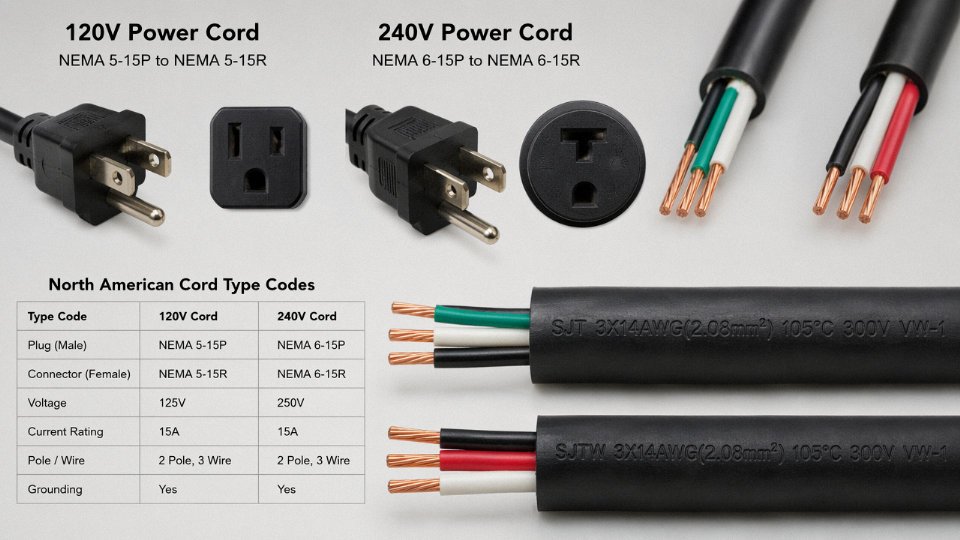
The alphanumeric string printed (or embossed) on a North American cord jacket follows a UL/NEMA convention where each letter encodes a specific construction feature. Getting these right matters because the code directly maps to voltage class.
SJT — Service Junior Thermoplastic. Rated 300V. “Junior” means a lighter-duty jacket than full “Service” grade; typical on household appliances and light shop equipment pulling under 10A. Not appropriate on a 240V circuit, full stop.
SJTW — Same as SJT but with a weather-resistant outer jacket. Still 300V. You’ll see this on outdoor extension cords sold at hardware stores. The W suffix does not elevate the voltage rating.
SVT — Service Vacuum Thermoplastic. Also 300V. Lighter and more flexible than SJT, originally specified for vacuum cleaners and similar light portable appliances. The flexibility is useful; the voltage ceiling is not.
ST — Service Thermoplastic, 600V. This is where you cross into the 240V-capable range for thermoplastic constructions. Heavier jacket, larger conductor options, designed for industrial portable equipment.
SO — Service Oil-resistant rubber, 600V. Used heavily in machine tool and industrial environments where petroleum-based fluids are present. The rubber compound resists degradation that would crack a thermoplastic jacket within months.
SOOW — Oil-resistant, weather-resistant, 600V. The double-O means both conductor insulation and jacket are oil-resistant; W adds outdoor weather resistance. This is the standard choice for temporary power drops on construction sites and outdoor industrial installations. In practice, if you’re running a 240V portable generator cord outdoors, SOOW is usually the right specification.
IEC and Harmonized European Codes
The European harmonized system is actually more systematic once you break it apart. Take H05VV-F:
- H = harmonized standard (accepted across EU member states)
- 05 = 300/500V voltage class — suitable for 120V-equivalent (230V single-phase in Europe) light-duty use
- VV = PVC insulation / PVC sheath
- F = flexible (fine-stranded conductor)
H07RN-F reads differently: 07 means 450/750V class, suitable for industrial 240V and higher applications; R is rubber insulation; N is polychloroprene (neoprene) sheath. This is the European functional equivalent of SO or SOOW — the cord you’d specify for a workshop welder or pump motor.
H05VV-F cord is suitable for use on 240V industrial equipmentFalse
H05VV-F is rated 300/500V and is intended for light-duty domestic or commercial use. Industrial 240V equipment with sustained high-current draw requires H07RN-F or equivalent 450/750V-class construction.
Temperature Ratings and Why They Actually Matter for Ampacity
North American cords carry a temperature suffix baked into their UL listing: T (60°C), B or C (75°C), N (90°C). The higher the rated temperature, the more current the cord can carry before the insulation degrades — but here’s the catch most buyers miss: that rating assumes free-air installation. Bundle five SOOW cords together in a cable tray and run them at 85% load, and the actual conductor temperature climbs significantly above the individual-cord rating. NEC derating tables exist for exactly this reason, and ignoring them is a recurring cause of nuisance tripping and, in worse cases, jacket softening and insulation failure.
IEC equivalents use a different designation — you’ll see temperature codes like 70°C or 90°C stated explicitly in the harmonized standard reference rather than embedded in the type code itself.
Reading a Jinda Specification Sheet
A properly issued specification sheet — whether from Jinda or any other manufacturer — should state all of the following without you having to ask: rated voltage, rated current at specified temperature and installation conditions, conductor cross-section (in mm² for metric, AWG for North American), number of conductors including any earth/ground core, insulation material and nominal thickness, jacket material and nominal thickness, overall outer diameter with tolerance (typically ±0.2 to ±0.5 mm depending on diameter), minimum bend radius (usually expressed as a multiple of overall diameter, commonly 6× to 10× for flexible cords), and the specific certification references — not just “meets UL” but the actual UL standard number and file number.
If any of those fields are blank or vague, push back before ordering. A legitimate manufacturer can populate every field.
Fraudulent and Substandard Markings in the Aftermarket
This is a real problem in spot-buy procurement. Common issues include voltage ratings printed in font small enough to be missed under sleeving; AWG claims that don’t match measured conductor resistance (a 14 AWG conductor should measure roughly 8.2–8.6 mΩ/m — significantly higher resistance suggests undersized stranding); and certification marks that are visually similar to UL or CSA logos but are not genuine listed marks.
Incoming inspection protocol should include at minimum: conductor DC resistance measurement per ASTM B172 or IEC 60228, insulation wall thickness spot-check using a calibrated micrometer on a cross-sectioned sample, and verification of the certification file number against the certifying body’s online database. Resistance measurement alone catches a surprising number of undersized conductors that would otherwise pass a visual check. It takes maybe ten minutes per lot. Most factories skip it until they have a failure.
Procurement and Bulk Ordering Considerations for International Projects
Sourcing power cords at volume across multiple destination markets is where specification errors stop being theoretical and start costing real money. A 240V industrial cord for a manufacturing line in Germany is not interchangeable with a 120V NEMA 5-15 cord for the same brand’s North American assembly — and if your purchase order doesn’t nail down the voltage class, conductor gauge, certification marks, and reel configuration from the start, you’re looking at re-shipment costs, customs delays, or worse, a safety audit hold.
Lead Times and MOQ: Know the Difference Between Stock and Custom
Standard catalog cords — think 16 AWG 120V SJT with NEMA 5-15P, or 12 AWG 240V cord sets with IEC 60309 plugs — are often available from stock or semi-finished inventory, with lead times as short as 5–10 working days for moderate volumes. Once you move to custom lengths, non-standard jacket colors, special certification combinations (say, both UL and SAA on a single cord for an Australian-American equipment OEM), or pre-assembled connector terminations, realistic production lead time runs 4–8 weeks depending on component sourcing and testing queue. That range extends toward the longer end if you’re ordering during Q4, when production calendars at most Chinese manufacturers are compressed. Jinda’s five production bases across Shandong allow concurrent production runs for large split orders, which helps when a project needs, for example, 50,000 meters of 120V cord and 30,000 meters of 240V cord shipped on the same container schedule to two different ports.
MOQs vary by product complexity. Plain cord without terminations typically has lower MOQs — sometimes 500–1,000 meters per spec — while factory-terminated cord sets with molded plugs generally start at 500–1,000 pieces. Always confirm these in writing before your engineering team finalizes a BOM.
Custom Specification Options Worth Requesting
At project scale, jacket color coding pays for itself quickly. Some facility standards designate orange jackets for 240V industrial cords specifically to prevent maintenance crews from grabbing the wrong extension during a shutdown. If your plant or customer’s plant runs that convention, specify it on the PO. Other useful custom options: sequential meter markings printed on the jacket (so electricians can cut to length without remeasuring), customer logo or part number on the jacket, and specific conductor cross-sections in metric (2.5 mm², 4 mm², 6 mm²) to align with IEC-based panel designs even when the end market is metric-adjacent.
Reel and Drum Specs for Container Optimization
Standard reel sizes run 100 m, 200 m, and 500 m — with 500 m wooden drums used for heavier-gauge 240V cord (6 AWG and above) because the bending radius and weight exceed what plastic reels handle reliably. A 40-foot container loaded with 500 m drums of 10 AWG cord holds substantially fewer meters than the same container loaded with 200 m reels of 16 AWG cord; your freight forwarder should calculate cubic utilization before you lock in reel size. Specify reel ID and OD dimensions on the PO if your warehouse uses automated de-reeling equipment — mismatched spool geometry causes line stoppages that nobody budgets for.
Documentation for Customs and Compliance
A complete documentation package for international shipment typically includes: certificate of conformity referencing the applicable standards (UL 62, IEC 60227, HAR, AS/NZS as applicable), third-party test reports covering conductor resistance per IEC 60228, insulation resistance, high-voltage withstand (2,000V AC for 1 minute is the standard duration for 600V-rated cord insulation), and a flame test result. You’ll also need a certificate of origin, a packing list with reel/drum serial numbers, and — increasingly — material safety data for jacket compounds, particularly for markets with REACH or RoHS enforcement. Getting all of this in one documented shipment package saves days at customs.
Jinda prepares destination-country compliance documentation for customers in more than 50 countries as part of standard export supportTrue
This aligns with Jinda's stated operational capability of serving 50+ countries with integrated sales and technical support teams handling export documentation.
QA Clauses That Actually Protect You
Generic “meets standard” language in a supply contract isn’t enforceable during an incoming inspection dispute. The clauses that matter: conductor resistance tolerance within ±1% per IEC 60228 Class 2, insulation thickness meeting the stated minimum without averaging (some suppliers average across multiple measurements to pass), high-voltage withstand at 2,000V AC for 60 seconds with zero breakdown, and an AQL 1.0 sampling plan per ANSI/ASQ Z1.4 for critical dimensions on terminated cord sets. For very high-stakes applications — hospital equipment power cords, for instance — AQL 1.0 is worth the added inspection cost. For standard industrial cord, AQL 2.5 is a defensible balance between cost and risk. Write the specific test voltage, duration, and AQL level into the contract, not just the standard number. Inspectors need a number to check against, not a reference.
Frequently Asked Questions About 120V and 240V Power Cords
These questions come up repeatedly — from procurement managers receiving mixed shipments, from maintenance techs inheriting old installations, and from OEM engineers specifying cord sets for export products. The answers below are direct.
Can I use a 120V extension cord on a 240V appliance if I use an adapter plug?
No. Full stop. The adapter changes the physical interface; it does nothing to the cord’s insulation. A standard 120V cord carries 300V-rated insulation. At 240V, you’re operating at 80% of that rating — and that’s before you account for voltage spikes, which on typical supply lines can push instantaneous peaks 10–15% above nominal. Dielectric degradation isn’t always visible or immediate; the insulation slowly breaks down under repeated overstress, and by the time you see charring or get a trip, you’ve already had heat buildup inside a wall or behind a machine panel. This is a fire and shock hazard, not a theoretical one.
Using a 120V-rated cord on a 240V circuit via an adapter is electrically safe as long as current draw is low.False
Adapter plugs do not alter the cord's insulation voltage rating. A 300V-rated 120V cord operating at 240V has insufficient dielectric margin, especially under transient overvoltages, creating progressive insulation degradation that can lead to fire or shock regardless of load current.
Why does a 240V dryer cord in North America sometimes have three wires and sometimes four?
The NEC has required separate neutral and ground conductors on new dryer and range circuits since the mid-1990s — the 1996 edition made the 4-wire arrangement mandatory for new installations, and every edition since has held that line. Older homes still have 3-wire circuits where the neutral and ground were bonded at the appliance frame, which carried real shock risk if the neutral ever opened. If you’re replacing a cord on an older 3-wire receptacle, you’re allowed to match it — but if the receptacle is being replaced as part of renovation work, current code requires upgrading to a 4-wire circuit. Don’t assume the existing setup is compliant just because it’s been there for 25 years.
Is a cord rated 300V safe on a 120V circuit?
Yes. The 300V figure represents the continuous withstand capability of the insulation — 120V sits comfortably within that, with ample margin for transient overvoltages. What you cannot do is run the same 300V cord at 240V; that pushes working voltage to 80% of rated, leaving a margin that most standards bodies consider insufficient for reliable long-term service.
What is the difference between a cable’s voltage rating and its working voltage?
The voltage rating — expressed in IEC nomenclature as, say, 300/500V — defines what the insulation is engineered and tested to withstand: conductor-to-conductor and conductor-to-earth, respectively. Working voltage is simply what the circuit actually delivers. The working voltage must always stay at or below the rated voltage. Where people get into trouble is assuming these numbers are interchangeable, or that running “just under” the rated value is fine indefinitely. It is, provided you haven’t introduced installation damage, repeated flexing fatigue, or thermal aging that reduces the effective insulation thickness over time.
Can a 240V cord be used safely on a 120V circuit?
Electrically, yes — a 600V-rated cord has more than enough insulation margin for 120V service. The caveats are practical: the conductor sizing still needs to match the circuit’s ampere rating, the connector must physically fit the receptacle (and usually won’t without an adapter), and using a heavier-gauge cord than necessary adds unnecessary cost and stiffness. In a pinch during commissioning when the right cord hasn’t arrived yet, it works. As a permanent specification choice, you’d typically select the cord matched to the circuit.
How do I verify a cord’s voltage rating without the spec sheet?
Start with the jacket print. On a 120V-class cord you’ll typically see “300V” or a designation like “SJT 300V”; on a 240V cord, look for “600V” or an IEC designation such as H07RN-F. Certification marks give you a second reference point — a UL listing mark with the appropriate file category, or a HAR mark for IEC-harmonized cords. If you want a physical check, measure conductor DC resistance with a calibrated milliohmmeter and compare against IEC 60228 or ASTM B8 tables; actual cross-section will either confirm or contradict what’s printed. This last step is especially worth doing on first shipments from an unfamiliar supplier.
Does conductor color coding change between 120V and 240V cords?
Color coding follows wiring regulations, not voltage class. In North America, NEC convention applies at both voltages: black or red for ungrounded conductors, white for neutral, green or bare copper for ground. On a 240V 2-pole cord with ground, the two current-carrying conductors are typically black and red. Under IEC/European practice, brown is line, blue is neutral, and green/yellow stripe is ground — again regardless of whether the circuit is 230V single-phase or some other configuration. Mixing these conventions on an international project is a real source of wiring errors, particularly when locally sourced cords get mixed into a job specified to IEC standards.
What should international project buyers specify when ordering custom cord sets for mixed-voltage installations?
Give the manufacturer everything they need upfront: rated voltage, rated current, conductor count and cross-section in mm² (AWG is fine for North American projects, but mm² travels better internationally), insulation and jacket material, applicable certification standard for each destination market, connector type at each end or “bare end” if field-terminated, overall cord length, jacket color, and any required print text. Ambiguity in the RFQ is where lead time gets lost — a missing certification requirement or an unspecified connector standard typically means at minimum one back-and-forth delay, sometimes a complete re-run. Jinda’s technical team provides a structured RFQ template that maps directly to these parameters, which in practice cuts quoting time significantly on complex multi-SKU orders.