Running conduit through an existing facility mid-project — or worse, mid-retrofit — is the kind of job that eats schedules alive. Threading EMT through finished ceilings, coordinating with other trades for pull boxes, waiting on the electrician to come back after rough-in inspection: the delays stack up quietly until they show up as a blown completion date and a change-order conversation nobody wants to have. Labor alone on a conduit-and-wire system routinely runs $4–$9 per linear foot in U.S. commercial work, depending on conduit type, bend complexity, and local wage rates. Armored cable exists precisely to cut through that friction — but “can I use it instead of conduit” is a question that deserves a real answer, not a blanket yes.
In most commercial, industrial, and residential applications, armored cable — specifically MC (Metal-Clad) cable under NEC Article 330 — can legally and practically replace conduit systems. It installs faster, costs less in labor ($2–$5 per linear foot is typical), and is permitted in dry, damp, and wet locations when listed for those conditions. The tradeoff is mechanical protection: rigid steel conduit handles higher crush loads and offers easier future wire replacement, so the right choice depends on your exposure conditions, circuit density, and how often you expect to pull new conductors.
What makes this decision genuinely interesting — and where most facility managers get it wrong — is that it’s rarely a pure code question. The NEC sets the floor, not the ceiling. Your specific environment, the equipment you’re feeding, and what your maintenance crew will be living with for the next twenty years all push the answer in different directions. The sections below work through each of those layers.
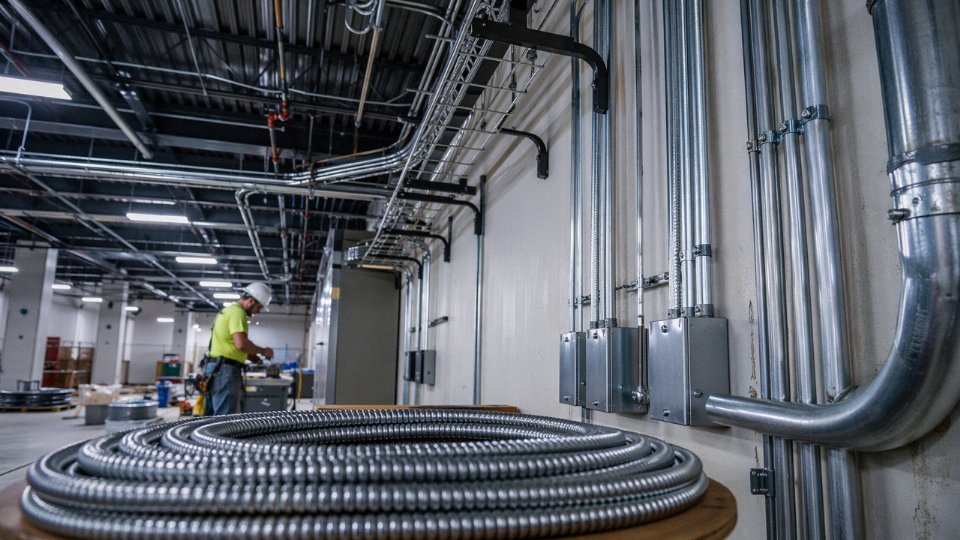
Defining the Contenders: Armored Cable Types and Conduit System Variants Side by Side
Before comparing performance, cost, or code compliance, you need a shared vocabulary. “Armored cable” gets used loosely on job sites to mean everything from vintage BX to direct-burial SWA, and that sloppiness causes real specification errors.
The Armored Cable Family
AC cable (Type AC, sometimes still called BX after the original trade name) is ANSI/UL-listed under UL 4. It uses an interlocked steel or aluminum armor over a paper-wrapped conductor bundle, rated 90°C, and is restricted to dry locations. That last point trips people up constantly — AC looks robust, but you cannot legally use it in a damp utility room or a wet outdoor run. Internal aluminum bonding strip, not the armor itself, provides the equipment grounding path, which matters when inspectors check continuity.
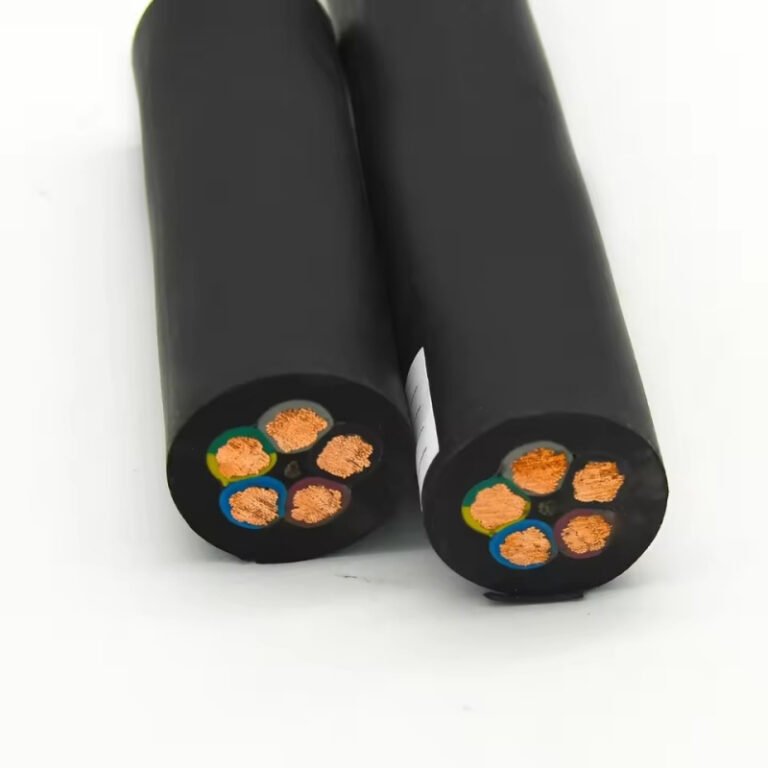
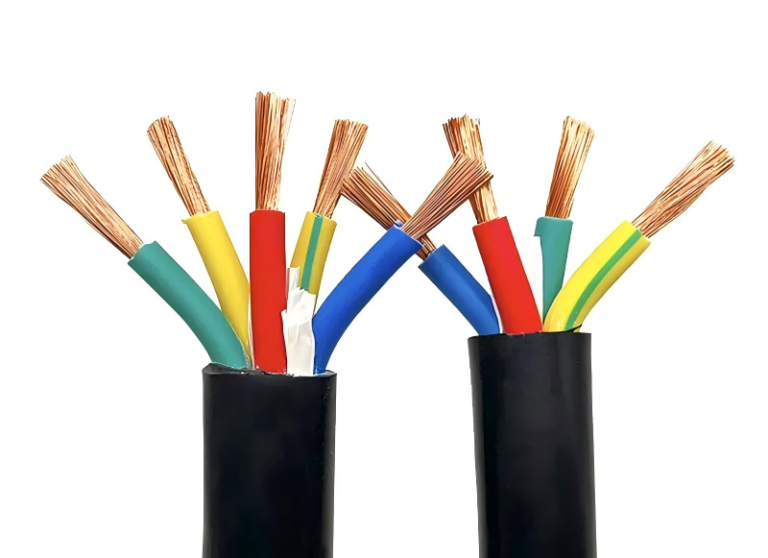
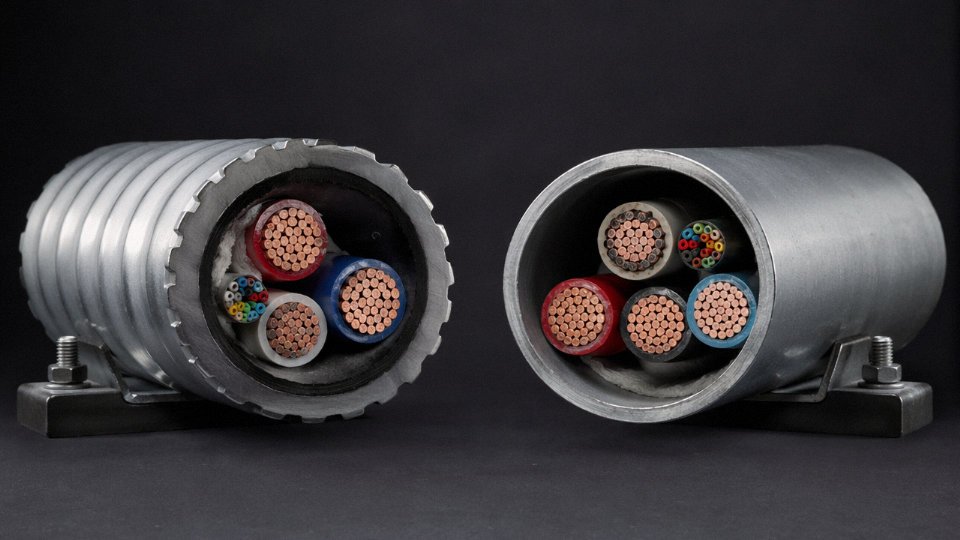
MC cable (Metal-Clad, NEC Article 330, UL 1569) is the modern workhorse. The armor is either interlocked aluminum (the most common in U.S. commercial work), corrugated aluminum, or corrugated steel. Wet-location and direct-burial variants exist — they require a PVC jacket over the armor, and you have to verify the listing marks rather than assume. Interlocked aluminum armor (IAA) handles crush loads up to roughly 1,000 lbf/ft, depending on the strip gauge and interlock geometry. That’s meaningful resistance to incidental foot traffic or conduit resting on the cable, but it’s not the same as buried conduit under a road crossing.
SWA (steel-wire armored) cable follows BS 5467 or IEC 60502-1 and is the default choice across the UK, much of Europe, the Middle East, and large parts of Southeast Asia and Africa. Instead of interlocked strip, it uses helically applied galvanized steel wires over an inner sheath. The wire armor provides excellent tensile strength for vertical drops and direct burial, but it also adds significant weight — a 4-core 16 mm² SWA cable runs roughly 40–55% heavier per meter than a comparable IAA MC cable. That matters on cable trays with weight limits.
Armored instrumentation cable — shielded pairs or triads with an overall armor layer — deserves its own mention because the armor’s role there is more about EMI protection and mechanical containment than pure crush resistance. Stainless steel braid armor appears on some instrumentation cables for high-corrosion environments (offshore, chemical dosing areas), though its crush resistance is noticeably lower than interlocked strip or wire armor.
Armor material in brief: galvanized steel strip is heavy but the most economical and common globally; aluminum interlocked armor is lighter and easier to cut in the field but less resistant to soil corrosion in direct-burial applications without a PVC overjacket; stainless braid costs more and is reserved for genuinely aggressive chemical or marine environments.
The Conduit Family
EMT (electrical metallic tubing, NEC Article 358) is thin-wall steel or aluminum — wall thickness runs 0.042 in on 1/2-inch trade size up to about 0.109 in on 4-inch — and it’s the go-to for commercial interiors and light industrial. Fast to install, easy to bend, cheap per foot. It is not threaded and relies on compression or setscrew fittings.
IMC (intermediate metal conduit) is roughly 25–35% heavier than EMT of the same trade size, with thicker walls and threaded ends. It splits the difference between EMT and rigid in terms of mechanical protection and cost.
RMC/GRC (rigid metal conduit, also called rigid steel or galvanized rigid conduit) is the heaviest option, threaded, and rated for direct burial, concrete encasement, and hazardous locations. Crush resistance under direct mechanical impact reaches roughly 1,500 lbf/ft for steel RMC — comfortably above IAA MC cable.
PVC Schedule 40 and Schedule 80 conduit is cheap, corrosion-proof, and widely used underground and in wet areas. Schedule 80 has a thicker wall for above-grade runs where UV and physical contact are concerns. Neither carries fault current through its wall, so a separate equipment grounding conductor is mandatory inside.
HDPE conduit sees heavy use in direct-burial and horizontal directional drilling (HDD) applications — utility feeds, site distribution runs, any situation where you’re pulling under a road or parking lot. Wall flexibility allows it to follow curved drill paths that would crack PVC.
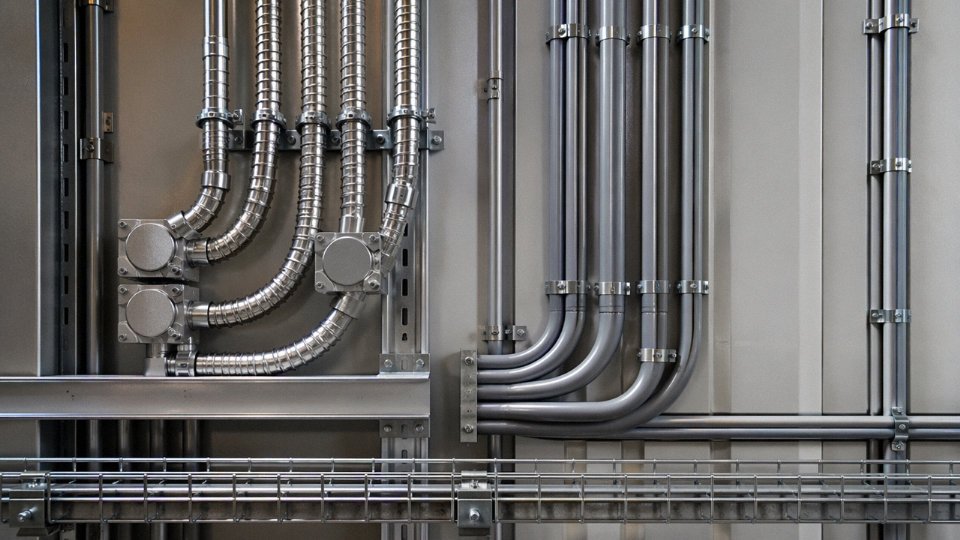
One distinction that genuinely affects downstream planning: conduit is a raceway, not a cable. It does nothing until you pull conductors through it. That separation of raceway from conductor is either a feature (future rewires are vastly easier) or a liability (two procurement items, two installation steps, more connectors to seal). Armored cable integrates both functions into a single product.
MC cable listed for wet locations can be used as a direct replacement for conduit systems in most NEC-governed wet commercial environments without an additional racewayTrue
NEC Article 330.10 permits MC cable in wet locations when the cable is identified for such use, typically indicated by a 'W' suffix in the listing mark and a PVC overjacket over the armor. The cable itself serves as both conductor and mechanical protection, satisfying NEC wiring method requirements without a separate raceway.
International Standards — What Changes Outside the NEC World
For projects outside North America, the governing documents shift entirely. IEC 60502 covers power cables with extruded insulation from 1 kV up through 30 kV, including armored constructions. IEC 60227 handles PVC-insulated cables at low voltage. BS 6346 (now largely superseded by BS 5467 and IEC 60502 in newer projects) covered PVC-insulated SWA cables and still appears in legacy specs across former British-influenced markets.
The practical impact for procurement: a cable that meets UL 1569 as MC cable is not automatically compliant with IEC 60502 SWA requirements, and vice versa. Construction, armor geometry, sheath materials, and test protocols differ enough that trying to substitute one for the other on an IEC-governed project will fail a third-party inspection. Know which standard your end-use country enforces before you finalize a cable specification.
| Product Type | Mechanical Protection | Approx. Weight per 100 ft (4/3 AWG equiv.) | Voltage Rating (typical) | Key Listing | Hazardous Location Use | Field Modification |
|---|---|---|---|---|---|---|
| Type AC cable | Moderate (dry only) | 55–75 lb | 600 V | UL 4 | No | Easy (no conduit bending) |
| Type MC cable (IAA) | Good (wet/dry/burial w/ jacket) | 45–65 lb | 600 V – 35 kV | UL 1569 | Varies by listing | Easy |
| SWA cable (IEC 60502) | Good–Very good | 70–105 lb | 0.6/1 kV to 33 kV | IEC/BS | Varies | Moderate |
| EMT + THWN conductors | Moderate | 80–120 lb (conduit + wire) | 600 V (conductor-dependent) | UL 797 | No (standard EMT) | Excellent (rewire) |
| IMC + conductors | Good | 110–150 lb | 600 V | UL 1242 | Yes (with fittings) | Excellent |
| RMC/GRC + conductors | Very good | 140–200 lb | 600 V | UL 6 | Yes | Excellent |
| PVC Sch. 40 + conductors | Moderate (no crush) | 60–90 lb | Conductor-dependent | UL 651 | No | Excellent |
| HDPE + conductors | Low above grade / good buried | 40–60 lb | Conductor-dependent | ASTM F2160 | No | Good (buried pulls) |
Weight ranges depend on conductor count, conductor size, and armor gauge. Hazardous location suitability always requires verifying specific fitting and sealing requirements under NEC Articles 501–503 or IEC 60079.
Code Compliance Deep Dive: What NEC, IEC, and Local Amendments Actually Permit
Getting the regulatory layer wrong costs more than re-pulling wire. Failed inspections, forced demolition of finished walls, and rework labor on a commercial project can easily erase any installation savings armored cable offered in the first place. So it’s worth being precise here — not just “check your local code” vague, but actually reading what the articles say.
NEC Article 330: Where Type MC Has Genuine Latitude
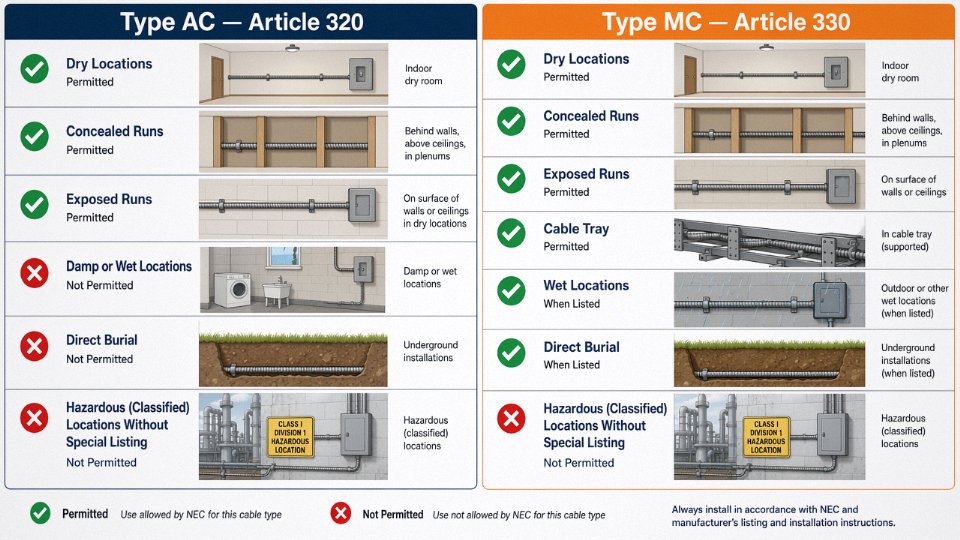
Type MC cable under NEC 330 is one of the more permissive wiring methods in the code. It’s listed for exposed and concealed runs, dry, damp, and wet locations (when the specific cable is listed for that condition — the listing matters, not just the article), direct burial where listed and marked for it, and installation in cable trays. That covers the vast majority of commercial and light industrial applications.
The prohibited uses are worth memorizing. MC cable is not permitted in theaters or assembly occupancies, motion-picture studios, or hazardous (classified) locations — unless the cable carries an additional listing for those environments. An inspector will pull the cable’s listing sheet, not just your word for it.
NEC Article 320: Type AC Is a Narrower Tool
Type AC cable is often conflated with MC, especially by contractors who’ve been using BX for thirty years. The difference matters. AC is permitted in dry locations only — no damp, no wet. It cannot be direct-buried. Where subject to physical damage, it needs additional protection, and the code is deliberately vague about what qualifies. In practice, AHJs interpret “subject to physical damage” inconsistently, so if there’s any doubt, protect it or use MC instead.
The Articles That Don’t Go Away: 300.3 and 300.5
A common misread is assuming that once you’re in MC cable, the conduit rules vanish. They don’t, selectively. NEC 300.3 still governs equipment grounding conductor requirements — conductors of the same circuit must stay together, and the EGC rules apply regardless of wiring method. When MC cable passes through a fire-rated floor or wall assembly in a conduit sleeve (a short section of rigid or EMT used as a mechanical sleeve, not a full conduit system), the fill and firestopping requirements of 300.5 and 300.21 still apply to that sleeve. Miss that and your fire-rated assembly is compromised — and that’s a life-safety deficiency, not just a paperwork one.
IEC 60364-5-52 and the Installation Method Reference Codes
Outside North America, the IEC framework uses reference installation methods rather than product-specific articles. The 60364-5-52 wiring system selection table assigns codes like B1 (single-phase cable in conduit on a wall), B2 (multi-core cable in conduit), C (single or multi-core cable clipped direct to a surface), D1 and D2 (cables in ducts in the ground), and E/F (cables in free air). Armored cable — SWA, XLPE/SWA, or similar — maps naturally to methods C and E/F, which generally yields higher current-carrying capacity from the tables than the same conductor in conduit (B1/B2). That’s not a minor point for sizing; on longer runs or higher-load circuits, it can mean one conductor size smaller.
IEC 60364-5-52 installation method C typically allows higher ampacity than method B1 for the same conductor cross-sectionTrue
Method C (clipped direct) has better heat dissipation than cable enclosed in a conduit (B1/B2), so the standard's correction factors yield higher permitted current for the same conductor size under C.
AHJ Variability: The Part No Code Book Fully Covers
Here’s where experience in the field matters more than reading the NEC. Some municipalities — Chicago being the most well-known example, but not the only one — have local amendments that effectively prohibit MC cable in commercial occupancies and require conduit throughout. The NEC permits MC; Chicago’s electrical code historically hasn’t, and local inspectors enforce local amendments, not the model code. International buyers specifying SWA or armored cable into projects in the Gulf states, Southeast Asia, or parts of Europe need to verify whether the local authority has amended IEC or adopted a national variant (BS 7671 in the UK, for instance, which has its own annex on armored wiring methods).
Don’t assume a product’s IEC or UL listing travels unchanged across borders.
Hazardous Locations: Where Conduit Often Wins Outright
NEC Articles 501–503 cover Class I, II, and III hazardous locations. In Class I Division 1 (continuous or probable explosive atmosphere), rigid metallic conduit with explosion-proof fittings is essentially mandatory for most installations — no standard MC construction qualifies there. Class I Division 2 and the IEC equivalent Zone 2 are where it gets more nuanced. Certain MC constructions with a continuous corrugated aluminum sheath and a specific listed termination system are permitted in Division 2 / Zone 2, but the cable must be individually listed for the classification, and the termination fittings must match that listing. A mismatched fitting — even a quality one — voids the listed assembly. Under ATEX/IECEx, the same principle applies: the Ex e or Ex d rating covers the full wiring system, not just the enclosure.
Fire-Rated Assemblies and Plenum Spaces
NEC 300.21 requires that wiring through fire-rated assemblies not compromise the fire-resistance rating. Standard MC cable does not inherently maintain a 1-hour or 2-hour wall rating — the UL fire-resistance directories list specific assemblies, and the cable type is part of that assembly. MC-HL (the health care facility variant) has additional requirements beyond standard MC, and in 1- or 2-hour rated assemblies in hospitals, the specific UL-listed assembly must be followed to the letter. Substituting standard MC for MC-HL in a rated assembly is a real error that turns up during commissioning inspections.
Plenum spaces add the smoke and flame spread requirements of NEC 300.22 and UL 910. Standard MC with PVC jacket doesn’t qualify for open plenum runs; a listed plenum-rated cable or conduit system does. This is one of the situations where conduit with a plenum-rated conductor inside is the cleaner engineered solution, because the conduit itself contains combustion products rather than contributing to their spread.
Mechanical Protection Performance: Crush, Impact, Abrasion, and Flexibility Testing Data
Picking between armored cable and conduit based on installation cost alone is a mistake you’ll regret the first time a forklift clips a cable run or a cooling system leak turns corrosive. The real differentiator is matching protection level to the actual hazard profile of the space — and that requires looking at test data, not spec sheets written by marketing departments.
Crush Resistance
Under UL 1569 (MC cable) and UL 6 (rigid metal conduit), crush resistance is tested by applying a controlled static load across a defined span. Interlocked aluminum armor (IAA) typically handles roughly 1,000 lbf/ft before deformation becomes problematic — adequate for most commercial ceiling plenum and cable tray applications, but not for floor trenches with vehicle traffic. Corrugated stainless steel armor steps that up to around 1,200 lbf/ft, which is worth specifying in equipment rooms where rolling tool carts and pallet jacks are a daily reality. RMC steel conduit leads the field at approximately 1,500 lbf/ft. EMT, despite its ubiquity, is only around 400 lbf/ft — and that number drops further if the conduit has even minor surface corrosion compromising wall thickness. In a warehouse with racking systems or any application near loading docks, EMT needs physical protection or a different solution entirely.
Interlocked aluminum armor (IAA) provides crush resistance up to approximately 1,000 lbf/ft under UL 1569 test conditions, while RMC steel conduit withstands approximately 1,500 lbf/ft.True
These figures are consistent with UL 1569 and UL 6 standardized test methodologies for MC cable and rigid metal conduit respectively, and are widely cited in manufacturer technical data sheets.
Impact Resistance
ASTM F1041 and IEC 60068-2-75 use a calibrated hammer-impact apparatus to simulate dropped tools and falling objects. Steel wire armored (SWA) cable generally absorbs around 20 J without jacket or conductor damage — that’s roughly equivalent to a 2 kg wrench dropped from a meter above. PVC conduit, even Schedule 40, typically manages only about 5 J before cracking, which is frankly poor for any environment with overhead work or heavy handling. RMC passes all standard impact levels by a comfortable margin. The practical consequence: in a petrochemical substation where workers routinely carry heavy tools overhead, SWA or RMC is the defensible choice, not PVC conduit.
Flexibility and Bend Radius
NEC 330.24 sets the minimum bend radius for MC cable at 7× the cable OD — tighter than EMT, which under NEC 358.24 requires a field bend radius of at least 10× the inside diameter. Corrugated MC cable can be bent tighter still, which matters when you’re routing branch circuits through a crowded electrical room with 200 mm spacing between structural members and every inch counts. Interlocked MC is less forgiving; it fights back if you try to force a sharp bend, and the interlock can partially open if you exceed the minimum. In practice I’ve seen installers damage the armor and not notice until an inspector pulled the cable out of a J-box.
Abrasion and Vibration
Armored cable has a real operational advantage on vibrating equipment — pumps, compressors, HVAC air handlers. There are no threaded fittings to back off, no set-screw connectors to loosen. Conduit systems in high-vibration zones need anti-vibration fittings specifically: compression-type connectors rather than set-screw, and locknuts with bonding bushings rather than standard lock rings. The consequence of ignoring this is gradual loosening of the grounding path, which shows up in arc-flash events or nuisance ground-fault trips years after installation when nobody remembers the original fitout decisions.
Thermal Performance
Armor acts as a partial heat shield. Under sustained high load, MC cable surface temperature typically runs 3–8°C lower than an equivalent conductor installed in free air, depending on ambient conditions and armor material. That sounds minor, but it influences ampacity calculations. NEC 310.15 ambient correction factors and conduit fill adjustments still apply fully — armor does not replace those calculations. For conduit, bundling multiple circuits degrades heat dissipation faster than most engineers initially estimate, especially in summer in unconditioned spaces.
Chemical and Corrosion Resistance
This is where material selection gets consequential fast. Galvanized steel armor degrades in chloride-heavy environments — coastal installations, road tunnel lighting, anything near de-icing salt storage. Aluminum IAA handles most general industrial atmospheres well but is attacked by ammonia (common in refrigerated distribution centers) and strong alkalis. Stainless steel braid or PVC-overjacketed SWA is the correct specification for aggressive chemical environments. The conduit comparison follows similar logic: coated RMC or HDPE conduit in ammonia refrigeration areas, PVC-jacketed RMC in coastal applications, standard galvanized only in benign dry interiors. Getting this wrong doesn’t cause immediate failure — it causes failure at year three or four when the armor or conduit wall has corroded through and you’re troubleshooting intermittent ground faults during peak production.
Total Cost of Ownership: Labor, Material, Conduit Fill, and Future Re-Pull Analysis
The material cost comparison looks straightforward until you actually price it out. MC cable at 12 AWG, 3-conductor typically runs $1.10–$1.60 per foot depending on copper market pricing, armor type (aluminum interlocked vs. steel), and order volume. THHN 12 AWG wire alone sits at $0.55–$0.85 per foot, but that’s wire only — add $0.60–$1.20 per foot for the EMT and fittings, and your conduit system material cost lands somewhere between $1.15 and $2.05 per foot of circuit. So the familiar assumption that “conduit wire is cheaper” evaporates once you price the raceway. MC’s total material cost is comparable, occasionally slightly higher on small orders, roughly in the same range on mid-volume commercial work.
Labor is where MC cable makes its real argument.
The NECA Manual of Labor Units benchmarks MC installation at 0.04–0.06 man-hours per foot on typical commercial runs. EMT — including stub-up, pull, and termination — runs 0.08–0.14 MH/ft, and that upper bound is realistic on congested ceilings with multiple bends. On a 200-circuit office floor, that gap translates to a 35–55% labor saving in favor of MC on straight runs. At prevailing union rates in many U.S. cities ($85–$110/hr all-in for a journeyman), even modest run lengths make that saving substantial. The savings compress on short, heavily-bent runs — MC isn’t magic on a stub with six 90s in four feet.
Conduit fill is an underappreciated cost driver that most project budgets ignore until the wire-pull day. NEC Chapter 9 fill tables put three 12 AWG THHN conductors in a ½-in EMT at roughly 40% fill — which is fine, right at the limit. Add a fourth conductor and you’re forced to upsize to ¾-in, which means different hangers, different couplings, a different bill of materials, and usually a change order if it’s discovered mid-project. MC cable sidesteps this entirely for its bundled conductors. There’s no fill calculation; you’re buying a finished assembly.
Where conduit wins, and wins decisively, is future flexibility. A 1-in EMT run that’s 30% full today can absorb additional circuit conductors tomorrow without disturbing existing wiring. In a data center, a research lab, or a facility that reconfigures every 18 months, that capacity has real dollar value. MC requires a complete new cable run for every added circuit — you’re not re-pulling, you’re re-running. For high-churn environments, building a conduit infrastructure is the cheaper long-term decision even if upfront costs are higher.
Fault response follows a similar logic. An MC cable fault — typically insulation damage from a staple, a pinch, or corrosion at a connector — requires replacing the affected cable section. With conduit, the raceway stays; you pull new wire. That’s usually faster and cheaper if your conduit system is properly documented and accessible.
A 20-year TCO model for a 200-circuit commercial office floor, assuming two major reconfigurations over that period, tends to show MC saving roughly 18–24% at installation but conduit recovering to a 12–15% lifecycle advantage by year 20. The crossover point depends heavily on how often the floor actually gets modified — many buildings built with conduit in mind get reconfigured once, not twice, which shifts the math back toward MC.
Volume procurement of armored cable for projects exceeding 50 km can reduce material cost by 15–22% versus spot market pricing.True
Cable manufacturers including Jinda offer tiered pricing on large-volume contracts due to continuous production runs, reduced changeover cost, and predictable raw material purchasing; the range depends on conductor size, armor specification, and contract terms.
For international projects where procurement happens at scale, that volume discount changes the calculus meaningfully. Jinda’s pricing structure on contracts above 50 km of armored cable typically delivers 15–22% below spot market, depending on specification and delivery schedule. On a modification-heavy project where conduit would otherwise win on lifecycle grounds, that material cost reduction can neutralize the re-pull disadvantage and make armored cable the defensible choice for the full project budget — not just the first pull.
| Phase | MC / Armored Cable | EMT Conduit System |
|---|---|---|
| Material (12 AWG, 3C) | $1.10–$1.60/ft | $1.15–$2.05/ft (wire + raceway) |
| Labor | 0.04–0.06 MH/ft | 0.08–0.14 MH/ft |
| Future circuit adds | New run required | Add conductors to existing raceway |
| Fault repair | Replace cable section | Replace wire only |
| 20-yr TCO (2 reconfigs) | Lower upfront; higher lifecycle | Higher upfront; lower lifecycle |
| Volume procurement savings | 15–22% at >50 km | Minimal at equivalent scale |
Environment-Specific Decision Matrix: Wet, Corrosive, Hazardous, Direct Burial, and High-Temp Locations
Code compliance and crush-resistance numbers only get you so far. The real question is whether your chosen wiring method survives the actual environment for 20-plus years without a failure that shuts down a line or triggers an insurance investigation. Each environment below represents a genuine branch point — choose wrong and you’re looking at re-pull costs, regulatory non-compliance, or worse.
Wet and Damp Locations
This is the first branch in any honest decision matrix. Standard AC cable — the interlocked-armor type with no outer jacket — is not listed for wet locations. Full stop. If you run it in a parking garage, a food-processing washdown area, or an outdoor equipment pad and it gets wet repeatedly, the aluminum armor corrodes from the inside out, often invisibly. You won’t know until a ground-fault or a maintenance crew opens a junction box and finds green powder where a conductor used to be.
MC cable with a PVC outer jacket over the armor, with conductors rated for wet locations (XHHW-2 is the typical choice), is fully permitted in wet and damp environments when listed as such. Check the reel label — “Sunlight Resistant / Wet Location” needs to appear explicitly. If it doesn’t, it doesn’t qualify regardless of what the distributor says.
Direct Burial
NEC 330.10(A)(5) permits direct-burial MC under specific conditions: PVC-jacketed armor, XHHW-2 or equivalent conductors, minimum 24-inch cover in most applications. Rigid metallic conduit buried without concrete encasement only needs 6 inches. That 18-inch depth difference is not trivial — on a long trench run, say 500 feet across a yard, the excavation cost differential can swing the budget comparison significantly, depending on soil type and local labor rates.
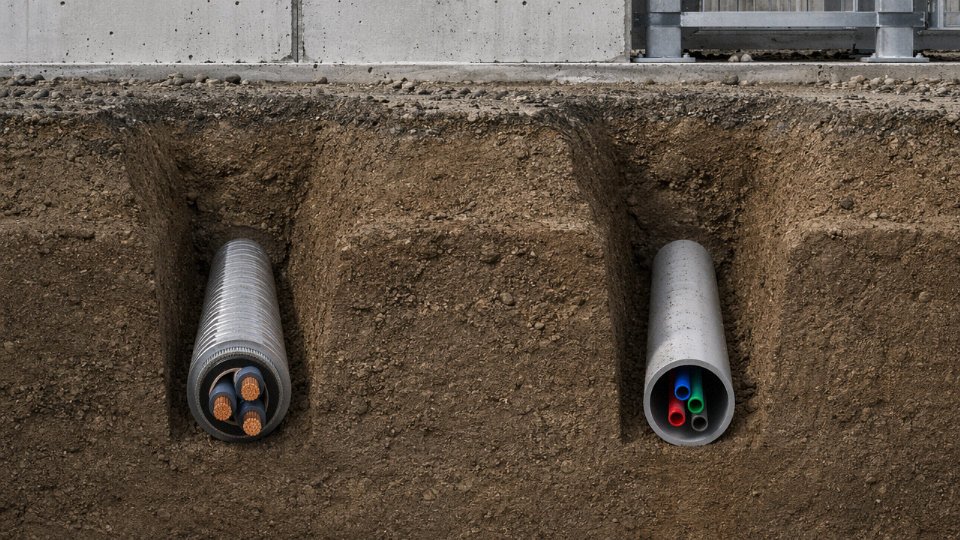
That said, direct-burial MC is genuinely useful for short homerun runs to outbuildings or pad-mounted equipment where pulling a conduit run would require concrete work. For long runs where future re-pull is likely — adding circuits, upgrading conductor size — a PVC or HDPE conduit stub-out makes more long-term sense even if the upfront cost is higher.
Corrosive Industrial Environments
Chemical plants, wastewater treatment, food and beverage processing — these environments eat standard galvanized armor and aluminum conduit at different rates depending on what’s in the air or splashing around. PVC-jacketed steel wire armored (SWA) cable or stainless-braid armored cable holds up well in moderate chemical exposure. In severe environments, though — strong acids, chlorine atmospheres, heavy caustic wash — the honest answer is that HDPE conduit with chemical-resistant conductors often outperforms any armored cable option, simply because you can replace the raceway if it degrades without disturbing the conductors, and HDPE’s chemical resistance profile is well-characterized.
Standard AC cable (no PVC jacket) is permitted in wet locations under NEC Article 320.False
NEC Article 320 covers AC cable, which is not listed for wet locations. Wet-location use requires MC cable listed for that purpose under NEC Article 330, typically with a PVC jacket and wet-rated conductors such as XHHW-2.
Hazardous Classified Areas
Class I Division 1 / Zone 1 — you need rigid metallic conduit with explosion-proof fittings. Armored cable alone is not an acceptable wiring method in most Division 1 installations. The sealed conduit system contains any ignition-capable arcing inside the raceway. Don’t let a value-engineering exercise talk you into MC here.
Class I Division 2 / Zone 2 is a different story. NEC 501.10(B) permits MC-HL (the hazardous-location listed variant) and PLTC-ER cables in these areas, which opens a legitimate cost and flexibility advantage over conduit, particularly in areas with complex routing around existing equipment.
High-Temperature Environments
Armor does not insulate conductors from heat. Running standard MC cable near a furnace exhaust duct or along a steam header, even inside PVC-jacketed armor, accomplishes nothing if the conductors are rated only to 75°C or 90°C and the ambient regularly exceeds that. You need XHHW-2 (90°C wet/dry), FEP, or PTFE conductors depending on how extreme the exposure gets — and those ratings need to be derated further for elevated ambient per NEC 310.15.
Both approaches — armored cable with high-temp conductors, or conduit with high-temp wire — are viable. Conduit has a practical edge in these locations: when insulation degrades in 10 years because the actual temperature ran hotter than the design spec (and it often does near industrial heat sources), you re-pull the wire without touching the raceway.
Outdoor Exposed and UV Environments
Sunlight-resistant PVC-jacketed MC is listed under NEC 330.10(A)(11) and holds up reasonably well in direct sun. PVC conduit needs to be UV-stabilized Schedule 40 or 80 — plain PVC conduit without UV stabilization becomes brittle and cracks within a few years of sun exposure in warm climates. In coastal or salt-spray environments, aluminum conduit outperforms galvanized steel significantly; the oxidation layer on aluminum is actually protective, whereas zinc coating on galvanized steel eventually pits through.
Seismic Zones and Vibrating Equipment
Rigid conduit across a seismic joint or bolted to a vibrating compressor skid will crack fittings and loosen couplings. Interlocked-armor MC cable flexes with seismic movement, which is why California OSHPD requirements for healthcare facilities effectively favor MC cable installations — the seismic bracing requirements for rigid conduit systems in those facilities add substantial labor and material cost. For equipment with continuous vibration (fans, pumps, compressors), a short flexible MC whip to the final connection is standard practice regardless of what the branch circuit wiring method is.
| Environment | Preferred Wiring Method | Key Condition or Caveat |
|---|---|---|
| Wet / washdown | PVC-jacketed MC, XHHW-2 conductors | Must be listed for wet location |
| Direct burial | PVC-jacketed MC or RMC | MC requires 24-in cover vs. 6-in for RMC |
| Corrosive (severe) | HDPE conduit + chemical-resistant wire | Raceway replaceability outweighs armor durability |
| Class I Div 1 / Zone 1 | RMC with explosion-proof fittings | MC cable not typically acceptable here |
| Class I Div 2 / Zone 2 | MC-HL or PLTC-ER | Verify listing; NEC 501.10(B) |
| High-temp (>60°C ambient) | Either — but match conductor rating | Conduit preferred where future re-wire is likely |
| Outdoor UV exposed | Sunlight-resistant MC or UV-stabilized PVC conduit | Aluminum conduit preferred in salt-air zones |
| Seismic / vibration | Interlocked-armor MC | OSHPD facilities have specific requirements |
Installation Best Practices: Termination, Support, Grounding, and Common Field Errors
Armored cable fails inspection — or fails in service — far more often because of installation errors than because of any inherent product defect. Most of those errors are concentrated at three points: terminations, support spacing, and moisture management. Getting those right is not complicated, but it does require knowing which rules apply to which cable type, because Type AC and Type MC are not interchangeable in their requirements even though they look nearly identical on a reel.
Termination Hardware: The First Place Inspectors Look
MC connectors must be listed to UL 514B — that is not negotiable. In practice, you have three connector families: set-screw, squeeze (sometimes called snap-bushing or clamp-type), and snap-in. Set-screw connectors are reliable and inexpensive but require the installer to actually torque the screw; undertorqued set-screw connectors are loose enough to fail a pull-test and will be flagged on the spot. Squeeze-type connectors are faster on high-volume work and less dependent on installer torque discipline. Snap-in connectors are common in pre-wired panel assemblies where speed matters.
Improper or unlisted connectors are the single most common reason an AHJ rejects an MC installation. I have seen entire sections of a commercial fit-out fail inspection because a subcontractor substituted generic liquid-tight fittings, which are not listed for interlocked armor. That is a re-termination job on potentially hundreds of connection points — expensive and avoidable.
Anti-Short Bushings: Small Part, Real Consequence
Type AC cable — the older aluminum-armor type — requires an insulating anti-short bushing at every termination, full stop. The cut edge of the spiral armor is sharp enough to nick conductor insulation over time, and the bushing (the red or blue plastic insert most electricians recognize immediately) is the only thing preventing a fault at the termination. NEC is explicit; inspectors check for it.
Type MC cable does not carry the same mandatory requirement, because MC uses a separate equipment grounding conductor rather than relying on the armor for ground return. That said, installing the bushing anyway on MC terminations costs almost nothing and provides some protection against insulation abrasion during installation itself — particularly on larger conductor sizes where the insulation jacket is stiffer and can press against the armor edge during connector makeup.
Grounding Continuity: Don’t Rely Solely on the Armor
MC cable with a dedicated green or bare EGC satisfies NEC 250.118(10) cleanly and is the approach I’d recommend for any run longer than roughly 50–60 feet or in a facility where future circuit modifications are likely. Using the interlocked armor itself as the EGC is permitted, but the fittings must be specifically listed for that purpose, and the armor cross-section still has to meet the sizing requirements of NEC 250.122 — which sometimes forces a cable size upgrade just to carry fault current, erasing some of the cost advantage.
Support and Bend Radius: Where Field Shortcuts Create Inspection Failures
NEC 330.30 requires MC cable to be secured within 12 inches of every box or fitting and supported at intervals not exceeding 6 feet. That 6-foot rule trips up installers who are used to working in cable tray, where the tray itself provides continuous support and the interval requirement changes. Mixing those contexts on the same project — some home-run cables in tray, some dropping out to individual devices — is where misunderstanding shows up most.
Bend radius is less often checked but more consequential when violated. A kinked armor section creates a stress riser directly on the conductor insulation underneath. The cable may pass initial continuity testing and still develop an insulation fault within a year or two of thermal cycling. Use a bend radius gauge or one of the pre-formed MC benders; eyeballing it is not reliable on cable larger than 1 AWG.
Exceeding the maximum pulling tension specified in UL 1569 causes conductor bunching inside the armor, which may not be detectable through visual inspection or initial electrical testing.True
UL 1569 defines pulling tension limits based on conductor cross-section (typically around 8× the conductor area in lbf). Overpulling displaces conductors longitudinally inside the armor assembly, creating localized insulation stress that standard continuity or megger tests at installation do not reliably detect.
On long horizontal pulls — anything over 100 feet with multiple bends — it is worth calculating the tension before the pull, not after something feels wrong. Conductor bunching is invisible from the outside and will not show up on a standard megohm test at installation.
Moisture Sealing: The Step That Gets Skipped
Even wet-location-listed MC cable must be sealed at wall and floor penetrations with a listed duct seal compound or mastic. The cable’s listing handles the moisture the armor is exposed to along the run; it does not address condensation that tracks inside the armor from a pressure or temperature differential at a penetration. In practice, an unsealed outdoor wall penetration will drive humid air into a conditioned space during seasonal temperature swings, and the moisture condenses inside the cable assembly. Moisture-related insulation faults from this mechanism typically appear 18 months to 3 years after installation — long after the installing contractor is off-site and the warranty conversation gets complicated.
This step takes roughly two minutes per penetration with a tube of duct seal. Skipping it is one of the more consistently expensive shortcuts in armored cable installation.
Armored Cable Selection Guide: Matching Jinda Product Constructions to Project Requirements
If you’ve followed the decision logic in the earlier sections — environment, mechanical hazard, code constraints, total cost — you eventually land at the same practical question every procurement manager faces: which specific cable construction do I actually order? Getting the selection wrong at this stage is expensive in ways that don’t show up until startup or, worse, the first maintenance event.
Jinda’s five production bases across China, covering roughly 470,000 m² of manufacturing floor space, aren’t mentioned here as a credential-padding exercise. They matter operationally because different armor and insulation constructions require different extrusion lines, stranding equipment, and armoring machinery. A manufacturer that runs everything through one plant is making compromises somewhere in the product range. Jinda’s integrated structure — R&D through after-sales — also means the engineering specifications developed internally have been validated against actual production capability, not just copied from a standard and sent to a third-party factory.
Low-Voltage SWA Power Cable (IEC 60502-1 / BS 5467)
For industrial plant feeders, substations feeding process equipment, and renewable energy collection systems in Asia, Africa, and the Middle East, the workhorse construction is a galvanized steel wire armor (SWA) cable with XLPE insulation and PVC outer sheath, rated 0.6/1 kV. The SWA layer handles the mechanical protection that conduit would otherwise provide, and XLPE gives you better thermal headroom than PVC insulation alone — useful in ambient-temperature environments common in the Middle East, where ground temperatures can push 40–50 °C at shallow burial depths and conductor ratings derate faster than engineers often expect during desk calculations.
Medium-Voltage Armored Cable (IEC 60502-2)
Inter-array cabling for wind and solar farms, underground urban distribution feeders, and industrial plant primary distribution typically require something in the 6/10 kV to 26/35 kV range. Jinda produces these with copper or aluminum conductors, XLPE insulation, and either aluminum wire armor (AWA) or steel wire armor depending on the installation context. AWA is the right call for three-phase AC systems in larger cross-sections — the non-magnetic armor avoids the eddy current heating that makes SWA problematic on single-core medium-voltage cables. It’s a detail that gets overlooked in procurement specs surprisingly often.
Armored Instrumentation and Control Cable
Long-distance DCS and PLC wiring in petrochemical plants, where running conduit across hundreds of meters through a live process unit is somewhere between impractical and impossible, is where Jinda’s armored instrumentation cable earns its keep. Individual and overall shielding options, drain wires, PVC or LSZH jackets, and a PE inner sheath under the armor layer — meeting IEC 60544 and ICEA S-90-661 — handle the signal integrity and mechanical protection requirements together. The PE inner sheath matters more than it looks: it prevents the armor from contacting the shield foils under vibration, which is a noise source that’s genuinely difficult to diagnose after the fact.
LSZH Armored Cable for Life-Safety Environments
LSZH armored cable meeting IEC 60332-3-24 and IEC 61034-2 produces significantly less toxic smoke than standard PVC-jacketed cable in fire conditionsTrue
IEC 61034-2 measures light transmittance during combustion; LSZH compounds are specifically formulated to reduce halogen acid gas and particulate smoke output, which is the basis for their mandatory use in many metro, tunnel, and public building specifications worldwide.
In tunnels, metro systems, and public infrastructure where evacuation time matters, LSZH armored cable is typically the code-mandated or client-specified choice — and it removes the conduit question entirely by providing mechanical protection and flame performance in one assembly.
Custom Engineering and Hybrid Constructions
Standard catalog items cover perhaps 80% of project needs. The remaining 20% is where specification conversations get interesting. Dual-armor constructions for extreme mechanical hazard zones, sector-shaped conductors where conduit space or burial trench width is constrained, integrated fiber-optic elements for power-plus-data hybrid runs — none of these are achievable in any conduit-and-wire system regardless of budget.
How to Write the Specification
A properly written Chinese national standard designation like YJV22 3×240+1×120 mm² 0.6/1 kV communicates the entire construction unambiguously: YJ = XLPE insulation, V = PVC sheath, 22 = double steel tape armor with PVC outer sheath, 3×240 = three 240 mm² phase conductors, +1×120 = one 120 mm² neutral. International procurement engineers specifying IEC constructions should use the equivalent IEC descriptor plus armor type, sheath material, voltage grade, and conductor material explicitly — “armored cable” alone tells a manufacturer almost nothing.
Frequently Asked Questions: Armored Cable vs. Conduit
Can I run MC cable in outdoor exposed locations without additional protection?
Yes, but the cable has to be the right product for the job. Standard MC cable — the kind most electrical distributors stock by the reel — is not listed for wet locations and cannot be left exposed outdoors. NEC 330.10 is clear: wet-location use requires an MC cable that is both listed for wet locations and carries a sunlight-resistant outer jacket. In practice that means a PVC overjacket rated for UV exposure, usually printed with “sunlight resistant” on the outer surface. Skip that detail and your inspection will fail, or worse, the jacket degrades within two or three summers and you’re troubleshooting intermittent ground faults on a rooftop. If you’re buying offshore, confirm the jacket compound explicitly in the purchase spec — “PVC jacket” alone does not guarantee UV stabilization.
Does armored cable eliminate the need for a separate equipment grounding conductor?
Not always, and this is a point worth slowing down on. NEC 250.118(10) does permit the interlocked armor of a listed MC cable to serve as the equipment grounding conductor, provided listed fittings are used throughout. On short runs in a dry commercial interior, that’s generally fine. On runs exceeding roughly 100 feet, in high-fault-current systems, or anywhere the impedance of the armor path is a real variable — motor feeders, healthcare branch circuits, data center PDU feeds — a separate green insulated EGC inside the cable assembly is strongly recommended. The armor’s grounding impedance depends on how consistently the interlocking stays tight, the quality of every fitting, and whether anyone has nicked the armor during a rough pull. A dedicated copper EGC removes that uncertainty entirely.
NEC 250.118(10) permits listed MC cable armor to serve as the EGC only when installed with listed fittings throughout.True
This is a direct requirement of NEC 250.118(10); the armor-as-EGC allowance is conditional on listed fittings — unlisted or mismatched fittings void the grounding path.
Can armored cable be installed inside conduit?
Yes. Running MC cable through a conduit sleeve is a common solution through fire-rated walls, underwater concrete duct banks, or wet underground sections where the MC’s own jacket rating isn’t sufficient for prolonged submersion. The wrinkle is fill calculations: you treat the MC cable’s full outer diameter as if it were a single conductor OD. That outer diameter is considerably larger than the insulated conductors inside, so a conduit sized for THHN will not accept the same circuit count in MC. Undersizing conduit on this basis is a recurring field error.
Is SWA cable the same as MC cable?
No. The armor constructions are fundamentally different. SWA (steel wire armored, per BS/IEC) uses round steel wires laid helically around the cable — good crush resistance, somewhat stiffer, and grounded differently. MC (metal-clad, per NEC/UL 1569) uses an interlocked or corrugated aluminum or steel strip, which gives it more flexibility and a tighter bending radius. Both provide comparable mechanical protection for most applications, but the grounding method, applicable listing standard, connector ecosystem, and available voltage ratings diverge significantly. Mixing terminology in a spec can get you the wrong product, especially on international projects where a procurement team in one country is sourcing to a spec written by an engineer in another.
Which is better for underground direct burial — armored cable or PVC conduit with THHN?
Depends almost entirely on what happens after commissioning. Armored cable with a PE outer sheath (direct-burial MC or SWA) installs faster and costs less upfront — you’re pulling one cable rather than threading conductors through a duct system. But PVC conduit with THHN gives you future wire replacement without excavation, and that matters a lot on runs likely to be modified, on circuits with high harmonic loading that might need upsizing, or in any installation where a single fault repair cannot take an entire cable out of service. For a permanent, low-modification-risk run — a remote pump station, a utility tie — direct-burial armored cable is usually the practical choice. For a campus feeder under a parking lot that will be reconfigured in five years, the conduit system pays for itself the first time a contractor has to pull new wire.
How does armored cable handle seismic requirements in hospitals and critical facilities?
California OSHPD requirements and IBC seismic provisions both permit MC cable routed across seismic joints, provided flexible listed fittings are used at the transition. MC’s interlocked armor actually accommodates the differential movement reasonably well. Rigid conduit across a seismic joint requires a flexible conduit coupling — a legitimate engineering solution, but those couplings are a routine maintenance item in high-seismic facilities. Maintenance staff in California hospitals will tell you they check those couplings after every significant event. With MC and an approved flexible fitting, there’s less to inspect.
What is the maximum voltage rating for standard armored cable?
Low-voltage MC per UL 1569 tops out at 600 V. That covers the vast majority of branch circuit and feeder work in commercial and light industrial settings. IEC-standard SWA cables per IEC 60502-2 are manufactured up to 35 kV and routinely beyond that for utility-grade constructions. Medium-voltage armored cable — whether for industrial plant distribution at 5 kV or 15 kV, or utility feeders above that — requires appropriate insulation thickness, conductor shielding, and in many cases a metallic sheath under the armor. Specifying a 600 V product on a 4,160 V system is an obvious catastrophe, but mismatching voltage class on medium-voltage cables at procurement is less rare than it should be.
Can Jinda supply armored cable certified to both IEC and NEC standards for multi-country projects?
Jinda’s production covers IEC 60502, BS 5467, and GB/T standards as standard scope, and the technical team can coordinate third-party UL or CSA listing for specific cable constructions when a North American project requires it. For projects spanning jurisdictions — an LNG facility built to IEC that feeds U.S.-listed switchgear, for instance — the practical approach is to engage Jinda’s technical sales team early, with confirmed voltage class, fault current, installation environment, and approximate quantities. Retrofitting a certification onto a finished cable order is slow and expensive; building it into the initial production scope is not.
Making the Final Call: A Step-by-Step Decision Framework for Engineers and Procurement Teams
By the time you’ve worked through environment classification, code compliance, mechanical ratings, and cost modeling, the actual decision usually isn’t that hard. The framework below forces you to answer the right questions in the right order — so you’re not picking a wiring method based on habit or what the last contractor preferred.
Step 1: Confirm Code Jurisdiction Before Anything Else
This one cuts the decision tree in half immediately. Some AHJs — certain petrochemical facilities, a number of municipal transit authorities, older industrial campuses with existing standards — mandate conduit for all power circuits regardless of voltage or location. If the project specification already says “all wiring in rigid steel conduit,” the technical debate is over. Check the local amendment to the NEC (or the applicable BS 7671 / IEC adoption if you’re outside the U.S.), read the project’s Division 26 electrical spec, and call the AHJ if anything is ambiguous. Finding out at rough-in that MC cable isn’t accepted in that jurisdiction costs real money.
Step 2: Classify the Installation Environment
Run through the checklist from the environment section: wet or damp location, corrosive atmosphere, classified hazardous area, direct burial, sustained high temperature, seismic zone. Each condition either eliminates a wiring method or requires a specific listed variant. An ordinary MC cable in a Class I Division 2 area is a code violation waiting to become an incident. Liquid-tight flexible metal conduit in a seismic zone without proper expansion fittings is a different kind of problem. Be precise about the environment — “industrial” covers everything from a climate-controlled packaging line to a coastal wastewater headworks, and those two places need completely different answers.
Step 3: Assess How Likely Circuit Changes Are Within the Next Decade
Honest answer: most labs, data centers, and commercial tenant fit-outs will be reconfigured. If the facility owner can’t say with confidence that the routing is permanent, weight conduit heavily — the re-pull advantage is real, and it compounds over time. Conversely, underground utility feeders, renewable energy collection circuits, and infrastructure runs connecting fixed equipment are essentially permanent. For those, armored cable’s lower installed cost and single-pull logistics typically win on total cost of ownership.
Step 4: Run a Three-Scenario Cost Model With Real Local Numbers
Don’t use industry averages as a budget. Use them as a sanity check. Build three line items: armored cable installed (material plus labor, using the $2–$5/linear-foot labor range as a floor — actual cost depends on run length, termination density, and local wage rates), EMT or IMC with THHN (labor typically $4–$9/linear foot depending on conduit size and bend complexity), and RMC where the mechanical hazard demands maximum protection. Price the materials from your actual distributor quotes, not catalog list. The model doesn’t need to be elaborate — a spreadsheet with three columns and honest quantities is enough to make a defensible procurement case.
Step 5: Think Through Supply Chain Before You Commit
Conduit and commodity wire are on the shelf at most electrical distributors. Custom armored cable — specialty armor material, unusual conductor count, oil-resistant jacket — can run 4 to 12 weeks from a manufacturer, sometimes longer for large-volume orders or unusual constructions. That lead time is manageable if it’s in the schedule from the start. For remote international projects where freight logistics are complicated, armored cable’s consolidated single-SKU shipment often simplifies things considerably compared to shipping conduit sticks, fittings, wire reels, and connectors as separate line items.
Armored cable is always faster to install than conduit systemsFalse
Installation speed depends heavily on run complexity, termination count, and crew experience. On long straight runs with few terminations, armored cable is generally faster. On dense junction-box work or runs requiring many bends, the difference narrows or reverses.
Step 6: Write It Into the Specification Precisely
Verbal agreement with a contractor about wiring method means nothing during bid substitution. Specify the wiring method in the project electrical specification with the UL listing number or applicable IEC standard, the jacket type, armor material, and any special listing (wet location, direct burial, CT-use, etc.). A vague spec that says “armored cable or approved equal” will get you the cheapest thing that can be argued to comply. Nail it down.
Neither armored cable nor conduit is the universally correct answer — that framing is the wrong starting point. The right system is determined by the intersection of code, environment, modification probability, and total cost. Jinda’s engineering team works with procurement managers and project engineers globally to review specifications and match the right armored cable construction to the actual project conditions, whether that’s a standard MC feeder or a specialized SWA export cable for a remote installation.