Specify the wrong cable type on a drawing package and you might not find out until the trench is backfilled, the equipment is commissioned, or — worst case — a fault shuts down a production line at 2 a.m. on a Sunday. Unarmoured cable laid where mechanical protection was needed, or armoured cable specified where a simple flexible drop would have done, translates directly into either early failure and emergency re-cabling costs, or unnecessary material spend that compounds across every metre of a large project. The difference between the two is not just a layer of steel — it drives installation method, conduit sizing, termination hardware, and total installed cost.
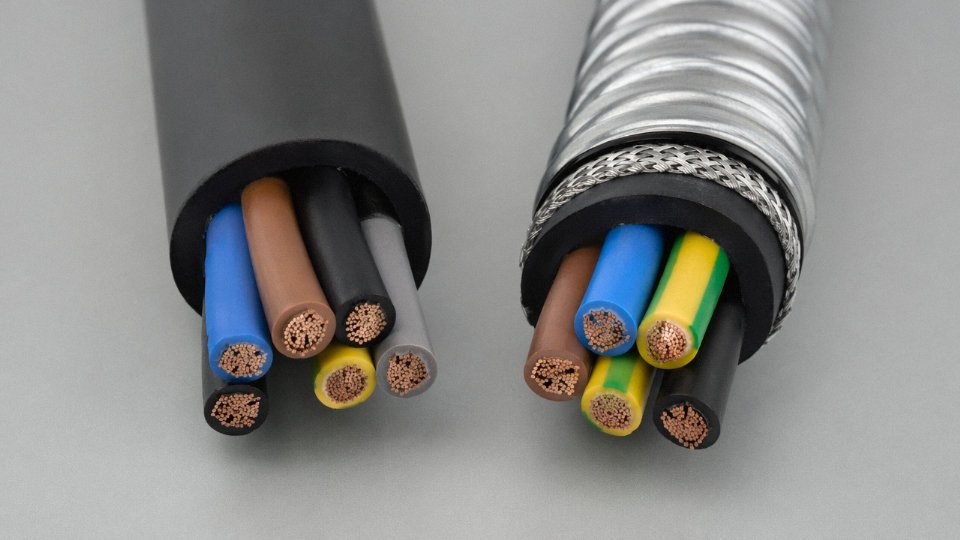
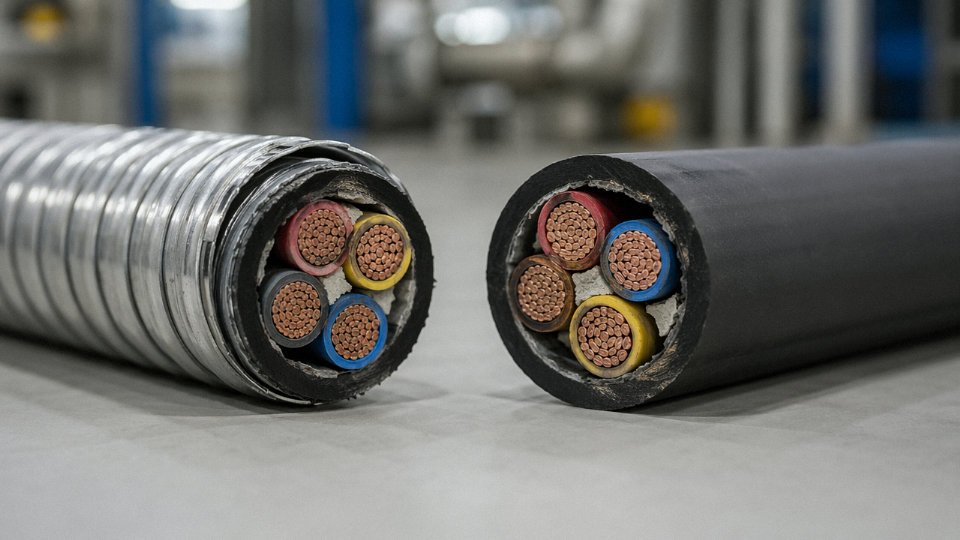
Armoured cable has a metallic layer — steel wire or steel tape — bonded around the insulated conductors, protecting against crush, impact, and rodent damage in direct-burial, underground, or exposed industrial runs. Normal (unarmoured) cable lacks this layer, making it lighter and cheaper per metre but dependent on conduit, cable tray, or controlled environments for mechanical protection. The choice determines installation method, fault tolerance, and lifecycle cost.
What catches engineers out is that “armoured” is not one thing. SWA, STA, AWA, double-armoured — each has a specific mechanical rating and a specific failure mode when misapplied, and the cost premium of 20–45% over equivalent unarmoured cable only makes sense when the application actually demands it. The rest of this article breaks down exactly where that line falls.
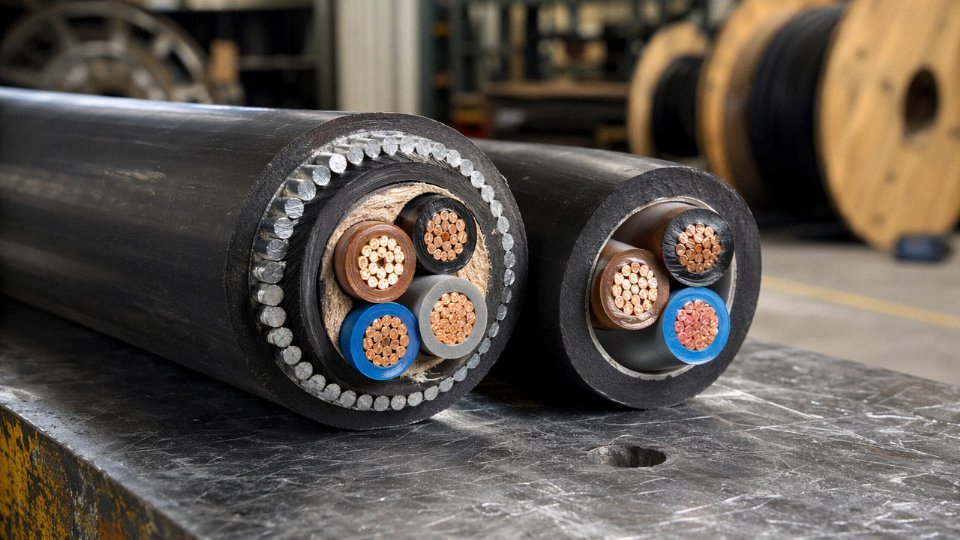
Layer-by-Layer Construction: How Armoured and Normal Cables Are Built Differently
Understanding what’s actually inside each cable type is the fastest way to stop making substitution errors on the drawing schedule.
Normal (Unarmoured) Cable: What the Layers Actually Do
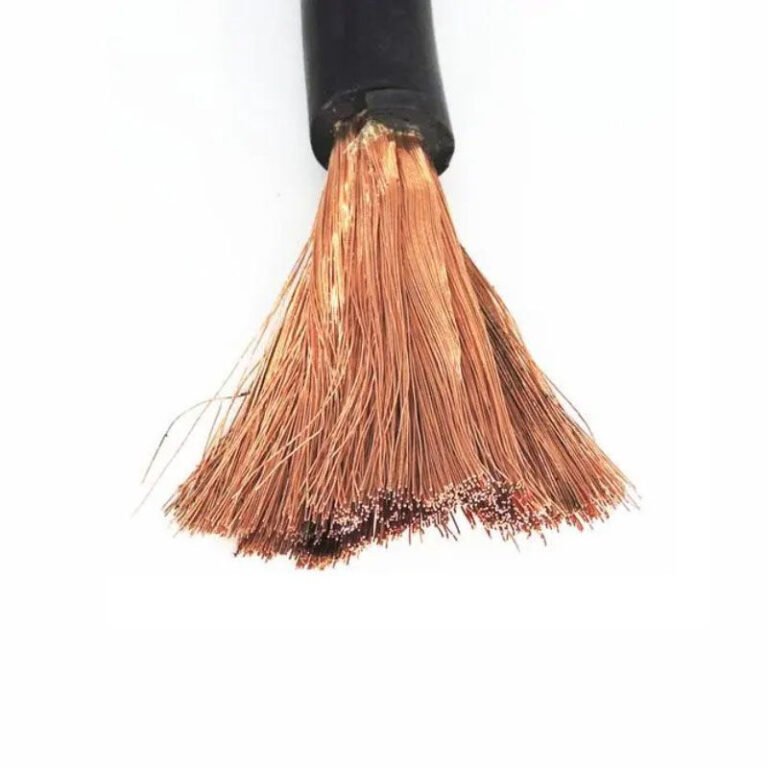
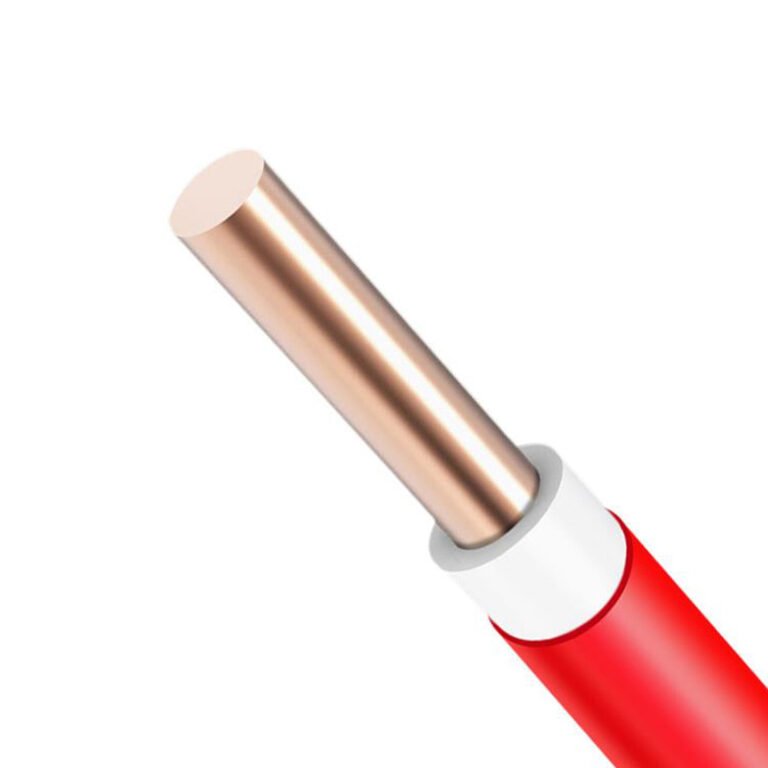
A standard unarmoured cable starts with the conductor — solid or stranded copper, occasionally aluminium for larger cross-sections where weight and cost matter more than flexibility. Stranded construction becomes the default above roughly 16 mm² because a solid conductor that size is genuinely difficult to terminate cleanly in the field. The primary insulation sits directly over the conductor: PVC for the vast majority of general-wiring applications, XLPE where you need higher continuous operating temperatures (up to 90°C conductor versus PVC’s 70°C), or EPR where flexibility at low ambient temperatures is non-negotiable, typically in mining or offshore work.
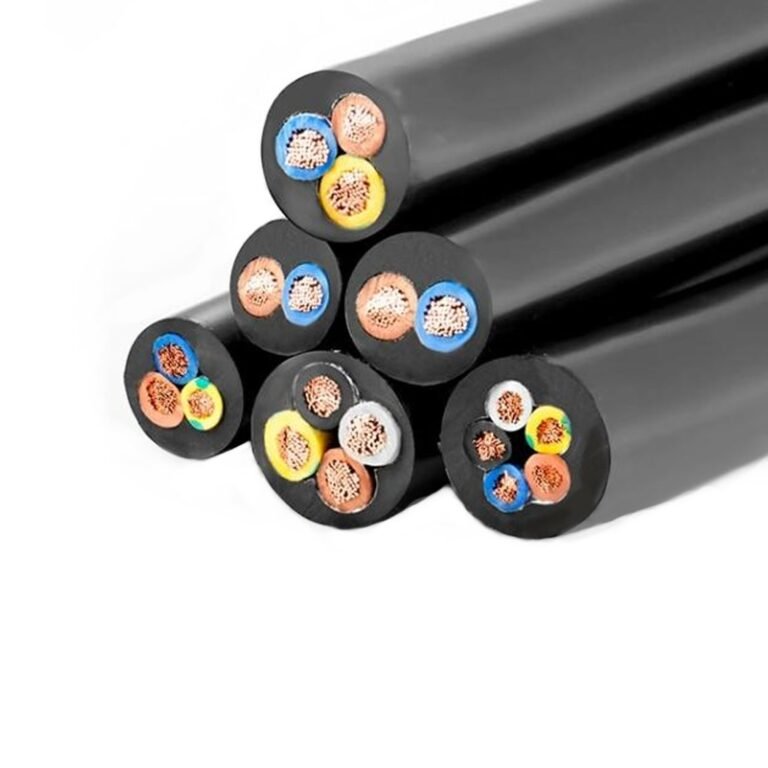
Multi-core cables add a filler or bedding layer — usually extruded non-hygroscopic compound or wrapped tape — to fill the voids between insulated cores and give the assembly a round cross-section before the inner sheath goes on. That inner sheath (sometimes called the “bedding sheath”) isn’t just cosmetic; it provides a separation surface so the outer jacket can be stripped during termination without nicking the core insulation. The outer jacket, PVC or LSZH depending on smoke and toxicity requirements, handles abrasion, UV, and incidental contact. That’s it. The whole structure is light, flexible, and cheap — and completely exposed to any significant mechanical load.
Armoured Cable: Every Additional Layer Has a Job
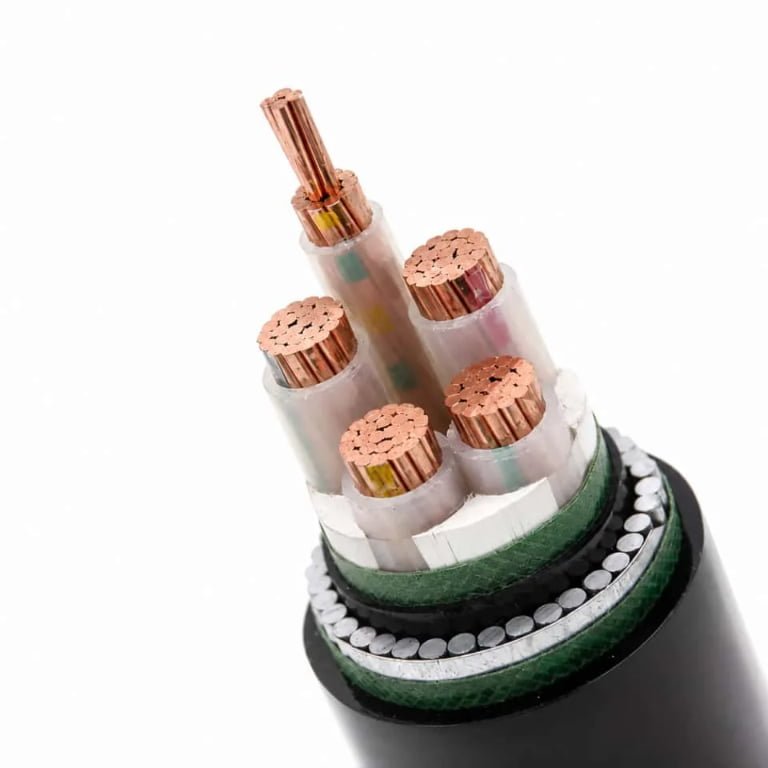
Armoured cables replicate all of the above, then add a bedding layer beneath the armour specifically to prevent the armouring wires or tapes from biting into the cores under flexing or compression. Without that bedding, you get insulation damage on the first tight bend. The armouring layer itself sits over the bedding, and then a final outer sheath — again PVC or LSZH — goes over the armour to protect the steel from groundwater, chlorides, and mechanical abrasion on installation.
The armouring layer is where the engineering choices branch out considerably.
The Four Armouring Types Compared
Steel Wire Armour (SWA) is the workhorse — individual galvanised steel wires, typically 0.8–3.15 mm diameter depending on cable size, laid helically. It gives genuine tensile strength and crush resistance, and it’s why SWA is the default for direct burial and duct installation in most industrial projects. Cables built to BS 6724 or IEC 60502-1 with SWA can handle crush loads in the 450–900 N per 10 cm range; the exact figure depends on conductor cross-section and how many armour wires are in the layer.
Steel Tape Armour (STA) uses two overlapping helical steel tapes rather than individual wires. It’s better at resisting radial crush but offers minimal tensile strength — don’t specify STA for any installation where the cable will hang vertically or be pulled through a long conduit run. It’s lighter than SWA for a given core size, which occasionally matters.
Aluminium Wire Armour (AWA) is the go-to for single-core cables where steel armour would create unacceptable eddy current losses. Steel is ferromagnetic; wrap it around a single AC conductor and you’re building a short-circuit transformer. AWA solves that, though at the cost of reduced mechanical strength and poorer corrosion resistance in aggressive soils.
Double Steel Tape Armour (DSTA) stacks two tape layers for maximum crush resistance in applications like submarine crossings or heavily trafficked industrial floors. Weight penalty is real — budget an additional 15–30% over SWA for equivalent core sizes.
| Armouring Type | Typical Conductor Range | Tensile Strength | Crush Resistance | Weight vs. SWA | Corrosion Resistance |
|---|---|---|---|---|---|
| SWA | 1.5 mm² – 630 mm² | High | Moderate–High | Baseline | Good (galvanised) |
| STA | 10 mm² – 400 mm² | Low | High | ~5–10% lighter | Good |
| AWA | 16 mm² – 630 mm² (single-core) | Moderate | Moderate | ~10–20% lighter | Moderate |
| DSTA | 25 mm² – 500 mm² | Moderate | Very High | +15–30% heavier | Good |
How Insulation Choice Interacts With Armouring
This pairing is where procurement engineers sometimes leave performance on the table. PVC insulation limits you to 70°C continuous conductor temperature and gives you a cable that stiffens noticeably below about 0°C — a real installation problem in northern climates during winter commissioning. XLPE doesn’t have that cold-temperature brittleness, handles 90°C continuous and roughly 250°C under short-circuit conditions, and supports higher voltage ratings (11 kV, 33 kV armoured cables are almost always XLPE). EPR sits between the two on temperature but is notably more flexible across a wide temperature range, which is why you see it specified for trailing cables on mobile plant.
XLPE-insulated SWA cables are suitable for continuous conductor temperatures up to 90°C and can withstand approximately 250°C under short-circuit conditionsTrue
These figures align with IEC 60502 and BS 6724 standards for XLPE-insulated cables, where 90°C is the rated continuous operating temperature and 250°C is the maximum permissible conductor temperature during a short-circuit event.
The insulation choice also affects the cable’s overall diameter, which in turn affects how many armour wires fit in a given layer — so switching from PVC to XLPE on a re-specification isn’t always a straight swap. Check the manufacturer’s drum dimensions and conduit fill calculations before finalising.
Mechanical, Electrical, and Environmental Performance: A Side-by-Side Analysis
Mechanical Performance
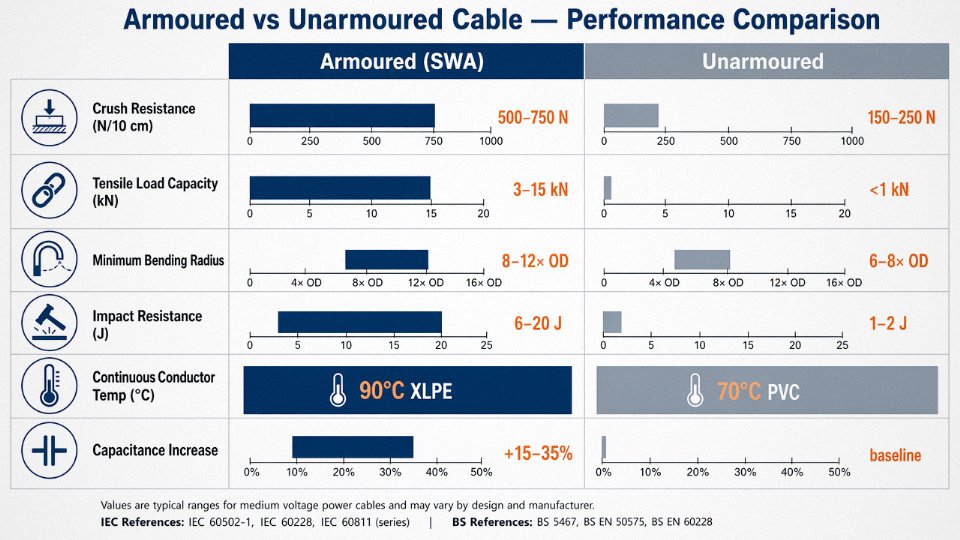
The gap between armoured and unarmoured cables under physical stress is not subtle. A standard 4-core 16 mm² SWA cable typically withstands crush loads in the 500–750 N per 10 cm range; the equivalent unarmoured PVC/PVC flex might fail at 150–250 N. Exact figures depend on armour wire diameter, core count, and whether you’re testing to IEC 60502 or BS 6724 — so always check the manufacturer’s test certificate, not just the datasheet headline.
Tensile load capacity follows the same pattern. Armoured cables (especially those with steel wire armouring rather than steel tape) can handle axial pulls of roughly 3–15 kN depending on cross-section and installation method, which is why SWA is the default for vertical risers and direct-buried runs that cross unstable ground. Unarmoured cable in the same application will elongate at the conductor joints and eventually fail at a termination — usually at the worst possible time.
Bending radius is the trade-off. Most SWA cables require a minimum bending radius of 8–12× the overall diameter versus 6–8× for unarmoured equivalents. On congested cable trays where you’re trying to turn a 185 mm² four-core armoured cable in a tight cabinet entry, that difference genuinely matters. Plan your cable management before you finalise the drum length.
Impact resistance for armoured cables typically reaches 6–20 J (depending on conductor size and armour grade), while standard unarmoured cables are rarely tested above 1–2 J. In practice this means a dropped scaffold pole or a forklift tyre running over a cable buried just below a concrete screed — situations that are distressingly common on construction sites.
Electrical Performance and the Single-Core Armouring Problem
Here is where armoured cables introduce complexity that catches people out. Steel wire armouring adds capacitance — typically increasing cable capacitance by 15–35% compared to an unarmoured equivalent, depending on core geometry and insulation thickness. For short power runs this is irrelevant. For long MV feeder cables or sensitive instrumentation circuits, it changes your cable sizing and protection relay settings.
The single-core SWA issue deserves a direct warning.
Using steel wire armoured (SWA) cable on single-core AC circuits causes significant eddy current losses in the steel armouring, which generates heat and requires derating.True
Steel is a ferromagnetic material. On single-core AC cables, the alternating magnetic field from the conductor induces circulating currents in a continuous steel armour, producing resistive heating. IEC and BS standards require aluminium wire armour (AWA) or other non-magnetic armouring for single-core AC cables, with derating factors of 0.85–0.92 typically applied depending on bonding arrangement and installation method.
Derating for single-core AWA cables with both ends bonded runs roughly 0.87–0.93 of the single-end-bonded value. Get the bonding arrangement wrong and you’re adding heat you didn’t calculate for.
Thermal Performance
Standard PVC insulation limits continuous conductor temperature to 70°C. XLPE-insulated armoured cables push this to 90°C continuous, with short-circuit limits around 250°C. EPR insulation sits at roughly 90–105°C continuous depending on compound grade and is preferred in environments where thermal cycling is severe. The steel armour itself adds modest thermal mass — enough to extend short-circuit withstand time by perhaps 5–12% compared to an equivalent unarmoured cable, which occasionally matters when you’re calculating protective device discrimination margins.
Environmental and Sheathing Considerations
For direct burial, the interaction between outer sheath material and soil chemistry is underappreciated. Standard black PVC over SWA is fine for most soils, but in peaty, acidic, or chemically contaminated ground, you’ll want to check chloride ingress and consider an MDPE oversheath. LSZH outer sheaths are now effectively mandatory in tunnels, cable basements, and enclosed public buildings — not primarily for the cable’s own protection but to limit toxic smoke load for occupants. The sheath adds almost nothing to pull-out strength; its job is chemical and fire performance.
EMI/RFI: Armouring Is Not a Screen
Steel wire armour provides mechanical continuity, not reliable electromagnetic screening. Its coverage factor and transfer impedance characteristics are nothing like a purpose-made copper braid screen. If you’re running instrumentation, signal, or control cables in high electrical noise environments — near VFDs, large transformers, or welding equipment — armouring alone will not protect you. Specify a separate copper foil or braid screen under or over the armour, bonded correctly at one end for low-frequency interference or both ends for RF. This is a common procurement oversight: the armoured cable gets specified, the inner screen gets forgotten, and the commissioning team spends a week chasing phantom faults on the 4–20 mA loops.
Application Mapping: Where Each Cable Type Is the Right — and Wrong — Choice
Getting this decision wrong costs money in one of two ways: you either over-specify and bleed budget on armour you didn’t need, or you under-specify and end up with a damaged cable buried two metres down that takes a week to locate and repair. Neither outcome is theoretical — both happen regularly on real projects.
Where Armoured Cable Is Non-Negotiable
Direct burial without conduit is the clearest case. IEC 60502-1 and BS 5467 both presuppose that cables installed in ground without mechanical protection are SWA or STA construction. The armour isn’t optional here — it’s the protection. Backfill shifts, ground settles, and excavation equipment doesn’t respect cable routes.
Underground MV and HV distribution almost always requires SWA or wire-armoured XLPE regardless of whether there’s a duct, because the armour also serves as a fault-return path and provides the mechanical rigidity needed during installation pulls over long runs. Skip this and you may pass continuity tests on day one and have a fault-current problem on day two.
Industrial plant cable trays in areas with forklift or vehicle movement are another mandatory zone. A standard unarmoured cable sitting on a tray that a forklift clip catches — even indirectly — can be crushed through insulation in a single contact. SWA cables handling 450–900 N crush load per 10 cm (the actual figure depends on conductor cross-section and armour wire gauge) absorb that kind of incidental abuse. Unarmoured cable simply doesn’t.
Offshore, marine, and mining environments demand armoured cable both for mechanical reasons and because IEC 60092 and the relevant mine safety standards in most jurisdictions require it explicitly. In tunnelling especially, the cable is exposed to water ingress, abrasion against rock, and movement during construction phases — three simultaneous threats that armour is specifically designed to address.
Armoured fire-resistant circuits under IEC 60331 — fire alarm, emergency lighting, life-safety systems — generally specify armoured construction because the armour maintains circuit integrity even when the structure around it is mechanically compromised by a fire event.
Where Normal Cable Is the Correct Choice
Inside enclosed conduit systems, armour is redundant and the conduit adds unnecessary cost. NEC Article 300 explicitly addresses conduit-burial requirements for unarmoured conductors, and in that context the conduit is the mechanical protection. Paying for SWA inside a steel conduit run is a procurement error, not a safety measure.
Raised-floor or above-ceiling distribution in commercial buildings, cable management trunking, and low-voltage secondary distribution in clean dry environments — these are all designed around controlled, protected routing. Unarmoured PVC or XLPE cable to IEC 60227 is entirely appropriate. The 70°C conductor rating of standard PVC insulation is usually adequate for these load levels unless the trunking is heavily loaded or ambient temperature is high.
Flexible connections to moving machinery are a specific case where you actively don’t want armour — steel wire armoured cable has poor flex fatigue life, and a continuous-flex application will crack the armouring wires and eventually breach the insulation. Use purpose-made flexible cable here.
Grey Areas That Need Engineering Judgment
Outdoor surface-mounted runs on buildings sit in a genuine grey zone. If the run is at height and physically inaccessible, unarmoured cable in UV-resistant conduit is usually acceptable. At ground level or in areas where maintenance staff or vehicles move, armour makes sense — not because of a standard requirement but because the consequence of damage is high.
Solar PV DC string cables are often specified as unarmoured because they run in clip-fixed surface routes on module frames, but installations at ground level where rodent activity or agricultural machinery is nearby change that calculus. SWA is significantly better than STA for rodent resistance — steel wire is harder to gnaw through than steel tape, which rodents can work at the edges of.
EV charging station supply cables are an increasingly common decision point. The supply cable from the distribution board to a wall-mounted charger in a car park is exposed to vehicle movement, potential physical impact, and sometimes outdoor routing. Many installers default to SWA here on the basis that repair cost and downtime outweigh the upfront cable premium — which typically runs 20–45% more per metre than equivalent unarmoured cable, depending on conductor size and armour specification. That’s a defensible call.
Data centre power distribution deserves careful thought. The environment is controlled, but the consequence of downtime is severe. Most tier-certified data centres use armoured cable for the critical UPS and generator feeds not because the environment demands it but because the risk-adjusted cost of repair is prohibitive.
Agricultural installations are probably the most under-specified category in practice. Direct soil contact, chemical exposure from fertilisers, rodent pressure, and occasional machinery contact are all real threats. Unarmoured cable installed in agricultural buildings because it was cheaper routinely fails within a few seasons.
Common Misapplication Scenarios Worth Flagging
Using unarmoured cable in direct burial because it was cheaper is the most frequent error I’ve seen on budget-driven projects. The cable costs less; the excavation, fault-finding, and repair cost far more.
Single-core SWA in three-phase runs is a subtler problem. Steel wire armouring on single-core cable creates a magnetic loop that generates eddy current losses and can cause significant heating — enough to require substantial current derating, sometimes 15–25% depending on installation method and trefoil versus flat spacing. This is covered in IEC 60502 and the cable manufacturer’s current-carrying capacity tables. Ignoring it doesn’t make the losses disappear; it makes the cable run hotter than the design assumed.
SWA (steel wire armoured) cable provides better rodent resistance than STA (steel tape armoured) cable.True
Steel tape armouring uses overlapping flat tape that rodents can attack at the edges and seams; steel wire armouring presents a continuous round-wire barrier that is mechanically harder to penetrate by gnawing. This is recognised in cable selection guidance under AS/NZS 5000 and is consistent with practical field experience in agricultural and outdoor installations.
Specifying STA where rodent attack is the primary threat is a version of picking the wrong armour type entirely — the threat model should drive the armour construction choice, not just whether to armour at all.
Installation Requirements and Handling Differences That Affect Project Cost
The price difference between armoured and unarmoured cable is visible on any quotation. The installation cost difference often isn’t — and that’s where projects get into trouble. Labour, termination hardware, drum handling, and civil routing constraints can easily close the gap between cable types, or in some cases, flip it entirely.
Gland and Termination Requirements
Terminating an SWA cable correctly takes noticeably longer than most site schedules allow for. You need a brass or stainless steel cable gland sized to the exact armour wire diameter, a lock ring, a back nut, a shroud, and correct penetration into the gland plate. The armour wires must be captured evenly under the gland cone — if even two or three wires splay or snap during installation, you lose mechanical retention and, critically, armouring continuity for the earth fault path.
That continuity matters a great deal. The armour is typically used as the circuit protective conductor in single-phase and three-phase TN systems. A poorly terminated gland that makes intermittent contact with the armour can create a high-impedance earth path that won’t clear a fault fast enough to trip the protective device — the cable heats, insulation degrades, and the fault may not be detected until there’s a fire or equipment failure.
The armour of an SWA cable can serve as the circuit protective conductor only when gland-to-armour contact provides sufficiently low impedance for fault current to operate the overcurrent device within the required disconnection time.True
IEC 60364 and BS 7671 both permit SWA armour as a CPC, but this depends on confirmed earth fault loop impedance Zs being within limits — which requires proper gland installation and testing, not assumption.
Unarmoured cable terminations are, by comparison, fast. A cable entry reducer, a strain relief clamp or cable tie anchor, and the conductors go straight to terminal blocks. Total time for a competent electrician: a few minutes per termination. For an armoured cable in a multicore panel entry, budget closer to 20–45 minutes depending on cable size and gland plate congestion. On a project with 300-plus terminations, that difference adds up to weeks of labour.
Bending Radius and Routing Constraints
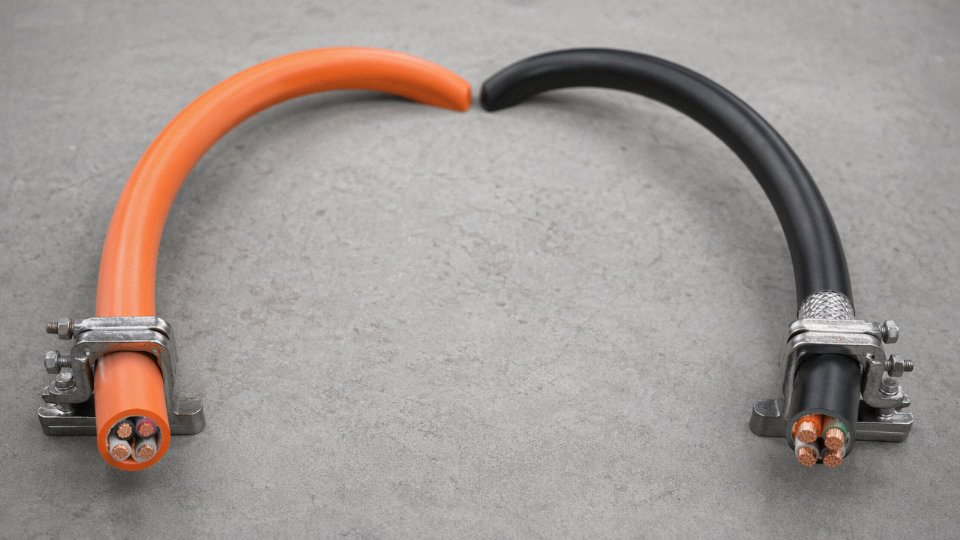
SWA cables are stiff. The steel wire armour resists deformation, which is the point when the cable is underground, but becomes a real problem when you’re pulling through a cable tray 90-degree bend in a congested plant room. Minimum bending radius for SWA typically runs 8–12 times the overall cable diameter — for a 35 mm² 4-core SWA with, say, a 28 mm overall diameter, that’s a minimum bend radius of roughly 225–340 mm. Unarmoured flexible cables sit at 4–6 times overall diameter, which is far more forgiving in confined runs or when retrofitting routes through existing plant.
Get this wrong and you’re not just slightly over radius — you’re deforming the armour wires, stressing the insulation at the bend, and potentially cracking the outer sheath. In cold weather installations (anything below about 0°C), SWA becomes noticeably more rigid and the risk of sheath cracking at tight bends increases sharply.
Weight, Drums, and Site Logistics
A 95 mm² 4-core SWA cable weighs roughly 5.8–6.5 kg/m depending on armour grade and sheath thickness. The unarmoured equivalent comes in around 3.8–4.2 kg/m. On a 500 m drum that translates to a weight difference of somewhere between 800 kg and 1.1 tonnes — which is the difference between a drum jack and a crane booking. On infrastructure projects running multiple heavy SWA drums across a congested site, drum logistics become a genuine programme item, not an afterthought.
Armoured Cable in Conduit: Usually the Wrong Answer
A common specification error — more common than it should be — is installing SWA inside steel conduit. In most cases this doubles protection that isn’t needed, increases installed cost significantly, and creates conduit fill problems that force upsizing the conduit bore. Under IEC 60364 conduit fill rules (and similarly under NEC Article 344/352), the larger outside diameter of an armoured cable reduces the number of conductors permissible in any given conduit size. Where conduit is already installed or mandatory for fire rating, unarmoured cable is almost always the better choice. The conduit is the mechanical protection.
Jointing and Splicing Mid-Run
Avoid mid-run joints wherever possible — that applies to any cable type, but the consequences of a bad joint are worse in armoured cable because access is often limited (direct buried, in trunking, behind panels). When a joint is unavoidable, an armoured cable splice requires a resin-filled joint kit or a heat-shrink assembly with an integrated armouring continuity clamp to maintain the earth path across the joint. Done properly by a skilled jointer, figure 2–4 hours per joint. Unarmoured cable junctions in accessible locations are far simpler — 30–60 minutes with standard terminal or connector kits. The cost difference per joint is modest in isolation, but on cable networks with many mid-run connections the labour cost compounds quickly.
Total Cost of Ownership: Material Price, Installation Labour, and Lifecycle Analysis
The instinct to specify unarmoured cable and run it through conduit is understandable — the per-metre material price looks lower on the BOM, and procurement managers under budget pressure will naturally gravitate toward it. That reasoning tends to fall apart once you account for everything else.
Where the Armoured Cable Price Premium Actually Comes From
Armoured cables typically carry a 20–45% higher material cost per metre than equivalent unarmoured types, but that range is not uniform — it depends heavily on conductor cross-section, armour configuration, and the steel or aluminium market at the time of order. The armouring layer itself (steel wire or tape, occasionally aluminium wire for lighter weight) usually adds roughly 15–30% to base material cost on its own. The rest of the premium comes from the additional bedding and outer sheath compound, the heavier extruder passes, and — less obviously — conductor sizing.
Buried armoured cables in direct-burial conditions often require a conductor upsized by one cross-section step versus the same cable in free air, because thermal derating in soil reduces ampacity. On a 4-core 35 mm² run, that might not move the needle much. On a 240 mm² feeder run across a large site, the copper cost difference becomes meaningful fast. Copper LME prices swung between roughly USD 6,000 and USD 10,500 per tonne between 2020 and 2024 — that volatility alone can shift the cost premium of armoured versus unarmoured cable by 8–12 percentage points depending on when in the procurement cycle you’re buying. If you’re locking in a multi-phase project price early, get the armouring cost and the conductor cost quoted as separate line items so you can track copper exposure independently.
Shipping weight matters more than people expect on international orders. A 4-core 35 mm² SWA cable runs roughly 35–50% heavier per metre than its unarmoured counterpart, which affects freight class and, on full-container orders, may reduce drum count per container.
Installation Labour and Civil Cost — the Invisible Gap
Gland terminations for SWA cable take longer. Not catastrophically longer, but a skilled electrician doing a proper two-part brass gland with armour clamp, shroud, and earth tail is typically spending 30–50% more time per termination than on a simple unarmoured cable. On a panel with 40 incoming circuits, that adds up. Factor in the incremental cost of gland plates, locknuts, and earth continuity testing, and the termination hardware cost on a medium-sized industrial project can reach USD 8–15 per termination, depending on cable diameter and gland grade.
The flip side is civil works. Unarmoured cable in conduit sounds cheaper on the cable line item, but HDPE conduit, pulling lubricant, draw boxes every 30–40 m, and the civil labour to trench, lay, and backfill a conduit system typically adds USD 18–40 per metre of route length in most industrial markets (varies significantly with soil conditions, labour rates, and conduit diameter). Concrete-encased duct is more expensive still. Armoured cable direct-buried in clean sand bedding with marker tape is, in practice, the lower civil cost option on most straightforward routes.
20-Year Lifecycle Cost Model: Three Scenarios for 100 m of 4-Core 35 mm² LV Cable
The table below uses estimated ranges rather than precise figures — actual numbers depend on local labour rates, soil conditions, cable routing complexity, and failure probability assumptions. Use this as a framework, not a quote.
| Cost Element | Scenario 1: SWA Direct Burial | Scenario 2: Unarmoured in HDPE Conduit | Scenario 3: Unarmoured in Concrete Duct |
|---|---|---|---|
| Cable material (100 m) | USD 950–1,400 | USD 650–900 | USD 650–900 |
| Civil / conduit works | USD 800–1,500 | USD 2,200–4,000 | USD 4,500–8,000 |
| Termination hardware & labour | USD 400–700 | USD 280–480 | USD 280–480 |
| Estimated repair events over 20 yr | 0.1–0.3 events | 0.4–0.9 events | 0.15–0.4 events |
| Fault repair cost per event | USD 4,000–18,000 | USD 4,000–18,000 | USD 3,000–12,000 |
| Indicative 20-yr TCO | USD 2,600–4,500 | USD 4,700–9,400 | USD 6,800–13,000 |
The repair event probability figures assume typical industrial environments with occasional mechanical ground disturbance — higher in active facilities with regular civil work, lower in protected or low-traffic areas.
The Fault Cost Asymmetry Argument
This is where the TCO case for armoured cable becomes hard to argue against for buried applications. A single cable fault in direct-buried unarmoured cable — say, a contractor’s excavator clips an unmarked run — typically costs 10–30 times the original cable material cost once you add excavation, fault location, replacement cable, reinstatement, downtime, and any regulatory or insurance investigation. In a food processing or chemical plant, an unplanned LV feeder outage can cost more per hour than the entire cable installation budget.
A single fault in a buried unarmoured cable can cost 10–30× the original cable material cost when excavation, downtime, and investigation are included.True
This range is consistent with published utility and industrial maintenance cost data. Fault location alone on a buried LV cable can require specialist equipment hire and days of work; excavation and reinstatement in paved or process areas drives cost further. The multiplier depends on site conditions, downtime sensitivity, and local rates.
Armoured cable is not the answer in every scenario — in a clean cable tray inside a building, spending the SWA premium buys you almost nothing. But for any buried, exposed, or mechanically vulnerable route, the TCO math almost always resolves in favour of armoured cable once you’re honest about failure probability and consequence cost.
International Standards, Certifications, and Compliance Markers to Check on Every Order
Buying cable internationally without pinning down the governing standard first is one of the fastest ways to receive a shipment that clears customs and then fails your client’s witness inspection — or worse, passes inspection and fails in service. Standards are not interchangeable. A cable built to BS 5467 and one nominally built to IEC 60502-1 may look identical on the drum but differ in armour wire diameter tolerances, insulation thickness, and test voltage. Know which standard your project specification actually requires before you issue a purchase order.
Primary Standards for Armoured Cables
IEC 60502-1 covers low-voltage power cables up to and including 1 kV, and this is the workhorse standard for the vast majority of industrial plant and infrastructure projects. IEC 60502-2 steps up to medium voltage, covering the 1 kV to 30 kV range — relevant for substation feeders, wind farm collector cables, and any installation where you’re running more than a few hundred metres to a transformer. If your project is in the UK or a country with a legacy British Standards framework, you’ll encounter BS 5467 (XLPE-insulated armoured) and BS 6346 (PVC-insulated armoured) — both still specified on older UK infrastructure contracts and many Commonwealth project specifications, even though the technical content largely aligns with the IEC series now. HD 603 applies in harmonised European markets and covers distribution cables; VDE 0276 is the German national variant and tends to be required on German-engineered EPC projects regardless of where the plant is being built. Always check the EPC contractor’s approved vendor list and specification sheets — German EPCs in particular are stubborn about VDE compliance, and simply having IEC 60502-1 certification will not satisfy them.
Standards for Normal and Unarmoured Cables
IEC 60227 governs PVC-insulated cables for fixed wiring, and IEC 60228 — often overlooked — defines the conductor classes themselves (Class 1 solid, Class 2 stranded, Class 5 flexible, and so on). Getting the conductor class wrong causes real problems: specifying a Class 2 conductor where a panel builder needs Class 5 flexible means the installer is bending rigid wire into tight control panel corners, and you’ll have work stoppages. For Australian and New Zealand projects, AS/NZS 5000.1 is the applicable standard for unarmoured building wire and power cables. North American projects require UL listing and NEC compliance — the UL mark here is not optional, it’s a code requirement, and a UL-listed cable carries a specific file number you can verify on UL’s online database in about two minutes.
Certification Marks: Genuine vs. Self-Declaration
A CE mark on a cable indicates it has been independently tested and certified by a third-party body.False
CE marking on cables is largely a manufacturer's self-declaration of conformity to applicable EU directives — it does not require third-party certification unless the specific product falls under a directive mandating notified body involvement. Buyers should require additional third-party test reports from accredited laboratories rather than relying on CE alone.
For credible third-party validation, ask for BASEC certification (widely respected for UK and export markets), KEMA test reports for MV cables, or CCC certificates for cables sold into the Chinese domestic market. UL listing carries its own audit trail. The critical distinction is between a certificate issued by an accredited body — one that conducted actual type tests on the cable construction — and a manufacturer’s self-issued test report. Request the actual test report with the accredited lab’s stamp, the test date, and the cable construction details, then cross-check those construction details against what’s printed on the drum.
Reading the Drum Markings
Under IEC conventions, a fully marked cable drum must show the manufacturer name, cable type designation, voltage rating (e.g., 0.6/1 kV), conductor cross-section, number of cores, applicable standard reference, country of origin, and the drum length in metres. Learning to read the type designation string saves a lot of confusion. Take YJV22 3×240+1×120: “YJ” means XLPE insulation, “V” means PVC outer sheath, “22” means double steel tape armour with PVC jacket over it, “3×240” is three 240 mm² phase conductors, and “+1×120” is a 120 mm² neutral. If the drum markings are vague, incomplete, or printed on a paper label that peels off rather than stamped or printed directly on the drum end — that alone warrants a hold and verification request before the shipment leaves the factory.
Import Compliance for International Buyers
Sourcing armoured cable from China adds a documentation layer that some procurement teams underestimate until their shipment sits at port. Required documents typically include a certificate of origin, packing list with drum-by-drum weights and lengths, material test reports (conductor resistance, insulation resistance, voltage test), and — for markets with import inspection requirements — a third-party pre-shipment inspection report from SGS, Bureau Veritas, or TÜV. These inspections can be arranged at the factory before loading and are worth the cost; catching a batch with undersize armour wire diameter in Shandong is far cheaper than dealing with it after it’s been pulled into conduit in a refinery in the Middle East.
Shandong Jinda’s export documentation package is structured around these requirements — covering test reports, certificates of conformity, CCC where applicable, and third-party inspection coordination — which is part of why the company has maintained active supply relationships across more than 50 countries without the customs delays that catch less-prepared suppliers off-guard.
Frequently Asked Questions About Armoured and Normal Cable
Can I use armoured cable without earthing the armouring, and what happens if I don’t?
Don’t skip this one. An unearthed armour layer becomes a floating conductor — electrically isolated from the system reference — and during a fault condition, it can rise to a dangerous potential relative to anything a person might touch nearby. IEC 60364 and BS 7671 both require armour to be connected to the protective earthing system.
The earthing rule depends on cable configuration. For multicore SWA cables, earth both ends — the armour forms a complete Faraday-like enclosure and circulating currents are low enough that bonding both ends is safe and effective. For single-core armoured cables, the situation is different: earthing both ends creates a shorted turn around the conductor, which drives induced currents through the armour that can equal or exceed the conductor current on long runs. The standard practice is to earth one end only, usually the supply end, and bring the remote end to a disconnected but insulated gland. Get this backwards on a high-current single-core run and you’ll be dealing with warm glands, tripped breakers, and eventually melted sheath material — I’ve seen it misapplied on generator output cables more than once.
Is SWA cable waterproof, and can it be permanently submerged?
Standard SWA cable with a PVC outer sheath is water-resistant in the sense that brief or intermittent exposure — a flooded trench that drains within days, a cable passing through a wet wall — won’t immediately damage it. Permanent submersion is a different matter entirely. PVC outer sheaths absorb moisture over time; the steel wire armouring corrodes from the outside in if the sheath is breached; and eventually insulation resistance degrades. For permanent below-water installation — river crossings, dock areas, pump sumps — specify either a lead-sheathed armoured construction or a purpose-built submarine cable with a moisture-blocking layer. The price premium is real, roughly 30–60% more per metre depending on cable size, but it’s the right tool for the application.
What’s the difference between armoured cable and screened cable?
These are not the same thing, though the confusion is understandable because some cables include both.
Armouring — steel wire or steel tape — exists to resist mechanical damage: crush loads, rodent attack, ground movement. It provides incidental EMI shielding at low frequencies simply by virtue of being a conductive metal layer, but that’s a side effect, not its purpose.
A screen — copper braid, aluminium-polyester foil, or a bare drain wire — is designed specifically for electromagnetic shielding of signal and control circuits. It’s far too lightweight to offer any meaningful mechanical protection, but it provides controlled, impedance-managed shielding across the relevant frequency range. In instrumentation cables for process plants, you frequently get both: an overall screen for EMC, plus SWA for physical protection on runs that pass through cable trays alongside power cables or cross open ground.
Can normal unarmoured cable be used outdoors above ground on a building exterior?
The honest answer is: sometimes, with caveats, and never without conduit or equivalent mechanical protection. UV-stabilised LSZH or PVC-sheathed unarmoured cable in a properly clipped galvanised steel conduit or trunking is acceptable in many building codes for surface-mounted exterior applications at low mechanical risk. Bare cable clipped directly to a wall face without any protection is a different situation — it fails most building regulations, and practically speaking, it gets damaged. Contractors hit it with ladders; rodents find it; UV degrades standard PVC sheath within five to eight years in high-UV climates. If the run is short and accessible, a good conduit installation works. For anything longer than about 10–15 metres on an exposed industrial exterior, armoured cable is simply easier to defend during inspection and more robust in service.
How do I calculate the correct cross-section for an armoured cable run?
Same fundamental method as for unarmoured — load current, voltage drop, fault loop impedance — but the ampacity tables are not interchangeable. IEC 60364-5-52 and IEC 60287 provide installation-method-specific current ratings, and buried armoured cables carry distinct derating factors for soil thermal resistivity (which varies from roughly 0.7 to 2.5 K·m/W depending on soil type and moisture content), cable grouping, and burial depth. A 35 mm² SWA cable rated at, say, 145 A in free air might derate to 105–120 A when buried at 0.8 m in dry, high-resistivity soil alongside two other loaded circuits. Use the wrong table and you’re undersized from day one.
Armoured cables buried in soil require derating for thermal resistivity, grouping, and depth per IEC 60287 and IEC 60364-5-52 — using free-air ampacity tables for buried installation is an under-specification error.True
IEC 60287 series and IEC 60364-5-52 Annex B explicitly define separate ampacity calculation methods and correction factors for buried cable installations, including soil thermal resistivity, depth of burial, and mutual heating from adjacent cables.
What is the realistic service life of each cable type when buried?
Well-installed SWA or STA cable with an intact PVC outer sheath in typical non-aggressive soil — neutral pH, no stray current, reasonably consistent moisture — has a design life of 25 to 40 years. Aggressive soil conditions (acidic, high chloride, made-ground with construction rubble) can cut that noticeably.
Unarmoured cable in a properly installed duct or conduit can match those figures if the duct system stays intact. In practice, conduit joint integrity is the weak link. Joints allow water ingress, water sits in conduit low points, and insulation resistance gradually drops. Practical service life for conduit-run unarmoured cable in the field is often 10 to 20 years before a repair or pull-through is needed, not because the cable itself failed, but because the protection system around it did.
Does Jinda supply both armoured and normal cables, and what’s the minimum order quantity for export?
Jinda manufactures both product families — armoured and unarmoured — across low voltage, medium voltage, and high voltage ranges, including SWA, STA, and XLPE-insulated constructions to IEC, BS, and customer-specified standards. For export orders, typical minimum quantities start from one full cable drum, which for standard LV power cables runs approximately 500 m, though this varies with conductor size and drum type. Container consolidation is available for mixed orders — a project requiring several cable types and sizes can ship together on a single container load, which makes smaller project quantities more practical for international buyers. Lead times and exact drum lengths are confirmed at order stage based on production scheduling.
How to Specify, Source, and Quality-Check Armoured and Normal Cable for International Projects
Getting the cable specification right before you issue an RFQ is where most procurement problems either get prevented or get baked in permanently. A vague spec sheet invites substitution. By the time the cable arrives on site, reversing a non-compliant material swap is expensive — sometimes impossible without delaying an energisation date.
Step 1 — Write a Technically Complete Cable Schedule
Every circuit in your cable schedule should carry, at minimum: voltage rating (e.g., 0.6/1 kV or 6.35/11 kV), number of cores, conductor cross-section, conductor material (copper or aluminium — do not leave this ambiguous), insulation type (PVC or XLPE), armouring type where required (SWA, STA, or double-wire armour for larger multicore), outer sheath material and colour, installation method (direct buried, cable tray, free air, duct), route length with a realistic contingency margin of 5–10%, and the governing standard (IEC 60502, BS 6724, AS/NZS 1429, or whichever applies to the destination country).
Leaving any of these fields blank gives a supplier a legitimate opening to offer a technically similar but cheaper product. In practice, “similar” often means thinner insulation wall, lower-grade PVC compound, or inconsistent armour wire diameter — none of which shows up until a fault develops 18 months into operation.
Step 2 — Evaluate Supplier Capability Before You Place an Order
A factory audit for cable manufacturing is not the same as a generic ISO 9001 walkthrough. The specific process capabilities that matter for armoured and XLPE cables are: a continuous vulcanisation (CV) line for XLPE insulation (a batch-cure operation cannot deliver the dimensional consistency or dielectric performance a CV line achieves), automated armouring machines that control wire lay length and pitch within tight tolerances, and in-house conductor resistance testing against IEC 60228 Class 1 or Class 2 limits. Spark testing at a minimum of 8 kV across the insulation wall during extrusion — not as a batch sample afterwards — catches voids and inclusions before they become a field failure.
Ask specifically whether the factory has an accredited third-party laboratory partnership or on-site accredited lab. A supplier who can hand you a recent calibration certificate for their test equipment and a third-party witnessed test report from a recognised body (SGS, Bureau Veritas, TÜV, CESI) is demonstrably more audit-ready than one who can only produce internal records.
Jinda operates five production bases in China with in-house conductor resistance testing and spark testing infrastructure, and partners with accredited third-party inspection bodies including SGS and Bureau Veritas for pre-shipment inspection.True
These capabilities are stated operational facts about Jinda's manufacturing infrastructure and export documentation practice, not marketing extrapolation.
Step 3 — Review Pre-Shipment Factory Acceptance Test Reports
The mandatory FAT items for LV and MV armoured cable include: conductor DC resistance per IEC 60228 (verify the reported values actually match the cross-section and temperature correction — suspicious round numbers are a red flag), insulation resistance measured after the high-voltage test, AC or DC high-voltage withstand test at the appropriate level for the voltage rating, cold bend test for PVC-sheathed cables if the destination climate goes below 0 °C, and an armouring coverage and tensile verification. Do not accept a summary certificate without the raw measurement data table. Numbers matter; pass/fail stamps alone do not.
Step 4 — On-Site Acceptance After Delivery
Before a metre of cable goes into the ground or onto a tray, pull a megger on each drum — 1,000 V for LV cables, 5,000 V for MV — and record the insulation resistance. Transport damage, pinching by strapping bands, or moisture ingress into a breached outer sheath will show up here far more cheaply than after installation. Physically inspect the outer sheath along the drum flange area, which takes the most handling abuse. Cross-check the actual drum meterage against the packing list; short lengths are a documented issue with some commodity suppliers, and discovering a 40 m deficit after the cable is pulled through a duct is a bad day.
Jinda’s standard export documentation package for international EPC contractors and utilities covers IEC factory test reports, material test certificates for copper conductors and PVC/XLPE compounds, itemised packing lists with drum serial numbers for traceability, certificate of origin, and optional SGS or BV pre-shipment inspection reports. That documentation trail is what project quality managers need to close out a construction package — and what gets asked for first during any post-fault investigation.