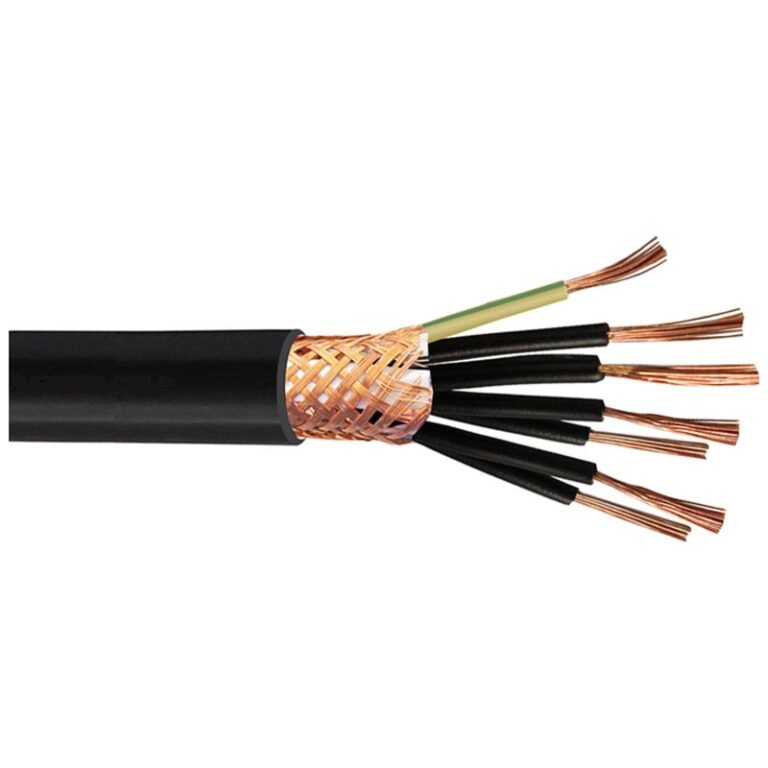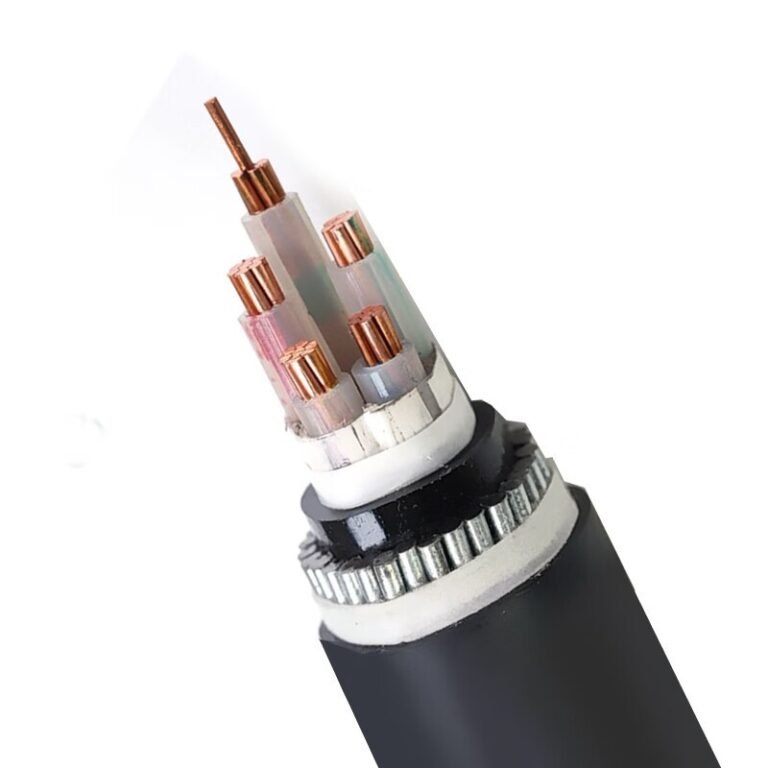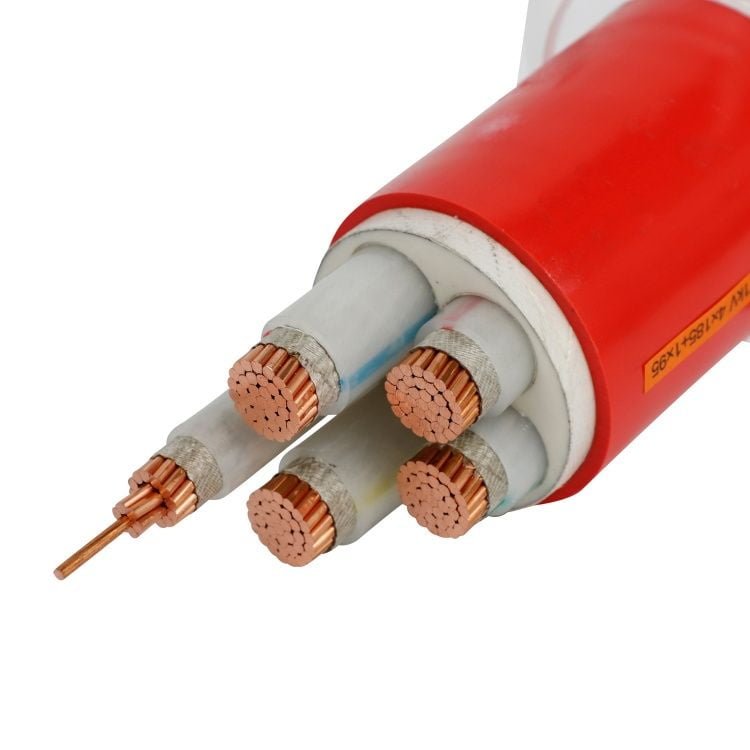
You’ve got a drawer full of unlabeled cable, a contractor quoting you new structured wiring, and a facilities manager insisting the “old phone cable” can handle the IP door-access system you’re installing next quarter. Get this wrong and you’re either pulling perfectly good wire that still has years of service life in voice and alarm applications, or you’re throttling a network expansion before it starts because you fed 100 Mbps traffic through infrastructure that tops out around 10. Either path costs money — unnecessary rip-and-replace on one end, unplanned downtime and a frantic recabling job on the other.
Category 3 cable is a twisted-pair copper cable standardized for data transmission up to 10 Mbps and frequencies up to 16 MHz, using 24 AWG conductors twisted at roughly 3 twists per foot and rated at 100 ohms impedance. It remains a legitimate, cost-effective choice for POTS telephone lines, basic alarm and access-control signaling, and 10BASE-T Ethernet segments in low-demand legacy environments — but it is not suitable for Fast Ethernet or any application requiring Cat 5e or above.
What makes Cat 3 interesting from a procurement standpoint is that it never really went away. Hundreds of millions of premises were wired with it during the 1990s voice-grade boom, and a surprising amount of that installation is still active in building alarm panels, intercom loops, and analog phone runs that nobody has had a reason to touch since the Clinton administration. Knowing exactly where it fits — and where it quietly causes problems — is more useful than the reflexive “just upgrade everything” advice you’ll hear from vendors with new stock to move.
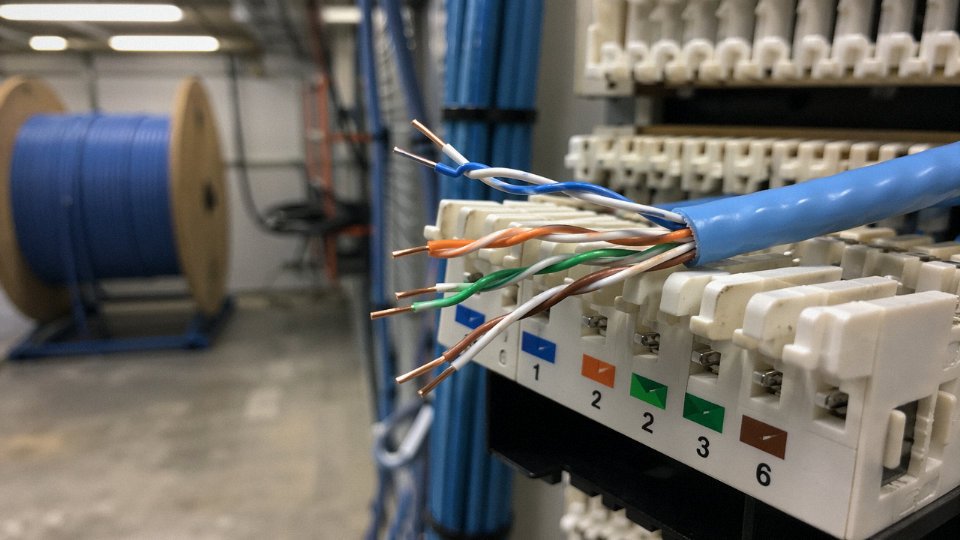
Physical Construction of Cat 3 Cable: Conductors, Twist Rates, and Jacket Materials
Conductor Gauge and Resistance
The standard conductor in Cat 3 cable is 24 AWG — roughly 0.511 mm diameter — and you’ll find it in either solid or stranded form depending on the intended use. Solid conductor is the overwhelming choice for horizontal runs, punch-down blocks, and 110-style terminations where the wire gets seated into an IDC contact. Stranded 24 AWG shows up in patch cords and short flexible jumpers, where repeated flexing would eventually work-harden and fracture a solid conductor.
The copper itself is typically bare bright copper, though tinned copper appears in some outdoor-rated or higher-humidity variants where oxidation resistance matters. DC resistance runs at or below 9.38 Ω per 100 m at 20°C for a single conductor — that figure climbs as temperature rises, roughly 0.4% per degree Celsius, so a cable bundle running through a warm mechanical room in summer is not performing identically to the same cable tested on a spool in a climate-controlled lab. Worth keeping in mind when you’re troubleshooting a marginal loop resistance on an aging alarm circuit.
Cat 3 cable uses 24 AWG conductors with DC resistance not exceeding 9.38 Ω per 100 m at 20°CTrue
This matches TIA-568 and IEC 11801 specifications for Category 3 horizontal cable, and is the standard benchmark used in acceptance testing.
Twist Rate and What It Actually Means for Crosstalk
Cat 3 uses approximately 3 twists per foot — call it 9 to 10 twists per meter in practice, though this varies slightly by manufacturer. That’s the number that defines the cable’s category more than anything else. Cat 5e runs at roughly 3 to 4 twists per inch, meaning somewhere around 12 to 16 per foot. The physics here is straightforward: tighter, more consistent twisting improves the cancellation of electromagnetic interference between adjacent pairs. Cat 3’s loose twist is adequate for voice frequencies and legacy 10BASE-T, but it’s the reason you cannot push Gigabit Ethernet across it reliably — the near-end crosstalk (NEXT) performance simply isn’t there.
In a multi-pair cable, each pair is given a slightly different twist rate from its neighbors, which reduces inter-pair coupling. This is true for Cat 3 as well, though the differences are modest compared to what you’d see in a Cat 6A construction.
Insulation and Dielectric Materials
Each conductor is insulated individually before pairing. Polyethylene (PE) is the better dielectric — lower capacitance per unit length (typically 15 to 17 pF/m, depending on insulation wall thickness and diameter), tighter impedance tolerance, and stable performance across temperature. PVC insulation costs less and processes more easily, but its higher dielectric constant pushes capacitance up slightly and its performance degrades more noticeably at elevated temperatures. In a telecom closet running 40°C in August, that distinction is not purely academic.
Jacket Construction and Ratings
The outer jacket determines where the cable can legally be installed:
| Jacket Type | Rating | Material | Typical Use |
|---|---|---|---|
| Standard PVC | CMR (Riser) | PVC | Vertical runs between floors |
| Plenum | CMP | FEP or FR-PVC | Air-handling spaces, drop ceilings |
| Direct-burial | None / PE | Flooded PE with gel | Underground conduit or direct soil |
| Armored outdoor | — | Steel tape + PE | Rodent-prone or mechanical-exposure runs |
Plenum cable is the one that catches people out during procurement. CMP-rated Cat 3 costs noticeably more than riser — typically 25 to 60% higher per meter, depending on the FEP compound price at time of order — and substituting CMR in a plenum space is a code violation in most jurisdictions, full stop. The flooding compound in direct-burial variants is a petroleum-based gel that fills the interstices between pairs, blocking longitudinal water migration. It also makes termination genuinely unpleasant without the right gel-removing solvent wipes on hand.
Pair Count Options and Color Coding
Cat 3 is available in 2-pair, 3-pair, and 4-pair configurations for station wiring, then jumps to 25-pair, 50-pair, 100-pair, and 200-pair for backbone telephone distribution. The large-count cables — the kind that feed a 100-pair punch-down block in a telecom room — use the Bell System 25-pair color code: five binder colors (white, red, black, yellow, violet) crossed with five tip colors (blue, orange, green, brown, slate), giving 25 unique combinations per binder group. TIA-568 specifies its own pair identification scheme for the smaller 4-pair station cable, using blue, orange, green, and brown pairs with white/color and solid/color conductors within each pair.
Misreading the color code on a 100-pair cable during a partial re-termination is one of those things that looks trivial and produces hours of fault-finding. The binder tape on aged cables fades — violet in particular tends to go gray over twenty years — so any re-termination work on legacy Cat 3 backbone cables is worth re-labeling at the block regardless of how confident the technician feels.
Primary Applications: Voice Telephony, DSL Lines, and Alarm Wiring Where Cat 3 Still Dominates
Cat 3 gets dismissed as obsolete by people who’ve never had to sign off on a wiring budget or walk a real telecom closet. In practice, it remains the correct, cost-justified choice across several application categories — not because nothing better exists, but because those applications simply don’t need anything better.
Plain Old Telephone Service and PBX Internal Wiring
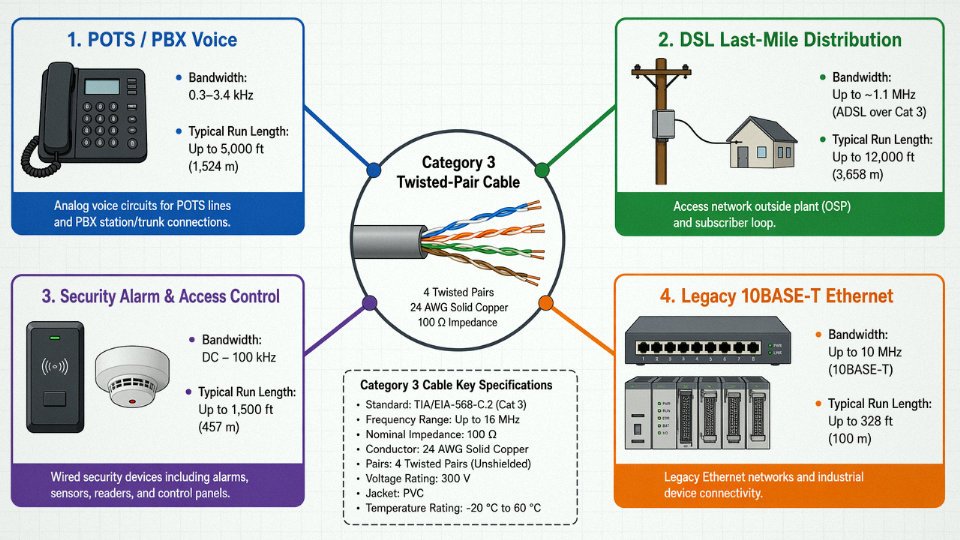
Voice telephony consumes maybe 4 kHz of bandwidth on a good day. Cat 3’s 16 MHz ceiling is roughly 4,000 times that requirement, which means the cable is never the limiting factor in a POTS or PBX installation. Specifying Cat 5e for a 200-extension PBX internal riser is a legitimate waste of money — you’re paying for transmission characteristics the system cannot use.
In practice, most corporate PBX systems installed before 2010 are still running Cat 3 horizontal runs to desk phones, and those runs perform perfectly. The cost difference per 1,000 ft of 25-pair Cat 3 riser versus equivalent Cat 5e UTP is typically 30–55%, depending on copper pricing at order time and pair count. On a mid-size hotel or office fitout, that spread adds up fast.
Cat 3 cable fully meets the bandwidth requirements for analog voice telephony and standard PBX signalingTrue
Voice-grade POTS requires only 300 Hz–3.4 kHz, well within Cat 3's 16 MHz rated frequency ceiling. PBX digital signaling protocols such as ISDN BRI operate at 160 kbps, also comfortably within Cat 3 data rate capability of up to 10 Mbps.
DSL Last-Mile Distribution and Drop Wire
Telephone carriers in many regions — particularly in secondary cities and rural distribution networks across Asia, Eastern Europe, and Latin America — have not replaced their outside plant Cat 3 multi-pair cables, and for ADSL2+ they don’t need to. ADSL2+ achieves roughly 12–24 Mbps downstream over short loops (under 1,000 ft or so), degrading to 3–8 Mbps at distances approaching 15,000 ft. The cable’s electrical characteristics at DSL frequencies are close enough to dedicated DSL-grade wire that carriers accept it for subscriber drop wire segments routinely.
What matters more at these frequencies is crosstalk management and pair balance, not the cable category designation itself. A well-manufactured Cat 3 multi-pair with consistent twist lay will outperform a poorly manufactured “Cat 5e” product on a 10,000-ft loop. Don’t let the category label substitute for checking actual NEXT and attenuation specs on the test certificate.
Security Alarm, Fire Detection, and Access Control Wiring
UL-Listed Cat 3 is embedded in probably more security installations than most people realize. Intrusion detection panels, smoke detector loops, card reader control runs, and magnetic door-hold circuits all operate at signaling speeds well under 1 Mbps — often just a few kilobits per second on RS-485 or dry-contact polling loops. The cable is adequate for these signals, its 100-ohm impedance is compatible with most panel wiring specs, and the 24 AWG conductor handles the low-current DC loads without meaningful voltage drop over typical in-building runs of under 300 ft.
One operational note: some AHJs and fire codes specify that cables in fire alarm loops carry a specific UL listing (CL2, FPLR, or similar). Confirm the jacket rating of the Cat 3 you’re procuring actually matches the listing your installation requires. A cable that is electrically Cat 3 but carries only a CM jacket rating will fail inspection in a plenum or fire-rated assembly.
Intercom, Nurse-Call, and Building Automation Control Circuits
These systems sit in a bandwidth range where Cat 3 is genuinely appropriate — typically 9.6 kbps to a few hundred kbps, using simple serial protocols over distances of 50–600 ft between nodes. Nurse-call systems in healthcare facilities, intercom matrices in residential towers, and HVAC zone controllers in building management systems were almost universally wired with Cat 3 or equivalent voice-grade twisted pair through the 1990s and 2000s, and most of those systems are still active. Replacement happens during major renovation, not because the cable is failing.
Legacy 10BASE-T Ethernet in Industrial and SCADA Environments
10BASE-T runs at 10 Mbps over Cat 3 — that’s what the standard was designed for. In older SCADA panels, distributed control systems, and manufacturing floor networks with infrequent upgrade cycles, 10 Mbps is entirely sufficient for PLC polling, HMI data refresh, and alarm event traffic. Upgrading the cable means pulling conduit, taking downtime, and requalifying the network — none of which makes sense when the existing Cat 3 segments are performing reliably and traffic utilization is under 30%.
The risk in these environments is physical degradation over time: jacket brittleness in high-temperature areas (above roughly 60°C sustained ambient), rodent damage in cable trays, and connector oxidation at patch panels that haven’t been touched in years. Those are maintenance issues, not cable specification issues.
Hotel and Hospitality Telephone Infrastructure
A full-service hotel with 300 rooms can have 600–900 individual pair-feet just at the horizontal runs, plus riser bundles and cross-connects. That installed base gets replaced when the building undergoes major renovation — typically 15–25 year cycles in most hospitality segments. Until then, the Cat 3 infrastructure handles in-room phone service, wake-up call systems, and in some older properties, the low-speed data link to the property management system terminal. Swapping it out early is a capital expenditure that delivers no operational benefit if the telephony system hasn’t changed.
The realistic procurement trigger for Cat 3 in this segment is new construction in cost-sensitive markets, replacement after flood or fire damage, and capacity expansion in older properties adding rooms to an existing wing.
Electrical Performance Parameters: Bandwidth, Attenuation, Crosstalk, and Impedance Limits
Cat 3’s defining hard ceiling is 16 MHz. That single number explains nearly every situation where it works fine and every situation where it fails. For analog voice and basic signaling, 16 MHz is more bandwidth than the application ever uses. For anything resembling modern Ethernet beyond 10BASE-T, it’s a wall you hit fast.
Frequency Ceiling and What It Actually Means in Practice
Cat 5e is rated to 100 MHz, Cat 6 to 250 MHz. Those aren’t incremental improvements — they’re different equipment categories. A technician who pulls Cat 3 into a run expecting 100BASE-TX to function is going to get a link that negotiates down to 10 Mbps if it connects at all, because the physical medium simply cannot carry the signal integrity required above roughly 30–35 MHz before distortion compounds. The 16 MHz ceiling isn’t a soft guideline; it’s the point at which the cable’s geometry and twist rate stop controlling crosstalk and impedance within usable limits.
Attenuation: Where Segment Length Gets Constrained
At 10 MHz, Cat 3 typically shows insertion loss in the range of 11–14 dB per 100 m, depending on conductor quality, ambient temperature, and how tightly the cable was pulled during installation. Compare that to Cat 5e at roughly 6–7 dB per 100 m at the same frequency. That difference matters the moment you’re pushing a signal that needs amplitude headroom at the far end. For POTS voice, attenuation at voice frequencies (300 Hz to 3.4 kHz) is negligible over any reasonable building run. For DSL, the telco equipment is designed to equalize around it. For anything else, you’re borrowing margin you don’t have.
Temperature is worth flagging: attenuation rises with temperature at roughly 0.4% per degree Celsius above 20 °C. In a cable tray above an industrial process line or in a roof plenum in summer, that 11 dB baseline can climb to 13–14 dB before you’ve added any other degradation.
Cat 3 cable exhibits approximately 11–14 dB of insertion loss per 100 m at 10 MHz.True
This range aligns with TIA-568 specifications and standard measurement practice; the variation reflects conductor grade, installation tension, and temperature conditions.
Near-End Crosstalk: Why Dense Bundles Cause Problems
Minimum NEXT loss for Cat 3 is 26 dB at 16 MHz. Cat 5e sits at roughly 35 dB at that frequency. That 9 dB gap sounds manageable until you’re routing a 25-pair Cat 3 bundle through a conduit alongside other active pairs. In a telephone backboard with 50 or 100 pairs punched down on a 110 block, the pairs running 10BASE-T will pick up noise from adjacent voice pairs. Usually the symptom is intermittent packet loss that gets misdiagnosed as a switch problem for weeks.
Impedance, Capacitance, and Timing
Characteristic impedance runs 100 ± 15 ohms across the operating band — the same nominal target as Cat 5e and Cat 6, which is why Cat 3 terminates fine on standard RJ-11 and RJ-45 hardware. The ±15 ohm tolerance is wider than Cat 5e’s ±15 ohm spec at lower frequencies but tends to drift more at higher frequencies as the twist geometry becomes less consistent. Mutual capacitance is typically ≤ 20 pF per foot, and this is the parameter that quietly kills data applications — higher capacitance slows signal rise times, limiting unequalized data rates in ways that aren’t always obvious until you’re chasing a marginal link.
Propagation delay and delay skew are acceptable for voice. For 1000BASE-T, which requires all four pairs to arrive within tight timing tolerances for its parallel transmission scheme, Cat 3’s pair-to-pair skew variance makes it non-viable regardless of any other parameter.
Voltage Rating
Cat 3 is generally rated 300 V AC for control and signaling use — adequate for standard alarm circuits, low-voltage telephony, and PoE at lower wattage classes. Continuous current-carrying applications require derating; bundled cables running at elevated ambient temperatures lose their rated capacity, and installers who don’t account for this when using Cat 3 for 24 V DC control runs in warm panel enclosures occasionally find insulation softening over years of service.
Comparing Cat 3 with Cat 5e, Cat 6, and Cat 6A: When Upgrading Is Necessary and When It Is Not
Before replacing anything, run the numbers. A lot of facilities management teams default to ripping out Cat 3 during any renovation, which is sometimes the right call and sometimes a way to spend $8,000–$25,000 (depending on building size, labor market, and conduit access) on a problem that didn’t exist.
Side-by-Side Specification Comparison
| Parameter | Cat 3 | Cat 5e | Cat 6 | Cat 6A |
|---|---|---|---|---|
| Max frequency | 16 MHz | 100 MHz | 250 MHz | 500 MHz |
| Max Ethernet speed | 10 Mbps (10BASE-T) | 1 Gbps | 1 Gbps (10 Gbps up to ~37 m) | 10 Gbps to 100 m |
| NEXT (at 10 MHz) | ≥26 dB | ≥35 dB | ≥44 dB | ≥45 dB |
| Attenuation at 10 MHz | ~13–16 dB/100 m | ~6–8 dB/100 m | ~5–7 dB/100 m | ~5–6 dB/100 m |
| Typical installed cost/meter | $0.25–$0.60 | $0.55–$1.10 | $0.80–$1.60 | $1.40–$2.80 |
Cost figures vary with region, conduit complexity, and order volume. Labor usually exceeds material cost in retrofit situations — often by a factor of two or three in countries with high skilled-trade wages.
Where Cat 3 Is Fully Adequate
Plain old telephone service, analog intercoms, basic door-entry buzzers, and low-speed alarm signaling panels — these applications were designed around Cat 3 performance or even below it. A burglar alarm panel polling motion sensors at kilobits per second doesn’t need 500 MHz of bandwidth. Neither does a POTS voice circuit that tops out around 3.4 kHz of audio bandwidth in practice.
In these situations, replacing Cat 3 purely on principle adds cost with zero measurable benefit. The cable will outlive the building’s current tenants. A residential complex or small commercial building with 40–80 analog telephone drops and a conventional alarm system has no technical justification for a Cat 5e upgrade on those runs. Retaining the existing Cat 3 infrastructure is the defensible, cost-rational decision.
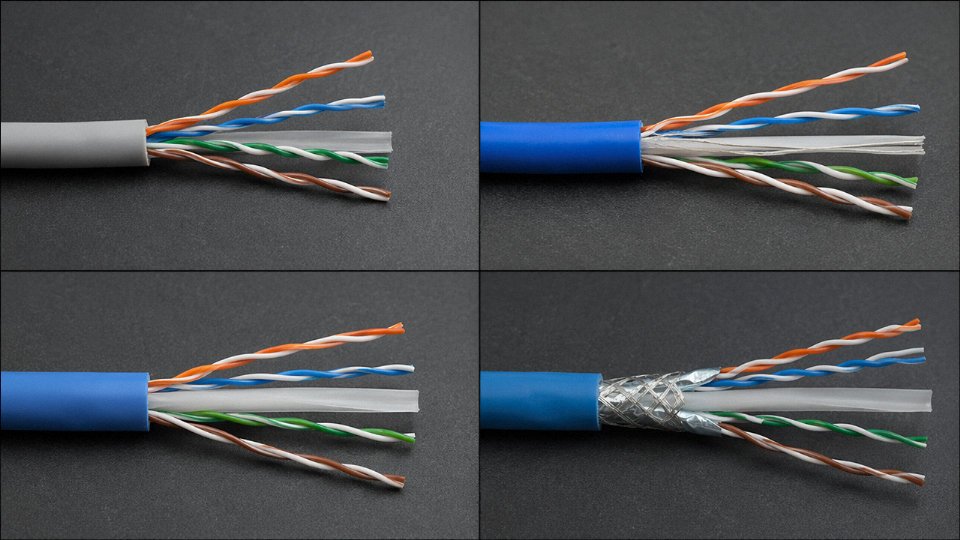
Where Replacement Is Non-Negotiable
PoE is the clearest forcing function. IEEE 802.3af (15.4 W), 802.3at (30 W), and especially 802.3bt (up to 90 W) impose continuous DC current across all four pairs. Cat 3’s thinner conductor geometry and lower twist rate produce resistive heating and voltage drop that 802.3af-class PoE switches will tolerate poorly — and 802.3bt will not tolerate at all. Expect unreliable device negotiation, thermal degradation of the jacket over time, and potential NEC/IEC compliance issues depending on your jurisdiction.
Gigabit Ethernet is a flat no. 1000BASE-T uses all four pairs simultaneously and requires 100 MHz of clean bandwidth. Cat 3 fails the channel test. IP video surveillance, VoIP trunks carrying dense concurrent call loads over SIP, and any application expecting sustained throughput above roughly 4–6 Mbps under real-world noise conditions — these all require at minimum Cat 5e, and Cat 6 if you want margin.
The Hybrid Retrofit Strategy
This is where the real savings are. During office renovations, instead of replacing every cable run, identify which drops serve voice-only or alarm functions (retain Cat 3) and which serve workstations, APs, or cameras (replace with Cat 6). In typical mid-size office retrofits of 100–300 drops, this selective approach reduces total cable replacement scope by roughly 30–50%, depending on the voice-to-data drop ratio in that building.
The discipline is in the documentation. Every Cat 3 drop that stays must be labeled clearly and terminated only to voice patch panels or alarm head-end equipment — not to the data distribution frame.
The Connector Compatibility Trap
Cat 3, Cat 5e, and Cat 6 all use the same 8P8C (RJ-45) connector footprint. This creates a surprisingly common wiring error: a patch cord from a Cat 3 wall jack gets plugged into a Gigabit switch port during a partial renovation. The link will negotiate, usually at 100 Mbps if the run is short, or it will show erratic drops and CRC errors that take an afternoon of troubleshooting to diagnose. Label Cat 3 jacks distinctively — color-coded faceplates, printed labels, whatever the site standard is. Don’t rely on technicians remembering which category is behind the wall.
Cat 3 cable can support Gigabit Ethernet if the run is short enoughFalse
1000BASE-T requires 100 MHz channel bandwidth across all four pairs. Cat 3 is rated to 16 MHz. Run length has no bearing on the bandwidth limitation; the cable fundamentally cannot meet the channel specification regardless of distance.
Regulatory Considerations
Several jurisdictions — including various U.S. state and municipal codes aligned with BICSI or TIA-568 — require a minimum of Cat 5e for new structured cabling installations in commercial buildings. Installing Cat 3 in new construction or a permitted major renovation can create a code compliance issue that surfaces during inspection or, worse, during an insurance claim review after a network-related incident. If the project involves a permit, confirm the local structured cabling standard before specifying anything below Cat 5e for new horizontal runs.
Installation Best Practices: Termination, Bend Radius, Pulling Tension, and Testing Cat 3 Runs
Cat 3 may be a mature technology, but sloppy installation degrades it just as badly as it degrades Cat 6. The physics don’t care about the cable’s age or price point.
Pulling Tension and What Happens When You Exceed It
The TIA-568 limit for a standard 4-pair Cat 3 cable is 25 lbf (roughly 110 N) during the pull. That number isn’t conservative padding — exceed it and you permanently stretch the copper conductors, increasing DC resistance and attenuation in ways no re-termination can fix. In practice, long vertical drops in multi-story riser conduit are where this goes wrong most often. A cable lashed to a pulling grip and dropped six floors can easily spike well past that limit if the installer lets it free-fall at the end of the run. Use a fish tape and controlled feed; on runs over about 30 meters in conduit, monitor tension with a pull gauge rather than guessing by feel.
Damaged conductors don’t always fail immediately. You might see marginal attenuation readings that pass qualification by a hair, and the circuit works fine for a year — until a splice in the same bundle heats up in summer and the already-thinned conductor finally gives you an intermittent line fault that takes two days to chase down.
Bend Radius: Dynamic vs. Installed
During installation, Cat 3 4-pair cable needs a dynamic bend radius of at least 4× the cable OD — typically somewhere in the 25–30 mm range depending on jacket diameter, which varies by manufacturer and whether the cable is plenum-rated. Once the cable is dressed and tied off, the static (installed) bend radius can be tighter, down to roughly 1× OD, but that should be the absolute floor. Bends sharper than that at a patch panel or backbox corner distort the twist geometry, and on Cat 3 that shows up as degraded NEXT — a bigger problem than most technicians expect from a “just voice” cable running an alarm circuit or a POTS line.
Termination: The 13 mm Rule Matters More Than You Think
Untwist no more than 13 mm (half an inch) of pair at a punchdown block or jack. On Cat 3 this is sometimes treated as optional — “it’s only rated to 16 MHz, so who cares” — but that reasoning ignores the fact that your alarm panel or DECT base station still generates noise at frequencies where insufficient twist length creates real crosstalk between adjacent pairs. Use a proper 110-style or Krone punch-down tool set to the correct impact depth; a loose seat on a 66-block is one of the most common causes of intermittent voice noise on legacy telephony installations.
Untwisting more than 13 mm at termination has no practical effect on Cat 3 performance because the cable only runs voice frequencies.False
Even at voice and DSL frequencies, excess untwist at terminations degrades NEXT performance. TIA-568 specifies the 13 mm limit precisely because pair geometry must be maintained close to the termination point to meet crosstalk specifications, regardless of category.
Confirm your punchdown blocks carry a category rating equal to or higher than the cable. Using a Cat 3-rated 110 block with Cat 3 cable is fine. Using an unrated or worn 66-block pulled from a recycled parts bin — which happens more than anyone admits in retrofit projects — introduces contact resistance that qualification testers will catch but continuity testers won’t.
Field Testing: What You Actually Need
A wiremap tester tells you whether you have continuity and whether pairs are correctly seated. That’s useful for confirming you haven’t crossed pairs or made a split pair, but it tells you nothing about whether the run will perform. For any Cat 3 installation being certified for DSL service or an alarm system with a defined transmission spec, run a Level II qualification tester or a TDR against TIA-568-C.2 Cat 3 attenuation and return loss limits. The test takes a few minutes per run and gives you a defensible paper trail if the circuit underperforms six months later.
Separation from Power Wiring
Maintain at least 50 mm of physical separation from unshielded power conductors running in parallel. Near fluorescent lighting ballasts — especially older magnetic-ballast fixtures — push that to 300 mm. Induced noise on voice pairs near ballasts is a classic slow-burn troubleshooting nightmare: the circuit passes every test in the morning, then develops hum and static when the lights have been on for an hour and the ballasts warm up.
Labeling Under TIA-606-C
Label both ends of every Cat 3 run with a circuit identifier before the panel cover goes on. In multi-pair telephony cable — say, a 25-pair or 50-pair backbone — unlabeled pairs are essentially a maintenance tax. You’ll pay it when someone needs to move a POTS line and has to ring out every pair because the previous installer “knew which pair was which.” TIA-606-C gives you the labeling scheme; the discipline to actually follow it is what separates a clean install from a troubleshooting problem waiting to happen.
Bulk Procurement and Supply Chain Considerations: Reel Sizes, Standards Compliance, and Global Sourcing
Buying Cat 3 cable at scale is not complicated, but there are enough gotchas in reel sizing, compliance documentation, and conductor specification to turn a smooth project into a logistics headache if procurement doesn’t tighten up the details before placing the order.
Reel Configurations and What They Actually Mean for Your Project
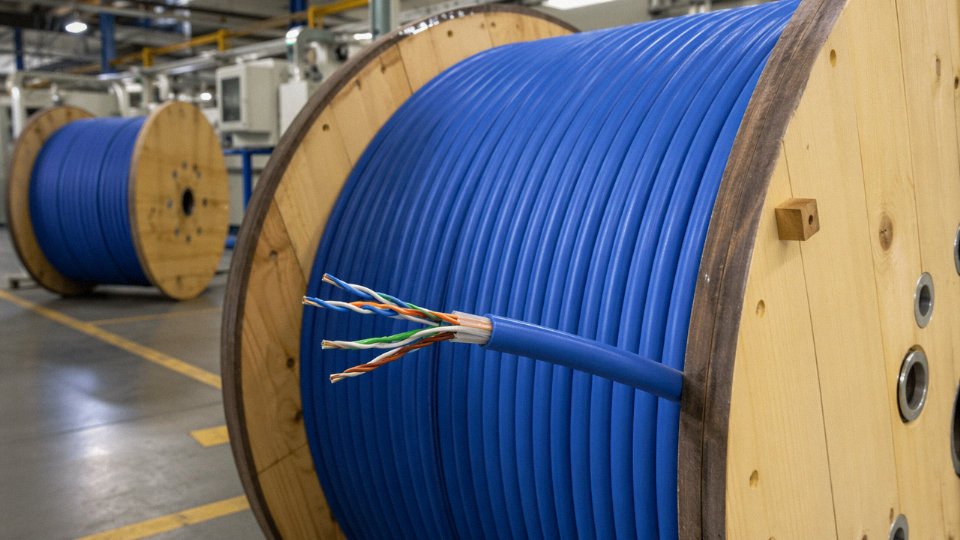
Standard 4-pair Cat 3 ships most commonly in 305 m (1,000 ft) pull boxes — the blue or grey cardboard boxes contractors pull from during rough-in. These are convenient for small commercial jobs and residential retrofits, but the per-meter price is noticeably higher than bulk reel pricing, and for any run of work exceeding a few hundred drops, you’ll want to look at 500 m or 1,000 m wooden or steel reels. The wooden reels are cheaper and disposable; steel reels usually come on a reel-exchange or deposit arrangement, and some suppliers won’t ship steel reels internationally without a significant deposit or return freight agreement — worth clarifying upfront.
Multi-pair variants follow different conventions. 25-pair Cat 3 backbone cable typically ships on 1,000 m reels; 100-pair on 500 m reels, partly because the drum weight would be unmanageable otherwise. A 100-pair, 500 m reel can easily top 200 kg depending on jacket material and insulation, so confirm reel flange diameter and core dimensions before assuming your lifting equipment or delivery bay can handle it. A surprisingly common mistake in project procurement is specifying the cable correctly but failing to account for reel dimensions — and then finding out the reels won’t fit through the goods entrance or onto the cable drum stand on site.
Standards Compliance: What to Verify Before Signing a Purchase Order
The compliance checklist for Cat 3 is shorter than for Cat 6A, but it still matters, especially when the cable is going into a regulated installation or a building subject to local code inspection.
| Requirement | Standard / Mark | Applies Where |
|---|---|---|
| Cabling performance | TIA/EIA-568 (Category 3) | USA and North America |
| International cabling | ISO/IEC 11801 Class C | International projects |
| Cable construction | IEC 61156-2 | Global OEM and spec work |
| Safety listing | UL Listed or UL Verified | USA, Canada |
| Fire performance | CPR Eca or Dca class | EU projects, post-2017 |
Don’t just ask for a declaration — request the actual third-party test reports from ETL, SGS, or Bureau Veritas. A PDF of a UL certificate with a valid file number you can cross-check on UL’s website takes about three minutes to verify and immediately separates serious suppliers from the ones printing marks they haven’t earned.
Conductor Specification: Bare Copper vs. Tinned Copper
Cat 3 is available in 99.9% bare copper or tinned copper variants, and the choice is not purely academic. Bare copper is the right call for most crimped or IDC terminations — tin interferes slightly with gas-tight connections in some connector designs and can cause contact resistance issues over time. Tinned copper earns its place in coastal installations, underground conduit runs in humid climates, or any environment where the cable sits in a damp environment before termination. The price difference is modest, usually within 5–8% depending on tin market pricing, but lead times for tinned variants from smaller suppliers can stretch.
Minimum Order Quantities and Lead Times
Reputable manufacturers typically offer 10,000 m MOQs for standard 4-pair Cat 3 variants, with lead times running 15–30 days for in-stock configurations. Custom jacket colors, non-standard pair counts, halogen-free (LSZH) jackets, or armored variants generally push lead time to 45–60 days, sometimes longer if tooling changes are needed. Plan accordingly — specifying a non-standard color for a large campus job six weeks before installation starts is not a scheduling buffer anyone enjoys.
Cat 3 cable from reputable manufacturers is available with third-party test certification from bodies including ETL, SGS, and Bureau Veritas, confirming electrical performance and construction compliance.True
Third-party certification from these recognized testing laboratories is a standard offering among established cable manufacturers and is the industry-accepted method for verifying that cable meets stated TIA/EIA-568 or IEC performance requirements.
Supplier Qualification in Practice
Beyond documentation, a few physical checks tell you a lot about manufacturing consistency. Jacket OD tolerance is one — a well-run production line holds ±0.1 mm on jacket outer diameter, and measuring a sample from several points along a reel length will tell you whether diameter is drifting. Twist rate uniformity along the reel length matters more for crosstalk performance than most buyers realize; it’s worth cutting samples at intervals and checking visually or with a simple count. Inconsistent twist rates are usually a sign of tension control problems on the stranding line.
Jinda operates five production bases across China covering roughly 470,000 m² of manufacturing space, which translates practically into the ability to run large Cat 3 orders — including multi-pair backbone cable — without competing for line time against higher-margin product. For international distribution contracts or long-term project supply agreements, that kind of volume capacity matters more than it might appear on paper, particularly when lead times tighten seasonally or when a project accelerates unexpectedly.
Compliance, Fire Ratings, and Regional Standards That Govern Cat 3 Cable Specification
Specifying the wrong fire rating doesn’t just fail an inspection — it can void insurance, trigger a full rip-and-replace, and in a riser or plenum environment, it becomes a life-safety issue. Cat 3 cable has been installed across so many building types and regulatory jurisdictions over the past three decades that the compliance landscape is genuinely fragmented. What satisfies an inspector in Houston will not satisfy one in Hamburg, and what clears customs in Riyadh may need additional paperwork in Dubai. Getting this right before the cable ships is far cheaper than sorting it out after.
North America: NEC Article 800 and UL Listing Levels
In the United States and Canada, NEC Article 800 governs how communications cable is installed inside buildings. The practical consequence for Cat 3 is that the cable jacket must carry the correct UL listing for the installation location — not just any UL mark, but the right one.
CM (Communications, general use) covers standard horizontal runs in non-plenum, non-riser spaces. CMR (riser-rated) is required in vertical shafts between floors, where flame spread along the cable jacket is a genuine concern. CMP (plenum-rated) applies to any air-handling space — drop ceilings used as return-air plenums, raised floors with active airflow — and requires low-smoke, low-flame jacket compounds, typically FEP or a comparable fluoropolymer. CMP cable costs meaningfully more, often 30–60% above CM pricing depending on jacket compound costs at the time of purchase.
Using a CM-rated Cat 3 cable in a plenum space will fail NEC inspection and is prohibited regardless of data performance.True
NEC Article 800 explicitly prohibits general-use (CM) cable in plenum air-handling spaces; only CMP-rated or higher cable is permitted in those environments.
Substitution upward is permitted — CMP can go anywhere CMR or CM is required — but the inverse is not. Contractors who pull CMR into a plenum to save money are setting up a failed inspection.
European Union: CPR Classification and CE Marking
Since July 2017, the EU Construction Products Regulation (305/2011, commonly called CPR) has required that any cable permanently incorporated into a building structure carry a Declaration of Performance and CE marking, with a reaction-to-fire classification under EN 13501-6. For Cat 3 cable, the minimum classification typically accepted for general building installation is Eca. Public buildings, escape routes, and many commercial projects require Dca or higher — meaning the cable must meet tested criteria for flame spread, heat release, smoke production, and flaming droplets. Specifiers working on European tenders should ask for the DoP document explicitly; a CE mark alone does not tell you which Euroclass the cable achieves.
United Kingdom Post-Brexit
The UK now operates under its own CA marking regime rather than CE. BS EN 50575 (the harmonised standard for power, control, and communications cables under CPR, adopted as a British standard) and BS 6701 (installation of communications cabling in buildings) jointly govern Cat 3 installations in British buildings. The fire classification structure mirrors the EU Euroclass system, but the documentation must reference UK CA rather than CE. Importers supplying UK contractors should confirm this distinction before shipment — mislabelled documentation causes delays at customs.
Middle East and GCC
Saudi Arabia (SASO), the UAE (ESMA), and the GCC broadly through GSO standards increasingly reference IEC 61156-series specifications as the technical baseline for telecommunications cable. That said, country-specific import certificates — SASO conformity certificates, ESMA type-approval — are frequently required on top of IEC compliance. These requirements shift; what was accepted two years ago may now require updated documentation. Buyers sourcing Cat 3 for GCC projects should confirm current import certificate requirements with the relevant national body or a local customs agent before the order ships.
Australia and New Zealand
AS/CA S008 (requirements for customer cabling products) and AS/NZS 3080 (telecommunications installations, the ANZ equivalent of ISO/IEC 11801) together govern Cat 3 use in Australia and New Zealand. Cat 3 remains permitted for voice-grade applications under these standards. The Regulatory Compliance Mark (RCM) is required for sale in the Australian market, covering both electrical safety and electromagnetic compatibility.
RoHS and REACH for EU Imports
Any Cat 3 cable entering the EU market must comply with RoHS 2 (Directive 2011/65/EU, restricting lead, cadmium, mercury, hexavalent chromium, and certain flame retardants) and REACH (SVHC substance restrictions). In practice this means confirming that jacket pigments are cadmium-free, conductor coatings are lead-free, and the cable compound does not include restricted phthalates. A supplier who cannot produce a current RoHS declaration and an SVHC statement of compliance is a risk — not a compliance shortcut.
How Compliance Documentation Works in Practice
For international orders, the paperwork load is real. Standard documentation from a qualified manufacturer should include factory test reports against the claimed standard (TIA-568 or ISO/IEC 11801 as applicable), third-party certification copies (UL, CPR DoP, RCM as relevant to the destination market), country-specific declarations of conformity, and RoHS/REACH declarations. HS code classification for Cat 3 copper telecommunications cable typically falls under 8544.42, though some customs authorities split by conductor count or jacket type — having the supplier confirm the correct code ahead of shipment avoids duty miscalculations. Jinda provides this documentation package as standard for export orders, which reduces the back-and-forth that otherwise eats into project lead time.
Frequently Asked Questions About Category 3 Cable
Can Cat 3 cable carry Gigabit Ethernet?
No. Full stop. Cat 3 is rated for 10BASE-T Ethernet — 10 Mbps over runs up to 100 m — and that ceiling is a hard physical limit, not a configuration issue. Gigabit Ethernet (1000BASE-T) requires all four pairs to operate simultaneously at 125 MHz, with stringent return loss and NEXT performance that Cat 3’s 3-twist-per-foot geometry simply cannot achieve. If someone tells you they’re “running Gigabit on Cat 3,” they’re either mistaken about what’s in the wall or running at severely degraded speeds without realizing it. Minimum viable cable for 1000BASE-T is Cat 5e, and even that requires clean terminations and full-channel testing to certify reliably.
Cat 3 cable can support Gigabit Ethernet with the right switch settingsFalse
Gigabit Ethernet (1000BASE-T) requires minimum Cat 5e performance at 125 MHz across all four pairs. Cat 3's bandwidth ceiling of 16 MHz and its low twist density make this physically impossible regardless of switch configuration.
Is Cat 3 still being manufactured and sold?
Yes, and in meaningful volumes. Demand is concentrated in voice telephony infrastructure, analog alarm panels, intercom wiring, and building automation backbones in facilities that standardized on 100-ohm twisted pair decades ago. Regions with large installed POTS networks — parts of Southeast Asia, the Middle East, and Latin America — continue to pull Cat 3 for maintenance and expansion work. It is not a legacy curiosity on the verge of disappearing; it is an active product category with a specific, defensible purpose.
Can I use Cat 3 for PoE?
Strongly discouraged, and in most cases a genuine safety risk. Cat 3’s DC resistance runs higher than Cat 5e or Cat 6 due to its construction tolerances, and PoE — especially PoE+ (30 W) or higher — pushes enough current through the conductors that heat buildup in bundled runs can become dangerous. Voltage drop is also a real problem: you may get intermittent device resets or outright failures before you ever notice a thermal issue. IEEE 802.3bt PoE installations require Cat 5e minimum for a reason. Don’t use Cat 3 for PoE even in a pinch.
What is the difference between Cat 3 and silver satin telephone cable?
Silver satin is that flat, untwisted cable — usually 4 or 6 conductors — used for short handset cords and desk phone connections inside a workspace. It has no twist, no defined impedance, and no rating for horizontal runs. Cat 3 is a structured-cabling product: twisted pair, 100-ohm impedance, designed and tested for runs up to 100 m in a horizontal channel. The crosstalk performance difference is enormous. Silver satin absolutely cannot substitute for Cat 3 in any run longer than a few meters.
How do I identify Cat 3 cable already installed in a building?
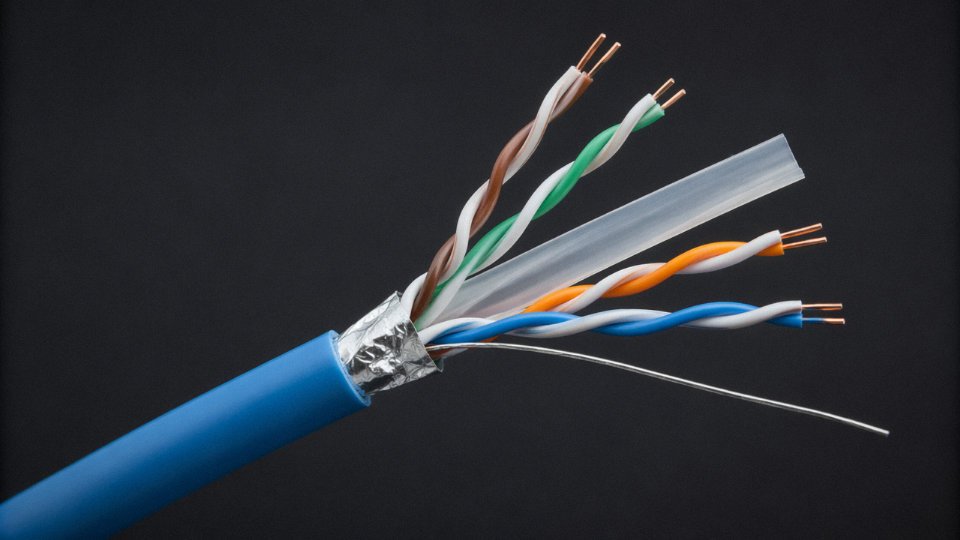
Read the jacket. Every compliant reel will have a sequential print legend along the outer jacket showing “CAT3” or “CATEGORY 3,” conductor gauge (24 AWG is standard), voltage rating, and applicable listings — UL, ETL, or equivalent. If the jacket has worn or the markings are ambiguous, cut the end cleanly and count the twists: roughly 3 per foot is characteristic of Cat 3. Cat 5e will run 3–4+ twists per inch — noticeably tighter when you look at both side by side.
What is the maximum length for a Cat 3 telephone run?
TIA-568 caps the horizontal channel at 100 m including patch cords, and that applies to data applications. For POTS voice, the governing constraint shifts from bandwidth to loop resistance, which is a much more lenient limit. In practice, direct-line telephony runs of 300–500 m on Cat 3 are common and functional, depending on the switch or PBX loop current requirements and conductor gauge consistency. Some legacy outside-plant telephone drops stretch considerably further, though signal quality degrades and you’d want to verify loop resistance at both ends before signing off on anything past 400 m.
Does outdoor Cat 3 cable require a different specification?
Meaningfully different, yes. Standard indoor Cat 3 jacket — typically PVC or LLDPE — has no UV resistance and will crack and fail within a season or two in direct sunlight. Outdoor-rated Cat 3 uses a UV-stabilized HDPE or LLDPE jacket, and flooded designs fill the space between pairs with a petroleum-gel or water-blocking compound to prevent moisture migration. For direct burial, you’ll often see a corrugated steel or aluminum armor layer over the core. Aerial installations typically use a lashed or self-supporting messenger wire configuration. Always specify the installation environment explicitly when ordering — “Cat 3 outdoor direct burial armored” and “Cat 3 indoor plenum” are very different products that cannot substitute for each other.