Bad wire choices cause house fires. That is not hyperbole — the U.S. alone logs more than 50,000 electrical fire incidents per year traced to faulty or undersized residential wiring, and the pattern is almost always the same: someone picked the cheapest option, or the wrong gauge, or trusted an unmarked spool with no verified conductor purity. The operational consequence is a tripped breaker at best; melted insulation, arc faults, and structural damage at worst. Financially, an insurance claim for wiring-related fire damage routinely runs into the tens of thousands of dollars — far beyond what any homeowner saved cutting corners on copper.
For most home wiring applications, 12 AWG or 14 AWG solid or stranded copper wire with NM-B (non-metallic sheathed) insulation is the best choice. Use 14 AWG on 15 A lighting and general-outlet circuits, 12 AWG on 20 A kitchen and bathroom circuits, and 10 AWG for 30 A dedicated loads like dryers or EV chargers. Copper outperforms aluminum at residential scale due to lower resistivity, easier termination, and longer service life.
What most guides stop short of explaining is why the same gauge spec can behave completely differently depending on conductor purity, insulation rating, and how the cable was stored before installation. A spool of nominally “12 AWG” wire from two different sources can have meaningfully different real-world performance — and in a wall cavity you will never see the problem coming until the heat builds up.
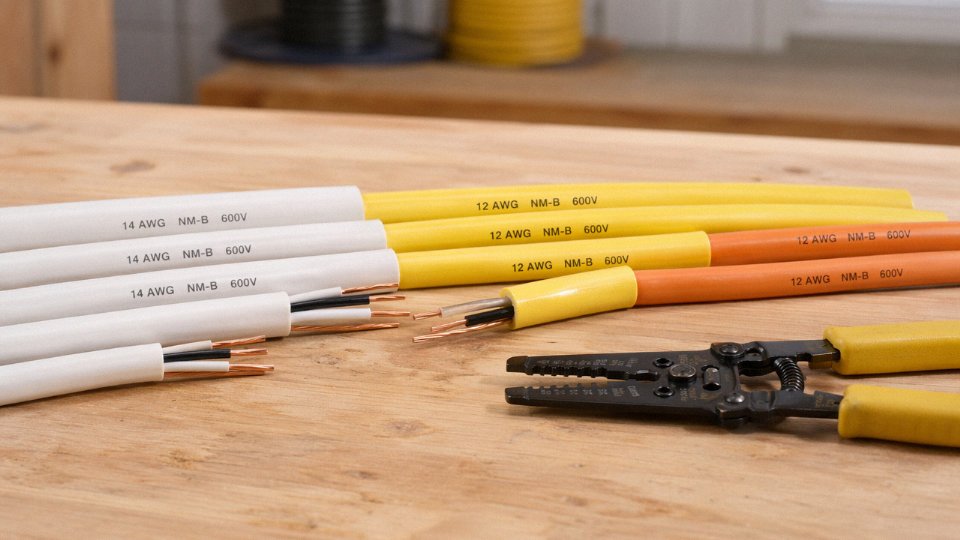
Copper vs. Aluminum Conductors: Which Metal Actually Wins in Residential Installations?
The short answer is that neither metal “wins” universally — the right choice depends on circuit type, run length, connection hardware, and what you’re actually trying to optimize for. That said, the differences between copper and aluminum are not subtle, and getting the choice wrong costs real money or creates real hazards.
Resistivity and What It Means on an Actual Circuit
Copper’s resistivity sits at 1.68 × 10⁻⁸ Ω·m. Aluminum comes in at 2.82 × 10⁻⁸ Ω·m — roughly 68% higher. On paper that looks manageable. On a 15 m branch circuit feeding a 20 A kitchen receptacle, though, the gap becomes tangible. A 12 AWG copper run at that length produces somewhere around 2–3% voltage drop under full load, typically within acceptable limits. Run the same load through 12 AWG aluminum and voltage drop climbs noticeably because you’re working against higher resistance in the same cross-section. The practical fix — upsizing one gauge with aluminum — gets the voltage drop back in range, but it also changes your conduit fill calculations and your termination hardware requirements.
Heat generation follows resistance directly. Higher resistivity means more I²R losses, which translates to warmer conductors, warmer insulation, and over decades, accelerated insulation degradation. On a branch circuit that runs near-continuously — baseboard heater, EV charger, workshop circuit — this is not a trivial concern.
Mechanical Behavior: Where Copper’s Real Advantage Lives
Copper is ductile and tolerates repeated flexing reasonably well. Inside a crowded outlet box, where a wire gets bent, rebent, and shoved into place over the years, copper holds up. Aluminum work-hardens — repeated bending causes microscopic cracking at the bend point, which raises local resistance and, under load, generates heat at exactly the spot you can’t see.
Aluminum also oxidizes rapidly when exposed to air, forming aluminum oxide, which is a poor conductor. At a screw terminal that wasn’t torqued properly or wasn’t rated for aluminum, that oxide layer plus thermal expansion cycling creates a loose, resistive connection. This is the actual mechanism behind the residential aluminum-wiring fire problems documented from the 1960s and 1970s. The wire itself wasn’t inherently dangerous — the standard brass terminals of the era were the failure point.
Modern aluminum installations require anti-oxidant compound applied at every termination, and terminals must be listed for aluminum or CO/ALR-rated. If a contractor skips either step, the installation is a latent problem.
Cost and Weight Economics on Larger Runs
Aluminum is roughly 30–40% lighter than copper by linear foot at equivalent ampacity, and historically prices out 40–60% cheaper per kilogram, though the actual gap fluctuates with commodity markets. On a 200 A service entrance or a 100 A feeder run to a subpanel 30+ meters away, the weight and cost difference becomes genuinely significant — we’re talking hundreds of dollars on a single run. That’s why utility companies and electrical contractors have used aluminum for service entrance conductors and large feeders for decades without controversy.
Aluminum conductors sized 4 AWG and larger are code-acceptable for service entrance and large feeder applications under the NEC, provided correct terminations and anti-oxidant compounds are used.True
NEC Article 230 and 310 explicitly permit aluminum conductors for service entrance and feeder circuits at these sizes, with proper termination hardware. The code restrictions on aluminum apply primarily to smaller branch-circuit wiring.
Where Code and Practice Draw the Line
The NEC’s practical boundary: aluminum is widely used and code-compliant for service entrance conductors and feeders at 4 AWG and larger. For 15 A and 20 A branch circuits — the wiring feeding your outlets, switches, and fixtures — copper remains the dominant choice and, in many jurisdictions, the expected one. The connection density in branch circuits, the number of terminations per run, and the frequency of homeowner contact make copper’s mechanical forgiveness worth the cost premium.
Decision Matrix: Matching Conductor to Circuit
| Circuit Type | Typical Size | Recommended Conductor | Key Condition |
|---|---|---|---|
| 15 A branch circuit (outlets, lights) | 14 AWG | Copper | Standard practice; aluminum not practical |
| 20 A branch circuit (kitchen, laundry) | 12 AWG | Copper | Copper preferred; termination density too high for aluminum |
| 30 A dryer / range circuit | 10 AWG | Copper or aluminum | Aluminum viable with CO/ALR receptacle and anti-oxidant |
| 60–100 A subpanel feeder | 4–1 AWG | Aluminum | Cost-effective; proper lugs required |
| 200 A service entrance | 2/0–4/0 AWG | Aluminum | Industry standard; utility-grade connections |
Jinda operates separate production lines for copper-core and aluminum-core residential cables, which matters for procurement more than it might seem — sourcing both conductor types from one supplier simplifies quality documentation, ensures insulation systems are matched to the specific conductor, and avoids the common problem of mismatched thermal ratings when cables from different sources end up in the same panel. For large residential projects or bulk supply contracts, that coordination at the production level reduces inspection headaches downstream.
Wire Gauge Selection by Circuit Type: A Room-by-Room Load Analysis
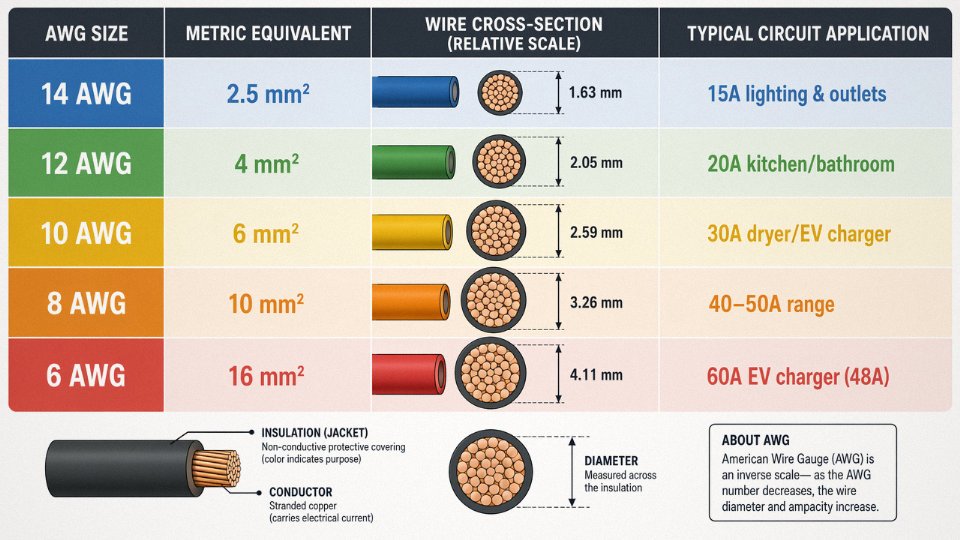
The AWG system trips up a lot of people the first time they encounter it. Smaller numbers mean thicker wire — 8 AWG is physically larger and carries more current than 14 AWG. If you’re sourcing wire for a project that crosses between North American and IEC markets, you’ll also need to translate between AWG and the metric cross-sectional areas (mm²) used in IEC 60364 and most European, Middle Eastern, and Asian standards. The correspondence isn’t perfectly clean, but the working equivalents most procurement specs use are: 14 AWG ≈ 2.5 mm², 12 AWG ≈ 4 mm², 10 AWG ≈ 6 mm², and 8 AWG ≈ 10 mm². These aren’t the same wire — a 2.5 mm² conductor is actually slightly larger than a true 14 AWG — but in practice they’re close enough that most international projects treat them as interchangeable for derating and breaker sizing purposes.
Kitchen Circuits: The Highest-Density Load Zone in Any Home
Kitchens deserve their own wiring plan, full stop. NEC Article 210.52(B) requires at least two 20 A small-appliance branch circuits for countertop receptacles, and 12 AWG / 4 mm² is the minimum for those runs. Toasters, microwaves, coffee makers, and air fryers can easily pull 12–15 A individually, and they rarely run alone. A 15 A circuit wired with 14 AWG here is a code violation and a real fire risk — the wire heats before the breaker trips.
Ranges and wall ovens are a different tier entirely. A 240 V electric range typically pulls 40–50 A at full load, which means a dedicated 50 A circuit and 8 AWG / 10 mm² copper as a minimum, with a 6 AWG / 16 mm² run if the panel is more than 20 meters away. IEC 60364-5-52 approaches this through load tables and ambient derating factors rather than a single prescriptive gauge, but the outcome lands in the same range. Under-gauge here and you get insulation degradation that takes years to become visible — right up until it doesn’t.
Bedrooms and Living Rooms: Where Over-Caution Actually Pays
General lighting and outlet circuits in bedrooms and living areas typically run on 15 A breakers with 14 AWG / 2.5 mm². Using the NEC’s 1.5 VA per square foot rule, a 200 sq ft bedroom works out to roughly 300 VA of general load — well within a 15 A circuit’s capacity. That said, stepping up to 12 AWG / 4 mm² on these circuits adds maybe 15–25% to the wire cost on a typical bedroom run, and it gives you headroom for future loads (a window AC unit, a home office setup). I’ve seen retrofit projects where this small upfront choice saved significant re-wiring cost later.
High-Demand Modern Loads: EV Chargers and Heat Pumps
Level 2 EV chargers are where gauge selection gets underestimated most often. A 32 A charger needs an 8 AWG / 10 mm² circuit at minimum; a 48 A unit steps up to 6 AWG / 16 mm². Heat pump water heaters usually draw 15–25 A depending on the model, so 10 AWG / 6 mm² on a 30 A dedicated circuit is the standard spec. Home battery storage systems vary widely — always check the manufacturer’s minimum wire size in the installation manual, since some 5–10 kWh systems have surprisingly high peak discharge currents.
A Level 2 EV home charger operating at 48 A requires at least 6 AWG (16 mm²) copper wiring on a dedicated 60 A circuit.True
NEC 625.42 requires the branch circuit to be rated at no less than 125% of the EVSE's maximum load. At 48 A continuous draw, 125% equals 60 A, which mandates 6 AWG copper per NEC Table 310.12 for a 60 A branch circuit.
Voltage Drop: The Invisible Problem on Long Runs
Voltage drop matters most on runs to detached garages, workshops, or outbuildings — anywhere the circuit extends well past 20–25 meters. The simplified formula:
VD = (2 × L × I × R) / 1000
where L is one-way run length in meters, I is load current in amps, and R is conductor resistance in mΩ/m (for 12 AWG copper, roughly 5.2 mΩ/m).
Worked example: a 20 A circuit on 12 AWG copper over a 30 m one-way run gives VD = (2 × 30 × 20 × 5.2) / 1000 = 6.24 V on a 120 V system — about 5.2%, which exceeds the 3% guideline in both NEC Chapter 9 and IEC 60364-5-52. Stepping up to 10 AWG (R ≈ 3.3 mΩ/m) drops it to roughly 4 V, or 3.3% — marginal. For that run, 8 AWG is the right call.
Operational warning: Voltage drop failures don’t trip breakers. Motors and compressors running on under-voltage overheat slowly, often failing 2–4 years before their rated service life.
Consolidated Room-by-Room Selection Guide
| Room / Application | Typical Load | Breaker Size | Wire Gauge (AWG / mm²) | Max Run Before >3% VD |
|---|---|---|---|---|
| Bedroom / living room general | 300–900 VA | 15 A | 14 AWG / 2.5 mm² | ~18 m at 120 V |
| Bedroom / living room (upgraded) | 300–900 VA | 20 A | 12 AWG / 4 mm² | ~28 m at 120 V |
| Kitchen small appliances | 1,200–1,800 VA | 20 A | 12 AWG / 4 mm² | ~28 m at 120 V |
| Kitchen range / oven | 8,000–12,000 W | 40–50 A | 8 AWG / 10 mm² | ~12 m; step up for longer |
| Bathroom GFCI circuit | 1,200–1,800 VA | 20 A | 12 AWG / 4 mm² | ~28 m at 120 V |
| Garage / workshop general | 1,500–3,000 W | 20–30 A | 12–10 AWG / 4–6 mm² | Depends on run length |
| EV charger Level 2 (32 A) | ~7,700 W | 40 A | 8 AWG / 10 mm² | ~18 m at 240 V |
| EV charger Level 2 (48 A) | ~11,500 W | 60 A | 6 AWG / 16 mm² | ~22 m at 240 V |
| Heat pump water heater | 4,000–5,500 W | 30 A | 10 AWG / 6 mm² | ~25 m at 240 V |
Maximum run figures assume copper conductors, 75°C insulation rating, and a 3% VD limit. Aluminum conductors require one gauge step up across the board.
Insulation and Jacket Types Decoded: PVC, XLPE, LSZH, and When Each Belongs in Your Home
Most people buying wire at a supply house look at gauge and copper purity, then stop. The insulation designation — that string of letters stamped on the jacket — gets treated like a formality. It isn’t. In a finished installation, the insulation system determines how the cable behaves under sustained heat load, how it ages over a 30- or 40-year service life, and critically, what happens to the people in the building if that cable is ever in a fire.
What Insulation Actually Does (and Where People Underestimate It)
The conductor carries current. The insulation does everything else. It provides dielectric isolation between live conductors and ground, protects against mechanical abrasion during and after installation, and — this is the part most homeowners never think about — it controls the fire and smoke behavior of the cable as a system. A conductor rated at 90 °C paired with 70 °C-rated insulation is a 70 °C cable, full stop. Mismatching these, or substituting a “close enough” jacket material to save a few cents per meter, creates a liability that typically doesn’t show up until something goes wrong at 2 a.m.
PVC: The Workhorse, With One Real Caveat
PVC (polyvinyl chloride) insulation is used in the vast majority of residential fixed wiring worldwide, and for most applications it earns that position. It’s flexible enough to pull through conduit without cracking in moderate climates, rated typically at 70–90 °C depending on compound formulation, and priced lower than any meaningful alternative. Standard cables like NYM-J and NYM-O — built to DIN VDE 0250 — use PVC insulation and sheathing and are the default choice across European residential construction for good reason.
The caveat is fire behavior. PVC releases hydrogen chloride (HCl) gas when it burns, which combines with moisture in the airways to form hydrochloric acid. In a well-ventilated single-family home where occupants can evacuate quickly, this is an acceptable trade-off given the overall cost and performance picture. In a basement media room, a narrow corridor in a multi-story apartment, or any space where smoke accumulates and exits are limited, it’s a different calculation entirely.
PVC-insulated cable is banned outright in all European residential buildingsFalse
PVC remains widely permitted in European residential construction under standards like DIN VDE 0250 and IEC 60227. LSZH requirements vary by country, building type, and specific location within the building — enclosed public areas, stairwells, and high-rise flats may require LSZH under local codes, but PVC is not universally prohibited.
XLPE: The Upgrade That Earns Its Price in Hot Environments
Cross-linked polyethylene (XLPE) insulation runs 90–105 °C continuously, depending on the specific formulation and cable construction. The cross-linking process changes polyethylene from a thermoplastic to a thermoset, which means it doesn’t soften and flow under sustained heat the way PVC can. This matters in attic runs (ambient temperatures in unventilated attics in warm climates can reach 50–60 °C on summer afternoons, which eats directly into conductor ampacity), mechanical rooms, and circuits feeding HVAC equipment or high-draw kitchen appliances where the cable spends years near rated current.
XLPE also ages more gracefully. Dielectric loss is lower, and long-term resistance to thermal cycling and UV exposure is better — relevant for any cable that sees temperature swings repeatedly over decades. For 10 AWG circuits feeding dryers, EV chargers, or sub-panels in detached structures, XLPE-insulated variants are worth the modest premium, usually 10–25% over equivalent PVC cable depending on conductor cross-section and order volume.
LSZH: Not a Premium Option in Certain Spaces — A Requirement
Low-smoke zero-halogen (LSZH) insulation has become mandatory in specific residential contexts in a growing number of jurisdictions, particularly across Europe, Japan, and parts of Southeast Asia. The technical logic is straightforward: in a fire, the immediate cause of death is usually smoke inhalation and toxic gas exposure, not flames. LSZH compounds produce significantly lower smoke density and emit no halogen acids when burning.
For finished basements converted to living space, home theaters, walk-in server closets, and any room with limited direct egress, specifying LSZH instead of standard PVC is defensible on basic safety grounds regardless of whether local code currently requires it. In high-rise apartments — increasingly common in urban residential projects globally — many national codes now mandate LSZH in communal areas and vertical risers, with the requirement sometimes extending into individual dwelling units depending on floor height and building classification.
Moisture-Resistant and UV-Rated Jackets
Outdoor runs, underground feeders to detached garages, garden lighting circuits, and pool or hot-tub equipment wiring all require jacket materials rated for moisture and, where exposed, UV radiation. In NEC terminology this is indicated by a “W” suffix (e.g., UF-B for direct burial); IEC-framework countries use designations that indicate outdoor or burial suitability in the cable type code. Using standard indoor PVC cable for a direct-burial run without conduit is a common mistake in DIY installations — soil moisture and mechanical stress from ground movement degrade the jacket within a few seasons, and the failure mode is usually a ground fault that trips the breaker intermittently before eventually failing hard.
Quick-Reference Insulation Selection by Location
| Location / Application | Temp. Class | Smoke/Flame Requirement | Recommended Insulation | Applicable Standard |
|---|---|---|---|---|
| Standard living areas, bedrooms, hallways | 70–90 °C | Basic flame retardant | PVC | IEC 60227, DIN VDE 0250 |
| Attic, mechanical room, near HVAC equipment | 90–105 °C | Basic flame retardant | XLPE | IEC 60502, DIN VDE 0276 |
| Basement, home theater, enclosed stairwell | 70–90 °C | Low smoke, zero halogen | LSZH | IEC 60332, EN 50525 |
| High-rise apartment (mid/upper floors) | 70–90 °C | LSZH mandatory (many codes) | LSZH | EN 50575, local fire codes |
| Underground feeder, garden, pool equipment | 70–90 °C | Moisture + UV resistant | PVC W-rated / UF-B | NEC Article 340, IEC 60502 |
| EV home charger circuit | 90 °C | Application-dependent | XLPE preferred | IEC 60364-7-722 |
Jinda’s residential cable range covers each of these categories — NYM-J and NYM-O for standard fixed wiring, XLPE-insulated variants for elevated-temperature service, and LSZH-sheathed constructions for projects where smoke behavior in a fire event is a specified requirement. Production against DIN VDE 0250 and IEC 60502 isn’t a marketing claim; it means the insulation compound, wall thickness tolerances, and test methods are auditable against a published standard, which matters when you’re specifying cable for a project that has to pass inspection and then live in a wall for the next four decades.
Color Coding, Grounding Requirements, and NEC / IEC Compliance Every Homeowner Must Know
Standardized color coding exists for one reason: when someone cuts into a wall ten years after original installation — a renovation crew, a plumber chasing a leak, an electrician adding a circuit — they need to know instantly which conductor will kill them if they touch it. That’s not hyperbole. Accidental contact with an energized conductor during maintenance is one of the more consistent causes of electrical injury and fire in residential settings, and the root cause is usually either non-standard coloring or someone who ignored the standard that was there.
North American (NEC) Color Conventions
Under the National Electrical Code, the conventions most North American electricians follow are: black for the ungrounded hot conductor on line 1, red for line 2 in a multi-wire branch circuit or 240 V circuit, white (or gray) for the grounded neutral, and green or bare copper for the equipment grounding conductor. Simple enough — except there are real exceptions that trip up DIYers. In 3-way switch wiring, the traveler wires are sometimes white or gray because a cable only has so many conductors, and the installer is supposed to re-identify those white conductors with black tape at both ends. In practice, maybe half the older homes I’ve seen actually have that tape. High-leg delta services (240/120 V, fairly common in older commercial retrofits that bleed into residential shops) require the high leg to be orange — most homeowners have never heard of this, but if you’re wiring a detached workshop off a three-phase service, it matters.
IEC 60446 and International Harmonization
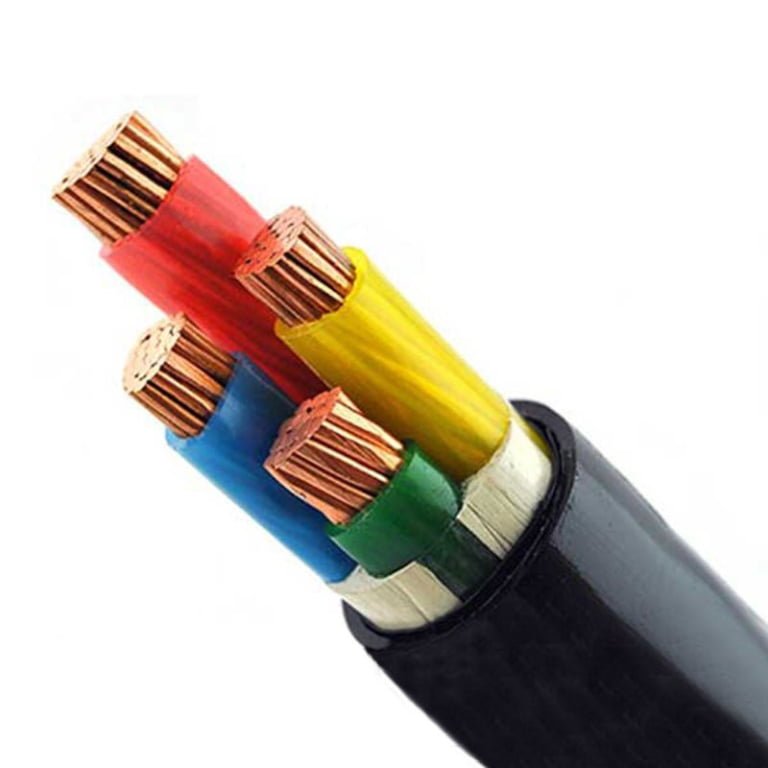
Outside North America — Europe, Australia, China, most of Asia — IEC 60446 governs. Live (L) is brown, neutral (N) is blue, and the protective earth (PE) conductor carries the unmistakable green-and-yellow stripe. If you’re specifying or importing cable for a project that ships internationally, or evaluating wire from an overseas supplier, brown-blue-green/yellow is what you should see on compliant product.
The wrinkle for anyone doing retrofit work in older UK properties: before the 2004 harmonization, UK wiring used red for live and black for neutral — exactly the opposite of what IEC now calls neutral (blue). A black conductor in a pre-2004 UK installation is a live conductor. This catches people. Old and new cables can coexist in the same building for decades, and someone unfamiliar with the history can make a dangerous assumption.
In IEC 60446-compliant wiring, the green-and-yellow striped conductor always identifies the protective earth (PE) and must never be used for any other purpose.True
IEC 60446 and virtually every national standard derived from it prohibit using the green/yellow identification for anything other than protective earth conductors. Misusing this color for a switched leg or neutral is a code violation and a shock hazard.
Grounding, Bonding, and Why the Difference Matters
The equipment grounding conductor (EGC) is the wire that runs through your branch circuit back to the panel, giving fault current a low-impedance return path so the breaker trips quickly. The grounding electrode conductor (GEC) is a separate, typically larger conductor connecting the service panel to a ground rod or water pipe electrode. Homeowners and even some contractors conflate these two. A missing EGC in a branch circuit means a metal appliance chassis can sit at line voltage until someone touches it — the breaker won’t trip because there’s no fault-current path. NEC Table 250.122 specifies minimum EGC sizes: a 15 A circuit needs at least 14 AWG copper, a 20 A circuit at least 12 AWG, a 30 A circuit at least 10 AWG. Undersizing is a code violation and a thermal hazard under fault conditions.
GFCI, AFCI, and How Wire Choice Interacts With Protection Devices
NEC 2023 has expanded AFCI requirements to cover essentially all bedroom, living room, hallway, and similar circuits — not just bedrooms as in earlier cycles. GFCI protection now applies to kitchens, bathrooms, garages, crawl spaces, unfinished basements, and all outdoor receptacles. These aren’t optional upgrades; they’re minimum code in new construction and most substantial renovation work.
Wire selection does interact with these devices. AFCI breakers use signal processing to detect arcing signatures on the conductor. Aluminum wiring, or wiring with damaged insulation creating intermittent partial contact, generates exactly the kind of signal pattern that will nuisance-trip AFCI breakers — which is the device working as intended, but it often surprises people doing aluminum-to-copper splice repairs. Run only properly rated connectors (AL/CU rated, antioxidant compound applied) when splicing conductors of different metals, or you’ll be resetting AFCI breakers and hunting phantom faults.
Verifying Certification Marks on Imported and Bulk-Purchased Wire
This is worth being blunt about: counterfeit certification marks on residential cable are a real and growing problem, especially in low-cost import markets. A UL listing mark, CSA mark, CE declaration, CCC mark, or KEMA certification is only meaningful if it’s genuine. In practice, verifying legitimacy means checking the manufacturer’s name and the certification number against the actual certification body’s public database — UL’s iQ database, CSA’s online directory, and so on. A sticker that looks like a UL mark but has no file number is meaningless. For bulk procurement, request the test report, not just the certificate image. Reputable manufacturers — those with vertically integrated production and long audit histories — will provide the original certification documentation without hesitation. Those who push back or offer only a photocopy of a certificate from a third party you can’t verify should raise a flag immediately.
Special-Purpose Home Wiring: Low-Voltage, Data, Coaxial, and Smart-Home Cable Selection
Most renovation budgets obsess over the power circuits and forget everything else. That’s a mistake that becomes obvious the first time someone streams 4K video on a network running Cat 5 pulled in 2003, or discovers their alarm panel is picking up flicker noise from a recently installed LED driver bank.
Low-Voltage Power Wiring Is Not Just “Smaller Line Voltage”
Twelve-volt and 24 V systems — LED strip lighting, landscape transformers, doorbell circuits, low-voltage HVAC controls — operate under a completely different regulatory framework than the 120/240 V branch circuits covered in NEC Article 210. They typically fall under NEC Article 411 or 725, depending on classification. Insulation ratings are thinner, often 300 V rather than 600 V, and the installation clearances are more relaxed. That’s fine until someone accidentally staples a Class 2 control cable into the same framing bay as a 240 V dryer circuit without any separation. The voltage difference can stress the low-voltage insulation and, over years, create a slow fault. Keep the two physically separated — 50 mm minimum is the usual rule of thumb, more where possible.
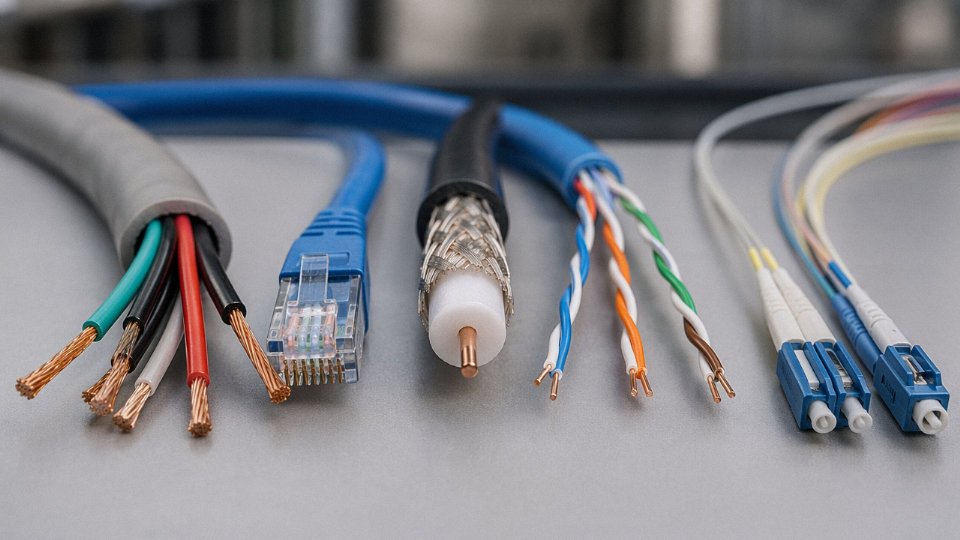
Structured Data Cabling: The Gap Between “Working” and “Future-Ready”
Cat 5e is still legal, still sold, and still not what you want in a new build. It handles 1 Gbps up to about 55 m under good conditions, but its 100 MHz bandwidth ceiling has no headroom for anything beyond that. Cat 6 doubles the bandwidth to 250 MHz and supports 10 Gbps — but only to roughly 55 m at that speed, which catches people off guard in larger homes. Cat 6A, rated to 500 MHz and 10 Gbps over a full 100 m, is increasingly the baseline specification for new residential construction and serious renovations, particularly where the homeowner runs a home office, has IP security cameras, or plans PoE devices.
The real-world difference in cable cost between Cat 6 and Cat 6A is roughly 20–40% per meter depending on quantity and supplier, which sounds significant until you price the labor to reopen finished walls five years later.
Cat 6A supports 10 Gbps up to 100 meters and 500 MHz bandwidth, making it suitable for demanding home network applications.True
Cat 6A (Augmented Category 6) is standardized under TIA-568-C.2 and ISO/IEC 11801 with a 500 MHz bandwidth and 10GBASE-T support to 100 m, distinguishing it from Cat 6 which is limited to 10 Gbps only at shorter runs.
Coaxial Cable: RG-6 or Nothing
RG-59 had its moment. It’s thinner, easier to handle, and still sitting in boxes at wholesale distributors. Don’t use it for anything installed today. Attenuation on RG-59 at 1 GHz runs roughly 26–30 dB per 100 m; RG-6 drops that to around 16–20 dB per 100 m, depending on the specific construction and shielding type. For satellite and CATV signals, that difference is the margin between a stable picture and dropout during rain fade. Quad-shield RG-6 adds another layer of protection against RF ingress, which matters in electrically noisy environments.
Security and Alarm Wiring: Shielding Is Not Optional Anymore
Standard 2-conductor or 4-conductor alarm cable — typically 22 AWG, rated at 12–24 V DC with currents well under 1 A for most sensor loops — works fine in older homes. In homes with modern LED dimmer systems, though, unshielded alarm wire can pick up enough RF noise from the switching frequencies of LED drivers (typically 20–100 kHz range) to trigger false sensor activations. Shielded 22 AWG 4-conductor cable costs maybe 15–30% more per meter, and the drain wire needs a single-point ground at the panel. Skip the shielding, and you may spend more in service calls chasing phantom alarms than you saved on cable.
Speaker Cable and In-Wall Audio Runs
For in-wall speaker runs, the jacket rating matters as much as the conductor. CL2 and CL3 designations mean the cable has been listed for in-wall residential installation — CL3 handles up to 100 V, CL2 up to 150 V peak. For amplifier impedances of 4–8 Ω, a run under 6 m can usually get away with 16 AWG; runs of 15 m or longer benefit from 14 AWG to keep resistance losses from degrading damping factor. Surface-mounted cables in conduit have more flexibility in jacket selection, but anything disappearing into drywall needs the proper listing.
PoE, Class 2 Control Wiring, and the Rise of Single-Pair Ethernet
Power over Ethernet has become the standard backbone for IP cameras, wireless access points, and smart thermostats. PoE (IEEE 802.3af) delivers up to 15.4 W per port; PoE+ (802.3at) reaches 30 W. That power delivery generates heat in the cable bundle, which is why the TIA guidelines recommend derating port counts when cables are bundled tightly — heat buildup in a conduit packed with 24 active PoE cables can be surprisingly significant. Class 2 wiring for thermostats and motorized shades runs at 30 V or less and under 100 VA, governed by NEC Article 725.
Single-pair Ethernet (SPE, 10BASE-T1L) is beginning to appear in residential IoT sensor installations — one twisted pair, much smaller diameter, capable of running low-bandwidth sensor data over very long distances. It won’t replace Cat 6A for backbone runs, but for distributed sensors and environmental monitors it’s worth knowing about during rough-in planning.
The Single Best Future-Proofing Decision You Can Make
Install conduit — or at minimum, oversized raceways — during any new construction or major renovation while walls are open. A 25 mm EMT run from the network closet to each room, even if initially populated with Cat 6A, means that whatever supersedes Cat 6A in 2030 can be pulled through without a single drywall cut. The conduit cost adds perhaps USD 3–8 per linear meter depending on complexity and labor market. Compared to the cost of opening finished walls, it’s not a close call.
How to Evaluate Wire Quality Before You Buy: Tests, Certifications, and Red Flags in the Market
Walk into any wholesale electrical market or scroll through an online marketplace and you’ll find wire priced anywhere from roughly half to double what you’d expect for the same specification. That spread is not volume discount. Much of it is quality fraud — and in residential wiring, the consequences sit quietly inside your walls for decades before they don’t.
The Most Common Ways Substandard Cable Fails Specification
The single most prevalent problem is undersized conductor cross-section. A reel labeled 2.5 mm² may contain a conductor that actually measures 1.8–2.0 mm² when you break out a micrometer. That roughly 25–30% deficit increases resistance per unit length, raises operating temperature under load, and accelerates insulation degradation. In a kitchen circuit running close to its rated load, that extra heat doesn’t announce itself — it just quietly shortens the life of the insulation until you have a fault.
Insulation thickness is the second common shortcut. IEC 60228 and related product standards specify minimum insulation wall thickness for each voltage class and conductor size. Off-spec insulation — often thin enough to feel noticeably flimsy when you bend the cable — reduces voltage withstand margins. A 1.0 mm wall where 1.2 mm is required may pass a casual inspection and fail a 2,000 V hi-pot test.
Then there’s conductor material quality. High-oxygen or recycled copper with elevated impurity content runs resistivity noticeably higher than the 1.68 × 10⁻⁸ Ω·m you’d expect from properly drawn electrolytic-tough-pitch copper. You can’t see that with a caliper, but a DC resistance measurement across a known length will show it immediately. Corroded or dark-colored strand surfaces visible at a cut end are a reasonable proxy indicator on the job site.
Field Tests You Can Run Before Accepting a Delivery
Grab a micrometer. Cut a sample from the end of the reel, strip back 30–40 mm of insulation, and measure individual strand diameter — then calculate cross-section from the strand count and diameter. Compare against the declared value. For insulation, a sharp blade and a caliper takes about two minutes per sample. Do it on both ends of a reel; some manufacturers taper the cross-section gradually so end-of-reel checks catch more fraud than mid-reel checks.
The flame test is a quick proxy for insulation type — useful when a supplier claims LSZH but you have doubts. Hold a small stripped sample horizontally in a flame for about 10–15 seconds, then remove it. Standard PVC continues to burn and drips flaming material. Genuine LSZH self-extinguishes within a few seconds of flame removal and produces noticeably less black smoke. It’s not a substitute for a proper IEC 60332-1 burn test, but on a receiving dock it tells you something.
Certification Marks and How to Actually Verify Them
Legitimate certification marks by region include UL Listing (North America — verify via UL’s Product iQ database with the exact UL file number printed on the jacket), CE marking accompanied by the harmonized standard reference such as EN 50525 (Europe — the CE mark alone without a declaration of conformity is nearly meaningless for cable), CCC for the Chinese domestic market, KEMA KEUR for international markets particularly in the Netherlands and surrounding regions, and BSI Kitemark for the UK. Every one of these can be verified online through the respective certification body’s public database. If a supplier cannot give you a file number, a certificate number, or a declaration of conformity with a traceable issuing body, treat the mark as decorative.
CE marking on a cable guarantees it meets European safety standards.False
CE marking is a manufacturer's self-declaration of conformity. Without an accompanying harmonized standard reference and a verifiable declaration of conformity, it provides no meaningful third-party assurance. Cable sold into Europe under EN 50575 additionally requires third-party testing for fire performance classification.
Red Flags in Online and Spot-Market Purchasing
Prices more than 20–30% below prevailing market levels for the same conductor material, cross-section, and voltage rating almost always indicate specification compromise somewhere — conductor cross-section, insulation grade, or both. Vague conductor declarations (“copper alloy” without specifying grade) should raise an immediate question. Missing or inconsistent print on the jacket surface — spacing errors, faded text, or a batch number that doesn’t trace to any documentation — are common on counterfeit or second-quality product. No traceable reel or batch number means no recall path and no meaningful quality history.
What to Request From Any Supplier Before Accepting Bulk Shipment
For contractors and procurement managers placing orders of any significant scale, the documentation minimum should be: a mill test report (MTR) covering conductor resistance per IEC 60228, insulation resistance, and voltage withstand results from the specific production batch; a third-party inspection certificate if the volume justifies it; and a physical sample from a representative reel for independent verification. Jinda’s in-house laboratory covers conductor DC resistance, insulation resistance, 3 kV and 6.5 kV voltage withstand, and flame propagation per IEC 60332 series, with batch-level traceability from raw copper rod through finished reel. ISO 9001 certification underpins the system, which means audit trails exist and aren’t reconstructed after the fact.
Ask for the MTR before payment clears. Any reputable manufacturer has it ready. Hesitation on that request tells you something worth knowing.
Installation Best Practices That Determine Whether Even the Best Wire Performs Safely
Buying the right wire is only half the job. I’ve seen perfectly spec’d, listed, copper-conductor NM-B cable fail within a few years — not because the wire was bad, but because it was bent too sharply around a stud, stapled carelessly, or landed on an undersized terminal with no torque check. The installation is where most residential wiring failures actually originate.
Bend Radius: A Rule Most DIYers Ignore Until the Insulation Cracks
Thermoplastic-insulated cables need a minimum bend radius of roughly 5× the cable’s overall diameter. For a typical 12/2 NM-B cable running about 13–14 mm in diameter, that means no bend tighter than 65–70 mm. In practice, electricians yanking cable around a 90° corner in a tight junction box frequently violate this — sometimes getting it under 20 mm. The insulation doesn’t crack immediately. It work-hardens the conductor slightly, and the PVC jacket develops micro-fractures that show up as insulation resistance failures years later, often after some thermal cycling has done its work. At corners and box knockouts, use a gentle sweep, not a kink.
Stapling and Support Intervals: Not Optional Bookkeeping
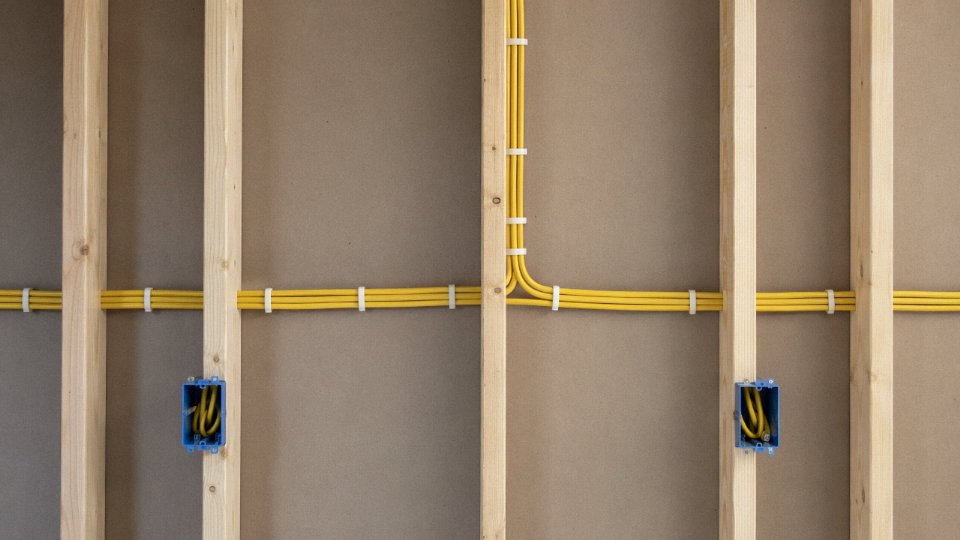
NEC requires NM cable to be supported within 300 mm of every box and at intervals no greater than 1.4 m along the run. IEC 60364 sets comparable spacing for fixed wiring. The reason isn’t just cosmetic tidiness. Unsupported cable sags, and over 10–20 years that sag introduces continuous tensile stress at the support points — particularly at the box entry. In renovation work, it’s common to find original 1970s wiring with 2–3 m unsupported spans, conductors slightly elongated and the jacket brittle near the clamp. Use insulated staples or cable staples sized to the cable; a staple driven too hard pinches the jacket and creates exactly the kind of nick you’ll find — if you’re lucky — during a pre-energization insulation test.
Underground Feeder Depth: Get This Wrong and a Shovel Does the Rest
UF-B cable requires a minimum burial depth of 300 mm under general conditions. Rigid metal conduit drops that requirement to 150 mm. Neither of those matters much if you don’t mark the run — a simple conduit sleeve or a continuous warning tape at 150 mm above the cable pays for itself the first time someone excavates near the house. Always document the routing. A sketch taped inside the electrical panel door has saved more cables than any single product specification.
Connection Quality and Torque Values
Wire stripping length should match the terminal’s strip gauge, usually marked on the device — strip too short and you get a high-resistance partial contact; strip too long and bare conductor extends past the terminal, a code violation and a shock hazard. For 15–20 A receptacle terminals under UL 498, the correct torque is typically in the range of 1.1–1.4 N·m. That’s not tight by feel — it requires a torque screwdriver, which most residential electricians don’t carry but should. Aluminum wire on a device not rated AL-CU is a fire waiting to happen; the oxidation layer and differential thermal expansion will loosen that connection over time, guaranteed.
Bundled Cables and Derating: Renovation’s Favorite Overlooked Rule
Six or more current-carrying conductors sharing a conduit requires an 0.80 ampacity derating factor per NEC Table 310.15(C)(1). In renovation work, new circuits almost always share existing conduit runs, and this rule gets skipped. The consequence is thermal buildup — insulation degrades faster, breakers nuisance-trip, and in worst cases the conduit becomes a heat source inside a wall cavity.
Minimum insulation resistance for a newly wired residential circuit should be at least 1 MΩ before energizing, per IEC 60364-6.True
IEC 60364-6 specifies 1 MΩ as the minimum acceptable insulation resistance when tested at 500 V DC for circuits up to 500 V. This threshold is widely adopted and catches nicks, pinches, and damaged insulation introduced during rough-in before they become energized faults.
The Megohmmeter Test Nobody Does But Everyone Should
Before energizing any newly wired circuit, run a 500 V insulation resistance test with a megohmmeter. A healthy new circuit should read well above 1 MΩ — honestly, new residential wiring with no damage typically reads 100 MΩ or higher. Anything below 1 MΩ means you have a problem: a nick from a staple, a pinch behind drywall, insulation abraded against a metal edge. Finding it now costs an hour. Finding it after a finished wall is up and the circuit has been live for six months costs considerably more, and that’s the optimistic outcome.
Frequently Asked Questions About Home Wiring and Wire Selection
Can I mix copper and aluminum wire in the same circuit?
Technically yes — but only at devices that are listed and labeled AL-CU, and only with the right preparation. That means applying a listed anti-oxidant compound to the aluminum conductor before insertion, torquing the terminal to the manufacturer’s specification (typically 35–45 in·lb depending on the device, not a guess), and using a pigtail arrangement or approved splice connector like a COPALUM crimp rather than a standard wire nut.
Random copper-to-aluminum splices — the kind where someone just shoves both conductors into a standard wire nut — are a documented fire hazard. The thermal expansion mismatch between the two metals causes the connection to loosen over years of thermal cycling, which raises resistance, which generates heat. That sequence is responsible for a disproportionate share of residential electrical fires in homes that still have 1960s–70s aluminum branch-circuit wiring.
Copper-to-aluminum splices using standard wire nuts are a documented fire hazard and code violation in most jurisdictions.True
The different thermal expansion coefficients of copper and aluminum cause connections to loosen over time, increasing resistance and heat generation. NEC and most local codes require AL-CU rated devices and anti-oxidant compound for such junctions.
What wire do I need for a 240 V dryer or EV charger outlet?
A standard electric dryer runs on a 30 A, 240 V circuit — 10 AWG copper (roughly 6 mm²) in a 4-conductor cable (two hots, a neutral, and a ground) is the typical answer in North American practice. Don’t skimp to 12 AWG here; the nameplate draw on many dryers hits 24–28 A, and the 125% continuous load factor pushes the required conductor rating to 30 A or above.
A Level 2 EV home charger is a different animal. A 48 A EVSE unit requires a 60 A dedicated circuit, which means 6 AWG copper minimum — some installers run 4 AWG if they want headroom or anticipate a future upgrade to a higher-output unit. Always read the charger’s nameplate and installation manual before pulling wire. Getting this wrong means nuisance tripping at best; at worst, sustained overloading of undersized conductors inside a wall cavity.
How long does residential electrical wire last in a wall?
PVC-insulated copper wire installed in a dry, temperature-stable environment — a typical interior wall in a climate-controlled home — has a documented service life somewhere in the range of 50 to 70 years, depending on how consistently the temperature stays below 60–75 °C and whether the insulation was ever stressed by overloads. That means wire installed in the 1980s is still performing fine in many homes.
Aluminum branch-circuit wiring from the 1965–1973 period is a different matter. The conductor itself may be physically intact, but the connections are the problem. Remediation — either COPALUM crimping or CO/ALR device replacement throughout the home — is warranted regardless of how old the wire looks.
Is it safe to use wire from an overseas supplier or online marketplace?
Only if the certification is verifiable. Ask for the specific certification number — UL, CSA, CE, or whatever applies to your jurisdiction — and look it up on the certifying body’s public database yourself. A label that says “UL Listed” means nothing if the UL file number doesn’t exist or doesn’t cover that product category. Request a test report from an accredited third-party lab and, on any significant purchase, test a sample reel before bulk acceptance: check conductor cross-section, insulation thickness, and conductor resistance against the stated specification.
What is the difference between NM-B, UF-B, and MC cable?
NM-B (what most people call Romex, though that’s a brand name) is non-metallic sheathed cable for dry interior locations only — inside finished walls, attics, and similar spaces. It cannot be buried, cannot get wet, and in many jurisdictions cannot be run exposed in unfinished areas like garages or basements below 7 feet.
UF-B is underground feeder cable, rated for direct burial and damp or wet locations. The insulation is molded directly around each conductor rather than bundled inside a separate jacket, which is what gives it its moisture resistance. It costs more per foot, and it’s worth every cent in the right application.
MC cable — metal-clad — wraps the conductors in an interlocked aluminum armor. That armor provides mechanical protection and qualifies as a wiring method in locations where NM-B is prohibited: exposed runs, commercial occupancies, and certain residential settings depending on local amendments to the NEC.
How do I know if my home’s existing wiring needs replacement or upgrading?
Breakers tripping repeatedly, cover plates that are warm to the touch, outlets that spark when you plug something in, lights that flicker noticeably when a large appliance kicks on — any of these individually warrants investigation. Two-prong ungrounded outlets throughout the house usually indicate wiring that predates the 1960s or that was never properly grounded. Identified aluminum branch-circuit wiring (you can check the jacket printing) installed before 1972 is a specific remediation situation, not a “watch and see” one. Get a licensed electrician to do a panel and wiring inspection; it typically runs USD 150–400 depending on home size and regional labor rates, and it’s a cheap hedge against what a house fire costs.
Can Jinda supply residential cable to international contractors and distributors?
Yes. Jinda’s five production facilities across China support both large bulk orders and project-specific procurement volumes — the kind of mid-size order that some large manufacturers aren’t interested in. Standard deliverables include technical data sheets, third-party test reports, and after-sales technical support. If you’re sourcing for a specific national market with particular certification requirements, that conversation is worth having early in the project timeline, not after the order is placed.
Sourcing Residential Wire at Scale: What International Buyers Need to Know When Working With a Manufacturer Like Jinda
Most procurement conversations about residential cable eventually hit the same friction points: inconsistent batch quality, documentation gaps that stall customs clearance, and the frustrating discovery — sometimes weeks into a project — that the “manufacturer” you bought from is actually a trading company with no direct control over the factory floor. If you’re managing a recurring residential pipeline, whether that’s a regional distributor supplying electrical contractors or a developer running multi-phase housing projects across two or three countries, those friction points compound fast.
Direct Manufacturer vs. Trading Company: Why It Matters in Practice
The difference isn’t just philosophical. A trading company sources from whichever mill offers the best margin that quarter, which means your 4 mm² XLPE twin-and-earth from batch one and batch three may have come from entirely different production lines, possibly different conductor purity grades. When you source directly from an integrated manufacturer, you get traceable mill test reports tied to a specific production run, not a repackaged certificate of conformity that doesn’t map to the actual reel in your warehouse.
Direct factory audit access matters too. A buyer auditing Jinda can walk the conductor drawing lines, inspect the insulation extrusion equipment, review incoming copper rod quality checks, and sit with the QC team on incoming and outgoing inspection. That kind of transparency is simply not available through a middleman. And when a non-conformance does surface — say, a batch of 2.5 mm² conductor measuring slightly outside the specified resistance range — resolution with a direct manufacturer is a conversation between your technical team and theirs, not a chain of escalating emails to someone who wasn’t in the building when the wire was made.
Production Capacity and Specification Range
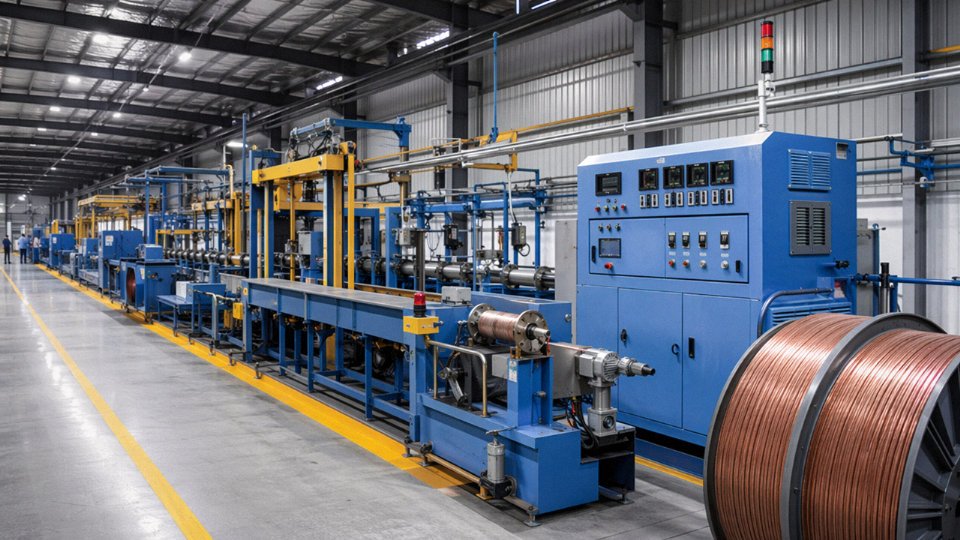
Jinda operates across five production bases with a combined 470,000 m² of manufacturing space and a workforce exceeding 1,000 people. For residential cable specifically, the product range spans IEC metric cross-sections from 1.5 mm² through 16 mm² — covering everything from lighting circuits to 32 A cooker circuits — and AWG imperial specifications for North American and export markets where 14 AWG through 10 AWG are the standard branch-circuit sizes. That dual-standard capability matters if you’re a distributor serving both European-norm and NEC-norm markets from a single supply relationship.
Compliance Documentation and Import Clearance
International buyers importing into the EU need more than a CE mark on the packaging. Full material declarations — RoHS substance declarations and REACH SVHC confirmations — are increasingly required at customs, and downstream contractors in Germany, the Netherlands, and Scandinavia routinely ask for them before accepting a delivery. Jinda supplies these as standard documentation alongside CE certification, CCC for China domestic use, and can accommodate customer-specified third-party certification requirements depending on the destination market. That last point is worth pressing any prospective supplier on directly: can they support third-party testing, or does that request quietly disappear into a queue?
Jinda supplies residential cables with CE and CCC certification and can provide full RoHS/REACH material declarations for EU import compliance.True
This is consistent with the documented capabilities of an established integrated manufacturer operating in export markets across 50+ countries; CE and CCC are standard certifications for this product category and market scope.
MOQs, Lead Times, and Packaging
Minimum order quantities depend on conductor size and jacket specification — smaller gauge wire (1.5–2.5 mm²) typically ships on cardboard spools for easier handling on-site, while larger sections come on wooden or steel reels. Lead times run roughly 15–30 days for standard residential specifications depending on production scheduling and order volume, though larger or custom orders benefit from coordinating with Jinda’s production planning team early. Buyers managing phased project timelines — a contractor fitting out 200 homes over an 18-month build program, for instance — can often arrange priority scheduling under a framework agreement that locks specifications and pricing across multiple releases.
Building a Long-Term Supply Partnership
Jinda’s supply track record across 50-plus countries reflects something that doesn’t show up in a product datasheet: the ability to hold consistent specifications over time. For a distributor or contractor managing recurring residential project pipelines, specification drift is a genuine operational risk. Consistent conductor geometry, insulation thickness, and color coding across every order isn’t exciting, but it’s what keeps your electricians working from habit rather than re-checking every reel.
Dedicated technical account management means your specification questions, deviation requests, and documentation needs go to someone who knows your account history, not a rotating support inbox.
To request product specifications, arrange sample shipments, or discuss a project quotation, contact Jinda’s international sales team directly. Whether you’re placing a first trial order or evaluating a long-term supply arrangement, the starting point is a straightforward technical conversation about what your circuits actually need.