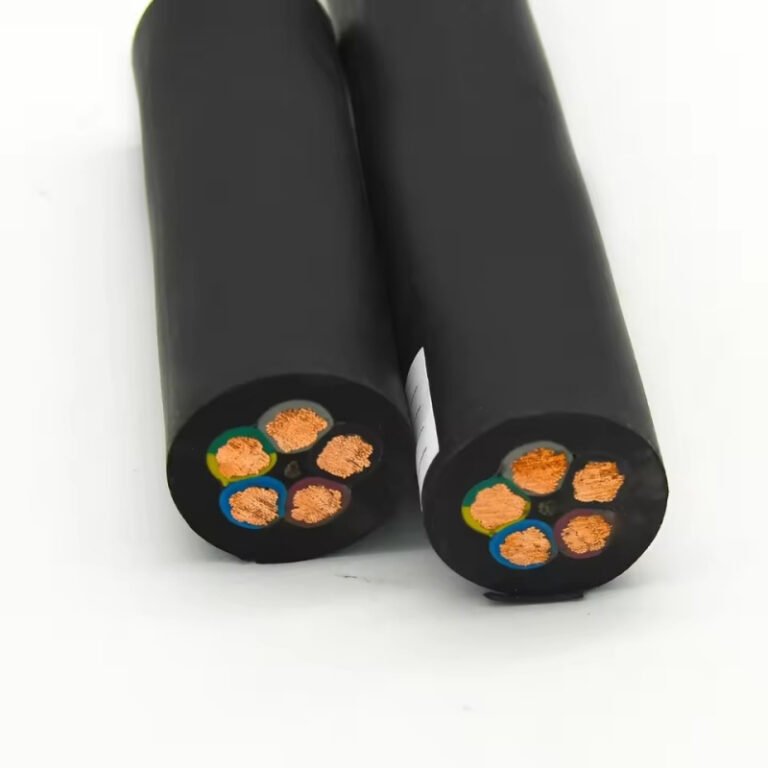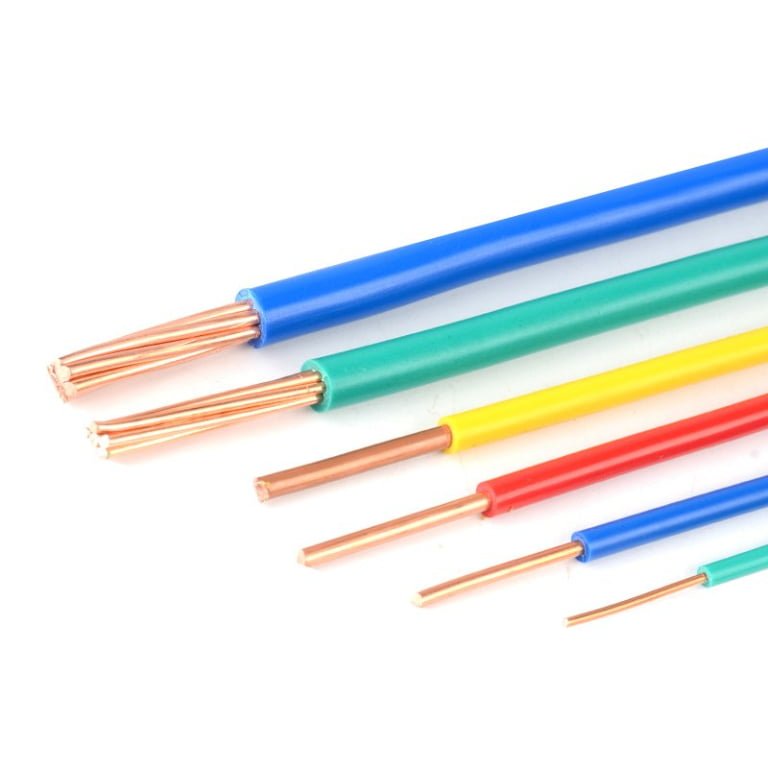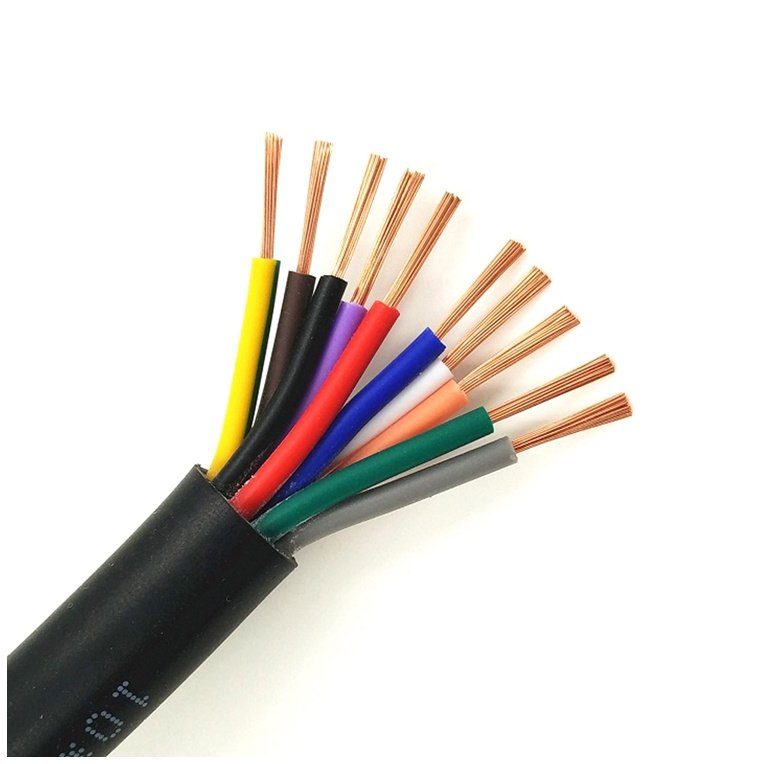
Pick the wrong cable type for a residential installation and the problems don’t show up immediately — that’s what makes it dangerous. A circuit wired with undersized conductors runs warm for months, quietly degrading insulation, until a breaker fails to trip fast enough or a connection arcs behind a wall. Callbacks, rewiring costs, and liability exposure follow. Specify the right cable from the start, and most of those risks disappear before the first staple goes in.
In North American residential construction, NM-B (non-metallic sheathed cable, sold widely under the Romex trade name) is by far the dominant choice, accounting for roughly 80–90% of all branch-circuit wiring installed in homes. Conductor sizes typically run from 14 AWG on 15 A general lighting circuits up to 6 AWG for 55 A loads, with 12 AWG the workhorse size on 20 A kitchen and bathroom circuits.
What makes this worth looking at carefully is that “residential wiring” covers more ground than most people assume. NM-B dominates, yes, but the moment you step into a wet location, a conduit run, an in-floor heating application, or a panel feed, the cable type changes — and so do the consequences of getting it wrong. The global residential wire and cable market runs somewhere in the USD 18–22 billion range annually, pushed along by new construction, renovation waves, and the fast-growing load demands of EV charging and electrified heating. Understanding which cable goes where, and why, is the practical starting point.
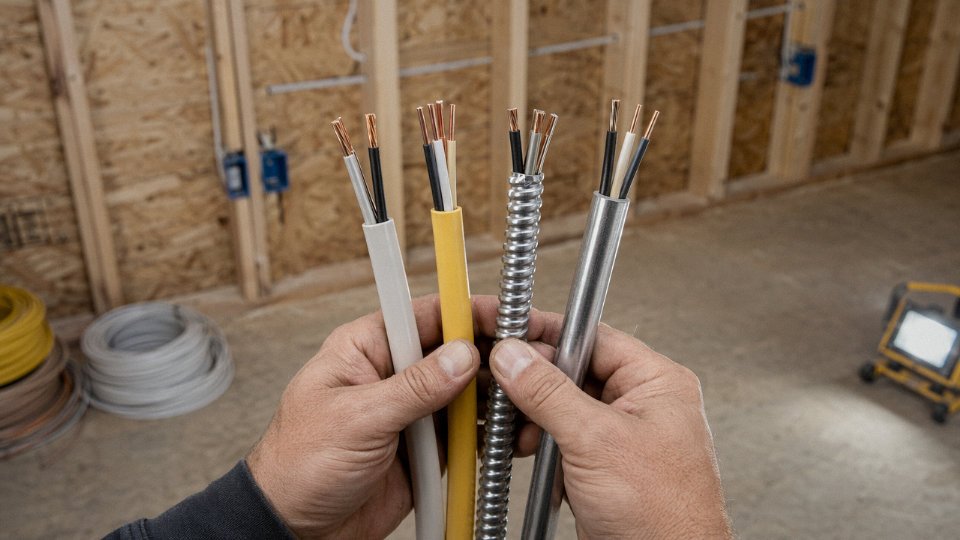
NM-B Non-Metallic Sheathed Cable: The Dominant Choice for Interior Branch Circuits
Walk into any house framed in North America between 1970 and today, strip back a wall, and you’ll find the same thing: that flat, slightly waxy plastic cable stapled to every stud. NM-B — sold under the Romex brand name so universally that electricians rarely say anything else — accounts for roughly 80–90% of all residential branch-circuit wiring installed on the continent. Understanding exactly why it dominates, and where it absolutely cannot go, is the difference between a clean inspection and a costly re-pull.
What’s Actually Inside the Jacket
Each NM-B cable contains individually insulated THHN-rated conductors — a black hot, a white neutral, and a bare copper equipment ground — all wrapped in a PVC outer sheath. The THHN insulation on the individual conductors is rated at 90°C, but NEC Table 310.15 derate rules cap NM-B’s usable ampacity at the 60°C column, because the heat generated inside that bundled jacket can’t dissipate the way it would on a single conductor in open air. That gap between what the wire can handle and what the assembly is rated for trips up a surprising number of people who should know better.
The jacket color isn’t decorative. White sheath means 14 AWG, yellow means 12 AWG, orange means 10 AWG. On a busy job site with rolls of cable scattered across three floors, that color ID is what stops a 15 A circuit from getting wired with 12 AWG (wasted money) or — far worse — a 20 A kitchen circuit from being pulled with 14 AWG (overheating, nuisance tripping, fire risk over time). Some inspectors will reject a run on color alone if the label isn’t legible, even if the conductor gauge checks out with calipers.
Voltage Rating, Temperature Limits, and Where the Rules Get Strict
NM-B carries a 600 V rating — generous for residential circuits that rarely see more than 240 V — but the 60°C temperature ceiling is where real-world limitations bite. Attic runs near roof decking are a known problem zone. On a summer day in Phoenix or Houston, the space between roof sheathing and insulation can reach 60°C ambient or above, which means the cable is running at its rated limit before a single amp flows. NEC Section 310.15(B)(2) requires ampacity correction factors when ambient exceeds 30°C, and in practice, experienced electrical contractors in hot climates either re-route runs through conditioned space or switch to a higher-rated cable assembly for those spans.
NM-B cannot be used in conduit. People try it anyway. Pulling NM-B into conduit creates a bundling condition that the 60°C rating was never designed to handle, and it’s explicitly prohibited under NEC Article 334.
NM-B (Romex-type) cable is permitted for use in wet locations such as underground runs or damp crawlspaces when properly enclosed in conduit.False
NEC Article 334.12 explicitly prohibits NM-B in wet or damp locations, in conduit, or where exposed to physical damage. Wet-location runs require cables listed for that purpose, such as UF-B or conductors in wet-rated conduit.
Poured concrete is another absolute prohibition. The alkali environment degrades the PVC jacket over years, and there’s no practical way to re-pull a cable embedded in a slab. Exposed runs in unfinished basements below 7 feet also require physical protection — typically conduit or running board — a rule that catches a lot of DIY rewires during resale inspections.
Ampacity and Derating in Practice
The standard ampacity table is straightforward until you start bundling:
| AWG | Circuit Breaker | Typical Application |
|---|---|---|
| 14 | 15 A | Lighting circuits, bedrooms |
| 12 | 20 A | Kitchen, bathroom, laundry |
| 10 | 30 A | Dryer, water heater, EV Level 1–2 |
| 8 | 40 A | Range circuits, larger HVAC |
| 6 | 55 A | Large range, 50 A EV charging |
Once three or more current-carrying conductors share a bundled run longer than about 24 inches, NEC 310.15(B)(3)(a) derating factors apply — down to 80% capacity for 4–6 conductors, 70% for 7–9. In practice, this matters most in panel stub-outs and in wire chases where multiple home-run cables get zip-tied together. I’ve seen panels where a dozen 12 AWG cables were bundled tight for 3 feet into the box, with nobody having run the derating math. The breakers were all 20 A. The cables were operating legally on paper and questionably in reality.
Installation Details That Actually Matter
Stapling rules: NM-B must be supported every 4.5 feet and within 12 inches of any box or fitting. Loose cable sags, gets pinched behind drywall, and in a worst case gets pierced by a screw years later. At metal knockouts, anti-short bushings (sometimes called red-head bushings) are required to protect the jacket from the sharp edge — a small fitting, costs almost nothing, and skipping it is one of the most common minor violations on residential inspections.
Box fill calculations under NEC Article 314 count each conductor, device, and fitting against the cubic-inch volume of the box. A crowded 4-inch square box with three NM-B cables and a receptacle can easily exceed its rated fill if someone grabs the wrong depth box from the truck.
How NM-B Compares to Global Equivalents
Outside North America, the direct functional equivalent is the IEC 60227 flat twin-and-earth cable — widely used in the UK, Australia, and much of Southeast Asia. It follows similar logic: two insulated conductors plus a bare or sleeved earth, all in a flat PVC sheath. The UK variant uses gray or white sheath with harmonized core colors (brown for line, blue for neutral, green/yellow for earth) under BS 6004. European installations frequently use CENELEC harmonized types H05VV-F and H07VV-F — round, multi-core PVC cables with voltage ratings of 300/500 V and 450/750 V respectively — which appear in fixed wiring and flexible applications both.
The construction philosophy converges: PVC insulation, PVC sheath, copper conductors, low-voltage residential loads. The differences are mostly in sheath geometry (flat vs. round), conductor identification color conventions, and the specific test standards each region enforces. For a procurement manager sourcing cable for an international residential development project, those differences are not trivial — a cable compliant with UL 719 for NM-B will not automatically satisfy BS or IEC marking requirements, and vice versa.
Armored Cable (AC/BX) and Metal-Clad Cable (MC): When Physical Protection Is Non-Negotiable
NM-B is fine behind drywall. The moment a cable run is exposed — hanging in an unfinished basement, dropping down a garage wall, running across ceiling joists in a utility room — the plastic sheath offers almost no meaningful mechanical protection. That’s where AC and MC cable earn their place, and where mixing them up creates real code and safety problems.
AC vs. MC: Not the Same Thing
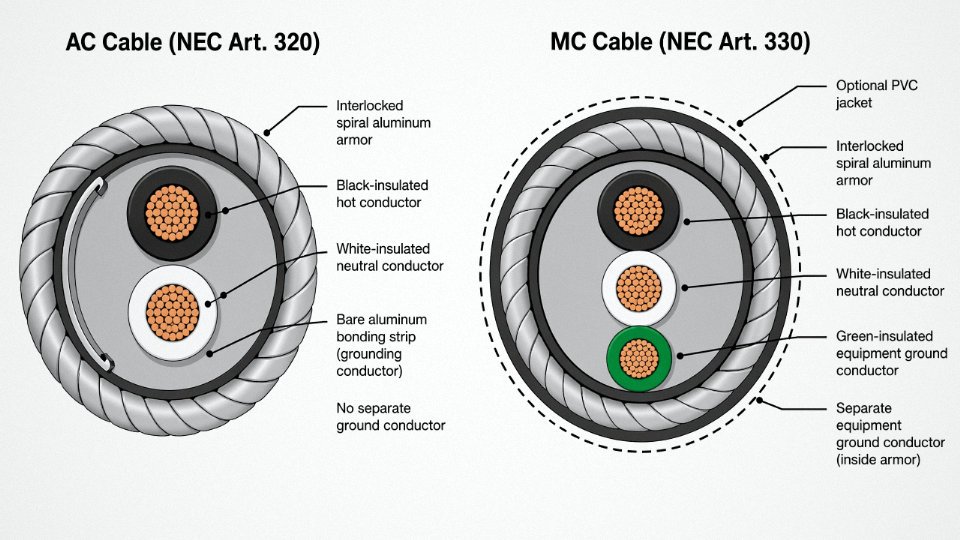
AC cable (NEC Article 320), sometimes still called BX after a tradename that’s been around since the early 1900s, consists of insulated conductors wrapped in a flexible interlocked spiral armor — typically aluminum, occasionally galvanized steel. The critical internal detail is the bonding strip, a bare aluminum ribbon running the length of the cable that contacts the armor continuously. That strip, combined with the armor itself, forms the equipment grounding path. There is no separate insulated ground conductor in standard AC cable.
MC cable (NEC Article 330) is a different animal. The armor looks similar, but inside you get fully rated insulated conductors plus a separate green-insulated equipment ground. That ground conductor is sized and insulated to the same standard as the circuit conductors, which matters for ground-fault performance. MC also tolerates a wider range of installation environments — wet locations with the right jacket variant, direct burial with appropriate type — things standard AC cable simply cannot do.
The Anti-Short Bushing Problem
Here’s something inspectors flag constantly: AC cable terminations missing the anti-short bushing, the small red plastic insert that goes between the cut armor edge and the conductors. The armor is cut with a rotary cutter or hacksaw, and that cut leaves a sharp metal edge. Under normal vibration — a furnace starting, a garage door cycling — that edge works against conductor insulation over months and years. Without the bushing, you have a code violation under NEC 320.40 and a slow-developing abrasion failure that can arc before anything trips. The bushing costs almost nothing and takes five seconds to install. It gets skipped when installers are rushing, every time.
Omitting anti-short bushings in AC cable terminations is a National Electrical Code violation under NEC Article 320.True
NEC 320.40 explicitly requires anti-short bushings (or listed fittings that provide equivalent protection) at all AC cable terminations where the armor is cut, to protect conductor insulation from the sharp armor edge.
Residential Scenarios That Actually Require It
Exposed basement runs where the cable could take a hit from stored lumber or a misplaced tool are the most common residential application. Garage workshops are another — any shop worth using has stuff moving around, and NM-B stapled to an exposed stud will eventually lose. Some jurisdictions, notably Chicago and certain New York City boroughs, have local amendments that prohibit NM-B in residential construction entirely, requiring MC or conduit throughout. If you’re specifying cable for a project in those markets without checking local amendments, you’ll be pulling it all out.
Multi-family residential and mixed-use buildings add another layer. Many AHJs (authorities having jurisdiction) interpret the occupancy classification as commercial or require MC regardless of the residential use inside. Healthcare-adjacent residential — assisted living, memory care facilities — almost universally gets MC or conduit.
Cost and Labor Reality
MC runs roughly 30–50% higher on material cost compared to equivalent NM-B, depending on conductor count and armor gauge. Pull time increases too — MC doesn’t bend as forgivingly as NM-B and requires metal-rated connectors at every termination box. On a large new-construction house, that premium adds up. The justification is durability and jurisdiction compliance, not performance on a protected branch circuit.
Fire-Rated Variants for High-Rise Residential
For high-rise residential — anything where circuit integrity under fire conditions is code-mandated — standard MC isn’t sufficient. MC-HL (health care, listed under UL 2196) and CI (circuit integrity) cables are designed to maintain circuit function for a defined period during a fire event, typically 1–2 hours depending on the standard. These show up in fire alarm circuits, emergency lighting, and elevator control wiring in residential towers. Jinda’s armored cable export lines include variants engineered to IEC 60331 circuit integrity requirements, which align with the performance intent of CI cable for international project specifications where NEC designations don’t apply directly.
Underground Feeder (UF-B) and Direct-Burial Cable: Powering Outdoor Structures and Landscape Circuits
Outdoor residential circuits are growing fast — detached garages, EV chargers, pool pump panels, irrigation controls, shed lighting — and most of that load has to travel underground. That’s where UF-B earns its place. Specifying the wrong cable for a buried run isn’t a minor code violation you catch during inspection; it’s a failure mode you discover two or three years later when moisture wicks into a splice and trips a breaker at 2 a.m. in January.
How UF-B Differs From NM-B — and Why It Matters Underground
The construction difference is the whole story. NM-B wraps its conductors loosely inside a plastic sheath, with paper or fiber filler occupying the voids. Moisture can migrate along those voids. UF-B encapsulates each conductor individually in solid PVC, then bonds the assembly into a single monolithic jacket with no air gaps. You can feel the difference in your hand — UF-B is noticeably stiffer and heavier per foot, especially in larger sizes. That solid-fill construction gives it the moisture and fungal-decay resistance needed for direct earth burial without conduit, as recognized under NEC Article 340.
UF-B cable conductors are individually encapsulated in solid PVC, making the assembly suitable for direct earth burial without conduit under NEC Article 340.True
NEC Article 340 explicitly permits UF-B for direct burial and underground feeder runs. The solid PVC encapsulation eliminates the air voids present in NM-B that would allow moisture ingress underground.
Permitted uses under Article 340 include direct burial, underground runs to outbuildings, and installation in wet or damp locations. What the code prohibits is just as instructive: UF-B cannot be used inside buildings except where it emerges from the ground (that transition section), in theaters, embedded in poured concrete, or as a service-entrance cable. A common field mistake is running UF-B horizontally inside a garage wall after it comes up from the ground — that’s a code violation, and the inspector will flag it.
Burial Depth Rules Under NEC Table 300.5
Depth requirements depend on installation method and what’s above the cable:
| Installation Method | Minimum Cover Required |
|---|---|
| UF-B direct burial (residential branch circuit, 120/240 V) | 24 inches |
| UF-B in Schedule 40 PVC conduit | 18 inches |
| UF-B in rigid metal conduit (RMC or IMC) | 6 inches |
| Under a concrete slab (with conduit) | 4 inches |
| Under a driveway for one- and two-family dwellings | 18 inches (in conduit) |
These depths assume circuits at 120 V or 240 V residential voltages. Shallower installation under concrete slabs is permitted specifically because the slab provides mechanical protection — not because the cable is somehow drier there.
GFCI Requirements and How They Interact With Cable Choice
NEC 210.8 requires GFCI protection for all outdoor receptacles and for circuits serving areas like garages, unfinished basements, and pool equipment. That requirement lives at the circuit level, not the cable level — but in practice it shapes how you design the run. A single GFCI breaker at the panel protects the entire underground circuit, including any mid-run splice box. Using a standard breaker and adding a GFCI outlet at the far end works only if there are no receptacles between the panel and that outlet. Most inspectors want to see the GFCI at the source for underground feeders. Get this wrong and you’ve buried a non-compliant circuit under two feet of dirt.
Mechanical Protection: UF-B Is Moisture-Resistant, Not Rock-Resistant
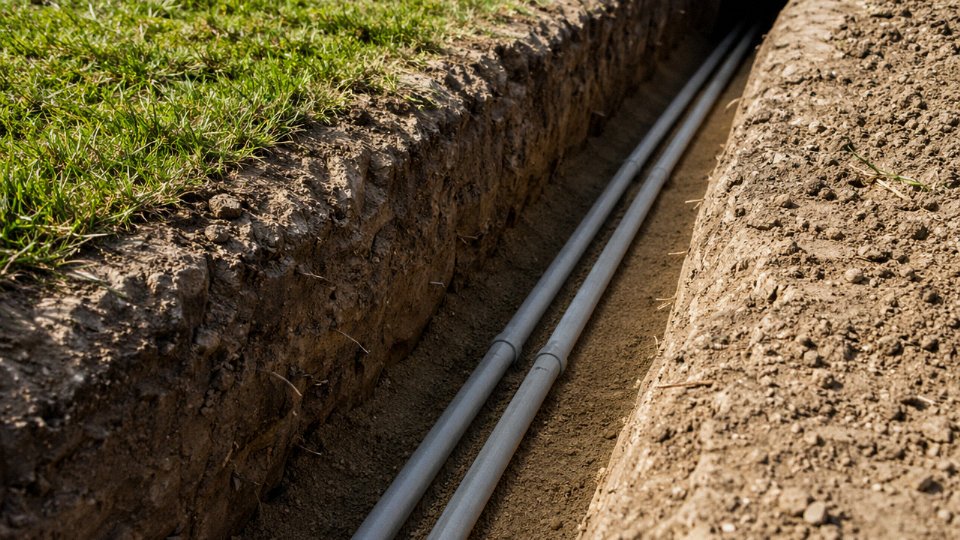
UF-B resists water. It does not resist a sharp stone edge under load, a landscaper’s edger, or a post-hole digger. In rocky or disturbed soil, the solid PVC jacket can be cut or abraded without the failure being immediately obvious. Best practice — and in high-traffic yard areas, essentially mandatory practice — is to sleeve UF-B inside Schedule 40 PVC conduit for the entire run or at least through any area subject to digging, foot traffic, or vehicle loading. The conduit adds maybe $0.40–$0.90 per foot in material depending on diameter and local pricing, and it makes future cable replacement a pull-job rather than an excavation.
EV Chargers and Solar Runs: The New Demand Driver
This is where underground residential feeders have gotten complicated. A 48 A EVSE load requires a 60 A-rated circuit minimum — typically 6 AWG copper or 4 AWG aluminum — and that feeder may need to run 80–150 feet from the main panel to a garage or carport. At those lengths and amperages, voltage drop becomes a real calculation, not an afterthought. Depending on wire material and run length, you may step up to 4 AWG copper or 2 AWG aluminum to keep drop under 3%.
The conduit-vs.-direct-burial decision for EV feeders usually comes down to soil conditions and future flexibility. Direct burial saves installation time upfront. Conduit costs more today but means you can pull a larger conductor later when the next owner installs a second charger or a battery storage system — and that scenario is no longer hypothetical.
For UV-exposed sections (above-grade conduit runs, exposed entry points), XLPE-insulated conductors outperform standard PVC over time, particularly in climates with sustained high UV and temperature cycling. Jinda’s direct-burial cables using UV-resistant XLPE insulation are rated for this combination of underground and partially exposed routing, which is exactly the profile of a typical residential EV feeder running from a main panel, underground across a yard, and up an exterior garage wall.
The residential outdoor wiring segment used to be mostly 15 A landscape circuits and the occasional shed feed. That’s changed. The loads are heavier, the runs are longer, and the consequences of a failed underground feeder — pulling permits, cutting trenches, replanting landscaping — are expensive enough to justify doing the cable selection and burial method right the first time.
THHN, THWN, and XHHW Conductors in Conduit: The Professional Retrofit and High-Load Solution
Individual insulated conductors pulled through conduit are, in a lot of ways, the backbone of serious residential electrical work — service entrances, subpanel feeders, long exposed runs in garages and utility rooms, and any jurisdiction or occupancy type where NM-B is flat-out prohibited. If you’ve ever done a 200 A service upgrade or roughed in a detached garage with a 60 A subpanel, you’ve dealt with this class of wire. It’s slower to install than Romex, costs more in labor, and requires a bit more planning. It also lasts longer, allows future changes without touching drywall, and handles higher ampacity loads cleanly.
Decoding the Insulation Alphabet
The letter codes aren’t arbitrary — each one tells you something specific about the conductor’s rated performance envelope. T = thermoplastic insulation base. H = 75°C rated for dry locations. HH = 90°C heat rating. W = suitable for wet locations. N = nylon outer jacket, which adds abrasion and chemical resistance and makes the wire easier to pull through conduit. So THHN is a dry-location, 90°C conductor with a nylon jacket. THWN adds wet-location suitability at 75°C. In practice, most wire sold in North America today is dual-rated THHN/THWN-2, which covers both conditions up to 90°C dry and 75°C wet — it’s marked on the jacket and simplifies specifying.
XHHW swaps the thermoplastic base for cross-linked polyethylene (XLPE), which gives it a genuine 90°C rating in both wet and dry environments. That matters when you’re running a feeder through a wet crawlspace or buried conduit where occasional moisture is realistic. XLPE also has slightly better resistance to physical damage and thermal deformation under sustained load.
Conduit Options and the Real Trade-Offs
EMT (electrical metallic tubing, thin-wall) is what most residential electricians reach for first — relatively inexpensive, bends cleanly with a hand bender, and works fine for indoor or sheltered outdoor runs. IMC (intermediate metal conduit) is heavier, accepts the same fittings, and handles outdoor exposure better. RMC (rigid metal conduit) is the most robust option, fully threaded, and used where mechanical protection requirements are serious — think exposed runs on the outside of a masonry wall or through a garage slab penetration. PVC Schedule 40 is the go-to for underground runs and corrosive environments like near pool equipment; Schedule 80 adds wall thickness where impact resistance matters. PVC bends with a heat gun rather than a mechanical bender, which slows you down but simplifies long sweeping bends in tight crawlspaces.
Cost spread is real: installed EMT typically runs 30–60% less per foot than RMC for the same conduit size, depending on labor market and fittings cost.
Conduit Fill Calculations — A Worked Example
NEC Chapter 9, Table 1 limits fill to 40% of conduit cross-sectional area when pulling three or more conductors. This is where new estimators make errors that turn into pulled wire that won’t fit or, worse, heat buildup from an overstuffed conduit.
Say you’re running a 60 A residential subpanel feeder: three 6 AWG THHN conductors (two hots, one neutral) plus a 10 AWG equipment grounding conductor. From NEC Chapter 9 Table 5, a 6 AWG THHN has an approximate cross-sectional area of 0.0507 in², and 10 AWG THHN comes in around 0.0211 in². Total fill: (3 × 0.0507) + (1 × 0.0211) = roughly 0.173 in². At 40% fill, you need a conduit with at least 0.173 / 0.40 = 0.432 in² of interior area. One-inch EMT has an interior area of about 0.864 in² — comfortably over the minimum, which also leaves room if you later want to pull an EV charging circuit through the same conduit run. That last point is exactly the kind of forward-planning decision that separates a professional installation from one that gets torn out in five years.
THHN conductors at the 90°C ampacity column allow higher rated ampacity than same-size NM-B cable, which is limited to the 60°C column for termination purposes under NEC 110.14(C).True
NM-B cable is listed at 60°C for termination compliance even though its insulation is rated higher; THHN conductors in conduit can use the 90°C column for ampacity calculations when terminations are also rated 90°C, resulting in meaningfully higher usable ampacity for the same conductor cross-section.
Ampacity and Voltage Drop on Long Feeder Runs
This is where conduit-and-conductor systems earn their cost premium on long runs. A 6 AWG THHN in conduit, using the 90°C column, is rated at roughly 75 A — significantly more headroom than the same conductor in NM-B, which is derated to the 60°C column and comes in around 55 A. On a 150-foot feeder run to a detached garage, that difference lets you either upsize ampacity without upsizing wire, or keep the same wire size and reduce resistive losses. Voltage drop compounds with distance; keeping conductor resistance low on a 240 V, 60 A feeder protects both equipment longevity and efficiency.
The Retrofit and Lifecycle Argument
Here’s what gets overlooked in first-cost comparisons: conduit systems are upgradeable. The wall stays closed. If a 30 A circuit becomes inadequate — say, an EV charger demand grows from 30 A to 48 A — you pull the old conductors out, pull new ones in, update the breaker and receptacle, and you’re done. No drywall, no permits just for wall access, no insulation disturbance. Over a 20–30 year building lifecycle, that flexibility has genuine monetary value that’s difficult to put in the bid but becomes obvious the first time a client calls asking about a charging infrastructure upgrade.
Jinda’s Conductor Range for Residential and Commercial Feeder Work
Jinda’s THHN/THWN-2 conductors are available in both annealed copper and aluminum — aluminum makes practical sense for large feeders (2/0 AWG and above) where weight and material cost are real factors, provided terminations are rated and anti-oxidant compound is applied. Conductor stranding options include solid (for smaller AWG where code allows) and stranded for flexibility in longer pulls or tight bends. Color coding follows standard North American conventions and is also available in configurations suited to IEC and European residential projects, where phase identification requirements differ. Certification coverage includes UL 83 listing for North American market entry, along with CE marking and IEC 60228 compliance for international project specifications. For procurement managers working across multiple markets, that dual-certification availability simplifies sourcing considerably — one supplier, one qualification process, deployable across project types.
Service Entrance Cable (SE, SER, SEU) and Aluminum Conductors: From the Utility Meter to the Main Panel
Most residential electricians spend the bulk of their time on branch circuits — NM-B, conduit runs, device boxes. But the conductors feeding the main panel are where the real ampacity lives, and getting them wrong doesn’t just trip a breaker. It can burn down a meter base, fail a utility inspection, or leave a homeowner with a service that can’t support a 200 A upgrade five years later when they add an EV charger and a heat pump.
SEU vs. SER: They Are Not Interchangeable
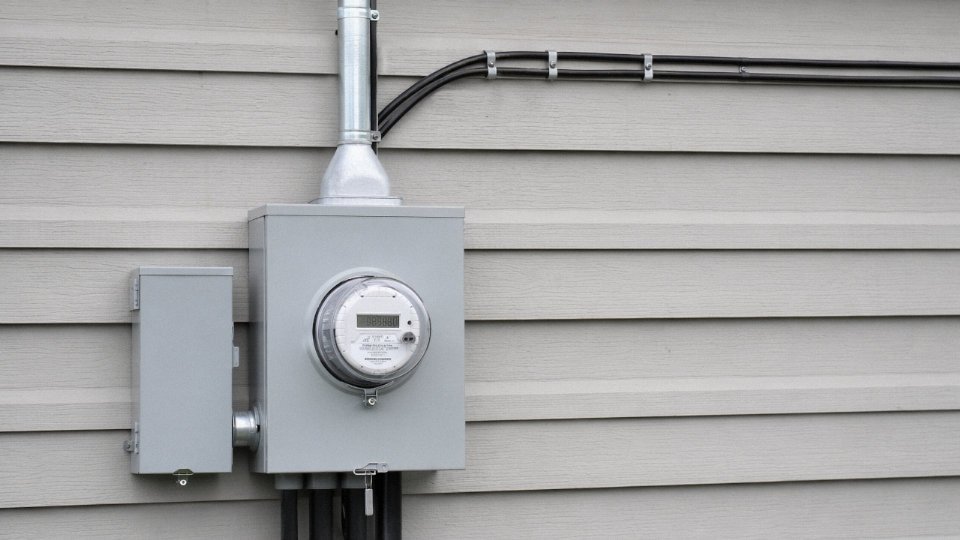
SEU (service entrance cable, unarmored) is the cable you see on overhead service drops — two insulated phase conductors wrapped by a bare concentric neutral braid that also serves as the mechanical support member. That braid is functional, not decorative. It carries neutral current continuously in normal operation. SEU is rated for wet locations and sunlight resistance, which matters because the span from the utility weatherhead down to the meter base is fully exposed. You will not use SEU inside a panel enclosure or as a subpanel feeder; it lacks the insulated neutral required by NEC 225 and 230 for those applications.
SER is a different animal. It’s a round, four-conductor cable — two insulated hots, an insulated neutral, and a bare equipment grounding conductor — designed specifically for panel-to-subpanel feeders and certain service entrance applications where a separate, insulated neutral is required. In a typical scenario: main panel in the garage, subpanel in a workshop addition 60 feet away, fed by 2 AWG aluminum SER. The round jacket pulls through conduit cleanly if the run is conduit-enclosed, or it can run exposed where code allows.
Why Aluminum Makes Financial Sense Here — and Nowhere Else
For branch circuits, aluminum has a bad reputation, largely earned by the disastrous use of 1350-series aluminum in 15 and 20 A wiring during the 1960s. That alloy crept at connections, oxidized aggressively, and caused fires. Nobody serious advocates aluminum for branch circuits today.
Service entrance is a completely different conversation. At 200 A service, the copper equivalent — 3/0 AWG — costs roughly two to three times as much per foot as 4/0 AWG aluminum, and it’s heavier, stiffer, and harder to pull. A 400 A residential service in copper would require 600 kcmil conductors that most two-man residential crews simply cannot handle efficiently. Utilities themselves run aluminum for exactly these reasons, and they’ve done it for decades without incident when terminations are correct.
The post-1972 AA-8000 series aluminum alloy changed the equation. It has better creep resistance and oxidation characteristics than 1350, and it’s now the standard for SE cable conductors listed to UL 854. When someone tells you “aluminum wiring is dangerous,” ask them which alloy and which application. For feeders and service entrance using AA-8000, properly torqued, the code accepts it fully — and so does every major utility.
AA-8000 series aluminum alloy conductors used in modern service entrance cable are code-compliant and safe for feeder and service entrance applications when properly terminatedTrue
NEC Article 310 and UL 854 both recognize AA-8000 series aluminum alloy as acceptable for service entrance and feeder conductors. The failures associated with aluminum wiring in the 1960s involved 1350-series alloy used in small-gauge branch circuits, not the current alloy formulations used in large-gauge service conductors.
Termination Is Where Failures Actually Happen
The majority of aluminum-related service failures traced in the field come down to one of three things: wrong terminal ratings, no anti-oxidant compound, or incorrect torque.
Aluminum oxidizes quickly when exposed to air, and aluminum oxide is a decent insulator. At an improperly prepared lug, that oxide layer increases resistance, resistance generates heat, heat accelerates oxidation, and the cycle compounds until you have a charred lug or worse. The fix is straightforward — apply listed anti-oxidant compound (Penetrox or equivalent) to the conductor before insertion, wire-brush the strands on larger conductors, and torque to the lug manufacturer’s specification. That last point gets skipped constantly. A 4/0 aluminum lug torqued to the copper spec will be under-torqued; the aluminum spec is usually higher. Check the label on the lug, not the breaker.
For 15 and 20 A circuits where aluminum is still occasionally used, you need CO/ALR rated devices. Standard receptacles and switches are not rated for aluminum termination regardless of what anyone tells you on a job site.
Sizing Reference: Residential Service Entrance Conductors
| Service Rating | Copper (AWG/kcmil) | Aluminum (AWG/kcmil) | Minimum Conduit (typical) |
|---|---|---|---|
| 100 A | 1 AWG | 2/0 AWG | 1.25 in |
| 150 A | 1/0 AWG | 3/0 AWG | 1.5 in |
| 200 A | 3/0 AWG | 4/0 AWG | 2 in |
| 400 A | 350 kcmil | 600 kcmil | 3 in (per set) |
Conduit sizing above assumes two current-carrying conductors plus a ground, standard PVC Schedule 40, and 40% fill. Actual conduit size depends on total conductor count, bend radius, and local utility requirements — always verify with the serving utility’s standards before ordering conduit.
The Demarcation Point and Utility Coordination
In most North American installations, the utility owns everything up to and including the meter socket. The homeowner (or their contractor) owns from the meter socket into the house. That demarcation point matters because the conductor on the utility side — the service drop or service lateral — is utility-furnished and utility-spec, typically with their own approved conductor products. The conductors from the meter base to the main panel are homeowner-owned and must meet NEC and local authority having jurisdiction requirements.
Internationally, this model varies significantly. In many markets, the utility extends ownership further into the building, or the connection is made with utility-supplied cable to a customer-specified main disconnect. Jinda supplies aluminum service entrance cable — including SEU and SER equivalents to IEC and local standards — for distribution utility projects and residential developments across Southeast Asia, the Middle East, and Africa, where rapid housing construction and grid expansion create demand for bulk, utility-grade conductor supply. The alloy and stranding requirements differ by market, which is why procurement conversations for international projects need to start with the local distribution utility specification, not just a generic cable datasheet.
Low-Voltage Wiring Systems: Data, Audio-Visual, Security, and Smart-Home Cable in the Modern Residence
Rough-in electricians often treat low-voltage work as an afterthought — something to hand off to a sub or finish later. That’s a mistake you can’t easily correct once drywall goes up. A residence wired with Cat 5e in 2012 that now needs 10-Gigabit backbone for a home office, a 4K video distribution system, and a PoE++ access control panel is looking at a full re-pull. The low-voltage infrastructure you install at rough-in is just as permanent as your branch circuits.
Ethernet Category Cable: Cat 5e Is Already Obsolete for New Work
The three grades you’ll encounter in residential specs are Cat 5e (100 MHz), Cat 6 (250 MHz), and Cat 6A (500 MHz). Cat 5e handles Gigabit Ethernet fine, but its headroom for PoE thermal performance and alien crosstalk rejection is thin when you’re bundling multiple runs. Cat 6 improved both, but the real shift happened with Cat 6A: it supports 10-Gigabit Ethernet at the full 100 m segment length limit — that 100 m figure is non-negotiable under TIA-568 and doesn’t stretch regardless of cable quality. For any new residential construction today, Cat 6A is the rational minimum. PoE++ devices (IEEE 802.3bt, up to roughly 90–100 W per port) generate meaningful heat in bundled runs; Cat 6A’s tighter construction and larger conductor cross-section (typically 23 AWG vs. 24 AWG in Cat 5e) handle that thermal load better. Budget roughly 15–25% more per foot over Cat 6, depending on jacket type and purchase volume — but you’re installing this once.
Cat 6A cable supports 10-Gigabit Ethernet at the full 100-meter segment length specified by TIA-568.True
TIA/EIA-568-C.2 and ISO/IEC 11801 both specify 100 meters as the maximum permanent link length for 10GBASE-T over Cat 6A, a limit that applies regardless of cable brand or installation quality.
Coaxial Cable: RG-6 Quad-Shield, Not RG-59
RG-6 quad-shield is the current standard for cable TV drops, satellite feeds, and over-the-air antenna runs. Its 75 Ω impedance matches the distribution amplifiers and splitters in the system; deviate from that and your signal reflections will show up as pixelation or signal dropout. The quad-shield construction — two foil layers plus two braid layers — matters most on satellite runs where frequencies push into the 950–2,150 MHz range. RG-59, which you still find in older homes and occasionally in cheap pre-wired kits, has higher attenuation per foot and thinner shielding. Don’t reuse it for new satellite or MoCA network runs. The performance gap is not theoretical; it shows up immediately in signal margin measurements.
In-Wall Audio Cable: The CL2/CL3 Rating Is a Code Requirement, Not Marketing
NEC Article 725 requires in-wall speaker and audio cable to carry a CL2 or CL3 jacket rating, which corresponds to specific flame-propagation limits tested under UL 1581. CL3 handles slightly higher voltage applications (up to 150 V) and is the common choice for in-wall runs. AWG sizing depends on amplifier impedance and run length — a rough working rule is that 16 AWG handles most residential runs under about 50 feet to an 8 Ω speaker without audible resistance losses, but longer runs or 4 Ω loads want 14 AWG or heavier. Installers who grab generic zip cord from a home center and stuff it in the wall are creating a code violation and a fire risk, not just an audio quality issue.
Security and Alarm Cable: Shield When EMI Is Present
Typical security wiring uses 22 AWG for door and window contacts and passive IR motion detectors, stepping up to 18 AWG for devices drawing more current — powered locks, request-to-exit sensors, some sirens. Unshielded cable works fine in clean environments. Run that same unshielded 22 AWG parallel to a dimmer circuit or near an HVAC variable-frequency drive, though, and you’ll get false triggers that are genuinely difficult to diagnose after the fact. Shielded cable with a drain wire, grounded at the panel end only, solves that. For smoke detector interconnect wiring specifically, follow the detector manufacturer’s specification — some require 18 AWG minimum for the interconnect leg, and that overrides generic alarm cable guidance.
Smart-Home Bus Wiring: Plan the Spine at Rough-In
KNX, RS-485-based systems, and BACnet installations increasingly appear in upper-tier residential projects, particularly in export markets where whole-home automation is a standard specification item rather than an upgrade. These systems use dedicated bus cable — typically 22 AWG twisted pair, sometimes shielded — run in a structured topology from a central controller. The critical planning point is that this cable needs to be roughed in alongside your data and power runs, not added later. Maximum bus segment lengths vary by protocol: KNX specifies a 1,000 m maximum per segment under normal conditions, RS-485 runs typically stay under 300–400 m in residential-scale applications depending on baud rate and termination.
Plenum vs. Riser vs. General Jacket: NEC Article 800 Is Not Optional
NEC Article 800 governs communications wiring and defines three jacket ratings based on where the cable is installed. CM (general use) is fine in standard residential wall cavities. CMR (riser-rated) is required in vertical shafts connecting floors, tested under UL 1581 for vertical flame propagation. CMP (plenum-rated) is required in air-handling spaces — any return-air plenum ceiling or raised floor used as an air return. The fire propagation test for CMP is NFPA 262, which is substantially more stringent. Plenum-rated cable costs 30–60% more than CM, depending on cable type and market conditions. Using CM cable in a plenum space isn’t a gray area; it’s a failed inspection and, more importantly, it’s a genuine smoke toxicity risk in a fire event. If you’re unsure whether a ceiling cavity qualifies as a plenum, check the HVAC drawings — the answer is there.
How to Select the Right Residential Cable: A Load-Calculation and Environment-Driven Decision Framework
Getting the cable type wrong in a residence isn’t just a code violation waiting to be found at inspection — it’s a latent fire risk, a guaranteed callback, and sometimes a full-wall demolition to fix. The five cable families covered in earlier sections each have a defined envelope. This framework collapses that into a repeatable selection sequence.
Step 1 — Identify the Application Zone First
Before you look at ampacity tables or price lists, map the physical environment. Where the cable lives determines what jacket, insulation rating, and mechanical construction are even permissible.
| Application Zone | Preferred / Compliant Types | Not Permitted |
|---|---|---|
| Interior dry wall cavity | NM-B | UF-B, bare conductors |
| Interior wet (bathroom, kitchen behind tile) | MC, conduit + THWN-2 | NM-B |
| Exposed interior (unfinished basement, garage wall) | MC, EMT + THHN, NM-B if protected | NM-B in high-traffic zones without protection |
| Exterior above-grade | MC, liquidtight conduit + XHHW | NM-B |
| Direct-burial outdoor | UF-B, RHW in schedule 40+ conduit | NM-B, standard THHN |
| Service entrance / meter-to-panel | SE, SER, SEU, or SER in conduit | NM-B, UF-B |
Some jurisdictions add a layer on top of this — Chicago has required conduit throughout residential construction for decades; parts of New York City and several Canadian municipalities follow suit. Always check local amendments before spec’ing.
Step 2 — Calculate Design Load and Pick Conductor Size
NEC Article 220 gives the baseline method. For a typical new single-family home, the simplified approach works:
- General lighting load: 3 VA per square foot of living space. A 2,000 sq ft home = 6,000 VA.
- Small appliance circuits: 1,500 VA per circuit; NEC requires at minimum two 20 A circuits for kitchen countertops.
- Fixed appliances: nameplate VA for each — electric range, dryer, water heater, HVAC, EV charger.
Sum those loads, apply the NEC demand factors, divide by voltage to get amperes, then cross the result against the NEC 310.12 or 310.16 ampacity tables. A 20 A kitchen circuit lands on 12 AWG NM-B under normal conditions. A 50 A range circuit needs 6 AWG. Don’t round down on ampacity just because the wire fits the connector.
Step 3 — Check Voltage Drop on Any Run Exceeding Roughly 50–60 Feet
The formula: VD = (2 × K × I × L) / CM
Where K = 12.9 for copper (resistivity constant), I = current in amperes, L = one-way run length in feet, CM = conductor cross-section in circular mils.
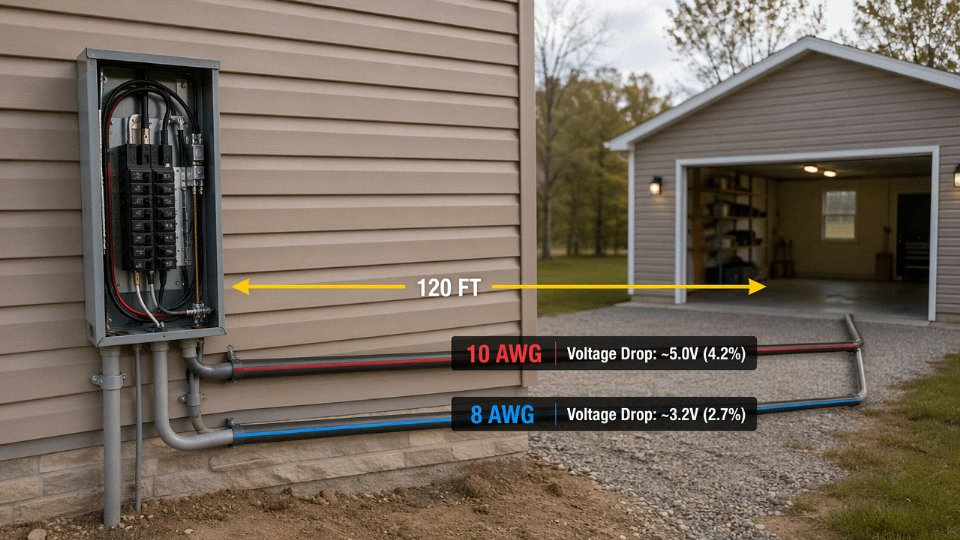
Worked example: You’re running a 30 A circuit to a detached garage 120 ft from the panel. At 10 AWG (10,380 CM):
VD = (2 × 12.9 × 30 × 120) / 10,380 ≈ 8.95 V, or roughly 7.5% on a 120 V circuit.
That exceeds the NEC-recommended 3% branch circuit limit and the combined 5% feeder-plus-branch limit. Upsize to 8 AWG (16,510 CM) and the drop falls to about 5.6 V — right around 4.7%, workable if the feeder drop is minimal, and clearly the right call if you’re running a 240 V circuit at 30 A where the 3% target is 7.2 V.
Step 4 — Verify Code and Jurisdiction Layer
NEC is the baseline in the US, but it’s a model code — what your AHJ (Authority Having Jurisdiction) adopts and amends is what actually governs. Internationally, the equivalents are IEC 60364 (most of continental Europe and many export markets), BS 7671 / Part P (UK), and AS/NZS 3000 (Australia and New Zealand). These frameworks differ on conductor sizing methods, grounding requirements, and permitted cable constructions. A cable that clears UL listing and NEC compliance does not automatically satisfy BS 7671 or AS/NZS 3000 without appropriate certification marks.
NM-B (Romex-type) cable accounts for 80–90% of all residential branch-circuit wiring installed in North American homesTrue
This figure is consistent with market data from the Insulated Cable Engineers Association (ICEA) and NEC adoption statistics showing NM-B as the dominant interior branch circuit method in single-family and low-rise multi-family construction across North America
Step 5 — Evaluate Total Installed Cost, Not Just Material Price
NM-B wins on raw material cost by a meaningful margin — roughly 20–40% less per linear foot than MC cable, depending on conductor gauge and regional pricing. But that comparison ignores the full picture. In a retrofit or remodel where walls must stay intact, conduit with THHN/THWN lets you pull new conductors without opening drywall. Over a 20–30 year building life, that flexibility has real dollar value. High-load density runs — EV charging circuits stacked in a shared conduit, for instance — are simply impractical with individual NM-B homerun cables.
The honest calculation is: material + labor + conduit and fittings + boxes and connectors + expected useful life + future adaptability. A developer building 200 identical townhouses may optimize hard on NM-B cost. A custom home builder in a seismic zone with strict local amendments may have no choice but MC throughout.
Decision Quick-Reference
| Zone | NM-B | MC/AC | UF-B | Conduit + THHN/XHHW | SE/SER |
|---|---|---|---|---|---|
| Dry interior cavity | Preferred | Compliant | Not typical | Compliant | N/A |
| Wet interior | Not permitted | Preferred | Not permitted | Preferred | N/A |
| Exposed basement/garage | Conditionally OK | Preferred | Not typical | Preferred | N/A |
| Exterior above-grade | Not permitted | Preferred | Not permitted | Preferred | N/A |
| Direct burial | Not permitted | Not permitted | Preferred | With rated conduit | N/A |
| Service entrance | Not permitted | Not permitted | Not permitted | Conduit option | Preferred |
How Jinda Supports Specification and Procurement
For contractors or procurement engineers sourcing cable at volume — a multi-unit development, a commercial residential project, or an international build — the spec sheet is only half the story. Jinda’s five manufacturing bases across China produce conductors and finished cable assemblies across UL, CE, IEC, and CCC certifications, which matters when a project spans multiple regulatory jurisdictions. Custom conductor configurations, specific jacket compounds for high-humidity or UV-exposed applications, and documentation packages for AHJ submissions are all part of what a serious manufacturer supports. Lead times, minimum order quantities, and logistics routing depend heavily on destination port and project schedule — that conversation should happen early in the design phase, not after the PO is already late.
International Residential Wiring Standards and How Cable Requirements Differ by Region
Sourcing residential cable for a cross-border project without understanding regional standards is a reliable way to fail an inspection, delay a handover, or ship an entire container of product that can’t legally be installed. The technical differences between regions go well beyond conductor color — they reflect distinct grid voltages, fault-protection philosophies, and decades of accumulated code precedent. Here’s how the major systems actually differ on the ground.
North America (NEC / CEC)
The U.S. National Electrical Code and Canadian Electrical Code both center residential branch-circuit wiring on NM-B. The 120/240 V split-phase grid means most lighting and outlet circuits run at 120 V, with 14 AWG copper on 15 A circuits and 12 AWG on 20 A circuits covering the vast majority of installations. What’s changed meaningfully in recent NEC cycles — the 2023 edition accelerated this — is the mandatory expansion of AFCI protection to virtually every living-space circuit and GFCI protection now required in garages, crawl spaces, unfinished basements, and outdoor locations. For a procurement engineer, this matters because listed NM-B cable itself doesn’t change, but the breaker and device requirements downstream do. Cable spec stays consistent; the protection infrastructure around it doesn’t.
United Kingdom and Ireland (BS 7671 / 18th Edition IET Wiring Regulations)
The UK equivalent of NM-B is flat twin-and-earth (T&E) cable — grey or white PVC sheath, two insulated conductors plus a bare earth, conforming to BS 6004. The 230 V single-phase grid and the ring final circuit topology (32 A ring using 2.5 mm² conductors, rather than North America’s radial branch circuit) means a single cable loop serves multiple outlets with a protective device at each end of the ring. It’s a topology that confuses North American engineers at first. Mandatory RCD protection across all circuits has been tightened progressively, and the 18th Edition requires surge protection devices in most new installations. Cable colour coding shifted in 2004 — brown live, blue neutral, green/yellow earth — and you still occasionally encounter old red/black wiring in retrofit work, which creates real identification hazards during extensions.
Europe (IEC 60364 / CENELEC Harmonized Standards)
Much of continental Europe favors individual insulated conductors — H07V-U (rigid, solid) or H07V-R (stranded) — pulled through conduit rather than pre-assembled sheathed cable. Larger residences commonly have 230/400 V three-phase supplies brought to the property, which influences feeder sizing significantly. The post-2004 harmonized colour code (brown, black, grey for phases; blue for neutral; green/yellow for earth) is now standard across EU member states, though legacy installations vary. XLPE insulation is gaining ground over PVC in new builds, particularly in Southern Europe where ambient temperatures during installation and service run higher than the cable standards’ reference conditions comfortably assume.
Australia and New Zealand (AS/NZS 3000 ‘Wiring Rules’)
TPS — thermoplastic-sheathed flat cable — is the functional equivalent of UK T&E and dominates Australian residential wiring at 230 V. The 2018 revision to AS/NZS 3000 mandated RCD protection on all final sub-circuits, not just wet areas. One requirement unique to Australia is termite-resistant cable sheathing in designated risk zones — roughly northern and central regions where subterranean termite activity is high enough to compromise standard PVC sheathing over time.
AS/NZS 3000:2018 requires RCD protection on all final sub-circuits in new residential installations in AustraliaTrue
The 2018 revision to AS/NZS 3000 extended mandatory RCD protection beyond wet areas to all final sub-circuits, a significant tightening from earlier editions.
Southeast Asia and the Middle East
This is genuinely the most fragmented region to source for. Vietnam, Indonesia, the Philippines, and Thailand each carry a mix of IEC-based national standards with British or European legacy influence layered in — a result of colonial-era infrastructure that never fully standardized. The Middle East, particularly Saudi Arabia and UAE, has moved toward IEC 60364 alignment but with local amendments, and the ambient temperature factor is not trivial: site temperatures during peak summer can push 45–50 °C, which derate standard PVC-insulated cable meaningfully and make XLPE insulation the more defensible choice for feeders and panel wiring. Jinda supplies cable into Vietnam, Indonesia, Saudi Arabia, and UAE across these varied requirements.
Certification Cross-Reference for Procurement Engineers
Matching a cable product to a regional requirement means knowing which listing or certification applies. The table below maps the key marks:
| Region | Applicable Standard | Cable Type | Key Certification / Mark |
|---|---|---|---|
| USA | NEC, UL 719 | NM-B | UL Listed (UL 719) |
| USA (conductors) | NEC, UL 83 | THHN/THWN | UL Listed (UL 83) |
| UK / Ireland | BS 6004 | T&E flat cable | BASEC or equivalent UKCA/CE |
| Europe (IEC) | IEC 60227 / 60502 | H07V-U, H07V-R, NYM | CE mark, HAR mark for harmonized types |
| Australia / NZ | AS/NZS 5000 | TPS, V-90 | SAA mark, RCM |
| Middle East / SEA | IEC 60364 + local | XLPE or PVC insulated | SASO (Saudi), ESMA (UAE), SNI (Indonesia) |
A procurement engineer ordering from Jinda for an overseas project should confirm which certification is required for the destination market before finalizing specs — not after production. Lead time to add a certification that wasn’t scoped at the quote stage can run 6–14 weeks depending on the body, and that delay typically falls on the project, not the supplier.
Frequently Asked Questions About Residential Wiring Cable Types
What is the most common type of cable used in residential wiring?
In North America, that’s NM-B — non-metallic sheathed cable, sold under the Romex brand name and several others. It handles roughly 80–90% of interior branch-circuit wiring in single-family homes, and that dominance isn’t going away anytime soon. The construction is simple, the installation is fast, and every electrician trained in the last 50 years knows it cold. In Commonwealth countries — the UK, Australia, New Zealand, much of sub-Saharan Africa — flat twin-and-earth PVC-sheathed cable fills essentially the same role, just with different conductor color conventions and termination hardware. The specific product differs; the logic is the same.
Can I use UF-B cable inside walls instead of NM-B?
Technically the NEC permits UF-B inside a building only where it transitions from a direct-burial or concrete-encased run — think a run that exits the ground and enters a garage wall. Using it as a drop-in substitute for NM-B throughout interior walls is not a good idea, and most inspectors will flag it. The solid-core, flood-filled jacket that makes UF-B weatherproof is genuinely difficult to strip cleanly, especially in cold weather when the PVC gets stiff. It costs more per foot than NM-B, and the rigid construction makes pulling it through tight bends miserable. Use it where it’s designed to go.
Is aluminum wiring actually safe?
This one gets conflated constantly. Modern AA-8000 series aluminum alloy conductors — used in service entrance cable, meter feeders, and large subpanel runs at 8 AWG and larger — are safe, code-compliant, and standard practice. The hazard that generated decades of bad press involved 1350-series aluminum used in 15 A and 20 A branch circuits during the 1960s and ’70s. That material creeps at terminations, oxidizes aggressively, and caused documented fire risks in residential panels across North America. Those are two completely different products and applications. If you’re running a 200 A service entrance in 2/0 aluminum SER cable with properly rated lugs, you’re fine.
Modern AA-8000 aluminum alloy is safe and NEC-compliant for service entrance and feeder conductors at 8 AWG and larger when terminated with listed aluminum-rated connectors.True
NEC Article 310 and UL standards recognize AA-8000 series aluminum for these applications; the historical fire risk involved 1350-series aluminum in small-gauge branch circuits, a distinct material and use case.
What gauge wire is used for a 20-amp circuit?
12 AWG copper. Full stop. 14 AWG is rated for 15 A circuits only — putting 14 AWG on a 20 A breaker means the wire can overheat before the breaker trips. That’s a code violation and a genuine fire hazard, not a gray area. Kitchen countertop circuits, bathroom outlets, and garage receptacles are almost always 20 A circuits, so 12 AWG NM-B is what you’ll see pulled there in practice.
What’s the difference between THHN and THWN?
THHN is rated for dry and damp locations at 90°C. THWN handles wet locations at 75°C — or 90°C if it’s THWN-2. In reality, nearly every spool of THHN you’ll buy from an electrical distributor today is dual-rated THHN/THWN-2, with both marks printed directly on the insulation jacket. Check the printing before you assume; it matters when you’re pulling wire through conduit that sees water infiltration in an outdoor or underground installation.
How deep does underground cable need to be buried?
Under NEC Table 300.5, UF-B direct-buried cable needs a minimum of 24 inches of cover in general residential areas. That drops to 12 inches if you’re running it inside rigid metal conduit (RMC or IMC), or 18 inches under a concrete slab. Local amendments sometimes push these deeper — the Pacific Northwest jurisdictions I’ve seen often add a couple of inches as a standard local amendment. Always pull the local code before you trench.
What cable do I need for a residential EV charger?
A Level 2 EVSE running at 48 A continuous needs a dedicated 60 A circuit. That typically means 6 AWG copper THHN pulled through conduit for runs inside the home or garage, or 6 AWG UF-B for any direct-burial segment between the house and a detached garage or driveway-mounted charging post. For runs over roughly 75–80 feet, some installers step up to 4 AWG to keep voltage drop under 3% — whether that’s necessary depends on the actual measured run length and the charger’s sensitivity to voltage sag. Don’t size this circuit tight; EV loads run long and continuous.
Can Jinda supply residential cable for international construction projects?
Yes. Jinda manufactures residential and commercial cable types across UL, IEC, BS, and AS/NZS standards from five production bases in China, with roughly 470,000 m² of manufacturing capacity. Bulk international orders come with full technical documentation, test reports, and the logistics infrastructure that a project requiring container-quantity supply actually needs. With active supply relationships across more than 50 countries, the company handles the compliance documentation and format requirements that vary by destination market — which, if you’ve ever tried to import cable into Australia or the Gulf states, you know is not a trivial part of the procurement process.