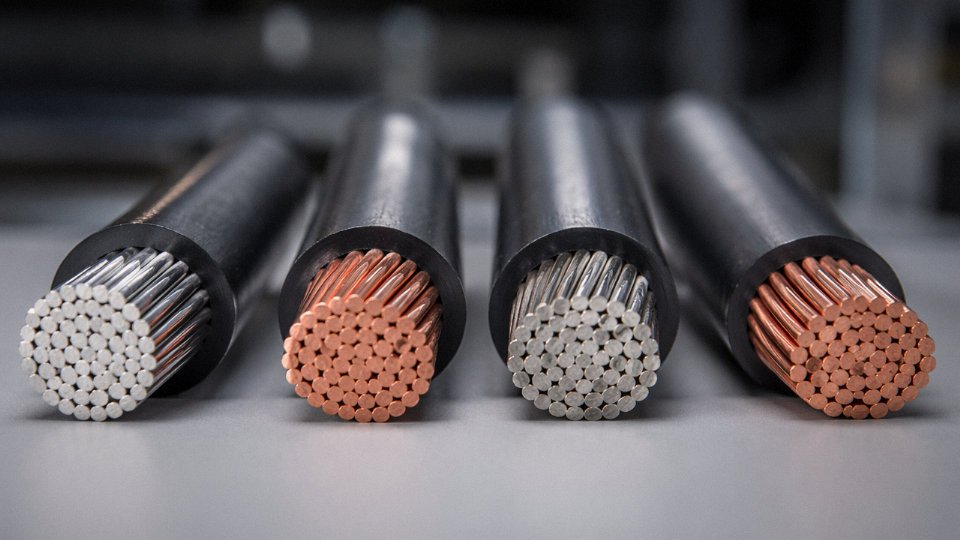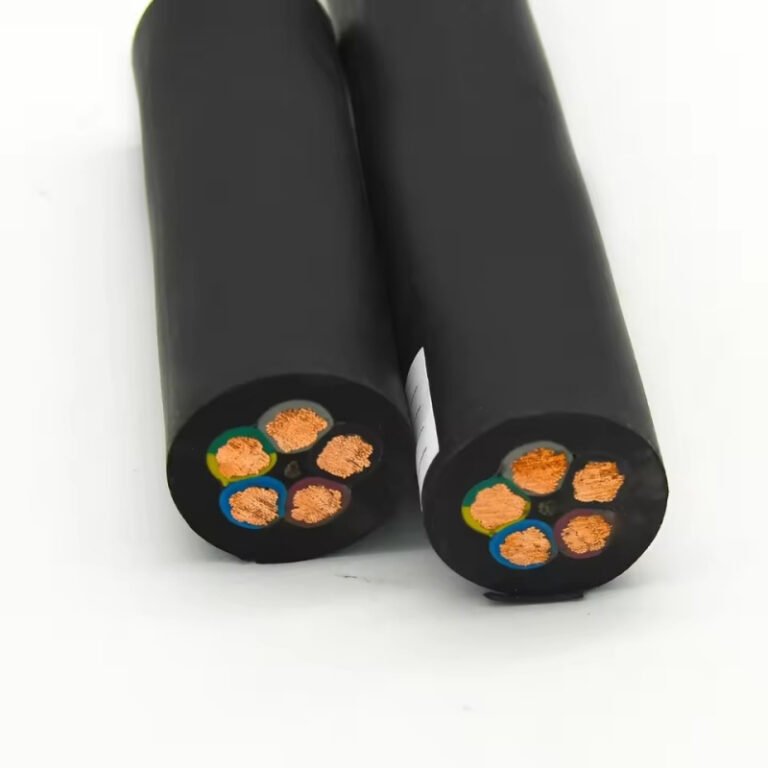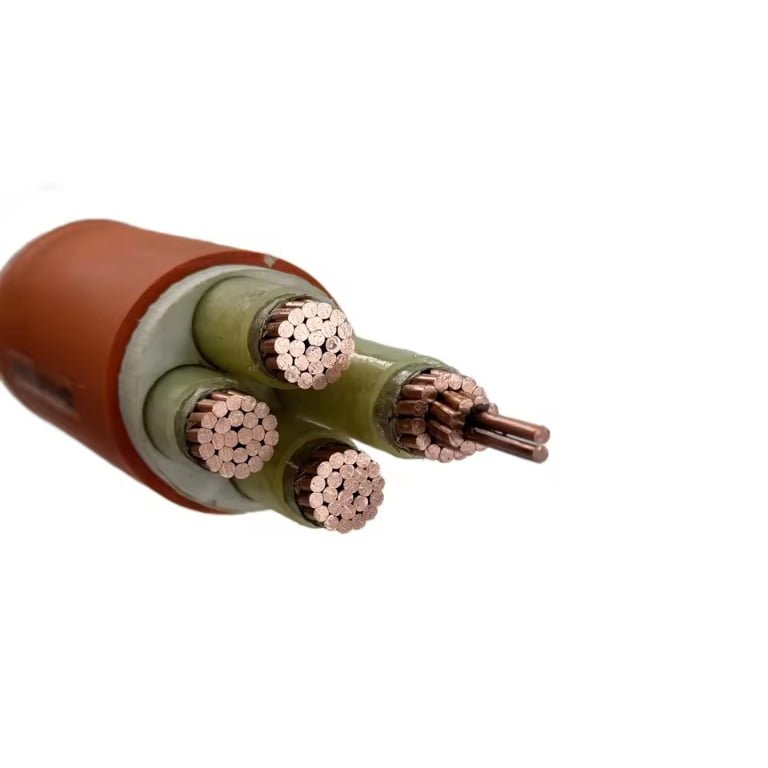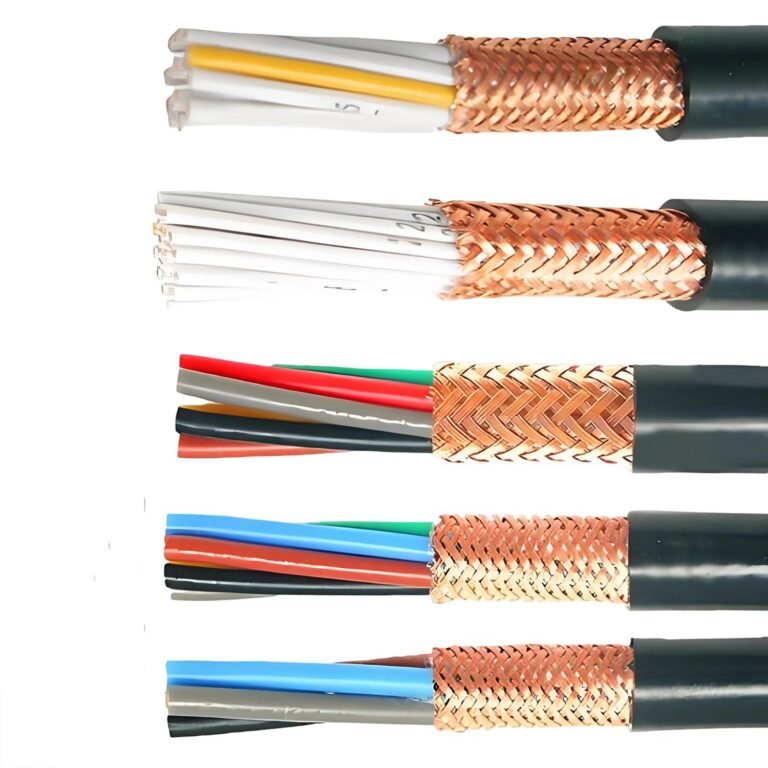
Pick the wrong conductor material and you will pay for it — not once, but every month. Undersized aluminum runs hot where copper would stay cool, voltage drop eats into motor efficiency, and in a high-cycle industrial environment that heat cycles the insulation until it cracks. Procurement managers who swap conductor materials purely on spot-price logic often discover the real cost six to eighteen months later, buried in maintenance hours, nuisance trips, and the occasional unplanned outage that nobody budgeted for.
Silver is the most conductive metal wire, rated at approximately 108% IACS and a resistivity of 1.59 × 10⁻⁸ Ω·m at 20°C — slightly better than annealed copper at 100% IACS (1.68 × 10⁻⁸ Ω·m). In practical wiring, copper dominates because it reaches roughly 94–95% of silver’s conductivity at a fraction of the cost. Aluminum sits around 61% IACS, and gold near 70% IACS. Superconducting materials technically achieve near-zero resistivity, but only below cryogenic critical temperatures that rule them out for most plant and building applications.
What makes this question harder than it looks is that “most conductive” shifts meaning depending on whether you’re measuring by volume, by weight, by cost per unit of conductance, or by long-term performance in a specific environment. A wire that wins on raw conductivity can still lose badly in the field if it oxidizes, work-hardens, or simply bankrupts the project budget. The real answer involves a comparison most textbooks skip.
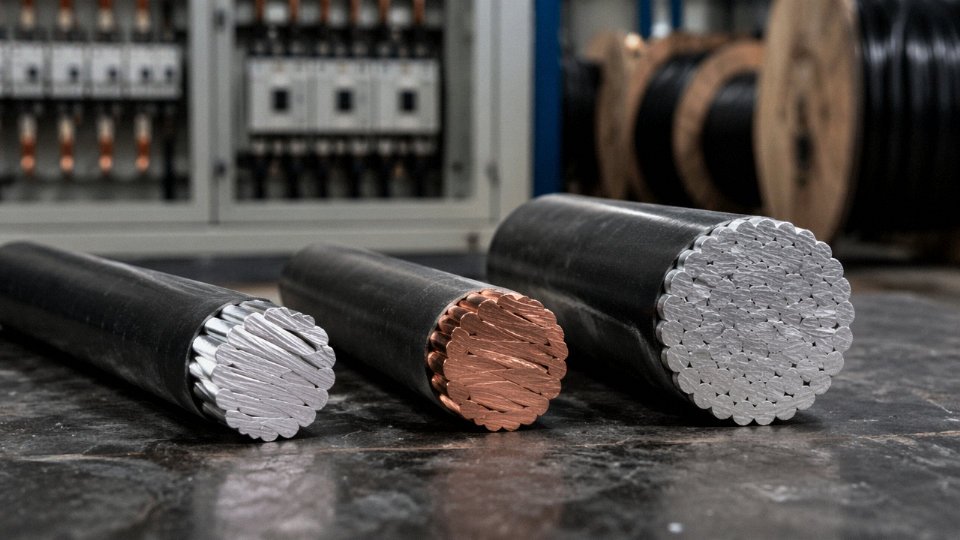
Full Conductivity Rankings: Silver, Copper, Gold, Aluminum, and Specialty Alloys Compared
Here is the reference table engineers actually need — not a simplified two-column comparison, but the full set of parameters that matter when you’re specifying conductor material for a real project.
| Material | Conductivity (S/m) | Resistivity at 20°C (Ω·m) | IACS (%) | Density (g/cm³) | Melting Point (°C) | Relative Cost Index |
|---|---|---|---|---|---|---|
| Silver | 6.30 × 10⁷ | 1.59 × 10⁻⁸ | ~108 | 10.49 | 962 | ~60–80× copper |
| Copper, annealed (C11000) | 5.96 × 10⁷ | 1.68 × 10⁻⁸ | 100 | 8.96 | 1085 | Baseline |
| Copper, hard-drawn | ~5.77 × 10⁷ | ~1.73 × 10⁻⁸ | ~97 | 8.96 | 1085 | Baseline |
| Oxygen-free copper (C10100) | ~5.99 × 10⁷ | ~1.67 × 10⁻⁸ | ~101 | 8.96 | 1085 | ~1.1–1.3× copper |
| Tinned copper | ~5.77–5.93 × 10⁷ | ~1.69–1.73 × 10⁻⁸ | ~95–99 | 8.97–9.05 | ~1080 | ~1.05–1.1× copper |
| Silver-plated copper | surface ~6.1–6.3 × 10⁷ | — | up to ~103 (HF) | ~8.9–9.0 | ~960–1080 | ~1.1–1.4× copper |
| Gold | 4.10 × 10⁷ | 2.44 × 10⁻⁸ | ~70 | 19.32 | 1064 | ~50–60× copper |
| Aluminum 1350 series | ~3.50 × 10⁷ | ~2.82 × 10⁻⁸ | ~61 | 2.70 | 660 | ~0.3–0.4× copper (by weight) |
| Aluminum alloy 8000 series | ~3.41–3.50 × 10⁷ | ~2.84–2.92 × 10⁻⁸ | ~59–61 | 2.71–2.75 | 655–660 | ~0.3–0.4× copper (by weight) |
| CCA (copper-clad aluminum) | ~3.77–3.80 × 10⁷ | — | ~61–63 | ~3.6–4.0 | — | ~0.5–0.65× copper |
| Phosphor bronze (C51000) | ~0.87–1.04 × 10⁷ | ~9.6–11.5 × 10⁻⁸ | ~15–18 | 8.86 | ~950–1050 | ~1.2–1.8× copper |
Density and melting point depend on alloy grade and temper. Cost indices shift with commodity markets — treat them as order-of-magnitude guides, not quotes.
Why Silver Sits at the Top — and Stays There
Silver’s edge isn’t marginal. At roughly 108% IACS, it beats annealed copper by a measurable amount, and the physics behind it are straightforward: silver has a single outer valence electron in a face-centered cubic lattice that produces unusually low electron scattering. Fewer collisions means less resistive loss. At room temperature, no naturally occurring metal conducts electricity better.
Silver is the most electrically conductive metal at room temperatureTrue
Silver's electrical conductivity of approximately 6.30 × 10⁷ S/m and resistivity of 1.59 × 10⁻⁸ Ω·m at 20°C are the highest and lowest respectively among all pure metals, confirmed across standard references including NIST and IEC material data.
The practical problem is cost. Silver runs roughly 60–80 times the price of copper per kilogram depending on spot markets, which makes specifying solid silver conductors for anything beyond very short, high-stakes runs economically irrational. You’ll see silver wire in specialized RF applications, some medical sensors, and certain military-grade contacts — not in a factory wiring harness.
Copper: Why It Became the Global Default
Annealed copper at 100% IACS is the reference point everything else is measured against, and that’s not an accident. It sits close enough to silver in conductivity that the gap rarely matters operationally, while costing a fraction of the price and offering excellent ductility, solderability, and compatibility with every standard termination system on the market.
Hard-drawn copper — the kind you’ll find in magnet wire and some building wire — drops to roughly 97% IACS because cold working introduces lattice dislocations that scatter electrons. Not a catastrophic loss, but worth knowing when you’re doing a tight voltage-drop calculation on a long run. Oxygen-free copper (C10100) pushes back above 101% IACS by eliminating oxide inclusions that impede electron flow; it matters most in high-frequency or signal-integrity applications rather than power runs.
Gold: Wrong Metric, Right Material
Gold’s ~70% IACS rating looks poor on this table, and for bulk power conduction it genuinely is — nobody uses gold wire for motor leads. What gold does exceptionally well is resist oxidation. Copper forms a resistive oxide layer over time; gold doesn’t. In a connector that will be mated and unmated hundreds of times over fifteen years in a humid or mildly corrosive environment, that stable contact resistance is worth far more than the conductivity difference. That’s why gold plating is standard on high-reliability PCB edge connectors, aerospace avionics contacts, and medical implant leads. You’re not paying for conductivity; you’re paying for surface stability.
Aluminum’s Weight Argument
Aluminum at ~61% IACS looks like a downgrade from copper, and on a cross-section-for-cross-section basis it is. But aluminum’s density is roughly 2.70 g/cm³ against copper’s 8.96 g/cm³ — about one-third as heavy. To carry the same current, you need a larger aluminum cross-section, typically about 1.6× the copper area, but the resulting aluminum conductor still weighs roughly half as much per unit length. On a 200 km overhead transmission line, that weight difference determines whether the tower spacing and foundation design is feasible. ACSR and all-aluminum alloy conductors dominate the transmission grid for exactly this reason. On a plant floor, though, the larger conduit fill and bulkier terminations often tip the decision back toward copper.
The 8000-series aluminum alloys (8030, 8176) were developed specifically to address the creep and connection failure problems that plagued early aluminum building wire in the 1960s and 70s. They trade a small slice of conductivity — barely noticeable in practice — for better mechanical behavior at terminations.
Specialty Conductors: Where the Tradeoffs Get Interesting
Silver-plated copper is worth understanding properly. At DC or low frequency, the silver skin adds almost nothing useful — current flows through the full cross-section and the conductivity is just a weighted average of the two materials. At high frequencies, skin effect pushes current to the outer surface, where the silver layer is sitting. Above roughly 1–5 MHz (the exact frequency depends on plating thickness, usually 1–5 µm in practice), silver-plated copper behaves closer to silver than copper. Coaxial cables and RF interconnects use it for this reason.
CCA is a cost-reduction material, full stop. It delivers roughly 61–63% IACS and is lighter than solid copper, which works fine for certain low-power applications like some consumer electronics cables and antenna feedline. Terminate it carelessly with copper-spec tooling and you’ll get cold joints and elevated contact resistance. Procurement teams sometimes push CCA substitutions to hit a price target — that’s fine if the end application genuinely tolerates it, but it needs to be an engineering decision, not just a purchasing one.
Phosphor bronze barely registers on a conductivity table at ~15–18% IACS. It’s not here as a conductor — it’s here as a spring contact material. High fatigue strength, corrosion resistance, and consistent spring force over millions of cycles are what matter for connector springs and brush contacts, not conductivity.
How Temperature, Frequency, and Physical Form Change Which Wire Is Actually Most Conductive
The static ranking table is a starting point, not a specification. In practice, the conductor that measures best at 20°C on a lab bench may not be the best choice once you account for operating temperature, signal frequency, drawing history, and how the wire is physically constructed. Each of those variables shifts the effective conductivity — sometimes enough to change your material decision entirely.
Temperature Coefficient of Resistance
Copper’s conductivity is not a fixed property. It degrades as temperature rises, following a coefficient of roughly 0.393% per °C. Run a copper conductor at 90°C — typical for a cable operating near its rated limit inside a conduit bundle — and you’ve lost about 27% of the room-temperature conductivity you were counting on. That’s not a rounding error; it’s the difference between a cable that runs comfortably and one that enters a thermal runaway loop where rising resistance generates more heat, which raises resistance further.
Aluminum has a similar coefficient (around 0.4% per °C), so neither material magically holds its ranking at elevated temperatures. Silver actually has a slightly lower TCR, which is one underappreciated reason it appears in military and aerospace wiring specs beyond just its absolute conductivity advantage at 20°C. In high-temperature environments — motor windings, locomotive cabling, downhole oil and gas instrumentation — specifying a material based only on the room-temperature IACS number will produce a miscalculation.
Skin Effect and Why Silver-Plated Copper Exists
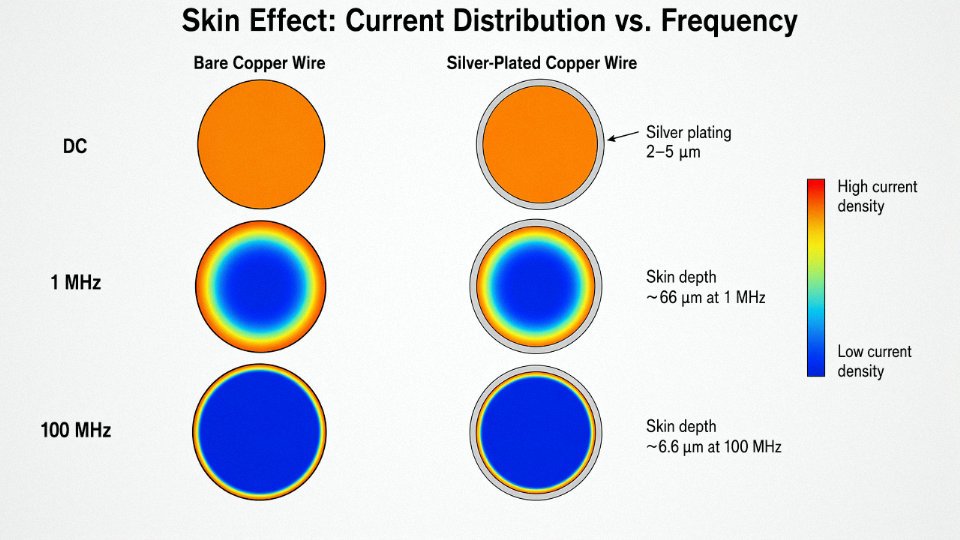
At DC and low power frequencies, current distributes across the full cross-section of a conductor. Above roughly a few kHz, current begins migrating toward the outer surface — the skin effect. At 1 MHz, the skin depth in copper is approximately 66 µm. By 100 MHz you’re looking at under 7 µm. The bulk of the wire’s cross-section is essentially idle; only a shallow annulus carries the current.
Silver-plated copper wire is an engineering response to exactly this physics. The silver layer — typically 2–5 µm thick in RF wiring, thicker in some microwave coax — sits precisely where the current flows at high frequencies. Since silver’s conductivity is about 6% higher than copper’s, the composite wire is effectively more conductive than bare copper at RF and microwave frequencies, despite being cheaper than solid silver. Specifying bare copper for a 500 MHz signal path because “copper is the standard conductor” ignores this entirely.
Hard-Drawn vs. Annealed: Temper Is Not a Minor Detail
The IACS standard is defined on fully annealed copper for a reason. Cold-drawing introduces crystallographic dislocations that scatter electrons, reducing conductivity by roughly 2–3% compared to annealed material. That gap seems small, but in busbar fabrication or high-current distribution applications where you’re optimizing every milliohm, receiving hard-drawn conductor when you specified soft-annealed is a real procurement error. Always state the temper explicitly in your purchase order — “copper conductor” alone does not cover it.
Stranding Geometry and Compaction
A stranded conductor has marginally higher resistance per unit length than a solid conductor of identical nominal cross-section. The individual strands follow a helical path, which adds real length — typically 1–3% depending on lay ratio. Compact stranding and Milliken-segment construction (common in large power cable cross-sections above roughly 500 mm²) reduce this penalty by minimizing the lay angle. It’s a small correction but not a negligible one when you’re sizing for voltage drop over a long run.
Cryogenic Behavior and Superconductors
Below their critical temperatures, certain materials — niobium-titanium alloys around 9–10 K, YBCO ceramics up to roughly 90 K — reach zero DC resistance. That is a categorically different conductivity regime, not just a better point on the same curve. MRI magnets and particle accelerator beam lines run on this principle today. Grid-scale superconducting cables are operational in pilot projects. The engineering constraints shift entirely: you’re now managing cryogenic infrastructure rather than conductor cross-section.
The practical rule is straightforward. A specification listing only “copper conductor” is incomplete for any application that isn’t dead simple. Always define conductor material, temper, operating temperature range, and signal frequency range together — in that order, every time.
Silver-plated copper wire is effectively more conductive than bare copper at RF frequencies above approximately 1 MHz due to the skin effect concentrating current in the outer silver layer.True
At 1 MHz, skin depth in copper is roughly 66 µm. A silver plating of 2–5 µm still carries a significant portion of the current, and silver's higher conductivity (~6.30 × 10^7 S/m vs. copper's ~5.96 × 10^7 S/m) reduces surface resistance compared to bare copper, improving high-frequency transmission performance.
Copper Wire in Depth: Why It Dominates 90% of Global Wiring and Where Its Limits Appear
Copper isn’t the most conductive metal — silver holds that title — but it comes close enough (roughly 94–95% of silver’s conductivity) while costing a fraction of the price and offering a combination of ductility, solderability, and mechanical toughness that no other common conductor matches. That’s the short version of why, after more than a century of electrical infrastructure build-out, copper still accounts for the overwhelming majority of wire and cable produced globally.
Copper Grades: Not All “Copper Wire” Is the Same
The grade matters more than most procurement specs acknowledge. ETP copper (electrolytic tough-pitch, designation C11000) is the industry workhorse — roughly 99.9% Cu, achieving approximately 100% IACS in annealed form. It’s cost-effective to draw, readily available worldwide, and covers the vast majority of building wire, power cable, and motor winding applications. The catch: ETP copper contains a small amount of dissolved oxygen (around 200–400 ppm). In hydrogen-rich atmospheres — certain heat treatment furnaces, some petrochemical environments — that oxygen can react with hydrogen at elevated temperatures and cause grain-boundary embrittlement. Not common, but when it happens it’s catastrophic and not immediately obvious in routine QC.
Oxygen-free copper (OF, C10200; or OFE, C10100) eliminates that risk and nudges conductivity marginally higher — OFE grades can reach roughly 101% IACS. You’ll find it specified for aerospace wiring, high-vacuum equipment, and premium audio/instrumentation cables where outgassing is a concern. The price premium over ETP is real, typically 10–25% depending on market conditions, so specifying OFE for general building wire is waste without engineering justification.
Silver-bearing copper (SE grades, with 80–300 ppm Ag) is a different tool entirely. The silver addition has almost no effect on conductivity but meaningfully improves creep resistance at elevated temperatures — important for motor windings and transformer coils running at 130–180°C continuously. If you’re winding a motor that will see sustained high temperatures and you’re using standard ETP, you may see gradual conductor deformation over years that contributes to insulation damage.
Standards That Actually Govern Supply Quality
IEC 60228 defines conductor cross-sections and construction classes — Class 1 (solid), Class 2 (stranded), Classes 5 and 6 (flexible) — and sets DC resistance limits that must be met at 20°C. It’s the baseline for international supply contracts; if a supplier can’t provide IEC 60228 test certificates, that’s a red flag, not a minor paperwork gap. ASTM B3 governs soft annealed copper wire in the US market, specifying tensile strength, elongation, and resistivity. ASTM B8 covers concentric-lay stranded conductors. For drawn wire stock used across European supply chains, EN 13602 is the relevant reference. These standards aren’t interchangeable in every detail — a procurement manager specifying IEC for a European project and receiving ASTM-certified product should verify the differences before acceptance.
For very large cross-sections above roughly 1,000 mm², standard round stranding becomes impractical to handle and terminate. Milliken-segment conductors — where the cable is built from multiple sector-shaped stranded segments, each individually wrapped — are the standard solution for high-voltage power cables in this range. Getting the lay geometry right affects both flexibility and current-carrying capacity in ways that a simple cross-section area calculation won’t capture.
Where Copper’s Dominance Actually Breaks Down
There are four situations where you should seriously reconsider defaulting to copper.
Overhead long-distance transmission lines. Aluminum’s conductivity is only about 61% of copper’s by volume, but per unit weight it conducts better. Aluminum conductors weigh roughly one-third as much as copper for the same resistance. For spans of hundreds of kilometers, that weight difference determines tower spacing, foundation costs, and sag calculations. ACSR (aluminum conductor steel-reinforced) has been the standard for overhead transmission for decades. Copper overhead lines exist but are increasingly rare outside specialized short-span applications.
Sustained temperatures above roughly 150–200°C. Standard copper insulation systems — PVC, XLPE — can’t survive these temperatures anyway, but even the conductor itself raises concerns. Continuous operation at the high end of this range accelerates oxidation and can affect the long-term mechanical integrity of terminations. Applications in this zone typically move toward nickel-plated copper, high-temperature alloys, or specific mineral-insulated cable constructions.
Weight-critical aerospace harnesses. A commercial aircraft wiring harness can run to hundreds of kilometers of wire. Shaving conductor weight by switching from copper to aluminum-conductor or silver-plated copper alloy wire, even with slightly larger cross-sections to compensate for lower conductivity, can result in meaningful system-level weight savings. The trade-offs — termination complexity, corrosion management at aluminum joints, cost — are real, so this isn’t a casual substitution.
Corrosive atmospheres with sulfur or ammonia. Copper sulfide formation in high-sulfur environments (certain rubber processing plants, some mining operations, pulp mills) can degrade conductors and terminations steadily. Tinned copper provides a barrier and helps — tinning reduces conductivity slightly, typically to 95–99% IACS, which is acceptable for most applications. In severe ammonia-rich environments (fertilizer plants, some food processing facilities), copper can corrode aggressively enough that alternative materials or fully sealed cable constructions warrant evaluation.
ETP copper (C11000) achieves approximately 100% IACS in annealed form and is the standard grade for general power cable and building wire applications.True
IEC 60228 and ASTM B3 specify annealed copper conductivity at or near 100% IACS (International Annealed Copper Standard), which is defined by this material. C11000 ETP copper is the dominant commercial grade meeting this benchmark.
Copper Procurement: The LME Volatility Problem
Copper is a globally traded commodity on the London Metal Exchange, and price swings of 20–40% within a single year are not unusual — copper moved from around $7,500/tonne to over $10,000/tonne and back within a 12–18 month window during the commodity cycle of the early 2020s, and similar swings have occurred multiple times historically. For large cable projects with long procurement timelines, this creates real budget exposure. Buyers managing significant copper volumes should understand how cable manufacturers price conductor content — usually at or near LME plus a fixed conversion premium — and whether the supplier offers price-fixing mechanisms tied to contract signing versus delivery. Substituting aluminum conductors where technically feasible is sometimes as much a commodity-risk decision as an engineering one.
How Jinda Processes Copper Conductors
At Jinda’s production facilities, copper conductor processing runs from rod breakdown through a multi-pass wire drawing sequence — reducing rod from initial diameters typically in the 8 mm range down to target wire gauges, with intermediate and final annealing in controlled-atmosphere furnaces to restore ductility and hit target conductivity. Annealing temperature and atmosphere control directly determine whether the finished wire meets the elongation and tensile requirements in IEC 60228 and EN 13602; under- or over-annealing shows up immediately in tensile testing. Stranding equipment handles IEC Class 2 through Class 6 configurations, with lay pitch and direction controlled to specification.
Quality verification on each production batch includes DC resistance measurement per IEC 60228 (confirming the IACS rating is actually achieved, not just assumed), tensile strength and elongation testing, and dimensional checks. Conductor lots that fail resistance spec don’t get insulated and pushed through — that’s the kind of in-process gate that separates reliable international supply from commodity-price-only sourcing.
Silver and Silver-Plated Wire: When Paying the Premium Is Justified by Engineering Logic
The 8% conductivity advantage silver holds over annealed copper — 108% IACS versus 100% — looks unimpressive on paper. For most plant wiring, it genuinely isn’t worth the cost discussion. But “most applications” isn’t the same as “all applications,” and getting that distinction wrong cuts both ways: under-specify in an RF system or precision instrument and you bleed insertion loss and measurement error; over-specify in a standard power run and you’ve just paid a 60–80× per-kilogram silver premium for nothing measurable.
Where the 8% Actually Compounds Into Something Real
At DC or low AC frequencies, 8% better conductivity means 8% lower resistive losses for the same conductor cross-section — useful in very-high-current bus bars where even a few milliohms of resistance difference translates to kilowatts of heat and associated cooling load over continuous operation. More significant is what happens at high frequencies. Above roughly 10 kHz, current crowds toward the conductor surface (skin effect), and the effective conducting depth shrinks fast — down to tens of micrometers at MHz-range frequencies. At that point, the surface conductivity is what matters, not the bulk. A silver surface, whether solid or plated, outperforms bare copper precisely where the physics demands it most.
RF transmission lines are the clearest example. In coaxial feeders and waveguide assemblies operating above 100 MHz, the difference between a silver-plated inner conductor and a bare copper one can mean 0.05–0.2 dB insertion loss improvement per meter, depending on frequency and geometry. That sounds trivial until you’re cascading twenty meters of cable in a test bench or an aircraft avionics run, and suddenly the signal budget is tight.
Silver-Plated Copper Wire: The Practical Middle Ground
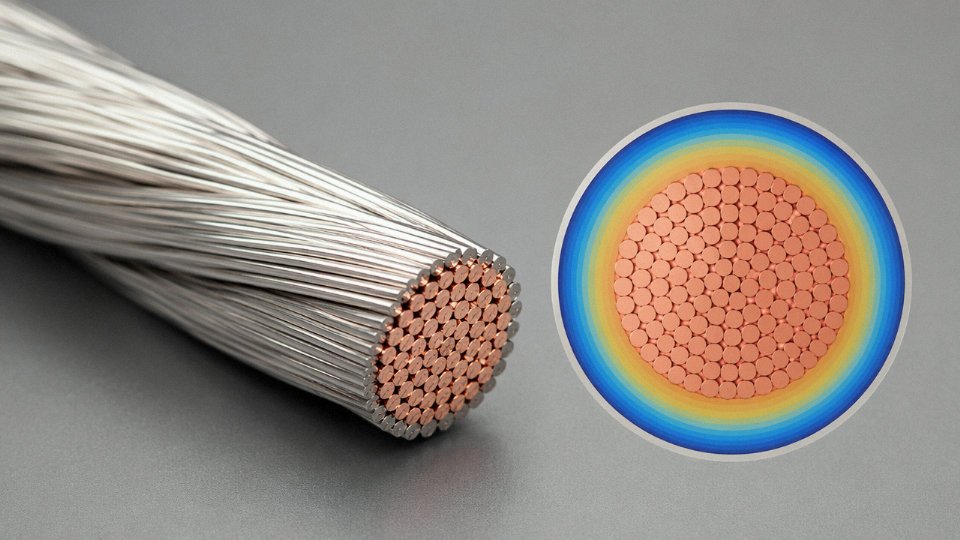
Solid silver wire is rare outside specialized laboratory, medical, or defense procurement. What engineers actually specify most of the time is silver-plated copper (SPC) — a copper core with a silver coating typically 1–5 µm thick, applied by electroplating or hot-dipping. The copper carries the bulk current at low frequencies, the silver handles skin-depth current at high frequencies, solderability improves noticeably versus bare copper, and the material cost stays manageable.
MIL-W-22759 and the AS22759 series (the aerospace equivalents) mandate SPC conductors for aircraft wiring for exactly these reasons. Avionics bays see ozone, humidity cycling, and occasional sulfur contamination from hydraulic fluid vapors. Bare copper oxidizes and the oxide layer both raises contact resistance and complicates rework soldering. Silver plating resists atmospheric oxidation at cabin temperatures and holds up through hundreds of thermal cycles without the contact degradation you’d see on unplated wire.
Silver-plated copper wire is specified in MIL-W-22759 / AS22759 for aircraft wiring partly because silver plating improves solderability and resists oxidation in avionics environments, not only for conductivity.True
AS22759 series and MIL-W-22759 specifications explicitly cover silver-plated conductors for aerospace wiring, and the plating's corrosion resistance and solderability are cited alongside electrical performance in the rationale for the spec.
Medical and Scientific Instrument Applications
Solid silver wire turns up in implantable device leads, EEG/ECG electrodes, and MRI gradient coil windings. The conductivity matters, but so does biocompatibility — silver has an established safety record in implantable contexts, unlike some higher-conductivity alloys that would never clear a regulatory pathway. Silver’s well-documented antibacterial surface behavior is a secondary benefit in external medical contact applications, though it shouldn’t be the primary specification driver.
MRI gradient coils are a useful case: they carry pulsed currents with very fast rise times, meaning significant high-frequency content, in an environment where heat dissipation inside the bore is genuinely constrained. The combination of skin-effect benefit and reduced resistive heating makes SPC or solid silver the engineer’s logical choice there — not a luxury call.
The Environmental Limits Engineers Often Miss
Silver’s oxidation resistance at room temperature is real, but it has a ceiling. Above roughly 200°C, silver forms silver oxide (Ag₂O) and conductivity suffers. Worse is a sulfur-rich atmosphere — paper mills, rubber processing facilities, some chemical plants — where silver sulfide (Ag₂S) forms a black, semiconducting surface layer that can increase contact resistance by orders of magnitude. If your application involves elevated temperature or sulfur exposure, verify the environment before writing silver into the spec. In those cases, gold-plated or nickel-plated copper often makes more sense despite the conductivity trade-off.
The Procurement Calculation
A realistic lifecycle cost comparison isn’t complicated, just disciplined. Estimate total conductor mass for the project. Apply the current silver-to-copper price ratio — it runs roughly 60–80× on a per-kilogram basis, though it’s volatile enough that you should pull a live price on any order over a few hundred kilograms. Then quantify the engineering gain: efficiency improvement in watts saved over operating life, signal integrity margin in dB, maintenance interval extension from better corrosion resistance, or regulatory compliance value (AS22759 compliance is non-negotiable in certified aircraft; the cost comparison becomes irrelevant). In high-frequency electronics and aerospace, the engineering case usually closes the argument on its own. In general industrial power wiring, it almost never does. The mistake to avoid is letting procurement pressure push you toward SPC in an application where bare copper would perform identically, or — equally wasteful — letting cost pressure push you toward bare copper in an RF or avionics application where the rework and signal budget consequences cost far more than the plating premium ever would.
Aluminum Wire and Aluminum Alloy Conductors: Maximizing Conductivity per Unit Weight for Power Transmission
Aluminum gets dismissed in a lot of procurement conversations — “just use copper” is a reflex answer that costs projects real money and, in large-scale transmission work, genuine structural problems. The dismissal is understandable historically, but it’s based on 1960s branch-circuit wiring failures that have essentially nothing to do with how aluminum conductors are specified and installed today.
Weight-Adjusted Conductivity: The Number That Actually Matters for Overhead Lines
At 20°C, aluminum sits at roughly 61% IACS compared to annealed copper’s 100%. To carry the same current, an aluminum conductor needs approximately 1.6× the cross-sectional area. That’s the figure critics stop at. What they don’t continue to is this: aluminum’s density is about 2.70 g/cm³ versus copper’s 8.96 g/cm³ — a ratio of roughly 3.3:1. Work through the math and an aluminum conductor sized to match copper’s ampacity still weighs somewhere around 48–52% as much per meter, depending on exact alloy and stranding geometry. On a 400 kV overhead line spanning hundreds of kilometers, that weight difference is the entire structural engineering story. Tower spacing, foundation loads, conductor sag at high ambient temperature — all of it changes when you cut conductor weight nearly in half.
Conductor Types and Where Each Gets Specified
AAC (all-aluminum conductor) suits shorter spans with moderate mechanical load — urban distribution feeders, for instance, where spans are short and corrosion matters more than tensile strength. AAAC uses 6201 alloy, which trades roughly 5–7 percentage points of conductivity (down to around 52–53% IACS) for substantially better tensile strength and sag performance; it’s common in coastal or high-wind zones where conductor tension is the design driver.
ACSR is the global workhorse for high-voltage overhead transmission. The steel core handles mechanical load; the aluminum strands carry current. It’s not elegant, but it’s been proven for decades across every climate. ACAR splits the difference — aluminum alloy reinforcement instead of steel, slightly better conductivity than ACSR for the same mechanical rating, useful in corrosive environments where the steel core in ACSR creates galvanic concerns.
For underground MV and HV distribution, XLPE-insulated aluminum cables have become the default specification in many European and Asian utility projects above roughly 70–95 mm². The insulation system matters far more than the conductor material at those voltage levels, and the cost differential versus copper is simply too large to ignore at scale.
8000-Series Alloys and the Building Wiring Problem
The early 1350-series aluminum branch circuit wiring installed in residential construction during the 1960s did cause fires. The root cause wasn’t that aluminum conducts poorly — it’s that 1350 aluminum creeps under the clamping force of standard screw terminals, loosens over time, and the resulting high-resistance connection arcs. The fix wasn’t to abandon aluminum; it was to develop AA-8030 and AA-8176 alloys, which incorporate small additions of iron, silicon, and copper to dramatically improve creep resistance and connection stability. Used with aluminum-rated devices (CO/ALR-rated receptacles and switches), these alloys have a solid safety record in commercial building risers and feeder circuits.
AA-8000 series aluminum alloys have significantly better creep resistance than 1350-series aluminum, making them safer for building wiring terminationsTrue
The alloy additions (primarily iron in AA-8030, iron and silicon in AA-8176) reduce the cold-creep behavior that caused connection loosening and overheating failures in 1350-series residential wiring. This is well-documented in UL and NEMA testing and is the basis for NEC acceptance of AA-8000 conductors in branch circuits.
Renewable Energy Applications: Where Aluminum’s Cost Advantage Compounds
On a 50 MW ground-mount solar farm, the DC collection cabling — running from combiner boxes back to the inverter skids — can easily total 80–120 km of conductor. Above about 95 mm², specifying aluminum instead of copper typically cuts conductor material cost by 40–55%, depending on prevailing copper spot prices and aluminum rod premiums at the time of procurement. The weight reduction also matters practically: installers pulling aluminum cable through cable trays on tracker structures aren’t fighting the same fatigue that comes with large copper conductors. Wind farm array cables tell a similar story. At multi-megawatt scale, these aren’t marginal savings.
Termination Practice — Where Aluminum Failures Actually Happen
Aluminum oxide (Al₂O₃) forms within seconds of the conductor being cut. It’s hard, it’s electrically resistive, and it does not go away on its own. Every aluminum termination that fails in service traces back to one of three mistakes: no oxide-inhibiting compound applied, wrong connector (copper-rated only, not aluminum-rated), or incorrect torque — usually under-torque during installation or torque not re-checked after the first thermal cycle.
The correct sequence: abrade the conductor end with a wire brush or abrasive pad, apply an oxide-inhibiting compound (Noalox or equivalent) immediately, use a connector rated and listed for aluminum, and torque to the connector manufacturer’s specification — typically verified with a calibrated torque wrench, not feel. On large compression lugs, a hydraulic crimper with the correct die set is non-negotiable.
Bimetallic contact deserves a specific callout. Aluminum in direct contact with copper or steel in the presence of moisture corrodes galvanically, and faster than most people expect in humid or coastal environments. Specify bimetallic transition compression lugs — aluminum barrel on the conductor side, tin-plated copper on the equipment or busbar side — wherever the two metals meet. This isn’t an edge case; it’s a standard detail that gets skipped under schedule pressure and causes failures within a few years.
| Connection Scenario | Correct Approach | Consequence of Skipping |
|---|---|---|
| Aluminum conductor to copper busbar | Bimetallic Al-Cu compression lug, oxide inhibitor | Galvanic corrosion, resistance rise, eventual thermal event |
| Aluminum to aluminum terminal block | Al-rated connector, correct torque, oxide inhibitor | Creep loosening, intermittent high-resistance connection |
| Aluminum to steel grounding conductor | Tin-plated or stainless hardware, isolation compound | Accelerated corrosion at contact point, grounding continuity loss |
| Large aluminum lug (≥95 mm²) | Hydraulic crimper, correct die, torque verified | Cold weld failure under load cycling |
Aluminum is not a compromise material. Used correctly — right alloy, right connector, right installation practice — it’s the engineering-correct choice for a wide class of power applications where copper’s weight and cost make it the wrong answer.
Selecting the Right High-Conductivity Wire for Industrial, Infrastructure, and Renewable Energy Projects
All the conductivity data in the world doesn’t help if you’re still staring at a blank spec sheet. The real engineering work is translating material properties into a defensible conductor choice for a specific project category — one that survives procurement review, passes inspection, and doesn’t produce a warranty call two years into operation.
Application-by-Application Decision Matrix
The table below is a working reference, not an academic exercise. Each recommendation reflects the dominant failure mode in that application category, not just raw conductivity.
| Application | Recommended Conductor | Key Standards | Primary Reason |
|---|---|---|---|
| Low-voltage building wiring (≤1 kV) | Annealed copper | IEC 60227, UL 83, NEC Art. 310 | Flexibility, termination reliability, branch-circuit code compliance |
| Medium/high-voltage power cable (1–35 kV) | Stranded copper or AA-8000 aluminum alloy | IEC 60502-1/-2, ASTM B800 | Cross-section can compensate for aluminum’s lower conductivity; weight matters in long pulls |
| Overhead transmission lines | ACSR, AAAC, or ACCC | IEC 61089, ASTM B232 | Weight-per-span is the binding constraint; aluminum wins decisively |
| Industrial motor and drive wiring | Flexible stranded copper (Class 5/6, IEC 60228) | IEC 60204-1, UL 508A | Vibration, repeated flexing — aluminum work-hardens and cracks at terminals |
| Renewable energy — solar PV, wind collection | Tinned stranded copper (DC strings); aluminum for MV collection feeders | IEC 62930 (PV), IEC 60502 | UV/moisture exposure; tinned copper resists sulfur corrosion; aluminum reduces MV feeder cost |
| RF and high-frequency electronics | Silver-plated copper or solid silver | MIL-W-16878, IEC 60096 | Skin effect concentrates current at conductor surface — silver plating is cost-effective here |
| Harsh-environment / high-temperature (>90°C continuous) | Nickel-plated copper or silver-plated copper | UL 3122, IEC 60800 | Oxidation resistance at elevated temperature; bare copper degrades rapidly above roughly 150°C |
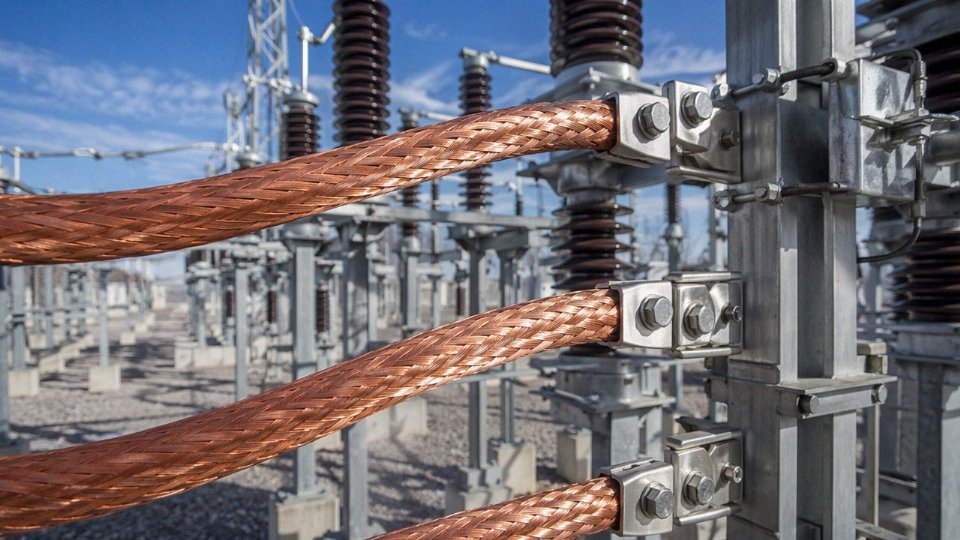
Cross-Section Sizing Changes the Economics Entirely
A lower-conductivity material at a larger cross-section can match — sometimes beat — a higher-conductivity material at smaller cross-section on a whole-life cost basis. This matters most when you’re choosing between copper and aluminum for runs longer than 50 m or cables heavier than 35 mm².
Here’s a worked example. A 200 A load, 400 V AC three-phase, cable run of 150 m. Compare 95 mm² copper (resistivity ≈ 1.68 × 10⁻⁸ Ω·m) against 150 mm² aluminum (resistivity ≈ 2.82 × 10⁻⁸ Ω·m):
Voltage drop for copper: roughly 2.4–2.6%, well inside the 3% limit most industrial specs allow. Aluminum at 150 mm² comes in around 2.5–2.8% — comparable. The aluminum cable weighs perhaps 35–40% less per meter, which cuts installed cost on long conduit pulls and reduces structural loading on cable trays. Depending on current LME copper pricing versus aluminum (copper typically trades at 3.5–5× the aluminum price per tonne, though this shifts), the aluminum option can save 20–40% on conductor material cost for that run alone, even after paying for the larger cross-section.
For a 150 m, 200 A run at 400 V AC, 150 mm² aluminum achieves similar voltage drop performance to 95 mm² copper while typically offering lower total installed cost.True
The calculation follows standard IEC voltage drop formulas using published resistivity values; total installed cost advantage depends on current copper/aluminum commodity prices and local installation labor rates.
The catch: aluminum demands proper compression lugs, anti-oxidant compound at every termination, and — in North America — NEC Article 310 compliance, which sets 10 AWG as the residential branch circuit minimum for aluminum. Skip the termination protocol and you get a creep-and-loosen failure that shows up as a hot joint, not a trip.
Regulatory Constraints That Override Engineering Preference
Standards sometimes take the decision out of your hands. UL 1581 governs wire insulation but indirectly affects conductor coating choices; RoHS and REACH restrict certain plating chemistries (cadmium plating, for instance, is effectively banned for most European projects regardless of its technical performance). IEC 60502 specifies conductor construction classes for medium-voltage cables. If you’re supplying into a project with a specific utility specification — and most transmission and distribution owners have their own overlay specs on top of IEC or ANSI — get the utility document before finalizing conductor material, not after.
Future-Proofing: EV Charging and Data Centers vs. Renewable MV Feeders
Two trends are pulling in different directions right now. EV charging infrastructure and hyperscale data centers are driving hard demand for flexible stranded copper, Classes 5 and 6 per IEC 60228, from roughly 16 mm² up to 240 mm² — the flexibility and termination density requirements simply don’t suit aluminum. Meanwhile, utility-scale solar and wind collection networks are pushing large aluminum MV cables (typically 95–400 mm², 6–35 kV) as the cost-correct choice for underground collection feeders. If your project sits in both worlds — a solar-plus-storage site with an on-site data center, say — you need separate conductor strategies for the DC/LV side and the MV export side.
Working With Jinda on Custom Conductor Specifications
For projects that fall outside catalog standards — unusual temperature ratings, non-standard stranding classes, dual-certification requirements (IEC plus UL, for instance) — Jinda’s technical team works from a project specification sheet that you submit upfront. That document should include the application category, conductor cross-section range, operating voltage, temperature class, relevant standards, and any coating or plating requirements. From there, Jinda provides conductor material recommendations backed by IACS certification test data, not just nominal claims. Factory acceptance testing is available for medium and large orders, covering conductor resistance per IEC 60228, dimensional checks, and coating adhesion tests. For international shipments, the team coordinates documentation to support customs clearance in destination markets — a detail that sounds minor until your project commissioning date is three weeks out and a container is sitting in port.
Quality Certification, Testing Standards, and What to Verify Before Accepting a High-Conductivity Wire Delivery
The counterfeit conductor problem is not a fringe concern. Industry audits across Southeast Asia, the Middle East, and parts of Latin America have consistently found that somewhere between 20% and 50% of cables sampled in spot checks contain conductors that fall short of their stated cross-section or are not the alloy they claim to be. A reel labeled “2.5 mm² annealed copper” may contain 2.1 mm² of actual copper — sometimes less — or a copper-clad aluminum core sold as solid copper. The ampacity consequences are real: a 2.5 mm² conductor derated to 2.1 mm² runs hotter under load, accelerates insulation degradation, and in a poorly ventilated conduit bundle can become a fire source years after installation. By then the cable supplier is untraceable and the liability lands on whoever signed the acceptance.
Conductivity Verification: The Four-Wire Method
The most practical field-verifiable test is four-wire (Kelvin) resistance measurement, standardized in IEC 60468 and ASTM B193. You need a calibrated milliohm meter, a measured sample length (1 m minimum, 5–10 m preferred for accuracy), and a thermometer to correct to 20°C.
The formula: ρ = (R × A) / L
Where ρ is resistivity in Ω·m, R is measured resistance in Ω, A is the nominal cross-sectional area in m², and L is sample length in m.
Quick worked example: you measure a 10 m length of nominally 2.5 mm² conductor and get R = 72 mΩ at 22°C. Correct to 20°C using the copper temperature coefficient (roughly 0.00393 per °C): R₂₀ ≈ 72 × [1 − 0.00393 × (22−20)] ≈ 71.4 mΩ. Then ρ = (0.0714 × 2.5×10⁻⁶) / 10 = 1.785×10⁻⁸ Ω·m. That is noticeably above copper’s 1.68×10⁻⁸ Ω·m and closer to CCA territory. IEC 60228 sets a maximum resistance of 7.41 mΩ/m for 2.5 mm² Class 1 conductor — if your 10 m sample reads above 74.1 mΩ, it fails outright, no geometry measurement needed.
Four-wire resistance measurement per IEC 60468 is sufficient to detect undersized or misrepresented conductor material without destructive cross-section analysis.True
The measured resistance of a known length, corrected for temperature, directly yields resistivity and can be compared against IEC 60228 maximum resistance limits, which serve as a pass/fail criterion for both conductor size and material type.
Cross-Section Verification: Gravimetric Is More Reliable Than Optical
For stranded conductors, optical measurement of individual strand diameter and counting strands is tedious and error-prone — strand lay angle introduces real geometric uncertainty. The gravimetric method is cleaner: cut a known length (say, 1 m), strip the insulation cleanly, weigh the bare conductor, and divide by the material density and length. For annealed copper, density is 8.89–8.92 g/cm³. A genuine 2.5 mm² × 1 m copper conductor should weigh roughly 22.2–22.3 g. If it weighs 18–19 g, something is wrong — either undersized or a lower-density alloy (aluminum is 2.70 g/cm³, CCA lands somewhere in between depending on cladding ratio, typically 3.6–4.5 g/cm³).
Certifications Worth Requesting — and What They Actually Cover
Not all paperwork is equal. Here is what to ask for and what each document does and does not guarantee:
| Document | What It Certifies | What It Does Not Prove |
|---|---|---|
| IEC 60228 conductor test report | Resistance per unit length at 20°C meets class specification | That your specific delivery lot was tested, unless lot number matches |
| KEMA / CESI / UL third-party certificate | Independent lab verified a sample against a specific standard | Ongoing production consistency; certificates can be months old |
| CE Declaration of Conformity | Manufacturer self-declares EU directive compliance | Third-party verification unless KEMA/CESI certificate backs it |
| ISO 9001 certificate | Quality management system meets the standard | Product performance directly; it certifies process, not output |
| SGS / Bureau Veritas factory inspection report | At time of inspection, processes and documentation were in order | What happens six months later under a different production manager |
Mill test certificates — the documents that trace a production reel to a specific heat number, raw material lot, and lab test result — are the single most important piece of paperwork for high-stakes procurement. Any supplier who cannot produce these with lot numbers that match the reel labels on your delivery is a serious risk, regardless of how good their website looks.
Jinda’s Quality Assurance Infrastructure
At Jinda’s production bases, each production reel carries a traceable identifier linked to the raw material certificate for the copper rod input, the conductor resistance test result per IEC 60228, dimensional verification records, and insulation spark test data. Conductor resistance is measured on every production drum — not sampled. Tensile strength and elongation are tested per IEC 60889 for annealed copper wire, with elongation targets that depend on conductor class and cross-section. The spark test voltage applied to finished insulated wire is determined by insulation type and wall thickness, typically in the 4–15 kV range for common industrial grades.
Traceability runs both directions: if a quality issue surfaces after delivery, Jinda can pull the raw material certificates, the conductor test strip chart, and the production shift records for that specific reel. That kind of backwards traceability is what separates a manufacturer from a trading company reselling product they cannot fully document.
Red Flags Before You Commit to a Large Order
Pricing more than 15–20% below current LME-referenced copper market rates for an equivalent specification should immediately raise questions — the math of raw material cost makes it essentially impossible to produce compliant copper conductor that cheaply without cutting something. Other warning signs: vague or inconsistent answers about conductor alloy grade (is it ETP copper, C11000, or something else?), test certificates that list only generic standard numbers without sample identifiers or test dates, and an inability to provide a factory audit report from a recognized third party within a reasonable lead time.
Any single one of these is worth a follow-up question. Two or more together, and you should walk away or insist on independent third-party testing of a pre-shipment sample before releasing payment — the cost of that test is trivial against the cost of pulling and replacing non-compliant cable from a completed installation.
Frequently Asked Questions About Wire Conductivity
What is the most electrically conductive metal in the world?
Silver holds the top position at room temperature — conductivity of approximately 6.30 × 10^7 S/m, or roughly 108% IACS. No common structural metal beats it. That said, copper sits at about 5.96 × 10^7 S/m (~94.6% of silver’s value) and costs somewhere between 1/60th and 1/80th as much per kilogram depending on market conditions and form factor. For nearly every wiring application outside aerospace, medical, and high-frequency RF work, that cost delta makes the conductivity gap irrelevant. Silver’s real engineering value shows up in plating and contact surfaces, not in bulk conductor runs.
Silver is the most electrically conductive metal at room temperature, with a conductivity of approximately 6.30 × 10^7 S/m (~108% IACS).True
This is consistent with published values from NIST and standard electrochemistry references. Copper at ~5.96 × 10^7 S/m is the closest common alternative but measurably lower.
Is silver wire worth using instead of copper for home wiring?
No. The roughly 8% conductivity advantage does not come close to justifying 60–80× higher material cost in residential or commercial building wiring. Voltage drop and ampacity in a home circuit are governed by conductor cross-section, run length, and the relevant code’s minimum sizing rules — not by marginal conductivity differences between silver and ETP copper. Standard annealed copper wire compliant with IEC 60228 or NEC requirements handles every normal building wiring application correctly and economically. Anyone trying to sell silver wire for household circuits is either confused or selling something.
Why does aluminum dominate overhead power lines instead of copper?
Weight, mostly. Aluminum’s density runs around 2.7 g/cm³ versus roughly 8.9 g/cm³ for copper. Aluminum needs a larger cross-section to carry equivalent current — about 1.6× the area — but the finished conductor still comes out weighing somewhere near half as much per meter as the copper equivalent. At transmission scale, across spans of 300–500 m between towers, that weight reduction cuts tower loading, reduces foundation engineering requirements, and limits thermal sag. The economics compound quickly over hundreds of kilometers of line. ACSR (aluminum conductor steel reinforced) adds a steel core for tensile strength without sacrificing the weight advantage significantly, which is why it has been the default overhead transmission conductor for decades.
What does IACS mean and why should procurement engineers care?
IACS — International Annealed Copper Standard — defines the conductivity of commercially pure annealed copper at 20°C as the 100% reference point. Every other conductor material gets rated as a percentage of that benchmark. So when a datasheet says 1350-H19 aluminum alloy is 61% IACS, it means that material conducts 61% as much current as annealed copper for the same cross-section under the same applied voltage. It is a clean, dimensionless way to compare materials across suppliers, countries, and standards bodies. When a supplier quotes a non-standard alloy with a suspiciously high IACS rating, that number deserves verification — test it against IEC 60468 or ASTM B193 before accepting the claim.
Does operating temperature change which material is most conductive?
Yes, and the effect is not trivial. All common metallic conductors have a positive temperature coefficient of resistance — resistance rises as temperature climbs. Copper loses roughly 0.393% of conductivity per degree Celsius. Run a copper conductor at 90°C instead of 20°C and its effective conductivity has dropped noticeably; your ampacity calculations need to account for that, and most installation codes already build in derating factors for exactly this reason. Above roughly 150°C, standard annealed copper starts losing mechanical integrity as well, and you move into territory where nickel-plated copper, copper-nickel alloys, or purpose-built high-temperature conductors become appropriate. At the opposite extreme — temperatures approaching absolute zero — certain materials become superconductors with resistance essentially at zero. Niobium, for instance, hits its superconducting critical temperature around 9.2 K. Practical for MRI machines and particle accelerators; not applicable to your motor winding.
What is CCA wire and is it a safe substitute for copper?
CCA (copper-clad aluminum) is an aluminum core with a thin copper layer bonded to the surface. Its bulk conductivity sits around 61–63% IACS — close to aluminum, not copper — because at DC and low AC frequencies, current distributes through the entire cross-section, not just the copper skin. The copper cladding helps with solderability and connector compatibility, which is why CCA found a niche in consumer electronics and low-current signal cables. It should not be substituted for solid copper in power wiring without fully recalculating ampacity for the actual CCA cross-section. In some markets, mislabeled CCA has been sold as copper wire — another reason incoming inspection matters.
How do you verify a copper wire actually meets its conductivity specification?
Measure DC resistance on a known conductor length using a four-wire (Kelvin) resistance bridge — a standard digital micro-ohmmeter from Keysight or similar will do the job. Calculate resistivity from that measurement, then compare against the maximum resistance per kilometer values in IEC 60228 for the stated cross-section and conductor class. If the wire exceeds the IEC limit, it is either undersized or made from lower-purity copper. For bulk procurement, require mill test certificates tied to the specific production lot, with conductor resistance results from a third-party accredited laboratory. A reputable manufacturer should provide this without hesitation.