Specifying the wrong cable — or worse, using a generic term like “wire” when the procurement doc means “multi-core armoured cable” — causes real problems: delayed shipments because the supplier quoted something different, insulation failures six months into service, and warranty disputes that nobody wins. These aren’t edge cases. On a busy plant floor or in a fast-moving construction project, vocabulary mismatches between engineers, procurement teams, and suppliers translate directly into rework costs and unplanned downtime.
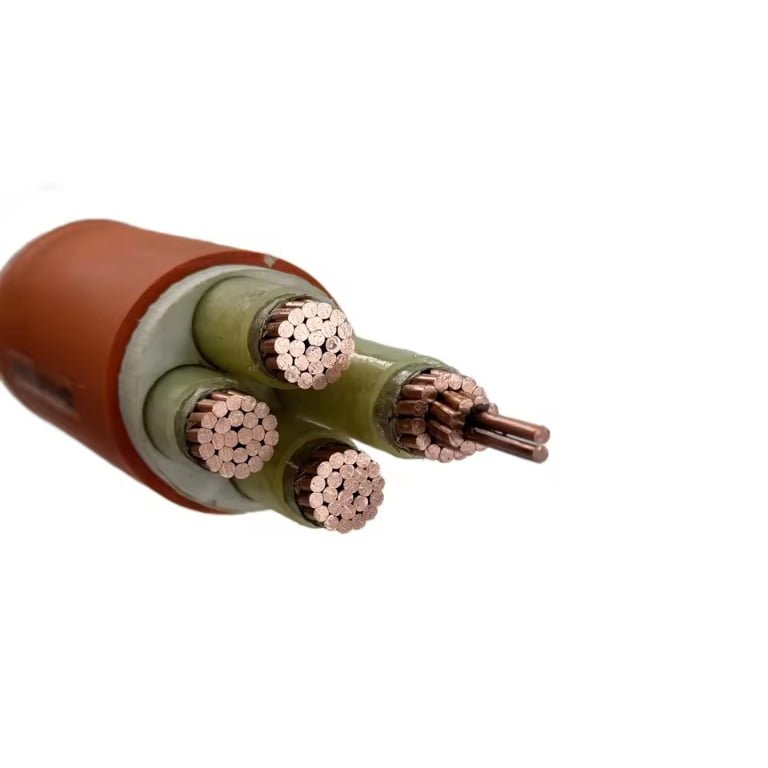
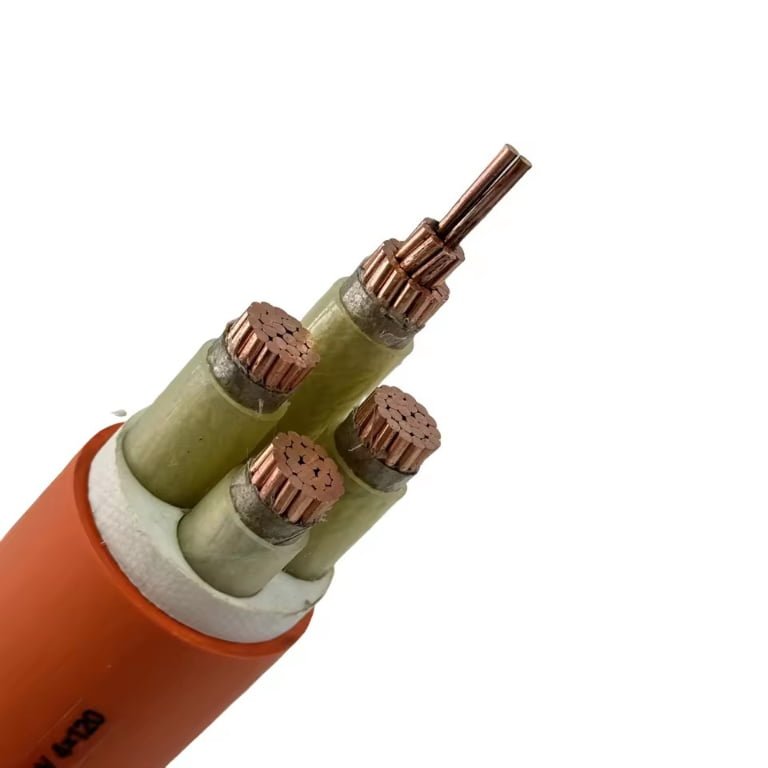
A cable is an assembly of one or more insulated conductors — typically copper or aluminium — laid up together and protected by an overall sheath, armour, or both. A wire is a single conductor, insulated or bare. The distinction matters because cables are designed for fixed or semi-fixed installation carrying power or signals over distance, while wires often refer to individual conductors within a cable or to short interconnection runs. The terms overlap in trade usage, but technically they are not interchangeable.
What makes this genuinely interesting — and worth reading past the definition — is how much engineering sits inside that simple distinction. The conductor class alone (IEC 60228 spans Classes 1 through 6, from solid round rod to ultra-flexible stranded) changes how a cable behaves under flexing, how it terminates, and what its resistivity profile looks like over a run. Copper sits at 1.72 × 10⁻⁸ Ω·m, aluminium at 2.82 × 10⁻⁸ Ω·m — a gap that doesn’t sound dramatic until you’re sizing a 200-metre feeder run and the voltage drop starts eating your motor’s starting torque.
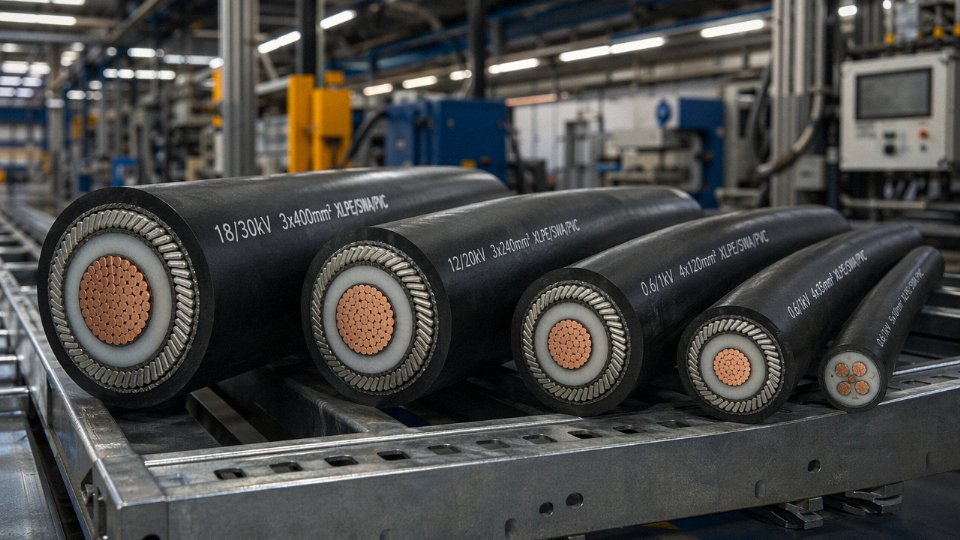
Core Structural Components of a Cable Wire: Conductor, Insulation, Shielding, and Jacket Explained
A cable wire is not a single material — it’s a precisely engineered stack of functional layers, each doing a specific job. Understanding what those layers are, and why each one is specified the way it is, is what separates an informed procurement decision from one that creates problems six months into a project.
Conductor: Copper vs. Aluminum Is Not a Simple Choice
The conductor carries the current, so its resistivity governs everything downstream — voltage drop, heat generation, and ultimately cable sizing. Copper sits at 1.72 × 10⁻⁸ Ω·m resistivity; aluminum is 2.82 × 10⁻⁸ Ω·m, roughly 64% higher. In practice that means an aluminum conductor needs to be upsized by approximately one to two cross-section steps to match a copper cable’s ampacity in the same installation condition.
So why use aluminum at all? Weight and cost. Aluminum conductors run roughly 30–40% cheaper than copper equivalents (though this gap fluctuates with commodity markets — check LME pricing the week you’re actually buying), and they’re about 50% lighter by weight per meter. That matters enormously in overhead transmission lines, large-scale utility distribution, and any installation where structural support loading is a concern. Copper remains the default for control wiring, flexible cables, and any application where conductor cross-section is tightly constrained by conduit fill or termination hardware.
Under IEC 60228, conductors are classified Classes 1 through 6 based on construction and flexibility — Class 1 being solid round conductors suited for fixed wiring, up through Class 5 and 6 for fine stranded flexible conductors used in portable equipment and drag chains. Specifying the wrong class for a flex application is a common source of premature conductor fatigue failure.
Insulation: Temperature Rating Is the Starting Point, Not the Whole Story
XLPE (cross-linked polyethylene) has largely displaced PVC in medium- and high-voltage cables because it handles continuous operating temperatures up to 90°C and, critically, withstands short-circuit temperatures up to around 250°C. It also has excellent dielectric properties and resists moisture absorption well. PVC remains widespread in low-voltage building wiring — it’s cheap, flame-retardant grades are readily available, and it processes easily — but its 70°C continuous rating limits it in higher-load or thermally constrained runs.
EPR (ethylene propylene rubber) is the material to reach for when you need flexibility combined with moisture resistance: mining cables, shipboard wiring, and anything that sees regular flexing in damp environments. PTFE is in a different league — rated to 260°C continuous and chemically inert to almost everything — but the cost is significant and it’s really only justified in aerospace, high-temperature industrial furnace wiring, or certain instrumentation applications.
Shielding and Armor: Two Different Problems
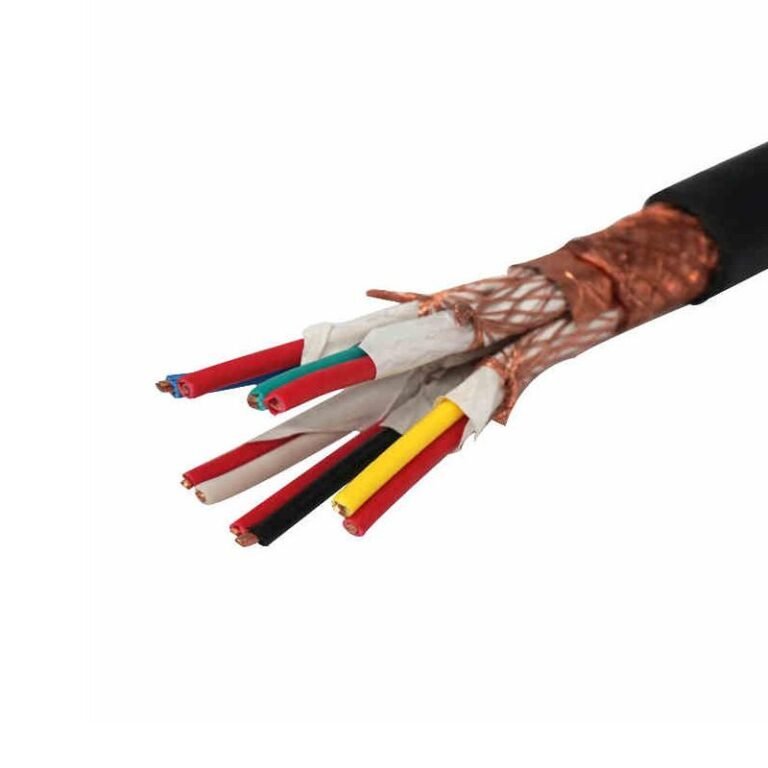
Shielding addresses electromagnetic interference. In signal cables, instrumentation loops, and VFD (variable frequency drive) output cables, unshielded conductors act as antennas. Copper tape, aluminum-polyester foil (commonly called “Alu/Mylar”), or braided copper wire wraps around the insulated cores to provide a conductive barrier. Braided shields offer better coverage and lower transfer impedance at higher frequencies; foil shields are thinner and cheaper but adequate for lower-frequency instrumentation work. On VFD cables specifically, a proper shield terminated at both ends to a low-impedance ground is not optional — the switching frequencies involved will inject noise into adjacent control circuits otherwise.
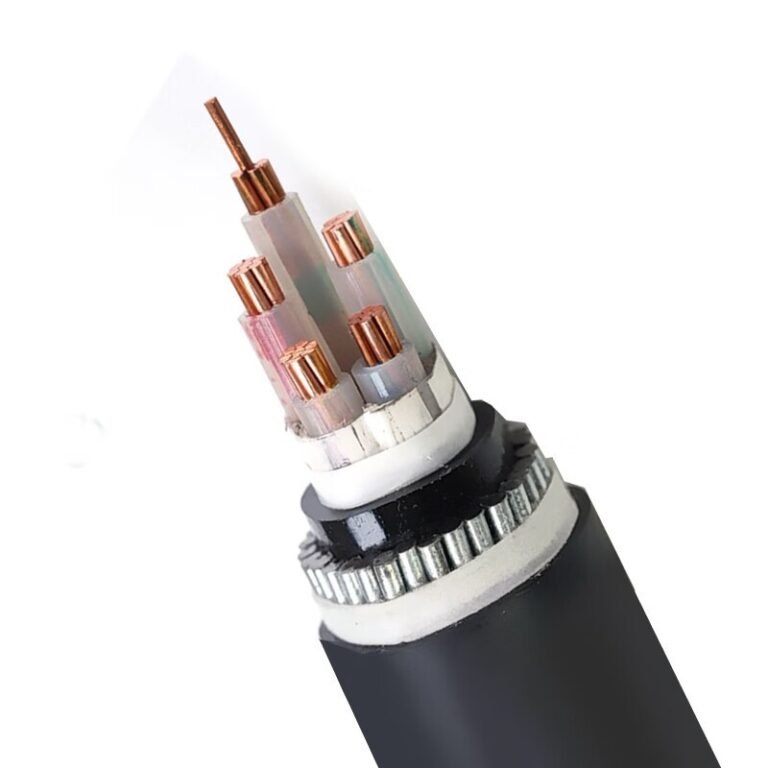
Armor is a mechanical protection layer, and the type depends on the installation environment. Steel wire armored (SWA) cable is the standard for direct burial and areas with rodent risk or mechanical impact exposure. Where magnetic interference is a concern — near transformers or in single-phase AC circuits where induced currents in a steel armor would cause heating — aluminum wire armored (AWA) is the correct choice. Steel tape armored (STA) offers a lighter alternative for indoor installations needing basic crush protection without the full weight of wire armoring.
Outer Jacket: The Layer Most Often Under-Specified
The jacket protects the cable from its environment. PVC jackets cover most general-purpose applications. LSZH (low-smoke zero-halogen) compounds are mandatory in tunnels, subway systems, data centers, and any confined space where toxic halogen gas from a burning PVC jacket would trap occupants — this is codified in standards like IEC 60332 and EN 50575, and increasingly enforced in building regulations globally. Polyurethane (PUR) jackets handle the mechanical abuse of continuous flexing in drag chains and robotic cable tracks far better than PVC, which cracks under repeated bending cycles. Neoprene holds up in oil-splash environments and outdoor UV exposure where standard PVC would harden and split over time.
| Insulation Material | Max Continuous Temp | Typical Voltage Range | Typical Application | Key Standard |
|---|---|---|---|---|
| PVC | 70°C | Up to 1 kV | Building wiring, general low-voltage | IEC 60227, UL 83 |
| XLPE | 90°C (up to 130°C for some HV grades) | 1 kV – 500 kV+ | Power distribution, MV/HV cables | IEC 60502, IEC 60840 |
| EPR | 90°C | Up to 35 kV typical | Mining, marine, flexible power | IEC 60502, BS 7655 |
| PTFE | 260°C | Low-voltage signal / instrument | Aerospace, high-temp industrial | UL 44, MIL-W-16878 |
| LSZH (jacket compound) | 70–90°C depending on base polymer | Up to 1 kV typical | Transit, tunnels, confined spaces | IEC 60332, EN 50575 |
XLPE insulation is suitable for continuous operation at 90°C and can withstand short-circuit temperatures significantly higher than PVC.True
XLPE undergoes cross-linking during manufacture, which forms a three-dimensional polymer network that resists thermal deformation. IEC 60502 and IEC 60840 confirm 90°C continuous and 250°C short-circuit ratings, compared to PVC's 70°C continuous and 160°C short-circuit limits under IEC 60227.
Getting any one of these layers wrong — an undersized conductor class on a flex application, PVC jacket in an LSZH-required zone, unshielded cable on a VFD drive output — tends to produce failures that aren’t immediately obvious. They show up as nuisance trips, insulation breakdown six months in, or a failed cable inspection that holds up commissioning. Specify from the installation environment outward, not from price inward.
How Cable Wires Are Classified: Voltage Levels, Application Types, and IEC/NEC Standard Categories
Classification isn’t academic — get it wrong on a procurement order and you’re looking at failed factory acceptance tests, insurance voids, or worse, a cable that runs fine for eight months before the insulation degrades under actual operating stress. The taxonomy below is how engineers and standards bodies actually carve up the product space.
Voltage-Level Tiers and What Each One Means on the Ground
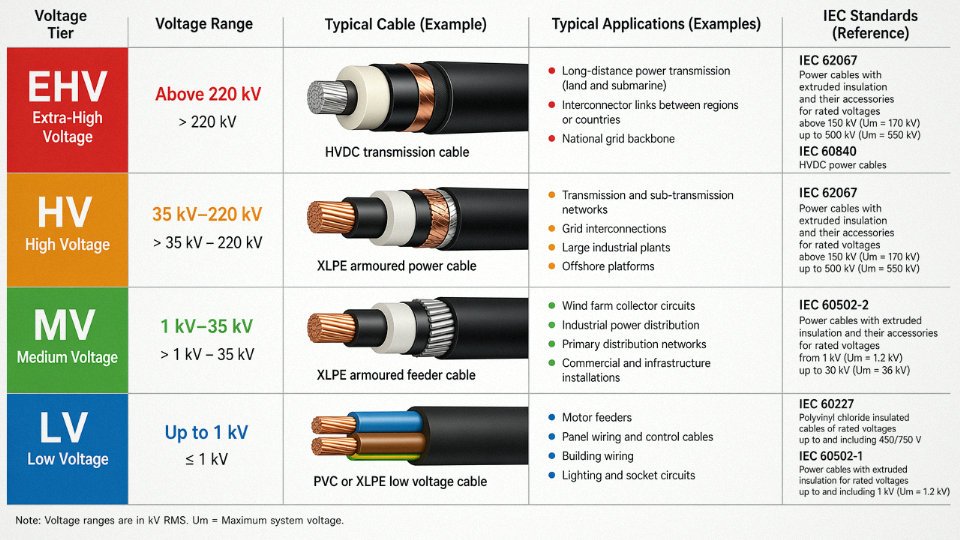
Low voltage (LV) cables cover rated voltages up to 1 kV. This is the bulk of what most plants consume: motor feeders, panel wiring, general building distribution. Medium voltage (MV) spans roughly 1 kV to 35 kV and handles primary distribution inside industrial sites, wind farm collector circuits, and urban underground networks — the tier where cable design starts getting genuinely complex, with defined screen and armor requirements. High voltage (HV) runs from 35 kV up to 220 kV; you see this in grid transmission and large substation interconnects. Above 220 kV sits extra-high voltage (EHV), which is the territory of XLPE transmission cables for national grid backbones and HVDC links — procurement lead times at this tier can stretch to 40–70 weeks depending on conductor cross-section and factory loading, and a specification error isn’t a change order, it’s a project stoppage.
Functional Categories: What the Cable Is Actually Doing
Voltage tier tells you how much electrical stress the cable must survive. Functional category tells you what it’s carrying and how reliably it must carry it.
Power cables move bulk energy — high current, relatively tolerant of minor signal noise. Control cables run switching and automation circuits, typically at low current but needing defined conductor count and clear identification. Instrumentation cables are a different discipline entirely: the priority is signal integrity, which means tight shielding requirements, low capacitance between pairs, and often individually screened pairs for 4–20 mA or thermocouple circuits in process plants. Confusing a control cable with an instrumentation cable in a petrochemical DCS installation is the kind of mistake that produces intermittent faults you spend weeks chasing.
Data and communication cables — structured cabling, fiber optic, fieldbus — have their own category because the electrical and mechanical requirements are fundamentally different from power. Then there are specialty cables: mining cables built for continuous flexing, drag, and methane-rich atmospheres; offshore cables resistant to seawater ingress and rated for dynamic movement on floating platforms; nuclear cables qualified under IEEE 383 for radiation resistance and fire survival; rolling stock cables that must handle vibration, oil, and wide temperature swings.
Key Standards: IEC and NEC
IEC 60502 covers extruded solid dielectric insulated power cables for rated voltages 1 kV to 30 kV — the go-to standard for the MV range in most international projects. IEC 60227 addresses PVC-insulated cables for fixed wiring, and IEC 60245 covers rubber-insulated cables, which matter for flexible industrial applications where PVC would crack under repeated movement. On the North American side, NEC Article 310 sets conductor and cable requirements for the US market, governing ampacity tables, insulation temperature ratings, and installation conditions in a way that doesn’t map cleanly onto IEC — which trips up procurement teams sourcing IEC-manufactured cables for US projects without proper re-evaluation.
IEC 60228 classifies conductors into classes based on construction and flexibility, with Class 1 being solid conductors and Class 6 being extra-flexible stranded conductors for portable equipment.True
IEC 60228 defines conductor classes 1 through 6: Class 1 is solid, Class 2 is stranded for fixed wiring, Classes 5 and 6 are flexible and extra-flexible respectively, used for portable and repeatedly flexed applications. This is verifiable in the published IEC 60228 standard.
Under IEC 60228, conductor class determines application suitability more than people realize. Class 1 (solid) works for fixed installations where you’ll never move it. Class 2 (stranded) handles most fixed wiring comfortably. Class 5 (flexible) is appropriate for machine connections and flexible cords. Class 6 (extra-flexible) is for portable equipment, welding leads, and anything that moves constantly — using a Class 2 conductor in a Class 5 or 6 application will cause fatigue fractures at terminations within months, sometimes weeks in high-cycle machinery.
Market Certifications and Regional Schemes
ATEX and IECEx certify cables and equipment for use in explosive atmospheres — refineries, grain handling, paint lines. These aren’t just documentation exercises; the cable construction requirements are materially different. The HAR mark covers harmonized European cable types. UL listing is the practical entry requirement for North American markets, and CCC certification covers mandatory product categories sold into the Chinese domestic market. Specifying the wrong certification scheme for your destination market can hold a shipment at customs or invalidate an installation inspection.
Jinda’s production range runs from LV distribution cables through HV power cables, with specialist lines covering mining and petrochemical environments. Export documentation routinely covers IEC, BS, and ASTM frameworks, which matters because project owners in different regions — Middle East, Southeast Asia, Africa, South America — often specify their preferred standard in tender documents, and a manufacturer that can only certify to one framework creates procurement complications on multi-region projects.
The Manufacturing Process of Cable Wire: From Raw Copper Rod to Finished Reel
Walk through a cable plant and the sheer number of interdependent stages becomes clear fast. A finished reel of 11 kV XLPE armored cable looks deceptively simple — it isn’t. Getting there reliably requires tight process control at every step, and the gaps between a capable manufacturer and a marginal one show up exactly here.
Stage 1 — Conductor Drawing and Annealing
It starts with an 8 mm copper rod, usually sourced as electrolytic tough-pitch (ETP) copper at 99.9% purity or better. That rod gets pulled through a series of progressively smaller tungsten carbide dies on a continuous drawing machine — sometimes 12 to 22 die passes depending on the target gauge. Wire temperature climbs during drawing, which work-hardens the copper and makes it brittle. Continuous annealing at roughly 400–600°C (the exact temperature depends on target elongation spec and wire diameter) reverses that, restoring ductility to meet IEC 60228 elongation requirements.
Dimensional control here is serious work. Diameter tolerance on the drawn wire is held to ±0.01 mm — tighter than most people expect, and maintained through laser-based online gauging that feeds back to die pressure in near real time. Drift outside that band means stranded conductor resistance wanders, which cascades into IEC 60228 class compliance failures downstream.
Stage 2 — Stranding and Bunching
Individual drawn wires are twisted into concentric layers on planetary or tubular stranding machines. The lay ratio — pitch length divided by overall diameter — is not arbitrary. A tighter lay ratio increases flexibility and improves current distribution uniformity across the cross-section, which matters for AC cables carrying harmonics-heavy loads. Too tight a lay ratio and you waste copper. Too loose and you get a stiff, poorly rounded conductor that causes headaches in insulation extrusion.
Twist direction alternates between concentric layers (left-hand, right-hand, left-hand) to achieve torque balance. In flexible cables for drag chains or trailing applications, getting this wrong produces cables that corkscrew under repeated flexing — a problem that usually shows up three months into service, not at incoming inspection.
Stage 3 — Insulation Extrusion
Insulation is applied by single- or triple-head crosshead extruders. For XLPE, the processing window runs roughly 180–220°C, but the profile is stepped across barrel zones and the die temperature matters separately from the melt temperature. Getting XLPE crosslink density right depends on both temperature and residence time — rush it and you get under-cured insulation with reduced thermal endurance.
Online spark testing at 5–10 kV runs continuously during extrusion and catches pinholes in real time. Any spark event flags that meter of cable for rejection. No spark tester, no credible insulation quality claim.
Stage 4 — Cabling and Assembly
Insulated cores are laid up together using planetary cabling machines, with non-hygroscopic fillers (usually PP or paper) occupying the interstices to produce a round, stable cross-section. Binders hold the assembly before the next stage. Lay direction is chosen deliberately — in multicore flexible cables, overall cable twist direction relative to core twist direction affects torque neutrality under torsional loads.
Stage 5 — Shielding, Armoring, and Jacketing
Foil-plus-drain-wire shields or braided copper/aluminum shields are applied by automated wrapping machines. Steel wire armoring (SWA) is applied by dedicated wire-armouring machines that control tensile load on each steel wire to prevent deformation of the cores underneath. Final jacket extrusion uses the same die-and-extruder setup as insulation, with continuous laser diameter gauging providing a closed-loop quality signal throughout the run.
Stage 6 — Testing and Drumming
Finished cable undergoes electrical testing per IEC 60502: conductor resistance per IEC 60228, insulation resistance, power-frequency high-voltage test, and — for medium-voltage cables — partial discharge measurement. These are not optional checkboxes. A partial discharge result above the acceptance threshold on an MV cable means the insulation has voids or contaminants that will fail in service under sustained electrical stress, typically within two to five years.
Cable is then marked per project specification (voltage rating, standard, manufacturer, sequential meter marking), cut to ordered lengths with measured tolerances, and spooled onto wooden drums or steel reels dimensioned for international shipping.
Jinda operates five production bases covering 470,000 m² of manufacturing space, supporting integrated R&D, production, and after-sales capability across high-volume international cable projects.True
This reflects the manufacturer's stated operational footprint, consistent with the scale needed for parallel production of LV, MV, and specialty cables with in-house quality systems rather than outsourced testing.
That integrated scale — five production bases, 470,000 m² of floor space, in-house R&D — matters to procurement teams for a specific reason: manufacturers without vertical integration subcontract stages like annealing, extrusion, or testing. Each handoff is a quality-control gap. When you’re sourcing cable for a critical infrastructure project, the question isn’t just “do you have a test report” — it’s “who ran every stage of this process, and where.”
Critical Electrical Parameters of Cable Wire: How to Read and Use Specifications Correctly
A datasheet is only useful if you know which numbers actually matter for your application — and which ones are marketing padding. Most specification errors I’ve seen in procurement don’t come from ignorance; they come from misreading which parameter applies under which conditions.
Conductor Resistance: DC, AC, and Temperature Correction
IEC 60228 sets maximum DC resistance values at 20°C for each conductor cross-section and class. A 10 mm² Class 2 stranded copper conductor must not exceed 1.83 Ω/km. Go to 16 mm², that limit drops to 1.15 Ω/km. These aren’t targets — they’re upper bounds. A reputable manufacturer will typically come in 3–8% below the limit; ask for actual test values on the drum certificate, not just “meets IEC 60228.”
Real installations rarely run at 20°C. Use the correction formula:
R_T = R₂₀[1 + α(T − 20)]
where α = 0.00393 per °C for copper (0.00403 for aluminum). A cable running at 70°C — standard XLPE operating temperature — will show roughly 20% higher resistance than the nameplate 20°C value. That gap matters for voltage drop calculations on long runs, and ignoring it is a frequent cause of underperforming motor circuits.
Ampacity: What the Ratings Actually Assume
Ampacity is the maximum continuous current before the conductor temperature breaches its rated limit — typically 70°C for PVC insulation, 90°C for XLPE. The number printed on a datasheet almost always assumes a single cable, in free air, at 30°C ambient. Change any of those conditions and the number changes — sometimes dramatically.
Grouping factor is the one most often overlooked. Twelve cables in a conduit bundle can derate the ampacity by 40–50% versus the free-air figure. IEC 60364-5-52 tables cover installation methods from buried direct (Method D) to clipped direct (Method C) to perforated cable tray (Method E/F). Always specify installation method before finalizing cross-section. In practice, I’ve seen panels wired to datasheet ampacity with no grouping correction — and the breakers nuisancing within six months because conductors were running hot.
Voltage Rating: U₀/U Is Not a Single Number
The U₀/U designation means phase-to-earth voltage / phase-to-phase voltage. A cable marked 0.6/1 kV is rated for 600 V phase-to-earth, 1,000 V phase-to-phase. For MV switchgear connections you also need the impulse withstand voltage (Uₚ) and the power-frequency test voltage — the latter is applied during factory acceptance testing and is typically 3.5–4× U₀ for XLPE MV cables. Confusing rated voltage with test voltage has caused more than a few premature insulation failures in transformer tail connections.
Capacitance, Inductance, and Long-Run Effects
These parameters become significant once cable runs exceed roughly 1–2 km at medium voltage, or above a few hundred meters for instrumentation cables. MV XLPE cables typically show capacitance in the range of 0.15–0.40 μF/km, depending on conductor size and insulation thickness. The charging current drawn by that capacitance consumes reactive power and can limit the usable active current capacity on long submarine or underground feeders. For instrumentation and data cables, capacitance directly drives signal attenuation and crosstalk — a parameter that field instrument engineers routinely underweight until the HART signal drops out at the far end.
Short-Circuit Rating: The Adiabatic Formula
For fault conditions, the minimum conductor cross-section is calculated from the adiabatic heating equation:
S = I√t / k
where S is cross-section in mm², I is fault current in amperes, t is fault clearing time in seconds, and k is a material constant (115 for copper PVC, 143 for copper XLPE). A 95 mm² copper XLPE conductor can withstand approximately 12 kA for one second. Undersize this and the conductor may survive the first fault — and fail catastrophically on the second.
A 95 mm² copper conductor insulated with XLPE (k = 143) can withstand approximately 12 kA for 1 second under adiabatic conditions per IEC 60949.True
Applying S = I√t / k: 95 = I × √1 / 143, giving I = 95 × 143 = 13,585 A, confirming the ~12 kA figure is conservative and within range for practical protection coordination margins.
Fire Performance Ratings: Choosing the Right Standard
| Performance Criterion | Standard PVC | LSZH | Fire-Resistant (FR) |
|---|---|---|---|
| Single cable flame spread | IEC 60332-1: passes | IEC 60332-1: passes | IEC 60332-1: passes |
| Bunched cable flame spread | IEC 60332-3: typically fails category C/D | IEC 60332-3: passes category B or better | IEC 60332-3: passes |
| Halogen acid gas (HCl) | IEC 60754-1: fails (high Cl content) | IEC 60754-1: passes (< 0.5% HCl) | Depends on compound |
| Smoke opacity | IEC 61034: typically 30–60% light transmittance | IEC 61034: ≥ 60% transmittance | Varies |
| Circuit integrity under fire | None | None | IEC 60331: maintains circuit 30–120 min |
Selecting LSZH for a bunched-cable installation in a public transport tunnel is the correct call — but LSZH alone does not mean fire-resistant. If you need maintained circuit integrity for emergency lighting or fire pump circuits, you need an FR or FP (fire-protected) cable that meets IEC 60331 as well. These are different products; mixing up the specifications at procurement stage is an expensive mistake once cable is installed in trunking.
Major Application Sectors of Cable Wire: Where and Why Specific Cable Types Are Deployed
No single cable type works everywhere. That sounds obvious until you’re on-site reviewing a bill of materials where someone specced a standard NYY cable for a floating offshore platform, or a general-purpose flexible cord for a drag-chain application. Getting the application-to-product match wrong is where real money disappears — in failures, in derating re-engineering, or in a compliance rejection that halts commissioning.
Power Generation and Transmission
Overhead transmission lines running at 345 kV to 765 kV almost universally use ACSR — aluminum conductor steel reinforced. The aluminum handles current-carrying; the steel core carries the mechanical tension across spans that can run 300–600 meters between towers. Aluminum’s resistivity of 2.82 × 10⁻⁸ Ω·m is roughly 64% higher than copper, but the weight-to-conductivity ratio still makes it the practical choice at transmission scale. For urban grid projects where overhead routing is impossible, XLPE-insulated high-voltage underground cables dominate. They handle 66 kV to 500 kV depending on construction, with XLPE preferred over older PILC precisely because it tolerates higher operating temperatures — typically up to 90°C continuous — and doesn’t require oil-pressure systems.
Offshore wind is a genuinely different problem. Dynamic export cables and inter-array cables must resist saltwater ingress, continuous UV exposure, and repetitive bending as the platform moves. Fatigue life, not just electrical rating, drives the design. Dynamic cables for floating wind typically require an armor layer and a specially compounded polyurethane or EPR outer sheath — a standard land cable will crack at the bend radius within months.
Oil, Gas, and Petrochemical
In ATEX Zone 1 and Zone 2 environments, the insulation system isn’t just an electrical decision — it’s a fire and toxicity decision. EPR (ethylene propylene rubber) insulation handles elevated temperatures and chemical exposure better than PVC, and LSZH (low-smoke zero-halogen) outer sheaths matter enormously in enclosed offshore modules where toxic smoke in a fire event can incapacitate crew before evacuation. Armored instrumentation cables in these settings typically run instrument loops at 24 V DC or 4–20 mA, but the armor isn’t there for voltage — it’s there for mechanical protection against dropped equipment and foot traffic.
Subsea umbilical cables for wellhead systems operate across a temperature range of roughly −40°C to +90°C depending on depth and media, and they bundle power, hydraulic hoses, and signal conductors in one assembly. The design life expectation is commonly 20–25 years without intervention, which sets a very different procurement standard than a building installation cable.
Building and Construction
NYY and N2XY cables cover the bulk of European low-voltage fixed installation. The difference matters: N2XY uses XLPE insulation where NYY uses PVC, giving N2XY a higher current-carrying capacity for the same conductor cross-section — relevant when conduit fill is already tight. For life-safety circuits — emergency lighting, fire alarm, sprinkler control — FP-series fire-performance cables per IEC 60702 are required in most jurisdictions. These maintain circuit integrity at 750°C to 950°C for 60–120 minutes, which is the difference between an evacuation system that works during a fire and one that fails at the moment it’s needed.

Renewable Energy
PV DC cables per IEC 62930 are rated 1.5 kV to 2.5 kV and must survive 25–30 years of outdoor UV, ozone, and thermal cycling — a specification that generic flexible cord simply cannot meet. The tinned copper conductors used in quality PV cable resist sulfur-compound corrosion from EVA encapsulant off-gassing, which is a failure mode that catches out procurement teams buying on price alone.
Wind turbine tower cables face torsional stress as the nacelle rotates: IEC 61400 specifies designs capable of ±540° twist, and the fine-stranded conductors (typically IEC 60228 Class 5 or 6) are there specifically to handle that cyclic mechanical load without conductor fatigue cracking.
Transportation and Rail
Rolling stock cables must meet EN 45545 fire and smoke performance classifications — this is non-negotiable in EU rail projects and increasingly referenced in projects elsewhere. Trackside signaling cables require heavy shielding against traction EMI from the propulsion systems running overhead or alongside, and the shield continuity in these installations is checked during commissioning because an incomplete shield is nearly as bad as none.
EV charging station cables take significant mechanical abuse: plug-and-unplug cycles, exposure to road chemicals, winter temperatures, and constant coiling. A well-specified cable here uses a PUR (polyurethane) outer jacket rated for 50,000+ bending cycles, with flexible Class 5 or Class 6 stranding. Using a cheaper PVC-jacketed cable in public charging applications is a maintenance headache waiting to happen.
Mining and Heavy Industry
Trailing cables in surface and underground mining run across abrasive ground, get rolled over, and flex continuously. Extra-heavy-duty neoprene or CPE (chlorinated polyethylene) jackets handle the abrasion and the oil exposure, but the safety-critical detail in US-regulated mines is the ground-check conductor: a small-gauge conductor embedded in the cable that monitors jacket integrity and trips the circuit if the outer sheath is compromised, per MSHA requirements. Drag-chain cables in automated manufacturing take a different kind of punishment — millions of flex cycles in a constrained bend radius. Class 6 fine-stranded conductors (IEC 60228) and a specifically compounded jacket are mandatory; using a standard flexible cable here typically results in conductor breakage within months.
Jinda's special cable division produces type-tested mining cables, petrochemical cables, and new energy cables certified to applicable IEC and industry-specific standards.True
Shandong Jinda Special Cable Group Co., Ltd. operates dedicated product lines for high-demand application sectors including mining, oil and gas, and renewable energy, with certification processes aligned to the relevant international standards for each cable type.
Across all of these sectors, the pattern is the same: the application environment defines the cable design, not the other way around. Jinda’s specialized divisions for mining, petrochemical, and new energy cables exist precisely because these sectors demand products engineered to their specific mechanical, thermal, and regulatory requirements — not general-purpose wire dressed up with a different label.
International Standards and Certifications That Govern Cable Wire Quality and Market Access
Getting the electrical parameters right on a cable spec sheet means nothing if the product can’t legally enter the target market, get insured on a project, or pass a third-party audit. Standards and certifications are, in practice, the gate between a factory and a bankable project — and the landscape is fragmented enough that procurement teams routinely underestimate the compliance burden until a shipment gets held at customs or a contractor rejects a delivery lot.
IEC as the Global Technical Baseline
The IEC framework is the closest thing the cable industry has to a universal language. IEC 60502 covers power cables from 1 kV up to 30 kV and specifies construction, test methods, and dimensional requirements that have been adopted — sometimes verbatim, sometimes with minor national edits — by over 80 countries. IEC 60228 defines the conductor classes discussed elsewhere in this article, and IEC 60287 gives engineers the calculation methodology for current-carrying capacity under defined thermal conditions. Fire performance is covered under IEC 60332, which tests flame propagation on single cables and bunched installations — a distinction that matters enormously in tunnel, offshore, and data center applications.
Specifying IEC compliance on a purchase order is a reasonable starting point, but be specific about which part and which test level. “IEC 60332 compliant” without specifying Part 1 vs. Part 3, or Category A/B/C for bunched cable tests, leaves meaningful ambiguity that can come back to bite you during project commissioning.
European Market: CE, CPR, and the HAR Mark
European market access for cables runs through several overlapping frameworks. The Low Voltage Directive 2014/35/EU requires CE marking for cables sold into the EU, covering safety under normal and foreseeable fault conditions. Since 2017, the Construction Products Regulation (CPR) has added a separate layer: cables installed permanently in buildings must carry a Declaration of Performance stating their Euroclass fire rating, which runs from Aca (best — no contribution to fire) down through B1ca, B2ca, Cca, Dca, Eca, to Fca. In practice, most commercial building projects in Western Europe now require at least Cca-s1,d1,a1, and specifying anything below that in a hospital or transport hub will likely get rejected by the main contractor.
For flexible cordage and portable cables, the HAR harmonization mark signals that a product meets the harmonized document requirements agreed among CENELEC member countries. It’s not a legal requirement in most EU states, but specifying distributors and installers often treat its absence as a red flag.
North American Market: UL Listing and NEC Compliance
The US market is fundamentally different in structure. UL 44 governs rubber-insulated wire; UL 83 covers thermoplastic-insulated wire. NEC Article 310 sets conductor ampacity tables and installation requirements that designers of record reference for code compliance. The distinction between a UL listing and a UL recognition is genuinely important and frequently misunderstood: a listed cable can be installed as a standalone product; a recognized component can only be used inside a listed end product. Getting this wrong affects project insurance and can trigger rejection by the authority having jurisdiction (AHJ) on a job site.
Canada adds CSA C22.2 requirements on top — not simply equivalent to UL, and Canadian projects will specify CSA explicitly.
Chinese Standards and the Dual-Certification Reality
Domestically in China, CCC (China Compulsory Certification) is mandatory for cables sold into the local market, and GB/T 12706 — which tracks closely with IEC 60502 — governs medium-voltage power cables. GB/T 9330 covers PVC-insulated control cables. For export-oriented manufacturers, maintaining parallel GB and IEC certification on the same product range has become standard practice. The testing regimes overlap significantly, so the incremental cost of dual certification is manageable, but the documentation burden — keeping test reports current, managing re-certification after formulation changes — is real ongoing work.
Jinda's cables are certified under IEC, BS, and ASTM frameworks and are exported to more than 50 countries, requiring active maintenance of multiple certification statuses simultaneously.True
Maintaining current certifications across IEC, BS, and ASTM for 50+ export markets requires continuous third-party testing, renewal cycles, and documentation management — this is operationally significant and verifiable through manufacturer certification records.
Sector-Specific Approvals
Some applications layer additional certification on top of baseline IEC or UL compliance. Marine cables require type approval from classification societies — DNV, Bureau Veritas, Lloyd’s Register — and the specific society often depends on the flag state of the vessel. Mining cables in the US must carry MSHA approval; the failure modes in gassy underground environments are severe enough that no reputable mine operator will touch unapproved product regardless of price. Nuclear qualification per IEEE 323 and IEEE 383 involves long-term aging tests and qualified life documentation that go well beyond routine type testing. Railway applications in Europe fall under EN 50306 and EN 45545, the latter being the fire standard that replaced older national railway norms.
Third-Party Testing and Factory Acceptance Tests
Test reports matter, but only if they come from accredited laboratories — KEMA (now KEMA-KEUR under DNV), CESI, TÜV Rheinland, and similar bodies carry real weight with project engineers and insurers. Routine tests — conductor resistance, voltage withstand, insulation resistance — are performed on every production length. Type tests, including bending, partial discharge, and impulse voltage, are conducted on representative samples when a new design is qualified. Special tests such as long-term water penetration (relevant for direct-burial cables) or accelerated thermal aging are less frequent but critical for high-consequence applications.
Buyers should request test reports that specify the exact standard revision, the test laboratory’s accreditation body, and the sample description — not just a certificate number. A certificate dated several years ago on a product whose compound supplier has since changed is worth scrutinizing before committing to a large procurement.
How to Select the Right Cable Wire for a Project: A Practical Engineering Decision Framework
Getting the cable specification wrong is one of those mistakes that looks minor on paper until it causes a transformer trip, a failed inspection, or a complete rip-and-replace on a half-finished building. The following framework won’t replace a full project electrical study, but it will stop the most common and costly errors.
Step 1 — Define the Electrical Load First, Not Last
Start with the actual load current. Calculate the maximum continuous current, then identify the prospective short-circuit current at the cable’s supply end — this matters more than most buyers realize, because a cable can pass ampacity checks and still fail catastrophically during a fault if its cross-section isn’t sized for short-circuit withstand. Voltage drop is the third constraint: IEC 60364-5-52 sets the framework, but acceptable limits vary by circuit type — typically 3–5% for final circuits, sometimes tighter for sensitive equipment or long distribution runs in industrial plants.
Ambient temperature and installation grouping both reduce rated ampacity significantly. A 35 mm² cable rated at, say, 170 A in free air might derate to 110–130 A when buried in a group of four or five cables in a duct bank at 40 °C ground temperature. Miss that, and you’re running cable above its thermal limit every peak-load day.
Step 2 — Map the Environment Before Touching a Catalogue
Temperature range, moisture, chemical exposure, UV, mechanical abuse — each one narrows your material choices. A cable running through a cable drag chain on a CNC machine faces a completely different stress profile than the same electrical rating buried under a car park. Outdoor coastal installations will degrade most standard PVC jackets within a few years. Petrochemical areas with Zone 1 or Zone 2 hazardous area classifications require specific compound systems and, depending on jurisdiction, ATEX or IECEx certification on top of the basic cable standard.
Don’t underestimate fire zone requirements. Open installations in office buildings, tunnels, and HVAC plenums each have different smoke and flame-spread rules, and getting that wrong triggers certificate refusals, not just rework.
Step 3 — Conductor Material and Cross-Section
Copper (resistivity 1.72 × 10⁻⁸ Ω·m) handles flexible runs, corrosive atmospheres, and high-current-density installations better than aluminum. Aluminum (2.82 × 10⁻⁸ Ω·m) makes economic sense for overhead lines and large fixed installations — typically above 50–70 mm² cross-section — where the weight and cost differential is real. Always run both ampacity and voltage drop checks on your chosen cross-section, then confirm short-circuit withstand using the adiabatic equation. If short-circuit duty forces you up a size, that’s the governing constraint.
Step 4 — Insulation and Sheath System
XLPE handles continuous operating temperatures up to around 90 °C and has better moisture resistance than PVC. LSZH (low smoke zero halogen) is the right choice for occupied buildings, metros, and confined spaces — the toxicity and visibility issue in a real fire isn’t theoretical. For buried installations, steel wire armour (SWA) provides mechanical protection and doubles as an earth path in many designs. Inside conduit, armour adds cost without benefit; leave it out.
Step 5 — Standards Compliance for the Destination Market
A cable certified to IEC 60502 cannot be assumed to automatically meet UL listing requirements for the US market, and vice versa.True
IEC and UL/NEC have different test methodologies, construction requirements, and approval processes. A cable that passes one standard's requirements may not satisfy the other without independent testing and listing, which can take weeks to months.
Confirm required certifications — UL, BS, IEC, DNV for marine, ATEX for hazardous areas — before finalizing the specification. Discovering a compliance gap after delivery has caused multi-week commissioning delays on more than a few projects I’ve seen discussed in procurement post-mortems.
Step 6 — Evaluate Supplier Capability
Lead time for non-standard drum lengths, laboratory accreditation (not just self-declared compliance), the completeness of the documentation package — test reports, material certificates, drum-by-drum length records — and genuine after-sales technical support all matter at scale. A manufacturer running five production bases with integrated R&D and testing infrastructure, like Jinda’s operation across China, can typically accommodate custom configurations and provide the traceability documentation that international projects and EPC contractors require.
Practical Cable Selection Decision Matrix
| Environment | Voltage Level | Conductor | Insulation/Sheath | Armor | Primary Standard |
|---|---|---|---|---|---|
| Indoor dry, fixed | LV (≤1 kV) | Copper | PVC/PVC | None | IEC 60227 / NEC |
| Indoor, occupied building | LV | Copper | XLPE/LSZH | None | IEC 60332, BS 7211 |
| Direct buried, general | LV–MV | Copper or Al | XLPE/PVC | SWA | IEC 60502-1/-2 |
| Outdoor overhead | MV–HV | Aluminum | XLPE (ACSR) | None | IEC 61089 |
| Hazardous area (Zone 1/2) | LV | Copper | XLPE/LSZH | SWA or braided | ATEX / IECEx |
| Marine/offshore | LV–MV | Copper | EPR/LSZH | Braid or SWA | DNV / IEC 60092 |
| Drag chain / flexible | LV | Fine-stranded Cu | PUR or TPE | None | IEC 60228 Class 5/6 |
| High temperature process | LV | Nickel-plated Cu | Silicone or PTFE | None | IEC 60800 / UL 508 |
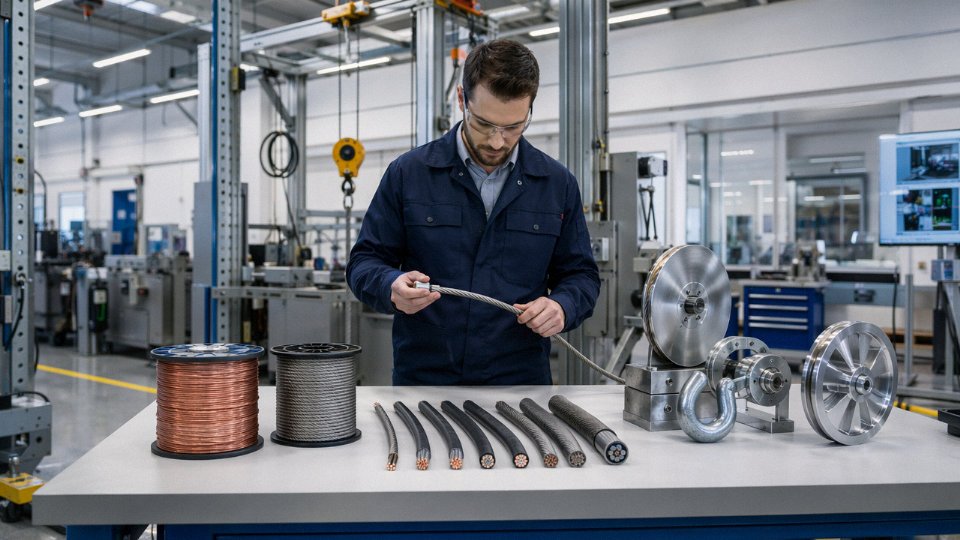
Use this matrix as a starting filter, not a final answer. Edge cases — mixed environments, long voltage-drop-limited runs, unusual ambient temperatures — always need a closer look.
Frequently Asked Questions About Cable Wire Meaning, Specifications, and Procurement
What is the difference between a cable and a wire?
A wire is a single conductor — copper or aluminum, solid or stranded — with or without a thin insulating sleeve. A cable is a manufactured assembly: one or more insulated conductors, plus whatever shielding, bedding, armor, and outer jacket the application demands. That distinction holds in engineering. In trade, though, “cable wire” gets used loosely to cover the whole commercial category, which is why you’ll see it on procurement documents, customs declarations, and distributor catalogs without anyone raising an eyebrow. The blurring of terms rarely causes problems at the quotation stage, but it absolutely can cause problems at the specification stage — ordering “wire” when you need armored multi-core cable is a real procurement error that delays projects.
What does the designation “3×95+1×50 mm² N2XY 0.6/1 kV” actually mean?
Read it left to right. “3×95” means three main cores, each with a 95 mm² conductor cross-section. “+1×50” is one reduced neutral conductor at 50 mm². “N2XY” is the German-origin type code widely adopted internationally: N = PVC outer sheath (some manufacturers use it to denote the German standard cable construction), 2X = cross-linked polyethylene (XLPE) insulation, Y = PVC jacket. “0.6/1 kV” is the voltage rating — U₀/U, where 0.6 kV is the conductor-to-earth voltage and 1 kV is the conductor-to-conductor voltage. Getting the voltage class wrong is a common mistake on projects that source from multiple markets where type codes differ.
How do I size a cable for a 200 A, 400 V three-phase load over 150 meters?
Start with the load current: 200 A. Apply derating factors for installation method — cables bunched in a conduit or tray can derate to 70–80% of their free-air rating, so a conductor sized for 200 A in open air may only carry 150–160 A when grouped, meaning you need a larger cross-section to compensate. Next, check voltage drop. IEC 60364 recommends a maximum 3% drop on final circuits, which over 150 m at 200 A typically forces you up at least one or two conductor sizes beyond the thermal requirement. Finally, verify short-circuit withstand — the conductor must survive the prospective fault current for the clearing time of the upstream protective device. Skipping the voltage drop check and the short-circuit check is surprisingly common on smaller industrial projects, and it produces nuisance trips, overheating, and occasionally a cable fault within the first year.
What does LSZH mean, and when is it mandatory?
Low-Smoke Zero-Halogen. When the jacket burns, it releases minimal smoke and none of the halogenated acid gases (hydrogen chloride, hydrogen fluoride) that PVC jackets produce. In confined spaces — metro tunnels, offshore platforms, hospital corridors, data centers — those gases are the primary cause of evacuation failure and equipment corrosion after a fire. LSZH is mandatory or strongly required by IEC 60332, EN 50575 (CPR classification), and project specifications for those environments. It costs roughly 15–30% more than standard PVC-jacketed cable, depending on conductor size and order volume, and the price gap narrows on large-volume procurement.
LSZH cable produces no halogenated acid gases when burnedTrue
LSZH (Low-Smoke Zero-Halogen) compounds are formulated without halogen-containing polymers; third-party fire test standards including IEC 60754-1 verify that halogen acid gas emission is at or near zero, which is the defining characteristic of LSZH materials.
What is the difference between armored cable and shielded cable?
They solve completely different problems, and both can exist in the same cable construction. Armor — steel wire armor (SWA) or aluminum wire armor (AWA) — is mechanical protection against crushing, rodent attack, and accidental dig-through. Shielding — copper braid, copper foil, or aluminum/polyester foil — is electromagnetic: it prevents external interference from corrupting signal or control circuits, and it provides a defined path for induced currents. Confusing the two leads to either buying expensive instrumentation cable with braid shield for a direct-buried power run (unnecessary cost) or specifying unarmored cable in a buried duct that passes through a rodent-prone area (a failure waiting to happen).
How long does cable wire last, and what causes early failure?
Design service life for fixed power installations is typically 25–40 years, though actual life depends heavily on operating temperature relative to the conductor’s rated limit. Running a cable consistently at or near its thermal ceiling ages the insulation faster — XLPE degrades noticeably above 90°C continuous, and PVC above 70°C. Moisture ingress through a jacket cut or a poorly sealed termination is probably the most common cause of premature failure in underground cables. Chemical attack matters in industrial environments where the cable route passes near oils, solvents, or fertilizers. UV degradation is real on outdoor exposed runs — standard PVC without UV stabilizer can become brittle within 5–8 years of direct sun exposure, depending on climate. Dynamic applications (trailing cables, festoon systems) require cables specifically designed for flex fatigue; using a standard fixed-installation cable in a moving application is a maintenance problem that will repeat on a 12–18 month cycle.
How does Shandong Jinda handle supply for international projects?
For stocked standard products, lead times run roughly 4–8 weeks from order confirmation to port of loading. Custom orders — special conductor class, non-standard insulation thickness, project-specific drum marking — typically take 6–14 weeks, depending on conductor size and order volume. Standard drum lengths are 500 m and 1,000 m; cut lengths are available, though short cuts on large-section cable carry a setup cost that experienced procurement managers usually factor in at the RFQ stage. The standard documentation package covers IEC type test reports, routine test reports (per IEC 60502 or the applicable standard), conductor material certificates, drum labels, packing lists, and certificates of origin for customs clearance. Projects in markets with specific certification requirements — CPR in Europe, SASO in Saudi Arabia, for instance — should clarify those requirements at inquiry stage, not after production starts.
Why Manufacturer Capability Matters: Evaluating Cable Wire Suppliers for Long-Term Global Projects
Sourcing cable wire for a one-off domestic job is a different problem than sourcing for a multi-year EPC contract spanning several countries. The stakes diverge sharply. A bad batch on a domestic project costs you a rework weekend. A documentation gap on a development-bank-financed substation project can freeze a draw-down for months. Most procurement teams learn this the hard way once.
Production Scale and Vertical Integration
A manufacturer that draws its own rod, extrudes its own insulation compound, strands in-house, and runs final electrical testing under a single quality management system gives you something that a trading-house assembler cannot: a traceable, unbroken process chain. When a nonconformance surfaces — wrong capacitance, eccentric insulation wall, tensile failure on the conductor — an integrated plant can pull process records at every upstream stage within hours. A fragmented supply chain, where wire drawing happens at one site and jacketing at a subcontractor’s, diffuses accountability and slows root-cause analysis considerably.
Jinda’s five production bases covering roughly 470,000 m² represent this kind of integrated model. The physical scale matters less than what it enables: parallel production lines, dedicated compound storage, and enough redundancy that a single equipment failure doesn’t delay a 500-reel export order.
R&D and Customization Capability
Standard catalog cables cover maybe 70–80% of project requirements. The remaining share — cold-climate installations rated to −50 °C, high-flex robotics tethers rated for 5–10 million flex cycles, offshore umbilicals with water-blocking tape and longitudinal pressure testing — requires a manufacturer that can actually formulate compounds and validate prototype constructions, not just quote from a PDF.
Ask directly: does the manufacturer have in-house material science staff? Can they share a recent example of a custom compound development? Manufacturers that only catalog-sell will give vague answers. The ones with genuine R&D capability will describe a specific problem they solved, even if they can’t name the customer.
Quality Management Infrastructure
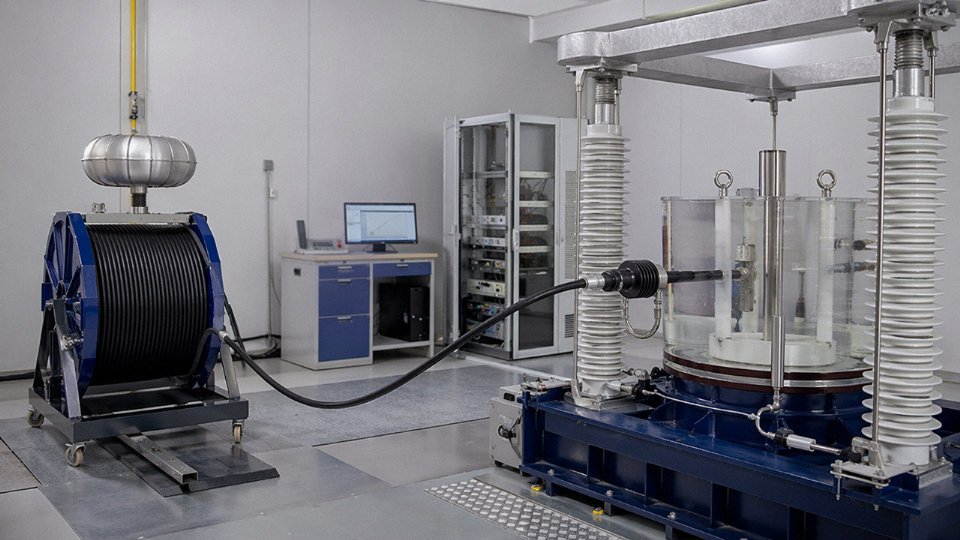
ISO 9001 is the baseline. It tells you a quality system exists; it does not tell you whether the lab can actually test what it claims. For medium- and high-voltage cable procurement, look for in-house partial discharge testing, thermal aging ovens with calibrated cycle logging, and mechanical test rigs capable of documented bend-cycle and crush testing. Outsourcing all type testing to a third-party lab isn’t disqualifying, but it slows response time when you need a re-test or a witnessed inspection at short notice.
Export Compliance and Documentation
This is where projects actually stall. EPC contractors and development finance institutions — IFC, ADB, regional development banks — require mill certificates, IEC test reports from recognized accredited laboratories, REACH and RoHS declarations, and certificate of origin. Missing a single document can trigger a compliance hold that delays project financial close by weeks.
Incomplete cable documentation can delay project financing draw-down for international EPC contracts.True
Development banks and multilateral lenders require full traceability documentation including mill certificates and accredited test reports as conditions of disbursement; missing documentation is a common cause of project finance delays.
Before awarding an order, run a document checklist against the contract’s compliance schedule. Get samples of the manufacturer’s standard export documentation package. A supplier who hesitates at that request is telling you something.
Supply Chain Resilience
The 2020–2022 period exposed how badly single-source raw material dependency compounds delivery risk. For copper-intensive cable, ask whether the manufacturer buys LME-grade cathode copper or blends in secondary refined copper, and what their typical rod inventory buffer looks like — usually somewhere between two and six weeks of production cover, depending on plant size and market conditions. Diversified production locations reduce geographic concentration risk, relevant if your projects span regions with different logistics constraints.
After-Sales and Technical Support
For international projects, the sale doesn’t end at the port. Installation teams encounter field queries. Occasional failures require investigation. Replacement supply sometimes needs to happen on short notice against the original lot documentation. Evaluate whether the manufacturer has dedicated export sales engineers who speak the project’s working language and can respond to a field failure report within a working day, not a week.
Jinda, operating since 1987 with over 1,000 employees and active supply relationships across 50+ countries, covers the full chain from R&D through after-sales — standard LV power cables through specialized mining, petrochemical, and new energy constructions. That’s not a marketing posture; it’s a verifiable operational structure that international buyers can audit. For long-term global projects, that kind of manufacturer depth is what separates a reliable supply partner from a convenient catalog.