Most residential electricians and homeowners run into the same frustrating situation: a circuit breaker trips repeatedly, a receptacle feels warm to the touch, or an inspector flags undersized wire during a renovation — and the root cause is almost always a mismatch between the wire gauge installed and the load the circuit is actually carrying. That mismatch doesn’t just cause nuisance trips. It causes insulation degradation over months, and in worst cases, it’s the slow setup for an electrical fire. The fix sounds simple, but choosing between 12 and 14 AWG wire before the walls close is the decision that determines whether your circuit is safe, code-compliant, and actually sized for how people use a room.
Most houses are wired with a mix of both 12 and 14 gauge wire, depending on the circuit. The NEC rates 14 AWG copper at 15 amps and 12 AWG copper at 20 amps. General lighting and bedroom circuits commonly use 14 AWG on 15-amp breakers; kitchen, bathroom, laundry, and garage circuits typically require 12 AWG on 20-amp breakers. The right gauge depends on the circuit’s intended load, not personal preference.
What makes this more complicated in practice is that the two gauges look similar in the wall — 14 AWG is roughly 1.63 mm in diameter, 12 AWG is roughly 2.05 mm, a difference you can feel with your fingers but easily miss when you’re pulling wire fast through studs. That 26% difference in cross-sectional area is the difference between a wire that handles a 20-amp load comfortably and one that’s quietly overheating every time someone runs a microwave and a coffee maker at the same time.
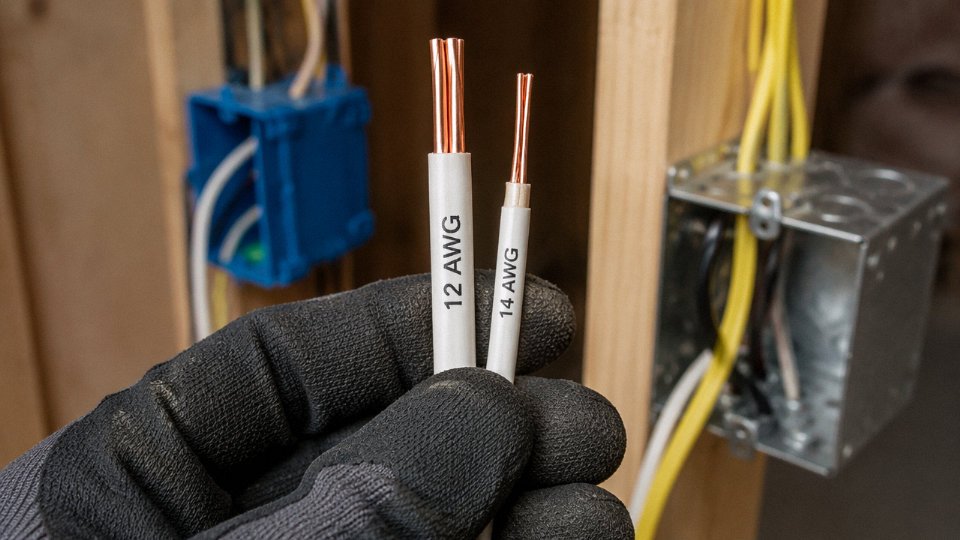
AWG Wire Gauge Fundamentals: What the Numbers Actually Mean for Residential Circuits
The single biggest source of confusion for anyone new to residential wiring — and honestly, for plenty of experienced tradespeople sourcing wire internationally — is that the American Wire Gauge numbering system runs backwards. A smaller number means a thicker wire. A 12 AWG conductor is physically larger than a 14 AWG conductor. That seems obvious once you know it, but it trips people up constantly, and the consequences of mixing them up range from nuisance tripping to an insulation fire behind a wall.
The AWG system originated in the 19th century from a manufacturing process: the gauge number corresponded to the number of drawing dies a rod was pulled through to reach its final diameter. More draws, smaller wire, higher number. Nobody redesigned the system when electrical standards came along, so here we are.
Diameter, Cross-Section, and Why the Gap Matters More Than It Looks
The physical difference between 12 and 14 AWG is modest — about 0.42 mm in diameter — but cross-sectional area scales with the square of the radius, so the actual copper volume difference is roughly 26%. That’s not a rounding error. That 26% is what separates a 15-amp circuit from a 20-amp circuit in NEC Table 310.12.
| AWG | Diameter (mm) | Diameter (in) | Typical Residential Use |
|---|---|---|---|
| 10 | 2.59 | 0.102 | 30 A circuits: dryers, EV chargers |
| 12 | 2.05 | 0.081 | 20 A circuits: kitchens, baths, garages |
| 14 | 1.63 | 0.064 | 15 A general lighting, bedroom outlets |
| 16 | 1.29 | 0.051 | Low-voltage, extension cords — not branch circuits |
Resistance Per Foot and What It Does Under Load
This is where the physics gets practical. Copper 14 AWG runs approximately 8.45 milliohms per foot; 12 AWG drops to roughly 6.19 milliohms per foot. Under a sustained 15-amp load, that difference translates to meaningfully more I²R heat dissipated in the 14 AWG conductor — and at 20 amps, putting 14 AWG wire on a 20-amp breaker isn’t just a code violation, it’s a thermal problem that compounds over years of cycling. Insulation degrades, connections loosen, and eventually something fails. Usually at 2 a.m.
Ampacity Is Not a Fixed Number
Rated ampacity depends on three things operating together: conductor material, insulation temperature rating, and the installation environment. Copper at 90°C insulation (THHN, for example) in free air carries more current than the same wire jammed into a conduit with five other conductors in a 40°C attic. NEC Table 310.15 correction factors exist for a reason. In practice, most residential branch circuit calculations use the 60°C or 75°C column to stay conservative — especially where wire terminates at a breaker or receptacle rated for those temperatures.
Aluminum behaves differently. It has roughly 61% of copper’s conductivity by cross-section, which is why aluminum wiring in residential circuits demands a size bump and specific handling procedures.
Operational Warning — Aluminum 12 AWG Is Not a Drop-In Copper Substitute
Aluminum 12 AWG is not interchangeable with copper 12 AWG on residential branch circuits without CO/ALR-rated receptacles, proper aluminum-rated connectors, and anti-oxidant compound applied at every termination point. Aluminum oxidizes rapidly, and aluminum oxide is a poor conductor. That oxide layer at a loose connection creates resistance, heat, and arcing. Several residential fire investigations have traced back to aluminum branch wiring installed without these precautions. If you’re procuring wire internationally and a supplier quotes aluminum at copper-equivalent pricing, that’s worth a second look at the spec sheet.
The IEC Metric Crossover for International Procurement
Outside North America, residential wiring follows IEC standards using cross-sectional area in mm² rather than AWG. The functional equivalents most relevant to residential work: 2.5 mm² copper maps closely to 12 AWG, and 1.5 mm² maps to 14 AWG. Neither is an exact conversion — 2.5 mm² is actually slightly larger than 12 AWG’s 3.31 mm² cross-section is, wait: 12 AWG copper cross-section is approximately 3.31 mm², so 2.5 mm² sits between 12 and 14 AWG in raw copper area — but in practice, 2.5 mm² is the standard IEC equivalent used for 20 A circuits in most European and Asian wiring codes, and 1.5 mm² serves the 15 A lighting role.
2.5 mm² copper wire is functionally equivalent to 12 AWG for residential 20-amp circuits under IEC standardsTrue
While not identical in cross-section — 12 AWG copper measures approximately 3.31 mm² and 2.5 mm² is slightly smaller — IEC 60364 and most national adaptations rate 2.5 mm² copper at 20–23 A under standard installation conditions, making it the accepted metric equivalent for the same circuit duty. Procurement specs and import documentation routinely treat these as equivalent for residential branch circuits.
This matters enormously for anyone sourcing cable across borders. A factory in China, Europe, or Southeast Asia will quote 1.5 mm² and 2.5 mm² as standard residential sizes — the AWG labeling simply won’t appear. Knowing the conversion means you can evaluate whether the quoted cable actually meets the circuit requirement, rather than assuming gauge numbers translate directly.
NEC Code Requirements That Determine Which Gauge Goes in Which Room
The National Electrical Code doesn’t leave gauge selection to guesswork. Article 210 of NEC 2023 ties wire gauge directly to circuit ampacity, and ampacity is tied directly to what the circuit is expected to feed. Get that chain wrong and you’re either over-fusing undersized wire — a fire risk — or spending 25–35% more on copper than the load actually requires.
General Living Spaces: Where 14 AWG Still Has a Place
For general-purpose branch circuits in bedrooms, living rooms, hallways, and dining areas, NEC 210.19 and Table 310.12 permit 14 AWG copper on 15-amp circuits. These circuits typically feed standard receptacles and lighting fixtures with modest, intermittent loads — a floor lamp, a phone charger, a ceiling fan. The 15-amp breaker protects the 14 AWG conductor, and in a well-designed layout that’s entirely appropriate. Most residential lighting circuits still run 14 AWG for exactly this reason.
That said, plenty of experienced electricians run 12 AWG on 15-amp circuits throughout the house, protecting it with a 15-amp breaker. Perfectly code-legal, and it does give you flexibility if a homeowner later wants to upgrade a circuit without pulling new wire. The downside is real: on a 2,000 sq ft house you might be adding 400–700 linear feet of copper at a cost premium of 20–35% per foot over 14 AWG. On a tight build budget, that adds up fast.
Kitchens, Bathrooms, Laundry, and Garages: 12 AWG Is Not Optional
NEC 210.11(C)(1) requires at least two small-appliance branch circuits in kitchen areas, and 210.52(B) specifies these must be 20-amp circuits. A 20-amp circuit requires a minimum of 12 AWG copper — you cannot legally protect 14 AWG wire with a 20-amp breaker. Full stop.
This means every kitchen receptacle on those small-appliance circuits is wired with 12 AWG, no exceptions under NEC. The same logic applies to bathroom circuits under 210.11(C)(3) — at least one 20-amp circuit dedicated to bathroom receptacles — and to laundry circuits under 210.52(F). Garage receptacles, under 210.52(G), are also typically on 20-amp circuits. In practice, if you’re roughing in any of these rooms and you reach for 14 AWG, your inspector will flag it.
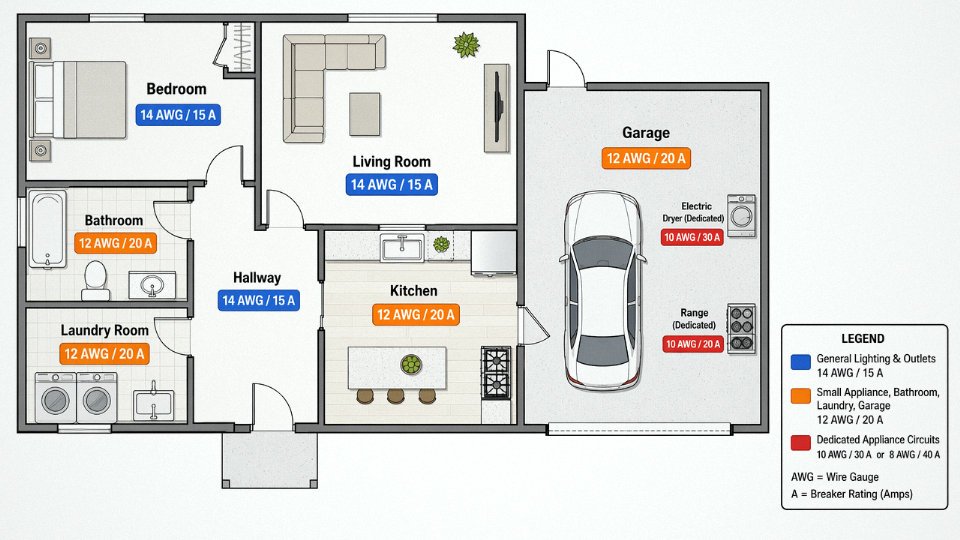
A 20-amp circuit requires a minimum of 12 AWG copper wire under NEC Table 310.12True
NEC Table 310.12 assigns a maximum ampacity of 15A to 14 AWG and 20A to 12 AWG copper at 60°C. Protecting 14 AWG with a 20-amp breaker violates NEC 210.20(A) overcurrent protection requirements.
Dedicated High-Load Circuits: Where 12 AWG Isn’t Even Enough
Electric ranges typically require 8 AWG or 6 AWG on a 40–50 amp, 240V circuit. Electric dryers run on 10 AWG at 30 amps. EV chargers — the Level 2 units that are increasingly common in new construction — usually call for 6 AWG on a 50-amp, 240V dedicated circuit, though some 40-amp installs use 8 AWG depending on the charger’s rated output. HVAC equipment varies widely; a small 3-ton unit might be fine on 10 AWG while a larger heat pump with a high locked-rotor amperage rating could need 8 or even 6 AWG. Always check the equipment nameplate and NEC 440 for air-conditioning circuits specifically.
Local Amendments and the Permit Process
Here’s something that catches contractors off guard: several municipalities and some state-level adoptions of the NEC have amended Article 210 to require 12 AWG throughout the entire dwelling, including general-purpose circuits. California, parts of the Northeast, and various urban jurisdictions have pushed this direction, usually citing arc-fault and long-term load growth concerns. You won’t find that in the base NEC text — it shows up in the local amendment appendix, which you should pull before estimating material on any new project in an unfamiliar jurisdiction.
Permits enforce all of this. A rough-in inspection will catch 14 AWG on a 20-amp kitchen circuit before the walls close. A final inspection may catch it after. Either way, the remediation cost — reopening walls, pulling new wire — almost always exceeds whatever you saved on material. Running the right gauge the first time is just cheaper.
Room-by-Room Wiring Gauge Breakdown: A Practical Map of Every Circuit in a Typical Home
Most wiring mistakes — and most arguments between electricians and inspectors — come down to someone running 14 AWG where 12 was required, or padding a budget by underspecifying a circuit that sees real load. Here is how gauge selection actually plays out, room by room.
Living Rooms and Bedrooms
These are your lowest-demand spaces, which is why 14 AWG on a 15-amp circuit is the standard. Lighting fixtures, lamps, phone chargers, a television — none of that individually pulls much current. Under NEC load calculations, a 15-amp circuit is sized for a continuous load of no more than 12 amps (80% of rating), which works out to roughly 1,440 watts. In practice, most electricians limit general-purpose branch circuits in these rooms to 8–10 receptacles, though the NEC doesn’t cap outlet count explicitly — it governs load, not outlet quantity. A bedroom with a dedicated window AC unit is the exception worth flagging: a 10,000 BTU unit can draw 7–9 amps on its own, and if someone plugs that into a circuit already carrying a lamp and a monitor, you’re pushing toward nuisance tripping. A dedicated 12 AWG / 20-amp circuit for window ACs is worth the extra wire cost.
Kitchen and Dining Areas
This is where 12 AWG becomes mandatory, not optional. NEC 210.11(C)(1) requires at least two 20-amp small-appliance branch circuits for kitchen countertop receptacles — no substitutions. A toaster, a microwave, and a countertop coffee maker running simultaneously can pull 15–18 amps without blinking; 14 AWG on a 15-amp circuit would either trip constantly or, worse, run warm under repeated loads. The refrigerator typically gets its own dedicated 20-amp circuit (12 AWG), and most inspectors expect to see it. Dishwashers need a dedicated 15- or 20-amp circuit depending on the appliance spec — check the nameplate, but 12 AWG gives you headroom either way and avoids a callback if the owner upgrades to a higher-draw unit later.
GFCI protection in bathrooms changes the ampacity requirement of the circuitFalse
GFCI protection is a shock-hazard safeguard that interrupts ground-fault current. It does not alter the circuit's ampacity rating. A bathroom circuit must be 20-amp with 12 AWG wire because of load requirements; the GFCI requirement exists independently under NEC 210.8.
Bathrooms
A single 20-amp circuit — wired with 12 AWG — must serve bathroom receptacles, and GFCI protection is required at every outlet. The GFCI device protects against shock; it doesn’t change what the wire needs to handle. Hair dryers alone can draw 12–15 amps. Running that on 14 AWG is how breakers trip mid-morning in older homes.
Garages, Workshops, and Outdoor Circuits
All of these get 12 AWG on 20-amp circuits. Garages need both GFCI and AFCI protection in newer construction. Outdoor receptacles require weatherproof covers and GFCI protection regardless of whether they’re under an overhang. A garage workshop with a bench grinder, a compressor, and task lighting can saturate a 20-amp circuit faster than most homeowners expect — consider separate circuits for motor loads.
Basements and Utility Rooms
Sump pumps should be on a dedicated 15- or 20-amp circuit; sharing that circuit risks losing the pump right when other loads are high. Water heaters are almost always 240V and typically require 10 AWG on a 30-amp double-pole breaker, though some high-demand units push to 25 amps — verify the nameplate. Subpanels feeding a finished basement or detached garage involve feeder calculations that go beyond branch-circuit gauge selection entirely.
| Room / Area | Recommended Gauge | Circuit Amperage | Protection Required | Notes |
|---|---|---|---|---|
| Living room / bedroom | 14 AWG | 15 A | AFCI (new construction) | 8–10 outlets typical per circuit |
| Kitchen countertops | 12 AWG | 20 A | AFCI + GFCI | Minimum 2 circuits required by NEC |
| Refrigerator | 12 AWG | 20 A | AFCI | Dedicated circuit strongly recommended |
| Dishwasher | 12 AWG | 15–20 A | AFCI | Verify appliance nameplate |
| Bathroom | 12 AWG | 20 A | GFCI | One circuit may serve multiple bathrooms |
| Garage / workshop | 12 AWG | 20 A | GFCI + AFCI | Separate circuits for motor loads |
| Outdoor receptacles | 12 AWG | 20 A | GFCI | Weatherproof covers required |
| Sump pump | 12 AWG | 15–20 A | — | Dedicated circuit; do not share |
| Electric water heater | 10 AWG | 30 A | — | 240 V double-pole; confirm nameplate |
Safety Risks of Using the Wrong Gauge: Overheating, Fire Hazard, and Insurance Implications
The gauge question stops being academic the moment you consider what actually happens inside a wall when wire carries more current than it was rated for. This is not about tripping a breaker. It is about heat — slow, invisible, cumulative heat that degrades insulation over months or years before anything dramatic occurs.
The Physics of Overcurrent: I²R Heating and Why It Matters
Resistive heating in a conductor scales with the square of current: P = I²R. That “squared” part is the killer. Push 20 amps through 14 AWG copper instead of 15 and you are not generating 33% more heat — you are generating roughly 78% more heat in that conductor. The resistance of 14 AWG is around 8.2 milliohms per foot, and while that sounds trivial, multiply it across a 50-foot circuit run and sustained overcurrent, and the insulation around that wire is absorbing energy it was never designed to handle.
Standard NM-B (Romex-type) residential cable uses thermoplastic insulation rated for 60°C or 75°C depending on the product. Sustained overcurrent can push conductor temperatures beyond those thresholds even when the breaker has not tripped. The insulation doesn’t melt dramatically — it embrittles. It cracks at staple points and where it bends around framing. That’s where arc faults start.
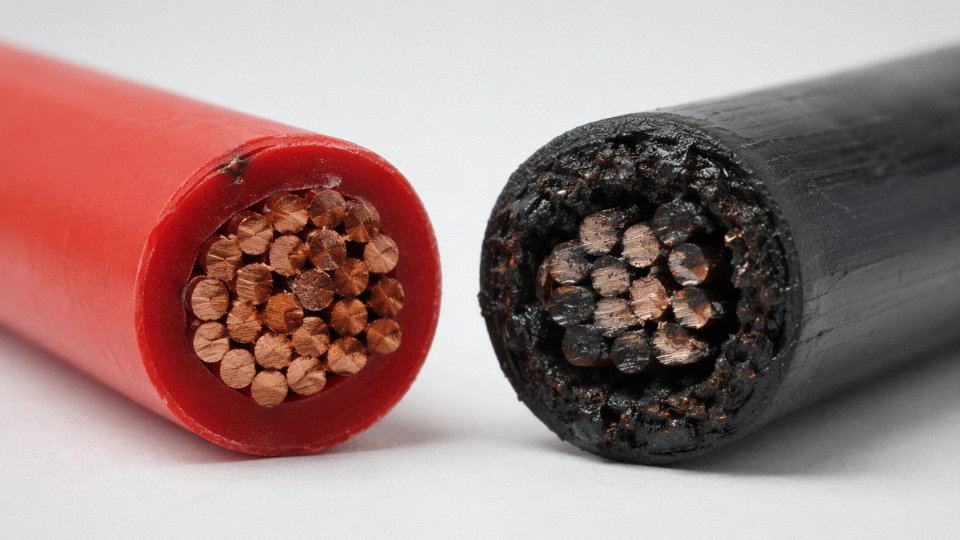
The 14 AWG on a 20-Amp Circuit Problem
This specific mistake — running 14 AWG wire on a circuit protected by a 20-amp breaker — is probably the most dangerous common wiring error in residential work. The breaker will not trip at 15 amps. It is designed to protect the circuit up to 20 amps, so it will sit there contentedly while the undersized wire heats. The wire’s protection has effectively been removed. You now have an unprotected overcurrent condition that can persist for hours.
A 15-amp breaker adequately protects 14 AWG wire when the breaker is functioning correctly.False
A 15-amp breaker protects 14 AWG on a 15-amp circuit. If that same 14 AWG wire is installed on a 20-amp circuit with a 20-amp breaker, the breaker will not trip until current exceeds 20 amps — well above the wire's 15-amp rating — leaving the conductor unprotected against sustained overcurrent damage.
This happens more often than people admit — usually when someone replaces a tripped 15-amp breaker with a 20-amp breaker “because it kept tripping,” without ever asking why it was tripping in the first place.
Real-World Fire Statistics
NFPA data puts electrical fires at roughly 46,700 home fires per year in the US. Wiring and related equipment account for approximately 13% of those — meaning around 6,000 fires annually trace back to wire, cable, or wiring connections. These are not freak events. They are the predictable result of mismatched gauges, degraded insulation, and overcurrent conditions that went undetected because nothing tripped.
Aluminum Wiring: A Specific Elevated Risk
Homes built between roughly 1965 and 1973 may have aluminum branch-circuit wiring instead of copper. Aluminum expands and contracts more aggressively with heat cycling, which loosens connections at outlets and switches over time. Loose connections create resistance, resistance creates heat, and that heat can eventually ignite surrounding material. Identifying it is straightforward — the wire itself will be silver-gray rather than copper-orange, and the cable jacket on older installations is often marked “AL” or “ALUM.”
Remediation does not necessarily require full rewiring. The accepted repair method is pigtailing: splicing short copper wire tails to the existing aluminum using connectors rated specifically for aluminum-to-copper connections (look for the CO/ALR or AL-CU marking on the device). Standard twist-on wire nuts are not rated for this application. Using them anyway is a fire hazard.
In practice, any home with aluminum wiring that is being sold will face scrutiny from buyers’ inspectors, and many insurers will either charge elevated premiums or decline coverage outright until remediation is documented.
Insurance and Property Value Consequences
Underwriters are not sentimental about electrical code violations. If a claims adjuster discovers that a fire originated in a wall where 14 AWG wire was running on a 20-amp circuit, the insurer has grounds to deny the claim — and in practice, some do. Homeowners who assumed their coverage was solid find out otherwise at the worst possible moment.
Home inspectors flag gauge mismatches and aluminum wiring in their reports. Those findings land on the buyer’s side of a negotiation and either reduce sale price or require escrow holdbacks for remediation. Getting the gauge right during initial construction or renovation is orders of magnitude cheaper than rewiring finished walls later — and the cost differential between 12 AWG and 14 AWG copper, roughly 20–35% per linear foot depending on copper commodity prices and conductor count, is trivial compared to that downstream liability.
How Wire Insulation Type, Color Coding, and Cable Construction Affect Gauge Selection in Practice
Knowing the ampacity limits of 12 AWG versus 14 AWG gets you halfway there. The other half is understanding what you’re actually buying at the supply house — jacket color, insulation class, cable construction — because those physical attributes determine whether a given wire is even legal for the installation you’re planning, regardless of conductor size.
NEC Jacket Colors and Why They Matter on a Job Site
In the US market, NM-B cable (the sheathed, two-or-three-conductor stuff most people call Romex, though that’s a brand name) follows a voluntary but near-universal color convention: yellow outer jacket for 12 AWG, white outer jacket for 14 AWG, and orange for 10 AWG. This isn’t buried in the NEC as a hard mandate — it’s an industry standard that most domestic manufacturers follow — but it’s so consistent that electricians rely on it. Pull a white-jacketed cable out of a wall and you know immediately you’re on a 15-amp circuit. Grab yellow and you’ve got a 20-amp circuit. That five-second jacket-color check prevents a lot of breaker mismatches during panel work or renovations.
Inside the cable, conductor color coding is NEC-mandated: black for the ungrounded (hot) conductor, white for neutral, and either bare copper or green insulation for the equipment ground. Don’t mix this up with jacket color — they’re two different layers of information.
In US residential NM-B cable, a yellow outer jacket indicates 12 AWG conductors rated for 20-amp circuits, while a white outer jacket indicates 14 AWG rated for 15-amp circuits.True
This jacket color convention is followed by US NM-B cable manufacturers per industry standard, and electricians use it as a reliable field identification method, though it is a voluntary industry convention rather than a mandatory NEC rule.
NM-B, MC Cable, and Conduit-Pulled THHN: Choosing the Right Construction
NM-B is appropriate for dry, protected, interior residential locations — inside stud walls, running through framing, stapled along joists. It’s not rated for damp or wet locations, not for direct burial, and not for conduit in most practical scenarios (there are edge cases, but NM-B pulled through conduit is messy, thermally derated, and generally avoided by experienced electricians).
MC (metal-clad) cable adds an interlocked aluminum or steel armor over the conductors. You’ll see this specified in residential construction where exposed runs are required — unfinished basements, garages, or anywhere subject to physical damage. The gauge selection logic stays the same; the armor just changes the mechanical protection class and, in some cases, the permitted routing.
THHN/THWN pulled through EMT or PVC conduit is common in garages, outdoor subpanel feeds, and any run where you need to make bends or replace conductors later. Here’s where insulation temperature rating starts to actually matter for gauge selection. THHN is rated 90°C in dry locations, 75°C in wet. NM-B insulation is rated 60°C. When you’re pulling multiple current-carrying conductors through a conduit, NEC derating rules kick in — and a 12 AWG THHN conductor may carry more ampacity than 12 AWG NM-B in the same conduit fill scenario, simply because of that temperature class difference. In tight conduit installations with four or more current-carrying conductors, a contractor might move up to 10 AWG not because the load demands it, but because derating has eaten into the 12 AWG headroom.
Outdoor, Direct-Burial, and Wet-Location Installations
For outdoor residential circuits — a shed feed, landscape lighting circuits, an outbuilding — the jacket construction matters as much as conductor gauge. UF-B (Underground Feeder) cable has a solid-core PVC jacket molded directly around the conductors, rated for direct burial and damp locations. USE-2 is rated for direct burial and also for solar PV source circuits. Neither is interchangeable with NM-B, regardless of what AWG the conductors happen to be.
UV exposure degrades standard PVC jacket compounds faster than most installers expect, especially in climates with intense sun or temperature cycling. A 12 AWG UF-B run exposed above grade on the south wall of a building will show jacket cracking in eight to twelve years if it’s standard PVC — shorter in desert climates. Jacket compound quality matters here.
Insulation Compound and Extrusion Quality: The Manufacturing Layer
From a cable manufacturer’s standpoint, the long-term ampacity reliability of any conductor cross-section depends heavily on insulation compound consistency and extrusion process control. A 12 AWG conductor with nominally correct cross-section but uneven XLPE insulation thickness — caused by poor extrusion die alignment or inconsistent compound viscosity — can develop localized hot spots under sustained load. XLPE outperforms standard PVC in thermal stability and dielectric strength, which is why it’s specified for higher-temperature or higher-stress applications. LSZH (low-smoke zero-halogen) compounds add fire-safety characteristics in enclosed spaces, though they typically cost 15–30% more than equivalent PVC insulation and aren’t commonly required in standard US residential construction.
The practical takeaway for procurement: don’t evaluate residential wire solely on conductor AWG and price per foot. Insulation temperature rating, jacket compound, and cable construction type determine whether a product is genuinely fit for its application — and whether it’ll still be performing reliably twenty years after the drywall goes up.
Upgrading Older Home Wiring: When to Replace Knob-and-Tube or Undersized Circuits with Modern 12 AWG
If your house was built before roughly 1960, there’s a reasonable chance it still has knob-and-tube wiring in at least some areas — and a near certainty that whatever wiring exists is undersized by today’s load standards. The decision to upgrade isn’t always obvious, and the work is disruptive enough that most homeowners want to prioritize correctly rather than rewire everything at once.
Identifying Knob-and-Tube Wiring
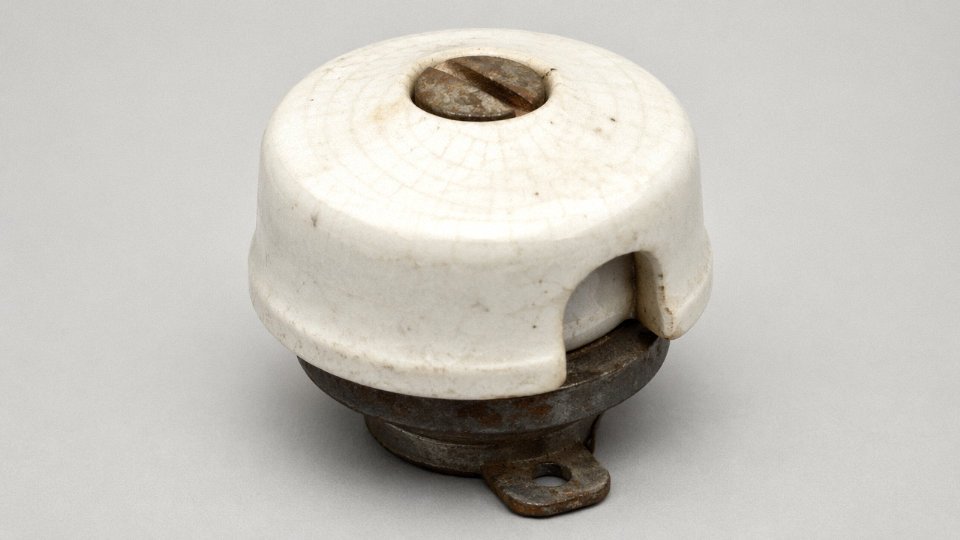
The physical signature is distinctive once you know what to look for. Knob-and-tube runs as two separate conductors — one hot, one neutral — strung through ceramic knobs (which anchor the wire to framing) and threaded through ceramic tubes wherever the wire passes through a joist or stud. There’s no jacket binding them together, and critically, there’s no ground conductor at all. This isn’t just a grounding inconvenience; it means every outlet on that circuit is inherently two-prong, and retrofitting three-prong outlets without adding a ground conductor is a code violation in most jurisdictions.
Check the attic first — that’s where it’s most visible. Basement ceiling joists are the second likely location. Behind plaster walls it’s invisible, which is part of why full identification usually requires an electrician with a non-contact voltage tester and some willingness to open up a few junction points. The insulation on knob-and-tube conductors is typically rubber or cloth-wrapped rubber, and after 60-plus years it becomes brittle, cracks with handling, and can fail at contact points. Some insurers now refuse to write policies on homes with active knob-and-tube circuits, or charge a significant premium — worth checking with your carrier before budgeting the job.
Reading the Warning Signs of an Undersized Circuit
Knob-and-tube aside, plenty of homes from the 1950s through the early 1970s were wired with 14 AWG throughout on 15-amp breakers — which was adequate for the loads of that era but struggles badly with modern kitchen appliances, bathroom devices, or any room that now hosts a computer, monitor, and space heater simultaneously.
Breakers that trip under normal use are the obvious tell. Warm outlet covers or switch plates indicate resistive heating in the conductors or connections — that’s not normal, ever. Flickering lights when a microwave or hair dryer kicks on suggest voltage drop from undersized wire feeding too much load. Burn marks or discoloration around outlets represent a situation that needs attention today, not next season.
Warm outlet cover plates always indicate dangerous wiring conditions requiring immediate attentionTrue
Warmth at an outlet cover indicates current flowing through a resistive fault — degraded connections, undersized conductors, or overloaded circuits. None of these self-correct; all create fire risk over time.
Prioritization: Where to Start
High-risk and high-load circuits first, always. Kitchen circuits — especially dedicated circuits for refrigerators, microwaves, and dishwashers — are the first priority, both because the loads are heavy and because a wiring failure near combustibles is more dangerous. Bathroom circuits follow closely, given moisture exposure. HVAC and any circuit feeding a sump pump or water heater should be evaluated before cosmetic rewiring in bedrooms or living areas.
Rough professional rewiring costs, including labor and materials, typically run $3–8 per linear foot depending on accessibility (open framing versus finished plaster walls), regional labor rates, and whether existing conduit can be reused. A whole-house rewire on a 1,500–2,000 sq ft home could therefore run anywhere from $8,000 to $20,000 or more. That range is wide because fishing wire through finished plaster walls costs dramatically more than working in an unfinished basement.
Panel Capacity: The Prerequisite Nobody Mentions Soon Enough
Here’s a practical trap: you can do everything right with the branch circuit wiring and still end up with a dysfunctional result if the panel is a 60-amp service from 1952. Adding multiple 20-amp circuits for modern loads requires a panel with enough capacity and enough slots. Upgrading from 60-amp to 100-amp service is often the minimum; 200-amp is the current standard for new residential construction and makes far more sense if you’re anticipating an EV charger, heat pump, or induction range at any point.
Panel upgrades add cost — typically $1,500–$4,000 for a service upgrade alone, depending on utility connection requirements and local permit fees — but doing the rewiring work and leaving a marginal panel in place usually means returning to the same project within a few years.
Permits and Inspection Reality
Most jurisdictions require permits for any rewiring beyond like-for-like replacement of a device. Inspectors specifically check that wire gauge matches breaker amperage — 14 AWG on a 20-amp breaker will fail inspection, and rightly so. Unpermitted electrical work creates real liability: insurance companies can deny claims if a fire investigation reveals unpermitted wiring, and disclosure requirements at resale mean you’ll either have to come clean or carry the legal risk of not doing so. The permit cost is minor relative to the total job; skipping it isn’t worth it.
International Wire Gauge Standards: How 12 and 14 AWG Translate for Global Projects and Procurement
AWG is a uniquely American inheritance — a 19th-century system that the US and Canada never abandoned — and it causes real headaches on international projects. If you’re a procurement manager sourcing residential or light commercial wire outside North America, or an engineer reviewing specs from a US client, you need a working cross-reference, not just a conversion chart you half-remember.
The Core Cross-Reference: AWG to IEC Metric Sizes
The raw cross-sectional areas don’t land on clean IEC sizes, which is where confusion starts. AWG 14 copper has a nominal conductor area of 2.08 mm², but IEC and most national standards built on IEC 60228 use 2.5 mm² as the next standard size up. AWG 12 sits at 3.31 mm², and the practical IEC equivalent is 4 mm². AWG 10 measures 5.26 mm², mapping to 6 mm².
| AWG Size | Conductor Area (actual) | IEC Standard Size Used | NEC Ampacity (60°C, Cu) | IEC / BS 7671 Typical Ampacity (clipped, 70°C PVC) |
|---|---|---|---|---|
| 14 AWG | 2.08 mm² | 2.5 mm² | 15 A | 18–20 A |
| 12 AWG | 3.31 mm² | 4 mm² | 20 A | 24–27 A |
| 10 AWG | 5.26 mm² | 6 mm² | 30 A | 32–36 A |
The IEC ampacity figures look higher, and they genuinely are — partly because IEC 60364 and BS 7671 reference tables assume 70°C conductor temperature rating on standard PVC insulation rather than the conservative 60°C column that most US residential work defaults to under NEC Table 310.12. Installation method matters enormously here: those BS 7671 figures assume reference Method C (clipped direct), not buried conduit or bundled runs. Pull three circuits through a tight conduit sleeve in a warm ceiling void and you’re applying derating factors that quickly close that gap.
Voltage Systems Change the Conductor Sizing Equation
North American residential systems run on 120 V for general-purpose circuits (with 240 V split-phase for heavy loads). The rest of the world — Europe, most of Asia, Africa, the Middle East, South America — operates on 220–240 V single-phase as the standard supply. Because power equals voltage times current, a 2,400 W load draws 20 A at 120 V but only about 10 A at 240 V. That halved current draw is the reason a 2.5 mm² conductor is genuinely adequate for most residential branch circuits under 230 V systems, covering loads that would require 12 AWG (3.31 mm²) in a North American installation.
This matters practically when you’re reviewing a bill of materials from a US-trained engineer and adapting it for a project in Southeast Asia or the Gulf. Don’t blindly substitute 4 mm² for every 12 AWG call-out. Check the voltage, check the load, and size to the local standard.
IEC 60364, BS 7671, and How They Diverge from NEC
IEC 60364 is the international framework; individual countries adopt it with local amendments. BS 7671 (the UK’s 18th Edition Wiring Regulations) is probably the most detailed national implementation and is widely referenced across Commonwealth countries, parts of the Middle East, and Africa. Both use tabulated current-carrying capacities based on installation method, ambient temperature (reference usually 30°C), and grouping factors. The NEC takes a broadly similar approach but applies its own derating methodology, and the two systems don’t produce identical results for the same conductor in the same installation — usually within 10–15% of each other for standard runs, but that margin can matter when you’re close to a breaker rating.
Harmonized Standards, HAR Mark, and Jinda’s Export Certifications
In Europe, cable sold across EU member states can carry the HAR mark (Harmonized Cable Standard), which confirms compliance with CENELEC harmonized document requirements — roughly analogous to UL listing in the US market. HAR-marked cable is manufactured to consistent cross-section, insulation, and voltage rating standards, which simplifies procurement across Germany, Poland, the Netherlands, and other member states without chasing individual national approvals.
Jinda’s production lines are certified to IEC standards, GB (Chinese national standard), and a range of country-specific standards relevant to export markets. That matters for procurement managers who need documented compliance, not just a technically adequate product.
IEC 2.5 mm² wire is a safe functional equivalent to AWG 14 for 230V residential branch circuitsTrue
At 230V, current draw for typical residential loads is roughly half that of equivalent 120V circuits, and IEC 2.5 mm² conductors carry 18–20A under standard installation conditions per IEC 60364/BS 7671 — comfortably covering the load range that 14 AWG handles at 15A on a 120V NEC circuit.
Practical Procurement Guidance for International Wire Orders
Ordering wire by AWG gauge number alone is a genuine specification risk on international projects. A supplier in Europe, China, or the Middle East will ship to their local standard, which means the conductor area, insulation material, voltage rating, and temperature rating may all differ from what a US-centric spec sheet assumes.
When writing a purchase order or RFQ for international supply, specify: conductor cross-section in mm² (not AWG), voltage rating (300/500 V or 450/750 V are the common IEC tiers), insulation and sheath type with temperature class (e.g., PVC 70°C, XLPE 90°C), applicable standard by number (IEC 60227, IEC 60502, BS 6004, or local equivalent), and stranding class if flexibility matters. AWG can sit in parentheses as a reference if the end-user is American, but it should never be the primary specification on a cross-border order. That single habit eliminates most of the gauge-equivalency disputes that slow down international projects.
Frequently Asked Questions About Residential Wire Gauge
Can I mix 12 and 14 AWG wire on the same circuit?
Technically yes, but only under one specific condition: the entire circuit must be protected by a 15-amp breaker. If you’re running a 15-amp circuit and need to extend or splice using wire you have on hand, 12 AWG on part of the run is fine — it’s oversized for the breaker, which is never a problem. The dangerous direction is the reverse. Installing 14 AWG on any portion of a 20-amp circuit means that thinner wire can carry a fault current the breaker won’t trip on until damage is already done. The breaker protects the wire, not the other way around. One undersized segment in a 20-amp circuit is all it takes for the wire to overheat inside a wall where nobody sees it.
In practice, mixed-gauge circuits often show up during renovations when someone extends an existing run without checking what’s already there. Always trace the circuit back to the panel and confirm both the breaker rating and the existing wire gauge before you add anything.
Is 12 gauge wire always better than 14 gauge for home wiring?
No, and this is a common overcorrection. Twelve AWG copper runs roughly 20–35% more per linear foot than 14 AWG, and on a whole-house project that can mean a meaningful budget difference once you’re past 1,000 feet of total wire. Beyond cost, 12 AWG is noticeably stiffer — pulling it through tight conduit bends or stuffing it into a crowded junction box takes more effort, and back-stabbing receptacles with 12 AWG is a real annoyance compared to 14 AWG.
On a properly protected 15-amp lighting circuit, 14 AWG is completely safe and fully NEC-compliant. Specifying 12 AWG everywhere doesn’t make a house “more electrical” — it just adds cost and labor. Use each gauge where the circuit load and breaker rating actually call for it.
How do I tell what gauge wire is already in my walls?
The most reliable method is reading the cable jacket directly. NEC requires manufacturers to print wire specifications on the outer jacket every few feet — you’ll see something like “14-2 WITH GROUND” or “NM-B 12/2.” Check at the panel where cables enter, or anywhere a cable is exposed in an unfinished basement or attic.
If the jacket printing is worn or the wire is old enough that markings are gone, a pair of digital calipers on a stripped conductor will tell you: 12 AWG copper measures roughly 2.05 mm in diameter, 14 AWG roughly 1.63 mm. When in doubt, have a licensed electrician inspect. Guessing wrong and then over-fusing a circuit is the scenario you’re trying to avoid.
Does wire gauge affect energy efficiency or electricity bills?
Marginally. Thicker wire has lower resistance, so I²R losses are slightly reduced. At typical residential current levels — a lighting circuit drawing 5–8 amps, say — the difference in resistive loss between 12 and 14 AWG over a 50-foot run is measurable in fractions of a watt. You won’t see it on your electricity bill. The efficiency argument makes more sense in long commercial runs or industrial feeders where currents are substantially higher, not in household branch circuits.
Using 12 AWG instead of 14 AWG on residential lighting circuits significantly reduces electricity bills.False
At typical residential current levels, the reduction in I²R losses between 12 and 14 AWG on a standard branch circuit is negligible — fractions of a watt — and produces no meaningful change in household energy costs.
What gauge wire is used for 240V circuits like dryers and ranges?
Electric dryers run on 30-amp, 240V circuits and require 10 AWG wire. Electric ranges are more demanding — most require a 50-amp circuit wired with 6 AWG, though some smaller ranges or cooktops are rated for 40-amp circuits and use 8 AWG. These are not interchangeable. Undersizing the wire on a range circuit is a serious fire risk; oversizing costs money but causes no harm. Always check the appliance nameplate for actual amperage draw before specifying the circuit.
Can I use 14 AWG wire for an outdoor outlet?
Yes, provided it’s on a 15-amp GFCI-protected circuit. Code allows it. That said, most electricians install 12 AWG on 20-amp outdoor circuits as standard practice, because outdoor outlets tend to see higher-demand tools — pressure washers, compressors, circular saws. A 15-amp circuit fed with 14 AWG will nuisance-trip regularly under that kind of load, which is an operational headache even if it’s technically safe. The incremental cost of 12 AWG on a single outdoor circuit run is small enough that it’s usually worth doing right the first time.
How does aluminum wire compare to copper in 12 and 14 AWG residential wiring?
Aluminum has lower conductivity than copper, so it requires one AWG size larger to carry equivalent ampacity — 12 AWG aluminum is roughly equivalent to 14 AWG copper in terms of current-carrying capacity. It also expands and contracts more with thermal cycling, which loosens connections over time if you use standard copper-rated terminals. Aluminum branch circuit wiring from the 1960s and 70s has a well-documented history of loose connections causing overheating at outlets and switches.
For modern residential branch circuits, aluminum is generally not recommended. It still appears in larger service entrance conductors and feeder runs where the economics make sense and the termination hardware is specified correctly — CO/ALR-rated devices, anti-oxidant compound, proper torque values. But for the 15- and 20-amp branch circuits we’re discussing throughout this article, copper remains the standard, and for good reason.