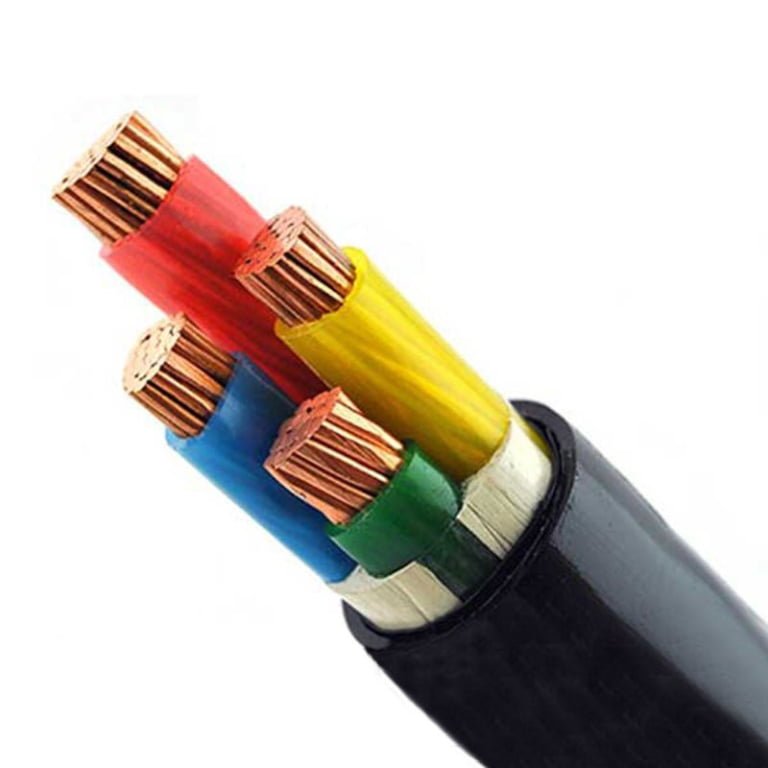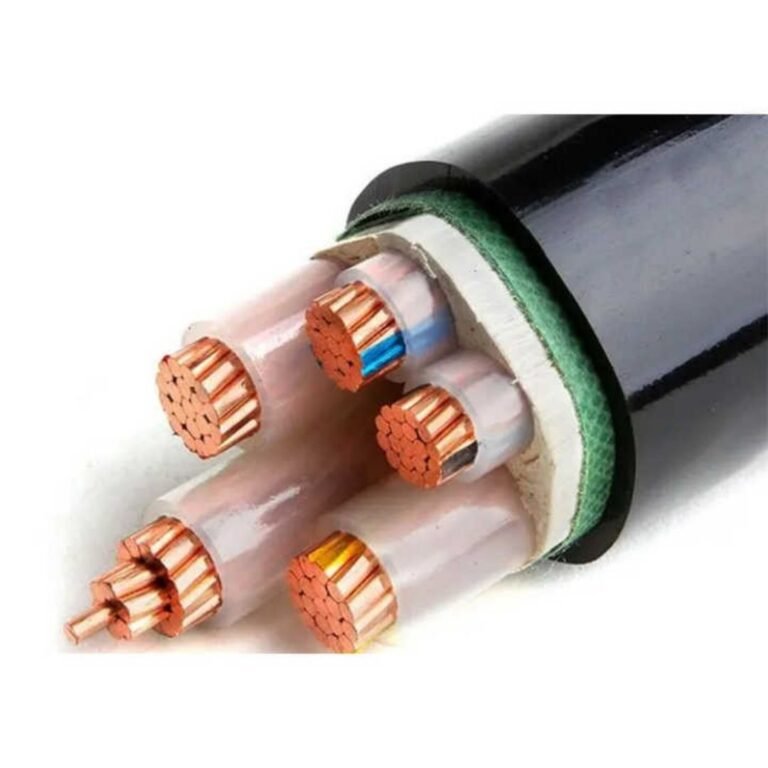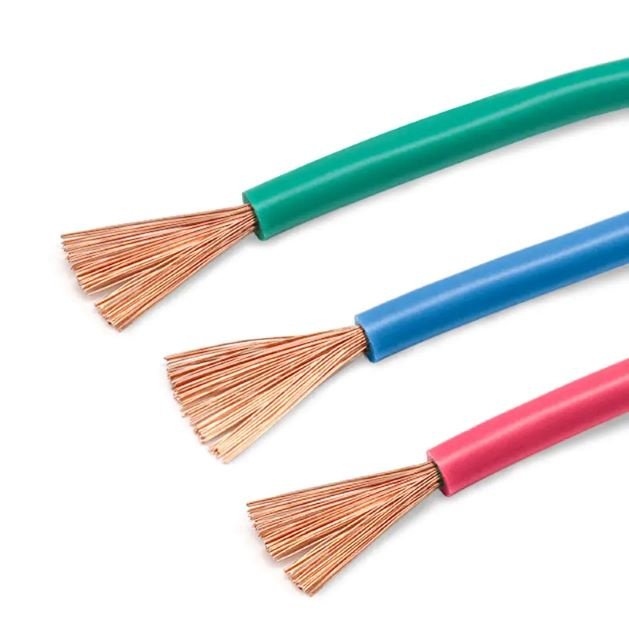
Wrong cord choice shows up fast — a tripped breaker on a Monday morning, a connector running hot enough to blister the jacket, or a machine that keeps faulting without a clear reason. Nine times out of ten, the root cause is a mismatch between what the cord was rated for and what the application actually demands: undersized conductors, insulation that can’t handle ambient temperature, or a voltage rating picked by whoever grabbed the cheapest option on the shelf. The downstream cost isn’t just the cord. It’s unplanned downtime, scrapped product, potential fire damage, and the very real liability exposure that follows an electrical incident on your floor.
Choose a power cord by matching four variables to your application: conductor cross-section (sized by load current and run length), voltage rating (300V for light appliance duty, 600V for most industrial use, 1000V for heavy machinery), temperature rating of the insulation (60°C standard PVC up to 200°C for PTFE in high-heat environments), and jacket material suited to the mechanical and chemical conditions at the installation point.
What most buyers underestimate is how those four variables interact. A cord that passes on three out of four criteria can still fail — sometimes slowly, sometimes catastrophically. The sections below walk through each decision point the way you’d actually work through it on a real procurement or installation job.
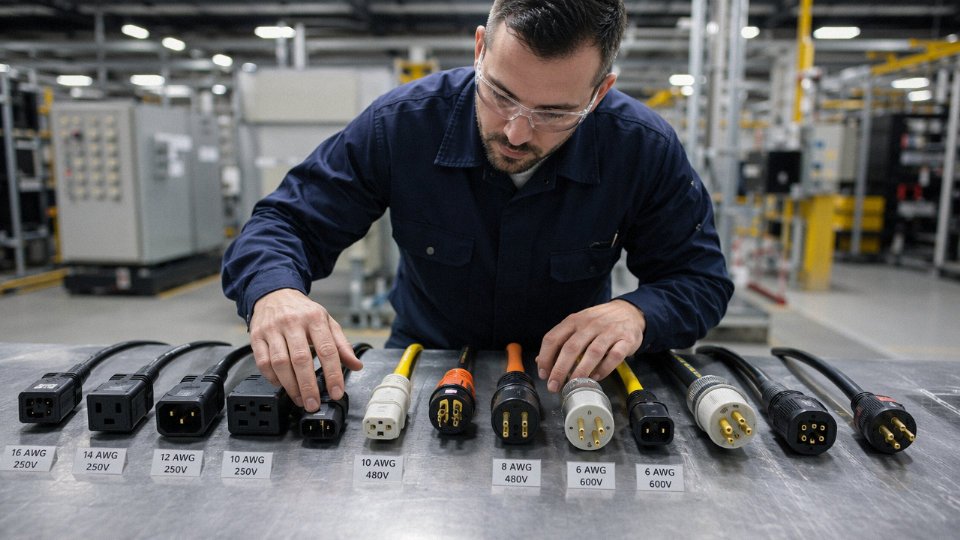
Calculate the Correct Conductor Size for Your Load Current and Voltage Drop
Getting the conductor size wrong is the most common procurement error I see — and it almost never shows up immediately. The cord works fine at startup, runs warm for six months, then the insulation degrades or a terminal overheats and someone calls it a “random failure.” It wasn’t random.
Step 1: Find Your Actual Operating Current
Start with the nameplate. Take the rated wattage (or VA for inductive loads) and divide by the supply voltage. A 2,400 W floor heater on a 120 V circuit draws 20 A. On 230 V, that same heater draws roughly 10.4 A — conductor sizing changes completely depending on which market you’re supplying.
Then apply the continuous load derating. Both NEC and IEC guidelines treat any load running longer than three hours as “continuous” and require you to size the cord’s ampacity at 125% of the load — equivalently, the load should not exceed 80% of the cord’s rated ampacity. A 20 A continuous load therefore needs a cord rated for at least 25 A. Skip this step and you are systematically running conductors above their thermal design point.
Step 2: Check Voltage Drop Over the Run Length
Voltage drop matters more than most procurement specs acknowledge. IEC 60364-5-52 recommends keeping the drop in final circuits at or below 4% of nominal voltage. For a 230 V supply that’s 9.2 V maximum; for 120 V it’s 4.8 V. Motors and variable-frequency drives are particularly sensitive — a sustained 5–6% drop on a motor cord shortens bearing life and increases winding temperature.
The formula is straightforward:
V_drop = (2 × L × I × ρ) / A
Where L is cord length in meters, I is current in amperes, ρ is resistivity of copper (approximately 0.0172 Ω·mm²/m at 20°C, rising to roughly 0.0200 at 75°C — temperature matters), and A is conductor cross-section in mm².
Worked example: a 15 A load, 10-meter cord, 1.5 mm² copper conductor at 20°C.
V_drop = (2 × 10 × 15 × 0.0172) / 1.5 = 3.44 V
On a 230 V circuit that’s 1.5% — fine. On a 120 V circuit it’s 2.9% — still acceptable but getting close if ambient temperature is high and resistivity creeps up. Upgrade to 2.5 mm² and the drop falls to around 2.1 V, which gives you real headroom.
AWG-to-mm² Cross-Reference with Ampacity by Temperature Rating
| AWG | mm² (approx.) | Ampacity at 60°C insulation | Ampacity at 75°C insulation | Ampacity at 90°C insulation |
|---|---|---|---|---|
| 18 | 0.75 | 7 A | 10 A | 10 A |
| 16 | 1.5 | 13 A | 15 A | 18 A |
| 14 | 2.5 | 20 A | 20 A | 25 A |
| 12 | 4 | 25 A | 25 A | 30 A |
| 10 | 6 | 30 A | 35 A | 40 A |
| 8 | 10 | 40 A | 50 A | 55 A |
Ampacity figures are for single cords in free air. Conduit, bundling, or enclosed channels reduce these — sometimes significantly.
AWG 14 copper conductor is rated for 20 A at 60°C insulation in free air per NEC Table 310.16 and comparable IEC guidance.True
NEC 310.16 lists AWG 14 (2.5 mm²) at 20 A for 60°C-rated insulation in free air; IEC 60228 and 60364 align closely for equivalent cross-sections under similar installation conditions.
The Sizing Mistakes That Actually Show Up in the Field
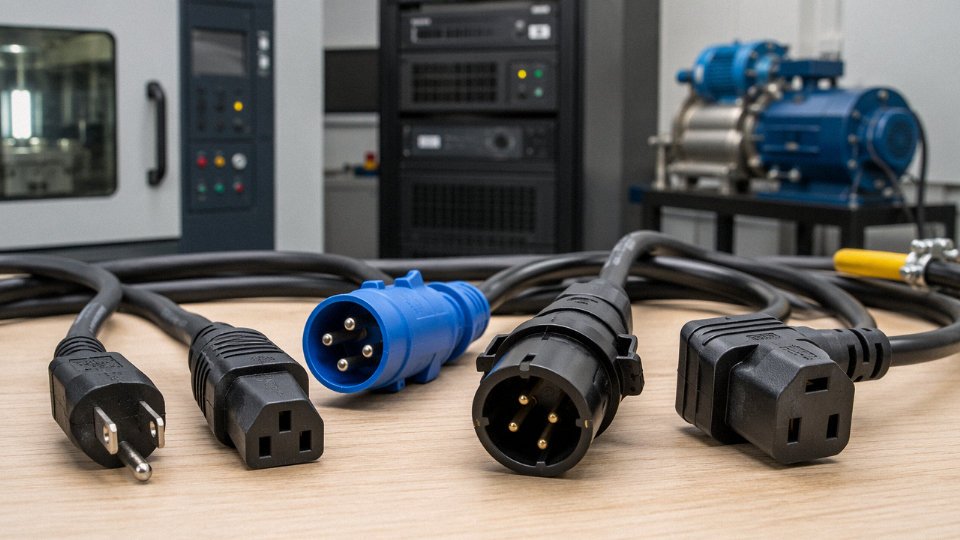
Choosing the cord that fits the plug is probably the most widespread error in low-volume procurement. A standard IEC C13 plug accepts a range of cord gauges — the connector geometry tells you nothing about the required conductor size.
Bundling derating gets ignored constantly. Run three 16 A cords through the same cable tray touching each other and you need to derate ampacity by roughly 70–80%, depending on grouping. That’s the difference between a 15 A cord being acceptable and being a fire risk.
Ambient temperature correction is often applied backwards — people use the correction factor to justify a smaller conductor in a warm environment rather than using it to flag that their selected size is now undersized. In a foundry or a bakery where ambient temperatures hit 45–50°C regularly, a cord rated fine at 30°C may need to step up one full cross-section size.
Quick-Reference Sizing Rule of Thumb
For PVC-insulated flexible cords in open air at 30°C ambient:
- 0.75 mm² — up to approximately 6 A
- 1.5 mm² — up to approximately 10 A
- 2.5 mm² — up to approximately 16 A
- 4 mm² — up to approximately 25 A
- 6 mm² — up to approximately 32 A
These are starting points, not substitutes for the voltage drop check. A 6 A load on a 30-meter run may need 1.5 mm² purely for voltage drop reasons, even though 0.75 mm² handles the thermal load easily. Run both calculations; use whichever gives the larger conductor.
Match Voltage and Frequency Ratings to Your Specific Electrical System
Conductor sizing gets most of the attention, and rightly so — but a cord that’s correctly sized for current can still fail an audit, arc through its insulation, or trip a regional safety certification if the voltage rating is wrong. This is especially true on export projects, where the same physical cord may need to satisfy three different national standards simultaneously.
Rated Voltage Is Not the Same as Test Voltage
Every IEC-format cord carries a dual voltage designation — something like 300/500 V or 450/750 V. The first figure is the conductor-to-ground (phase-to-neutral) rating; the second is conductor-to-conductor. What that designation actually means in practice is that the cord’s insulation must survive a dielectric withstand test voltage considerably higher than either number. A 300/500 V cord per IEC 60227 must pass a 2,000 V AC withstand test. Step up to a 450/750 V cord and the test voltage rises to 2,500 V. These aren’t arbitrary margins — they account for switching transients, capacitive coupling on long cable runs, and the kind of voltage spikes that variable-frequency drives inject into a system that was never designed for them.
If you specify a 300 V-rated cord on a 230 V single-phase circuit, the math looks safe on paper: 230 V is below 300 V. The problem shows up when a local inspector or third-party auditor checks the cord against, say, BS 6500 or the HAR H05VV-F harmonization document. Both standards mandate a minimum 300/500 V rating for cords used in general wiring applications in those markets — not because 300 V alone is insufficient, but because the 500 V conductor-to-conductor rating and the associated 2,000 V dielectric test are what those standards consider the minimum safe construction. Shipping a 300/300 V appliance-grade cord into that market is a spot-check failure waiting to happen.
A 300/500 V IEC 60227 cord must pass a 2,000 V dielectric withstand test, not merely a 300 V or 500 V test.True
IEC 60227 specifies that the test voltage for 300/500 V rated flexible cords is 2,000 V AC applied for a defined duration. The dual voltage designation describes system voltage limits, while the withstand test voltage is a separate, higher qualification requirement built into the standard.
How 50 Hz vs. 60 Hz Changes the Equation
Frequency matters less for the cord’s insulation than it does for the equipment being powered — but the two are linked in ways that bite you during cord sizing if you’re not paying attention.
Motors running on 60 Hz systems have higher synchronous speeds than the same frame running at 50 Hz. Higher speed at startup means higher inrush current, often 6–8× full-load amperage versus perhaps 5–7× on a 50 Hz supply, depending on motor design and whether a soft-starter is in the circuit. That inrush spike lasts only a second or two, but it determines the thermal stress the cord sees during every startup cycle over its service life. On a 60 Hz production line with frequent motor starts — a compressor cycling on and off, a conveyor with regular load changes — a cord sized purely for steady-state running current on a 50 Hz assumption can run noticeably hotter. It won’t trip immediately, but it ages faster.
In practice, if you’re sourcing cords for machinery destined for North America (60 Hz) and you’re used to specifying for European 50 Hz systems, it’s worth adding one conductor size step on motor supply cords as a conservative buffer, particularly where ambient temperatures are already elevated.
Three-Phase Systems and the Phase-to-Phase Trap
Single-phase thinking causes real problems on three-phase procurement. A 208 V three-phase system — common in North American commercial buildings — has a phase-to-neutral voltage of roughly 120 V, but phase-to-phase is 208 V. A 240 V European single-phase supply and a 240 V leg on a US delta system are not the same thing electrically, and cords connected across phases on a 415 V (phase-to-phase) system need to be rated for 415 V conductor-to-conductor, not just 240 V phase-to-neutral. Mixing these up is how you end up with insulation that’s marginal under normal conditions and fails under any transient load.
For three-phase cords on 415/480 V systems, the minimum sensible specification is a 450/750 V rated cord — which means that 2,500 V dielectric test. A 300/500 V cord is undersized for the conductor-to-conductor exposure.
Production Range and Export Matching
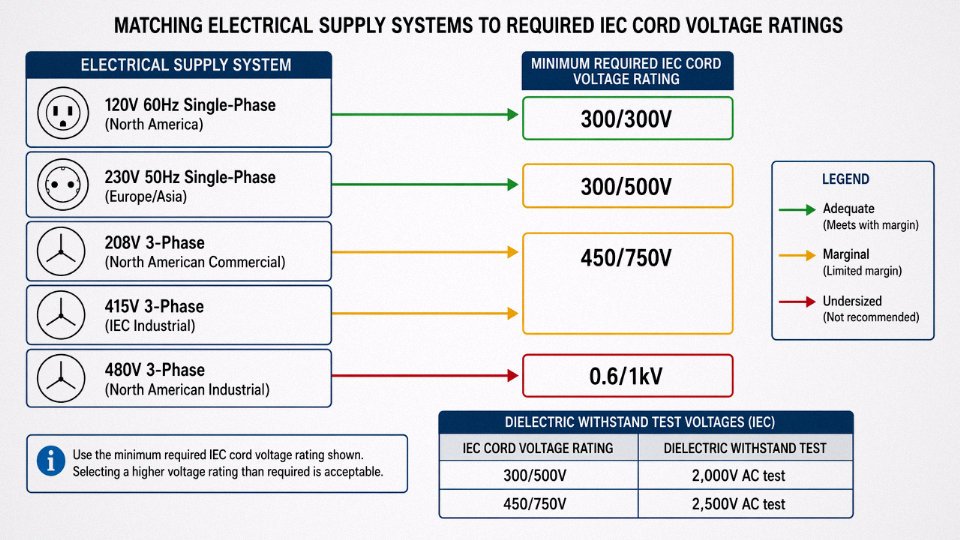
Jinda’s manufacturing lines across the five production bases cover the full range from 300/300 V light appliance cords through 300/500 V and 450/750 V flexible cords up to 0.6/1 kV industrial constructions — the same spectrum you’d need to supply a household goods brand, an industrial machinery OEM, and a construction site distribution system from a single supplier. For procurement managers running multi-region programs, that matters because it keeps certification traceability and conductor construction consistent across SKUs rather than mixing sources with different quality systems.
The practical rule: always specify cord voltage rating relative to the conductor-to-conductor exposure in your target system, confirm the dielectric test voltage that rating demands, and check the destination market’s harmonized standard before finalizing the BOM. The cord that passes in one market may fail a customs or safety audit in another not because it’s defective, but because it was specified to the wrong tier.
Select Insulation and Jacket Materials Based on Environmental Exposure
Material selection is where a lot of procurement decisions quietly go wrong. The conductor sizing gets attention; the insulation compound often doesn’t — until a cord jacket cracks in a cold warehouse, or a machine tool cord swells and softens next to a hydraulic leak, or a cord fails a CE inspection because the compound isn’t REACH-compliant. Each of those failures traces back to the same root cause: the material wasn’t matched to the actual deployment environment.
PVC: The Default That Works — Until It Doesn’t
Standard PVC (polyvinyl chloride) dominates the global market for appliance cords, light-duty extension cords, and indoor wiring accessories, and for good reason. It’s inexpensive, easy to extrude, self-extinguishing, and perfectly adequate in a dry indoor environment between roughly −15°C and +70°C. Most of the H03VV-F and SVT-type cords you see on consumer appliances worldwide use flexible PVC for both insulation and outer jacket.
The problems start at the edges of that operating window. Below −15°C, standard PVC compounds become brittle and can crack under flex — a real issue in cold storage facilities or outdoor installations in northern climates. Oil resistance is only moderate; PVC swells and softens when continuously exposed to petroleum-based fluids, which rules it out near machine tool coolants, hydraulic lines, or any environment where drips are routine rather than occasional.
Neoprene and Rubber: The Industrial Workhorse
For portable tools, outdoor construction equipment, welding leads, and anything that gets dragged across a concrete floor or left outside in January, rubber and neoprene compounds are the standard answer. The IEC H07RN-F designation is the benchmark here — a harmonized cord type built for exactly this kind of punishment. Neoprene stays flexible down to around −40°C, resists oils, fuels, and abrasion far better than PVC, and handles the physical abuse of job sites in a way that PVC simply cannot.
The trade-off is cost and weight. Rubber-jacketed cord runs noticeably heavier than comparable PVC cord, and it costs more per meter. In a factory setting where cords are managed and stored, that’s acceptable. For cost-driven OEM appliance applications, it usually isn’t.
XLPE: Better Thermal Ceiling, Better Chemistry Resistance
Cross-linked polyethylene raises the continuous temperature rating to 90°C — meaningfully higher than standard PVC — and improves resistance to a broader range of chemicals. It’s a common choice for semi-permanent industrial installations, higher-ampacity cords running near motors or heating elements, and anywhere the cord is routed in conduit or tray and won’t be flexed repeatedly. XLPE doesn’t have the low-temperature flexibility of rubber, and it’s not the right choice for a cord that gets coiled and uncoiled daily.
XLPE insulation provides better oil resistance than standard PVCTrue
Cross-linking the polyethylene polymer chains creates a denser molecular structure that resists swelling and degradation from petroleum-based fluids more effectively than the plasticizer-heavy formulations used in standard flexible PVC compounds.
Silicone: When Temperature Is the Dominant Constraint
Silicone insulation is in a different category from the others. Rated continuously at 180–200°C, it’s the correct choice for oven interconnects, industrial heating equipment, infrared lamp wiring, and similar high-heat applications. It’s genuinely soft and flexible — more so than PVC — but that softness is also a handling liability. Silicone jackets pick up surface nicks and cuts easily, and once the jacket is breached, you can’t repair it cleanly. It costs roughly two to four times what a comparable PVC cord costs, depending on conductor count and cross-section, so specifying it where PVC or XLPE would do the job is just waste.
TPE and TPU: The Compliance-Driven Choice
Thermoplastic elastomers and thermoplastic polyurethane compounds have been gaining ground in European markets for several years, driven largely by RoHS and REACH requirements. They’re recyclable, halogen-free, and can be formulated for good UV resistance — properties that PVC struggles to match cleanly without additives that create their own compliance headaches. TPU in particular offers excellent abrasion resistance and is increasingly common in robotics cable tracks and applications with continuous flexing cycles.
Oil and Chemical Resistance at a Glance
| Environment | PVC | Neoprene/Rubber | XLPE | Silicone | PTFE |
|---|---|---|---|---|---|
| Petroleum oils and hydraulic fluids | Moderate | Good | Good | Fair (avoid aromatics) | Excellent |
| Food-grade oils and fats | Poor–Moderate | Fair | Moderate | Good | Excellent |
| Acids and alkalis (dilute) | Moderate | Moderate | Good | Good | Excellent |
| UV / outdoor weathering | Poor | Good | Moderate | Good | Excellent |
| Continuous heat above 90°C | No | No | Borderline | Yes | Yes |
PTFE deserves a note here even though it’s rarely used as an outer jacket. In laboratory instrumentation, petrochemical sensor leads, and food processing lines that require repeated steam cleaning, PTFE’s chemical inertness is unmatched. It’s expensive and mechanically fragile — don’t specify it where a less exotic compound will hold up, but don’t ignore it where nothing else will.
Flexibility Class: Matching Strand Construction to the Application
IEC 60228 defines conductor flexibility classes, and the class you specify has a direct effect on which insulation compounds are even practical. Class 1 is solid conductor — fixed wiring only, not appropriate for any cord that moves. Class 2 is stranded, suitable for fixed installation but not repeated flexing. Class 5 is the standard flexible cord construction used in most portable appliance cords and extension leads; the individual strands are fine enough to handle regular coiling and movement without fatigue cracking over time. Class 6 is extra-flexible, with even finer stranding, and is what you want for hand-held power tools, robot arm cables, and any application involving continuous or high-cycle motion.
The practical consequence of getting this wrong: a Class 2 conductor in a hand-held grinder will develop strand breaks within months under the flex cycling the tool sees in normal use. The resistance climbs, the conductor runs hot, and eventually you’re looking at either a warranty return or an incident report. Class 5 or 6 costs a bit more in conductor material, but it’s the only sensible answer for anything that moves regularly.
Decode International Plug, Connector, and Coupler Standards Before Specifying
Getting the conductor size right and then specifying the wrong termination for the target market is one of the most expensive mistakes in OEM cord procurement. You end up with a container of finished cords that can’t be sold into the UK, or a server rack PDU order held at customs because the C13 connector is rated for the wrong temperature class. Rework at the assembly stage — reterminating, retesting, relabeling — typically costs 3 to 8× more than getting the spec right on the drawing.
IEC 60320 Appliance Couplers: The Standard Most Engineers Think They Already Know
IEC 60320 is the backbone of appliance cord termination globally, but the sub-type details matter more than most procurement checklists acknowledge.
| Coupler Pair | Rated Current | Rated Voltage | Max Temp at Connector | Typical Application |
|---|---|---|---|---|
| C5 / C6 | 2.5 A | 250 V | 70°C | Laptop “cloverleaf” cords |
| C13 / C14 | 10 A | 250 V | 70°C | PCs, monitors, AV equipment |
| C15 / C16 | 10 A | 250 V | 120°C | Electric kettles, hot appliances |
| C19 / C20 | 16 A | 250 V | 70°C | Server PDUs, UPS equipment |
The C13 and C15 look nearly identical — a common source of field errors. The C15 has a small notch on the bottom of the connector that prevents it from mating with a standard C14 inlet. If you’re specifying a cord for any appliance where the inlet runs hot (a kettle element housing, a small boiler control panel, a commercial coffee machine), use C15/C16. Using a C13 in that application isn’t just a spec violation; the connector housing can deform under sustained heat, eventually causing intermittent contact or worse.
NEMA Types for North American Markets
For anything going into the US or Canada, UL listing of the complete cord assembly is effectively mandatory for most product categories — not just recommended. The plug and connector must be listed components assembled into a listed cord set.
NEMA 5-15 (15 A, 125 V, the standard flat-blade plug) covers the vast majority of household and light commercial equipment. Once your load calculation pushes the continuous draw above roughly 12 A — which is 80% of 15 A, the NEC derate threshold — you’re looking at NEMA 5-20, which has one horizontal blade for polarity/current capacity identification and requires a 20 A circuit. NEMA 6-20 steps up to 250 V for equipment like large air compressors or commercial HVAC. For higher-current portable equipment that needs to stay connected — industrial machinery, portable generators — the NEMA L6-30 locking configuration prevents accidental disconnection under vibration or incidental contact. The twist-lock mechanism is the point; it’s not just about current rating.
CEE 7 and the Grounding Pin Problem
Europe is not uniform. The CEE 7/4 Schuko (Germany, Austria, most of Central and Eastern Europe) grounds through side clips on the socket, with the cord’s plug carrying no grounding pin of its own. The French CEE 7/5 uses a grounding pin that protrudes from the socket — the plug has a hole to receive it. The CEE 7/7 hybrid plug works in both socket types, which is why it dominates multi-market consumer product cords.
The operational consequence: if your assembly line is building cords for a single European market and the wrong CEE 7 variant gets specified, the cord either won’t seat properly or won’t establish a ground connection. Either way, you fail the market’s certification inspection. For OEM cord procurement covering multiple European countries, specify CEE 7/7 unless the end product’s compliance documentation explicitly restricts market to one country.
BS 1363 and the UK Fused Plug
BS 1363 — used in the UK, Hong Kong, Singapore, Malaysia, and a handful of other former British territories — mandates a fused plug. Every cord assembly for these markets carries either a 3 A or 13 A fuse inside the plug body. The fuse selection depends on the appliance, not the cord’s conductor capacity.
A 13 A fuse is always the right choice for UK plugs because the socket circuit is already protected by a 13 A breakerFalse
The fuse in a BS 1363 plug protects the cord and appliance, not the circuit. A lamp or small appliance drawing 1–2 A should use a 3 A fuse. Using a 13 A fuse in a low-current appliance cord means the fuse provides no meaningful overcurrent protection for that cord — a fault will damage the appliance wiring before the fuse opens.
In practice, 3 A fuses go in cords for lamps, small electronics, and appliances below roughly 700 W. Anything above that — kettles, toasters, larger equipment — gets the 13 A fuse. It’s a simple rule but frequently ignored in bulk OEM procurement where a single fuse rating gets specified across an entire product line to simplify inventory.
IEC 60309 Industrial Plugs
For construction sites, marinas, outdoor events, and industrial facilities running temporary or semi-permanent power, IEC 60309 (sometimes called “Ceeform”) is the correct system. Color coding is standardized by voltage and frequency: yellow for 100–130 V, blue for 230 V at 50 or 60 Hz, red for 400 V three-phase. The color immediately signals to the electrician what circuit the cord belongs on, which matters when you have six different power feeds running across a stage or festival site.
Strain Relief: The Failure Point Nobody Inspects Until It’s Too Late
Both UL 498 and IEC 60884 specify minimum pull-out force requirements at the cord-to-plug and cord-to-connector interfaces — typically in the range of 30 to 50 N depending on cord diameter and connector type. Strain relief failures are among the leading causes of warranty returns in OEM appliance cord programs, usually because a lower-cost bushing was substituted during a cost-reduction exercise without retesting. The conductor insulation takes the mechanical stress instead of the jacket, and after a few hundred flex cycles the conductor strands begin to break. You won’t see it until the appliance starts cutting out intermittently or the end user files a return.
Specify strain relief by cord outer diameter range and verify it against the actual jacket OD on your approved sample — not the nominal spec on the datasheet, which can run ±0.3 mm or more depending on the extruder setup that day.
Navigate the Mandatory Safety Certifications Required by Each Target Market
Getting the conductor size right and picking the correct insulation material are engineering problems. Certification is a legal and commercial problem — and confusing the two will get your shipment held at customs, your product pulled from a retailer’s shelf, or your OEM customer’s production line stopped while they wait for a re-qualified replacement cord. Every major market has its own certification body, its own testing protocol, and its own marking requirement. None of them fully recognize each other, which means a cord that’s perfectly legal in Germany may be technically non-compliant the moment it lands in a Japanese factory.
North America: UL and CSA Are Not Optional
In the United States, flexible power cords fall under UL 62. In Canada, the equivalent is CSA C22.2 No. 49. Both require the cord to be manufactured at a facility that has passed an initial factory inspection and continues to receive quarterly follow-up inspections by the certifying body. That last point catches a lot of importers off guard — the mark on the cord is only as good as the factory’s current approval status. A supplier whose UL listing has lapsed due to a missed inspection cycle can ship you product that looks compliant but isn’t. Always request a current, dated confirmation of listing status directly from UL’s online database, not just the supplier’s word.
The marks themselves matter too. “UL Listed” applies to complete cord sets. “UL Recognized” (the backward UR mark) applies to components — acceptable for internal wiring inside an appliance, not for a detachable cord sold as a finished product. Many procurement teams conflate these and end up with the wrong mark for their intended application.
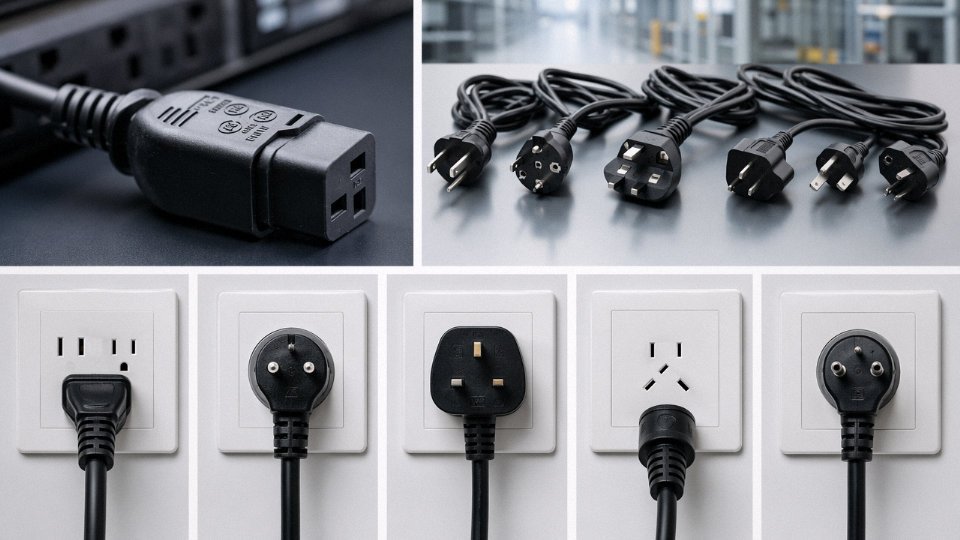
Europe: HAR Is the Passport, VDE Is the Auditor
The HAR marking system, administered under a CENELEC multilateral agreement, is the mechanism that allows a cord certified by one European notified body to circulate freely across EU and EEA member states. VDE (Germany), KEMA (Netherlands), ASTA (UK, pre-Brexit), and IMQ (Italy) all issue cords bearing the HAR mark — a distinctive lozenge shape with the letters HAR — meaning a VDE-certified cord doesn’t need separate Italian or Belgian approval. Post-Brexit, UK has diverged somewhat; UKCA marking is now required for the Great Britain market, though Northern Ireland retains CE/HAR recognition. For most export programs targeting continental Europe, specify HAR-marked cord and confirm which notified body issued it.
China: CCC and the GB 5023 Series
CCC (China Compulsory Certification) under the GB 5023 series is mandatory for any cord sold or used in China — there’s no exemption for industrial use or OEM supply. A common confusion in procurement: GB 5023 (mandatory standard) versus GB/T 5023 (recommended standard, the “T” indicating it’s not legally compulsory). If your cord is entering Chinese distribution or being installed in equipment sold locally, it must meet GB 5023, not just GB/T 5023. The CCC mark must appear on the cord itself, not just on packaging.
A cord bearing only GB/T 5023 compliance is legally sufficient for sale in the Chinese domestic market.False
GB/T 5023 is a recommended standard. GB 5023 is the mandatory standard underpinning CCC certification. Cords sold or installed in China must carry the CCC mark under GB 5023 requirements.
Japan: PSE and the Diamond vs. Circle Distinction
Japan’s PSE mark under the Electrical Appliance and Material Safety Act has two forms that mean very different things. The diamond-shaped PSE applies to “specified” appliances — those considered higher risk — and requires third-party certification plus METI registration. The circle PSE applies to “non-specified” appliances and allows self-declaration, though METI registration is still required. Power cords for most household and general-purpose equipment fall under the circle PSE category, but cords integral to specified appliances (certain heaters, for example) may pull the diamond requirement. Misidentifying the category and self-declaring a diamond-PSE product is a serious compliance failure.
Australia, New Zealand, South Korea, and Emerging Markets
RCM — the Regulatory Compliance Mark — replaced both C-Tick and A-Tick in Australia and New Zealand starting 2016. Testing is against AS/NZS 3191 for rubber flexible cords and AS/NZS 3112 for plug and socket-outlet dimensions. The RCM mark is applied by the responsible supplier and registered with the national database; it’s not issued by a third-party body in the same way UL is, but the underlying test reports must exist and be traceable.
South Korea requires the KC mark under KATS (Korean Agency for Technology and Standards). Saudi Arabia now mandates SASO certification, which has expanded aggressively over the past several years and catches many exporters unprepared. India’s BIS IS 694 is increasingly enforced for cords entering that market — historically compliance was loose, but that’s changing, and global OEMs sourcing for Indian production facilities are starting to require documented BIS compliance from their cord suppliers.
Running Multi-Market Programs Without Multiple Suppliers
In practice, managing separate cord suppliers for each certification region creates version-control headaches, longer lead times, and higher minimum order quantities. Jinda’s certified product lines — covering UL, CE, VDE, CCC, SAA, PSE, and KETI — are produced across five manufacturing bases in China, all operating under the corresponding body’s factory surveillance program. For an OEM shipping the same appliance to North America, Europe, Australia, and Japan, that means a single qualified source can supply market-specific cord variants with the correct marks, rather than the procurement team stitching together four separate supplier relationships and auditing each one independently.
The certification landscape shifts — new marks appear, existing ones tighten their factory audit requirements, and post-Brexit UK divergence is still settling. Building a supplier relationship where the factory carries current, auditable certification across your target markets is worth more than chasing the lowest unit price on a cord that may not clear customs.
Apply Special Considerations for High-Flex, High-Temperature, and Outdoor Applications
Standard power cord selection logic breaks down fast once you leave the world of stationary equipment. Robotics cells, industrial ovens, outdoor construction sites, and cold-storage facilities each impose mechanical or environmental stresses that a generic cord simply wasn’t designed to survive. Getting this wrong isn’t a minor inefficiency — it’s a fire risk, a warranty void, or a production line stopped at 2 a.m.
High-Flex and Continuous-Motion Cords
A cord flexing a few times a day is a different animal from one cycling thousands of times per shift in a drag chain or robot arm. For continuous-motion applications, the conductor construction matters more than almost anything else. You need Class 6 fine-wire stranding per IEC 60228 — bundles of very fine copper wires that distribute bending stress across a much larger cross-sectional area than Class 2 solid or coarse-stranded conductors. Tinned copper is worth specifying here; bare copper work-hardens and oxidizes at flex points over time, and tinning slows both processes meaningfully.
Jacket material is equally critical. TPU (thermoplastic polyurethane) handles repeated flexing well and resists abrasion, oils, and many solvents — a realistic combination in most automation environments. Some manufacturers offer special high-flex PVC formulations, but in practice TPU outperforms them in cycle life. Flex cycle ratings of 10 million cycles are achievable with the right construction; standard cordage will fatigue-crack in the hundreds of thousands at best.
Bending radius discipline matters in installation. Keep the operating bend radius above 7.5× the cord’s outer diameter. Below that, even a well-specified cable starts accumulating fatigue damage in the outer conductor strands. Drag-chain cables also need their lay length — the pitch of the spiral twist — optimized for the chain’s travel distance and radius. Too short a lay and the conductors bunch under compression; too long and they stretch under tension. Either way, insulation cracks within weeks. A standard power cord dropped into a drag chain without these design features typically fails in under a month of two-shift operation. It’s a very common and very avoidable mistake.
High-Temperature Environments
Above roughly 70°C ambient — near ovens, heat-sealing platens, furnace doors, or heat-shrink tunnels — standard PVC insulation starts softening and losing dielectric integrity. Don’t use it there. The consequences range from insulation migration that shorts conductors to full jacket failure and ignition.
Silicone-insulated braided cords handle continuous service up to around 150–180°C depending on compound grade. For more aggressive environments, fiberglass-braided nickel-plated copper conductors push service temperature to roughly 260°C, though these are less flexible and need careful termination to avoid fraying the braid. PTFE-insulated cords rate to 200°C continuous and tolerate chemical exposure well, but they’re expensive and the fluoropolymer jacket is relatively low-abrasion-resistance — acceptable inside a control cabinet, less ideal on a plant floor where cords get dragged across grating.
Welding machine leads are a specific sub-case. They carry high current with an inductive, duty-cycled load that generates real I²R heating in the conductor itself. The appropriate standard is IEC 60245-6 (designation H01N2-D), rubber-jacketed and rated to 100°C. For a 200 A MIG welder, 16 mm² conductor cross-section is the practical minimum; step up to 35 mm² for 400 A industrial units, especially with long lead runs. Undersizing a welding cable doesn’t just waste energy — it runs hot, degrades the rubber jacket, and creates a burn or fire hazard right at the operator’s hands.
Outdoor, Wet-Location, and Cold-Temperature Cords
For North American outdoor service, the SJTW designation indicates a thermoplastic jacket with water resistance; SJOOW is the rubber-jacketed equivalent offering better cold flexibility and oil resistance. In European markets, H07RN-F (heavy rubber, outdoor-rated) and H05RR-F (light rubber) are the standard go-to designations for wet and outdoor portable applications. Both families require UV-stabilized jacket compounds, water-resistant construction throughout, and a ground conductor. The cord’s environment rating, however, only tells half the story — the IP rating of whatever connector or plug terminates the cord must match. A cord rated for wet locations terminated with an unprotected IP20 connector negates the whole specification.
Standard PVC power cords become brittle and crack at temperatures below approximately −10°C.True
Standard PVC plasticizer migrates out or loses mobility at low temperatures, causing the jacket to stiffen and crack under flex stress. This is well-documented in IEC and material data sheets for general-purpose PVC compounds.
Cold storage, outdoor winter event power distribution, and Arctic field equipment all expose cords to temperatures that standard PVC simply can’t handle flexibly. Neoprene and EPR (ethylene propylene rubber) retain flexibility down to −40°C or so, depending on compound. Specially formulated cold-flex PVC is a lower-cost option rated to around −30 to −40°C — it works, though rubber compounds generally hold up better over repeated thermal cycling. If your facility runs refrigerated warehouses or you’re supplying portable power for winter construction, this is a spec point worth building into your procurement standard rather than figuring out after the first batch of cracked jackets.
Evaluate Cord Length, Color Coding, and Mechanical Protection to Finalize the Specification
By the time you’ve settled on conductor size, insulation material, voltage rating, and the right plug standard, it’s tempting to treat the rest as administrative. Don’t. Length, color coding, mechanical protection, and jacket marking are where a technically sound specification quietly falls apart — usually discovered during installation or, worse, a failed market-entry inspection.
Length and Voltage Drop Are Not a One-Time Calculation
The voltage drop calculation covered earlier in this article gives you a starting point, but length compounds the problem in ways that aren’t always intuitive. A 1.5 mm² cord carrying 10 A at 230 V drops roughly 2.3 V over 10 meters — about 1.0%, well within the IEC 60364 guidance of 3–5% for final circuits. Stretch that same cord to 50 meters and the drop climbs to around 11.5 V (5%), which either sits at or exceeds the acceptable limit depending on which national annex you’re working to. Move to 4 mm² and the 50-meter drop falls back to approximately 4.6 V. In practice, any run beyond 25–30 meters carrying more than 8–10 A should trigger an automatic upsize review.
There’s a secondary effect worth noting: longer cords also have higher resistance, which means they run warmer under the same load. For a cord bundled in a cable tray or coiled on a reel — both common field habits — the heat can’t escape as efficiently. Ampacity derating for bundled or coiled cords typically runs 15–30% depending on how many conductors are grouped and whether the reel is fully or partially unwound. Always specify the cord for the worst-case scenario, not the ideal one.
Conductor Color Codes: A Genuine Installation Hazard
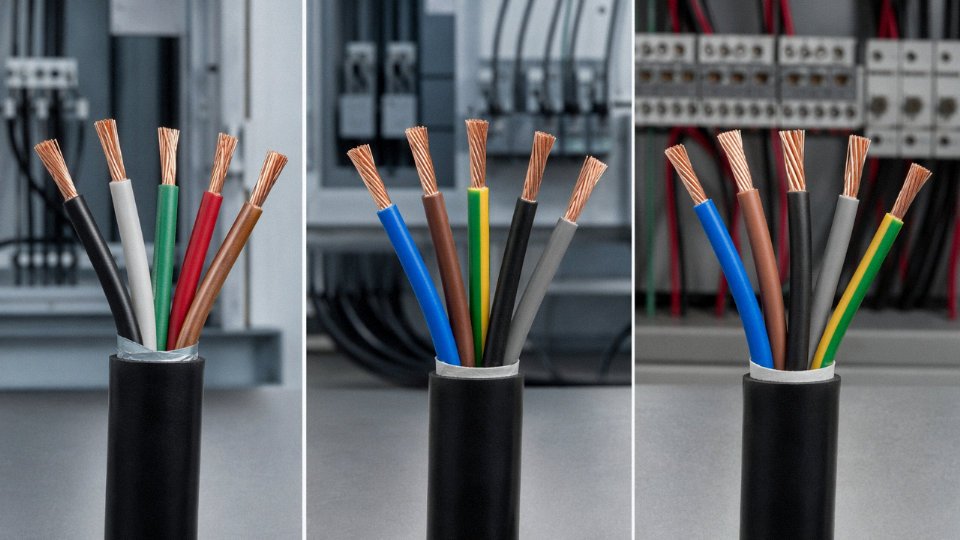
Color coding errors cause real accidents. The IEC/European scheme is now the most widely adopted: brown for Line, blue for Neutral, green-yellow for Earth. North America runs black (Hot), white (Neutral), green (Ground). Pre-2004 UK wiring used red for Live and black for Neutral — the same black that IEC systems assign to a different phase in three-phase work. A maintenance technician switching between legacy UK equipment and modern IEC-coded cords in the same facility is looking at a serious confusion risk.
Australia and New Zealand aligned with IEC in 2000, so brown = Active, blue = Neutral, green-yellow = Earth — but older installed equipment in those markets may still carry the legacy scheme. For three-phase cords, the new IEC colors are brown, black, and grey (L1/L2/L3), while legacy European practice used red, yellow, and blue. Always confirm which scheme applies to the destination market before production, and flag any mixed-vintage installations to site engineers explicitly.
Mechanical Protection: Match the Threat, Not the Budget
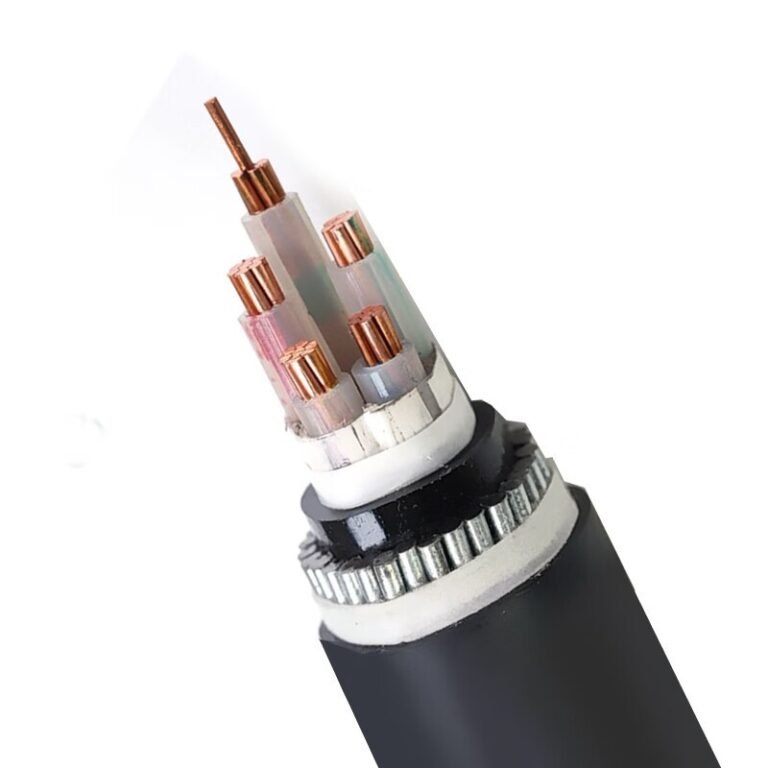
Steel wire armoring (SWA) gives the best resistance to rodent damage and crushing loads — typical on cables routed across industrial floors or through areas with forklift traffic. Steel tape armoring (STA) is lighter and suits applications where the primary risk is incidental impact rather than sustained compression. For flexible armored cords on robotics or drag-chain applications, metal braid overbraiding is the practical choice because SWA will fatigue and fracture under repeated tight bending. PVC conduit sleeves work as temporary protection during installation or in lightly trafficked areas, but don’t treat them as a permanent mechanical solution.
Cord Marking Is a Procurement Specification, Not an Afterthought
IEC 62821 and UL requirements both mandate printed legends on the jacket at intervals no greater than 500 mm. The legend must include manufacturer identification, rated voltage, cross-section or rated current, temperature rating, and applicable certification marks. Get this wrong and the cord may pass electrical testing but fail a documentation audit on arrival — which means relabeling in-country or returning the shipment.
When placing a bulk order, specify the exact legend text, print interval, and ink color in the purchase order itself. Manufacturers like Jinda can accommodate custom legend requirements at the production stage; retrofitting markings after the fact is expensive and often not accepted by certification bodies anyway. Confirm which market’s marking rules govern the order — a cord destined for Germany and one destined for Australia carry different legend requirements even if the electrical specification is identical.
IEC 62821 and UL standards require jacket markings at intervals of no more than 500 mm, including voltage rating, conductor size, temperature rating, and certification marks.True
Both IEC 62821 (for cords) and UL 62/UL 817 marking requirements specify maximum 500 mm intervals for printed legends on flexible cord jackets, covering rated voltage, cross-section or ampacity, temperature class, and applicable listing marks. Non-compliance is a common cause of failed customs or certification audits.
Build a Supplier Qualification and Quality-Assurance Checklist for Bulk Cord Procurement
Buying power cords in volume is where a lot of procurement disasters quietly begin. The price looks right, the samples pass a visual check, and three months later you’re dealing with warranty returns, failed site inspections, or — worst case — a field incident traced back to undersized conductors that nobody measured. A rigorous vetting process isn’t bureaucratic overhead; it’s the only thing standing between your BOM and a compliance liability.
Red Flags in Low-Cost Cord Sourcing
The most common form of fraud in budget cord supply is conductor undersize. Non-certified cords frequently run 15–30% below the stated cross-section — not always through outright deception, but sometimes through lax strand-count control or thinner individual wire draws that accumulate into a meaningful deficit. A cord labeled 1.5 mm² might measure 1.1–1.25 mm² when you actually strip it and use a micrometer on the stranded bundle.
The reliable check is conductor DC resistance per IEC 60228 Table 1. A 1.5 mm² copper conductor must not exceed 13.3 Ω/km at 20 °C. If your incoming shipment measures 15–17 Ω/km, you have a conductor that will run hotter than rated, trip breakers at nuisance loads, and accelerate insulation degradation over time. Buying a bridge resistance meter and doing spot checks on incoming reels is genuinely worth the few hundred dollars it costs.
Required Documentation Package
Before placing any volume order, request the full documentation set — not just the CE declaration of conformity, which a supplier can self-generate on a laptop in an afternoon.
What you actually need: a third-party CB test report (the CB scheme under IEC System covers most major markets and is far harder to fabricate), a production facility certificate from UL, VDE, or an equivalent body showing active factory follow-up service, and material safety data sheets for every insulation and jacket compound covering RoHS and REACH compliance. If your product enters the EU, the REACH SVHC list matters particularly for plasticized PVC compounds — some legacy formulations still use restricted phthalates.
A CB test report issued under the IECEE CB Scheme is accepted by certification bodies in over 50 participating countries, substantially reducing the need for duplicate national testing.True
The IECEE CB Scheme is a multilateral agreement among national certification bodies; a CB report with CB test certificate allows member NCBs to issue national certifications with reduced or waived retesting, confirmed by IECEE documentation.
First-Article Inspection Protocol
When samples arrive, run a structured first-article inspection before approving production. Measure outer diameter against the drawing tolerance. Strip back the jacket and insulation, measure actual conductor cross-section and compare against the certificate. Run an insulation resistance test — the IEC 60227 minimum is 20 MΩ/km, but most quality-compliant cords from a reputable factory will come in considerably higher, often 100–500 MΩ/km depending on insulation type and wall thickness. Conduct a dielectric voltage withstand test at the rated test voltage; for a 300 V cord that’s typically 2,000 V AC for one minute with no breakdown. And don’t skip the plug pull-out force test — a junction that separates under 30–40 N is a field hazard waiting to happen.
Ongoing Incoming Quality Control
For production shipments, AQL sampling per ISO 2859-1 is the standard framework. Use AQL 1.0 for critical dimensional attributes — conductor cross-section and insulation wall thickness — and AQL 2.5 for cosmetic attributes like print legibility or jacket surface finish. The distinction matters: a slightly uneven print won’t burn down a facility; an undersized conductor might.
In practice, the inspection level depends on your supplier’s history. A new source gets tighter sampling until they build a track record. A supplier with two years of clean incoming data can reasonably move to reduced inspection, though I’d recommend keeping at least quarterly resistance checks regardless.
Jinda’s Quality Infrastructure
Jinda operates under ISO 9001:2015 and ISO 14001:2015 certification across its five production bases, with an in-house testing laboratory running spark testers, conductor resistance bridges, and climate chambers for thermal and humidity cycling. With 470,000 m² of manufacturing space and over 1,000 employees, the production capacity supports consistent quality at scale — which matters more than most buyers realize, because a supplier who passes audits at low volume but strains quality controls when orders double is a real and common problem.
Long-Term Supply Partnership Considerations
Standard catalog products typically ship in roughly 2–4 weeks from a stocked line. Custom cord assemblies — particularly those requiring certification follow-up for a new market — run 8–14 weeks, sometimes longer if the certifying body has a backlog. Build that into your program timelines; it’s painful to discover during a product launch.
Two provisions worth negotiating into any long-term agreement: buffer stock arrangements for your highest-volume SKUs, and clear tooling ownership terms for custom molded assemblies. If you own the molds and the certification files, switching suppliers if quality degrades becomes a real option rather than an empty threat.
Frequently Asked Questions About Choosing a Power Cord
Can I use a higher-rated cord than required?
Yes, and in practice most experienced engineers intentionally oversize by one conductor step — AWG 14 (2.5 mm²) where AWG 16 (1.5 mm²) technically passes, for example. The cord runs cooler, voltage drop is lower, and you have headroom if the load grows. You’ll pay slightly more per meter, but that cost is trivial against the downtime risk of a marginal selection. The one thing you must never do is go the other direction. An undersized cord doesn’t fail loudly; it heats slowly, degrades insulation over months, and eventually becomes a fire or a tripped breaker you can’t explain. Oversizing is harmless. Undersizing is not.
What does the “H05VV-F” designation on a European cord mean?
Each character is a deliberate code, not branding. “H” means the construction is harmonized across European member states under the HAR scheme. “05” encodes the voltage class — in this case 300/500 V. The first “V” specifies PVC insulation over the conductors; the second “V” specifies a PVC outer jacket. “F” indicates flexible stranding, specifically Class 5 per IEC 60228, which means fine-wire construction suitable for appliance cords that see routine handling. Swap the “F” for “H” and you get an extra-flexible cord; swap “05” for “07” and you’re now at 450/750 V. Once you understand the structure, you can read any HAR designation without looking it up.
Is a CE mark automatically safe for all European countries?
Not quite. CE is a manufacturer’s self-declaration — it means someone signed a declaration of conformity against the relevant directives (Low Voltage Directive, RoHS), but no independent laboratory necessarily tested that specific cord. The HAR mark, issued by a notified body under the CENELEC certification scheme, is third-party verified. For consumer appliances and office equipment the distinction may seem academic, but for industrial or safety-critical applications, specify HAR-marked cords explicitly in your purchase order. A supplier who hesitates at that request is worth scrutinizing.
The CE mark on a power cord guarantees third-party safety testing by an independent European laboratory.False
CE is a manufacturer's self-declaration of conformity with EU directives. It does not require independent laboratory verification. The HAR mark, issued under the CENELEC scheme by a notified body, provides genuine third-party certification.
How do I choose between 2-conductor and 3-conductor cords?
This comes down to appliance class, not preference. Class I appliances — anything with an exposed metal chassis bonded to protective earth — require a 3-conductor cord so that earth fault current has a safe return path. Class II appliances are double-insulated, marked with the double-square symbol, and use a 2-conductor cord precisely because the design doesn’t rely on earth for safety. Substituting a 2-conductor cord on a Class I appliance is a serious wiring fault. It happens, usually during a rushed retrofit, and it makes an otherwise safe piece of equipment genuinely dangerous.
What is the difference between SJTW and SJTO cord designations?
Both are 300 V junior service thermoplastic cords under the North American system, rated for lighter-duty portable applications. The suffix tells you the environmental story: W means weather-resistant and water-resistant — outdoor rated, suitable for garden equipment or temporary site power. O means oil-resistant jacket, which matters in any workshop or plant floor where petroleum fluids are present. A cord sitting in a garage lube bay needs the O designation; a cord running across a parking lot needs the W. They are not interchangeable, even though the base construction looks similar.
How long does it take to get a custom power cord manufactured and certified?
For standard certified constructions that already exist in a manufacturer’s approved product portfolio, lead times typically run 2–4 weeks from order confirmation, depending on volume and current production scheduling. New constructions that need fresh certification are a different story. UL, VDE, and similar bodies run their own queues, and realistically you should budget 8–14 weeks — sometimes longer if the design requires a new file or a construction change triggers additional testing. Jinda’s engineering team can usually clarify early in the quoting stage whether your specification falls within an existing certification or needs new follow-up, which saves costly surprises later.
What minimum information must I provide to a cord manufacturer for a custom order?
Incomplete specifications are the single most common cause of sample rejections and reorders. At minimum, supply: rated voltage and frequency (don’t assume the factory knows your target market’s system), load current or conductor cross-section in mm² or AWG, insulation and jacket material (or the environment it must survive and let the engineer recommend), total cord length, plug and connector type for each end with the target market identified, required certification marks, and the applicable conductor color code standard (IEC 60446 for most of the world, NEC for North America). If you have a specific strand class requirement or a minimum bend radius, include that too. The more complete the brief, the fewer revision rounds before production release.