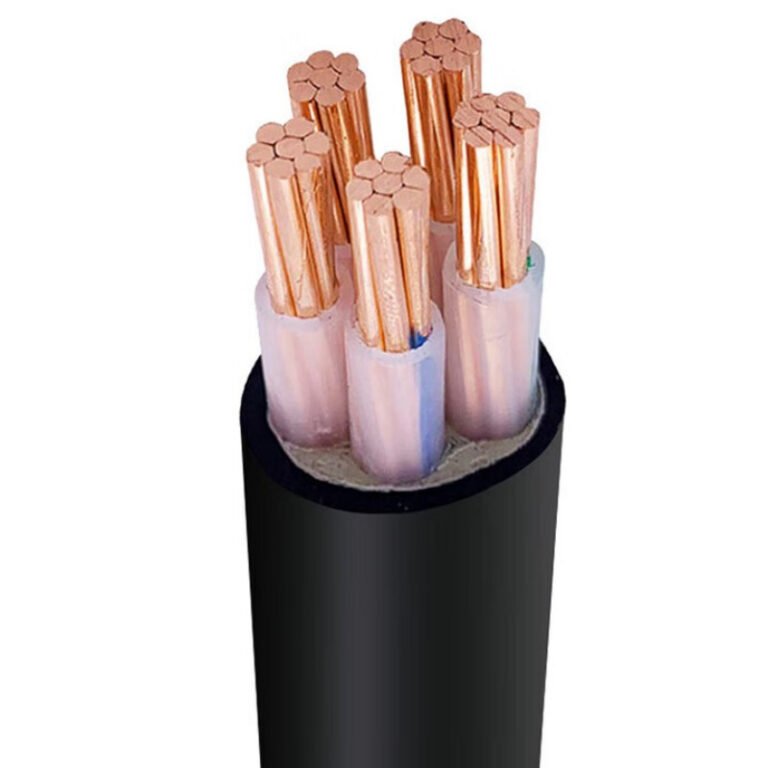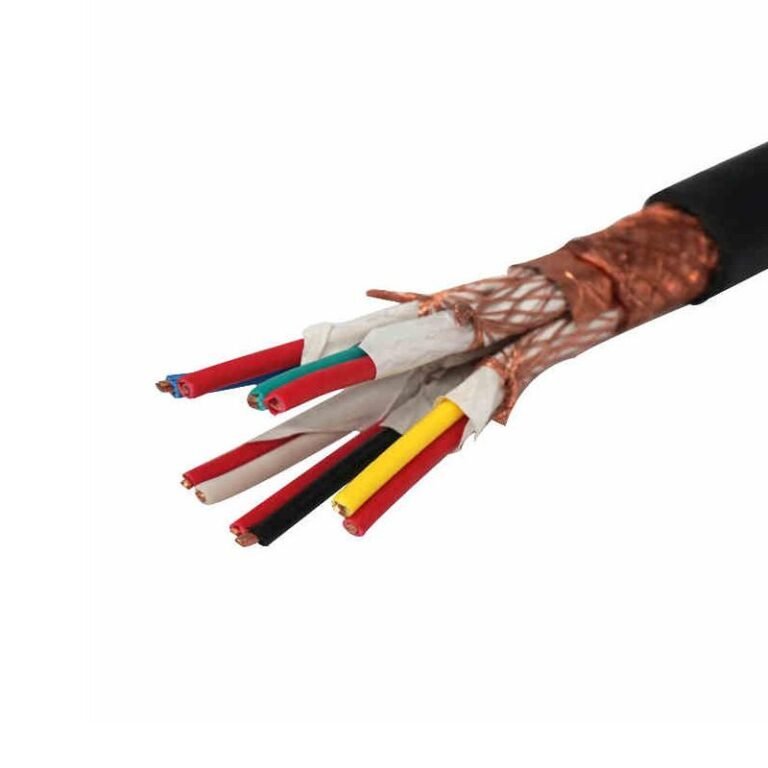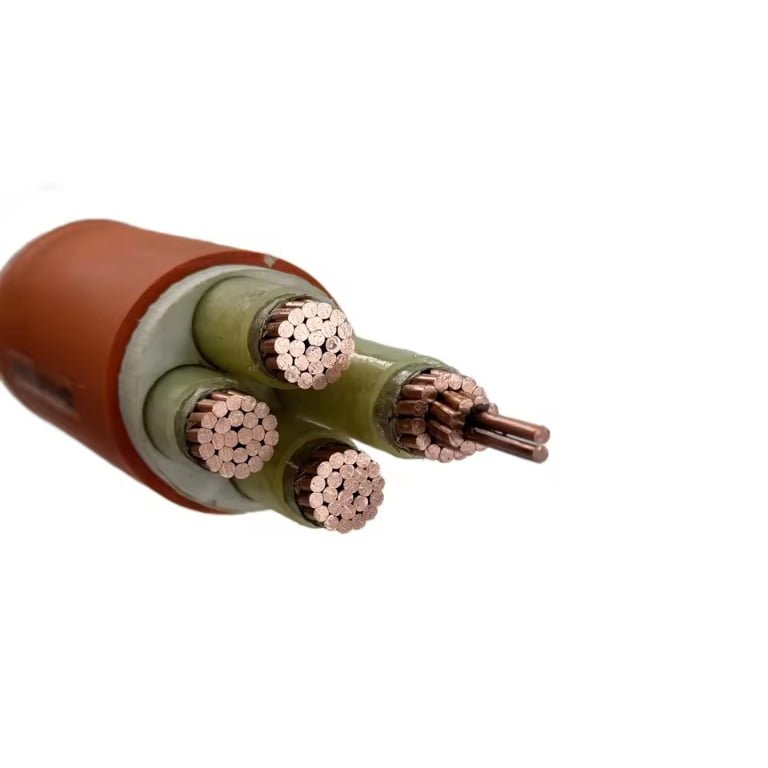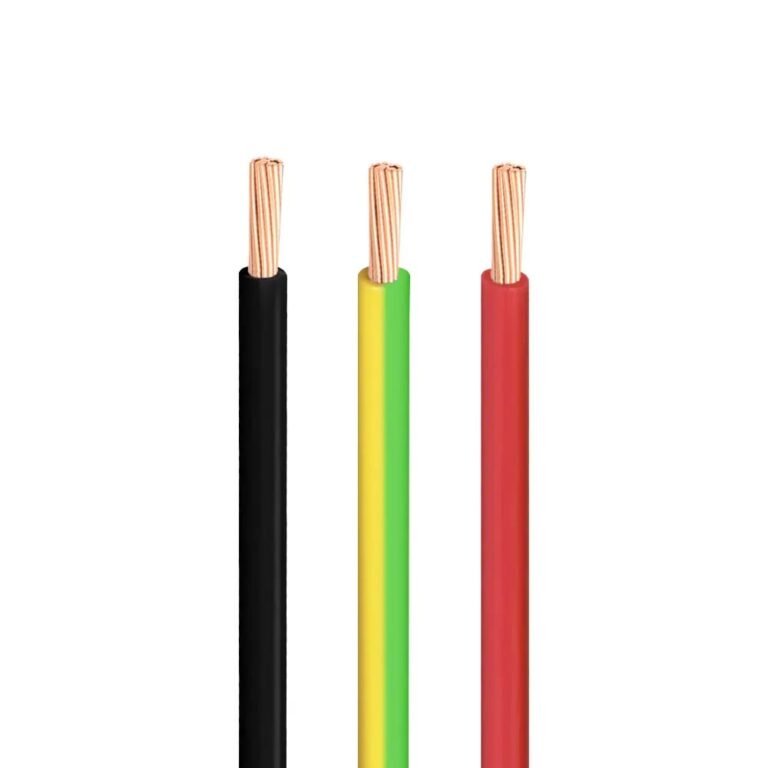
Specifying wire gauge for a low-voltage circuit sounds routine until a technician pulls the wrong spool, the circuit runs warm, a breaker nuisance-trips at 3 a.m., and you’re tracing an intermittent fault across a 200-foot conduit run while production sits idle. Getting the voltage classification wrong — or assuming “small wire equals safe wire” — leads to undersized installations, rejected inspections, and in the worst cases, insulation failure that voids your equipment warranty before the first service interval.
18 AWG wire (1.02 mm diameter, 0.823 mm² cross-section) is considered low-voltage wire in most practical applications. Under IEC 61140, low voltage means ≤50 V AC or ≤120 V DC; NEC Article 725 sets similar thresholds. 18 AWG is routinely rated for these circuits, with ampacity ranging from roughly 7 A to 16 A depending on insulation class, ambient temperature, and how many conductors share the conduit.
What makes 18 AWG genuinely interesting from a procurement and installation standpoint is that “low voltage” isn’t a single box to check — it’s a layered classification that interacts with current capacity, insulation rating, installation environment, and the specific code jurisdiction governing your project. Whether you’re sourcing for a building automation backbone, a DC control cabinet, or a landscape lighting run, the wire that looks identical on a reel can carry very different approvals depending on what’s printed on the jacket.
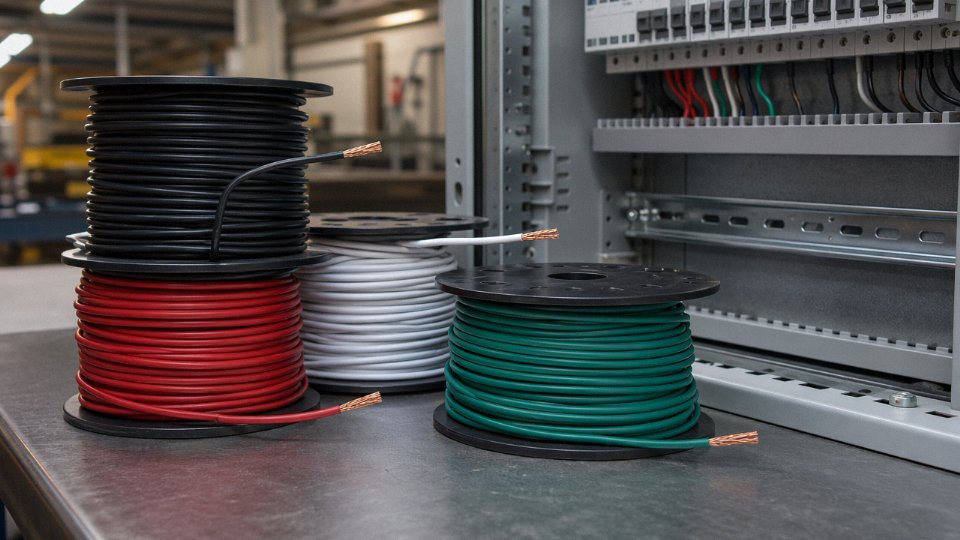
18 AWG Electrical Specifications: Resistance, Ampacity, and Voltage Ratings by Insulation Type
DC Resistance and Why It Dominates Long-Run Decisions
Solid 18 AWG copper sits at roughly 20.9 mΩ/m (6.385 Ω/1000 ft) at 20 °C. Switch to stranded — which is what you’ll actually pull through conduit or bundle into a harness — and that climbs to around 21.4 mΩ/m, because the individual strands follow a helical path rather than running dead-straight. The difference is small enough that most engineers round to the same value for quick estimates, but it matters when you’re stacking tolerances on a 30 m control loop with a 5% voltage-drop budget.
Temperature changes that resistance, too. At 75 °C conductor temperature — realistic inside a fully loaded conduit in a hot plant — resistance climbs by roughly 18–20% over the 20 °C baseline. That’s not a footnote; that’s the difference between a circuit that stays in regulation and one that causes a sensor to drift or a relay to chatter.
Ampacity: The Table Is a Starting Point, Not an Answer
Under NEC 310.15, a single 18 AWG THHN/THWN-2 conductor (90 °C rated) in free air carries up to 14 A. Run that same wire through a conduit with five or more current-carrying conductors, in a 40 °C ambient — which is normal for a machine enclosure in summer — and after applying the conduit-fill derating (0.70) and the temperature correction factor, you’re looking at somewhere between 7 and 9 A depending on exact conditions. That’s a near-halving of capacity from the catalog spec.
| Insulation Type | Temp Rating | Free Air Ampacity (NEC) | Fully Loaded Conduit, 40 °C Ambient |
|---|---|---|---|
| THHN / THWN-2 | 90 °C | ~14 A | ~7–9 A |
| THW / THWN | 75 °C | ~12 A | ~6–8 A |
| TW (PVC, 60 °C) | 60 °C | ~10 A | ~5–7 A |
| Silicone (SiR) | 150–200 °C | ~14–16 A | application-specific |
IEC 60228 Class 2 stranded conductors — the standard you’ll encounter on European machinery and most Asian-manufactured equipment — use a 0.75 mm² nominal cross-section as the closest metric equivalent to 18 AWG (actual 18 AWG is 0.823 mm²). IEC installation methods B2 or C per IEC 60364-5-52 yield similar derating logic, though the specific multipliers differ from NEC tables. Don’t assume NEC ampacity figures transfer directly to IEC-governed installations. They’re close, but “close” causes nuisance trips.
18 AWG wire is always limited to low-voltage circuits because of its small diameterFalse
Wire gauge determines ampacity and resistance, not voltage rating. The voltage a wire can safely carry depends on insulation type and thickness. 18 AWG with 600 V-rated THHN insulation is fully suitable for 480 V control circuits where NEC installation rules permit it.
Voltage Ratings by Insulation Type
This is where procurement decisions get muddled. The wire’s voltage rating is an insulation property, not a conductor property. Standard PVC-jacketed 18 AWG comes in 300 V or 600 V versions — the 300 V variant is what you typically see in UL-listed appliance wiring material (AWM), and 600 V shows up in building wire and industrial control cable. Cross-linked polyethylene (XLPE) insulation pushes that to 1000 V for the same conductor, which is why 18 AWG XLPE wire turns up in inverter output cables and some solar string wiring. Silicone-insulated 18 AWG, rated 600 V with continuous service to 200 °C, is common in furnace wiring and exhaust-proximate sensor runs — environments where PVC would be a short-lived choice.
The practical distinction engineers sometimes miss: a wire’s rated voltage is the maximum insulation withstand, while the application voltage is the circuit’s actual operating level. An 18 AWG conductor with 300 V-rated insulation isn’t inherently a low-voltage wire; it simply cannot be used where the circuit voltage could stress the insulation beyond that threshold. NEC Article 725 and IEC 62368-1 introduce a separate layer — they restrict certain 18 AWG applications to Class 2 or Class 3 circuits based on power limits and shock hazard, which is an installation classification, not a cable rating.
Voltage-Drop Calculation: A 12 V DC Lighting Run
Take a concrete case: a 12 V DC LED lighting circuit drawing 3 A, with a one-way cable run of 15 m using 18 AWG stranded copper. The standard formula for a two-conductor run is:
V_drop = 2 × L × R_per_meter × I
Plugging in: 2 × 15 m × 0.0214 Ω/m × 3 A = 1.93 V
That’s about 16% of 12 V — well past the 3–5% threshold most lighting and control engineers treat as acceptable. At 5 m, the same circuit drops roughly 0.64 V, or about 5.3%, which is marginal but often workable. The point is that 18 AWG is genuinely adequate for low-voltage DC loads over short runs, but stretch the cable to across a production bay and you’ve created a voltage-drop problem that no amount of correct insulation selection will fix. Upsizing to 16 AWG or adding a local power supply node is cheaper than chasing a flickering luminaire fault for months.
Common Low-Voltage Applications Where 18 AWG Is the Industry Standard Choice
If you’ve spent any time on a mechanical room floor or pulling wire through a residential attic, you’ve handled 18 AWG dozens of times without thinking much about it. It shows up everywhere in low-voltage work — not by accident, but because its physical dimensions and electrical characteristics happen to land in a sweet spot for control signals, sensors, and light-duty power circuits operating well below 50 V AC.
Thermostat and HVAC Control Wiring
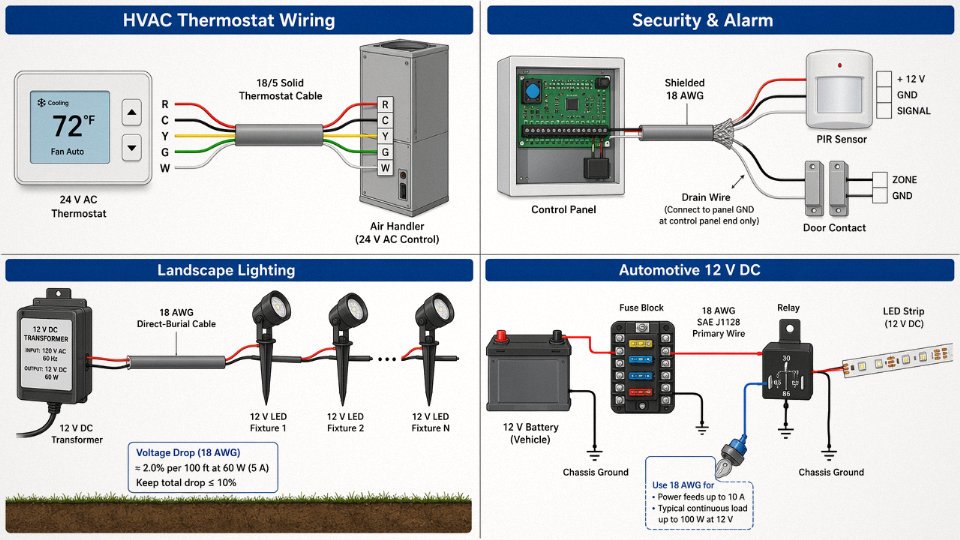
The 18/5 and 18/8 cables you’ll find coiled up at any HVAC supply house exist because 24 V AC thermostat circuits need very little from a conductor. Current draw on a typical zone valve or fan relay coil runs somewhere between 0.1 A and 0.5 A — comfortably below 18 AWG’s worst-case 7 A ampacity even under the most conservative NEC 310.15 derating conditions. The 24 V AC supply falls squarely within Class 2 limits under NEC Article 725, which simplifies installation considerably: no conduit required in most jurisdictions, reduced overcurrent protection requirements, and the wiring method is inherently limited-energy. In practice, the five-conductor variant handles a standard single-stage system (R, C, Y, G, W), while the eight-conductor version gives you room for multi-stage heat, auxiliary heat, dehumidification, and the common terminal without splicing in extra runs later. Spec the eight-conductor version from the start if there’s any chance the system will be upgraded — adding a wire run after drywall is closed is an unpleasant conversation with any contractor.
Security and Alarm Systems
UL-listed 18 AWG 2-conductor and 4-conductor alarm cable operates at 12–24 V DC for door contacts, passive infrared detectors, glass-break sensors, and siren outputs. Unshielded cable works fine for most door and window contacts where the run is short and not parallel to power conductors. For motion detectors — especially PIR sensors mounted near fluorescent ballasts or variable-frequency drives — shielded 18 AWG with a drain wire makes a real difference. The drain wire needs to be terminated at one end only (typically the panel end) to avoid creating a ground loop, which will introduce exactly the kind of low-level noise that triggers false alarms at 2 a.m. A lot of installers skip the drain termination step, then spend hours chasing phantom faults.
Landscape and Outdoor Low-Voltage Lighting
Twelve-volt landscape lighting systems — transformer-fed, usually 100–300 W total load — use 18 AWG or 16 AWG direct-burial cable depending on run length and fixture count. Eighteen gauge is generally acceptable for runs under roughly 7–9 m with fixtures drawing under 20 W each, but voltage drop accumulates fast in longer daisy-chain runs. A 10 m run feeding four 20 W fixtures can drop 1–1.5 V depending on connection quality, which shifts warm-white LEDs noticeably cooler. If the landscape designer has pushed fixture spacing out past 10 m, move to 16 AWG or run a second home-run. Outdoor-rated direct-burial jacket matters here — standard PVC thermoplastic insulation degrades in wet soil faster than you’d expect in climates with freeze-thaw cycles.
Automotive and Marine Wiring
SAE J1128 governs insulation requirements for low-voltage primary wire in vehicles, and 18 AWG appears constantly in 12 V DC accessory circuits: LED strip feeds, gauge cluster illumination, relay trigger wires, courtesy lights. Marine environments add a corrosion dimension — tinned copper conductors are the right call for any run exposed to salt air or bilge moisture. Bare copper in a marine harness will look green and resistive within a season or two.
18 AWG SAE J1128 wire is suitable for 12 V DC automotive accessory circuits including LED strips and instrument panel wiringTrue
SAE J1128 specifies insulation and conductor requirements for low-voltage primary wire used in road vehicles; 18 AWG falls within the standard's scope and is widely used for accessory and lighting circuits at 12 V DC where current demand stays within the conductor's rated ampacity.
Doorbell and Intercom Systems
Most residential doorbell transformers step output down to somewhere between 16 V AC and 24 V AC. Eighteen gauge solid copper bell wire has covered this application since the mid-20th century — it’s about as textbook a Class 2 low-voltage circuit as exists. Current draw on a mechanical chime is rarely above 1 A, and even a cheap 18 AWG solid conductor handles that without measurable heating. The bigger failure mode is mechanical, not electrical: solid conductors fatigue and break at termination screws when the wire is bent repeatedly. For intercom systems with longer runs or multiple stations, stranded 18 AWG holds up better over time.
Structured Cabling and AV Systems
In-wall and in-ceiling speaker runs at 4–8 Ω impedance commonly use 18 AWG oxygen-free copper for secondary zones — bedroom speakers, bathroom audio, that kind of thing. Runs under roughly 10–12 m at 4 Ω load stay within acceptable resistance limits. One thing worth knowing: copper-clad aluminum (CCA) 18 AWG speaker wire is widely available and costs noticeably less, but its resistivity runs about 60% higher than solid copper for the same gauge, which means audible output loss and higher distortion on longer runs. For a single small room it probably doesn’t matter much. For anything critical or over 8 m, full copper is worth the premium — and CCA is also more brittle, which causes broken conductors at banana plugs and binding posts more often than vendors admit.
When 18 AWG Is NOT Low Voltage: Higher-Voltage Applications and Their Code Requirements
The assumption that 18 AWG is “low-voltage wire” frustrates experienced panel builders and electrical engineers alike, because the conductor cross-section — 0.823 mm², 1.02 mm diameter — tells you almost nothing about what voltage system it belongs to. Voltage rating is an insulation property, not a conductor property. A bare copper conductor has no voltage rating at all. The moment you put insulation on it, the application defines everything.
Lamp Cord and Small Appliance Wiring at 120 V AC
SPT-1 and SPT-2 parallel lamp cord are probably the most common 18 AWG products on any hardware store shelf, and they operate at a fully nominal 120 V AC in North American residential and commercial settings. Both are rated 300 V per UL 62. This is explicitly not a low-voltage application by any defensible definition — 120 V AC clears the IEC 61140 threshold of 50 V AC by a wide margin.
NEC 240.4(D) and 240.5 together cap overcurrent protection for 18 AWG flexible cord at 7 A. That limit is non-negotiable. Pair a 15 A breaker with an 18 AWG lamp cord — something that happens more often than it should when someone extends a circuit with the wrong cord — and you’ve created a thermal hazard that the breaker will not catch. The conductor heats past its insulation’s rated temperature long before the breaker trips. Fires from exactly this failure mode are documented in UL testing literature.
18 AWG SPT lamp cord operating at 120 V AC is a code-compliant, non-low-voltage application when protected at 7 A or less per NEC 240.5.True
UL 62 rates SPT-1 and SPT-2 cord at 300 V; NEC 240.5 and 240.4(D) permit 18 AWG flexible cord at 120 V AC provided overcurrent protection does not exceed 7 A, making this a standard-voltage, not low-voltage, installation.
Motor Control Circuits Under NEC 430.72
Motor control wiring is where this question gets genuinely nuanced. NEC 430.72 permits 18 AWG copper conductors in motor control circuits operating at voltages up to 347 V, provided the conductors are protected by specific overcurrent devices sized in accordance with the table in that section. This is industrial, not residential — think control wiring inside a starter cabinet, running from a relay coil terminal to an auxiliary contact, with branch-circuit protection upstream.
In practice, most US industrial facilities using 480 V three-phase power have motor control circuits running at 120 V derived from a control transformer, so the 347 V limit rarely gets exercised domestically. But in Canadian industrial plants or certain European-export equipment built to dual standards, 347 V control circuits on 18 AWG are real. The key condition is always the overcurrent protection arrangement, not the voltage level alone.
IEC 60204-1 and Machine Cabinet Internal Wiring
IEC 60204-1, the machine safety standard that governs electrical equipment in industrial machinery, permits 0.75 mm² conductors (the metric near-equivalent of 18 AWG) for internal panel wiring in cabinets operating at 230 V AC single-phase or 400 V AC three-phase. The permissions are conditional: conductors must be bundled in cable duct or secured, protected by the enclosure itself, and not subject to mechanical stress or flexing in service.
This is a consequential permission for panel builders. Using 0.75 mm² (roughly 18 AWG) wire in a 400 V three-phase machine cabinet is legal, economical, and common across European automation suppliers. But pull that same wire out of the cabinet and run it in open conduit on the plant floor at 400 V without reviewing IEC 60364 or your local wiring rules, and you’re outside the scope of 60204-1’s protection entirely.
The Insulation Is Doing the Work
The voltage rating of any 18 AWG wire is set by the insulation system, full stop. THHN with a 600 V rating and an SPT-2 cord with a 300 V rating both use the same 18 AWG copper conductor — nothing about the copper changes. Specifying one versus the other for a given application is a deliberate engineering decision. A procurement manager who treats them as interchangeable because the AWG number matches will occasionally create a compliance problem or, worse, an installation that passes inspection and fails in service.
| Insulation Type | Voltage Rating | Typical 18 AWG Application | Max Overcurrent (NEC) |
|---|---|---|---|
| SPT-1 / SPT-2 (UL 62) | 300 V | Lamp cord, small appliances at 120 V AC | 7 A |
| THHN / THWN (UL 83) | 600 V | Panel wiring, conduit runs, motor control | 7 A (conductor limit) |
| 0.75 mm² PVC per IEC 60204-1 | 300–600 V depending on grade | Machine cabinet internal wiring at 230/400 V | Per protection device table |
| MTW (UL 508) | 600 V | Machine tool wiring in wet/oil environments | 7 A |
The overcurrent limit stays at 7 A regardless of whether the insulation is rated 300 V or 600 V, because that limit is set by the conductor’s thermal capacity, not the insulation’s dielectric strength. Higher insulation voltage rating does not buy you more current-carrying capacity. That’s a mistake worth flagging to anyone new to cross-section versus insulation voltage specification.
18 AWG vs. Neighboring Gauges: Comparative Selection Guide for Low-Voltage System Design
Picking the right gauge isn’t always about whether the wire can carry the current — it’s about whether it can do so over the actual run length, in the actual conduit fill, at the actual operating temperature, without dropping enough voltage to upset the load. 18 AWG sits in a useful middle range, but there are plenty of real situations where you should reach for 16 AWG instead, or where 20 AWG is the smarter, leaner choice.
Side-by-Side Specifications for the Four Most Common Gauges in Low-Voltage Work
| AWG | Diameter (mm) | Cross-section (mm²) | DC Resistance (mΩ/m, approx.) | Typical Ampacity Range (A) | Common Insulation Voltage Ratings | Primary LV Application Domains |
|---|---|---|---|---|---|---|
| 16 | 1.29 | 1.31 | ~13.2 | 10–22 A | 300 V, 600 V | Landscape lighting home runs, subwoofer cables, longer 12 V DC power runs |
| 18 | 1.02 | 0.823 | ~21.0 | 7–16 A | 300 V, 600 V | HVAC thermostat, fire alarm, security, LED drivers |
| 20 | 0.81 | 0.519 | ~33.2 | 5–11 A | 300 V, 600 V | Thermostat sensor leads, short RS-485 segments, access control readers |
| 22 | 0.64 | 0.324 | ~53.5 | 3–7 A | 300 V | Signal wiring, intercom, low-draw sensor loops |
Ampacity ranges above depend on insulation type (PVC vs. XLPE vs. TFFN), ambient temperature, and whether wires are bundled in conduit — a 22 AWG conductor in a 60°C-rated TFFN jacket, run alone in free air, behaves very differently from the same conductor in a tightly packed 1-inch conduit with a dozen other circuits.
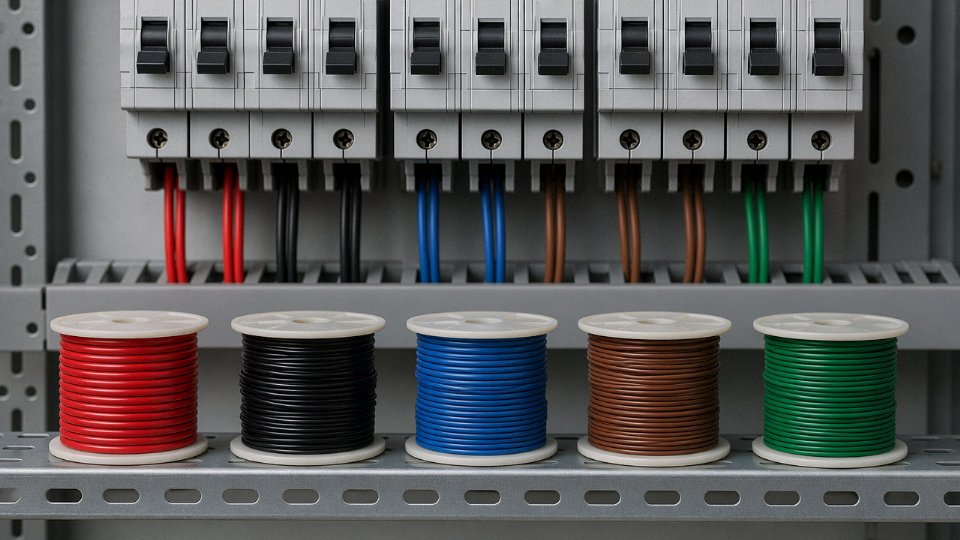
When to Step Up to 16 AWG
The most common mistake I see in low-voltage panel layouts is keeping 18 AWG on a 12 V DC run that turned out longer than the original design assumed. Once you’re pushing 3 A or more past roughly 10–15 m of 18 AWG (round-trip conductor length, not just one way), your voltage drop at the load end starts creeping above 3–5%, which matters enormously for LED drivers that regulate tightly and for access control panels that brown out at 10.5 V. Step up to 16 AWG and resistance drops by about 37% — that’s not a rounding error; it’s the difference between a stable system and one that gets service calls in summer when the controller runs warm and draws slightly more current.
Outdoor landscape lighting is another clear case. Installers often daisy-chain several fixtures on one home run. Each fixture you add compounds the drop. For runs past 15 m with three or more fixtures, 16 AWG is the practical minimum regardless of what the fixture spec sheet implies.
Subwoofer speaker cables are a bit different — here it’s less about voltage drop and more about series resistance loading the amplifier output stage. A 6-meter run of 18 AWG adds roughly 0.25 Ω to the circuit loop, which on a 4 Ω nominal woofer is already meaningful. 16 AWG halves that penalty.
When to Step Down to 20 AWG or 22 AWG
Not every circuit needs 18 AWG. Thermostat sensor wires, RS-485 data pairs, and access control card reader connections typically carry well under 500 mA — often under 100 mA. Running 18 AWG there is wasteful: it takes up conduit fill space you might need later, it costs more per meter, and it’s harder to terminate neatly in the smaller screw terminals that low-current field devices typically use.
22 AWG twisted pair is essentially the standard for RS-485 and Modbus runs in building automation — low capacitance, easy to route, cheap in bulk. 20 AWG works well for slightly longer sensor runs where you want a bit more margin without jumping all the way to 18 AWG.
20 AWG and 22 AWG wires cannot be used in fire alarm systemsFalse
NFPA 72 and most listed fire alarm cable products include 22 AWG and 20 AWG conductors for initiating device circuits and signal circuits, provided the wire is listed for the purpose and voltage drop calculations support reliable operation over the required run length.
Solid vs. Stranded: It Changes How You Terminate
18 AWG solid holds its shape when you push it into a lever-actuated terminal block or a Wago 221 — useful for in-wall thermostat runs where you want the conductor to stay put and not spring out during a service call three years later. Stranded Class B (7 strands, standard for most appliance wire) flexes well enough for panel wiring and flexible conduit whips, but the strand ends can fan out in screw terminals and cause intermittent contact if not properly ferrule-crimped. Class 5 fine-stranded 18 AWG (sometimes 19/30 construction) is genuinely flexible — right for drag chains, robotics cable trays, and motor lead pigtails — but it absolutely needs an insulated ferrule before landing on any screw terminal. Skipping that step is a common maintenance habit that eventually causes a loose connection, usually discovered during a production shutdown rather than during routine inspection.
Cost, Availability, and the CCA Question
18 AWG copper is one of the best-stocked gauges in the global cable market precisely because it serves the HVAC controls and alarm markets at the same time. On a standard 305 m (1,000 ft) reel of stranded PVC-jacketed 18 AWG, all-copper pricing typically runs somewhere in the range of $40–$90 USD depending on copper spot price, strand count, jacket compound, and whether it carries a UL or ETL listing — expect the high end if you’re buying listed alarm cable, the low end for unlisted general-purpose hook-up wire.
CCA (copper-clad aluminum) is occasionally offered at 20–35% lower material cost. For pure signal circuits — RS-485, access control data lines, intercom — CCA 18 AWG is usually acceptable. For anything carrying sustained current, the story changes: CCA’s conductivity is roughly 61–65% that of solid copper, so you’re effectively running a 20 AWG equivalent in a body sized like 18 AWG, and the resistance penalty shows up as heat and voltage drop under load. Crimp terminations with CCA also require compatible tooling and barrel material; standard copper crimp barrels can develop galvanic corrosion at the interface over years in humid environments. Worth factoring into a total-cost-of-ownership estimate before procurement locks in a CCA order for a large project.
NEC, IEC, and International Code Compliance for 18 AWG in Low-Voltage Circuits
Compliance isn’t a formality you sort out at the end of a project. Get the code classification wrong on an 18 AWG installation and you’re looking at failed inspections, forced re-pulls, or — in fire alarm work — a liability exposure that no one wants. The regulatory picture for 18 AWG in low-voltage circuits spans at least three distinct code frameworks, and which one governs your job depends on jurisdiction, circuit type, and how the system is powered.
NEC Article 725 Class 2 Wiring
Class 2 circuits are power-limited by definition — capped at 100 VA and typically fed through a listed Class 2 transformer or power supply. NEC Table 725.179(E) explicitly lists 18 AWG as an acceptable conductor size for Class 2 cables, and this is where most low-voltage control and signaling work lands: thermostats, access control panels, nurse-call systems, audiovisual distribution, low-voltage landscape lighting controllers.
The practical payoff of Class 2 status is real. You generally don’t need conduit. Separation from power wiring is reduced to 2 inches rather than the stricter clearances required for power circuits, and in many installations the overcurrent protection built into the listed Class 2 supply satisfies NEC requirements without an additional fuse or breaker at the panel. Inspectors in most jurisdictions will accept CL2 or CL2R-marked cable run through stud bays without further protection, which cuts both labor and material cost significantly compared to running the same conductors as general-purpose wiring.
One thing worth flagging: Class 2 status applies to the circuit, not just the wire. If you power an 18 AWG run from an unlisted supply or a standard 24 V transformer without power-limiting features, you’ve lost the Article 725 relaxations even if the cable itself is CL2-marked.
NEC Article 760 Fire Alarm Circuits
Fire alarm work has its own article, and 18 AWG is the minimum conductor size permitted for fire alarm circuits under NEC 760.179. You can’t go smaller — 20 AWG or 22 AWG cables are not compliant here regardless of the current load.
The distinction between power-limited (PLFA) and non-power-limited (NPLFA) fire alarm circuits matters for installation method. PLFA circuits using listed FPLR (riser) or FPLP (plenum) cables get wiring-method relaxations similar to Class 2 — no conduit required in most cases, provided the cable carries the correct UL listing mark on the jacket. NPLFA circuits require wiring methods suitable for general power wiring: conduit, proper support intervals, full separation from power conductors. If your inspector pulls a reel and the jacket reads FPL but the building has a plenum air-handling ceiling, that’s a rejection. The marking matters as much as the gauge.
IEC 60364-4-41 and SELV Provisions
Under IEC 61140 and IEC 60364-4-41, circuits operating below 50 V AC or 120 V DC can qualify as SELV (Safety Extra-Low Voltage), provided the circuit is properly isolated — through a safety isolating transformer or equivalent — from any higher-voltage system. An 18 AWG conductor in a properly designed SELV circuit does not require protective earthing of the conductor itself. This simplifies installation considerably in building automation and medical equipment auxiliary circuits where ELV operation is intentional.
The isolation requirement is not optional. A nominally 24 V AC thermostat circuit that shares a transformer winding with a 120 V primary without proper isolation does not qualify as SELV regardless of the operating voltage. The protection comes from the system design, not the voltage number alone.
CE, RoHS, and REACH for European Supply
Procuring 18 AWG cable for a European project means verifying the harmonized HAR marking or a valid Declaration of Conformity against the relevant EN standard — typically EN 50525 for low-voltage flexible cables. HAR marking indicates third-party testing under a harmonized European scheme; without it, customs clearance in some EU member states can stall.
RoHS II (EU Directive 2015/863) restricts lead, mercury, cadmium, hexavalent chromium, and four specific phthalates (DEHP, BBP, DBP, DIBP) in electrical and electronic equipment, including cable assemblies. Standard PVC formulations from many Chinese plants historically used DEHP as a plasticizer. Compliant PVC uses alternative plasticizers, and the difference isn’t visible — procurement teams should request RoHS test reports, not just a supplier’s self-declaration, particularly for cables destined for German, Dutch, or Scandinavian customers who tend to audit harder.
REACH (EU 1907/2006) adds a separate obligation to disclose Substances of Very High Concern (SVHCs) above 0.1% by weight in articles. Cable jackets and insulation compounds can contain SVHCs depending on the stabilizer system used, and the obligation to communicate this down the supply chain falls on the importer. Jinda’s export cables are formulated and tested against both RoHS II and REACH requirements, with supporting documentation available for EU project submissions.
Standard PVC cable insulation automatically complies with RoHS II for EU export.False
Standard PVC formulations often contain DEHP or other restricted phthalates. RoHS II compliance requires reformulated compounds and verified third-party test reports, not just a supplier self-declaration.
UL Listing Requirements for North American Supply
For the North American market, the relevant UL standards depend on cable type: UL 83 covers THHN/THWN building wire, UL 62 covers flexible cord, and UL 493 applies to direct-burial cable. The critical step that gets skipped in practice — especially on import purchases — is verifying that the UL file number printed or labeled on the cable reel is actually active. UL’s online database (iq.ul.com) lets you check any file number in roughly 30 seconds. A cable reel with an expired or suspended file number is not listed, regardless of what the label says.
Counterfeit or non-compliant cable carrying fabricated UL marks is a documented problem in the import market. Inspectors in some jurisdictions have started photographing reel labels and spot-checking file numbers on-site. If the file comes back inactive or unrecognized, the cable gets rejected and the re-pull cost lands on whoever specified it.
Voltage Drop, Heat Dissipation, and Long-Run Design Calculations for 18 AWG Low-Voltage Systems
The two failures that kill 18 AWG low-voltage installations aren’t dramatic — no sparks, no tripped breakers. They’re slow: a thermostat that hunts because its control signal is marginal, LED fixtures at the far end of a landscape run that flicker in cold weather, or insulation that looks fine until year seven when it cracks during a summer shutdown. Both problems trace back to the same root cause — someone sized the wire for the load but forgot about distance and bundling.
Voltage Drop: The 24 V Thermostat Run
The standard voltage drop formula for a single-phase or DC two-wire circuit is straightforward:
V_drop = 2 × L × R_per_meter × I
where L is the one-way run length in meters, R_per_meter is the conductor resistance in Ω/m, and I is the load current in amperes. For 18 AWG stranded copper, R_per_meter is roughly 0.0214 Ω/m at 20 °C — that figure rises maybe 3–4% at 75 °C operating temperature, which matters on tight budgets.
For a 30 m homerun feeding a 24 V AC thermostat circuit at 0.5 A:
V_drop = 2 × 30 × 0.0214 × 0.5 = 0.64 V
That’s 2.7% of 24 V — just inside the 3% threshold most control-circuit specifications allow. Comfortable, but not generous. Stretch that same run to 60 m and the drop doubles to 1.28 V, or 5.4%. At that point you’re outside the guideline, and stepping up to 16 AWG (R_per_meter ≈ 0.0134 Ω/m) brings the 60 m drop back to roughly 0.80 V — 3.3%, which most controls engineers will accept. The decision isn’t purely about code; a modulating damper actuator or a communicating thermostat with a 20–24 V operating window will behave erratically long before anything trips.
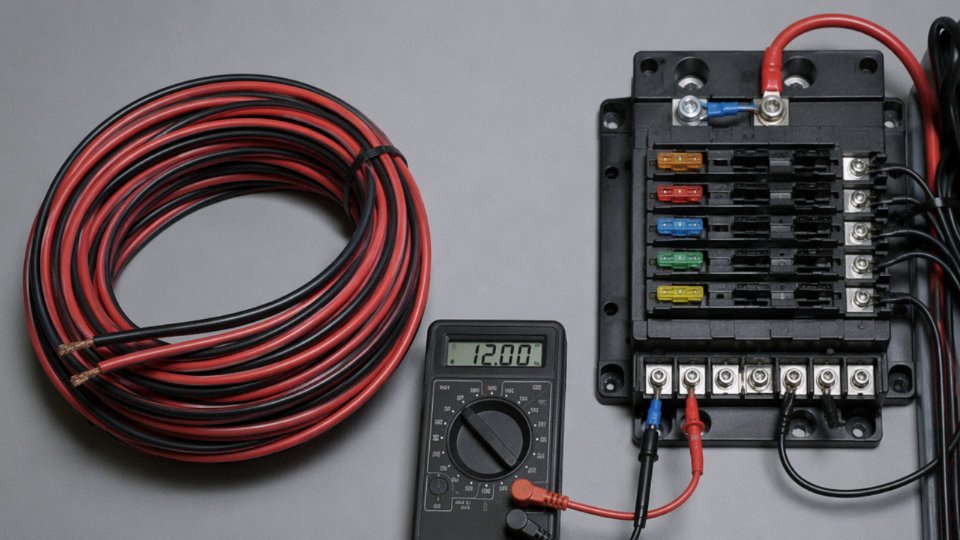
The 12 V DC Problem Is Much Worse
Low-voltage DC systems — landscape lighting, security cameras, small irrigation controllers — run at 12 V or sometimes 24 V DC, and at 12 V the arithmetic gets brutal fast. A 3% acceptable drop leaves you only 0.36 V of headroom. At 2 A load with 18 AWG:
Max one-way run = 0.36 ÷ (2 × 0.0214 × 2) = approximately 4.2 m one-way, or 8.4 m total wire
That’s why experienced landscape electricians never daisy-chain 12 V LED fixtures on 18 AWG beyond two or three fixtures — by the fourth fixture, the voltage has sagged enough that color temperature shifts noticeably and driver efficiency drops. The industry-standard fix is homerunning each zone back to the transformer, or looping the circuit so each fixture sees roughly equal impedance from two directions. Both approaches cost more wire, but they’re the only way to maintain consistent illumination across a spread-out installation.
18 AWG at 0.0214 Ω/m resistance limits a 12 V DC, 2 A circuit to roughly 8.4 m total wire length before exceeding a 3% voltage drop budget.True
Calculated as: max total length = V_drop_allowed ÷ (2 × R_per_meter × I) = 0.36 ÷ (2 × 0.0214 × 2) = 4.2 m one-way = 8.4 m total, consistent with NEC resistance tables for 18 AWG copper.
Bundling and the NEC Derating Problem
Here’s where HVAC multi-conductor cable jobs quietly generate callbacks. When twenty 18 AWG conductors share a single conduit — entirely common in commercial HVAC control wiring — NEC Table 310.15(B)(3)(a) requires applying a derating factor that, for 16–20 conductors in conduit, drops to 50% of the base ampacity. A conductor rated 7 A free-air is now permitted only 3.5 A in that bundle.
In practice, most individual thermostat conductors in an HVAC homerun carry well under 1 A, so the derating rarely triggers an actual thermal failure. But the specifier who sizes a shared conduit without checking bundling factors, then adds a fan speed controller or a zone valve actuator drawing 2–3 A on that same cable, is setting up an intermittent overheating problem that gets worse in summer and is almost impossible to diagnose after installation.
Thermal Class and Insulation Aging
Power dissipated in 18 AWG at 7 A continuous: P = I² × R = 49 × 0.0214 = roughly 1.05 W per meter. For a 10 m run that’s 10.5 W of heat that has to go somewhere.
Insulation thermal class sets the absolute ceiling: 60 °C rated insulation has very little margin in a 40 °C ambient conduit, 75 °C is more forgiving, and 90 °C-rated materials like THHN give real headroom. This matters because insulation aging roughly follows Arrhenius degradation — every 10 °C of sustained temperature increase above the insulation rating cuts expected service life approximately in half. A 60 °C-rated jacket running at 65 °C doesn’t fail next week; it fails in year four instead of year eight, usually during a heat wave when you least want a fault.
Quick Design Reference
| System Voltage | Load Current | Max Recommended 18 AWG Run | Basis |
|---|---|---|---|
| 12 V DC | 2 A | ~8 m total | 3% drop, free air |
| 24 V AC | 0.5 A | ~60 m total | 3% drop, free air |
| 120 V AC | 7 A | ~50 m total | 3% drop, free air |
Both the run length and the current values above assume free-air wiring and single-circuit conduit. Verify against actual derating factors before committing to a design — conduit fill, ambient temperature, and insulation class all move these numbers, sometimes significantly.
How to Specify and Procure 18 AWG Low-Voltage Cable for International Projects
Getting the specification wrong at the procurement stage is where most project problems start — not on the installation floor. An 18 AWG cable ordered without specifying conductor construction, insulation voltage rating, and applicable listings can arrive technically compliant with nothing and practically useless for the job.
What Must Appear in Your Purchase Specification
Start with conductor material. Bare annealed copper is the default for most fixed installations; tinned copper is worth specifying when the cable will be exposed to humidity, salt air, or sulfur-bearing environments (marine controls, coastal security systems, fertilizer plant instrumentation). CCA — copper-clad aluminum — is cheaper and sometimes offered as a substitute, but its conductivity is roughly 60–65% of solid copper by cross-section, its termination behavior is different, and in my experience it causes slow-burn failures at screw terminals years after installation. Specify “bare copper conductor only” if you don’t want surprises.
Conductor construction matters for flex life and termination reliability. Class B stranded per IEC 60228 (7-strand construction for 0.823 mm² / 18 AWG) is the standard for most fixed-wiring applications. If the cable will see repeated movement — robotic tether, door loop, cable track — specify Class 5 fine-stranded. Solid conductor is occasionally used in low-voltage thermostat wiring where push-in terminals are standard, but it’s not the right call for anything that flexes.
Insulation voltage rating: 300 V and 600 V are both available in PVC and XLPE for 18 AWG. The 300 V rating is acceptable for Class 2 signaling and most 24 V HVAC control wiring; anything sharing a raceway with 120 V circuits usually requires 600 V rated insulation per NEC Table 310.4. Specify the number of conductors explicitly — 2C, 4C, 6C — along with whether a drain wire and foil or braid shield is required. Alarms and security panels almost always need shielded cable; outdoor landscape systems almost never do.
Jacket selection depends on the installation environment. Standard PVC works for most indoor commercial runs. Polyurethane jackets offer better abrasion and cold-temperature flexibility for outdoor and direct-burial applications. For transit, public assembly, and data center use, LSZH (Low Smoke Zero Halogen) is increasingly mandatory — and for good reason. PVC jacket compounds release hydrogen chloride and dense black smoke under fire conditions, which is what kills people in enclosed spaces, not always the flame itself.
LSZH 18 AWG cable typically costs 20–35% more than equivalent PVC-jacketed cable at the same conductor specification.True
The premium reflects higher-cost halogen-free polymer compounds (typically EVA- or PP-based), more demanding processing temperatures, and in some markets, thicker minimum wall requirements under IEC 60332 smoke and toxicity test protocols. The actual premium depends on compound pricing at time of order and order volume.
The flexibility trade-off is real. LSZH compounds are generally stiffer than flexible PVC, and minimum bend radii can run 20–30% tighter restrictions. On a large building project where installers are pulling 18 AWG 6C through conduit in cold weather, that matters.
Color coding standard must be called out explicitly on the PO. NEC projects in the US use black/white/green convention; European projects follow CENELEC HD 308 S2 (brown/blue/green-yellow). Getting it backwards creates rework and inspection failures.
Required listings: UL 13 or UL 444 for US work, CSA for Canada, HAR mark for European low-voltage directive compliance, CCC for China domestic installation. Each listing requires independent third-party certification and adds lead time — typically 4–8 weeks for new product submissions.
Supplier Quality Verification
Three things to require on mill test certificates before the shipment leaves the factory: conductor DC resistance per IEC 60228 (should be ≤23.0 Ω/km at 20°C for 18 AWG), spark test voltage (2× rated voltage + 1000 V is the standard low-voltage insulation integrity check, so 1600 V for 300 V rated cable), and insulation wall thickness measurements at minimum three cross-sections. Dimensional shortfall on insulation wall is one of the more common cost-cutting moves from lower-tier suppliers — it’s invisible until dielectric integrity fails in service.
Jinda’s 18 AWG Range and Production Capacity
Jinda’s 18 AWG low-voltage offering covers alarm and security cables from 2-conductor through 12-conductor configurations, with options for overall foil shield and drain wire, in both PVC and LSZH jacket systems. Thermostat cable runs from 18/2 through 18/8 in PVC and LSZH. Outdoor landscape and direct-burial versions use UV-stabilized PE outer jackets. OEM multi-conductor designs for panel builders and systems integrators are handled through the R&D and custom production workflow across the five manufacturing bases.
For bulk orders, lead times from Jinda’s facilities typically run 15–30 days depending on conductor count, jacket specification, and required third-party certifications. Standard reel sizes for North American and international markets are 152 m (500 ft), 305 m (1,000 ft), and 500 m. Large-volume orders can be arranged as break-bulk on master reels cut to customer length, which reduces packaging cost and waste significantly.
Shipping and Customs Documentation
18 AWG insulated cable for low-voltage applications classifies under HS code 8544.42 (insulated electric conductors, rated ≤1,000 V, fitted with connectors or not). Required documentation for customs clearance typically includes: commercial invoice with declared HS code, certificate of origin (Form E for ASEAN countries, EUR.1 for EU preferential duty), material safety data sheet for the insulation compound, RoHS/REACH compliance declaration, and applicable listing certificates. Missing any one of these routinely adds 1–3 weeks to clearance, which on a project critical path is not a minor inconvenience.
One practical note: reel dimensions for 305 m of 18 AWG 6C shielded cable run roughly 350–400 mm flange diameter and 15–20 kg per reel depending on jacket. Container loading plans should account for this — it’s easy to underestimate pallet count on a large cable order and end up with a consolidation problem at the port.
Frequently Asked Questions About 18 Gauge Wire and Low-Voltage Use
Can 18 AWG wire be used for 120 V AC circuits?
Yes, but with a hard boundary that catches people out. NEC permits 18 AWG in flexible cord types — SPT-1, SPT-2, and similar jacketed cord — for 120 V AC lamp and appliance circuits, provided the circuit is protected at 7 A or less. That covers a lot of table lamps, small appliances, and holiday lighting. What it does not cover is permanent branch circuit wiring inside walls. For that, NEC sets the floor at 14 AWG. If an inspector finds 18 AWG Romex-style wire feeding an outlet in a stud bay, the installation fails. The cord exemption and the branch circuit rule are separate things, and mixing them up creates real inspection problems.
18 AWG flexible cord is permitted for 120 V AC appliance circuits under NECTrue
NEC Article 400 and Table 400.5(A) permit 18 AWG flexible cord (SPT-1, SPT-2) at 120 V AC with a 7 A maximum ampacity and appropriate overcurrent protection, distinguishing this from branch circuit wiring which requires a minimum of 14 AWG per NEC 210.19.
What is the maximum voltage 18 AWG wire can handle?
The copper conductor itself has no inherent voltage ceiling — it carries current, not voltage. The limit lives entirely in the insulation. Standard 300 V PVC insulation is exactly what the rating says: don’t exceed 300 V. THHN gives you 600 V. XLPE-insulated 18 AWG can be rated to 1,000 V, which is common in instrumentation cables for industrial panels. Push beyond the insulation’s dielectric rating and you risk partial discharge and eventual breakdown, independent of how little current is flowing. Low current doesn’t protect degraded insulation.
Is 18 AWG suitable for 12 V DC LED strips?
For short runs, yes — it’s a reasonable choice. A typical LED strip draws roughly 1 to 2 A per meter depending on density and color temperature, so a 5-meter strip might pull 6–8 A, which sits well within 18 AWG’s capacity. The real constraint is voltage drop. At 12 V DC, even a modest drop of 0.5 V across a 10-meter run can produce visible dimming toward the far end of the strip, particularly with warm white LEDs where the forward voltage is tighter. In practice, keep 18 AWG LED runs under 8–10 meters from the supply, or install a second power injection point at the midpoint. Stepping up to 16 AWG buys you meaningful headroom.
What is the difference between 18 AWG and 0.75 mm² cable?
Close, but not the same. 18 AWG measures 0.823 mm² in cross-section; the IEC metric standard size is 0.75 mm², which is about 9% smaller. That gap affects resistance per unit length and therefore ampacity, especially on long runs. For international procurement, never treat the two as drop-in substitutes without checking the datasheet. A project spec written in AWG needs an explicit note if metric conductors are acceptable — or you will receive 0.75 mm² cable against an 18 AWG spec and face a paperwork dispute at customs or commissioning.
Does 18 AWG wire need to be in conduit for low-voltage applications?
Not always. NEC Class 2 circuits using 18 AWG are frequently exempt from conduit requirements in standard residential and light commercial work. That said, local code amendments are common, and certain occupancy types — healthcare facilities and hazardous locations in particular — impose mechanical protection requirements regardless of circuit class. Outdoor runs, areas with rodent exposure, and anywhere the cable crosses a high-traffic floor zone should have conduit regardless of what the base code says. Verify locally before pulling wire.
Is solid or stranded 18 AWG better for thermostat wiring?
Solid. It seats cleanly in screw terminals and the push-in connectors used on most residential thermostats, and it holds position during the long homerun pull through framing. Stranded wire in the same terminals can splay under torque and make an intermittent connection that shows up as erratic HVAC behavior months after installation — annoying to diagnose. Stranded 18 AWG makes sense where the wire flexes repeatedly, like a moveable equipment connection, but add a ferrule or use tinned ends before terminating in any screw-type block.
How many 18 AWG wires can fit in a ¾-inch conduit?
Per NEC Chapter 9 Table 1 and Annex C, a ¾-inch EMT at the standard 40% fill ratio for three or more conductors holds up to 16 conductors of 18 AWG THHN. Go beyond that count and you need both a larger conduit and derating per Table 310.15(B)(3)(a) — which can push you toward 16 AWG anyway if the loads are meaningful. Count your conductors before you pull. Retrofitting a larger conduit through finished walls costs far more than upsizing at rough-in.
What is the service life of 18 AWG PVC-insulated low-voltage cable?
Under reasonable operating conditions — loaded to no more than 70% of rated capacity, ambient temperatures held below 60 °C, protected from UV — standard PVC-insulated 18 AWG cable carries a design life in the range of 20 to 25 years. Continuously running at or near the thermal rating compresses that significantly; so does outdoor UV exposure without a UV-stabilized outer jacket. In industrial environments with cleaning chemicals or oils, the jacket chemistry matters as much as the electrical specs. Specify the right compound for the environment at procurement, because replacing embedded cable is never cheap.