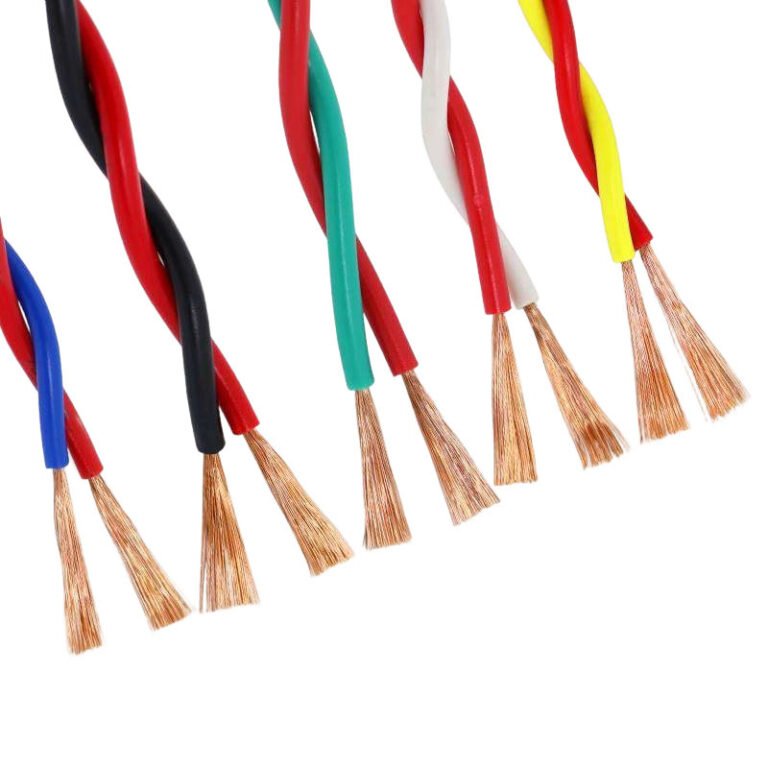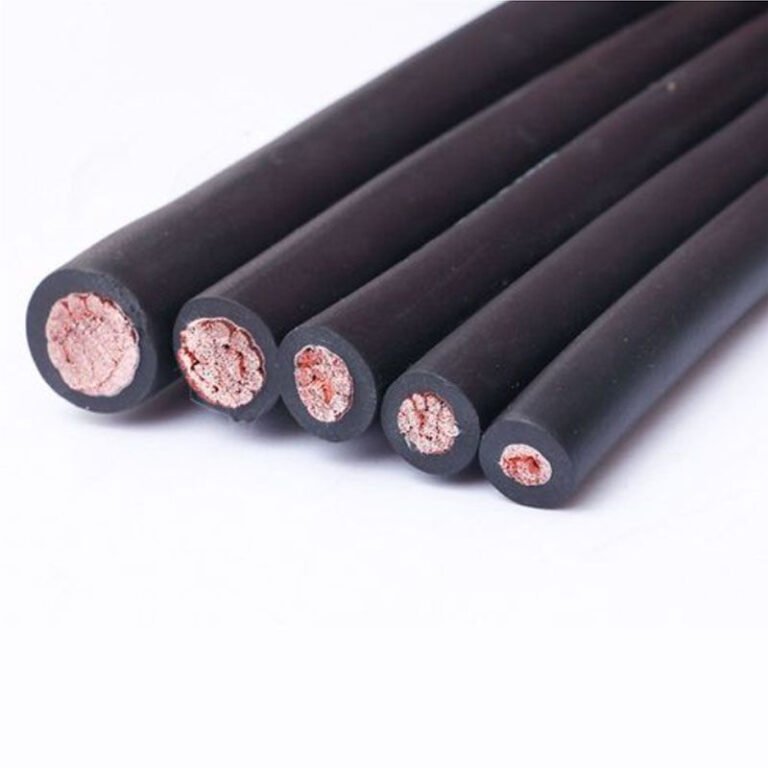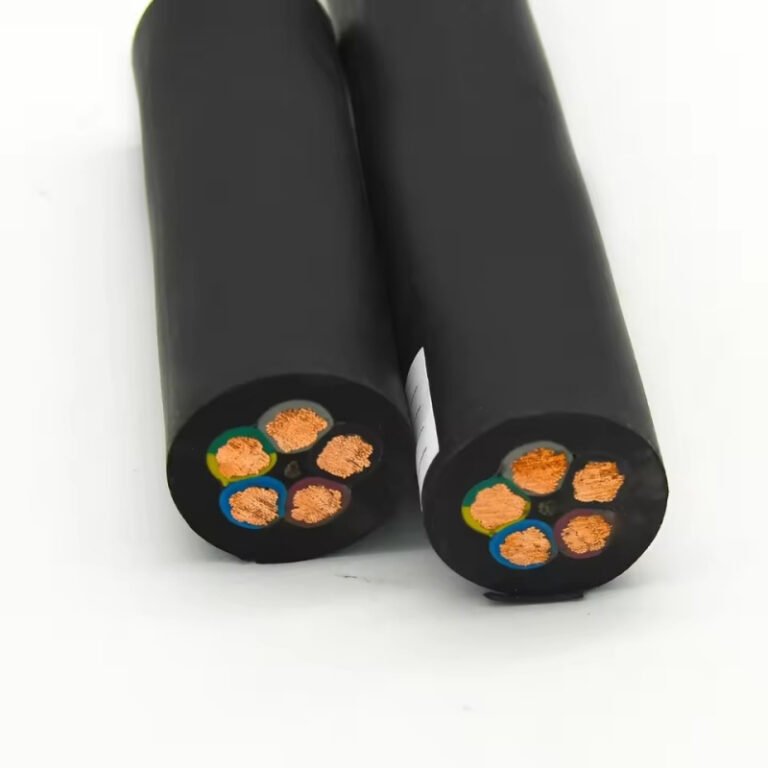
Mixing up Romex and armored cable on a job site is not a theoretical mistake — it shows up as failed inspections, rejected pull permits, and in worse cases, insulation damage from a conduit edge or a concrete pour that was never supposed to touch NM-B. A contractor who specs NM-B into a wet or exposed location because they assumed “it’s basically the same thing” is looking at rework costs, material write-offs, and scheduling delays that compound fast on a commercial build.
Romex (Type NM-B) is not an armored cable. It is a nonmetallic-sheathed cable rated for 600V and 60°C–90°C, permitted only in dry, indoor, concealed locations under NEC Article 334. Armored cable — Type AC or Type MC — wraps conductors in a continuous interlocked metal strip, typically aluminum or galvanized steel, giving it mechanical protection ratings, broader installation environments, and ampacity ranges that NM-B simply cannot match.
What makes this worth digging into is that the two cables can look deceptively similar in a supply-house photo, carry the same conductor gauges, and show up in the same product category on a distributor’s website. The differences are not cosmetic. They dictate where each cable can legally go, how it survives the environment around it, and what happens to your system when you get that call wrong.
Exact Construction of Romex (NM-B): What Is Actually Inside the Jacket
Crack open a length of 12/2 NM-B and you’ll settle the armored-cable question in about four seconds. There is no metal. Not a strip, not a braid, not a foil — nothing. Understanding exactly what is inside explains why the NEC treats this cable so differently from AC or MC types, and why substituting one for the other is never a judgment call.
The Outer Jacket
The outermost layer is a thermoplastic sheath — typically PVC, sometimes with an added nylon coating on premium runs — and its color is the first piece of information it’s trying to give you. White jacket means 14 AWG, rated for 15A circuits. Yellow is 12 AWG, 20A. Orange is 10 AWG, 30A. Black covers 8 AWG and 6 AWG, which is where NM-B tops out at roughly 40–60A depending on load conditions and derating factors. Gray is commonly used for underground feeder (UF-B), though that’s a separate product and worth not confusing on a busy job site.
That jacket is doing one job: keeping moisture, abrasion, and incidental contact off the conductors during normal indoor, dry-location use. It is not rated for mechanical impact. A misplaced screw will go straight through it. So will a determined rodent, a staple gun at the wrong angle, or the edge of a framing nail plate that wasn’t installed correctly. This is not a flaw — it’s by design for the application. But it matters enormously when someone asks whether the cable can survive exposure, conduit-free runs in industrial spaces, or locations where physical damage is a real risk.
The Conductor Bundle and Paper Wrap
Inside the jacket you’ll find the conductors bundled together and wrapped loosely in a paper binder — sometimes kraft paper, sometimes a thin paper tape. The binder is purely a manufacturing convenience; it holds the bundle together during extrusion and makes the cable easier to pull. It has no structural, dielectric, or protective function worth mentioning.
The current-carrying conductors themselves are insulated with THHN or THWN-2 compound, color-coded in the standard way: black for the ungrounded (hot) conductor, white for neutral. In a three-wire run you’ll see a red insulated hot added. The ground is bare copper in most residential NM-B — occasionally you’ll see a green-insulated ground in commercial-grade product, but bare is the norm and is code-acceptable in this cable type.
Voltage rating is 600V across the board. Temperature rating is where it gets slightly nuanced: standard NM-B is rated 60°C for ampacity calculations in dry locations, but many manufacturers also print a 90°C rating on the jacket. That 90°C figure is not a green light to run the cable in hot environments — it exists solely to allow engineers to use the 90°C column in NEC Table 310.15(B)(16) as a starting point before applying derating factors, then capping the final calculated ampacity at the 60°C value. In practice this matters most when you’re bundling many cables together in a tight chase and need the derating math to work out.
'Romex' is a registered trademark, not a generic cable categoryTrue
Romex is owned by Southwire Company, LLC. The correct generic designation under the NEC is Type NM-B (Non-Metallic Sheathed Cable). Using 'Romex' to describe cable from any other manufacturer is technically inaccurate, though the term is widely used as shorthand on job sites.
What Is Absent — and Why That Matters
Run through the layer list: outer thermoplastic jacket, paper binder, two or three THHN/THWN-2 insulated conductors, bare ground. That’s it. No interlocked aluminum armor strip. No galvanized steel spiral wrap. No continuous metallic sheath of any kind. Armored cable — whether Type AC or Type MC — has a corrugated or interlocked metal layer as its outermost structural element, and that layer is what earns it a completely different set of permitted applications under the NEC. The next section covers exactly how that armor is constructed and what it actually buys you in the field.
Exact Construction of Armored Cable (Types AC and MC): The Metal That Makes the Difference
Pull back the outer jacket on a piece of Type MC and the first thing you see is metal — not plastic, not paper, not a bare aluminum foil wrap, but a continuous interlocked spiral of formed metal strip that actually does mechanical work. That’s the distinction in one sentence. Everything else follows from it.
Type AC Cable (BX): The Original Armored Design
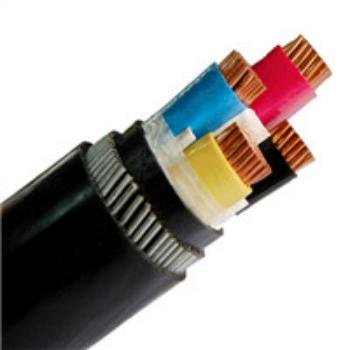
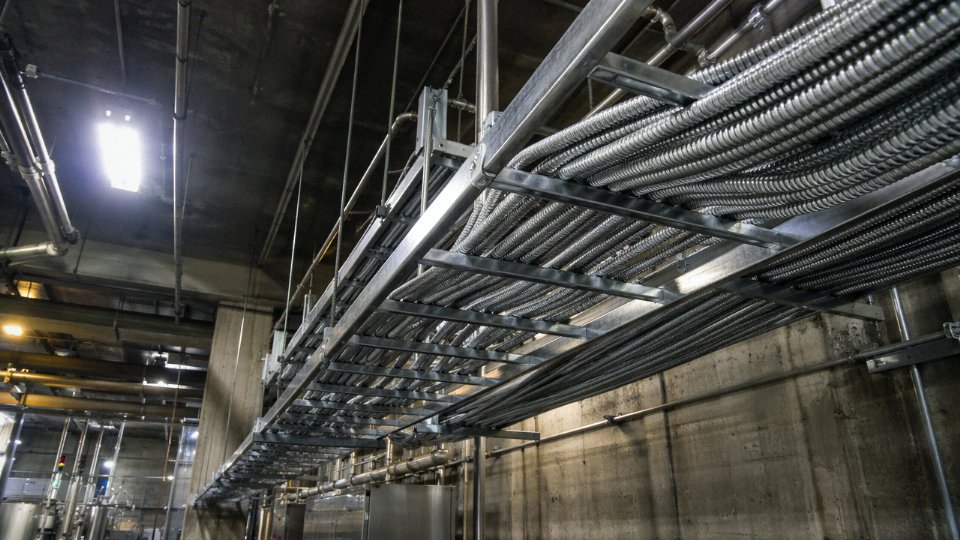
Type AC — still called BX on most job sites, a name left over from a Bronx Electrical trade designation that stuck — is governed by UL 4. Its construction starts with conductors insulated with THHN or a similar 90°C-rated insulation, then wrapped individually in a paper or tissue separator, and finally enclosed in a continuous spiral-wound interlocked aluminum armor. That armor isn’t decorative; each convolution locks into the next so the assembly can flex without opening a gap that would expose conductors.
The grounding arrangement in Type AC is where things get unusual. There is no separate green insulated ground conductor inside. Instead, a flat aluminum or steel bonding strip runs along the inside of the armor in direct contact with it, completing the equipment grounding path through the armor itself. In practice this means the armor and bonding strip together form the ground — which is why proper termination with listed AC fittings matters so much. Use the wrong fitting or leave the bonding strip untucked, and your grounding path degrades or disappears entirely.
Type AC is limited to dry, embedded, or concealed locations. You won’t run it in wet locations, outdoor exposures, or direct earth contact.
Type MC Cable: The Industrial Workhorse
Type MC (Metal-Clad, UL 1569, NEC Article 330) carries the same interlocked armor concept further and adds real flexibility for commercial and industrial environments. The core conductors are almost always THHN/THWN-2 at 600V — same insulation you’d find in conduit or inside a Romex jacket, so the conductor insulation itself is not what sets MC apart. What sets it apart is the armor and the separate insulated ground conductor, typically a green or green/yellow THHN wire sized per NEC Table 250.122.
The armor on standard MC comes in two physical forms. Interlocked armor uses the same spiral-wound strip you see on AC cable, typically aluminum, though galvanized steel is available and sometimes specified for industrial crushing-load environments. Continuously corrugated welded (CCW) armor — sometimes called smooth-wall or liquid-tight MC — uses a corrugated aluminum tube that’s been continuously formed and welded, giving it a tighter moisture barrier and a profile that pulls more easily through conduit. For a lot of plant maintenance work, CCW is worth the small cost premium.
MC Sub-Types Worth Knowing
MC-HL (Hazardous Locations) is listed for Class I and Class II division locations. It adds a PVC overjacket bonded to the armor and uses fittings that maintain the explosion-proof integrity of the enclosure. Substituting standard MC in a hazardous-location panel because the supply house ran out of MC-HL is the kind of shortcut that fails inspection — and deserves to.
PVC-jacketed MC for wet locations or direct burial adds an extruded PVC overjacket over the armor, sealing out moisture that would otherwise wick into the interlocked convolutions. Outdoor mechanical rooms, below-grade raceways, car washes — anywhere condensation or standing water is realistic.
Type MC cable armor provides mechanical protection against crushing loads, rodent damage, and impact that NM-B cable cannot provide regardless of installation method.True
The interlocked metal armor in Type MC is a structural element rated for mechanical protection per UL 1569; NM-B thermoplastic jacket offers no equivalent impact or crush resistance and is explicitly prohibited in locations requiring mechanical protection under NEC Article 334.
The Mechanical Protection Argument, Plainly Stated
The armor absorbs impact loads, resists deformation under crushing weight (think conduit straps overtightened, or a forklift clip on a cable tray), and presents a physical barrier rodents have trouble penetrating. In a food processing plant or cold-storage facility, where rodent pressure is real and maintenance access is infrequent, that last point isn’t trivial. NM-B offers none of this. Its outer jacket is thermoplastic — it protects conductors during installation, not in service under physical stress.
International Equivalents: SWA and AWA
Outside North America, the armored cable category maps roughly to Steel Wire Armored (SWA) and Aluminum Wire Armored (AWA) cables per IEC 60502 and BS 5467. Instead of interlocked strip armor, SWA uses a layer of helically applied steel wires over the insulated cores; AWA substitutes aluminum wires for weight-sensitive applications like overhead runs. The protection principle is identical — a metallic layer engineered to handle mechanical abuse — even if the manufacturing form and test standards differ. Jinda’s production lines cover both SWA and AWA constructions across low- and medium-voltage ratings, which matters when you’re specifying a project that spans North American and international installation zones and need consistent supply from a single source.
NEC Code Permissions and Prohibitions: Where Each Cable Type Is Legally Allowed
The NEC doesn’t just suggest where each cable type should go — it draws hard legal lines. Getting this wrong costs money: failed inspections, mandatory rip-outs, and in worst cases, an insurance denial after a fire. Here’s what the code actually says.
NEC Article 334: Where NM-B (Romex) Is Permitted — and Where It Isn’t
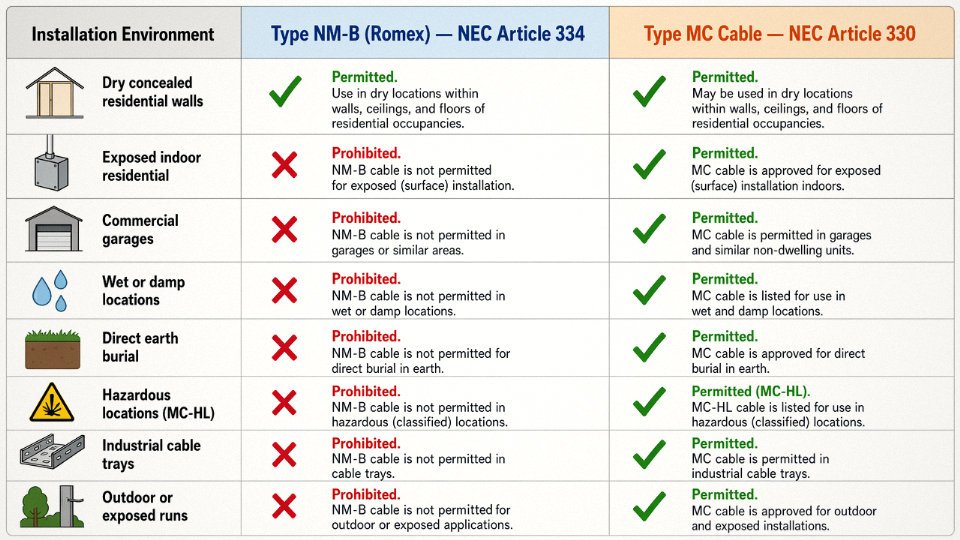
Article 334 permits NM-B in one- and two-family dwellings and multifamily structures up to three floors above grade, in dry locations, either concealed in walls and ceilings or exposed where not subject to physical damage. That last phrase carries a lot of weight. It’s the clause inspectors use most often to reject NM-B in places like unfinished utility rooms, exposed basement ceilings, or anywhere a ladder, shelving unit, or forklift could reasonably make contact with the cable.
NEC 334.12 lists the explicit prohibitions, and it’s worth reading the actual language rather than relying on memory. NM-B is prohibited in:
- Commercial garages (attached residential garages have their own nuances — check your local amendment)
- Theaters, assembly occupancies, and motion picture studios
- Storage battery rooms
- Hoistways and elevator shafts
- Embedded in poured concrete, masonry, or plaster
- Wet or damp locations
- Any location exposed to corrosive fumes or vapors
In practice, inspectors routinely flag NM-B stapled to open joists in an unfinished basement — technically that’s often “subject to physical damage” depending on the AHJ’s interpretation, and many jurisdictions have adopted stricter local rules on top of the base NEC text. A re-inspection fee in a major metro can run $150–$400 per visit, and if you’ve already drywalled over incorrect wiring, the cost multiplies fast.
NM-B (Romex) is permitted in wet or damp locations under NEC Article 334False
NEC 334.12(B) explicitly prohibits NM-B in wet or damp locations. It is rated for dry locations only, and installers who use it in crawlspaces, unfinished basements with moisture, or any damp environment are in direct code violation.
NEC Article 320: Type AC — Solid But Narrower Than MC
Type AC is covered under Article 320. It’s permitted in dry and damp locations (not wet), exposed or concealed, for branch circuits and feeders. It sees heavy use in wood-frame commercial construction — office tenant fit-outs, light retail — where the metal armor satisfies local requirements for mechanical protection without requiring full conduit. Some jurisdictions, notably New York City, essentially mandate AC or MC for virtually all wiring, which is why you’ll see almost no NM-B on NYC job sites at all.
The limitation to dry and damp locations matters. If you’re running cable through an area that could see condensation — a cold exterior wall in a humid climate, a mechanical room — Type AC starts to feel marginal and Type MC with a listed jacket becomes the safer specification.
NEC Article 330: Type MC — the Versatile Option
MC cable under Article 330 is substantially more permissive. With the appropriate listed jacket, MC can go into wet locations, direct burial, cable trays, exposed industrial environments, and even hazardous classified locations (MC-HL). It’s approved for concealed or exposed runs in commercial and industrial buildings across the board. Ampacity ranges from roughly 15A at 14 AWG up to 200A or more at 350 kcmil, depending on insulation rating and installation conditions — a range NM-B simply cannot touch.
| Cable Type | Dry | Damp | Wet | Direct Burial | Industrial/Commercial | Residential |
|---|---|---|---|---|---|---|
| NM-B (Romex) | ✓ | ✗ | ✗ | ✗ | ✗ | ✓ (≤3 floors) |
| Type AC | ✓ | ✓ | ✗ | ✗ | Limited | ✓ |
| Type MC (listed jacket) | ✓ | ✓ | ✓ | ✓ | ✓ | ✓ |
A Note on International Projects
Outside the US, the NM-B concept largely doesn’t exist in commercial or industrial contexts. Unarmored PVC-sheathed cable in those environments would typically fail local inspection or simply isn’t listed by the relevant authority. Steel wire armored (SWA) and XLPE/SWA cables built to IEC 60502 or IEC 60227 standards dominate — they’re expected, not optional. Jinda’s manufacturing line is built entirely around IEC standards for this reason: international procurement managers specifying cable for industrial plants, infrastructure projects, or export-market construction aren’t buying NM-B equivalents. They need mechanically rated, environmentally listed product from the ground up. The construction logic matches what Article 330 MC tries to achieve domestically, just executed under a different regulatory framework.
Know your AHJ. The NEC is a model code, and local amendments can tighten any of these rules further. When in doubt, call the inspector before you pull wire, not after.
Physical Damage Resistance and Safety Testing: How NM-B and Armored Cable Actually Perform
The question of whether Romex can substitute for armored cable isn’t just a code argument — it becomes a physical one the moment something goes wrong on the job site. Walk through enough warranty claims and insurance disputes and you start seeing the same pattern: someone ran NM-B in a location that needed mechanical protection, and the failure mode was entirely predictable.
Impact Resistance
UL 1569, which governs Type MC cable, includes a repeated impact test. The armor — interlocked aluminum or galvanized steel — is expected to absorb hammer-blow loads without compromising the conductors inside. In practice, MC cable can take incidental tool strikes, dropped conduit, or a forklift clipping a cable tray run without the insulation system failing. NM-B has no comparable rating under UL 719. The outer PVC jacket provides abrasion resistance for pulling through framing, not mechanical impact protection. Hit it with anything substantial and you’re cutting into the insulation or the bare ground conductor. That’s not speculation; it’s baked into the UL 719 scope, which simply doesn’t address impact performance at all.
Crush Resistance
Steel wire armored (SWA) cable to BS 5467 and continuously corrugated MC cable tested under IEC 60502-1 carry rated radial crush resistance — commonly in the range of 450–700 N/cm depending on armor thickness, cable diameter, and fill configuration. That matters in cable trays under load, in concrete encasement, or anywhere another trade is stacking heavy material. NM-B carries no crush rating. None. If a cable bundle in a commercial ceiling gets pinched between a HVAC hanger and a beam — which happens regularly during renovation work — the NM-B jacket deforms and the insulation integrity is gone. You may not see the fault immediately, which is actually worse than an instant trip.
Rodent Damage
This one comes up more often in agricultural and light industrial settings than people expect. NEC commentary and most insurance underwriting guidelines explicitly flag NM-B as susceptible to rodent penetration — squirrels, rats, and mice can chew through the PVC outer jacket and the individual conductor insulation without much effort. The metallic armor on AC and MC cable physically stops that. It’s not that the insulation inside is any tougher; it’s that the animal can’t get to it. Running NM-B in a food processing plant or a warehouse with a known rodent history is the kind of decision that creates very expensive claims. SWA cable or steel-armored MC is the answer, and the cost delta at installation is a fraction of one incident.
NM-B (Romex) has a rated crush resistance comparable to armored cableFalse
UL 719, which governs NM-B, includes no crush resistance rating. Armored cables such as SWA (BS 5467) and MC cable (UL 1569) carry specific radial crush ratings, typically in the range of 450–700 N/cm depending on construction and diameter.
Fire and Arc Flash Behavior
Both standard NM-B and most MC cable use THHN conductors rated to 90°C. The insulation is chemically similar, so that’s not the differentiator. What changes with MC is the armor layer acting as a secondary containment barrier during an arc flash event. The interlocked metal doesn’t prevent an arc, but it does contain the energy path somewhat and reduces the probability of the fault propagating into adjacent cable runs — relevant in a congested tray system. NM-B offers no such containment; the jacket burns away quickly and the fault spreads.
Flex Life and Installation Stress
Interlocked armor MC is cycled through repeated flexing tests as part of UL 1569 qualification. NM-B is designed for a static installation: routed once, stapled in place, done. Pull it tight around a corner at less than the minimum bend radius for its diameter, or flex it repeatedly during a machine installation, and the outer jacket develops stress cracks — usually at the staple points first. That’s a slow path to moisture ingress and insulation degradation. The standards roadmap for anyone writing a specification: UL 719 for NM-B, UL 4 for Type AC, UL 1569 for MC, IEC 60502-1 and IEC 60228 for international conductor and cable construction, and BS 5467 for SWA. Those documents define exactly what each product is tested to survive — and just as clearly, what it isn’t.
Installation Scenarios Side by Side: When to Choose Romex, When to Specify Armored Cable
The code sections and construction details above mean nothing until they hit an actual project. Here is how the choice plays out across six scenarios that come up constantly — residential rough-in, commercial tenant work, industrial floors, and export jobs where NEC doesn’t even apply.
Scenario 1 — New Single-Family Home, Interior Wall Rough-In
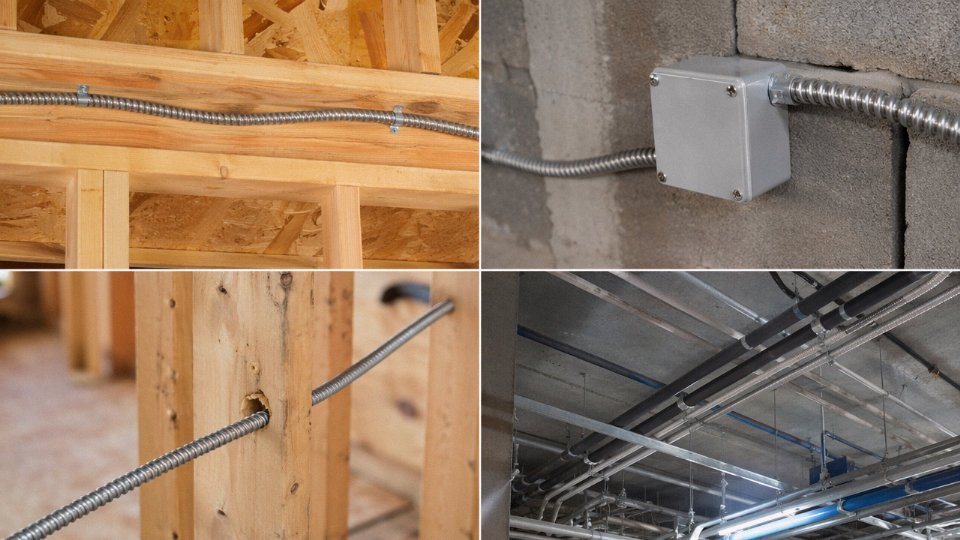
NM-B is the right call here, full stop. It’s fast to pull, easy to terminate, and in a protected wall cavity of a wood-frame dwelling it has no meaningful mechanical vulnerability. An experienced crew can rough-in a 2,000 sq ft house in a day or two with NM-B; the same job in MC takes roughly 40–60% longer just on labor, and the material premium adds up fast. Armored cable is permitted in this application, but you’d only spec it if an owner specifically asked for it or if local amendments tightened the requirements. Most don’t. Use 12 AWG NM-B for 20A circuits, 14 AWG for 15A lighting — the bread and butter of residential work.
Scenario 2 — Attached Garage or Basement Workshop with Exposed Wiring
This is where people get burned. NM-B stapled along an exposed basement ceiling joist or a garage wall is subject to physical damage, and NEC 334.12 prohibits exactly that. The AHJ will flag it at inspection, and more importantly, a misplaced drill bit or a falling shelf edge can compromise the jacket with no warning. MC cable or THHN pulled through EMT conduit is the correct path. In a basement workshop with a table saw, a drill press, and the inevitable chaos of home fabrication, the armor earns its cost.
Scenario 3 — Light Commercial Tenant Improvement (Retail, Office)
NM-B is prohibited in commercial occupancies under NEC 334.10 — it’s not a judgment call, it’s a hard rule. Metal-stud commercial construction is MC cable territory. Type MC with an aluminum interlocked armor pulls cleanly through stud bays, terminates with standard fittings, and satisfies virtually every commercial AHJ without supplemental conduit. For a retail fit-out with 30–50 branch circuits, specifying anything else invites a failed inspection and a costly re-pull.
Scenario 4 — Industrial Plant Floor Wiring to Machinery
NM-B has no business on a plant floor. The combination of mechanical abuse, cutting fluids, heat cycling near process equipment, and potential classified locations demands MC-HL (listed for hazardous locations) or, on international projects, SWA cable with an appropriate oil-resistant outer sheath. Ampacity requirements alone often exceed what NM-B can deliver — a 480V motor feeder to a 75 HP drive will typically require conductors in the 3/0 to 350 kcmil range, well beyond NM-B’s 6 AWG ceiling.
NM-B (Romex) is prohibited on industrial plant floors under NEC Article 334 due to restrictions on use in wet, damp, or physically exposed environments.True
NEC 334.12 explicitly lists the conditions under which NM-B cannot be used, including locations exposed to physical damage, damp or wet locations, and most industrial occupancies — regardless of voltage or conductor size.
Scenario 5 — Outdoor Underground Feeder to a Subpanel
NM-B is prohibited underground without exception. For small feeders (up to roughly 60A), UF-B direct burial cable is the practical choice. For larger feeders — 100A subpanel in a detached garage, for instance — listed direct-burial MC or THWN-2 conductors in Schedule 40 PVC or rigid metal conduit is the standard approach. Depth requirements and conduit type vary by circuit voltage and local amendment; always confirm with the AHJ before trenching.
Scenario 6 — International Export Project (Middle East, Southeast Asia, Africa)
NM-B simply doesn’t exist in IEC markets. Specifying it on a project destined for Saudi Arabia, Vietnam, or Nigeria will get it rejected at customs or at the consultant review stage. The correct specification is XLPE/SWA/PVC or XLPE/AWA/PVC to IEC 60502-1, with conductor sizes in mm² rather than AWG. Jinda manufactures these to order in custom drum lengths with third-party certifications including KEMA, SGS, and SASO — useful when a project engineer needs documentation for a tender package or letter of credit.
Summary Decision Table
| Scenario | Permitted Cable Type(s) | Prohibited Type(s) | Key Reference |
|---|---|---|---|
| Residential interior wall rough-in | NM-B (preferred), AC, MC | — | NEC 334.10 |
| Exposed garage / basement wiring | MC, EMT + THHN | NM-B | NEC 334.12(1) |
| Commercial tenant improvement | MC, AC (where listed) | NM-B | NEC 334.10(1) |
| Industrial plant floor / machinery | MC-HL, SWA, armored tray cable | NM-B | NEC 334.12, 501–503 |
| Outdoor underground feeder | UF-B, direct-burial MC, conduit + THWN-2 | NM-B | NEC 334.12(4), 340 |
| IEC export project | XLPE/SWA/PVC, XLPE/AWA/PVC per IEC 60502-1 | NM-B (not recognized) | IEC 60502-1 |
The pattern is consistent: NM-B is purpose-built for one environment — dry, protected, residential interiors — and it performs well there. Step outside that envelope and you’re either out of code compliance or one physical event away from a failure you can’t walk back.
Cost Comparison and Procurement Benchmarks: Material, Labor, and Total Installed Cost
Raw material prices tell only part of the story. What actually matters to an estimator or procurement manager is total installed cost — and that number shifts considerably depending on project type, labor market, and whether conduit would have been required anyway.
Material Cost Benchmarks (US Market, 2024)
12/2 NM-B runs roughly USD 0.35–0.55 per foot at distributor pricing, though that range depends heavily on copper spot price, order volume, and whether you’re buying off a contractor account or off the shelf at a big-box store. 12/2 MC cable lands at approximately USD 0.85–1.20 per foot for standard aluminum-armor product — and closer to the upper end if you’re specifying steel-interlocked armor or a higher-temperature insulation rating.
That’s a real 2x to 3x material premium for the same conductor size, same gauge, same circuit. On a single circuit it’s barely noticeable. Across a full residential rough-in or a mid-size commercial tenant improvement, the gap compounds fast.
12/2 MC cable costs approximately 2 to 3 times more per foot than 12/2 NM-B for the same conductor size in the US market.True
Distributor pricing in 2024 consistently places 12/2 NM-B in the USD 0.35–0.55/ft range and 12/2 MC aluminum-armor in the USD 0.85–1.20/ft range, reflecting the additional material cost of the interlocked metal armor strip, anti-short bushings, and more complex jacketing.
Labor: Where the Real Spread Comes From
MC termination is slower. You need a rotary armor cutter — a Roto-Split or equivalent — anti-short bushings, and a connector rated for MC. A journeyman who can terminate NM-B in under two minutes will spend three to four minutes on an MC termination done properly. That 20–35% added time per termination sounds modest, but in a panel with 40 circuits, or a commercial space with hundreds of junction points, it accumulates into real hours.
The counterargument, and it’s a valid one in exposed commercial locations: MC doesn’t need conduit. EMT plus bending labor plus fittings on an exposed branch circuit run can easily exceed the MC armor premium. In those cases MC isn’t more expensive — it’s cheaper, and cleaner to inspect. I’ve seen estimators miss this completely and low-bid a job using conduit-and-THWN only to lose margin on the bending labor.
Total Installed Cost by Scenario
In a straightforward 2,000 sq ft residential rough-in — say, 30–40 circuits, typical bedroom/kitchen/bath layout — substituting MC for NM-B across the board typically adds USD 4,000–8,000 in combined material and labor. The range depends on local labor rates (a union shop in a high-cost metro will hit the upper end quickly), copper pricing at time of purchase, and how complex the run routing is.
In commercial tenant improvement work, MC is often already the baseline specification. There’s no penalty to compare because NM-B isn’t permitted in the ceiling plenum or exposed runs anyway. The cost conversation becomes MC versus conduit-and-wire, not MC versus Romex.
International Bulk Procurement
For projects outside North America that call for IEC-specification armored cable — SWA (steel wire armor) or AWA (aluminum wire armor) to BS 5467 or IEC 60502 — sourcing directly from a manufacturer on an FOB Qingdao basis typically lands 15–30% below equivalent European-sourced cable for the same specification. That range depends on drum count, cable cross-section, armor type, and current freight rates. Minimum order quantities usually start at one full drum, commonly 500 meters, and reputable manufacturers will provide full third-party test reports with the shipment.
One procurement warning worth taking seriously: cables marketed as “armored” but constructed with only a foil or longitudinally-applied tape shield are screened cables, not mechanically armored cables. They provide EMI shielding. They do not provide crush resistance, impact resistance, or the mechanical protection ratings that actual SWA or interlocked MC armor delivers. Always pull the datasheet and confirm UL listing (for MC in North America) or verify the armor construction type — wire armor versus tape armor — in the IEC specification before approving a submittal. A foil-shielded cable looks similar on a spec sheet if you’re not reading carefully, and it will fail an inspection or, worse, fail in service.
Lifecycle Cost: The Conduit Offset
In environments where NM-B would need conduit for physical protection — exposed runs in a garage, mechanical room, or light commercial space — the conduit-plus-NM-B option often costs more than simply running MC from the start. Material, fittings, hangers, and bending labor on even a modest conduit run add up. MC’s armor is already there. In my experience, this offset makes MC cost-neutral or marginally cheaper on a total installed basis in roughly a third of the commercial scenarios where people initially assume NM-B is the budget option.
The decision isn’t always “cheaper cable equals cheaper project.” Sometimes it is. But running the full installed cost — not just the spool price — is the only honest way to compare them.
Global Armored Cable Standards and How to Specify Correctly for International Projects
If you’re sourcing cable for a project outside North America — or reviewing a spec written by someone who learned on NEC and is now working under IEC — the terminology mismatch alone can cause real procurement problems. “Armored cable” means something specific in each system, and they don’t map one-to-one.
North America vs. IEC: The Structural Equivalents (and the Gaps)
Type MC cable — the most commonly specified armored cable in U.S. commercial and industrial work — corresponds most closely to IEC XLPE/SWA/PVC construction: extruded cross-linked polyethylene insulation, steel wire armor, PVC outer sheath. The armor mechanism and mechanical protection intent are genuinely comparable, though test protocols differ. Type AC is harder to match. IEC NYY-J (PVC insulated, PVC sheathed, no armor) offers similar conductor and insulation construction but no equivalent mechanical protection layer; there’s no clean IEC analog to AC’s interlocked aluminum armor strip. Specifying “Type AC equivalent” on an IEC project will get you blank stares or, worse, a substitution you didn’t intend.
NM-B conceptually resembles IEC NYM — both are lightweight, PVC-sheathed, dry-location cables — but NYM is permitted in a considerably broader range of applications under European codes than NEC Article 334 allows for NM-B. Don’t assume they’re interchangeable just because the cross-section looks similar.
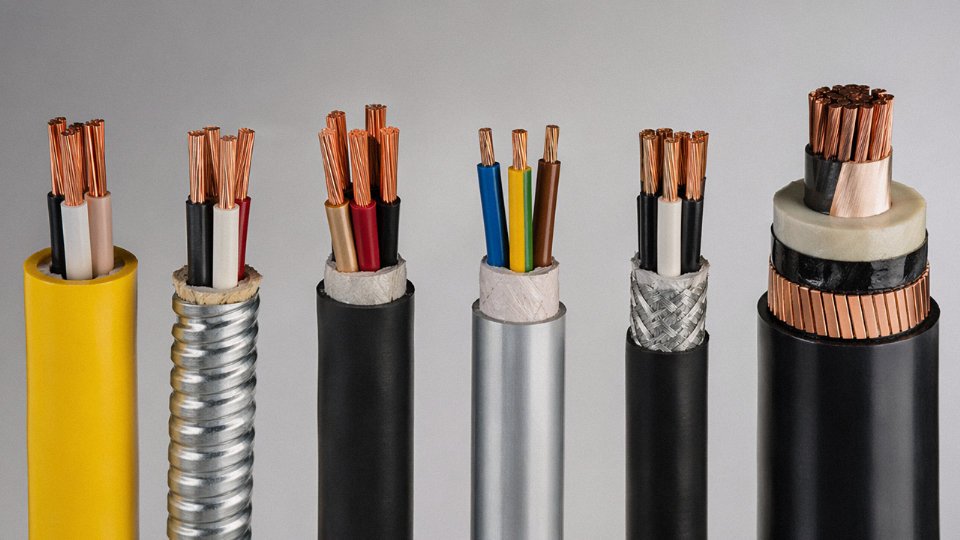
The governing IEC standards for extruded power cables up to 30kV are IEC 60502-1 (up to 1kV) and IEC 60502-2 (1kV–30kV). These define insulation, bedding, armor, and sheath requirements. If your project spec doesn’t cite one of these, or cites both without clarifying voltage range, a manufacturer will reasonably ask for clarification before cutting material.
Armor Construction Options Under IEC
IEC armored cable comes in more armor varieties than most NEC-trained engineers realize. Round steel wire armor (SWA) is the workhorse — used for direct burial, underground duct runs, and exposed industrial installations where tensile strength matters. Flat steel wire suits larger multicore cables where round wire would be impractical. Round aluminum wire armor (AWA) is the right choice for single-core AC cables, because steel wire armor on a single-core cable creates eddy current losses that will quietly eat your efficiency. Steel tape armor is lighter and used where crush resistance matters more than tensile load — think short indoor runs or cable trays with no pulling stress.
Specifying “wire armored” without stating round or flat, steel or aluminum, is vague enough to get you the cheapest option the supplier has in stock.
Writing a Complete Armored Cable Specification
A fully specified armored cable for an international project should state: voltage class (e.g., 0.6/1kV), number and size of conductors, conductor material (copper or aluminum — don’t leave this implicit), insulation type (XLPE or PVC), bedding layer material, armor type (SWA, AWA, flat steel wire, or steel tape), outer sheath color and material, applicable standard (IEC 60502-1 or -2), required test certificates (BASEC, KEMA, or third-party FAT reports), and drum length.
| Specification Element | Common Omission | Consequence |
|---|---|---|
| Armor type (wire vs. tape) | Left as “armored” | Supplier selects cheapest option |
| Conductor material | Assumed copper | Aluminum delivered; termination hardware wrong |
| UV-resistant outer sheath | Omitted on outdoor runs | Sheath degrades in 3–7 years depending on climate |
| FAT report requirement | Not requested | No test evidence if a fault occurs |
| Voltage class | Only nominal voltage stated | Wrong insulation wall thickness delivered |
Specification Mistakes That Show Up Repeatedly
The most common error on internationally tendered projects is writing NEC cable type designations — “Type MC,” “12/2 NM-B” — into an IEC procurement package. A supplier in Southeast Asia or the Middle East will either guess at your intent or, more likely, request a clarification that adds two weeks to your schedule.
Failing to specify UV resistance on outdoor sheath material is something I’ve seen bite projects in the Middle East and tropical Southeast Asia. Standard PVC degrades faster than most people expect under sustained UV and heat. For outdoor or direct-exposure runs, specify UV-stabilized PVC or HDPE outer sheath explicitly.
Type MC cable used in North America has no direct IEC equivalent with identical construction and test protocol.True
IEC SWA cables and Type MC both provide mechanical armor protection, but use different armor geometries, test standards, and installation code frameworks. They serve similar purposes but are not interchangeable on a specification.
Jinda’s Manufacturing Scope and Lead Times
Jinda produces SWA, AWA, and XLPE/SWA/PVC armored cables from 0.6/1kV up to 26/35kV, with CE marking, ISO 9001 certification, and IEC test certificates. Export volumes run regularly to the Middle East, Africa, Southeast Asia, South America, and Europe — so the documentation requirements for those markets, including third-party inspection and full material traceability, are standard practice rather than a special request.
Lead times for standard armored cable configurations run roughly 25–45 days from order confirmation, depending on conductor size and drum quantity. Custom voltage ratings or non-standard armor configurations — AWA on unusual conductor sizes, for example — typically require 45–60 days. If your project has a hard energization date, build that buffer in early. Third-party inspection coordination and factory acceptance test reports are available on request and worth requiring on any order above modest quantities.
Frequently Asked Questions About Romex, Armored Cable, and Cable Selection
Is Romex the same as BX cable?
No — and this mix-up trips up even experienced tradespeople. Romex is the Southwire trade name for Type NM-B cable: thermoplastic-jacketed conductors wrapped in a PVC outer sheath, no metal anywhere in the assembly. BX is an old trade name that has become synonymous with Type AC (Armored Cable), which carries a continuous spiral-interlocked metal armor over the conductor bundle. Pull a piece of each off the shelf and the difference is obvious in your hands — NM-B is light and flexible like a garden hose, while AC rattles and the metal armor is right there under your fingers.
They install completely differently too. AC requires an anti-short bushing at every termination to protect conductors from the cut armor edge, a step you simply don’t have with NM-B. Under NEC Article 320, AC cable is listed for use in locations where NM-B is flat-out prohibited — damp locations, some commercial occupancies, exposed runs through areas subject to physical damage. Calling one the other on a job submittal will get you a red-line from any inspector who knows the code.
Can I use Romex in a garage?
Usually not for exposed runs. NEC Article 334.12 prohibits NM-B where the wiring is exposed or subject to physical damage, and most attached garages qualify. In practice, whether concealed NM-B in a finished garage wall passes inspection depends heavily on your AHJ — some accept it, some don’t, and it’s worth a quick call before you rough-in. For any exposed run along studs, across the ceiling, or down to a receptacle, you’re looking at MC cable or conductors in conduit. The cost difference on a typical two-car garage circuit is minor; the re-inspection cost if you get it wrong is not.
Does armored cable need to be in conduit?
No, and that’s one of the main reasons contractors specify MC over individual conductors in exposed commercial work. The interlocked metal armor is itself the mechanical protection and, in listed configurations, qualifies as an equipment grounding path. You run it, terminate it, done — no conduit fill calculations, no pulling conductors, no conduit bodies at every bend. In a warehouse or manufacturing bay with dozens of branch circuits dropping to machinery, the labor savings over EMT-and-wire installations can be meaningful, often 20–40% of installation labor depending on circuit density and bend count.
What is the difference between MC cable and SWA cable?
Both provide mechanical armor, but they are engineered to different standards and genuinely are not interchangeable on certified projects. MC cable is governed by UL 1569 and NEC Article 330, uses interlocked or corrugated aluminum or steel armor, and is the standard armored cable product across North America. SWA (Steel Wire Armored) cable is built to IEC 60502-1 (low voltage) or IEC 60502-2 (medium voltage), with round galvanized steel wires wound helically around the cable core — a fundamentally different armor geometry that handles longitudinal tension and ground fault current differently.
MC cable and SWA cable are interchangeable for certified installationsFalse
MC cable is listed under UL 1569 and governed by NEC Article 330, while SWA cable is manufactured to IEC 60502-1/-2. They use different armor geometries, grounding arrangements, and certification frameworks. Substituting one for the other on a project with a defined specification standard risks failed inspection and potential liability.
If you’re procuring for a project that will see both North American and IEC jurisdictions — a multinational manufacturing campus, say — document the applicable standard explicitly in your specification, not just the cable type name.
Can armored cable be used outdoors or underground?
Yes, with the right construction. Standard MC cable without an outer jacket is rated for dry and damp locations only. Listed MC cable with a PVC or sunlight-resistant jacket extends that to wet locations and, in some UL-listed configurations, direct burial. On the IEC side, SWA cable with an outer HDPE or PVC oversheath is a workhorse product for direct-burial low-voltage and medium-voltage feeders — it’s in the ground under roads, industrial sites, and utility corridors worldwide. The sheath material matters: HDPE is generally preferred in aggressive soil conditions or where hydrocarbon contamination is a risk. Always verify the outer sheath rating against site conditions before specifying, not after the cable is already on-site.
Where can I source IEC-compliant armored cable in bulk for an international project?
Shandong Jinda Special Cable Group manufactures SWA, AWA (Aluminum Wire Armored), and XLPE-insulated armored cables to IEC 60502-1 and IEC 60502-2 from five production bases in Shandong, China. Full third-party certification is available, and Jinda ships to more than 50 countries. For large procurement programs — project quantities, scheduled releases, or country-specific certification requirements — direct engagement with their technical and sales team early in the specification phase avoids the downstream scramble of trying to retrofit a standard to a cable that’s already been ordered.
Key Takeaways and How to Make the Right Cable Decision for Your Next Project
The central answer has not changed through any section of this article: Romex NM-B is not an armored cable. It never was. It carries no metal armor layer, it earns no mechanical protection rating under UL or NEC definitions, and the moment you install it where armored cable is required — exposed runs in a commercial kitchen, a damp utility room, anywhere subject to physical contact — you have a code violation sitting inside a finished wall. That violation either surfaces at inspection, costing rework, or it doesn’t surface at all, which is actually the worse outcome.
Romex NM-B is classified as armored cable under the NECFalse
The NEC classifies NM-B under Article 334 as non-metallic sheathed cable. Armored cable types AC and MC are governed by Articles 320 and 330 respectively and require a continuous interlocked metal armor jacket that NM-B does not contain.
The Three Questions That Drive Every Cable Specification
Before you write a cable type onto a drawing or a purchase order, run through these three questions. They cut through the noise faster than any comparison chart.
One: Is the location wet, damp, or subject to physical damage? If yes, NM-B is out — full stop. You are looking at Type MC with a PVC jacket, SWA armored cable per IEC 60502, or conduit-enclosed wiring depending on jurisdiction. Damp doesn’t just mean outdoor. A below-grade mechanical room in a commercial building qualifies. So does a food-processing area with regular washdowns.
Two: Is the occupancy commercial, industrial, or a restricted residential zone? Many local amendments and insurer requirements prohibit NM-B in commercial occupancies entirely, regardless of whether the specific run looks “protected.” Don’t rely on a visual judgment about protection level in a commercial building. The occupancy classification alone often ends the discussion.
Three: Does the project follow NEC or an IEC-based national standard? This matters enormously for international procurement. NM-B has no true IEC equivalent for industrial or commercial wiring. Engineers specifying cable for projects in the Middle East, Southeast Asia, Africa, or Europe need IEC-compliant armored cable — typically SWA (steel wire armored) or AWA (aluminum wire armored) per IEC 60502-1 for low voltage, IEC 60502-2 for medium voltage. Dropping NM-B into an IEC project specification is not a conservative substitution. It is a misspecification.
The Cost Argument Is Not What You Think
The installed cost premium for armored cable over NM-B in a protected residential application is real. No point pretending otherwise. But in any setting where the alternative is metallic conduit — EMT, rigid steel, or PVC-coated rigid — Type MC cable routinely reduces total installed cost by cutting labor for conduit bending and pulling, eliminating separate conduit fittings, and compressing the schedule. Re-inspection failures for improper NM-B installation run roughly $800–$3,500 per incident in combined rework and delay cost depending on project size and contractor rates. One failed inspection on a commercial fit-out often erases the entire “savings” from specifying cheaper cable.
Commercial property insurers in many markets now explicitly require armored or conduit-wired installations. A claim denial on a fire loss traced to non-compliant NM-B use is a financial event of a different magnitude entirely.
International Procurement and Where Jinda Fits
For procurement teams sourcing armored cable across voltage classes — 0.6/1kV distribution cable up through 26/35kV medium-voltage feeders — the specification needs to be tight before you approach a manufacturer. That means armor type (SWA vs. AWA), conductor material, insulation class (XLPE or EPR for demanding environments), and the applicable IEC or national standard called out explicitly. Vague specs produce non-comparable quotes and, occasionally, non-compliant product that clears customs before anyone notices.
Jinda’s technical sales team works directly with project engineers and procurement managers on custom specification drafting — not a catalog lookup, an actual document you can issue to tender. With five production bases in China, 470,000 m² of manufacturing space, and more than 35 years of cable manufacturing behind the operation, Jinda has the production depth to handle bulk orders without the lead-time instability that plagues smaller suppliers. ISO 9001 certification, export history to 50-plus countries, and an in-house R&D function mean the product arriving on-site matches the approved submittal.
If your next project requires armored or specialty power cable and you want a technical review of your specification before committing to a procurement volume, contact Jinda’s international technical sales team. Bring your single-line drawing and your installation environment details. The conversation will be more useful than a price sheet.