Electricians and procurement teams argue about this more than you’d expect, and the confusion isn’t trivial. Spec the wrong product on a residential build or a light commercial fit-out, call it “wire” on the purchase order, and you may end up receiving a spool of single-conductor THHN instead of the sheathed assembly your inspector is expecting — which means a job halt, a re-order, and a delay that compounds fast when rough-in is on the critical path.
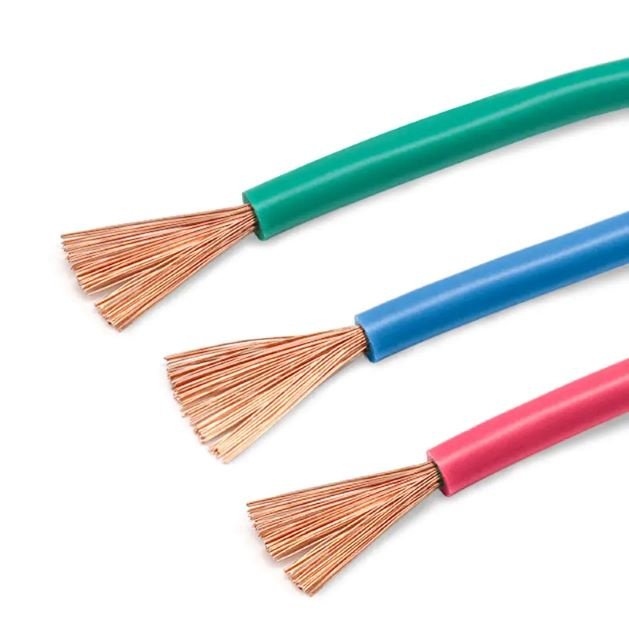
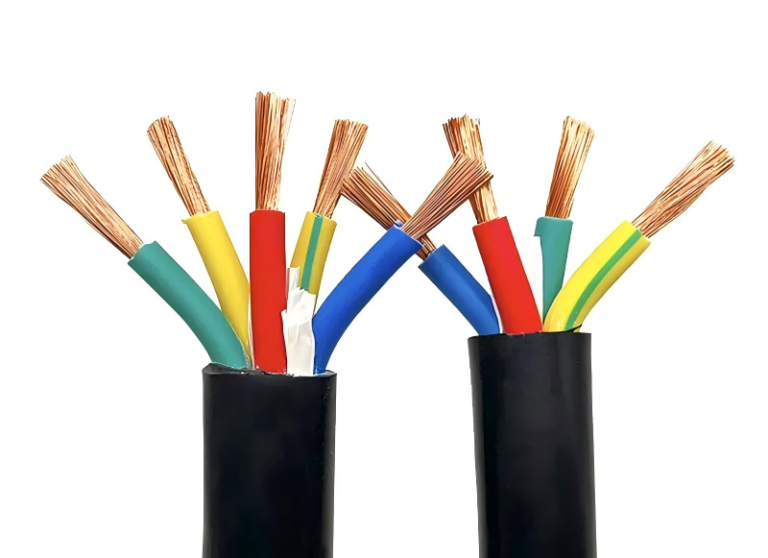
Romex is a cable, not a wire. It is a brand name for Type NM-B (non-metallic sheathed) cable, manufactured with two or three insulated copper conductors plus a bare grounding conductor, all enclosed in a PVC outer jacket. A wire is a single conductor; Romex bundles multiple conductors together inside one assembly, which is the defining characteristic of a cable.
What makes this worth looking at more carefully is that the distinction isn’t just semantic. The way Romex is constructed — that paper separator layer between the conductors and the jacket, the 90°C conductor rating that NEC 334.80 then dials back to a 60°C ampacity figure for most residential installations — reflects deliberate engineering trade-offs that affect how you size circuits, how you pull it through tight framing bays, and whether a given installation will pass inspection or quietly overheat behind drywall for years. Understanding what the product actually is shapes every decision downstream.
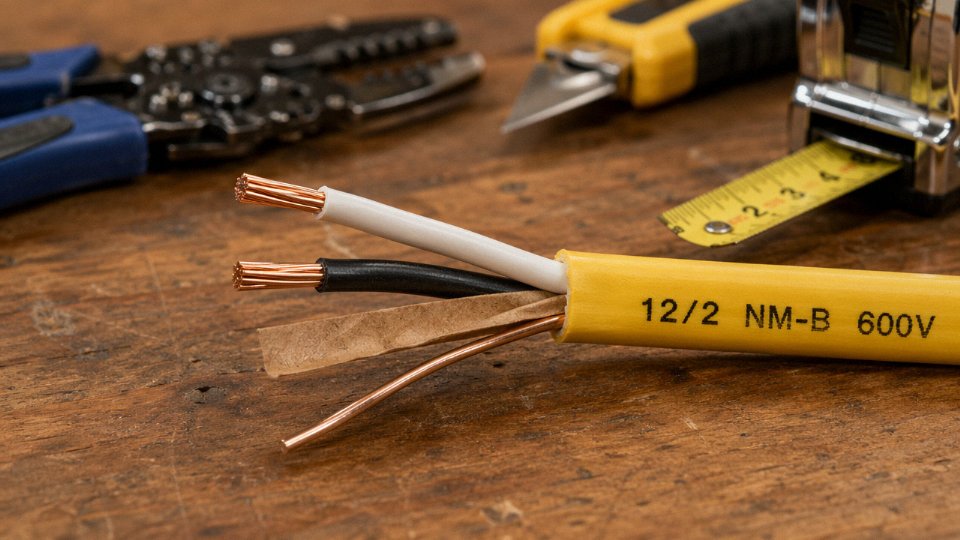
Anatomy of a Romex Cable: What Is Actually Inside the Jacket
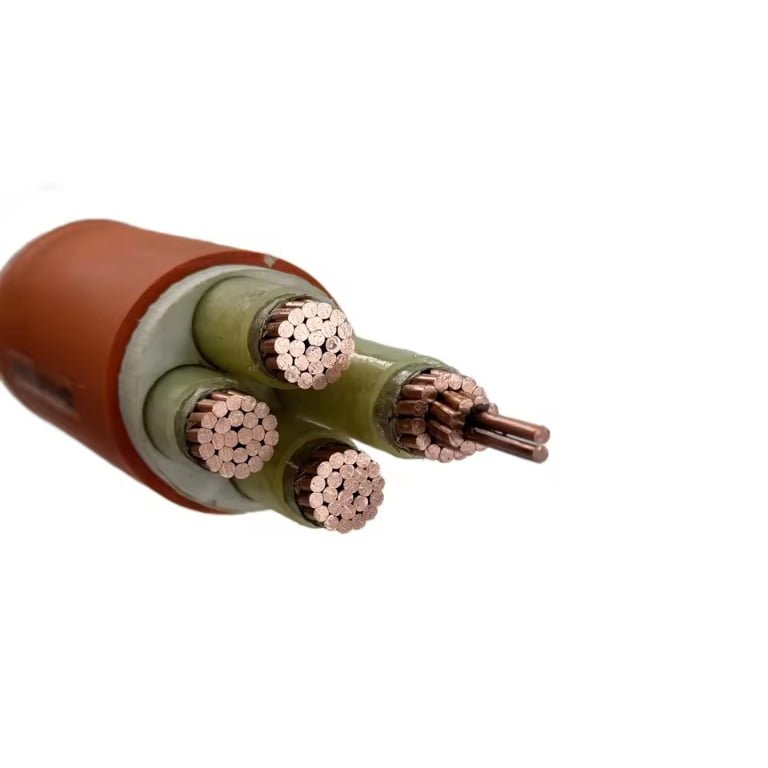
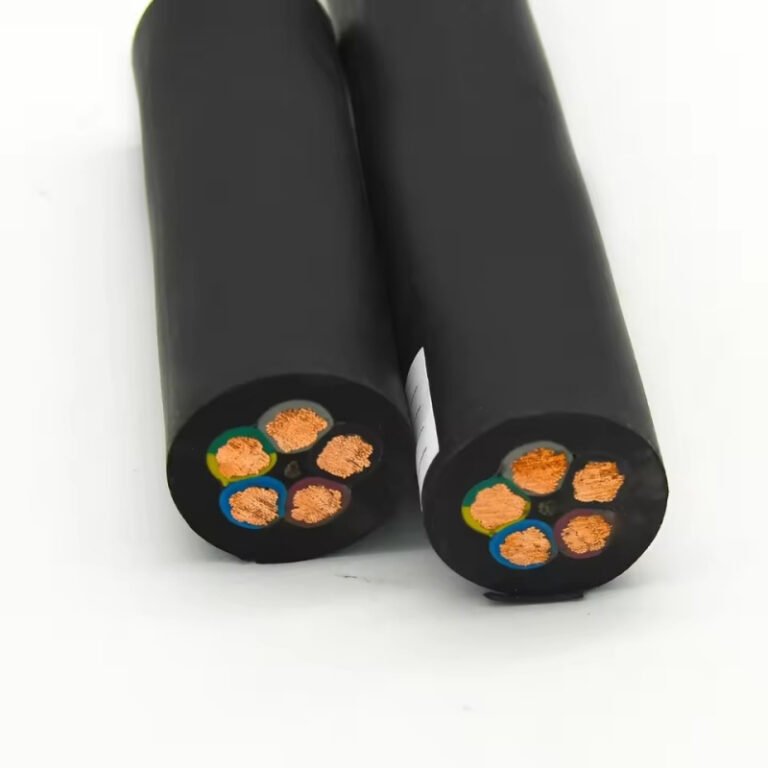
Crack open a length of 12/2 NM-B and count the distinct layers. There are five of them. That layered construction is exactly what separates a cable from a wire — and once you’ve seen it cross-sectioned on a workbench, the distinction stops being abstract.
The Outer PVC Jacket
The jacket is the first thing any electrician or inspector sees, and it does more than hold everything together. Southwire and other major NM-B manufacturers extrude it from PVC compounded to handle the mechanical abuse of running through stud bays, over joists, and through drill holes without cracking. It’s also your first quick-reference tool on a busy job: white jacket means 14 AWG (15 A circuit), yellow is 12 AWG (20 A), orange is 10 AWG (30 A), black covers 8 and 6 AWG, and gray marks 2 AWG and larger. Miss that color in dim attic light and you can accidentally land a 14 AWG tail on a 20 A breaker — a violation that passes rough inspection visually but fails the moment load demand climbs.
The jacket is the defining structural feature of a cable assembly. Strip it away and what remains are individual wires. Leave it intact and you have a single listed product, one NEC article (Article 334), one ampacity table, and one installation ruleset. That’s not a small distinction.
The Insulated Current-Carrying Conductors
Inside the jacket, you’ll find either two or three insulated conductors depending on whether you pulled 2-wire or 3-wire cable. The hot conductor carries black insulation. The neutral carries white. In 3-wire cable — used for things like 240 V appliance circuits or multi-wire branch circuits — a second hot conductor runs with red insulation.
Each of these is, technically, a wire in its own right. Solid copper, THHN/THWN-2 grade insulation rated to 90°C at the conductor surface. But here’s where NEC 334.80 creates real-world complications: even though the insulation is rated for 90°C, you must calculate NM-B ampacity at the 60°C column of NEC Table 310.12. The reason is heat dissipation — the jacket traps heat that open wiring would shed freely. A 12 AWG conductor in free air can carry more than its 20 A NM-B rating; inside a bundled, jacketed cable stapled against wood framing, it cannot. Ignore that derate and you’re looking at nuisance trips at best, insulation degradation and a slow fire hazard at worst.
Romex NM-B conductors are rated 90°C but must be derated to 60°C ampacity for most residential NM-B wiring applications.True
NEC 334.80 explicitly limits NM-B ampacity to the 60°C conductor temperature rating column in NEC Table 310.12, regardless of the insulation's actual 90°C thermal rating, due to the heat-trapping effect of the cable's outer jacket in typical installed conditions.
The Bare Equipment Grounding Conductor
Running alongside the insulated conductors is a bare copper wire — no insulation, no color code, just copper. It’s sized per NEC Table 250.122 relative to the circuit’s overcurrent device, not the phase conductor gauge. On 14 AWG and 12 AWG circuits it’s typically 14 AWG bare; on 10 AWG circuits it’s usually the same or one size up depending on breaker rating.
Because it’s uninsulated, it sits against whatever it touches. That’s where the paper layer becomes important.
The Paper or Kraft Separator
This is the most overlooked component in the assembly, and pulling cable for years before someone points it out is completely normal. A thin kraft paper wrap — sometimes a loose spiral, sometimes a flat sheet — surrounds the conductors before the jacket is applied. Its job is purely mechanical: it keeps the bare grounding conductor from pressing and vibrating against the insulation of the current-carrying conductors over years of thermal cycling and building movement.
Without it, the bare copper edge would slowly abrade through THHN insulation and eventually create a ground fault or worse. This paper layer is a structural reason why NM-B qualifies as a cable assembly rather than simply bundled wires — it’s a functional component integrated into the product design, not an afterthought.
Conductor Material by Gauge
For 14 AWG through 10 AWG, the conductors are solid copper — stiff enough to hold shape in outlet boxes, easy to terminate under screw clamps. At 8 AWG and larger, NM-B switches to stranded copper. Stranded handles better at that diameter; solid 8 AWG is genuinely difficult to bend in a 4-inch box without cracking insulation at tight radii. The conductors themselves run from 14 AWG at the small end up to 2 AWG at the large end, covering ampacity from roughly 15 A up to about 95 A depending on gauge, installation conditions, and ambient temperature — all per NEC Table 310.12.
Taken together: jacket, insulated hots, insulated neutral, bare ground, paper separator. Five distinct components engineered to work as a system. That’s a cable.
NEC Article 334 Decoded: The Code Definition That Settles the Wire-vs-Cable Debate
The National Electrical Code doesn’t use the word “Romex” — it never does. But it absolutely defines what Romex is, and that definition closes the wire-vs-cable question without ambiguity.
What NEC Article 100 Actually Says
Article 100, the NEC’s master definitions section, draws a hard line between a conductor and a cable assembly. A conductor is a single conductive element — what most people would call a wire. A cable, in NEC language, is a factory assembly of two or more insulated conductors with an overall enclosing sheath. That last phrase carries legal weight: factory assembly. You can’t tape two wires together in the field and call it a cable. The assembly has to come from the manufacturer as an integrated unit.
Romex NM-B satisfies every element of that definition. It ships from the factory with multiple insulated conductors, a bare equipment-grounding conductor, a paper separator layer, and a PVC outer jacket — all produced as a single assembly. Calling it a wire isn’t just technically wrong; under NEC definitions, it’s a different product category entirely.
NEC 334.2: The Definitive Scope Statement
Section 334.2 defines Type NM cable specifically as “a factory assembly of two or more insulated conductors having an outer sheath of moisture-resistant, flame-retardant, nonmetallic material.” That sentence is the authoritative answer. Every word is doing work — factory assembly, two or more insulated conductors, outer sheath. There’s no interpretation required. Romex is a cable by the code’s own definition, full stop.
Where NEC 334.10 Permits It
Permitted applications under 334.10 are deliberately narrow. Type NM cable is allowed in one- and two-family dwellings of any height, multi-family dwellings up to three floors above grade (with some conditions depending on the edition of the NEC you’re working to — the 2020 edition adjusted some of those height provisions), and other structures that are not classified as hazardous locations or otherwise excluded. Voltage is limited to 600 V or less. In practice this means most residential rough-in work: branch circuits for outlets, lighting, small appliances. That’s the zone where NM-B lives.
The Prohibited Locations Under NEC 334.12 — And Why Each One Makes Engineering Sense
The prohibited list is where the code’s engineering logic becomes visible.
Service entrance applications are out because NM cable’s jacket isn’t rated for the UV exposure, moisture cycling, or fault-current demands that service entrance conductors face. Embedding in poured concrete is prohibited because concrete is alkaline and retains moisture — conditions that degrade PVC jackets over years in ways you won’t catch until a ground fault shows up unexpectedly. Commercial garages and storage battery rooms introduce corrosive atmospheres and ignition risks that NM cable’s nonmetallic jacket cannot handle. Theaters and motion picture studios have strict flame-spread requirements that exceed what NM-B’s flame-retardant (but not fire-resistant) jacket provides. Hoistways and hazardous classified locations are obvious: mechanical damage and explosive atmospheres, respectively. Wet or damp locations are prohibited because, despite the moisture-resistant label in 334.2, NM cable is not rated for continuous moisture exposure — that’s a different product class entirely.
Each prohibition maps directly to a failure mode. This isn’t bureaucracy.
Installation Requirements Under 334.15 and 334.17
Once you’re in a permitted application, the code still regulates the assembly as a complete system. Stapling or strapping is required every 4.5 ft (roughly 1.4 m) along runs, and within 12 in (300 mm) of every box or enclosure. Bend radius must not damage the cable — in practice, most inspectors want to see no kink tighter than five times the cable diameter, though the code states it more qualitatively. Where NM cable passes through studs or joists within 1¼ in (32 mm) of the face, a steel nail plate or conduit sleeve is required to protect against fastener penetration.
NEC 334.17 requires physical protection for NM cable when it runs within 1.25 inches of the face of a framing memberTrue
NEC 334.17 mandates that NM cable passing through wood framing members within 1-1/4 inches (32 mm) of the edge must be protected by a steel plate, sleeve, or equivalent at least 1/16 inch thick to prevent nail or screw penetration.
Why These Restrictions Confirm Cable Status
Here’s the deeper point: the NEC regulates NM cable as an integrated assembly, not as a collection of individual conductors. The ampacity tables, the installation intervals, the prohibition conditions — they all apply to the jacketed assembly as a unit. Article 310 handles individual conductors. Article 334 handles this factory-assembled system. That structural difference in the code itself is the clearest signal of what Romex is. Wires get Article 310. Cables get their own article.
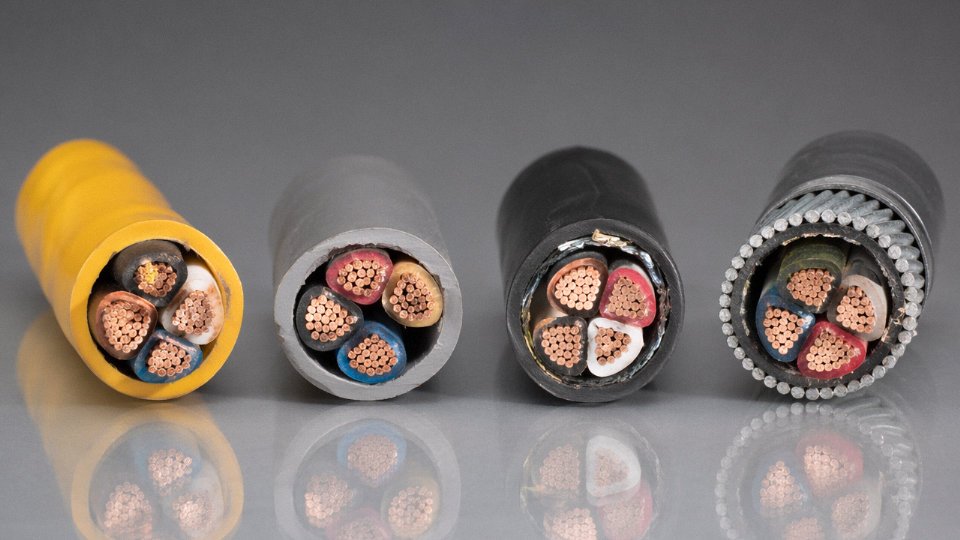
Romex vs. THHN Wire vs. MC Cable vs. UF Cable: A Direct Technical Comparison
The confusion between these products is understandable — they all move electricity through a building, they all contain copper conductors, and on a busy job site they can look deceptively similar coiled on a reel. But the differences in construction translate directly into legal installation requirements, failure modes, and cost. Getting this wrong doesn’t just mean a failed inspection; it means callbacks, potential fires, and in commercial settings, serious liability.
THHN/THWN-2: The Clearest Example of an Actual Wire
THHN is a single insulated conductor. No outer jacket, no second conductor alongside it, no assembly — just copper, nylon-coated insulation, and that’s it. By definition, that makes it a wire, not a cable. You pull multiple THHN conductors through conduit to build the equivalent of what Romex delivers pre-assembled, which means it’s slower to install but gives you mechanical protection from the conduit itself and the flexibility to run through wet locations, exposed walls, or industrial environments where NM-B is flatly prohibited.
The 90°C dry/wet rating of THWN-2 sounds generous, but there’s a catch most apprentices learn the hard way: NEC 310.15(C) requires derating ampacity when more than three current-carrying conductors share a single conduit. Pack nine THHN conductors into one piece of EMT and you’re applying an 0.70 derating factor before you’ve even accounted for ambient temperature. In practice, conduit fill calculations and derating arithmetic are what make THHN installations more labor-intensive than simply stapling Romex across studs.
Type MC Cable: Romex’s Armored Commercial Cousin
MC cable is structurally the closest relative to Romex — it’s also a multi-conductor assembly with insulated conductors and a ground — but the outer jacket is interlocked aluminum or steel armor rather than PVC. That armor changes everything about where you can use it. MC is permitted in wet locations, exposed commercial installations, industrial environments, and plenum spaces (with the right listing). NM-B is permitted in none of those.
The tradeoff is real. MC cable typically costs roughly 2–4× more per foot than comparable NM-B, depending on conductor gauge, armor type, and current copper pricing. It’s also noticeably heavier and requires a rotary armor cutter or proper hacksaw technique to terminate — a sloppy cut leaves sharp burrs that can damage conductor insulation right at the connector. On a large commercial project, those installation labor hours add up fast.
Type UF Cable: The Underground Impostor
UF cable might be the most dangerous look-alike in this group, specifically because it can appear nearly identical to Romex from the outside when both happen to be gray. The critical internal difference: UF encapsulates each conductor individually in solid thermoplastic fill, not the loose PVC-wrapped-in-paper-separator construction inside NM-B. That solid encapsulation is what gives UF its direct-burial and wet-location ratings.
UF cable and Romex NM-B are interchangeable for outdoor and underground wiringFalse
UF cable is rated for direct burial and wet locations due to its solid thermoplastic conductor encapsulation; Romex NM-B uses a simple PVC outer jacket and paper separator that provides no moisture protection — using NM-B underground or in wet locations violates NEC 334.12 and creates a serious shock and fire hazard.
Substituting Romex for UF on a direct-burial run to a detached garage or outdoor receptacle is one of the more common DIY mistakes that shows up on home inspection reports. Moisture infiltrates the jacket, the paper separator wicks water toward the conductors, and insulation degrades over a period of months to years.
Side-by-Side Comparison
| Type | True Wire or Cable | Jacket/Armor | Wet Location | Direct Burial | NEC Article | Typical Use | Approx. Cost vs. NM-B |
|---|---|---|---|---|---|---|---|
| Romex NM-B | Cable | PVC + paper | No | No | 334 | Residential interior, dry | 1× (baseline) |
| THHN/THWN-2 | Wire | Nylon insulation only | Yes (THWN-2) | No (needs conduit) | 310 | Conduit runs, commercial/industrial | 0.6–0.9× per conductor (conduit adds cost) |
| MC Cable | Cable | Interlocked Al or steel armor | Yes | No (generally) | 330 | Commercial, industrial, exposed runs | 2–4× |
| UF Cable | Cable | Solid thermoplastic encapsulation | Yes | Yes | 340 | Outdoor feeders, direct burial | 1.4–2× |
| AC / BX (legacy) | Cable | Steel spiral armor | No | No | 320 | Older residential, limited jurisdictions | 1.5–2.5× |
Where This Leaves Romex
NM-B wins on three things: installed cost, installation speed, and simplicity. For dry, concealed residential framing — which describes the vast majority of single-family and low-rise multifamily wiring in the United States — those advantages are completely legitimate and code-compliant. The PVC jacket and paper separator that make it cheap and flexible are also exactly what disqualify it the moment conditions get wet, exposed, or mechanically demanding. Knowing where that line falls is, bluntly, the whole point of understanding what kind of product it actually is.
Romex Gauge Selection Guide: Matching AWG Size to Circuit Load and NEC Ampacity Tables
The single most common wiring mistake in residential construction isn’t a bad splice or a missed ground — it’s installing the wrong gauge for the circuit. Get this wrong and you’re looking at nuisance tripping at best, a smoldering junction box at worst.
Why the 60°C Ampacity Rating Is Lower Than the Conductor’s Rated Temperature
NM-B conductors carry a 90°C insulation rating, but NEC 334.80 forces you to apply ampacity from the 60°C column of Table 310.12 for most residential wiring. The reason is practical: the plastic sheathing, the paper separator layer, the wood framing, and the thermal mass of a typical wall cavity all trap heat differently than open-air conduit. The jacket itself can’t shed heat the way a single THHN conductor in a metal raceway can. So the code conservatively caps the effective rating at 60°C to account for that worst-case installation envelope.
The working ampacity numbers that govern residential NM-B work out as follows: 14 AWG is limited to 15 A, 12 AWG to 20 A, 10 AWG to 30 A, 8 AWG to 40 A, and 6 AWG to 55 A. These are ceiling values under normal installation — meaning a single cable run in a conditioned space without bundling.
The Bundling Derate That Electricians Frequently Ignore
When multiple NM-B cables are grouped through a common bored hole in wood framing for more than 24 inches, you can no longer use those base ampacity figures. The cables insulate each other and heat builds. NEC 310.15(B)(3)(a) applies correction multipliers: 4 to 6 cables in a bundle drops your allowable ampacity by 20% (multiply by 0.80), and 7 to 9 cables drops it to 70% of the base value.
Run the math on a realistic scenario. Six 12 AWG NM-B cables bundled through a single bored hole in a load-bearing stud: base ampacity is 20 A, derated to 0.80 gives you 16 A. That’s still legal for a 15 A breaker but no longer sufficient for a 20 A breaker on every circuit in that bundle. In production housing, this situation shows up constantly at the main stud bays near the panel, and it’s rarely accounted for on the original circuit schedule.
Matching Gauge to Circuit Type
Common residential circuit-to-gauge pairings follow directly from the ampacity table:
| Circuit | Romex Size | Breaker |
|---|---|---|
| General lighting / receptacles | 14/2 NM-B | 15 A |
| Kitchen or bath receptacles (SABC) | 12/2 NM-B | 20 A |
| Electric dryer | 10/3 NM-B | 30 A |
| Electric range | 8/3 NM-B | 40 A |
| Sub-panel feed (small) | 6/3 NM-B | 55 A |
The 3-wire variants (10/3, 8/3, 6/3) carry two ungrounded hots plus a neutral plus the bare equipment ground. That configuration handles 240 V loads and, in the case of multi-wire branch circuits, allows two opposing-phase hots to share a single neutral — which is permitted but requires a common-trip or handle-tied breaker under 2008+ NEC revisions.
Breaker Sizing Is About the Wire, Not the Load
This is worth stating plainly: the overcurrent device protects the conductor, not the appliance. A 14 AWG circuit fed through a 20 A breaker is a code violation regardless of how small the connected load actually is. The wire is the limiting element. Under fault conditions, a 20 A breaker allows enough current to flow through 14 AWG copper to heat it well past its thermal limit before the breaker trips. That’s how wiring fires start inside walls, where nobody sees them until smoke appears.
A 14 AWG NM-B circuit must be protected by a 15 A breaker regardless of the actual load currentTrue
NEC 240.4(D)(3) limits 14 AWG copper to 15 A overcurrent protection. The breaker must be sized to the conductor's ampacity, not the connected load, because the conductor is what the overcurrent device is protecting.
Voltage Drop on Long Runs — When to Upsize
NEC doesn’t mandate a specific voltage drop limit on branch circuits, but the Informational Notes to 210.19 and 215.2 recommend staying under 3% for branch circuits and 5% combined for feeders plus branch circuits. In practice, runs beyond roughly 75–100 feet on a 20 A, 12 AWG circuit start pushing that 3% threshold.
Quick field check: a 20 A circuit, 12 AWG, 100 feet of run (200 feet of conductor), drawing 16 A — voltage drop works out to somewhere in the range of 5 to 6 volts on a 120 V circuit, which is around 4–5%. That’s over the recommended limit. Stepping up to 10 AWG for that run brings the drop down to roughly 3%, back inside the guideline. Not a code violation to leave it as-is, but equipment at the end of that run — a refrigerator compressor, a bathroom exhaust fan — will run warmer and likely shorter-lived than it should.
The practical rule most experienced electricians use: any 20 A circuit run exceeding about 80 feet, consider 10 AWG. Any 15 A circuit past 60 feet, evaluate 12 AWG. It’s cheaper to upsize the wire once during rough-in than to troubleshoot intermittent tripping or premature motor failures two years later.
Where Romex Cannot Be Used: High-Risk Substitution Errors and Code-Compliant Alternatives
Romex NM-B is genuinely useful cable — inside dry, protected, residential spaces. The problems start when contractors or homeowners stretch that definition. These aren’t edge-case violations; they show up on failed inspections constantly, and a few of them carry real fire and electrocution risk.
Outdoor and Exposed Locations
The PVC jacket on NM-B is not compounded for UV resistance or sustained moisture exposure. In direct sunlight, expect visible jacket embrittlement and surface cracking within roughly 6–18 months depending on climate, UV index, and whether the cable is in contact with a surface that cycles temperature (a south-facing wood fascia, for example, will accelerate degradation faster than free-air suspension). Once the jacket cracks, moisture tracks along the paper separator layer straight to the conductor insulation.
The correct product for direct burial is UF-B — its conductors are individually embedded in a solid PVC fill rather than wrapped in a paper-separated jacket, which is precisely why it survives ground contact. For exposed outdoor runs above grade, THWN-2 pulled through a weatherproof conduit (Schedule 80 PVC or rigid metal where subject to physical damage) is the right path.
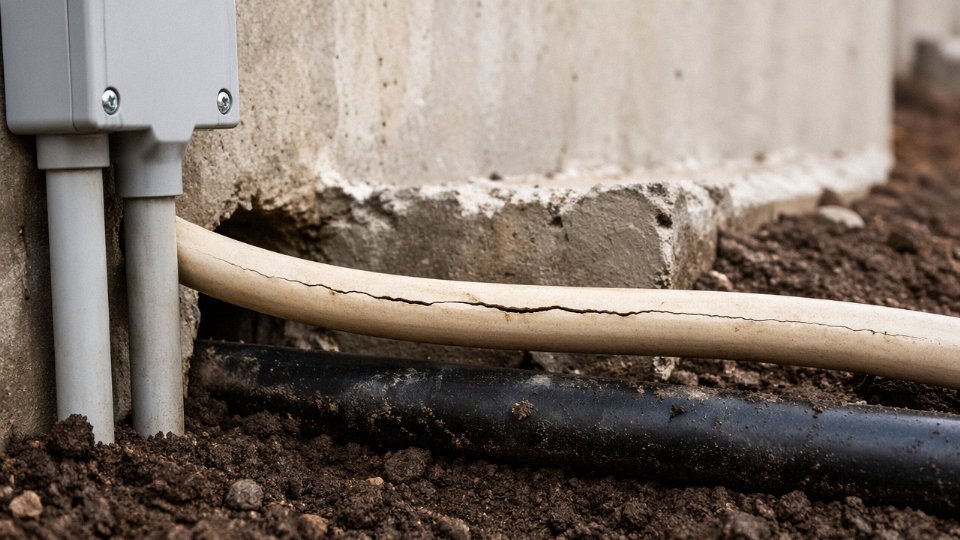
Pulling Romex Through Conduit
NEC 334.15(B) does permit conduit as a physical protection method for NM-B in certain situations — say, a short exposed run down the face of a basement wall — but that permission is narrower than most people assume, and the practice is still poor engineering for anything beyond a short protective sleeve. The outer jacket adds meaningful diameter compared to running individual THHN conductors, which directly affects conduit fill. A 12/2 NM-B cable has an OD in the range of roughly 0.41–0.45 inches; three individual 12 AWG THHN conductors have a combined fill footprint that fits a smaller conduit at the same conductor count. You also lose the flexibility advantage of conduit wiring — future circuit changes require pulling the whole cable rather than swapping a conductor.
NEC 334.15(B) permits conduit as physical protection for NM-B cable.True
NEC 334.15(B) specifically allows conduit, tubing, or raceway as a means of protecting NM-B cable from physical damage where it runs exposed, but conduit fill calculations under Chapter 9 still govern the allowable number of cables.
Attic and Crawl Space Installations
NEC 334.23 requires that NM-B cable running across the top of joists in an accessible attic be protected by guard strips at least as high as the cable diameter. This is one of the most consistently failed residential inspection items I’ve seen — an installer tucks the cable flat across the joists and moves on. If the attic has an access hatch and walkable space, that cable is exposed to foot traffic, stored items, and the occasional HVAC contractor who doesn’t know it’s there. Guard strips are cheap. A smashed cable in an attic isn’t a dramatic event — it’s a slow insulation failure that shows up as a nuisance breaker trip or, worse, intermittent arcing.
Commercial Occupancies
NEC 334.10(A) restricts NM-B use to dwelling units and structures not exceeding three floors above grade — explicitly excluding commercial use. A retail shop, office suite, or warehouse requires MC cable or EMT conduit with THHN conductors. There’s no variance or workaround here. Inspectors in commercial jurisdictions flag NM-B immediately, and getting it removed from inside finished walls is expensive.
Service Entrance Applications
Romex is never — under any reading of the NEC — appropriate as service entrance cable. Type SE cable or SER (for range and dryer circuits fed from a meter panel or sub-panel) are the correct products. SE cable has a completely different construction: a heavier outer braid or jacket, UV-stabilized materials, and sizing that accounts for the thermal environment near a meter base.
High-Temperature Locations
Within 75 mm (3 inches) of a non-IC-rated recessed fixture housing, NM-B conductor temperatures can exceed the 60°C derated ampacity threshold under load, especially in a well-insulated ceiling assembly. Plenum spaces are a separate issue entirely — NM-B is not CMP-rated, meaning combustion gases from its jacket are not acceptable in an air-handling plenum under NEC 300.22. Use plenum-rated cable (CMP designation) in those spaces, or maintain the required clearances and use a listed IC-rated fixture where Romex termination is unavoidable.
The common thread across all of these: NM-B is optimized for one environment and fails predictably outside it. Substituting the right product isn’t bureaucratic compliance — it’s avoiding the failure mode that the wrong product guarantees.
Global Equivalent Standards: How Romex-Style NM Cable Compares to International Wiring Systems
Romex NM-B is a thoroughly North American product — designed around NEC requirements, UL listing criteria, and the residential construction practices that evolved in the US over the past century. Step outside that context and you’ll find that every major electrical market has its own version of the same basic idea: a multi-conductor, non-metallic sheathed cable for fixed residential and light commercial wiring. The geometry, voltage class, and color coding differ enough to create real procurement risk if you assume direct substitutability.
The IEC Framework: H05VV-F, NYM, and How International Designations Work
IEC 60227 and IEC 60245 are the backbone standards governing PVC-insulated and rubber-insulated cables for fixed wiring across most of the world outside North America. The IEC designation system is structured and readable once you learn it — “H05VV-F,” for instance, encodes harmonized status, voltage class (300/500 V), insulation material (PVC), sheath material (PVC), and conductor configuration (flexible, multi-core). This is structurally parallel to how NEC cable types work, but the encoding logic is completely different, which trips up engineers who haven’t worked across both systems.
NYM cable — defined under DIN VDE 0250 in Germany and widely adopted across continental Europe and many export markets — is probably the closest geometric equivalent to Romex. Round grey PVC outer jacket, individually color-coded conductors (brown/blue/green-yellow per IEC convention), and a filler layer inside. NYM-J specifically includes the protective earth conductor. Voltage rating is typically 300/500 V, which is lower than Romex’s 600 V rating — a difference that matters for certain industrial branch circuits even if it’s invisible in ordinary 120/240 V residential work.
British Twin and Earth: Flat Profile, Same Concept
UK wiring runs on BS 6004 and BS 7211 Twin and Earth (T&E) cable — a flat, grey-sheathed cable with a live conductor (brown), a neutral (blue), and a bare copper earth that sits uninsulated between them inside the sheath. Anyone who’s worked on a UK domestic job knows the look. Functionally it fills exactly the same role as Romex in a US house, but the flat cross-section is a different manufacturing and installation paradigm, and the 300/500 V rating versus Romex’s 600 V is a real spec difference. The bare earth conductor also looks alarming to American electricians used to seeing a green/yellow insulated ground — it’s code-compliant under BS 7671, but you’d never pass a US inspection with it.
Australian TPS Cable and AS/NZS 5000.1
Australia and New Zealand use TPS (Thermoplastic Sheathed) cable under AS/NZS 5000.1, again flat-profile, again functionally analogous to Romex in the residential ecosystem. The conductor color scheme follows the IEC harmonized palette after a 2000s-era transition, so you get brown/blue/green-yellow rather than the old red/black/green that legacy Australian installations still show. Like UK T&E, TPS is rated 300/500 V.
Key Technical Differences at a Glance
| Standard | Region | Profile | Voltage Rating | Jacket Material | Earth Conductor | Armored Version Available |
|---|---|---|---|---|---|---|
| NEC 334 / UL 719 (Romex NM-B) | USA/Canada | Round | 600 V | PVC | Bare copper, insulated green | No (use MC instead) |
| DIN VDE 0250 NYM-J | Europe (DE and export) | Round | 300/500 V | PVC (grey) | Green/yellow insulated | No (NYY-J for heavier duty) |
| BS 6004 / BS 7211 T&E | UK | Flat | 300/500 V | PVC (grey) | Bare copper | No (SWA for armored) |
| AS/NZS 5000.1 TPS | Australia/NZ | Flat | 300/500 V | PVC | Green/yellow insulated | No (separate armored range) |
The Procurement Risk That Gets People Into Trouble
Here’s where it gets operationally messy. An engineer specifying NM-B for a US residential project and then sourcing internationally — because the project is large enough to justify a container shipment — needs to verify at minimum: voltage rating (600 V is not universal), conductor color coding (IEC brown/blue versus NEC black/white creates serious confusion during installation and inspection), jacket UV resistance if cable will spend any time exposed before drywall, and temperature ratings, which affect derating calculations even if the ambient conditions look similar.
NYM-J cable can be directly substituted for Romex NM-B on a US NEC-governed project without additional qualificationFalse
NYM-J is not UL-listed under UL 719, carries a lower 300/500 V rating versus Romex's 600 V, uses IEC conductor color coding that does not match NEC conventions, and is not recognized by NEC Article 334. It would fail US inspection regardless of its technical quality.
Color coding alone has caused real installation errors — an IEC-trained electrician who picks up brown-sleeved cable expects a live conductor, not what an NEC-trained counterpart would call a “hot.” In a mixed-crew installation environment, that’s a genuine safety issue, not a paperwork problem.
For procurement managers at international suppliers or engineers designing facilities that straddle multiple code jurisdictions, the right approach is to treat each regional cable type as a distinct product class with its own listing requirements, not as a local flavor of the same thing. The underlying concept — bundled insulated conductors in a non-metallic sheath for residential fixed wiring — is universal. The specific compliance path is not.
Industrial and High-Volume Cable Procurement: Sourcing NM-B and International Equivalent Cables at Scale
Residential tract developers and large electrical contractors rarely think about cable procurement until a jobsite goes short mid-framing — and then it becomes urgent fast. Getting ahead of that requires understanding how NM-B is actually sold and priced at volume, and what separates a reliable supply chain from one that creates compliance headaches six months into a project.
Drum Quantities and How Packaging Affects Your Cost Per Foot
Standard retail and small-contractor packaging runs in 25 ft, 50 ft, and 250 ft reels — useful for service work, not for new construction. At volume, the relevant units are 500 ft, 1,000 ft, and bulk reels in the 1,500–2,500 ft range, which some manufacturers wind on heavy-duty fiber drums or steel reels depending on the conductor gauge. For 12 AWG 2-conductor NM-B, the price differential between buying 250 ft cut reels versus 2,500 ft bulk drum can run anywhere from 8% to 18% per foot depending on the supplier, copper spot pricing that week, and whether the distributor is passing through reel deposit costs. On a 200-unit tract development where 12/2 NM-B might account for 60,000–90,000 ft of material, that spread is real money.
Cut-length orders shift labor and scrap cost onto the manufacturer; bulk drums shift it onto your pull crew. Neither is universally better — it depends on your site logistics and whether your electricians are billing time-and-material or working a fixed labor contract.
UL 719 Certification: The Non-Negotiable Baseline for US Supply
Any NM-B cable supplied for installation in a US-permitted building project must carry a valid UL 719 listing — no other listing substitutes for this in NEC-governed jurisdictions.True
NEC Article 334 and the UL product safety standard UL 719 are the governing requirements for Type NM-B cable in US residential and light commercial construction. Building inspectors and AHJs (Authorities Having Jurisdiction) routinely check for the UL mark on the cable jacket.
UL doesn’t just issue a certificate and walk away. Their follow-up inspection program involves unannounced factory audits and market surveillance — samples pulled from distribution can be sent back to a UL lab for verification testing. The UL mark printed on the jacket represents ongoing accountability, not a one-time stamp. To verify a supplier’s current listing status, use UL’s Product iQ database (iq.ul.com), search by manufacturer name or file number, and confirm the listing is active. A lapsed or suspended listing means the product cannot legally be installed under a US permit, regardless of what the jacket says.
Counterfeit UL markings do exist in the market. Thin jacket wall dimensions, inconsistent print depth, and conductor resistance values that fall outside ASTM B3/B8 tolerances are practical red flags worth checking on incoming inspection.
Mapping International Certifications for Multinational Projects
A contractor or developer working across jurisdictions — say, a US-based developer building projects in both North America and Southeast Asia — will encounter different certification frameworks for functionally similar cable. IEC 60332 covers flame propagation testing used widely across European and Asian markets. CE marking indicates conformity with EU low-voltage directive requirements, though CE is a self-declaration framework rather than third-party listed. CCC (China Compulsory Certification) is mandatory for cables sold into the Chinese domestic market. A manufacturer certified across UL 719, IEC 60332, and CCC can supply a multinational contractor from a single source, which simplifies vendor qualification and audit overhead considerably.
Factory Capability: What Actually Predicts Quality at Scale
Vertical integration from copper rod to finished cable matters more than most procurement specs acknowledge. A manufacturer drawing their own conductor rod controls the alloy consistency and diameter tolerance that feed directly into conductor resistance compliance per ASTM B3 (for solid conductors) and B8 (for stranded). Buying rod on the open market introduces one more variable. Extrusion line capability — specifically jacket wall thickness uniformity across a high-speed run — is where cheaper manufacturers cut corners; a jacket that varies by ±0.15 mm or more across a drum creates inconsistent dielectric performance and occasionally spark-test failures per UL 719 Section 7. Ask for spark test records by production lot, not just a generic test certificate. Any capable manufacturer will have them.
Lead Time Reality and Pipeline Planning
Standard 12 AWG 2-conductor NM-B in custom drum lengths typically carries a manufacturing lead time of roughly 3–6 weeks ex-factory, depending on order volume and copper availability at the time of booking. Ocean freight from a Chinese port to the US West Coast adds 18–25 days in normal shipping conditions — longer during peak season or port congestion periods, which do recur seasonally. Building materials typically clear customs in 5–10 business days under standard entry. Add that together and a realistic total pipeline for a large custom-spec order runs 10–12 weeks from purchase order to jobsite. Planners who treat cable like a short-lead item get caught.
Jinda Special Cable Group’s Supply Capability
Shandong Jinda Special Cable Group, established in 1987, operates five production bases across Shandong province covering roughly 470,000 m² of manufacturing floor space with over 1,000 employees. The integrated structure — R&D through after-sales — means engineering queries on custom specifications don’t bounce between departments indefinitely. Active supply to customers in 50+ countries reflects real experience navigating the certification and logistics complexity that multinational projects require, both for standard NM-B equivalent programs and for custom-specification residential cable orders with project-specific drum lengths, jacket colors, or conductor configurations.
Installation Best Practices That Protect Romex Cable Performance Over Its Service Life
Getting Romex into a wall is easy. Getting it in correctly — so it still performs without fault fifteen years after the drywall goes up — takes discipline on a few details that inspectors rarely have time to check thoroughly.
Stapling and Strapping: More Than Just Keeping It Tidy
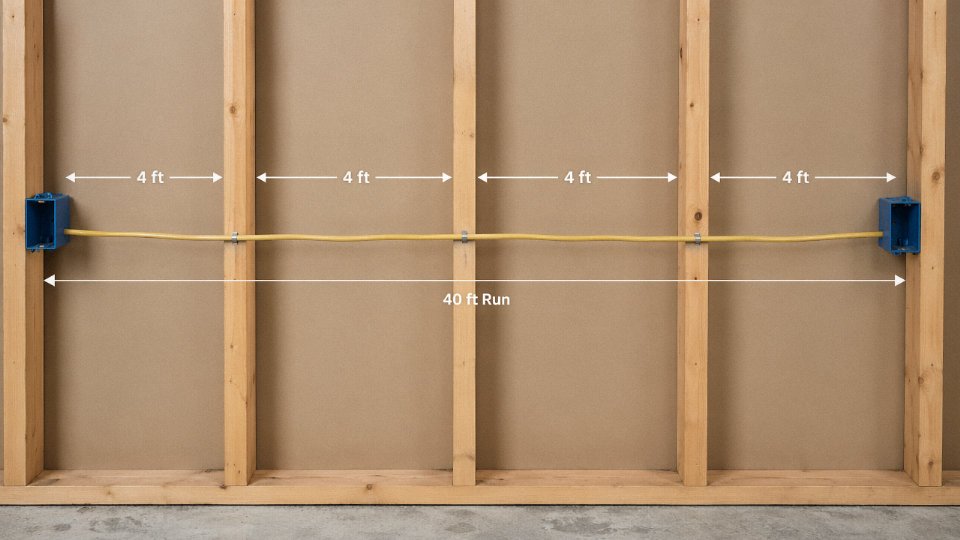
NEC 334.30 requires NM-B to be supported at intervals not exceeding 4.5 ft (1.4 m) and within 12 in (300 mm) of every box, fitting, or cabinet entry. Those numbers are minimums. In practice, a run that sags or gets pinched by later trades is a run that eventually fails.
For a 40 ft (12 m) horizontal cable run through studs, the math is straightforward: 40 ft ÷ 4.5 ft = roughly 9 intervals, so you need at least 9 staples or straps plus one within 12 in of each termination box — call it 11 total for a two-box run. Spend 30 seconds with a tape and mark the stud faces before you start. It is faster than guessing.
Use only staples and plastic straps rated for NM cable. Standard wire staples — the kind you might find in a general-purpose pneumatic tacker — are slightly narrower and will pierce or crush the outer jacket without leaving any visible mark on the surface. That damage shows up later as insulation breakdown or a ground fault that is genuinely difficult to trace. Insulated cable staples from any major electrical supplier have a saddle profile designed to clamp without biting. The price difference is negligible. The failure risk is not.
Drilling and Notching Through Framing
Holes bored through studs or joists should land in the center third of the member’s depth — not because it is a polite suggestion but because cutting into the outer thirds meaningfully weakens the structural member, which becomes a building inspection issue, not just an electrical one. Center-boring also keeps the cable away from both faces, reducing the chance of a nail or screw penetrating it during finish work.
When cable passes within 1.25 in (32 mm) of the face of any framing member — say, running diagonally through a notch or a shallow hole near the edge of a stud — NEC 300.4(A) requires a steel nail plate at least 1/16 in (1.6 mm) thick. Those plates should be flush-nailed, not just resting against the wood. A plate that falls off during framing inspection is doing nothing when the drywall crew shoots screws six months later.
Junction Box Fill: The Calculation Nobody Runs Until the Box Is Already Nailed In
NEC 314.16 assigns a cubic-inch volume allowance to every conductor, device, and clamp inside a box. For 14 AWG conductors, each counts as 2.0 in³; for 12 AWG, 2.25 in³.
A 14/2 NM-B cable entering a box brings with it three conductors — hot, neutral, and ground — at 2.0 in³ each, totaling 6.0 in³ per cable entry. A standard single-gang device box stamped “10.5 in³” sounds generous until you run the numbers: two 14/2 cables in (12.0 in³ of conductors alone), a standard switch or receptacle (add 4.0 in³ for the device), and an internal clamp pair (another 2.0 in³) — that is 18 in³ in a 10.5 in³ box. Code violation, and a real overheating risk if the box is packed tight enough to restrict air circulation around the device terminals.
The fix is either a deeper single-gang box (18 in³ or larger) or a two-gang where space permits. Do the fill calculation before you nail the box. Doing it after means pulling wire.
A 14/2 NM-B cable entry counts as 3 conductors (6.0 in³) under NEC 314.16 box fill rules, not 2.True
NEC 314.16(B)(1) counts every insulated conductor including the bare equipment grounding conductor as a full conductor for box fill purposes, so a two-wire-with-ground cable adds three conductor volumes to the total.
Bending Radius: The Slow Failure Nobody Notices at Rough-In
NEC 334.24 sets the minimum bend radius for NM cable at five times the cable’s outer diameter. A 12/2 NM-B cable runs roughly 0.44 in (11 mm) in OD, which means the minimum bend radius is about 2.2 in (56 mm) — a fairly gentle curve. Tighter bends stress the insulation right where it contacts the jacket interior and, over years of thermal cycling, that contact point becomes a crack point. Kinking cable around a corner to save six inches of material is the kind of shortcut that produces an arc fault a decade later.
Thermal Bundling in Retrofit Runs
Retrofit work is where bundling problems sneak in. When you are adding a new circuit and the most convenient path runs through a bored hole already carrying three or four cables, stop and derate. NEC 310.15(B)(3)(a) requires ampacity correction when more than three current-carrying conductors share a raceway or are bundled together. Four to six conductors: derate to 80% of the base ampacity. Seven to nine: drop to 70%.
In a congested retrofit hole, upsizing from 14 AWG to 12 AWG on a 15 A circuit is usually cheaper than the alternative — which is discovering years later that a persistently warm outlet is actually a conductor running at the edge of its derated capacity. In my experience, this issue is most common in older ranch-style homes where the attic or basement path through a single bored hole becomes the default route for every added circuit over thirty years.
Moisture and Rodent Protection in Crawl Spaces
NM-B is moisture-resistant, not moisture-proof. In crawl spaces, cables should be routed and stapled above the vapor barrier level where possible, keeping them out of standing water that can accumulate seasonally. This is a real concern in climates with distinct wet seasons or in older homes with poor drainage.
Rodent gnawing on NM-B jacket is one of the more underappreciated causes of residential electrical fires. The PVC outer jacket offers no real mechanical resistance to a determined rodent. At any penetration through a sill plate or foundation wall in an area with rodent exposure — and this includes a lot of rural and suburban construction — a short sleeve of 1/2 in EMT conduit over the cable costs almost nothing and eliminates a known failure mode entirely. It is the kind of detail that does not show up on any inspection checklist but shows up in fire investigation reports with uncomfortable frequency.
Frequently Asked Questions About Romex Wire and Cable
Can you use Romex in conduit?
Technically yes. NEC 334.15(B) explicitly allows running NM-B through conduit for physical protection in exposed locations — a basement wall where a cable drops down to a panel, for instance, or where the run crosses an unfinished area subject to damage. In practice, though, most electricians prefer to pull individual THHN conductors through conduit in those situations. The reason is straightforward: the outer NM-B jacket adds to conduit fill calculations, and a pre-jacketed cable is considerably harder to pull through bends than slick-coated individual conductors. The bigger restriction is moisture. Even if NM-B is inside conduit, you cannot use it in wet locations where the conduit itself is exposed to water ingress. The conduit does not upgrade NM-B’s moisture rating. If the conduit could fill with water — outdoor risers, underground runs, unheated crawl spaces with known water intrusion — pull THHN/THWN-2 instead and skip the NM-B entirely.
Is Romex rated for 240 volts?
Yes. NM-B carries a 600 V insulation rating, which gives a substantial margin over the 240 V circuits found in residential panels. Dryer circuits (30 A) typically use 10/3 NM-B; range circuits (40 A) call for 8/3 NM-B. The voltage rating is rarely the limiting factor — ampacity and physical protection are what constrain NM-B applications.
Romex NM-B cable is rated for 600 V, making it suitable for 240 V residential circuits including dryers and ranges.True
NM-B insulation is rated 600 V per UL 719 and NEC Article 334; this is well above the 240 V service voltage used in North American residential applications.
What does the jacket color mean?
Jacket color is a visual shorthand for AWG size — white for 14 AWG, yellow for 12 AWG, orange for 10 AWG, black for 8 and 6 AWG, gray for 2 AWG and larger. Southwire standardized this scheme and it’s now the de facto convention across the US market. It is not a hard NEC requirement, so an inspector cannot fail a job because someone used an off-brand cable with slightly different shading, but essentially every major manufacturer follows the same color mapping. On a busy rough-in job, being able to glance at a bundle stapled to a stud and immediately know the gauge matters more than it sounds.
Can Romex be run in an attic?
Yes, with specific protections. NEC 334.23 covers attics and crawl spaces: cables run across the tops of floor joists, or within roughly 7 ft (2.1 m) of the attic access opening, need guard strips at least as tall as the cable itself to protect against foot traffic. Cables run through bored holes in framing members are protected by the wood, so guard strips aren’t required there. Blown-in insulation covering NM-B in an attic is a separate thermal concern — sustained burial in dense insulation raises conductor temperature and can derate effective ampacity over time, especially on circuits already running near their rated load.
Why isn’t Romex used in commercial buildings?
NEC 334.10 limits NM-B to one- and two-family dwellings, multifamily buildings up to three floors, and a narrow set of other permitted structures. Commercial occupancies are out. The reasoning isn’t arbitrary: commercial environments see heavier foot traffic, more aggressive mechanical handling during tenant build-outs, greater load complexity, and local inspectors who routinely enforce amendments stricter than the base NEC. MC cable or conductors in EMT or RMC provides the mechanical protection that a plastic-jacketed NM-B simply cannot.
What is the difference between 2-wire and 3-wire Romex?
A 12/2 run contains one black hot, one white neutral, and a bare ground — standard for 120 V single-pole circuits like outlets and lighting. A 12/3 adds a red conductor, which handles 240 V circuits, multi-wire branch circuits sharing a neutral, or three-way switch loops that need a traveler wire. The “2” and “3” in the designation count only the insulated conductors; the bare ground is always present but not counted in that number.
How long does Romex last inside a wall?
Modern NM-B with THHN-grade conductor insulation is generally designed for a 30–40 year service life under normal residential conditions, though actual longevity depends heavily on sustained operating temperature and what happens at the terminations. The cable itself, sitting undisturbed in a stud bay at moderate temperature, rarely fails on its own. Thermal cycling at wire nuts and device terminals, embrittlement from chronic overloading, or physical damage during a later renovation — those are the actual failure modes worth worrying about.
Is aluminum Romex still made, and is it safe?
Aluminum conductors in NM-B at 8 AWG and larger remain in production and are code-compliant, provided terminations use CO/ALR rated devices and anti-oxidant compound is applied at connections. The aluminum wiring safety crisis from the 1960s and 1970s involved small-gauge aluminum — 12 AWG and 14 AWG branch circuits feeding standard outlets and switches not designed for aluminum’s expansion characteristics. Those gauges are effectively copper-only in current NM-B practice. Large-gauge aluminum NM-B for feeder applications is a different situation and, installed correctly, a legitimate cost-saving option on longer runs.
Conclusion: The Precise Answer and Why It Guides Every Wiring Decision Downstream
Romex is a cable. Not a wire. Specifically, it is a factory-assembled, multi-conductor, non-metallic sheathed cable classified as Type NM-B under NEC Article 334 and listed to UL 719. That answer isn’t pedantic — calling it a wire, even loosely, puts you on the wrong branch of the code tree before you’ve pulled a single foot of product off the reel.
Romex NM-B is classified as a cable under NEC Article 334 and UL 719, not as a single conductor wireTrue
NEC Article 334 defines Type NM cable as a factory assembly of two or more insulated conductors with or without a grounding conductor, enclosed in a non-metallic sheath — meeting the technical definition of a cable, not a single conductor wire.
The Three Decisions That Branch From Cable vs. Wire
Getting the classification right isn’t abstract. It drives three concrete engineering decisions, and getting any one of them wrong creates a code violation or, worse, a thermal failure that shows up years after inspection.
First, ampacity. NM-B cable is derated differently from individual conductors in conduit. When you bundle multiple NM-B cables through a single hole or stack them through a bored joist without spacing, the bundling derating rules in NEC 334.80 apply — not the bare conductor tables in Article 310. The cable’s outer jacket traps heat in ways that a single THHN in open air simply doesn’t. Treating Romex as a wire and pulling ampacity from Table 310.12 without accounting for bundling is a real-world failure mode, not a hypothetical one.
Second, installation rules. NM-B is governed primarily by Article 334, which sets its own requirements for support spacing (generally every 4.5 ft and within 12 inches of each box), protection from physical damage, and stapling method. Article 310 doesn’t stand alone here. A single THHN conductor in conduit plays by different rules than a sheathed cable run through framing.
Third, permitted locations. This is where the cable classification does the most protective work. NM-B is restricted to dry, indoor locations in residential or permitted light-commercial construction — no wet locations, no direct burial, no embedment in concrete, no exposed runs in industrial occupancies. Those restrictions are property-type and environment-driven in a way that single-conductor wiring rules simply aren’t structured to address. Substituting NM-B where MC cable or UF cable belongs because someone thought of it as “just wire” is one of the more common rough-in errors that fails inspection.
The Specification Snapshot Worth Keeping
Romex NM-B: rated 600 V, conductors from 14 AWG through 2 AWG, ampacity range roughly 15 A to 95 A depending on gauge and conditions, limited to 60°C ampacity in most residential applications under NEC 334.80 regardless of the 90°C conductor rating. Available in 2-wire (120 V circuits) and 3-wire (240 V or multi-wire branch circuits) configurations. Jacket is PVC, with an internal paper separator layer. Dry indoor dwelling use only.
A Note for International Projects
Outside the US, the functional equivalent varies enough that direct substitution without verification is a procurement risk. BS 6004 flat twin-and-earth in the UK, NYM-J in Germany and much of continental Europe, TPS in Australia — each carries different voltage ratings, conductor color codes, and jacket material specifications. The underlying engineering concept is similar, but the details matter at customs, at inspection, and under local installation codes. Always verify before substituting across standards, especially on mixed-standard facilities where multiple regional codes intersect on the same project.
If you’re specifying or sourcing NM-B equivalent cables for US projects, or international sheathed wiring cables for projects elsewhere, Jinda Special Cable Group has been manufacturing and supplying these product categories since 1987 — five production bases across China, 470,000 m² of manufacturing capacity, ISO-certified, and active in more than 50 countries. The team can support specification review, sample requests, bulk pricing, and long-term supply agreements. Reach out directly to start a conversation.