Swap a power cord for a power cable on the wrong application — or spec the wrong one in a procurement order — and you’re looking at tripped breakers, melted insulation, failed inspections, and in a worst case, a fire investigation that shuts the line down for weeks. It happens more often than it should, usually because the two terms get used interchangeably in conversation, on floor requests, and sometimes even on supplier quotes. The cost isn’t just the cable itself; it’s the downtime, the rework, the re-certification, and the credibility you lose with a customer waiting on shipment.
A power cord is a short, flexible, factory-terminated assembly — typically rated 125 V to 250 V AC and 10 A to 20 A, with conductor cross-sections of 0.75 mm² to 2.5 mm² — designed to connect a portable appliance to a wall outlet. A power cable is an engineered conductor system rated anywhere from 600 V up to 500 kV and beyond, with conductors ranging from 1.5 mm² to 2,500 mm², built for fixed installation in buildings, industrial plants, or utility grids.
What makes the distinction genuinely tricky is that the physical overlap is real — both carry AC current, both have insulation and conductors, and a cheap spec sheet won’t always tell you which regime you’re operating in. The differences that actually matter live in construction details, regulatory approval pathways, installation method, and the consequences of getting it wrong under load.
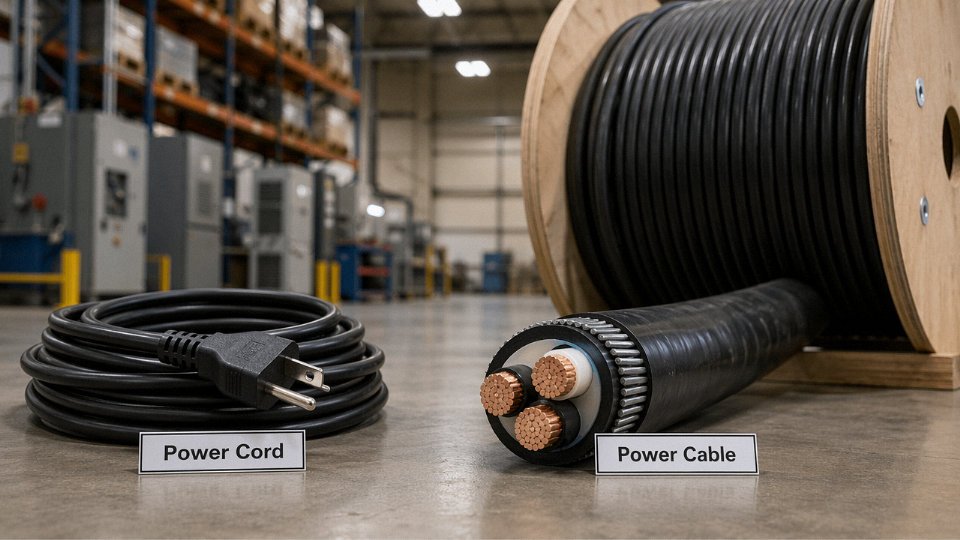
Defining a Power Cord: Construction, Voltage Class, and Intended Use Cases
A power cord is a factory-terminated, flexible assembly — meaning it leaves the production line with its plug and connector already molded or attached, ready to connect a piece of equipment to a wall outlet or power strip. That sounds simple, but the “factory-terminated” part matters more than most procurement specs acknowledge. The cord is not raw cable stock. It is a finished product governed by its own certification chain, and buying generic unterminated cable as a substitute gets auditors and safety inspectors very interested, very fast.
Physical Construction: What’s Actually Inside
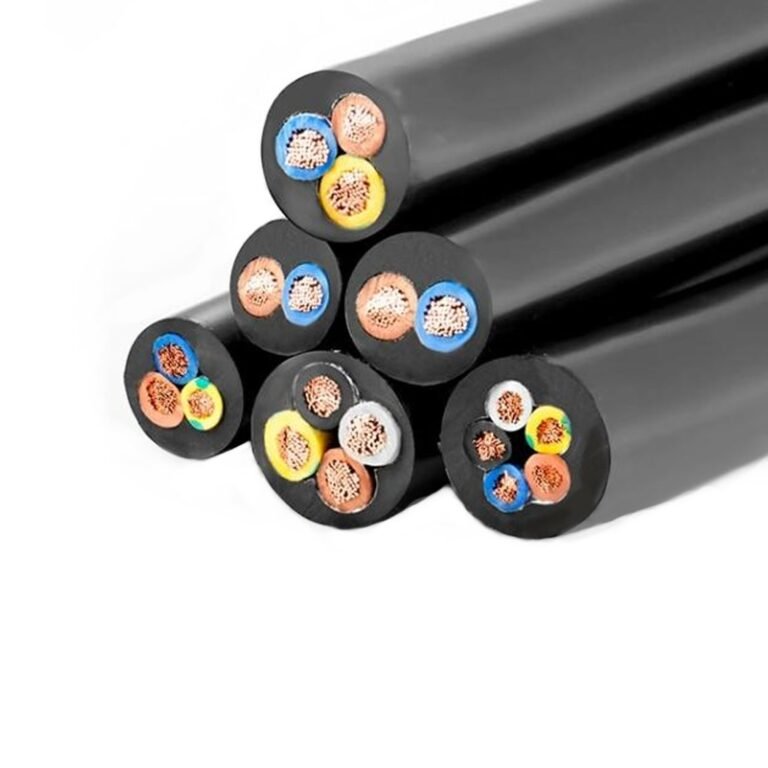
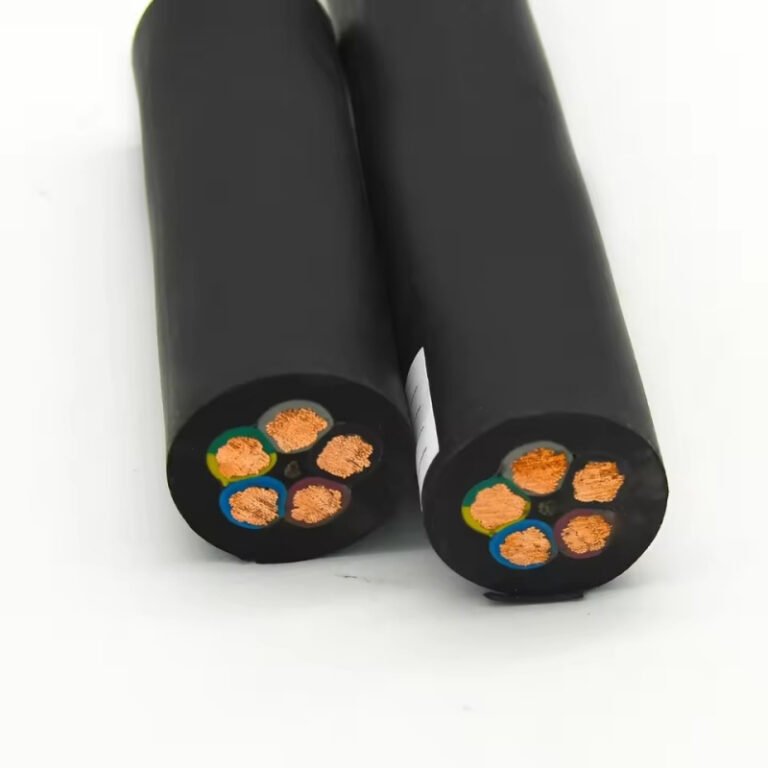
Strip back a typical power cord and you’ll find three or four concentric layers, each doing a specific job.
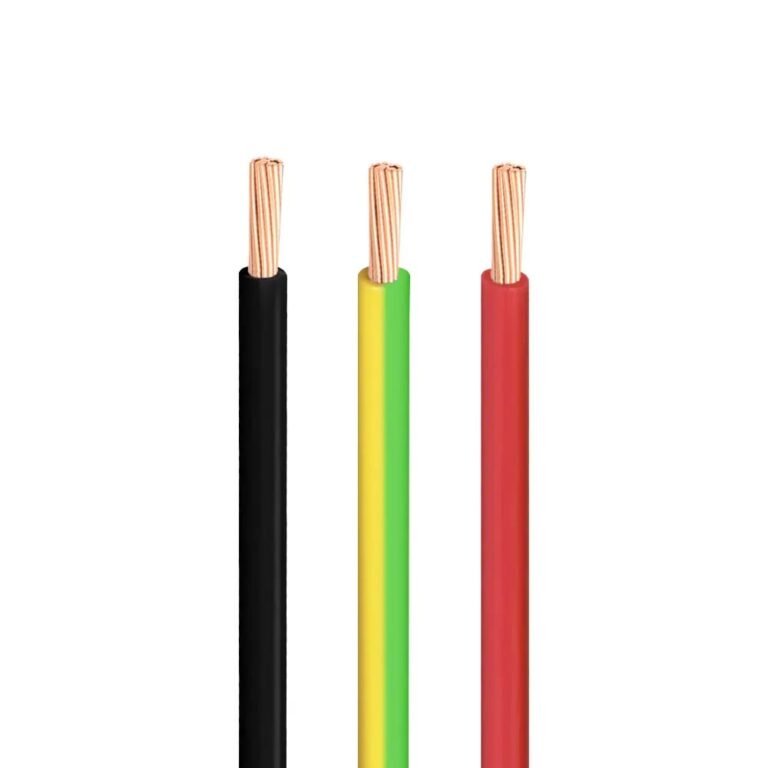
The conductors are finely stranded copper — not solid wire, because repeated flexing would work-harden solid conductors and crack them within months of normal use. Common cross-sections run 0.75 mm², 1.0 mm², and 1.5 mm², though light-duty cords for small electronics can drop to 0.5 mm² where standards permit. The 2.5 mm² size starts appearing at the upper end of the range, typically for 16A–20A appliance cords powering tumble dryers or small HVAC units. Each conductor carries primary insulation — usually PVC for indoor or dry-environment applications per IEC 60227, or rubber/elastomeric compounds per IEC 60245 for anything that sees heat, oil, or outdoor exposure. Over that sits an outer sheath, which provides mechanical protection and houses all the conductors together. On most household cords this sheath is PVC. On workshop or catering equipment cords you’ll often see neoprene or thermoplastic rubber, which holds up better against abrasion and won’t go brittle in cold stores.
The plug and connector assemblies are molded or crimped at the ends — either permanently (captive cord, like the power lead on a microwave) or as a detachable set using standardized coupler interfaces.
Voltage and Current: Where the Ratings Actually Come From
Typical power cords are rated 125V AC for North American markets and 250V AC for European, Asian, and most international markets. Current ratings generally fall between 10A and 20A, depending on conductor cross-section and the applicable standard. In practice, a 1.0 mm² H05VV-F cord is usually rated 10A at 250V; step up to 1.5 mm² and you’re typically looking at a 16A rating. The exact figure depends on conductor count, ambient temperature, and whether the cord is coiled or laid flat during use — a coiled extension cord at full load runs noticeably hotter than one that’s fully extended, which is why derating rules exist and why you’ll see those warnings on extension cord packaging.
Cord Types You’ll Actually Encounter
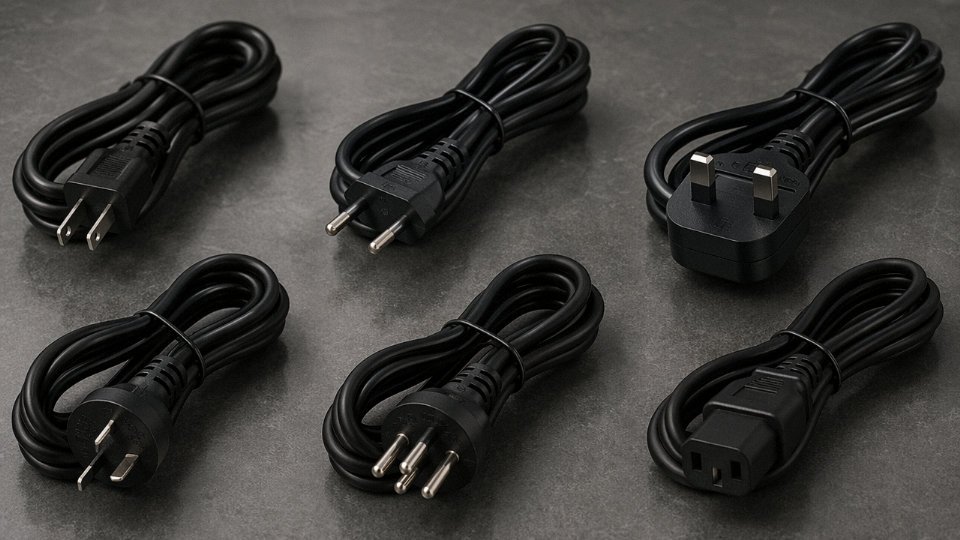
Detachable appliance cords built to IEC 60320 are probably the most recognizable: the C13/C14 combination found on virtually every desktop PC power supply worldwide, and the heavier C19/C20 pair common in server rack environments and commercial kitchen equipment. These are interchangeable within their voltage and current class, which is genuinely useful for service and spares management.
Captive cords are permanently attached to the appliance. You see these on washing machines, power tools, and medical equipment. Hospital-grade cords carry their own subset of requirements — reinforced strain relief, specific plug blade configurations, and in the US market, UL 817 listing with the green dot marking.
Extension cords are technically power cords too, often overlooked in procurement specs. They follow UL 817 in North America and must comply with the same harmonized flexible cable designations as fixed appliance cords in European markets.
Stripped-end cords — conductors exposed at one end for direct terminal connection — are used where the equipment manufacturer handles the final connection to a terminal block or chassis.
Standards and the Country-Specific Plug Problem
This is where procurement gets messy. The electrical safety standards governing cord construction — UL 62 in the US, IEC 60227 and 60245 internationally — are reasonably consistent. But plug and outlet standards are a patchwork. BS 1363 in the UK, the CEE 7/4 Schuko and CEE 7/5 French systems in Europe, NEMA 5-15 in North America, SAA AS/NZS 3112 in Australia — each market has its own geometry, grounding arrangement, and certification requirement. A cord certified for one destination market is not automatically acceptable in another. Manufacturers sourcing cords for multi-country product launches need to specify destination market explicitly, not assume a “universal” cord exists.
A cord certified under one national plug standard (e.g., BS 1363 for the UK) automatically complies with plug safety requirements in other markets.False
Plug standards are jurisdiction-specific. A UK-certified cord meets BS 1363 requirements but would need separate certification (e.g., CEE 7 compliance in Europe, NEMA compliance in North America) before it is legally or safely used in those markets.
The ‘H’ Designation as a Field Identification Tool
European harmonized flexible cables carry an ‘H’ prefix in their designation — H03VV-F, H05VV-F, H07RN-F — and this is genuinely useful when you’re standing on a factory floor trying to identify what you’re looking at. The number following ‘H’ indicates voltage class: H03 is rated 300/300V, H05 is 300/500V, H07 is 450/750V. The letters after identify insulation and sheath material plus conductor configuration. H07RN-F, for instance, is the rubber-sheathed flexible you’d expect to see on portable tools, outdoor equipment, or catering gear. Once you know the shorthand, you can read the cable marking and immediately know whether the cord in front of you is rated for the application — without hunting for a spec sheet.
Defining a Power Cable: Voltage Tiers, Structural Complexity, and Infrastructure-Grade Roles
A power cable is an insulated conductor assembly engineered for fixed or semi-fixed electrical power transmission and distribution — not something you unplug and coil up at the end of a shift. That distinction shapes everything: construction, testing regimes, installation method, and how the product is specified during procurement. Unlike a cord, a cable is bought to stay in place, sometimes for 30 to 40 years underground or embedded in a building structure.
Voltage classification is the first thing a procurement engineer or project designer needs to nail down, because the engineering inside the cable changes substantially across tiers.
Low-Voltage Cables (Up to 1 kV)
This is the workhorse category — building wiring, factory floor distribution, panel feeds. A typical LV cable built to IEC 60502-1 will have solid or stranded copper conductors (or aluminum, usually from 16 mm² upward where weight and cost drive the choice), PVC or cross-linked polyethylene (XLPE) insulation over each core, a bedding layer, and then steel wire armor (SWA) or steel tape armor (STA) where mechanical protection is needed, finished with a PVC or LSZH outer sheath. Conductor sizes run from roughly 1.5 mm² up through 400 mm² or more depending on the load. Common designations you’ll see on a cable drum or purchase order include NYY (copper, PVC insulation, PVC sheath) and NAYY (same but aluminum conductors) — those designations follow German/IEC conventions and are widely recognized across European and Asian markets.
Multi-core configurations — two, three, four, or five cores — are standard at LV, with sector-shaped conductors used in larger sizes to pack the cable more efficiently and reduce overall diameter. Concentric neutral designs appear in underground residential distribution, where the neutral conductor wraps around the insulated phase core rather than running separately.
Medium-Voltage Cables (1 kV to 36 kV)
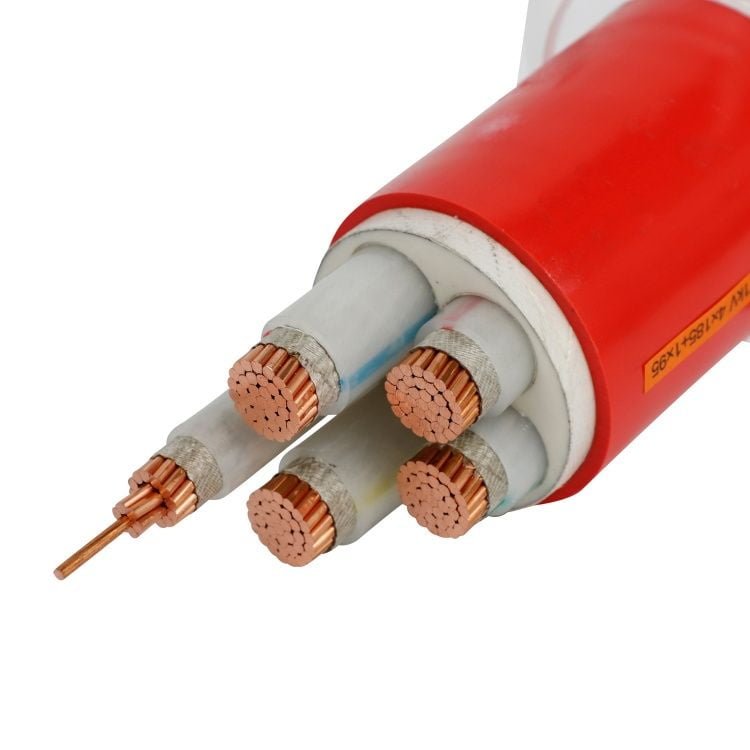
Step up to MV and the construction gets meaningfully more complex. IEC 60502-2 governs this range. You now need a conductor screen (semi-conductive layer) applied directly over the conductor to smooth out electrical stress concentrations — skip it or get it wrong during manufacturing and you create field enhancement that eventually causes insulation breakdown. Over the XLPE insulation sits an insulation screen, also semi-conductive, followed by a metallic screen: copper tape or copper wire, sometimes a combination. Longitudinal water blocking — swelling tape or swelling powder — is incorporated to stop moisture migration along the cable length if the outer sheath is ever breached. Wind farm array cables (the 33 kV strings connecting turbines to the substation) are a heavy-use case here; corrosion and water ingress in that environment are not theoretical risks.
High-Voltage and Extra-High-Voltage Cables (Above 36 kV, Up to 500 kV and Beyond)
At HV and EHV, XLPE insulation systems dominate modern installations, having largely replaced the older oil-filled paper designs. The conductor is usually large — 630 mm² to 2,500 mm² for high-capacity transmission — and single-core construction is essentially universal because AC magnetic fields in multi-core HV cables create unacceptable losses. Sheathing moves to extruded lead or corrugated aluminum for both electrical screening and moisture exclusion. Corrugated aluminum armor adds mechanical resilience without the weight penalty of steel at these diameters.
One thing that doesn’t get enough emphasis in procurement conversations: cable accessories at HV are not an afterthought. Joints and terminations must be treated as integral parts of the insulation system. A mismatched or poorly installed termination on a 110 kV cable will fail faster than the cable itself, and the fault consequences are severe.
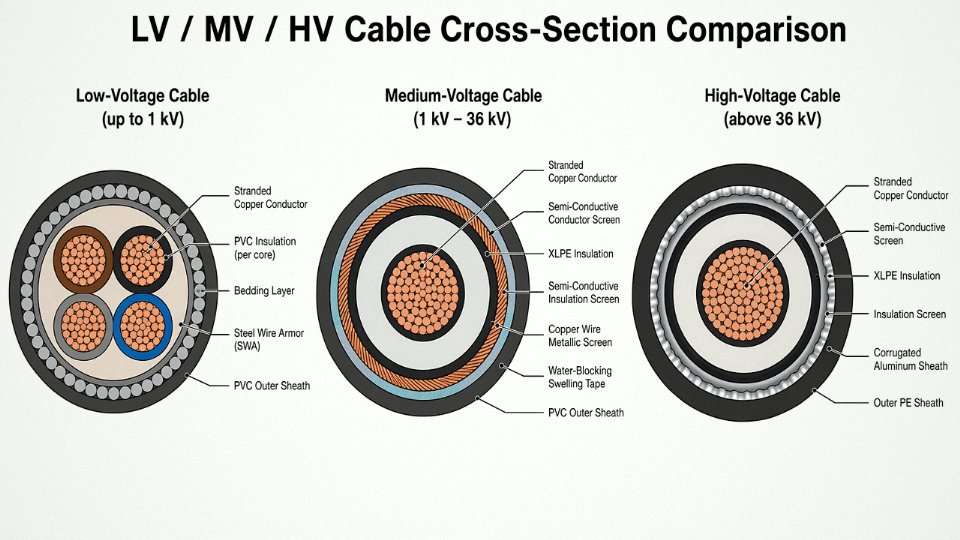
Power cables operating above 36 kV require engineered accessories (joints and terminations) that must be type-tested as a system with the cable, not sourced independently as commodity items.True
IEC 60840 and IEC 62067 require that HV and EHV cable systems — cable plus accessories — undergo type testing as an assembly. Mismatched accessories from separate suppliers can void system qualification and create insulation stress concentrations at the interface.
Infrastructure applications span a wide range: building distribution in commercial and industrial construction, underground MV networks in urban grids, solar farm DC cabling (a specialized subset with its own UV and thermal requirements), and subsea interconnectors where the cable must also survive hydrostatic pressure and dynamic mechanical loading. The global power cable market reflects exactly this breadth — valued at roughly USD 180 billion in 2023 and growing at somewhere in the 6–8% annual range through the end of the decade, driven primarily by grid modernization spending and EV charging infrastructure rollout. The actual growth rate any given manufacturer sees depends heavily on which segments they serve; transmission and offshore wind are outpacing standard building wire by a noticeable margin.
Side-by-Side Technical Comparison: Conductor Size, Insulation, Armor, and Termination Method
Pull these two product categories apart across every parameter and the differences stop being academic — they become a specification checklist that prevents wrong orders, field rework, and in worse cases, electrical failures that shut down a line.
| Parameter | Power Cord | Power Cable |
|---|---|---|
| Conductor material | Annealed copper (Class 5 or 6) | Hard-drawn copper, aluminum, or annealed copper depending on application |
| Conductor cross-section | 0.75 mm² – 2.5 mm² | 1.5 mm² – 2,500 mm² |
| Voltage rating | 125V – 250V AC (light domestic/commercial) | 600V up to 500 kV and beyond |
| Insulation type | PVC, XLPE, thermoplastic elastomer | PVC, XLPE, EPR, LSZH — selection driven by voltage tier and environment |
| Armor | None | SWA, STA, or unarmored (conduit/trunking installs) |
| Outer sheath | PVC or thermoplastic rubber | PVC, LSZH, HDPE, polyurethane — depends on burial, tray, or indoor use |
| Termination method | Standardized IEC plug/connector — plug-and-play | Compression lugs, cable glands, heat-shrink/cold-shrink kits; MV/HV requires prefab stress-relief termination kits |
| Flexibility class (IEC 60228) | Class 5 or 6 | Class 1 or 2 for fixed installation; Class 5 occasionally for flexible feeder cables |
| Typical supplied length | 1.5 m – 5 m (cut-to-length or drum for bulk) | 100 m – 500 m drums; large project reels can run to several kilometres |
| Approximate weight | 0.05 – 0.25 kg/m depending on gauge | 0.5 – 40+ kg/m for large HV constructions |
Flexibility Classes and Why They Actually Matter on the Floor
IEC 60228 defines conductor flexibility in Classes 1 through 6. Classes 1 and 2 use either solid or stranded conductors with relatively coarse stranding — fine for fixed installation in cable tray, conduit, or direct burial where the cable never moves after commissioning. Classes 5 and 6 take annealed copper drawn to finer wire gauges and then multiply the strand count; this is what gives a cord the ability to coil, uncoil, and flex hundreds of thousands of times without work-hardening and cracking. Every power cord you pick up — laptop charger, appliance lead, extension cable — is Class 5 or 6. Specify a Class 2 cable in a drag-chain application and you will see conductor fatigue failures inside a few months. I have seen this exact mistake made when a project team substituted a “cheaper fixed-installation cable” for a correct flexible cord on a machine tool, and the result was nuisance trips followed by a broken conductor diagnosed only after the machine was taken out of service.
Insulation: Not Just a Temperature Rating
PVC is the workhorse — inexpensive, available everywhere, suitable from roughly −15°C to +70°C continuous. For most cord applications it is entirely adequate. XLPE cross-linked polyethylene handles continuous service up to 90°C and short-circuit temperatures up to around 250°C, which is why it dominates medium- and high-voltage cable constructions where fault current heating is a real design constraint. EPR (ethylene propylene rubber) retains flexibility at low temperatures better than PVC or XLPE, making it the right call for outdoor cables in cold climates or marine installations where the cable might be handled at −40°C. LSZH (low-smoke zero-halogen) sheathing is non-negotiable in confined spaces — tunnels, shipboard cable ways, data centers, underground transit systems. In a fire, PVC releases hydrochloric acid gas, which corrodes electronics and makes evacuation dangerous. LSZH formulations don’t.
LSZH cable sheaths produce significantly less toxic gas and smoke than standard PVC sheaths when exposed to flameTrue
This is well established in fire-performance testing standards including IEC 60754 and IEC 61034. LSZH compounds are specifically formulated to limit halogen acid gas emission and smoke density, which is why they are specified for confined-space and life-safety installations.
Armor: Protection Matched to the Installation Environment
Steel wire armor (SWA) is the standard choice for direct-buried cables and anywhere a cable runs through areas with mechanical hazard — cable crossings under roads, runs through industrial areas with vehicle traffic, or where rodents are a documented problem. Steel tape armor (STA) provides a lighter mechanical barrier and is more common in multicore cables run in cable tray where full burial protection isn’t needed but some crush resistance is useful. Unarmored cables go into conduit or cable trunking, where the enclosure provides protection and adding armor weight would be pointless. Power cords carry no armor at all; their protection comes entirely from the outer sheath and the fact that they are used in controlled, low-mechanical-risk environments.
Termination: Where Most Field Problems Actually Happen
A power cord terminates in a standardized plug — IEC 60320 C13, C19, BS 1363, NEMA 5-15, and so on. The mating connection is designed to be made and broken repeatedly by a non-specialist. Power cable terminations are a different discipline entirely. At low voltage, the standard approach is a compression lug crimped with a calibrated tool and a cable gland providing strain relief and IP sealing at the enclosure entry point. Skip the calibrated crimp tool and use a hammer-type lug on a 95 mm² cable feeding a large motor, and you get a high-resistance joint that heats up under load — a thermal fault waiting to happen. At medium and high voltage, prefabricated stress-relief termination kits are not optional. These kits — whether heat-shrink or cold-shrink, single or three-core — manage the electrical stress concentration at the point where the insulation is cut back. Getting this wrong at 11 kV or 33 kV doesn’t produce a slow fault. It produces a violent flashover.
Regulatory Standards and Certification Landscape: What Marks to Look for on Cords vs. Cables
The standards world for electrical products is layered in a way that trips up even experienced procurement teams. There are product standards — documents that define how a cord or cable must be built and tested — and then there are installation codes that govern how those products get used once they’re on-site. Conflating the two is a common mistake, and it can leave you holding product that’s technically certified but legally non-compliant for its intended application.
Product Standards vs. Installation Codes
For flexible cords, the governing product standards are IEC 60227 (PVC-insulated) and IEC 60245 (rubber-insulated). These define construction requirements, conductor sizing, voltage ratings, and test methods. For power cables, IEC 60502 covers low- and medium-voltage cables up to 30 kV, while IEC 60840 takes over from 30 kV up to 150 kV — and IEC 62067 extends that to 500 kV and beyond.
Installation codes are a separate matter entirely. IEC 60364 (the international framework), the NEC in North America, and BS 7671 in the UK specify conduit fill, burial depth, derating factors, and ambient temperature corrections. A cable can pass every IEC 60502 type test and still be installed incorrectly — wrong burial depth, undersized conduit, insufficient derating for a 45°C ambient. The test report proves the product; the installation code governs the system.
Regional Certification Marks: A Practical Map
Certification requirements vary sharply by destination market, and a cord or cable that’s fully approved for one region may be entirely non-compliant in another.
| Region | Relevant Mark(s) | Applies To | Notes |
|---|---|---|---|
| North America | UL Listed, CSA | Cords, cables | UL Listed ≠ UL Recognized — see below |
| Europe | CE + EN harmonized standards | Both | CPR (305/2011) mandatory for cables in construction |
| China | CCC (3C) | Cords, some LV cables | Mandatory for products sold into Chinese market |
| Australia / NZ | RCM (formerly SAA/C-Tick) | Both | Supplier declaration backed by test evidence |
| India | BIS (IS marks) | Both | Mandatory for many cable categories since ~2020 |
For flexible cords, the plug end matters as much as the cable itself. A cord assembled with a non-approved plug for its destination country fails at customs or at inspection — the IEC 60083 plug approval process for Brazil, the SASO requirements for Saudi Arabia, the SIRIM mark for Malaysia. Cables, by contrast, don’t ship with plug assemblies; they require type-test reports instead.
What a Valid IEC 60502 Type Test Report Actually Covers
When you ask a supplier for a type test report, you should know what you’re reading. A compliant IEC 60502-1 or -2 report covers conductor resistance measurements, insulation resistance, AC voltage withstand, hot-set tests for XLPE, and — for medium-voltage product — partial discharge testing, which is the one test most indicative of insulation quality in service. Aging and bending tests round it out. If a supplier hands you a document that lists only conductor resistance and a voltage proof test, that’s not a full type test. Push back.
LSZH and Euroclass: Don’t Treat These as Optional
For cables destined for the EU, the Construction Products Regulation (CPR, 305/2011) mandates Euroclass fire performance declarations — ranging from Fca (lowest) up to Aca — on cables installed in buildings. This is not a voluntary quality signal. It’s a legal requirement. LSZH compound matters here, but the Euroclass rating requires actual reaction-to-fire test data, not just a material declaration.
Marine and rail projects add another layer. IMO Resolution A.753(18) governs fire performance on ships; EN 45545 covers railway rolling stock. Both typically require LSZH cables with verified halogen content and smoke density data. Specifying “LSZH cable” without the specific test standard attached is a procurement gap that often surfaces during commissioning audits — not before.
Self-Declaration vs. Third-Party Testing vs. Full Product Listing
This distinction matters more than most buyers realize. Self-declared compliance — where a manufacturer signs a declaration of conformity — carries no independent verification. Third-party lab testing by organizations like SGS, TÜV Rheinland, or Intertek adds weight, but a test report only certifies that specific samples passed on a specific date. A full product listing (UL Listed, for example) means ongoing factory audits, periodic retesting, and the right to use the UL mark on production product. UL Recognized, by contrast, covers components meant for incorporation into a larger assembly — not standalone use. Confusing the two has caused real procurement failures.
A cable bearing a CE mark automatically meets all European safety requirements for any installationFalse
CE marking under CPR confirms the cable's declared fire performance class, but compliance with local installation codes (such as IEC 60364 or national variants) and any additional requirements — LSZH in tunnels, EN 45545 for rail — remains the responsibility of the specifier and installer. CE is a starting point, not a blanket approval.
A qualified international cable manufacturer should be able to produce, without significant delay: ISO 9001 certification for quality management, IEC type test reports traceable to an accredited lab, CPR declarations of performance for EU-bound product, and country-specific approvals for target markets. Jinda carries ISO 9001 quality management certification alongside IEC type test documentation and regional approvals covering multiple export markets — the kind of documentation portfolio that should be a baseline expectation, not a differentiator, when you’re evaluating any serious cable supplier for a long-term procurement relationship.
How to Specify the Right Product for Your Project: A Step-by-Step Selection Framework
Getting the product category right — cord versus cable — is only the first gate. The harder work is translating a project requirement into a specification tight enough that your supplier can’t substitute something cheaper without you noticing. Here’s a practical process that works on real projects, from a single machine connection to a substation feeder run.
Step 1 — Define the Load and Size the Conductor
Start with full-load current, not nameplate kW alone. Factor in power factor and efficiency, then add your derating adjustments before you touch any sizing table. IEC 60364-5-52 is the right reference for most international projects; it gives current-carrying capacity by installation method, grouping factor, and ambient temperature correction. A cable in a 50 °C plant ceiling tray with five other loaded cables alongside it might need to be one or even two cross-section steps larger than the same cable run alone in a 30 °C conduit. Don’t skip derating — it’s where undersizing errors actually happen. Required cross-section for power cords usually falls between 0.75 mm² and 2.5 mm²; permanent cable installations can range from 1.5 mm² at the small end up to 2,500 mm² for high-capacity feeders, and the right size depends entirely on load profile, route length, and installation conditions.
Step 2 — Confirm the Voltage Class
System voltage drives the cable’s voltage designation, and this is not a minor detail. A 400 V three-phase LV system calls for 0.6/1 kV rated cable. Step up to an 11 kV distribution circuit and you’re looking at 6/10 kV or 8.7/15 kV designation depending on earthing arrangement. Using a 0.6/1 kV cable on an unearthed 6 kV network is a failure waiting to happen — insulation stress during a single-phase earth fault can reach line-to-line voltage continuously until the fault clears, which the cable insulation was never designed for. Standard voltage designations to know: 300/500 V (flex and light cord), 0.6/1 kV (low-voltage power cable), 3.6/6 kV, 6/10 kV, 8.7/15 kV, 12/20 kV, 18/30 kV, and up into transmission tiers above that.
Step 3 — Assess the Installation Environment
This step determines insulation type, armor, and outer sheath. Direct burial needs mechanical protection and moisture resistance — typically SWA (steel wire armored) with an HDPE or PVC outer sheath. A cable tray in a clean indoor environment might need nothing more than XLPE insulation with a PVC sheath. Underwater or subsea routing adds another layer of complexity entirely. Flexible machine connections on moving equipment require a trailing cable construction — fine-stranded conductors, flexible insulation, no rigid armor. Explosion-risk zones (ATEX/IECEx classified areas) impose strict requirements on cable entry fittings and sheath materials, and you’ll need documentation to prove compliance during inspection.
Step 4 — Verify Destination-Country Regulatory Requirements
Don’t assume a CE mark or UL listing covers every market. Some countries require local test reports filed with a national authority; others mandate specific product standards by law (GB/T in China, BS 5467 in the UK, NF C32 series in France, and so on). Confirm required import documentation before manufacturing begins, not after the cable arrives at the port.
Step 5 — Specify Core Configuration and Conductor Material
Single-core or multi-core. Copper or aluminum — aluminum is lighter and cheaper per ampere-metre in large cross-sections (roughly 95 mm² and above), but termination practice and jointing skill matter more than with copper. Specify drum lengths matched to your installation route to minimize joints. Every joint is a maintenance point.
Step 6 — Issue a Technically Complete Purchase Specification
A proper specification should state: conductor cross-section and number of cores, conductor material, voltage rating, insulation material and system (e.g., XLPE), armor type if required, outer sheath material, color coding standard, applicable product standard by number, required certifications with certificate numbers or approved bodies, and quantity broken down by drum length.
A technically complete purchase specification prevents non-conforming substitutions by giving the supplier no ambiguity to exploit.True
Vague specifications — stating only 'XLPE cable, 3-core, 95 mm²' without voltage rating, armor, sheath material, or standard — leave room for a supplier to ship a product that meets a cheaper interpretation. A full specification removes that room.
Vague specs are the single most common reason buyers receive non-conforming product. If a supplier asks you to relax a specification point, treat that as a signal, not a routine negotiation.
Common Misapplication Errors and the Safety Consequences They Trigger
Getting the cord-versus-cable distinction wrong on paper is an inconvenience. Getting it wrong on an installed project is where people get hurt and equipment gets destroyed. These five failure patterns show up repeatedly across commercial fit-outs, industrial retrofits, and OEM supply chains — often because someone assumed the two product categories were interchangeable.
Using a Flexible Cord as Permanent Wiring
This is probably the most common violation in light commercial construction, and it keeps reappearing because flexible cords are cheap and easy to route. NEC Article 400.8 prohibits cords from being used as a substitute for fixed wiring, run through walls, or concealed in structural elements. IEC 60364-5-52 takes the same position. The reason is physical, not bureaucratic: flexible cord insulation — typically a thin PVC or rubber jacket rated for intermittent use — is not designed to handle the sustained thermal loading of continuous current draw in an enclosed space. Bundle three or four of them in a cable tray or staple them behind a wall panel, and ambient heat has nowhere to go. Insulation softens, conductor resistance rises, insulation softens further. That self-reinforcing cycle ends with carbonized sheathing and, frequently, a fire. Insurance investigators know exactly what it looks like.
Specifying 0.6/1 kV Cable at Medium Voltage
Energizing a 0.6/1 kV rated LV cable at 11 kV will cause dielectric breakdown, typically within hours to days depending on insulation condition and load cycling.True
The insulation system of a 0.6/1 kV cable — typically 1–2 mm of XLPE or PVC — is engineered for a maximum electric field stress well below what develops at 11 kV. Exceeding the dielectric strength initiates partial discharge at voids and contaminants, which erodes the insulation progressively until a full flashover occurs.
The mechanism is worth understanding. At 11 kV, the electric field stress across a 1–2 mm insulation wall far exceeds the dielectric strength of standard LV-grade XLPE or PVC. Partial discharges ignite at microscopic voids and impurities in the insulation bulk. Each discharge event erodes a small channel — a process called electrical treeing. Those channels grow, branch, and eventually bridge the conductor to the screen or armor. The resulting flashover is violent enough to rupture the cable jacket and ignite adjacent materials. This failure can develop in hours under steady load or over days with thermal cycling, but it will develop. The safest assumption is that there is no safe operating window at all.
Unarmored Cable in Direct Burial Without Conduit
Unarmored cables laid directly in soil — without HDPE duct, steel conduit, or at minimum SWA or AWA armor — face three simultaneous attack vectors: soil settlement and stone pressure (which cracks insulation at bends), rodent gnawing (which creates immediate ground fault paths), and moisture ingress through any jacket compromise. IEC 60364-5-52 and most utility specifications require either armored cable for direct burial or unarmored cable in protective conduit with minimum burial depths ranging from roughly 500 mm for LV residential to 900 mm or deeper for MV circuits, depending on the authority having jurisdiction. Skipping armor to save cost on a cable run that then fails after backfill is one of the more painful procurement decisions a project manager can make.
Ignoring LSZH Requirements in Confined Spaces
Standard PVC insulation and jacketing releases hydrogen chloride gas and dense black smoke when burned. In a tunnel, data center raised floor, or aircraft hangar — anywhere evacuation is constrained — this matters enormously. Studies on enclosed-space cable fires have documented that HCl concentrations from burning PVC reach incapacitating levels within roughly 2–4 minutes in a confined corridor, well before thermal effects become the primary hazard. LSZH (Low Smoke Zero Halogen) compounds, by contrast, produce significantly lower toxic gas yields and much reduced optical smoke density, buying meaningful evacuation time. Most modern rail, metro, and data center specifications mandate LSZH as a baseline. Substituting standard PVC to hit a lower unit price is a decision that transfers liability directly to the specifier.
Non-Certified Cords in Appliance OEM Assembly
A UL-listed appliance with a non-certified power cord attached is, legally, no longer a UL-listed appliance. The certification covers the complete assembly as tested. When a product recall or insurance subrogation case traces an appliance fire to cord failure, the OEM’s liability exposure extends to every unit shipped with that cord — not just the failed unit. Sourcing cords on price alone, without verifying the specific approval marks and file numbers against the certification body’s database, is the procurement shortcut that generates recall events. It happens more than manufacturers want to admit.
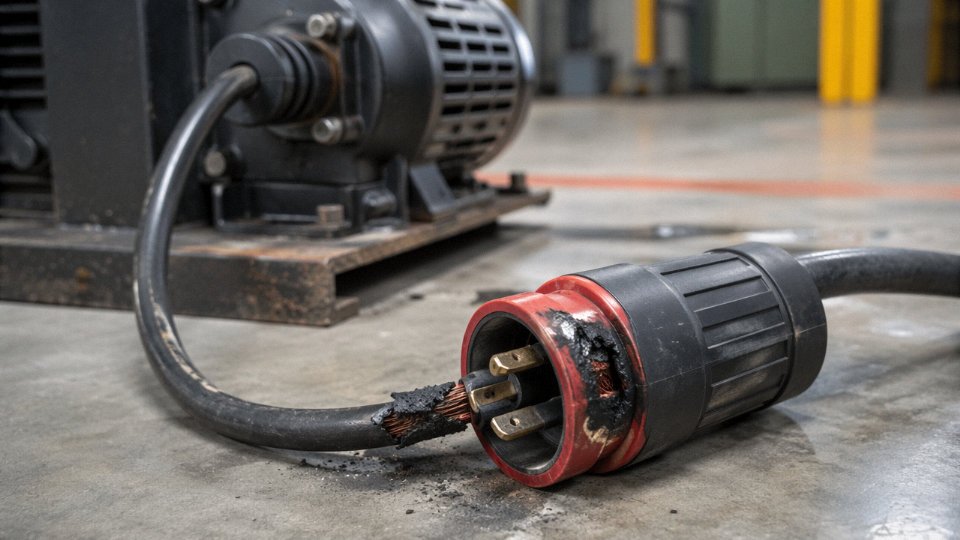
Red Flag Checklist: Five Warning Signs During Incoming Inspection
A basic visual and documentary check at goods receipt catches a large proportion of non-compliant or counterfeit product before it reaches installation.
| Warning Sign | What It Likely Indicates |
|---|---|
| Certification marks printed rather than embossed or integrally molded | Counterfeit or unauthorized use of approval mark |
| Conductor cross-section measures undersized vs. marked rating (verify with calipers and weight-per-meter) | Copper savings fraud — real conductor area may be 15–30% below spec |
| Jacket hardness inconsistent along the run, or surface tackiness | Off-spec PVC compound, possibly recycled or adulterated material |
| No legible sequential meter marking or the markings repeat at suspiciously short intervals | Non-compliant manufacturing; length fraud is common in bulk cable |
| Certificate file number does not appear in the certifying body’s online database | Forged or expired certification documentation |
These checks take under ten minutes per delivery lot. Skipping them to save time is a reasonable-sounding decision right up until a failed audit or a field failure makes it very expensive.
Frequently Asked Questions About Power Cords and Power Cables
Can I use a power cord instead of a power cable for a permanent electrical installation?
No — and this isn’t a gray area. IEC 60364-4-43 and most national derivatives explicitly prohibit flexible cord (designated H05VV-F, H07RN-F, and similar flex types) in concealed or fixed wiring. The insulation on a standard cord is engineered for flexion and handling, not for sustained thermal load in a conduit or buried in a wall cavity. PVC flex jackets are typically rated to 60°C or 70°C conductor temperature; in a bundled installation without free-air cooling, that limit gets breached faster than most people expect. Mechanically, cord insulation isn’t designed to resist abrasion from conduit edges over decades — you’ll see cracking and eventual ground-fault conditions within a few years, sometimes less in hot environments.
The correct alternative is fixed-wiring cable — NYM, YJV, or an equivalent rated for the installation method. If the circuit genuinely needs to move (machine tool tethering, for instance), the right answer is a purpose-built flexible cable to IEC 60227 or IEC 60245, not a repurposed appliance cord.
What is the maximum length a power cord can be, and why does length matter?
Length drives voltage drop, and voltage drop kills motors and sensitive electronics. IEC 60364-5-52 caps voltage drop at 3% for lighting and 5% for other loads in most installations. A 1.5 mm² copper conductor runs roughly 12–13 mΩ/m at 20°C (both conductors in the loop), so a 10 A load over a 5 m cord produces a drop in the neighborhood of 0.6–0.65 V — marginal but acceptable. Push that to 15 m and you’re in trouble for anything load-sensitive.
In practice, appliance cords are almost always 1.5–3 m, occasionally up to 5 m for larger equipment. Heavy-duty extension cords — properly rated ones, not the hardware-store specials — can go 25–50 m, but they need proportionally larger cross-sections (2.5 mm² minimum for 16 A loads beyond about 15 m) to stay within the drop limit. If your application genuinely requires more than 25–30 m of flexible power feed, you’re probably looking at a sub-distribution point and fixed cable, not an extension.
Are power cables always armored?
Not at all. Armor — whether SWA (steel wire) or STA (steel tape) — is required when the cable faces direct mechanical risk: direct burial without duct, exposed runs in industrial areas with vehicle or equipment traffic, or surface routing where physical damage is a credible threat. In conduit, cable tray, or overhead ladder rack in a clean industrial environment, unarmored cable is fully code-compliant and noticeably cheaper. The armor premium can add 15–35% to cable cost depending on conductor size and armor type, so specifying SWA everywhere out of habit is just waste.
How do I verify the conductor cross-section of a cable or cord I’ve received?
Three methods, used in combination for incoming QC. First, dimensional measurement per IEC 60228: measure conductor diameter with a calibrated micrometer, calculate cross-section from the strand count and individual wire diameter. Second, resistance test: measure DC resistance per meter and compare against the IEC 60228 table for the nominal cross-section — a 2.5 mm² copper conductor should read no more than about 7.41 mΩ/m at 20°C. Third, check the drum or reel label against the purchase order; reputable manufacturers print conductor size, standard compliance, and production batch. If the resistance test reads 10–12 mΩ/m on a supposed 2.5 mm² cable, you’ve received 1.5 mm² product. It happens more than the industry likes to admit.
DC resistance per IEC 60228 is a reliable field-verifiable method to confirm conductor cross-section on incoming cable deliveries.True
IEC 60228 specifies maximum resistance values per unit length for each nominal conductor size; measuring with a calibrated micro-ohmmeter and comparing to the table is a standard incoming inspection technique used by contractors and QC engineers worldwide.
What is the difference between XLPE and PVC insulation in power cables, and which should I choose?
The thermal rating gap is the core issue. PVC insulation tops out at 70°C continuous conductor temperature (90°C for some grades); XLPE handles 90°C continuous and 250°C short-circuit. That 20°C headroom translates directly to current-carrying capacity — the same 95 mm² conductor carries roughly 8–12% more current in XLPE than PVC, depending on installation method. XLPE also handles moisture better and doesn’t plasticize or harden the way PVC does after years of thermal cycling.
The cost premium for XLPE over PVC is typically 10–25% at the cable level, varying with conductor size and market aluminum/copper pricing. For short low-load runs in dry indoor environments, PVC is perfectly adequate. For medium-voltage work, any direct-buried cable, anything above 1 kV, or installations in humid or chemically aggressive environments, XLPE is the right call and the industry standard.
| Application | Recommended Insulation | Reason |
|---|---|---|
| Indoor LV, light loads, dry | PVC | Cost-effective, sufficient rating |
| Outdoor or buried LV | XLPE or PVC/SWA | Moisture and mechanical resistance |
| MV (1 kV–35 kV) | XLPE | Standard; PVC not generally available |
| High thermal load / high ampacity | XLPE | Higher continuous rating |
| Chemical or industrial environment | XLPE | Better chemical resistance |
Does Jinda supply both power cords and power cables, and can orders be customized for international standards?
Yes on both counts. Jinda’s production scope spans appliance cords and flexible cables at the low end through medium- and high-voltage power cables, produced across five manufacturing bases in China covering 470,000 m² of floor space. The in-house R&D function means non-standard constructions — unusual conductor configurations, specific jacket compounds, non-catalog voltage ratings — can be engineered and sampled without routing through a third party, which matters when your project timeline is tight.
For international procurement, Jinda produces to IEC, UL, BS, and customer-specified standards, with the relevant certifications included. If you’re sourcing for a project that mixes jurisdictions — say, IEC-based grid infrastructure alongside UL-listed equipment connections — that can be consolidated into a single supply relationship rather than managing two or three vendors. Lead times and minimum order quantities depend on construction complexity and conductor size; the sales engineering team can quote against a specification directly.
Sourcing Power Cords and Power Cables from a Qualified Manufacturer: What Due Diligence Looks Like
Finding a manufacturer who can quote a price is easy. Finding one who can deliver the right product, to spec, on time, with documentation that satisfies your customs broker, your site safety officer, and your QC department — that’s the harder problem. International buyers, especially those placing first orders for a new project or switching suppliers mid-program, tend to underestimate how much variation exists between manufacturers who appear identical on a datasheet.
The Five-Tier Qualification Framework
Start with financial stability. A manufacturer running thin margins on a crowded market may cut corners on raw copper purity or insulation compound — not out of malice, but because the economics force it. Ask for audited financials or at minimum a bank reference letter. For ongoing supply relationships, this matters more than it does for a one-time sample order.
Production capacity and flexibility are separate questions. A plant with a large floor area might still be bottlenecked on specific lines — medium-voltage armoring capacity, for instance, is often the constraint, not total square footage. Ask specifically: what is the monthly output in meters for the cross-section and voltage class you need? Can they handle mixed-drum orders, partial reels, or non-standard lengths without a punishing MOQ?
Quality management certification is the floor, not the ceiling. ISO 9001 is expected; for automotive cord sets, IATF 16949 is the relevant standard and its requirements are materially stricter around traceability and process control. A supplier holding both tells you something about their internal discipline. Certification copies should be current — verify expiry dates, and if the certificate lists a scope that doesn’t obviously include your product type, ask for clarification.
Testing laboratory capability is where the real separation happens. Any serious cable manufacturer should operate in-house conductor resistance test benches, high-voltage withstand test equipment (typically capable of testing up to the cable’s rated voltage class plus a safety margin), and spark testers running continuously on the extrusion line. Calibration records for all test equipment — traceable to national standards — should be available on request. If a supplier hesitates on this, that’s a signal.
Export track record rounds out the five. A manufacturer shipping to 50+ countries has navigated UL, CE, SAA, and SABS documentation requirements repeatedly. They’ve handled letters of credit, dealt with port inspections, and sorted out mis-labeled drums. That experience cuts weeks off your project timeline.
What a Factory Audit Should Cover
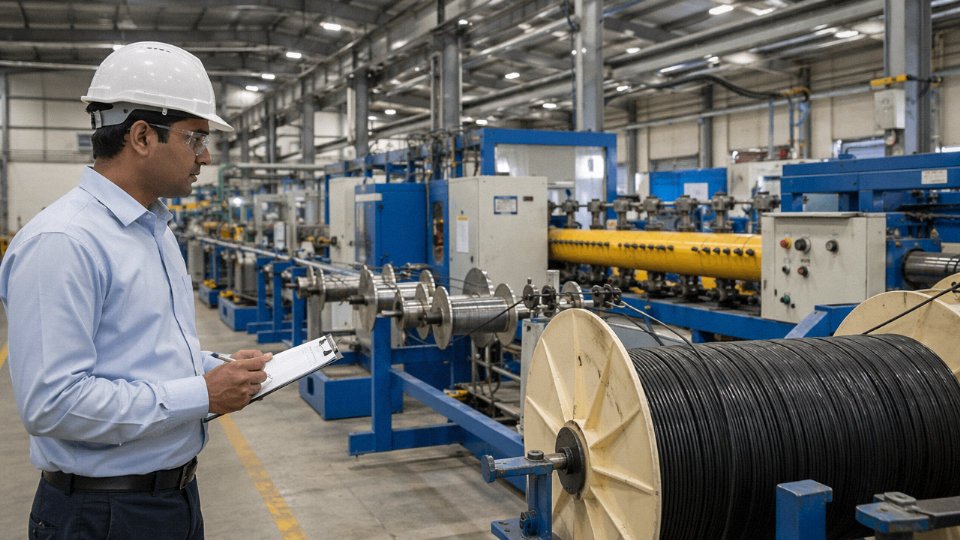
Walk the production sequence, not just the showroom. Conductor drawing and stranding lines set the foundation — check whether the plant draws its own rod or buys pre-drawn wire, as this affects purity traceability. Extrusion lines for insulation and sheathing should have online diameter gauges and spark testers; a line without them is a liability. Armoring machines for steel wire or steel tape armored cable should show clean lay geometry and documented tension settings. Ask to see recent calibration stickers on the high-voltage test bench — a bench that hasn’t been calibrated in 18 months is worse than useless.
Documentation Package Expectations
Every order, without exception, should ship with material test certificates covering conductor conductivity and purity, insulation compound test results, and sheath physical properties. Production batch test reports should reference the specific drum numbers shipped. Drum labels need to carry the full specification: conductor cross-section, voltage rating, standard, length, gross and net weight, and manufacturing date. Country-specific certification copies — UL, CE, whatever applies to the destination market — should be included, not promised after delivery.
Lead Times and Logistics
For international orders, realistic lead times run 25–60 days from order confirmation depending on product complexity, conductor size, and current plant loading. Standard power cords on a running production program can be faster; MV or HV cable with special armoring needs more runway.
Drum and reel sizing directly affects container economics. A 40 ft HC container loaded with large-diameter cable on oversized drums might carry fewer meters than you’d calculate from the container volume alone — the dead space around drum flanges adds up. Work with the manufacturer’s logistics team on drum diameter optimization before the order is placed, not after. On Incoterms: EXW puts all freight risk on you from the factory gate; FOB Qingdao is often the practical balance point for sea freight, giving you control of the main leg while the supplier handles domestic haulage. CIF makes sense when you want the supplier to own the freight booking, but price transparency suffers. For large orders, a pre-shipment inspection by a third-party inspector — SGS, Bureau Veritas, or equivalent — is money well spent.
Why Jinda’s Setup Matters for Buyers
Jinda has been in continuous production since 1987, which in practical terms means 37 years of process refinement, supplier relationships, and institutional knowledge about what goes wrong on cable projects. Five production bases across China totaling 470,000 m² means the capacity to run parallel programs without one customer’s order displacing another’s. With over 1,000 employees and an integrated structure covering R&D, production, sales, technical support, and after-sales service, there’s a single accountability chain — not a trading company layered over a factory you’ll never actually audit.
Jinda has been supplying international cable customers since 1987 and currently ships to more than 50 countries.True
This is stated company history and aligns with the project persona provided; it represents a verifiable operational fact about the manufacturer.
If you’re specifying a project — whether it’s a containerized power distribution system needing flexible cord sets, a renewable energy installation requiring MV cable, or a bulk procurement of LV building wire — submit your technical specification directly to Jinda’s team for a formal quotation or technical review. Include conductor cross-section, voltage class, installation method, applicable standards, quantity, and destination country. The more complete the specification, the faster a meaningful response comes back. Sample requests for new product qualifications are handled routinely. The team works across time zones and the sales and technical functions sit in the same organization, so questions don’t disappear into a middleman.