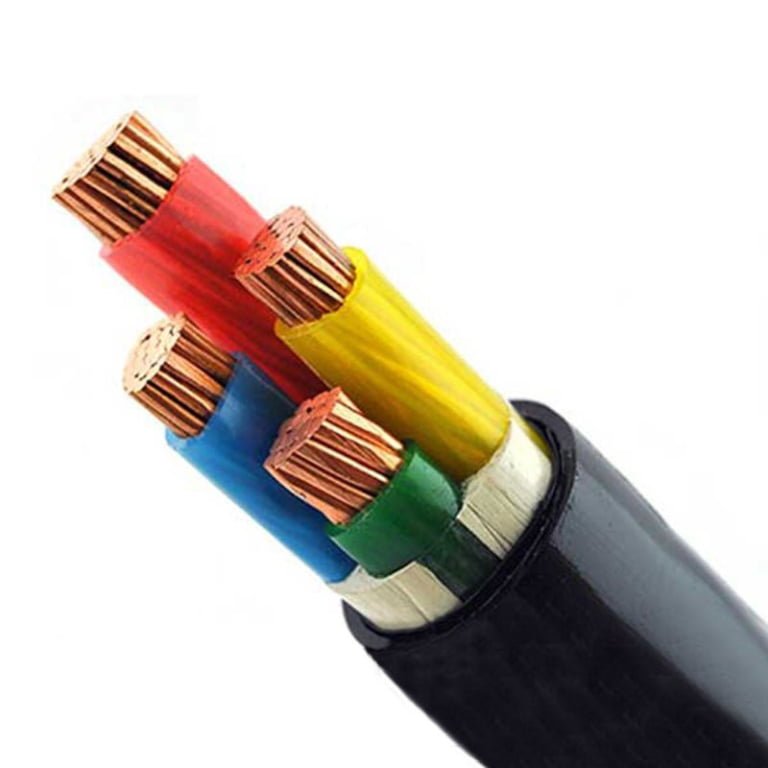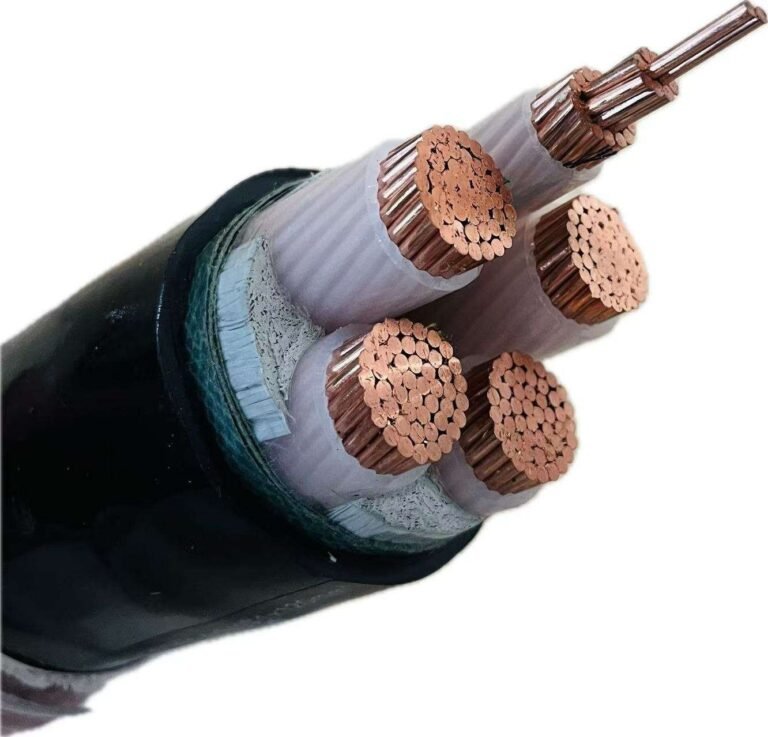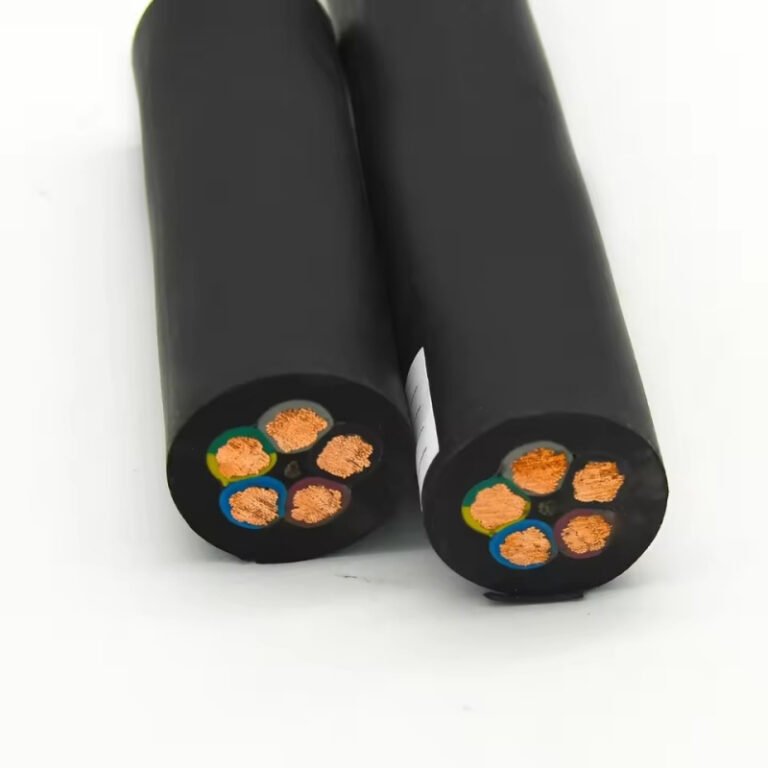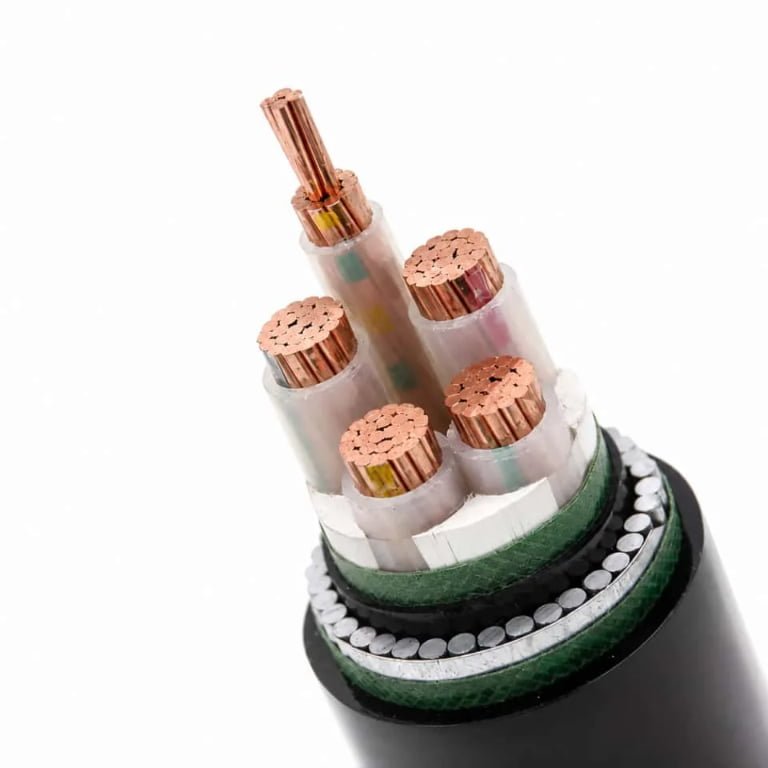
Mismatched wire selection quietly causes more plant downtime and warranty failures than most procurement teams ever track. Specify a general-purpose building wire where a true low-voltage cable is required — or the reverse — and you end up with insulation that degrades prematurely, voltage drops that drift outside acceptable tolerances, or a cable that simply won’t pass inspection on a commissioned system. The rework cost alone, once conduit is buried or a panel is closed up, usually runs several times what the “savings” on the cheaper product were.
Low voltage wire is not the same as regular building wire, even though both operate below 1,000 V AC (the IEC 60038 threshold). Low voltage cables are engineered around a specific combination of insulation thickness, conductor sizing, and jacket material suited to their load profile and environment. Regular building wire is optimized for fixed residential or light commercial circuits at 120–240 V AC, with different flexibility, shielding, and temperature rating requirements.
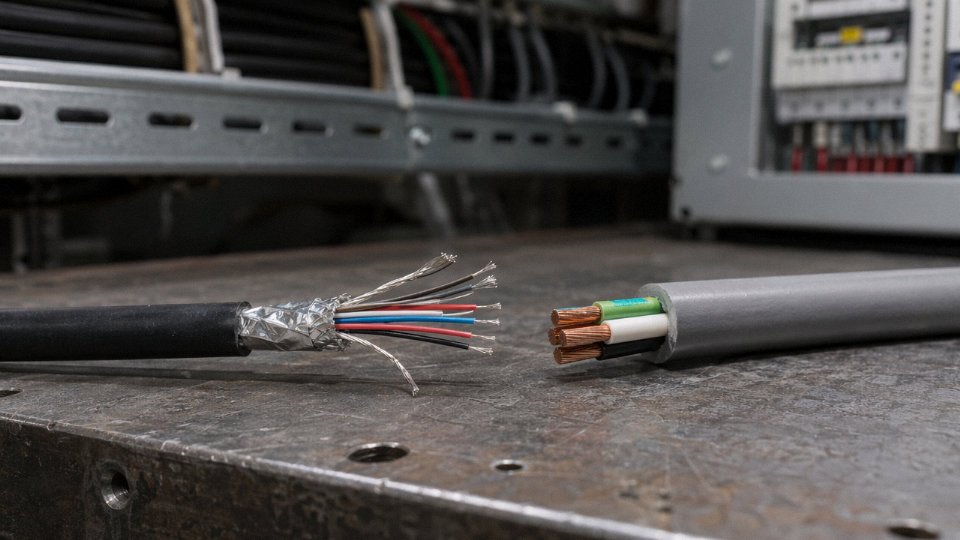
What makes this genuinely confusing in practice is that the voltage numbers can overlap almost completely, so the difference isn’t stamped obviously on the surface. The real distinctions live in the construction details — insulation wall thickness, conductor stranding, whether there’s a shielding layer, how the jacket handles UV or chemical exposure — and those details only matter until the day they really, really matter.
How Voltage Rating Shapes Cable Construction from Conductor to Outer Jacket
Most engineers understand that a higher voltage rating means thicker insulation. That’s true, but it’s only part of the story. Voltage class ripples through every layer of a cable — conductor geometry, insulation compound, shielding strategy, and outer jacket formulation all change. Treating those decisions as independent is how you end up with a cable that passes acceptance testing and then fails in service eighteen months later.
Conductor Sizing and Stranding
Start at the center. Extra-low voltage signal cables — think 24 V DC control wiring, AV distribution, or CCTV loop cabling — typically use fine-stranded conductors in the 0.14 mm² to 0.5 mm² range. The goal isn’t current capacity; it’s flexibility and repeated bend life. A Class 5 or Class 6 conductor per IEC 60228 (which may be built from individual strands as thin as 0.1 mm) can survive tens of thousands of flex cycles in a cable tray where a rigid Class 1 conductor would fatigue and fracture.
LV power cables work the opposite end of the spectrum. Cross-sections run from 1.5 mm² for a basic lighting circuit branch all the way to 400 mm² or larger for main feeder runs, with conductors stranded at Class 2 for fixed installation or Class 5 for flexible connections at motor terminals or switchgear. Copper’s resistivity of roughly 1.72 × 10⁻⁸ Ω·m at 20 °C is the baseline for sizing, but in large-diameter feeders, aluminum (around 2.82 × 10⁻⁸ Ω·m) often wins on cost-to-ampacity ratio — provided the termination hardware and jointing practice are correct, which is a whole separate conversation.
Insulation Material and Wall Thickness
This is where the voltage stress calculation drives physical design. An ELV cable running at 12 V or 24 V can get away with a thin PVC or PE wall — sometimes as little as 0.2–0.3 mm — because the electrical stress across the insulation is negligible. The wall is there mainly to prevent abrasion damage, not to contain a dangerous field gradient.
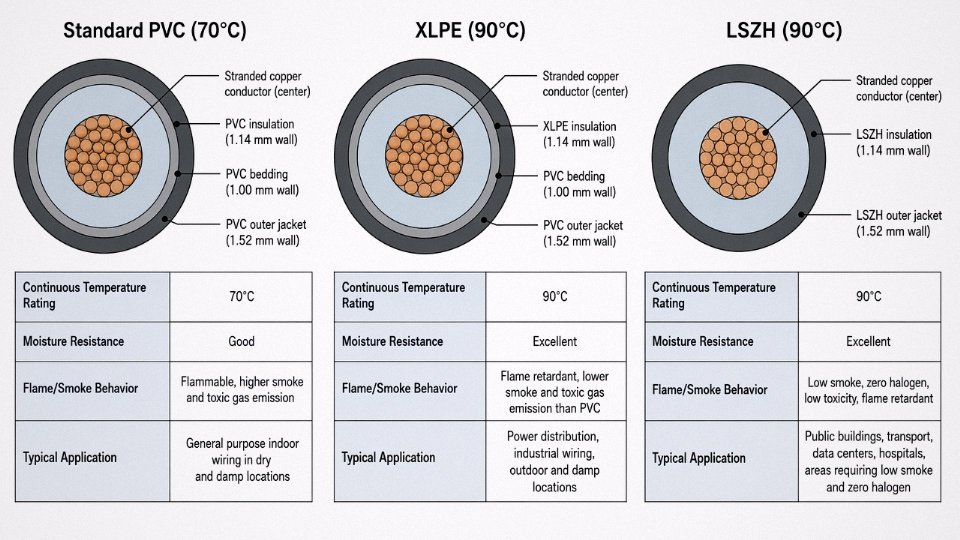
Standard LV building wire rated at 600 V or 1,000 V is a different product. Under IEC 60502-1, insulation wall thickness is calculated from the conductor cross-section and the rated voltage, and the numbers reflect this: a 1.5 mm² wire typically carries an insulation wall of around 0.6 mm, while a 70 mm² conductor might need over 1.0 mm. XLPE has largely replaced plain PVC in industrial LV cables because it holds its dielectric properties at elevated temperatures (rated to 90 °C continuous versus 70 °C for standard PVC), which matters enormously in cable trays where bundling derates ampacity.
EPR insulation shows up in applications where flexibility at low temperatures or ozone resistance is required — offshore platforms, mining, some rolling-stock work. It’s more expensive than XLPE and deserves to be specified deliberately, not as a default upgrade.
XLPE-insulated LV cable maintains acceptable dielectric properties at 90°C continuous conductor temperature, compared to 70°C for standard PVC insulation.True
This is consistent with IEC 60502-1 and widely referenced cable manufacturers' technical datasheets for rated conductor operating temperatures.
Shielding and Outer Jacket Selection
Signal-carrying low voltage cables and power LV cables diverge sharply here. A data cable, AV distribution run, or instrumentation loop needs EMI rejection — aluminum-foil/polyester tape shields cover the full circumference and provide 85–100% coverage, while braided copper shields (typically 85–95% optical coverage) add mechanical robustness and lower transfer impedance at higher frequencies. Drain wires matter; a shield floating at both ends does almost nothing.
Power LV cables have no business being shielded in the signal sense. What they need is mechanical protection. Steel wire armoring (SWA) or aluminum wire armoring (AWA) handles direct burial, cable tray edge damage, and rodent exposure. AWA is preferred where stray current or weight is a concern — aluminum doesn’t create the magnetic loss issues that steel does on single-core AC cables carrying high current, which is a detail that occasionally gets missed until the armor runs warm.
Outer jacket compound selection often gets less attention than it deserves. UV stabilized black polyethylene for direct-burial outdoor runs, LSZH (low smoke zero halogen) for tunnels, data centers, and occupied buildings where combustion products are a life-safety issue, FR-PVC as a cost-effective flame-retardant option in industrial conduit, and oil-resistant PVC or CPE for machine tool and petrochemical environments — these are real engineering choices, not marketing tiers. Specifying the wrong jacket for the installation environment is how you end up doing a full cable replacement in year three rather than year twenty.
Material and Compound Choices That Separate ELV Signal Cables from LV Power Cables
The two cables sitting side by side on a procurement spreadsheet can look nearly identical — same outer diameter, same black jacket, close enough in price that a buyer might treat them as interchangeable. They are not. The insulation and jacket compounds are doing fundamentally different jobs, and specifying the wrong one doesn’t usually fail immediately. It fails at 30 months in a humid riser, or during a fire incident, or when an insurance assessor pulls the installation records.
PVC Variants: More Than a Temperature Stamp
Standard PVC insulation — the grade most people mean when they say “PVC wire” — is rated for a continuous conductor temperature of 70°C. That covers the majority of residential and light commercial wiring at 120–240 V AC, and it’s cheap to produce. Heat-resistant PVC pushes that to 90°C through a different plasticizer package and a modified resin ratio. Flexible PVC, widely used in ELV signal and control cables, trades some temperature headroom for lower durometer hardness and a tighter bending radius.
The practical problem with flexible PVC in ELV applications is plasticizer migration. Over time — typically two to four years in consistently warm, humid environments — the plasticizer molecules diffuse outward, the insulation becomes brittle, and the dielectric constant shifts. In a dry office environment, that’s a slow process. In a cable tray running above a commercial kitchen, or in an outdoor conduit in a subtropical climate, it accelerates noticeably. This is exactly the failure mechanism behind ELV cables that pass insulation resistance testing at installation (often 100 MΩ or better) and then read in the low single-digit MΩ range a couple of years later.
The source of the compound matters enormously here. Cables made with recycled or off-spec PVC compound — common in the lower tier of the market — can show this degradation well inside the two-year mark. A reputable manufacturer will document compound origin, and the price difference between a quality flexible PVC ELV cable and a budget equivalent is usually somewhere in the range of 15–35%, depending on conductor cross-section and order volume. That gap looks attractive until you’re paying for a re-pull.
XLPE for LV Power: Where the Long-Term Math Changes
Cross-linked polyethylene handles the demands of industrial and utility LV feeders better than standard PVC in almost every thermal and moisture category. The 90°C continuous rating isn’t just a headline number — it translates directly to higher current-carrying capacity in a given conductor cross-section, which occasionally lets a designer drop one conductor size class and still meet the load, recovering some of the cost premium. More importantly, XLPE’s three-dimensional polymer network resists moisture ingress at a structural level that PVC simply doesn’t match. For direct burial or underground duct installations, the service life difference is real: 40-plus years is a commonly cited design figure for XLPE-insulated LV cables manufactured to IEC 60502-1, versus roughly 20–25 years for equivalent PVC in comparable conditions.
XLPE-insulated LV cables manufactured to IEC 60502-1 can achieve design service lives of 40 years or more in typical buried or industrial installationsTrue
IEC 60502-1 establishes qualification testing for LV cables up to 1 kV, and utility and industrial operators routinely design XLPE-insulated feeder circuits for 40-year asset life based on thermal aging and moisture resistance data — this is a widely accepted industry figure, not marketing language
The cost premium for XLPE over PVC on a comparable LV power cable runs roughly 20–40% on the cable itself, varying with copper or aluminum conductor pricing at the time of order. On a large industrial project, that differential against a 30- or 40-year replacement cycle usually closes in favor of XLPE. Jinda’s production lines run both compounds and test to the full IEC 60502-1 regime, which matters when a procurement manager needs third-party test reports alongside the order.
LSZH: Not Optional in the Installations That Actually Need It
Low Smoke Zero Halogen compounds are specified because PVC burns badly in enclosed spaces. The hydrogen chloride gas released from burning PVC insulation is corrosive to equipment and toxic to occupants at relatively low concentrations — and in a tunnel, a subway station, or a ship’s cable deck, ventilation is limited by definition. IEC 60332-3 and EN 50399 define the flame spread and smoke emission benchmarks that LSZH compounds are formulated to meet. The trade-off is mechanical: LSZH jackets are noticeably stiffer than flexible PVC at the same wall thickness, and they can be more sensitive to installation abuse — overtightened cable ties, sharp conduit edges — because the material is less forgiving under point stress.
For ELV fire alarm and emergency lighting circuits in particular, LSZH is essentially the default specification in any project built to modern standards. An installer working from a legacy spec that calls out standard PVC for those circuits is probably working from a document that hasn’t been updated in 15 years. The compliance risk in a public building or a marine project is significant if the wrong compound is used, regardless of whether the electrical parameters are otherwise met.
The material choice, in short, is never just about rated voltage. It’s about where the cable lives, what temperature it runs at, how long the asset needs to last, and what happens to the people in the building if something goes wrong.
Key International Standards Governing Low Voltage and ELV Cable Selection
Understanding which standard governs which cable type is not a paperwork exercise — specifying the wrong document, or missing a regional cross-reference entirely, is how projects end up with cables that clear customs but fail third-party inspection on site. The standards landscape is genuinely fragmented, and a procurement manager buying for multiple markets at once has to hold several frameworks in their head simultaneously.
The IEC Family and How to Read Voltage Designation Notation
IEC 60502-1 is the primary document for low voltage power cables rated up to 1 kV. It covers everything from conductor construction and insulation thickness tolerances to completed cable test methods — voltage test levels, insulation resistance, mechanical properties — and marking requirements. If you are sourcing multicore armoured or unarmoured LV power cable for an industrial plant, a substation connection, or a commercial fit-out, this is the governing document. Full stop.
IEC 60227 sits below that. It covers PVC-insulated cables with rated voltages up to 450/750 V — the flat twin-and-earth you see pulled through conduit in residential buildings, the flexible cord on a machine tool, the single-core building wire in a light commercial project. Most of what people loosely call “regular wire” falls here. The standard is a series of parts, each specifying a particular cable type, so you need to know which part number applies to your construction.
The voltage designation notation trips up buyers regularly. A marking of 0.6/1 kV means the insulation is rated for 600 V between conductor and earth (phase-to-earth), and 1,000 V between conductors (phase-to-phase). It does not mean the cable is only suitable for 600 V systems. A 450/750 V designation covers a 400 V three-phase system comfortably — the 400 V phase-to-phase figure sits well within the 750 V conductor-to-conductor rating. Getting this wrong in a specification leads to either unnecessary cost or, worse, under-specified cable installed where it should not be.
IEC 60189 handles low-frequency cables and wires for telecommunications — indoor telephone wiring, building backbone cabling for voice. It is not relevant to power distribution at all, but it comes up in procurement because some ELV signal cable suppliers cite it for general low-voltage signal cable, which is not always appropriate.
Regional Standards Buyers Must Cross-Reference
North American projects require UL certification, not IEC compliance. UL 83 covers THHN, the standard thermoplastic building wire used in conduit throughout the US. UL 44 covers XHHW, the cross-linked polyethylene variant used where higher temperature rating or moisture resistance matters — wet locations, underground runs in conduit. These are not interchangeable designations, and a cable shipped with IEC test reports will not satisfy a North American inspector regardless of how technically similar the construction is.
UK projects still largely reference BS 6004 for PVC-insulated cables (the direct functional equivalent of IEC 60227 content but with British-specific requirements) and BS 5467 for armoured LV power cables. Post-Brexit, the UKCA mark has replaced CE for Great Britain, though in practice many projects still accept CE during a transitional period — worth confirming on each contract. Australia and New Zealand specify AS/NZS 5000, which has its own conductor sizing conventions and test requirements that differ from the IEC baseline in several details.
Jinda’s export cables can be manufactured to meet specific regional standards. Third-party test reports from SGS, TÜV, and Bureau Veritas are available on request, which matters because a test report from an in-house lab carries less weight with a project engineer or an end-client’s compliance team than one from a recognized independent body.
Cables manufactured to IEC 60502-1 automatically meet UL 83 requirements without additional testing.False
IEC and UL are separate certification schemes with different test methods, marking requirements, and approval processes. A cable compliant with IEC 60502-1 requires independent UL testing and listing to satisfy North American project specifications.
Flame and Fire Performance — Specifying the Right Class Without Over-Buying
This is the area where over-specification is most common and most expensive. IEC 60332-1 covers single-cable vertical flame propagation — the baseline test, required for almost any installation. IEC 60332-3 tests bunched cables installed together, which is the relevant test for cable trays, risers, or any dense multi-cable run. A data center with hundreds of cables in a tray needs 60332-3 compliance; a single outdoor feeder run buried in conduit does not, and specifying it adds cost for no functional gain.
EN 13501-6 introduces the Euroclass fire rating system — Eca, Dca, Cca, Bca, down to Aca — covering flame spread, heat release, smoke production, and droplets. A residential fit-out in Europe will typically call for Dca or Cca. A public building or transport hub moves up to Cca or Bca, partly because of smoke toxicity requirements embedded in the higher classes. IEC 60695 glow-wire testing applies more commonly to equipment wiring and component-level applications than to building power cables.
In rough terms, specifying a higher Euroclass or adding LSZH (low-smoke zero-halogen) compound over a standard PVC jacket adds somewhere between 15% and 30% to cable cost, depending on cross-section, order volume, and compound pricing at the time — compound costs fluctuate with petrochemical markets. For an outdoor underground feeder where smoke toxicity is irrelevant, that premium is wasted. For a hospital corridor or a tunnel ventilation circuit, it is non-negotiable. The specification has to match the installation environment, not default to the most conservative option on the list.
Practical Installation Differences: Conduit Fill, Bending Radius, and Termination Hardware
Anyone who has pulled cable on a live construction site knows the frustration of arriving at a conduit run that someone else already filled — and filled wrong. The physical differences between ELV signal cables and LV power cables aren’t just spec-sheet abstractions. They show up in conduit sizing arguments, in bent coax that suddenly won’t pass signal, and in termination failures that only surface during commissioning when the schedule is already tight.
Conduit Fill: The Numbers Are Not Interchangeable
A standard 20 mm trade-size conduit can physically accommodate somewhere between 8 and 12 runs of 0.5 mm² ELV data cable, depending on jacket OD and conduit type — that range shifts depending on whether you’re running PVC conduit, EMT, or flexible metallic. Put 2.5 mm² LV power cable in that same conduit and you’re down to roughly 3 conductors before you exceed the 40% fill limit that NEC Chapter 9 (Table 1) and equivalent IEC guidance both impose for three or more conductors.
The calculation itself isn’t complicated: sum the cross-sectional areas of all cables (using the actual OD, not the conductor size), then check that total against the allowable interior area of the conduit at your chosen fill percentage. Where it goes wrong in practice is when someone grabs a conduit sizing chart calibrated for one cable type and applies it to the other.
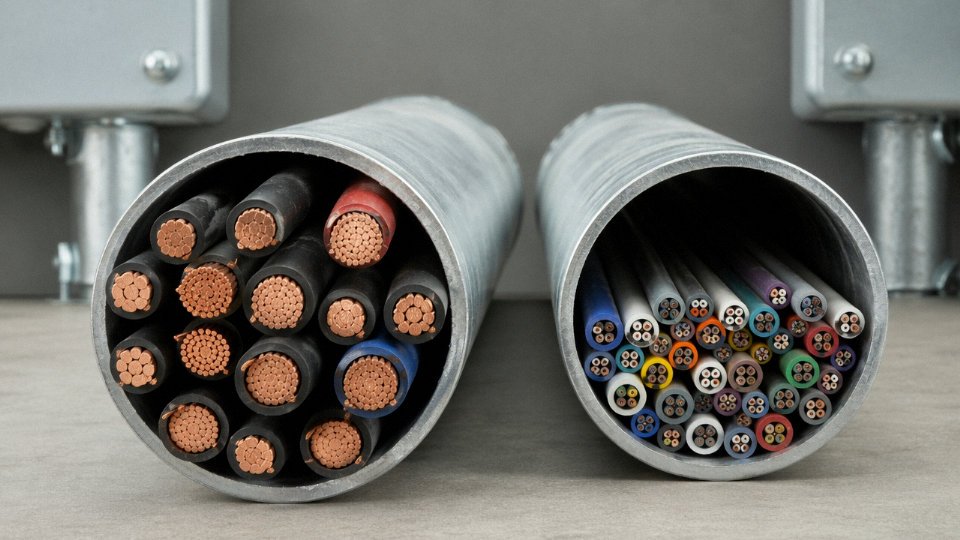
More critically, mixing ELV signal cables and LV power cables in the same conduit is prohibited under most installation codes — NEC Article 725 and IEC 60364-4-44 both address this — and the reasons are two-fold. First, electromagnetic induction from a 230 V, 16 A circuit running alongside a structured cabling bundle will inject noise that a data cable’s twisted-pair geometry cannot fully reject at close range. Second, and less appreciated, the insulation class of an ELV cable is simply not rated to survive a fault event on an adjacent LV conductor. A pinhole in a 0.2 mm ELV jacket sharing a conduit with a 400 V phase conductor is not a theoretical risk.
Bending Radius: Where Signal Physics and Mechanical Physics Diverge
ELV signal cables — Cat6A, coaxial, screened instrumentation cable — have tight bending radius requirements for reasons that have nothing to do with the jacket cracking. A Cat6A cable must maintain a minimum bend radius of roughly 4× its outer diameter during installation and somewhat more for permanent bends. Exceed that and the twist geometry of the pairs changes, which changes the differential impedance, which raises return loss and can push the channel outside TIA-568 or ISO/IEC 11801 performance limits. You won’t see a crack. You’ll see a marginal link that passes sometimes and fails sometimes, and chasing that fault is genuinely miserable work.
LV power cables are more tolerant of tight bends mechanically, but the minimum bend radius requirements are actually larger — typically 8× to 12× OD for unarmored cables, and up to 15× for steel wire armored (SWA) or aluminum wire armored (AWA) construction. The armoring is what drives that. SWA cable doesn’t flex; force it around a tight corner and you risk breaking individual armor wires, which then work as stress concentrators against the insulation beneath. This has a direct consequence for conduit layout design: armored LV cable needs large-radius sweep bends and generous pull boxes at every direction change. Underestimate this during design and you end up cutting and repouring concrete to fit a pull box that wasn’t in the original drawings.
Exceeding the minimum bend radius of a Cat6A cable can cause it to fail channel performance tests even if the jacket appears undamaged.True
The helical twist geometry of the internal pairs changes under excessive bending, altering differential impedance and degrading return loss and insertion loss — the cable can fail TIA-568 certification limits with no visible physical damage.
Termination Hardware: The Fault That Waits Until Commissioning
ELV signal cables terminate into RJ45 jacks, BNC connectors, punch-down blocks, or low-level terminal strips rated for milliamp signals. The contact resistance at these connections matters in a way it simply doesn’t for power circuits — a poorly seated RJ45 with oxidized contacts on a Cat6A run can raise contact resistance by 0.5–2 Ω, which is negligible for a 15 A power circuit and fatal for a 100 m Ethernet channel already budgeting every fraction of a dB.
LV power cables terminate with compression lugs, mechanical connectors, or direct busbar connections, all rated for the full prospective fault current of the circuit. Undersized lugs on LV cables are, in my experience, one of the most common findings during commissioning inspections — particularly on 16–25 mm² conductors where the installer grabbed a lug from a mixed bin rather than matching the conductor cross-section precisely. An undersized lug creates a high-resistance joint, generates heat under load, and can progress to a thermal failure over months of cycling. It rarely trips protection immediately. It just slowly carbonizes until it does.
The two cable families need completely separate termination tooling, separate hardware inventories, and separate inspection checklists. Running them as equivalent on a job site is how projects accumulate rework costs that don’t show up until final testing.
Where Each Cable Type Is Used: Application Matrix Across Industries and Project Types
Knowing what separates ELV signal cable from LV power cable matters a lot less if you can’t anchor it to actual project types. The sections above covered construction and materials — this one is about where each cable family actually lands in the field, and why substituting one for the other creates real problems rather than just theoretical ones.
Residential and Light Commercial Buildings
Standard LV building wire — typically IEC 60227 or IEC 60502-1 rated at 300/500 V or 450/750 V — handles the power circuits: lighting, socket outlets, HVAC feeds, cooker connections. Cross-sections in a typical house run from 1.5 mm² for lighting loops up to 10 mm² or so for an electric shower or EV charger spur, though exact sizing depends on load, run length, and local regulation.
Everything else in that same building — the doorbell, the room thermostat, CCTV cameras, motion sensors, access control wiring, smart-home bus cables, structured Cat 6 data runs — is ELV. And this is where a question that comes up constantly on procurement calls is actually worth answering properly: can I use regular wire for a security camera?
No. The reasons aren’t just bureaucratic. CCTV coaxial cable (RG59 or RG6 for analog; shielded twisted pair for IP cameras) has a controlled characteristic impedance — usually 75 Ω for coaxial — that standard building wire doesn’t even attempt to maintain. Run a security camera on a 1.5 mm² twin-and-earth and you’ll get signal reflections, image noise, and likely connector incompatibility at the camera head. For PoE IP cameras, current draw through structured cabling is typically 300–600 mA per port; the wire gauge is chosen to keep voltage drop within the PoE standard’s budget, not just to avoid melting. Wrong cable means the camera either doesn’t power up or reboots intermittently under load — frustrating to diagnose after the cable is in conduit.
Industrial Facilities and Infrastructure Projects
A water treatment plant or an automotive assembly facility will have both cable types running in the same building, often within a few meters of each other, and they serve completely different functions.
Heavy LV power cables — 0.6/1 kV XLPE armored (SWA or AWA construction, depending on single-phase or three-phase), typically 16 mm² to 240 mm² — feed motor control centers, switchgear panels, transformer secondaries, and busbar taps. These are the cables pulling real current: a 75 kW pump motor might draw 140–150 A at 400 V AC, and the cable has to sustain that under a 40–50 °C ambient in a cable tray without derating below its design life.
Running in parallel — but physically separated — are the instrumentation cables. Shielded twisted pair, typically 0.5 mm² to 1.5 mm² conductors, carrying 4–20 mA analog signals back to the PLC or DCS, or handling Profibus/Modbus RS-485 networks between field devices. IEC 61000-5-2 sets out separation distance guidelines between power and signal cable routes; in practice, most industrial projects I’ve seen use a minimum of 200 mm tray separation, with a grounded metal divider where that isn’t achievable. Skip this and you’ll chase ghost faults — intermittent valve position errors, PID loop upsets, or Profibus CRC errors that only appear when a large motor starts.
| Application | Cable Type | Typical Rating | Key Standard |
|---|---|---|---|
| Power circuits (residential) | LV building wire | 300/500 V – 450/750 V | IEC 60227, IEC 60502-1 |
| CCTV / access control | ELV signal cable | ≤ 50 V DC | IEC 62368-1 |
| Motor feeders (industrial) | LV XLPE SWA | 0.6/1 kV | IEC 60502-1 |
| 4–20 mA instrumentation | ELV shielded TP | ≤ 30 V DC | IEC 61158 / IEC 61000-5-2 |
| Solar string wiring | DC solar cable | 1,000 V or 1,500 V DC | TÜV 2 Pfg 1169 / EN 50618 |
| EV charging station | LV power + ELV pilot | 400 V AC / pilot ≤ 12 V | IEC 62196, IEC 61851-1 |
Renewable Energy and EV Charging Infrastructure
Solar PV string cables occupy an interesting position: they operate in the ELV-to-LV overlap zone — 1,000 V DC for most commercial rooftop systems, 1,500 V DC for utility-scale ground-mount arrays — and they require UV resistance, ozone resistance, and moisture resistance that standard building wire simply isn’t formulated for. TÜV certification to 2 Pfg 1169 (or the equivalent EN 50618) is the baseline for any reputable solar project in Europe. Using building wire in a solar DC string is a fire risk, not just a standards violation. The insulation degrades within a few seasons of UV exposure and wet-dry cycling on a rooftop.
EV charging stations layer the problem further. The power conductors — handling 32 A for a 7 kW AC wallbox up to 125 A or more for a 50 kW DC fast charger — are straightforwardly LV. But the same cable assembly also carries ELV pilot and proximity signals (typically under 12 V DC) used by CCS or CHAdeMO protocols to negotiate charge current and verify connector lock. These conductors have to coexist inside one flexible cable, routed together, without the pilot signal picking up interference from the power cores. That demands careful shielding of the signal conductors and a jacket tough enough to handle repeated flexing in a car park environment — often rated to at least 20,000 plug cycles.
Standard residential building wire can be used for solar PV DC string wiring as a cost-saving measure.False
Solar DC cables must be rated for 1,000 V or 1,500 V DC, UV and ozone resistant, and certified to TÜV 2 Pfg 1169 or EN 50618. Standard building wire lacks both the voltage rating for 1,500 V DC systems and the UV-stabilized insulation compound needed for outdoor exposure. Using it creates a fire and insulation-failure risk over the system's 25-year design life.
Jinda supplies both solar DC cable and EV charging cable assemblies into projects across Europe, the Middle East, and Southeast Asia — which means the specification nuances above aren’t theoretical. Procurement teams regularly ask whether one cable type can substitute for another to simplify the order. Usually the answer is no, and the table above gives a fast way to check why before that question becomes a site problem.
Common Wiring Mistakes That Happen When Low Voltage and Regular Wire Get Confused on Site
Substitution errors on cable are more common than most project managers want to admit. The logic usually sounds reasonable at the time — the wire is already on the truck, the specs look close enough, the job needs to finish today. But the failure modes that follow are not close at all, and some of them don’t show up until a fire is already burning.
Using Standard 450/750 V Building Wire in Fire Alarm Circuits
This is the substitution I find most alarming, and it happens on small commercial fit-outs more often than it should. A standard PVC-insulated building wire passes a basic voltage test just fine at ambient temperature. The problem is what happens at 300–600 °C when a structural fire is progressing through a ceiling void.
Standard PVC softens, chars, and loses electrical continuity somewhere between 8 and 20 minutes into a fire event, depending on the flame source and ambient load. Fire alarm cable, by contrast, must maintain circuit integrity for defined survival periods — E30, E60, or E90 under IEC 60331, meaning 30, 60, or 90 minutes of continued operation. That performance requires either mineral-insulated copper-clad (MICC) cable or enhanced fire-resistant compound construction with mica tape barriers. Regular PVC achieves none of those things.
The consequence: the panel loses contact with detectors and triggering circuits precisely when it most needs them. Suppressant systems that rely on electrical signal don’t activate. In virtually every jurisdiction this is a life-safety code violation, not a paperwork issue — it can result in building certification revocation and, in the event of a fatality, criminal liability for the installer.
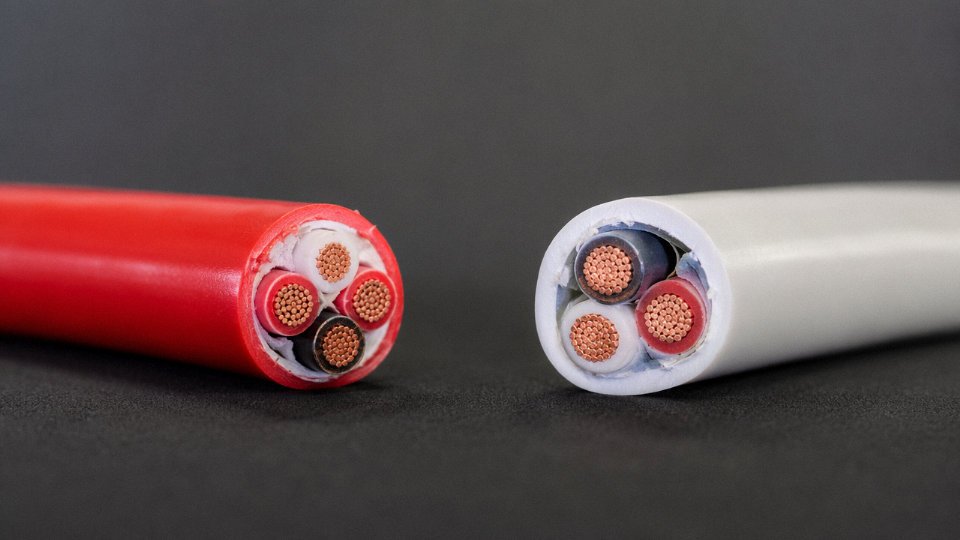
Standard PVC-insulated 450/750 V building wire can substitute for fire alarm cable if properly sized.False
Standard PVC insulation fails at sustained temperatures above roughly 160–200 °C and provides no circuit integrity under IEC 60331 fire survival requirements. Fire alarm circuits require mineral insulation (MICC) or enhanced fire-resistant compound construction to maintain operation for E30/E60/E90 periods. This is a code violation in virtually every jurisdiction.
Running ELV Speaker or AV Cable on Mains Voltage Circuits
Usually this one comes from low-budget residential audiovisual installs where the sparky has run out of cable and the AV contractor’s leftover 2-core speaker wire is sitting right there. Speaker cable and structured AV cable is typically rated at 50–100 V. It is not remotely suitable for 230 V AC mains.
The insulation wall on ELV signal cable is thin — often 0.3–0.6 mm — designed for signal levels where insulation breakdown voltage is almost never the operating concern. Apply 230 V across that wall continuously and the dielectric stress will degrade the insulation, sometimes slowly and sometimes catastrophically fast depending on temperature and mechanical condition of the cable. Conductor cross-sections in speaker cable are also sized for impedance matching, not current-carrying capacity; a 2 × 1.0 mm² speaker cable used as a branch circuit feed will overheat long before any breaker trips, because the breaker is protecting the circuit, not undersized conductors someone swapped in.
Here’s the practical catch: insulation resistance testing during commissioning — a standard 500 V or 1,000 V Megger test — will flag this immediately. IR values will be several orders of magnitude below acceptable thresholds. Any competent commissioning engineer will reject the installation on the spot. The rework cost, including re-pulling cable through conduit that’s already been plastered over, is invariably far higher than buying the correct cable on day one.
Incorrect Voltage-Rated Cable in Rooftop Solar PV String Wiring
This failure mode is increasingly common as solar installations scale up and general electrical contractors take on PV work without PV-specific training. The mistake: using standard 450/750 V building wire — the same roll used for the DB feeds downstairs — on rooftop string wiring that runs at 600–1,000 V DC.
There are two separate problems here, and both are serious. First, the voltage rating is simply insufficient; string voltages on commercial PV arrays routinely reach 800–1,000 V DC depending on module count and temperature coefficient, and 450/750 V-rated insulation is operating outside its design envelope from day one. Second, and this is the part that kills buildings: DC arc faults do not self-extinguish. AC arcs cross a natural current zero 100 times per second and often interrupt themselves. A DC arc at high voltage will sustain indefinitely once initiated, continuing to pump energy into carbonised insulation until something structural ignites. Non-rated insulation on a rooftop — exposed to UV, thermal cycling between roughly −20 °C and +85 °C depending on climate and season, and continuous DC voltage stress — degrades significantly faster than it would in a conduit indoors.
Solar DC cable for this application needs to be specifically rated: 1,500 V DC insulation, UV-resistant cross-linked polyethylene (XLPE) or EVA-based sheathing, and certification against IEC 62930 (or EN 50618, which covers the same territory). TÜV certification is the benchmark most serious EPC contractors specify. Jinda’s solar DC cable carries TÜV and IEC 62930 certification precisely because the failure mode without correct ratings is an arc-fault fire on a roof, which is about the worst place to fight one.
The pattern across all three of these mistakes is the same: the wrong cable looks right until the operating condition it was never designed for finally arrives — and that condition is usually a fire, a fault, or a weather event, not a quiet Tuesday afternoon commissioning walk.
Buying Low Voltage Cable at Scale: Specification Checklist and Supplier Qualification Criteria
Getting the technical selection right is only half the job. The other half is writing a purchase order tight enough that what arrives on your dock actually matches what your engineer specified — and qualifying a supplier who can prove it before you commit to a container load.
What Every Bulk Cable Purchase Order Must Specify
Voltage rating should always be expressed in Uo/U notation (e.g., 0.6/1 kV), not just a vague “1000 V” label. Uo is the conductor-to-earth voltage; U is the conductor-to-conductor voltage. Mixing these up — or leaving the PO blank on this point — is how you end up receiving cable rated for a different system configuration than your installation requires.
Conductor material and stranding class need to be explicit. Specify plain copper, tinned copper, or aluminum, and state the IEC 60228 class: Class 1 (solid) for fixed conduit runs, Class 2 (stranded) for most industrial fixed wiring, Class 5 or 6 for flexible and trailing applications. A supplier who ships Class 2 when your control panel termination was designed around Class 5 fine-strand is going to cause you ferrule and torque problems at the terminal block, usually discovered during commissioning rather than goods receipt.
Insulation compound and rated temperature: state the specific compound (XLPE, PVC, LSZH) and the continuous operating temperature — typically 70°C for standard PVC, 90°C for XLPE, sometimes 105°C for specialist LSZH formulations. These are not interchangeable in conduit fill calculations or derating tables.
Sheath compound, color, and any armor type follow the same logic — be explicit. If the project requires SWA (steel wire armor) to IEC 60502-1 or an aluminum wire armor variant for weight reduction, say so on the PO. Don’t leave armor type open for the supplier to interpret.
Flame and fire performance: reference the exact standard, not just “flame retardant.” IEC 60332-1 (single cable), IEC 60332-3 (bundled installation), IEC 60754 (halogen content), IEC 61034 (smoke density) — these test for different things. A cable that passes IEC 60332-1 can still fail a bundled IEC 60332-3 Category C test badly. For data centers, tunnels, and high-occupancy buildings, this distinction genuinely matters.
Outer diameter tolerance and drum length should appear on every order. Specify drum length in meters per reel and confirm the reel type (wooden, steel, or returnable plastic) — this affects freight cost and site handling more than most procurement managers expect. Tolerances on OD matter for conduit fill calculations; if the jacket extrusion is running sloppy, you find out when you’re trying to pull the fourth cable through a three-quarter-full conduit.
Finally, require third-party test certificates — SGS, TÜV, Bureau Veritas, or Intertek are the names most destination-country inspectors recognize — and specify the destination compliance marking: CE for European projects, KEMA for Dutch utility work, SASO for Saudi Arabia, and so on. Chasing these documents after goods ship is painful and sometimes impossible to resolve before a customs hold.
Red Flags When Qualifying a Cable Supplier
The most common quality cut in the industry is conductor cross-section undersizing. A reel labeled 2.5 mm² arriving with an actual copper area of roughly 2.2 mm² reduces current-carrying capacity by around 12% and puts the installation outside IEC 60228 tolerance limits.
A 2.5 mm² cable with only 2.2 mm² actual copper cross-section violates IEC 60228 conductor tolerance requirements and reduces rated current capacity.True
IEC 60228 permits a maximum conductor resistance per unit length; undersized cross-section increases resistance beyond that limit, directly reducing the cable's current-carrying capacity relative to its rating and breaching the standard's conformance criteria.
Walk away from any supplier who cannot produce traceable third-party test certificates tied to specific production batches — not generic catalog certificates from years ago. Batch-level traceability is the only way to verify that the cable on your reel was actually tested, not just a similar product that was. No ISO 9001 certification for the manufacturing facility is another hard stop; it means there is no auditable process controlling raw material intake, conductor drawing tolerances, or extrusion parameters.
Jacket OD inconsistency across a drum — easy to check with a simple caliper at goods receipt — signals an unstable extrusion process. It usually means wall thickness variation too, which affects both dielectric performance and mechanical protection, and it often correlates with other process control problems you can’t see without destructive testing.
Why an Integrated Supply Model Matters for Complex Projects
Large infrastructure and real estate projects rarely need just one cable type. A typical industrial facility order might include multicore power cable, flexible control cable, armored distribution cable, and LSZH fire-performance cable — all in the same shipment window. Splitting that across four suppliers multiplies your documentation management, your customs clearing events, and your risk of one line item holding up the whole delivery schedule.
Jinda’s five production bases covering 470,000 m² of manufacturing space are set up specifically to handle mixed-type orders under a single purchase order and a unified quality documentation package. In-house R&D means conductor cross-section, jacket color coding, drum length, and print legend can be customized to project specification without the minimum order penalties that smaller manufacturers typically impose. The dedicated export compliance team covers documentation requirements for more than 50 destination countries — which, in practice, means fewer customs holds and fewer last-minute certificate requests arriving two days before your project’s scheduled energization.
Frequently Asked Questions About Low Voltage Wire and Regular Wire
Can I use regular house wire for low voltage landscape lighting?
Electrically, no harm will come to the cable itself. Standard 14 AWG or 12 AWG NM-B is rated 600 V, so a 12 V landscape transformer won’t stress the insulation at all. The problem is everything else. NM-B is built for dry, enclosed wall cavities — the jacket is not UV-stabilized, not moisture-resistant, and absolutely not rated for direct burial. Put it in a garden trench or leave it exposed to sunlight and you’ll have degraded, cracked insulation within a couple of seasons, plus a shock or fire risk if anyone digs nearby.
Use UF-B for direct-burial runs in North America, or an IEC 60502-1 armored equivalent for projects under international standards. Then size it for voltage drop, not just ampacity. At 12 V DC, a 2% drop is only 0.24 V — over a 30-meter run with modest current, that’s enough to make your fixtures noticeably dim at the far end. Do the voltage drop calculation before you lay cable.
Is low voltage wire cheaper than standard power cable?
Sometimes, for small signal and control cables — a thin 2×0.75 mm² screened cable costs very little per meter. But comparing price per meter across cable types is mostly meaningless. The correct metric is installed cost per ampere-meter of capacity delivered.
A single 16 mm² 0.6/1 kV XLPE power cable carrying 70–80 A (depending on installation method and ambient temperature) is dramatically more economical per ampere than running multiple undersized cables in parallel, each with its own terminations, conduit fill, and labor. In practice, the cables are usually the cheaper part of a wiring project. Rework — pulling out wrong cable, re-terminating, re-testing — is where the real cost lands. Specify correctly once.
What is the difference between ELV, LV, and HV cable, and how do I know which one my project needs?
ELV (extra-low voltage, ≤50 V AC or ≤120 V DC per IEC 60449) covers security systems, AV distribution, building automation, and data. LV covers everything from 50 V up to 1,000 V AC — your standard power distribution, motors, lighting panels, consumer units. Above 1,000 V AC you’re into high voltage territory, which is utility distribution and transmission work requiring a completely different class of cable and installation practice.
Your project’s one-line electrical diagram will show the operating voltage at each circuit. If you don’t have one, or you’re unsure how to read it, your licensed electrical engineer or the local utility connection documentation will settle the question. Don’t guess the voltage tier — the consequences of installing LV cable where HV is required are severe.
How do I verify that low voltage cable from an overseas supplier meets my local standard?
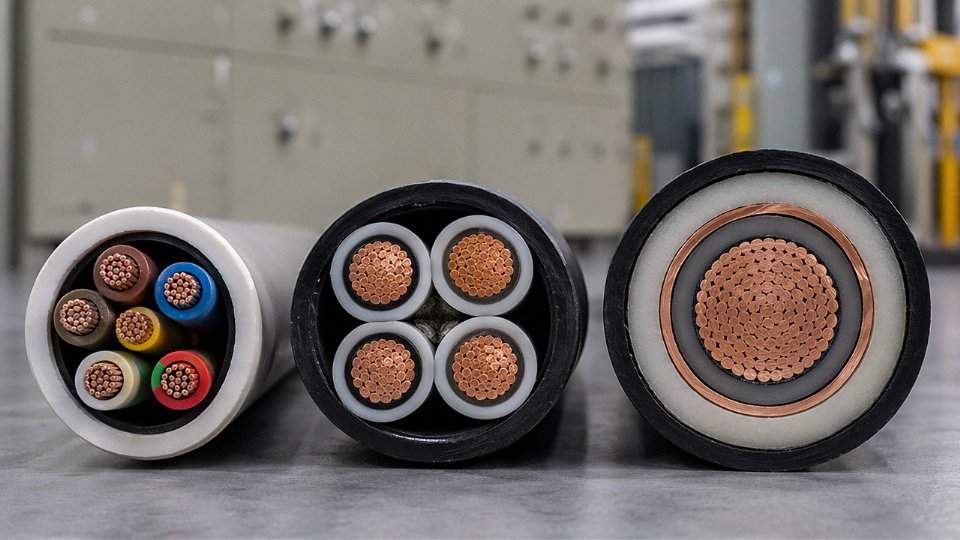
A certificate number alone tells you almost nothing. Request the full third-party test report — the actual document — issued by an ILAC-member accredited laboratory, referencing the specific standard (say, IEC 60502-1 or BS 6004). Then check that the cable type, voltage rating, conductor cross-section, and insulation material on the report match exactly what you’re ordering. A test report for 1.5 mm² doesn’t cover 4 mm² from the same product family.
On receipt, run incoming inspection: measure conductor resistance per IEC 60228 and insulation resistance per IEC 60502-1 on a sample from each drum. It takes maybe 20 minutes per drum and catches problems before cable is buried or enclosed.
Jinda provides pre-shipment inspection reports and can facilitate third-party witnessing of factory acceptance tests for large orders.True
This is standard practice for internationally trading cable manufacturers supplying large infrastructure or industrial projects, and is consistent with Jinda's stated quality and after-sales service infrastructure across five production bases.
Can low voltage DC cable be used for AC circuits of the same voltage?
Not automatically, and this one catches people out fairly regularly. A cable rated 1,000 V DC may only carry a 600 V AC rating — sometimes less. The reason is straightforward: AC insulation must withstand peak voltage (roughly 1,414 V peak for a 1,000 V RMS circuit) plus transient overvoltages from switching and lightning events. DC voltage is steady; AC is not.
Solar DC cables — rated 1,000 V DC or 1,500 V DC — are optimized for photovoltaic string circuits. Repurposing them for AC distribution without checking the manufacturer’s explicit AC voltage rating is a compliance failure and potentially a fire risk. Always read both ratings on the cable datasheet, separately, before specifying.