Specifying the wrong component — ordering cable when you need a connector, or assuming a plug rating covers the cable behind it — stalls procurement cycles, triggers rework on the factory floor, and in the worst cases puts an undersized conductor into a load circuit that will overheat it. The two terms get used interchangeably in purchase orders and bill-of-materials sheets more often than most engineers would admit, and the confusion costs real money: wrong-spec returns, expedited replacements, and occasionally a failed site inspection that pushes commissioning back by weeks.
A plug is a separable device — typically a moulded or assembled body carrying contact pins or blades — designed to make and break an electrical connection at a socket or appliance inlet. A cable is a continuous, insulated conductor assembly built to carry current over a run of distance. One terminates a circuit; the other forms it. They are rated, selected, and replaced by completely different engineering criteria.
What makes this worth unpacking carefully is that the two are physically joined in most real installations — a moulded cordset, a machine drop lead, a power tail — which is exactly why their separate functions blur in conversation and on data sheets. Understanding where the plug ends and the cable begins, and why each carries its own independent set of ratings, is the starting point for getting either one right at the specification stage.
Precise Technical Definitions: What a Plug Is and What a Cable Is
What a Plug Actually Is
A plug is an electromechanical device — pins, blades, or contacts mounted in a molded body — whose entire purpose is to make and break a circuit without tools. You insert it, you pull it out. That detachability is the defining characteristic, not the shape or the voltage rating. IEC 60320 governs the most common appliance coupler types worldwide, covering AC voltages up to 250 V and currents from as low as 0.2 A (think the C1/C2 pairing on a small shaver) up to 250 A on heavy industrial couplers. The pin cross-sections in household and light industrial plugs typically run from 0.5 mm² to around 6 mm², though that depends heavily on the current rating and the national standard — a North American 15 A plug is built very differently from a CEE 7/4 Schuko or a UK BS 1363 type.
Signal plugs follow the same logic: an RJ45, an XLR, a D-sub connector — all are plugs. The conductor inside them may carry milliamps or gigabit data, but they share the same functional definition. No permanent joint. Re-engageable. That’s a plug.
What a Cable Actually Is
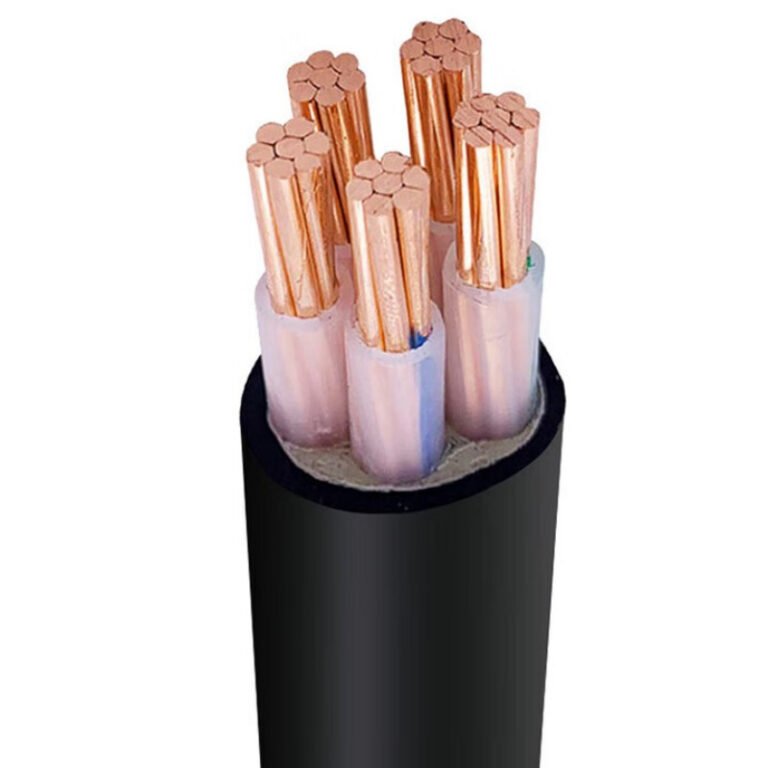
A cable, per IEC 60228 and related standards, is an assembly of one or more insulated conductors arranged to carry current or signals between two points — with a sheath, screen, armor, or some combination of protective layers around them. The cable itself has no built-in means of detachable connection. Left alone on a bench, it can’t connect to anything. That sounds obvious, but it matters in specification documents.
Conductor sizes span an enormous range: 1.5 mm² for a basic lighting circuit up to 630 mm² or larger for high-voltage transmission runs. Insulation material determines the continuous temperature rating — PVC-insulated cables are typically rated 70°C, XLPE pushes that to 90°C, and specialized cables for furnace duty or petrochemical environments can be rated up to 250°C. Which material you need depends on the installation environment, load profile, and ambient temperature, not just the voltage class.
The Power Cord: A System, Not a Synonym
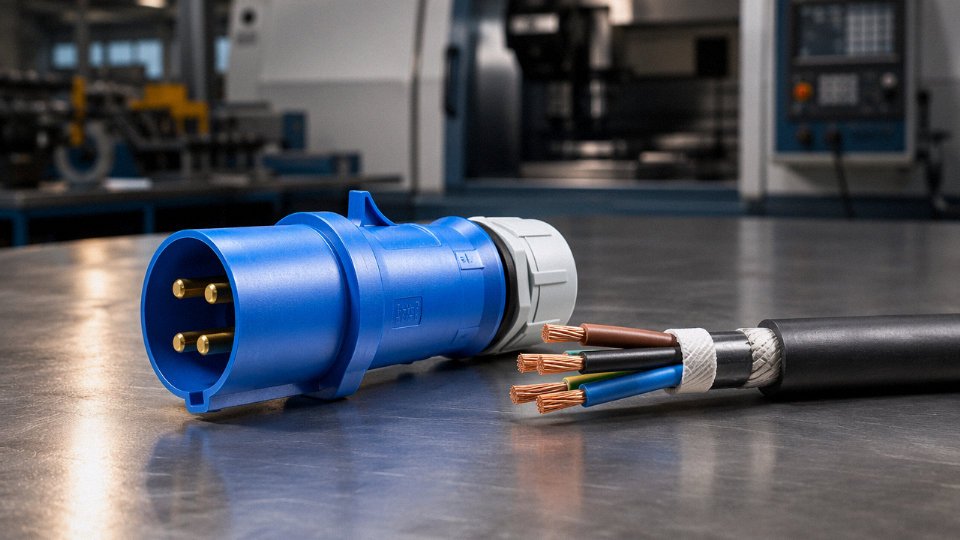
This is where procurement documents get muddiest. A power cord — or cable assembly — is a factory-terminated product: a length of flexible cable with a molded or attached plug at one end (or both). It is neither a plug nor a cable by itself. It is a system. Calling it simply a “cable” on a purchase order creates ambiguity; calling it a “plug” is just wrong. When Jinda’s technical support team processes cross-border orders, this distinction comes up constantly, especially from buyers in markets where the same product gets three different names depending on who’s writing the datasheet.
Getting the Vocabulary Right in International Procurement
A few related terms that cause consistent confusion:
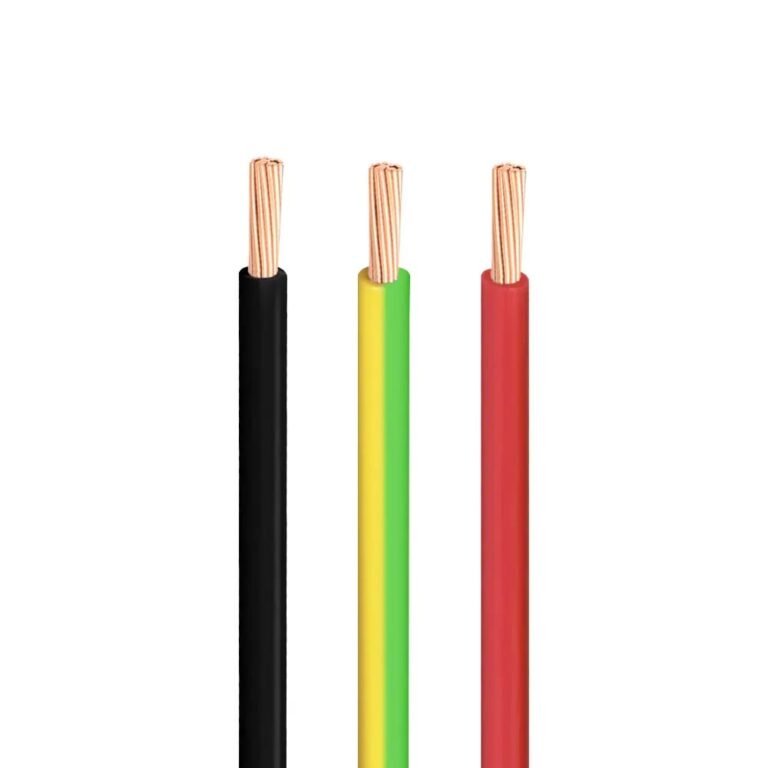
- Wire — a single conductor, typically unsheathed or with only primary insulation. Not a cable.
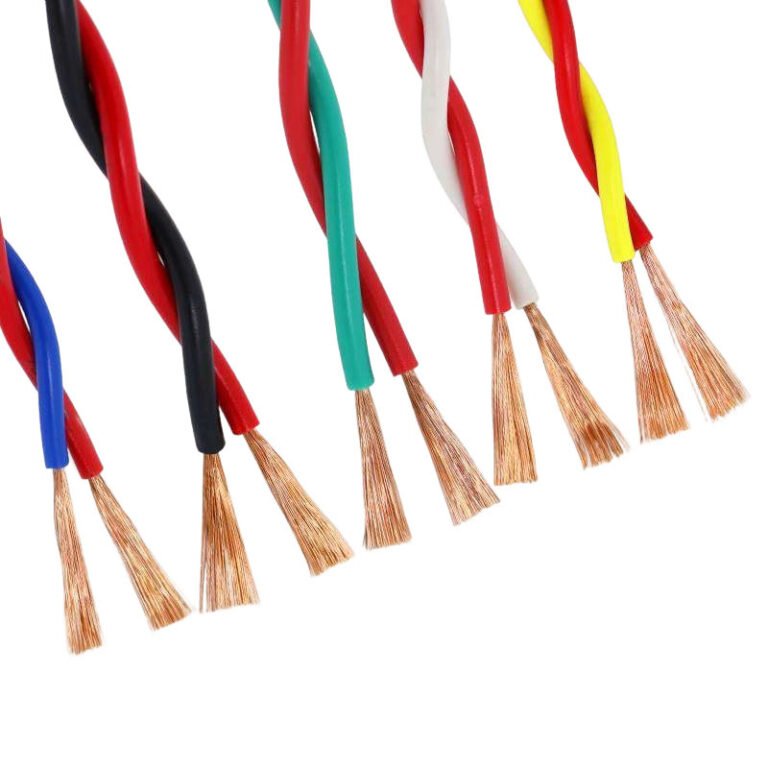
- Cord — flexible, generally lighter-duty, often used for appliance connections. Technically a subset of cable construction, but the term implies flexibility and portability rather than fixed installation.
- Harness — a bundled assembly of multiple cables or wires, usually with branch points, typically custom-routed for a specific machine or vehicle. Not interchangeable with “cable” on a BOM.
- Lead — British English shorthand for a short cable assembly, often already terminated. An American engineer reading “mains lead” on a UK drawing should understand it means a power cord, not a bare conductor.
IEC 60320 covers appliance coupler voltages up to 250 V AC across standardized configurations from C1 through C24True
IEC 60320 defines sheet coupler types C1–C24 for voltages up to 250 V AC and specifies current ratings, temperature classes, and mechanical requirements for each configuration, making it the primary international reference for appliance plug and inlet specifications.
Comparison at a Glance
| Term | Primary Function | Key Physical Features | Detachability | Governing Standard | Typical Voltage / Current Range |
|---|---|---|---|---|---|
| Plug | Make/break a circuit without tools | Pins or blades in molded insulating body | Yes — by design | IEC 60320, BS 1363, CEE 7, NEMA series | Up to 250 V AC; 0.2 A–250 A depending on coupler type |
| Cable | Carry current or signals between fixed points | Insulated conductors, sheath, optional screen or armor | No inherent detachable connection | IEC 60228, IEC 60502, IEC 60227 | 300 V up to 500 kV+; conductor from 1.5 mm² to 630 mm²+ |
| Power Cord / Assembly | Deliver power from outlet to equipment | Cable body with factory-molded plug at one or both ends | Yes — via the plug component | IEC 60320 (coupler end), IEC 60227 (cord) | Typically 125 V–250 V AC; 6 A–16 A for most appliance grades |
Using these definitions consistently in datasheets, purchase orders, and RFQs isn’t pedantry — it’s the difference between receiving what you specified and spending three weeks resolving a shipment dispute over whether “cable” meant a bare conductor reel or a terminated assembly.
Anatomy of a Plug: Pins, Housing, Contacts, and Safety Features
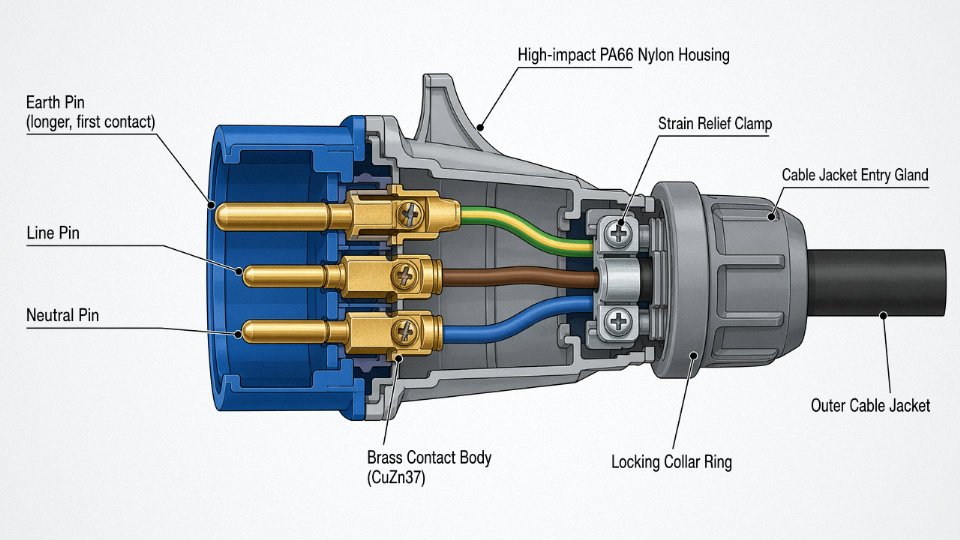
Start with the pins, because that’s where most procurement arguments begin. A standard plug has at minimum two current-carrying conductors — live and neutral — plus an earth (ground) pin on any properly grounded type. In IEC 60309 industrial plugs (the blue and red CEE types you’ll see on every serious plant floor), the earth pin is dimensionally longer than the line pins. That’s deliberate: it makes first contact on insertion and last contact on withdrawal, so the equipment chassis is grounded before line voltage arrives. It’s a small geometric decision with real consequences — skip it in a knockoff plug and you’ve quietly removed a layer of fault protection.
Pin and blade material matters more than most specs acknowledge. The base alloy is almost universally brass — typically something close to CuZn37, chosen for its machinability and decent conductivity. Raw brass oxidizes, though, so the contact surface gets plated. Tin plating is the workhorse option: inexpensive, reasonably corrosion-resistant, and adequate for most 50/60 Hz power applications. Nickel plating is harder and more durable in high-insertion-cycle environments, though nickel’s contact resistance runs slightly higher than tin. Silver or gold plating appears on signal connectors and data-rated coupler pins — gold especially, because it doesn’t form an oxide layer, which matters when you’re passing milliamp-level signals and can’t afford a few milliohms of oxidation resistance. For bulk power plugs, gold plating is overkill and adds cost without meaningful benefit. Know what you’re actually connecting before specifying the finish.
Housing Body and Insulation Material
The outer shell is structural and electrical insulation at the same time. High-impact nylon (PA66 with glass fill, typically) is common in industrial plugs — it handles knock-around workshop environments, tolerates moderate heat, and accepts the clamping torques that electricians actually apply in the field. Polycarbonate shows up in translucent or color-coded housings where visual inspection matters. Thermoset resins (Bakelite-era chemistry, still in use) appear in some legacy British plug designs because they’re dimensionally stable at temperature, even if they’re brittle. The trade-off: thermoset doesn’t flex before it fails, so impact damage is more catastrophic than the crack-and-survive behavior of nylon.
Strain Relief, Cord Grip, and Cable Gland
This is the component most often ignored during sourcing and most often responsible for field failures. A cord grip or strain-relief clamp holds the cable jacket so that tensile loads on the cord — someone yanking the plug by its cable, which everyone does regardless of what the manual says — don’t transfer to the conductor terminations inside. In IEC 60309 plugs, this is typically a plastic or metal clamp tightened by screws onto the outer jacket. Industrial versions often add a rubber boot or cable entry gland that seals the housing entry, which is what earns an IP44 or IP67 rating. Without a proper gland, moisture tracks along the cable jacket and into the live parts. In outdoor, marine, or washdown environments, that’s not a hypothetical — it’s a predictable failure path.
Safety Features by Standard
Different markets demand different mechanical safety layers. BS 1363 (UK) plugs incorporate shuttered live and neutral sockets in the female counterpart, with the earth pin mechanically releasing the shutters — preventing a child from probing live contacts with a pin or coin. IEC 60309 plugs use a locking collar that rotates to secure the plug in the socket, preventing accidental disconnection under vibration or cable pull. NEMA types, widely used across North America, rely more on blade geometry and polarization than mechanical locking. AS/NZS 3112 (Australia and New Zealand) uses angled flat blades with a shrouded active pin design.
IEC 60309 industrial plugs require the earth pin to make contact before the line pins during insertionTrue
IEC 60309 specifies that the earth contact pin is dimensionally longer than the line and neutral pins, ensuring protective earth connection is established first on insertion and broken last on withdrawal — a fundamental safety requirement for industrial equipment.
For export cable assembly work, matching plug standard to destination country isn’t optional. A cable assembly built with the wrong termination — say, a NEMA 5-15 plug shipped to a UK site — is scrap from the moment it arrives. Jinda’s production process maps destination country against the applicable standard at the order stage precisely to avoid this, because a rework cycle across an ocean is expensive in ways that go beyond the price of a new plug.
Anatomy of a Power Cable: Conductors, Insulation, Screens, Armoring, and Sheaths
A cable is not a single material — it’s a engineered stack of layers, each doing a specific job. Pull apart a well-made medium-voltage cable and you’ll find five or six distinct zones, each selected for the environment the cable will actually live in. Getting any one of them wrong — wrong insulation grade, wrong armor type, wrong sheath compound — can mean premature failure in the field, sometimes within a single season.
The Conductor Core
Everything starts here. Conductor material is usually annealed copper (softer, more flexible than hard-drawn, lower resistivity) or aluminum for larger distribution cables where weight and cost per meter dominate the decision. For marine and offshore work, tinned copper is the standard choice — the tin coating resists sulfur-laden atmospheres and salt fog that would corrode bare copper contacts over time.
Stranding class, defined by IEC 60228, is where a lot of specifiers make quiet mistakes. Class 1 is solid — fine for fixed wiring in conduit or direct burial, but route it through a cable tray that vibrates and you’ll develop work-hardening cracks within a year or two. Class 2 is stranded, still for fixed installations. Class 5 and 6 are fine-wire constructions, built for flexible cords, trailing cables, and anything that moves repeatedly. The conductor cross-section range is wide: plug and appliance leads sit in the 0.5–6 mm² range, while power distribution cables run from 1.5 mm² up to 630 mm² or larger for high-current transmission. The right class matters as much as the right cross-section.
Insulation: The Electrical Barrier
PVC insulation is the workhorse — rated to 70°C continuous, low cost, easy to process, and adequate for the vast majority of building wiring and light industrial applications. XLPE (cross-linked polyethylene) steps up to 90°C continuous service and has genuinely better dielectric properties at medium and high voltage; most modern 6–35 kV cables use it for that reason. EPR (ethylene propylene rubber) is the flexible alternative when the cable needs to stay pliable at sub-zero temperatures — common in cold-store facilities and Arctic-rated installations.
In confined public spaces — tunnels, subway cars, ships, hospitals — the insulation choice shifts entirely toward LSZH (low smoke zero halogen). The logic is blunt: in a fire, PVC releases hydrochloric acid gas. LSZH compounds don’t. For furnace approach wiring or heating element leads where the cable sees sustained heat above 150°C, silicone rubber is the practical answer, with ratings typically in the 180–200°C range depending on compound formulation.
Screens, Tape, and Bedding
Control and instrumentation cables almost always include a screen layer. Aluminum foil/polyester tape over the core bundle gives solid EMI shielding with minimal added diameter — standard on most multi-core instrumentation cables. Copper braid screens handle higher-frequency noise better and survive more flex cycles before degrading. Helical copper tape screens sit between those options in cost and performance. The bedding layer beneath the armor — usually extruded PVC or a wrapped tape — protects the insulated cores from armor wire abrasion. It’s unglamorous, but cut through a bedding layer during installation and the armor will eventually damage the cores underneath.
Armoring: Mechanical Protection
Steel wire armoring (SWA) is the default for direct-burial power cables — the round wires distribute ground stress and resist rodent damage and incidental dig-in. Steel tape armoring (STA) costs less and works fine in ducts or indoor cable trays where there’s no crush load. For single-core cables, aluminum wire armoring (AWA) replaces steel specifically to avoid eddy-current losses; a steel armor on a single-core AC cable acts like a shorted turn on a transformer — it gets warm and wastes real energy. Wire braid armoring suits flexible trailing cables where the assembly needs to bend continuously without the armor cracking.
Aluminum wire armoring on single-core AC cables prevents significant eddy-current losses that would occur with steel wire armoringTrue
Steel is ferromagnetic; on a single-core cable carrying AC, the magnetic flux induces circulating currents in a continuous steel armor layer, causing resistive heating and measurable energy loss. Aluminum is non-ferromagnetic and does not exhibit this effect, which is why IEC and industry practice specify AWA for single-core power cables.
Outer Sheath: Environment Matching
The outer sheath is the cable’s skin against the world, and material selection should track the actual installation environment rather than defaulting to whatever is cheapest. General-purpose PVC covers most indoor and moderate outdoor use. Polyurethane (PUR) is tougher against abrasion and petroleum-based oils — the right call for machine tool trailing cables and drag-chain applications. Chloroprene rubber (CR, commonly called Neoprene) handles UV exposure, ozone, and marine atmospheres without cracking the way PVC does after a few years in the sun. HDPE sheaths are typical for direct-burial medium-voltage cables where UV resistance and moisture impermeability over decades matter more than flexibility. TPE and TPU compounds are specified for food-processing and chemical plant environments — they resist washdown chemicals and, depending on the formulation, meet food-contact regulatory requirements.
Matching sheath to service environment is not optional. A PVC-sheathed cable in a chemical splash zone typically shows sheath crazing within 12–18 months; the same route with a PUR or TPU sheath runs a decade without visible degradation. The layers compound on each other — getting conductor class, insulation grade, and sheath compound right simultaneously is what separates a cable specification from a purchase order that will fail in service.
Functional Roles Compared: Where Plugs End and Cables Begin in a Circuit
Trace the path of current in any industrial installation and the division of labor becomes obvious — but only if you know what to look for.
From the distribution panel, a fixed power cable runs through conduit or along a cable tray to a junction box or terminal block. That cable carries current continuously, under load, often for decades without anyone touching it. From the junction box, a flexible trailing or drag cable runs out to the machine or equipment. Then, at the equipment interface, a plug mates with a socket — and that is precisely where the cable’s job ends and the plug’s job begins. The plug is not just the last few centimeters of cable. It is a mechanically and electrically distinct component, engineered to do something a cable fundamentally cannot: make and break a live circuit repeatedly, without tools, safely.
The Detachability Principle
A cable’s design premise is continuity. Current flows along its length, and the cable is expected to stay in place — clamped, fixed, or laid — while that happens. Every layer of its construction (insulation, screen, armor, sheath) addresses threats that occur along a route: mechanical impact, moisture ingress, thermal cycling, electromagnetic interference.
A plug’s design premise is the opposite. It exists to be engaged and disengaged. The contacts are engineered for stable, low-resistance mating under repeated insertion cycles — IEC 60320 industrial couplers are typically rated for anywhere from 5,000 to 10,000 mating cycles depending on the series, though actual service life depends heavily on whether the environment is clean or contaminated. The housing geometry controls alignment force and protects against accidental disconnection. The pin metallurgy (usually brass, often silver- or nickel-plated) is chosen specifically to survive the arc energy generated at make and break moments, something a cable conductor inside its insulation never has to deal with.
Get this boundary wrong and you get problems fast. I’ve seen sites where flexible cable was run directly into a terminal block with no proper plug/socket interface because someone thought it would save cost — the result was that maintenance crews were disconnecting cables under load, burning terminals, and eventually needing a complete retermination of the board.
Mechanical Stress Is Not the Same Everywhere
Cables along a route absorb tensile load, bending radius cycles, thermal expansion, and in some cases vibration or torsion. A trailing cable on an automated line might flex millions of times over its service life, which is why PUR-sheathed constructions are used rather than standard PVC — the sheath survives fatigue; ordinary PVC cracks and flakes.
Plugs absorb a completely different mechanical profile: insertion and withdrawal forces, lateral rocking from cable weight, and sometimes the shock of being dropped or dragged. A robust industrial plug housing — glass-fiber reinforced nylon is common — is sized around grip ergonomics and contact retention, not bending cycles.
Three Scenarios That Illustrate the Boundary
Offshore wind inter-array. Armored submarine cable runs along the seabed between turbine foundations. At the turbine base junction box, the cable terminates — and an IEC 60309 industrial plug-and-socket interface handles the transition to equipment wiring. The cable is never disconnected on site; the plug interface absorbs the occasional maintenance disconnection.
Automated factory line. A PUR-sheathed trailing cable, sized for continuous flexing along the drag chain, terminates in a HARTING Han-series industrial connector at the machine cabinet. The cable handles millions of flex cycles; the connector handles hundreds of mating cycles per year during line reconfiguration.
Building riser. LSZH fire-resistant cables run vertically on cable trays from basement switchgear to floor distribution boards. There are no plugs anywhere in the riser. Termination is made directly into the board’s busbar or terminal. The fixed cable does its job; portable equipment plugs in downstream, at the outlet.
When a Cable Assembly Bridges Both
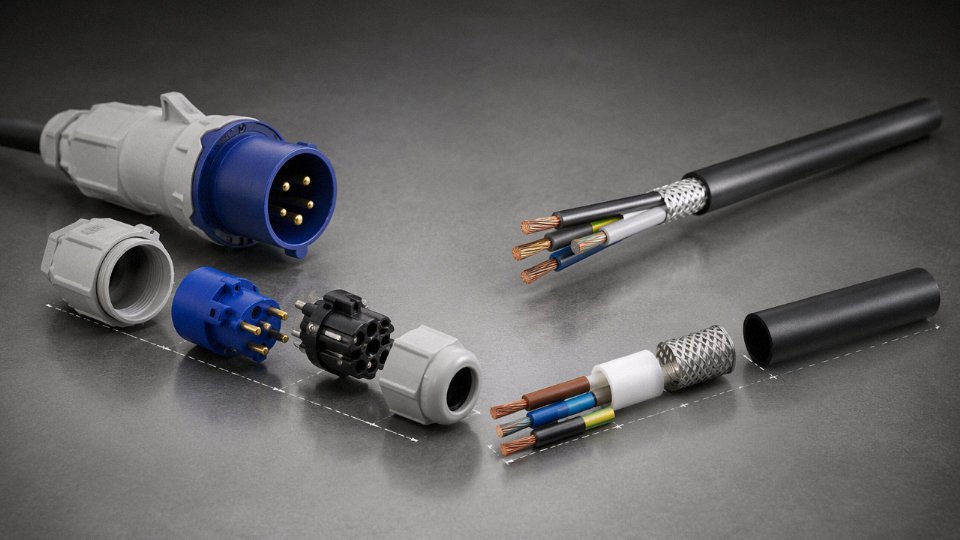
Pre-terminated assemblies — a cable body factory-crimped or overmolded to a plug at one or both ends — combine both components into a single warranted unit. This is common in OEM harness supply, where Jinda produces custom assemblies to a customer’s drawing. The critical procurement detail here: you must specify the cable standard and the connector standard separately, because the assembly is only as good as whichever component is the weakest link. A cable rated to 90°C continuous (XLPE insulation) mated to a connector rated to 70°C is a 70°C assembly, full stop.
In a cable assembly, the assembly's temperature and current rating is limited by the lower-rated component — cable or connector, whichever is more restrictive.True
This is standard practice in IEC and UL assembly rating methodology. The finished assembly adopts the most restrictive rating of any individual component in the current path, including connectors, terminations, and cable insulation.
Specifying one without the other is one of the more common mistakes in procurement documentation, and it creates real warranty disputes once product is in the field.
Key Standards and Certifications Governing Plugs and Cables — and How to Read a Specification Sheet
Standards aren’t bureaucratic overhead. They’re the shared language that keeps a transformer substation in Lagos, a marine installation in Rotterdam, and an industrial plant in Guangzhou from burning down because someone shipped the wrong product. For procurement engineers working across borders, knowing which standard governs which product — and how to verify compliance on a datasheet — is genuinely one of the highest-value skills in the job.
Cable Standards: What They Cover and Why They Differ
IEC 60502 is the workhorse for medium-voltage power cables, covering 1 kV through 30 kV in two parts. Part 1 handles 1–3 kV, Part 2 goes up to 30 kV. If you’re specifying an XLPE armored cable for a substation feeder, this is the baseline — it defines conductor resistance, insulation thickness, screen design, and the type tests your cable must pass. IEC 60227 and IEC 60245 cover the lower end: PVC-insulated cables rated up to 450/750 V and rubber-insulated flexible cables respectively. These are the standards behind most of the building wire and flexible cord you see in daily use.
For anything going onto a vessel, IEC 60092 applies — it governs marine cable construction and fire performance, and the requirements are materially stricter than land cables because escape routes matter more on a ship. Flame propagation is addressed separately by IEC 60332, which has multiple parts: single-cable tests (60332-1 and -2) and the more demanding vertical bundle test (60332-3), which is what large cable bunches in cable trays need to pass. In Europe, EN 50575 and the Construction Products Regulation add another layer, classifying cables from Aca (best fire performance) down to Fca. If you’re supplying cables for a public building in Germany or France, your CPR declaration of performance isn’t optional.
North American projects require UL 44 (thermoset-insulated wire) or UL 83 (thermoplastic-insulated wire) as starting points, and the NEC installation requirements layer on top of those. China’s domestic GB/T standards — such as GB/T 12706 for medium-voltage cables — align broadly with IEC but have specific differences in test sequences and dimensional tolerances that matter when submitting to local inspection authorities. Jinda produces cables certified to both GB and IEC, which matters practically for projects that start in China and ship to Southeast Asia or the Middle East, where buyers often want both documentation sets.
Plug and Connector Standards
IEC 60884 governs household plugs and socket-outlets up to 250 V / 16 A. IEC 60309 covers the industrial colored-coded CEE plugs (the ones with the keyway notch that sets voltage and frequency — blue for 230 V 50 Hz, red for 400 V 3-phase), rated up to 125 A. IEC 60320 defines appliance couplers — the C13/C14 and C19/C20 combinations most engineers know from server rooms and lab equipment. For North America, UL 498 is the relevant standard for attachment plugs and receptacles. BS 1363 governs UK 13 A plugs with their distinctive three-pin rectangular layout and mandatory fuse. Weatherproof enclosures use IP ratings per IEC 60529 — a plug rated IP67 is dust-tight and survives temporary immersion, whereas IP44 only handles splash protection.
Reading a Cable Datasheet: What Actually Matters
Take a realistic example: a 3×95 mm² XLPE/SWA/PVC cable rated 0.6/1 kV. The voltage designation means 0.6 kV phase-to-earth, 1 kV phase-to-phase — not the same number, and specifying the wrong one for a 1 kV system is a real procurement error that shows up more often than it should. The conductor cross-section (95 mm²) determines current-carrying capacity, which depends on installation method — in free air it carries more than in a buried duct, and the cable standard will reference installation tables accordingly. “SWA” means steel wire armoring, the screen layer that provides mechanical protection and fault current return path. XLPE insulation is rated 90 °C continuous versus 70 °C for PVC, which directly affects ampacity calculations. Stranding class (Class 2 for fixed installation, Class 5 for flexible use) affects both flexibility and termination behavior.
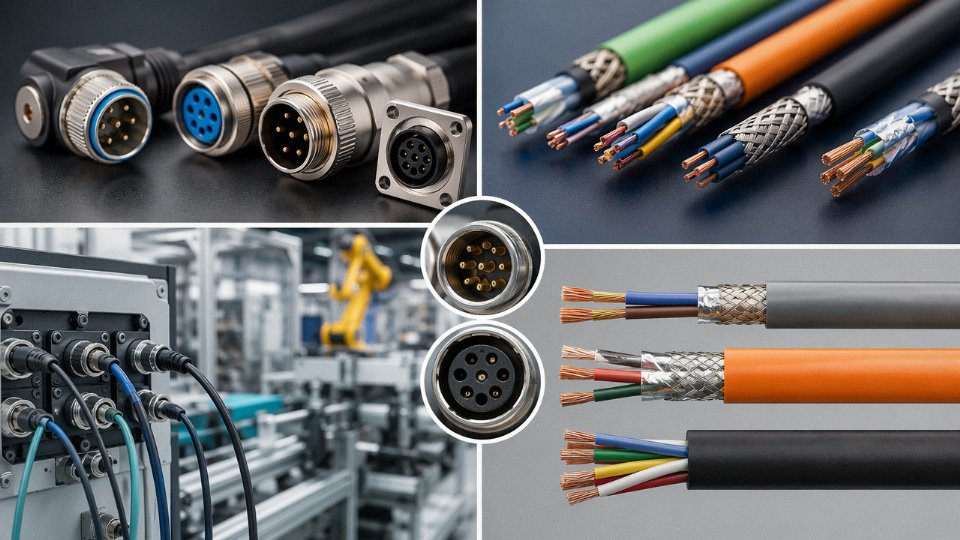
For plug specifications, check the current rating, rated voltage, number of poles plus earth (a “3P+E” plug is three-phase with ground), IP class, and pin dimensions. Pin dimensions are particularly easy to overlook — a C14 inlet accepts a C13 connector, not a C15, even though they look nearly identical. Housing flammability matters: UL 94 V-0 means the housing self-extinguishes within 10 seconds after flame removal, which is the minimum you should accept for any industrial or enclosure application. Insertion/withdrawal cycle ratings (typically 5,000–10,000 cycles for quality industrial connectors, fewer for appliance couplers) tell you whether a plug is designed for occasional connection or repeated daily use.
Compliance Documentation for Export Orders
A specification sheet without supporting documentation is just paper. For Jinda export orders, the compliance package typically includes factory test reports for each production batch, third-party type test certificates (CCC for China, KEMA or BASEC for Europe, DNV or BV for marine applications), CE or UKCA declarations of conformity where required, country-of-origin documentation for customs and trade compliance, and material composition declarations covering REACH and RoHS restrictions.
Jinda holds dual certification for both GB/T and IEC standards across its power cable product lines, enabling single-source supply for projects requiring both domestic Chinese compliance documentation and internationally recognized test reports.True
Manufacturers operating multiple production bases in China serving export markets routinely maintain dual GB/T and IEC certification; Jinda's stated certification capability is consistent with their production scale and international customer base.
One practical note: ask for the test report issue date. Type test certificates older than five years, or issued against a superseded edition of a standard, can complicate project acceptance — especially on infrastructure projects where the engineer of record will audit the documentation. Getting this right at the purchase order stage is faster than chasing updated certificates during installation.
Selection Criteria for Cables and Plugs in Industrial and Commercial Projects
The instinct on most projects is to specify the cable first, then figure out the plug afterward. In practice, that sequence causes problems — you end up with a 32 A IEC 60309 connector ordered against a cable whose outer diameter sits outside the cord-grip range, or a fine-stranded PUR flex terminated into a plug terminal designed for rigid conductors. The better approach treats cable and plug selection as two parallel tracks that converge at the interface check, not as a neat chain where one follows the other.
Selecting the Cable: Load, Route, and Environment Drive Everything
Start with current-carrying capacity. Conductor cross-section is sized against installation method per IEC 60364-5-52 — a 16 mm² cable clipped directly to a surface carries a meaningfully different continuous current than the same cable bundled in a conduit with four other circuits. Get the grouping factor wrong and you’re running hot before the first year is out.
Voltage drop matters on long runs, especially in factories where distribution boards are often 80–150 m from the load. On a 230 V single-phase circuit, even a conductor that passes the ampacity check can produce a 6–8% drop at full load if the run is long enough — that’s motor thermal stress and nuisance VFD trips waiting to happen.
Short-circuit withstand is often skipped at the specification stage. It shouldn’t be. The conductor cross-section must survive the fault current for the disconnection time of the upstream protective device; this is a calculation, not a guess.
Installation environment determines construction. Direct burial needs steel wire armoring (SWA) plus an HDPE outer sheath if soil chemistry is aggressive — bare PVC degrades faster than most people expect in contaminated ground. Cable tray in a clean indoor plant room can run unarmored XLPE quite comfortably, and the weight saving on a long tray run is real. Continuous flexing — robot arms, trailing cables on cranes, retractable reels — demands a PUR outer sheath and a fine-stranded conductor (typically Class 5 or Class 6 per IEC 60228); ordinary rigid-stranded cable work-hardens and fractures at the flex point within months.
Fire performance class under EN 50575 is now a procurement specification item, not an afterthought. Eca is the baseline for most industrial cable management. B2ca and above — halogen-free, low smoke, flame-retardant — gets specified in public buildings, tunnels, offshore platforms, and anywhere the evacuation scenario matters.
Selecting the Plug or Connector: Frequency, Environment, and Interface
IEC 60309 industrial plugs cover roughly 16 A through 125 A, across 2P, 2P+E, 3P+E, and 3P+N+E pole configurations, with color-coding for voltage and frequency. That color system is not decorative — a 230 V blue plug physically cannot mate with a 400 V red socket, which is exactly the point.
IP rating selection depends on where the connection actually lives during use, not where it’s installed at commissioning. IP44 is a reasonable indoor industrial minimum. Wash-down areas, outdoor temporary power on construction sites, food processing — those need IP67 as a floor. Submersible pump connections need IP68, and the depth and duration rating on the IP68 declaration matters; not all IP68 connectors are equal.
Insertion cycle life is the spec that separates a maintenance-friendly connector from a recurring cost center. A fixed distribution panel connection might see 20 insertions over its service life. A quick-disconnect on a machine tool that gets reconfigured seasonally could hit 500–2,000 cycles. A test fixture or rental equipment connector easily reaches 5,000–10,000 cycles — at that point, the contact plating specification and the housing latch mechanism become selection criteria, not background information.
| Application Type | Recommended Cable Type | Recommended Plug/Connector Type | Key Standard Reference | Special Requirement Note |
|---|---|---|---|---|
| Fixed power distribution | Rigid XLPE/SWA, Class 2 conductor | IEC 60309 IP44 industrial socket outlet | IEC 60364, EN 50575 | Fire class per building type |
| Flexible machine connection | PUR sheath, Class 5/6 fine-stranded | IEC 60309 IP44/IP67, locking type | IEC 60228, IEC 60309 | Cycle life ≥1,000 insertions |
| Outdoor temporary power | H07RN-F rubber, Class 5 | IEC 60309 IP67, 16–63 A | IEC 60309, EN 60529 | UV and cold-temperature rating |
| Marine / offshore | Halogen-free armored, mud-resistant sheath | IP66/IP67 marine-grade, BS EN 60309 | IEC 60092, NEK 606 | Vibration and salt-spray resistance |
| Data center PDU | Low-smoke halogen-free (LSZH), unarmored | IEC 60320 C13/C19 or locking C19 | IEC 60320, EN 50575 B2ca | High-density cord management |
| EV charging | UV-resistant flex, Class 5, XLPE/PUR | IEC 62196 Type 1 or Type 2 | IEC 62196, IEC 61851 | Mode 3 cable, temperature cycling |
The Interface Compatibility Check — Where Projects Actually Go Wrong
Three mismatches cause the majority of field assembly failures, and none of them show up until someone is holding a connector in one hand and a cut cable end in the other.
First: cable outer diameter versus cord-grip range. Most industrial plugs specify an acceptable cable diameter range — something like 10–14 mm or 18–25 mm. A cable spec that puts you at 15.2 mm OD, outside a grip rated to 14 mm, either won’t seal to IP rating or will crack the housing when clamped hard enough to hold. Check the cable’s actual OD under tolerance, not the nominal.
Second: conductor cross-section versus terminal lug size. A plug rated 32 A may accept 4 mm² to 6 mm² conductor; if your cable is 10 mm² because voltage drop drove the sizing, that terminal won’t close properly. This happens more often than it should on long-run circuits.
Third: stranding class versus terminal clamping mechanism. Spring-clamp terminals handle fine-stranded Class 5/6 conductors well. Screw-type terminals on fine-stranded conductors tend to shear individual strands over time, increasing contact resistance and generating heat at the termination. If the cable is a flex, confirm the plug terminal is rated for that stranding class — or use a ferrule, and confirm the ferrule fits the terminal cavity.
IEC 60309 color coding prevents voltage mismatch between plugs and sockets by making incompatible voltage ratings physically non-intermateable.True
IEC 60309 uses both color coding and keyed pin positioning (clock position) to ensure that plugs rated for different voltages and frequencies cannot be physically inserted into the wrong socket outlet, providing a passive safety barrier against voltage mismatch.
Common Mistakes in Specifying, Installing, and Procuring Plugs and Cables — and How to Avoid Them
Getting the definitions right is only half the battle. The expensive errors — the ones that cause site shutdowns, failed inspections, or premature equipment failures — happen at the specification and procurement stage, long before anyone touches a screwdriver.
Mistake 1: Confusing Cable Rating with Plug Rating in an Assembly
This one catches experienced engineers off guard. A cable rated for 63 A paired with a 32 A plug does not give you a 63 A assembly. The system rating is always governed by the weakest component — full stop. The plug becomes the bottleneck, and if nobody notices until commissioning, you are looking at a de-rated circuit, a rework job, or in the worst case, a plug body that runs hot under load and eventually fails.
Pre-terminated cable assemblies should carry a single, unified datasheet that shows matched ratings across every component: conductor cross-section, insulation rating, connector current rating, and contact material. If a supplier provides separate datasheets for cable and plug and leaves you to reconcile them yourself, that is a process gap worth questioning.
Mistake 2: Sizing Cable Cross-Section on Current Alone
A 2.5 mm² conductor will carry roughly 20 A without overheating on a short run. But run that same cable 100 meters and the voltage drop can easily exceed what your equipment tolerates — particularly with motor loads that are sensitive to supply voltage. The simplified check for single-phase circuits: V-drop = 2 × L × I × R / 1000, where L is the one-way run length in meters, I is the load current in amps, and R is the conductor resistance in milliohms per meter (for copper, roughly 7.4 mΩ/m at 2.5 mm²). On a 100-meter run at 20 A, you can expect a drop in the 6–8 V range — acceptable on 400 V, but marginal on 230 V and potentially outside spec for sensitive controls. Upsizing to 6 mm² typically cuts that figure by more than half.
Voltage-drop calculations are not complicated, but they do get skipped under project deadline pressure. It is worth building them into your standard cable schedule template so they cannot be omitted.
Jinda's technical team provides free voltage-drop calculations for project cable inquiries.True
This is a stated customer support service offered during order confirmation and project specification review.
Mistake 3: Wrong Plug Standard for the Destination Country
Ordering NEMA 5-15 terminated assemblies for a European industrial site, or specifying IEC 60309 blue 230 V single-phase connectors where the application requires red 400 V three-phase — these mistakes are more common than they should be, especially on fast-moving projects where a procurement agent is working from an incomplete BOM. The consequences range from mildly inconvenient (field replacement before commissioning) to genuinely dangerous (wrong voltage fed to equipment that cannot handle it). Country-standard verification should be a formal checkpoint during order confirmation, not an afterthought.
Mistake 4: Using Fixed-Wiring Cable on a Moving Machine Application
Specifying an XLPE/SWA armored cable — designed for static buried or conduit installation — on a cable track or robot arm is a predictable failure mode. Rigid conductors and inflexible sheaths develop work-hardening fatigue at flex points, sometimes within weeks of continuous cycling. Insulation cracks, conductors break internally without any visible external sign, and the fault only appears under load. Applications involving repetitive bending, drag chains, or robotic movement require Class 5 or Class 6 fine-stranded conductors and a sheath material like PUR that is engineered for mechanical abuse and millions of bending cycles — not just rated for the operating temperature.
Mistake 5: IP Rating Mismatch at the Plug-Cable Interface
An IP67-rated cable terminated into an IP44 plug gives you an IP44 system, regardless of what the cable label says. Outdoor and washdown installations need IP rating consistency across every component and every interface point: the cable body, the connector, the cable gland, and the junction. One underrated fitting erases the protection designed into everything else. This is a system-level discipline, not a component-level specification check.
Mistake 6: Assuming All “IEC Cables” Are Interchangeable Globally
GB/T 12706 and IEC 60502 cover similar power cable constructions, but their test protocols, insulation compound requirements, and acceptance criteria differ in ways that matter on certified projects. A cable tested and certified to GB/T 12706 alone may not satisfy the third-party inspection requirements on an export project that specifies IEC 60502 compliance — and vice versa. Dual-standard production, with testing documentation that satisfies both frameworks, is the practical solution for manufacturers supplying both domestic Chinese infrastructure projects and international export contracts. It is not a trivial capability to maintain; it requires parallel QC procedures and separate certification audit trails.
These mistakes share a common thread: they originate in incomplete information at the specification stage. The fix is equally consistent — a supplier who engages on the technical detail before the purchase order is placed, not after the components arrive on site.
Frequently Asked Questions About Plugs and Cables
Can I use any cable with any plug?
No — and this is where assembly failures usually start. The conductor cross-section must fall within the plug terminal’s rated clamping range; forcing a 10 mm² conductor into a terminal designed for 1.5–4 mm² creates a high-resistance joint that will overheat under load. The cable’s outer diameter has to fit the cord grip or cable gland on the plug body — too small and it slips, too large and you can’t close the housing without cracking it. Beyond the physical fit, the current ratings have to match (more on that below), and conductor class matters too: a rigid Class 1 conductor in a plug designed for flexible Class 5 stranding won’t clamp correctly and the individual wires tend to splay and bridge terminals. In practice, always check the plug manufacturer’s datasheet for acceptable conductor range and OD before cutting cable.
What is the difference between a plug and a connector?
A plug, strictly speaking, is the male half — it carries the protruding pins or blades that bear the live contacts. A connector is the broader family term covering both the plug and the socket or receptacle (the female half that accepts the pins), plus multi-pin industrial assemblies where male and female halves may not map neatly to “plug” and “socket.” The IEC 60320 series, for example, uses “appliance coupler” to describe the mated pair, not just one half. Regional usage drifts: in North American industrial practice you’ll often hear “connector” used loosely for anything detachable. For specification documents and purchase orders, spell out which half you mean — plug (male insert), socket/receptacle (female panel mount), or coupler (mated pair) — to avoid the wrong item arriving on site.
Does the cable or the plug determine the maximum current of an assembly?
The assembly rating is whatever the weaker component allows. A 95 mm² cable capable of carrying 250 A or more is completely wasted if it terminates in a 63 A IEC 60309 plug. The plug becomes the bottleneck, and nothing about upsizing the cable changes that. This comes up more often than you’d think on retrofit projects where someone upgrades the cable run but reuses the original plug. Specify both components to the same current class from the start.
What does 0.6/1 kV mean on a cable label?
The U₀/U notation describes two distinct voltage ratings. U₀ — 0.6 kV here — is the rated voltage from any conductor to earth. U — 1 kV — is the rated voltage between any two phase conductors. A cable marked 0.6/1 kV is appropriate for low-voltage distribution systems with line-to-line voltages up to 1,000 V, which covers the vast majority of LV industrial networks. If you’re sourcing for a 690 V three-phase system, 0.6/1 kV cable is the correct minimum; don’t accept 450/750 V rated cable as a substitute.
Can Jinda supply custom cable assemblies with specific plugs already fitted?
Yes. Jinda’s OEM assembly service covers customer-specified plug types, connector configurations, cable grades, cut lengths, and drum or reel labeling. Every assembly goes through 100% continuity testing and hi-pot testing before shipment, which matters if you’re receiving a large batch destined for distributed installation — finding a wiring fault after the assembly is inside a panel costs significantly more than catching it at the factory.
What is the difference between SWA and STA armoring?
SWA — steel wire armoring — uses helically applied round or flat steel wires. It provides both radial mechanical protection and real tensile strength, which is why it’s specified for direct burial and vertical riser applications where the cable may need to support its own weight over a drop of several meters. STA — steel tape armoring — uses overlapping steel tapes and protects against radial crush loads, but offers almost no tensile resistance. Use STA in horizontal cable tray or duct where mechanical crush is the concern and the cable is fully supported. Confusing the two on a vertical installation is a genuine failure risk; the tape construction will elongate and the inner cores can migrate under sustained tension.
How do I confirm a cable is genuine and not counterfeit?
Start with the drum label: cross-reference the reel number, cable type, and meter marks against the manufacturer’s certificate of conformance. Walk the length of the drum and check that the print legend on the cable jacket is consistent — counterfeit cable often has irregular or faded printing, or the legend spacing doesn’t match the stated cross-section. Request third-party test reports from an accredited lab, not just in-house certificates. Physically measure conductor diameter and insulation wall thickness; undersized conductors are the most common economy taken in counterfeit product. Jinda provides full batch traceability documentation and welcomes factory inspection visits for buyers placing significant orders.
Counterfeit cable with undersized conductors will pass a basic visual inspection but fail under load due to elevated resistance and heat buildup.True
Conductor resistance is inversely proportional to cross-sectional area; a conductor nominally rated 2.5 mm² but actually drawn to 2.0 mm² will run measurably hotter at rated current, accelerating insulation degradation and increasing fire risk — detectable by resistance measurement per IEC 60228, not by eye.
What minimum IP rating should I specify for outdoor industrial plug connections?
IP44 is the floor for covered outdoor use — protected from solid objects over 1 mm and from splashing water in any direction. For exposed outdoor installations, wash-down areas, or consistently humid environments, specify IP67 as standard; that rating covers temporary immersion to 1 m for up to 30 minutes, which handles most incidental water exposure. For below-grade vault applications or genuinely submersible installations, IP68 is required, and you’ll need to verify the specific depth and duration rating because IP68 is not a single uniform standard — manufacturers define their own depth/time parameters within it. IEC 60309 industrial plugs are available across all three classes; don’t accept a standard domestic IP2X fitting on an outdoor industrial circuit as a cost-saving measure.
Sourcing Plugs and Cables for International Projects: How Jinda Supports Global Procurement
Getting the technical specification right is only half the problem. The other half is finding a supplier who can actually deliver to that specification — consistently, across borders, with documentation that survives scrutiny at customs, on site, and during third-party commissioning audits. That is where manufacturing depth matters more than a product catalog.
Production Scale That Absorbs Real Project Volumes
Jinda operates five production bases across China, covering roughly 470,000 m² of manufacturing floor space with over 1,000 employees. In practice, that scale means the company runs simultaneous production of low-voltage power cables, medium-voltage distribution cables, marine-grade cables, fire-resistant and fire-alarm cables, instrumentation and control cables, and special industrial types including high-temperature and armored variants — without one product line starving capacity from another.
For a procurement manager placing a mixed bill-of-materials order — say, armored XLPE medium-voltage feeders alongside flexible screened instrumentation cables and plug-terminated equipment leads — that breadth under one roof eliminates the coordination overhead of managing three or four specialist vendors, each with their own lead times, documentation formats, and quality processes. Spot orders get handled. Long-term supply agreements with scheduled call-offs get handled. The infrastructure supports both without the supplier treating one as a nuisance.
Quality Systems Built Around the Tests That Actually Catch Problems
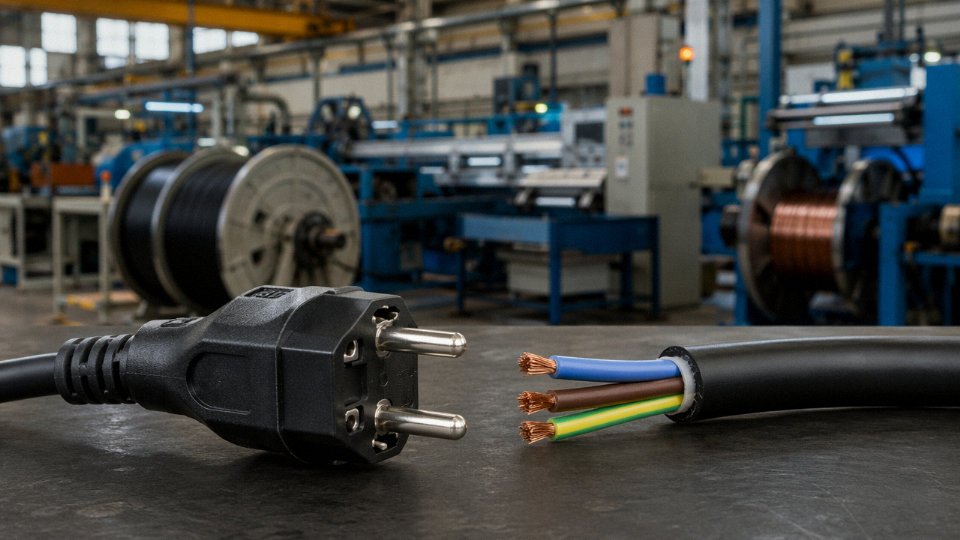
In-house testing at Jinda covers conductor resistance measurement, high-voltage (hi-pot) withstand testing, insulation resistance testing, and flame propagation testing aligned with IEC 60332 series requirements. Flexible cable assemblies — the kind that terminate in plugs and see mechanical stress in service — go through mechanical cycle testing to verify that repeated flexing does not degrade the conductor or the termination. That last test matters more than many buyers realize; a cable that passes initial hi-pot but fails after 10,000 flex cycles is a warranty problem waiting to happen on any application involving robot arms, retractable reels, or mobile equipment.
Jinda holds third-party certifications including CCC, CE, KEMA, DNV, and Bureau Veritas approvals across relevant product lines.True
These certifications are verifiable through the respective certification bodies and are standard requirements for the energy, marine, and infrastructure sectors Jinda serves internationally.
Third-party certification partnerships with CCC, CE, KEMA, DNV, and Bureau Veritas mean that when a project specification calls for independently verified compliance — and serious industrial projects almost always do — Jinda can supply certificates alongside product, not just a self-declaration.
Dual-Standard Production: One Supplier for Domestic and Export Projects
Production lines at Jinda are qualified for both GB/T Chinese national standards and IEC/EN international standards. That dual capability is genuinely useful for customers running parallel project streams: a contractor building a facility in China under local code while simultaneously supplying a sister plant in Southeast Asia or the Middle East under IEC requirements does not need two vendor qualifications, two sets of audit records, or two procurement relationships. One factory, one quality agreement, two standards. It keeps the approved vendor list manageable.
Procurement Support That Reduces RFQ Turnaround Time
Jinda’s international sales process includes free technical review of incoming project RFQs, voltage-drop and conductor-sizing calculation support, and verification of country-of-destination plug standards for cable assembly orders — useful when a project spans multiple destination countries with differing socket standards. Export documentation covers REACH and RoHS compliance declarations, country-of-origin certificates, and test reports in formats recognized by European, Middle Eastern, and Southeast Asian import authorities.
Lead-time planning for large-volume orders is handled upfront, not discovered mid-production. That is a small process detail that prevents the familiar situation where a contractor commits to a site delivery date before confirming the cable manufacturer’s actual queue.
Products have reached customers across Southeast Asia, the Middle East, Africa, Europe, and the Americas, with sector references spanning energy generation, petrochemical plant, marine and offshore, civil infrastructure, and commercial building. Engineers and procurement managers with active cable or cable assembly requirements are welcome to contact Jinda’s international sales team for project-specific consultation and specification review.