Your breakers trip when the AC kicks on, your garage circuit won’t support a Level 2 EV charger, and the electrician who came out last month said the panel is “maxed out.” Now you’re staring down a quote that starts at $1,500 and climbs fast, and someone in your household is convinced you’ll need to gut the walls to make any of it work. That assumption — understandable, but usually wrong — is what drives people to either overspend on unnecessary rewiring or avoid the upgrade entirely and live with chronic nuisance trips and real fire risk.
In most houses, yes — you can upgrade the electrical panel without rewiring. The panel and the wiring are separate systems. A service upgrade replaces the main panel, meter base, and service entrance conductors; your branch circuit wiring stays in the walls untouched, as long as it passes inspection. Most 1980s-and-newer homes can move from a 100A to a 200A or even 400A service panel in one to two days without opening a single wall cavity.
What complicates the picture is everything that happens around the panel swap — permit requirements, utility coordination, and the NEC 2023 mandates for AFCI and GFCI protection that kick in the moment a licensed electrician pulls that permit. Whether your existing wiring stays completely invisible during the project, or whether an inspector flags something that pulls you toward partial remediation, depends heavily on the age of the house, what’s already been modified, and which jurisdiction you’re in. That’s the part worth understanding before you call anyone.
How an Electrical Panel Actually Works and What Upgrading It Changes
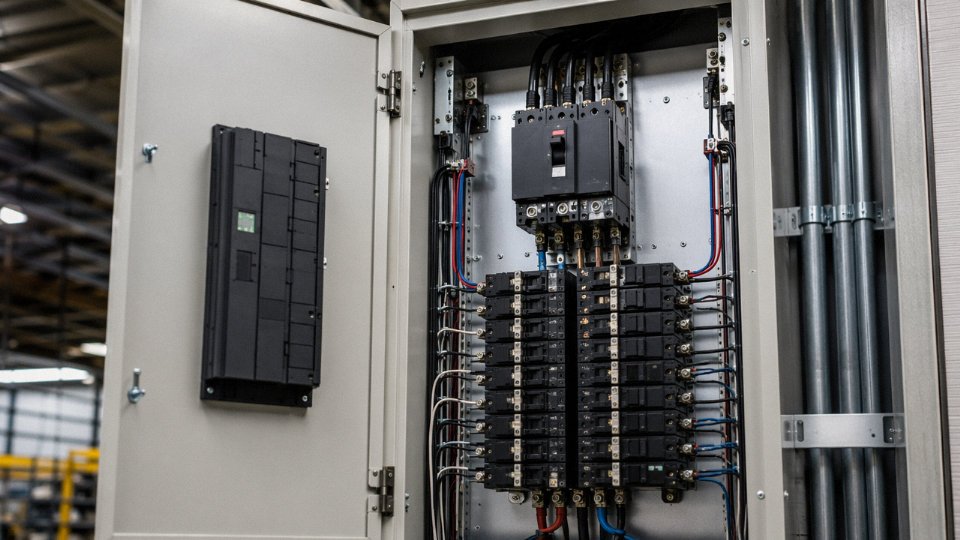
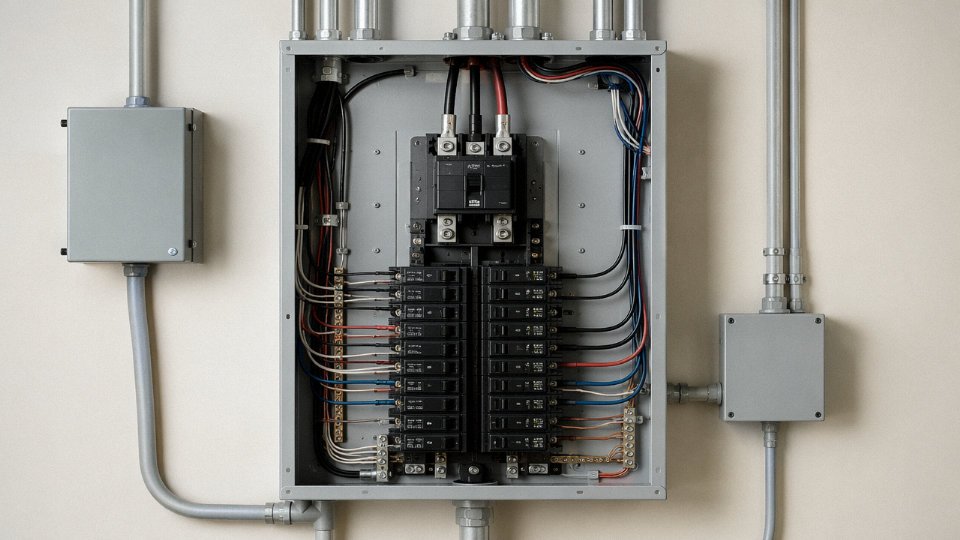
The service panel — most people call it the breaker box — is fundamentally a distribution hub. Power arrives from the utility at high current through the service entrance conductors, passes through the main breaker, splits across two hot bus bars, and feeds out to individual circuit breakers. Each breaker taps one or both bus bars to supply 120V or 240V to a branch circuit. The neutral bar collects the return current from every circuit, and the grounding bar connects all the equipment grounds back to earth. That’s the whole system in one sentence, more or less.
The main breaker does two things: it’s the master disconnect, and its amperage rating is the hard ceiling on how much current the entire panel can deliver simultaneously. A 100A main breaker means the utility’s service entrance conductors — the wires running from your meter into the top of the panel — are typically 2-gauge aluminum or 4-gauge copper, sized for roughly 100 amperes continuous load. When you upgrade to 200A service, the electrician replaces those service entrance conductors with larger conductors (usually 2/0 or 4/0 aluminum, depending on run length and local utility specs), installs a new panel with a 200A main breaker, and coordinates with the utility to upgrade the meter socket and service drop. The physical conductor size change at the service entrance is the actual upgrade. Everything else downstream stays the same.
And that’s the point most homeowners miss entirely.
Branch-Circuit Wiring Is a Completely Separate System
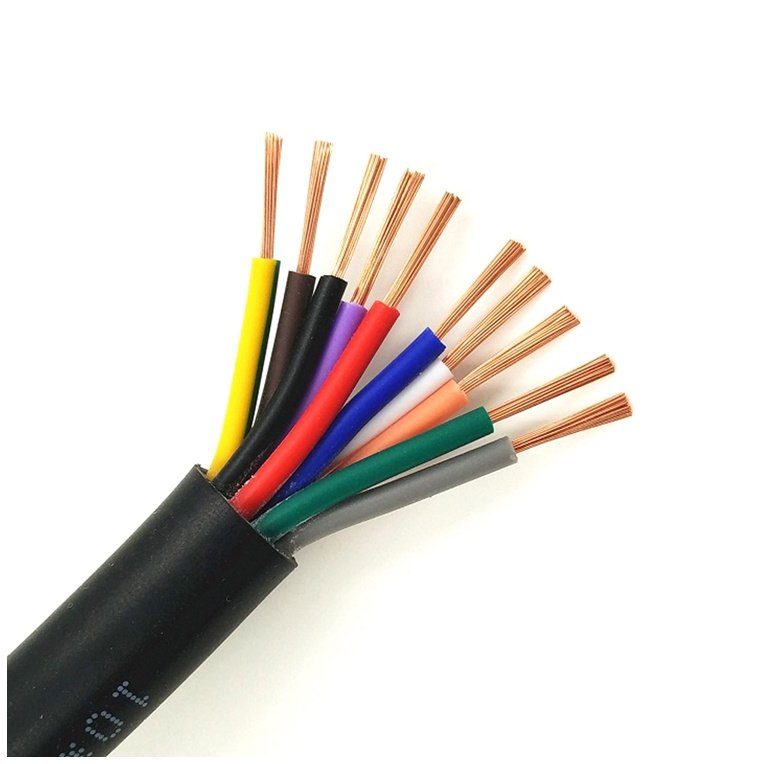
The cables running inside your walls — the 14-gauge or 12-gauge Romex feeding your outlets, switches, and light fixtures — are not part of the panel. They connect to the load side of individual breakers, and a panel swap doesn’t touch them. A new 200A panel installed on top of forty-year-old wiring is still distributing power through forty-year-old wiring. The panel upgrade changes your capacity; it does not change your infrastructure.
This distinction matters operationally. If the old wiring has aluminum branch circuits (common in homes built between roughly 1965 and 1973), backstabbed receptacles, or deteriorated insulation, none of that is remediated by swapping the panel. You’ve just given more headroom to a potentially compromised distribution network.
Why Modern Loads Are Forcing the Upgrade Conversation
Run through actual numbers and it becomes obvious why 100A panels are getting squeezed.
| Appliance / Load | Typical Draw (Amps at 240V or as noted) | Notes |
|---|---|---|
| Central A/C (3-ton) | 15–20A | Varies heavily by SEER rating and refrigerant type |
| Electric range / oven | 40–50A | Induction cooktops often at the high end |
| Heat pump HVAC | 20–40A | Depends on tonnage and compressor type |
| Level 2 EV charger | 32–48A | 48A is a 60A circuit; increasingly common |
| Electric water heater | 18–25A | Standard resistance element |
| Dryer | 22–30A | Heat pump dryers run closer to 15A |
| Refrigerator, lighting, misc | 20–30A combined | Rough household baseline |
Add a modest scenario — central A/C, an EV charger, electric range, and a heat pump — and you’re already bumping against 150A before accounting for anything else running simultaneously. NEC Article 220 load calculation formalizes this: a licensed electrician works through calculated demand factors, not just raw connected loads, but in practice a home with that appliance mix will almost always justify moving to 200A, and homes going all-electric with two EVs are increasingly spec’d at 400A from the start.
A 200A panel upgrade replaces the service entrance conductors and main breaker but leaves all branch-circuit wiring inside the walls untouched.True
Panel upgrades address the service entrance — the conductors between the utility meter and the main breaker — along with the panel enclosure and main breaker itself. Branch-circuit wiring, which runs from individual breakers through walls to outlets and fixtures, is a separate system and is not replaced during a standard panel swap.
The NEC 2023 Wrinkle Worth Understanding
One thing that catches people off guard: when you pull a permit for a panel upgrade, most jurisdictions adopting NEC 2023 require that newly installed or replaced circuits comply with current AFCI and GFCI requirements. That means if your electrician replaces a breaker feeding a bedroom circuit, that circuit now needs AFCI protection. It doesn’t mean your existing wiring gets rewired — but it does mean the upgrade can trigger incremental protection upgrades on circuits that get touched during the work. Depending on the age and configuration of your panel, that can add meaningful labor and material cost beyond the base panel swap, usually somewhere in the range of $80–$200 per circuit affected, depending on breaker type and local labor rates.
Inspecting Your Existing Wiring Before Committing to a Panel-Only Upgrade
Before you pull a permit or call an electrician for quotes, spend an hour in your attic, basement, and utility spaces actually looking at what’s in the walls. A panel upgrade on a house with the wrong wiring generation isn’t just money wasted — it can result in a failed inspection, a mandatory stop-work order, or an insurance policy that gets cancelled mid-project. The audit takes maybe half a day and costs nothing except your time.
Reading the Wiring Generation by Visual Inspection
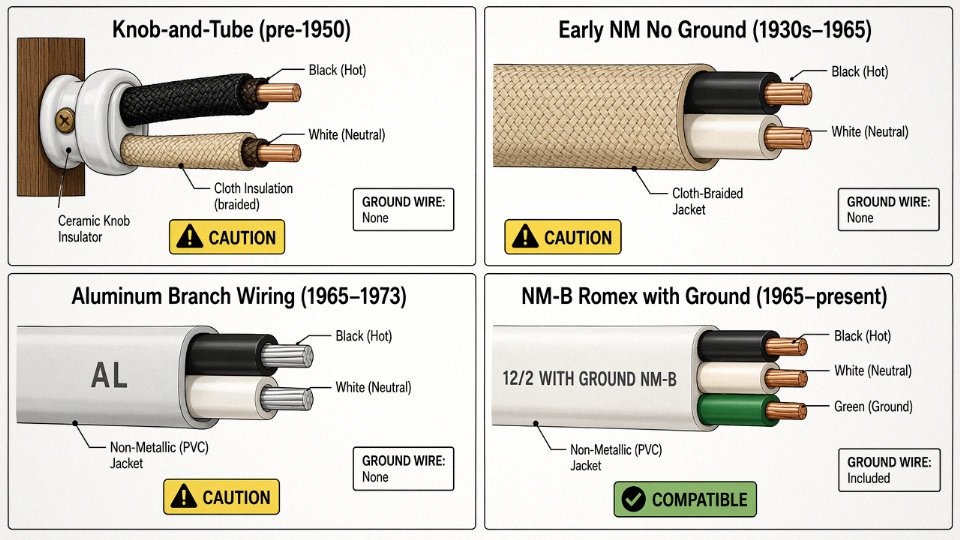
Modern NM-B cable (what most people call Romex) is the easy case. Look at the jacket: it will have a date code printed or stamped directly on the sheath, along with conductor count and gauge — something like “12/2 WITH GROUND NM-B” followed by a manufacturing year. If you’re seeing that, you’re generally in workable territory for a panel-only upgrade, assuming the wire gauge is appropriate for the circuits involved.
Cloth-wrapped wiring is the first warning sign. Woven cotton or rayon braid over individual conductors, sometimes with a rubber inner insulation that has hardened and cracked, is a reliable indicator of pre-1950s work. This is typically knob-and-tube (K&T), though some early armored cable used similar outer wrapping.
Aluminum branch-circuit wiring is sneaky because it looks almost like copper at a glance — until you check the jacket markings. “AL” or “CU-AL” stamped on the cable sheath tells you it’s aluminum or a combined run. The actual conductor color is also a giveaway: a distinctly silver-gray rather than the orange-red of copper. This was common in residential construction roughly between the mid-1960s and mid-1970s when copper prices spiked.
Why Knob-and-Tube Is a Hard Stop for Most Inspectors
K&T has three problems that compound each other badly. There’s no ground conductor — the system runs only two wires, hot and neutral, which means GFCI and AFCI protection cannot function as intended. The insulation, even where it looks intact, becomes brittle and can crack or flake when disturbed. And because the wires rely on free-air cooling, any insulation that was blown in over them over the decades has effectively been thermally stressing them for years.
A new electrical panel can be safely installed over existing knob-and-tube wiring without triggering a required rewire.False
Most AHJs will not approve a panel upgrade when the existing branch circuits are knob-and-tube. NEC 2023 requires AFCI and GFCI protection that cannot be reliably implemented on ungrounded K&T systems, and virtually all residential property insurers either exclude K&T or will cancel coverage once aware of it.
Beyond the technical issues, the insurance reality is blunt: most carriers will either refuse to write a new policy or drop an existing one when K&T is confirmed. A panel upgrade doesn’t change that equation at all.
Aluminum Branch Wiring — Sometimes Manageable, Often Not
Aluminum’s thermal expansion coefficient is meaningfully different from copper’s. Over years of heating and cooling cycles, connections work loose, and loose aluminum connections arc. That’s how fires start.
The good news is that a full rewire isn’t always mandatory for aluminum branch circuits, depending on your AHJ. CO/ALR-rated outlets and switches (look for that marking on the device itself) are designed for aluminum termination. AlumiConn connectors — a pigtailing approach where a short copper tail bridges the aluminum conductor to a standard device — are accepted in many jurisdictions as a code-compliant remediation for individual outlets and switches. What these solutions cannot fix is a connection buried inside a junction box that was originally made with an incompatible wirenut, or a panel termination lug that isn’t rated for aluminum.
In practice, a house with aluminum branch wiring needs a circuit-by-circuit assessment, not a blanket answer. Some circuits may be correctable at the device level; others, particularly high-load circuits with older terminations at both ends, may need full replacement runs.
What a Licensed Electrician’s Inspection Report Actually Covers
An informal walk-through by a general contractor or handyman isn’t sufficient here. You need a licensed electrician — ideally one familiar with your local AHJ’s specific interpretation of NEC — to document findings in writing. That report should identify wiring material and generation for each circuit group, note any visible damage or amateur modifications, flag circuits that lack grounding, and call out any existing code violations that the upgrade would be required to remediate.
If the electrician’s report includes red-flag items like K&T on more than a couple of isolated circuits, aluminum wiring with non-CO/ALR devices throughout, evidence of prior DIY splices in inaccessible locations, or open junction boxes in the attic — expect the AHJ to condition permit approval on additional work beyond the panel swap.
Wiring Audit Quick-Reference
| Wiring Type | Typical Era | Panel Upgrade Compatible? | Recommended Action |
|---|---|---|---|
| NM-B (Romex) with ground | 1965–present | Usually yes | Verify gauge; confirm AFCI/GFCI compliance |
| Early NM without ground | 1930s–1960s | Conditional | GFCI protection can substitute for ground in some cases; AHJ review required |
| Knob-and-tube | Pre-1950 | No — nearly universally rejected | Full or partial rewire before panel upgrade |
| Aluminum branch circuit | ~1965–1975 | Conditional | CO/ALR devices or AlumiConn pigtails where accepted; circuit-by-circuit assessment |
| Cloth-wrapped armored cable | Pre-1950s | Conditional | Inspect insulation condition; likely degraded; electrician assessment required |
The wiring audit isn’t bureaucratic box-ticking. It’s the step that tells you whether your $1,500–$4,500 panel upgrade is the whole project — or just the start of a much larger one.
Step-by-Step Breakdown of the Panel Upgrade Process When Rewiring Is Not Required
A panel-only upgrade isn’t a single afternoon of work. Done right, it spans several days of coordination before a licensed electrician ever touches a wire. Here’s what actually happens, in sequence.
Step 1 – Permit Application and Utility Coordination
Most homeowners underestimate how much of the schedule is driven by paperwork and utility scheduling rather than labor. You file a permit application with the local Authority Having Jurisdiction (AHJ) — usually the city or county building department — and submit a basic scope of work: existing panel amperage, proposed amperage, and location of the service entrance. Permit fees vary widely, from roughly $75 to $400 depending on jurisdiction and project valuation.
The utility piece is separate and often overlooked until it becomes a bottleneck. The utility company must physically disconnect the service drop at the weatherhead or meter base before the electrician can touch the service entrance conductors. Scheduling that disconnect typically takes 2–10 business days in most US jurisdictions, though rural cooperatives can run longer, especially during storm season when their crews are stretched. Request the disconnect the same day you pull the permit, not after.
Step 2 – Service Entrance Conductor Sizing
This is where the phrase “panel-only upgrade” gets complicated for the first time. The conductors running from your meter base to your old 100A panel were sized for 100A service — typically 2 AWG aluminum or 4 AWG copper, depending on when the house was built and who installed it. Moving to 200A means those conductors must be replaced.
Per NEC Table 310.12, a 200A residential service typically requires 2/0 AWG aluminum or 1/0 AWG copper for the ungrounded service entrance conductors. The grounded neutral conductor sizing follows a parallel table. These conductors — often run as service entrance cable (SEC) or as individual conductors through rigid or PVC conduit — must be rated for the installation environment. USE-2 is the standard for underground or conduit applications; XHHW-2 handles conduit runs where wet locations or higher temperatures are a factor. Getting this wrong isn’t just a code violation; undersized conductors under sustained load get hot, and hot conductors degrade insulation faster than almost anything else on a job.
Upgrading from a 100A to a 200A panel always requires replacing the service entrance conductors.True
The existing conductors sized for 100A service are not rated to safely carry 200A continuous load. NEC Table 310.12 specifies minimum conductor sizes for 200A service, and the existing wire will not meet that requirement in virtually any residential installation built to 100A.
Step 3 – Panel Installation
Once the utility disconnect is confirmed and conductors are staged, the electrician removes the old panel enclosure and mounts the new one. Modern 200A or 400A load centers are physically larger — account for that in tight utility rooms or finished spaces where clearance is already marginal.
One detail that trips up even experienced contractors: neutral-ground bonding rules differ between a main panel and a subpanel. Per NEC 200.4 and related sections, the neutral bar and ground bar are bonded together only in the main service panel. In any subpanel downstream, they must be separated. If you’re replacing a main panel, the bond stays. Confuse the two and you’ll fail inspection.
Step 4 – Breaker and Branch-Circuit Reconnection
Transferring existing branch circuits is the most labor-intensive part of a panel-only upgrade, and it’s where NEC 2020 and 2023 requirements create real cost surprises. Every circuit that gets reconnected to a new breaker triggers a code review of that circuit’s protection requirements. Bedrooms, living areas, hallways, and most other habitable spaces now require AFCI protection. Kitchens, bathrooms, garages, and outdoor circuits require GFCI. Dual-function AFCI/GFCI breakers run $40–$80 each, versus $8–$15 for a standard breaker — and a 200A panel may have 30–40 spaces.
This is also where the condition of the existing branch-circuit wire matters operationally. Old wiring that was acceptable behind the old panel gets handled during reconnection. If the inspector spots aluminum branch-circuit wiring from the 1960s or early 1970s — common in homes of that era — they may require remediation at the device level before approving the upgrade.
Step 5 – Inspection and Energization
The inspector typically checks conductor sizing and labeling, neutral-ground separation, breaker type compliance (AFCI/GFCI where required), working clearances in front of the panel (NEC mandates at least 36 inches of clear space), and that the panel cover is properly installed with all knockouts either filled or removed cleanly. Common failure points: missing arc-fault breakers on circuits that should have them, the neutral and ground bonded in what should be a subpanel configuration, and service entrance conductors that aren’t properly secured within the required distance of the meter base.
Once the inspection passes, the AHJ issues an approval — sometimes a sticker on the panel, sometimes a certificate of occupancy amendment depending on jurisdiction. Only then does the electrician call the utility to restore power.
For procurement managers specifying materials on larger residential developments or international projects, the conductor standards referenced here — USE-2, XHHW-2, and NM-B for branch circuits — have direct equivalents in IEC-compliant building wire specs. International cable manufacturers supplying US-code projects must demonstrate compliance with UL 854 (service entrance cable) and UL 44 or UL 4703 as applicable, not just meet a voltage rating. Specifying to that level of detail in your procurement documents avoids substitution disputes later.
When a Panel Upgrade Legally Requires Bringing Wiring Up to Current Code
This is where a lot of homeowners get blindsided — not by the electrical work itself, but by the permit inspection that follows. The cost estimate from the electrician looked reasonable, the job seemed straightforward, and then the inspector showed up with a list.
The NEC “Like-for-Like” vs. “New Work” Distinction
The National Electrical Code draws a meaningful line between replacing something in kind and actually upgrading it. Swapping a failed 100A panel for another 100A panel with the same service configuration is often treated as a repair — inspectors in many jurisdictions will pass it with minimal additional requirements. But the moment you increase service amperage, add new circuits, or significantly modify the service entrance, the work shifts into “new work” territory. At that point, everything touched during the project becomes subject to the current adopted code cycle.
In practice, this matters enormously. A homeowner upgrading from 100A to 200A service to accommodate an EV charger and a heat pump — a very common scenario right now — has just opened the door to a full NEC compliance review on every circuit connected to that panel. That doesn’t automatically mean rewiring the whole house, but it does mean the circuits being modified or added must comply fully.
AHJ Discretion Creates Real Geographic Variation
The Authority Having Jurisdiction — the local inspector, fire marshal, or building department — has more discretion than most people realize. The NEC is a model code, not federal law. Some jurisdictions have adopted NEC 2023. Others are still enforcing NEC 2017 or even 2014. A few municipalities have local amendments that either tighten or relax specific requirements.
What this means operationally: before pulling a permit, call the local AHJ and ask directly which code cycle they enforce and whether a service upgrade triggers whole-panel AFCI compliance. That single phone call can reshape your project scope and budget by $800–$2,000, depending on how many circuits are affected. Don’t rely on what an electrician says they “usually” see — jurisdictions vary, and inspectors are the ones who sign off.
AFCI Requirements Under NEC 2020 and 2023
NEC 2020 significantly expanded arc-fault circuit interrupter requirements, and NEC 2023 went further. Nearly every habitable room — bedrooms, living rooms, hallways, kitchens, finished basements — now requires AFCI protection. This doesn’t mean the wire has to be replaced. The existing Romex or aluminum branch wiring can stay if it’s in acceptable condition. But those circuits must be connected to AFCI breakers in the new panel, full stop.
AFCI breakers can provide code-compliant arc-fault protection on existing wiring without requiring the wire itself to be replaced.True
AFCI breakers detect arc-fault signatures at the panel regardless of wire age, as long as the wiring is intact and passes inspection. NEC 2020 and 2023 require AFCI-protected breakers on nearly all habitable-room circuits during panel upgrades, but do not mandate wire replacement solely to meet AFCI rules.
AFCI breakers run roughly $35–$65 each versus $8–$15 for a standard breaker, depending on brand and amperage. On a 30-circuit panel, that difference adds up fast.
Insurance Requirements and Problem Panels
Federal Pacific Stab-Lok and Zinsco panels occupy a specific problem category. Many major homeowners insurers — not all, but enough that it’s a real pattern — either refuse to write new policies or decline renewals on homes with these panels still installed. Some insurers now require a documented wiring inspection report after any service upgrade before they’ll confirm continued coverage. That’s not a code issue; it’s a contractual one, and it catches people off guard after the electrical work is already done.
Grandfathering Has Limits
Existing wiring that was legally installed under a prior code cycle is generally grandfathered — it doesn’t have to be ripped out simply because standards changed. The exception is imminent hazard: knob-and-tube with insulation packed around it, aluminum branch wiring showing overheating at devices, or visibly damaged conductors will draw a correction notice regardless of when the wiring was installed. New circuits added during the upgrade, and any circuit where the wiring is extended or modified, must meet current code fully. Grandfathering protects what was there before you started, not what you add or change.
Choosing the Right Cable and Conductor Specifications for the Upgrade Components
The panel itself is only part of what gets replaced. The service entrance cable, the feeder conductors, the grounding system — these all get touched during an upgrade, and specifying them wrong creates problems that show up months later, not on installation day.
Service Entrance Cable: Type SE and USE-2
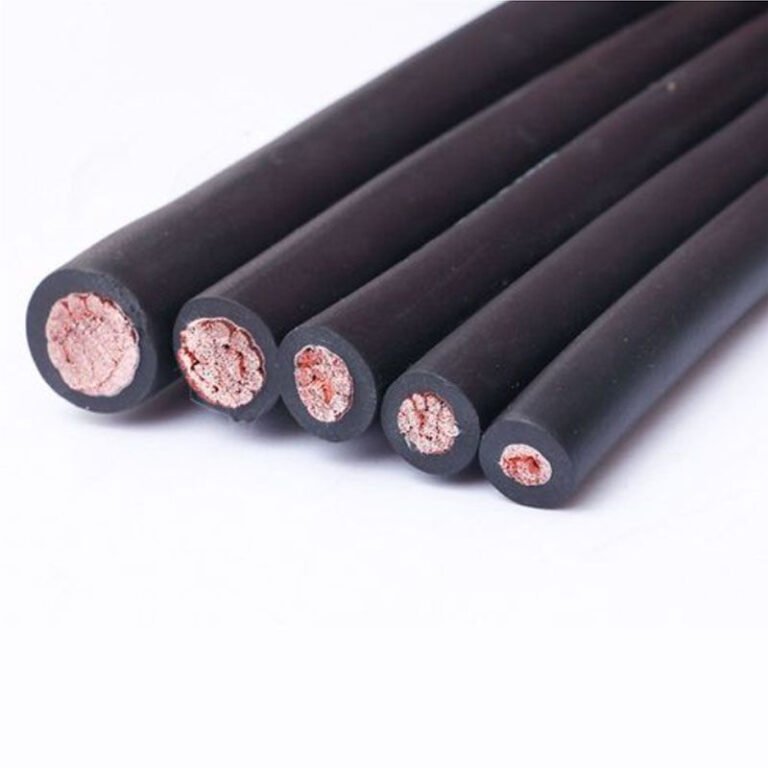
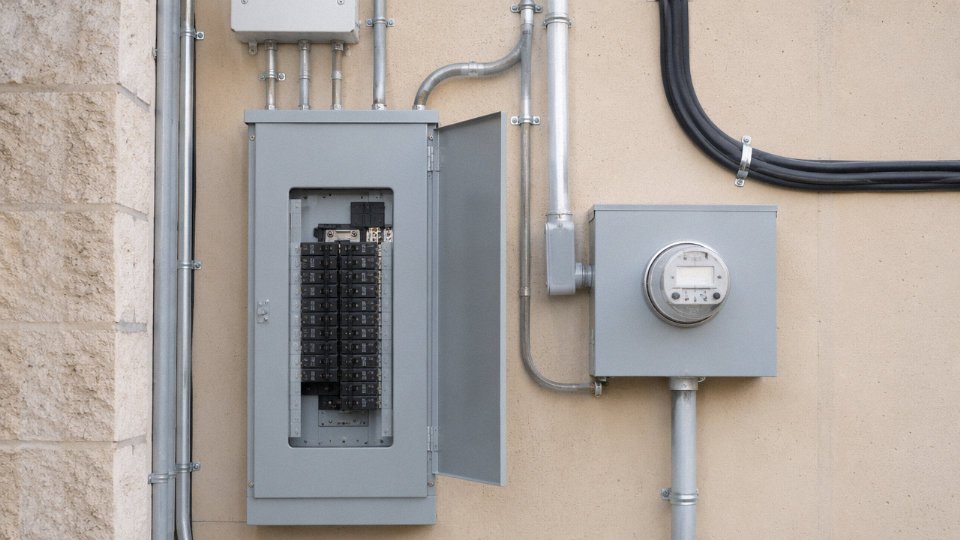
Service entrance cable (SEC) carries current from the utility meter to your main panel. Type SE (Service Entrance) cable is rated 600V and typically used for above-grade, dry-to-damp applications. USE-2 is the underground-rated variant — 600V, 90°C insulation, moisture-resistant jacket — and it’s the correct choice any time the run goes through conduit buried in the ground or exposed to soil contact.
Conductor sizing is where a lot of mistakes happen. The table below gives NEC-compliant AWG or kcmil sizes for common service levels:
| Service Level | Copper (75°C column) | Aluminum (75°C column) |
|---|---|---|
| 100A | 4 AWG | 2 AWG |
| 200A | 2/0 AWG | 4/0 AWG |
| 400A | 400 kcmil | 600 kcmil |
These sizes assume a standard residential service run under 100 feet or so. Longer runs need to be derated for voltage drop — a factor most homeowners miss entirely. The actual size your inspector approves depends on ambient temperature, conduit fill, and whether the utility has additional requirements layered on top of NEC.
Branch-Circuit Wiring Inside the Panel’s Reach
NM-B (Romex, in common shop-floor language) handles most interior dry-location branch circuits in residential construction. NEC 240.4(D) is clear: 14 AWG on 15A circuits, 12 AWG on 20A. Using 14 AWG on a 20A breaker is a code violation that can survive inspection if the inspector doesn’t trace every wire — and then create a fire risk years later when someone plugs in a load that actually draws 18–19 amps continuously.
The insulation class on NM-B is rated 60°C for the outer sheath, 90°C for the conductors inside. That 90°C conductor rating matters in derating calculations, but the cable as a whole is still applied at the 60°C ampacity column. It’s a distinction that trips up junior electricians and causes oversized breaker selections.
Conduit Wiring for Exposed Panel Feeders
THHN/THWN-2 pulled through EMT or Schedule 40 PVC conduit is the better choice over SEC cable any time the feeder run is exposed to moisture, UV, or mechanical damage — a garage subpanel run along an exterior wall, for instance, or a workshop feed that runs through an unheated crawlspace. THWN-2 carries a 90°C wet-location rating and handles conduit fill better than the rigid assembly of SEC cable. Individual conductors are also easier to replace without cutting into walls.
Ground and Bonding Conductors
Equipment grounding conductors (EGCs) and grounding electrode conductors (GECs) are sized differently and serve different functions. EGCs follow NEC Table 250.122 — for a 200A circuit, that’s a minimum 6 AWG copper or 4 AWG aluminum equipment ground. The GEC connecting the panel to your ground rods or water pipe is sized per NEC 250.66, typically 4 AWG copper for a 200A service. Confusing the two tables is a real field error.
A panel upgrade under NEC 2023 requires AFCI protection on nearly all new branch circuits added during the project.True
NEC 2023 Section 210.12 extends AFCI requirements to virtually all dwelling unit branch circuits, and these protections must be installed on any new circuits added or extended during a permitted panel upgrade.
International Equivalents and Jinda’s Product Range
Outside North America, conductor specifications follow IEC 60228, which defines conductor classes rather than AWG gauges — Class 1 (solid), Class 2 (stranded), Class 5 (flexible). A 35 mm² Class 2 aluminum conductor is the rough IEC equivalent of a 2 AWG aluminum service conductor.
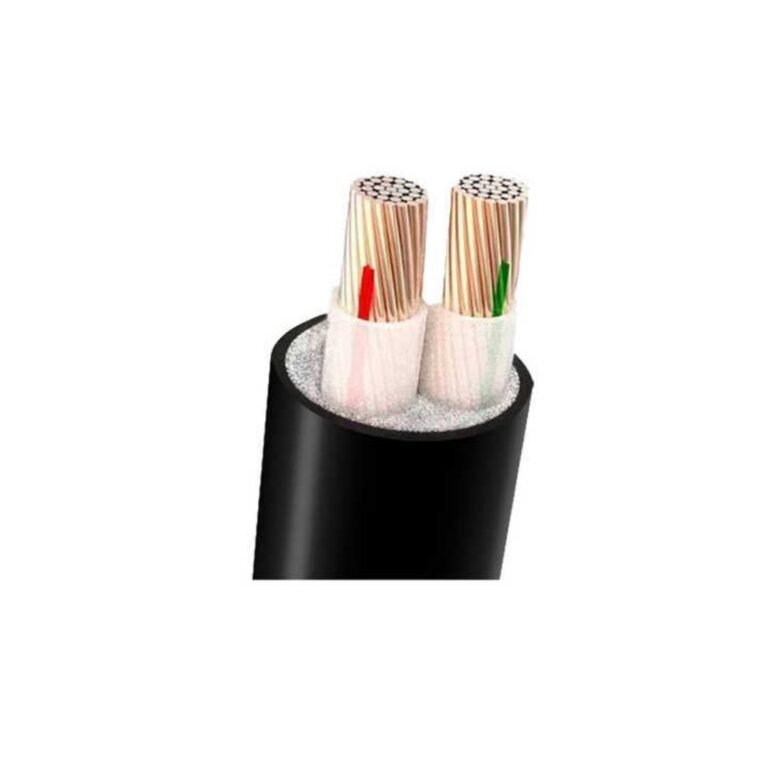
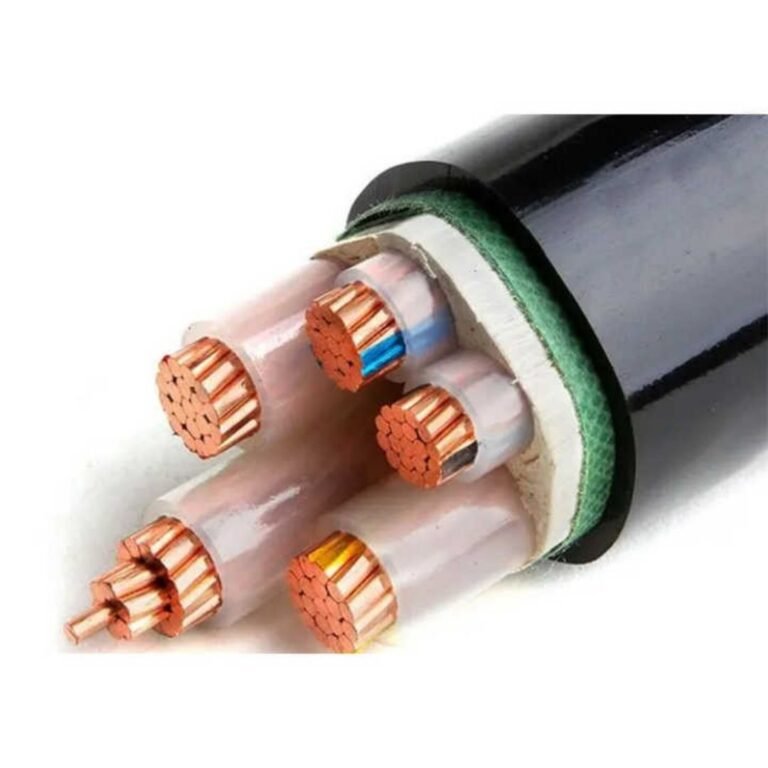
Insulation choices shift as well. XLPE (cross-linked polyethylene) outperforms PVC on thermal rating — typically 90°C continuous versus 70°C for standard PVC — and holds up better in high-ambient-temperature environments like Middle Eastern industrial sites or Southeast Asian construction projects. Jinda’s 0.6/1 kV XLPE building wire and armored cable lines are designed around IEC standards and cover the range from light commercial branch circuits up through armored feeder applications, which matters when you’re procuring for a project where North American cable types simply aren’t available locally or where the local utility code mandates IEC-compliant products.
Copper Versus Aluminum: The Honest Tradeoff
Copper carries roughly 1.6 times more current per unit cross-section than aluminum and is easier to terminate without anti-oxidant compound. Aluminum runs about 30–50% cheaper by weight depending on market conditions, which is why utilities and large-scale commercial projects use it heavily for service entrance conductors. The failure mode with aluminum isn’t the conductor itself — it’s a bad termination that oxidizes and develops resistance. Any aluminum termination needs to be AL-rated, torqued correctly, and treated with anti-oxidant paste. Skipping that step on a 200A aluminum SEC connection is how you end up with a warm panel and a callback six months out.
Cost Estimation and Project Scoping: Panel Upgrade With and Without Rewiring
Getting a realistic number before you call an electrician matters more than most homeowners realize. Quotes vary wildly — not because contractors are guessing, but because the actual scope can shift dramatically once someone opens the wall or pulls the existing permit history on a house.
Panel-Only Upgrade: Where the Money Actually Goes
For a straightforward service upgrade from 100A to 200A with no rewiring required, the total typically lands between $1,500 and $4,500. That range isn’t vague padding — it reflects genuine variables:
- Labor: $800–$2,000, depending on regional wage rates, whether the panel is in an accessible utility room or a finished basement, and how many hours the utility company makes your electrician wait for the meter pull
- New panel and breakers: $300–$800. A 200A main breaker panel with a full complement of AFCI and GFCI breakers costs noticeably more than a basic box — expect the higher end if you’re loading it with 20–30 slots and dual-function breakers
- Permit fees: $100–$500, entirely jurisdiction-dependent. Some municipalities charge a flat fee; others calculate it as a percentage of project value
- Utility reconnect fees: $0–$300. Many utilities waive this; others bill it as a standard service call, especially for same-day reconnects
- Service entrance conductor (SEC) replacement: $200–$600, if the utility or inspector requires upgrading the conductors running from the meter to the new panel — common when going from older aluminum SEC to properly rated conductors for 200A service
Partial Rewire Addition: The AFCI/GFCI Circuit Problem
NEC 2023 compliance during a panel upgrade typically forces the issue on kitchen, bath, garage, and outdoor circuits. If those runs are ungrounded two-wire cable or aluminum branch wiring, inspectors in most jurisdictions won’t sign off without remediation. Budgeting $150–$400 per circuit for labor and materials on targeted rewires is realistic — a kitchen alone might have four to six circuits, so $600–$2,400 added cost is plausible before you even touch the bedrooms. Whether you hit the low or high end of that per-circuit range depends on how accessible the runs are and whether the walls need to be opened.
Full House Rewire: The $8,000–$25,000 Conversation
A complete rewire on a 1,500–2,500 sq ft home falls in that range, and the spread is not arbitrary. An older ranch-style home with open attic access and no blown-in insulation is a fundamentally different job than a two-story with finished walls, spray foam, and plaster-over-metal-lath. Number of circuits, local labor rates, whether knob-and-tube or aluminum branch wiring needs removal, and the cost of patching drywall afterward all push the number around significantly.
Cost-Benefit Comparison
| Scenario | Typical Cost | Insurance Premium Impact | EV/Heat Pump Ready | Home Resale Effect |
|---|---|---|---|---|
| Panel-only upgrade (100A → 200A) | $1,500–$4,500 | Moderate reduction (varies by insurer) | Partially — depends on existing circuit capacity | Modest positive |
| Panel + partial rewire (targeted circuits) | $3,000–$8,000 | Meaningful reduction if hazardous wiring addressed | Yes, for dedicated circuits added | Solid positive |
| Full rewire + new panel | $10,000–$28,000 | Largest reduction; some insurers require for pre-1970 homes | Fully ready | Strong positive, especially in older housing markets |
Homeowners who upgrade from a 100A to a 200A panel with proper AFCI/GFCI compliance often see homeowner's insurance premium reductions of 5–15%, depending on carrier and prior wiring condition.True
Insurance actuarial data links panel age, amperage adequacy, and arc-fault protection to reduced fire risk claims; specific discounts vary by insurer and state but are well-documented in carrier underwriting guidelines.
Bulk Procurement for Multi-Unit and Commercial Projects
For contractors managing apartment renovations, mixed-use developments, or light industrial panel replacements, material cost is where serious savings are available. Distributor markup on panel feed conductors, SEC cable, and branch circuit wire typically runs 25–40% above manufacturer pricing. Direct sourcing from manufacturers — Jinda’s supply chain, for instance, covers the full range from service entrance conductors through branch circuit cable and ships to project sites internationally — can realistically cut material costs by 15–30% on moderate to large volumes. On a 50-unit apartment upgrade, that difference is not trivial.
Financing and Rebates Worth Knowing
Utility rebate programs for service upgrades have expanded considerably in regions pushing EV adoption and heat pump electrification. Some utilities offer $200–$800 toward a 200A or 400A service upgrade when paired with an EV charger installation or heat pump permit. Check your utility’s demand-side management program before the permit is pulled — some rebates require pre-approval. For homeowners, Energy Efficient Home Improvement Credit provisions (under the Inflation Reduction Act in the U.S.) may apply to certain upgrades; a tax advisor is the right call there, not an electrician.
Homeowner improvement loans through credit unions or PACE financing programs are worth comparing against contractor financing. Rates and terms vary enough that a 30-minute comparison can save real money on a $5,000–$15,000 project.
Special Situations: EV Chargers, Solar Inverters, and Home Battery Systems Driving Panel Upgrade Demand
The single biggest reason residential panel upgrades have spiked over the last four or five years isn’t aging equipment or code compliance pressure — it’s new loads. An EV in the garage, a solar array on the roof, or a whole-home battery backup system each carries electrical demands that a 100A service panel simply wasn’t designed to handle. Understanding why requires looking at actual circuit math, not just amperage headlines.
EV Chargers: The Load That Breaks the Budget on a 100A Panel
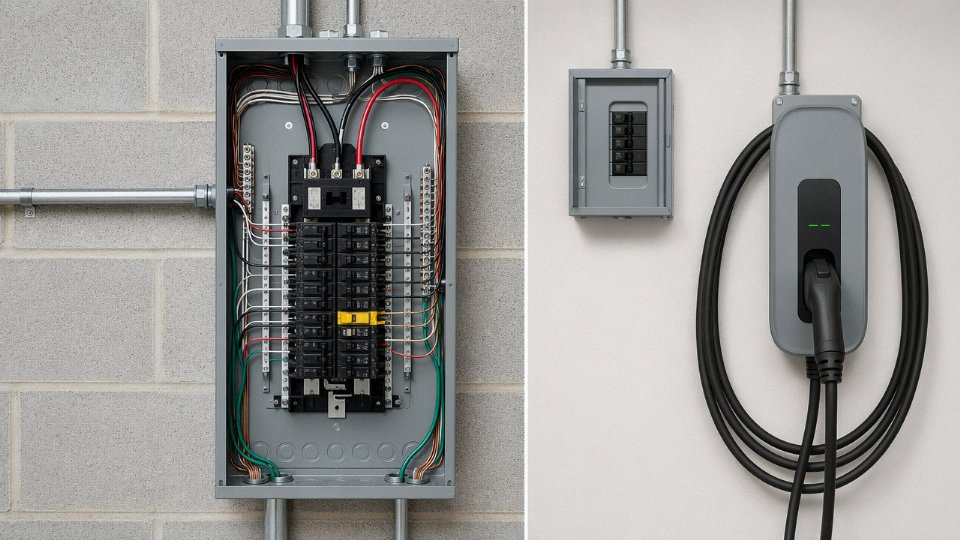
A Level 2 EVSE — the kind that actually charges an EV overnight rather than crawling along at 1.4 kW — typically requires a dedicated 240V circuit rated at 40A to 60A continuous draw. In practice, most installers run a 50A or 60A circuit using a NEMA 14-50 outlet or hardwired connection, which means the circuit breaker itself is 50A or 60A. On a 100A panel that’s already feeding a central HVAC system, an electric range, a water heater, and a dryer, you’re looking at 60–80A already committed to large loads before you add the car. There’s no clean way to squeeze a 50A EV circuit into that picture without either shedding other loads or upgrading the service.
A 200A panel solves this in most cases. Some households with two EVs, a heat pump, and a pool heater are now speccing 400A service from the outset, though that’s still relatively uncommon and depends heavily on climate zone and usage patterns.
Solar PV Interconnection and the 120% Rule
Backfeeding a solar inverter into an existing panel is where a lot of homeowners get surprised by a required upgrade they didn’t anticipate. NEC 705.12(B)(2) limits the combined rating of the main breaker and the solar backfeed breaker to 120% of the bus bar’s rated capacity. On a 200A bus, that means your main breaker plus your solar backfeed breaker cannot exceed 240A total.
Under NEC 705.12(B)(2), a 200A panel with a 200A main breaker can legally accept a solar backfeed breaker up to 40A (representing 20% of the 200A bus rating), which supports roughly 9–10 kW of solar generation at standard inverter output voltages.True
The 120% rule limits combined breaker ratings to 1.2 × bus rating. 200A × 1.2 = 240A; subtract the 200A main breaker, and 40A remains available for the solar backfeed breaker. At 240V, 40A × 240V = 9,600W, so roughly 9–10 kW — consistent with NEC 705.12(B)(2) as adopted in the 2023 cycle.
A 100A panel with a 100A main leaves only 20A for solar backfeed — barely enough for a small system. If the system design calls for anything larger, a panel upgrade isn’t optional; it’s the only compliant path.
Home Battery Systems and Transfer Switching
Whole-home battery systems like the Tesla Powerwall or Enphase IQ Battery add another layer of complexity. A critical loads subpanel or automatic transfer gateway — Powerwall installs use Tesla’s own gateway device, for instance — requires new dedicated circuits and careful breaker coordination. Whole-home backup scenarios often push total circuit count beyond what an older 20- or 24-space panel can accommodate. Most competent installers will refuse to work around a cramped, outdated panel; they’ll spec the upgrade as part of the battery project.
Smart Panels as a Middle Path
There’s a genuinely interesting emerging option worth knowing about: next-generation smart panels from companies like Span or Leviton’s newer load center lineup include circuit-level monitoring and programmable load shedding. In the right scenario — a home with modest baseline loads, a moderate-sized EV, and cooperative grid tariffs — a smart panel can manage EV charging around other loads without requiring a full service upgrade. It’s not a universal solution, and it depends heavily on your local utility’s peak demand profile, but it’s worth running the numbers before committing to a service upgrade.
These applications aren’t unique to North America. Solar-plus-storage projects, EV infrastructure buildouts, and industrial energy systems worldwide face the same cable specification challenges — appropriate conductor sizing, armoring for exposed runs, and low-smoke zero-halogen (LSZH) jacketing for enclosed spaces. Jinda supplies armored and LSZH cables specifically for solar, energy storage, and EV charging infrastructure across international markets, where installation environments and code regimes vary considerably but the underlying physics of conductor sizing and fault protection remain consistent.
Finding and Vetting an Electrician for a Panel Upgrade Project
The panel upgrade itself takes a competent crew maybe four to eight hours. Finding the right crew can take longer — and getting it wrong costs far more than the job itself.
Licensing Distinctions That Actually Matter
Most US states distinguish between three license tiers: apprentice, journeyman, and master electrician. An apprentice works under direct supervision and cannot legally sign off on anything. A journeyman can perform work independently but, in most jurisdictions, cannot pull permits in their own name. Only a licensed electrical contractor — typically a master electrician who has registered a business entity with the state licensing board — can legally apply for and hold a permit.
This matters more than people realize. If an unlicensed individual pulls your panel and something fails an inspection (or causes a fire before inspection ever happens), your homeowner’s insurance has grounds to deny the claim. Ask for the contractor’s license number before the first conversation goes anywhere, and verify it on your state’s licensing board website. Takes about two minutes.
How to Read and Compare Written Quotes
A legitimate quote for a panel upgrade should be itemized enough that you can reconstruct roughly what you’re buying. At minimum it should name the panel brand and model number, the service amperage, the number of breaker spaces, and the specific breaker types included — particularly whether AFCI and GFCI breakers are built into the scope or treated as add-ons. Permit fees and inspection coordination should appear as explicit line items, not absorbed into a vague “labor” bucket.
When comparing quotes, don’t just look at the bottom number. A $2,200 bid that specifies a Square D QO 200A 40-space panel with AFCI breakers throughout and permit included is a fundamentally different product from a $2,000 bid that lists “200A panel, 24 spaces, breakers as needed.” The second quote often grows by $400–900 once the inspector shows up and the missing AFCI devices get added under pressure.
Red Flags Worth Walking Away From
A few patterns reliably signal trouble. Any contractor who suggests starting work before the permit is issued is asking you to share legal and financial liability for unpermitted work. That’s not a gray area. Pressure to “get started this week before prices go up” is almost always a manipulation tactic, not a real supply concern.
Watch for proposals that plan to transplant old breakers — especially from Federal Pacific Stab-Lok or Zinsco panels — into a new enclosure. Those breaker designs have documented failure modes that led to their effective obsolescence. Reusing them defeats a significant portion of the safety rationale for upgrading in the first place.
Vague labor descriptions like “install panel and connect circuits” with no scope around permit handling or inspection attendance are a sign the contractor either hasn’t done this work systematically or is leaving themselves room to charge for scope surprises later.
What a Good Electrician Does Before Quoting
A reputable contractor, before finalizing a panel-only upgrade quote, will walk your accessible wiring — attic, basement, or crawlspace depending on your home’s construction — and visually inspect conductor insulation condition, grounding, and any obvious junction box issues. They should tell you what they find, in writing if possible. If a contractor quotes a panel swap without looking at a single wire, that’s not necessarily disqualifying for a newer home, but for anything built before roughly 1980 it’s a gap.
A licensed electrical contractor must pull the permit for a panel upgrade in most US jurisdictions — not the homeowner's general contractor or a journeyman acting independently.True
Permit-pulling authority is tied to the licensed electrical contractor's registration in most US states. A journeyman electrician, regardless of skill level, generally cannot apply for permits in their own name. This is enforced by state licensing boards and matters for inspection validity and insurance coverage.
Quality Assurance Frameworks for International and Industrial Projects
For large commercial or industrial panel and wiring upgrades outside the US, the licensing and standards landscape shifts considerably. IEC 60364 is the baseline international standard for low-voltage electrical installations and covers installation design, protection, and conductor sizing in a way that maps reasonably well across most countries that haven’t developed their own national equivalent. In practice, local national standards often layer on top — the UK uses BS 7671, Australia uses AS/NZS 3000, and so on.
When selecting both contractors and cable suppliers for cross-border projects, third-party certifications matter because you often cannot audit the work directly. UL listing (US-origin testing), CE marking (European conformity), and CCC certification (required for products sold in China) each represent different testing regimes. They are not interchangeable, but a supplier who holds two or more of these has demonstrated willingness to subject product to independent scrutiny — which tells you something about how they run their quality system. For cable specifically, ask for the actual test certificates, not just a logo on a datasheet.
In my experience, the projects that go sideways internationally are rarely ones where the cable failed a specification — they’re ones where nobody verified the contractor’s scope interpretation matched the engineer’s intent. Written scope alignment, in the local regulatory language if needed, is worth every hour it takes.
Frequently Asked Questions About Upgrading an Electrical Panel Without Rewiring
Will upgrading my panel increase my home’s electrical capacity even if I don’t rewire?
Yes — but only at the service entrance level. Your utility delivers more amperage to the meter, the new main breaker handles that increased load, and the bus bar inside the panel can now support more branch circuits. What doesn’t change is the capacity of any existing circuit. A 14 AWG branch circuit is still a 15-amp circuit. The panel upgrade does nothing to that wire’s current-carrying ability, its insulation age, or its voltage drop characteristics over a long run. Think of it as widening the highway entrance ramp while the surface streets stay the same width.
A panel upgrade increases total home electrical capacity even without rewiring existing branch circuitsTrue
A panel upgrade replaces the service entrance conductors, main breaker, and bus bar, increasing the amperage available to the home. Existing branch-circuit capacity remains limited by the gauge and condition of the wiring already in the walls.
Can I add new circuits to an upgraded panel without rewiring the whole house?
Absolutely. New circuits are new work — you run fresh wire from the panel to wherever you need power. That wire must meet current NEC requirements for gauge, insulation type, and protection (AFCI, GFCI, or both, depending on the location). Existing circuits sit untouched unless they fail inspection or show obvious defects. This is actually one of the most practical reasons to upgrade: you create headroom in the panel for the EV charger circuit, the dedicated kitchen appliance circuit, or the home office subpanel without disturbing a single staple in the walls.
How long does a panel upgrade take?
The electrical work itself — pulling the old panel, setting the new enclosure, landing conductors, labeling circuits — usually runs 4 to 8 hours depending on how many circuits are involved and whether the existing wiring is reasonably organized. Older homes where every wire is the same color and nothing is labeled can add a couple of hours to that. Total project time, factoring in permit approval and utility scheduling to pull the meter, is typically 1 to 3 weeks. Utilities in rural areas or during summer peak season can push that toward the longer end.
Will my homeowner’s insurance rates change after a panel upgrade?
Most carriers respond positively. Replacing a Federal Pacific Stab-Lok or Zinsco panel frequently removes a policy exclusion or surcharge that was costing the homeowner real money each year — sometimes $200–$600 annually, depending on insurer and region. Replacing a fuse box is similarly viewed as a risk reduction. Call your agent before and after the upgrade; document the permit, inspection approval, and any photos your electrician can provide.
Is aluminum wiring in my walls a dealbreaker for a panel upgrade?
Not a dealbreaker, but it demands attention. Aluminum branch-circuit wiring — common in homes built roughly between 1965 and 1973 — requires CO/ALR-rated devices and connectors at every termination point. The wiring itself isn’t inherently dangerous if every connection is properly made with the right hardware, but that’s a meaningful “if.” Some insurers surcharge aluminum-wired homes or require a full inspection before binding a policy. Disclose it to your electrician upfront; surprises at the panel during the upgrade are expensive surprises.
What panel brands are most reliable for a 200A upgrade?
Eaton, Square D (Schneider Electric), Siemens, and Leviton are the names you’ll see on commercial and residential jobs with experienced crews. They carry consistent UL listings, have widely available breakers (important for future circuit additions), and have demonstrated long service lives in the field. Avoid sourcing panels or breakers from discontinued product lines or unfamiliar offshore brands without verified listings — breaker interchangeability with off-brand panels is a known failure point and a code violation in most jurisdictions.
Can I upgrade to 400A service without rewiring?
The same logic that applies to a 100A-to-200A upgrade applies here. The utility service conductors, the meter base, and the panel assembly all change. Branch-circuit wiring in the walls is unaffected unless the inspector finds defects during the required inspection. The 400A upgrade is more likely to involve a service entrance redesign — sometimes a meter-main outside with a distribution panel inside — so the scope of new conductor work is larger, but it still doesn’t reach back into existing branch circuits.
How does Jinda Special Cable Group support large panel upgrade or infrastructure projects?
Jinda manufactures and supplies UL-listed, CE-certified, and CCC-certified building wire, service entrance cable (SEC), armored cable, and low-voltage power cable across more than 50 countries. For contractors managing multi-unit residential projects, commercial retrofits, or infrastructure builds that involve panel upgrades at scale, Jinda offers full technical documentation — including conductor ampacity tables, insulation ratings, and installation specs — alongside bulk pricing structured for project procurement. With five production bases across China and over 470,000 m² of manufacturing capacity, lead times and volume flexibility are genuine differentiators for large procurement programs. Technical support is available through Jinda’s global sales network for specification questions before purchase.