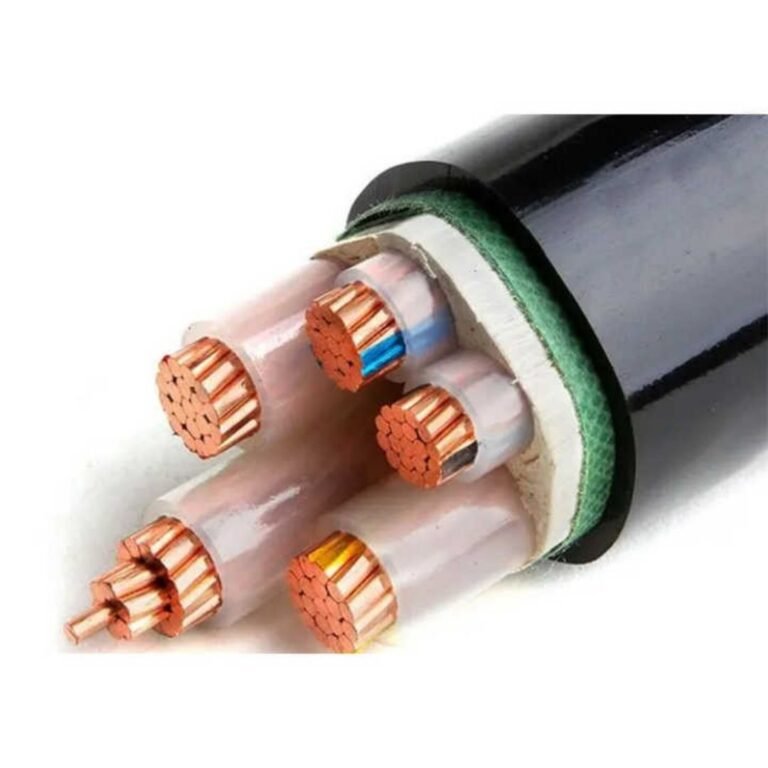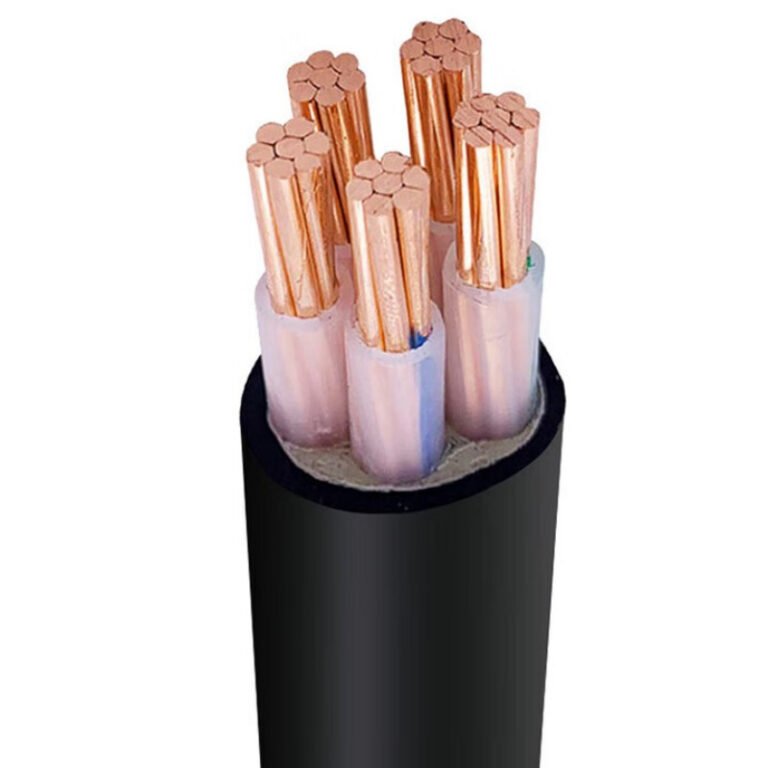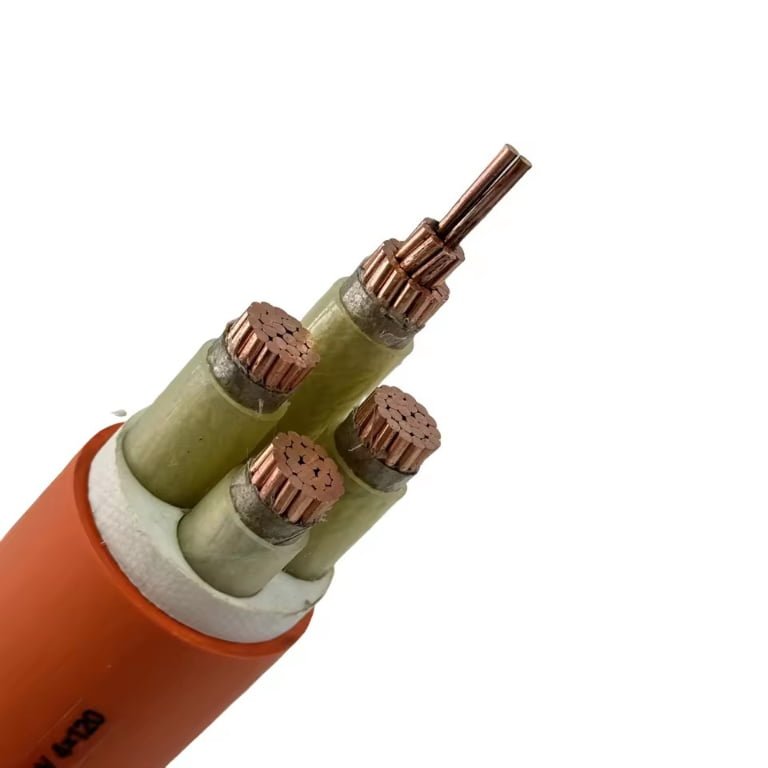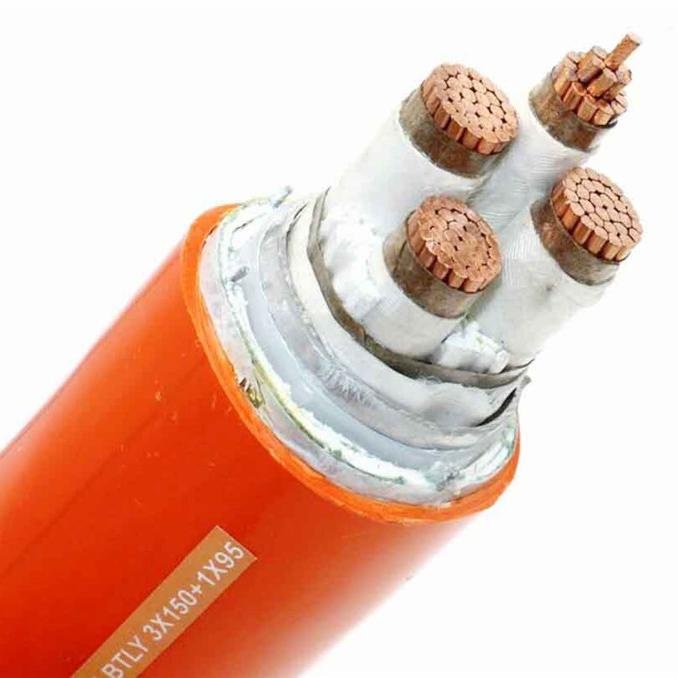
Specify the wrong cable type on a procurement order — say, writing “power wire” when the spec sheet calls for a medium-voltage armored cable — and the consequences run well beyond a delayed shipment. Installers show up, the material doesn’t match the application, and suddenly you’re looking at derating problems, failed inspection, or in the worst case, a thermal event months after commissioning. That confusion usually traces back to one root problem: the vocabulary around power-carrying conductors is inconsistent across standards bodies, industries, and regions, and most reference material doesn’t resolve it in any practical way.
Power wires are conductors specifically designed to carry electrical current for energy transmission or distribution, as opposed to signal or control wires. Depending on voltage class and application, they go by names including power cable, building wire, service entrance cable, feeder cable, branch circuit wire, transmission cable, and distribution cable. The correct term — and the correct product — depends on voltage level, installation environment, conductor cross-section, and the governing standard (NEC, IEC, BS, or other).
What makes this genuinely worth untangling is that the naming isn’t just semantic. A “wire” and a “cable” carry different construction assumptions in most procurement systems, and ordering one when you need the other has real consequences — conductor cross-sections alone span from 1.5 mm² for light residential branch circuits up to 2500 mm² for high-voltage transmission applications, and the voltage classes stretch from sub-1 kV low-voltage systems all the way past 220 kV into extra-high-voltage territory above 1100 kV. Knowing what each name actually points to is the starting point for getting the spec right.
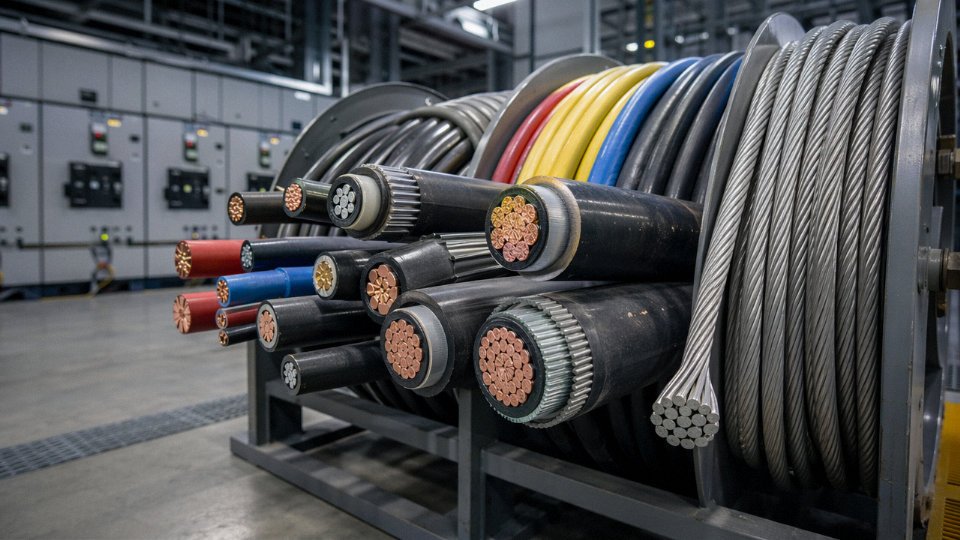
The Complete Naming Map: Every Major Category of Power Wire and What Each Is Called
The terminology engineers and procurement teams actually use in the field pulls from at least five different classification axes simultaneously — voltage class, insulation material, construction feature, conductor material, and end-use sector. A single cable on a wind-farm project might legitimately be called a “medium-voltage XLPE armored copper cable” and that’s not redundant; each word is doing real work from a different axis. Understanding the full map prevents specification errors that cost real money.
Voltage-Class Names
This is usually the first sort in any project spec, because voltage class drives insulation thickness, jointing method, and who is legally permitted to install it.
Low-voltage (LV) power cable covers ≤1 kV. This is the workhorse of commercial buildings, residential subdivisions, and industrial switchgear feeds — cross-sections typically run 1.5 mm² up to roughly 400 mm², though larger sizes exist for main incomer runs.
Medium-voltage (MV) cable spans 1–35 kV and is what you’ll find feeding industrial plant substations, wind-turbine step-up transformers, and urban distribution networks. Termination and jointing skill matters enormously here; a badly made 11 kV joint that fails six months in is an expensive lesson.
High-voltage (HV) cable covers 35–220 kV. Underground HV circuits in dense city centers or connecting offshore platforms to shore fall in this range. Manufacturing tolerances tighten considerably — conductor eccentricity and insulation void control are not optional.
Extra-high-voltage (EHV) cable runs above 220 kV, typically up to 500 kV in most transmission projects. Ultra-high-voltage (UHV) cable is the designation above 1000 kV; China’s ±1100 kV DC transmission projects are the clearest real-world example of this category in service.
Insulation-Material Names
XLPE cable — cross-linked polyethylene — has displaced most alternatives for new installations across LV through EHV. It handles up to 90 °C continuous conductor temperature, has low dielectric losses, and doesn’t need fluid maintenance. PVC cable remains common at LV for its low cost and flexibility, though it softens above roughly 70 °C and is increasingly restricted where halogen-free specifications apply. EPR cable (ethylene propylene rubber) tolerates mechanical flexing and wet environments better than XLPE, which is why you see it on offshore platforms, dredging equipment, and mining trailing cables. PILC — paper-insulated lead-covered — is legacy infrastructure; you’ll still encounter it in older urban networks and it requires completely different jointing technique. Mineral-insulated (MI) cable uses compressed magnesium oxide as insulation inside a copper sheath; it’s essentially indestructible thermally and sees use in fire-survival circuits, industrial furnaces, and anywhere a building’s emergency systems must keep running.
Construction-Feature Names
SWA (steel wire armored) and STA (steel tape armored) cables are the standard direct-burial and cable-duct options for most MV and LV work. Wire armor handles longitudinal tension better; tape armor is cheaper but less flexible. Screened cable carries an electrostatic or electromagnetic screen over the insulation — standard on MV cables and essential for VFD output circuits to contain switching noise. Concentric cable puts a concentric neutral conductor around the insulated core, common in North American utility distribution. ABC (aerial bundled cable) is pre-assembled insulated conductors for overhead lines — reduces outages from branch contact and simplifies rural distribution. Flat TPS (thermoplastic sheathed) is what electricians in Australia and parts of Asia call standard building wire; the “flat” describes the physical profile, not anything exotic.
Conductor-Material Names
Copper conductor cable dominates where space, jointing ease, and long service life justify the cost premium. Aluminum conductor cable, in larger cross-sections typically starting around 50 mm², is the cost-driven choice for distribution feeders and main plant incomers — it’s lighter and cheaper per ampere when you can accommodate the larger diameter. ACSR (aluminum conductor steel-reinforced) is specifically the overhead bare conductor used on transmission towers; the steel core carries the mechanical load, aluminum carries the current. CCA (copper-clad aluminum) occupies a grey zone — lower cost than pure copper but with copper’s solderability; it’s legitimate in some telecom and low-current applications but
CCA cable meets the same current-carrying performance as pure copper cable of the same cross-sectionFalse
Aluminum has roughly 61% of copper's conductivity, so a CCA conductor with a thin copper cladding still performs closer to aluminum than copper for the same nominal cross-section. Substituting CCA for copper in power circuits without re-sizing is a code violation and a thermal risk.
worth scrutinizing carefully before accepting in any power circuit.
Application-Sector Names
The industry uses a parallel vocabulary tied to end use. Building wire (also called house wire or branch circuit wire) means the fixed wiring inside walls and conduits of a structure. Distribution cable and transmission cable reflect the grid tier. Submarine cable (sometimes subsea power cable) is its own engineering discipline — armor design, water-blocking, and repair vessel access dominate the project economics. Mining cable implies flexible construction, robust mechanical protection, and sometimes trailing-cable duty cycle. Shipboard cable must meet marine classification rules (Lloyd’s, DNV, ABS) and flame-retardancy requirements that differ from land cable standards. Solar PV DC cable is rated for DC voltage, UV exposure, and wide temperature swings — ordinary LV AC cable is the wrong product here regardless of voltage ratings matching on paper. Wind-farm array cable typically means MV XLPE, usually 33 kV or 66 kV, running between turbines and the offshore or onshore substation.
Common Spec Codes and What They Actually Mean
| Code | Plain-English Description |
|---|---|
| NYY | PVC-insulated, PVC-sheathed LV power cable (German/IEC designation) |
| N2XY | XLPE-insulated, PVC-sheathed LV power cable |
| YJV | XLPE-insulated, PVC-sheathed LV power cable (Chinese standard, GB/T 12706) |
| WDZA-YJY | Halogen-free, low-smoke, flame-retardant XLPE cable with LSZH sheath (Chinese standard) |
| SWA / ARMOURED | Steel wire armored outer protection layer (added as suffix to base cable designation) |
| ACSR | Aluminum conductor steel-reinforced overhead bare conductor |
| MI / MICC | Mineral-insulated copper-sheathed cable |
In practice, a project specification will stack terms from several of these axes — “35 kV XLPE SWA copper conductor submarine cable” is a complete, unambiguous description. Getting any one axis wrong in procurement, particularly the voltage class or the insulation type, can mean a product that physically fits the duct but fails electrically within the first operating season.
How Insulation Material Determines the Name — and the Performance — of a Power Cable
Insulation is not just a protective jacket. It defines what the cable is called, where it can legally go, and what happens when conditions turn hostile. Two cables with identical copper conductors can have completely different names, ratings, and price points based solely on what surrounds those conductors. If you’re specifying or procuring power cable and you’re not reading the insulation designation carefully, you’re guessing.
XLPE: The Workhorse of Medium- and High-Voltage Systems
Cross-linked polyethylene — XLPE, or XLP in some North American datasheets — is produced by chemically or physically bonding the polyethylene molecular chains into a three-dimensional network. That cross-linking step is what changes the game. Ordinary thermoplastic PE softens under heat and creep; XLPE holds its geometry. The result: a continuous operating temperature of 90 °C at the conductor, versus 70 °C for standard PVC, and a short-circuit withstand up to around 250 °C depending on the conductor cross-section and fault duration.
For anything above 1 kV, XLPE has largely displaced PVC because PVC’s dielectric losses and moisture sensitivity become increasingly problematic as voltage climbs. Most MV and HV cables you’ll see in datasheets today carry the designation “XLPE-insulated power cable” or, in Chinese national standard naming, the insulation code “YJ” (as in YJLV, YJY, and compound variants). That two-letter code matters at procurement — it tells the factory which extrusion and cross-linking line to schedule.
PVC: Still the Most Common Name in Low-Voltage Work
PVC cables dominate residential and light-commercial wiring worldwide, and the name isn’t going away soon. The material is cheap, easy to extrude, self-extinguishing in many formulations, and forgiving during installation. Plasticizer content is where the grades diverge: standard 70 °C PVC uses higher plasticizer loading, which keeps it flexible at room temperature but also means plasticizer migration over time, especially in warm environments. The 90 °C “heat-resisting PVC” formulation uses a different plasticizer system and can handle moderate industrial duty.
Above 1 kV, though, PVC insulation runs into dielectric and thermal limits that make it unsuitable for serious MV work. It persists in LV switchgear wiring, building circuits, and appliance cords, and you’ll keep seeing it called “PVC power cable” or “PVC-insulated wire” in virtually every residential specification globally.
EPR: Flexibility First
Ethylene propylene rubber insulation gives a cable the feel and bend radius of a garden hose while delivering solid dielectric performance. EPR handles water-tree resistance better than XLPE in wet or submerged environments, tolerates ozone, and stays flexible at low temperatures — important in outdoor mining or Arctic applications. In industrial purchasing documents, EPR cables frequently appear under the names “flexible power cable,” “trailing cable,” or “reeling cable,” because their application is often a machine that moves: a mining shuttle car, a shipboard crane, a portable substation.
Mineral-Insulated Cable: When Fire Survival Is Non-Negotiable
MI cable — sold under trade names like MICC and PYRO — is a different animal entirely. Compacted magnesium oxide powder packed inside a seamless copper or stainless-steel tube, with no organic insulation at all. Continuous ratings reach 250 °C, and the cable survives direct flame exposure while maintaining circuit integrity. That’s why it appears in fire alarm circuits, emergency lighting, and smoke extract fan supplies where losing the circuit means losing the building. It’s expensive, rigid, and requires specialist termination — but when the spec says “fire-survival cable,” this is usually what’s meant.
LSZH: A Fire-Performance Layer, Not a Base Insulation
Low-smoke zero-halogen (LSZH, or LSOH in some European specs) is a descriptor layered on top of an insulation type. It tells you what the material doesn’t do in a fire — it doesn’t produce the dense black smoke or corrosive hydrogen chloride gas that burning PVC does. The base insulation might be a halogen-free polyolefin compound, sometimes combined with XLPE chemistry, giving you compound names like “LSZH-XLPE power cable” or “halogen-free flame-retardant power cable.” Specifying LSZH without confirming it’s also flame-retardant is a common procurement error; the two properties are related but distinct.
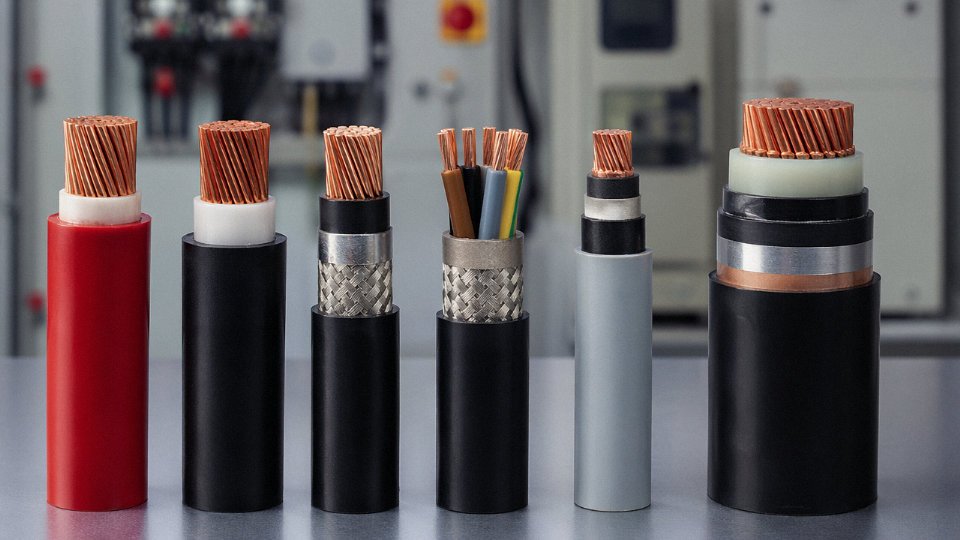
Reading a Full Cable Designation String
Take the designation WDZA-YJY 3×240+1×120 0.6/1 kV. Breaking it down:
| Code element | Meaning |
|---|---|
| WD | Halogen-free (Wu Du — no halogens) |
| Z | Flame-retardant |
| A | Class A flame-retardant performance (most stringent) |
| YJ | XLPE insulation |
| Y | Polyolefin outer sheath (halogen-free in this context) |
| 3×240 | Three cores, each 240 mm² conductor |
| +1×120 | Plus one neutral core at 120 mm² |
| 0.6/1 kV | Rated voltage: 0.6 kV conductor-to-ground, 1 kV conductor-to-conductor |
That single string tells a procurement manager the insulation chemistry, fire performance class, sheath material, conductor configuration, and voltage class — all before opening a datasheet. Getting comfortable reading these strings is one of the faster ways to stop purchasing the wrong cable for a job.
XLPE insulation has a continuous operating temperature of 90 °C and a short-circuit withstand temperature of approximately 250 °C under IEC standards.True
IEC 60502 and IEC 60228 specify 90 °C as the maximum continuous conductor temperature for XLPE-insulated cables, with 250 °C as the short-circuit limit — values consistently referenced in cable manufacturer datasheets and verified against standard tables.
Overhead vs. Underground vs. Submarine: How Installation Method Creates Distinct Cable Names
The installation environment doesn’t just change how a cable is protected — it changes what the product is called, what standards govern it, and which manufacturers are even qualified to bid. A specifier who conflates an overhead conductor with an underground armored cable will produce drawings that confuse contractors and generate expensive substitution requests.
Overhead Line Conductors: Bare and Insulated
Bare overhead conductors are technically not cables at all. They carry no insulation, and their names come from stranding code and alloy composition rather than insulation type. ACSR — Aluminum Conductor Steel-Reinforced — is probably the most widely specified overhead conductor on earth. A typical ACSR designation like “Drake 795 kcmil” tells you the aluminum cross-section, the steel core geometry, and the stranding lay. AAC (All-Aluminum Conductor) trades the steel core for a simpler, lighter build used on shorter spans. AAAC (All-Aluminum Alloy Conductor) uses a 6000-series aluminum alloy to recover some of the tensile strength lost without steel, which makes it popular in coastal areas where the steel core in ACSR corrodes faster than it should. ACCC (Aluminum Conductor Composite Core) is the newer option — a carbon-fiber composite core that reduces sag under thermal loading, relevant for utilities trying to reconductor existing towers without structural upgrades.
Aerial Bundled Cable, or ABC, is a different animal. These are insulated overhead conductors twisted together into a bundle, developed largely to reduce outages caused by tree contact and unauthorized connections. They are designated by voltage class (typically LV up to 1 kV, or MV up to 35 kV depending on the grid code) and core count. The neutral or messenger conductor in a self-supporting ABC design carries mechanical tension, while in a messenger-supported design a separate bare steel or ACSR messenger wire does that job — a distinction that matters to the line crew because the termination hardware is completely different. IEC 60502-1 and local grid codes like those issued by African and Southeast Asian utilities define the permissible insulation materials (usually XLPE or PE) and core identification.
Underground: Direct-Burial, Duct-Bank, and Armored Service Entrance
Once a cable goes below grade, armor and bedding layers become the naming drivers. Direct-burial cable, often marked “DB” on spec sheets, includes a physical armor layer — usually wire armor (AWA) or tape armor — plus a sand or gravel bedding layer in the trench to protect against point loading from rocks. Duct-bank cable is designed to pull through HDPE or concrete conduit; it typically has a smoother, harder outer sheath and does not need the same armor because the duct carries the mechanical stress. Underground Service Entrance (USE) cable in the North American market is a UL-listed designation that permits direct burial and service entrance applications, with its own minimum insulation and jacket requirements.
For medium-voltage underground work — say, 11 kV or 33 kV distribution feeders — XLPE-insulated, armored cables with copper wire screens are the standard product. The screen design and armor type (flat wire, round wire, SWA, AWA) generate further naming variants that procurement teams need to specify exactly, because substituting round wire armor for flat wire armor on a duct-bank pull can cause the cable to corkscrew under tension and damage the insulation.
Submarine and Subsea Power Cables
Submarine cable is a distinct product family, not just an armored cable thrown in the sea. Shallow water and dynamic zones near shore use different constructions than static deepwater sections. Mass-impregnated (MI) cables — where the paper insulation is saturated with high-viscosity compound — remain common for HVDC links because they handle DC voltage stress without the partial discharge issues that affect some XLPE designs at very high voltage. Modern offshore wind export cables routinely operate at 66 kV AC, and long interconnector projects are pushing HVDC submarine cables to 525 kV. The name “export cable” is standard project language in offshore wind: it refers specifically to the submarine cable running from the offshore substation to the onshore grid connection point.
Submarine HVDC cables can operate at voltages up to 525 kV in current commercial projectsTrue
Several recent HVDC interconnector and offshore wind export projects have specified ±525 kV DC submarine cables, including systems in European waters. This voltage class requires specialized mass-impregnated or P-laser XLPE insulation and extensive factory type testing.
Wet versus dry design matters here too. A “wet design” cable allows seawater to migrate along the conductor interstices — controlled, and the cable is designed to tolerate it. Dry design uses longitudinal water blocking to prevent migration. The choice affects both long-term electrical performance and the name that appears on the cable’s type approval documentation.
Conduit Wire and Tray Cable in North America
The NEC (National Electrical Code) creates a parallel naming universe based entirely on where and how a conductor is installed. THWN-2 tells you the thermoplastic insulation type (T), heat-resistant to 90°C in wet locations (HW), nylon jacket (N), and the -2 suffix confirming the 90°C wet rating. THHW is similar but lacks the nylon jacket. USE-2 is rated for underground service entrance and direct burial, dual-rated with RHH/RHW-2 for conduit use. TC-ER — Tray Cable, Exposed Run — is a multi-conductor assembly permitted to run without conduit in exposed locations under NEC 336.10(7), which is why contractors specify it by that designation when routing through cable trays in industrial facilities. The installation method is literally baked into the legal product name, and inspectors check the cable marking against the installation condition on every listed product.
Jinda’s Supply Experience Across Installation Environments
Jinda supplies cables across all three major installation environments for infrastructure projects in Africa, Southeast Asia, and the Middle East. For overhead distribution in these markets, that typically means insulated ABC in LV and MV ratings per IEC 60502-1, along with bare ACSR to regional utility specifications. Underground MV work — often 11 kV to 33 kV feeders for industrial zones or utility reticulation — is usually XLPE-insulated, SWA or AWA armored cable with copper wire screens, manufactured to IEC 60502-2. For direct-burial LV applications, steel-wire-armored or double-steel-tape-armored cables with PVC or LSZH outer sheaths are the common supply. Each of these is a different product line with different tooling, different raw material specs, and different test requirements — which is why experienced procurement teams specify the installation method on the inquiry form before anything else.
Decoding International Standards Codes: IEC, ASTM, BS, and GB Naming Conventions Side by Side
Walk into a procurement meeting for a medium-voltage substation project that spans the UK, a West African country using IEC conventions, and a North American contractor, and you will hear three completely different names for what is physically the same cable. This is not a quality gap. It is a naming-system gap, and confusing the two has real consequences — wrong voltage ratings on the purchase order, fire-performance specs that don’t match local regulations, or armoring types that fail the installation method test.
IEC 60502 and IEC 60227: The Global Baseline
IEC 60502 covers extruded solid dielectric insulated cables from 1 kV up through 30 kV. Its designation structure runs roughly: number of cores × cross-section, insulation type, sheath type, armor type, outer sheath. Simple in principle. In practice, every country that adopts IEC 60502 as a base adds its own prefix layer. Germany’s adoption under DIN VDE 0276 appends VDE approval marks and uses slightly different temperature class suffixes. China’s GB/T 12706 — which is technically harmonized with IEC 60502 — changes the letter codes entirely into a Chinese-standard naming scheme (see below). An IEC 60502-2 3-core 95 mm² XLPE cable designated by a German supplier and the same cable under GB/T 12706 from a Chinese mill can meet identical electrical requirements yet carry designation strings that look nothing alike on a datasheet.
IEC 60227 handles the lower end: PVC-insulated cables for fixed wiring up to 450/750 V. Less glamorous, but heavily referenced in building and fit-out specifications worldwide.
North American Naming: UL Listings Drive the Product Name
The NEC/ASTM/UL ecosystem works differently. Here, the product name is essentially the UL listing category code. THHN means thermoplastic high-heat-resistant nylon-jacketed; the “H” count tells you the temperature rating (75°C vs. 90°C), the “W” in THWN adds wet-location suitability, and the “-2” suffix on RHW-2 confirms 90°C wet rating. USE (Underground Service Entrance) and URD (Underground Residential Distribution) describe the installation application directly in the name — a logic IEC doesn’t follow.
None of these translate cleanly to IEC voltage class designations. A THHN wire is rated 600 V by UL listing; the nearest IEC equivalent might be a 0.6/1 kV cable under IEC 60502-1, but the insulation thickness, test voltages, and fire test methods differ. Electrically identical. Regulatory-compliance-wise, not interchangeable in most jurisdictions.
BS 5467 and BS 6724: The UK Armoring Codes
UK infrastructure specs almost always call out SWA (steel wire armored) under BS 5467 or, for fire-critical routes, STA (steel tape armored) variants under BS 6724, which mandates LSZH (low smoke zero halogen) outer sheath. Specifying “armored XLPE cable” without the BS number on a UK project can get you a product that meets IEC dimensional specs but fails the BS 6724 smoke density test — which matters considerably in underground rail, tunnels, and public buildings.
GB/T Standard Codes: Decoding the Chinese Letter System
Chinese GB/T cable designations are systematic once you know the key: Y = polyethylene (insulation), J = cross-linked (as in XLPE), V = PVC (sheath or insulation depending on position), Z = steel wire/tape armored, R = flexible/stranded. Prefix modifiers stack on the front: ZR = flame-retardant, NH = fire-resistant (circuit integrity under flame), WD = halogen-free low-smoke. So WDZA-YJY decodes as: halogen-free (WD) + flame-retardant class A (ZA) + XLPE-insulated (YJ) + polyethylene outer sheath (Y). NH-YJV is fire-resistant XLPE-insulated PVC-sheathed. The logic is consistent; it just requires the key to read it.
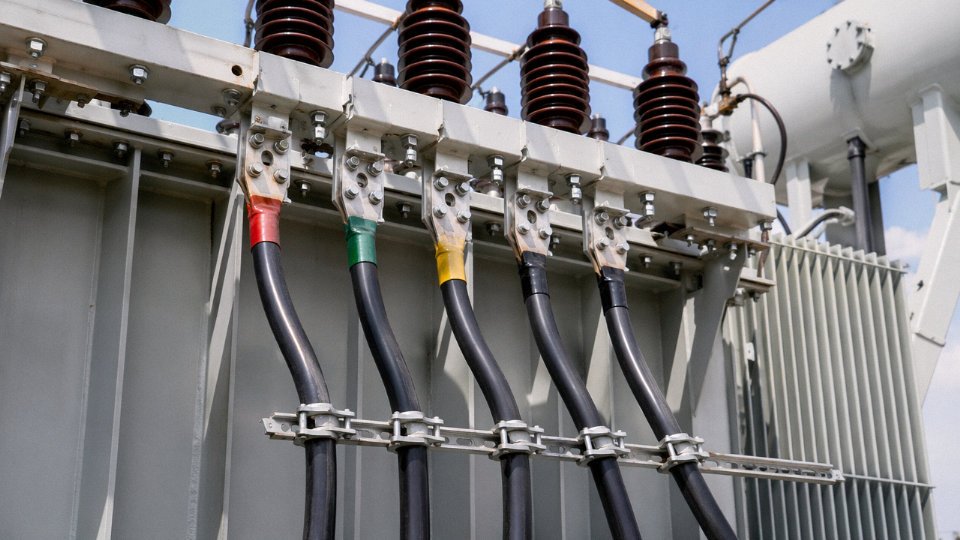
Cross-Reference: One Cable, Four Naming Systems
| Standard System | Designation for 3-core, 95 mm², 12/20 kV XLPE, SWA, PVC outer sheath |
|---|---|
| IEC 60502-2 | 3 × 95 mm² 12/20 kV XLPE/SWA/PVC |
| NEC / UL (nearest equivalent) | No direct UL listed product — would require engineering evaluation or special listing |
| BS 5467 | 3-core 95 mm² 12/20 kV XLPE SWA BS 5467 |
| GB/T 12706 | ZR-YJV22 3×95 mm² 12/20 kV (with flame-retardant prefix if specified) |
The NEC gap in that table is real and worth flagging. North American medium-voltage cable typically goes through separate UL 1072 or ICEA standards, not IEC 60502, and a direct cross-reference doesn’t always exist.
The Procurement Rule That Saves Rework
Always request the full designation string and the governing standard number, not one or the other. “95 mm² three-core MV XLPE armored” is not a specification — it is a starting point for a specification. Two cables matching that description can carry voltage ratings that differ by a factor of two or fire performance levels that put one compliant in a UK tunnel and one rejected at customs. In practice, a one-line addition to your purchase order — something like “per IEC 60502-2, rated 12/20 kV, confirmed to [local national variant if applicable]” — closes most of the ambiguity before the cable ships, not after it arrives on site.
A cable designated under IEC 60502-2 and a cable designated under NEC/UL standards can have identical conductor cross-sections and insulation materials yet still be non-interchangeable for compliant installation due to differences in voltage rating conventions, insulation thickness requirements, and fire test methods.True
IEC 60502-2 and NEC/UL (e.g., UL 1072 for MV cables) use different voltage designation systems, different minimum insulation thickness tables, and different fire test standards, meaning physical similarity does not imply regulatory equivalence across jurisdictions.
Specialty Power Wire Names Across Industry Sectors: Mining, Renewables, Marine, and Data Centers
General electrical references cover the basics well enough, but once you step outside commercial construction and utility distribution, the naming conventions shift fast. Procurement managers sourcing for a coal mine, an offshore wind farm, or a hyperscale data center are dealing with product families that have their own vocabularies, their own standards, and — critically — their own failure modes if you substitute the wrong cable because you didn’t know the name meant something specific.
Mining Cables: Built for Abuse, Named for the Machine
Underground and surface mining operations put cables through conditions that standard power cables simply aren’t designed to survive. A trailing cable follows a continuous miner or load-haul-dump vehicle as it moves, so it gets dragged across abrasive rock floors, run over, kinked, and soaked in cutting water and hydraulic fluid. The name itself tells you the application. Dragline cables serve the enormous walking excavators used in surface mining — these run in very long lengths, often 300–600 m or more, and must tolerate constant coiling and uncoiling under mechanical tension. Reeling cables are wound onto powered drums; the construction uses a helically stranded conductor designed to absorb the bending stress of repeated wrapping without work-hardening. Shuttle car cables are a separate product line entirely, shorter and rated for the specific torsional abuse of a shuttle car’s serpentine travel pattern.
What unites all of these is the requirement for extreme flexibility (Class 5 or Class 6 stranding in IEC terms), oil-resistant jacket compounds — usually CPE or EP rubber — and robust mechanical protection without the rigidity of armored power cables. In the US, MSHA approval is the controlling requirement; a cable without the correct MSHA designation cannot legally be used in a gassy mine regardless of its electrical ratings. Internationally, IEC 60502-4 covers the construction requirements, though domestic mining standards in places like Australia and South Africa often layer additional requirements on top.
Renewable Energy: Why Solar DC Cable Is Its Own Product
PV cable or solar cable sounds like a marketing label, but it reflects genuine engineering constraints. The DC side of a photovoltaic array runs at higher voltage than most people expect — 1000 V or 1500 V DC is typical in utility-scale systems — and the cable sits outdoors, unshaded, often on a dark roof or desert ground, for 25–30 years. UV degradation, ozone, and wide daily temperature swings will destroy a standard building wire jacket in a few years. IEC 62930 and the TÜV 2PfG 1169 specification (widely used even outside Europe) define the UV resistance, heat aging, and DC voltage rating that earn a cable the right to be called a PV cable. Using standard NYY or THHN on the DC string circuits because it’s cheaper is a well-documented cause of early field failures.
Wind-farm inter-array cables are almost always 33 kV XLPE, connecting individual turbines back to the offshore substation. The name reflects the topology — they’re the internal network of the array, not the export path. For floating offshore wind, the dynamic submarine cable adds a steel wire bending restrictor at the hang-off point to handle the continuous movement of the floating platform. The HVDC export cable — running from offshore substation to shore — is its own engineering discipline, often operating at ±320 kV or ±525 kV, and the name signals both the voltage class and the converter technology on either end.
Marine and Offshore: IEC 60092 and the Umbilical
Shipboard electrical systems use shipboard cable as the governing term, with the IEC 60092 series defining flame retardancy, halogen content, and mechanical construction for everything from navigation lighting circuits to main propulsion feeder cables. The halogen-free requirement is non-negotiable on passenger vessels — in a fire, halogen acid gases in a confined ship corridor are as dangerous as the smoke.
Umbilical cables serve subsea equipment — ROVs, wellheads, production manifolds — bundling power conductors, fiber optics, and hydraulic lines into a single assembly. The term is borrowed from aerospace and it’s accurate: cut the umbilical and the subsea system is dead. Construction typically involves an aramid fiber or steel wire torque-balanced armor layer to handle the axial load of deep deployment.
Data Centers: Power Whips and Busway Feeds
Data center electrical infrastructure has developed its own naming dialect that occasionally confuses engineers from commercial construction backgrounds. A power whip — sometimes called a flexible power whip or branch circuit whip — is a short, pre-terminated flexible cable assembly running from a PDU (power distribution unit) to a rack. The flexibility is intentional; racks move during maintenance, and a rigid conduit run would crack fittings. Busway feed cables connect the main switchgear to overhead busway systems, and the termination method matters almost as much as the cable itself — cold-shrink termination assemblies are preferred in live data centers because they don’t require a heat gun near energized equipment.
Railway Traction Power
Electrified rail uses a naming scheme tied to both voltage system and physical position. The catenary wire is the structural messenger wire that carries the mechanical load; the contact wire is the one the pantograph actually touches and must maintain precise profile geometry. Collectively they form the overhead line equipment, but they’re distinct products with different copper alloys and cross-sections. Track feeder cables run parallel to the line at grade, feeding the overhead system at intervals. Return conductors complete the traction current circuit back to the substation. System voltage — 25 kV AC for high-speed lines, 750 V or 1500 V DC for urban transit — determines the insulation class throughout.
Jinda's PV DC cables are certified to IEC 62930 and meet TÜV 2PfG 1169 requirements for UV resistance and extended service life in utility-scale solar installations.True
IEC 62930 and TÜV 2PfG 1169 are the recognized international benchmarks for photovoltaic cable qualification; a manufacturer supplying utility-scale solar projects would require these certifications to meet project specifications and EPCs' contractual requirements.
Jinda’s production scope maps directly to several of these sectors: special flexible cables for industrial automation and mining-adjacent applications, PV DC cables built to IEC 62930, and medium-voltage XLPE cables in the 6–35 kV range used for wind farm inter-array connections and renewable energy grid tie-ins. The breadth matters in practice — a project that spans the DC collection side of a solar farm and the MV grid connection can source from a single qualified supplier rather than managing two separate qualification processes.
Physical Construction Layer by Layer: How Each Component Adds a Word to the Cable’s Name
Every word in a cable designation earns its place. Pull apart a spec like “3-core 150 mm² 11 kV XLPE/SWA/PVC” and you’re reading the construction stack from inside out — conductor, insulation, screen, armor, sheath. Miss one layer choice in a purchase order and you’ll receive the wrong product, possibly a dangerously wrong one. Here’s how each layer contributes its abbreviation to the final name.
Conductor: The First Word Sets the Electrical and Mechanical Character
Plain copper, tinned copper, stranded copper, solid aluminum, shaped sector — these aren’t interchangeable options on the same cable. They’re different products.
IEC 60228 defines conductor classes that appear directly in specs. Class 1 is solid; Class 2 is stranded but not flexible; Class 5 is fine-wire stranded, the type you’d use in a drag-chain or a trailing cable on mobile equipment. A Class 5 tinned copper conductor in a spec signals that the designer expected flexing cycles, probably thousands of them. Tinning matters in rubber-insulated cables because bare copper sulfides against certain rubber compounds over time, which makes future jointing a mess. Sector-shaped conductors — used in multicore MV cables to reduce overall diameter — appear in specs as “sector-stranded” or sometimes just “sector”; they cut cable OD by roughly 10–15% compared to round conductors of the same cross-section, which matters when you’re pulling through a duct bank that’s already crowded.
Aluminum conductors are cheaper per ampere-carried, typically 40–60% lower conductor cost depending on market conditions, but they require compression lugs, anti-oxidant compound at terminations, and generally larger cross-sections for equivalent current capacity. The spec will say “Al” or “A” as a prefix, and that single letter changes your jointing kit, your termination hardware, and your installation labor estimate.
Insulation: Voltage Rating Becomes Part of the Name
XLPE, PVC, EPR, paper-oil — the insulation material name sits right after the conductor designation. But the voltage designation that follows (like 6/10 kV) is also insulation information. The first number is the rated phase-to-earth voltage; the second is phase-to-phase. A cable marked 6/10 kV has insulation sized for a 10 kV system where the phase-to-earth stress is 6 kV. Specify “10/10 kV” and you’re asking for heavier insulation intended for an unearthed or impedance-earthed network. Getting this wrong in procurement is surprisingly common on international projects where the earthing philosophy of the local grid isn’t clearly communicated upfront.
Screen and Separation Layers: Why “Screened” Is a Different Product Entirely
Below roughly 1 kV, cables are generally unscreened. From 3.6/6 kV upward, a screen is expected — sometimes mandatory under the relevant standard. The screen itself has names: copper tape screen, copper wire screen, and semi-conductive (semi-con) screen. The semi-con layers — one over the insulation, one under it — are extruded semiconducting compounds that smooth the electric field gradient and prevent partial discharge at the conductor and insulation boundary. They don’t appear in every abbreviated name but will show up in construction drawings and full technical specifications. Omitting the screen in a spec for MV cable isn’t just a paperwork error; it’s a product that will fail prematurely under electrical stress.
Armor: The Suffix That Tells You the Mechanical Environment
Steel wire armor (SWA) handles tensile load and rodent damage — standard for direct burial and indoor power distribution. Steel tape armor (STA) or double steel tape (DST) offers crush resistance but almost no tensile strength, so it’s unsuitable for vertical drops or direct burial in rocky ground. For single-core cables, SWA is problematic because the steel creates an eddy-current loop; aluminum wire armor (AWA) avoids this, which is why single-core MV and HV cables in the spec carry “AWA” not “SWA.” Each of these suffixes appears at the end of the abbreviated name and directly encodes the laying method the designer had in mind.
Outer Sheath: Color and Compound Signal the Environment
PVC oversheath is the baseline — inexpensive, adequate for most indoor and buried applications. LSZH (low-smoke zero-halogen) adds cost, typically 15–35% depending on sheath thickness and compound grade, but is required in confined spaces, tunnels, and public buildings where toxic fume generation during fire is a life-safety issue. Polyurethane (PUR) sheaths are specified for drag-chain and torsional-flex applications; PVC cracks under repeated flexing in cold environments, sometimes below around 5°C. Lead alloy sheaths appear on PILC (paper-insulated lead-covered) cables, older technology but still in service on legacy distribution networks and occasionally specified for chemical plant environments where moisture ingress is a severe concern.
Color conventions are loosely standardized but not universal: black outer sheath is common for outdoor and direct-burial cables, grey for indoor distribution, orange or red for medium-voltage to flag buried MV circuits during excavation. Don’t assume — always check the project specification.
Worked Example: Building the Full Name Step by Step
Take a three-core 150 mm² cable for an 11 kV underground feeder in a UK-style distribution system:
- 3-core — three stranded Class 2 copper conductors
- 150 mm² — conductor cross-section
- 11 kV (6.35/11 kV) — insulation voltage designation, 6.35 kV phase-to-earth on an 11 kV solidly earthed system
- XLPE — cross-linked polyethylene insulation, chosen for 90°C continuous rating and moisture resistance
- SWA — steel wire armor for direct burial with tensile load capability
- PVC — black PVC outer sheath for underground service
The full designation reads: 3-core 150 mm² Cu 6.35/11 kV XLPE/SWA/PVC.
Every syllable is a construction decision. Write the spec wrong — say, specifying SWA instead of AWA on a single-core version of that same cable — and the installed system will suffer measurable losses and potential sheath heating from induced currents. The name is the spec.
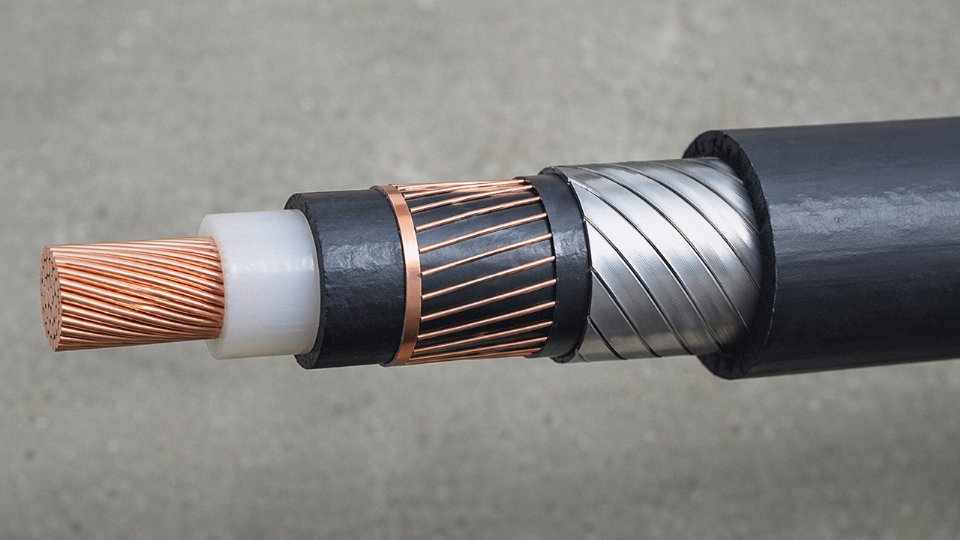
Single-core medium-voltage cables should use aluminum wire armor (AWA) rather than steel wire armor (SWA) to avoid eddy current heating in the armor.True
Steel forms a magnetic circuit around a single-core AC cable, inducing eddy currents and circulating currents in the armor that cause resistive heating and real power loss. Aluminum is non-ferromagnetic and does not sustain this effect, which is why AWA is standard practice for single-core MV and HV cable construction.
Selecting the Right Power Cable Name for Your Project Specification: A Practical Buying Guide
Getting the cable name right on a purchase order is not a formality. It is the specification. A vague or wrong designation can result in receiving a product that passes factory acceptance but fails at installation — wrong insulation thickness, wrong flexibility class, wrong fire rating — and by the time you discover the problem, the cable is already on a reel in your warehouse.
Step 1 — Establish Voltage Class Before Anything Else
This is where most errors happen, and the consequences are serious. Voltage designation is expressed as U₀/U (phase-to-earth / phase-to-phase), and each designation corresponds to a specific insulation wall thickness class that manufacturers actually produce. Specifying “1 kV cable” when you mean 0.6/1 kV is technically ambiguous in some markets; specifying 6/10 kV when the system is 3.8/6.6 kV buys you an over-engineered product you paid extra for — or worse, the supplier interprets your intent differently and ships the thinner wall.
The standard tiers you’ll encounter in practice: 0.6/1 kV for low-voltage distribution and most building wiring; 3.8/6.6 kV and 6/10 kV for medium-voltage industrial feeders; 12/20 kV and 19/33 kV for utility distribution; above that you’re into HV transmission territory where specification errors have procurement lead times measured in months, not weeks.
Always write the U₀/U figure explicitly in the spec. Never substitute a single nominal voltage number and assume the supplier will resolve the ambiguity correctly.
Step 2 — Conductor Material and Cross-Section
Copper versus aluminum is partly an engineering decision and partly a site-specific one. Copper carries roughly 1.5 to 1.6 times the current of aluminum at the same cross-section, so aluminum cables need to be upsized — typically one or two standard steps — to match the ampacity. Aluminum is meaningfully lighter (roughly 50% less mass per meter at comparable cross-sections) and cheaper, which matters on long overhead runs or large cable tray fills. The jointing issue is real, though: aluminum oxide forms fast and aluminum-to-copper terminations require proper bi-metallic lugs; skip that on a humid coastal site and you’ll have a failing joint within a few years.
State cross-section in mm² per IEC 60228, and — this is frequently overlooked — state the stranding class. Class 1 (solid) and Class 2 (stranded) are for fixed installations. Class 5 (flexible) is for trailing cables and mobile equipment. If you omit the class, some suppliers default to whatever class is cheapest to produce in that size. A 95 mm² Class 2 conductor and a 95 mm² Class 5 conductor have different outer diameters, different gland sizes, and different minimum bend radii.
Step 3 — Match Installation Environment to Construction Name
Environment is what drives armor type, sheath material, and ultimately the cable designation. A cable going into a PVC duct under a road needs different construction than one clamped to an open tray in a chemical plant.
| Installation Environment | Typical Construction | Common Name Fragment |
|---|---|---|
| Indoor cable tray, dry | Unarmored, PVC or XLPE sheath | NYY, XLPE/PVC |
| Direct burial, mechanical risk | Steel wire armor (SWA) or steel tape armor | SWA, AWA |
| Outdoor free-air, UV exposure | UV-stabilized HDPE sheath | varies by standard |
| Duct installation, urban | Smooth HDPE outer sheath | often designated “for duct” |
| Wet/submerged, non-submarine | Double SWA, waterproof bedding | check IEC 60502 series |
| Cable tray, ladder, free-air (industrial) | Armored or interlocked armor | TECK90 (Canada), MC (US) |
Getting the armor type wrong matters. Steel wire armor resists tensile loads on vertical risers; steel tape armor is about radial crush resistance, not axial tension. Using the wrong type is a construction failure waiting to happen.
Step 4 — Fire Performance Is an Additive Descriptor, Not a Default
This catches buyers out repeatedly. A cable labeled XLPE/SWA/PVC is not automatically flame-retardant. Fire performance designations — IEC 60332-1 or -3 for flame retardance, IEC 60331 for fire resistance (circuit integrity under flame), IEC 60754 and EN 50525 for low smoke zero halogen — must be explicitly stated in the purchase order. They add cost, and a supplier quoting a standard cable will not volunteer the upgrade unless you ask.
If your project involves a public building, a tunnel, a data center, or any installation where evacuation routes pass through cable-dense spaces, LSZH with IEC 60332-3 bundle flame test compliance is usually mandatory under the local code. State the category: -3A, -3B, -3C, and -3D correspond to different total non-metallic material volumes per meter and have very different test severity levels.
Step 5 — Specify the Governing Standard and Demand Test Evidence
Naming a cable “IEC 60502-1, 0.6/1 kV, Cu/XLPE/SWA/LSZH, 3×95 mm² Class 2” is a complete, unambiguous specification. It locks the supplier into a specific standard’s construction and test requirements. Pair that with a requirement for the type test reports (full IEC 60502 type test, third-party witnessed) and routine test certificates for the delivered drums, and you have procurement documentation that actually protects the project.
Request test certificates from accredited labs — KEMA, CESI, SGS, or equivalent. A factory test certificate signed by the manufacturer alone is not the same thing. On high-value or safety-critical projects, factory witness inspection during drum testing is worth arranging.
IEC 60502 type test reports from accredited third-party laboratories confirm that a cable's actual construction and performance match its designation.True
IEC 60502-1 and -2 specify mandatory type tests including conductor resistance, high-voltage test, insulation resistance, and mechanical tests. Third-party witness adds independence to the verification process.
How Jinda Supports International Procurement
Shandong Jinda Special Cable Group covers the full voltage range from low-voltage distribution cables through 500 kV XLPE transmission cable — manufactured across five production bases in China with a combined footprint of roughly 470,000 m². ISO 9001 and ISO 14001 certifications are in place across the production system, and the product range is designed for export to IEC, BS, and project-specific standards used across the 50+ countries Jinda currently supplies.
In practice, the most useful thing for international buyers is the pre-order specification review Jinda’s technical team provides. Send a draft spec, and the team will flag mismatches — a voltage class inconsistency, an incompatible armor type for the stated installation method, a fire rating that needs to be explicitly added — before the order is placed. That kind of review catches the expensive errors before they become site problems.
Frequently Asked Questions About Power Wire Names and Cable Terminology
What is the difference between a power wire and a power cable?
Technically, a wire is a single conductor — just the metal element, bare or with a thin insulation layer over it. A cable is an assembly: one or more insulated conductors laid up together and covered by a common outer sheath. In practice, though, electricians and even some engineers use “wire” and “cable” interchangeably on the shop floor, and nobody is going to stop a job over the terminology. Where it matters is in purchase specifications. Write “wire” when you mean a single conductor for conduit installation (THHN, for instance); write “cable” when you mean a finished, jacketed assembly ready for direct installation. Getting this wrong in a spec doesn’t always cause a problem, but occasionally a supplier ships bare conductors when you needed a jacketed multi-core assembly, and that’s a delay you don’t want on a commissioning schedule.
What are the wires inside a power cable called?
The metal current-carrying element — copper or aluminum — is the conductor. Once that conductor is covered with its own insulation layer, the combination is called a core. Bundle two or more cores together, wrap them with fillers and a common outer sheath, and you have a cable. Some manufacturers also use the term “element” for individually screened cores in instrumentation cables, but in power cable work, “core” is the standard term. When a spec says “3-core cable,” it means three insulated conductors inside one sheath — straightforward once you know the hierarchy.
What is THHN wire and where is it used?
THHN stands for Thermoplastic High Heat-resistant Nylon-coated. It’s a North American building wire rated 90 °C in dry locations and 75 °C in wet conditions, governed by NEC Article 310. You’ll find it everywhere in US commercial and industrial construction — branch circuits, feeder runs, motor connections — always pulled through conduit, never installed as a standalone cable outdoors. The nylon jacket is there to reduce friction during conduit pulling, which matters more than it sounds when you’re pulling 400-foot runs through a crowded tray. THWN-2 is the wet-rated version; in practice most wire sold today is dual-rated THHN/THWN-2, which simplifies procurement.
What does SWA mean in a cable name?
Steel Wire Armored. It’s a layer of galvanized steel wires helically applied over the cable cores (and usually over a bedding layer) but beneath the outer PVC or polyethylene sheath. SWA cables are the standard choice for direct-burial runs, cable ducting in industrial plants, and anywhere mechanical damage is a real risk — think underground feeds to switchgear, runs through concrete trenches, or installations where rodents are a documented problem. The armor also provides a continuous earth path, which some installation designs rely on, though best practice is usually to run a separate earth conductor anyway.
What is the difference between XLPE and PVC cable?
XLPE (cross-linked polyethylene) runs continuously at 90 °C against 70 °C for standard PVC, which means a given conductor cross-section can carry more current — or you can step down a size and save material cost on long runs. At medium and high voltages, XLPE’s dielectric properties are genuinely superior; PVC isn’t really used above 6 kV for that reason. XLPE also handles short-circuit temperatures better (up to 250 °C vs. roughly 160 °C for PVC) and holds up longer in service, typically 30–40 years in a well-installed system versus 20–25 years for PVC in similar conditions, depending heavily on thermal cycling and installation quality. PVC stays the practical choice for standard low-voltage building and panel wiring where cost matters and operating conditions are mild.
XLPE cables offer a higher continuous operating temperature rating than standard PVC cablesTrue
XLPE is cross-linked during manufacturing, which stabilizes its molecular structure at elevated temperatures. Standard PVC softens and degrades above roughly 70 °C continuous, while XLPE maintains integrity to 90 °C continuous — a fact reflected in IEC 60502 and confirmed by routine thermal endurance testing.
What is an aerial bundled cable (ABC)?
ABC is a set of insulated single-core or multi-core conductors twisted together for overhead line installation. Unlike traditional bare overhead conductors, ABC eliminates the need for large phase-to-phase and phase-to-ground clearances, which makes it practical in urban streets, forested corridors, and anywhere the right-of-way is tight. It’s widely used in distribution networks across Southeast Asia, Africa, and parts of Europe for exactly that reason. Installation crews also appreciate that the insulation reduces the risk of accidental contact during maintenance — not a trivial point in areas where informal connections are common.
Can I use the same cable name when ordering from a Chinese manufacturer that I would use for a European cable?
Not directly, and this trips up procurement teams regularly. A Chinese GB/T designation like YJV 3×95 mm² and a European IEC designation like N2XY 3×95 mm² describe cables of similar general construction — XLPE-insulated, PVC-sheathed, three-core — but they’re manufactured to different standards with different test requirements, conductor resistance tolerances, and sometimes different insulation thickness minimums. The cables may perform identically in service, or there may be meaningful differences depending on the application voltage and installation environment. Always specify the governing standard explicitly, request type-test certificates to that standard, and if the project is in a jurisdiction with mandatory approvals (CE marking, BASEC certification, UL listing), confirm compliance before ordering. A supplier who pushes back on providing test documentation is a supplier worth reconsidering.
What voltage is a standard household power wire rated for?
Residential flexible cords — the kind on appliances and lamps — are typically rated 300/500 V or 450/750 V. Fixed building wiring, meaning what’s in your walls, is generally rated 0.6/1 kV (that’s 600 V phase-to-earth, 1000 V phase-to-phase). In most countries, the actual supply voltage is 230 V or 120 V, so the cable rating carries a substantial safety margin by design. That margin accounts for switching transients, insulation aging, and the reality that nobody replaces building wiring every time voltage standards shift. The two-number rating format (like 0.6/1 kV) follows IEC convention: the first number is the rated voltage to earth, the second is the rated voltage between conductors.