Specify the wrong cable type on a commercial build and you will not find out until the walls are closed, the fit-out crew is halfway through, and an electrician pulls a tester out and gets a reading that stops the job. Rework behind finished surfaces costs anywhere from three to ten times more than getting the spec right on paper, and that assumes you catch it before energisation. On large projects — data centres, hospitals, industrial plants — a single undersized feeder cable can cascade into months of delay and six-figure remediation bills.
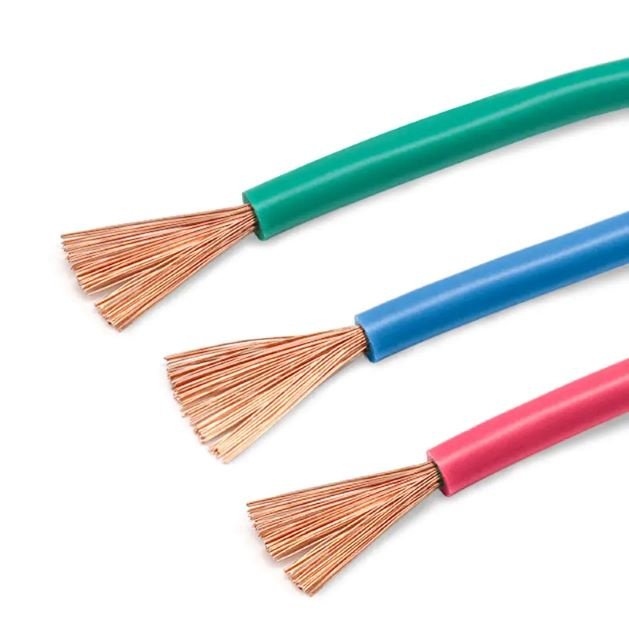
Cable in construction refers to insulated electrical conductors used to distribute power, carry control signals, and transmit data throughout a building or infrastructure project. Construction cables are classified by voltage rating, conductor material, insulation type, and installation environment. They range from low-voltage wiring inside walls to medium-voltage feeders supplying entire site substations, and selecting the correct type determines safety, regulatory compliance, and long-term operating cost.
What makes cable selection genuinely complicated is that the same building can legally accept several different solutions — and the gap between a cheap acceptable choice and the right one only shows up years later in heat losses, derating headaches, or a maintenance team cutting into a wall and finding armoured cable where the drawings said unarmoured. The global construction cable market sat somewhere between USD 28–32 billion in 2023 and is expanding at roughly 6–8% per year through 2030, which means more projects, tighter lead times, and more procurement decisions being made under pressure. Understanding what these cables actually are — and why the differences matter on the floor, not just in the catalogue — is worth doing properly.
The Full Taxonomy of Construction Cables: Types, Ratings, and Where Each Is Used
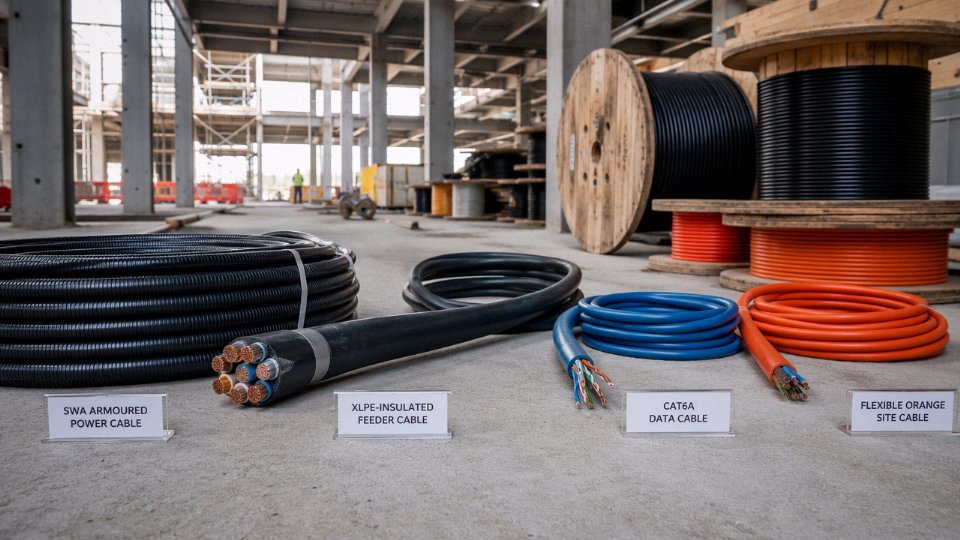
Construction projects pull from at least six distinct cable families, and mixing them up — or defaulting to whatever the distributor has in stock — is one of the most reliable ways to fail an inspection or chase an intermittent fault for weeks. Here is how those families actually break down on the spec sheet and on the floor.
Low-Voltage Power Cables (Up to 1 kV)
This is the volume category. LV cables cover lighting circuits, socket outlets, distribution boards, and motor feeds in residential, commercial, and light industrial buildings. The dominant types you’ll see specified are NYY and NYM (PVC-insulated, widely used across European-influenced markets), YJV and VV (the Chinese GB-standard equivalents, XLPE and PVC insulated respectively), and XLPE/SWA for runs that need mechanical protection. NYM is a solid choice for in-wall residential work — it’s flexible enough to pull through conduit and the outer sheath handles incidental contact reasonably well. YJV with XLPE insulation handles higher operating temperatures (up to 90 °C conductor temp versus 70 °C for PVC), which matters when you’re sizing cables in a crowded trunking system where heat buildup is real.
XLPE-insulated LV cables can operate at a maximum continuous conductor temperature of 90 °C, compared to 70 °C for standard PVC-insulated cables.True
This is established in IEC 60502-1 and most national standards derived from it. The higher thermal rating allows XLPE cables to carry more current for the same conductor cross-section, or allows a smaller cross-section for the same load — a genuine engineering advantage in dense cable trays.
Low-voltage cables represent roughly 55–60% of total cable volume on a typical construction project, though that share shifts downward on heavy industrial sites where MV distribution is more extensive.
Medium-Voltage Cables (1 kV–35 kV)
MV cables feed the main distribution switchgear in large commercial complexes, hospitals, data centers, and industrial parks. The voltage class — 6 kV, 10 kV, 33 kV — depends on the utility interface and the load density of the facility. What many project engineers underestimate is the termination and jointing work. An MV cable isn’t just a bigger LV cable; the electric field management at every joint and termination requires stress cones, specific tools, and trained jointers. A badly made MV joint typically survives commissioning, then fails under load cycling six to eighteen months later. Budget for proper jointing kits from the start and do not let general electricians do this work unsupervised.
Fire-Resistant and Fire-Retardant Cables
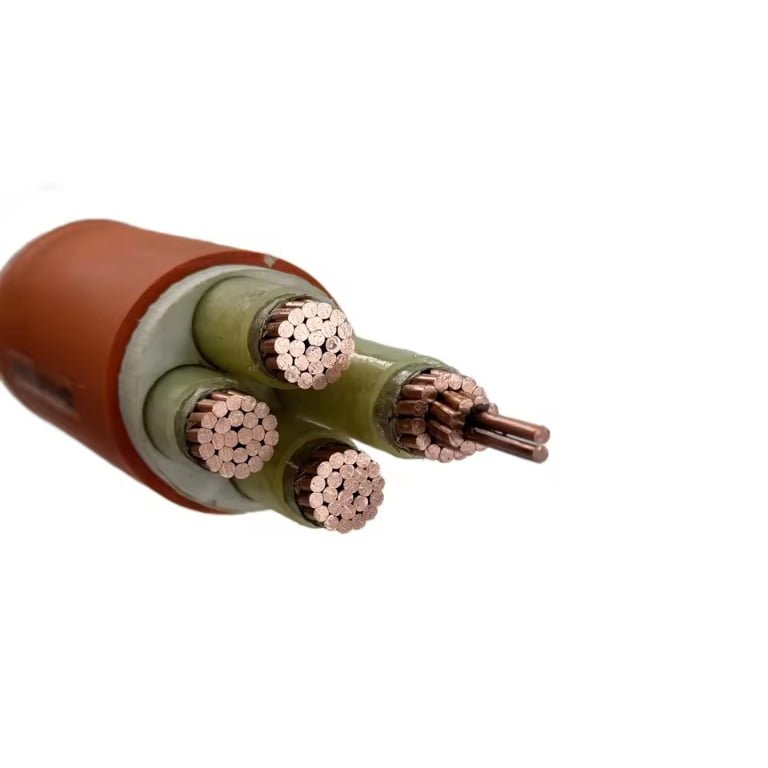
These are not interchangeable, and the consequences of swapping them are serious. LSZH (Low Smoke Zero Halogen) cable reduces toxic gas and smoke density in a fire — it’s mandated in confined spaces, tunnels, and areas with high occupancy where evacuation time matters. FR (Fire Resistant) cable maintains circuit integrity during a fire for a defined period, typically 30–120 minutes per IEC 60331. FP cables (fire performance cables, commonly copper-conductor with mica-tape barrier) are specified for emergency lighting, fire alarm, and smoke control circuits in high-rise cores and escape routes. Mineral-insulated cable (MICC) sits at the top of that hierarchy — it survives temperatures that destroy everything else and is effectively permanent, though it’s expensive and requires skilled termination.
Armored Versus Unarmored
Steel Wire Armored (SWA) cable handles direct burial, exposed outdoor runs, and anywhere mechanical impact is a real possibility. Steel Tape Armored (STA) gives crush resistance but less tensile protection — better for vertical risers than for direct-buried feeders. Aluminum Wire Armored (AWA) is lighter and avoids the induced-current losses you get with SWA on single-core cables. If a cable runs inside conduit its full length, armoring often adds cost without adding value. That said, on sites where conduit routes get modified mid-project (which is most sites), having SWA on the cable provides a margin of forgiveness.
Control and Instrumentation Cables
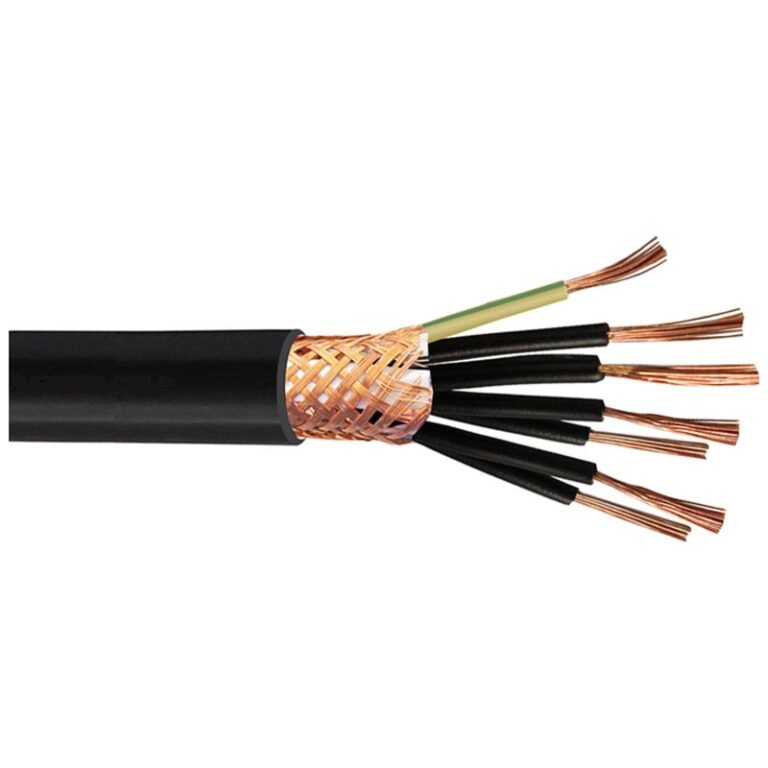
BMS loops, HVAC actuator wiring, elevator control circuits, and fire detection zones all use multi-core screened cables, typically rated 300/500 V. Core counts run from 4-core up to 61-core depending on the system. Shielding — overall foil, individual pair screens, or braided — depends on the noise environment. A building with large VFDs running nearby needs more careful screening than a standard office fit-out.
Data and Communications Cables
Cat6A is now the practical minimum for new commercial structured cabling, supporting 10GbE to 100 m. OS2 single-mode fiber handles campus backbone and inter-building links where distance or bandwidth demands it. OM3/OM4 multimode is still widely used inside buildings for short-haul fiber runs to server rooms. Security, AV, and access control systems layer on top of this infrastructure — coordinate the pathways early, because data cable routes and power cable routes need separation to avoid interference issues.
Flexible Cables and Cords
H07RN-F and its equivalents do the work that fixed wiring can’t — temporary site power, hand tools, extension leads, crane festoon systems, and any equipment that moves. These cables take abuse: they get dragged across concrete, run over by forklifts, and coiled badly for months. Inspect them before each use phase, replace them on a defined cycle rather than waiting for visible damage, and never use standard building wire as a substitute on a temporary supply run. The insulation isn’t designed for repeated flexing and it will crack.
How to Read a Cable Specification: Conductors, Insulation, Shielding, and Jacket Materials Decoded
A cable datasheet looks straightforward until you’re standing in a procurement office comparing three quotes for the same nominal product and realizing the specs diverge in ways the salespeople aren’t highlighting. Knowing how to read — and write — a proper cable specification is what separates a verified purchase from an expensive assumption.
Conductor Class: Flexibility, Termination, and What You’re Actually Paying For
IEC 60228 defines conductor classes that matter operationally, not just academically. Class 1 is solid — one wire, fixed installations, cheap to terminate, and appropriate where the cable never moves. Class 2 is stranded (typically 7 or 19 wires), the workhorse of building wiring: it tolerates the bending radius you actually get during installation without cracking. Class 5 is flexible fine-wire, used in trailing cables, festoon systems, and equipment connections that flex repeatedly. Specifying Class 5 for a fixed conduit run wastes money; specifying Class 2 for a crane cable will cause premature conductor fatigue — sometimes within months.
Aluminum conductors are roughly 30–40% of the weight and cost of copper equivalents, which matters enormously on long backbone runs where copper prices (USD 7,000–10,000/t versus aluminum’s USD 2,000–3,000/t) can shift the feeder cable budget by tens of thousands on a mid-sized commercial project. The catch: aluminum oxidizes fast at joints and requires both a larger cross-section (typically one or two standard sizes up for equivalent ampacity) and anti-oxidation compound applied at every termination. Skip the compound and you’re looking at high-resistance joints, localized overheating, and eventually a failed connection — usually at the worst possible moment.
Cross-Sectional Area: Three Governing Factors, Not One
Most site engineers size cables by ampacity alone. That’s necessary but insufficient. Voltage drop matters the moment your cable run exceeds roughly 30–50 m at low voltage — a 2.5 mm² circuit running 80 m to a lighting panel can drop enough voltage to cause lamp flicker and ballast failures even if the thermal loading looks fine. Short-circuit withstand is the third factor: the cable must survive the prospective fault current for the duration it takes the upstream protective device to clear. Undersized cables can be destroyed in milliseconds under fault conditions.
| Cross-Section | Typical Application Range |
|---|---|
| 1.5 mm² | Lighting circuits, signal wiring, light domestic loads |
| 2.5 mm² | Standard 13A socket circuits, small motor control |
| 4–6 mm² | Cookers, large domestic appliances, small commercial loads |
| 10–16 mm² | Sub-distribution boards, HVAC motors up to ~5–7 kW |
| 35–70 mm² | Medium LV feeders, commercial floor distribution |
| 95–150 mm² | Main LV feeders, large plant equipment |
| 185–300 mm² | Transformer secondaries, main incomer cables, industrial backbone |
Actual selection depends on installation method (clipped, ducted, buried), ambient temperature, grouping derating, and the protective device upstream. These figures are starting points, not substitutes for a proper calculation.
Insulation: Temperature Rating Is the Design Limit, Not a Safety Buffer
PVC insulation is cost-effective and ubiquitous — rated to 70°C conductor temperature, adequate for most building wiring where ambient conditions are controlled. XLPE (cross-linked polyethylene) raises that ceiling to 90°C continuous, handles higher current densities in the same cross-section, and resists chemical attack better. Specify XLPE on any medium-voltage cable or anywhere you’re pushing ampacity close to the limit. EPR (ethylene propylene rubber) adds genuine flexibility at low temperatures and performs well in wet or damp locations — utilities use it heavily for underground residential distribution. Mineral-insulated copper-clad (MICC) cables are in a different category altogether: they survive temperatures above 250°C and are specified for fire-critical circuits (emergency lighting, fire pumps, smoke extract fans) where the cable must keep functioning while everything around it burns.
XLPE-insulated cables can carry more current than PVC cables at the same cross-section because the higher permissible conductor temperature allows a larger temperature differential between conductor and ambient.True
Current-carrying capacity is governed by heat dissipation; a 90°C-rated conductor in 30°C ambient has a 60 K temperature budget versus 40 K for 70°C-rated PVC, directly increasing allowable current per IEC 60364 derating tables.
Shielding: When It Matters and When It’s Wasted Money
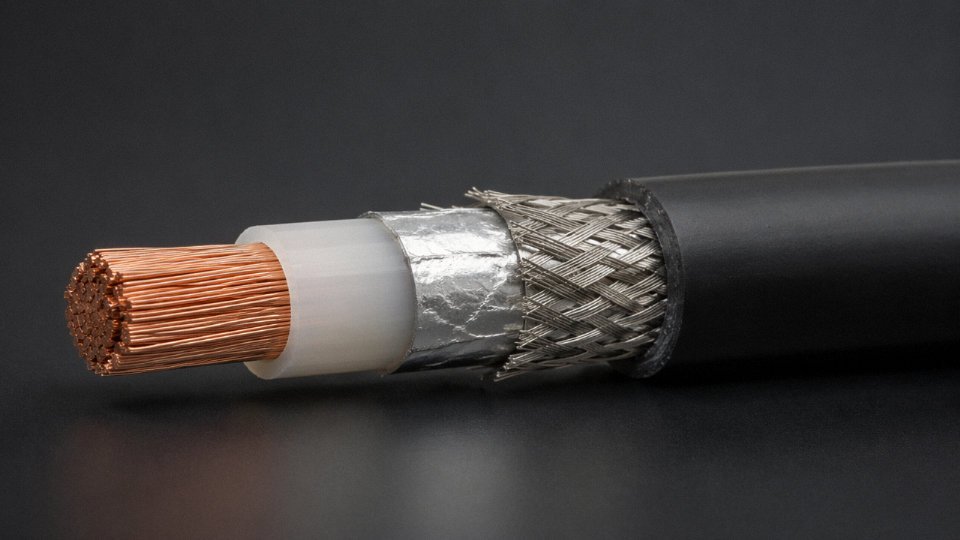
Unshielded power cable is fine for most building circuits. The moment you’re running instrumentation cable near variable frequency drives, welding sets, or diesel generators — all common on active construction sites — electromagnetic interference becomes a real problem. Individual core screens (foil or braid around each core) are used where cross-talk between pairs matters, typically in data or process control cables. An overall braid or foil screen around all cores handles common-mode interference from external sources. The shield is only effective if it’s properly grounded — usually at one end only for signal cables to avoid ground loops. Getting this wrong produces ghost readings, nuisance trips, and control system instability that can take days to diagnose.
Outer Jacket: Fire Behavior and Environmental Resistance
Standard PVC jackets are fine for most indoor, dry installations. LSZH (low-smoke zero-halogen) sheathing is specified wherever fire toxicity and visibility matter — tunnels, confined plant rooms, public buildings, anywhere evacuation might be impeded by dense toxic smoke. Polyurethane jackets resist abrasion and mild chemical exposure, common in plant rooms and basement mechanical areas. Rubber and neoprene jackets handle outdoor UV exposure, oil, and the physical abuse of trailing and flexible applications better than PVC, which becomes brittle in cold weather and UV-degraded outdoors over a few years.
Decoding a Cable Designation String
Take YJV22 3×185+1×95 0.6/1 kV: Y = PVC outer sheath, J = XLPE insulation, V = PVC bedding, 22 = double steel tape armoring, 3×185 = three 185 mm² cores, +1×95 = one 95 mm² neutral/earth core, 0.6/1 kV = rated voltage (conductor-to-earth / conductor-to-conductor).
Or N2XRY 3×120/70 12/20 kV: N = German VDE designation, 2X = XLPE insulation, R = round wire armoring, Y = PVC outer sheath, 3×120/70 = three 120 mm² phase conductors with 70 mm² screen/neutral, 12/20 kV = medium-voltage rating.
Once you can parse these strings, you can verify that the cable leaving the factory matches the approved drawing — and catch substitutions before they’re buried in a trench or pulled through conduit where fixing them costs ten times the cable’s price.
International Standards and Certification Frameworks Every Construction Cable Must Meet
Sourcing cable across borders is where projects get into trouble fast. A cable that passes muster under one regime can fail another, and the consequences range from a failed inspection to a catastrophic fire in an escape route. Understanding the standard landscape — not just knowing the names, but knowing what each test actually measures — is the difference between a smooth commissioning and an expensive rework.
IEC Standards: The Closest Thing to a Global Baseline
IEC 60502 covers power cables from 1 kV up to 30 kV and defines construction, test methods, and routine production tests. In practice, it tells you what a cable must withstand over its service life, not just at the moment it leaves the factory. IEC 60228 classifies conductor configurations — Class 1 (solid), Class 2 (stranded), Class 5 (flexible) — which matters enormously when you’re specifying termination hardware or calculating voltage drop in long distribution runs.
The fire-related standards are where real-world stakes become obvious. IEC 60332 measures how far a flame propagates along a cable, either as a single cable (Part 1) or a bundled installation (Part 3). The bundle test is the critical one for cable trays and risers — a single-cable pass does not guarantee acceptable performance when 30 cables are run together, because the total combustible mass changes everything. IEC 60754 tests halogen content in combustion gases; low halogen means lower corrosive acid damage to electronics and structure during a fire. IEC 61034 measures smoke density — specifically optical obscuration, which is what determines whether occupants can see an exit sign from 10 meters away.
Regional Standards and Where They Diverge
BS 7671 (the UK IEG Wiring Regulations) references product standards like BS 5467 and BS 6724, which are largely harmonized with IEC 60502 but carry specific requirements on armor construction and sheath color coding that differ from continental practice. Bringing an IEC-only cable into a UK project without checking the BS annex requirements has caused specification disputes at handover.
North American practice runs on a completely different track. UL 83 covers thermoplastic-insulated wires, UL 44 covers thermoset, and UL 1277 covers tray cables — all tested to NEC article requirements rather than IEC methods. The test philosophies are genuinely different: UL’s vertical flame test geometry is not equivalent to IEC 60332, so a cable cannot simply present its IEC 60332 certificate to a UL-governed inspector. Australia and New Zealand use AS/NZS 5000, which is closer to IEC in method but has local quirks on sheath materials and sunlight resistance ratings that matter in exposed outdoor runs. China’s GB/T standards are increasingly aligned with IEC, though conductor resistance tolerances and some insulation thickness minimums diverge at certain voltage classes.
Fire Performance Under the EU’s CPR
The EU Construction Products Regulation introduced Euroclass ratings — Aca down through Fca — under EN 13501-6. Cables in escape routes, tunnels, and public assembly buildings typically require Cca-s1b,d1,a1 or better, depending on national Annex specifications. This is not a voluntary quality signal; it is a legal requirement for CE marking in those applications. The Euroclass system tests gross calorific potential, flame spread, smoke production, burning droplets, and acidity — simultaneously, on a full installation mock-up. It is a more demanding and more realistic test than many earlier single-parameter methods.
LSZH Claims Require Actual Test Certificates
A cable jacket printed with “LSZH” or “LSOH” is a marketing statement until you see the test report. Halogen-free status must be verified against IEC 60754-1 (total halogen content) and IEC 60754-2 (pH and conductivity of combustion gases). Smoke density must be verified against IEC 61034-2 specifically — not a generic smoke test from a different standard family. In practice, ask for the actual test report with test date, sample batch reference, and the testing laboratory’s accreditation number. A Certificate of Conformity issued by the manufacturer themselves, without a traceable third-party report behind it, is insufficient.
A cable labeled 'LSZH' by a manufacturer automatically meets IEC 60754 and IEC 61034 requirementsFalse
LSZH is a product description, not a certification. Verified compliance requires test reports against IEC 60754-1/2 for halogen content and IEC 61034-2 for smoke density, issued by an accredited third-party laboratory with traceable sample references.
Third-Party Bodies and How to Read What They Produce
KEMA (now part of DNV), BASEC (UK-specific, heavily used for BS-standard cables), CESI, SGS, and Bureau Veritas all issue cable certifications, but they are not all equivalent in scope. BASEC, for instance, conducts ongoing factory surveillance and can suspend a listing — which means a BASEC-listed cable has continuous production monitoring behind it, not just a one-time type test. SGS and Bureau Veritas issue test reports and Certificates of Conformity but their scope varies by contract; always check whether the certificate covers the specific construction (conductor cross-section, insulation thickness, sheath compound) of the cable you are buying, not just the product family.
When auditing a test certificate, verify: the issuing laboratory’s accreditation (ILAC-MRA member bodies only, for international mutual recognition), the cable construction details match your purchase order, and the test date is recent enough to reflect the compound currently in production. Compounds change; a 2016 test report on a cable made with a 2023 compound batch is not valid coverage.
How Jinda Aligns with These Requirements in Production
Jinda’s manufacturing lines incorporate routine conductor resistance verification against IEC 60228 class tolerances on every drum, spark testing on insulation lines at voltages appropriate to the voltage class being produced, and partial discharge testing on medium-voltage cables — the last of these being a particularly reliable indicator of voids or contaminants in extruded insulation that no visual inspection would catch. For export markets, Jinda coordinates third-party witness testing and can supply full test documentation packages aligned to IEC, GB/T, and major regional requirements, which simplifies the certificate reconciliation work that procurement teams otherwise have to do themselves on large cross-border orders.
Cable Installation Methods in Construction: Conduit, Tray, Direct Burial, and Concealed Routing
Choosing the right cable is only half the job. How that cable gets installed determines whether it performs to its rated life — or fails in year three with a fault that’s expensive and nearly impossible to trace.
Conduit Systems: Metallic and Non-Metallic
Rigid galvanized steel conduit (RGS or GRC) is the workhorse for exposed industrial and commercial installations where mechanical abuse is a real risk — plant rooms, loading docks, anywhere a forklift could reasonably wander. Flexible metal conduit handles the last meter or so to equipment with vibration: motors, air-handling units, compressors. PVC conduit suits concealed runs in dry or moderately damp conditions and is substantially cheaper, though it needs closer fixing centers than steel — typically every 500–750 mm horizontal versus 900 mm–1 m for rigid steel, depending on the conduit diameter and local code.
Fill ratio matters more than most site supervisors realize. Both IET Wiring Regulations and the NEC cap usable conduit cross-sectional area at 40% for three or more cables in a single conduit run. Exceed that and you will struggle to pull cables without damaging insulation, and thermal dissipation degrades because cables can’t separate. On long straight runs — anything over roughly 30 m — specify expansion couplers for PVC conduit; seasonal temperature swings in an uninsulated roof void will otherwise crack joints over time. Galvanized steel is compatible with virtually all cable types; PVC conduit should not be used with cables that have PVC jackets in high-temperature zones, because mutual contact under sustained heat causes plasticizer migration.
Cable Tray and Ladder Rack
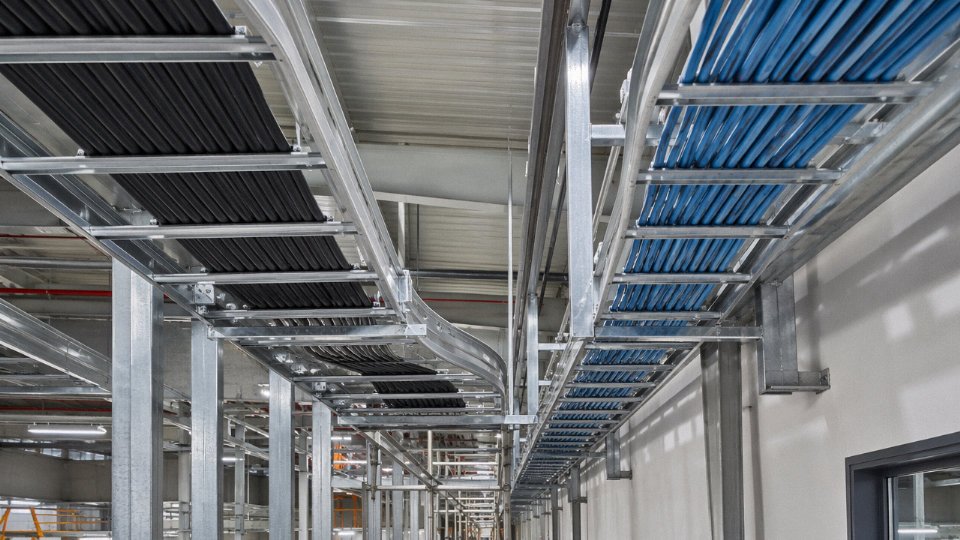
Perforated tray suits power cables in most commercial builds. Solid-bottom tray is chosen where cables need additional protection from dripping liquids — above process equipment, for instance. Wire mesh (basket) tray is popular in data centers and light commercial fit-outs because it’s fast to install and easy to modify. Cable ladder handles the heavy MV feeders where you need real load-bearing capacity and airflow around large conductors.
Load calculations are non-negotiable: you need to account for the filled weight of cables, not just the tray itself, and include dynamic loads from personnel walking the tray during maintenance. Earthing continuity across tray sections is routinely botched — every tray joint needs a bonding jumper or approved bonding strap unless the tray system is specifically listed as a continuous earth conductor. Segregation between power and data cables is a minimum 200 mm horizontal separation, or a solid metallic partition if space is tight; otherwise induced noise on data circuits becomes a recurring commissioning headache. At floor penetrations, fire barriers must be reinstated — intumescent pillows or compound packed to the same fire rating as the floor — and this is an area that gets skipped during fit-out rushes and fails building inspections badly.
Direct Burial
Only armored cables (SWA, AWA) or cables pulled through HDPE duct should go in the ground. Depth requirements vary: typically 600 mm cover for LV circuits, 900 mm or more for MV in most codes, with greater depth under roads and vehicle crossings. Always bed in 75–100 mm of sharp-sand below and above the cable before backfilling, and lay warning tape roughly 250 mm above the cable — yellow for power, in most jurisdictions. Skipping the sand bedding to save time is common and costs far more when a settlement nick damages armor and moisture tracks into the conductor over the next couple of years.
Concealed In-Wall and In-Slab Runs
Direct embedment of cables in concrete slab is technically permitted in some codes but creates a permanent, irreplaceable installation. Use flexible conduit embedded in the slab instead — the cable cost of a future replacement is trivial compared to breaking up finished floors. Thermal derating is a serious concern for cables enclosed in wall insulation: depending on insulation depth and type, apply derating factors in the range of 0.5–0.77 to the cable’s open-air current rating. Get this wrong and nuisance tripping starts within weeks of commissioning, followed by premature insulation aging.
Cables embedded directly in concrete without conduit cannot practically be replaced and carry significant thermal derating penalties.True
Direct embedment prevents future cable replacement without destructive work, and IET/NEC derating tables confirm substantial current-carrying capacity reductions for cables surrounded by thermally resistive materials such as insulation or dense concrete.
Vertical Risers and High-Rise Installations
Fire-resistant cabling — typically with mica-tape barriers, BS 6387 Category C/W/Z rated or equivalent — is mandatory in stairwells, lift shafts, and smoke-control circuit routes. Fire-stopping at every floor penetration is not optional and not a finish-trades task; it should be inspected and signed off as a structural/M&E milestone.
Vertical cable support cleats are spaced every 500–900 mm for heavy MV cables to prevent conductor migration under their own weight over decades. Undersized or missing cleats on a 10-floor riser is the kind of defect that shows up 15 years later as a failed termination — by which time the building has changed hands twice.
Cable Pulling Practices
Maximum pulling tension for copper conductors is approximately 50 N/mm² of conductor cross-section — so a 95 mm² cable can take roughly 4,750 N before the conductor starts to deform. Exceed that and you get micro-cracks in the conductor or hidden insulation stretching that won’t show up on an initial insulation resistance test but will fail under load cycling. Use an approved cable lubricant compatible with the jacket material (silicone-based lubes attack some PVC formulations — check the datasheet), sheave rollers at every direction change for runs longer than about 40 m, and manage drum handling carefully. Dropping a cable drum flat, or running it over rough ground on its flange, kinks the inner layers. That kink is invisible once the cable is pulled and terminated, and it concentrates mechanical stress at one point for the life of the installation.
Sizing and Selecting Construction Cables: The Engineering Calculations That Prevent Failures
Getting cable sizing wrong is one of the most expensive mistakes a construction electrical team can make — not because the cable itself costs that much, but because fixing it after walls are closed or trays are loaded costs a multiple of what correcting it at the design stage would have. Here is how to work through it properly.
Step 1 — Determine the Design Current
Start with the actual load, not the nameplate. Full-load current for a three-phase circuit is I = P / (√3 × V × PF × η), where P is the load in watts, V is the line voltage, PF is the power factor (typically 0.8–0.95 for motor loads; closer to unity for resistive heating), and η is drive or equipment efficiency. For a single-phase circuit, drop the √3.
The distinction between connected load, demand load, and diversified load matters enormously in a multi-tenancy commercial building or a factory with mixed machinery. Connected load is the sum of all nameplate ratings — almost never the right number to use. Demand load applies a demand factor (often 0.6–0.85 in office buildings, lower in 24-hour industrial plants where equipment runs continuously). Diversity factor accounts for the statistical improbability that every circuit peaks simultaneously. In practice, a conservative specifier uses demand load for feeder sizing and adds a 15–20% margin on top, especially if the building program is likely to grow.
Step 2 — Apply Derating Factors
Manufacturer ampacity tables are almost always published at 30°C ambient and single-circuit installation in free air or a standard conduit arrangement. Real buildings are neither.
Temperature correction: Above 30°C, ampacity drops. At 40°C, the correction factor is typically around 0.87–0.91 depending on insulation type; at 50°C it falls to roughly 0.71–0.82; at 60°C you can be looking at 0.58–0.67. Plant rooms housing boilers, compressors, or server cooling equipment regularly run at 45–55°C. Ignoring that in a substation annex has caused more than a few premature insulation failures I have personally traced back to original design documentation.
Grouping (bunching) factor: Multiple cables on a common tray reduce individual ampacity because heat cannot dissipate freely. The grouping factor ranges from about 0.87 for 2–3 circuits down to 0.57 or below for 10+ circuits in a tight bundle. On congested cable trays — which describe most large commercial projects by the time fit-out contractors have finished — this single factor can reduce rated ampacity by 30–40%. Miss it, and you get nuisance tripping at load peaks, or worse, slow thermal degradation that the protection device never catches until the insulation has already carbonized.
Thermal insulation enclosure: A cable buried inside thermal insulation (common in ceiling voids and partition walls) cannot shed heat at all. The derating can exceed 0.5 depending on the insulation thickness and how long the enclosed run is.
Direct burial depth: For underground runs, soil thermal resistivity and burial depth both affect ampacity. Wet, loose soil conducts heat better than dry compacted fill. Ratings shift by 10–25% depending on actual site conditions — ask for a soil thermal resistivity report on any critical buried feeder run rather than assuming the datasheet standard value.
Combine all applicable factors multiplicatively. If you have a grouping factor of 0.70 and a temperature correction of 0.82, your effective ampacity is 0.70 × 0.82 = 0.57 of the base rating. That is almost half. Select accordingly.
Step 3 — Check Voltage Drop
Ampacity confirms the conductor will not overheat. Voltage drop confirms the load will actually function correctly. IEC 60364 and BS 7671 both limit voltage drop to 3% for lighting circuits and 5% for power circuits measured from the origin of the installation to the point of use.
The formula is:
ΔV = I × L × (r·cosφ + x·sinφ) / 1000
Where I is design current (A), L is the one-way cable length in meters, r is the conductor AC resistance in mΩ/m, x is the conductor reactance in mΩ/m, and cosφ is the load power factor. Values for r and x come from the manufacturer’s datasheet — do not use generic textbook tables when a real datasheet is available, because stranding geometry, conductor temper, and operating temperature all shift the numbers.
On long runs — think a 120 m feeder to a ground-floor plant room from a high-rise distribution board — voltage drop frequently governs the conductor size, not ampacity. You may end up one or two cross-sectional area steps larger than the thermal calculation demands.
IEC 60364 and BS 7671 limit voltage drop to 3% for lighting circuits and 5% for power circuits from the installation origin to the point of use.True
Both IEC 60364-5-52 and BS 7671 (18th Edition, Appendix 12) specify these limits as the maximum permissible voltage drop under normal operating conditions for final circuits in building installations.
Step 4 — Verify Short-Circuit Withstand
A cable sized for ampacity and voltage drop can still fail catastrophically if a fault occurs and the upstream protection device is slow to clear. The adiabatic equation quantifies this:
S = I_sc × √t / k
S is the minimum conductor cross-sectional area in mm², I_sc is the prospective short-circuit current in amps, t is the maximum fault clearance time in seconds (from the protection device’s time-current characteristic), and k is a material constant — 115 for 70°C PVC-insulated copper, 143 for XLPE-insulated copper, 74 for aluminum PVC. If the calculated S exceeds your thermally and voltage-drop-selected size, you upsize again.
This check is non-negotiable on any feeder where the upstream fault level is above roughly 10 kA — which includes most commercial LV switchboards fed from a 1,000 kVA or larger transformer.
Step 5 — Confirm Protection Coordination
The protective device must protect the cable, not just the load. IEC 60364 and BS 7671 Table 41.1 set the maximum protective device rating relative to cable ampacity. A 63 A breaker on a 35 mm² copper XLPE cable in a benign installation is fine; that same breaker protecting a 25 mm² cable on a congested tray at 45°C ambient may not clear a sustained overload before the insulation is damaged.
Common Sizing Mistakes — and Their Real Consequences
The most frequent error I see in construction projects is designing for free-air single-circuit ampacity and then installing the cables on a congested tray with 12 other circuits, in a warm plant room, without recalculating. The protection device never trips because the overload is moderate and sustained, not sharp. The insulation degrades over months. Eventually something fails, the cause is hard to diagnose, and by then the remedial work requires partial demolition.
The second most common: specifying copper conductor cross-sections, getting a cheaper aluminum substitute offer, and accepting the substitution without recalculating. Aluminum’s conductivity is roughly 61% of copper’s. A 35 mm² copper conductor does not equal a 35 mm² aluminum conductor — you need approximately 54–70 mm² aluminum to match ampacity, and you need to revisit voltage drop and termination hardware. Substituting without recalculating is a documented cause of overheating at terminals.
Elevated ambient in plant rooms catches engineers who do a desktop calculation without walking the route. Always physically trace the cable run, note every zone with elevated temperature, and apply derating to each segment separately if conditions vary significantly along the route.
Procurement Strategy for Construction Cables: How to Source Reliably at Scale Without Overpaying
Procurement is where a well-engineered cable specification either holds together or quietly falls apart. Most project overruns I’ve seen trace back not to bad design but to a purchasing process that started too late, used an incomplete scope, or trusted a “compliant” quote that wasn’t.
Build the Cable Schedule Before You Touch a Quote
A complete cable schedule is the non-negotiable starting document. It should itemize every cable run by type, voltage class, conductor material and cross-section, number of cores, armor type, jacket compound, and required certifications — with quantities expressed in meters, not in vague “lots.” Build in a wastage allowance of 10–15%, depending on routing complexity and how many direction changes the installation method involves. Straight cable tray runs waste less; conduit through a congested ceiling void wastes considerably more.
Delivery phasing matters too. A high-rise project might need riser cables in months 3–6 and fit-out wiring from month 9 onward. Locking that phasing into the RFQ prevents the supplier from dumping an entire order on-site at once, which creates storage, damage, and cash-flow problems simultaneously.
Qualifying Suppliers — What Actually Matters
ISO 9001 certification is a baseline, not a differentiator. What separates a reliable cable manufacturer from a risky one at scale is production line capacity relative to your order volume, verifiable delivery track records on projects of comparable size, and raw material traceability — specifically whether the plant can produce copper or aluminum rod source documentation and compound batch records. For projects spanning 18–36 months, the supplier’s financial stability is a real concern; a factory that runs into liquidity problems at month 14 will not fulfill your scheduled call-offs regardless of what the contract says.
An on-site audit, or at minimum a third-party inspection report, is worth the cost on any order exceeding roughly USD 500,000. Ask to see their drum-length cutting records from a previous project. Short-length drums — anything under the specified minimum — are a red flag for poor production planning and a direct cause of excessive cable joints in your installation.
Reading Quotes Line by Line
The price comparison sheet your team puts together is only useful if it’s comparing the same thing. Check that quoted insulation wall thickness matches your specification — budget cables commonly run 5–10% thinner than stated, which affects both voltage rating and fire performance. Conductor resistance tolerance should align with IEC 60228 or equivalent; a conductor that’s technically within a loose tolerance can still cause voltage drop problems on long runs.
Clarify the commercial terms immediately. EXW pricing from a factory in China and DDP pricing to your project site are not remotely comparable figures, and the freight, insurance, customs duty, and local delivery costs between those two terms can shift the effective landed cost by 15–25% depending on the destination country and current freight rates.
Insulation wall thickness, conductor resistance tolerance, and fire test certificate validity are the three most commonly falsified or degraded parameters in budget cable substitutions.True
These parameters are difficult to verify without destructive testing or independent lab analysis, making them the most frequent points of degradation when lower-cost 'equivalent' cables are substituted. Industry quality audits and fire investigation reports consistently identify these as primary failure modes in non-compliant cable.
Substitution Risk Is Liability Risk
An “equivalent” cable from an unapproved source is not equivalent in any meaningful legal or engineering sense. If a fire event triggers an investigation and the installed cable cannot be traced to a valid test certificate for that specific product — not a similar product, that product — the liability exposure falls on whoever approved the substitution. That’s usually the MEP contractor or the procurement manager who signed off. Specifying by full technical reference and requiring the mill test certificate (MTC) for each drum is the only defensible position.
Frame Agreements and Phased Call-Offs
For large projects, a frame agreement with scheduled call-offs outperforms spot buying on almost every metric: price stability, production slot reservation, and logistics predictability. Suppliers with multiple production bases — Jinda operates five across China, covering 470,000 m² — can absorb demand peaks and shift production between facilities when one line is at capacity, which matters considerably when your schedule slips by six weeks and you need to compress delivery.
Import Documentation Checklist
International cable procurement generates a documentation chain that, if incomplete, stalls customs clearance at the worst possible moment. The minimum set: commercial invoice, packing list, certificate of origin, product test certificates referenced to the applicable standard, the MTC for each conductor lot, and for LSZH-jacketed cables, the MSDS for the compound. Destination-specific compliance documents — SASO for Saudi Arabia, SONCAP for Nigeria, and so on — need to be confirmed before production starts, not after the cable ships.
Cable Performance in Demanding Construction Environments: Fire, Heat, Water, and Mechanical Stress
Electrical performance gets most of the attention during specification, but the environments cables actually live in — boiler rooms, below-grade trenches, active construction floors, chemical plant basements — impose stresses that have nothing to do with ampacity or voltage drop. Standard commodity cables fail in these conditions not because the conductor is undersized, but because the insulation or sheath degrades long before the design life is reached.
Fire Behavior: Four Properties, Not One
This is probably the most misunderstood area in cable fire safety. A cable’s fire behavior breaks into four completely independent properties, each with its own test standard, and a cable can pass any one of them while failing the others.
Flame propagation tests whether fire spreads along the cable run — IEC 60332 series covers single-cable and bundled-cable variants. Fire resistance is entirely different: it tests whether the cable continues to carry current during a fire, keeping emergency systems alive. IEC 60331 and BS 6387 (categories C, W, Z for combined flame, water spray, and mechanical shock) govern this. Smoke production — measured under IEC 61034 — matters for evacuation; a cable that self-extinguishes can still fill a corridor with dense, disorienting smoke within two minutes of ignition. Halogen content determines whether the gases released are toxic and corrosive to electronic equipment; IEC 60754 sets the test regime, and zero-halogen formulations are increasingly mandated for public buildings, tunnels, and data centers.
Specifying “fire-rated cable” without calling out which of these four properties you need is a common procurement error. A standard LSZH cable handles smoke and halogens well but is not necessarily fire-resistant in the IEC 60331 sense. An FP200-type cable (mineral insulation or mica-wrapped) gives genuine circuit integrity under fire but costs 3–5× more per meter than a basic LSZH cable — the decision depends on whether the circuit is life-safety or general power.
A cable marked LSZH (Low Smoke Zero Halogen) is automatically fire resistant and will maintain circuit integrity during a fire.False
LSZH describes the sheath compound's smoke and halogen properties only. Circuit integrity under fire is a separate property tested to IEC 60331 or BS 6387 and requires a different cable construction, such as mineral insulation or mica-tape wrapping. An LSZH cable may self-extinguish and produce little smoke while still losing electrical function within minutes of fire exposure.
High-Temperature Environments
PVC insulation has a continuous operating limit around 70°C. In plant rooms housing boilers, steam pipework, or large HVAC chillers, ambient temperatures can easily sit at 50–60°C before any conductor heating is added — leaving almost no thermal headroom. XLPE-insulated cables, rated to 90°C continuous, are the practical step up for these zones. In steam-prone or cyclically wet-hot environments (laundry plant, commercial kitchens, some pharmaceutical production areas), EPR (ethylene propylene rubber) tolerates both the temperature and the moisture cycling better than XLPE, which can be surprisingly brittle after repeated thermal expansion in damp conditions. Above roughly 180°C — near kilns, certain process ovens, or bus duct stub connections — silicone rubber is usually the only sensible insulation choice, though it’s mechanically soft and needs conduit protection.
Water and Moisture Ingress
There’s a distinction worth keeping clear: IP ratings apply to terminations and connectors, not to the cable body itself. A cable sitting in a flooded underground duct can wick moisture longitudinally along the conductor interstices for meters, even if the individual terminations are IP68-rated. For direct-burial or submarine trench runs, specify cables with longitudinal water-blocking tape (a swellable non-woven tape between layers) and fully filled conductor construction — the compound fills the interstices so water has nowhere to travel. Without this, sustained moisture contact causes electrochemical treeing in PVC insulation over 5–10 years, eventually producing insulation tracking paths and phase-to-earth faults that are hard to locate and expensive to repair.
Mechanical Damage on Active Construction Sites
Construction sites are brutal. Cables installed before screed is laid — temporary power feeds, embedded sensor runs, underfloor heating control cables — routinely get walked on by workers in heavy boots, run over by scaffold trolleys, or crushed under stacked boards. A standard 1.5 mm² PVC-sheathed cable has virtually no crush resistance. For any floor-level horizontal run that will be exposed during the active build phase, steel wire armored (SWA) or at minimum a heavy-duty HDPE-sheathed cable is worth the small cost premium. Abrasion at conduit entry points and tray edges is a slower killer — the sheath wears through over years of vibration, eventually exposing insulation to the metalwork edge. Use a quality PVC grommet or conduit entry bush; it’s a $0.30 fitting that prevents a cable fault at year four.
Chemical Exposure
Standard PVC sheaths hold up fine against water and mild mechanical wear, but they swell, soften, and eventually crack when exposed to oils, hydraulic fluids, common solvents, and even some cleaning agents used in food processing or pharmaceutical plants. In basement plant rooms where oil-lubricated machinery sits, or in agricultural facilities with fertilizer exposure, the sheath degradation can happen within 18–24 months. Polyurethane (PUR) sheaths give excellent oil and abrasion resistance. CSPE (Hypalon) handles a wider range of chemicals including oxidizing acids. For most industrial chemical environments, a sheath compound discussion with the cable manufacturer is worthwhile before defaulting to standard PVC — the cost difference between a standard and a chemically resistant sheath on a medium-sized project is typically modest, while the cost of a sheath-failure-driven rewire is not.
UV and Outdoor Exposure
Standard PVC formulations are not stabilized for prolonged UV exposure. Left outdoors — on rooftop cable trays, bridge structures, or external wall surface runs — PVC sheaths chalk, become brittle, and crack within roughly 3–5 years depending on geographic latitude and sheath color (black absorbs more heat but typically has better UV stabilization than grey or white grades). Once the sheath cracks, moisture ingress follows. The fix is straightforward: specify black UV-stabilized LSZH or HDPE outer sheaths for any permanently outdoor run. HDPE is particularly robust for direct-buried outdoor routes and costs only marginally more than standard PVC in most markets. The specification note adds two words; the field repair later costs days.
Frequently Asked Questions About Cable in Construction
What is the difference between a wire and a cable in construction?
A wire is a single conductor — either solid or stranded — that may or may not carry its own insulation. A cable is an assembly: two or more insulated conductors laid up together, or in some definitions, a single insulated conductor wrapped in additional protective layers (armoring, an outer jacket, a screen) that make it suitable for a defined installation environment. In practice on site, people use the terms interchangeably and that’s mostly fine for conversation, but it absolutely cannot be loose in a purchase order or a specification. If you write “cable” and receive single-core unsheathed wire, you’ve created an installation problem — and depending on your installation method, a code violation.
What cable is used for building wiring in residential construction?
In UK and IEC-aligned markets, the workhorse is 6242Y flat twin-and-earth: 1.5 mm² copper for lighting circuits, 2.5 mm² copper for socket outlet circuits at 230 V single-phase. Those sizes assume circuit lengths within roughly 20–25 m and protective device ratings of 16 A (sockets) or 6–10 A (lighting). Longer runs, high-load kitchen circuits, or anything over 20 A pushes you to 4 mm² or 6 mm² — it’s a voltage-drop and thermal calculation, not a guess. In North American markets, NM-B (Romex-type) serves the same function, with conductor sizing in AWG governed by NEC tables. The underlying principle is identical even if the product codes look nothing alike.
What does LSZH mean and when is it required?
Low Smoke Zero Halogen. When a standard PVC cable burns, it releases hydrogen chloride gas — dense, toxic, corrosive to electronics, and capable of incapacitating occupants before the fire itself reaches them. LSZH compounds are formulated so that combustion produces neither halogenic acid gases nor the thick black smoke that kills visibility in escape routes. Specifying it is mandatory in enclosed public spaces, underground railway stations, road tunnels, data centers, and high-rise residential escape cores in most European and Middle Eastern building codes. It is not optional in those environments regardless of what a low-bid supplier might suggest.
LSZH cables produce significantly less toxic gas and smoke than standard PVC cables when exposed to flameTrue
Confirmed by IEC 60754 (halogen content) and IEC 61034 (smoke density) test standards, which LSZH cables must pass to carry that designation. Standard PVC cables are not required to meet either test.
Can aluminum cable be used in building construction?
Yes — widely, and sensibly — for main feeders and distribution cables from 35 mm² upward where the cost difference versus copper is material. At current commodity prices (copper running USD 7,000–10,000/t against aluminum at USD 2,000–3,000/t), the savings on a large feeder run are real enough to change a project budget. What aluminum cannot do reliably is small branch circuits. Aluminum oxide forms quickly at terminations, creep under clamping pressure loosens joints over time, and a disturbed or re-torqued aluminum joint in a 4 mm² branch circuit is a genuine fire risk. Use it at the right scale, with proper bimetallic lugs, and it’s a legitimate engineering choice. Use it everywhere to cut costs and you’ll be troubleshooting warm distribution boards within a few years.
How do I calculate how much cable I need for a project?
Route length first — not straight-line distance, actual routed distance following the conduit or tray path, including every vertical drop. Add 1.5–2 m per connection point for the drop to equipment, 1–2 m loop allowance at each distribution board, and then a 10–15% over-order buffer on top of the total. That buffer is not padding; it covers field cuts, damaged drum ends, re-routes when structural elements aren’t where the drawings showed, and the inevitable short lengths left on partially used drums. Ordering tight on cable is one of the more reliable ways to generate mid-project procurement chaos.
What is the shelf life of cables stored on a construction site?
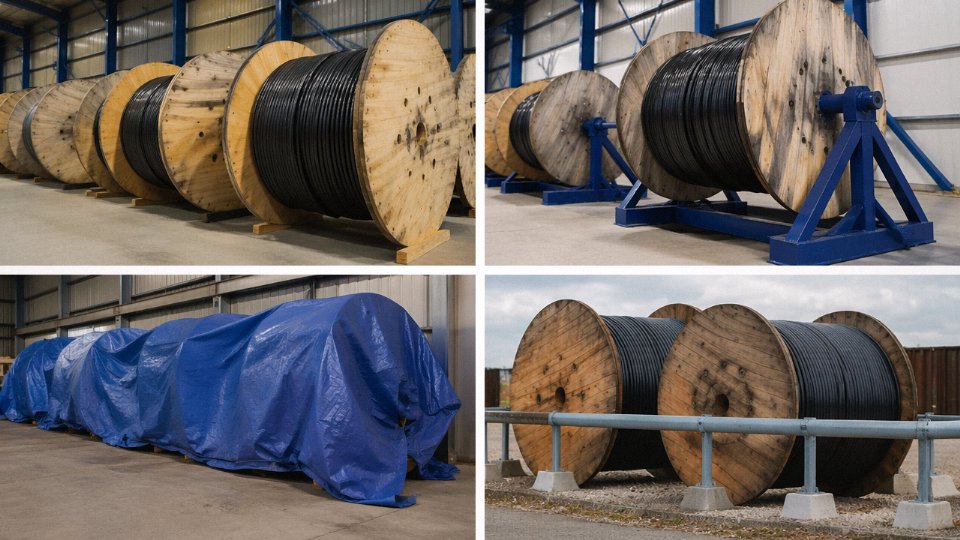
PVC and XLPE insulated cables carry a minimum recommended storage life of around 2 years from manufacture date if stored correctly. LSZH compounds are more sensitive — some formulations start showing surface brittleness after 4–5 years of poor storage, which creates installation cracking and potential insulation integrity issues you won’t catch until a megger test or, worse, a fault. All drums should be stored indoors, off the ground on a clean surface, away from direct UV and away from temperature extremes above roughly 50°C or below -10°C. A summer construction site in the Gulf or Southeast Asia can easily exceed that upper limit in an unshaded laydown yard.
What certifications should I ask for when importing construction cable from China?
At minimum: IEC test reports issued by an accredited third-party laboratory (KEMA, SGS, Bureau Veritas, or equivalent — not the factory’s own in-house lab reports, which are unverifiable without a site audit). Ask for conductor resistance test reports per IEC 60228, which confirms conductor cross-section is genuine and not undersized. Flame propagation test reports per IEC 60332 for single-cable and bunched-cable tests. For LSZH cables specifically, halogen content reports per IEC 60754 and smoke density per IEC 61034 — both, not one or the other. An ISO 9001 factory certificate is baseline quality system evidence, not a product performance guarantee, so treat it as necessary but not sufficient. If the project is destined for a European market, CE marking with the relevant CPR (Construction Products Regulation) declaration of performance is a legal requirement, not a preference.