A cable that stays in one place can be engineered for that fixed location and largely forgotten. The moment a cable has to move — dragged across a quarry floor, coiled and uncoiled daily on a construction site, flexed around a winding drum in a mining drift — the failure modes multiply fast. Jacket cracking, conductor fatigue, insulation delamination: any of these can pull a shift to a halt, and in extraction or heavy construction, an unplanned outage rarely costs less than the cable itself. Picking the wrong flexible cable, or specifying a fixed-installation type where a portable one was needed, is the kind of procurement error that shows up as scrap, downtime, and a safety incident report rather than a line item anyone flagged in advance.
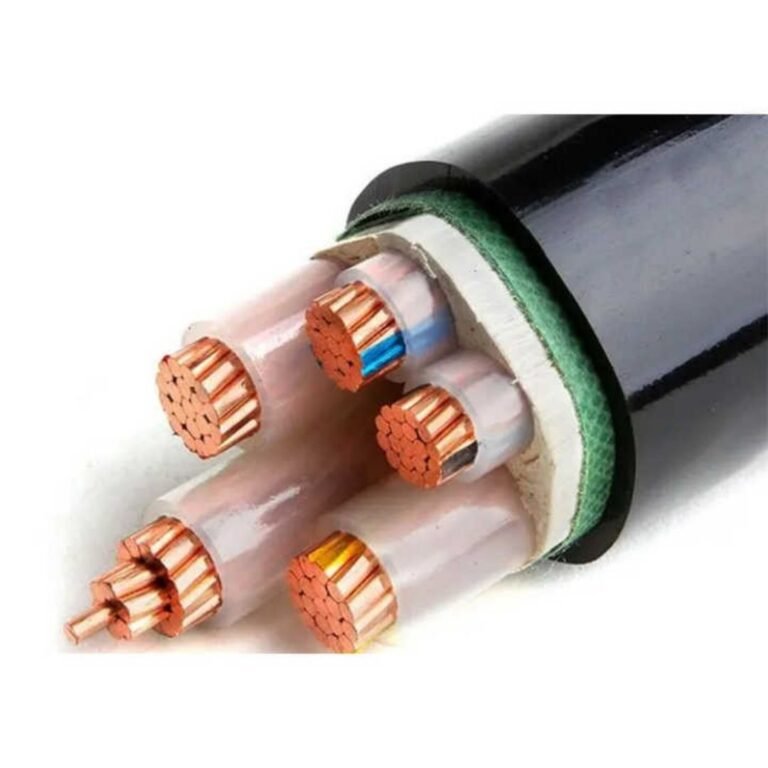
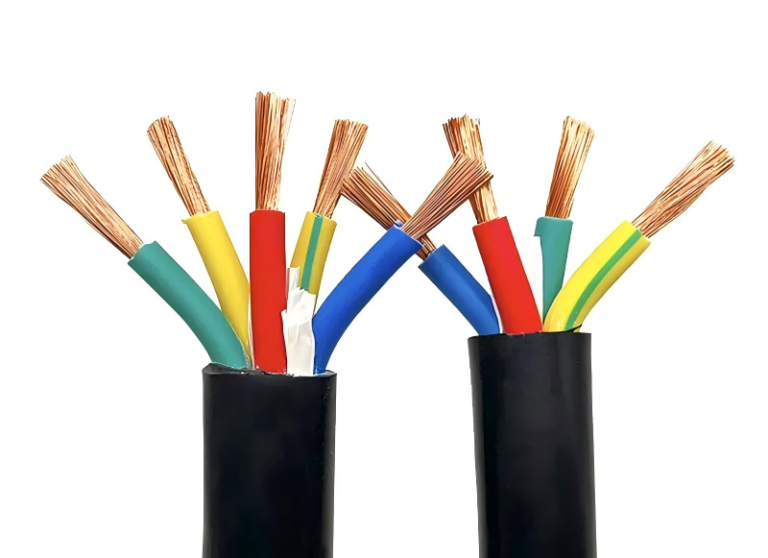
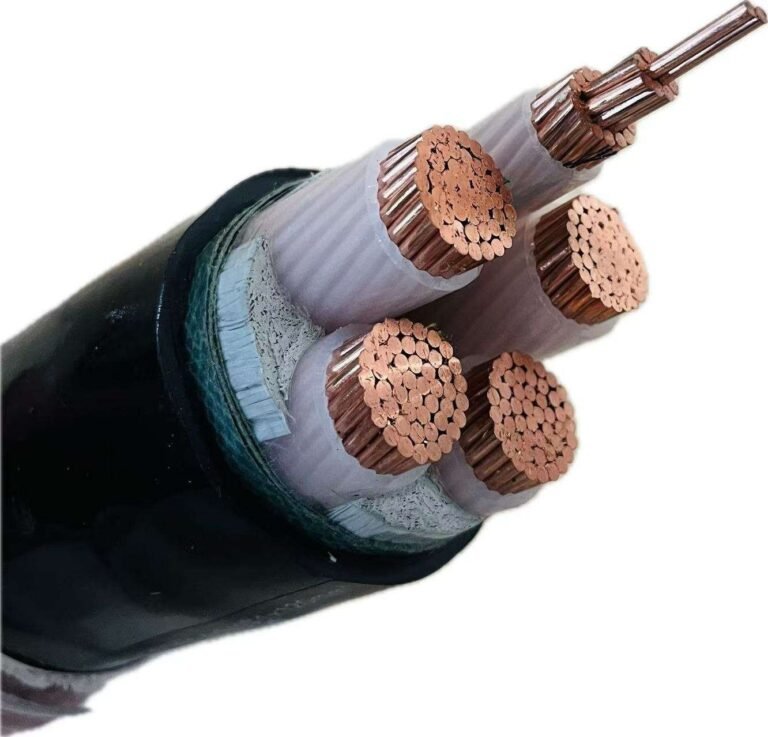
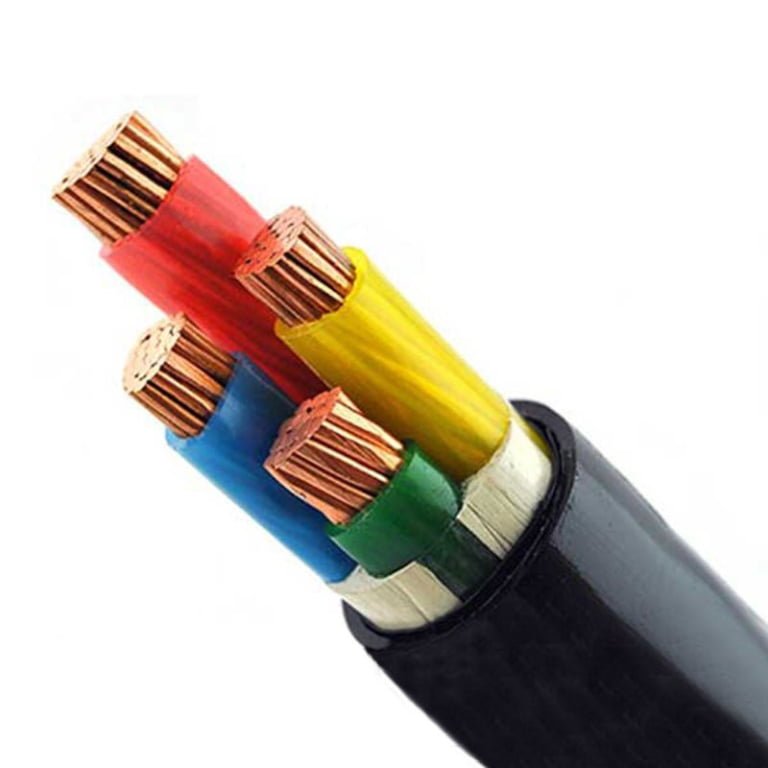
A portable power cable is a flexible, heavily jacketed electrical cable engineered to supply power to mobile or relocatable equipment while withstanding continuous mechanical stress — bending, flexing, torsion, and abrasion. Rated typically from 300/500V up to 3.6/6kV, with conductors from 1.5 mm² to 185 mm², these cables use fine-stranded copper conductors and tough outer compounds such as EPR, CPE, or PUR to survive repeated movement without insulation breakdown.
What makes the category genuinely interesting — and genuinely consequential to get right — is how much the correct specification depends on the specific duty cycle rather than just voltage and current. A cable running 10,000 bending cycles in a coal heading behaves nothing like one dragged weekly between a temporary substation and a site welfare unit, even if they share the same voltage rating on paper. The sections that follow break down how these cables are built, how the main standards classify them, and what actually matters when you’re sourcing for a demanding application.
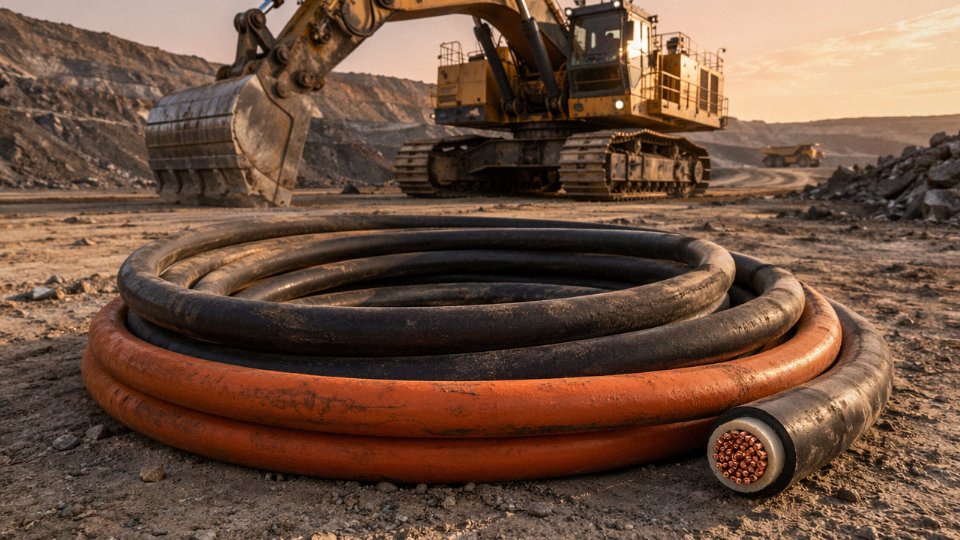
Anatomy of a Portable Power Cable: Conductors, Insulation, and Jacket Materials Explained
Understanding what separates a proper portable power cable from a fixed-installation product starts at the center and works outward. Each layer has a job, and when any one of them is under-specified for the application, the failure mode is usually predictable — and expensive.
Stranded Conductors: Where Flexibility Actually Begins
The conductor is where most procurement mistakes happen. Fixed-wiring cables use Class 1 or Class 2 conductors — solid wire or coarse strands with individual strand diameters often above 0.5 mm. Bend one of those cables repeatedly and you’ll see strand fatigue cracking within a few hundred cycles. For portable cables, IEC 60228 Class 5 or Class 6 fine-wire stranding is not a preference; it’s a structural requirement.
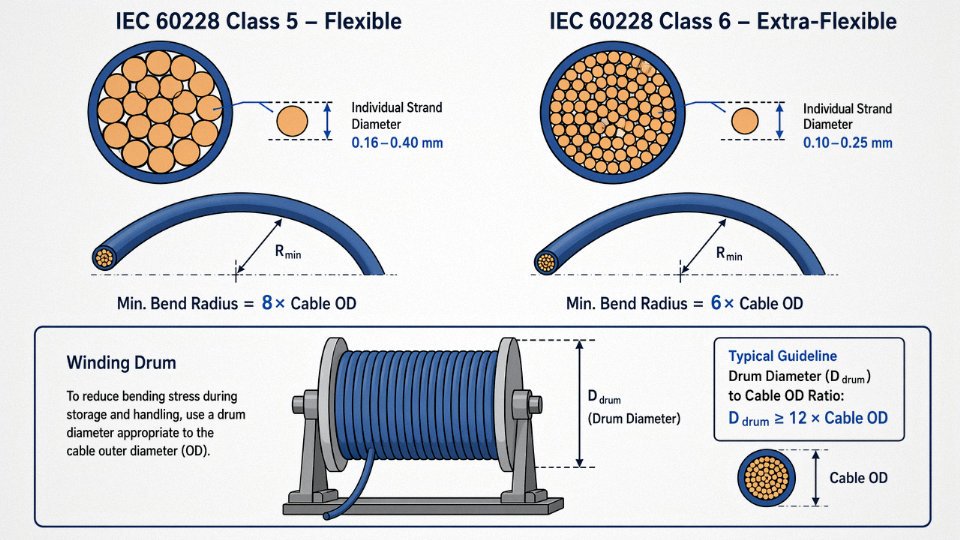
Class 5 conductors use individual strand diameters roughly in the 0.16–0.4 mm range, depending on the total cross-section. Class 6 goes finer still — typically 0.1–0.25 mm per strand — which is why Class 6 is specified for the most demanding drag-chain and continuous-flex mining applications. The trade-off is that finer stranding costs more to draw and is harder to terminate cleanly without a ferrule or compression lug. In practice, terminals and glands need to be sized for the actual nominal diameter of the finished conductor bundle, not just the cross-sectional area — something that catches out procurement teams ordering hardware separately from a different supplier.
Insulation: Thermal and Chemical Resistance Before Voltage Rating
Once you’ve got the right conductor, the insulation compound determines how the cable performs under heat, chemical exposure, and electrical stress over its service life.
EPR (ethylene propylene rubber) is the workhorse for portable power cables in the 0.6/1 kV to 3.6/6 kV range. Its molecular structure resists ozone cracking and corona discharge far better than PVC, and it stays flexible down to around -40°C without becoming brittle. Mining and offshore applications almost always specify EPR for exactly this reason.
XLPE (cross-linked polyethylene) handles higher dielectric stress efficiently — you’ll see it on portable cables pushed toward the 6 kV end and above — but it’s stiffer than EPR at low temperatures and less forgiving on tight bend radii. If your application involves sub-zero outdoor environments and frequent manual reeling, EPR usually wins even if the voltage rating technically allows XLPE.
Silicone rubber insulation is reserved for extremes: sustained operating temperatures up to roughly +180°C in some formulations, and genuine cold flexibility below -55°C. It’s expensive and mechanically weak in abrasion, so you only reach for it when the temperature envelope leaves no other option.
EPR insulation in portable cables resists ozone cracking and corona discharge better than standard PVC insulationTrue
EPR's saturated polymer backbone has no double bonds susceptible to ozone attack, which is well-documented in IEC 60245 and industry testing. PVC, by contrast, can develop surface cracking under prolonged UV and ozone exposure, especially in outdoor or switchgear environments.
Inner Assembly: Fillers and Binder Keep Geometry Under Load
The space between insulated cores is filled with textile or rubber fillers — sometimes a combination of both — and wrapped with a binder tape before the inner sheath goes on. This isn’t cosmetic. Without proper filling, cores migrate under bending, the cable takes an oval cross-section, and the outer jacket develops stress concentrations at the flat sides. Over time that leads to jacket splitting, especially in cold conditions. On a mining dragline or a port crane, that’s a production stoppage rather than a minor inconvenience.
Outer Jacket: Match the Compound to the Punishment
The outer jacket is the layer most exposed to the physical environment, and the compound choice depends heavily on the specific hazard mix.
Chloroprene rubber (CR, commonly called Neoprene) has decades of field history in mining and heavy industry. It handles oil splash, moderate flame exposure, and physical abrasion reasonably well. IEC 60245-4 Type HO7RN-F cables use CR outer sheaths as the baseline for portable cables in European industrial practice.
CPE (chlorinated polyethylene) performs better outdoors under sustained UV and weathering cycles. If the cable runs on an outdoor yard crane in a location with strong seasonal UV load — think high-altitude or equatorial sites — CPE often outlasts CR noticeably.
PUR (polyurethane) is the right answer for drag-chain and continuous mechanical contact applications. Its cut and abrasion resistance is significantly higher than either CR or CPE. The downside: PUR is less forgiving with hydrocarbon oils than CR, and it costs more. For automated production lines where the cable sees thousands of back-and-forth cycles daily, it typically earns back the premium through reduced replacement frequency — cable changeouts in a live production cell are rarely cheap when you account for labor and downtime.
Armor and Screening: Load Relief and Signal Integrity
Steel wire braid or steel wire armor (SWA) adds tensile load relief — critical for vertical drops in mining shafts or any application where the cable’s own weight under tension could stretch the conductors. The penalty is increased minimum bend radius, typically 20–30% more than an unarmored equivalent, which matters in tight cable management.
Copper braid screening appears on portable cables that carry both power and instrumentation signals in the same assembly. The screen keeps induced noise off the signal pairs. In practice, terminating these screens properly — bonded at one end only to avoid circulating currents — is something that gets skipped on rushed commissioning jobs more often than it should.
Together, these layers — fine-wire conductor, rubber insulation, filled inner assembly, application-matched outer jacket, and optional armor or screen — form a cable designed to survive motion. Evaluating a supplier datasheet without checking all five means you’re comparing cables that may look identical on a price sheet but perform very differently in a real operating environment.
Key Performance Parameters: Voltage Rating, Flexibility Class, and Temperature Range
Picking a portable power cable by price alone — or by asking a supplier to “match this spec sheet” without understanding what’s behind each number — is how plants end up with premature insulation cracking, nuisance trips, or worse, a cable failure mid-shift on a dragline 40 meters underground. Each of the core parameters below is a real engineering constraint, not a marketing category.
Voltage Ratings: Don’t Default to “Low Voltage Is Fine”
Most portable cables used on construction sites, workshops, and light industrial equipment fall into the 450/750V or 0.6/1kV range. That covers angle grinders, welding leads, portable lighting, compressors — the bulk of what you’ll see on a typical plant floor. These are the most common, the most price-competitive, and the easiest to source globally.
Step up to mining and heavy extraction equipment and the picture changes fast. Draglines, large rope shovels, and walking excavators routinely run at 1.8/3kV or 3.6/6kV — sometimes higher on older North American equipment with legacy voltage systems. A cable spec’d for 0.6/1kV on a 3.3kV mining circuit isn’t a marginal risk; it’s a waiting incident. Insulation thickness, dielectric strength, and the construction of the stress relief layers are fundamentally different between these classes, and no amount of conservative derating closes that gap.
The voltage designation itself (e.g., 0.6/1kV) tells you two things: conductor-to-ground voltage first, conductor-to-conductor second. Both matter depending on your system earthing arrangement.
IEC 60228 Flexibility Classes: Class 5 vs. Class 6 in Practice
IEC 60228 defines conductor flexibility by strand count and wire diameter, not by feel. Class 5 is “flexible” — suitable for fixed installation with occasional repositioning and general portable duty. Class 6 is “extra-flexible” — finer stranding, lower minimum bend radius, and built for continuous movement like cable reeling drums, festoon systems, and trailing cables that get dragged and coiled hundreds of times per shift.
The practical difference on a drum: a Class 5 conductor under repeated tight winding will work-harden the outer strands over time, especially if the drum diameter is on the small side. Class 6 handles the same duty with measurably longer fatigue life. For a cable that sees 10,000+ flex cycles — the IEC 60245 test threshold for mining-grade cable — Class 6 isn’t over-specifying, it’s correct specifying.
Minimum bending radius for portable-duty cables typically runs 6–10× the cable OD, depending on construction and jacket compound. A 35mm OD trailing cable with a 6× rating gives you a 210mm minimum bend radius. Design your drum accordingly or you’re building in failure.
Temperature Range: Match the Compound to the Environment
Standard industrial portable cables are typically rated from around -15°C to +60°C, which covers most indoor factory and construction environments without issue. Push outside that — cold-storage facilities, Arctic field operations, outdoor winter construction in northern climates — and you need a jacket compound rated to -40°C. CPE and certain PUR formulations hold flexibility at those temperatures; standard PVC becomes brittle and will crack on the first tight bend. The conductor itself doesn’t change; the jacket fails.
At the high end, EPR-insulated cables can handle up to +90°C continuous, which matters near diesel engine exhausts, furnace surrounds, or in high-ambient underground headings. Don’t assume the insulation rating equals the cable’s surface temperature limit — ambient plus self-heating under load both contribute.
Ampacity and Derating: The Numbers You Actually Use
Rated current capacity from a datasheet assumes a single cable in free air at 30°C ambient. Real portable cable installations almost never look like that. Bundled cables on a reel, cables draped over hot equipment, cables in a conduit tray — each scenario requires correction factors per IEC 60364-5-52. Bundling three cables together can reduce usable ampacity by roughly 20–30% depending on grouping arrangement. Elevated ambient of 50°C instead of 30°C can knock another 10–15% off. Running a partially-wound drum without full correction factoring is a common cause of insulation heat damage that doesn’t show up immediately but shortens service life significantly.
Mining-grade portable cables must withstand more than 10,000 flex cycles without insulation failure under IEC 60245 test standards.True
IEC 60245 specifies flex endurance testing for rubber-insulated cables used in portable and mobile equipment, with mining-grade constructions required to pass repeated bending cycles without insulation breakdown — this is a defined test requirement, not a marketing claim.
Mechanical Parameters Buyers Frequently Skip
Tensile load rating matters for any cable that hangs vertically — a trailing cable on a tower crane or a vertical shaft feeder takes its own weight plus dynamic load. Torsional flex rating comes into play on boom-mounted cables that rotate through an arc, like those on pedestal cranes or rotating mining equipment. Neither figure always appears prominently on a standard datasheet; ask the supplier for it explicitly if your application involves vertical runs longer than roughly 10–15 meters or rotational movement.
Quick-Reference Specification Table
| Voltage Class | Typical Application | Recommended Jacket | Flexibility Class |
|---|---|---|---|
| 450/750V | Hand tools, portable lighting, small compressors | PVC, PUR | Class 5 or 6 |
| 0.6/1kV | Construction equipment, generators, welding sets | CPE, PUR | Class 5 or 6 |
| 1.8/3kV | Medium mining equipment, tunnel boring | EPR/CPE | Class 6 |
| 3.6/6kV | Draglines, large excavators, walking shovels | EPR/CPE | Class 6 |
Low temperature duty (-40°C): specify PUR or cold-grade CPE jacket regardless of voltage class. High temperature (+90°C): EPR insulation is the standard answer; verify the jacket compound separately because insulation and jacket ratings are not the same number.
Portable Cable Types by Application: Mining, Construction, Renewable Energy, and Marine
Not all portable power cables are interchangeable. The mechanical and chemical demands on a trailing cable dragged across a longwall face are fundamentally different from those on a UV-exposed torsion cable spinning inside a wind turbine nacelle. Specifying the wrong type doesn’t just shorten cable life — it can mean a fire, a production shutdown, or a failed safety inspection. Each sector has converged on distinct construction standards for good reason.
Mining: Trailing Cables and Reeling Cables
These are probably the most demanding portable cables in common industrial use. Trailing cables on longwall shearers and continuous miners get coiled, stretched, dragged over sharp debris, and exposed to methane-laden atmospheres — sometimes all in the same shift. Reeling cables on surface draglines and bucket-wheel excavators endure tens of thousands of drum cycles over the equipment’s life, which means the conductor stranding has to be fine enough to tolerate repeated bending without work-hardening and cracking.
Flame retardancy per IEC 60332-1 or IEC 60332-3 is non-negotiable underground. EPR (ethylene propylene rubber) insulation is the dominant choice here, partly for its thermal stability and partly because it maintains dielectric integrity after repeated flexing better than PVC ever will. Jacket compounds are typically CPE or a specialized mining-grade rubber blend — CPE in particular holds up to the hydraulic oils and coal dust that coat everything underground. Voltage ratings for underground trailing cables commonly run 1.9/3.3kV or 3.6/6kV depending on the mining equipment’s drive voltage.
Mining-grade portable cables must withstand more than 10,000 repeated bending cycles without insulation failure under IEC 60245 test protocols.True
IEC 60245 specifies bending endurance requirements for rubber-insulated flexible cables, and mining-grade variants are type-tested to confirm mechanical durability under these conditions.
Construction and Rental Power
On a civil construction site, cables get run over by forklifts, left in standing water, and yanked out of socket outlets at bad angles. H07RN-F is the workhorse here — heavy natural or synthetic rubber sheath, suitable for outdoor use, and rated to handle the mechanical abuse that a rental power distribution chain routinely involves. Site managers often don’t baby these cables, so the jacket needs to self-protect rather than relying on careful handling. Look for compliance with IP44 minimum on associated connectors, and confirm the cable’s crush resistance if it’s being routed across vehicle access points.
Typical cross-sections run from 1.5 mm² for scaffolding string lights up to 35 mm² or beyond for generator output feeds to site distribution boards.
Wind Turbine and Solar Installation Cables
Torsional fatigue is the design challenge in wind turbine towers. The cable running from the nacelle down the tower twists as the nacelle yaws, accumulating rotational stress cycle after cycle. Standard flexible cables fail at the conductor within a year or two under these conditions. Cables built to IEC 62893 (or its predecessor TÜV 2Pfg 2570) use helically laid fine-wire conductors and XLPE or TPE insulation specifically qualified for torsional flex — typically rated for ±180° rotation per meter over hundreds of thousands of cycles.
Solar tracker wiring sits outdoors for 25 years. UV-stable, halogen-free jacket compounds matter here, both for longevity and for installation in projects where fire spread specifications apply.
Marine and Offshore
Saltwater, mud, mechanical shock, and strict flame-spread rules. IEC 60092-353 governs shipboard and offshore portable cables — it mandates flame spread compliance and specifies jacket compounds resistant to seawater immersion and fuel oil contamination. On floating production storage and offloading vessels and offshore cranes, you’ll typically see LSZH (low-smoke zero-halogen) sheathed cables to protect crew in enclosed spaces during a fire event. Pendant cables on offshore cranes deserve special attention: they combine mechanical tension, torsion, and saltwater exposure simultaneously, which is a short list of ways to destroy a generic cable fast.
Agricultural and Food Processing
PUR (polyurethane) jackets dominate here. PUR resists fertilizer solutions, hydraulic oils, mild acids from washdown chemicals, and high-pressure water jets far better than standard rubber. On a self-propelled pivot irrigator or a harvester header, cables flex continuously through the growing season and then sit idle — sometimes in freezing temperatures — before being pressed back into service. Food-processing conveyors add the requirement for resistance to cleaning agents like peracetic acid or caustic soda solutions. Confirm the jacket compound’s chemical resistance certificate against the specific agents used, not just a generic “oil resistant” label.
Application Comparison Summary
| Sector | Primary Standard | Critical Jacket Property | Typical Voltage Range |
|---|---|---|---|
| Underground mining | IEC 60245, IEC 60332 | Flame retardant, oil/methane resistant | 1.9/3.3kV – 3.6/6kV |
| Construction / rental | H07RN-F (IEC 60245-4) | Mechanical abuse, water resistant | 300/500V – 1kV |
| Wind turbine (torsion) | IEC 62893 | Torsional flex, UV stable | 600/1kV – 1.8/3kV |
| Solar tracker wiring | IEC 62893, EN 50618 | UV resistant, halogen-free | 300/500V – 1kV |
| Marine / offshore | IEC 60092-353 | Saltwater, oil, LSZH flame spread | 300/500V – 1.8/3kV |
| Agriculture / food processing | IEC 60245, EN 50525 | Chemical resistant PUR, washdown rated | 300/500V – 1kV |
The wrong cable in any of these environments doesn’t just fail early — it can fail catastrophically. Flame-retardant ratings, jacket chemistry, and conductor construction are not interchangeable across sectors regardless of what the voltage rating label says.
International Standards and Certifications That Govern Portable Power Cable Quality
Standards exist for a reason procurement managers sometimes forget until something goes wrong on site. A cable that passes a factory self-declaration but fails an independent bend cycle test doesn’t just mean a rejected shipment — it can mean a dragline shut down mid-shift, a wind farm commissioning delayed by weeks, or a marine crane failure with real safety consequences. Understanding which standards actually govern portable cable quality, and what they physically test, changes how you write a purchase specification.
Core IEC Standards and What They Actually Test
IEC 60245 is the foundational reference for rubber-insulated flexible cables. It covers compound properties, dimensional tolerances, and — critically for portable duty — the mechanical performance requirements that bare insulation resistance values alone cannot capture. Bend cycle endurance, cold-bend behavior, and oil resistance are all addressed here. If a supplier quotes IEC 60245 compliance, ask specifically which designation applies: a 245 IEC 57 mining trailing cable is a very different product from a 245 IEC 53 workshop cord, even though both sit under the same standard umbrella.
IEC 60227 governs PVC-insulated flexible cables. PVC has narrower temperature limits than EPR or PUR — typically around -15°C to +70°C depending on compound grade — so this standard matters mostly for moderate indoor and light industrial duty. It’s not the right reference for heavy-cycle outdoor or mining applications, and specifying it where IEC 60245 applies is a common substitution error that procurement teams inherit from incomplete datasheets.
IEC 60228 defines conductor classes. Class 5 and Class 6 stranded conductors are what you want in a genuinely portable cable — finer stranding, lower minimum bend radius, better resistance to work-hardening under repeated flex. A supplier substituting Class 2 (solid or coarse-stranded) conductor to cut cost while still citing “flexible cable” on the label is technically misrepresenting the product’s intended duty cycle.
IEC 60332 covers flame propagation. For cables routed in tunnels, cable trays, or enclosed machinery, the distinction between IEC 60332-1 (single-wire test) and IEC 60332-3 (bundled cable vertical tray test) is significant. Single-wire compliance is easier to pass and insufficient for most enclosed industrial environments.
Regional Standards Buyers Regularly Encounter
In the UK and EU, BS 6500 and the newer BS EN 50525 series are the practical references for flexible and trailing cable supply. Australian mining operations reference AS/NZS 2802, which sets specific requirements for trailing cables used on electrically powered mining equipment — the mechanical abuse criteria are strict and reflect actual longwall and open-cut conditions.
For US projects, MSHA compliance is non-negotiable in underground coal and metal/nonmetal mines. MSHA-approved cables must pass flame resistance and physical construction requirements, and the approval marking must be present on the cable itself, not just in documentation. CIS markets require GOST certification; requirements vary by country within the bloc, and buyers placing orders for Kazakh or Russian projects should confirm which GOST revision applies and whether self-certification or third-party laboratory testing is required.
Certification Marks: What They Gate and What They Don’t
CE marking permits European market access but is a self-declaration framework — it does not equal independent third-party testing. CCC (China Compulsory Certification) is required for cables distributed domestically in mainland China. UL listing is project-specific in North America; many industrial buyers require UL-listed cables for facility insurance compliance, not just code. Jinda holds multi-market certifications precisely because export orders frequently require simultaneous compliance across two or three regimes — a renewable energy project in Europe supplying equipment to an Australian operator with a US parent company is not an unusual scenario.
Jinda Cables holds ISO 9001 certification and maintains a dedicated flexible cable test laboratory equipped with bend cycle testers, spark testers, and cold-bend mandrel apparatus.True
These are stated operational capabilities of Jinda Special Cable Group, consistent with a manufacturer serving international tender requirements across multiple certification regimes.
Third-Party Testing Versus Self-Declaration
For volumes above roughly a few hundred meters — and certainly for any project-critical application — require independent test reports from recognized bodies: CESI, SGS, TÜV Rheinland, or equivalent. The specific tests worth demanding are conductor DC resistance per IEC 60228, insulation breakdown voltage at rated test voltage held for 5 minutes minimum, and jacket tensile strength and elongation at break per the relevant compound specification. Cold-bend test results at the cable’s rated minimum temperature are worth requesting if the installation environment gets below -20°C; not all suppliers routinely run this unless asked.
Factory self-declaration is acceptable for commodity grades in non-critical applications. It is not acceptable when the cable is going underground, onto a mobile mining machine, or into a marine environment where replacement under operating conditions is impractical.
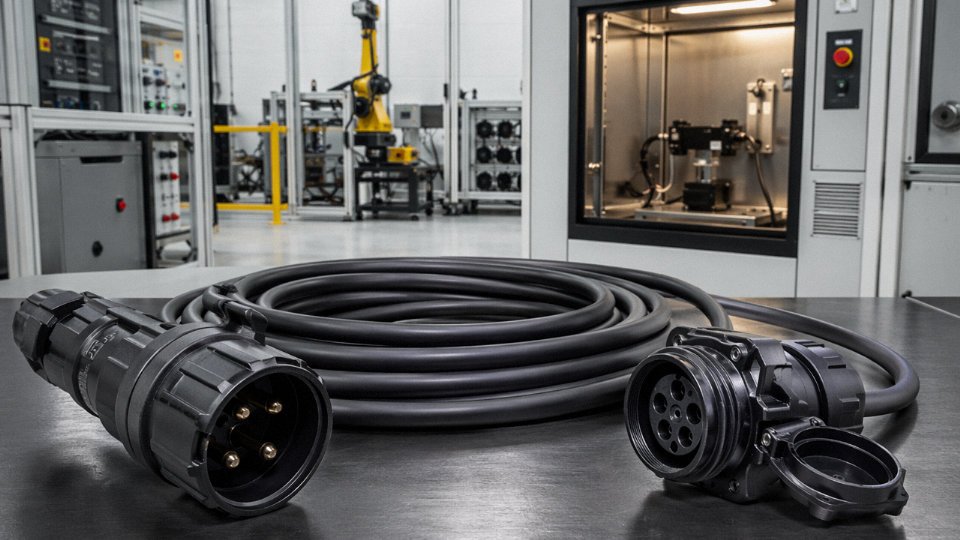
Jinda’s in-house laboratory capability supports the documentation trail that international tenders require — bend cycle records, spark test logs, and raw material certificates that third-party auditors can cross-reference against finished cable test reports. That traceability is what separates a supplier who can quote a standard from one who can prove compliance when a project engineer or inspection body asks for it.
How to Select the Right Portable Power Cable: A Step-by-Step Specification Workflow
Getting the specification wrong on a portable cable is rarely a cheap mistake. Downtime on a mining shovel or an offshore jack-up rig doesn’t come in small denominations, and a cable failure mid-shift usually means both the direct replacement cost and whatever production loss accumulates while you’re waiting for a certified electrician to re-terminate. The workflow below is how most experienced engineers approach this — not perfectly linear in practice, but close enough to be useful as a checklist.
Step 1 — Define the Electrical Load First
Start with the full-load current, then immediately ask yourself what’s starting. Motor inrush on direct-on-line starters typically runs 6–8× rated current for anywhere from 0.5 to several seconds depending on motor size and load inertia. That surge doesn’t usually damage the conductor thermally — it’s too brief — but it does affect the breaker coordination and, indirectly, the conductor sizing if you’re operating multiple loads on a single trailing cable. Use IEC 60364 ampacity tables as your baseline, apply derating for ambient temperature and grouping, and resist the urge to shave one conductor size to cut cable cost. A 16 mm² conductor running near its thermal limit in a 45°C ambient will fail earlier than the datasheet implies — the rated ampacity usually assumes 30°C.
Step 2 — Classify the Mechanical Duty Cycle
This step gets skipped more often than it should. There’s a real difference between a cable that trails behind a slow-moving vehicle and one that wraps and unwraps on a drum 40 times a shift. Static trailing (dragged occasionally) is forgiving. Dynamic trailing on continuous-movement equipment like shuttle cars or mobile substations demands a higher flexibility class — IEC 60228 Class 5 at minimum, often Class 6 in tighter bend situations. Reel or drum winding adds cyclic bending stress at a fixed radius; torsional twist on rotating platforms is worse still, because it fatigues the conductor strands in a different failure mode entirely. Get this wrong and you’ll see conductor fractures inside an intact jacket — the worst kind, because the cable looks fine externally until the resistance spike triggers a protection relay.
Step 3 — Map Chemical and Environmental Exposure
Make an actual list. Hydraulic oil mist, diesel fuel, battery acid, ozone from nearby switchgear, UV exposure, seawater splash — each one points toward a different jacket compound. CPE handles oils and moderate chemicals reasonably well and is cost-effective for general industrial trailing duty. EPR and PUR are worth the premium when you have aggressive chemical contact or need flexibility at low temperatures, down to around -40°C. PVC, which still shows up in low-budget quotations for outdoor trailing applications, degrades under UV and becomes brittle in cold — it’s not appropriate for continuous outdoor trailing duty regardless of what the price looks like.
Step 4 — Identify Regulatory Requirements Early
Don’t leave this for the procurement stage. A project in an Australian coal mine needs a cable certified to AS/NZS 2802 and approved by the relevant state mining inspectorate. A vessel installation requires a classification society type approval — Lloyd’s, DNV, Bureau Veritas, or whichever society covers the flag state. Utility interconnection projects may trigger additional utility-specific requirements on top of the national electrical code. Finding this out after you’ve placed a bulk order is painful.
Step 5 — Validate Bend Radius and Termination Compatibility
Check that the cable’s minimum bend radius — usually stated as a multiple of overall diameter in the manufacturer datasheet, commonly 6–10× OD for dynamic trailing — actually fits the drum diameter or festoon system you’re using. Then confirm that the plug and socket connectors you plan to use are rated for that cable OD and conductor cross-section. A mismatch at the gland or connector entry causes localized overbending that initiates fatigue cracks right at the termination point.
Step 6 — Request Samples and Pre-Qualification Testing
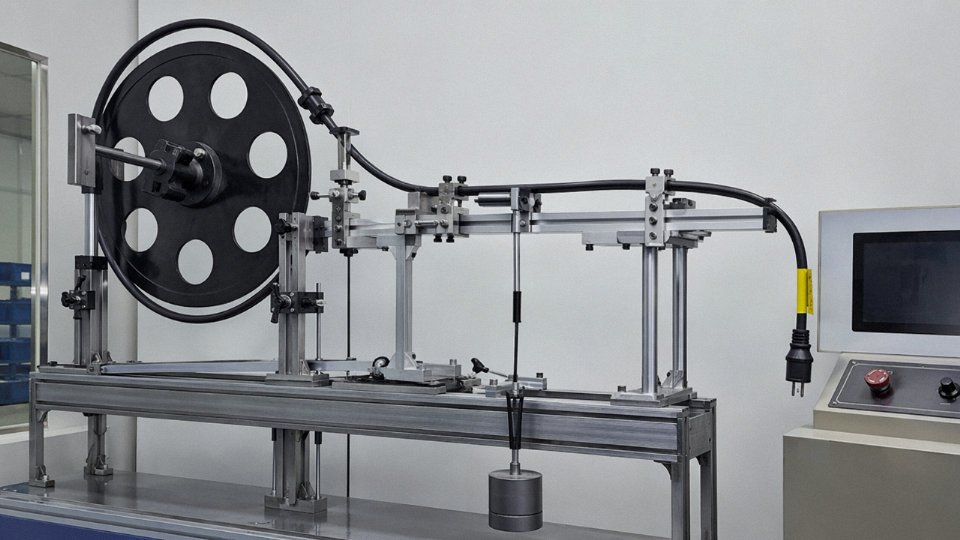
Before committing to a volume order, ask the supplier for the full construction datasheet, type test certificates referencing the applicable IEC or national standard, and their factory acceptance test (FAT) procedure. A credible supplier won’t hesitate. If your application involves cyclic bending, request a sample length and run your own bend cycle test — even a simplified in-house version that subjects the cable to several hundred cycles at the minimum design bend radius gives you useful go/no-go data before you’ve committed to a reel quantity.
Specifying a standard fixed-installation cable on a cable reel to save cost is a common and documented cause of early conductor fatigue failure in industrial portable applications.True
Fixed-installation cables per IEC 60228 Class 1 or 2 use fewer, larger strands optimized for pulling tension, not repeated bending. Using them on reels concentrates bending stress at strand boundaries, leading to fatigue cracking well before the insulation shows visible damage — a failure mode confirmed in IEC 60245 and numerous plant maintenance records.
The three most common specification errors in practice: using a PVC-jacketed cable for continuous outdoor trailing, under-sizing the conductor by one or two cross-sections to hit a budget target, and — probably the most insidious — ordering a fixed-installation cable for a reel application because it was in stock. Each one ends up costing more than the savings justified.
Installation, Handling, and Maintenance Practices That Extend Portable Cable Service Life
Good cable selection accounts for maybe half the battle. How the cable gets handled from the moment it arrives on site determines whether it runs for years or fails inside a season.
Drum Storage and Correct Dispensing
Always unwind from the top of the drum, paying out in the direction of the cable’s natural lay. This sounds obvious until you watch a crew on a tight deadline flip a 500 kg drum onto its side and yank cable off a flat coil. Every meter pulled that way introduces torsional twist into the stranded conductors. The twist accumulates — it doesn’t relax on its own — and it progressively works the insulation at the interstices between cores, creating microcracks that won’t show up on a visual check but will fail an IR test within weeks. On long runs, use a roller stand or A-frame dispenser and walk the cable out rather than dragging it. Sounds slow. It isn’t, compared to a fault investigation and forced downtime.
Minimum Bend Radius in the Field
Most portable cable datasheets specify a minimum dynamic bend radius somewhere between 6× and 10× the overall cable OD, depending on construction. Site workers rarely have a datasheet in their pocket, but they do have the cable itself — and any reputable cable will have the OD printed on the jacket at regular intervals. A quick practical rule: coil the cable loosely around a post, drum, or anchor point and check that the bend diameter is at least 12–15 times the marked OD if you’re not sure of the exact spec. That gives you a safety margin.
Improvised cable guides — a piece of angle iron with a sharp corner, a bolt sticking through a panel, a bent conduit stub — are the leading cause of internal conductor fracture in portable cable applications. The jacket looks fine from outside. Inside, individual wires in the stranded conductor have broken progressively, resistance creeps up, and eventually a joint overheats or the cable faults under load. On a dragline or mobile crusher, that failure usually happens at the worst possible moment.
Protecting Cable Ends and Abrasion Points
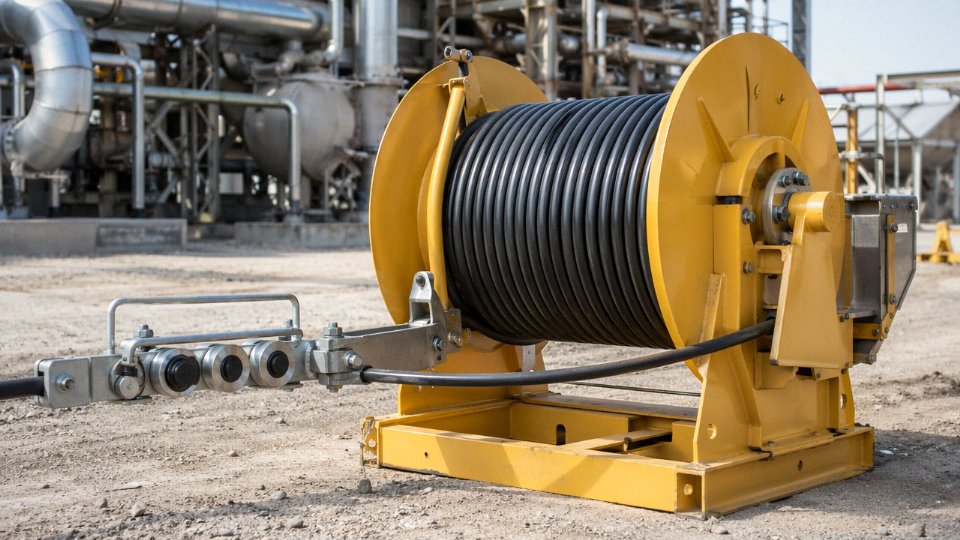
Where cable enters equipment housings under constant movement, fit proper strain relief glands — not cable ties, not a loop of wire. For vertical drops longer than roughly 3–4 m, a Kellems grip (wire mesh cable sock) distributes tension along the jacket rather than concentrating it at the gland. On mine floors and construction sites where cable runs across travel paths, spiral armor or rubber matting protectors at abrasion points cost almost nothing relative to the cost of a mid-run jacket failure.
Inspection Intervals and Fault Indicators
A weekly walk-down takes about ten minutes per cable run. Look for jacket cuts, swelling (often a sign of oil ingress into a non-oil-rated jacket), discoloration from heat, and any point where the outer jacket is chafed through to the bedding layer. Monthly, or after any significant mechanical incident, test insulation resistance with a 1000V Megger. For portable cables up to 1 kV, a healthy IR reading is typically above 100 MΩ — values dropping below 1 MΩ indicate the cable needs immediate investigation or retirement. For medium-voltage portable cables (1 kV and above), the threshold is higher and should align with the specific test requirements in IEC 60502 or the applicable mining standard.
Insulation resistance below 1 MΩ on a low-voltage portable cable indicates a condition requiring immediate investigation or removal from service.True
This threshold aligns with general industry practice and IEC maintenance guidance for flexible cables in service; a healthy portable cable at 1kV test voltage should read well above 100 MΩ under normal conditions.
Repair Versus Replacement
For low-voltage cables (below 1 kV) with minor jacket damage and no conductor corrosion, a properly executed vulcanized splice repair using compatible compound is acceptable as a temporary measure — emphasis on temporary. It buys time until a replacement drum arrives. Any portable cable at 1 kV and above with insulation damage, any cable showing conductor corrosion or discoloration, and any cable that has failed an IR test gets replaced, full stop. Splicing medium-voltage portable cable in the field is not a cost-saving measure; it’s a liability.
Storage of Spare Cable Stock
Keep spare drums upright, not on their sides. Horizontal storage on a concrete floor concentrates the weight of the entire coil on the bottom-most wrap and deforms the cable cross-section permanently in those lower layers. Store at 5°C to 35°C — cold-store areas below freezing can embrittle rubber jackets, and hot storage above 40°C accelerates compound aging measurably. Fit end caps on both cut ends to keep moisture out of the conductor bundle. Critically: keep drums away from motors, welding equipment, and UV sources. Ozone attacks rubber insulation at a molecular level, causing surface crazing and eventual cracking, and it doesn’t take heavy exposure — even moderate ambient ozone over months will degrade an unprotected EPR or NR jacket noticeably. A sealed end cap and an opaque cover cost almost nothing. A degraded drum of spare cable that fails in the field costs rather more.
Sourcing Portable Power Cables from China: What International Buyers Need to Verify
Global procurement teams evaluating Chinese cable suppliers often face the same problem: the datasheets look right, the price is competitive, and then something fails in the field six months later. Getting this right requires going beyond the PDF quotation and understanding what actually happens on the factory floor.
Raw Material Traceability Starts with the Copper
Conductor purity is the single most common point of fraud in low-cost cable supply. Reputable manufacturers use electrolytic copper meeting GB/T 3953, which specifies a minimum purity of 99.9%. That extra fraction of a percent is not academic — recycled or blended copper has higher resistivity, which means more heat under load and accelerated insulation degradation. Any credible supplier should be able to hand you mill certificates tied to specific conductor lots, not a generic spec sheet. Ask for batch traceability records that connect the copper rod to the finished drum. If they cannot produce them within a day or two, that tells you something.
Rubber and polymer compounds deserve the same scrutiny. EPR and CPE formulations vary significantly between compounders, and a lower-grade compound with less carbon black loading or reduced plasticizer quality will fail earlier under UV exposure or repeated flexing. Ask which compound supplier they use and whether they have incoming material test records. This is standard practice at any well-run facility.
What a Meaningful Factory Audit Actually Covers
A desk audit of certificates is not enough for portable cable procurement above roughly USD 50,000 in value. When you visit — or send a third-party inspector — these are the production capabilities that matter specifically for flexible cable:
| Audit Item | What to Verify | Red Flag |
|---|---|---|
| Conductor drawing | Fine-wire capability, typically 0.1–0.4 mm individual strands | Only coarse-strand equipment |
| Stranding machine | Pitch control accuracy, back-twist capability | No pitch records on file |
| CV vulcanization line | Continuous process, temperature profile logging | Batch cure oven only |
| Spark tester | 100% inline coverage, test voltage logged per IEC 60227/60245 | Sampling only, or no records |
| Drum marking | Matches PO spec: voltage, cross-section, standard, length | Generic or inconsistent labels |
The CV line question matters more than buyers usually realize. Batch-cured rubber insulation tends to have less consistent cross-linking density, which affects both flexibility class performance and the 10,000-flex cycle endurance required for mining-grade cables. It is not that batch curing is always wrong — it is that it is harder to verify consistency, and for portable cables that will be dragged across abrasive surfaces, consistency matters.
Export Documentation and What It Should Contain
For export-only products, Chinese manufacturers typically apply for CCC exemption certificates rather than full CCC marks — this is normal and legitimate. What matters is that the exemption paperwork references the actual product type being shipped, not a generic category. Certificate of Origin documentation enables preferential tariff treatment under various trade agreements and should be requested as a matter of course. Check that packing lists, cable drum markings, and the COO all reference identical specifications: voltage rating, cross-section, standard compliance, and drum length. Discrepancies between documents and physical labeling are a common customs headache and occasionally indicate substitution.
Chinese cable manufacturers can legitimately supply export products without a full CCC mark.True
CCC certification applies to products sold in the Chinese domestic market. Products manufactured solely for export are eligible for CCC exemption certificates, which is standard practice and recognized by Chinese regulatory authorities.
Lead Times and Logistics Realities
Standard portable cable types — think H07RN-F equivalents or mining flexible cables in common cross-sections from 2.5 mm² to 50 mm² — typically run 4 to 8 weeks from order confirmation at a reasonably loaded Chinese manufacturer. Heavily customized constructions, uncommon jacket compounds, or large-volume orders can push that to 10–14 weeks. Plan around the Chinese New Year shutdown, which effectively removes three to four weeks of production capacity in January or February depending on the year; orders placed in late November often slip badly if not expedited.
Container loading for large cable drums is a practical constraint that buyers sometimes overlook until it is too late. Drums above roughly 1,600 mm in flange diameter frequently require flat-rack containers rather than standard 20- or 40-foot boxes, which adds cost and reduces port flexibility. Jinda’s standard export terms for most markets are FOB Qingdao or CIF to destination ports including Rotterdam, Dubai, and Mombasa — the right Incoterm depends on whether you want to control freight and insurance yourself or prefer a landed price for budgeting.
Recognizing a Quote That Is Too Good
The most common portable cable fraud is simple: reduce the actual conductor cross-section below the stated value. A cable labeled 35 mm² shipped at 30 mm² actual cross-section saves the manufacturer real money on copper and is nearly impossible to detect without cross-section measurement at goods receipt. Spot-check conductor cross-sections on incoming material — it takes ten minutes with a micrometer and basic math. Absence of IEC type test certificates from an accredited laboratory is another clear warning sign; type tests are expensive enough that manufacturers who skip them are usually cutting costs elsewhere too. Suppliers who decline factory audit access, offer only warehouse visits, or cannot name their rubber compound source are worth walking away from regardless of price.
Frequently Asked Questions About Portable Power Cables
What is the difference between a flexible cable and a portable power cable?
All portable power cables are flexible, but not all flexible cables are portable. That distinction matters when you’re writing a purchase spec. General flexible cables — think H05VV-F or similar PVC-insulated office/appliance types — are designed to flex during installation or occasional repositioning, not to survive thousands of movement cycles in service. Portable power cables are a specific subset engineered for continuous mechanical duty: finely stranded conductors (Class 5 or 6 per IEC 60228), robust elastomeric or polyurethane jackets, and geometry designed to shed mechanical stress across the full cross-section rather than concentrating it at any one point. The jacket compound alone is a differentiator — a general flexible cable’s PVC jacket will crack in outdoor cold or swell in oil exposure, where a CPE or PUR jacket on a proper portable cable handles both.
Can I use H07RN-F cable for mining applications?
Short answer: not underground, and in some jurisdictions not even on surface mining sites without a specific risk assessment. H07RN-F is a solid, well-regarded heavy-duty rubber cable appropriate for surface construction, temporary generator hookups, and similar general industrial use. What it lacks for underground mining is critical: the flame retardancy test per IEC 60332-3 or equivalent, anti-static jacket conductivity to bleed static charge (mandatory in coal and other dust-explosive environments), and the mechanical crush and impact resistance that trailing cable standards like IEC 60502 or AS/NZS 1802 require. Substituting H07RN-F underground isn’t just a spec shortcut — depending on jurisdiction, it’s a safety violation that can result in equipment seizure or worse.
How many bending cycles should a quality portable cable survive?
For reel-duty portable cables, the minimum credible benchmark is 10,000 bending cycles at the rated minimum bend radius without insulation failure, per IEC 60245 type-test methodology. That sounds like a lot until you realize a busy construction reel might hit that count inside 18 months of normal use. Premium cables designed for wind turbine torsion duty — where the cable twists continuously inside the tower nacelle — are tested to 10 million torsion cycles, which is a fundamentally different mechanical regime. If a supplier can’t produce a type-test report showing bending endurance, treat the cable’s flexibility claims as unverified.
What causes portable cables to fail prematurely?
Five causes account for the vast majority of field failures. First, mechanical abuse — pulling a cable over a sharp edge or coiling it below the minimum bend radius stresses conductor strands and initiates insulation micro-cracking you won’t see until it fails. Second, chemical attack from an incompatible jacket: a PVC-jacketed cable laid near hydraulic fluid on a machine deck can degrade surprisingly fast. Third, thermal overload from persistent overcurrent — the conductor runs hot, the insulation softens, and mechanical stress then cuts through it. Fourth, incorrect storage: leaving a cable coiled under tension or twisted in a figure-eight for months introduces torsional pre-stress that shortens service life before the cable sees a single working flex cycle. Fifth, and honestly one of the most common, is using a fixed-installation cable — armored XLPE, say — in a dynamic application because it was already on site. It looks fine until it doesn’t.
Are halogen-free portable cables necessary?
In open-air outdoor applications, standard rubber or PVC-jacketed cables are generally acceptable. Confined spaces change the calculation entirely. Tunnels, ship engine rooms, underground mines, and enclosed plant areas are environments where, during a cable fire, halogen acid gases — HCl from PVC, HBr from certain flame retardants — become immediately dangerous to personnel and corrosive to electrical equipment. LSZH (Low Smoke Zero Halogen) jacket compounds are mandatory or strongly recommended in these settings under IEC 60332, SOLAS marine regulations, and various national mining codes. Jinda offers LSZH variants across the portable cable range for exactly these applications.
Jinda offers LSZH variants across its portable power cable rangeTrue
LSZH jacket options are a standard product line extension for confined-space and marine portable cable applications, consistent with IEC and SOLAS compliance requirements for such environments.
What is the typical lifespan of a portable power cable?
It genuinely depends on duty cycle and handling quality more than cable grade alone. A mining trailing cable dragged across rock twice per shift in a wet underground heading might last 2–4 years even if specified correctly. The same cable family used as a feeder on a light-duty mobile generator in intermittent service could easily reach 15–20 years. Bend radius compliance, regular insulation resistance checks (annually at minimum in heavy service, quarterly in mining), prompt repair of jacket damage before moisture ingress, and correct drum storage over winter — these factors collectively determine whether you’re at the low or high end of that range.
How do I request a custom portable cable specification from Jinda?
Submit an inquiry with load current, system voltage, environmental conditions (temperature range, exposure to oils, UV, or chemicals), the applicable standard or certification required (IEC, AS/NZS, UL, or others), and the end application. If you have an existing cable datasheet you’re trying to match or improve on, include that too — it shortens the back-and-forth considerably. Jinda’s engineering team reviews the parameters, proposes a specification, and can arrange samples within project-standard lead times. For large procurement programs, pre-production factory acceptance testing and third-party witness inspection can be built into the supply agreement.