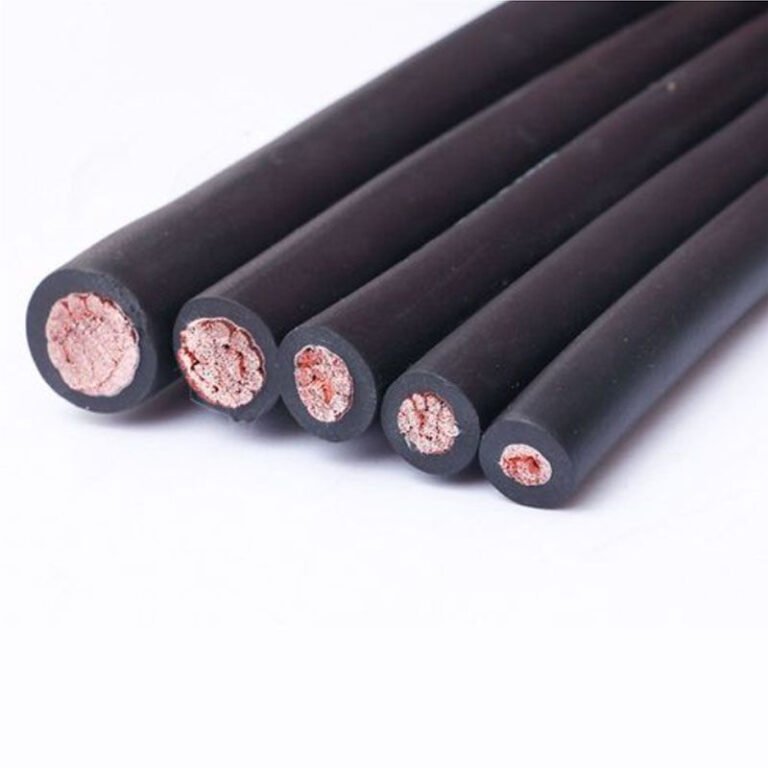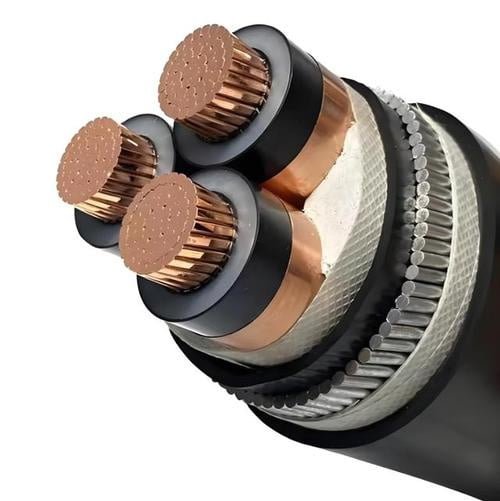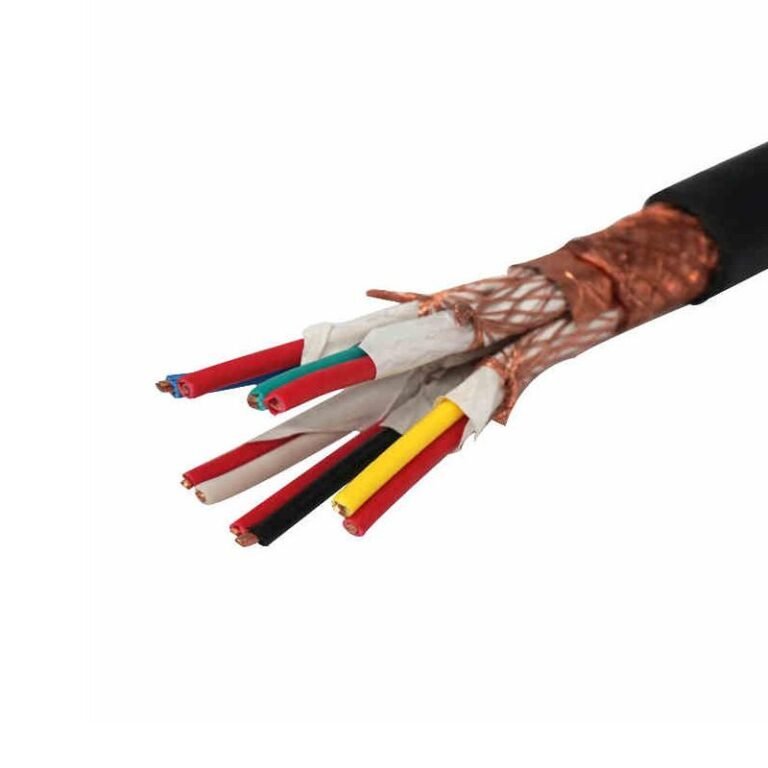
Mis-specifying the cable type on a residential wiring job — pulling THHN through conduit where a simple NM-B run would have worked, or worse, running Romex into a wet location or a commercial panel because it was “close enough” — adds cost fast. Rework on a rough-in electrical phase can run anywhere from a few hundred to several thousand dollars depending on wall access and inspector call-back fees, and that doesn’t count schedule slip on the finish trades waiting behind you. Getting the application boundaries right before procurement, not after the inspector fails the job, is what separates a clean project from a painful one.
Romex, the trade name for NM-B (nonmetallic sheathed cable), is used for general-purpose branch circuit wiring in residential construction: outlets, lighting circuits, and appliance feeds in dry, protected interior locations. Common gauges run from 14 AWG at 15 A up to 6 AWG at 55 A, and NEC Article 334 limits its use to one- and two-family dwellings and multifamily buildings not exceeding three floors above grade.
What catches people off guard is how much nuance sits inside that deceptively simple answer. The 90°C conductor rating on NM-B sounds reassuring until you realize the NEC forces you to derate ampacity to the 60°C column the moment cable bundles, runs through insulation, or gets stuffed into a crowded junction box — and that gap between rated and usable capacity is exactly where undersized circuits and nuisance tripping tend to start.
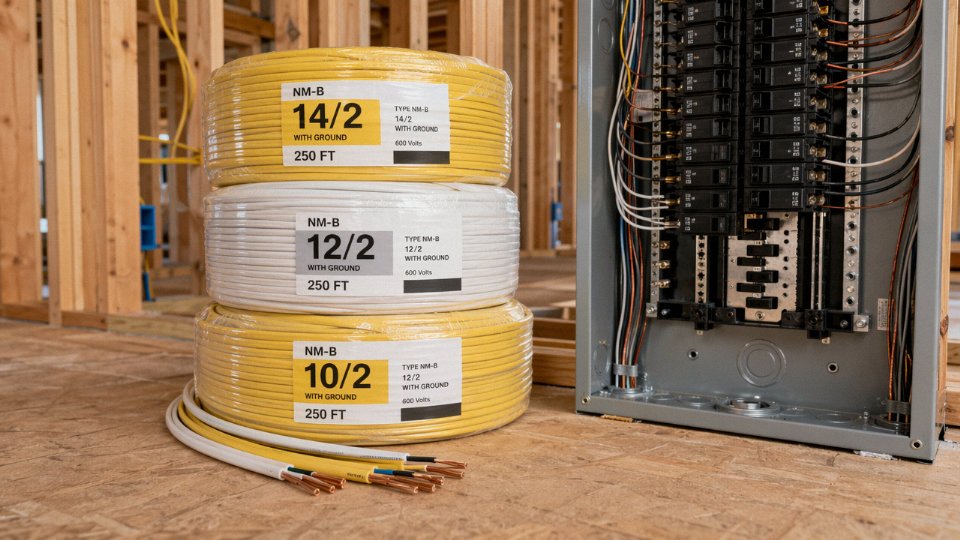
Core Residential Applications: Room-by-Room Breakdown of Romex Usage
Walk through any single-family home mid-rough-in and you’ll see essentially the same cable inventory repeated from one end of the house to the other — rolls of 12/2 and 14/2 NM-B stacked near the panel, a few runs of 10/2 heading toward the kitchen, maybe a coil of 10/3 for the dryer. The gauge selection isn’t arbitrary. Every room imposes a distinct load profile, and matching the wire to that profile is where NEC compliance and long-term reliability actually get decided.
Kitchen: The Highest-Density Circuit Zone in the House
The kitchen is where Romex gauge decisions get the most scrutiny, and rightly so. NEC 210.11(C)(1) mandates at least two 20 A small-appliance branch circuits — both wired with 12 AWG NM-B — covering all countertop receptacles. In practice most electricians run three or four of these circuits in a larger kitchen, because two gets tight the moment someone runs a microwave and a toaster simultaneously on the same leg.
The range or cooktop is a different animal entirely. A dedicated 10 AWG / 30 A circuit handles most standard electric ranges, though larger dual-fuel or induction units can push into 40–50 A territory — at that point you’re leaving NM-B behind and pulling 8 AWG or 6 AWG, usually in conduit. The dishwasher and refrigerator each want their own dedicated 20 A / 12 AWG circuit. Sharing either of those with a small-appliance circuit is code-legal under some interpretations but creates nuisance tripping and, over years, accelerates insulation fatigue at connection points.
Bedrooms and Living Areas: 14 AWG Does the Heavy Lifting
General lighting and receptacle circuits in bedrooms, hallways, and living rooms are the bread-and-butter run for 14 AWG / 15 A NM-B. These circuits are low-drama in terms of load, but the protection requirement has gotten stricter. Under NEC 2020, AFCI protection is mandatory for virtually every bedroom circuit — and the scope has expanded to cover living rooms, hallways, and most other habitable spaces depending on local adoption. The cable itself doesn’t change; what changes is the breaker. An electrician who specs 14 AWG for a bedroom circuit and installs a standard breaker without AFCI is leaving a code violation that will surface at inspection.
One practical note: 14 AWG is not interchangeable with 12 AWG on a 20 A breaker. That’s an obvious statement, but in renovation work you occasionally find junction boxes where someone spliced the two gauges together on a 20 A circuit. The 14 AWG segment becomes the weak link.
Bathrooms: One Circuit, Strict GFCI Rules
Each bathroom needs at least one dedicated 20 A circuit — 12 AWG NM-B — serving the receptacles within 6 feet of the sink basin. NEC 210.8 requires GFCI protection at those receptacles regardless of whether the circuit is shared between bathrooms or dedicated to one. Shared-bathroom circuits are permitted, meaning a single 20 A run can feed receptacles in two bathrooms as long as it serves no other loads. Exhaust fans and lighting can be on separate 15 A circuits; some jurisdictions and some inspectors will push back on combining them with the receptacle circuit.
Laundry Room: Two Circuits, Two Gauges
The washing machine gets a dedicated 20 A / 12 AWG circuit — no exceptions under NEC 210.52(F). The dryer is almost always a 30 A / 10 AWG dedicated circuit, though larger stacked or commercial-grade residential units can require 50 A, which pulls you out of NM-B range again and into heavier conductors. Running the dryer on a shared or undersized circuit is one of the more reliable ways to cause nuisance tripping at inconvenient moments and, over time, heat stress at the breaker terminal.
Garages, Outdoor Receptacles, and Unfinished Basements
NM-B (Romex) can be used in garages only when it is protected from physical damage and not exposed in areas subject to dampness.True
NEC Article 334.10 and 334.12 permit NM-B in garages of one- and two-family dwellings but prohibit it where exposed to physical damage or in wet/damp locations — it must be run through conduit or in protected locations such as inside wall cavities.
GFCI protection is required for all garage and outdoor receptacles under NEC 210.8(A). Unfinished basements follow the same rule. In practice, the cable is usually fine inside a finished wall cavity; the issue is exposed runs along garage framing or basement ceiling joists, where a misplaced shelving bracket or an impact from a lawnmower handle becomes a real hazard. When the run has to be exposed, sleeve it in conduit — NM-B inside EMT is a common and clean solution.
Attic and Crawl Space Runs
NM-B is permitted in attic and crawl space wiring, but support requirements are specific. NEC 334.30 requires stapling or securing every 4.5 feet along a run and within 12 inches of every outlet box or fitting. In attics with accessible walkways, cables within 6 feet of the access opening must be protected by guard strips or run through bored holes. Crawl spaces that are damp or prone to standing water seasonally are a different problem — NM-B is not rated for wet locations, and if your crawl space floods after heavy rain, that cable needs to be in conduit or replaced with a wet-location rated product. This is a detail that gets skipped during original construction and discovered during a home inspection years later.
Electrical Panel Feeds, Sub-panels, and High-Current Appliance Circuits Using Larger Romex Gauges
Most electricians grab 12 AWG or 14 AWG NM-B without thinking twice. The heavier gauges — 8 AWG and 6 AWG — demand a different level of attention, because the NEC rules around derating, termination temperature, and permitted locations get genuinely more complex at these sizes, and the consequences of getting it wrong are not just a tripped breaker.
Where 8 AWG and 6 AWG NM-B Actually Belongs
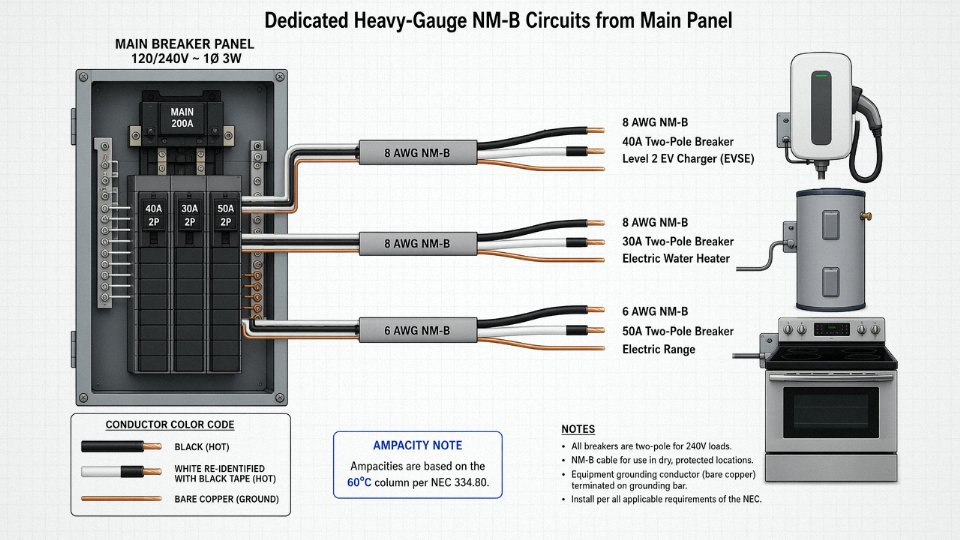
Electric water heaters are the most common home for 8 AWG NM-B. A standard 240 V residential water heater draws around 18–25 A continuously, which means you’re working with a load that must be protected at 125% of continuous draw — landing you on a 30 A breaker, though many installers run a 40 A circuit and 8 AWG to give themselves headroom for higher-wattage tank replacements. Central air conditioning disconnects are similar territory: the nameplate MCA (minimum circuit ampacity) and MOCP (maximum overcurrent protection) on the equipment data plate dictate the breaker and wire size, and a 3-ton to 4-ton residential unit frequently ends up on a 40 A / 8 AWG circuit.
Level 2 EV charger branch circuits have become the fastest-growing application for 8 AWG NM-B in residential work. A 32 A EVSE at 240 V runs on a dedicated 40 A two-pole breaker — the 125% continuous load rule in NEC 210.19(A) is why the breaker is one step above the charger’s rated output. Eight AWG NM-B handles this cleanly in most straight residential runs, provided the other conditions (run length, bundling, ambient temperature) don’t force a derate.
Six AWG NM-B is less common but appears in high-wattage cooktop feeds, some larger air handler disconnects, and occasionally a 50 A range circuit where local inspectors accept it. Its 55 A ampacity at 60°C makes it adequate for a lot of residential heavy loads, but the cable itself is stiff enough that routing it through finished framing is genuinely annoying work.
The Sub-panel Feeder Misconception
Here’s where a lot of residential-to-light-commercial crossover work goes wrong. NEC 334.12(A) prohibits NM-B in service entrance applications, and while a sub-panel feeder inside a dwelling isn’t technically a service entrance, the practical reality is that most inspectors — and NEC 334.12 read carefully — restrict NM-B from being used as a feeder between panels. SER cable (service entrance cable, type SE with round or flat aluminum conductors) or conductors pulled through conduit are the correct solutions for panel-to-panel feeds. SER in aluminum 2-2-2-4 configuration is the everyday choice for a 100 A sub-panel feed in detached garage work. Don’t try to substitute NM-B there.
Two-Pole 240 V Circuits: Wiring Topology Matters
Standard NM-B contains a black hot, a white conductor, and a bare copper ground. At 240 V, the white conductor gets re-identified as a second hot — typically with black tape at both termination ends, though in practice plenty of installers skip this step and regret it during a service call. A 240 V-only circuit (a water heater with no 120 V components, for instance) uses both hots and the ground; the white wire carries full 120 V to ground and must be treated accordingly. A 120/240 V multi-wire circuit — say, a range or dryer — uses both hots, the white neutral, and the ground, because some loads inside the appliance run at 120 V. Confusing these two topologies and leaving the neutral floating on a multi-wire circuit creates a serious shock hazard.
The 60°C Derating Rule You Cannot Ignore
NM-B conductors can be derated using the 90°C ampacity column because the individual THHN conductors inside are rated for 90°C.False
NEC 334.80 requires NM-B ampacity to be determined using the 60°C column regardless of conductor insulation rating. The outer jacket traps heat and prevents the same dissipation that bare THHN in free air would achieve, so the 90°C column cannot be used for NM-B circuit sizing.
This is probably the most frequently misapplied rule in residential heavy-circuit work. The individual conductors inside NM-B are THHN-rated at 90°C, yes — but the jacket assembly behaves like an insulating wrap around those conductors. NEC 334.80 is explicit: use the 60°C ampacity column. That drops 8 AWG copper from a theoretical 55 A (at 90°C) to 40 A. For 6 AWG, the 60°C limit is 55 A. These are the numbers that go on your load calculation and your permit drawing.
Bundling and Conduit Fill Derating
Running multiple NM-B cables through a single bored hole or bundling them together for more than roughly 24 inches triggers NEC 310.15(B) adjustment factors. Four to six current-carrying conductors: derate to 80% of the base ampacity. Seven to nine conductors: drop to 70%. The stacking gets worse from there. In practice this matters most in tight utility rooms where three or four appliance circuits pass through the same joist bay — you can end up needing to step up one wire gauge to recover the lost ampacity, which changes your rough-in material list in a hurry.
Where Romex Cannot Be Used: NEC Prohibited Locations and Common Code Violations
Knowing where Romex works is only half the job. The other half — the half that shows up as failed inspections, insurance denials, and occasionally fires — is understanding where it flat-out cannot go. NEC Article 334 is more restrictive than most installers assume, and the violations below are not edge cases. They show up on inspection reports constantly.
Commercial and Industrial Buildings
NEC 334.10 limits NM-B use to one- and two-family dwellings and multifamily buildings not exceeding three floors above grade. Full stop. If you’re wiring an office suite, a medical clinic, a light-assembly factory floor, or a restaurant kitchen, Romex is not a permitted wiring method regardless of how straightforward the circuit looks. Those environments require metal-clad (MC) cable, armored cable (AC), or conductors pulled through conduit — EMT at minimum in most commercial occupancies, rigid steel or IMC where mechanical protection demands are higher.
In practice, the most common violation here isn’t someone trying to wire a hospital with Romex. It’s a small retail tenant improvement in a strip mall, or a three-bay auto shop where the contractor treated the job like a house. Inspectors catch it immediately. Re-pulling wire through MC or conduit after drywall is up can easily cost several times the original rough-in labor.
Embedded in Concrete, Masonry, or Below-Grade Earth
NM-B jacket is not rated for direct burial. Encasing it in a concrete slab, running it through a block wall chase, or burying it in earth — any of those installations exposes the PVC jacket and conductor insulation to moisture intrusion over time. Moisture wicks along the jacket seam, insulation resistance degrades, and you get ground faults that are genuinely difficult to trace years later.
The correct substitutes depend on the application: UF-B (underground feeder) cable for direct burial branch circuits, or listed conductors rated for wet locations pulled through Schedule 40 or Schedule 80 PVC conduit for heavier runs. Rigid metallic conduit works too, though it requires waterproof fittings and sealed entry points.
NM-B cable is suitable for direct burial if wrapped in conduit.False
NM-B is not listed for wet locations even inside conduit below grade. NEC requires conductors with a wet-location rating (such as THWN-2) inside buried conduit, or listed UF-B cable for direct burial without conduit.
Exposed Runs Subject to Physical Damage
NEC 334.15 gets misread regularly. Romex run through wall cavities or above accessible ceilings is generally fine. Romex stapled to the face of an unfinished basement wall below 7 feet above the floor, or run exposed in a garage, is not — unless it’s protected by conduit or a listed surface raceway. The logic is simple: an exposed cable at arm or knee height in a working space will eventually get hit by a lumber cart, a ladder, or a tenant’s drill. That protection requirement exists because the damage, when it happens, tends to arc rather than trip the breaker cleanly.
Wet, Damp, and Corrosive Environments
Unconditioned crawl spaces with standing water or seasonal flooding, exterior wall cavities open to weather, car washes, pool equipment rooms, and chemical storage areas all qualify as wet or corrosive locations under NEC definitions. NM-B carries no wet-location listing. A crawl space that “stays pretty dry most of the year” is still a damp location under code, and that’s enough to require a wet-rated wiring method. THWN-2 in PVC conduit is the typical solution in crawl spaces; in chemical environments, you also need to verify chemical compatibility of the conduit and fittings — PVC handles most dilute acids reasonably well, but petroleum solvents are a different story.
Plenum and Air-Handling Spaces
Return-air ceiling plenums — the space above a dropped ceiling used as part of the HVAC return path — require plenum-rated cable (CMP designation) or conduit. NM-B produces toxic smoke when it burns. In a plenum, combustion products get distributed through the entire HVAC system immediately. Most jurisdictions enforce this hard, and some AHJs (authorities having jurisdiction) will require removal of any NM-B found above a suspended ceiling in a commercial plenum, no grandfather clause.
Residential homes with sealed joist bays used as return-air plenums fall into a gray area that varies by local amendment, so check before assuming the residential classification gives you a pass.
High-Temperature Environments
The 60°C ampacity derate built into NEC 334 for NM-B in free air is a warning sign about thermal limits, not just a calculation step. Locations where ambient temperature routinely exceeds 60°C — near boiler flues, above industrial ovens, inside luminaire canopies with high-wattage lamps, or in attic spaces in southern climates where summer peak temps can push past 70°C on a dark roof — disqualify NM-B entirely. At those temperatures the PVC jacket softens, the insulation rating is compromised, and any calculation based on standard ampacity tables is simply wrong. High-temperature THHW or silicone-insulated conductors in conduit are the right call in those locations.
One practical note: attic installations in hot climates deserve more scrutiny than they usually get. Romex running through an unconditioned attic in Texas or Arizona in August is not in the same thermal environment as the same cable in Minnesota. The NEC permits the installation in both places, but in the hot attic you need to derate, and if you’re near any luminaire or HVAC equipment that adds local heat load, do that calculation before assuming a standard 12 AWG / 20 A circuit is still compliant.
Installation Best Practices: Routing, Securing, Protecting, and Connecting Romex Correctly
Getting the cable into the wall is the easy part. Doing it in a way that passes inspection, survives decades of building movement, and doesn’t create a hidden fire hazard — that takes a bit more discipline than most YouTube tutorials let on.
Drilling and Notching Through Framing
Bore holes through the center of studs and joists where possible. NEC 300.4 requires a minimum 1.25-inch setback from the face of any framing member, and that dimension exists for one reason: a drywall screw or finish nail driven at normal depth won’t reach the cable. Fall short of that setback — which happens constantly when you’re drilling near a corner or through engineered lumber with a narrow web — and a steel nail plate is mandatory. These plates are cheap, typically under a dollar each, and skipping them is one of the easiest deficiencies for an inspector to spot. Notching the top plate of a load-bearing wall is a different situation entirely; structural rules stack on top of the electrical ones, and in practice most inspectors will flag an unprotected notch even if it’s technically outside their jurisdiction.
Stapling and Support Intervals
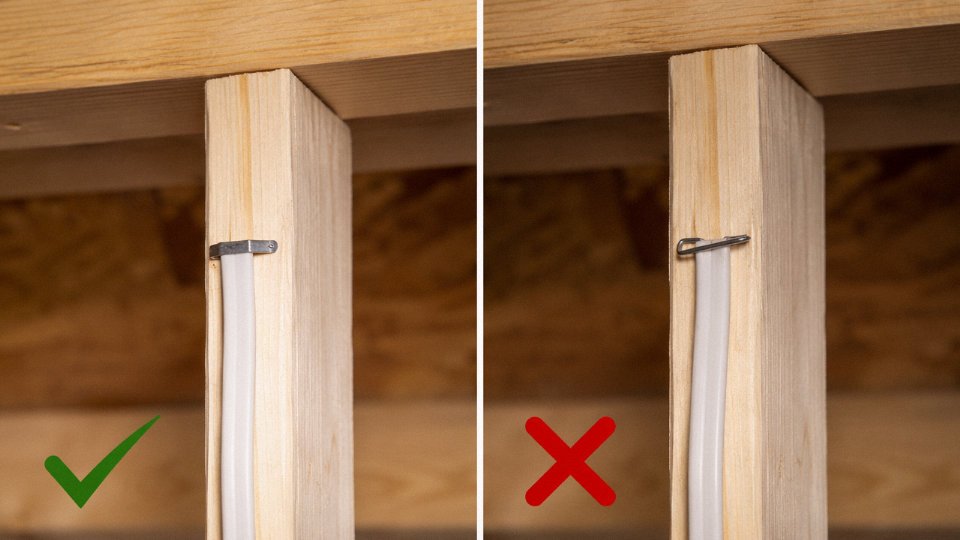
NM-B must be secured within 12 inches of every outlet box or panel knockout. Along the run itself, maximum support spacing is 4.5 feet (roughly 1.37 m). That interval sounds generous until you’re running cable across an open basement ceiling and realize you’ve gone eight feet between staples — which is a violation and, more practically, creates a sagging run that looks sloppy and can shift during insulation blowing.
Use only listed staples designed for NM cable. This matters more than it sounds. Standard fence staples or generic wire staples from a hardware bin can crush the jacket under even moderate driving force, deforming the insulation around the conductors beneath. You won’t see the damage from outside, but the compressed geometry raises localized resistance and, under sustained load, heat. Listed NM staples have a curved saddle profile that distributes the clamping force — the difference in feel when you’re setting them with a hammer is noticeable once you’ve used both types.
Bend Radius
Keep bends to a minimum radius of five times the cable’s outside diameter. For a typical 12/2 NM-B cable that works out to roughly 1.5 to 2 inches depending on the specific jacket dimensions. Tight kinks at corners — especially where cable exits a bored hole and turns toward a box — can crack or compress the individual conductor insulation even when the outer jacket looks fine. This is one of those failure modes that shows up years later, not during rough-in.
Box Fill Calculations
Each 12 AWG conductor counts as 2.25 cubic inches toward NEC 314.16 box fill calculationsTrue
NEC 314.16(B) assigns volume allowances by conductor size: 14 AWG = 2.0 in³, 12 AWG = 2.25 in³, 10 AWG = 2.5 in³. All conductors, clamps, devices, and equipment grounds must be counted per the standard method.
Box fill is consistently one of the most-failed items on residential rough-in inspections. A standard single-gang plastic box at 18 cubic inches feels adequate until you’re landing two 12/2 cables plus a ground pigtail plus a receptacle — count it out and you’re often at or past the limit before the device itself gets its volume allowance. Use deeper boxes when the design allows. It costs almost nothing at rough-in and saves a callback.
Connector and Clamp Selection
Every box entry needs a listed NM cable clamp, full stop. Plastic push-in connectors are acceptable for plastic boxes and install fast. Metal boxes are a different story — they require a listed metal clamp that grips the outer jacket firmly, not just the individual conductors. A clamp that only contacts the conductors provides no strain relief for the jacket, which means any pull on the cable transfers directly to the terminal connections inside. That’s how you get intermittent faults that are nearly impossible to diagnose after drywall.
Labeling and As-Built Documentation
This last point gets ignored on small residential jobs and costs real money on larger projects. Before drywall closes in, photograph every cable run — panel feeds especially — with a tape measure in frame for reference. For contractors supplying international clients or handling bulk projects with multiple buildings, tie those photos to a circuit directory and a simple as-built sketch. It takes maybe an hour per house. The alternative is a future renovation crew cutting into a wall blind, or a procurement client in another country asking which gauge runs to which load and getting a shrug in response.
Romex vs. Other Wiring Methods: NM-B, MC Cable, UF-B, and Conduit-and-Wire Compared
Choosing a wiring method isn’t purely a code question — it’s a cost, labor, and lifecycle decision. Romex (NM-B) wins on speed and first cost in wood-frame residential work. Everywhere else, the tradeoffs get more complicated.
NM-B (Romex): Fast, Cheap, and Context-Dependent
In a typical wood-frame house, a skilled electrician can rough in a 15-branch-circuit job with 14 AWG and 12 AWG NM-B substantially faster than any conduit-based method — no bending, no pulling, no threaded fittings. Coils run from 25-foot contractor packs up to 1,000-foot spools, and pricing at the distributor level for 12/2 NM-B has historically tracked $0.35–$0.75 per linear foot depending on copper spot price, region, and volume. That number moves around; always check against current COMEX copper pricing before locking in a project estimate.
The vulnerability is physical. The outer thermoplastic jacket offers modest mechanical protection. Staple it wrong, nick it during drywall, or run it somewhere damp, and you have a problem that won’t show up until an inspector — or a fault — finds it.
MC Cable: The Commercial Step-Up
Metal-clad cable carries the same conductor complement as Romex — same gauges, same NEC ampacity tables — but wraps everything in interlocking aluminum armor (or occasionally steel). That armor buys you access to commercial and light industrial occupancies where bare NM-B is prohibited, plus genuine resistance to incidental mechanical damage and some degree of EMI shielding for sensitive circuits.
The cost premium is real: expect to pay roughly 40–65% more per linear foot than equivalent NM-B, with the gap narrowing slightly on larger gauge runs. Installation is faster than conduit but slower than NM-B — the armor needs an anti-short bushing at every termination, and some inspectors are particular about it. MC is a reasonable middle path in Type III or Type V commercial construction where you want the speed of a cable assembly but need code compliance beyond what NM-B allows.
UF-B: Looks Like Romex, Isn’t
Underground feeder cable gets mistaken for gray Romex on job sites constantly. The distinction matters. UF-B conductors are individually encapsulated in solid PVC — not paper-wrapped inside a jacket — which is what gives it direct-burial capability. NEC minimum burial depth for a UF-B branch circuit is 24 inches, dropping to 12 inches under a concrete slab. It handles garden circuits, outbuilding feeds, landscape lighting runs, that kind of work. You cannot substitute NM-B in a trench. That’s a failed inspection and a genuine fire risk if the jacket degrades.
Conduit-and-Wire: Higher Upfront, Lower Long-Term Regret
EMT, Schedule 40 PVC, and rigid metal conduit with THHN or THWN-2 conductors pulled through them represent the dominant wiring system in commercial buildings, industrial plants, and essentially the entire non-North American world. The installed labor cost is higher — conduit bending, pulling, junction box sizing — but 15 years from now when the tenant wants a different layout, your electrician pulls new wire through existing conduit instead of ripping open walls. That’s where conduit earns back its premium.
THHN pulled in conduit is also the global baseline. If you’re sourcing wire for a project in Southeast Asia, the Middle East, or sub-Saharan Africa, nobody is buying NM-B. The standard there is PVC or XLPE single-core conductors in conduit systems.
International Context: Why NM-B Doesn’t Travel
NM-B is effectively a North American product, shaped by NEC Article 334 and the wood-frame construction traditions that dominate U.S. and Canadian residential building. European installations follow IEC 60364 and use flat or round PVC-sheathed cables — NYM or H07V-R types — in conduit or surface raceway. Asian markets, Africa, and the Gulf region similarly rely on conduit-based systems with single-core or multi-core PVC/XLPE cables.
Jinda’s THHN, NYM-J, and H07V-R product lines address these markets directly — same functional role as Romex in providing branch-circuit wiring for buildings, but built to the construction methods and standards that actually apply outside North America.
NM-B Romex is approved for use in commercial buildings under the NECFalse
NEC Article 334 restricts NM-B primarily to one- and two-family dwellings and multifamily structures not exceeding three floors above grade. Commercial occupancies generally require MC cable, conduit-and-wire, or other methods listed under their applicable occupancy articles.
Decision Matrix
| Wiring Method | Permitted Environments | Relative Cost (material) | Installation Speed | Future Rewire Ease | Applicable Standard |
|---|---|---|---|---|---|
| NM-B (Romex) | Residential, ≤3-floor multifamily | Lowest | Fastest | Poor (wall tearout) | NEC Article 334 |
| MC Cable | Residential + commercial, dry/damp | Medium (+40–65% vs NM-B) | Moderate | Poor–moderate | NEC Article 330 |
| UF-B | Residential, direct burial, outdoor | Low–medium | Moderate | Poor | NEC Article 340 |
| Conduit + THHN/THWN | Residential, commercial, industrial, global | Highest upfront | Slowest | Excellent | NEC Art. 358/352/344; IEC 60364 |
The right answer depends on occupancy type, local AHJ interpretation, budget horizon, and whether the building will ever need to be rewired. For a spec home going up fast, NM-B is hard to beat. For anything with a 20-year commercial lease or a jurisdiction outside North America, conduit-and-wire is almost always the correct starting point.
Safety, Fire Ratings, and the Role of AFCI and GFCI Protection in Modern Romex Installations
Wiring fires don’t announce themselves. The U.S. Consumer Product Safety Commission and NFPA data consistently show roughly 47,000 home fires per year traced to wiring and related equipment — and a meaningful share of those involve NM-B cable that was stapled too hard, overloaded for years, or quietly chewed through by rodents in an attic. That’s not a knock on the product; it’s a reflection of what happens when any wiring system is abused or left without adequate protection downstream.
NM-B cable is UL-listed for plenum and riser applications in commercial buildingsFalse
UL 719 certifies NM-B for general residential use and requires it to pass a vertical flame test, but NM-B carries no plenum (CMP) or riser (CMR) rating. It cannot be installed in air-handling spaces or vertical shaft runs — those applications require cables rated under UL 910 or UL 1666 respectively.
What UL 719 Actually Tests — and Where It Stops
NM-B cable has to pass a vertical flame test under UL 719. The nylon outer jacket resists ignition reasonably well and limits flame propagation under that specific test condition. In a real fire, that matters — it buys time. But “passes vertical flame test” is not the same as plenum-rated or riser-rated, and that distinction trips up contractors who try to run Romex through mechanical chases or above dropped ceilings in mixed-use buildings. The installation restrictions covered earlier in this article come directly from this gap in the cable’s certification scope.
The jacket also limits smoke emission to a degree, but again, not to the standard required in occupied air pathways. For any NM-B run, the envelope of protection is the stud cavity and the finished wall — once you’re outside that environment, you’re outside the cable’s rating.
AFCI Expansion Under NEC 2020
Arc-fault circuit interrupter requirements have expanded substantially over the past several code cycles, and NEC 2020 is the version that closes most of the remaining gaps. Virtually all 15 A and 20 A, 120 V branch circuits in a dwelling unit now require AFCI protection — kitchens, laundry areas, garages, and the rest of the list that used to get carve-outs. This matters specifically for Romex because NM-B is the dominant cable in those circuits, and series arcing in a damaged NM-B run (a staple that bit too deep, a conductor nicked during rough-in) produces exactly the kind of low-level arcing that a standard thermal-magnetic breaker will never see until the insulation is already burning.
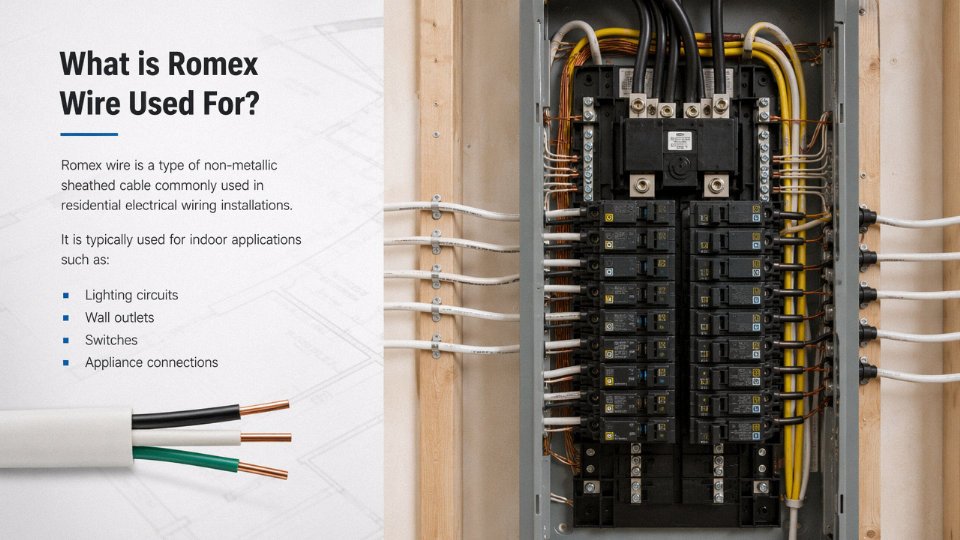
AFCI breakers detect the high-frequency signature of arcing. They’re not foolproof — some older dimmer switches and certain motor loads generate nuisance trips — but in practice, a properly specified AFCI breaker on a clean NM-B circuit is reliable. The nuisance-trip problem usually points to a wiring issue, not a breaker problem.
GFCI Coverage and Where It Applies
NEC 210.8 has grown into a fairly comprehensive list: bathrooms, garages, crawl spaces, unfinished basements, outdoor receptacles, kitchen receptacles within roughly 6 feet of a sink, boathouses, and more. In a modern single-family home wired entirely with NM-B, that covers the majority of branch circuits. GFCI protection trips on ground-fault current imbalances in the 4–6 mA range — fast enough to prevent electrocution, though not designed to address arc-fault events.
Combination Breakers: Practical Value for New Builds
Dual-function AFCI/GFCI breakers satisfy both requirements with a single panel slot. For a contractor wiring a new home entirely in NM-B, this simplifies the panel schedule considerably — one breaker type handles most of the 15 A and 20 A circuits, and you’re not stacking GFCI receptacles downstream to compensate for a basic breaker. The cost premium over a standard breaker runs somewhere in the $20–$45 range depending on brand and supply chain timing, which is minor against the labor cost of a callback after a failed inspection.
Conductor Sizing Is Not Optional
Undersized Romex on an oversized breaker is one of the most persistent field mistakes — 14 AWG conductors protected by a 20 A breaker instead of the required 15 A. The breaker won’t trip at modest overloads that still push the wire well beyond its thermal limit. Over months or years, repeated thermal cycling degrades the thermoplastic insulation, which becomes brittle, cracks at staple points or bends, and eventually creates exactly the arc-fault or ground-fault condition that started this whole discussion. The fix is cheap at rough-in. It is not cheap after drywall.
Sourcing, Specifying, and Quality-Checking Romex-Equivalent Cables for International and Bulk Projects
Procurement gets complicated fast once you step outside North America. NM-B is a UL-listed, NEC-defined product, and that whole framework simply doesn’t exist in most international markets. That doesn’t mean you can’t source equivalent cables — it means you have to specify more carefully, verify more thoroughly, and understand exactly which quality markers indicate a cable worth installing.
Reading the UL 719 Listing Mark — and Spotting Fakes
Genuine NM-B cable carries a UL listing mark printed repeatedly along the outer jacket, typically every 12 to 24 inches. Alongside that mark you should see the conductor gauge, ampacity, voltage rating (600 V), temperature rating (90°C conductors, 60°C for ampacity purposes), and the explicit “NM-B” type designation. Every element matters. Counterfeit cable — and it does circulate, particularly through gray-market distribution channels — routinely omits the UL mark, substitutes a plausible-looking but unlisted logo, or prints the correct text over an undersized conductor.
UL listing marks on NM-B cable must include conductor gauge, voltage rating, temperature rating, and the NM-B type designation printed repeatedly along the jacket.True
UL 719 and NEC Article 334 both require this marking as part of the listing requirements for nonmetallic-sheathed cable sold and installed in North America.
If you’re receiving a large shipment, pull samples from multiple reels — not just the top reel — and measure jacket OD against the spec sheet. A micrometer takes thirty seconds. Undersize jackets are a consistent indicator of cost-cutting on insulation thickness, which affects both mechanical protection and flame-spread performance.
Conductor Purity: The CCA Problem
NEC and UL 719 require 99.9% annealed copper conductors. This isn’t pedantry. Aluminum-clad copper (CCA) conductors have been sold fraudulently as NM-B in several import markets, and they create real fire risk — higher resistivity means the conductor runs hotter at a given load than the breaker rating assumes, and galvanic corrosion at wire-nut and screw-terminal connections accelerates over time. A 12 AWG CCA conductor can approach the thermal limits of its insulation at currents that genuine copper handles comfortably.
Request a conductor resistance certificate per IEC 60228 or ASTM B3 for any bulk order. Measured DC resistance at 20°C for 12 AWG solid copper should fall in the range of roughly 5.2–5.4 Ω/km. Numbers above that range, or inconsistent across reels, warrant immediate follow-up before you accept the shipment.
Specifying Equivalents for Non-NEC Projects
Engineers working in Europe, the Middle East, or Southeast Asia on residential or light-commercial projects don’t need to chase NM-B specifically. The functional requirement — a sheathed multicore cable with a ground conductor for fixed interior wiring — is met by NYM-J (the German VDE standard, widely used across Central and Eastern Europe), H05VV-F or H07V-U for lighter applications, or H07RN-F where outdoor or damp-location flexibility matters. IEC 60227 covers the PVC-insulated versions; IEC 60245 covers rubber-insulated types.
Jinda produces cables compliant with IEC 60227 and IEC 60245, supplying the same sheathed multicore function as NM-B for international projects. For tenders, they provide third-party test reports, factory audit access, and conductor resistance certificates as standard documentation — not on request, as standard. That matters when you’re responding to a government infrastructure bid with a two-week submission window.
Bulk Procurement: What to Ask For Before You Order
For quantities above roughly 500 km, go beyond the datasheet. Request:
| Document | Why It Matters |
|---|---|
| Third-party IEC or UL test reports | Confirms the actual product, not a sample |
| Conductor resistance certificate (IEC 60228) | Catches CCA and undersized conductors |
| Jacket thickness measurements per reel | Flags production inconsistency |
| Factory audit access or audit report | Verifies process controls exist |
| Copper weight per kilometer | Prevents conductor undersizing through spec ambiguity |
Specifying copper weight per kilometer is one that procurement teams sometimes overlook. If your purchase order just says “12 AWG equivalent,” a supplier with loose quality controls can shave conductor cross-section slightly and still argue compliance. A stated minimum copper weight — typically around 70–75 kg/km for 2.5 mm² equivalents — closes that gap.
Lead Times and Logistics Reality
Standard NM-B in 14, 12, and 10 AWG ships from major North American electrical distributors in one to three days. Plan for a completely different timeline on international equivalents. From Chinese manufacturers, a realistic window is 30 to 60 days from order confirmation to port of destination, and that’s before customs clearance, which varies significantly by country. Add buffer for any documentation corrections — certificate of origin errors and HS code mismatches are common enough to plan around.
Jinda’s five production bases across China, covering 470,000 m², support custom jacket colors, printed legends, and non-standard reel lengths — useful when local codes require specific color conventions or when contractors need short-run reels for retrofit work. For long-term supply partnerships, that kind of flexibility usually matters more than unit price.
Frequently Asked Questions About Romex Wire
These are the questions that actually show up in inspection reports, jobsite group chats, and procurement emails. Short answers where the answer is simple, longer where the code or physics demands it.
Can Romex Be Run Through Conduit?
Yes, with conditions. NEC 334.15(B) explicitly permits NM-B inside conduit or tubing when the purpose is mechanical protection in an exposed location — think the last few feet of a cable run dropping down a basement wall to a panel. The conduit must be sized to accommodate NM-B’s jacket diameter, and your ampacity calculation still has to use the 60°C column, not the conductor’s 90°C rating.
The trap people fall into: thinking conduit magically expands where Romex can go. It doesn’t. Running NM-B through conduit buried underground is still prohibited. The cable is not rated for wet or damp locations regardless of what’s surrounding it. Conduit is mechanical armor here, not an environmental upgrade.
NM-B cable run through conduit is permitted under NEC 334.15(B) for mechanical protection but does not expand the cable's permitted installation environments.True
NEC 334.15(B) allows NM-B in conduit for exposed-location protection, but NM-B remains restricted to dry locations per NEC 334.12 regardless of conduit enclosure.
Voltage Drop: When Does Run Length Become a Problem?
The NEC doesn’t set a hard maximum length for branch circuits — that’s a design issue, not a code violation trigger. The working rule most engineers use is 3% voltage drop maximum on any single branch circuit, with a combined 5% budget from service entrance to the final outlet.
For a 20 A, 120 V circuit on 12 AWG NM-B, you’ll start exceeding that 3% threshold at roughly 50 feet one-way, give or take depending on actual load current (which is almost never the full 20 A). A lighting circuit at partial load might be fine at 70 feet. A dedicated circuit for a refrigerator or chest freezer running close to rated draw — you’d want to do the math. Upsizing to 10 AWG on a long run costs more upfront but saves nuisance callbacks about “dim lights” or equipment running hot.
Is Romex Rated for Outdoor Use?
No. NM-B is a dry-location cable, full stop. For direct burial, UF-B is the NEC-recognized equivalent — same basic purpose, but with a solid-filled jacket that resists moisture and soil contact. For exposed outdoor runs, most electricians prefer THWN conductors pulled through weatherproof conduit; that combination handles UV exposure, temperature swings, and moisture far better than any sheathed cable system.
Can You Splice Romex Inside a Wall Without a Junction Box?
No, and inspectors catch this more than people expect. NEC 300.15 requires every splice to be enclosed in a listed junction box that stays permanently accessible. In-wall splices without boxes are not just a code violation — they’re a legitimate fire risk, since a failing splice generates heat and there’s nothing to contain it.
What Does the Ground Wire Actually Do Without Metal Conduit?
The bare copper equipment grounding conductor provides a low-impedance return path to the panel. In metallic conduit systems, the conduit itself carries fault current. In NM-B systems, the bare copper does that job. During a ground fault — say a live conductor contacts a metal appliance case — fault current needs a path back to the source that’s low enough impedance to trip the breaker fast. Without that ground wire, the appliance case stays energized until someone touches it. It’s not a redundancy; it’s the entire fault-clearing mechanism.
How Does Romex Differ From European and Asian Cables?
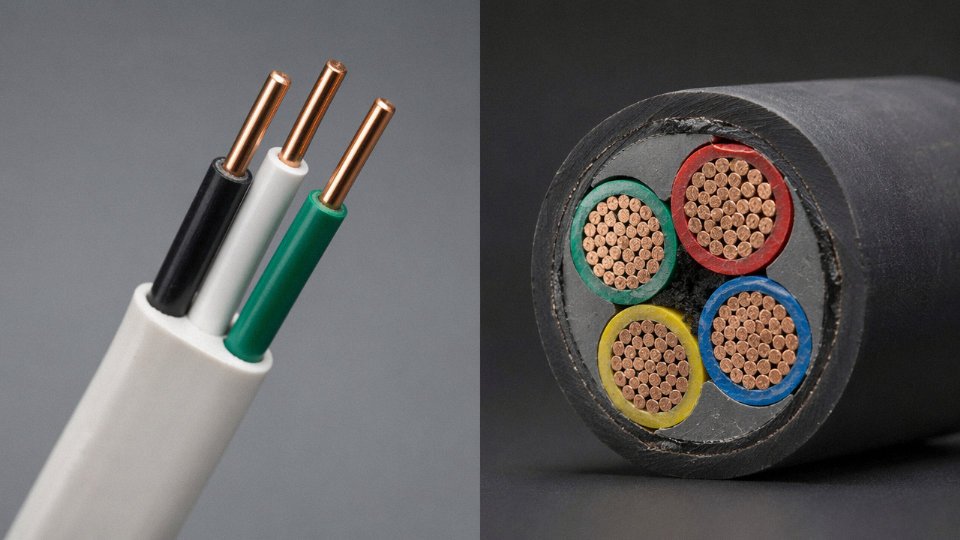
Structurally, the concept is similar: insulated conductors, a sheath, a ground. The execution diverges significantly. European installations commonly use NYM or H07V-R cables built to IEC standards, with different color coding (brown for live, blue for neutral, green/yellow for earth), different jacket materials, and installation methods often centered on single conductors in conduit rather than sheathed cable. Asian markets vary more by country, but IEC-based systems dominate. NM-B is governed by UL 719 and NEC Article 334 — a procurement team sourcing “Romex equivalent” for a North American project needs to specify UL listing specifically, not just IEC compliance.
Can Romex Be Used in a Mobile Home or RV?
No. Manufactured housing built to HUD code and recreational vehicles require wiring listed specifically for those applications. The installation environment — vibration, chassis grounding, different thermal cycling — demands a different listed product. Using standard NM-B in a manufactured home is a code violation and a real safety concern.
What Gauge for a 240 V Air Conditioner?
Residential central AC units vary widely — a small 2-ton unit might pull 15 A, a large 5-ton unit can pull 45 A or more. Always start with the equipment nameplate minimum circuit ampacity (MCA), not a rule of thumb. A 30 A circuit requires 10 AWG NM-B (orange jacket). A 40 A circuit steps up to 8 AWG (black jacket). Get the MCA wrong, and you’re either undersized for the load or oversized for the breaker’s trip protection — either way, a problem.