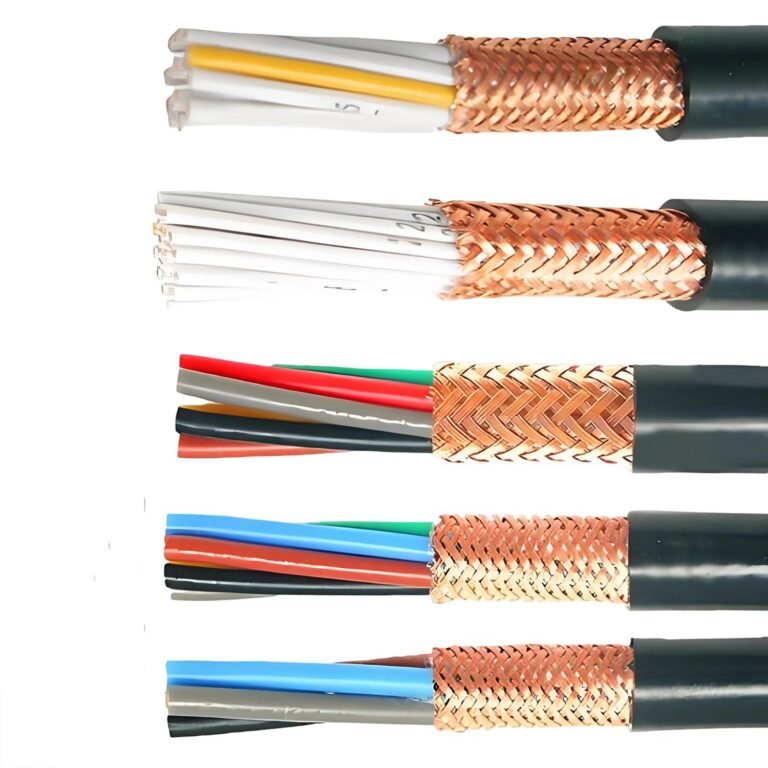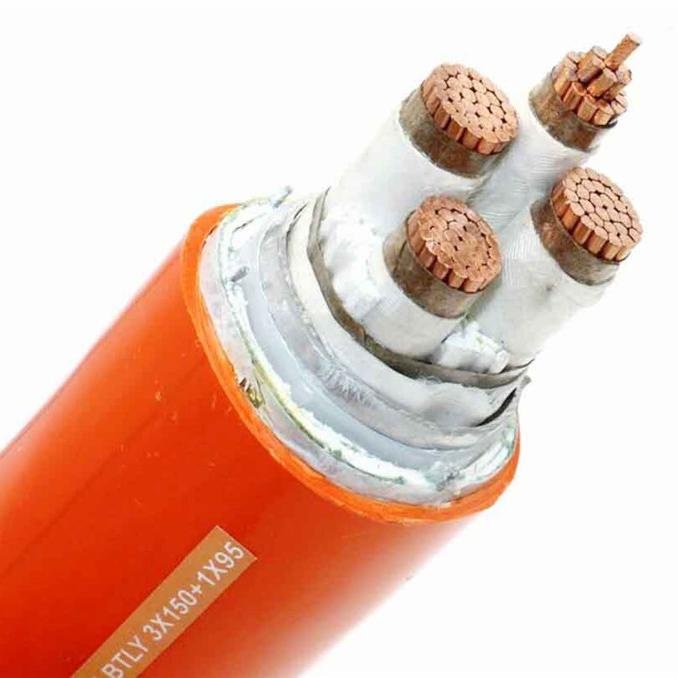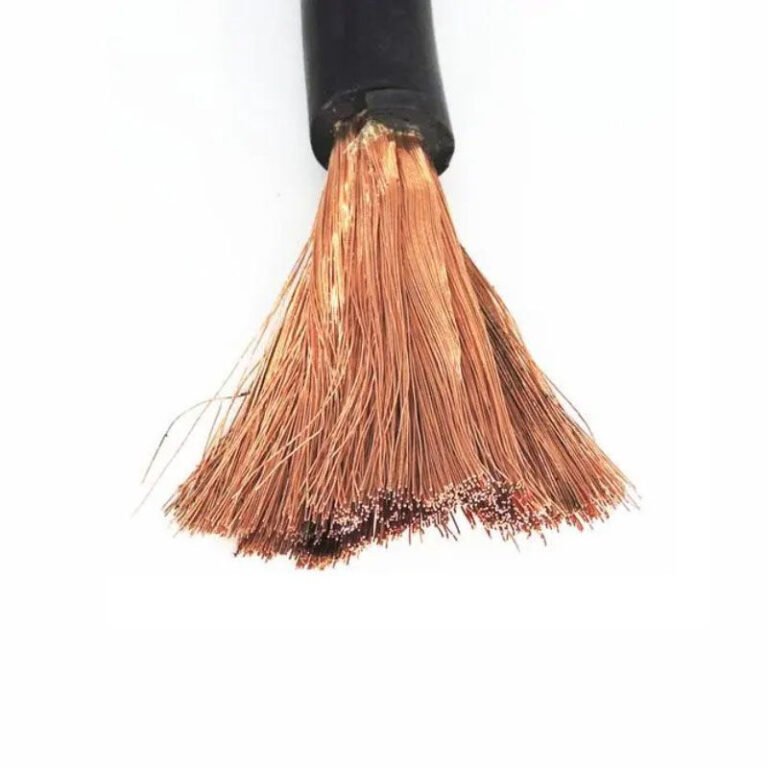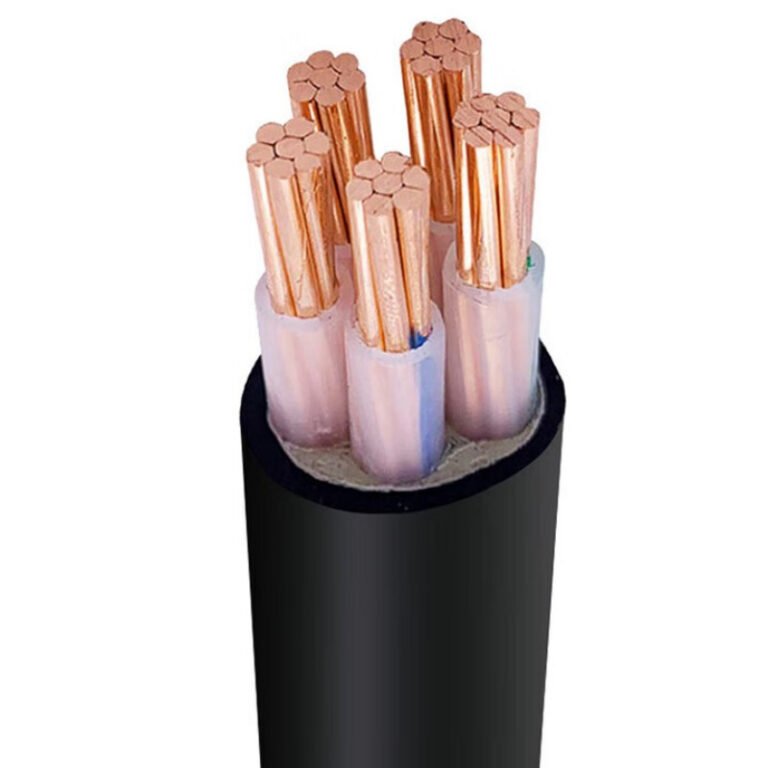
Unprotected cable fails in ways that are expensive and often avoidable. A forklift clips a run in a warehouse aisle, a ground shift cracks a direct-buried line, vibration from a crusher wears through insulation over eighteen months — and the result is the same each time: unplanned downtime, a fault-finding exercise that can eat a full shift, and a repair bill that dwarfs what proper cable selection would have cost. Most of those failures trace back to one decision made early in the project, usually under cost pressure: skipping mechanical protection when the environment demanded it.
Armored cable — typically steel wire armored (SWA) or aluminum wire armored (AWA) per IEC 60502 — should be used wherever cable faces mechanical impact, crush loads, rodent attack, direct burial, or exposure to aggressive industrial environments. It is the correct choice for underground runs, cable trays in heavy manufacturing, and any installation where conduit is impractical or cost-prohibitive. Properly selected and installed, it carries a rated service life of 30–40 years.
What complicates the decision isn’t knowing that armor helps — most engineers know that much. It’s knowing when the armor type, the armor material, and the burial or routing method actually match the specific hazard, and when you’re overspecifying (and paying for it). The right answer depends on soil chemistry, fault current levels, whether the cable moves, and a handful of installation details that don’t always make it into the spec sheet. That’s what this article works through.
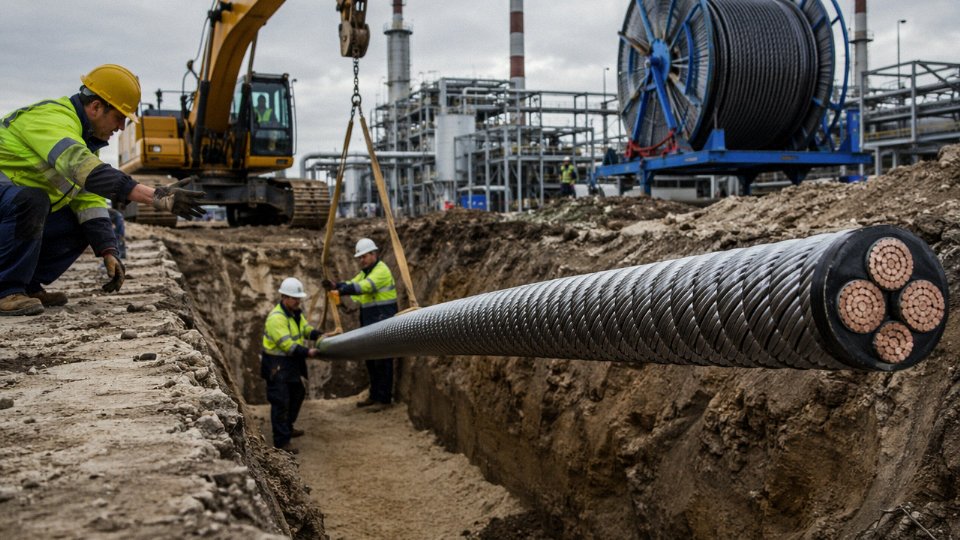
Steel wire, aluminum wire, and steel tape: choosing the right armor type before anything else
Most people frame the armored cable decision as a single binary — armored or not. The more consequential choice comes after that: which armor construction actually matches your mechanical and electrical environment. Pick the wrong one and you can end up with a cable that’s technically “armored” but undersized for the tensile load during installation, or worse, one that generates enough circulating current heat to degrade insulation years ahead of schedule. These failures are quiet and slow, which makes them expensive.
Steel Wire Armored (SWA)
Round galvanized steel wires wound helically over the inner sheath — this is the workhorse construction for anything involving real mechanical stress. The helical lay is what gives SWA its tensile strength: load distributes across all wires simultaneously rather than concentrating at a single point. Tensile capacity runs roughly 2–15 kN depending on overall cable diameter and the number and gauge of armor wires, and that range matters enormously. A 16 mm² three-core SWA sitting at the low end of that range is a very different animal from a 240 mm² multicore cable with heavy armor wires at the high end.
Direct burial in rocky or stony soil, long horizontal pulls through duct or open trench, vertical riser installations — SWA handles all of these well. The crush resistance of 450–750 N per 10 cm (per IEC 60502 test methodology) gives it tolerance for ground movement and the occasional careless backfill operation. Service life in a correctly specified and installed underground application is generally rated 30–40 years under BS 5467 and IEC 60502-1, though actual longevity depends heavily on soil chemistry and whether installation damage was avoided.
One hard rule: SWA is steel, which means it’s magnetic. For single-core AC cables, that’s a serious problem — more on that below.
Aluminum Wire Armored (AWA)
Same helical wire geometry as SWA, but the armor is aluminum alloy rather than galvanized steel. The practical weight reduction is significant — roughly 60–70% lighter than equivalent SWA — which simplifies handling on large-diameter cables where weight genuinely becomes a site logistics problem. But the primary reason AWA exists isn’t weight. It’s magnetic permeability, or rather the lack of it.
When you run single-core AC cables with steel armor, the alternating magnetic field from the conductor induces circulating currents in the ferromagnetic armor. Those currents generate heat. On cables above roughly 95 mm² conductor cross-section, this heating can be substantial enough to force a derating factor that effectively negates the conductor size you specified, or at higher loads, to cause premature insulation breakdown. AWA eliminates this mechanism entirely because aluminum is non-magnetic.
For MV and HV single-core cables in power distribution — the type of installation where 185 mm² or 240 mm² conductors are commonplace — AWA isn’t a preference, it’s the correct specification. Specifying SWA on these circuits is one of those procurement-stage errors that doesn’t show up until thermal surveys start revealing unexplained hotspots two or three years into service.
Installing single-core AC cables with steel wire armor causes eddy-current heating that can significantly derate cable ampacity or cause premature insulation failure above certain load thresholds.True
Steel is ferromagnetic. A single-core AC conductor produces an alternating magnetic field that induces circulating currents in a closed steel armor layer, generating I²R losses and heat within the cable itself. IEC 60502 and engineering references including ERA 69-30 explicitly require non-magnetic armor for single-core AC cables above thresholds that vary by conductor size and installation method.
Steel Tape Armored (STA)
Two steel tapes wound in opposing lays over the inner sheath. The overlapping geometry provides solid radial crush protection but offers meaningfully lower tensile strength than SWA wire construction — STA is not the right choice if tensile load during installation is a concern. Where it earns its place is in protected environments: cables run in concrete duct, installed in pre-formed trenches, or routed inside buildings where pulling tension is minimal and the dominant risk is point-load crushing.
The thinner profile is a genuine practical advantage in congested cable trays or tightly routed plant rooms where every millimeter of bend radius and diameter matters. STA cables are also somewhat more flexible than SWA equivalents, which helps when working with smaller conductor sizes in awkward routing conditions.
Double Steel Tape Armored (DSTA)
Add a second steel tape layer and you get enhanced radial crush resistance for environments where point-load risk is severe — industrial floors with forklift or heavy vehicle traffic, submarine cable landing sections transitioning from seabed to shore, or any location where a single tape layer might be breached by localized mechanical impact. Tensile strength remains limited compared to SWA. DSTA is a crush-protection solution, not a pulling-strength solution.
Side-by-Side Comparison
| Armor Type | Tensile Strength | Weight vs. Unarmored | Eddy-Current Risk (Single-Core AC) | Typical Application | Key Standards |
|---|---|---|---|---|---|
| SWA | High: ~2–15 kN (diameter-dependent) | +30–60% | High — steel is ferromagnetic | Direct burial (rocky soil), long pulls, risers | IEC 60502-1, BS 5467 |
| AWA | Moderate: ~1–8 kN (aluminum wires) | +10–25% | None — aluminum is non-magnetic | Single-core MV/HV cables >95 mm², weight-sensitive routes | IEC 60502-1, BS 6346 |
| STA | Low-moderate: limited tensile | +20–40% | Moderate (still steel) | Protected trench/duct, indoor plant, small-diameter cables | IEC 60502-1, BS 5467 |
| DSTA | Low-moderate tensile, high radial crush | +35–55% | Moderate (still steel) | Submarine landing sections, heavy vehicular traffic floors | IEC 60502-2, BS 6346 |
The single-core AC trap catches procurement teams who copy a multicore cable spec directly onto a single-core order. It’s a common mistake and the consequences — insulation aging, unexpected ampacity reduction, in severe cases localized fire risk — are disproportionate to how simple the fix is. Specify AWA. If the project already has SWA single-core cables on order, check the load profile and installation method against the derating tables in IEC 60502 before those cables go in the ground.
Six Installation Environments Where Armored Cable Is Not Optional
Not every application actually requires armored cable — but in the six environments below, using unarmored cable isn’t a cost-saving choice, it’s a liability. The failure modes are well-documented, the regulatory requirements in several cases are explicit, and the cost of a single cable fault in most of these settings dwarfs any upfront savings on cable spec.
Direct Burial in Soil
Soil is not a stable, passive medium. Seasonal freeze-thaw cycles, clay shrinkage, and even modest ground settlement generate lateral shear forces on buried cables that accumulate over years. Add stone contact — almost unavoidable in rocky ground — and the abrasion during backfill compaction, and an unarmored cable in direct burial is slowly being destroyed from the moment the trench closes.
Steel wire armored (SWA) cable handles crush loads in the 450–750 N per 10 cm range depending on conductor count and armor wire diameter, which is what IEC 60502-1 targets for direct-burial service. That mechanical resistance also means you can skip rigid conduit in most soil types, which is where the real cost argument lives: direct-buried armored cable typically runs $8–$25 per linear foot installed, versus $15–$40 per foot for conduit-run unarmored cable in rocky or congested terrain. The conduit approach also requires wider trenches, more bedding material, and longer pull times. In anything other than clean, stable sandy soil, armored direct burial is simply faster and cheaper over the full installation scope.
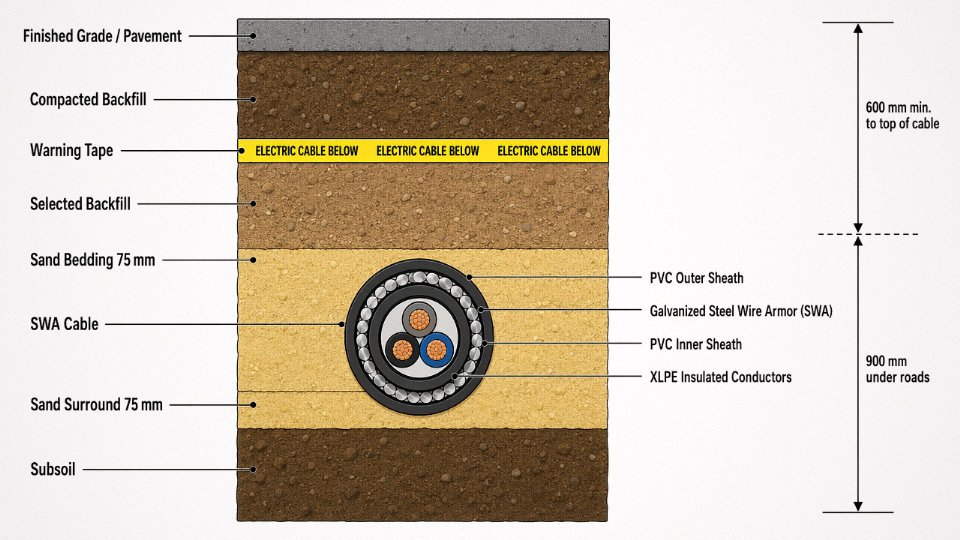
Service life for correctly selected SWA in underground industrial applications is rated at 30–40 years under IEC 60502-1 and BS 5467, assuming proper bedding depth (typically 600–900 mm depending on jurisdiction and traffic loading above).
Underground Industrial Facilities and Mine Tunnels
Mining environments combine rock-fall impact, explosive or flammable atmospheres, and heavy mechanized traffic in a way that makes armored cable effectively mandatory under most national mining codes. IEC 60079 governs cable selection in hazardous-area zones; in Zone 1 and Zone 2 environments, cables must have a mechanical protection layer that prevents armor damage from becoming an ignition source. Most mining standards — including those aligned with IEC 60502 and national equivalents in Australia, South Africa, and the EU — specify armored construction explicitly for fixed wiring runs.
Rock-fall alone is enough reason. A 5 kg fragment falling 3 meters delivers impact energy that will cut through PVC-jacketed unarmored cable without much resistance.
Outdoor Above-Ground Runs Without Conduit
Cable trays, ladder rack, and exposed wall runs are common in process plants and substations. The assumption that “above ground means protected” doesn’t survive contact with maintenance reality: scaffolding poles get dragged across trays, technicians step on horizontal runs, and thermal cycling causes SWA cables to work against tray edges over years. Armor provides the mechanical buffer that keeps circuit integrity intact when the installation doesn’t get the careful handling the drawings assumed.
Marine and Offshore Platforms
Constant low-frequency vibration from engines and wave motion fatigues unarmored cables at support points. Saltwater spray accelerates jacket degradation, and deck traffic — including rolling equipment and dropped tools — creates impact loads that are genuinely unpredictable. The standard choice here is SWA or AWA with a UV-stabilized HDPE outer sheath, which is what IEC 60092 (shipboard and offshore wiring) points toward for power cables in exposed locations. The aluminum wire armor option is often preferred offshore because it eliminates galvanic corrosion risk in salt-spray environments where a steel armor layer would require more careful sheath integrity monitoring.
IEC 60092 requires armored cable for all power circuits on offshore platformsFalse
IEC 60092 specifies armored or equivalent mechanical protection for cables in exposed or high-risk locations, but does not mandate armor for every circuit universally — the requirement depends on installation route, voltage level, and exposure classification.
Rodent-Active Environments
Rodent incisor force has been measured in laboratory conditions above 1,200 N — well beyond what any polymer jacket resists. Agricultural facilities, food processing plants, and remote telecom infrastructure in rural areas all deal with this. Steel or aluminum armor is the only passive, long-term deterrent that doesn’t require monthly inspection or rely on repellent compounds that degrade. Conduit works too, but adding conduit to an existing installation that wasn’t designed for it is expensive and disruptive. Specifying armored cable from the start costs almost nothing extra at procurement stage and removes the problem entirely.
In practice, PVC-jacketed unarmored cables in an active rodent environment typically fail within one to three years. The armor layer doesn’t just slow rodent damage — it stops it.
High-Rise Building Vertical Risers
A 60-meter vertical cable run is carrying its own weight at every support point. For larger conductor sizes, that load is substantial, and over time it stresses both the conductors and the lower termination point if the cable isn’t properly supported. SWA construction gives the cable tensile integrity so that even with imperfect cleating intervals, the armor takes the weight rather than the conductors. This matters especially during installation, when cables are pulled or lowered through riser shafts before cleats are secured.
Industrial Plants with Mobile Machinery
Steel mills, port facilities, and heavy fabrication shops have one thing in common: cables that cross travel paths eventually get hit. Forklifts, pallet jacks, and overhead crane operations all create impact and crush events that are hard to engineer out entirely. Armored cable crossing a travel path — even temporarily during construction or shutdown — buys meaningful resilience. Specialized flat armored trailing cable is the right answer for moving machinery connections, but for fixed runs in high-traffic areas, standard SWA with a robust outer sheath is the baseline. An unplanned cable fault in a steel mill bay can halt production for four to twelve hours depending on cable routing and spare availability; the cost of that outage rarely justifies the savings on a lighter cable spec.
When armored cable is the wrong choice: flexibility, weight, and space constraints
Armored cable is over-specified far more often than it is under-specified. That’s an honest observation from watching procurement lists come through for projects where half the cable runs never see a shovel, a forklift, or a rodent. Armor costs money, adds weight, complicates termination, and in some installations actively creates problems. Knowing when to leave it out is just as important as knowing when to use it.
Continuously flexing applications: robotic arms, crane trailing cables, reeling drums
Standard SWA and STA constructions are designed for static or occasional-flex service. The steel wires are hard-drawn, and repeated tight bending work-hardens them further until they fatigue-crack — typically within weeks to a few months of commissioning on a robotic arm or a reeling drum, depending on bend radius and cycle rate. Once the armor wires fracture, the broken ends can migrate inward and damage insulation, which is worse than having no armor at all.
The minimum bend radius for a typical SWA power cable runs 8–12× the overall diameter during installation, and even higher for repeated flexing service. A purpose-built continuous-flex cable — unarmored with fine-stranded conductors and a robust PUR or TPE outer sheath, or a flexible armored design using tinned copper braid — can handle bend radii of 5–7× OD at millions of cycles. Use the right product for the duty cycle. This is not a gray area.
Congested conduit systems and cable fill
If you’re pulling cable into conduit that’s already carrying multiple circuits, adding armor often pushes the conduit fill percentage above the 40% guideline specified in NEC and IEC wiring rules. Armor adds real OD — anywhere from 2 to 6 mm on a medium-voltage cable, depending on wire gauge and armor construction. That’s not trivial when you’re trying to fit four circuits into a 2-inch conduit. The result is either a conduit upsizing cost that exceeds the cost of the armor itself, or dangerous pulling tensions that damage insulation jackets during installation. Where conduit provides the mechanical protection, unarmored cable with appropriate insulation rating is the correct, code-compliant, and cheaper answer.
In a fully enclosed metal conduit system, unarmored THWN or equivalent cable provides adequate mechanical protection for most commercial and industrial indoor applications.True
Rigid metal conduit (RMC) and intermediate metal conduit (IMC) provide their own mechanical protection by enclosure; NEC 358 and IEC 61386 both recognize conduit as a protective system, making separate cable armor redundant in most such installations.
Indoor commercial and office environments
Finished walls, suspended ceilings, proper cable trays with covers — these environments just don’t expose cable to the hazards that justify armor. The real cost isn’t always the cable itself; it’s the termination hardware. Armor-compatible glands, the correct stripping tools, and the time to dress armor ends properly add labor that indoor installations don’t need. A competent electrician can pull and terminate unarmored cable in a cable management system considerably faster.
Weight-sensitive installations
SWA cable runs 20–40% heavier than an equivalent unarmored cable — and on offshore topsides structures, aircraft support equipment, or weight-budgeted portable systems, that premium matters structurally, not just logistically. Braided stainless steel over a lightweight sheath, or polymer-armored alternatives, can deliver meaningful impact resistance at a fraction of the added mass. Worth evaluating before defaulting to SWA simply because it’s familiar.
Residential projects with full conduit enclosure
Where local code permits — and in many jurisdictions it does — running THWN or equivalent unarmored conductors through PVC or metal conduit in a residential setting costs noticeably less than armored cable, installed. The conduit itself provides the protection. Armored cable in this context is a convenience product, not a performance upgrade, and the installed cost premium rarely makes sense on a tight residential budget.
The simple rule: if the cable faces no credible mechanical threat, the circuit design doesn’t require fault-current return through the armor, and an independent protection system already exists, then armor is cost without benefit. Specify it out.
Voltage ratings, conductor sizing, and standards compliance: matching armored cable specification to the electrical design
Specifying the right armor type and installation method is only half the job. The electrical design — voltage class, current-carrying capacity, earthing strategy — is where a lot of procurement specs go wrong, usually because someone copied a previous project’s bill of materials without checking whether the new application actually matches.
Voltage class drives both insulation and armor construction
Armored cable is manufactured across a wide voltage range, and the construction changes substantially as you move up the spectrum. At 450/750 V (IEC 60227), you’re typically looking at PVC-insulated, relatively compact cables intended for light industrial or building use. Step up to 0.6/1 kV under IEC 60502-1 and the insulation wall thickens, the conductor screen requirements change, and steel wire or steel tape armor becomes the norm for underground work. From 3.6/6 kV through 18/30 kV (IEC 60502-2), XLPE insulation with metallic conductor and insulation screens becomes standard — you can’t simply swap a 1 kV construction into a 6 kV application by changing a line item on the spec sheet.
At HV classes above 30 kV, the armor’s role shifts somewhat; the radial electric field management by the screen system dominates, and the armor is more about mechanical protection and fault current return than voltage withstand. The practical procurement mistake is treating voltage class as a minor checkbox rather than the primary driver of cable construction.
Derating: why specifying armor without rechecking ampacity causes real problems
The armor layer and outer sheath together reduce the cable’s ability to dissipate heat compared to an unsheathed conductor in free air. IEC 60364-5-52 provides grouping factors and burial depth correction factors that directly reduce the rated current-carrying capacity — sometimes significantly. A 95 mm² armored cable buried at 0.8 m in a group of three touching circuits might carry only 65–75% of its free-air rated current, depending on soil thermal resistivity and ambient ground temperature. In warm climates or poorly backfilled trenches with dry, sandy soil, that derating gets worse.
The failure mode here is slow and insidious: the cable doesn’t trip immediately, but insulation runs hot year after year, accelerating aging. In practice, I’ve seen installations where the original design specified free-air ampacity without applying burial correction factors, and the cables were running at 15–20°C above their rated conductor temperature continuously. That shortens a 30-year cable life to something much less.
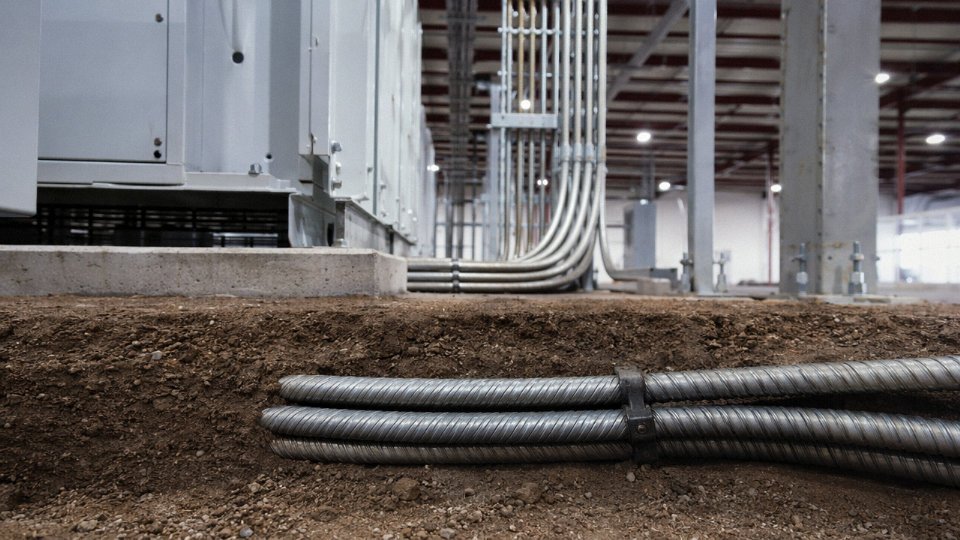
Using armor as the circuit protective conductor — and when you can’t
IEC 60364 and BS 7671 permit the SWA armor to function as the circuit protective conductor (CPC) provided its cross-sectional area satisfies the adiabatic equation for the prospective fault current and disconnection time. For many standard SWA cables in 0.6/1 kV systems, the steel wire armor area is sufficient. But there are real exceptions: aluminum wire armored (AWA) cables used in larger sizes where the armor CSA is marginal, high-fault-current industrial substations where clearing times are longer than assumed, or systems where the earth fault loop impedance calculation puts you outside the permitted limits under BS 7671 Table 54.7.
When the armor doesn’t meet the adiabatic requirements, a separate earth conductor is not optional — it’s a code requirement. Skipping it on cost grounds and hoping the armor holds during a fault is a gamble that ends with burned terminations at best, an arc fault at worst.
SWA armor can always replace a dedicated earth conductor in armored cable installationsFalse
BS 7671 and IEC 60364 require the armor's cross-sectional area to satisfy the adiabatic equation for the specific fault current and disconnection time of that circuit. In high-fault-current systems or where clearing times are long, a separate CPC is still required.
Standards framework for multi-country procurement
| Standard | Scope | Typical application region |
|---|---|---|
| IEC 60502-1 | Power cables 0.6/1 kV | Global baseline |
| IEC 60502-2 | Power cables 3.6/6 kV to 30 kV | Global baseline |
| IEC 60228 | Conductor classes (1, 2, 5, 6) | Global |
| BS 5467 / BS 6724 | UK armored cable (PVC/LSZH) | UK, many Commonwealth markets |
| AS/NZS 1429 | Armored power cable | Australia, New Zealand |
| NEC Article 330 | Metal-clad cable (MC) | United States |
Jinda cables are tested and certified to IEC, CE, and other international frameworks, which matters practically when a single infrastructure project spans multiple regulatory jurisdictions.
XLPE versus PVC insulation inside the armor
XLPE runs at 90°C continuous conductor temperature versus 70°C for PVC — that difference is not trivial. For a given conductor size, XLPE allows a higher continuous current rating, which sometimes means you can step down one conductor size and still meet the ampacity requirement, partly offsetting the higher material cost. For underground, outdoor, and marine environments, XLPE also handles moisture ingress and thermal cycling better over long service periods. PVC remains perfectly adequate for sheltered, controlled-environment installations where cost pressure is real. The choice should be made deliberately, not defaulted.
Conductor class and stranding
Class 2 stranded conductors are the standard choice for fixed armored cable installations — they provide better current distribution than solid (Class 1) and are compatible with all standard armor types. Class 5 flexible stranding can be specified where the cable will be repositioned occasionally, but the armor type must be compatible: standard SWA isn’t designed for repeated bending. In that case, you’d be looking at wire-braid or strip-armor constructions specifically rated for flexible duty. Specifying Class 5 conductors with standard SWA armor and then allowing installation crews to repeatedly re-route the cable is a combination that leads to broken armor wires and compromised mechanical protection — usually discovered only during a fault investigation.
Direct burial vs. duct-and-draw vs. cable tray: how installation method changes which armored cable you need
Installation method isn’t a detail you sort out on site. It locks in your cable construction choice before procurement, and getting that sequence backwards is one of the most reliably expensive mistakes in electrical infrastructure projects.
Direct burial — no conduit
SWA or AWA is the default here, full stop. The armor has to resist sustained soil pressure, point loads from angular stones directly against the sheath, and the unpredictable impact of a excavator bucket during future site work. On this last point: the armor won’t stop a direct strike from a full-sized excavator tooth, but it will survive a glancing hit that would shred unarmored cable instantly and potentially cause a fault.
Specify a polyethylene outer sheath rather than PVC for any buried run. PVC is fine above grade, but below grade over decades, plasticizers migrate, the sheath stiffens and micro-cracks, and moisture ingress follows. PE holds up far better in wet or chemically aggressive soils — and most industrial soils are at least mildly aggressive. Minimum burial depth under IEC 60364 is typically 600 mm under areas with only foot traffic, stepping up to 900 mm under roadways or areas with vehicle access. Local codes sometimes go deeper; in practice you should confirm with the relevant grid operator or municipal authority because they frequently have their own requirements that override the IEC baseline.
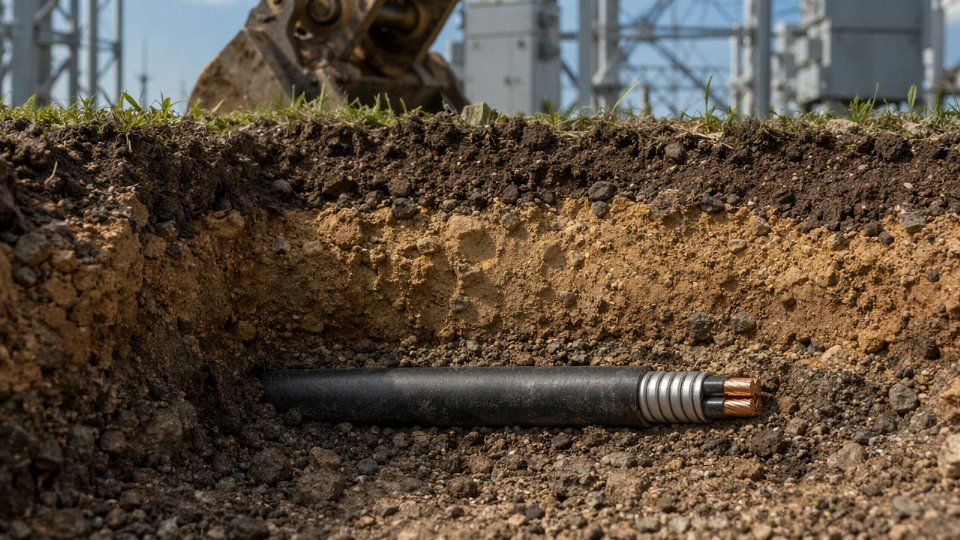
Direct burial of armored cable (SWA/AWA) with a PE outer sheath at IEC 60364-specified depths provides adequate mechanical and moisture protection for a 30–40 year service life in typical industrial underground applications.True
This aligns with IEC 60502-1 and BS 5467 rated service life figures for correctly selected and installed SWA/AWA cable, with PE outer sheath providing superior long-term moisture resistance compared to PVC in buried conditions.
Duct-and-draw (HDPE or concrete duct bank)
The duct itself provides the mechanical protection, which changes the calculation entirely. In most duct-bank installations you can downgrade from SWA to steel tape armor (STA), reducing cable OD, weight, and unit cost without sacrificing anything meaningful — the tape handles the incidental protection requirement while the duct handles the structural load.
What the duct does not solve is pulling tension. Armored cables are heavier and have a larger OD than equivalent unarmored cables, so your calculated pulling tension goes up and your bend radius at duct entry points matters more than you might expect. Run the tension calculation before you specify the cable, not after. Exceeding the rated pulling tension on SWA — even once, even slightly — can displace armor wires and create stress concentrations that fail years later under thermal cycling. Use a proper cable pulling lubricant and calculate tension against both armor limits and conductor limits, taking the lower figure.
Cable tray and ladder rack
Above-ground tray installations have a different threat profile: falling objects, mechanical impact from maintenance activity, and (in some plants) the risk of another cable tray or its contents collapsing onto the run. SWA is preferred over STA here because the individual wires distribute impact load better than a tape can.
One thing that catches people out: armored cables have a noticeably larger OD than their unarmored equivalents at the same cross-section. Tray fill calculations need to account for this or you’ll overload the tray, which is both a code violation and a real fire risk. Run the fill numbers before you finalize the cable schedule.
Submarine and underwater crossings
This is a specialized construction — not just standard SWA with a wet route. Submarine armored cable typically uses double SWA layers, a moisture-barrier tape under the armor, and a PE outer sheath designed to resist hydrostatic pressure and long-term water exposure. IEC 60502-4 covers submarine power cable construction and is the relevant standard for river and coastal crossings. Jinda manufactures armored submarine cable for exactly these applications, including river crossings and nearshore coastal routes where the mechanical demands are significantly higher than any land installation.
Vertical risers and shaft installations
Tensile load dominates here, not crush or impact. Calculate the total supported cable weight for the full riser height and verify that figure against the SWA’s rated breaking tension with a safety factor of at least 5:1 — some specifiers use 7:1 for very long vertical runs, and that’s not overcautious. Cleating intervals need to be designed deliberately; if spacing is too wide, the armor wires can creep and slip under sustained load, which eventually destroys the termination from below.
Glands: the termination detail that fails most often
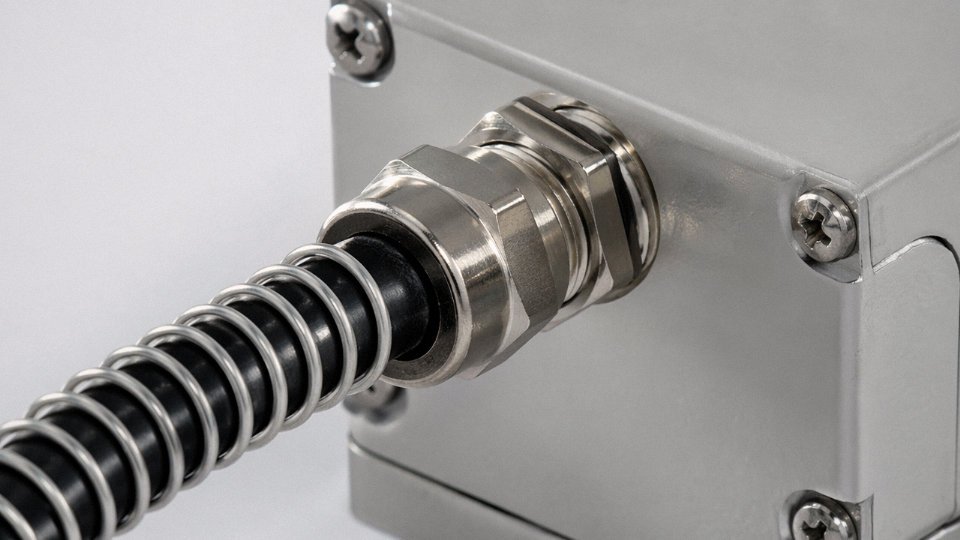
Gland selection is unglamorous and gets treated as an afterthought. It shouldn’t be. Type A glands are for SWA; Type B for STA. Using the wrong type either fails to clamp the armor correctly — defeating the IP rating — or damages the tape during makeup. Incorrect glands are, in my experience, the single most common cause of armored cable termination failures in the field, usually discovered only after water ingress has already started. Specify glands in your procurement package alongside the cable, not separately.
Cost–value analysis: when the premium price of armored cable pays back faster than you expect
The sticker price of SWA or AWA cable is higher than unarmored equivalents — sometimes meaningfully so. That’s the conversation that stops a lot of value-engineering reviews dead. But installed cost is the number that actually matters, and on that metric, armored cable frequently wins before you even factor in lifecycle.
Installed cost: the comparison that changes the conversation
Raw cable price is only part of the equation. For a direct-burial armored cable run, total installed cost — cable, trench preparation, backfill, compaction, marker tape, and labor — typically lands in the $8–$25 per linear foot range. The wide spread reflects soil conditions (sandy loam versus blasted rock), depth requirements, cable diameter, and regional labor rates. A 300-meter run through stable agricultural soil sits toward the low end. The same run through congested urban fill with utility crossings pushes toward the upper range.
Compare that to rigid steel conduit plus unarmored cable in difficult terrain: $15–$40 per foot installed, sometimes more when conduit threading, pulling mandrels, and intermediate pull boxes enter the picture. The conduit system adds procurement complexity, more labor trades, longer schedule, and one more thing to inspect and maintain.
A worked example: 500-meter industrial run
Take a realistic 500-meter underground feeder connecting a substation to a process building in a petrochemical facility — rough terrain, some rock, a busy cable corridor.
Conduit-plus-unarmored route: conduit material at roughly $8–$12 per foot, unarmored cable at $4–$7 per foot, installation labor at $6–$14 per foot for difficult ground, plus pull boxes and fittings. Total: somewhere in the $18–$33 per foot range, call it $90,000–$165,000 for the full 500 meters.
Direct-burial SWA armored cable, same route: cable at $7–$13 per foot, burial installation at $5–$10 per foot for moderate terrain. Total: $60,000–$115,000.
That’s a 20–35% reduction in total installed cost — even though the armored cable itself costs more per meter than the unarmored alternative. The conduit system is what kills the budget. And that’s before you count the conduit procurement lead time, which on international projects can run 8–14 weeks for rigid galvanized steel in the sizes needed for medium-voltage feeders.
Direct burial of SWA armored cable can be less expensive than conduit-plus-unarmored cable on runs over 150–200 meters in moderate to difficult terrainTrue
The installed cost advantage comes from eliminating conduit material, fittings, and additional labor trades. The crossover point depends on terrain, labor market, and conduit specification, but the arithmetic consistently favors armored direct burial on longer outdoor runs.
Downtime: the number that makes finance departments listen
Mechanical damage to unprotected underground cable is the kind of fault that doesn’t announce itself gradually. A tracked excavator clips an unmarked run during a facility expansion, and suddenly you’re looking at an unplanned outage. In continuous-process industries — food manufacturing, chemical processing, data centers, automotive assembly — downtime costs range roughly $10,000 to $100,000+ per hour depending on the operation and the specific circuit affected. A single fault event on a critical feeder can wipe out every cost saving achieved by under-specifying the cable, then some.
This expected-value argument is usually the most persuasive one in a budget review. You’re not paying the armored cable premium every year. You’re paying it once to reduce the probability of a fault that would cost far more than the premium if it occurred. Even a modest reduction in fault frequency — entirely plausible given the mechanical crush resistance of SWA cable, rated to 450–750 N per 10 cm under IEC 60502 — shifts the expected cost calculation decisively.
Lifecycle cost: where unarmored cable loses quietly
SWA cable installed correctly to IEC 60502-1 and BS 5467 in direct burial carries a service life rating of 30–40 years. Unarmored cable in the same environment — exposed to soil moisture cycling, ground movement, and incidental mechanical contact — can start failing within 5–10 years, sometimes faster in aggressive soils or areas with vehicle traffic overhead.
The replacement cost isn’t just the cable. It’s the excavation, the disruption to whatever is built above or around the route by that point, the engineering time to respecify, and the production impact during the repair window. Running that arithmetic over a 30-year asset life, the armored cable premium pays back multiple times over on any moderately exposed run.
When the premium genuinely doesn’t pay back
Not every application warrants this analysis in armored cable’s favor. Short indoor runs inside a cable tray or enclosed duct system, instrumentation wiring in a clean control room, flex drops to frequently repositioned equipment — the protection armored cable provides adds cost without adding meaningful protection benefit in those contexts. Low-consequence circuits where a fault causes a nuisance rather than a production outage don’t justify the full lifecycle argument either. The goal is correct specification, not maximum specification.
Procurement scale and supply reliability as cost factors
For project engineers sourcing armored cable in volume — major infrastructure runs, multi-building industrial complexes, export projects — per-meter price is only one variable. Consistent lay length, armor pitch uniformity, and insulation wall thickness across a 20,000-meter order matter for installation efficiency and electrical performance. Jinda’s five production bases across China and 470,000 m² of manufacturing capacity allow volume pricing and, practically speaking, make it feasible to fulfill large orders from a single production run rather than stitching together multiple partial batches. Batch-to-batch variation in armor construction is a real issue with some suppliers; it complicates installation and can affect fault current return path consistency in SWA systems. Supply chain reliability — lead time predictability, documentation for customs clearance — contributes to total project cost in ways that don’t show up in the per-meter comparison but absolutely show up in the project schedule.
Frequently asked questions about armored cable selection and application
Can I use SWA armored cable indoors?
You can, but it’s rarely the right call unless there’s a specific mechanical threat present. Indoor environments with plant machinery that could physically strike a cable run, areas with documented rodent activity, or vertical riser shafts where the cable must support its own weight over several floors — those are legitimate reasons to reach for SWA indoors. For a standard protected indoor run along a cable tray or in trunking, you’re carrying extra weight, paying a 20–40% material premium, and making termination more labor-intensive for no real protection gain. Steel tape armored (STA) cable is sometimes a better middle ground indoors if you need crush resistance without the full mechanical robustness of wire armor. Unarmored cable in properly rated trunking is usually the most cost-effective and code-compliant indoor solution where no specific mechanical hazard exists.
Does armored cable need to be earthed?
Yes, and this is where I’ve seen installations fail inspection more than almost any other single issue. The armor must be bonded to earth — at both ends in most industrial and commercial installations — so that it cannot float to a hazardous potential under fault conditions. When the armor is used as the circuit protective conductor (CPC), continuity at both ends is not optional; it’s what allows the fault current to flow fast enough to trip the upstream protective device. Single-end earthing is occasionally acceptable in specific configurations to break induced circulating currents in very long single-core cable runs, but that’s a deliberate design decision, not a shortcut. An unearthed or poorly bonded armor that carries fault voltage is a genuine electrocution risk.
Improper armor earthing is one of the leading causes of failed electrical inspections on industrial cable installationsTrue
Inspection bodies including those operating under BS 7671 and IEC 60364 routinely flag armor bonding failures; continuity and earth fault loop impedance tests directly expose this deficiency during commissioning checks
What is the minimum bend radius for SWA cable?
For a static installation — pulling through a duct, laying in a trench, running along a tray — the working figure is typically 6 to 8 times the overall cable diameter. Dynamic applications, meaning anything that gets repositioned occasionally, usually call for 12 times the overall diameter as a minimum. These numbers shift depending on conductor cross-section, number of cores, and overall construction, so always verify against the manufacturer’s datasheet for the specific cable you’re ordering. Forcing a large-conductor multicore SWA around a tight bend during installation is one of the more reliable ways to damage the bedding and crack insulation without it being immediately obvious — and that kind of damage tends to show up as an insulation failure two or three years later.
Can armored cable be used in hazardous areas?
Yes, but the compliance requirements layer up quickly. The cable construction, gland type, gland material, installation method, and zone classification all have to align under IEC 60079-14. A standard SWA cable with a brass gland is acceptable in some Zone 2 applications but may be completely wrong for Zone 1 or a gas group requiring stainless steel hardware. The cable itself needs to be specified and documented for the relevant Ex category — “armored cable” as a generic description is not sufficient for a hazardous area schedule. Get the full test documentation before the cable leaves the factory.
How do I strip and terminate armored cable correctly?
Use a purpose-made rotary armored cable stripper. It sounds obvious, but plenty of site electricians still use angle grinders or knives, and the result is nicked bedding or, worse, cut insulation that passes a quick visual check but fails under load. Once stripped, the armor wires need to be dressed cleanly into a correctly sized, type-rated cable gland — one that clamps the armor mechanically and maintains the enclosure’s IP rating. A loose gland that doesn’t grip the armor wires uniformly will eventually work itself free under thermal cycling. Match the gland to the cable’s measured overall diameter, not the nominal size on the drum label, because manufacturing tolerances mean those two numbers aren’t always identical.
Is there a flexible armored cable for moving applications?
Flexible armored cables exist — fine-wire stranded conductors, braided or close-wound armor — and they handle pendant connections, occasional repositioning, and similar low-cycle-movement duties reasonably well. They are not suitable for continuous high-cycle flexing like a robotic arm or a cable on a festoon system. For that kind of application you need purpose-designed trailing cable or robotic cable with specific flex-cycle ratings; trying to use flexible armored cable there will result in armor fatigue and conductor failure inside a year in most cases.
What certifications should I require when sourcing internationally?
At minimum: IEC 60502-1 (or -2 for medium voltage) type test reports, IEC 60228 conductor compliance, and a third-party test certificate from a UKAS-accredited or equivalent laboratory. Beyond that, destination market approvals matter — CE marking for EU projects, CCC for China domestic use, UL listing for North American installations. Ask for the actual test reports, not just a declaration. Jinda supplies full documentation packages covering IEC type tests and third-party certification to support project approvals across multiple markets, which matters when your client’s engineer or local authority having jurisdiction asks for evidence before energization rather than after.