Specify the wrong conductor material on a cable schedule and you might not find out until the building is half-wired — at which point you’re looking at rework costs that routinely run into tens of thousands of dollars, plus the schedule hit that follows a retrofit in finished walls. Get the insulation grade wrong and the consequence is quieter but worse: premature degradation under sustained load, nuisance tripping, or in a worst case, a fire origin point buried inside conduit. These aren’t edge cases. They show up regularly when procurement is treated as a commodity exercise rather than a materials engineering decision.
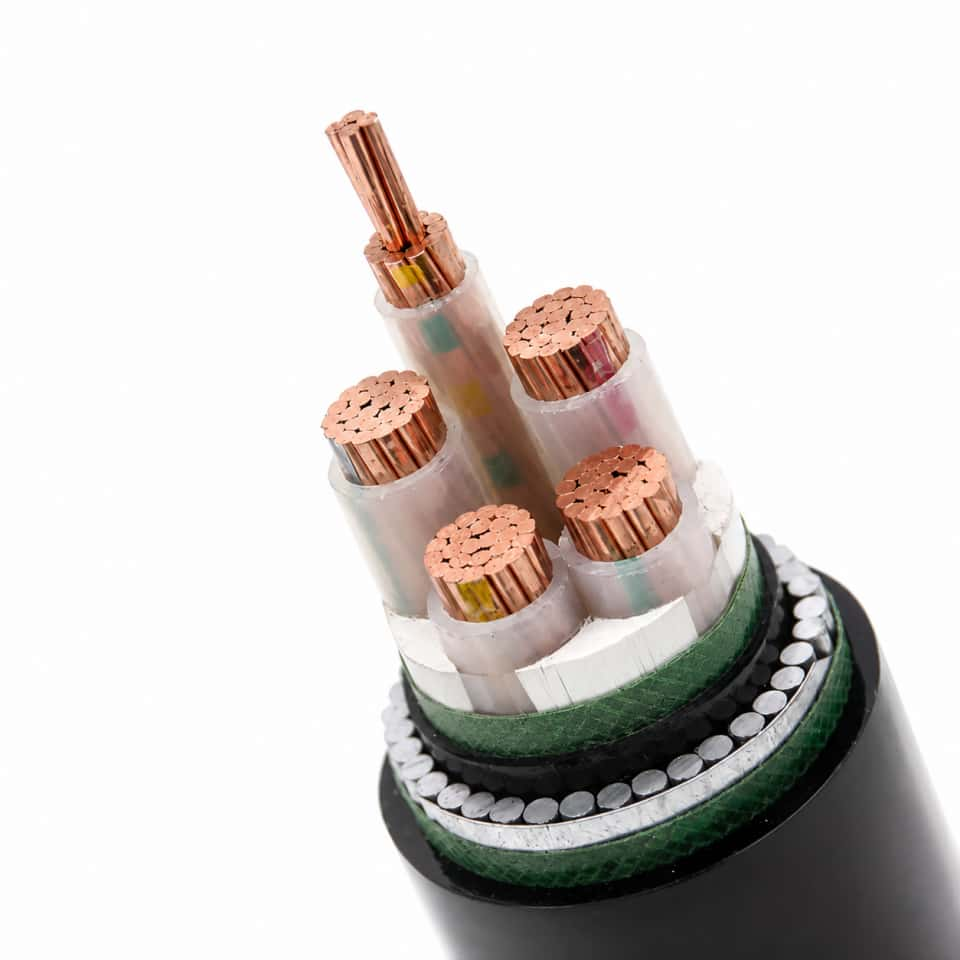
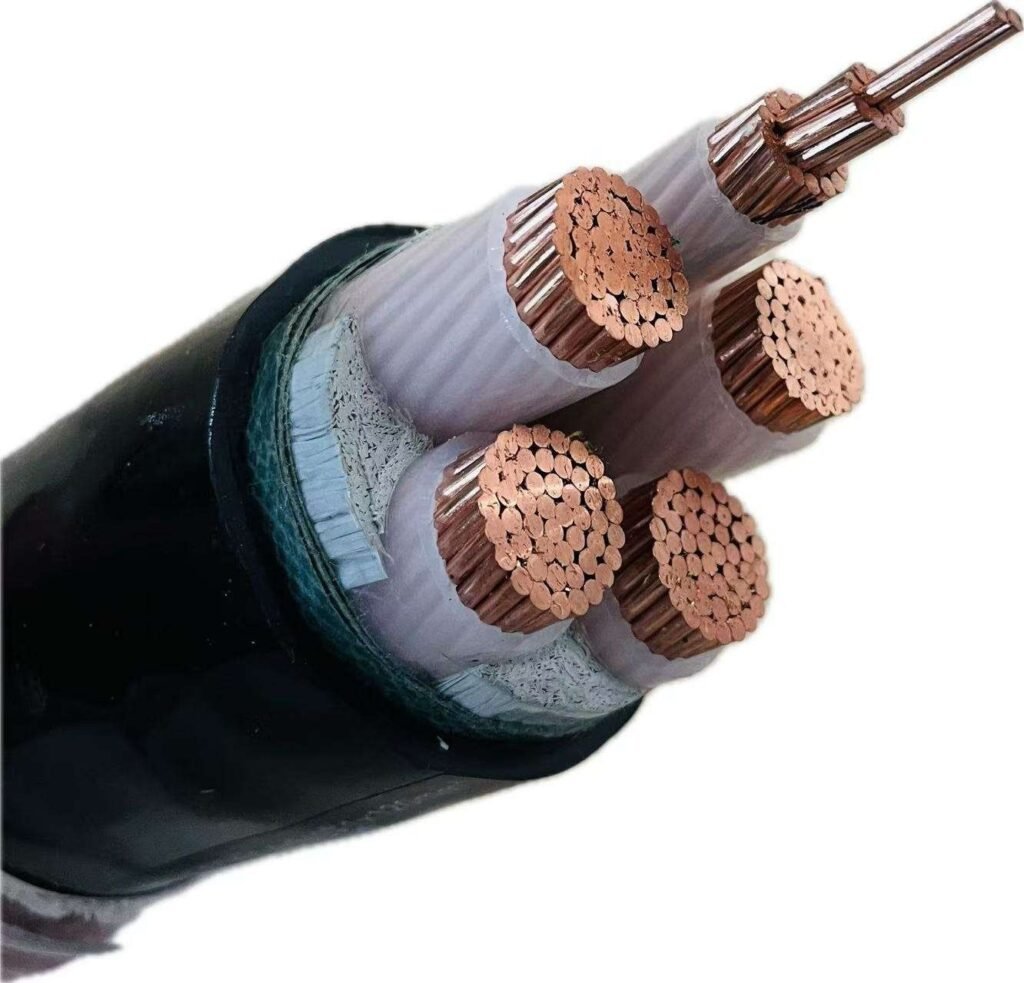
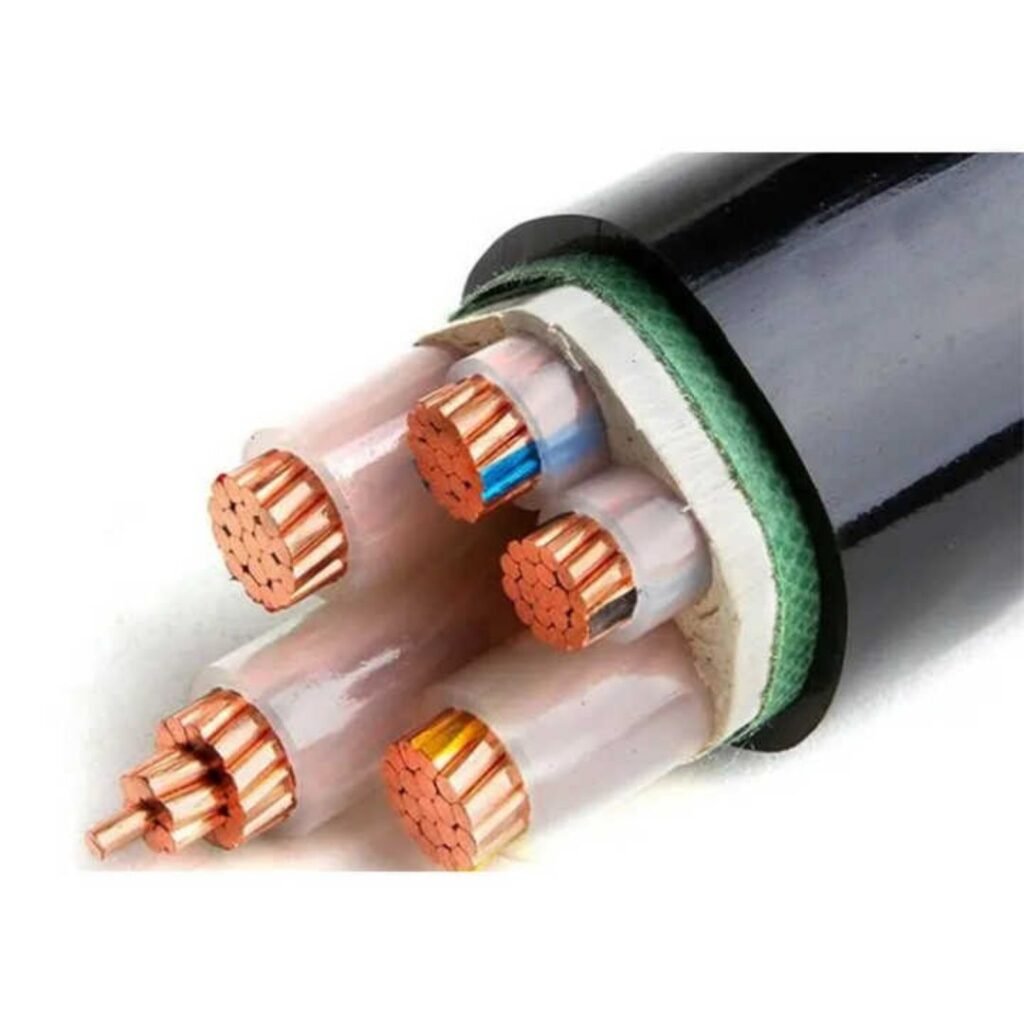
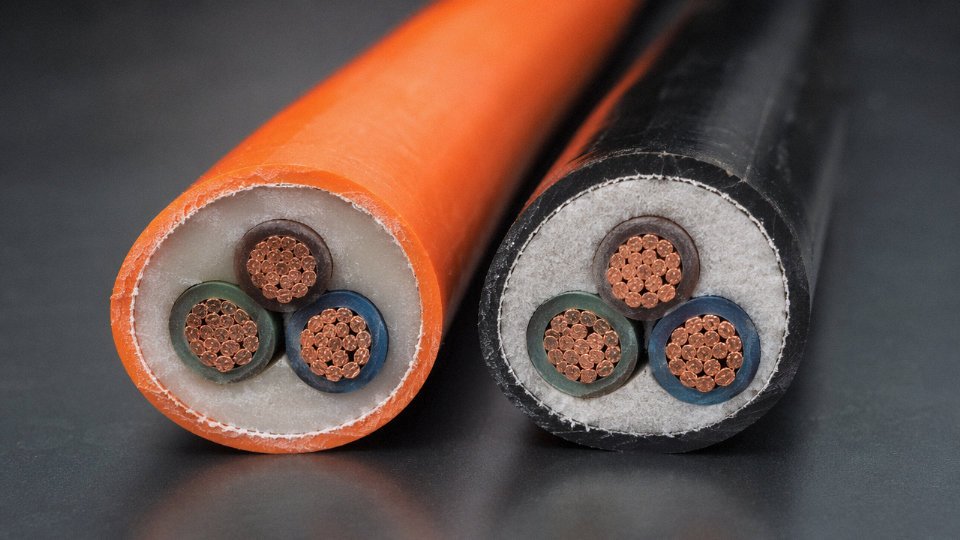
Cables in building construction are typically made of copper or aluminum conductors, insulated with PVC, XLPE, or rubber compounds, and sheathed in a protective outer jacket — often PVC or LSZH. Copper dominates interior wiring because its resistivity of roughly 1.68 × 10⁻⁸ Ω·m lets it carry about 40% more current per cross-section than aluminum. Insulation choice depends on operating temperature, fire-safety code, and installation environment.
What surprises most engineers who dig into this properly is how much the material stack — conductor alloy, insulation system, sheath compound — interacts with the building’s load profile, local code, and even climate. A cable that’s perfectly specified for a climate-controlled office floor can be a liability in a plant-room or a facade riser where temperatures swing hard and UV exposure is real. The sections below work through each layer: what it’s made of, why that matters operationally, and where the tradeoffs actually bite.
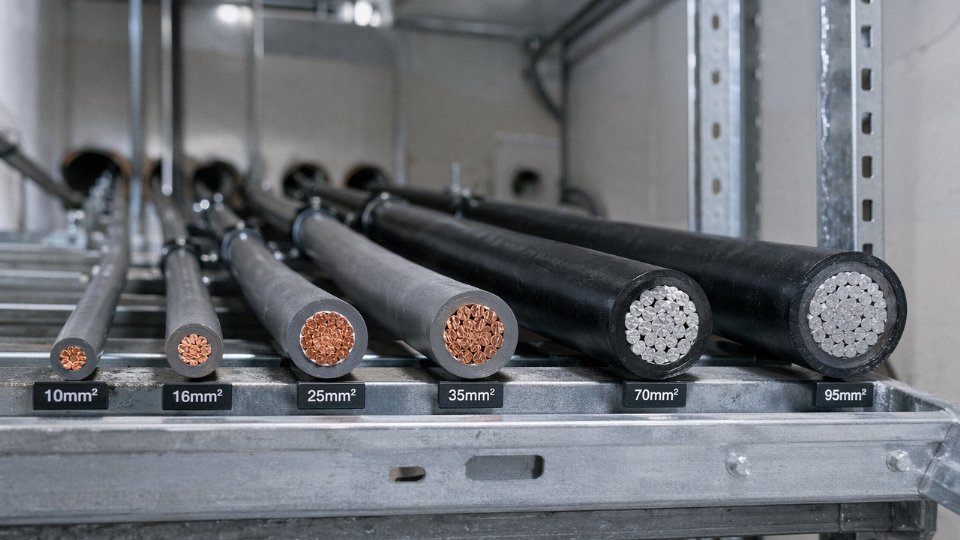
Conductor Materials: Copper vs. Aluminum and When Each Makes Engineering Sense
The conductor is where every cable decision starts. Everything else — insulation thickness, derating factors, conduit fill calculations — flows downstream from what metal you choose and how it’s configured. In practice, the choice almost always comes down to copper or aluminum, and the right answer is rarely obvious without running the numbers.
Copper: Why It Dominates Branch Circuits and Control Wiring
Copper’s resistivity sits at approximately 1.68 × 10⁻⁸ Ω·m at 20°C. That’s not just a textbook figure — it translates directly to smaller conductor cross-sections for a given load, which matters enormously in dense commercial panel rooms where conduit space is already tight. Hard-drawn copper achieves tensile strength in the 200–250 MPa range (annealed copper is softer, typically 200–240 MPa, depending on processing and temper), so it holds up during pull-through without necking at bends.
Solderability is genuinely underrated as a practical property. In control panels and instrumentation cabinets, technicians are making hundreds of terminations; copper’s oxide layer is thin, conductive enough to work through, and easily displaced by terminal torque. Creep — the slow, cold-flow deformation of a conductor under sustained clamping pressure — is essentially negligible in copper at normal operating temperatures. That’s why you’ll see copper specified almost universally for 1.5–6 mm² branch circuits, lighting circuits, and any control or data cable where reliable termination matters more than raw material cost.
Aluminum: The Engineering Case for Feeders
Aluminum’s resistivity is 2.82 × 10⁻⁸ Ω·m — roughly 68% higher than copper, which means you need a larger cross-section to carry the same current. A 16 mm² aluminum conductor is roughly equivalent in ampacity to a 10 mm² copper conductor at 70°C. That sounds like a disadvantage, and at small cross-sections it is. But the picture flips above about 35 mm², where aluminum’s density of 2.70 g/cm³ versus copper’s 8.96 g/cm³ starts doing real work.
A 95 mm² aluminum feeder cable weighs somewhere around 0.26–0.28 kg/m, compared to roughly 0.85–0.90 kg/m for an equivalent copper conductor of the same ampacity. For a high-rise building pulling 200-metre feeder runs up a riser shaft, that weight difference is not trivial — it affects pulling tension calculations, support bracket spacing, and frankly the physical difficulty of the installation. Material cost per kg also runs roughly 40–55% lower for aluminum than copper, though this depends heavily on LME spot pricing at time of procurement.
Aluminum conductors are inherently unreliable in building wiringFalse
Pure aluminum (1350 series) has well-documented creep and oxide problems at terminations, but AA-8000 series alloy conductors combined with properly rated bi-metal lugs — as required under NEC Article 310 and consistent with IEC practice — produce reliable, code-compliant installations. Failures in older installations trace to pure aluminum with undersized or incompatible hardware, not to aluminum as a material category.
Creep, Oxidation, and Why Termination Hardware Is Non-Negotiable
Aluminum does creep under clamping pressure, especially at elevated temperatures, and it forms aluminum oxide (Al₂O₃) — a highly resistive, hard ceramic layer — almost instantly on exposed surfaces. Ignore this and you’ll get loose terminations, hot spots, and eventually arc faults. The fix isn’t complicated, but it has to be specified correctly: AA-8000 series alloy conductors (such as 8030 or 8176), listed AL-CU rated lugs or bi-metal connectors, anti-oxidant compound on stripped ends, and correct torque per the lug manufacturer’s spec. In my experience, failures on aluminum feeder installations almost always trace back to someone skipping the anti-oxidant paste or using a standard copper-only lug.
Strand Configuration and Flexibility Class
IEC 60228 defines conductor classes from solid (Class 1) through highly flexible (Class 5/6). Solid and Class 2 stranded conductors are standard for fixed wiring in walls and conduit — lower cost, easier to land in screw terminals. Class 5 and 6 flexible conductors are specified for flexible drops, machine tool connections, and any application with repeated bending or vibration. Using a rigid Class 2 conductor in a vibrating environment — on a generator connection or HVAC equipment feed, for instance — leads to work-hardening and eventual fatigue fracture at the terminal, usually somewhere between 6 months and 2 years depending on vibration frequency and amplitude.
Side-by-Side Reference
| Parameter | Copper (Cu) | Aluminum (AA-8000) |
|---|---|---|
| Resistivity at 20°C | 1.68 × 10⁻⁸ Ω·m | 2.82 × 10⁻⁸ Ω·m |
| Approx. ampacity, 10 mm², 70°C, in conduit | ~50–57 A | ~39–44 A |
| Weight (10 mm² conductor) | ~0.089 kg/m | ~0.027 kg/m |
| Density | 8.96 g/cm³ | 2.70 g/cm³ |
| Relative material cost index | 1.0 (baseline) | ~0.45–0.60 |
| Creep risk at terminals | Very low | Moderate — alloy + correct hardware required |
| Typical application | Branch circuits, control, ≤35 mm² feeders | Large feeders, risers, service entrances ≥35 mm² |
Ampacity values depend on installation method, ambient temperature, and insulation rating; always verify against the applicable standard (IEC 60364-5-52 or NEC 310).
Copper Pricing and When Projects Switch
LME copper spot prices moved between roughly USD 7,000 and USD 10,500 per tonne during 2022–2024 — a swing wide enough to flip a project’s feeder cable budget by 20–30% depending on when contracts were signed. At the high end of that range, the payback calculation for upsizing to aluminum (and absorbing the cost of proper termination hardware and a slightly larger conduit) typically closes inside 2–4 years on feeder runs above 50 mm², give or take depending on run length and load profile. Procurement managers on large commercial or industrial projects should be running this calculation at design stage, not after the copper BOM is already locked.
Insulation Materials: PVC, XLPE, LSZH, and EPR — Properties, Trade-offs, and Code Requirements
Choosing the wrong insulation material for a building zone isn’t just a code violation — it’s a liability that shows up years later in a smoldering cable tray or a failed switchroom inspection. The conductor gets most of the engineering attention, but insulation determines how a cable behaves under thermal stress, in fire, and in the specific chemical environment of its installation zone.
PVC: The Workhorse With a Known Weakness
Polyvinyl chloride is cheap, easy to extrude, and dimensionally stable in ordinary indoor environments. Continuous conductor temperature rating sits at 70°C, which is adequate for most residential branch circuits and light commercial wiring. Moisture resistance is solid in non-immersed applications.
The problem is fire behavior. PVC burns with dense black smoke and releases hydrogen chloride gas — corrosive enough to destroy unprotected electronics in an adjacent rack, and toxic enough to incapacitate occupants before they reach an exit. It can also generate dioxins under certain combustion conditions. In practice, PVC cables in conduit inside concrete walls of a low-rise residential block represent a managed risk: the conduit contains the fire load, occupancy is typically low-density, and the building codes in many markets still allow it. Use PVC in that context and the economics make sense. Pull PVC cable through an open cable tray in a hospital corridor or a data center raised floor, and you have a problem that a fire marshal will catch — or that a real fire will.
XLPE: The Right Call for Feeders and Power Distribution
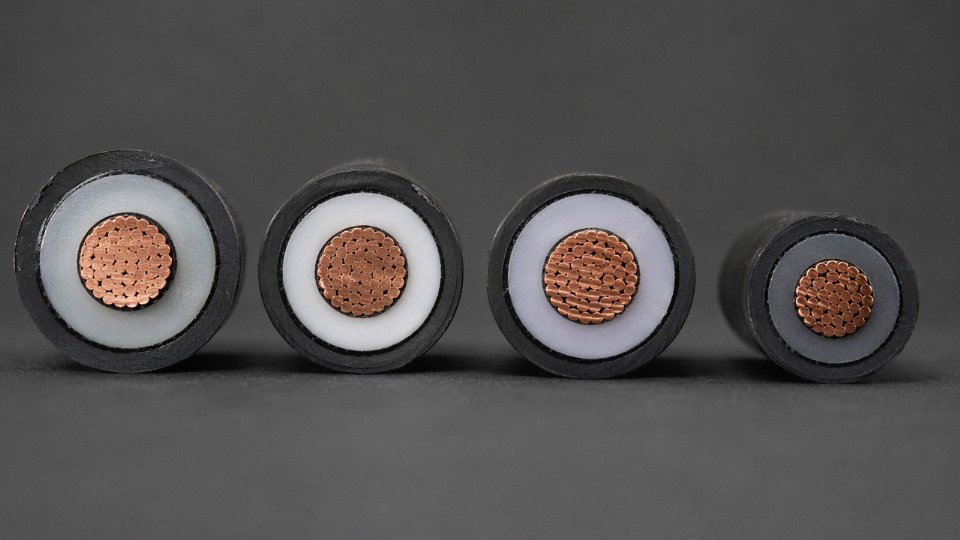
Cross-linked polyethylene earns its dominance in medium-voltage building feeders by a clear margin. Continuous rating is 90°C, short-circuit withstand is 250°C, and dielectric strength runs roughly 20 kV/mm — appreciably better than PVC across all three metrics. The cross-linking process converts thermoplastic polyethylene into a thermoset network, which means XLPE doesn’t soften and flow under sustained thermal load the way PVC does. Chemical resistance is also superior, which matters in switchrooms where transformer oils and cleaning solvents are present.
For 6 kV, 10 kV, and 35 kV feeders in commercial towers, hospitals, and industrial campuses, XLPE is effectively the default. The cost premium over PVC narrows quickly once you factor in the thinner wall thickness allowed at higher voltage ratings and the reduced conductor derating required at elevated ambient temperatures.
XLPE insulation has a continuous temperature rating of 90°C versus 70°C for PVC.True
IEC 60502-1 and IEC 60228 reference these conductor temperature limits for XLPE and PVC insulation respectively; the difference allows XLPE cables to carry more current in a given conduit fill situation.
LSZH: Code-Mandated in Occupied and Enclosed Spaces
Low-smoke zero-halogen compounds use cross-linked polyolefin base resins — typically blends of ethylene-vinyl acetate, polyethylene, and mineral fillers like aluminum trihydrate or magnesium hydroxide. The fillers release water when they decompose in fire, suppressing flame spread and dramatically reducing smoke density. IEC 61034-2 measures smoke emission; IEC 60332-3 tests flame propagation on cable bundles. Oxygen index above 30% is a standard specification threshold — meaning the material won’t sustain combustion in normal air composition.
European building codes, Gulf Cooperation Council fire safety regulations, and Singapore’s SS 638 all mandate LSZH in tunnels, underground transit stations, hospitals, schools, and data centers. The Middle East market in particular has hardened on this requirement after high-profile building fires in the 2000s. Increasingly, Chinese tier-1 commercial projects specify LSZH for risers and public area cable runs, though enforcement remains inconsistent at the contractor level.
LSZH costs roughly 20–40% more than equivalent PVC cables, depending on compound formulation and conductor size. It’s also harder to strip cleanly in the field — a minor but real nuisance during termination work.
EPR: The Specialist Choice for Flexibility and Harsh Environments
Ethylene propylene rubber stays flexible down to around −40°C, which makes it genuinely useful where PVC and XLPE would become stiff and crack-prone — outdoor risers in northern climates, humid plant rooms, and building service entrances in industrial facilities where the cable sees flexing during installation and maintenance. EPR also handles ozone and UV exposure well without requiring a separate UV-stabilized outer sheath in many installations.
It’s more expensive than either PVC or XLPE and harder to source in large continuous lengths, so you don’t specify it by default. For a flexible medium-voltage connection to a rooftop transformer or a mining-style service entrance where the cable moves periodically, EPR is worth the cost. For a static feeder in a dry switchroom, it’s not.
Insulation Wall Thickness by Voltage Class
Minimum insulation wall thickness under IEC 60502-1 for 0.6/1 kV cables varies by conductor cross-section and compound. The values below represent nominal minimums — actual production walls are typically 5–10% thicker as a manufacturing tolerance.
| Conductor Size | PVC Wall (mm) | XLPE Wall (mm) | LSZH Wall (mm) |
|---|---|---|---|
| 1.5 mm² | 0.7 | 0.7 | 0.7 |
| 6 mm² | 1.0 | 1.0 | 1.0 |
| 25 mm² | 1.2 | 1.2 | 1.2 |
| 70 mm² | 1.4 | 1.4 | 1.4 |
| 150 mm² | 1.8 | 1.8 | 1.8 |
| 240 mm² | 2.2 | 2.2 | 2.2 |
At 6/10 kV, XLPE walls step up considerably — typically 3.4 mm for 35 mm² conductor up to around 4.5 mm for 240 mm², with the exact figure depending on the cable standard referenced and whether the design uses a metallic screen.
Emerging Materials: Bio-Based and Recyclable Compounds
Thermoplastic elastomers and silane-cross-linked polyethylene (Si-XLPE) are moving through research and early commercial trials aimed at recyclable insulation systems — a response to EU circular economy directives and end-of-life cable recovery targets. Si-XLPE in particular is interesting because it cross-links through moisture exposure rather than peroxide chemistry, which simplifies the extrusion process and theoretically makes recycling easier. Bio-based polyolefins derived from sugarcane ethanol are at a similar stage: technically viable in lab conditions, not yet proven across the temperature cycling and UV exposure ranges a building cable actually sees over 30 years.
Jinda’s R&D team is tracking these material developments, including participation in industry working groups reviewing IEC compound classification updates. No procurement manager should specify bio-based insulation for a live project today, but it’s worth knowing the standards landscape is shifting and that supply chain options may look different within a decade.
Shielding, Armoring, and Bedding Layers: What They Are Made Of and Why Buildings Need Them
These middle layers confuse procurement managers more than almost anything else in cable specifications. A buyer sees “SWA” or “copper braid shield” on a data sheet and either over-specifies across the whole project or strips it out entirely to save cost. Both decisions create problems downstream.
Electromagnetic Shielding: Copper Tape and Braid for Signal Integrity
Control and instrumentation cables running through electrically noisy environments — think a factory floor with variable-frequency drives, large motors, or busbar trunking nearby — pick up induced noise that corrupts 4–20 mA signals or fieldbus communications if the cable has no shielding.
The two common constructions are copper tape (or tinned copper tape) wrapped helically around the insulated cores, and copper wire braid applied over the tape or as a standalone layer. Braid coverage percentage matters: below roughly 85% coverage, high-frequency interference starts leaking through the gaps, and in practice most instrumentation cable specs call for 90–95% coverage for that reason. Tinning the copper is worth doing in humid or coastal buildings — bare copper oxidizes and transfer impedance climbs over time, degrading shielding effectiveness at higher frequencies. IEC 61196 and IEC 60096 both address shielding requirements for coaxial and instrumentation cables respectively, and the transfer impedance values specified there (typically in the range of a few milliohms per metre at relevant frequencies) are the numbers to verify, not just braid density on its own.
One practical note: the shield is useless without a solid earth connection at one end — and sometimes both ends, depending on the frequency profile of the interference. A floating shield in a control panel is a fairly common installation mistake.
Steel Wire Armoring and Steel Tape Armoring
SWA uses individual galvanized steel wires laid helically over the cable bedding. Per IEC 60502-1 and IEC 60502-2, wire diameters typically run from about 0.8 mm for smaller cables up to roughly 3.15 mm for large power cables, depending on cable overall diameter and the required mechanical protection class. SWA is the standard choice for underground building service entries, exposed risers in warehouses, cable bridges in heavy industrial facilities, and anywhere a cable might face accidental impact from vehicles or equipment.
Steel tape armoring uses two overlapping steel tapes instead of wires. It provides reasonable crush resistance but significantly less impact and tensile protection than SWA. STA tends to appear on cables where radial mechanical stress is the primary concern and the cable route is relatively short and controlled.
Aluminum Wire Armoring: The Single-Core Feeder Case
SWA on a single-core AC cable creates a closed magnetic circuit around the conductor. The alternating magnetic field from load current induces circulating currents in that steel loop — eddy current losses that generate heat and reduce ampacity, sometimes significantly on large feeders. Aluminum wire armoring (AWA) breaks this problem because aluminum is non-magnetic, so the induced eddy currents are far smaller. For single-core cables feeding main distribution boards or large sub-distribution panels — where conductor sizes above 95 mm² or 120 mm² are common — AWA is the technically correct choice. It also saves meaningful weight; aluminum armor runs roughly 65–70% lighter than equivalent steel wire armor, which matters on long vertical risers.
Aluminum wire armoring on single-core AC power cables reduces eddy current losses compared to steel wire armoring.True
Steel is ferromagnetic and creates a near-closed magnetic circuit around a single-core AC cable, inducing significant circulating eddy currents. Aluminum is non-magnetic and does not form this circuit, so eddy current losses are substantially lower — a well-established electrical engineering principle reflected in IEC 60502 guidance on armoring selection for single-core cables.
Bedding: The Cushion Nobody Talks About
The bedding layer sits between the armor and the insulated cores. It is usually extruded PVC or, in fire-rated cables, LSZH compound. Its job is partly mechanical — cushioning the armor wires so they do not abrade or cut into the insulation under vibration or thermal cycling — and partly geometric, giving the armor something consistent to bite against.
In fire-rated cable systems, the bedding material must match the smoke and toxicity classification of the outer sheath. Mixing a standard PVC bedding under an LSZH outer jacket in a tunnel or atrium installation undermines the entire low-smoke performance claim, because the bedding burns too. This is a specification error that shows up more often than it should, usually because the bedding spec was copied from a non-fire-rated cable without checking.
Fillers, Binders, and the Conduit Fill Calculation You Might Miss
Multi-core cables need fillers — typically polypropylene rope — packed into the interstices between cores to maintain a circular cross-section. Without them, the cable goes oval, armor wires distribute load unevenly, and conduit fill calculations become unreliable. Polyester tape binders hold everything together before the bedding is applied. Neither material sounds exciting, but underestimating the resulting increase in overall cable diameter is a real project problem: a three-core 16 mm² SWA cable typically runs 20–25% larger in outer diameter than the bare insulated cores would suggest, which affects conduit sizing, cable tray fill limits, and bend radius allowances.
When Armoring Is Not Needed — and Skipping It Saves Real Money
IEC 60364 and NEC Article 300 both recognize that the wiring method itself can provide mechanical protection equivalent to armoring. Cables installed in steel conduit, enclosed metal trunking, or properly loaded cable trays with covers generally do not need armor — the containment system handles crush and impact risk. In a commercial office building where virtually all cabling runs in conduit above a suspended ceiling or in enclosed trunking, specifying SWA adds cost (typically 15–30% more than unarmored equivalent, depending on cable size and steel prices at the time) without a meaningful engineering benefit. The decision comes down to the actual exposure: uncontrolled mechanical risk justifies armoring; protected containment systems generally do not.
Outer Sheath Materials and Fire Performance Classifications: Matching Jacket Compounds to Building Occupancy
The outer sheath is the layer most procurement managers actually see, touch, and — too often — use as their only quality checkpoint. That’s a mistake. What matters far more is what the compound does under heat and flame, and whether the test certificates the supplier hands you actually correspond to the occupancy type your project requires.
PVC Sheaths: Where They Work and Where They Don’t
Standard PVC outer sheaths — ST1 and ST2 grades per IEC 60502-1 — remain the workhorse of general building wiring. They’re cheap, flexible down to around −15°C to −20°C depending on plasticizer loading, and they process easily on high-speed extrusion lines. For dry indoor plant rooms, cable risers in industrial buildings, and residential conduit runs, they’re fine.
The problem is chlorine. PVC contains roughly 30–35% chlorine by weight. In a fire, that releases hydrogen chloride gas — corrosive, toxic, and dense enough to hug corridors at breathing height. European CPR Regulation 305/2011 and increasingly stringent GCC national codes (notably Saudi Arabia’s SASO standards and the UAE’s NFPA-influenced civil defense requirements) either restrict or outright prohibit PVC-sheathed cables in high-occupancy public spaces: metro stations, hospitals, shopping malls, schools, airport terminals. If your project falls into any of those categories and a supplier quotes you ST2 PVC without flagging this, treat it as a red flag.
LSZH Sheath Compounds: What’s Actually Inside the Mix
Low-smoke zero-halogen compounds replace the chlorine-bearing backbone with polyolefin bases — typically polyethylene or EVA copolymers — and load them heavily with inorganic flame-retardant fillers. The two most common are aluminum trihydrate (ATH, Al(OH)₃) and magnesium dihydroxide (MDH, Mg(OH)₂). Both work by releasing water vapor endothermically when heated, cooling the combustion zone and diluting flammable gases. ATH activates at roughly 200°C, which suits most cable sheath fire exposures; MDH kicks in around 300°C and handles higher sustained temperatures better, though it costs more and is harder to compound.
Filler loading runs high — typically 55–65% by mass — which creates real processing challenges. LSZH compounds are noticeably stiffer than PVC, more abrasion-sensitive, and prone to surface cracking if installation is rushed in cold weather. Cable pulling tension limits are tighter. On a real project that means telling your installation contractor upfront: slower pulls, larger bend radii, no dragging across sharp tray edges.
LSZH sheaths must test below 0.5% HCl equivalent under IEC 60754-2 to qualify as halogen-freeTrue
IEC 60754-2 defines the halogenicity test by measuring combustion gases; the threshold is less than 0.5% hydrogen chloride equivalent by mass of sample, which is the accepted pass criterion used by certification bodies including BASEC, VDE, and KEMA.
The smoke density test runs separately under IEC 61034-2, where the minimum light transmittance must exceed 60% — meaning smoke is thin enough that people can still see exit signs. Both certificates should appear on any LSZH cable you specify for public buildings.
CPR Classes and Which Occupancy Actually Needs What
Under EN 13501-6, European CPR reaction-to-fire classes run from Aca (best — cables that essentially don’t contribute to fire, like mineral-insulated types) down through B1ca, B2ca, Cca, Dca, Eca, to Fca (untested or no performance requirement). Each class reflects a bundle of test results: flame spread, heat release rate, smoke production, flaming droplets, and acidity.
In practice:
- Aca / B1ca: Reserved for tunnels, enclosed underground infrastructure, high-risk escape routes. Rarely required in standard commercial construction.
- B2ca: The threshold for most European public buildings — schools, hospitals, hotels, transport terminals, large retail. This is the class procurement managers most commonly need to verify.
- Cca: Accepted in many commercial office buildings and multi-residential blocks.
- Dca / Eca: Permissible in light industrial zones, plant rooms with limited occupancy, some residential applications where national regulations allow.
- Fca: No declared performance — essentially unclassified. Don’t accept this in any CPR-governed project and don’t let a supplier substitute it quietly.
Fire-Resistant Construction: Mica Tape and Circuit Integrity
A fire-rated sheath is not the same thing as a fire-resistant cable. This distinction trips up buyers constantly.
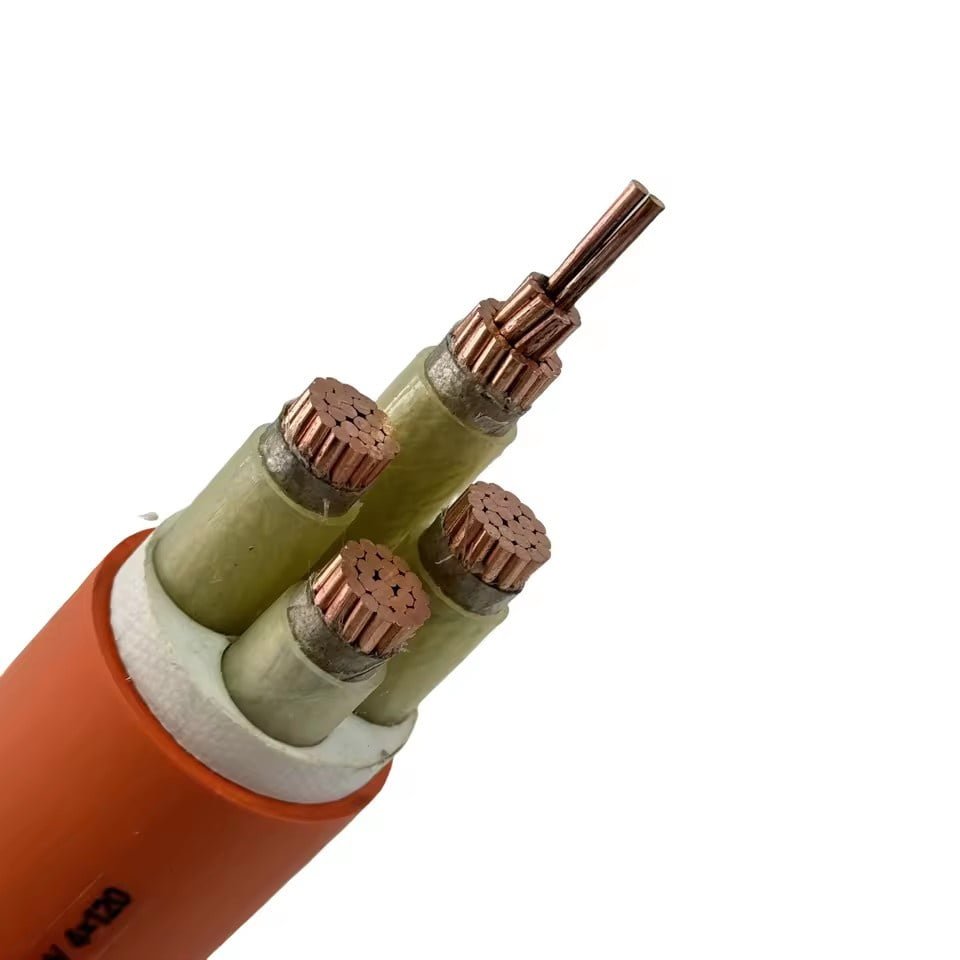
Circuit integrity under fire — maintaining a live circuit while surrounded by active flames — requires a separate barrier layer. The standard solution is mica tape wrapped directly over the conductor bundle, beneath the insulation. Mica (typically muscovite or phlogopite) doesn’t melt; it sinters into a rigid ceramic-like shell at elevated temperature and maintains electrical isolation even as surrounding polymer layers burn away. Per IEC 60331, fire-resistant cables must maintain circuit integrity for 30, 60, 90, or 180 minutes at temperatures between 750°C and 950°C depending on the test protocol.
Hospitals, emergency lighting circuits, fire alarm panel feeds, stairwell pressurization fans, and smoke control damper actuators all require this construction — not just LSZH sheathing. In most jurisdictions this maps to FP200, FP400, or CR1 product designations. Specifying LSZH alone on a smoke-control fan cable is a compliance failure, even if the cable looks fine on a shelf.
Outdoor and UV-Resistant Sheaths
For cables on rooftop cable trays, external building risers, or facade-mounted conduit, UV degradation is the dominant aging mechanism. Standard polyolefin or PVC sheaths chalk, crack, and embrittle within 3–7 years of direct sun exposure depending on climate, cable color, and the severity of thermal cycling.
Carbon-black-loaded HDPE sheath is the reliable fix. Carbon black at 2–3% by mass per ASTM D3349 provides UV absorption across the full relevant spectrum and adds mechanical toughness. Chloroprene (neoprene) rubber sheath handles both UV and ozone well and tolerates higher sustained temperatures — useful on metal rooftops where surface temperatures can reach 70–80°C on a summer afternoon in hot climates. Both materials cost more than standard HDPE, and neither is flexible at very low temperatures, so in cold climates you need to balance UV durability against winter installation constraints.
Quick Compliance Reference
| Outer Sheath Material | Fire / Smoke Class | Continuous Temp. Range | Halogen Content | Key Standard(s) | Recommended Building Zone |
|---|---|---|---|---|---|
| PVC (ST1/ST2) | Eca–Dca typical | −15°C to +70°C | High (~30–35% Cl) | IEC 60502-1 | Light industrial, residential conduit (not public buildings under CPR) |
| LSZH (ATH/MDH loaded) | B2ca–Cca achievable | −20°C to +90°C (compound-dependent) | <0.5% HCl eq. | IEC 60332, IEC 60754-2, IEC 61034-2 | Public buildings, hospitals, transport hubs, schools |
| Mica-tape + LSZH (FP/CR1) | B2ca + circuit integrity | −15°C to +90°C sheath; 750–950°C fire test | <0.5% HCl eq. | IEC 60331, IEC 60332-3 | Emergency systems, fire alarm, smoke control, hospital critical circuits |
| Carbon-black HDPE | Dca–Cca | −40°C to +80°C | Low (halogen-free grade available) | ASTM D3349, IEC 60502 | Rooftop trays, external risers, outdoor exposed runs |
| Chloroprene rubber | Dca | −30°C to +90°C | Low-moderate | IEC 60245-4 | Outdoor, marine-adjacent, high-UV industrial facades |
One practical note: always request the actual DoP (Declaration of Performance) under CPR 305/2011, not just a data sheet claiming a class. The DoP references the notified body, the specific test report number, and the exact cable construction tested. If the supplier’s product has changed conductor cross-section or sheath thickness since that test, the certificate doesn’t strictly apply — and on a project audit, that can mean cable replacement.
Cable Types Used in Specific Building Systems: Power, Control, Data, and Fire Safety
The material choices covered in earlier sections don’t exist in a vacuum — they converge differently depending on what the cable actually does inside a building. A mica-taped fire circuit and a Cat6A data cable share almost no construction logic, yet both sit in the same riser. Understanding which product category applies where saves specification errors, failed inspections, and the particular misery of pulling cable a second time.
Low-Voltage Power Distribution (0.6/1 kV)
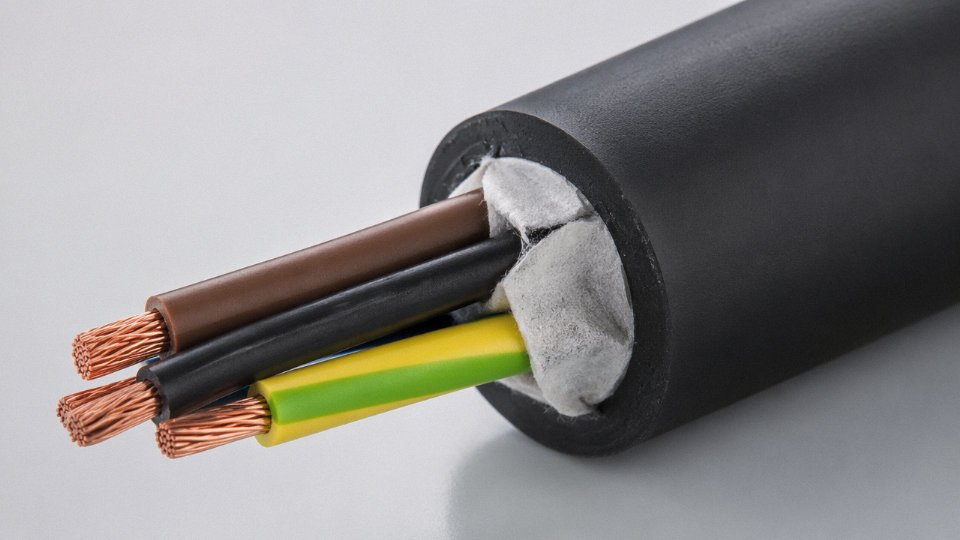
NYY and NYM cables dominate European and internationally influenced projects at this voltage level. NYY — copper conductor, PVC insulation, PVC sheath, no filling compound — is the standard workhorse for fixed installation in conduit or direct burial where mechanical protection exists externally. NYM adds a chloroprene or PVC filling between cores and an additional sheath layer, making it more suited to surface-mounted or exposed wiring inside the building envelope. For flexible connections to panels or equipment that vibrates, NYMHY drops stranded fine-wire conductors into an otherwise similar construction.
Conductor cross-sections in these cables run from 1.5 mm² for final lighting circuits up to 300 mm² or larger for main incomer feeds, with aluminum sometimes substituted on the larger sizes to cut material cost — though the termination discipline required with aluminum is unforgiving if the installation crew isn’t experienced with it. PVC insulation at 70°C continuous rating is usually adequate for ambient conditions inside a normal plant room; XLPE becomes the right call when the cable runs near heat sources or when derating margins are tight.
Medium-Voltage Feeder Cables (3.6/6 kV to 12/20 kV)
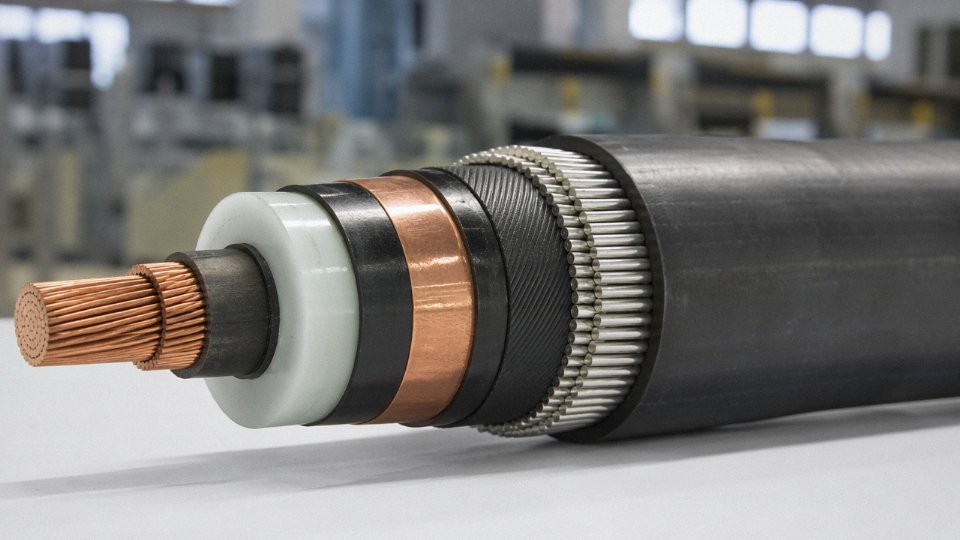
Large commercial complexes and industrial facilities typically receive power at medium voltage and step it down internally. The cable connecting the utility transformer to main switchgear is usually XLPE-insulated, with a copper or aluminum conductor, semi-conductive screens on both conductor and insulation surfaces to control electrical stress, a copper wire screen for fault current return, SWA (steel wire armour) for mechanical protection, and an LSZH outer sheath where the route passes through occupied or escape areas. Getting the semi-conductive screen geometry wrong during jointing is one of the more reliable ways to cause a premature cable failure — it concentrates field stress at the cut edge.
Control and Instrumentation Cables
BMS panels, HVAC controllers, and PLC I/O racks rely on multi-core or twisted-pair cables with 0.5–2.5 mm² copper conductors. The critical detail here is screening. An overall copper braid provides 85–95% optical coverage and handles low-frequency interference from nearby power cables reasonably well; an aluminized foil with drain wire is cheaper and works fine above roughly 1 MHz but degrades at low frequencies. In noisy plant environments — a facility with large VFDs running on the same cable tray, for instance — individually screened pairs matter. LSZH insulation and sheath are standard for any cable running through occupied zones or ceiling voids. Skimping on the sheath rating here is a false economy; the re-cabling cost after a fit-out is disproportionate.
Fire-Resistant and Fire Alarm Cables
These cables are where material specification has direct life-safety consequences. IEC 60331 and EN 50200 require demonstrated circuit integrity under flame — typically 30 or 60 minutes — and the construction that achieves this wraps the copper conductors in multiple layers of mica tape before the primary insulation goes on. Mica is thermally stable well past 1,000°C; it maintains electrical isolation even after the polymer insulation has burned away. LSZH sheath is non-negotiable here. Mandatory applications include fire detection loops, emergency lighting circuits, firefighter lifts, and pressurization fans — any system that must keep functioning precisely when there’s a fire.
Mica-tape-wrapped conductors can maintain circuit integrity at temperatures exceeding 750°C during a standard IEC 60331 fire test.True
IEC 60331 and EN 50200 test cables under direct flame at 750°C–950°C depending on the test variant. Mica's high melting point and electrical resistance under heat are what make this possible; PVC or XLPE alone cannot achieve it.
Structured Cabling and Fiber Optic Cables
Cat6A UTP or STP copper cabling handles horizontal runs to workstations and APs, governed by ANSI/TIA-568 and ISO/IEC 11801. Backbone and inter-floor runs increasingly use OS2 single-mode fiber (for long distances or future bandwidth headroom) or OM4 multimode where distances stay under roughly 400 m at 10G. Fiber has a practical fire-safety advantage that’s easy to overlook: no current flows, so there’s no resistive heating and no arc-fault risk from a damaged cable. The outer jacket still needs to be LSZH-rated in plenum and riser applications, because burning LSZH jacket is a different problem from an energized conductor — but the hazard profile is meaningfully lower.
Busbar Trunking vs. Parallel Cable Runs
Above about 800 A — sometimes as low as 630 A depending on route length and installation constraints — busbar trunking systems frequently make more sense than parallel cable runs. Copper or aluminum busbars in rated enclosures offer lower installed resistance per meter, simpler tap-off points for future loads, and a more compact cross-section through floor penetrations. The tradeoff is higher initial material cost and the need for factory-dimensioned sections, which complicates late-stage design changes. For a fixed, high-load main riser in a large office or data center building, busbars usually win on lifecycle cost. For flexible or distributed loads, cable wins on adaptability.
How to Read Cable Material Specifications: Decoding IEC, ASTM, and National Standard Markings
Procurement managers receive datasheets, test certificates, and cable schedules from multiple suppliers — sometimes in the same week — and the designations on those documents can look like alphabet soup if you haven’t spent time on a project that forced you to decode them. Getting this wrong is not academic. Accepting cable that doesn’t match the specification because the paperwork looked close enough has caused re-pulls, failed third-party inspections, and in at least one hospital project scenario I’m aware of, a complete rewire of a fire-safety circuit after commissioning. So let’s work through the main systems methodically.
IEC Designation System: Reading a Type Code Letter by Letter
Take a common specification string: CU/XLPE/SWA/LSZH 3×95 mm² 0.6/1 kV
Breaking it down: CU = copper conductor (AL would signal aluminum). XLPE = cross-linked polyethylene insulation, rated to 90°C continuous. SWA = steel wire armour — the mechanical protection layer, typically 0.8–1.4 mm galvanized steel wires laid helically. LSZH = low-smoke zero-halogen outer sheath. 3×95 mm² = three cores, each 95 mm² cross-section. 0.6/1 kV = rated for 0.6 kV conductor-to-earth and 1 kV conductor-to-conductor.
Every element is load-bearing information. If a supplier quotes CU/XLPE/SWA/PVC instead of LSZH and the building spec calls for LSZH in escape routes, that is a non-conformance — not a minor deviation. IEC 60502 covers power cables up to and including 30 kV; IEC 60227 and IEC 60245 govern flexible and rubber-insulated cables respectively at lower voltages. Each standard defines minimum insulation wall thicknesses by cross-section, and those minimums matter.
North American NEC/UL Letter Suffix System
The US and Canadian approach encodes performance ratings directly into the type designation. THHN: thermoplastic insulation (T), heat-resistant to 90°C (HH), nylon jacket (N) — dry locations. Add a W and you get THWN, rated for wet locations. THWN-2 extends the wet rating to 90°C rather than 75°C. XHHW-2 replaces the thermoplastic insulation with cross-linked polyethylene, giving better thermal performance at the same outer size. MC cable (Metal-Clad) is an armoured assembly — the interlocked aluminum or steel armor qualifies as the equipment grounding path under NEC Article 330.
UL listing marks on the jacket surface are not decoration. The text printed on the outer sheath — conductor material, voltage rating, temperature rating, listing mark, and AWG or kcmil size — must all match the specification. You can verify any UL-listed cable product through UL’s Product iQ database; if a supplier’s “UL listed” cable doesn’t appear there, treat it as unlisted.
VDE/German Designation System
Widely used across Middle Eastern, Southeast Asian, and parts of African infrastructure. NYY: PVC-insulated, PVC-sheathed power cable, copper conductors. NAYY: same construction with aluminum conductors (the A always signals aluminum in this system). NYCY: copper conductor, PVC insulation, concentric copper earth conductor, PVC sheath — common for distribution in buildings where a dedicated earth screen is required. The letter positions are fixed and position-coded, so sequence matters.
Test Certificates: What to Demand and What Each One Proves
A factory test report is not a third-party certificate. The distinction matters for public buildings, hospitals, airports, and high-occupancy residential towers.
| Standard | What It Tests | Minimum Pass Criteria |
|---|---|---|
| IEC 60811 | Tensile strength, elongation, ageing of insulation/sheath | Depends on compound; retention of ≥70% tensile strength after ageing is typical |
| IEC 60332-3 | Flame propagation on cable bundles | Char height ≤ 2.5 m in Category C test |
| IEC 61034-2 | Smoke density (light transmittance) | Minimum 60% transmittance |
| IEC 60754-1/-2 | Halogen content of sheath gases | ≤0.5% HCl equivalent for LSZH claim |
| IEC 60331 | Circuit integrity under fire | Maintain circuit function for 30 or 60 min at 750°C or 950°C |
If a cable is specified as LSZH but the supplier cannot produce an IEC 60754 certificate from a recognised third-party lab, the LSZH claim is unverifiable. Full stop.
Recognised certification bodies include KEMA/DNV (Netherlands), BASEC (UK), SASO (Saudi Arabia), and SIRIM (Malaysia). Each maintains a public database of certified products. Cross-check the certificate number against that database — certificate forgery is rare but not unheard of in markets with aggressive price competition.
Red Flags Procurement Teams Should Catch Before Delivery
Undersized conductor cross-section is the most common non-conformance in budget substitution scenarios — a stated 95 mm² cable measuring 88–90 mm² on arrival. That’s outside IEC 60228 Class 2 tolerance.
Insulation wall thickness below the IEC 60502 tabulated minimum for the voltage rating is a subtler problem; you need a calibrated micrometer and a cross-section sample to catch it. Absence of any halogen test certificate on an LSZH-specified cable is an automatic rejection trigger. And check the drum labels against the certificate — cable reel lot numbers should trace to the specific test batch.
A cable marked 'LSZH' by the manufacturer without an IEC 60754 third-party certificate has not been independently verified for halogen content.True
IEC 60754 defines the test method for measuring halogenic acid gas evolved from cable materials during combustion. Only a third-party test against this standard — not a self-declaration — provides verified LSZH compliance.
Material Trends Reshaping Building Cable Construction: Sustainability, Smart Buildings, and Supply Chain Resilience
The cable you specify today will still be in that wall in 2045. That’s worth keeping in mind when evaluating whether a trend is genuinely reshaping material selection or just noise from a trade show floor.
Halogen-Free Mandates Are No Longer a European Niche
The EU Construction Products Regulation (CPR) Euroclass system pushed LSZH compounds into mainstream building construction a decade ago, but the regulatory tide has moved well beyond Europe. UAE ESMA, Saudi SASO, and Singapore’s SS 299 have each tightened fire-performance language in ways that effectively exclude standard PVC jacketing from medium and high-rise occupancies. The pattern is consistent: as building codes modernize in fast-urbanizing markets, halogen-free becomes the floor, not the upgrade.
Demand for LSZH compounds in building construction segments is growing at roughly 8–10% annually — the exact rate depending on how aggressively national regulators enforce new codes versus grandfather existing installations. What that growth rate means in manufacturing terms is real capital commitment: LSZH polyolefin compounds process at higher melt viscosity than PVC, require dedicated extrusion screws and temperature profiles, and are less forgiving on line speed. A manufacturer that simply substitutes materials on a PVC line will produce inconsistent jacket density, which shows up as failed IEC 60332-3 flame-spread tests. Jinda operates dedicated LSZH extrusion lines across its production bases precisely because you cannot treat it as a bolt-on capability.
EV Charging Has Created a New Cable Material Category
Building designers five years ago rarely thought about EV infrastructure when specifying cables. That’s changed fast. A commercial building with a 200-bay parking structure needs Mode 3 Type 2 and CCS-capable charging cables routed through conduit, exposed to vehicle oil contamination, thermal cycling from −30°C to +50°C in unheated parking decks, and mechanical flexing every time a driver connects and disconnects. Standard building wire materials — rigid PVC, even XLPE — are not designed for that duty.
Cables for permanent wired EV charging circuits increasingly use flexible TPE or EPDM rubber jackets rated for at least 100,000 bend cycles, with 90°C wet-rated insulation per IEC 62893 or equivalent. That’s a procurement category that didn’t exist at scale in most building projects before 2019. Specifiers who try to substitute a general-purpose flexible cable here typically see jacket cracking within 18–24 months in unheated outdoor parking structures — a premature failure mode that’s expensive to remediate inside conduit.
Aluminum Is Staging a Serious Comeback Above 35 mm²
Copper price volatility is not new, but the supply concentration risk has sharpened. Chile and Peru together account for over 40% of global copper mine output; disruption in either country — labor action, regulatory change, severe weather — moves spot prices within days. For building feeders at 35 mm² and above, well-specified aluminum alloy conductors (AA-8000 series in North American practice, or equivalent EN 50618 alloys in European-influenced markets) with properly torqued compression lugs perform reliably. The historical objections — creep at terminations, galvanic corrosion at bimetallic joints — are engineering problems with known solutions, not reasons to reject the material outright.
Aluminum conductors are inherently unreliable in building applicationsFalse
Aluminum's documented failure history in buildings relates almost entirely to undersized conductors, improper terminations, and use of pure 1350-series alloy in branch circuits. AA-8000 series alloys with correct termination hardware and torque specifications have a reliable service record in large feeder and distribution applications under IEC and NEC frameworks.
In practice, the conversation has shifted. Architects and M&E consultants who would have automatically specified copper for all conductors are now accepting aluminum for main feeders when the project cost analysis and supply timeline make it defensible.
Recyclability Is Starting to Influence Specification, Slowly
End-of-life cable recycling is reasonably mature for copper: recovery rates exceed 95% in established recycling streams, which is part of why copper commands a residual value that offsets first cost over a building’s life. The problem has always been the sheath. PVC jacketing, when stripped and granulated, creates a halogenated waste fraction that is difficult to recycle cleanly and falls under increasingly strict EU WEEE and Ecodesign framework guidance. Halogen-free polyolefin sheaths, by contrast, can enter standard polyolefin recycling streams with significantly less contamination.
This is not yet driving specification decisions the way fire performance does — most procurement managers are still focused on upfront cost and code compliance — but green building rating systems (BREEAM, LEED, and local equivalents) are beginning to include embodied carbon and end-of-life material scores in ways that reward halogen-free cable selection. Expect this to move from a nice-to-have to a tender requirement in commercial projects within the next five to eight years, at least in markets where green building certification carries lease premium value.
Mineral-Insulated Cable for Circuits That Cannot Fail
MI cable — copper conductor, magnesium oxide insulation, seamless copper sheath — occupies a narrow but important niche. It carries no organic material at all. Tested to 1000°C survival, it is the realistic choice for fire alarm and suppression system circuits in high-specification hospitals, nuclear facilities, and data center critical infrastructure where the cable itself must function during the emergency event that would destroy everything else. The material cost is high — roughly 3–6× the equivalent XLPE/LSZH cable, depending on gauge and configuration — but the alternative in a critical circuit is a fire-safety system that fails exactly when it’s needed. In those installations, there is no meaningful substitution argument.
Manufacturers serving serious building markets need both ends of this spectrum: high-volume LSZH and XLPE production capability for the bulk of a project, and the process knowledge to supply MI cable for the 2–3% of circuits where fire survival is non-negotiable. Jinda’s on-site IEC-certified testing laboratory and participation in IEC TC20 working groups reflect the reality that next-generation building cable materials require verification infrastructure, not just production capacity — the two have to scale together.
Practical Buyer’s Guide: Specifying Building Cable Materials for International Projects
International building projects fail at the cable procurement stage more often than most engineers would admit — not because the wrong voltage rating was chosen, but because someone assumed a cable approved in one jurisdiction would sail through inspection in another. The guidance below is sequential for a reason. Skip a step and you will be re-specifying on site, which costs more than the cable savings ever justified.
Step 1 — Establish the Governing Standard First, Before Anything Else
Before writing a single line of cable specification, confirm which standard regime has legal force in the project jurisdiction. IEC 60502, NEC/UL 44, BS 6004, GB/T 12706, IS 1554, SASO 2714 — these are not interchangeable. Conductor cross-sections, insulation thickness, voltage designation conventions, and test requirements all differ in ways that look minor on a datasheet but create real problems at customs or on-site inspection.
The most expensive cable substitutions I have seen on international projects — the ones that involve cutting out installed cable and replacing it — trace back to a single assumption: that a cable marked to one standard is “equivalent” to another. It usually isn’t, or at least not provably so without a formal harmonization analysis. Insist on that analysis before the specification is frozen, not during procurement.
Step 2 — Map Every Cable Route to Its Physical Environment
Underground direct burial, open cable tray, enclosed conduit cast in concrete, raised floor or plenum ceiling, hazardous area with explosive atmosphere — each of these demands a different combination of armor, sheath material, and temperature rating. A steel wire armored (SWA) cable with PVC outer sheath that performs well in a direct-burial trench is the wrong answer for a plenum ceiling where smoke toxicity matters. Conversely, specifying LSZH sheath on every cable regardless of route adds cost without adding value in, say, an outdoor concrete-encased conduit run where UV and physical damage resistance matter more than halogen content.
Draw the cable routes on the construction drawings before writing the material specification. In practice, many procurement managers receive the specification without this map and end up guessing.
Step 3 — Assign Fire-Performance Requirements Zone by Zone
Escape routes, public assembly areas, data rooms, residential corridors, plant rooms — each maps to a distinct minimum fire class. Under CPR (Construction Products Regulation), escape routes in EU projects typically require Cca-s1,d1,a1 or better; plant rooms may accept Eca. For IEC-based projects, confirm whether IEC 60332-3 flame spread and IEC 60331 circuit integrity under fire are both required, or just one. Circuit integrity matters for fire alarm and emergency lighting circuits that must keep operating during a fire; it is often overlooked until the authority having jurisdiction asks for the test certificate.
Step 4 — Size Conductors Using the Full Derating Calculation
IEC 60364-5-52 and NEC 310 provide base ampacity tables, but the derating factors are where engineers cut corners. Grouping correction (multiple cables in a tray reduce each cable’s rating by a factor that can reach 0.5 or lower for tightly packed installations), ambient temperature above 30 °C, and installation method together can reduce a cable’s usable ampacity by 30–50% from its catalog rating. Specifying undersized conductors to shave unit cost is a false economy: higher I²R losses run continuously over a 20–30 year cable life, and the elevated operating temperature accelerates insulation degradation, shortening service life and raising fire risk.
Specifying undersized cables to reduce unit cost increases lifetime I²R energy losses and accelerates insulation aging, often costing more over a 20-year building life than the upfront savings.True
I²R losses scale with the square of current and inversely with conductor cross-section; a conductor one size smaller running near capacity continuously will dissipate measurably more heat over decades, confirmed by IEC 60364-5-52 ampacity methodology and thermal aging models in IEC 60216.
Step 5 — Request a Specific Document Package, Not Just a Datasheet
A datasheet is marketing material. The documents that actually verify what you are buying:
- Factory quality plan and relevant ISO 9001 / ISO 14001 certificates
- Raw material certificates of conformity for copper rod (or aluminum rod) and insulation/sheath compound, including supplier name and lot number
- Routine test reports per IEC 60502-1 or IEC 60502-2 for each production lot (conductor resistance, insulation resistance, high-voltage test, dimensional checks)
- Third-party type test certificates from an accredited laboratory — check the certificate date and the exact cable construction tested matches what you are ordering
- CPR Declaration of Performance or equivalent fire-class certificate if the project requires it
- REACH/RoHS compliance declarations for projects with environmental regulations
Suppliers who hesitate on any of these documents are telling you something.
Step 6 — Evaluate the Manufacturer’s Production Capability, Not Just the Price
For large building projects — think a hospital fit-out or a mixed-use tower requiring dozens of cable types across multiple delivery windows — a manufacturer’s equipment capacity and internal lab accreditation matter as much as unit price. Check whether the supplier’s conductor drawing and stranding lines can handle the full cross-section range you need, whether extrusion lines are dedicated or shared (shared lines mean scheduling risk), and whether their internal test laboratory holds any third-party accreditation. An ISO 9001 certificate covers process control; it does not guarantee the lab equipment is calibrated to the standard you are buying against.
Delivery reliability on international projects often depends on whether the manufacturer has enough production base redundancy to absorb a single-line breakdown without delaying your shipment. A supplier with five production bases across different facilities is structurally less exposed to that risk than one running everything through a single plant — something worth asking about directly during supplier qualification, not after a delivery miss.
Frequently Asked Questions About Building Cable Materials
Is copper always better than aluminum for building wiring?
Not universally. Copper is the right call for circuits below roughly 35 mm², all flexible connections, and any installation where termination quality is hard to control or inspect — think tenant fitouts, retail spaces, residential panels. Below that size threshold, aluminum terminations become fiddly and creep-related loosening is a genuine fire risk.
For large building feeders — main distribution boards, riser cables, inter-panel links above 35 mm² — aluminum AA-8000 alloy with properly rated compression lugs and anti-oxidant compound is a proven, cost-effective choice used routinely in North American and increasingly in European commercial projects. You’ll need roughly 1.5 conductor size steps up to match copper ampacity, but on a 240 mm² or 300 mm² feeder run the metal cost saving is significant enough to justify careful termination practice. The mistake is treating the decision as universal in either direction.
What does LSZH mean and is it required everywhere?
Low-smoke zero-halogen. When PVC burns it releases hydrogen chloride gas — corrosive, toxic, and damaging to electronics. LSZH compounds suppress that. The smoke density is also substantially lower, which matters for evacuation visibility.
Mandatory in escape routes, public buildings, underground structures, metro stations, and data centers under EU CPR, UAE ESMA regulations, and Singapore SS 299, among others. Not universally required — plenty of outdoor industrial installations, warehouse cable trays, and petrochemical sites specify PVC or SWA-PVC without any code violation. The occupancy type and jurisdiction drive the decision. Never assume LSZH is automatic; check the specific national annex.
Can I use PVC-insulated cable in conduit and still comply with fire codes?
In many jurisdictions, yes. IEC 60364 and several national codes permit PVC-insulated cables in conduit within non-escape-route industrial areas on the grounds that the conduit provides mechanical containment and slows fire spread along the cable run. That said, conduit in an escape corridor is a different matter entirely — local inspectors may still require LSZH regardless of the conduit. Always verify against the specific occupancy classification and the national fire code annex, not just the base IEC standard.
What is the difference between fire-resistant and flame-retardant cable?
This distinction causes real problems on site when the wrong cable ends up on a life-safety circuit.
Flame-retardant cable (tested to IEC 60332) resists the spread of flame along its length — it self-extinguishes. It will not, however, maintain circuit function under direct flame. Fire-resistant cable (IEC 60331) is a different animal: it keeps the circuit alive for 30–180 minutes under direct flame at temperatures typically between 750–950°C, depending on the test classification. That’s the cable you need for emergency lighting, fire alarm circuits, sprinkler controls, and smoke extract fans. Specifying flame-retardant where fire-resistant is required isn’t a paperwork error — it’s a life-safety failure waiting to happen.
How do I verify that an LSZH cable isn’t just relabeled PVC?
A cable labeled LSZH on the outer sheath can be verified against IEC 60754-1/2 halogen content testsTrue
IEC 60754-1 and IEC 60754-2 are the internationally recognized test methods for measuring halogen acid gas emission from cable materials during combustion. A genuine LSZH compound will show HCl equivalent below 0.5% by mass. Factory self-declaration without third-party test certificates is not sufficient verification.
Request the full certificate set: IEC 60754-1/2 for halogen content (HCl equivalent below 0.5%), IEC 61034-2 for smoke density (light transmittance above 60% at 3 m), and IEC 60332-1 flame spread. Insist on third-party certification from an accredited lab — factory self-declaration means very little when material substitution during production is a real commercial temptation.
Why does insulation thickness matter if the cable is inside conduit?
The conduit protects against physical damage during installation and afterwards. It does nothing for dielectric strength, voltage rating, or thermal endurance — those are entirely a function of the insulation wall thickness and compound quality. An undersized insulation wall increases the probability of failure under transient overvoltage, degrades faster under sustained thermal load, and can abrade during pull-in through bends. IEC 60228 and the relevant product standards set minimum wall thicknesses for exactly these reasons. Running thinner-than-specified insulation inside conduit is not a workaround; it’s just a hidden defect.
What is the realistic service life of a correctly specified building cable?
IEC 60216 thermal aging methodology and decades of industry replacement data point to roughly 30–40 years for XLPE-insulated cables and 25–30 years for PVC-insulated cables — but both figures assume the cable is operated at or below its rated conductor temperature, terminations stay dry and mechanically sound, and the installation avoided excessive bending radius during pull-in. In practice, the cables that fail early almost always have one of three problems: moisture ingress at a poorly made termination, a section that runs too hot because of an undersized conductor or bundling derating that nobody calculated, or mechanical damage from a subsequent trade that nobody documented. The insulation compound itself is rarely the weak link when the specification was correct from the start.