You’ve hired an electrician to wire the building, the low-voltage subcontractors haven’t shown up, and now the project manager is asking why the security cameras, nurse-call system, and structured cabling are still untouched two weeks before handover. That gap — between “electrician on site” and “everything actually wired” — causes real schedule slippage, and in commercial fit-outs it’s not unusual for that delay to cascade into penalty clauses or a second mobilization fee. The confusion almost always starts with one question nobody asked clearly at bid time.
Yes, licensed electricians can and regularly do install low-voltage wiring, but whether yours will depends on jurisdiction, union agreements, and how the scope of work was written in the contract. Low-voltage systems — typically anything below 50 V AC or 120 V DC under IEC 60364 — include data cabling, access control, CCTV, and AV. Some electricians hold specific low-voltage endorsements; others subcontract that work out entirely.
What makes this genuinely complicated isn’t the voltage threshold — that part is fairly clean on paper. It’s the overlapping trades, licensing carve-outs, and the fact that low-voltage work on a mid-size commercial project can represent 20–30% of total electrical labor hours and add anywhere from $2 to $8 per square foot to fit-out costs depending on system density. Getting the trade boundaries wrong at procurement stage doesn’t just create awkward conversations. It creates budget holes.
How Licensing Laws Determine Whether Your Electrician Can Touch Low-Voltage Cables
The honest answer to whether a licensed electrician can legally install your security cameras, structured cabling, or fire alarm wiring is: it depends entirely on where the project sits. Jurisdiction shapes everything here, and the gap between “technically qualified” and “legally authorized” trips up project owners and procurement managers more often than most people admit.
The U.S. Patchwork: One License Does Not Fit All
In the United States, electrical licensing is a state-by-state affair, and low-voltage work has fractured into its own separate licensing category in a growing number of states. California is the most cited example — the C-7 Low Voltage Systems Contractor license is a distinct credential issued by the Contractors State License Board, covering voice, data, video, audio, and security systems. A standard C-10 Electrical Contractor in California is not automatically authorized to pull that scope of work. Other states, including Texas and Florida, have their own low-voltage endorsements or registrations layered on top of general electrical licenses.
Some states are more permissive. A journeyman electrician in, say, Kansas or Nebraska may legally terminate Cat 6 runs or install access control panels under a general electrical license with no additional credential required. The point is that you cannot assume.
The NEC provides the technical framework underneath all of this. Article 725 covers remote-control, signaling, and power-limited circuits — Class 1, Class 2, and Class 3 — and the distinctions matter operationally, not just on paper. Class 2 circuits (typically limited to 100 VA and 30 V) have relaxed wiring method requirements compared to Class 1, which is treated closer to full line-voltage work. Article 800 governs communications circuits — your telephone, data, and intercom wiring — while Article 820 handles coaxial cable for broadband and CATV systems. Each article specifies separation requirements from power conductors, permitted cable types, and grounding methods. A general electrician who knows 110/220 V branch circuit work cold may have never read Articles 725 or 820 in any depth, which is a real installation risk on structured cabling or AV projects.
In California, a general C-10 electrical contractor license does not automatically authorize low-voltage systems work — a separate C-7 license is required.True
The California Contractors State License Board issues the C-7 Low Voltage Systems classification as a distinct license separate from the C-10 Electrical classification. Contractors must hold the appropriate license for the scope of work being performed.
How Other Regions Draw the Line
The UK works under BS 7671 (the IET Wiring Regulations, currently 18th Edition). Low-voltage installations in the UK context are defined up to 1,000 V AC — a much higher ceiling than the IEC 60364 definition of sub-50 V AC / 120 V DC that governs system classification on the signaling side. Practically speaking, UK electricians registered with a competent persons scheme (NICEIC, ELECSA, or similar) are generally authorized to install data and communications cabling, but structured cabling in commercial environments often falls to specialist contractors under BS EN 50173. The distinction is less about licensing tiers and more about competency demonstration and registration scheme scope.
Across the EU, EN 60364 (harmonized from IEC 60364) sets the framework, but enforcement is fragmented at member-state level. Germany’s skilled trades system (Handwerksordnung) is stricter than many assume — low-voltage systems work typically requires a formally recognized qualification.
Australia under AS/NZS 3000 (“the Wiring Rules”) requires registered electrical contractors for most fixed wiring regardless of voltage, but telecommunications cabling falls under a separate ACMA cabling registration scheme. An electrician and a cabling registrant are two different credentials.
The Practical Step You Cannot Skip
Before signing any subcontract or purchase order for low-voltage installation, ask specifically what license class the contractor holds — not whether they are “licensed.” Request the license number and look it up in the issuing authority’s online database. Permit requirements vary too: some jurisdictions require a pulled permit for structured cabling in commercial spaces; others treat it as permit-exempt. Finding out mid-project that your installer pulled fiber runs without the right credential — or without a required permit — can mean rework, failed inspections, and insurance exposure that far outweighs any upfront savings.
The Seven Main Low-Voltage Systems Electricians Encounter on Job Sites
Walk through any commercial construction project mid-fit-out and you’ll see bundles of cable running in every direction — most of it carrying nowhere near line voltage. Understanding what each system actually is, what cable it needs, and who typically installs it saves a lot of expensive rework.
Structured Data and Voice Cabling
This is the bread-and-butter of low-voltage work in both commercial and residential projects. Cat 5e still shows up in budget retrofits, but Cat 6 is essentially the baseline for any new office build, and Cat 6A is standard wherever 10-Gigabit runs or PoE++ devices are involved — access points, IP cameras, pan-tilt-zoom units drawing 60–90 W. Fiber optic runs (OS2 single-mode for backbone, OM4 or OM5 multi-mode for shorter inter-floor links) require a different skill set entirely: fusion splicing tolerances are tight, and a poorly terminated LC connector will quietly throttle throughput for months before anyone traces it back to the cable.
Security and Access Control Systems
Door controllers, magnetic locks, card readers, and CCTV cameras typically run on 12–24 V DC. The cable gauge matters more than people expect — a Wiegand reader pulling 200 mA at the end of a 150-foot run on 22 AWG wire will see enough voltage drop to cause intermittent authentication failures that look like software bugs. Shielded cable (22 AWG, 6-conductor is common for access control) is the norm. CCTV runs increasingly use Cat 6 with active baluns rather than coax, though analog HD-over-coax (RG-59 or RG-6) hasn’t fully disappeared from retrofit work.
Audio-Visual and Home Automation Wiring
Speaker cable, HDMI, RS-485 control bus for older AV matrix switchers, and low-voltage lighting control protocols like DALI or 0–10 V dimming lines all live in this category. The mix can get messy fast. RS-485 is particularly unforgiving about termination resistors and cable impedance — I’ve seen integrators spend two days chasing noise on a control bus that turned out to be an unterminated stub. DALI wiring has a 300-meter limit per segment, and that ceiling drops in noisy electrical environments.
Fire Alarm and Life Safety Wiring
This is where the stakes change. Power-limited fire alarm (PLFA) cable under NEC Article 760 requires specific ratings — FPL for general use, FPLR (riser-rated) for vertical shafts, FPLP (plenum-rated) for air-handling spaces. Substituting standard thermostat wire because it was on the truck is the kind of shortcut that fails inspection and, more seriously, fails in the one scenario where the system has to work. Most jurisdictions require the installing contractor to hold a fire alarm license separate from a general electrical license.
Plenum-rated (FPLP) fire alarm cable must be used in air-handling spaces under NEC Article 760.True
NEC Article 760 explicitly requires FPLP-rated cable in plenum spaces due to its low-smoke, flame-retardant jacket properties, which prevent toxic smoke from spreading through HVAC air paths during a fire.
Solar Photovoltaic DC Wiring
String voltages on utility-scale and large commercial arrays can reach 1,000–1,500 V DC, which technically puts them above IEC 60364’s low-voltage ceiling. In practice, most jurisdictions treat PV DC wiring as a specialized low-voltage trade requiring solar-specific endorsements. The cable itself — USE-2 or PV Wire per UL 4703 — must handle UV exposure, temperature swings, and sustained DC current without the insulation degrading over a 25-year panel warranty period.
EV Charging Control and Communications Wiring
The power circuit for a Level 2 charger is standard line-voltage work, but the communications layer is pure low-voltage: OCPP pilot signal conductors, CAN bus, and Ethernet for smart-charging station management. These runs often share conduit in ways that cause interference headaches if shielding isn’t specified upfront.
Industrial Control and Instrumentation Wiring
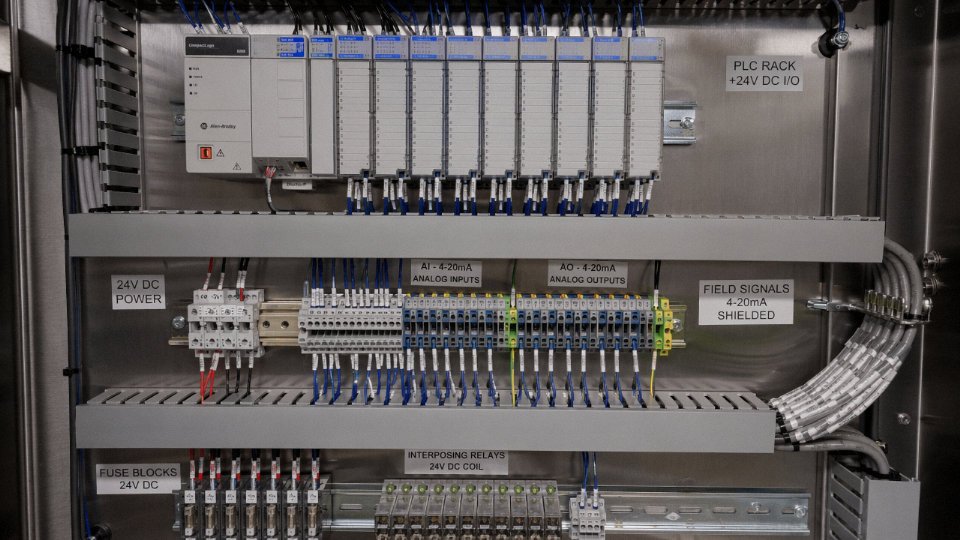
In manufacturing environments, 24 V DC PLC I/O loops, 4–20 mA analog signal circuits, and thermocouple extension cables all qualify as low-voltage work. The 4–20 mA standard survives because it’s self-diagnostic — a zero reading means a broken wire, not a zero-value measurement. Thermocouple extension cable is a category that trips up procurement teams regularly: it must use the same alloy pair as the thermocouple itself (Type K extension cable for Type K sensors), not generic stranded copper, or the cold-junction compensation breaks down and temperature readings drift badly enough to cause process upsets or false shutdowns.
Cable Selection Criteria: Matching the Right Low-Voltage Cable to Each Application
Getting the system design right and then buying the wrong cable is one of the more expensive mistakes a project can make. The cable doesn’t fail on day one — it fails eighteen months later, quietly, through intermittent signal loss or insulation breakdown that takes a technician two days to trace. Choosing correctly upfront is a procurement discipline as much as an engineering one.
Conductor Gauge and Voltage Drop
AWG 22–24 covers most signaling work: fire alarm initiating circuits, access control data lines, intercom runs. At these gauges, current draw is low enough that voltage drop is rarely the governing constraint on short runs, but on anything over roughly 150–200 ft you need to calculate it explicitly. The standard formula (V_drop = 2 × L × R × I, where R is resistance per unit length from the manufacturer’s datasheet) isn’t complicated, but people skip it and then wonder why their end-of-line resistor values read wrong.
Power-limited audio — background music distribution, paging amplifiers — typically lands in AWG 16–18. Move to AWG 14–12 for control circuits that switch relay coils or actuate dampers and valve solenoids; at those current levels the drop matters and so does terminal heating at the panel end. The governing constraint shifts from signal integrity to thermal dissipation.
Jacket and Insulation: Fire Performance Comes First
This is where procurement managers sometimes push back on cost, and it’s usually the wrong place to cut. PVC jacketing is the baseline — fine for direct burial with the right wall thickness, fine for conduit in non-air-handling spaces. In a plenum ceiling or air-handling corridor, you need CMP-rated (Communications Multipurpose Plenum) cable, which meets NFPA 262 flame and smoke criteria. CMR (riser-rated) covers vertical runs between floors. Neither is interchangeable; using CMR in a plenum is a code violation, and inspectors do catch it.
LSZH (Low Smoke Zero Halogen) jackets are specified on projects where evacuating occupants through smoke-filled corridors is a realistic life-safety scenario — transit stations, tunnels, offshore platforms, hospitals. LSZH doesn’t necessarily meet CMP unless it’s explicitly dual-rated, which some manufacturers offer. Verify the test report, not just the marketing sheet.
LSZH cable automatically qualifies as plenum-ratedFalse
LSZH describes the jacket chemistry (low smoke, no halogen compounds), while plenum rating (CMP) is a fire-spread and smoke-density classification per NFPA 262. A cable must be independently tested and listed for each designation. Some cables carry both ratings; most LSZH cables do not.
Shielding: Match the Environment, Not a Default Spec
UTP works fine in low-EMI commercial office environments for structured data cabling and most analog audio. The moment you’re running alongside variable-frequency drives, high-current motor feeders, or fluorescent ballasts, you need foil shielding (FTP or overall STP) at minimum. In genuinely hostile industrial environments — near welding stations, large transformer banks, RF equipment — braided shield provides better low-frequency rejection and handles flexing without cracking the way foil can. The drain wire needs a proper single-point ground; a shield floating at both ends does essentially nothing.
Temperature Ratings for Industrial and Outdoor Work
Standard commercial cable is rated roughly –20 °C to +70 °C. That covers most HVAC-conditioned buildings. Outdoor instrumentation runs, unheated equipment rooms in cold climates, or cables routed near heat sources (exhaust manifolds, process ovens) need extended ratings — typically –40 °C to +105 °C. At low temperatures the jacket stiffens and can crack during installation; at high temperatures PVC insulation softens and deforms under compressive stress at conduit bends.
Jinda’s Low-Voltage Cable Range
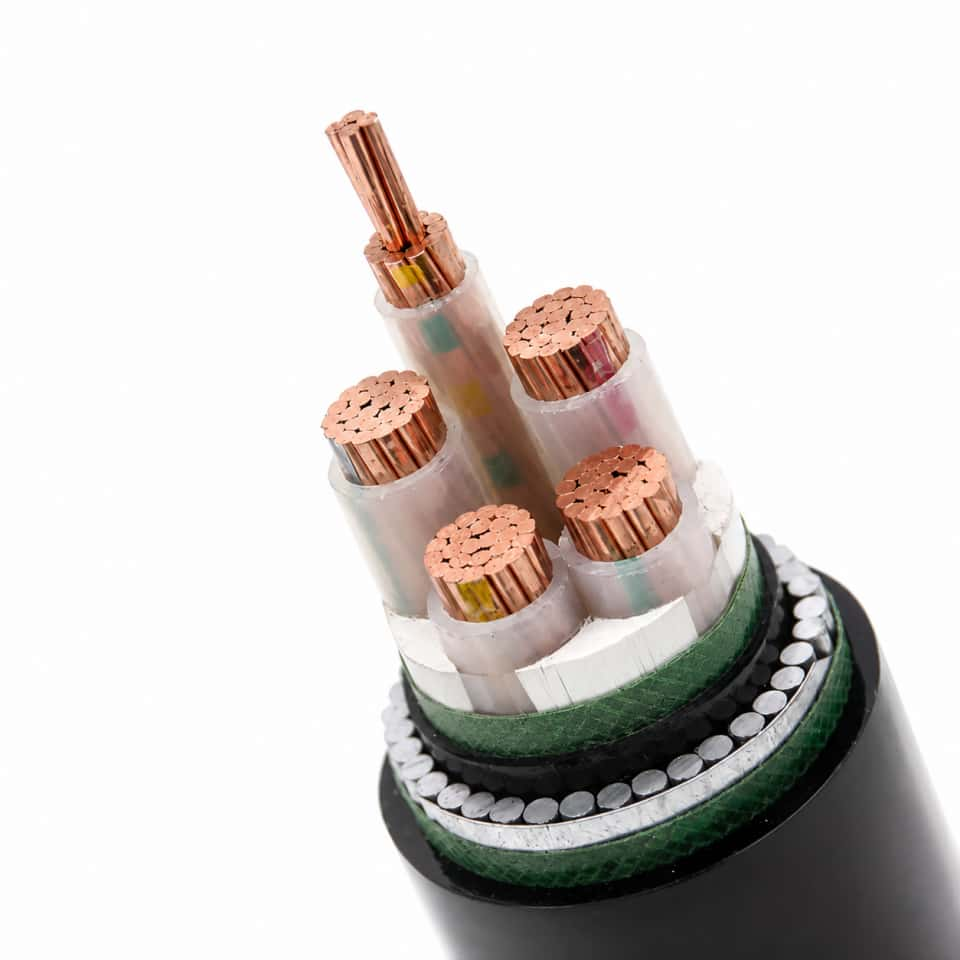
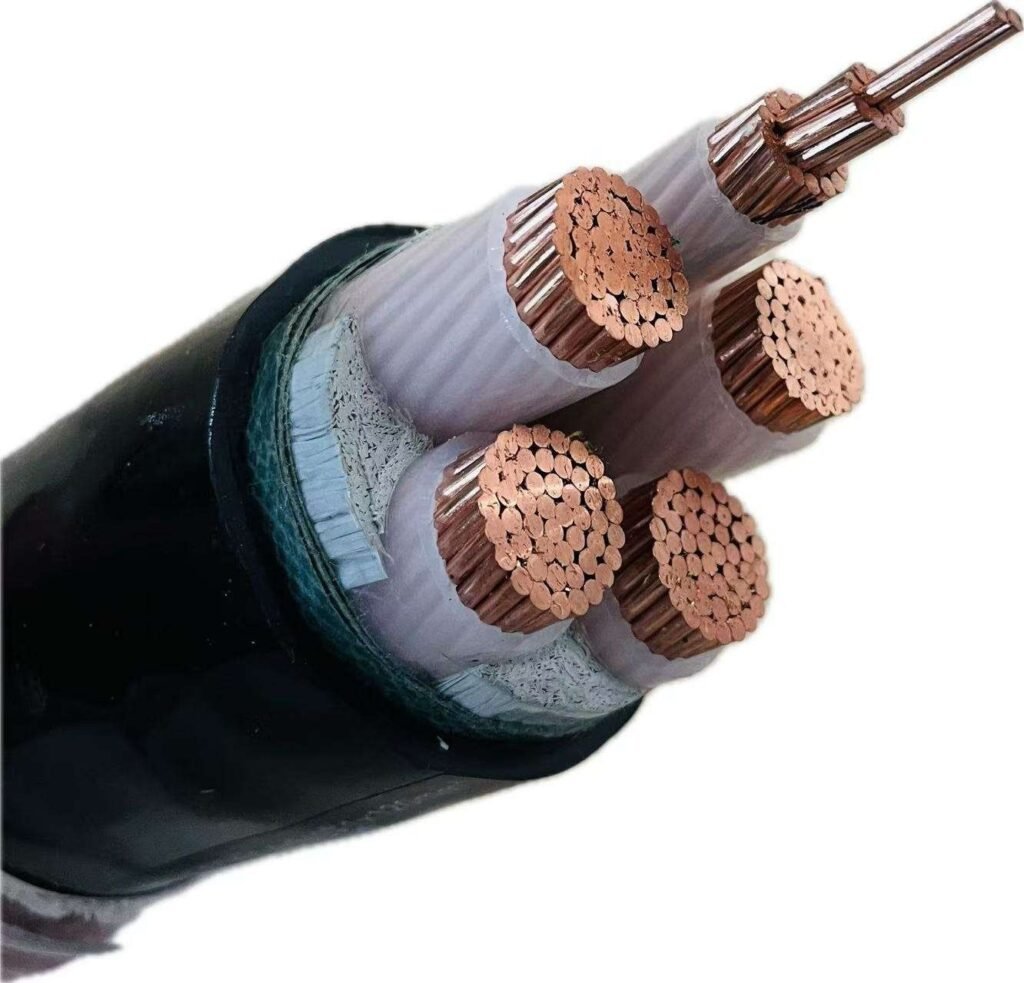
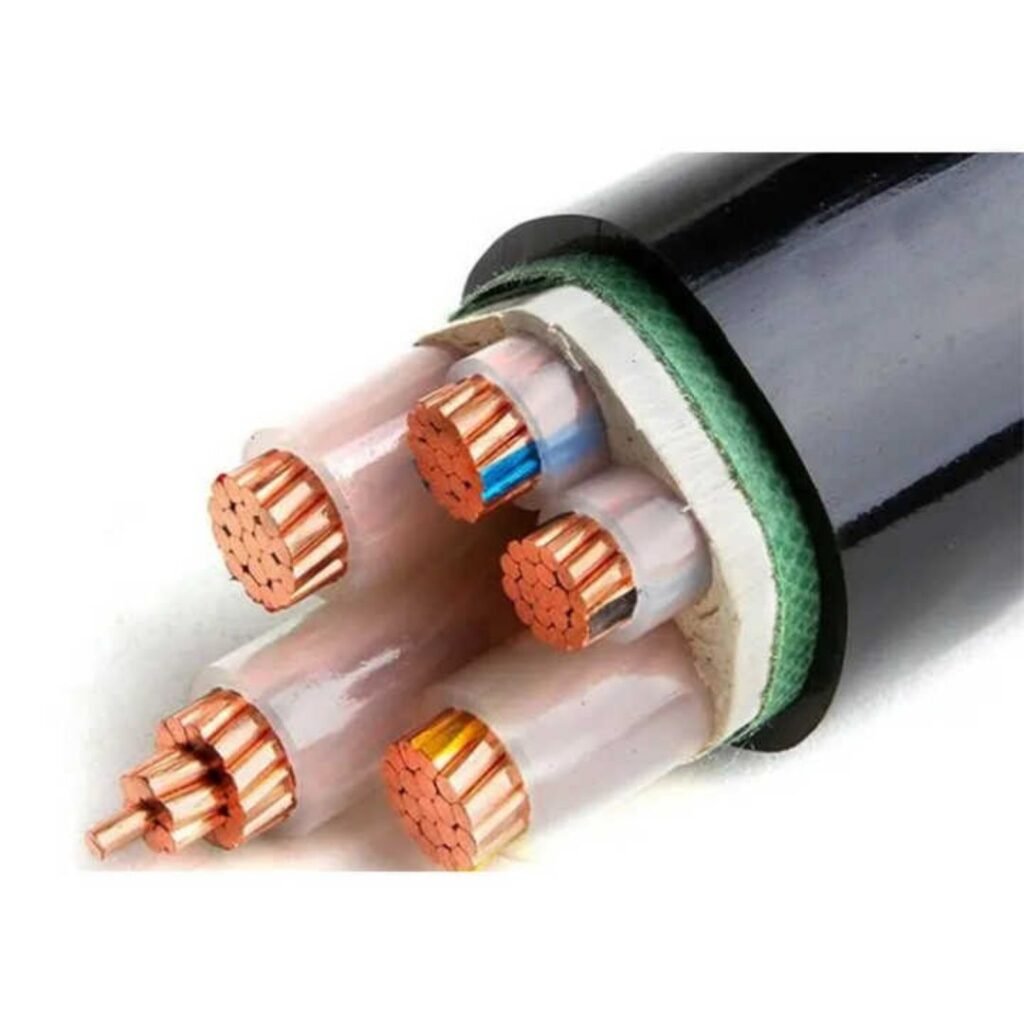
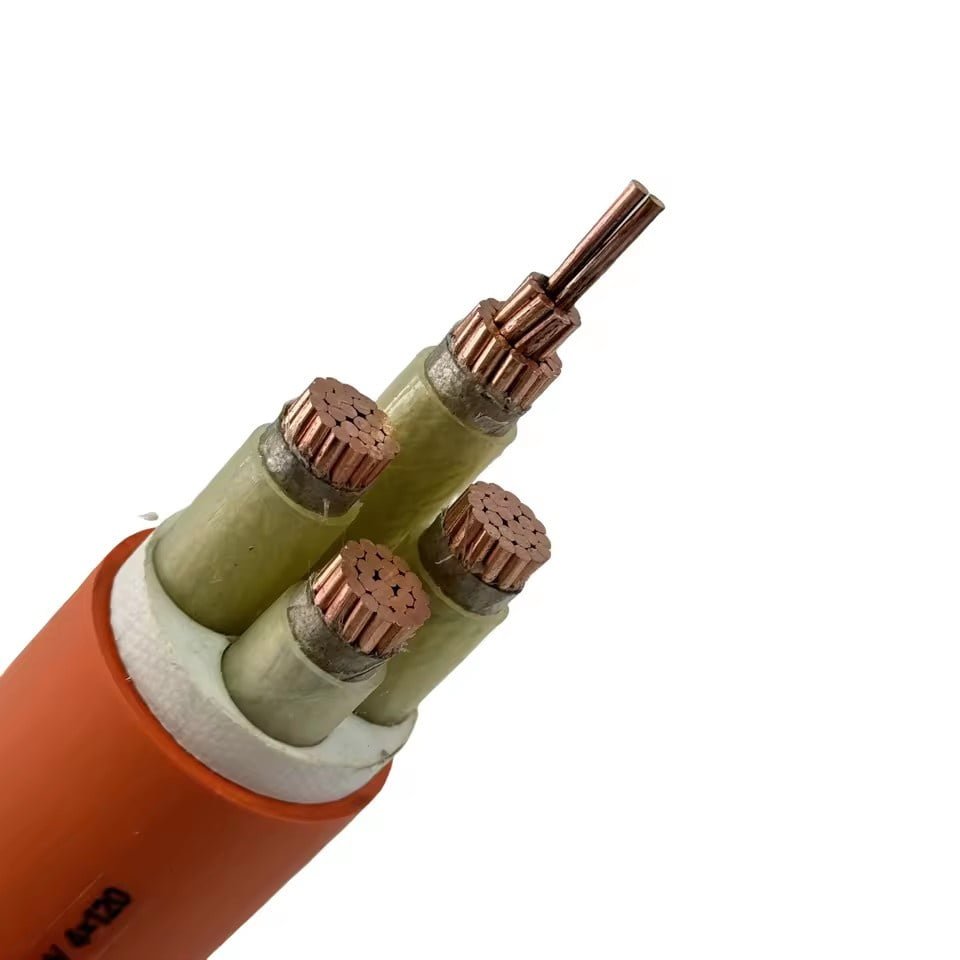
Shandong Jinda Special Cable Group manufactures control cables, instrumentation cables, fire-resistant cables, and communication cables across five production bases in China, exporting to more than 50 countries. For instrumentation circuits in process plants, Jinda produces individually shielded and overall shielded pairs built to IEC 60227 and IEC 60228, with LSZH jacket options for hazardous or confined environments. Fire-resistant lines are produced to IEC 60331 standards, maintaining circuit integrity under sustained flame exposure — relevant for emergency power and fire alarm backbone circuits where cable survival time matters operationally.
Quick-Reference Cable Selection Table
| System Type | Recommended Gauge | Jacket Rating | Shielding | Key Standard |
|---|---|---|---|---|
| Fire alarm (initiating circuit) | AWG 22–18 | CMR or CMP | Unshielded typical; shielded in high-EMI | NFPA 72, UL 1424 |
| Access control / security | AWG 22–18 | CMR or CMP | FTP if near electrical interference | UL 2560 |
| Structured data (Cat 5e/6) | AWG 24 | CMR or CMP | UTP (standard); STP (industrial) | TIA-568, IEC 11801 |
| Background audio / paging | AWG 16–18 | CMR | Unshielded typical | UL 13 |
| Industrial control circuits | AWG 14–12 | PVC or LSZH | Overall foil + drain | IEC 60227 |
| Instrumentation (process) | AWG 22–16, paired | PVC, LSZH, or armored | IS + OS shielded pairs | IEC 60228, ISA-S82 |
| Emergency / fire-resistant | AWG 18–14 | LSZH + fire-resistant | Per project spec | IEC 60331 |
Jacket ratings and shielding requirements vary with local code adoption; always confirm against the authority having jurisdiction before finalizing the procurement spec.
Labor Scope and Trade Coordination: Who Installs What on Large Commercial Projects
On a large commercial office fit-out, the electrical contractor is almost never the only trade pulling wire. That surprises some project owners, but it shouldn’t. The scope typically splits into at least three distinct packages, and how cleanly those packages are defined in your bid documents determines whether the project runs smoothly or dissolves into disputes over who owns which conduit stub.
The electrical contractor handles line-voltage work: service entrance, switchgear, panel feeders, branch circuits to outlets, lighting circuits, and mechanical connections. That’s their core license territory in most jurisdictions. The low-voltage subcontractor — sometimes called a structured cabling contractor or technology contractor — handles data cabling (Cat 6A, fiber trunk, patch infrastructure), AV rough-in, and security system wiring including access control and CCTV. Fire alarm is typically a third package, handled by a licensed fire alarm contractor who installs PLFA-rated cable and connects initiating devices, notification appliances, and the FACP under a separate permit pull. Three trades, three permits, three inspection sequences.
How Conduit Conflicts Actually Happen
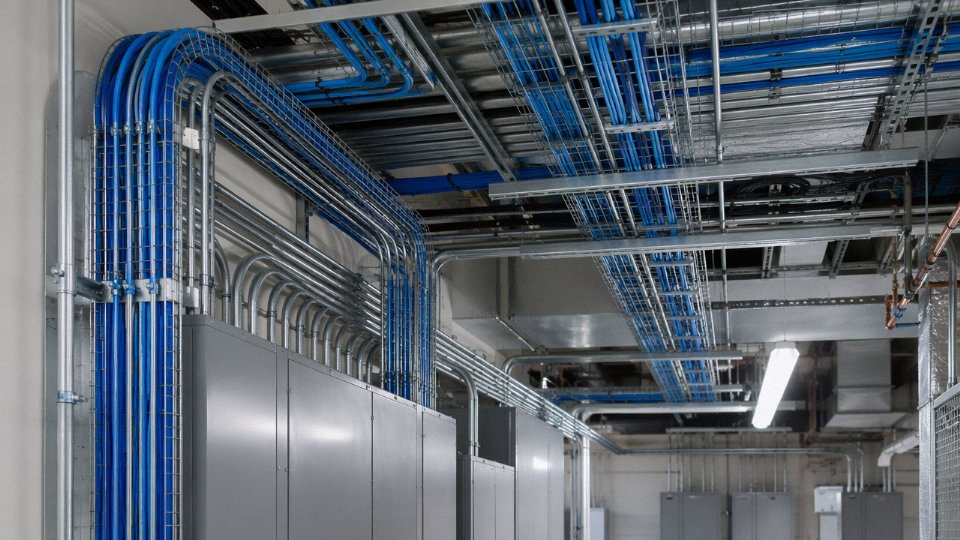
The failure mode isn’t dramatic — it’s mundane. The electrical contractor installs EMT runs in the ceiling plenum based on their drawings. The low-voltage sub shows up two weeks later and finds their planned cable tray route is blocked, or they’re fighting for the same sleeves through a fire-rated wall. Now someone is cutting and moving conduit, and you’re paying for it twice. On a 50,000 sq ft office build-out, conduit rerouting disputes can easily add $15,000–$40,000 in change orders, depending on how late the conflict surfaces and how tight the ceiling cavity is.
General contractors on well-run projects address this during pre-construction coordination meetings, where all three trades reconcile their routing plans against the same set of reflected ceiling drawings. That works reasonably well on straightforward projects. On complex ones — multi-tenant towers, hospitals, data centers — you really need BIM.
BIM Coordination Before Anyone Pulls Wire
Building information modeling lets the electrical, low-voltage, mechanical, and plumbing contractors model their systems in a shared 3D environment and run clash detection before installation begins. Cable tray routing, conduit banks, and equipment room rack layouts get resolved virtually. In practice, a coordinated BIM model typically catches 80–95% of physical conflicts before they become field problems, though that range depends heavily on model completeness and how disciplined the trades are about updating it. The low-voltage systems integrator often drives this process on technology-heavy projects because their equipment room layouts — MDF/IDF sizing, cable tray loading, power requirements for network gear — set constraints that everybody else has to work around.
The Cross-Training Trend and What It Means
Some electrical contractors, particularly those pursuing design-build or smart-building contracts, have started cross-training journeymen in low-voltage systems. This is real, and it’s accelerating. An electrician who can terminate Cat 6A, commission a small access control panel, and rough in an AV system is worth more to a design-build GC who wants a single point of accountability. Whether that’s legal depends on the jurisdiction and the system type — fire alarm usually stays ring-fenced regardless — but for data and AV, the regulatory barriers are lower.
Defining Scope Before Bid Day
If you’re a project owner or a facilities manager buying this work, the single most valuable thing you can do is write explicit scope boundaries into your bid documents. Specify which trade owns conduit installation for low-voltage pathways, who supplies and installs pull wire, who is responsible for labeling and as-built documentation, and who coordinates with the AHJ for each permit. Gaps in that language are where disputes live.
BIM clash detection eliminates nearly all conduit conflicts on commercial projectsFalse
BIM significantly reduces physical conflicts but doesn't eliminate them. Model completeness, trade discipline in updating the model, and late design changes all limit real-world effectiveness. Conflicts still occur on-site even after BIM coordination.
A simple scope matrix distributed at the preconstruction meeting — listing each system, the responsible trade, and the inspection owner — takes about two hours to produce and can save weeks of schedule recovery later.
Installation Best Practices That Prevent Signal Loss, Interference, and Code Violations
Getting the cable right matters less than you’d think if the installation technique is sloppy. I’ve seen perfectly spec’d Cat 6A fail a channel test because a installer kinked it around a beam with a zip tie cranked down too tight. The physics don’t care about the cable’s datasheet once you’ve deformed the geometry.
Bend Radius: The Rule Most Installers Know and Half Ignore
For Cat 6A, the minimum bend radius is typically 4× the cable’s outer diameter — roughly 25–32 mm depending on the specific cable OD, which varies by manufacturer and whether it’s shielded or unshielded. Coax and fiber have their own tighter tolerances; single-mode fiber is particularly unforgiving, with some grades spec’d below 10 mm radius only under controlled conditions.
Exceed the bend radius and you’re not just risking a visible kink. You’re mechanically disrupting the pair geometry inside the jacket. The immediate result is increased crosstalk between pairs, degraded return loss (signal reflecting back toward the source), and insertion loss spikes that can push a marginally-passing channel run into failure. On a 90-meter horizontal run close to the channel length limit, there’s almost no margin left — one bad bend near a patch panel can be the difference between passing and pulling the whole run.
Separation from Power Cables
NEC 300.3(C)(1) is the governing rule in the US, and it’s specific: low-voltage cables cannot share a raceway with line-voltage conductors unless the low-voltage cable has insulation rated for the highest voltage present, or a permanent barrier separates them. In practice that means separate conduit runs, separate cable trays with dividers, or maintaining physical separation when cables run in open plenum.
The minimum parallel separation between a power circuit and a data cable run is typically 50–75 mm for runs under about 10 meters, increasing to 150 mm or more for longer parallel runs near high-current feeders. Crossing at 90 degrees is generally acceptable and widely used. These aren’t just code requirements — induced interference from 50/60 Hz power circuits into unshielded data cables is real, especially near variable frequency drives, which generate significant harmonic noise well above the fundamental frequency.
Termination Quality at the Jack and Block
Structured cabling performance lives or dies at the termination. The TIA-568 standard requires maintaining pair twist to within 13 mm of the point of termination — not 25 mm, not “as close as practical.” Untwisting pairs beyond that threshold introduces near-end crosstalk (NEXT) that accumulates across every connection in the channel.
For 8P8C (RJ-45) field-termination plugs, use plugs rated for the cable category. A Cat 5e plug on Cat 6A cable is not a minor substitution — the contact geometry is different and the plug will likely fail channel certification. On 110-type punch-down blocks and keystone jacks, use the correct impact tool with the correct blade orientation; reversing the blade on a 110 block leaves contacts partially unseated, which shows up as intermittent opens under vibration.
Grounding Shielded Cables Correctly
Shielded cable grounded at both ends is a reliable way to create a ground loop — a closed circuit that picks up induced current and turns your shield into an antenna. For instrumentation and analog signal cables, single-point grounding at the panel end is standard practice. For high-frequency data cabling (shielded Cat 6A, S/FTP), multi-point grounding is generally preferred because the shield’s effectiveness at high frequencies depends on maintaining a low-impedance path to ground at intervals shorter than the signal wavelength.
Get these two confused and you’ll spend time chasing noise problems that aren’t immediately obvious.
Documentation and Labeling
Unlabeled cables above ceiling tiles are one of the most common low-voltage inspection failure points.True
Inspection authorities and TIA-606 both require that every cable termination be labeled at both ends; missing labels above accessible ceilings are routinely cited during commercial certificate-of-occupancy inspections.
Every cable needs a label at both ends, tied to an as-built drawing that gets handed to the owner. This isn’t bureaucratic overhead — it’s what makes moves, adds, and changes manageable three years after the project closes out. Without it, the next technician is tracing cables with a toner probe for two hours before touching anything.
What Gets Flagged at Inspection
Inspectors catch the same failures repeatedly: cables draped unsupported across ceiling grid without hangers (NEC 800.24 requires support at intervals not exceeding 1.5 m in many configurations), firestop penetrations through rated walls that were never sealed after cabling was pulled, non-plenum-rated cable installed in a plenum air-handling space, and abandoned cables left in place without documentation or decommissioning. Any one of these can hold up a certificate of occupancy. The plenum issue in particular — using CMR-rated cable in a CMP-required space — is a life-safety violation, not a paperwork problem.
Cost Benchmarks and Procurement Strategy for Low-Voltage Cable on Large-Scale Projects
Pricing for low-voltage work varies more than most project owners expect — not because contractors are inconsistent, but because the cost drivers are genuinely different across system types, building classes, and procurement approaches. Getting a handle on realistic ranges before you issue an RFP saves real money.
Typical Installed Cost Ranges
Structured cabling (Cat 6 or Cat 6A horizontal runs) typically lands between $150 and $350 per drop installed, covering cable, jacks, patch panels, and labor. Where you fall in that range depends heavily on ceiling type, run length, and local labor rates — a finished open-office ceiling in a Midwest industrial park is a very different job from a drop-ceiling retrofit in a dense urban high-rise. Security camera wiring runs roughly $80–$200 per camera point; the spread widens when runs are long, conduit is required, or the spec calls for shielded cable in electrically noisy environments like manufacturing floors. Fire alarm FPLR cable installed comes in around $1.50–$3.50 per linear foot, again depending on whether you’re running through open plenum, conduit, or tight shaftways, and how many terminations are involved per run.
These figures assume competent installation. Rushed work with improper terminations can invalidate the entire cable run — a $180 drop becomes a $360 drop once you’re pulling and re-terminating.
What Actually Drives Cable Cost
Copper content is the single largest variable. A 4-pair Cat 6 cable at 23 AWG uses meaningfully more copper than a 24 AWG equivalent, and that difference shows up in material cost per foot — and should show up in performance too. Conductor count and gauge matter even more on multi-conductor control cable and larger security or AV runs.
Jacket material is where procurement teams sometimes underestimate variance. LSZH (low-smoke zero-halogen) jackets typically command a 15–30% premium over standard PVC, and that premium is legitimate — the compounding is genuinely more complex, and in tunnel, data center, or transit applications the spec is non-negotiable. Don’t let a supplier quote you PVC pricing when your project spec calls for LSZH, or you’ll be making up the difference at change order time.
Shielding adds cost and weight, but on a noisy plant floor or near VFD panels, unshielded cable is a liability. Third-party listings — UL Listed, CE marked, CPR compliance for EU projects — add a modest cost that is completely worth paying. Unlisted cable fails inspections and creates insurance exposure.
Volume Procurement Strategy
Buying cable on 1,000 ft (305 m) reels instead of 500 ft boxes typically reduces per-foot cost by 8–15%, depending on the product and supplier. On a 200,000 sq ft commercial fit-out, that difference across structured cabling, fire alarm, and security runs adds up to a real number. Project-level blanket purchase orders with a single qualified supplier also reduce logistics overhead — fewer invoices, fewer receiving events, a single point of contact for technical questions.
Buying low-voltage cable in 1,000 ft reels rather than 500 ft boxes reduces per-foot cost by approximately 8–15%.True
Larger reels reduce per-unit packaging cost and handling overhead for manufacturers, and the savings are typically passed through on commercial volume orders — the range holds across most commodity structured and fire alarm cable products.
Evaluating International Cable Suppliers
Certifications are the floor, not the ceiling. ISO 9001 tells you the quality management system exists. UL Listing, CE marking, and CPR compliance tell you the product was independently tested — and those marks should be verifiable against the listing body’s database, not just printed on a box. Ask whether the supplier supports factory audits and can provide sample lots for third-party testing before a large order ships.
Shandong Jinda Special Cable Group operates across five production bases with 470,000 m² of manufacturing capacity and a fully integrated structure covering R&D through after-sales support. With an established export network spanning more than 50 countries, Jinda is structured for the kind of bulk international project supply where lead time reliability and consistent quality documentation actually matter — not just the first shipment, but the fourth and eighth.
Red Flags When Sourcing from Unfamiliar Suppliers
Undersized conductors are the most common problem. A cable labeled 23 AWG that actually measures 24 AWG will fail structured cabling performance tests and may not pass inspection — but it ships lighter, which is why some suppliers do it. Jacket compounds that fail smoke density or toxicity tests on LSZH product are harder to catch without testing, but the consequences in a fire event are severe and the liability exposure is real.
Inconsistent pair twist rates degrade crosstalk performance in a way that won’t always surface in basic continuity testing but will absolutely show up in certification testing with a Fluke DSX or similar instrument. And counterfeit certification marks — UL or CE logos printed without the corresponding listing — appear more often than the industry publicly admits. Verify marks before volume orders, not after.
Frequently Asked Questions About Electricians and Low-Voltage Wiring
Can a regular electrician install Cat 6 data cable?
In many jurisdictions, yes — a licensed journeyman or master electrician can legally pull and terminate Cat 6. But “many” is not “all.” Several U.S. states, and a number of countries in Europe and Asia-Pacific, maintain a separate low-voltage or communications contractor classification, and working outside that license boundary can void your inspection approval or create liability exposure on a claim. California’s C-7 low-voltage systems contractor license is one well-known example of a dedicated credential that sits entirely outside the standard C-10 electrical license. Always check with the authority having jurisdiction before you assign that scope.
What is the difference between low-voltage and line-voltage wiring?
Line voltage — typically 120 V to 480 V AC in North American commercial work — is what powers motors, lighting circuits, HVAC equipment, and receptacles. Low voltage, defined under IEC 60364 as below 50 V AC or 120 V DC, covers data, audio, access control, security, and building automation signals. The physical handling risks differ sharply, but the installation discipline requirements don’t disappear just because the voltage is lower. A poorly terminated Cat 6 run that loses signal or a misrouted control cable that picks up noise from a nearby VFD can cost more in diagnostic time than a straightforward line-voltage fault.
Does low-voltage wiring need to be in conduit?
Not always, and this trips up a lot of project managers who assume the rules are uniform. NEC Article 800 and related articles permit many low-voltage cable types — CL2, CL3, CM-rated communications cable — to be run exposed in accessible spaces without conduit. The real constraints kick in at plenum ceilings and riser shafts, where CMP or CMR jacket ratings are mandatory for fire-spread reasons. Local amendments add another layer: some municipalities require conduit for all concealed wiring regardless of voltage. Check the local amendments to the adopted NEC edition before finalizing your raceway design.
What cable is used for security camera wiring?
Analog CCTV systems typically use RG-59 or RG-6 coaxial cable. RG-6 handles longer runs with less signal attenuation and is generally the better choice for anything beyond roughly 150 m. IP cameras running PoE (Power over Ethernet per IEEE 802.3af, 802.3at, or 802.3bt) use Cat 5e or Cat 6 — the same cable infrastructure as your data network. PoE budget matters: 802.3bt delivers up to 90 W at the switch port, but you lose some of that over the cable run, so don’t cut corners on conductor gauge for long camera drops.
How do I know if a low-voltage cable is rated for outdoor use?
Three things to look for on the jacket print: a UV-resistant compound designation, a direct burial (DB) or outside plant (OSP) rating, and a published temperature range that actually covers your installation environment — which matters more than people realize in climates with hard winters or intense summer heat. A cable rated to -20 °C that gets installed in a northern Canadian equipment yard where temperatures hit -40 °C will embrittle and crack. Gel-filled or flooded construction adds moisture blocking for direct-burial runs.
Low-voltage cables with a standard CM rating can be installed in plenum ceiling spaces.False
Plenum spaces require CMP-rated cable per NEC Article 800. Standard CM-rated cable does not meet the fire and smoke propagation requirements for plenum air-handling spaces and will fail inspection.
Can low-voltage and high-voltage cables share the same conduit?
Generally no. NEC 300.3(C)(1) is clear: conductors of different systems can only share a raceway if the low-voltage conductors carry insulation rated for the highest voltage present in that conduit. In practice this almost never happens by design — it usually shows up as a shortcut taken in the field that creates a code violation and, more practically, a noise or interference problem that’s miserable to diagnose after walls are closed.
What certifications should I look for when buying low-voltage cable from a manufacturer?
For North American projects: UL listing or ETL listing is the baseline. For European supply chains: CE marking and a CPR (Construction Products Regulation) classification — Eca through Fca for fire performance — are required for cables installed in buildings. ISO 9001 certification tells you something about the manufacturer’s quality management system, though it doesn’t guarantee product performance on its own. RoHS compliance matters for projects with environmental procurement requirements or public-sector clients. A manufacturer that can provide test reports, not just certificates, is worth more than one that hands you a certificate and resists sending the underlying data.
How far can a low-voltage signal travel before it degrades?
It completely depends on the system. Ethernet over Cat 6 is hard-limited to 100 m (328 ft) per TIA-568-C before you need a switch or active extender. Analog 4–20 mA process control signals — common in industrial automation — can run 1,000 m or further with appropriate cable, because the current loop is inherently more noise-resistant than a voltage signal. Speaker circuits are a different calculation entirely: distance, conductor cross-section, and load impedance interact, and an 8 Ω speaker circuit on 1.5 mm² wire behaves very differently from a 70 V distributed audio system designed for long commercial runs. There’s no single answer; each protocol or signal type has its own attenuation budget and you need to design to that specific limit.
How to Choose the Right Contractor and Cable Supplier for Your Low-Voltage Project
By the time you reach the contractor selection stage, you’ve already done the hard thinking — system types are defined, cable categories are specified, trade scopes are mapped. What remains is execution, and a bad contractor or an unreliable cable supplier can unravel months of planning faster than almost any other single failure point.
Verifying Your Contractor Before You Sign Anything
License class is the starting point, not the finish line. A contractor who holds a general low-voltage license may not be qualified — legally or technically — to commission a healthcare nurse-call system or a structured cabling plant certified under TIA-568. Confirm the specific license class against your jurisdiction’s requirements for each system type you’re installing. For structured cabling in particular, manufacturer certification matters enormously: Cisco, Panduit, Commscope, and other major system vendors require authorized installer status for the channel warranty to be valid. That warranty can run 15–25 years depending on the program, and it disappears entirely if an uncertified crew does the terminations.
Beyond credentials, look at reference projects in the same system category. A contractor with 30 completed warehouse camera systems isn’t necessarily the right choice for a hospital IP intercom rollout. Ask specifically for references where they’ve worked alongside other trades under a general contractor — trade coordination failure is where low-voltage projects most commonly bleed time and money.
Writing a Scope of Work That Closes the Gaps
Vague scopes create disputes. Spell out system types individually, cable categories (Cat 6A vs. Cat 8, LSZH vs. CMR jacket), conduit fill requirements, and any fire-rated pathway obligations. Include testing standards by name: TIA-1152 for field testers on North American structured cabling projects, IEC 61935 for internationally deployed systems. Both standards define acceptable test parameters and report formats — requiring them by name removes any ambiguity about what “tested and certified” actually means.
Documentation deliverables deserve their own line items. As-built drawings, cable schedules, test reports, and warranty registration paperwork should all be listed as contract deliverables with a defined format. Projects that skip this step routinely pay for redocumentation work two or three years later when someone needs to expand a system and nobody can find the original records.
Evaluating a Cable Supplier Beyond Price Per Meter
Price matters, but it rarely tells you whether the cable will perform. Request mill test reports for the specific production lot, not generic product-line data sheets. Ask whether the supplier maintains third-party test data — independent lab verification of attenuation, return loss, and conductor resistance is the baseline for any serious infrastructure project. Production traceability documentation (lot numbers, production date, raw material origin) becomes critical if a quality issue surfaces mid-project or post-installation.
Lead times and minimum order quantities need to fit your project schedule, not just your budget. A supplier quoting 16–18 week lead times on Cat 6A bulk cable during a construction phase that starts in 10 weeks is not a viable supplier regardless of unit price.
Cable products from established manufacturers with third-party test certifications consistently outperform non-certified alternatives in field attenuation testing.True
Third-party certification programs such as UL, ETL, and independent ISO-accredited lab testing verify compliance against TIA/IEC electrical performance standards, reducing the risk of field test failures compared to self-certified products with no independent verification.
Long-Term Supply Partnership on Multi-Phase and International Projects
Single-phase procurement is straightforward. Multi-phase international projects are not. Currency fluctuation, customs documentation accuracy, and the ability to hold consistent pricing across an 18–36 month project timeline are all factors that eliminate many suppliers at the shortlist stage. You need a supplier who can issue compliant certificates of origin, provide technical support in your project’s operational language, and scale production without a quality drop when Phase 2 doubles the order volume.
Shandong Jinda Special Cable Group has been doing exactly that since 1987. Five production bases, roughly 470,000 m² of manufacturing space, full vertical integration from R&D through after-sales service, and an active supply footprint across more than 50 countries — the infrastructure is there to support bulk procurement, tight project schedules, and the documentation requirements that international projects demand. That kind of track record isn’t built by chasing spot orders.
Contact Jinda’s international sales team for product specifications, sample requests, and volume pricing for your next low-voltage project.