Specify the wrong wire type on a construction drawing — or let a procurement team substitute “equivalent” cable without checking the jacket rating — and you’re looking at failed inspections, rework labor, and in worst cases a reignition hazard inside a finished wall cavity. It happens more often than it should, usually because the term “building wire” gets used loosely on spec sheets and purchase orders without anyone stopping to define exactly what it covers. That ambiguity costs time and money at exactly the wrong point in a project.
Building wire is the broad category of insulated copper or aluminum conductors used for general-purpose electrical wiring inside residential, commercial, and light industrial structures. The most common types are NM-B (often sold under the trade name Romex) for non-metallic sheathed residential runs, and THHN/THWN-2 for conduit installations. Both are rated at 600V and governed by NEC Article 334 and UL 83 respectively.
What makes this category interesting — and occasionally frustrating — is how much variation sits underneath that single label. Jacket material, conductor gauge, temperature rating, wet versus dry location suitability: each variable has a direct consequence on code compliance and long-term reliability. The differences between a 14 AWG NM-B cable and a 12 AWG THWN-2 conductor are not subtle, and choosing between them is rarely just a cost question.

NM-B Cable: The Residential Building Wire Standard Explained Conductor by Conductor
When most North American electricians say “building wire,” they mean NM-B. It’s on every residential job site, stapled inside wood studs from one end of the country to the other. Understanding exactly why it’s built the way it is — layer by layer — matters if you’re specifying, purchasing, or inspecting it.
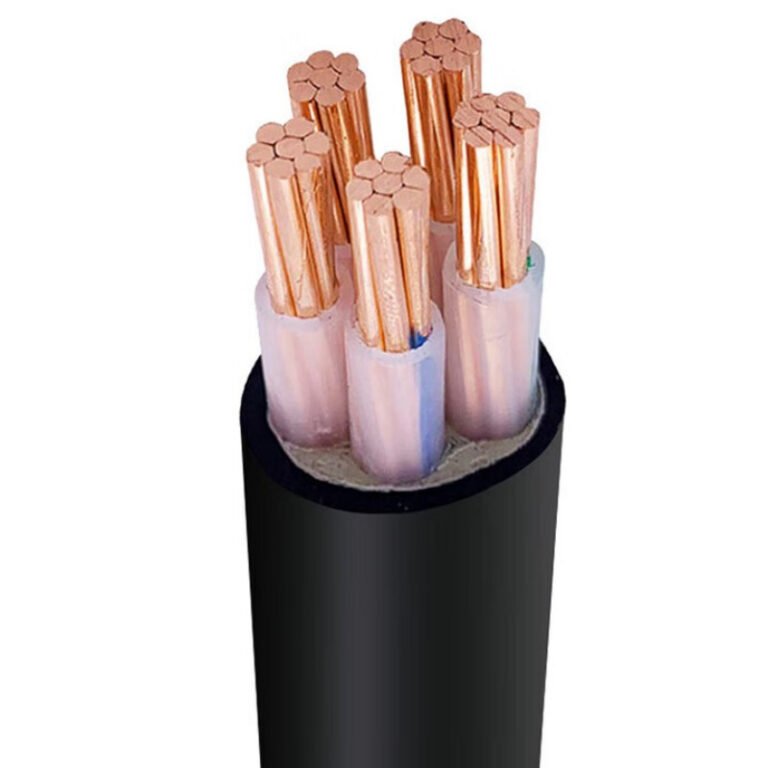
Construction Anatomy: What’s Inside Each Layer
The conductor itself is solid copper for 14 AWG through 10 AWG. At 8 AWG and 2 AWG you’ll typically see stranded copper, which improves flexibility during pull-through. Solid conductors dominate residential work because they’re cheaper to manufacture, easier to terminate at devices and panels, and the short bends in residential work don’t stress them the way industrial conduit pulls would.
Each individual conductor — hot, neutral, and bare ground — carries THHN/THWN-2 insulation. That thin nylon-coated PVC layer is doing real work: it handles the rated 90°C dry and 75°C wet conductor temperatures, resists oil and gasoline contact, and provides the dielectric strength to hold 600V continuous. Without it, you’d have bare copper inside a jacket, and any jacket abrasion during installation would expose live conductors immediately.
Between the insulated conductors and the outer jacket sits a paper or thin nylon separator. It’s easy to dismiss as filler, but it serves two purposes: it keeps the conductors from bonding to the PVC outer jacket during extrusion (which would make field-stripping a nightmare), and it provides a thin mechanical buffer against insulation damage if the jacket is nicked.
The outer jacket is PVC — grey or color-coded depending on wire gauge — and it’s the structural member of the assembly. It holds the bundle together, resists abrasion during stapling and pull-through, and carries the printed markings (conductor count, AWG, voltage rating, NEC compliance language) that inspectors check.
Electrical Ratings and Ampacity in Practice
NM-B is rated 600V maximum. For residential circuits, that’s generous headroom — a 240V dryer circuit or 120V lighting branch are well below it. The temperature ratings that actually govern real-world ampacity are the conductor insulation ratings: 90°C in dry locations, 75°C in wet locations per NEC Article 334.
Here’s the practical catch. NEC 334.80 limits NM-B ampacity to the 60°C column of NEC 310 ampacity tables when the cable is installed in thermal insulation or bundled, which covers most modern wall cavities. That de-rating is the source of more field disputes than almost anything else on a residential job.
Common NM-B circuit sizing — North American residential:
| Circuit Use | Conductor Size | Ampacity (NEC 60°C column, typical) | Typical Application |
|---|---|---|---|
| General lighting/outlets | 14 AWG | 15 A | Bedroom, hallway circuits |
| Kitchen, bathroom outlets | 12 AWG | 20 A | GFCI-required branch circuits |
| Dryers, water heaters | 10 AWG | 30 A | 240V dedicated circuits |
| Range, large HVAC | 8–6 AWG | 40–55 A (depends on installation) | High-load appliance feeds |
Ampacity shifts depending on ambient temperature, bundling, and insulation contact — always verify against the specific NEC table and local amendments.
Where It’s Permitted and Where It Absolutely Isn’t
NM-B is permitted inside walls, floors, and ceilings of wood-frame construction. Attic runs are fine with proper stapling intervals (NEC 334.30 specifies support within 12 inches of every box and every 4.5 feet along runs, roughly). Run it behind drywall and it’s essentially invisible and protected.
NM-B cable is permitted for use inside conduit as a raceway fill method under the NEC.False
NEC 334.15 and 334.12 prohibit NM-B installation inside conduit, electrical metallic tubing, or similar raceways. The cable's PVC jacket is not rated for conduit fill calculations and the assembly is not designed for pull-through installation.
Wet or damp locations are out. Exposed runs in commercial occupancies are out. Any location where physical damage is likely — unfinished basements with foot traffic, exposed garage walls, anywhere subject to mechanical abuse — requires either conduit with individual conductors or armored cable.
The Jacket Color System
The color-coding is genuinely useful on a busy job site. White jacket means 14 AWG. Yellow is 12 AWG. Orange is 10 AWG. Black covers 8 AWG and 6 AWG. In practice, a quick visual scan of the panel or a wall cavity tells you immediately what ampacity was originally installed — which matters enormously during renovations when someone is adding a circuit and needs to know whether the existing wiring will support a new load or needs to be upsized.
Why NM-B Stops at the Residential Property Line
Its limitations are structural, not incidental. The PVC jacket has no mechanical armor, so any exposed installation invites damage. It can’t go in conduit, which eliminates most commercial and industrial distribution methods. It carries no approvals for wet or corrosive environments. And outside North America, NM-B simply doesn’t map onto IEC wiring standards — which is exactly where THHN/THWN-2 individual conductors, rated to 1000V and pulled through conduit, take over.
THHN and THWN-2: The Industrial and Commercial Building Wire Workhorse
Walk through any commercial construction site or industrial panel room and THHN/THWN-2 is what you’ll find pulled through virtually every conduit run. It’s the default specification for electricians working above residential grade — and for good reason. Understanding what those letter codes actually mean changes how you spec and procure the wire.
Decoding the Letter Designations
The suffix string isn’t arbitrary. Each letter shifts the application envelope in a concrete way.
T means thermoplastic insulation — PVC in practice, which handles most chemical exposures you’d encounter in a conduit system but isn’t the choice for aggressive solvents or continuous UV exposure.
H signals heat resistance to 75°C. Add a second H and you’re at 90°C — meaningfully different when you’re calculating ampacity in a hot conduit bundle or near a boiler room. That 15-degree difference can change your conductor sizing by one AWG in some derating scenarios, which matters on a 500-foot feeder run.
W means the insulation is rated for wet locations. Drop the W and you have THHN alone — dry and damp locations only, not inside a conduit that sees condensation or outdoor exposure. In practice, most modern wire is dual-rated THHN/THWN-2, which eliminates the spec ambiguity, though you should still verify the cable’s print line rather than assume.
N is the nylon (polyamide) outer jacket. That jacket is thin — roughly 4–8 mils depending on gauge — but it provides real abrasion resistance during pull-through, particularly in long conduit runs with multiple bends. It also resists gasoline and oil to a degree that bare PVC doesn’t, which matters in industrial environments.

Construction and Ratings
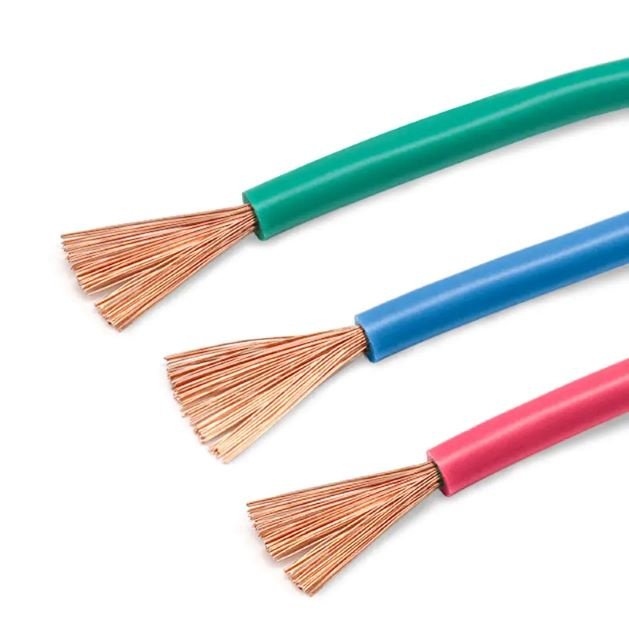
The conductor is typically soft-drawn copper, either solid (14–10 AWG generally) or stranded (8 AWG and larger, though stranded is available throughout the range). Aluminum conductors are available in larger gauges — 1/0 AWG and up is common — and used heavily in feeder applications where copper cost becomes significant. The PVC primary insulation is applied directly over the conductor; the nylon jacket goes on top of that. UL 83 governs the listing. Voltage ratings run 600V for standard building wire applications, with 1000V variants available for certain industrial and photovoltaic-adjacent applications — confirm the print line, because 600V and 1000V products can look identical on a spool.
Ampacity and the Derating Reality
NEC Table 310.15(B)(16) gives the baseline: 12 AWG THHN copper carries 30A at the 90°C column, 10 AWG carries 40A, 6 AWG hits 75A. Those are free-air or lightly loaded conduit values. Real installations derate those numbers fast.
Conduit fill correction kicks in once you exceed three current-carrying conductors — four conductors drops you to 80% of rated ampacity, six to seven conductors to 70%. Ambient temperature above 30°C applies another multiplier. A conduit in a hot attic or near furnace exhaust can push you down 15–20% combined before you’ve even started. Engineers who skip the derating math and spec to the table value end up with nuisance tripping or, worse, insulation damage that fails during commissioning rather than immediately, making it harder to trace.
Operational warning: Never mix derating assumptions across design and installation teams. If the engineer derated for four conductors and the installer pulls six circuits through the same conduit to save conduit cost, the original sizing is invalid.
Where THHN/THWN-2 Excels
EMT conduit, rigid steel, PVC conduit, wireways, cable trays with the appropriate fill — all standard territory. It’s the wire of choice for feeder circuits from the main panel to sub-panels, motor branch circuits (where it handles the thermal cycling better than NM-B ever could), panelboard wiring, and switchgear connections. The nylon jacket pulls cleanly through tight conduit bends in a way that bare PVC does not, which any electrician who’s fought a sticky pull on a 200-foot run will appreciate.
NM-B vs. THHN/THWN-2: Decision Matrix
| Criterion | NM-B | THHN/THWN-2 |
|---|---|---|
| Voltage rating | 600V | 600V or 1000V |
| Temperature (dry) | 90°C | 90°C (HH rating) |
| Wet location suitability | No | Yes (W rating) |
| Conduit compatible | Not recommended | Designed for conduit |
| Mechanical protection | Plastic sheath only | Nylon jacket + conduit |
| Typical cost per foot (copper, 12 AWG) | Slightly lower | Slightly higher; depends on nylon and strand count |
| Primary application | Residential branch circuits | Commercial, industrial, feeder and branch circuits |
| Code jurisdiction | NEC Article 334 | NEC Article 310, UL 83 |
Cost difference between the two is real but modest at smaller gauges — usually a few cents per foot at 12 AWG copper — and narrows further at larger cross-sections where conduit-only installation is required anyway. The decision, honestly, isn’t usually about price. It’s about whether your installation environment demands conduit, wet-location rating, or higher mechanical durability. If it does, NM-B isn’t in the conversation.
THHN/THWN-2 dual-rated wire meets both dry and wet location requirements under UL 83 and NEC Article 310.True
Dual-rated THHN/THWN-2 conductors carry both the 90°C dry (THHN) and 75°C wet (THWN-2) ratings on the cable print line, making them suitable for conduit installations exposed to moisture, condensation, or outdoor environments — a common requirement in commercial and industrial projects.
International Building Wire Designations: IEC, BS, and Regional Standards Beyond NEC
If you’re sourcing cable for a project outside North America — a hotel complex in the UAE, a factory in Poland, a data center in Malaysia — the first thing you discover is that nobody calls it “Romex” and the spec sheet looks nothing like a NEC table. The underlying physics is identical, but the designation systems are genuinely different, and mistranslating them in a purchase order can mean receiving cable that fails a local inspection or, worse, gets installed without anyone noticing the discrepancy until a thermal event forces the question.
IEC 60227: The Global Baseline for PVC-Insulated Building Wire
IEC 60227 is the closest thing to a universal reference for low-voltage PVC-insulated building wires for fixed installations. The three types you’ll encounter constantly are H07V-U (solid conductor, rigid), H07V-R (stranded, still classified as rigid for installation purposes), and H07V-K (fine-stranded, flexible — used where terminations get moved repeatedly or where a panel builder needs flexibility in a control cabinet). All three run at a rated voltage of 450/750V and a maximum conductor temperature of 70°C under normal operation, though some national implementations push that to 90°C with appropriate insulation compounds.
H07V-U is the bread-and-butter fixed wiring conductor across Europe, the Middle East, large parts of Africa, and much of Asia-Pacific. If you’re specifying residential or light commercial work in those regions, this is usually what the electrician expects to pull. H07V-K is where things get misused — it’s frequently substituted for H07V-R in conduit runs because it’s easier to handle, but its current-carrying capacity tables differ, and the derating for grouping changes. Worth checking with the local authority before assuming interchangeability.
BS 6004 and Harmonized Color Coding
BS 6004 covers single-core PVC-insulated cables for fixed wiring in the UK at the 450/750V class, and it aligns closely with IEC 60227 in construction terms. The practical difference that trips up engineers sourcing from multiple countries is color coding. Since the UK adopted the harmonized European standard (around 2006 for new installations), line conductors are brown, neutral is blue, and the protective earth is green/yellow striped — matching continental European practice. Older UK installations used red for live and black for neutral, which still appears in existing buildings. If you’re retrofitting or extending a legacy installation, the color mismatch isn’t just cosmetic; it’s a real maintenance hazard for anyone working on the panel later.
BS 6004 single-core PVC cables use the same harmonized color code as IEC 60227 across EU markets: brown for line, blue for neutral, green/yellow for earth.True
The UK adopted the CENELEC harmonized cable colors (HD 308 S2) for new fixed wiring installations, aligning with continental European practice. Brown = line, Blue = neutral, Green/Yellow = earth.
IEC 60502-1: When Building Wire Transitions to Distribution
Large commercial complexes and industrial campuses often blur the line between building wire and distribution cable. IEC 60502-1 covers extruded insulation power cables rated at 1kV and 3kV — the range you enter once a building’s internal distribution moves beyond a single LV panel. Think of a high-rise with multiple transformer substations on intermediate floors, or a manufacturing campus where the MV ring feeds substations inside the fence. The cable here is no longer building wire in the traditional sense, but procurement teams frequently manage both types under a single project scope, and the handoff point between IEC 60227 and IEC 60502-1 territory should be defined explicitly in the spec, not left to the contractor.
China GB/T 5023: Domestic Standard and Export Reality
GB/T 5023 is China’s national equivalent to IEC 60227, and it governs the building wires you’ll see specified on Chinese domestic projects and exported through Chinese manufacturers. The main types are BV (single-core, solid conductor), BVR (single-core, stranded), and RVV (multi-core flexible, with an outer sheath — roughly analogous to a lightweight flexible cord for fixed or semi-fixed use). Rated voltage is 450/750V across all three; temperature class is typically 70°C for standard PVC, though cross-linked variants push higher. Conductor sizes follow IEC metric cross-sections (1.5 mm², 2.5 mm², 4 mm², 6 mm², 10 mm², and up), not AWG.
In practice, BV and BVR dominate Chinese construction at a volume that makes them highly competitive on global tenders — particularly for projects in Southeast Asia, Africa, and the Middle East where IEC compliance is accepted and cost pressure is real. The caveat is that GB/T 5023 and IEC 60227 are close but not identical; insulation thickness tolerances and test voltage requirements can differ slightly by revision year, so if your project spec calls for IEC 60227 compliance, get the test report confirming it rather than assuming GB/T is a straight substitute.
Cross-Reference: Common Building Wire Equivalents by Standard
| Conductor Cross-Section | NEC (North America) | IEC 60227 | BS 6004 | GB/T 5023 | Typical Application |
|---|---|---|---|---|---|
| 1.5 mm² / ~14 AWG | 14 AWG THHN | H07V-U 1.5 mm² | 1.5 mm² to BS 6004 | BV 1.5 mm² | Lighting circuits |
| 2.5 mm² / ~12 AWG | 12 AWG THHN | H07V-U 2.5 mm² | 2.5 mm² to BS 6004 | BV 2.5 mm² | General power outlets |
| 4 mm² / ~10 AWG | 10 AWG THHN | H07V-U 4 mm² | 4 mm² to BS 6004 | BV 4 mm² | Small HVAC, sub-circuits |
| 6 mm² / ~8 AWG | 8 AWG THHN | H07V-U 6 mm² | 6 mm² to BS 6004 | BV 6 mm² | Water heaters, larger loads |
| 10 mm² / ~6 AWG | 6 AWG THHN | H07V-U 10 mm² | 10 mm² to BS 6004 | BV 10 mm² | Panel feeds, motor circuits |
AWG-to-metric conversions are approximate; current-carrying capacity tables differ between standards due to different installation method assumptions, so never carry ampacity values across standards without rechecking against the relevant installation table.
Conductor Material, Insulation Chemistry, and Jacket Compounds: How Material Choices Define Performance
The wire you pull through a conduit or staple into a stud bay looks simple. It isn’t. Every layer — conductor alloy, insulation compound, outer jacket — is an engineering decision that ripples forward into installation labor, energy loss, long-term reliability, and what happens to the building’s occupants if something goes wrong.
Copper vs. Aluminum: The Conductivity and Cost Trade-Off
Copper sits at 100% IACS conductivity; aluminum at roughly 61%. That gap means an aluminum conductor needs to be one to two AWG sizes larger to carry the same current — 2 AWG aluminum where 4 AWG copper would do, for instance. On a branch circuit that’s a minor nuisance. On a 500-meter feeder run, the conduit upsizing, larger termination hardware, and additional pulling labor can quietly erase the metal cost savings you thought you were getting.
Weight, though, is genuinely aluminum’s advantage. Aluminum conductors run about one-third the mass of a copper equivalent. On long overhead feeder drops or in cable tray over suspended ceilings, that difference is real and matters for structural loading calculations.
The termination issue is where aluminum building wire bites people. Aluminum oxidizes rapidly at cut ends, and aluminum oxide is a poor conductor. Skipping anti-oxidant compound (Noalox or equivalent) on an aluminum lug connection is the kind of shortcut that produces a warm termination point that quietly gets warmer over years until you have a problem. AL-rated lugs are mandatory — a standard copper-rated lug does not have the contact geometry or the plating to handle aluminum’s thermal cycling reliably.
Aluminum building wire requires AL-rated termination lugs and anti-oxidant compound to prevent resistive overheating at connection pointsTrue
Aluminum forms a resistive oxide layer at exposed surfaces; AL-rated lugs and anti-oxidant compound are required by NEC 110.14 and are standard practice to maintain safe, low-resistance terminations over the conductor's service life.
On cost volatility: copper and aluminum track different commodity markets. Copper LME pricing swings 20–40% across a procurement cycle depending on global demand and supply disruptions; aluminum is typically less volatile but not immune. Locking a large project budget on today’s copper spot price without a price-adjustment clause is a risk that procurement managers have learned to regret.
PVC Insulation: Grades Matter More Than the Label Suggests
Standard PVC is cost-effective, widely available, and adequate for most dry building wire applications. The issue is what it does in fire: standard PVC releases hydrogen chloride (HCl) smoke, which is both toxic and corrosive to electronics — a serious concern in data centers or any building with sensitive equipment. Plasticizer content determines low-temperature flexibility; a cheaper formulation that pulls fine at 20°C can become stiff and crack during a January installation in an unheated building. Heat-stabilized PVC grades hold their properties better above 70°C and resist thermal degradation over a longer service life.
Semi-rigid PVC sits between standard and XLPE in performance and price. It’s a reasonable choice for light commercial work where full XLPE isn’t in the budget.
XLPE: When the Premium Is Justified
Cross-linked polyethylene runs 90°C continuous and handles short-circuit overloads up to 130°C without deforming or flowing — try that with standard PVC and you’ll find the insulation has migrated away from the conductor. XLPE also has a lower dielectric constant and absorbs less moisture, which matters on building wire runs exposed to condensation or periodic wetting. Service life in a well-installed XLPE wire routinely reaches 40–50 years versus 20–30 years typical for PVC in comparable conditions — though both depend heavily on installation quality and thermal cycling history.
Specify XLPE for any building wire application running near heat sources, in conduit bundles where derating is aggressive, or anywhere the circuit won’t be easily accessible for replacement.
LSZH Compounds: The Fire Safety vs. Mechanical Properties Trade-Off
Low-smoke zero-halogen compounds are not optional in many jurisdictions for public buildings, tunnels, transit facilities, and data centers. IEC 60332 covers flame propagation; IEC 61034 governs smoke density. LSZH compounds generate minimal corrosive gas and dramatically less optical smoke density in fire, which is the difference between a building that can be evacuated and one that fills with a blinding, choking haze in under two minutes.
The honest trade-off: LSZH compounds are generally stiffer than PVC and can have lower tensile strength. In cold climates, they need careful handling during installation — sharp bends at sub-zero temperatures can crack the jacket. That’s not a reason to avoid them where fire safety demands it, just a reason to train your crew.
The Nylon Jacket on THHN: A Small Detail With Real Consequences
That thin nylon overcoat on THHN — typically 4 to 8 mil — does more work than its thickness implies. Nylon increases pulling tension tolerance substantially, resists abrasion when wire drags across metal conduit edges, and holds up against incidental gasoline and oil exposure during installation in mechanical rooms or parking structures. Low-cost building wire that omits this layer or uses a substandard nylon formulation will show jacket damage on longer conduit pulls, and damaged jacket means compromised insulation integrity at the installation stage before the circuit ever energizes. It’s one of the first things worth checking when evaluating an unfamiliar supplier’s product.
Sizing, Ampacity Calculations, and Voltage Drop: Engineering Building Wire for Real Circuits
Getting the wire size right is where electrical engineering meets real money. Under-size a conductor and you risk thermal damage, nuisance tripping, or a fire. Over-size it and you’ve wasted copper budget that compounds fast across a large project — a 200,000 sq ft warehouse with 400 branch circuits will feel an unnecessary gauge bump in the material cost immediately.
Starting with Load Current, Not the Table
The correct sequence matters. Start by calculating your actual load current — connected load in watts divided by voltage and power factor, then apply a demand factor if the code and load type permit. Only after you have that number do you open the ampacity table. NEC Table 310.16 (or the equivalent IEC 60364 tables for international projects) gives you the base ampacity for a conductor in a specific installation condition: typically 60°C, 75°C, or 90°C column depending on the termination rating of your device.
Most receptacle and breaker terminations in North American practice are rated 75°C, so even if you’re running THHN (90°C rated), you size to the 75°C column unless you’ve confirmed the termination hardware. That’s a common field mistake — engineers select 90°C ampacity, forget the terminal limitation, and the conductor technically operates out of compliance.
Conduit Fill and Ambient Temperature Derating
The base table assumes no more than three current-carrying conductors and a 30°C ambient. Real installations are neither. Under NEC 310.15(C), bundling four to six current-carrying conductors in a conduit drops your allowable ampacity to 80% of table value. Seven to nine conductors: 70%. Ten to twenty: 50%. These aren’t suggestions — they’re physics. Heat can’t dissipate when conductors are packed tightly, and the insulation temperature limit is real.
Ambient correction compounds on top of that. The formula is straightforward:
Corrected ampacity = Table ampacity × Temperature correction factor
The correction factor comes from NEC Table 310.15(B)(1) or IEC equivalent. In a mechanical room running 45°C ambient — common near boilers or process equipment — a 75°C-column conductor takes roughly a 0.87 correction factor, meaning a conductor nominally rated 35A is now good for only about 30A before you’ve even applied conduit fill. Stack both derating factors and you may need to jump two gauge sizes versus a simple code-minimum reading.
Voltage Drop: The Calculation Engineers Skip

Voltage drop doesn’t fail an inspection, so it gets ignored until the lighting flickers or a VFD faults on undervoltage. For single-phase circuits, the standard formula is:
VD = (2 × K × I × L) / CM
Where K = 12.9 for copper (21.2 for aluminum), I is load current in amps, L is the one-way run length in feet, and CM is the conductor’s circular mil area. For a 20A branch circuit running 100 feet of 12 AWG copper (6,530 CM): VD = (2 × 12.9 × 20 × 100) / 6,530 ≈ 7.9 volts on a 120V circuit, or roughly 2.6%. That sits just under the NEC-recommended 3% branch circuit limit — acceptable, but already close.
NEC recommends limiting branch circuit voltage drop to 3% and combined feeder plus branch circuit drop to 5% total.True
NEC 210.19(A) Informational Note No. 4 and NEC 215.2(A)(1) Informational Note No. 2 state these recommended limits. They are not mandatory code requirements but represent widely applied best practice for power quality.
Stretch that same circuit to 150 feet without upsizing and you’re at roughly 3.9% — dimmer lights, warmer conductors, unhappy equipment. The fix is upsizing to 10 AWG (10,380 CM), which drops the loss to about 2.5% at 150 feet. The incremental copper cost is small. The callback cost is not.
Long feeder runs in warehouses and large commercial floors are where this bites hardest. A 200-foot, 60A feeder to a panel serving HVAC equipment often needs 4 AWG copper to meet voltage drop, even though 6 AWG comfortably handles the ampacity. That’s the distinction worth internalizing: code minimum means ampacity only; engineering best practice means ampacity plus voltage drop, checked together.
Short-Circuit Withstand: The Overlooked Specification
Building wire must survive fault current long enough for the overcurrent device to clear — typically a few cycles at most, but high-available-fault-current services (above 10 kA, common in commercial and industrial switchgear rooms) can generate fault currents that damage undersized conductors before the breaker opens. This is I²t coordination: the energy the conductor can absorb equals conductor cross-section squared times a material constant, and that value must exceed the let-through energy of the upstream protective device.
In practice, most standard-gauge building wire sized correctly for load and voltage drop will survive fault clearing at typical branch circuit levels. Where it matters is in service entrance conductors, main feeders, and any circuit fed directly from a high-capacity transformer secondary — those need explicit I²t checking against the breaker’s published let-through curves.
Quick Sizing Reference for Common Load Types
| Load Type | Typical Current | Recommended Copper AWG | Conduit (Trade Size) | Breaker Size |
|---|---|---|---|---|
| General lighting (120V branch) | 12–16A | 14 AWG (short runs), 12 AWG preferred | ½ in EMT | 15–20A |
| General receptacles (120V) | Up to 20A | 12 AWG | ½ in EMT | 20A |
| HVAC unit (240V, 20–30A) | 20–28A | 10 AWG | ¾ in EMT | 30A |
| Motor feeder (240V, 5 hp) | ~28A FLA | 10 AWG | ¾ in EMT | 40–50A (per NEC 430) |
| EV charger (Level 2, 48A) | 48A continuous | 6 AWG (check VD for run length) | 1 in EMT | 60A |
| IEC 230V 16A circuit | 16A | 2.5 mm² Cu | 20 mm conduit | 16A type B/C |
Motor circuits follow NEC Article 430 sizing rules, not straight ampacity tables — the breaker is deliberately oversized to pass inrush, so the conductor and breaker ratings don’t match the way they do in lighting circuits. That surprises people the first time they see a 10 AWG wire on a 50A breaker and assume something is wrong.
Installation Methods, Code Compliance, and Quality Inspection for Building Wire Projects
Getting the wire specified correctly is only half the job. How it’s installed — and how that installation gets verified — determines whether a building runs safely for decades or becomes a fire investigation case file.
NM-B Support and Stapling: A Detail That Kills
NEC Article 334.30 is unambiguous: NM-B cable must be secured within 12 inches of every box, fitting, or cabinet, and supported at intervals not exceeding 4.5 feet along the run. In practice, this means a 20-foot home-run from panel to first outlet box needs a minimum of five support points, with the first staple driven within a foot of where the cable enters the box knockout.
Why does this matter beyond code compliance? Unsupported cable sags, vibrates with building movement, and works against staple edges or framing lumber over years. The PVC jacket on NM-B is not particularly tough — roughly 0.3–0.4 mm nominal thickness depending on gauge — and repeated mechanical contact at an unsupported span slowly abrades the insulation on the individual conductors inside. That’s a slow, invisible path to a ground fault or arc. Residential electrical fires traced to wiring faults show improper cable support and stapling as a contributing factor with surprising regularity. The fix costs nothing at rough-in; the consequence of skipping it can cost everything.
One operational note worth stating plainly: use the right staples. Insulated cable staples (the kind with a plastic saddle) are specified for NM-B precisely because a bare metal staple driven slightly too hard will bite into the jacket. On a busy framing crew, “slightly too hard” is the norm, not the exception.
Conduit Fill, Pull Tension, and Bend Radius for THHN
THHN in conduit introduces a different set of installation physics. NEC Chapter 9, Table 1 and Annex C limit conduit fill to 40% of the conduit’s internal cross-sectional area when pulling three or more conductors — a rule that’s frequently violated on retrofit jobs where someone “just adds two more circuits” to an existing conduit.
Pull tension limits for THHN are typically calculated as 0.008 × conductor cross-sectional area in circular mils × number of conductors, though the specific value depends on conductor size and conduit configuration. Exceeding pull tension — which happens when bends stack up or a run is too long without a pull box — stretches and deforms the nylon jacket and the THHN insulation underneath. The damage isn’t always visible. You’ll get a cable that passes initial continuity but shows elevated insulation resistance degradation within a few years of thermal cycling.
Wire-pulling lubricant is not optional on runs exceeding roughly 50–60 feet or anywhere you have more than two 90-degree bends. Use a lubricant rated compatible with THHN’s nylon outer jacket — some petroleum-based products will attack it. Minimum bend radius for THHN in conduit is generally 10× the conductor’s overall diameter for larger sizes; check the manufacturer’s data sheet because this varies with conductor construction.
Color-Coding: Simple Rule, Serious Consequences
| System | Phase A | Phase B | Phase C | Neutral | Ground/PE |
|---|---|---|---|---|---|
| NEC (North America) | Black | Red | Blue | White or Gray | Green or Bare |
| IEC / European | Brown | Black | Gray | Blue | Green-Yellow |
| UK (post-2004) | Brown | Black | Gray | Blue | Green-Yellow |
Mixing these up on a multinational project — say, a factory fit-out where the electrical contractor used IEC-colored wire but the local inspector expects NEC conventions — creates genuine hazard during maintenance. A technician from a North American background reaching for what looks like a neutral (blue, IEC) and finding 400V phase voltage has no warning. Color-coding compliance is a life-safety issue, not an aesthetic preference.
In IEC systems, green-yellow striped conductors are exclusively reserved for protective earth (PE) and must never be used as a phase or neutral conductor.True
IEC 60446 and derivative national standards (including EN 50525 series) prohibit use of the green-yellow bicolor for any conductor other than protective earth. Using it for any other function creates serious risk of misidentification during maintenance and is a code violation in all IEC-jurisdiction markets.
Factory Quality Tests: What to Request When Sourcing Wire Internationally
A reel of cable arriving on site with a label and a CE mark is not, by itself, evidence of compliance. Reputable manufacturers — Jinda among them — run a defined battery of tests on every production reel, and buyers should be requesting the associated test certificates as a standard procurement condition, not an afterthought.
The core tests for building wire include:
- Conductor resistance per IEC 60228, verified at 20°C, confirming actual copper or aluminum cross-section matches the marked size. This is the single test most likely to catch substandard conductor content.
- Voltage withstand (spark test) run at line speed during extrusion, typically at several kV AC depending on insulation class. This catches voids, inclusions, and thin spots in insulation in real time rather than on sampled lengths.
- Insulation resistance, usually measured after a water immersion period for wet-rated cables, expressed in MΩ·km.
- Elongation at break and tensile strength per IEC 60811 for the insulation and jacket compound, confirming the PVC or XLPE formulation wasn’t diluted with cheap filler.
- Dimensional checks — outer diameter, insulation wall thickness, jacket thickness — against declared tolerances.
Ask for the IEC 60332 fire test certificate as well if the wire is going into a building where fire performance matters (which is most buildings).
Certification Marks: A Procurement Checklist
Counterfeit and substandard cable is a documented problem in multiple markets. The practical defense is verifying third-party certification marks before purchase, not after delivery.
| Market | Mark to Verify | Issuing Body / Scheme |
|---|---|---|
| USA | UL Listing (UL 83 for THHN, UL 719 for NM-B) | Underwriters Laboratories |
| Canada | CSA certification | Canadian Standards Association |
| EU | CE + Declaration of Conformity (CPR for fixed installations) | Manufacturer self-declaration with notified body for Class C–F cables |
| Netherlands | KEMA/KEUR | DEKRA / formerly KEMA |
| Saudi Arabia | SASO IECEE certificate | Saudi Standards, Metrology and Quality Org |
| Nigeria | SONCAP certificate | Standards Organisation of Nigeria |
For any international order, the request should include the certificate number, the specific cable type and rating it covers, and the expiry date. A certificate that doesn’t list the exact conductor size and insulation type you’re ordering is functionally useless. This is a basic procurement hygiene step that surprisingly often gets skipped under schedule pressure — and it’s the first thing a project owner’s legal team will ask for if something goes wrong.
Specialty Building Wire Variants: Fire-Rated, Direct Burial, Aluminum Service Entrance, and High-Temperature Types
Standard NM-B and THHN cover the majority of building wire volume, but specifying only those two types will get you into trouble fast on any project with emergency systems, outdoor runs, large service sizes, or industrial equipment generating serious heat. These specialty variants aren’t obscure — they’re required by code in specific conditions, and substituting the wrong product creates either a safety failure or an inspection rejection that halts the job.
Fire-Rated Circuit Integrity Cable
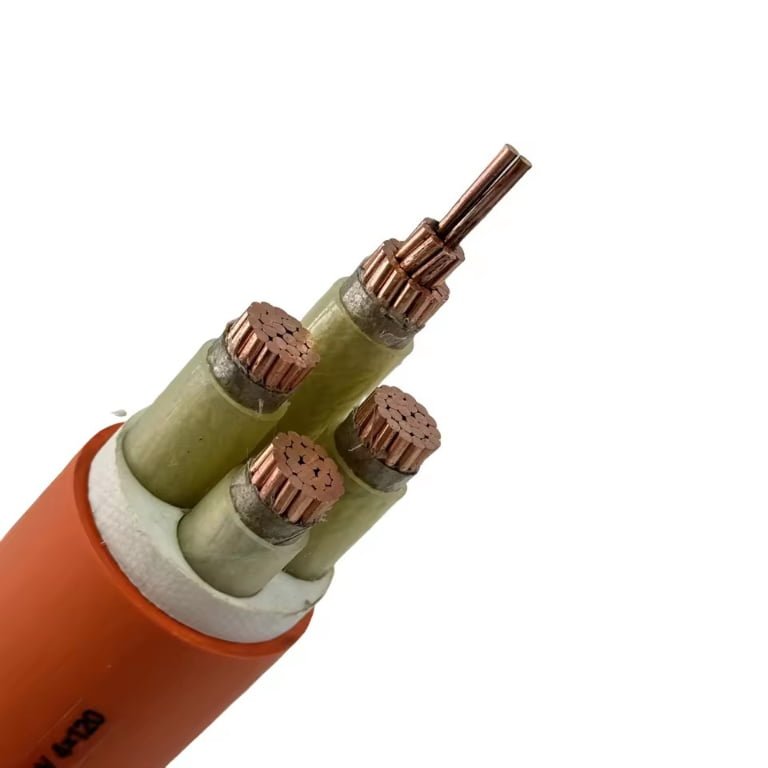
Mineral-insulated cable — MI cable, sometimes called MICC — is the product you specify when the circuit must keep functioning while the building is on fire. The construction is completely different from anything else in the building wire family: copper conductors packed in compressed magnesium oxide powder inside a seamless copper or stainless steel tube. No polymer insulation at all. That’s why it maintains circuit integrity at temperatures ranging from roughly 750°C up to 1000°C for 60 to 120 minutes depending on the specific listing, meeting IEC 60331 and the circuit integrity requirements referenced in NFPA 72 for fire alarm systems, emergency lighting feeders, and smoke control circuits.
The operational catch is installation labor. MI cable is stiff, requires specialized compression termination fittings (Pyrotenax and similar), and doesn’t tolerate tight bends. On a hospital or high-rise project, labor can run two to three times what the same conduit-and-THHN run would cost. For those circuits, that cost is non-negotiable — you’re not paying for cable, you’re paying for the fire department to be able to operate in the building.

UF-B: Direct Burial Without Conduit
UF-B looks superficially like NM-B but the construction is fundamentally different. Instead of conductors loosely wrapped in a plastic jacket with air gaps, UF-B has solid PVC encapsulation molded tightly around each conductor individually, then the assembly is encapsulated again. That solid fill is what gives it the moisture resistance for direct burial, wet locations, and even corrosive soil conditions — rated for direct earth burial without conduit per NEC Article 340.
In practice it shows up most often on outdoor subpanel feeds to detached garages, irrigation control circuits, and garden outbuilding feeders. Burial depth still matters: typically 24 inches minimum for circuits under 120V in most jurisdictions, though local amendments vary. One field mistake worth avoiding — UF-B is not rated for use in conduit filled with water if the conduit run rises above grade and traps moisture, because the termination points aren’t sealed. Plan the routing carefully.
Service Entrance Cable: SE and USE
SE cable feeds the main panel from the utility meter in above-ground applications; USE is its direct-burial counterpart for underground service laterals. Both are almost universally aluminum conductor at service sizes of 100A to 400A, because the copper alternative at those gauges carries a cost premium that’s hard to justify on a straight service run. A 200A residential service in aluminum 4/0 AWG SE cable costs roughly 40–60% less than equivalent copper, depending on commodity pricing at the time of purchase.
The aluminum-specific installation discipline applies fully here: antioxidant compound on every termination, aluminum-rated lugs only, and torque specifications followed precisely. Aluminum oxide forms fast and increases resistance at loose connections — that’s how aluminum branch wiring in the 1970s developed its bad reputation, and service entrance cable gets blamed by association unfairly, provided the termination work is done correctly.
High-Temperature Building Wire
When industrial equipment inside a building runs hot — ovens, large VFDs, transformers in tight enclosures — the ambient temperature inside the conduit or wireway can push past what standard THHN handles reliably. XHHW-2 is rated 90°C in both wet and dry conditions with cross-linked polyethylene insulation that handles thermal cycling better than PVC. MTW (machine tool wire) adds oil resistance alongside the 90°C rating, which matters inside control cabinets on machine tools where hydraulic fluid mist is a reality. For extreme cases, AF-rated wire using silicone or fiberglass insulation handles up to 150°C continuously — relevant near furnaces, boilers, and steam equipment.
XHHW-2 can be used interchangeably with THHN/THWN-2 in standard conduit installationsTrue
Both are listed for 600V conduit and raceway use with 90°C dry ratings and similar ampacity tables under NEC, though XHHW-2's XLPE insulation offers better long-term thermal stability in high-cycling environments.
Armored Cable: AC and MC
BX — properly called Type AC — uses an interlocked spiral aluminum armor with a bare aluminum bonding strip inside, rated for physical protection where conduit isn’t practical. Type MC (metal-clad) has a continuous corrugated or interlocked aluminum armor and includes a dedicated equipment grounding conductor, making it the preferred choice in commercial construction, healthcare facilities, and anywhere the inspector wants confirmed ground continuity independent of the armor path. MC cable in commercial buildings often replaces short conduit runs in hard-ceiling spaces where pulling wire through installed conduit would require more demolition than the job is worth. The armor does not make it suitable for direct burial without additional protection unless the product is specifically listed for that application — a distinction that gets missed more often than it should.
Frequently Asked Questions About Building Wire
Is Romex the Same as Building Wire?
Romex is a brand name — owned by Southwire — for Type NM-B cable. It has become so dominant in residential construction across North America that many electricians use “Romex” the same way people say “Kleenex” when they mean any facial tissue. That verbal shortcut causes real specification problems.
Building wire is the broader category. It covers NM-B, THHN, THWN-2, XHHW, USE-2, and a range of other conductor types, each suited to different installation environments and code contexts. If you’re procuring cable for a mixed commercial-residential project and someone on site orders “Romex,” you need to confirm exactly which product they actually mean before anything ships.
Can THHN Wire Be Used Without Conduit?
Technically no, not as a standalone exposed run in most jurisdictions. THHN’s nylon jacket provides moisture resistance and pull lubrication, not mechanical protection. The NEC and most equivalent international codes require a raceway — conduit, cable tray, or equivalent — when THHN conductors are installed in open spaces.
Where you do see THHN conductors without their own outer raceway is inside NM-B cable, where the outer PVC jacket does the mechanical protection work. That’s a legitimate assembly. Running bare THHN across a basement ceiling without conduit, however, is a code violation and an inspection failure waiting to happen.
Solid vs. Stranded: Which Do You Actually Need?
Solid conductors — typically used from 14 AWG down to about 10 AWG — are stiffer, seat cleanly under screw terminals without stray strands causing shorts, and cost slightly less per foot. For in-wall branch circuits feeding outlets and switches, solid is usually the right call.
Stranded wire handles vibration, repeated flexing, and long conduit pulls far better. Motor connection leads, fixture whips, and any circuit where the wire will move during service life really do need stranded. Trying to pull 200 feet of solid 10 AWG through a conduit with multiple bends is an unpleasant experience; ask any apprentice who has done it once.
How Long Does Building Wire Last Inside Walls?
PVC-insulated building wire carries a nominal service life of roughly 30–50 years under normal conditions — actual life depends heavily on sustained operating temperature, whether the circuit runs near its rated ampacity regularly, and moisture history. XLPE insulation generally outperforms PVC, with expected service life often cited in the 40–60 year range under comparable conditions.
Age alone doesn’t trigger mandatory replacement in most codes, but a major renovation, an insurance reunderwriting, or evidence of degraded insulation usually does. NEC 230.70 and many local amendments effectively force a wiring review during significant service upgrades regardless of how old the wire is.
What Certifications Should You Require When Importing Building Wire?
A manufacturer's self-declaration of conformity is sufficient proof of compliance for imported building wire.False
Self-declarations carry no independent verification. Third-party test reports from accredited laboratories — such as UL, SGS, Bureau Veritas, or TÜV — are required by most serious buyers, major retailers, and code authorities to verify conductor cross-section, insulation thickness, and electrical performance against IEC 60227, IEC 60502, UL 83, or EN 50525 as applicable.
At minimum, ask for IEC 60227 or IEC 60502 test reports for general international supply. North American projects need UL listing — not just compliance, actual listing. European projects require CE marking with EN 50525 conformity. ISO 9001 factory certification is worth requesting but doesn’t replace product-level test data. Always verify that test reports name the specific product and conductor size, not just the factory in general.
What Is the Maximum Voltage for Standard Building Wire?
Most residential and light commercial building wire — NM-B, standard THHN — is rated 600V. That covers the vast majority of branch circuits and feeders in low-rise construction globally. Higher-voltage THHN and XHHW-2 are available rated to 1000V, which matters for larger commercial feeder runs. Above 1000V, you’ve crossed into medium-voltage cable territory governed by IEC 60502-2 or NEC medium-voltage cable articles, and the design, testing, and installation requirements change substantially.
Why Is Aluminum Residential Wiring Controversial?
The controversy is real but historically specific. Pre-1972 aluminum wiring used 1350-series alloy, and most devices installed at the time weren’t rated for aluminum terminations. The combination produced loose connections, accelerated oxidation, and in documented cases, fires. That legacy is the source of the stigma.
Modern 8000-series aluminum alloy behaves quite differently. Properly terminated with AL-rated devices and anti-oxidant compound applied at connections, it is code-compliant and performs reliably. The ongoing controversy mostly traces back to improperly retrofitted older installations where someone connected 1350 alloy wire to devices never designed for it — and didn’t use the compound. The alloy changed; some installation habits didn’t.
Sourcing Building Wire at Scale: What Global Procurement Teams Must Verify Before Placing a Large Order
Large-volume building wire procurement looks deceptively straightforward — copper, insulation, a number. In practice, the difference between a smooth project delivery and a container of out-of-spec cable sitting at a port while your electrical contractor idles is almost always traceable to gaps in the pre-order verification process. Here is what actually needs checking.
Factory Audit: The Production Line Details That Matter
Walk the extrusion floor before you commit. The critical check is whether continuous extrusion lines maintain insulation wall dimensional tolerances to ±0.05 mm across the full run — not just at setup. Spot sampling at line start catches nothing; ask to see the in-process measurement logs from a recent production batch for the exact gauge you are buying. Any reputable manufacturer runs 100% spark testing at full line speed. If the spark tester is bypassed during “non-critical” runs or operated at reduced voltage to avoid nuisance trips, that is a serious red flag.
Conductor resistance is the other non-negotiable. IEC 60228 Class 1 (solid) and Class 2 (stranded) tolerances are not generous, and a conductor pulled slightly undersize to save copper weight will fail resistance at acceptance testing — but only if you are actually measuring it. Specify that resistance verification per IEC 60228 is part of the outgoing QC record, and ask for the actual measured values, not just pass/fail stamps.
Reel-end print legibility matters more than buyers usually realize. UL and IEC both require conductor size, insulation type, voltage rating, applicable standard, and manufacturer name printed at roughly every meter along the cable. Faded, illegible, or missing meter-marking is a code compliance issue that can trigger rejection during building inspection. Ask for a photograph of a recently completed reel before shipment approval.
Copper Rod Purity and Traceability
Building wire performance starts at the rod mill, not the extrusion line. Specify ETP (electrolytic tough pitch) copper rod at a minimum 99.9% purity and require documented mill certificates tied to the specific rod coil lots used in your order. Some lower-cost suppliers blend recovered scrap copper of unverified purity — this shows up as inconsistent conductor resistance and, over time, accelerated oxidation at terminations. The contractual language should explicitly prohibit use of unanalyzed scrap rod and require that mill certificates are available for audit on request.

Lead Time, Reel Standardization, and Sea Freight Packaging
Reel length standardization is a detail that costs real money if ignored. Residential NM-B typically ships on 50 m to 250 m reels; commercial and industrial THHN usually runs 500 m to 2,000 m, depending on conductor cross-section. Mismatched reel lengths mean more splice points in the installation, which adds labor and creates potential fault locations. Confirm before production, not after.
For sea freight, moisture-barrier wrapping is not optional — it is baseline. Wooden reels need fumigation certification for many import markets (Australia and several Middle Eastern countries enforce this strictly). Plastic reels avoid that complication but behave differently in cold-weather unloading. Neither is universally better; it depends on destination and season.
Contractual Quality Assurance for Large Orders
A factory acceptance testing (FAT) protocol should be written into the contract, not treated as a courtesy. Third-party inspection at point of manufacture — SGS, Bureau Veritas, or Intertek are the names most accepted by project owners globally — provides an independent layer that protects both parties. Name the buyer as additional insured on the cargo insurance certificate. Equally important: define in clear, unambiguous contractual language what happens to non-conforming material — replacement lead time, cost responsibility, and disposition of the rejected reels. Leaving this vague is how disputes drag on for months.
Third-party inspection at point of manufacture by accredited bodies such as SGS, Bureau Veritas, or Intertek is standard practice for large international building wire orders and reduces the risk of non-conforming material reaching site.True
These inspection bodies operate globally and routinely perform pre-shipment inspections on cable and wire orders, verifying dimensions, electrical tests, and marking against the contracted specification. This is well-established industry practice, not a premium add-on.
Why Manufacturing Scale and Export Track Record Reduce Your Risk
Shandong Jinda Special Cable Group has been producing and exporting cable since 1987 — over 35 years of managing the documentation, logistics, and specification complexity that comes with supplying contractors and distributors across more than 50 countries. With five production bases and roughly 470,000 m² of manufacturing floor space, the capacity exists to handle multi-country infrastructure programs without the schedule compression that smaller suppliers manage by cutting corners on testing. The product range covers 0.5 mm² through 630 mm² in both copper and aluminum conductors, with IEC and GB/T certified lines and an export documentation team that understands what different import markets actually require — not just what they say they require on the surface. Established sea freight lanes to the Middle East, Southeast Asia, Africa, and Europe mean the logistics side is not being improvised on your project timeline.
For procurement teams managing building wire supply across multiple project sites, that kind of institutional depth is worth verifying directly — but now you know what questions to ask when you do.