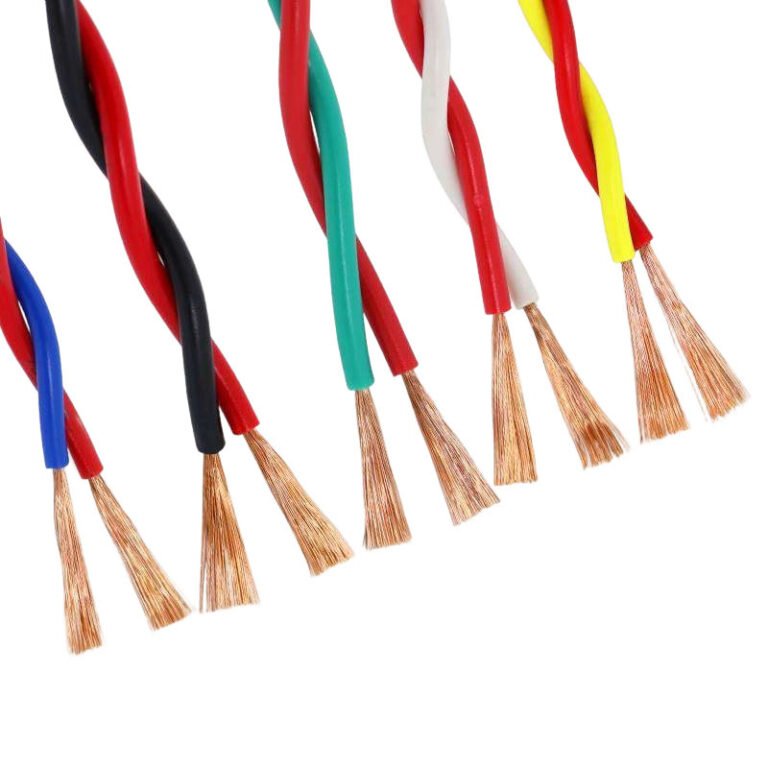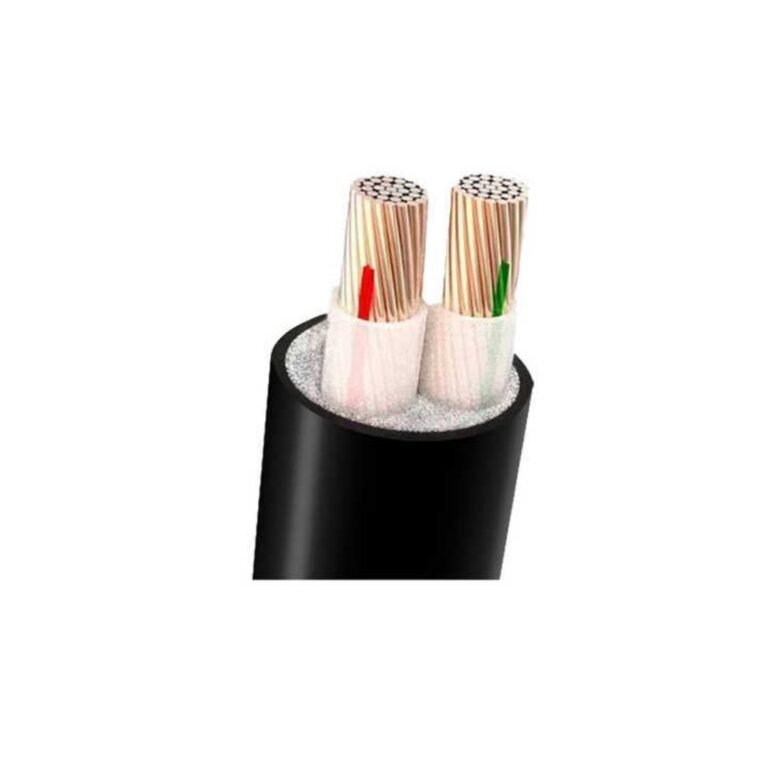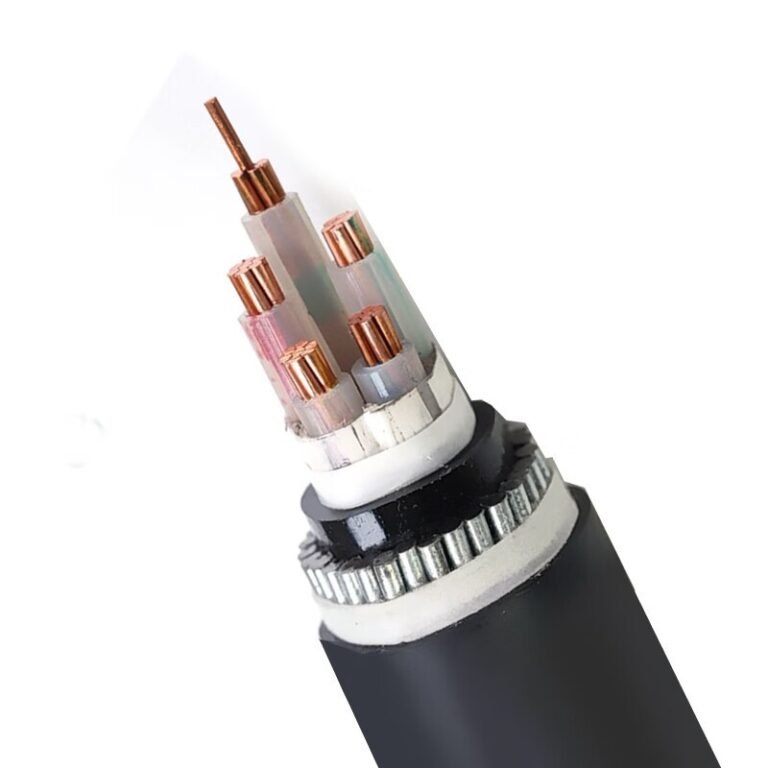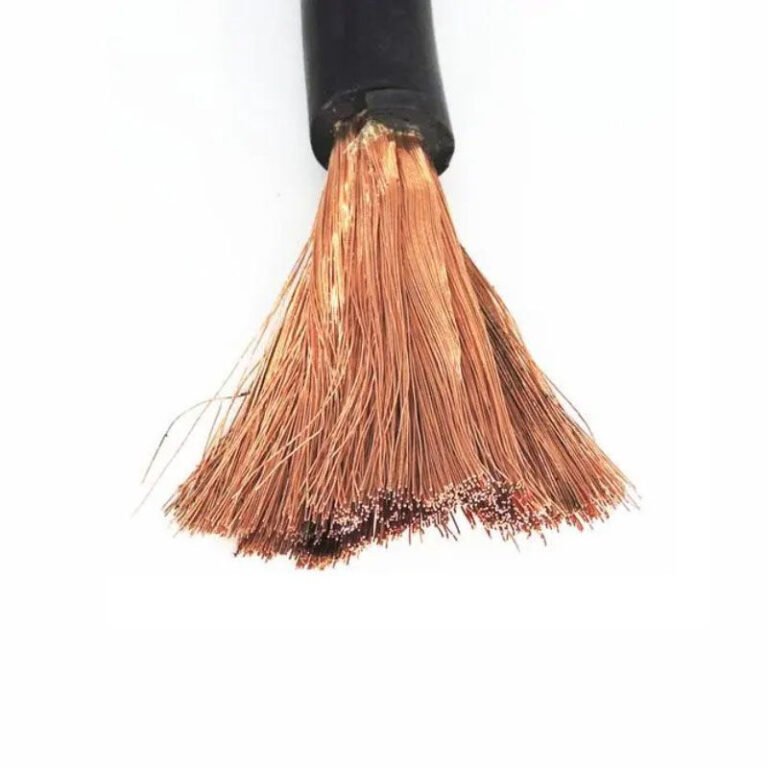
Specifying the wrong wire type — or simply not knowing which one dominates the market — costs real money. A procurement manager who orders a non-THHN thermoplastic wire for a commercial fit-out in the U.S. may find the general contractor rejects it at the jobsite, the project sits idle while a replacement order ships, and the cost premium for expedited delivery quietly eats the margin on the entire line item. It is a surprisingly common mistake, especially when sourcing internationally.
The most common building wire in North American residential and commercial construction is THHN/THWN-2 — a copper-conductor, PVC-insulated, nylon-jacketed wire rated at 600 V. It accounts for roughly 60–70% of all building wire sold annually in the region. Globally, copper-conductor wire drives around 80–85% of building wire demand by value, with 12 AWG and 14 AWG being the most frequently specified gauges for standard branch circuits.
What makes that statistic operationally useful is not just knowing which wire wins on volume — it is understanding why it won, what the alternatives actually cost you in specific applications, and where the market is quietly shifting. Aluminum conductors, for instance, have been clawing back share in feeder runs above 4 AWG for reasons that are entirely rational once you look at the installed cost rather than the material price alone. The answer to “most common” turns out to be a starting point, not an ending point.

Anatomy of THHN/THWN-2 Wire: Conductor, Insulation, and Jacket Layers Explained
Walk into any electrical supply house in North America and pull a spool of THHN/THWN-2 off the rack. What you’re holding is deceptively simple-looking — a colored wire, maybe 12 AWG, with a smooth nylon surface. But the cross-section tells a more careful story, and getting those details wrong during specification or procurement has real consequences downstream.
The Conductor Core: Copper, Temper, and Stranding
The conductor is soft-drawn annealed copper, conforming to ASTM B3 for solid wire and ASTM B8 for stranded. “Annealed” matters here — it means the copper has been heat-treated after drawing to restore ductility, so the wire bends cleanly inside conduit without work-hardening and cracking at fittings. Hard-drawn copper is stiffer and pulls harder through conduit runs; in fixed building wiring, you generally don’t want it.
For fixed branch-circuit wiring, Class B stranding (7-strand for most sizes up to 2 AWG) is the standard. It’s rigid enough to hold its shape in conduit without flopping, yet flexible enough to terminate without breaking strands. Class C and D stranding — finer, more flexible — shows up in motor lead wire and portable cord, not in the walls of a commercial building. Occasionally procurement specs get these mixed up, and you end up with wire that’s harder to terminate cleanly in a standard receptacle or breaker lug.
Conductor cross-section directly governs ampacity, subject to derating for conduit fill, ambient temperature, and bundling. In NEC Table 310.12, a 12 AWG copper conductor carries 20 A on a 20 A branch circuit; 14 AWG drops to 15 A; 10 AWG handles 30 A. These aren’t abstract numbers — specify the wrong gauge on a 20 A kitchen circuit and you’re either nuisance-tripping breakers or, worse, running conductors above their rated temperature continuously.
The Dual-Layer Insulation System
This is where THHN/THWN-2 earns its market position. The construction is two distinct layers working together.
The primary layer is PVC (polyvinyl chloride) insulation, rated 90 °C in dry locations and 75 °C in wet locations. Wall thickness is specified under UL 83 and scales with conductor size — roughly 0.381 mm (15 mils) for 14 AWG through 10 AWG, stepping up to around 0.762 mm (30 mils) for sizes in the 2 AWG to 2/0 AWG range, and thicker still for larger conductors. These aren’t suggestions; UL 83 wall thickness minimums are what separate listed wire from unlisted wire during an inspection.
Over the PVC sits a thin nylon (polyamide) jacket, typically 0.1–0.2 mm thick depending on gauge. That jacket is what makes THHN different from plain THWN. Nylon is hard, slick, and chemically resistant. It slides through conduit with less pulling tension — a real labor factor on long runs — and it resists oils, fuels, and solvents that would degrade bare PVC over time in industrial or garage environments.
The “THWN-2” designation on the same wire means it’s been tested for wet-location use at 90 °C, not just 75 °C. That upgrade matters in rooftop conduit runs exposed to condensation cycles, underground raceways, or anywhere moisture is intermittent rather than constant.
THHN and THWN-2 are always the same physical wire in current production.True
Modern manufacturers produce a single construction that satisfies both UL 83 designations simultaneously, so the label typically reads THHN/THWN-2. Older wire marked only THHN may not carry the THWN-2 wet-location 90°C rating — worth verifying on any legacy inventory or imported wire of uncertain listing history.
THHN vs. THWN vs. THWN-2 at a Glance
| Rating | Max Temp (Dry) | Max Temp (Wet) | Nylon Jacket | Voltage Rating | Typical Use |
|---|---|---|---|---|---|
| THHN | 90 °C | Not rated for wet | Yes | 600 V | Dry conduit runs |
| THWN | 75 °C | 75 °C | Yes | 600 V | Wet/dry conduit, older spec |
| THWN-2 | 90 °C | 90 °C | Yes | 600 V | Wet/dry, current standard |
In practice, if you’re specifying wire today, THHN/THWN-2 dual-rated is the right call. Single-rated THWN has largely been phased out by manufacturers, and THHN-only wire leaves you with an unlisted conductor the moment that conduit run passes through a damp utility chase.
Color Coding and Why It Gets Complicated on Global Projects
Under NEC conventions, black and red identify ungrounded (hot) conductors, white or gray marks the neutral, and green or bare copper is the equipment ground. Straightforward on a domestic project. But international procurement teams sourcing wire for mixed-market projects run into a real problem: IEC 60446 uses brown for line conductors, blue for neutral, and green/yellow stripe for protective earth. China’s GB/T standard aligns broadly with IEC color conventions but has its own documentation requirements.
A procurement manager pulling THHN off a domestic order for a project that will be inspected under IEC rules — or shipping IEC-colored wire into a North American job — needs to resolve that mismatch before wire hits the conduit, not during final inspection. Re-pulling wire because color markings don’t match the local inspection standard is an expensive lesson. Taping conductors with phase-ID tape is an accepted NEC workaround for certain sizes, but it’s a field patch, not a clean specification.
How THHN Compares Against NM-B, USE-2, XHHW-2, and Other Common Wire Types
Specifying the wrong wire type doesn’t just create a code violation — it creates a warranty problem, a rework call-back, or in the worst case, a fire. Each of these wire families exists because a specific installation environment demanded it. Understanding where THHN stops being the right answer is as useful as knowing why it dominates in the first place.
NM-B (Romex-style): Fast to Install, But Strictly Limited
NM-B is the default wire in North American wood-frame residential construction, and for that context it makes sense. The pre-bundled configuration — typically two or three conductors with a paper separator wrapped in a PVC outer sheath — means an electrician can pull a circuit from panel to outlet box without threading conduit. Installation labor drops noticeably, and in a tract housing project that matters.
The constraints are real, though. NEC Article 334 restricts NM-B to dry, protected locations. No exposed runs in garages or unfinished basements where physical damage is plausible, no wet locations, no direct burial, no conduit in areas that might see moisture. The ampacity rating stays at the 60 °C column regardless of the insulation’s actual thermal capability — so a 12 AWG NM-B circuit is limited to 20 A at 60 °C even though the copper could theoretically handle more at 75 °C. That derating costs you capacity you’ve already paid for in copper.
One practical headache: NM-B doesn’t export well. Outside North America, the cable isn’t a recognized product type under most IEC-based codes. Procurement managers sourcing wire for international projects should flag this early.
USE-2 and RHW-2: Underground and Solar Applications
USE-2 uses cross-linked polyethylene (XLPE) insulation rated 90 °C in wet conditions, which makes it the standard choice for direct-burial service entrances and photovoltaic source and output circuits. The XLPE compound resists moisture ingress and soil chemistry far better than PVC-based insulations. In a rooftop PV string running through conduit on a dark roof membrane, ambient temperatures can exceed 50 °C on a summer afternoon — USE-2’s thermal headroom is not a luxury there, it’s the engineering margin keeping the system legal under NEC 690.
Material cost runs roughly 15–30% higher than equivalent THHN, depending on conductor size and copper pricing at the time of purchase. For a small residential PV installation that’s manageable. For a utility-scale ground-mount project, the volume makes that delta worth negotiating hard.
XHHW-2: The Feeder Wire That Wins on Conduit Fill
XHHW-2 shares the 90 °C wet/dry rating with USE-2 but drops the nylon jacket. That thinner insulation wall — compared to THHN at the same AWG — lets you fit more conductors into a given conduit trade size without violating NEC Chapter 9 fill tables. On a large commercial feeder run in 3-inch rigid conduit, that difference can mean avoiding an upsized conduit or a second pull. Installers in large commercial and industrial work often prefer it for exactly this reason.

MC Cable: Speed With a Cost Premium
Metal-clad cable puts the armor on the wire itself, so rough-in proceeds without conduit installation. On a commercial tenant improvement project with a tight schedule, MC cable can shave meaningful time off the electrical rough-in phase. The trade-off is cost — MC typically runs 40–80% more per foot than pulling individual THHN into EMT, a range that shifts with aluminum vs. steel armor and local labor rates. Circuit modifications later also cost more because you’re cutting and replacing armor sections rather than pulling new conductors through existing conduit.
Quick Comparison: Choosing the Right Wire Type
| Criterion | THHN/THWN-2 | NM-B | USE-2 / RHW-2 | XHHW-2 | MC Cable |
|---|---|---|---|---|---|
| Wet location rating | 75 °C (THWN-2: 90 °C) | Not rated | 90 °C | 90 °C | Depends on inner conductor |
| Dry temperature rating | 90 °C | 60 °C | 90 °C | 90 °C | 90 °C (conductor dependent) |
| Conduit required | Yes | No | No (burial-rated) | Yes | No |
| Direct burial allowed | No | No | Yes | No | No (standard) |
| Relative cost index | Low (baseline) | Low–Medium | Medium–High | Low–Medium | High |
| Governing NEC article | 310, 358, 344 | 334 | 338, 690 | 310 | 330 |
| Typical application | Branch circuits, feeders in conduit | Residential branch circuits | Service entrance, PV, direct burial | Commercial feeders, conduit fill-critical runs | Commercial rough-in, retrofit |
| International availability | Widely available | Limited to North America | Moderate | Moderate | Moderate |
NM-B cable ampacity is limited to the 60 °C column under NEC 334 regardless of conductor temperature ratingTrue
NEC 334.80 requires NM-B ampacity to be calculated at 60 °C unless the circuit supplies only one or two conductors, effectively capping usable capacity below what the insulation material could otherwise support.
The bottom line: THHN in conduit is the most flexible, cost-effective solution for the broadest range of conduit-based installations. Each of these alternatives earns its place when the installation environment — moisture, burial depth, solar thermal loading, conduit fill constraints, or rough-in speed — tilts the calculation away from THHN’s strengths.
AWG and Metric Gauge Selection: Matching Wire Size to Load, Voltage Drop, and Code Requirements
The AWG numbering system trips up engineers from metric-trained countries every single time. Larger gauge number means smaller wire — 14 AWG is thinner than 10 AWG, and 4/0 (“four-aught”) is substantially heavier than anything in the single-digit range. It’s a legacy of the draw-plate manufacturing process, where the number counted how many times the rod was pulled through a die. Knowing that doesn’t make it less annoying, but it does explain why the scale runs backwards.
AWG to Metric Conversion Reference
For procurement teams sourcing internationally or specifying to IEC-trained contractors, here’s a working reference covering the range you’ll encounter on most building projects:
| AWG | Approx. mm² (IEC nearest) | Typical Ampacity (Cu THHN, 75 °C, conduit) | Notes |
|---|---|---|---|
| 14 AWG | 2.5 mm² | 20 A (NEC derated to 15 A for branch circuits) | Standard 15 A residential branch |
| 12 AWG | 4 mm² | 25 A (20 A circuit rating) | Kitchen, bathroom, garage circuits |
| 10 AWG | 6 mm² | 35 A (30 A circuit rating) | Dryer, A/C disconnects |
| 8 AWG | 10 mm² | 50 A | Water heaters, small subfeeds |
| 6 AWG | 16 mm² | 65 A | Range circuits, EV chargers |
| 4 AWG | 25 mm² | 85 A | Subpanel feeds, HVAC equipment |
| 2 AWG | 35 mm² | 115 A | 100 A subpanels (with derating headroom) |
| 1/0 AWG | 50 mm² | 150 A | 125 A service sections |
| 4/0 AWG | 107 mm² | 230 A | 200 A residential service entrance |
The IEC mm² values are the nearest standard cross-sections, not exact mathematical equivalents. Close enough for most specifications, but verify with your local authority if you’re substituting IEC-rated cable on an NEC project.
The Three Sizing Factors You Cannot Skip
Ampacity is the starting point. NEC Table 310.16 lists ampacity by conductor size and temperature rating at a 30 °C ambient baseline, using 75 °C terminations as the practical standard for most THHN installations (even though the wire is rated 90 °C, terminals usually aren’t). IEC 60364-5-52 uses a 40 °C ambient baseline, which means direct numeric comparison between the two tables will get you in trouble — the IEC numbers look lower for the same conductor size partly because the reference temperature is already hotter.
Voltage drop is where a lot of residential work cuts corners and pays for it later in flickering lights, motor overheating, or nuisance tripping. The standard single-phase formula:
VD = (2 × K × I × L) / CM
Where K = 12.9 for copper (ohms per circular mil-foot at 75 °C), I = load current in amperes, L = one-way circuit length in feet, and CM = conductor cross-section in circular mils.
A worked example: 20 A load, 12 AWG copper (6,530 CM), 75 ft run on a 120 V circuit.
VD = (2 × 12.9 × 20 × 75) / 6,530 ≈ 5.9 V, or roughly 4.9% — already above the NEC-recommended 3% guideline for branch circuits. Bumping to 10 AWG (10,380 CM) drops that to about 3.7%, which is more defensible. On a 240 V circuit the same physical voltage drop is a smaller percentage, which is one real reason 240 V distribution is more efficient over distance.
Short-circuit withstand is the factor most designers leave to the equipment engineer and then regret. Conductor cross-section must handle the available fault current long enough for the overcurrent device to clear. This matters most on feeders close to the service entrance where available fault current can reach 10,000–22,000 A in typical commercial buildings.
Derating: Where the Numbers Get Revised Downward
Ambient temperature above 30 °C (NEC baseline) requires a correction factor — at 40 °C, copper THHN at 90 °C rating gets derated to roughly 91% of its table value; at 50 °C you’re down to around 82%. In unconditioned plant spaces or rooftop conduit runs in warm climates, this is not hypothetical. Summer conduit surface temperatures on a south-facing rooftop can push air inside the conduit well above 50 °C.
Conduit fill derating is equally real. Three or fewer current-carrying conductors: no adjustment. Four to six conductors: multiply ampacity by 0.70. Seven to nine: 0.50. This hits hard on multi-circuit EMT runs where someone bundles six 20 A circuits in one 1-inch conduit to save on conduit fittings — suddenly those 12 AWG conductors are only good for 17.5 A continuous, not 20 A, and the whole installation is technically non-compliant before the first panel cover goes on.
The 125% continuous load rule adds another layer: any load energized for three or more hours counts as continuous, and the conductor (and overcurrent device) must be sized to 125% of that load. A 16 A continuous load technically needs a 20 A circuit, not the 15 A circuit someone might try to sneak by.
Practical Quick-Reference: Circuit Type to Conduit Size
| Circuit Type | Copper THHN AWG | Metric Equiv. | EMT Conduit | Common Application |
|---|---|---|---|---|
| 15 A branch | 14 AWG | 2.5 mm² | 1/2 in | Lighting, outlets |
| 20 A branch | 12 AWG | 4 mm² | 1/2 in | Kitchen, garage |
| 30 A dryer | 10 AWG | 6 mm² | 3/4 in | Dryer, A/C |
| 50 A range | 6 AWG | 16 mm² | 1 in | Range, EV charger |
| 100 A subpanel | 3 AWG | 25 mm² | 1-1/4 in | Garage/shop subpanel |
| 200 A service | 4/0 AWG | 107 mm² | 2-1/2 in | Residential service entrance |
Conduit sizes assume three conductors and standard fittings — actual fill calculations should be verified against NEC Chapter 9 tables, especially when pulling three-conductor plus ground.
Aluminum THHN: Two Sizes Up, and Mind the Terminals
Aluminum conductors are legitimate on feeder runs above 4 AWG where the installed cost difference is significant, but the sizing offset is non-negotiable: aluminum requires approximately two AWG sizes larger than copper to carry equivalent current. 2 AWG aluminum is roughly equivalent to 4 AWG copper. The real trap is terminal compatibility. NEC 110.14 requires terminations listed for aluminum use — standard copper-only lugs in a panel will cause progressive oxidation at the connection, resistance rise, and eventually a thermal event. Look for terminals marked “AL/CU” or “AL9CU.” This is not a suggestion; aluminum-on-copper-only terminals are a documented cause of electrical fires and will fail inspection.
Aluminum building wire requires approximately two AWG sizes larger than copper to match the same ampacity rating.True
Aluminum has roughly 61% the conductivity of copper, so a larger cross-section is required to carry the same current at the same temperature rise. NEC Table 310.16 confirms this offset across the common feeder size range.
Installation Environments: Conduit Types, Wet Locations, High-Temperature Zones, and Code Compliance
THHN is a conduit wire — full stop. It is not rated for open wiring, direct burial, or free-air runs without a raceway. Every installation starts with that constraint, and ignoring it is one of the more reliable ways to fail a rough-in inspection.
Conduit System Compatibility and Pull Tension
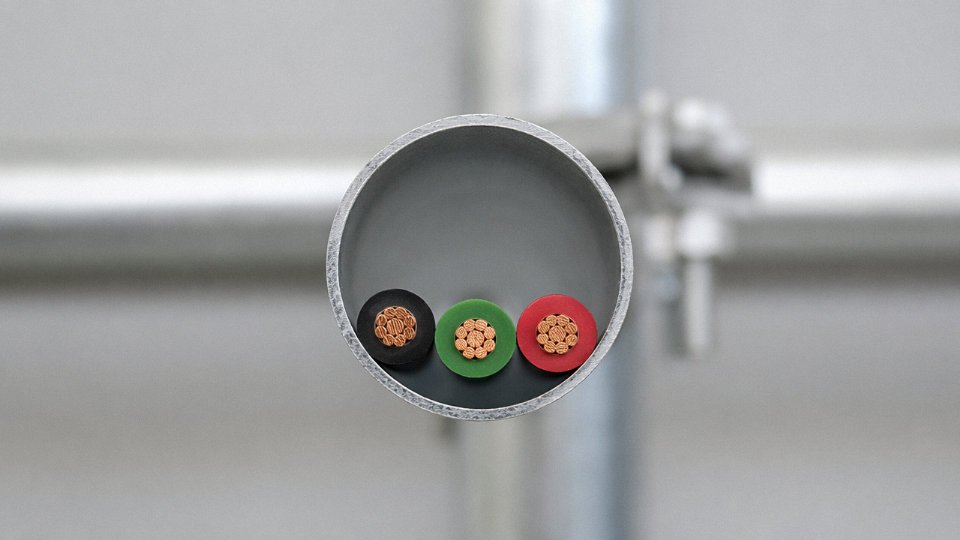
THHN/THWN-2 is approved for use in EMT, IMC, RMC, ENT, flexible metal conduit (FMC), liquidtight flexible metal conduit (LFMC), and PVC conduit. The choice of conduit type directly affects how hard you can pull the wire without damaging the insulation. Rigid metal conduit with swept elbows gives you the gentlest pulling geometry; ENT on a cold day in an unheated warehouse can get stiff enough to spike tension unexpectedly at every bend.
The standard pull tension limit for copper THHN is calculated as 0.008 multiplied by the conductor’s cross-sectional area in circular mils. For a 12 AWG copper conductor (6,530 CM), that works out to roughly 52 lb — not a lot, and easier to exceed than people expect when you have three or four 90-degree bends stacked in a conduit run. Mandrel testing — pulling a mandrel of the appropriate diameter through the installed conduit before wire pull — is the right habit to verify the conduit path is actually clear and undamaged. Most crews skip it on shorter runs. They also replace fish tape more often than crews who don’t.
NEC Chapter 9, Table 1 limits conduit fill to 40% of the conduit’s internal cross-sectional area when you’re running three or more conductors. In practice, that number bites you hardest when you’re retrofitting wire into an existing conduit that was originally sized for a smaller circuit. A quick calculation before ordering wire saves a frustrating field call.
Wet, Damp, and Dry Locations — the 75 °C Rule That Trips People Up
The THWN-2 rating on the same wire body allows installation in wet locations: underground conduit runs (not direct burial — conduit is still required), outdoor panelboards, car washes, irrigation control panels, and similar environments. NEC Article 100 defines wet locations as areas subject to saturation or exposed to weather; damp locations are partially protected but not fully enclosed.
Here’s where the specification error happens. THWN-2 is rated 90 °C dry / 75 °C wet. When the wire runs through a wet location — or even a conduit that passes through a wet location for part of its length — ampacity must be taken from the 75 °C column of NEC Table 310.15(B)(16), not the 90 °C column. The full run is derated to the most restrictive environment it passes through. A 6 AWG copper conductor loses roughly 5–8 A of ampacity moving from the 90 °C to the 75 °C column, depending on the number of current-carrying conductors. Undersizing based on the wrong column isn’t a theoretical concern; it’s a thermal failure waiting for a load spike.
THWN-2 wire can be used in wet locations at its full 90 °C ampacity ratingFalse
NEC requires ampacity for wet locations to be taken from the 75 °C column, even for conductors rated 90 °C. The 90 °C rating only applies in dry, conduit-only environments.
High-Temperature Zones
Engine rooms, boiler rooms, rooftop HVAC curb mounts, and any location near industrial ovens can push ambient temperatures well above what 90 °C-rated THHN handles comfortably once derating is applied. At 40 °C ambient — typical in a rooftop mechanical room on a summer afternoon — you’re already applying a correction factor before you account for conduit fill.
For these applications, THHW (90 °C wet, 75 °C wet in some configurations), MTW (machine tool wire, 90 °C), or silicone-insulated wire rated 150–200 °C are the realistic options depending on how severe the environment actually is. Specifying the right product requires knowing the actual worst-case ambient, not just the nameplate temperature of the equipment nearby. Jinda’s engineering team routinely works through these derating scenarios with procurement and design teams during project specification, which prevents substitution problems later in the supply chain.
Sunlight Resistance and UV Exposure
Standard THHN is not sunlight resistant. Wire exiting a conduit stub-up on a rooftop and running even a short exposed distance to a disconnect must be marked “sunlight resistant” (SR) on the jacket, or it needs mechanical protection. This gets missed at inspection more often than most electricians will admit — it’s one of those corrections that costs a re-inspection fee and a half-day of someone’s time for something that should have been caught at the ordering stage.
Code Compliance Checklist
Minimum bending radius for THHN up through 1 AWG is five times the conductor’s overall diameter. Required jacket markings per UL 83 must include: UL listing mark, conductor AWG, insulation type designation, voltage rating (600 V for standard building wire), and manufacturer name. If any of those markings are absent or illegible on received wire, that’s a rejection criterion — not a negotiation point.
Global Standards Equivalents: Mapping THHN to IEC, BS, and GB/T Building Wire Standards
There is no single global building wire standard, and that gap causes real procurement headaches on multinational projects. A specification written in Chicago reads nothing like one written in Frankfurt or Shenzhen, even when the underlying copper conductor and PVC insulation are functionally similar. Understanding why the three dominant frameworks differ — and where they converge — saves you from costly substitution errors and re-testing delays at the job site.
Why Three Separate Frameworks Exist
The NEC/UL system (North America), IEC 60227/60502 (used across Europe, the Middle East, Southeast Asia, and most export markets), and GB/T 5023/5585 (China’s national standard) each grew from different regulatory traditions and testing philosophies. UL 83 governs THHN/THWN-2 and certifies wire as a finished product through third-party listing. IEC 60227 instead specifies performance requirements that national bodies and certification schemes (CE, KEMA, IECEE CB) then adopt and interpret. GB/T sits somewhere between the two — it’s a national mandatory standard with its own test protocols, enforced by CCC certification for domestic sale but not required for export product. The result is three wire families that look nearly identical on the bench but carry different documentation, different ampacity assumptions, and different color codes.
THHN to IEC: H07V-R and the Color-Code Problem
The nearest IEC 60227 equivalent to THHN is H07V-R — a 450/750 V, PVC-insulated, solid or stranded copper conductor intended for fixed installation. Flexible versions fall under H05V-K, but that’s a different use case. Conductor classes are defined in IEC 60228: Class 1 (solid) and Class 2 (stranded) cover the fixed-installation range that maps to typical THHN gauges.
The differences matter in practice. IEC H07V-R insulation wall thickness runs slightly thinner than UL 83 minimums at some conductor sizes, which affects conduit fill calculations when you’re mixing standards on an international project. Temperature class is the bigger gap: THHN is rated to 90 °C dry / 75 °C wet, while standard H07V-R is rated 70 °C — a difference that directly reduces allowable ampacity under IEC installation tables for the same conductor cross-section.
Color coding is a genuine compliance trap. IEC 60446 mandates green/yellow for protective earth, blue for neutral, and brown (or brown/black/grey) for live conductors. North American NEC conventions use green for ground, white or grey for neutral, and black/red for hot. Specify the wrong color-coded reel for a European contractor and you’ll either fail inspection or spend time re-labeling every termination.
THHN to GB/T 5023.3: BV Wire and the 70 °C Ampacity Gap
China’s BV wire (copper-core, PVC-insulated, 450/750 V, per GB/T 5023.3) is the domestic equivalent and by volume probably the most widely produced building wire on earth. The construction is nearly identical to THHN at first glance — single copper conductor, extruded PVC insulation, similar voltage rating. The critical difference is temperature rating: GB/T BV is rated at 70 °C conductor operating temperature, not 90 °C.
That gap isn’t trivial. In a conduit with three current-carrying conductors, the 20 °C temperature class difference translates to roughly 10–15% lower allowable ampacity under Chinese installation tables compared to what a NEC table would allow for the same cross-section of THHN. Specify BV wire on a project then apply NEC ampacity tables, and you’ve just quietly overloaded your conduit.
GB/T BV wire and THHN/THWN-2 are interchangeable for ampacity calculations because both use copper conductors and PVC insulationFalse
The 70 °C temperature rating of GB/T BV wire versus THHN's 90 °C rating produces meaningfully different allowable ampacities under their respective installation standards, particularly in conduit-fill scenarios. Applying NEC ampacity values to BV wire, or vice versa, can result in chronic overheating and insulation degradation.
Export Projects and Harmonized Markings
If you’re procuring wire for a building project in the EU, CPR (Construction Products Regulation, EU No. 305/2011) now requires cables used in construction works to carry a Declaration of Performance and a Euroclass fire rating — running from Aca (the best, non-combustible) down through B1ca, B2ca, Cca, Dca, Eca, to Fca. Standard PVC building wire typically lands at Eca or Dca depending on formulation and test results. CE marking alone is not sufficient; the Euroclass must be declared and match the project fire specification.
Manufacturers supplying global contracts — Jinda’s production facilities hold certifications covering UL, IEC, and GB/T product lines simultaneously — can produce wire to multiple standards off the same copper drawing and extrusion lines, with documentation packages tailored to the destination market. That’s practically useful when a contractor is building identical facilities in Ohio, Poland, and Guangzhou under one supply agreement.
Practical Rule for Procurement Teams
Never specify a wire type by designation alone across different regulatory environments. A purchase order that says “12 AWG THHN equivalent” is ambiguous to a supplier working in IEC territory. Instead, state:
- Conductor cross-section in mm² (2.5 mm² is the functional equivalent of 12 AWG, though not an exact match)
- Voltage rating (450/750 V or 600 V)
- Temperature class (70 °C or 90 °C — explicitly)
- Insulation material (PVC, XLPE, etc.)
- Applicable standard and certification (UL 83, IEC 60227-3, GB/T 5023.3)
- Color code scheme (NEC or IEC 60446)
One line on a spec sheet prevents a container of wrong wire arriving on site three weeks before commissioning.
How Jinda Manufactures THHN and International Equivalent Building Wire at Scale
Five production bases across China, roughly 470,000 m² of combined floor space — that’s not a figure to drop casually. In practical terms, it means dedicated wire drawing lines, stranding bays, and extrusion cells that don’t compete with each other for machine time. For procurement managers placing container-load orders, that separation matters more than most marketing copy suggests.
Wire Drawing and Stranding: Where Conductor Quality Is Actually Determined
The conductor story starts at the drawing line, not the extrusion head. Jinda’s in-house drawing equipment reduces ETP copper rod down to individual filaments as fine as 0.08 mm diameter — a capability that only makes sense if you’re producing Class 5 flexible conductors alongside the heavier Class B stranding used in standard THHN building wire. Most of the THHN volume moving to North American and Middle Eastern projects runs Class B (7-strand or 19-strand depending on gauge), built on automated stranding machines that control lay length tightly enough to keep finished conductor resistance inside ASTM B8 limits without hand-trimming. In practice, conductor resistance is where a lot of lower-tier Chinese wire quietly fails third-party inspection. Getting it right is mostly a raw material and process discipline problem, not a mystery.
The copper itself is sourced to ASTM B49 and GB/T 467 specifications for electrolytic tough pitch rod. Jinda runs in-house spectrometer verification on incoming rod lots rather than relying on mill certifications alone — conductivity targets are ≥ 100% IACS, which is the threshold that matters when a customer’s engineer is going to check finished conductor resistance against UL 83 or IEC 60228 tables.
Jinda tests incoming ETP copper rod with in-house spectrometry to verify conductivity meets or exceeds 100% IACS before production begins.True
In-house spectrometer testing of raw copper is a standard quality gate at serious cable manufacturers; it catches conductivity shortfalls that mill certificates occasionally miss, particularly in secondary-market rod.

PVC Compounding and Tandem Extrusion
This is where THHN gets tricky to produce consistently. The construction requires a PVC insulation layer and a nylon (PA66) jacket applied in a single tandem pass — two extruder heads, one line, one chance to get temperatures, die geometry, and line speed coordinated correctly. If the PVC is running slightly hot or the nylon adhesion is marginal, you’ll see jacket separation in cold-bend testing later, sometimes weeks after the wire left the line.
Jinda formulates PVC compound in-house, which gives direct control over plasticizer loading, thermal stabilizer type, and flame-retardant additive levels. The target is UL 94 VW-1 flame performance, and the formulation is reviewed whenever a feedstock lot changes — because plasticizer migration behavior shifts with supplier and season, and a formulation that passed testing in January can behave differently in August if you’re not watching viscosity and absorption numbers.
Electrical and Mechanical Testing Across Every Production Run
Every insulated conductor goes through 100% spark testing at 2,000 V AC per UL 83 Section 8. That’s not a sample — it’s every meter of wire on every reel. Conductor resistance is checked per ASTM B193. Aging oven tests and cold-bend tests per UL 83 run on lot samples to confirm insulation and jacket integrity after thermal stress. For large international orders, Jinda can accommodate third-party witness testing through SGS, Bureau Veritas, or Intertek — useful when a project owner’s specification requires independent verification before shipment.
ISO 9001:2015 certification covers the quality management system, but the more operationally meaningful commitment is the paper trail: mill test reports, packing lists, certificate of origin, and test certificates travel with every export shipment.
Capacity, Lead Times, and Export Logistics
With continuous three-shift operations and 1,000-plus employees across the production network, standard THHN building wire in the 14 AWG through 4/0 AWG range typically ships within 15–25 business days for container-load quantities. Custom work — non-standard colors, special gauge increments, dual UL/CSA listing marks, or metric cross-sections for IEC market equivalents — generally runs 30–45 days depending on tooling availability and compound lead time.
Export experience spans 50-plus countries including the United States, Canada, Australia, Middle East markets, Southeast Asia, and sub-Saharan Africa. Jinda’s commercial team handles letter-of-credit terms, CIF port-of-loading arrangements, and the full documentation package that international projects require. For buyers who’ve been burned by documentation gaps at customs — and plenty have — that last point is less routine than it sounds.
Procurement Strategy: Quantities, Packaging, Pricing Drivers, and What to Verify Before Ordering
Getting the wire spec right on paper means nothing if the purchase order is loose enough to allow substitution. This section is about closing that gap.
Standard Packaging and Container Utilization
THHN building wire for North American projects ships on non-returnable wooden reels — typically 500 ft (152 m), 1,000 ft (305 m), 2,500 ft (762 m), and 5,000 ft (1,524 m). IEC-market orders use metric reels: 100 m, 200 m, 500 m, and 1,000 m are the standard options, though some manufacturers will wind custom lengths for large enough orders. Specify reel size before the quote stage, not after. A 40-foot high-cube container typically holds roughly 18–22 metric tons of THHN building wire depending on conductor gauge, stranding class, and reel diameter — smaller reels mean more dead space in the container, which quietly erodes your landed cost per kilogram. For a large commercial project, consolidating to 2,500 ft or 5,000 ft reels can meaningfully improve container fill and reduce freight cost per unit. In practice, most distributors don’t push back on reel size, so the default often wins unless the procurement manager specifies otherwise.
What Actually Drives the Price
Copper is the number. LME cash copper typically represents 65–75% of THHN wire cost, and that share climbs as gauge increases. A 10% swing in copper price — common over a six-to-eight week procurement cycle on a large project — can move your total wire budget by 5–7%, which matters when you’re buying a full building fit-out. Two approaches reduce that exposure: request copper-price-indexed quotations (where the copper component is tied to LME on the delivery date) or fix the copper component at contract signing if you have a view that the market will run against you. Neither is perfect, but both are better than a lump-sum quote that the supplier can walk back at shipment.
PVC resin and nylon 6/6 chip — the insulation and jacket materials — represent roughly 15–20% of cost. These track petrochemical feedstocks and can spike independently of copper, which is something buyers sometimes overlook when they assume copper is the only commodity exposure in a wire purchase.
Specification Fields That Must Appear on the Purchase Order
A vague PO is an invitation for substitution. Every building wire order should state, explicitly: conductor material (copper or aluminum), AWG size or mm² cross-section, stranding class (solid, Class B, Class C — not just “stranded”), insulation type and color code, voltage rating, temperature rating, applicable standard and listing (UL 83, IEC 60227, GB/T 5023, or equivalent), reel size, and the language required on reel marking. That last point matters for export orders — a reel marked in Chinese only creates downstream problems on a North American or European job site.
Red Flags in Low-Price Offers
The most common fraud in commodity wire is undersized copper hidden behind slightly thicker insulation. The reel looks right, the insulation feels right, and the wire measures close enough on a tape. The conductor diameter is short — sometimes 3–5% below nominal — and conductivity sits below 98% IACS. Under load, that wire runs hotter than designed, accelerates insulation degradation, and may trip breakers intermittently before it fails hard.
A conductor resistance test certificate and mill test report from the manufacturer are sufficient to verify compliance for new-supplier building wire orders.False
These documents are necessary but not sufficient on their own — certificates from unverified or low-tier suppliers can be falsified. For new suppliers, third-party witnessed testing or independent lab verification of conductor resistance and insulation wall thickness is the only reliable confirmation. Certificate review should be a starting point, not a conclusion.
Request a mill test report and an independent conductor resistance test certificate for any new supplier. For Jinda or any established manufacturer with a verifiable UL listing, you can cross-check the UL Product iQ database directly. Counterfeit UL marks exist — the database lookup takes about two minutes and eliminates that risk entirely.
Total Cost of Ownership
The price gap between compliant THHN and a questionable low-bid alternative is usually 3–8% of material cost. That sounds like real money on a large project. Rewiring a commercial building after an installation failure — pulling non-compliant wire, inspecting conduit runs, replacing junction boxes, and rerunning conductors — routinely costs 10–50× the original wire purchase price, and that’s before factoring in project delays, contractor liability, and potential insurance complications. Quality verification at the procurement stage is genuinely the highest-return decision in the project’s electrical scope. The wire is not where you find savings.
Frequently Asked Questions About Building Wire

Can THHN wire be used without conduit?
No. THHN is a single-conductor building wire — it is listed for installation inside conduit, raceways, or cable trays only. The UL 83 listing does not cover open wiring, direct burial, or service entrance applications. If your project requires wire that runs inside finished walls without a conduit, NM-B (commonly sold under the Romex brand name) is the correct product for dry residential environments. Confusing these two in the field is a code violation that will fail inspection and, more importantly, creates a real fire risk. In practice, electricians occasionally pull THHN through an existing wall cavity thinking it’s equivalent — it isn’t, and the NEC is unambiguous on this point.
What is the difference between THHN and THWN-2?
Mostly a labeling distinction at this point. The vast majority of wire sold today is dual-rated THHN/THWN-2, meaning the same physical conductor is approved for both dry service at 90 °C and wet locations at 75 °C. The suffix “-2” specifically confirms the 90 °C dry rating is included — older THWN (no “-2”) was rated 75 °C in dry locations as well, which matters when you’re calculating ampacity. When you’re specifying or ordering, look for both designations printed on the insulation surface. If a supplier quotes you plain THWN without the -2, ask for clarification before committing to a large procurement run.
Most building wire sold in North America today carries dual THHN/THWN-2 marking on a single conductorTrue
UL 83 permits dual listing on a single conductor, and manufacturers routinely produce wire meeting both temperature ratings simultaneously, which is reflected on the printed insulation legend.
Is 12 AWG or 14 AWG more common in residential wiring?
12 AWG has become the working standard in most new residential construction. NEC 210.11 now requires 20 A branch circuits for kitchen countertops, bathrooms, and laundry areas, and once you’re pulling 12 AWG for those circuits anyway, many contractors just standardize on it across the whole job for future load flexibility. 14 AWG still shows up on lighting circuits — 15 A loads don’t demand anything heavier — but the industry trend is clearly toward 12 AWG as the default. One practical note: 12 AWG is noticeably stiffer to work with in tight junction boxes, which some electricians grumble about, but it’s a minor inconvenience compared to having to rewire an undersized circuit five years later.
How many THHN conductors fit in a 3/4-inch EMT conduit?
Per NEC Chapter 9, Table C1, a 3/4-inch EMT conduit at the standard 40% fill limit accommodates roughly 16 conductors of 14 AWG THHN, 12 conductors of 12 AWG, or 9 conductors of 10 AWG. Those numbers assume all conductors are the same gauge. Mixed fills require calculating total cross-sectional area against the conduit’s permitted fill area. Critically — and this trips up a lot of panel schedules — if you have more than three current-carrying conductors in the same conduit, you must apply the derating factors in NEC Table 310.15(C)(1). At 7–9 conductors, you’re derated to 70% of the base ampacity. Ignore that and your breakers will nuisance-trip in summer, or worse, they won’t trip when they should.
What is the metric equivalent of 12 AWG THHN for IEC projects?
12 AWG copper measures approximately 3.31 mm² in cross-section; the nearest standard IEC size is 4 mm², which is slightly conservative and therefore acceptable for derating purposes. For 14 AWG (roughly 2.08 mm²), specify 2.5 mm² IEC. For 10 AWG (roughly 5.26 mm²), specify 6 mm² IEC. These conversions come up constantly on projects that straddle North American and European standards — a Middle East industrial facility designed by a US firm and built with European-sourced materials, for instance. When in doubt, round up to the next standard IEC size rather than down.
| AWG Size | Approx. Area (mm²) | Nearest IEC Size |
|---|---|---|
| 14 AWG | ~2.08 mm² | 2.5 mm² |
| 12 AWG | ~3.31 mm² | 4 mm² |
| 10 AWG | ~5.26 mm² | 6 mm² |
Does Jinda produce wire meeting both UL 83 and IEC 60227 on the same reel?
Yes. For international supply contracts where a project requires multiple certification marks, Jinda produces THHN/THWN-2 building wire that simultaneously satisfies UL 83 listing requirements and IEC 60227-3 H07V-R parameters, with dual marking printed on the insulation surface. This is genuinely useful for contractors working across jurisdictions — you’re not managing two separate SKUs in the warehouse. Contact Jinda’s export sales team directly to confirm available gauge ranges and lead times for dual-listed production runs, since scheduling depends on current line capacity and order volume.
What causes building wire insulation to crack or fail prematurely?
Four causes account for most failures seen in the field. Thermal aging from sustained operation above the 90 °C rated temperature is the most common — this usually traces back to undersized conductors running near full capacity for years, or conduit fill derating that was never applied. UV degradation hits wire left exposed to direct sunlight that isn’t explicitly marked sunlight-resistant on the jacket. Mechanical damage during pull-in is underappreciated: exceeding the manufacturer’s pull-tension limit or dragging wire over a sharp conduit edge cuts into the nylon jacket and compromises the PVC beneath it, sometimes invisibly. Finally, chemical attack from incompatible pulling lubricants or industrial solvents degrades PVC insulation faster than most people expect — always verify lubricant compatibility before a long conduit run in a chemical plant or food processing environment. Specify correctly for the environment from the start. Retrofitting failed insulation inside a fully loaded conduit bundle is an expensive, avoidable problem.