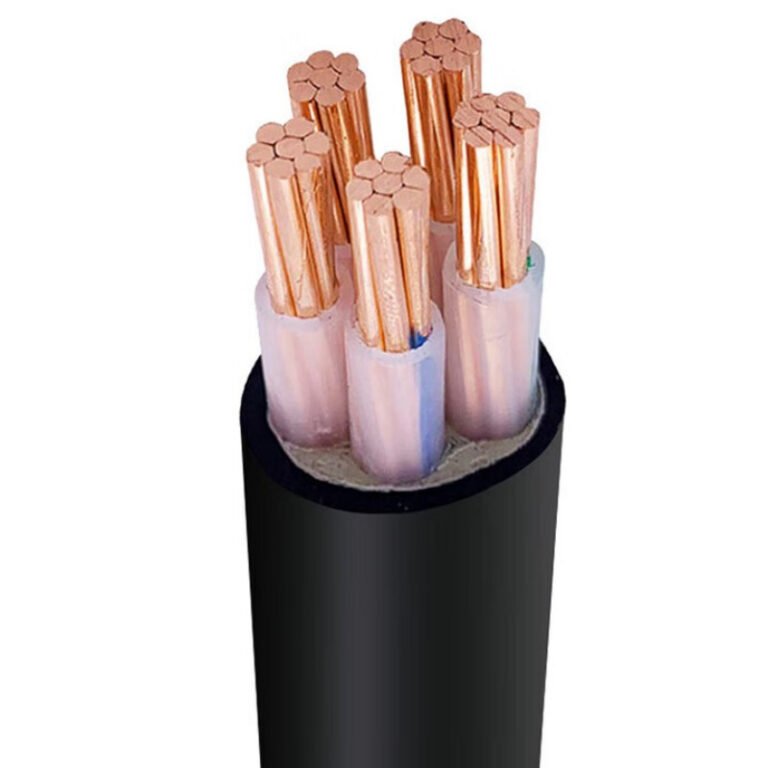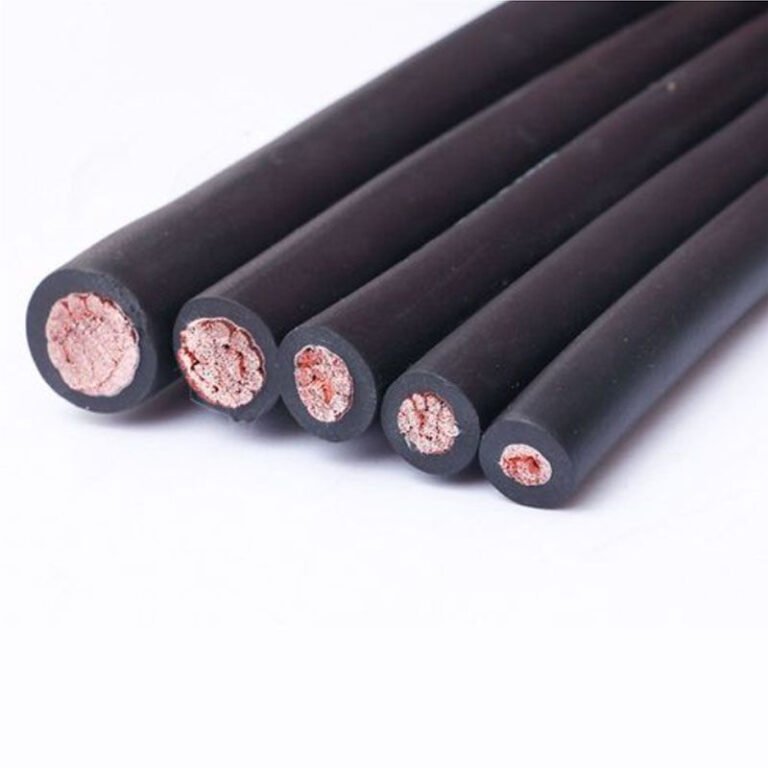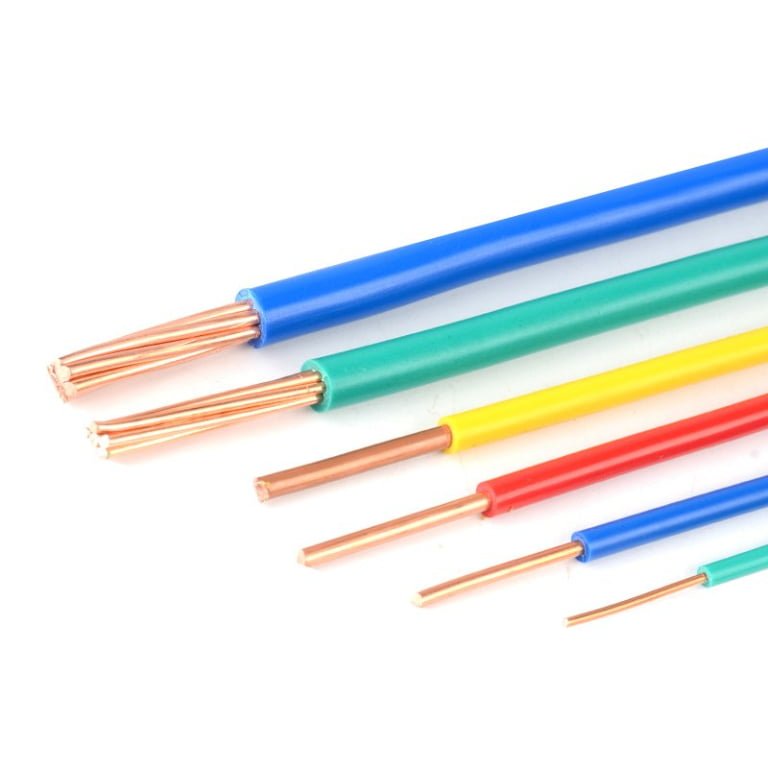
Running conduit through a finished wall, under a poured slab, or across 400 feet of landscaped property is expensive, slow, and sometimes just not feasible given the job conditions. When contractors or facility engineers skip that step without understanding which installations actually require it, the consequences range from nuisance failures — a chewed landscape wire, an intermittent control signal — to genuine safety violations that surface during inspection, void insurance coverage, or trigger a costly retrofit after the building is already occupied. The dollar gap matters too: rigid metal conduit installation runs roughly $6–$14 per linear foot in labor alone, so on a large site the conduit decision is never trivial.
Yes, you can run low voltage wire without conduit in many situations. Under NEC Article 725 and IEC 60364-4-41, circuits operating below 50V AC or 120V DC carry reduced shock risk and are often exempt from conduit requirements — but only when the cable is rated for its specific environment (direct burial, plenum, outdoor UV-resistant), the installation follows applicable code for that use case, and local jurisdiction rules are confirmed first. The exemption is not blanket permission; it is conditional.
What makes this genuinely complicated is that “low voltage” covers an enormous range of applications — landscape lighting, structured cabling, access control, HVAC controls, audio/video distribution — each with its own code pathway, its own failure modes when installed wrong, and its own cost logic around whether the premium for a burial-rated or armored cable actually beats the cost of the conduit it replaces. The answer is rarely the same twice.

NEC, IEC, and Local Code Rules That Directly Govern Conduit Requirements for Low Voltage Wiring
The short answer most engineers want: whether you need conduit depends heavily on which article governs your circuit, which edition of the code your jurisdiction has adopted, and whether local amendments have overridden the base standard. None of those factors are optional to check.
NEC Article 725: Class 1, Class 2, and Class 3 — They Are Not Interchangeable
Article 725 covers remote-control, signaling, and power-limited circuits, and the classification your circuit falls into determines almost everything about conduit requirements.
Class 2 and Class 3 circuits — think 24V HVAC controls, access control wiring, low-voltage lighting control, most building automation sensor loops — are generally permitted to run without conduit in both concealed and exposed locations within residential and commercial buildings, provided the cable is listed for that use (CL2, CL3, or equivalent designation) and installed per the manufacturer’s specifications. That second condition matters more than people give it credit for. A CL2 cable staple-gunned flat against a metal stud every 8 inches is not the same installation as the same cable bundled with 30 others and stuffed through an undersized knockout. Current derating, mechanical protection requirements, and separation from power conductors all still apply even without a conduit mandate.
Class 1 circuits are a different story. They operate at higher power levels and are treated more like branch circuits under Article 725.46 — conduit or equivalent mechanical protection is required in most practical field conditions. Misclassifying a circuit as Class 2 when it actually qualifies as Class 1 is one of the more common inspection failures I’ve seen on small commercial fit-outs.
Articles 800 and 820: Communications and Coax Have Their Own Rules
NEC Article 800 (communications wiring — Cat5e, Cat6, telephone pairs) and Article 820 (coaxial/CATV) both contain explicit conduit exemptions for concealed spaces in most building types. Practically speaking, a Cat6 cable pulled through an interior wall cavity or above a suspended ceiling grid in a general-purpose space does not require conduit under the base NEC. The exemptions narrow fast, though. Plenum-rated spaces require CMR or CMP-listed cable rather than a conduit substitution. Riser installations between floors have their own listing requirements. In an air-handling plenum, the cable jacket chemistry matters — not just the conduit question, but the off-gas behavior during a fire — which is why plenum-rated cable carries a real cost premium.
IEC 60364-5-52 and Why the NEC Mental Model Doesn’t Export Well
Engineers trained on the NEC sometimes assume the rest of the world operates on similar logic. IEC-based jurisdictions — the EU, Australia, most of Asia, and large portions of Latin America — work from a fundamentally different framework. IEC 60364-5-52 defines wiring installation methods by reference method codes: Method A through Method F, roughly spanning from cables clipped directly to a surface (Method C) through cables in free air (Method E or F) to cables in enclosed conduit (Method A or B). Each method carries different current-carrying capacity tables, not just mechanical protection rules.
The conduit question under IEC isn’t binary. Running cable in conduit reduces the allowable current rating relative to free-air installation because of heat accumulation. So in IEC jurisdictions, specifying conduit without adjusting conductor sizing creates an undersized installation — not just a paperwork problem, but a thermal one.
In IEC-based jurisdictions, routing cable through enclosed conduit reduces its current-carrying capacity compared to free-air installation under the same conductor sizeTrue
IEC 60364-5-52 assigns lower current ratings to Installation Method A (enclosed conduit) than to Method E or F (free air) due to reduced heat dissipation, a direct consequence of thermal resistance in the conduit annulus.
Local Amendments: The Part That Catches Projects Off Guard
The NEC is a model code, not a federal law. Every state, province, and municipality adopts it — or doesn’t — on its own timeline and with its own modifications. Chicago is the textbook case: the city’s electrical code mandates conduit for virtually all wiring in commercial buildings, including low-voltage systems that the base NEC would permit to run free. New York City has its own electrical code with similarly aggressive conduit requirements. Some California jurisdictions require conduit in all commercial plenums regardless of cable listing. Canadian provinces follow the Canadian Electrical Code (CEC), which diverges from the NEC in meaningful ways on this specific topic.
The operational warning here is procurement-timing: if you purchase non-conduit-rated cable on the assumption that NEC base rules apply, then discover mid-project that the local amendment requires conduit, you’re either re-pulling cable or running conduit over a listed direct-burial product that wasn’t priced or routed for it.
A Practical Pre-Purchase Decision Checklist
Before assuming conduit-free installation is permitted, verify all of the following:
| Factor | What to Confirm |
|---|---|
| Environment | Indoor, outdoor, direct-buried, plenum, or wet location? |
| NEC/IEC jurisdiction | Which code version is enforced — and which edition? |
| Circuit classification | Class 1, 2, or 3 under Art. 725; or Art. 800/820 scope? |
| Local amendments | City, county, or state modifications to base code? |
| Building occupancy | Healthcare (NFPA 99), industrial, or assembly spaces often trigger additional requirements |
| Cable listing | Does the cable jacket carry the correct UL or regional listing mark? |
| Insurance/FM requirements | Facility insurer or FM Global may impose conduit beyond code minimums |
That last row is underappreciated. Industrial plants and hospital systems routinely have facility standards that require conduit for all signal wiring in production areas regardless of what the AHJ would accept, simply because the cost of chasing an intermittent fault through free-air cables in a crowded cable tray is higher than the upfront conduit cost. It’s a defensible position — just make sure it’s documented before the cable is ordered.
Environments Where Conduit-Free Low Voltage Wiring Is Permitted and Performs Reliably
Not every environment is the same, and the code acknowledges that. The practical question isn’t whether you can skip conduit — it’s whether your specific combination of cable type, location, and installation method meets the requirements for doing so safely and legally.
Residential Interior Walls and Ceilings
This is the most familiar territory. Cat6, Cat6A, 18 AWG thermostat wire, doorbell wire, speaker cable — all of these routinely run through stud bays and along ceiling joists without conduit in residential construction. NEC Article 725 Class 2 and Class 3 wiring, along with Article 800 for communications cable, explicitly permit this. Staples, cable clips, and tie-wraps at reasonable intervals are standard. The one thing that trips up inexperienced installers is drilling through fire-blocking assemblies — you still need listed bushings or fire-stop putty at penetrations, conduit or not.
Bend radius matters more than people give it credit for. Cat6A in particular is intolerant of tight corners; a sharp 90-degree bend around a stud can degrade insertion loss enough to fail a channel certification test. Keep bends to at least four times the cable diameter, which works out to roughly 1.5–2 inches for most Cat6A constructions.
Commercial Office Interiors with Suspended Ceilings
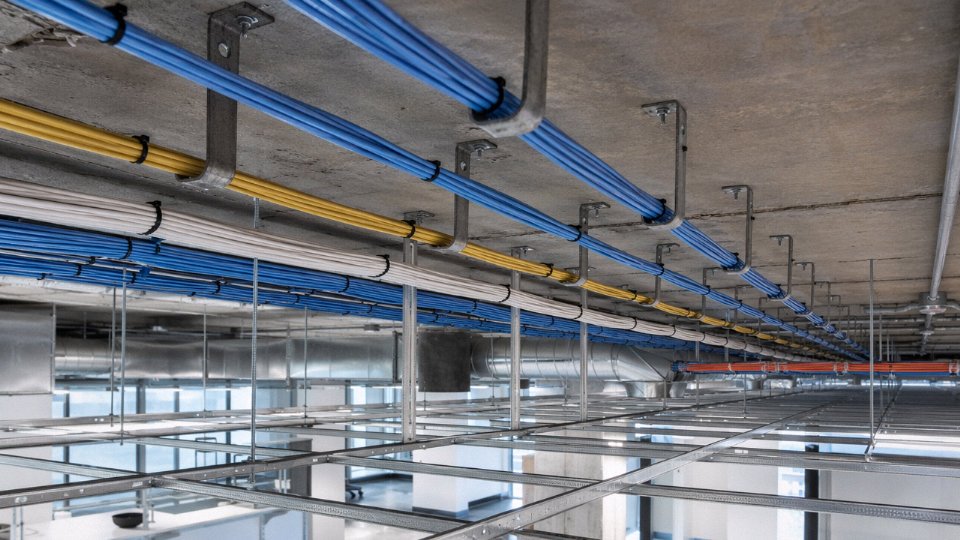
Above a drop ceiling in a commercial office, structured cabling runs free — no conduit required — provided the cable carries a CM or CMR rating for general or riser use respectively. This is standard practice across most of North America and widely accepted under equivalent IEC frameworks in Europe and Asia.
Support spacing is where people get sloppy. NEC 800.24 caps horizontal support spacing at 1.5 m (roughly 5 feet) unless the cable is adequately supported by the structure itself. J-hooks are the typical solution; they’re fast, cheap, and keep cables accessible for future adds. What causes real problems is bundling — 50-cable bundles zip-tied tight for a 30-meter run will trap heat. High-density bundles can raise conductor temperature by 5–10°C depending on ambient conditions and fill count, which affects attenuation performance and, over years, jacket life. If you’re pulling more than 24–36 cables in a tight bundle, consider spreading them across multiple J-hooks or using a cable tray with proper fill margin.
Outdoor Above-Ground Runs on Building Exteriors
UV-rated, sunlight-resistant jacketed cable is the prerequisite here. A cable rated only for indoor use will chalk, crack, and fail within a season or two in direct sun — this is especially brutal in high-UV climates or on south-facing walls. Most jurisdictions allow direct attachment to exterior masonry or framing using clips or standoffs rated for outdoor exposure, without conduit, as long as the cable listing supports it. Check whether your AHJ wants a drip loop at entry points; it’s cheap insurance against water tracking down the jacket and into a junction box.
UV-rated outdoor low voltage cable can be run along exterior building walls without conduit in most US jurisdictionsTrue
NEC Article 725 and 800 permit exposed outdoor installation for properly listed cables with sunlight-resistant jackets; local AHJ approval and correct cable listing are required
Direct Burial Without Conduit
This is where cable selection becomes critical and where the cheapest option usually costs the most in the long run. Direct-burial-rated low voltage cable — whether UL-listed for direct burial or compliant with IEC 60227/60245 burial requirements — uses a gel-filled or heavily protected jacket designed to resist moisture ingress, soil chemistry, and mechanical stress from ground movement.
Under NEC Table 300.5, Class 2 low voltage cable requires only 150 mm (6 inches) of cover. That’s meaningfully shallower than the 600 mm (24 inches) required for 120V circuits, which reduces trenching cost considerably on large landscape or campus projects. Depth requirements do vary with soil conditions and frost depth — in agricultural zones with deep freeze-thaw cycles, going to 12 inches is worth doing even when code doesn’t strictly require it.
Rodent damage is an underappreciated failure mode in rural and agricultural settings. Rodents will chew through standard PE jackets without much difficulty. Armored cable or conduit sleeves at known rodent-traffic areas (near building foundations, around irrigation valve boxes) are worth the extra cost.
Agricultural and Landscape Lighting
12 AWG to 16 AWG landscape wire buried at 6 inches is genuinely routine and code-compliant. Soil type affects long-term performance more than most installers consider — heavy clay retains moisture and accelerates jacket degradation compared to well-drained sandy soil. Seasonal waterlogging is a real concern; cable rated for “wet locations” is the minimum, and “direct burial” is the better choice when soil stays consistently damp.
Data Centers and Structured Cabling Environments
Cable tray and J-hook systems are the recognized conduit-free solutions in these spaces, governed by both ANSI/TIA-568 for performance and NEC Article 392 for installation. Tray fill capacity matters: NEC 392.22 limits cable fill based on tray width and cable diameter, and exceeding fill limits isn’t just a code violation — it creates the same bundling heat problem described above, compounded by the higher ambient temperatures typical in server rooms.
Load ratings for cable tray are a separate concern from fill capacity. A 4-inch-wide wire mesh tray rated for 50 lbs per linear foot sounds like plenty until you’re running 200 Cat6A cables plus a handful of fiber trunks across a 3-meter unsupported span. Calculate actual cable weight per run before signing off on a tray specification — it’s a 10-minute check that occasionally prevents a very expensive ceiling collapse.
Environments and Conditions That Require or Strongly Recommend Conduit for Low Voltage Cables
Conduit-free low voltage wiring works well in the right context. The previous sections covered those favorable environments. What follows is the other side — the situations where skipping conduit creates real risk, expensive rework, or outright code violations. Some of these are hard requirements; others are judgment calls that experienced installers almost always resolve in favor of conduit once they’ve seen a single expensive failure.
Exposed Runs in Industrial Facilities
A forklift clip at wheel height will destroy any unprotected cable, low voltage or not. In production environments — stamping plants, warehouses with powered equipment, food processing lines — exposed cable runs at floor level or within roughly 2.4 m of the floor need mechanical protection. NEC 725.135 directly addresses physical protection requirements for Class 1, 2, and 3 circuits, and NFPA 79 extends similar logic to industrial machinery wiring. Vibration is a slower problem but equally damaging: a cable zip-tied along a press frame and left to flex for 18 months will eventually chafe through insulation at every contact point. Conduit, or at minimum liquid-tight flexible conduit (LFMC) in tight runs near motors, breaks that failure mode entirely. Chemical splash in finishing areas or near battery charging stations is another factor that PVC or thermoplastic cable jackets handle poorly over time unless the compound is specifically rated for the exposure.
Wet Locations Beyond Basic Outdoor Exposure
Outdoor-rated direct-burial cable handles rain and soil moisture. It does not handle continuous submersion, periodic flooding, or the aggressive wash-down environments in car washes, poultry processing plants, or marine dock structures. These are wet location designations under NEC Article 300 and IEC 60364-5-52, and they typically require conduit with properly rated fittings — or a cable system (MI cable, for example) explicitly listed for those conditions. A control cable for a photoelectric sensor in a car wash tunnel that wasn’t installed in rigid PVC conduit usually lasts one to two seasons before moisture ingress causes intermittent faults that are genuinely difficult to diagnose.
Runs Through Concrete Slabs and Masonry
Direct burial in concrete is technically feasible with the correct cable type. The problem isn’t day one — it’s year seven when the control network gets redesigned and someone needs to pull new wire. Without conduit sleeves, that cable is entombed. Concrete coring or saw-cutting to replace a single 24V sensor loop can run several thousand dollars in labor alone, depending on slab thickness and reinforcement density. Schedule 40 PVC conduit adds modest upfront cost and turns a potential demolition project into an afternoon pull.
Plenum Spaces with Stringent Fire Codes
CMP-rated cable satisfies most plenum requirements. In certain occupancies — hospitals, government facilities, high-rises above a threshold height that varies by jurisdiction — local amendments to the base code sometimes require metallic raceway regardless of cable listing. Flexible metal conduit (FMC) or EMT in these spaces is not unusual to see specified by the AHJ even when the base NEC wouldn’t strictly demand it. Always verify with the local authority having jurisdiction before assuming CMP listing is sufficient.
EMI-Sensitive Control Environments
Shielded cable near a VFD panel helps. Shielded cable inside a grounded metallic conduit helps considerably more. The conduit acts as a Faraday shield, and for 0–10V analog signals or low-level thermocouple runs within a few meters of a high-current bus bar, that additional suppression is often the difference between stable control and unexplained process variation. This is a common source of intermittent fault calls that are genuinely hard to trace without measurement equipment.
Future Access as a Lifecycle Cost Factor
Server rooms, airport baggage handling systems, and large automation installations all share one characteristic: the cable plant changes. Pulling new wire through existing conduit takes hours. Ripping out direct-buried or embedded cable takes days, sometimes requires structural work, and disrupts operations. In any environment where cable changes are expected more than once every five to ten years, conduit is a lifecycle investment, not overhead.
Conduit is always required for low voltage wiring in commercial buildings under NEC.False
NEC Article 725 permits many low voltage (Class 2 and Class 3) circuits to run without conduit in commercial buildings, provided the cable is appropriately listed and installed in allowed locations. Conduit requirements depend on the specific environment, occupancy type, local amendments, and AHJ interpretation — not a blanket rule for all commercial installations.
Cable Construction and Jacket Ratings That Make Conduit-Free Installation Safe and Code-Compliant
The conduit-free question is really a cable selection question. Get the jacket and construction right, and the conduit becomes optional in many environments. Get it wrong, and you’re looking at insulation failure inside 18 months — or a failed inspection before the project even energizes.
Jacket Materials: Not All Outer Sheaths Are Created Equal
PVC is the workhorse — cheap, flexible, widely stocked — but its application is genuinely limited to dry, indoor, protected spaces. Put PVC-jacketed cable in a direct-burial trench or a mechanical room with oil mist and you’ll see the sheath crack, swell, or delaminate. UV exposure alone can embrittle standard PVC in two to three seasons depending on sunlight intensity and compound formulation.
For confined spaces — server rooms, transit tunnels, densely cabled factory plenums — LSZH (low smoke zero halogen) is the specification you need and, in many European and Middle Eastern export markets, the one the project spec will mandate. When PVC burns it releases hydrogen chloride; in an enclosed space that’s a secondary hazard that can outlast the fire itself. LSZH compounds sacrifice some flexibility, so budget for tighter bend radius management during pull-in.
Polyethylene (PE) is the correct choice for outdoor and direct-burial conduit-free runs. It resists moisture migration, handles UV reasonably well in its black carbon-loaded form, and maintains stable dielectric properties across a wide temperature swing — roughly -40 °C to +70 °C for most grades, though high-density PE compounds extend that upper limit. This is why Cat6 outdoor and landscape irrigation wire almost universally use PE or modified PE jackets.
TPE and TPU jackets show up in industrial conduit-free applications — robotics tray cables, sensor runs near hydraulic equipment — where repeated flexing, oils, and cleaning solvents would degrade PVC quickly. TPU in particular handles abrasion better than almost anything else at comparable wall thickness. The trade-off is cost: expect to pay a noticeable premium over standard PVC, sometimes 30–60% more on unit price depending on TPU grade and conductor count.
UL Listing Categories and IEC Equivalents
The jacket marking tells you the permitted installation method. For communications cable specifically, CM is the baseline indoor rating. CMR (riser) adds a vertical-flame test requirement for runs between floors. CMP (plenum) requires low-smoke, low-flame performance for air-handling spaces — this is where LSZH and certain fluoropolymer jackets earn their keep. CMX is the residential and limited outdoor rating, permitting short conduit-free outdoor runs in single-family applications.
On the IEC side, fire performance is governed by the IEC 60332 series: 60332-1 tests a single cable, 60332-3 tests bunched cable — the latter is what matters for multi-cable tray runs without conduit. IEC 60754 covers halogen content, and IEC 61034 covers smoke density. A cable labeled “LSZH” without these test references is a marketing claim, not a specification.
A cable marked CMX is suitable for direct burial without conduit in all residential applications.False
CMX permits limited outdoor use and some residential exterior runs, but direct burial requires a separate direct-burial or DB rating and typically a PE or PE-compound jacket with appropriate burial depth compliance. CMX alone does not authorize underground conduit-free installation.
Armor as a Conduit Substitute
When the hazard is mechanical — foot traffic, rodents, backfill stone, forklift corridors — armor is the legitimate conduit alternative.
Interlocked aluminum armor (IAA) handles most light industrial tray and exposed-run applications. It’s lighter than steel options and resists corrosion adequately in most indoor environments, though chloride-heavy atmospheres (coastal plants, food processing) can attack it over time.
Corrugated steel tape armor (STA) offers better crush resistance and is common on medium-scale outdoor runs and underground feeder cables per BS 6346 and IEC 60502. Steel wire armor (SWA) per BS 5467 steps up further for direct burial where rock content in the backfill is high or where tensile stress during installation is a concern — long inclined pulls, for instance. SWA adds significant weight and stiffness, which affects drum logistics and installation labor.

Voltage Drop in Long Conduit-Free Runs
This is where low voltage bites you hardest. The physics don’t care about the installation method, but long conduit-free landscape or outdoor runs tend to cover more distance than indoor wiring, so the numbers matter more.
A simplified voltage drop formula: V_drop = (2 × L × I × R_conductor) / 1000, where L is one-way run length in feet, I is load current in amperes, and R is conductor resistance in ohms per 1,000 feet. For 18 AWG copper, R is roughly 6.4 Ω/1,000 ft. A 300-foot run at 12V pushing 1.5 A drops around 5.8 V — nearly half the supply voltage gone before you reach the fixture. In practice, landscape lighting manufacturers recommend limiting runs to 100–150 feet on 18 AWG at 12V, or stepping up to 14 or even 12 AWG for longer loops.
Conductor material matters too. Aluminum is tempting on cost, but at equivalent gauge it runs about 60% of copper’s conductivity. For conduit-free low voltage runs where gauge is already constrained by flexibility requirements, aluminum rarely makes sense unless the cable is specifically designed for it with appropriate termination hardware.
Shielding and EMI Performance Without Conduit
Conduit — particularly steel conduit — provides passive EMI shielding as a side benefit. Remove it, and the cable’s own shielding becomes load-bearing for signal integrity.
Foil shields (aluminum-polyester laminate) provide near-100% coverage but are fragile and rely on a drain wire for termination. Braid shields typically cover 85–95% depending on braid angle and fill percentage — the spec sheet will state this as a percentage, and anything below 85% is inadequate for noisy industrial environments. Combination shields (foil plus braid) are the right call for conduit-free runs in variable-speed drive environments or near switching power supplies.
Grounding strategy matters as much as shield type. For analog signal cables, ground the shield at one end only — the source end — to avoid ground loops. For high-frequency data cables, both-end grounding is typically correct. In practice, a lot of field wiring problems trace back to someone grounding a shield at both ends on a 4–20 mA loop because “it seemed more secure.” It isn’t.
Reading the Datasheet Before You Buy
The cable jacket itself is the first datasheet. Reputable manufacturers print installation method codes, voltage rating, temperature range, and sometimes burial depth requirements directly on the outer sheath at regular intervals. If that printing is absent or illegible, that’s information.
On the formal product datasheet, verify: the listed installation methods (tray, direct burial, aerial, etc.), the minimum installation temperature (especially relevant for winter site work — many PVC cables become brittle and crack during pulling at temperatures below -10 °C to -15 °C), minimum bend radius (usually expressed as a multiple of the cable OD, typically 6–10× for unarmored, 12–15× for armored), and any derating requirements for grouped or bundled conduit-free installation. A cable that passes every other test but lacks a documented burial depth rating is not a direct-burial cable, regardless of what the sales sheet implies.
Step-by-Step Installation Best Practices for Low Voltage Wire Runs Without Conduit
Conduit-free installation isn’t a shortcut — it’s a legitimate method that demands more upfront discipline, not less. When conduit is absent, the cable itself is your last line of defense against mechanical damage, moisture ingress, and EMI. That means planning gaps that conduit would have hidden will show up as failures within a year or two.
Pre-Installation Planning
Start with a cable schedule before a single spool leaves the warehouse. List every run: cable type and jacket rating, route path, total measured length plus a 10–15% slack allowance (the 10% is for routing around obstacles; the extra 5% is so you’re not splicing because someone measured tight), support method, and junction box locations. Mark separation requirements from power wiring on the same drawing — NEC 725.136 requires Class 2 and Class 3 cables to maintain separation from Class 1 and power conductors, and in practice that means a minimum of 2 inches from 120V circuits, though 4–6 inches is a more comfortable working margin when runs are long and parallel. Getting this on paper before installation is the only way to catch route conflicts with existing conduit runs, HVAC ducts, or structural steel that will force expensive field changes later.
Routing and Support
Staple guns are the most common source of damage on low voltage runs. The staple should hold the cable, not pinch it. Use cable staples sized for the cable diameter, and if you’re running Cat6 or anything data-rated, any deformation of the jacket risks pair geometry changes that will haunt you at certification. J-hooks work better for horizontal runs — maximum 5-foot intervals, and tighten them just enough that the cable doesn’t slide. For bundled data cables, Velcro wraps are far gentler than zip ties; zip ties pulled snug will stress the cable at every support point over time, especially in environments with thermal cycling.
Cable tray is worth considering on longer industrial runs even when conduit isn’t required. NEC 392 cable tray fill calculations apply — keep fill at or below 40% to maintain heat dissipation and give yourself room for future adds without pulling everything.
Velcro wraps are less damaging to data cable geometry than standard nylon zip ties when used as bundling supportsTrue
Velcro wraps apply distributed pressure and can be adjusted without cutting; overtightened nylon zip ties create point loads that can distort the cable's internal pair geometry, increasing crosstalk and insertion loss — a documented concern in TIA-568 installation guidance.
Separation from Power Conductors
Never run Class 2 or Class 3 cables parallel in the same conduit as line voltage, even if the physical space allows it. The separation requirement isn’t just about induced noise — it’s about fault current scenarios where a line-voltage failure should not energize a low voltage system. If routing forces close proximity, use a physical barrier rated for the application. The 2-inch rule is a floor, not a target.
Direct Burial
Call 811 (USA) before any excavation — no exceptions, regardless of how well you think you know the site. Use sand bedding in rocky or gravelly soil to prevent jacket abrasion from backfill movement over time. Install warning tape 6 inches above the cable, not at grade. After backfill, document the route with GPS coordinates or measured offsets from fixed structures; a hand-drawn sketch in the project file has saved real headaches when someone decides to trench the same area three years later.
Minimum burial depth depends on cable type and jurisdiction — confirm this against your local amendment to NEC Table 300.5 or the equivalent IEC provision before digging.
Splicing and Termination
Mid-run splices in conduit-free systems need rated junction boxes, full stop. For outdoor or wet locations, connectors rated IP65 or higher. At equipment racks, use horizontal and vertical cable managers to prevent the weight of accumulated cables from stressing terminations at patch panels — a surprisingly common cause of intermittent data faults in warehouses and light manufacturing facilities.
Testing and Documentation
Continuity testing catches gross errors. For data cables, TDR testing against TIA-568 channel limits — insertion loss, return loss, NEXT — is what actually verifies the installation is functional at rated performance. Label both cable ends per TIA-606 with a consistent scheme documented in as-built drawings. This matters most when a run fails eighteen months post-installation and someone needs to trace it without pulling the whole bundle.
Cost Comparison: Conduit vs. Conduit-Free Low Voltage Wiring Across Common Project Types
The conduit-versus-free-air decision isn’t just a code question — it’s a project economics question, and the numbers shift dramatically depending on run length, environment, and how permanent the installation needs to be.
Residential Smart Home: 5,000 Linear Feet of Cat6 and 18 AWG Control Wire
A typical mid-to-large custom home might involve 5,000 linear feet of combined Cat6 and 18 AWG audio/control wiring. Running Schedule 40 PVC conduit through framed walls and ceilings adds roughly $1.50–$4.00 per foot in materials alone, plus $3–$8 per foot in labor — call it $22,500–$60,000 in conduit cost on top of the cable itself. CMR-rated cable pulled free-air through framing essentially eliminates that line item. Labor savings alone typically run 35–50% on a job this size, because you’re not cutting, gluing, and threading conduit through tight joist bays. The cable cost is slightly higher for listed CMR versus basic indoor-rated wire, but nowhere close to closing that gap. For a permanently framed residential build with no anticipated rewiring in the next 10–15 years, the conduit-free approach wins on first cost and usually on total lifecycle cost too — provided the CMR or CMP rating is correct for the plenum or non-plenum space.
Commercial Office Fit-Out: 50,000 Linear Feet of Structured Cabling
At commercial scale, the math tilts even harder toward conduit-free methods — specifically cable tray. A cable tray system supporting 50,000 linear feet of Cat6A and low-voltage control runs will typically cost $40,000–$80,000 less in combined materials and labor than an equivalent EMT conduit installation. The range depends on floor plate complexity, number of bends, and local labor rates. EMT conduit at this scale means thousands of couplings, pull boxes, and man-hours threading cable through confined pathways. Cable tray installs faster, inspects easier, and when the tenant inevitably changes their floor plan in year four, you’re adding cable rather than calling a conduit contractor. That flexibility has real dollar value that doesn’t show up in the original bid but shows up in the next fit-out budget.

Industrial Automation: 10,000 Linear Feet of Control and Instrumentation Cable
Industrial environments are where the calculation reverses, partially. Here, mechanical protection is often non-negotiable — either by code or by simple engineering judgment in environments with forklifts, coolant splash, or high vibration. The real comparison isn’t conduit versus bare cable; it’s steel wire armored (SWA) or interlocked aluminum armored (IAA) cable versus PVC-jacketed cable inside rigid conduit.
For runs exceeding roughly 500 feet, armored cable generally wins on total installed cost. The per-foot material cost runs higher — SWA cable might be 25–45% more expensive per foot than its unarmored equivalent, depending on conductor count and jacket type — but you eliminate conduit purchase, conduit support hardware, and the significant labor of pulling through rigid conduit in congested cable trays and cable ducts. On a 10,000-foot industrial project, that conduit labor elimination can offset the armored cable premium and then some.
For straight industrial runs longer than 500 feet, armored cable total installed cost is typically equal to or lower than PVC cable in rigid conduit.True
The per-foot labor savings on conduit installation and support hardware installation generally exceed the armored cable material premium at run lengths above 400–600 feet, though the exact breakeven depends on local labor rates and conduit type (rigid steel costs more to install than PVC).
Outdoor Landscape and Security Lighting: 2,000 Linear Feet Direct Burial
Shorter, simpler outdoor runs favor direct-burial cable with no conduit, usually by 20–30% in total installed cost on straight runs. Direct-burial-rated 18 AWG or 12 AWG landscape wire with a UV-stable, moisture-resistant jacket gets trenched in and done. Where conduit earns its cost back outdoors is on routes where the path curves around hardscape, passes under driveways multiple times, or where the lighting layout is genuinely likely to change. Pulling new wire through a buried Schedule 40 sleeve costs almost nothing years later. Digging up and replacing direct-burial cable costs a full re-installation.
Lifecycle Cost and the 10-Year NPV Breakeven
Conduit-free systems have a hard vulnerability: if the cable gets damaged — whether from a rodent, a subsequent contractor’s drill, or UV degradation on an improperly rated outdoor run — replacement means opening walls or digging trenches. Conduit systems absorb those events at near-zero cable-replacement cost; you pull the new cable through. The 10-year net present value crossover point depends heavily on damage probability and local labor rates, but rough planning guidance: for high-traffic or high-risk routes, conduit pays back within 5–7 years even when initial cost runs 30–40% higher. For protected interior runs in stable buildings, conduit-free installations rarely see the damage event that would justify the upfront conduit spend.
Procurement Volume and Custom Cable Economics
At order volumes of 100,000 meters or more, direct-burial and LSZH-jacketed cables sourced from manufacturers like Jinda can be customized — specific jacket colors by circuit type, printed legends at regular intervals, drum lengths matched to your run schedule. That kind of procurement engineering reduces on-site waste from cut-offs, cuts labeling labor significantly, and reduces pulling errors. On a large campus or multi-building project, waste reduction alone on a 100,000-meter order can represent several thousand meters of recovered material cost. That’s not nothing.
International Project Considerations: Exporting and Installing Low Voltage Cables Without Conduit Across Multiple Jurisdictions
Running low voltage cable without conduit on a domestic project is complicated enough. Doing it across three continents on a single rollout — say, a retail chain standardizing security camera cabling in the US, Germany, and the UAE simultaneously — is a different problem entirely. The regulatory landscape is not just varied; in some regions it’s actively contradictory.
The Major Regulatory Zones and What They Actually Require
NEC-based markets — the US, Canada (CEC with meaningful modifications), and Mexico (NOM-001-SEDE) — share a common ancestry but diverge in ways that matter. Canada’s CEC Rule 60 imposes stricter separation and mechanical protection requirements than NEC Article 725 in certain occupancy types, particularly industrial facilities. Mexico’s NOM framework often references NEC but enforcement is highly localized; in practice, what the inspector accepts in Monterrey can differ from what flies in Mexico City.
IEC/CENELEC-governed markets cover most of Europe, the UK (BS 7671 post-Brexit, which remains technically close to IEC 60364 but is independently maintained by the IET), and Australia/New Zealand (AS/NZS 3000, the “Wiring Rules”). Here’s where a real mismatch appears: IEC 60364 Installation Method tables — particularly the reference methods in HD 60364-5-52 — assign current-carrying capacity and mechanical protection requirements based on installation context in ways that don’t map cleanly to NEC tables. A 2.5 mm² cable clipped directly to a surface (Installation Method B2) carries a different rated current than the same conductor in free air (Method E). A cable that qualifies for conduit-free installation under NEC in a light commercial setting may need mechanical protection under BS 7671 Appendix 4 if it runs within 50mm of a surface where damage from impact or drilling is foreseeable. This isn’t a technicality — it’s the kind of thing that causes rework on fit-out projects.
The Middle East is officially IEC-aligned but effectively hybrid. Saudi Arabia, the UAE, and Qatar each layer local requirements on top of IEC 60364. SASO certification is mandatory for cables sold into Saudi Arabia; the UAE has its own Emirates Authority for Standardization (ESMA) requirements. Southeast Asia is genuinely fragmented: Vietnam, Indonesia, Thailand, and the Philippines each maintain distinct standards, and enforcement varies considerably by sector and project type.
Certification and Export Documentation
For North American projects, UL listing (or CSA certification for Canada) is typically non-negotiable for specified products. EU projects require CE marking with an EU Declaration of Conformity under the relevant directive — the Low Voltage Directive (2014/35/EU) applies above 50V AC, while cables below that threshold may fall under other frameworks, so classification matters before you draft documentation. IECEE CB scheme certificates are genuinely useful for multi-country projects because a single CB test report from an accredited lab can be converted to national certifications in roughly 50 participating countries, reducing re-testing costs significantly. CCC certification covers China domestic use and is separate from any export certification.
IECEE CB scheme certificates can be used to obtain national certifications in approximately 50 member countries without full re-testingTrue
The IECEE CB Scheme is an international system for mutual acceptance of test reports; member countries accept CB certificates as the basis for national certification, reducing redundant testing for manufacturers exporting to multiple markets.
Cable marking requirements are easy to overlook until a customs inspector flags a shipment. IEC 60227 and IEC 60245 specify mandatory print legends — voltage rating, conductor cross-section, standard reference, manufacturer identification. GCC countries and several North and West African markets additionally require Arabic co-printing on the jacket; Francophone African markets often require French. Getting this wrong means either relabeling at destination (expensive, messy) or re-ordering. Jinda’s five production bases support custom jacket printing for export-specific marking runs, which matters when you’re ordering in sufficient drum quantities to justify the setup.
Customs Classification and Freight Efficiency
Most unarmored low voltage cables for voltages not exceeding 1,000V fall under HS code 8544.49. Getting the classification right upfront matters: misclassification can trigger unexpected import duties, and duty rates vary from essentially zero in some FTA-covered markets to 8–12% in others. Drum packing configuration directly affects freight cost per meter — a 500m drum ships differently than a 2,000m drum, and optimizing drum size for container utilization on bulk orders can reduce landed cost meaningfully on large projects.
Jinda’s technical and sales teams can provide country-specific cable selection guides, help coordinate third-party test reports for local approval, and support in-country stock arrangements for commonly specified types — which matters when a project phase is delayed and procurement needs to reorder locally rather than wait for ocean freight.
Frequently Asked Questions About Running Low Voltage Wire Without Conduit

Is it legal to run low voltage wire in an attic without conduit?
Yes, in most US jurisdictions. NEC Article 725 Class 2 and Class 3 circuits, along with communications wiring under Article 800, are explicitly permitted in attic spaces without conduit provided the cable is properly supported — typically every 4 to 6 feet — and not exposed to physical damage from foot traffic or storage. CMR-rated (riser) cable is generally sufficient for attic runs in residential and commercial buildings. If the attic has regular access for maintenance personnel walking on joists, run the cable through bored holes or protect any exposed spans with conduit or raceway for the first few feet from the access hatch. Thermal extremes in unconditioned attics (easily hitting 60°C or above in summer climates) should factor into your cable selection; not all standard-grade jackets are rated for that.
Can I run Cat6 cable along a baseboard without conduit?
Code technically permits it in many jurisdictions, but bare cable stapled along baseboards is one of those things that looks fine until it doesn’t. In residential settings, properly listed surface-mounted cable raceways or J-hooks rated for the cable diameter are the cleaner answer — they’re cheap, paintable, and protect the cable from chairs, vacuum cleaners, and foot traffic. In commercial spaces, most AHJs (authorities having jurisdiction) will want a raceway at minimum for any exposed horizontal run. Staples are acceptable by code in some interpretations but will crush a Cat6 cable if driven too tight, which degrades insertion loss and return loss in ways that don’t always show up immediately on a basic continuity test.
How deep does direct-burial low voltage cable need to go without conduit?
NEC Table 300.5 sets 6 inches minimum for Class 2 circuits and 12 inches for communications cables (Article 800) when installed without conduit. Pull the cable through Schedule 40 PVC and those depths drop, which matters if you’re crossing a driveway or rocky soil where digging deeper gets expensive. Some local codes — particularly in areas with hard freeze cycles — require deeper burial regardless of conduit. Always check the local amendment. Marker tape at 6 inches above the cable is a low-cost habit that pays off years later during landscaping or utility work.
Can speaker wire be run without conduit in finished walls?
Yes, for residential and most commercial applications under NEC Article 725. Use CL2 or CL3 rated in-wall speaker cable — the jacket formulation matters for fire resistance, not just abrasion. Keep parallel runs at least 2 inches from AC power wiring to minimize interference, and don’t skip fire-blocking at floor and ceiling penetrations. That last point gets ignored constantly and is a real code violation.
CL2-rated in-wall speaker cable meets NEC Article 725 requirements for installation inside finished walls without conduit in US residential construction.True
NEC Article 725.135 explicitly lists CL2 and CL3 cable as suitable for in-wall installation without conduit for Class 2 and Class 3 circuits, provided fire-stopping requirements are observed at penetrations.
Does low voltage wire need to be in conduit in a garage?
Garages — attached garages especially — are classified as damp or wet locations under most code interpretations, and any cable run that’s exposed to physical damage must be protected. In practice, this means conduit, surface raceway, or MC (metal-clad) armored cable for anything running along walls below 8 feet or across the ceiling near moving garage doors. Tucked runs through wall cavities are generally fine. The damp-location classification also means your cable jacket needs to be rated accordingly; standard CM-rated Cat6 is not listed for damp locations.
What is the difference between direct-burial cable and conduit-rated cable?
Direct-burial cable carries a thick PE or HDPE outer jacket engineered to resist soil moisture, ground chemicals, and the mechanical stress of settling earth over years of service. Conduit-rated cable has a thinner, more flexible jacket optimized for pulling through conduit bores — it is not designed for direct earth contact. Running a conduit-rated cable in a direct-burial trench is a common procurement mistake that typically shows up as jacket degradation and insulation failure within 3 to 7 years depending on soil conditions and moisture levels. The cost difference between the two constructions is real (roughly 15–40% more for direct-burial rated product, depending on conductor count and jacket thickness), but it’s far smaller than a repair excavation.
How do I know if my low voltage cable is rated for conduit-free installation?
Read the jacket print legend. Legitimate cable carries the UL listing type printed sequentially along the outer jacket — look for CM, CMR, CMP, CL2, CL3, or “Direct Burial” as applicable. Cross-reference the product datasheet for installation method approvals and confirm which NEC article or IEC installation method (B1, C, D1 per IEC 60364-5-52) corresponds to your project environment. If the jacket legend is blank or illegible, that’s a procurement red flag regardless of what the spec sheet claims.
Can I order custom low voltage cable for conduit-free installation in my specific country from Jinda?
Yes. Jinda manufactures low voltage cables to NEC, IEC 60364, BS 7671, and customer-specified standards, with options for custom jacket compounds, colors, sequential footage print, and compliance markings for specific jurisdictions. For conduit-free applications specifically — direct burial, exposed outdoor runs, or in-wall rated installations in non-US markets — the technical sales team can advise on the right jacket material (LSZH, PE, PVC with UV stabilizers, HDPE for burial) based on your installation environment and local authority requirements. Minimum order quantities and lead times vary by specification complexity, so engaging early with a full project description gets you an accurate quote rather than a generic one.