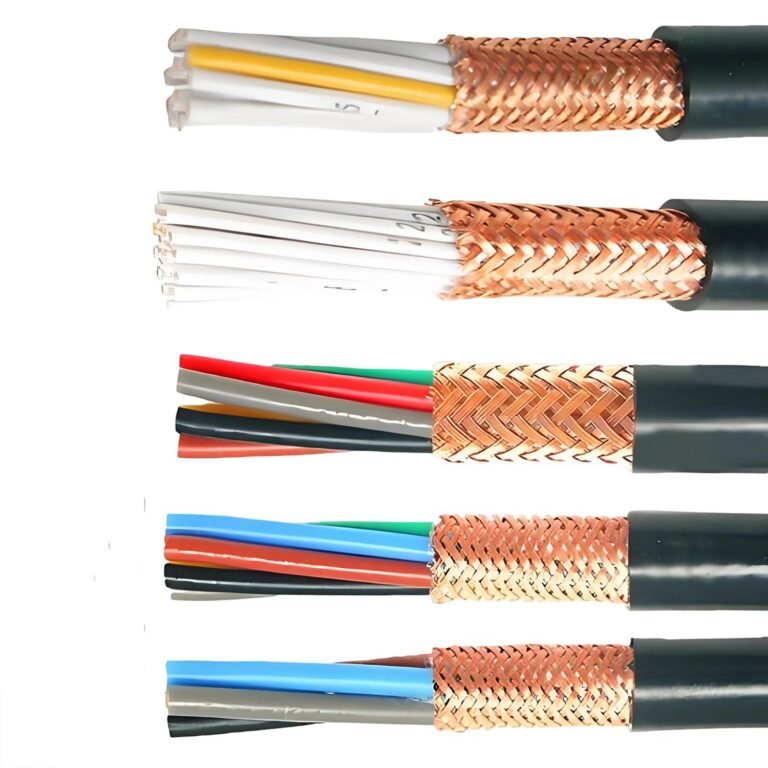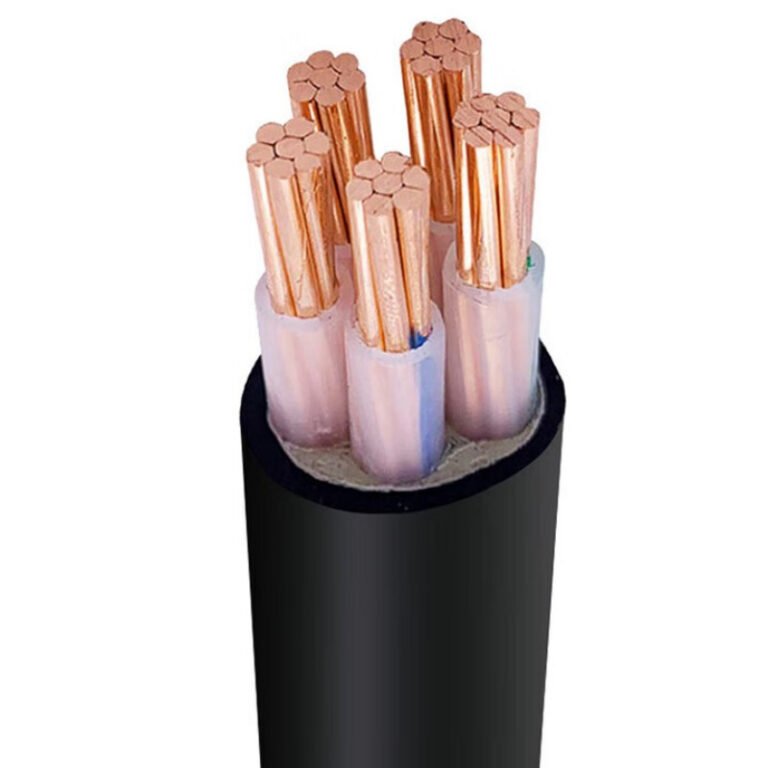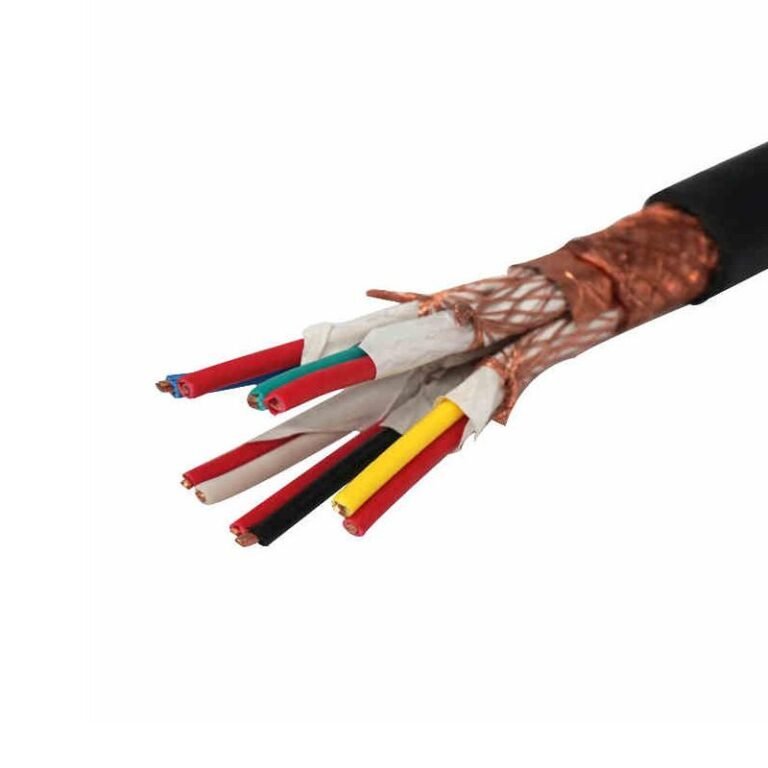
Specifying the wrong wire for a building project doesn’t always fail immediately — it fails at the worst possible time. An undersized conductor overheats under sustained load, insulation degrades faster than anyone planned for, and by the time a breaker trips or a junction box scorches, you’re looking at rewiring costs that dwarf the original material savings, plus potential liability if the installation is commercial or public. Getting the wire selection right from the start is straightforward, but only if you understand what building wire actually does and where each type belongs.
Building wire is electrical conductor — typically copper or aluminum — used to distribute power within permanent structures: homes, commercial buildings, industrial facilities, and infrastructure. It runs inside conduit, raceways, or wall cavities to feed lighting circuits, outlets, HVAC equipment, and fixed machinery. Voltage ratings range from 450/750 V for IEC residential wire up to 0.6/1 kV for heavier commercial and industrial branch circuits, with temperature ratings typically between 60°C and 90°C depending on insulation type and installation environment.
Building wire accounts for somewhere between 35 and 40 percent of all copper wire and cable consumed in global construction markets each year — a share that reflects just how foundational this product category is, and why the global market landed somewhere in the USD 18–22 billion range in 2023 with growth projections running at 5–7% annually through 2030, largely pulled by urbanization across Asia, Africa, and the Middle East. That scale also means procurement decisions carry real weight: the difference between a well-specified wire and a marginal substitute plays out not in the catalog, but in installation labor, inspection outcomes, and service life measured in decades.

Core Applications: Where Building Wire Is Installed Across Residential, Commercial, and Industrial Projects
Building wire shows up in almost every energized space humans occupy, but “building wire” as a procurement category covers a surprisingly wide range of circuit types, load conditions, and installation environments. Knowing which wire serves which zone — and why — is what separates a clean, code-compliant installation from one that generates nuisance trips, insulation failures, or worse.
Residential Wiring: Branch Circuits and Service Entrances
In a typical house or low-rise apartment block, building wire handles everything from 15 A lighting circuits to 240 V HVAC feeds and, increasingly, 50 A EV charging branch circuits. THHN/THWN-2 in 12 AWG or 14 AWG dominates branch circuit work in North American projects; IEC markets tend toward H07V-U or H07V-R singles pulled through conduit, or flat NYM-J sheathed cable in Germany and much of Eastern Europe.
Service entrance conductors — the runs between the utility meter and the main panel — carry the full building load. Sizing here is critical. Undersizing this segment by even one AWG can push conductor temperatures to the edge of rating during peak summer loading, particularly in climates where air conditioning runs hard for months at a stretch. Direct-burial USE-2 or XHHW-2 handles underground service laterals from a pad-mounted transformer to the building entrance; these need to be rated for wet locations and soil contact, which not all THHN variants are.
Outdoor residential circuits — garden outlets, outbuildings, landscape lighting — typically use UF-B (underground feeder cable), which has a solid, moisture-resistant overall jacket rather than individual conductors in conduit.
Commercial Buildings: Distribution, Data, and Vertical Transport
Office towers and retail centers add complexity fast. Power moves from a main switchboard through large-gauge feeders (often 2/0 AWG to 500 kcmil range, depending on panel load and run length) down to floor sub-panels, then branches out to receptacles, lighting, and mechanical loads. THHN pulled through EMT or rigid conduit is the workhorse here.
Data centers are a specific case worth flagging: power feeds to UPS systems and PDUs run at high continuous load — typically 80% of rated ampacity by design convention — which pushes conductor temperature ratings to matter in real, not just theoretical, terms. Using 75°C-rated wire where a 90°C-rated conductor is needed will force you to derate, which means a larger conductor cross-section and higher material cost.
Elevator and escalator power wiring is a zone many procurement specs underspecify. Motor starting currents can hit 6–7× full-load amperage for several seconds, so the feeder needs to be sized for that inrush, not just the nameplate running current.
Emergency egress lighting circuits in commercial buildings frequently require LSZH (low-smoke zero-halogen) insulation under European EN 50266 and similar codes, since toxic smoke from burning PVC is a documented cause of evacuation fatalities in confined corridors.
Industrial Facilities: Motors, Cranes, and Process Equipment
Inside a manufacturing plant or distribution warehouse, building wire feeds motor branch circuits, control panels, welding outlets (typically 60 A or higher, with 8 AWG to 4 AWG conductors), and process equipment drops. Motor feeder circuits deserve particular attention: the National Electrical Code and IEC 60364 both require sizing based on motor FLA with a mandated overcurrent margin, not on connected load alone. Get this wrong and you’ll either see nuisance tripping under normal starting conditions or — on the other end — a conductor that runs hot enough to accelerate insulation aging noticeably over a few years.
Crane and hoist power supplies often route through flexible conduit sections or festoon systems, which puts mechanical stress on the insulation that a static branch circuit never sees. Specifying standard THHN here instead of a more flexible, abrasion-resistant insulation is a maintenance headache waiting to happen.
Hospitals, Airports, and High-Occupancy Venues
Critical and life-safety branch circuits in hospitals — operating theaters, ICUs, nurse call systems — require not just LSZH insulation in many jurisdictions but also circuit separation and, in some cases, fire-resistant cable construction that maintains circuit integrity under direct flame exposure for 30–120 minutes. This is a completely different specification conversation from standard building wire, and conflating the two categories during procurement is an expensive mistake to discover during commissioning inspection.
Airport terminals and large sports venues present a high-density, high-load lighting challenge: a single sports field lighting circuit might carry 200–400 A continuously, and wire runs can be long enough that voltage drop — not ampacity — drives conductor sizing.
Load Type Drives the Specification
Lighting circuits, receptacle circuits, motor feeders, and resistive heating circuits all behave differently and pull different wire sizing logic.
| Load type | Key sizing driver | Typical insulation concern |
|---|---|---|
| Lighting (continuous) | 125% of full load per NEC 210.20 | Heat from ballasts/drivers in enclosed fixtures |
| Receptacle (non-continuous) | Connected load diversity factor | Generally straightforward; conduit fill matters |
| Motor feeder | FLA × 1.25 minimum, inrush margin | Cyclic heating; flexible connection points |
| Resistive heating | Continuous load, 100% duty | 90°C rating often needed; check local code |
| EV charging (Level 2) | 80% of breaker rating continuous | Dedicated circuit; check panel capacity first |
THHN/THWN-2 building wire rated 600 V / 90°C is the most widely installed conductor type in U.S. commercial and residential construction.True
THHN/THWN-2 dominates North American building wire consumption due to its dual wet/dry location rating, 90°C thermal rating, and compatibility with conduit-based wiring methods required by the NEC in most commercial applications.
The practical takeaway: specifying “building wire” as a single line item on a procurement order without defining the voltage class, temperature rating, insulation type, and installation environment will almost certainly generate RFIs and substitution requests from the field. The application context determines the spec, and the spec determines what actually gets purchased.
Building Wire Types and Insulation Codes: Matching the Right Product to the Right Environment
Specifying the wrong insulation type for an environment is not a paperwork error — it’s a failure mode that shows up as premature jacket cracking, insulation breakdown, ground faults, or in worst cases, a fire inside conduit that nobody sees coming. The letter codes stamped on building wire carry real engineering meaning, and understanding them is faster than digging through the full NEC or IEC standard every time.
THHN/THWN-2: Decoding the Most Common North American Building Wire
THHN/THWN-2 is the wire you’ll find in conduit on probably 70–80% of North American commercial and light industrial jobs. Each letter tells you something specific: T = thermoplastic insulation, H = rated for 90°C dry heat (a second H would indicate 90°C in both dry and wet, which is what the W already covers), W = suitable for wet locations, N = nylon outer jacket, 2 = the upgraded wet rating of 75°C rather than the older 60°C baseline. In practice, the nylon jacket matters more than most people give it credit for — it’s what lets you pull long runs through tight conduit without tearing the PVC underneath.
Voltage rating is 600 V. Suitable for conduit, cable tray, and enclosed raceways. Not designed for direct burial or free-air runs in damp environments without additional protection.
XHHW-2: When the Location Is Genuinely Wet or Hot
Cross-linked polyethylene (XLPE) insulation changes the game for high-temperature or persistently wet environments. XHHW-2 is rated 90°C in both wet and dry locations — no derating in wet conduit, which matters when you’re feeding equipment in a boiler room, a commercial kitchen, or a rooftop solar combiner box where afternoon conduit temperatures can push 60–70°C ambient before you even add conductor self-heating. The X = XLPE insulation, HH = dual 90°C rating, W = wet location, 2 = meets the 90°C wet standard. XLPE also resists ozone and many industrial chemicals better than standard PVC, which is why you see it spec’d in treatment plants and food processing facilities where occasional chemical washdowns are routine.
NM-B (Romex): Residential Workhorse With Hard Limits
NM-B is the non-metallic sheathed cable used in residential concealed wiring across North America. Simple, fast to install, cost-effective. The B suffix indicates 90°C-rated conductors inside the sheath, though the cable assembly itself is derated to 60°C for ampacity calculations per NEC. The hard constraints are real: dry locations only, not permitted in commercial occupancies above three stories, not suitable for direct burial, and not acceptable in areas with physical damage exposure. Using NM-B where the code requires conduit is the kind of shortcut that fails inspection — or worse, fails quietly inside a wall.
IEC 60227 and IEC 60502 Equivalents
Outside North America, the H07V-R and H07V-U designations under IEC 60227 cover the 450/750 V range. H = harmonized European standard, 07 = 700 V (rounded voltage class), V = PVC insulation, R = stranded conductor (Class 2), U = solid conductor (Class 1). For 0.6/1 kV power distribution — typical for feeder cables in commercial buildings across Asia, the Middle East, and Europe — the YJV series (XLPE-insulated, PVC-sheathed) under IEC 60502-1 is the dominant product. Conductor class matters in practice: Class 2 stranded is easier to terminate in multi-way distribution boards; Class 1 solid is cheaper per meter on short straight runs.

LSZH/LS0H: Non-Negotiable in Enclosed Public Spaces
Low-smoke zero-halogen insulation is not a premium upgrade — in certain environments it’s a life-safety requirement. Standard PVC releases hydrogen chloride and dense black smoke when it burns. In a tunnel, underground transit station, hospital corridor, or high-rise stairwell, that smoke is what kills people before the fire does. LSZH (also written LS0H or LSOH) compounds emit minimal smoke and no halogenic gases. Expect a 15–30% price premium over equivalent PVC-insulated wire depending on conductor size and order volume, but on public infrastructure projects the specification is usually mandatory, not optional.
Aluminum Building Wire: Right Tool for Large Feeders
Aluminum conductors — typically AL XHHW-2 or USE-2 for service entrance — are a legitimate cost management tool on large feeder runs, not a cut-rate substitution. Aluminum costs roughly 40–60% less per kilogram than copper at most market conditions, and on a 500 kcmil service entrance run that difference is meaningful. The engineering trade-offs are well understood: aluminum requires roughly one AWG size larger than copper for equivalent ampacity, and aluminum oxide forms on exposed conductor surfaces and increases contact resistance over time. Standard practice is to use anti-oxidant compound (Penetrox or equivalent) at all terminations, specify AL-rated lugs and breaker terminals, and torque connections to spec — then retorque after the first thermal cycle. Skip any of those steps and you get a hot connection that loosens further, which is how aluminum wiring developed its bad reputation in residential work during the 1960s. Done properly on commercial feeder and service entrance work, it’s a sensible choice.
| Wire Type | Insulation | Temp Rating | Voltage Rating | Typical Environment | Primary Market/Standard |
|---|---|---|---|---|---|
| THHN/THWN-2 | PVC + nylon | 90°C dry / 75°C wet | 600 V | Conduit, cable tray, dry/wet | North America / NEC |
| XHHW-2 | XLPE | 90°C dry and wet | 600 V | Industrial, boiler rooms, solar PV | North America / NEC |
| NM-B (Romex) | PVC sheath | 60°C assembly | 600 V | Residential concealed, dry only | North America / NEC |
| H07V-R / H07V-U | PVC | 70°C | 450/750 V | General building wiring | Europe, Asia / IEC 60227 |
| YJV | XLPE + PVC | 90°C | 0.6/1 kV | Feeders, distribution | Europe, Asia, Middle East / IEC 60502 |
| LSZH building wire | LSZH compound | 70–90°C (varies) | 300/500–0.6/1 kV | Tunnels, hospitals, high-rise | Global / IEC 60332, EN 50575 |
| AL XHHW-2 / USE-2 | XLPE | 90°C | 600 V–2 kV | Service entrance, large feeders | North America / NEC |
LSZH insulation produces significantly less smoke and no halogenic acid gases compared to standard PVC when exposed to fire, reducing toxic hazard in enclosed spaces.True
This is established by IEC 60754 (halogen content) and IEC 61034 (smoke density) test standards. LSZH compounds are specifically formulated with non-halogenated flame retardants such as aluminum trihydrate or magnesium hydroxide, which decompose endothermically rather than releasing HCl or HBr.
How to Size Building Wire Correctly: Ampacity, Voltage Drop, and Conduit Fill Calculations
Getting wire sizing wrong is one of the most expensive mistakes you can make on a project. It either shows up immediately — a breaker that won’t hold, insulation that softens in a conduit bank — or it hides for years until a panel inspection or a load expansion forces a full rewire. Three calculations drive the decision: ampacity, voltage drop, and conduit fill. Do all three. Skipping any one of them is how projects end up with 12 AWG wire on a 20 A circuit that runs 90 feet to a receptacle bank serving a production line.
Ampacity: The Starting Point, Not the Final Answer
Ampacity is the maximum continuous current a conductor can carry without pushing its insulation past its rated temperature. NEC Table 310.16 and IEC 60364-5-52 Annex B organize this by conductor material, cross-section, and temperature rating. For copper at 75°C — the practical design temperature for most commercial and light industrial terminations — 10 AWG carries 35 A, 8 AWG carries 50 A, and 2 AWG carries 130 A. Aluminum runs roughly 20–25% lower for the same cross-section, which matters when you’re specifying large feeders and the cost difference becomes real money.
The 90°C column in Table 310.16 looks attractive because the ampacity numbers are higher, but your termination rating governs. Most breakers and lugs are rated only to 75°C, so the 90°C insulation on THHN gives you derating headroom, not a free upgrade in conductor current.
Derating: Where Most Sizing Errors Actually Happen
Three conditions force you to reduce ampacity below table values.
Conduit fill beyond three current-carrying conductors requires applying NEC Table 310.15(C)(1) correction factors — 80% for 4–6 conductors, 70% for 7–9, and so on. A 20 A circuit on 12 AWG copper at 75°C (rated 20 A at baseline) leaves zero margin if you’re running a sixth conductor in that conduit. You either upsize the wire or split the conduit run. On a 100 A feeder using 1 AWG copper (rated 130 A at 75°C), placing it in a conduit with five other current-carrying conductors drops the effective ampacity to roughly 104 A — still workable, but barely. Add ambient temperature above 30°C and you’re in trouble.
Ambient temperature correction applies whenever the installation environment exceeds the 30°C baseline. A wire run through an unconditioned roof space in a Gulf climate or above a process oven might see 50°C ambient. At that temperature the NEC correction factor for 75°C-rated insulation is 0.82, meaning your 130 A conductor now handles about 107 A before you account for conduit fill.
Continuous loads — anything running more than three hours — require sizing the overcurrent device and the conductor to 125% of the continuous load per NEC 210.20. A 48 A continuous load needs a 60 A circuit minimum.
Voltage Drop: The Calculation Many Skip Until It’s Too Late
For single-phase circuits, the standard formula is:
VD = (2 × K × I × L) / CM
Where K = 12.9 for copper (21.2 for aluminum), I is current in amperes, L is one-way run length in feet, and CM is the conductor cross-section in circular mils.
NEC recommends limiting branch circuit voltage drop to 3% and total system drop (branch plus feeder) to 5%. For a 50 A, 120-foot single-phase run on 6 AWG copper (26,240 CM):
VD = (2 × 12.9 × 50 × 120) / 26,240 = 5.9 V
On a 120 V circuit that’s 4.9% — over the branch circuit limit. Upsizing to 4 AWG (41,740 CM) brings it to 3.7 V, or about 3.1%. Acceptable. On 240 V the same raw voltage drop is only 2.5%, which is why long runs on higher-voltage circuits are far more forgiving.
Conduit Fill and Heat Buildup
NEC Chapter 9, Table 1 limits conduit fill to 53% for one conductor, 31% for two, and 40% for three or more. IEC follows similar logic under installation method categories. Exceeding fill limits does more than violate code — it physically traps heat. Conductors in an overfilled conduit can’t dissipate to the surrounding air, so ambient temperature inside the conduit rises, which accelerates insulation degradation over years, not hours. A rough field rule: if you’re struggling to pull conductors because of friction, the fill is probably too high regardless of what the math says.
Quick-Reference Sizing Table
| AWG | mm² (approx.) | Cu Ampacity @ 75°C | Recommended conduit (1 conductor) | Recommended conduit (3 conductors) |
|---|---|---|---|---|
| 14 | 2.1 | 20 A | ½ in. (16 mm) | ½ in. (16 mm) |
| 12 | 3.3 | 25 A | ½ in. (16 mm) | ½ in. (16 mm) |
| 10 | 5.3 | 35 A | ½ in. (16 mm) | ¾ in. (21 mm) |
| 8 | 8.4 | 50 A | ¾ in. (21 mm) | 1 in. (27 mm) |
| 6 | 13.3 | 65 A | ¾ in. (21 mm) | 1 in. (27 mm) |
| 4 | 21.2 | 85 A | 1 in. (27 mm) | 1¼ in. (35 mm) |
| 2 | 33.6 | 130 A | 1¼ in. (35 mm) | 1½ in. (41 mm) |
| 1/0 | 53.5 | 150 A | 1½ in. (41 mm) | 2 in. (53 mm) |
Conduit sizes above assume THHN and standard EMT; stranded conductors and larger insulation ODs shift these slightly, so always verify against the actual product datasheet.
Fault Current: The Sizing Consideration People Forget
Ampacity sizing keeps the wire safe under normal load. But conductors also have to survive the let-through energy of upstream overcurrent devices during a fault — expressed as I²t. A small conductor on a high-interrupting-capacity breaker can be damaged or destroyed before the breaker clears, even if it was correctly sized for load current. Minimum conductor sizing for fault protection is a separate calculation from ampacity, governed by the breaker’s short-circuit current rating and clearing time. On most commercial projects the ampacity-based size is conservative enough that this isn’t a problem, but on industrial feeders close to large transformers, check it explicitly.
NEC Table 310.16 ampacity values assume an ambient temperature of 30°C and no more than three current-carrying conductors in a raceway.True
This is explicitly stated in the footnotes to NEC Table 310.16. Installations deviating from either condition require correction factors from Tables 310.15(B)(1) and 310.15(C)(1) respectively.
Building Wire Installation Methods: Conduit, Cable Tray, Direct Burial, and Concealed Wiring
The wire itself is only half the story. How it gets installed — what surrounds it, how it’s routed, how it’s pulled and terminated — determines whether it delivers rated service life or becomes a maintenance headache inside three years. Specifying the right conductor for the wrong installation method is a surprisingly common procurement mistake.
Conduit Systems: EMT, IMC, RMC, and PVC
Electrical metallic tubing (EMT) is the workhorse of interior commercial construction. It’s lightweight, reasonably cheap, and fast to work with using compression fittings. For office buildings, retail fit-outs, and light industrial interiors, EMT is usually the right call — and because it’s a raceway, you can pull new or replacement conductors later without demolition. That future-replaceability matters far more than most owners realize at construction time.
Rigid metal conduit (RMC) is heavier and more expensive, but it belongs outdoors, in parking structures, and in NEC-classified hazardous locations where mechanical protection and explosion resistance actually matter. Intermediate metal conduit (IMC) sits between the two — lighter than RMC but with better crush resistance than EMT, often used in light industrial settings where forklifts and impact are realistic risks.
PVC conduit is standard for underground runs. It resists moisture and corrosion in a way that steel simply won’t over a 20- or 30-year burial. The catch: PVC needs expansion couplings on long runs (thermal movement adds up, particularly in climates with wide seasonal temperature swings) and it offers no mechanical protection where it emerges above grade. That transition point — where the underground PVC stub comes up and ties into above-ground metallic conduit — is where water intrusion and physical damage tend to concentrate. Seal that transition properly.
Cable Tray in Industrial and Large Commercial Installations
Cable tray is the preferred system when you’re managing dozens or hundreds of circuits across a plant floor, data center, or large commercial facility. It allows visual inspection, simplifies additions, and — done correctly — gives excellent heat dissipation compared to fully enclosed conduit runs. XHHW-2 and THHN are common tray conductors; LSZH cables are increasingly specified in data centers and transportation facilities where smoke toxicity during a fire matters.
Fill ratio discipline is non-negotiable. Overfill a tray and you create a thermal mass that pushes conductors above their rated temperature under load, accelerating insulation degradation faster than almost any other single factor. Keep power and signal cables separated — either physically by a divider or by running them in dedicated tray sections — or you’ll introduce noise problems that are genuinely maddening to diagnose later. Tray grounding continuity is a code requirement and a real protective function, not a paperwork checkbox.
NM-B Concealed Wiring in Residential Construction
Non-metallic sheathed cable (NM-B) is everywhere in North American residential work, and most installation errors are depressingly simple. Staple it every 4.5 ft (roughly 1.4 m) along the run, and within 12 inches of any box. Never staple through the cable — crushing the conductors creates a weak spot that may not fail immediately but will eventually arc under load. At penetrations through studs and plates, use nail plates wherever the cable runs within 1.25 inches of the face. These protections exist because drywall screws have a way of finding cables.
Direct Burial: USE-2 and UF-B
For underground runs without conduit, USE-2 and UF-B are the rated options. Under NEC, USE-2 requires a minimum 24-inch burial depth for residential branch circuits; IEC-based systems (such as TN-C-S networks common in Europe and much of Asia) typically require at least 600 mm. Always lay warning tape 12 inches above the cable in the trench.
Direct-burial cables installed without warning tape above them present no additional code violation risk.False
Most electrical codes and standards, including NEC Article 300 and IEC 60364 series guidelines, require or strongly recommend the installation of warning tape above buried electrical cables. Missing warning tape significantly increases the risk of accidental excavation damage and may constitute a code deficiency during inspection.
Where the cable exits grade and transitions to above-ground wiring, protect it in conduit from the point of emergence up to the first connection — at least 8 inches above grade is typical practice, though local amendments vary.
Wire Pulling and Termination
Pulling wire through conduit without lubricant is one of those habits that causes invisible damage. Use a pulling compound rated compatible with your insulation type — petroleum-based lubricants will swell PVC insulation, which is a slow failure mode that shows up years later. For copper conductors, the maximum pulling tension is approximately 0.008 multiplied by the circular mil area of the conductor, expressed in pounds. Exceed that and you risk stretching the conductor or deforming the insulation at bends. Minimum bend radius is typically 5× the cable outside diameter for most building wire types; force a tighter bend and the insulation can crack, particularly in cold weather installs.
Termination quality is where building wire failures actually happen, in practice. Loose lugs and under-torqued breaker terminals create resistance that generates heat, which accelerates insulation breakdown, which eventually causes arcing. Every lug and terminal has a torque specification — use a calibrated torque screwdriver, not feel. On aluminum conductors specifically, anti-oxidant compound at every connection is not optional; aluminum oxidizes quickly and the oxide layer is resistive enough to cause exactly the overheating sequence described above. Finally, match temperature ratings: a 90°C conductor terminated on a 60°C-rated terminal in a breaker panel gets derated to 60°C anyway under most codes. Specifying THHN for its 90°C rating and then terminating at 60°C equipment is a common spec mismatch worth catching early.
Safety, Fire Performance, and Compliance Standards That Govern Building Wire Selection
Electrical failures in building wiring — overloaded circuits, damaged insulation, loose terminations, undersized conductors — cause an estimated 45,000 to 50,000 structure fires per year in the United States alone, according to NFPA tracking data. That figure covers residential and commercial buildings combined, and it hasn’t moved much in a decade despite improved breaker technology. The wire itself is often the weak point: wrong type, wrong size, or simply counterfeit product that looked right on the reel. Safety compliance isn’t paperwork. It’s the reason those tests exist.
Electrical wiring failures cause approximately 45,000–50,000 structure fires per year in the United StatesTrue
This range aligns with NFPA published estimates for home structure fires attributed to electrical distribution and lighting equipment, including wiring, cords, plugs, and outlets as contributing factors.
Flame Propagation and Fire Test Requirements
UL 83 governs THHN thermoplastic insulation and requires the wire to pass a vertical flame test — the insulation must self-extinguish without propagating flame up the conductor. UL 44 applies to XHHW and other cross-linked thermoset insulations and includes similar flame exposure criteria with tighter constraints on char length. These are single-conductor tests; they tell you how one wire behaves in open air.
Bundled installations are a different problem entirely. When you run 20 or 30 conductors together in a cable tray, they can sustain and spread flame even if each individual conductor would pass the single-wire test. UL 1685 addresses this directly — it’s a vertical-tray flame test using a bundled cable arrangement with a sustained flame source. IEC equivalents are IEC 60332-1 (single cable) and IEC 60332-3 (bunched cables, with categories A, B, C, and D that correspond to different total volume fractions of non-metallic material). For industrial cable tray installations, specifiers who only check the single-cable rating and skip the bundle test have made a meaningful engineering error.
Smoke Density and Low-Smoke, Halogen-Free Requirements
This is where North American and international practice diverge most visibly. IEC 61034 measures smoke density by monitoring light transmittance in a test chamber during combustion — the pass threshold requires the wire to transmit at least 60% of light through the smoke. IEC 60754-1 and -2 address halogen content and acid gas emission from combustion gases. LSZH (low-smoke, zero-halogen) wire was developed specifically to meet these thresholds, and its use is mandatory in many European and Middle Eastern building codes for tunnels, transit stations, hospitals, schools, and other occupied public spaces where evacuation is slow and smoke inhalation kills people before flames reach them. In some Southeast Asian markets, local authorities having jurisdiction have been adopting LSZH requirements faster than formal code revisions — the procurement manager who specs standard PVC building wire for a new airport concourse in that region may find it rejected at inspection. Worth confirming before the order ships.

North American Listing Marks and Conductor Marking Requirements
Every listed building wire sold into North American markets must carry a legible surface print that, under NEC Article 310, includes: insulation type designation (THHN, XHHW-2, etc.), voltage rating, conductor AWG or kcmil size, number of conductors where applicable, temperature rating, and manufacturer identification. UL Listed and CSA Certified marks are not decorative — they represent third-party witnessed testing at a listed facility, with periodic unannounced follow-up inspections on production samples. If the print is faded, incomplete, or the spacing between repeating marks is non-standard, that’s often a reliable early indicator of counterfeit or off-spec product.
IEC and NEC: Understanding Where the Two Systems Overlap
IEC 60227 covers PVC-insulated cables for fixed wiring at 450/750 V. IEC 60502-1 covers power cables up to 1 kV. Both are widely accepted across the Middle East, Africa, and much of Southeast Asia, sometimes alongside or instead of NEC/UL requirements. Jinda’s building wire product lines are tested and certified to both IEC and UL frameworks, which matters practically for contractors managing multi-country project pipelines — one qualified supplier with documentation for both regimes simplifies approval cycles considerably.
Counterfeit Wire: The Risk That Doesn’t Show Up Until the Building Burns
Undersized conductors — where the nominal AWG or mm² cross-section is correct on the label but the actual copper cross-section is 10–15% below spec — create elevated resistance, which means elevated heat at full load. Off-specification insulation thickness, often shaved to save material cost, reduces the dielectric margin and the flame-retardant additive content simultaneously. Copper purity below 99.9% increases resistivity meaningfully at scale. None of these defects are visible. The wire pulls cleanly, terminates normally, and passes a basic continuity check.
Effective procurement controls are not complicated but they require discipline: request mill certificates with conductor resistance per IEC 60228 or ASTM B3/B8, perform incoming spot-checks of conductor diameter with a micrometer, and weigh a sample reel against the declared copper content — weight is hard to fake cheaply. Third-party inspection at the factory before shipment, particularly for large project orders, catches problems before the product is buried in a wall where finding it later costs roughly 5 to 10 times what the wire itself cost.
Selecting Building Wire for Specialized and Emerging Applications: Solar PV, EV Charging, Smart Buildings, and High-Rise Construction
Standard branch-circuit wiring is well understood. The four application categories below are where specification errors are still common, where code requirements have shifted recently, and where the wrong wire choice creates failures that are expensive and sometimes dangerous to diagnose.
Solar PV DC Wiring
This is probably the most consistently misspecified area in electrical construction right now. THHN is listed for 600 V AC service — it is not permitted as PV source circuit wiring under NEC Article 690. The reason is straightforward: DC arc faults are harder to extinguish than AC, UV exposure on a rooftop is continuous and severe, and wet location exposure is essentially guaranteed on any outdoor array. USE-2 or listed PV Wire rated at 600 V or 1,000 V DC is required, with UV-stabilized cross-linked polyethylene insulation and a sunlight-resistance marking.
In practice, the distinction matters most at the combiner box. Runs from individual modules to the combiner are often short, but they spend their entire service life in direct sun and standing water. PV Wire with 90°C wet-location ampacity and a tough XLPE jacket handles that environment; THHN pulled into exposed conduit on a flat roof is a code violation that passes inspection more often than it should.
Standard THHN building wire is not permitted as PV source circuit wiring under NEC Article 690 because it lacks the sunlight resistance and DC voltage ratings required for photovoltaic array circuits.True
NEC 690.31 requires conductors in PV source and output circuits to be listed for the application, which means USE-2 or PV Wire with sunlight resistance, wet location rating, and appropriate DC voltage rating. THHN is not listed for sunlight resistance or DC photovoltaic circuits.
EV Charging Infrastructure
A Level 2 EVSE circuit — 240 V, typically 32 to 48 A for residential, up to 80 A for commercial — is not exotic, but the load is continuous by NEC definition, which means conductors and overcurrent protection must be sized at 125% of the nameplate current. That pushes a 48 A charger to a 60 A circuit minimum. THHN or XHHW-2 works fine in conduit for these runs. The more demanding scenario is DC fast charging: a 150 kW to 350 kW DCFC requires a 208 V or 480 V three-phase feeder, potentially 250 to 400 A, with a conduit run that may travel 50 to 150 m through a parking structure to an underground vault. Voltage drop over that distance is not trivial. Underground service to parking garages typically requires direct-burial-rated wire or conduit-protected THHN/XHHW-2, and in locations with exposure to vehicle fluids or road salts, the conduit seal and wire jacket selection matter.
Smart Buildings and Harmonic Derating
Power feeds to variable frequency drives, smart lighting panels, and BAS gateway cabinets look like ordinary building wire circuits on a one-line diagram. They are not. Harmonic-generating loads — VFDs especially — produce significant third-harmonic current that adds in the neutral conductor rather than canceling. A balanced three-phase circuit feeding multiple VFDs can carry 150 to 200% of phase current in the neutral, depending on the drive topology. The neutral must be sized accordingly, often full-sized or oversized, and the phase conductors should be derated per NEC 310.15(B)(5) or the applicable IEC guidance. Specify this in the panelboard schedule, because it will be missed in the field otherwise.
High-Rise and Super-Tall Buildings
Vertical riser wiring above roughly 100 m introduces two problems that flat-floor construction does not: mechanical load from the cable’s own weight, and the consequence of a fire propagating upward through a cable route. Mechanical support intervals of 30 to 40 m are typical for riser cables — Kellems-style mesh grips or approved cable cleats, depending on the installation method. Skip this and the terminations bear the load; in a 200 m building that is a meaningful tensile force over time.
Fire performance requirements in high-rise work have tightened in most markets. IEC 60332-3-22 Category A flame spread testing is the baseline for riser cables in many jurisdictions. For emergency systems — fire pumps, stairwell lighting, elevator recall — circuit integrity ratings per BS 8519 or IEC 60331 are required in the UK, Gulf states, and increasingly in Southeast Asian high-rise codes. These cables are meaningfully more expensive than standard building wire, roughly 2 to 4 times the cost per meter depending on conductor size and fire survival duration, but substituting standard wire on a fire-survival circuit is a life-safety failure, not a cost optimization.
Data Centers and Off-Grid Renewable Projects
In data center distribution — utility entrance through UPS to PDU to rack — the wiring environment combines high ambient temperatures in hot-aisle zones, dense conduit fills, and strict smoke toxicity requirements. LSZH insulation is standard in many European and Asian data center specifications; plenum-rated FEP or PTFE is required where wire runs through active air-handling spaces. Derating for ambient temperatures above 30°C and for more than three current-carrying conductors in a conduit is not optional; in a hot-aisle environment that ambient derating alone can drop ampacity by 15 to 20%.
In off-grid solar and microgrid projects across sub-Saharan Africa and parts of Southeast Asia, the specification challenges shift again. Grid unreliability means these installations carry DC and AC loads simultaneously, often in environments with intense UV, rodent pressure, and seasonal flooding. UV-stabilized XLPE insulation and robust PVC or HDPE jacketing are not premium options in this context — they are the difference between a system that lasts 15 years and one that needs rewiring in four.
How to Evaluate Building Wire Quality Before Ordering: Conductor, Insulation, and Packaging Standards
Buying building wire on price alone is one of the more reliable ways to create problems downstream — failed inspections, overheating circuits, or a reel that runs short on the last home run of a job. Here is a practical framework for evaluating what you are actually getting before a purchase order is signed, and when the shipment arrives.
Conductor Purity and DC Resistance
The single most useful bench test a procurement manager or incoming QC technician can run is a DC resistance check with a milliohmmeter. IEC 60228 sets maximum resistance limits for both Class 1 (solid) and Class 2 (stranded) copper conductors at 20°C. A 2.5 mm² Class 2 stranded conductor, for instance, must not exceed 7.41 Ω/km. If your meter reads 8.1 Ω/km on three samples from the same reel, the conductor cross-section is undersized — almost certainly because the manufacturer drew the wire slightly too thin or blended lower-purity copper to reduce cost.
A DC resistance reading above IEC 60228 limits on a 2.5 mm² conductor indicates the conductor is undersized or uses lower-purity copper, both of which increase heat generation and reduce ampacity.True
Resistance is inversely proportional to cross-sectional area and directly affected by conductor purity. Higher resistance means greater I²R losses at rated current, which raises operating temperature and can cause insulation degradation over time.
Pull three samples from different positions on a reel — beginning, middle, and end. Variance across positions tells you something about process consistency that a single test cannot.
Insulation Thickness and Eccentricity
IEC 60227-3 specifies both a minimum average insulation thickness and an absolute minimum point thickness for each wire size. For a 2.5 mm² H07V-R wire, the minimum average insulation wall is 0.8 mm. Eccentricity — where the wall is thicker on one side than the other — is the subtler problem. A wire that averages 0.8 mm overall but has a thin point at 0.5 mm has poor extrusion control, and that thin point is where dielectric breakdown or thermal degradation initiates under load.
Measure wall thickness on a cross-section cut from several points along the reel. A vernier micrometer and a sharp blade are sufficient. Any eccentricity ratio above roughly 15–20% (depending on the standard) is worth querying with the supplier.
Confirming Insulation Material
Visual inspection cannot reliably distinguish PVC from LSZH or XLPE. Colors are not standardized enough globally, and some low-cost manufacturers have been known to substitute materials. Request an FTIR spectroscopy report from the supplier’s QA lab, or send a sample to an independent testing house. A Vicat softening point test is a faster and cheaper alternative — it confirms thermoplastic grade. This matters because a circuit installed expecting LSZH fire performance but wired with standard PVC will produce dense toxic smoke in a fire event, which is both a life-safety failure and a code violation.
Reel Labeling and Length Accuracy
Professional-grade wire should arrive on clearly labeled reels showing conductor size, insulation type and code, voltage rating, lot/batch number, and nominal length. Measure actual length against stated length on at least a sample of reels per order — a length tolerance within ±0.5% is reasonable to require contractually. Short-length reels are a recurring issue with very low-price suppliers; the shortage typically shows up mid-installation when you are already committed to a pulling setup.

Certification Verification
Do not rely solely on documents provided by the supplier. Certificates for UL, CE, KEMA, SASO, and similar marks are verifiable directly on the issuing body’s database. Takes five minutes and has caught counterfeit certificates more than once in my experience. For orders above roughly USD 100,000–200,000, a factory audit — either self-conducted or through a third-party inspection firm — is justified. Ask specifically to see the raw copper rod intake testing records and the outgoing electrical test logs.
Jinda’s QA Process
Shandong Jinda’s five production bases operate under ISO-certified quality management systems with incoming inspection on copper rod, in-process checks at extrusion and stranding, and outgoing electrical and mechanical testing on every production batch. Each reel is traceable back to its raw material source through a batch numbering system, which matters when a project engineer needs to pull documentation for an inspection authority or an insurance claim years after installation. The integrated R&D and QA structure means that specification queries — unusual voltage ratings, custom insulation colors, non-standard drum lengths — can be answered with actual engineering data rather than a sales estimate.
Frequently Asked Questions About Building Wire
Can I use THHN wire without conduit?
No — and this catches out a lot of people on smaller residential jobs. THHN is a single-conductor installation wire, approved for conduit, cable trays, and enclosed raceways. It is not listed for open wiring, direct burial, or use inside wall cavities without a raceway. If you pull THHN through a stud bay and leave it unsupported and unprotected, you’re violating NEC 310.10 and most local amendments. For concealed residential wiring without conduit, NM-B cable is the right product — it carries its own outer jacket that provides physical protection and is specifically listed for that application. In practice, confusing the two is one of the more common inspection failures on light commercial tenant-improvement jobs.
What is the difference between building wire and a cable?
Building wire is a single insulated conductor. A cable is two or more conductors — or one conductor plus a ground — assembled under a common outer jacket. THHN and XHHW-2 are wires. NM-B, UF-B, and SO cord are cables. The distinction matters for conduit fill calculations, installation method approvals, and specification language: if a drawing calls for “building wire in EMT,” you’re running individual THHN conductors; if it says “NM-B cable,” the jacket stays on.
How long does building wire last inside walls?
PVC-insulated wire installed correctly in conduit, in a dry environment with stable temperatures, realistically lasts 40–50 years — sometimes longer. XLPE insulation generally performs better under thermal cycling and can push that service life further. What shortens it: sustained overloading (even modest continuous overcurrent accelerates insulation embrittlement), ambient temperatures above the conductor’s rating, moisture that penetrates conduit seals, and — in above-ceiling or attic runs — UV exposure from skylights or gaps in the roof deck. A circuit that runs at 90–95% of rated ampacity for years will age its insulation far faster than one that runs at 60%.
PVC-insulated building wire installed in dry conduit can achieve a service life of 40–50 years or more under correct operating conditions.True
This range is consistent with IEEE and IEC insulation aging studies and widely cited in electrical engineering references; actual life depends heavily on thermal loading, ambient environment, and installation quality.
Can aluminum wire be used for branch circuits?
Yes, with the right product and proper termination practice. Modern AA-8000 series aluminum conductors — XHHW-2 or USE-2 insulated — are listed for branch circuits 10 AWG and larger under NEC 310.106, provided you use CO/ALR-rated receptacles and switches, and apply anti-oxidant compound at every connection point. The bad reputation aluminum has earned comes from the 1960s–70s alloys used in 8000-series predecessors, which crept at connections and caused loose terminations, arcing, and fires. That’s a materials and installation problem from a specific era, not an inherent condemnation of aluminum conductors. On larger commercial feeders and branch circuits where conductor cost matters, aluminum is genuinely worth specifying.
What does LSZH mean and when is it required?
LSZH — Low Smoke Zero Halogen — describes insulation compounds that, when burned, produce very low smoke density and no corrosive halogen gases. Standard PVC releases hydrogen chloride when it burns, which obscures evacuation routes and can destroy sensitive electronics in adjacent rooms. IEC 60092, EN 50266, and many national building codes mandate LSZH wiring in tunnels, hospitals, schools, airports, subway stations, and high-rise cores — any space where people need to see to escape and where smoke damage to building systems is unacceptable. Specifying standard PVC in a hospital riser shaft to save a few cents per meter is a procurement decision that can fail both the inspection and, far worse, the building.
How do I calculate how much building wire to order?
Measure the full circuit run from panel to the farthest device, add 10–15% for routing offsets around structural members and obstacles, then add 6–12 inches at each termination point. Multiply by the conductor count: a standard 120 V branch circuit needs three conductors (hot, neutral, ground). Always order a modest overage — 5–8% is usually enough on straightforward jobs, more on complex industrial installations with lots of junction boxes. Mid-run splices inside conduit create future maintenance headaches and are prohibited in some jurisdictions without accessible junction boxes.
Does Jinda supply building wire certified to international standards for export projects?
Jinda produces building wire to IEC 60227, IEC 60502, UL, BS 6004, and regional standards including SASO for Saudi Arabia, SNI for Indonesia, and SANS for South Africa — covering projects across more than 50 countries. Documentation packages include third-party test reports, certificates of conformity, and full material traceability records. For large or complex projects, sample testing against the destination country’s standard before full production runs is standard practice and something any serious supplier should accommodate without argument.
Why Partnering with an Experienced Building Wire Manufacturer Protects Your Project from First Order to Final Inspection
Buying building wire on price alone is a reasonable instinct when you’re looking at a bill of quantities with 40 line items and a contractor breathing down your neck for delivery dates. But the projects that run into real trouble — rework after a failed inspection, a shipment held at customs for missing test documentation, wire that measures short on conductor cross-section after it’s already been pulled — almost always trace that trouble back to a supplier relationship that was purely transactional from the start.
Pre-Project Technical Support That Actually Reduces Cost
Before a single meter is ordered, the specification itself is usually where money gets wasted or saved. Over-specified wire — say, 0.6/1 kV insulation where 450/750 V is fully compliant and code-permissible — can quietly inflate material cost by 15–25% across a large residential development without anyone catching it. Jinda’s engineering team works through standard equivalency analysis at this stage: confirming, for example, which product in Jinda’s catalog satisfies both IEC 60502-1 and the destination country’s local adoption of that standard, whether that’s SANS, SASO, or a Gulf state variant with specific fire-performance addenda. They can also run a bill-of-quantities review against the project’s single-line diagrams, flagging conductor sizing that has been padded beyond what voltage-drop and ampacity calculations actually require. This is unglamorous work, but it is genuinely useful.
Production Scale and Lead-Time Reliability
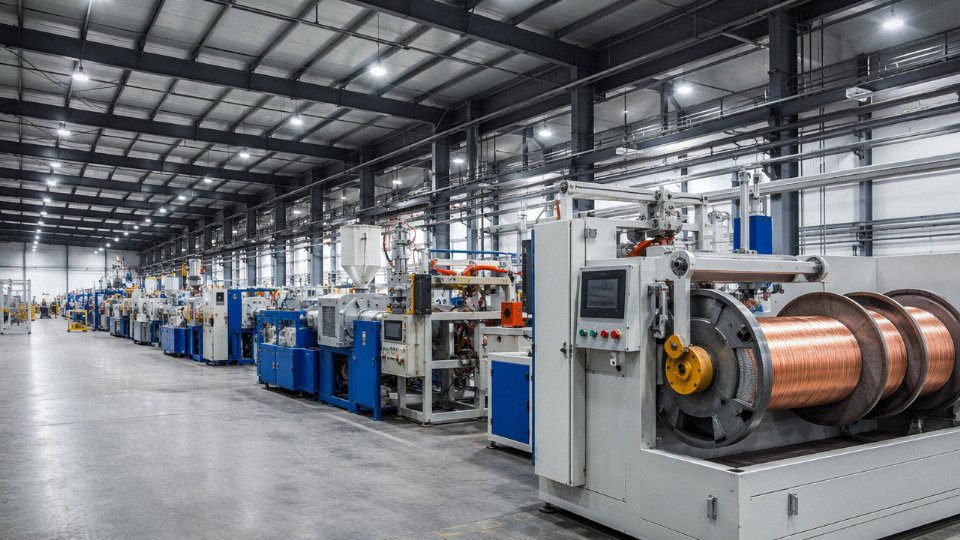
With five production bases and roughly 470,000 m² of manufacturing floor across the group, Jinda can handle order volumes that a smaller mill simply cannot schedule without pushing lead times out unpredictably. For international project orders, typical ex-works lead times run somewhere in the 25–45 day range, depending on conductor cross-section, insulation type, and whether the order requires a dedicated production run for a non-standard color sequence or drum configuration. Large EPC orders — think multi-megawatt solar-plus-storage sites or phased residential developments of several hundred units — get capacity allocation confirmed in writing at order placement, not as a best-effort estimate. That distinction matters when your civil program has a fixed date.
Supply Chain Continuity Across Multi-Year Projects
Infrastructure and real-estate projects routinely span two to five years. A supplier who sources copper rod from the spot market and contracts insulation compound project by project cannot offer pricing transparency or product consistency over that window. Jinda’s vertically integrated structure, running from copper rod and PVC/XLPE compound procurement through extrusion, stranding, and finished product, means that the wire pulled in Phase 3 of a development is metallurgically and dimensionally consistent with what went into Phase 1. For projects where electrical inspectors or commissioning engineers do cross-section checks on later-phase deliveries, that consistency is not a minor point.
Documentation and Customs Compliance
International cable shipments generate a surprisingly dense documentation pack: harmonized tariff code classification, certificates of origin, third-party test reports aligned to the destination country’s import requirements, and increasingly, pre-shipment inspection certificates from SGS, Bureau Veritas, or Intertek. Jinda’s export operations team handles this end to end. They know, for instance, that certain Middle Eastern markets require IECEE CB scheme test reports alongside a local SASO certificate, and that some African tenders specify both IEC compliance and country-of-origin declarations in a specific format. Getting this wrong delays clearance by weeks and can trigger demurrage charges that erode the entire cost advantage of the original purchase.
Jinda has been manufacturing cable products since 1987 and currently exports to more than 50 countries.True
This is consistent with the company's stated founding date and documented international sales operations across multiple continents.
After-Sales Support When It Actually Matters
If a shipment arrives with product that measures outside tolerance on conductor resistance or insulation thickness, you need a supplier who processes the warranty claim and arranges replacement logistics quickly — not one who opens a three-month back-and-forth about test methodology. Jinda’s after-sales process includes documented claim intake, third-party arbitration where needed, and replacement production scheduling that treats non-conformance as a production priority rather than an inconvenience. For complex installations, technical support staff are available for on-site consultation, particularly useful when a project involves an unusual installation method or a local inspector is unfamiliar with an IEC product presented on an NEC-trained project.
Procurement managers, electrical contractors, developers, and EPC contractors are welcome to contact Jinda’s international sales team directly with project specifications, annual volume estimates, or requests for product samples and third-party certification documentation. Thirty-five-plus years of manufacturing experience, starting from 1987, is a reasonable baseline for trusting that the answer to a technical question will come from someone who has seen the problem before.