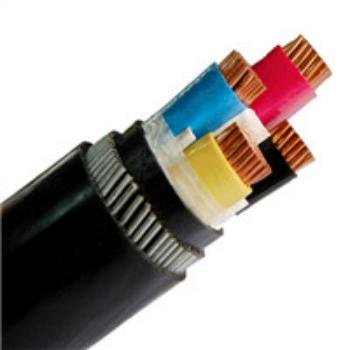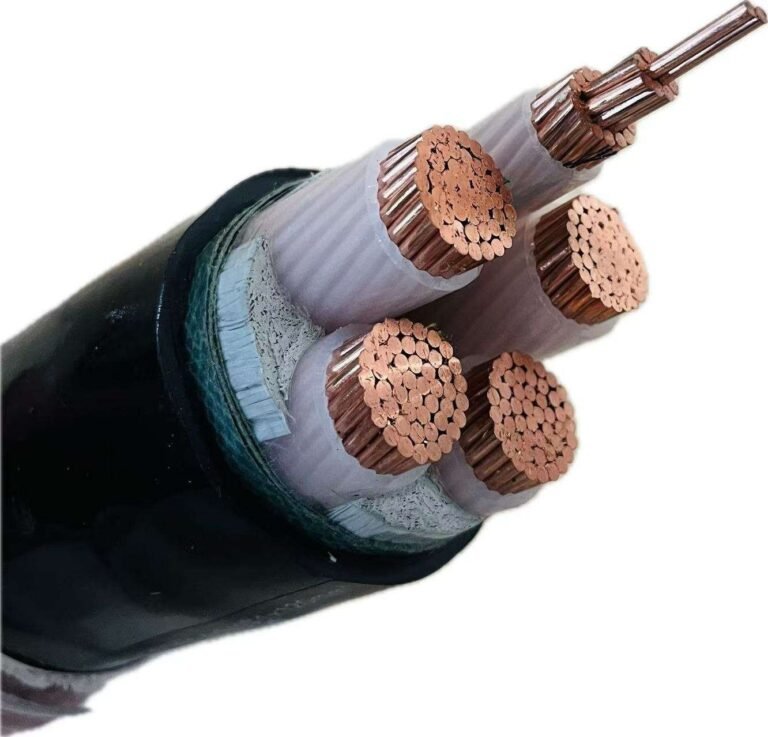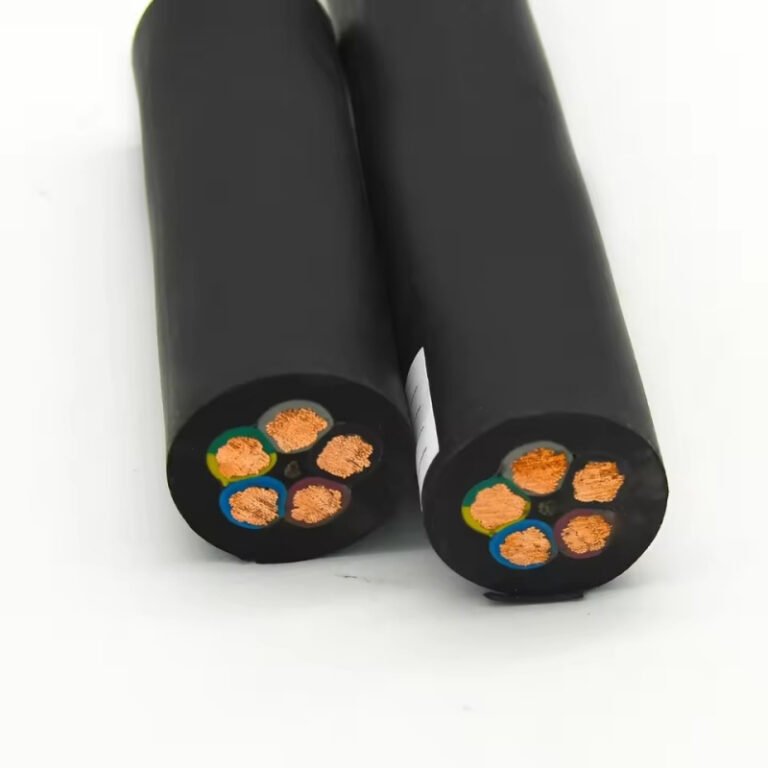
Picking the wrong wire gauge for a residential circuit is one of those mistakes that hides for months — sometimes years — before it announces itself as a tripped breaker, a scorched outlet, or a house fire investigation. An undersized conductor running near its thermal limit doesn’t just risk the insulation; it drives up resistive losses, degrades connected equipment, and in a rental or new-build project, it hands a building inspector a reason to fail the job and restart the clock on your occupancy permit.
Most homes in North America use AWG 14 wire (rated 15 A) for general lighting circuits and AWG 12 wire (rated 20 A) for kitchen, bathroom, and higher-demand branch circuits. Service entrance cables typically range from AWG 2/0 to AWG 4/0 in aluminum. IEC-standard homes in Europe and Asia use 1.5 mm² for lighting and 2.5 mm² for socket circuits — roughly equivalent to those AWG sizes.
What makes this topic less straightforward than a simple lookup table is that the “right” gauge depends on circuit length, load type, ambient temperature in the conduit or cable run, local code edition, and whether the conductor is copper or aluminum — variables that interact in ways that catch even experienced electricians off guard. The sections below walk through each circuit type, the code logic behind the ratings, and the places where a one-size-fits-all answer gets people into trouble.
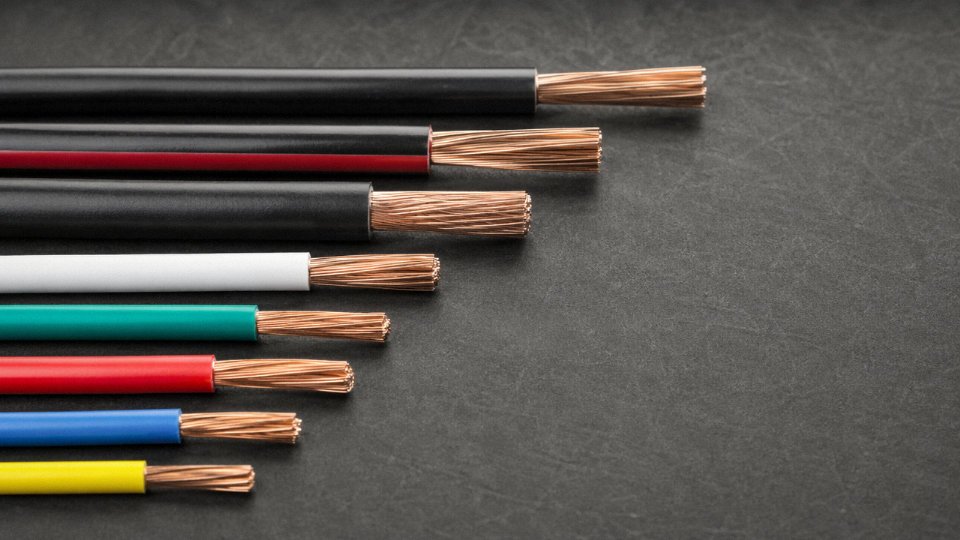
AWG vs. mm²: How the Two Global Sizing Systems Work and Convert
If you’re sourcing cable for a North American project and your supplier quotes in mm², or you’re reading a European installation guide while wiring a US-code job, the numbering mismatch can trip you up fast. These aren’t just different units — they’re fundamentally different ways of expressing the same physical thing, and the mental model for each one is different enough that it’s worth getting straight before anything else.
The AWG Scale: Backwards and Logarithmic
AWG — American Wire Gauge — is a legacy system where the number goes up as the wire gets thinner. That’s counterintuitive to almost everyone who encounters it for the first time, and honestly it stays confusing. The scale is logarithmic, rooted in how many times a wire rod was drawn through progressively smaller dies during 19th-century manufacturing. Each step of roughly three AWG numbers corresponds to approximately half the cross-sectional area (and about a 20–25% reduction in diameter, depending on where you are in the range).
For residential work under NEC 2023, AWG 14 is the thinnest conductor permitted on a branch circuit — rated at 15 A, it’s what you’ll see on general lighting and standard outlet circuits in older homes. AWG 12 handles 20 A and shows up constantly in kitchens, bathrooms, and garage circuits. At the heavy end, AWG 4/0 (written “4/0” or sometimes “0000”) is the thickest conductor you’d routinely pull in a residential service entrance — typically carrying 200 A when it’s copper, though aluminum 4/0 is far more common for that application because of cost and weight.
One practical headache with AWG: nothing in the number itself tells you the conductor’s physical size directly. You have to know the table or remember the relationships. That’s where mm² has a real advantage.
IEC mm²: What You See Is What You Get
The IEC cross-section system used across Europe, most of Asia, Australia, and much of the rest of the world measures the actual conductor cross-sectional area in square millimeters. A 2.5 mm² conductor has a cross-section of 2.5 mm². That makes load calculations more transparent — current density (A/mm²) is a straightforward number to work with, and sizing logic feels less like table-lookup and more like arithmetic.
In practice, a 1.5 mm² conductor handles lighting circuits, 2.5 mm² covers socket outlet (receptacle) circuits, and you step up to 6 mm² or 10 mm² for a cooker, EV charger rough-in, or dedicated air-conditioning circuit. Those boundaries shift depending on the wiring method, ambient temperature, and national standard — but the progression is intuitive in a way that AWG 14 → AWG 12 → AWG 10 never quite is.
Reference Conversion Table
Conversions are approximate. AWG and IEC series don’t line up perfectly — the nearest IEC size is often slightly larger or smaller than the exact AWG equivalent, and different manufacturers round differently.
| AWG | Approx. mm² | Typical Residential Use |
|---|---|---|
| 14 | 2.5 | 15 A lighting / general circuits (NEC) |
| 12 | 4.0 | 20 A kitchen, bath, garage circuits |
| 10 | 6.0 | 30 A dryer, A/C, small sub-feed |
| 8 | 10.0 | 40–50 A range, large A/C |
| 6 | 16.0 | 60 A sub-panel feed, EV charger |
| 4 | 25.0 | 100 A small sub-panel (copper) |
| 2/0 | 70.0 | 150–175 A service entrance |
| 4/0 | 95.0 | 200 A service entrance (copper) |
Gauge Is the Conductor — Not the Cable
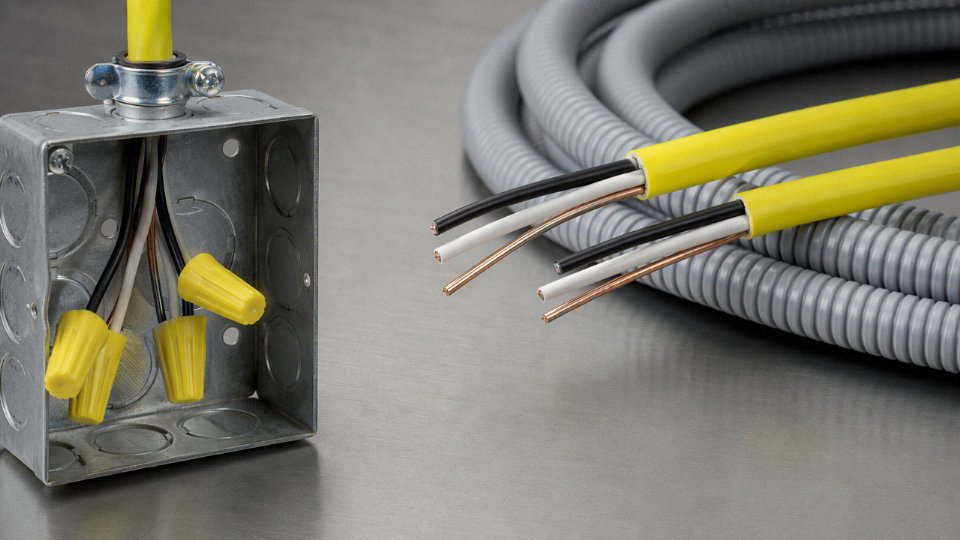
This distinction causes real procurement errors. When an electrician calls out “12/2 with ground” Romex, that cable contains two AWG 12 current-carrying conductors (one hot, one neutral) plus a bare AWG 12 equipment ground — three conductors total, all the same gauge. The overall cable is physically much larger than a single AWG 12 conductor, and the jacket, insulation, and fill calculations all change accordingly. Ordering just “AWG 12 wire” when you need “12/2 NM-B cable” gets you the wrong thing. Always specify conductor count, ground inclusion, insulation type, and jacket rating together.
Ampacity Depends on More Than Gauge
Gauge sets the ceiling, but insulation type and installation method determine what you can actually pull. An AWG 12 THHN conductor in free air handles more current than the same wire bundled with five others inside a conduit in a 40 °C ambient — because heat dissipation drops and derating kicks in. XHHW-2 tolerates wet locations and higher temperatures than standard THHN. European H07V-K flexible stranded wire and NYY sheathed cable carry the same nominal conductor size but behave differently under conduit fill and thermal derating rules. Picking a gauge without specifying insulation class is only half the job.
AWG numbers increase as conductor size decreases, so AWG 4/0 is larger than AWG 14.True
The AWG scale is inverted and logarithmic — lower gauge numbers represent larger conductors. AWG 4/0 has a cross-section of approximately 107 mm² while AWG 14 is approximately 2.1 mm², confirming the inverse relationship.
Circuit-by-Circuit Wire Gauge Breakdown for Every Room and Appliance
Every circuit in a house has a job, and the wire gauge has to match that job exactly — not approximately. Under-gauge wire overheats; over-gauge wire wastes money and can make terminations unreliable. Here is what actually runs in the walls, room by room.
General Lighting and Outlet Circuits (North America)
AWG 14 copper on a 15 A breaker is the floor. NEC 210.19 is explicit: no standard branch circuit gets wire thinner than AWG 14, full stop. In practice, a lot of older houses have AWG 14 throughout, and that’s fine for bedrooms, living rooms, and hallways where the load stays modest — a few lamps, a TV, a phone charger. The risk shows up when someone daisy-chains a space heater onto a circuit that was sized for a reading lamp. The breaker trips if you’re lucky. If the connection is loose or the breaker is tired, it doesn’t trip fast enough.
Many residential electricians now default to AWG 12 even for lighting circuits, especially in new construction, purely for the flexibility of putting that circuit on a 20 A breaker later. The copper cost difference per house is real but not dramatic.
Kitchen Countertop and Small-Appliance Circuits
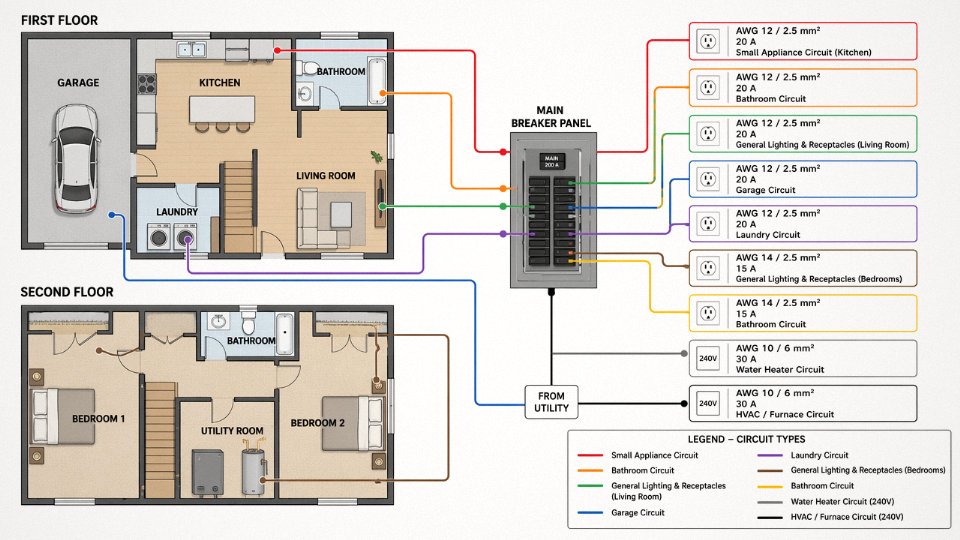
NEC 210.11(C)(1) requires two dedicated 20 A small-appliance branch circuits for kitchen countertops, which means AWG 12 copper minimum. No exceptions. The logic is straightforward: a toaster, a coffee maker, and a microwave running simultaneously will pull 15–18 A easily on a single circuit. AWG 14 on a 15 A breaker will nuisance-trip constantly and, if the breaker is worn, heat the wire enough to degrade insulation over years.
IEC-standard kitchens typically use 2.5 mm² on a 16 A breaker, or 4 mm² on a 20 A breaker for heavier countertop loads. The 4 mm² option is increasingly common in markets where induction cooktops are built into countertops rather than treated as fixed appliances.
Bathroom Circuits
AWG 12 copper on a dedicated 20 A circuit — NEC 210.11(C)(3). One circuit can serve multiple bathrooms in the same dwelling unit, but it must be dedicated to bathroom receptacles only. Hair dryers alone can pull 12–15 A. This is not a circuit to cheap out on with AWG 14.
Electric Range or Cooker
This is where gauge sizing gets expensive fast if you get it wrong. In North America, a standard 40–50 A range circuit calls for AWG 8 copper (40 A) or AWG 6 copper (50 A) on a 240 V double-pole breaker. The actual conductor size depends on the range’s rated amperage — always check the nameplate, not just the breaker size.
IEC markets: 6 mm² on a 32 A circuit covers most freestanding cookers; 10 mm² on a 40 A circuit for larger range-cookers or combined oven-hob units. Running 6 mm² where 10 mm² is needed causes the cable to run warm continuously, which shortens insulation life measurably over 10–15 years.
Clothes Dryer
AWG 10 copper on a 30 A double-pole 240 V breaker, per NEC 220.54. Dedicated circuit. IEC equivalent is 4 mm² or 6 mm² on a 20–25 A breaker depending on dryer wattage. Heat pump dryers, which are becoming common in Europe and increasingly in North America, typically draw less current — sometimes only 15 A — so oversizing the circuit here is wasteful but not dangerous.
Central Air Conditioning and Heat Pump
This one genuinely depends on the equipment. AWG 10 copper handles smaller 2–3 ton units; AWG 6 copper may be needed for larger systems or long runs. The right answer is always on the unit’s nameplate under MCA (minimum circuit ampacity). Ignore the MCA and use a rule of thumb, and you may void the equipment warranty and fail inspection. That’s not a hypothetical — it comes up regularly on permit reviews.
Electric Water Heater
AWG 10 copper on a 30 A double-pole breaker is standard for a residential tank-type water heater. Dedicated circuit required. Tankless electric water heaters are a different matter entirely — some units require two or even three parallel 40–50 A circuits, which means AWG 8 or AWG 6 per circuit. Check the installation manual before roughing in.
EV Home Charging (Level 2, 240 V)
A 7.2 kW Level 2 EVSE at 240 V draws 30 A continuously, so NEC requires the circuit to be rated at least 40 A (125% of continuous load). That means AWG 8 copper on a 40 A breaker minimum; AWG 6 copper on a 50 A breaker if the homeowner wants future flexibility or if the run exceeds roughly 50–60 feet. IEC markets use 6 mm² or 10 mm² on a 32 A or 40 A Type 2 circuit. Long driveway runs are where people get into trouble — voltage drop on a 100-foot AWG 8 run at 40 A is meaningful enough to slow charging and annoy the customer.
AWG 6 copper on a 50 A breaker is sufficient for most residential Level 2 EV charging installations up to 11.5 kW at 240 V.True
At 240 V, 50 A provides 12 kW capacity. AWG 6 copper is rated for 55–65 A in typical residential conduit fill conditions, making it appropriate for a 50 A circuit under NEC ampacity tables (Table 310.12). For runs over roughly 100 feet, voltage drop calculations should be confirmed.
Service Entrance and Main Panel Feeders
The cables coming into the main panel are the largest conductors in the house. For 200 A service, the standard is AWG 2/0 copper or AWG 4/0 aluminum. For 100 A service, AWG 1/0 copper or AWG 2/0 aluminum is typical. Aluminum is cost-effective at these sizes — the conductor cost difference between copper and aluminum at AWG 4/0 is substantial, and aluminum feeders have a solid track record when installed correctly. The non-negotiable detail: anti-oxidant compound at every aluminum termination, and terminals rated for aluminum. Skip either step and you’ll have a high-resistance connection that heats up under load. It’s a slow failure, but it is a failure.
Low-Voltage and Data Wiring
These circuits sit outside the NEC ampacity tables but are not unregulated. Doorbell and thermostat wiring typically uses AWG 18–22 stranded, usually in multi-conductor cable. Cat 6 Ethernet runs AWG 23 solid copper — the solid conductor matters for maintaining the geometry that supports Gigabit and 10G speeds. Fire rating of the cable jacket (CL2, CMP, CMR) is regulated by the NEC based on where it’s routed. Running a non-plenum-rated cable through an air-handling plenum is a code violation and a genuine fire risk, not just a paperwork issue.
| Application | North America (AWG / Copper) | Breaker | IEC Equivalent | IEC Breaker |
|---|---|---|---|---|
| General lighting/outlets | AWG 14 | 15 A | 1.5 mm² | 10–16 A |
| Kitchen small appliance | AWG 12 | 20 A | 2.5–4 mm² | 16–20 A |
| Bathroom dedicated | AWG 12 | 20 A | 2.5 mm² | 16–20 A |
| Electric range/cooker | AWG 8–6 | 40–50 A | 6–10 mm² | 32–40 A |
| Clothes dryer | AWG 10 | 30 A | 4–6 mm² | 20–25 A |
| Central A/C (per nameplate) | AWG 10–6 | per MCA | 4–6 mm² | per MCA |
| Electric water heater | AWG 10 | 30 A | 4–6 mm² | 20–25 A |
| EV charging Level 2 | AWG 8–6 | 40–50 A | 6–10 mm² | 32–40 A |
| 200 A service entrance | AWG 2/0 Cu / 4/0 Al | 200 A | — | — |
| Doorbell / thermostat | AWG 18–22 | N/A | 0.5–0.75 mm² | N/A |
| Cat 6 Ethernet | AWG 23 solid | N/A | — | N/A |
How Conductor Material—Copper vs. Aluminum vs. Copper-Clad Aluminum—Changes the Gauge You Need
Every ampacity table in this article defaults to copper unless explicitly stated otherwise. That’s not arbitrary — copper sits at roughly 58 MS/m conductivity, it bends without work-hardening to failure, and its oxide layer is conductive enough that a standard screw terminal handles it without special prep. It costs more, sometimes significantly more depending on LME pricing that week, but it earns that premium through forgiveness. A slightly undertorqued lug on a copper conductor is usually fine. On aluminum, it’s a fire waiting for the right conditions.
Aluminum: One to Two Sizes Larger, Always
Aluminum’s conductivity runs around 35 MS/m — roughly 61% of copper’s on a cross-sectional basis. The practical consequence is straightforward: to carry the same current, an aluminum conductor needs to be one to two AWG sizes larger. AWG 2/0 aluminum replaces AWG 1/0 copper for the same ampacity. In mm² terms, you’re looking at roughly a 1.6× increase in cross-section to get equivalent current capacity.
For service entrance cables — the big feeders running from the utility meter to a 100 A or 200 A main panel — aluminum is nearly universal in North American residential work precisely because those conductors are large enough to terminate safely with proper hardware, and the cost savings at AWG 2/0 or 4/0 are real. NEC 310.15 provides separate ampacity tables for aluminum and copper-clad aluminum; the values are not interchangeable with the copper tables, and anyone pulling the wrong column is sizing incorrectly from the start.
The termination issue matters more than most buyers realize. Any device connecting to aluminum — a lug, a breaker, a wire connector — must be rated AL/CU or AL-R. Plain steel or brass terminals react with aluminum oxide over time, loosen under thermal cycling, and eventually arc. That’s the mechanism behind the wave of residential fires in the late 1960s and early 1970s, when AWG 10 and AWG 12 aluminum branch circuit wiring was used extensively in U.S. tract housing. NEC subsequently banned aluminum for new branch circuit wiring below AWG 8, a restriction that remains in force. If you’re doing a renovation and find aluminum branch wiring in an older house, that’s a separate remediation discussion — but don’t ignore it.
Copper-Clad Aluminum: The Hidden Substitution Risk
CCA is where procurement managers need to pay close attention. The product is exactly what it sounds like: an aluminum core with a thin copper cladding, typically applied by cladding or electroplating. It terminates more easily than bare aluminum because the copper surface behaves normally under a screw terminal, and it costs less than solid copper. In certain low-current, fixed-installation applications it has a legitimate role.
The problem comes from substitution. CCA carries only about 70–80% of the ampacity of pure copper at the same gauge — the exact figure depends on cladding thickness and the conductor’s overall cross-section, so don’t treat any single number as definitive without a test report. Using CCA wire pulled from a box labeled only as “copper conductor” to wire a kitchen circuit that expects full AWG 12 copper ampacity is a code violation and, under sustained load, a thermal hazard.
CCA wire of the same AWG gauge carries the same ampacity as pure copper wireFalse
CCA conductors carry approximately 70–80% of the ampacity of pure copper at the same gauge due to the aluminum core's lower conductivity. Substituting CCA without recalculating circuit loads is a code violation under NEC and a documented fire risk.
Reputable manufacturers label CCA products clearly and keep them in a distinct product line. When sourcing cable internationally, specify conductor material explicitly in your purchase order — “electrolytic tough-pitch copper per ASTM B3, minimum 99.9% purity (T2/TU grade)” is the language that actually protects you, not just “copper wire.” Request a third-party test report covering ICP spectrometry for conductor purity. Jinda’s QA process includes ICP verification as a standard step, which is how you catch a nominally copper product that’s actually CCA or, worse, recycled alloy of uncertain composition.
The short decision logic: for branch circuits, use copper unless the run is long enough that the AWG step-up on aluminum still saves money after hardware costs. For service entrance, aluminum at the correct gauge with AL/CU-rated hardware is entirely standard. Never accept an unmarked conductor in a procurement batch — find out what it actually is before it goes into a wall.
How Insulation Type, Conduit Fill, and Ambient Temperature Derate the Ampacity of Any Wire Size
Getting the gauge right is only half the job. The other half — the part that trips up even experienced electricians — is understanding that every ampacity figure in a code table assumes a specific set of installation conditions. Change those conditions and the wire’s safe carrying capacity changes with it, sometimes dramatically. Overloaded wiring that technically uses the “correct” gauge is still overloaded wiring.
Insulation Temperature Rating and the Terminal Limitation
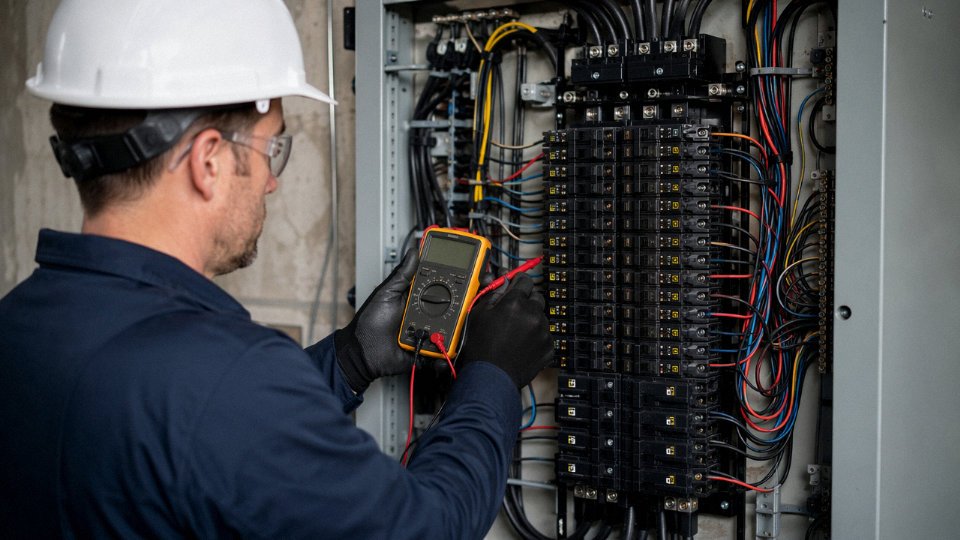
THHN/THWN-2 is the most common building wire in North American conduit work. It carries a 90 °C dry rating and 75 °C wet rating, which sounds like it should allow the higher 90 °C column ampacities from NEC Table 310.15(A)(1). In practice, most residential and light commercial terminations — breakers, lugs, receptacle terminals — are only rated 60 °C or 75 °C. The NEC is explicit about this: your ampacity is capped at whatever the lowest-rated component in the circuit can handle. Run THHN into a 60 °C-rated breaker lug and you’re using the 60 °C column regardless of what’s printed on the wire jacket.
NM-B (Romex) is the same story, actually worse in one sense. The insulation itself is rated 90 °C, but the NEC requires it to be used at 60 °C ampacity values because of how heat builds up inside the flat sheathed assembly and because the terminations it typically feeds are 60 °C devices. A lot of people buy NM-B, see “90 °C” on the label, and assume they’re getting more headroom. They’re not.
The practical takeaway: insulation rating sets a ceiling, but termination rating sets the actual limit. Upgrading insulation grade alone doesn’t buy you additional ampacity unless you also upgrade every termination device in the circuit.
Ambient Temperature: The Factor That Hits Hardest in Attics and Hot Climates
NEC Table 310.15(B)(1) provides correction multipliers for ambient temperatures above the baseline 30 °C. At 40 °C ambient — common in an unconditioned attic in summer, or in a standard Middle East installation — AWG 12 THHN drops from its 30 A (90 °C column) or 20 A (60 °C column) values proportionally. Using the 60 °C column at 40 °C ambient, that AWG 12 circuit feeding a 20 A breaker is already running close to its corrected limit.
At 50 °C ambient — which is not exotic in a rooftop conduit run in Saudi Arabia, UAE, or even a poorly ventilated attic in Texas in July — the correction factor brings ampacity down enough that AWG 12 may no longer safely serve a 20 A circuit under continuous load. AWG 10 becomes the conservative and often code-required choice. This surprises procurement managers sourcing wire for projects in hot climates who spec directly off a North American residential table without applying temperature corrections.
Conduit Fill and Bundling Derating
When four or more current-carrying conductors share a single conduit or cable tray, NEC Table 310.15(C)(1) requires ampacity reduction. Four to six conductors: 80%. Seven to nine: 70%. Ten to twenty: 50%. These numbers compound quickly on panel feeder conduit runs where multiple circuits are pulled together to save conduit costs. A common mistake is running eight circuits through one conduit and forgetting that every conductor in that conduit is now operating at 70% of its base ampacity. That AWG 12 you sized for 20 A is now limited to roughly 14 A continuous — a serious problem if those are kitchen or bathroom circuits under real load.
Bundling eight or more current-carrying conductors in one conduit without applying derating factors is a code violation under NEC Table 310.15(C)(1) and can cause insulation degradation even before a breaker trips.True
NEC 310.15(C)(1) mandates ampacity reduction for more than three current-carrying conductors in a raceway; heat accumulation in bundled conductors is additive, and a breaker sized for the wire's base ampacity will not trip before thermal damage occurs to the insulation.
Voltage Drop: Not a Code Mandate, But a Real Design Constraint
The NEC recommends — doesn’t require — keeping branch circuit voltage drop below 3% and total drop (feeder plus branch) below 5%. At 120 V on a 20 A circuit, that 3% threshold represents about 3.6 V. AWG 12 running 50 feet (roughly 15 m) typically produces around 2–2.5% drop under full load, which is fine. Double that run to 100 feet (30 m) — common in large homes, workshops, or outbuildings — and you’re likely exceeding 3% unless you step up to AWG 10. For 240 V circuits the numbers are more forgiving because you’re working with a higher base voltage, but long runs to detached garages or irrigation panels still warrant the calculation.
IEC 60364 applies the same physics through correction factors in Tables B.52.14 and B.52.16, adjusted for installation method (Method A through F covers everything from enclosed conduit to free-air cable tray). The correction methodology is identical in concept; the tables just reference cross-sectional area in mm² rather than AWG. Jinda’s technical support team routinely provides pre-calculated ampacity tables for specific IEC installation methods across the full conductor range in the product catalog — useful for project engineers who need to document compliance without building the tables from scratch.
The bottom line is that wire gauge selection and ampacity derating are two separate but inseparable calculations. Skipping the second one after doing the first is where correctly-gauged wire installations still fail.
Reading a Residential Cable Spec Sheet: What Every Number and Letter in the Product Name Means
Walk into any electrical wholesale counter and ask for “some 12-gauge wire” and the counter person will stare at you. You need to speak the full product name, because every segment of that alphanumeric string is a load-bearing specification. Getting even one element wrong can mean receiving a cable that’s legal but wrong for the installation, or worse, technically compliant with the order but mismatched to the application.
Decoding a North American NM-B Cable Name
Take the designation 12/2 NM-B with Ground, 600 V. Breaking it apart:
- 12 — the AWG conductor size. Smaller number means larger conductor.
- /2 — two insulated conductors (typically one black, one white). This does not count the bare ground.
- NM-B — Non-Metallic sheathed cable, type B. The “B” designates a 90 °C rated conductor insulation, though NEC tables derate it to 60 °C for ampacity purposes inside a bundled sheath. It is not rated for wet locations or exposed outdoor use.
- 600 V — the cable’s rated voltage class.
- with Ground — a bare copper equipment grounding conductor is included inside the outer jacket. This is often printed explicitly because older NM cable sometimes omitted it.
If you order “12/2 NM” without specifying “with ground,” you may receive legacy stock without the ground wire. On a kitchen circuit, that matters.
THHN: Single Conductors for Conduit
THHN 10 AWG, Black, 600 V, 90 °C is a different animal entirely. THHN stands for Thermoplastic High Heat-resistant Nylon-coated — a single insulated conductor pulled through conduit, raceway, or cable tray. You buy it by the conductor, not as a multi-core assembly. Color is a specification, not a cosmetic choice; NEC color conventions (black or red for ungrounded conductors, white for neutral, green or bare for ground) are part of the installation code. Ordering the wrong color on a large conduit pull forces relabeling at every termination point, which is tedious and introduces inspection risk.
IEC and VDE Designations
European and IEC-aligned markets use a different naming logic. NYY-J 3×2.5 mm² + 1×1.5 mm², 0.6/1 kV reads as follows: NYY is a PVC-insulated, PVC-outer-sheathed power cable per VDE 0276. The J suffix means the cable includes a protective earth conductor — omit that letter (NYY-O) and there is no earth core. 3×2.5 means three phase conductors each at 2.5 mm². The +1×1.5 is the earth conductor, which in this designation is a reduced cross-section — acceptable under IEC 60364 rules for certain configurations but something a procurement officer needs to consciously verify. 0.6/1 kV is the voltage class: 0.6 kV line-to-earth, 1 kV line-to-line.
Chinese GB Standard: BVV and Its Relatives
The designation BVV 2×2.5 mm² is common across Chinese domestic projects and export cables supplied to GB/T 5023. Each letter position carries meaning: first B = fixed installation (布线), second entry V = PVC insulation, third V = PVC outer sheath. 2×2.5 means two conductors, each 2.5 mm². Variants like BV (no outer sheath, single-core), RVV (flexible, multi-core), or BVVB (flat profile) follow the same positional logic. Confusing BV with BVV on a purchase order is a frequent import mistake — one has a jacket, one doesn’t, and that changes both the installation method and the conduit-fill calculation.
Jinda cables produced for export can be manufactured to IEC 60227, UL 44, or GB/T 5023 upon specification in the purchase order.True
This is standard practice for cable manufacturers with multi-standard production lines and third-party certifications. Buyers must state the target standard explicitly; a factory will default to its domestic standard otherwise.
What Every Purchase Order Must Actually Say
In practice, a cable PO that just states “2.5 mm² two-core” is underspecified. A complete order needs:
| Field | Why It Matters |
|---|---|
| Conductor material and purity | Copper vs. aluminum changes ampacity and termination hardware |
| Cross-section or AWG | The actual current-carrying specification |
| Number of cores | Determines circuit configuration |
| Insulation material and temperature rating | Derate factors, environment suitability |
| Sheath material | Mechanical protection class, UV resistance |
| Voltage class | 300/500 V vs. 0.6/1 kV changes insulation wall thickness |
| Applicable standard | NEC/UL, IEC/VDE, GB — not interchangeable |
| Stranding class | Class 1 solid, Class 2 stranded, Class 5 flexible — affects termination and conduit pull |
| Reel length | Affects splice frequency on site |
| Certification mark required | UL, CE, CSA, SABS, SASO — destination-market dependent |
The stranding class point gets overlooked more than it should. Class 1 solid 2.5 mm² and Class 5 flexible 2.5 mm² have the same ampacity on paper but behave completely differently at a screw terminal. Using flexible stranded wire in a spring-clamp terminal rated for solid or Class 2 can result in strand spillage, intermittent contact, and eventually a loose-connection fire. Specify it explicitly.
One other common error: procurement teams sometimes order by outer diameter — matching what’s already on site by measuring the jacket — rather than specifying conductor cross-section. Outer diameter varies by manufacturer, insulation compound, and sheath thickness. It is not a reliable proxy for conductor size, and ordering this way is how you end up with the right-looking cable that’s a gauge too small.
National and International Codes That Govern Residential Wire Gauge Selection
Every gauge recommendation in this article assumes you’re working within a recognized electrical code framework. Get that part wrong — or ignore a local amendment — and your correctly sized wire can still fail inspection, void insurance coverage, or, in the worst case, become a fire hazard that no one catches until it’s too late.
United States: NEC (NFPA 70)
The National Electrical Code is a model code published by NFPA and updated on a three-year cycle; the 2023 edition is current. All 50 states adopt it, though a meaningful number of jurisdictions lag one or two cycles behind — California and New York both run modified adoptions — so never assume the version on your desk matches what the local AHJ is actually enforcing. For residential wire sizing, the articles you’ll live in are 210 (branch circuits), 215 (feeders), 230 (service entrance), 310 (conductor ampacity tables and correction factors), and 334 (NM-B cable, the standard for non-metallic sheathed cable in stick-frame housing).
Article 310 is where most procurement arguments start. Table 310.12 sets the ampacity values for NM-B cable in the sizes most contractors actually order in bulk — AWG 14 through AWG 2 copper — and those values already assume a 60°C termination limit and a 30°C ambient. Stray outside those conditions and you’re into derating, which the previous section covered. The point here is that the code is layered: Article 210 tells you the circuit rating, Article 310 tells you the wire ampacity, and Article 334 tells you where NM-B is and isn’t legal to use.
NEC (NFPA 70) Article 210 requires a minimum of AWG 14 copper for 15 A general-purpose branch circuits in residential occupancies.True
NEC 2023 Article 210.19(A) and Table 310.12 confirm AWG 14 copper as the minimum conductor for 15 A circuits under standard conditions with 60°C termination limits.
Canada: CEC Part I (CSA C22.1)
The Canadian Electrical Code mirrors NEC structure closely enough that experienced US electricians can navigate it, but the differences matter. Canada’s rules around aluminum branch-circuit wiring are noticeably stricter — a direct response to the aluminum wiring failures and fires documented in Canadian housing stock from the late 1960s and 1970s. Ampacity tables in the CEC also differ for certain insulation classes, so a direct table lookup from an NEC reference can land you one size off. When procuring cable for Canadian residential projects, confirm CSA certification specifically; a UL-listed product doesn’t automatically satisfy a Canadian inspection.
European Union and UK
The IEC 60364 series underpins residential electrical design across the EU, implemented as HD 60364. In practice, each country then publishes a national annex: BS 7671 (the IET Wiring Regulations, currently 18th Edition) in the UK, NF C 15-100 in France, DIN VDE 0100 in Germany. These annexes are not cosmetic — they include country-specific installation methods, protective device requirements, and sometimes different conductor sizing defaults. Cable products sold into EU markets need the CE mark and must comply with harmonized product standards, primarily IEC 60227 for PVC-insulated cables at low voltage and IEC 60502 for cables up to 1 kV. The 1.5 mm² / 2.5 mm² sizing convention described earlier in this article is rooted directly in the IEC 60364 design methodology.
Australia, New Zealand, Middle East, Africa, and China
AS/NZS 3000 — commonly called the Wiring Rules — governs Australian and New Zealand residential installations and uses IEC mm² sizing throughout, but with locally derived ampacity tables that reflect the hotter ambient conditions common in Australian climates. Specifiers sometimes underestimate how much those tables diverge from European equivalents; a 2.5 mm² conductor rated comfortably for a 20 A socket outlet in a temperate German installation may need to be upsized to 4 mm² in a north Queensland installation without adequate airflow. Cable products fall under AS/NZS 5000.
In the Middle East and Africa, the picture is fragmented. Saudi Arabia’s SASO 2168 and the UAE’s ESMA standards both reference IEC 60227 and IEC 60502 as their product benchmarks but layer on local testing and approval requirements. Kenya (KEBS) and South Africa (SABS) follow similar IEC-reference structures with their own national modifications. Jinda produces cables certified to SASO 2168, IEC 60227, and IEC 60502 specifically for these markets, which matters practically when a shipment hits customs: missing the right certification mark can hold a full container for weeks.
China’s domestic residential cable standards — GB/T 5023 (technically aligned with IEC 60227) and GB/T 12706 (aligned with IEC 60502) — are mandatory for construction projects built and sold within China. CCC (China Compulsory Certification) applies to a defined range of cable products. All Jinda cables intended for Chinese residential construction are manufactured to GB mandatory requirements and carry CCC where the product category requires it.
The AHJ Principle: Why Local Approval Always Overrides the Published Code
Across every one of these systems, there is a consistent principle worth stating plainly: the authority having jurisdiction has final say. A code is a minimum standard; an AHJ can require more. Before you finalize a bill of materials for any project — whether it’s a single-family home in Texas or a residential tower in Riyadh — verify which code edition and which local amendments are actually in force. In my experience, this step gets skipped more often than it should, and the cost of re-pulling wire through conduit because the local inspector requires a gauge heavier than the base code is considerably higher than a phone call to the permit office would have been.
Practical Wire Gauge Selection Checklist for Contractors, Electricians, and Procurement Teams
Work through these steps in order. Skipping ahead is how undersized wire ends up behind a finished wall.
Step 1 — Calculate the Circuit Load and Apply the 80% Rule
Start with watts, not guesswork. Add up every connected load on the circuit, divide by system voltage to get amperes (A = W ÷ V), then apply NEC 210.19’s continuous-load rule: if the load runs for three hours or more, the conductor and overcurrent device must be rated at 125% of that load. A 16 A continuous load therefore needs a 20 A circuit minimum. In practice, most kitchen countertop circuits and bathroom circuits land here, which is exactly why AWG 12 at 20 A is the default for those rooms — not because someone was being conservative, but because the math reliably pushes past the 15 A threshold once you account for coffeemakers, hair dryers, and anything else people actually plug in.
Step 2 — Choose Conductor Material Before You Pick a Size
Copper for every branch circuit at AWG 8 and smaller. Full stop. Aluminum and copper-clad aluminum are viable for service entrance conductors and large feeders — AWG 2/0 to 4/0 aluminum handles 100–200 A panels reasonably well and costs noticeably less per foot — but they require AL-rated termination lugs, anti-oxidant compound, and torque-verified connections. Using aluminum on a 20 A branch circuit with a standard residential receptacle is a known fire risk. The termination hardware simply isn’t rated for it, and the oxide layer that forms on aluminum conductors increases resistance at the connection point over time.
Step 3 — Derate for Temperature and Bundling
Base ampacity tables assume 30 °C ambient and no more than three current-carrying conductors in a raceway. Reality is messier. An attic in a hot climate can hit 50–60 °C in summer, which alone drops copper THHN ampacity by a correction factor of roughly 0.71, meaning an AWG 12 conductor’s 30 A table value effectively becomes around 21 A before bundling is even considered. Add four or more conductors in conduit and you’re applying another 0.80 factor. Multiply all applicable correction factors together, then confirm the derated ampacity still covers your calculated load with margin. If it doesn’t, go up a gauge.
Step 4 — Check Voltage Drop on Any Run Over About 50 Feet
Use VD = (2 × K × I × L) ÷ CM, where K = 12.9 for copper (10.8 for aluminum), I is the load in amps, L is the one-way run length in feet, and CM is the circular-mil area from the AWG table. If the calculated drop exceeds 3% of system voltage — 3.6 V on a 120 V circuit, 7.2 V on 240 V — upsize the conductor. Long runs to a detached garage, a well pump, or a subpanel in a large house catch a lot of people off guard. The breaker won’t trip; motors and electronics just run hotter and shorter-lived than they should.
Step 5 — Match Insulation and Sheath Type to the Installation Environment
| Environment | North American designation | IEC / European equivalent |
|---|---|---|
| Dry indoor (conduit or cable) | THHN, NM-B | H07V-U, NYM-J |
| Damp or wet locations | THWN-2 | NYY-J |
| Direct burial | USE-2, UF-B | NYY, N2XY |
| High-flex / appliance cord | SO, SOOW | H07RN-F, H05VV-F |
Don’t assume NM-B (“Romex”-type) is acceptable just because it’s common. It is not listed for wet locations, direct burial, or conduit in most jurisdictions.
Step 6 — Verify the Governing Code and Required Product Certification
Confirm which code edition the authority having jurisdiction (AHJ) enforces before ordering. NEC 2023, CEC 2021, IEC 60364, and AS/NZS 3000 all have meaningful differences in derating methods and circuit protection requirements. The cable certification must match the project location — UL listing for the US, CSA for Canada, CE marking under the CPR for Europe, SABS for South Africa. A cable that is perfectly acceptable on one continent may be rejected at inspection on another, and “equivalent” is not a substitute when an inspector is standing in front of you.
Cable certifications such as UL, CSA, and CE are jurisdiction-specific and are not interchangeable for compliance purposes.True
Each certification body tests to different standards and national codes. A UL-listed cable meets NEC requirements but is not automatically acceptable under IEC 60364 or AS/NZS 3000, and vice versa. Inspectors and AHJs require certification marks matching the applicable national standard.
Step 7 — Write a Complete Cable Specification for the Purchase Order
Vague specs create expensive problems at delivery. Specify conductor material, AWG size or mm² cross-section, number of conductors, insulation type, jacket material, voltage rating, applicable standard, and required certification. Request mill test reports showing conductor resistance, insulation resistance, and conductor dimensions — not just a compliance declaration. Ask for third-party test certificates (SGS and Bureau Veritas are both widely accepted) and confirm reel labeling requirements in writing before production begins.
Jinda provides full documentation packages including IEC test reports, factory inspection options, and SGS or Bureau Veritas certificates on request — standard practice for any export order, not an upgrade.
Frequently Asked Questions About Residential Wire Gauge
Can I use AWG 12 wire on a 15 A circuit?
Yes, and it’s actually a reasonable choice in certain situations. AWG 12 on a 15 A breaker is overcapacity — the wire can handle more current than the breaker will ever let through — but that’s not a code violation. Electricians do this when a run is long enough that voltage drop becomes a real concern, or simply to leave flexibility for upgrading the circuit later without pulling new wire. The reverse is never acceptable: AWG 14 on a 20 A breaker is a code violation and a genuine fire hazard, full stop.
What happens if I use wire that is too thin?
The conductor heats up under load. At first the insulation just softens; over repeated cycles it cracks, and once the insulation is compromised you’re looking at a short circuit or an arc fault inside a wall cavity where nobody can see it. Undersized wire is one of the most consistently cited factors in residential electrical fires — not because people are careless, but because the damage is invisible until it isn’t. Match or exceed the minimum gauge for the breaker. There’s no safe margin on the wrong side of that line.
Is aluminum wiring in older homes dangerous?
Aluminum branch-circuit wiring — AWG 12 and AWG 10 aluminum used in 15 A and 20 A circuits — was installed in a significant share of U.S. homes built roughly between 1965 and 1973. It is not automatically dangerous, but it requires specific handling. Every device on those circuits needs to be CO/ALR-rated; standard outlets and switches are not compatible. Anti-oxidant compound at connections is standard practice, and periodic inspection by a licensed electrician is not optional maintenance, it’s necessary. The CPSC’s aluminum wiring remediation guide (CPSC Publication 516) lays out the approved repair approaches — pigtailing with copper using approved connectors, or full rewiring. Don’t let anyone tell you a coat of paint over the panel is sufficient.
Aluminum branch-circuit wiring from the 1965–1973 era is inherently unsafe regardless of conditionFalse
Aluminum branch-circuit wiring is not automatically dangerous. When properly maintained with CO/ALR-rated devices, anti-oxidant compound at all connections, and regular professional inspection, it can perform safely. The CPSC Publication 516 documents approved remediation methods rather than mandating full rewiring in all cases.
What wire gauge is used for a 240 V outlet (NEMA 14-30 or 14-50)?
A NEMA 14-30 dryer outlet runs on a 30 A double-pole breaker and requires AWG 10 copper. A NEMA 14-50 — used for ranges and increasingly for EV chargers — takes a 50 A double-pole breaker and AWG 6 copper. These are non-negotiable minimums. EV charger installations in particular tend to attract DIY shortcuts, and an undersized run to a 50 A charger cycling daily will degrade faster than almost any other residential wiring scenario.
How do I convert a Chinese or European cable size to AWG?
Divide the mm² cross-section by 0.5067 to get approximate circular mils, then match to the nearest AWG value. In practice, use the conversion table in Section 2 of this article. The more important operational note: when ordering from an IEC-standard manufacturer, specify mm² explicitly. Asking a Chinese factory for “AWG 12 wire” without stating the mm² equivalent can result in a cable sized to 3.3 mm² rather than the full 3.31 mm² — a small rounding difference that still passes visual inspection but puts you slightly under spec on a high-load circuit. For bulk procurement, the spec sheet should always show both values.
Does wire gauge affect energy efficiency?
It does, and the effect compounds over time. A thicker conductor has lower resistance, which means less voltage drop and less heat generated in the wire itself. On a single circuit the savings are modest. Across a whole house with long runs — or across a commercial project with hundreds of circuits operating at near-capacity for decades — upsizing by one AWG can meaningfully reduce operating costs over the cable’s 30- to 40-year service life. The upfront copper cost is real, but so is the payback arithmetic on energy waste.
What wire gauge do smart home and low-voltage systems use?
Thermostat wire is typically 18 AWG multi-conductor — 18/4 for basic HVAC, 18/8 for zoning or smart thermostats with extra features. Doorbell wire runs 18 AWG or 20 AWG depending on run length. Structured wiring like Cat 6 Ethernet uses AWG 23 solid conductor. In-wall speaker wire should be AWG 14 to 16 with a CL3 insulation rating. For all of these, ampacity is essentially a non-issue — the current levels are too low to matter. What the code actually cares about is insulation flammability rating, because these cables run through the same wall cavities as everything else.
Can I mix wire gauges in the same circuit?
No. You cannot reduce conductor size partway through a circuit. Every conductor must be rated for at least the full ampacity of the overcurrent protection device protecting that circuit — the weakest link defines the risk. The one narrow exception under NEC 210.19(A)(4) is a tap conductor of defined short length feeding a specific, properly sized load. That’s a specific engineering condition, not a general license to mix gauges because you ran short of AWG 12 at the end of a run. In practice, if you find mixed gauges in an existing installation during a renovation, treat it as a defect until proven otherwise.
How Jinda’s Global Manufacturing Capability Supports Residential and Construction Cable Projects Worldwide
Anyone who has managed cable procurement across two or more countries knows the headache: one project needs UL-Listed THHN in AWG 12 and AWG 10, the next wants H07V-K 2.5 mm² and 1.5 mm² to EN 50525, and sourcing them from different suppliers means two quality systems, two shipping schedules, and two sets of documentation to reconcile before an inspector will sign off. That’s a real coordination burden, and it compounds on large residential developments where a spec error caught late can mean re-pulling hundreds of meters of wire.
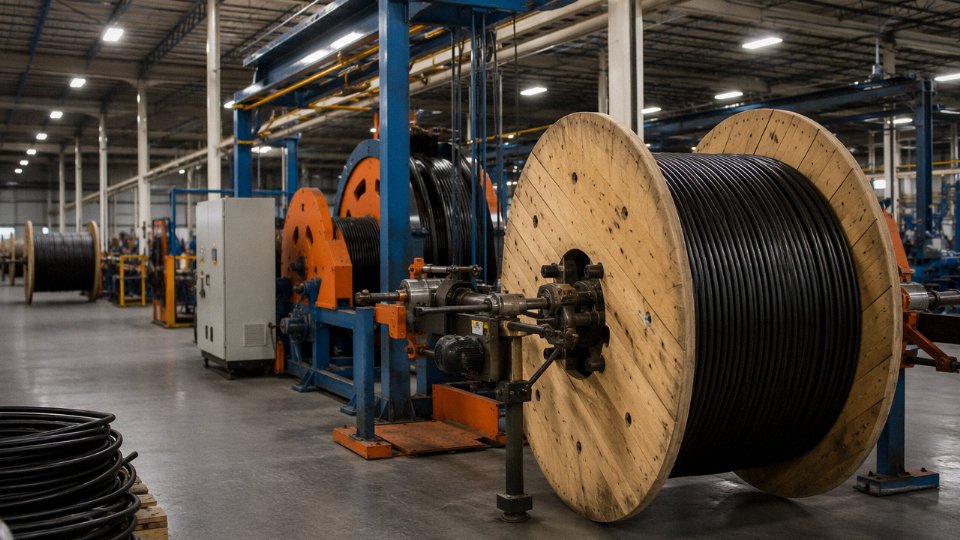
Jinda’s five production bases across China — covering roughly 470,000 m² of manufacturing floor space collectively — run AWG-specified and IEC mm²-specified product lines from the same facilities. That matters practically: a developer building apartment blocks in Southeast Asia and a hotel resort in the Middle East can consolidate both cable packages under one purchase order, one quality audit, and one freight consolidation. The conductor sizing, insulation compounds, and testing protocols differ by market, but the supply chain management doesn’t have to.
Product Range That Covers Every Gauge Class in Residential Work
The gauge classes this article has worked through — from 1.5 mm² lighting circuits up through the heavy aluminum conductors feeding a 200 A service entrance — are all within Jinda’s standard production range. Low-voltage building wire starts at 0.5 mm² (roughly AWG 20) for signal and control conductors and runs continuously through 300 mm² (the AWG 600 kcmil equivalent range), which covers every residential and light commercial feeder scenario without exception.
Construction types include THHN/THWN-2 for North American conduit work, H07V-K for flexible building wire in European and IEC-market applications, SWA (steel wire armored) and AWA (aluminum wire armored) for direct burial and outdoor residential runs where mechanical protection is required. The armored range matters more than people often assume — in markets with rocky or disturbed soil, specifying unarmored cable for a direct-burial lateral is the kind of decision that creates a warranty call two years later.
Certifications and the Documentation Problem
Jinda holds UL Listed certification under UL 44 and UL 83, CE marking to EN 50525 and IEC 60227, CSA, SASO, and SABS approvals, with CB Scheme test reports available for additional market access.True
These certifications reflect independently audited third-party testing and are verifiable through the respective certification body databases; they are not self-declared.
Getting cable onto a job site in Saudi Arabia, South Africa, or Canada isn’t just a logistics question — it’s a documentation question. Each market has its own approval chain, and a missing test report can hold up a project for weeks. Jinda’s export compliance team handles country-specific certification packages as part of the standard sales process, which tends to compress project approval timelines meaningfully for contractors working across multiple jurisdictions.
Engineering Support Before You Commit to a BOM
In practice, the derating and voltage-drop calculations described earlier in this article get skipped under schedule pressure. Jinda’s engineering team can take a project’s circuit schedule — even a rough one — apply the correction factors for ambient temperature, conduit fill, and conductor material, and return a validated cable specification with recommended reel quantities. That review catches over-specification (paying for AWG 10 when derated AWG 12 is genuinely sufficient) and under-specification (the more dangerous direction) before production begins.
Supply Reliability at Scale
With integrated raw material sourcing covering copper rod, aluminum rod, PVC, and XLPE compounds, Jinda can commit to phased delivery schedules for projects requiring hundreds of kilometers of building wire — the kind of volume a mid-size residential development actually consumes. Standard lead times and custom reel lengths are confirmed at RFQ stage, not after order placement.
To get a tailored cable bill of materials, datasheet package, and quotation, submit a circuit schedule, project specification sheet, or basic load list through Jinda’s website or direct sales contact. The technical team typically responds within 48 hours.