Blogs
How far can I run 10/2 underground wire?
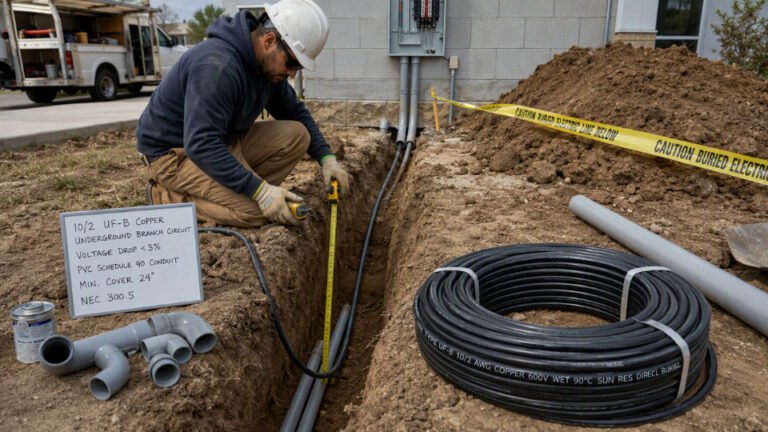
Learn how far 10/2 underground wire can run safely, with voltage drop limits, ampacity basics, burial factors, and code checks before trenching.
Resources & Insights
Technical guides, industry news, and engineering insights from Jinda Cable -- helping engineers, procurement managers, and project teams make informed decisions.
Learn how far 10/2 underground wire can run safely, with voltage drop limits, ampacity basics, burial factors, and code checks before trenching.
Learn the right 200 amp underground wire size for copper or aluminum service, including code factors, voltage drop, terminals, and burial method.
Learn how far a 200 amp underground service can run, what limits voltage drop, and when larger wire or conduit may be needed.
Learn how to choose 100 amp underground wire by ampacity, material, terminals, conduit, burial method, and voltage drop for safer installs.
Learn which underground wire without conduit is safe and code-compliant, including direct burial cable types, depth basics, and key protections.
Learn which underground electrical wire to use, from UF cable to THWN-2 in conduit, with tips on burial method, wet ratings, and safety.
Learn buried electrical cable code essentials, including NEC cover depth, conduit, marking, and AHJ rules to avoid failed inspections.
Learn the disadvantages of underground cables, from high installation costs to slow fault repair, so you can plan safer, more realistic projects.
Learn why Americans don't bury power lines, from high installation costs to repair delays, terrain limits, and grid tradeoffs.
Inquiry
Send us the application, voltage rating, conductor size, standard, and quantity. Our sales engineers will confirm the specification and return a formal quotation. If the cable type is not yet defined, we can recommend suitable options.

WhatsApp · Sales Manager
Jackv Lee — +86 185 5310 5983Headquarters
No. 1377 Wode Avenue, Ping'an Subdistrict,