Using the wrong 12/2 cable underground is one of those mistakes that looks harmless until the trench is backfilled, the inspector rejects it, or moisture starts attacking insulation months later. Then the job turns into re-digging, replacement material, delayed energizing, and an argument over who approved the purchase order. The safe direction is simple: match the cable or conductors to wet-location burial service, physical protection, circuit load, and the code enforced on that site.
For direct burial, 12/2 cable generally needs to be UF-B or another cable specifically marked for underground/direct-burial use. Standard indoor NM-B cable is not acceptable underground. If the run is in underground conduit, use wet-rated individual conductors such as THWN-2, with final ampacity, cover depth, and GFCI rules verified locally.
The part that catches buyers is that “12/2” only tells you conductor size and count; it does not prove the cable can survive a wet trench, pass inspection, or hold voltage at the far end of a long run. Cover depth, conduit choice, copper versus aluminum, termination ratings, motor starting, and local NEC adoption can all change the right answer.
Cable types that qualify
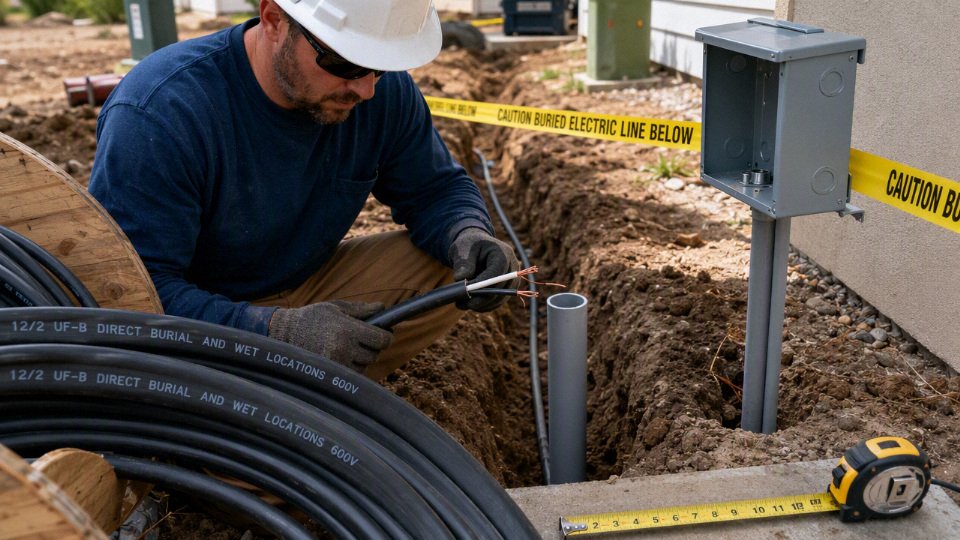
The qualifying cable is not “any 12/2 with a tough jacket”; it must be listed for the actual underground method: direct burial, wet underground raceway, service entrance, tray, or low-voltage use. For ordinary 120 V residential or light commercial branch circuits, 12/2 UF-B copper is the usual direct-burial answer, while individual wet-rated conductors in conduit are the cleaner alternative when conduit is planned.
12/2 UF-B cable: the common direct-burial branch-circuit choice
12/2 UF-B is the cable most electricians mean when they say “12/2 that can be buried” for a normal branch circuit. It usually contains two insulated 12 AWG conductors plus an equipment grounding conductor embedded in a solid, moisture-resistant jacket. That solid construction is the difference you feel immediately on the job: UF-B is flatter, stiffer, and more unpleasant to strip than NM-B because the conductors are molded into the jacket rather than loosely sleeved.
For residential sheds, detached garages, gate operators, well controls, small outdoor loads, and similar branch circuits, UF-B is commonly used because it can be installed directly in the earth where local code allows. It is also suitable for wet outdoor locations when installed within its listing and protected where subject to physical damage. In practice, that means you still sleeve it in conduit where it emerges from the ground, runs up a wall, passes a mower zone, or enters a building.
The working trade-off is simple: UF-B reduces conduit material and pulling work, but it is harder to replace later and more vulnerable to future digging damage than conductors in a full raceway. If a plant or property owner expects changes, extra loads, or a second circuit later, conduit often looks expensive on bid day and cheap five years later.
NM-B indoor cable: why it fails underground even inside many conduits
NM-B cable is not an underground cable. The jacket on typical indoor NM-B is intended for dry indoor building spaces, not for continuous moisture exposure, soil contact, or underground raceways that collect condensation.
The mistake I see is the argument, “It is inside PVC conduit, so it is protected.” Mechanically, maybe. Electrically and legally, that usually does not solve the problem. Underground raceways are generally treated as wet locations because water gets in through condensation, imperfect joints, box entries, grade changes, and simple breathing of the conduit with temperature swings. Anyone who has opened a buried pull box after a cold night has seen it: water sitting in the bottom, mud stains on the conductors, sometimes a frog if the cover gasket was bad enough.
NM-B insulation and jacket systems are not selected for that service. Once moisture migrates along paper fillers or under the jacket, insulation resistance can fall, GFCIs nuisance trip, and corrosion starts at splices and terminations. The failure may not be immediate. That is what makes it dangerous commercially: the installation passes a basic “lights turn on” check, then becomes a maintenance problem after one wet season.
A dry-location cable does not become an underground wet-location cable just because somebody slid it into conduit. Verify the cable marking and the wiring method, not just the presence of pipe.
THWN-2 or XHHW-2 conductors in conduit
Individual 12 AWG copper conductors marked THWN-2, XHHW-2, or with another rating accepted for wet locations are a compliant and serviceable way to wire underground branch circuits in conduit. This is not technically “12/2 cable.” It is a set of individual conductors pulled through a raceway: usually one ungrounded conductor, one grounded conductor, and one equipment grounding conductor for a 120 V branch circuit.
This approach gives better maintainability. If a conductor is damaged, undersized for voltage drop, or the load changes, you have some chance of pulling new conductors rather than trenching again. It also allows easier color identification and derating review when multiple circuits share a raceway.
The mechanism that matters is heat and moisture management. Conductors in conduit must have insulation suitable for wet conditions, but they also need ampacity checked for the number of current-carrying conductors, ambient conditions, terminal temperature ratings, and conduit fill. A long underground PVC run in the sun before it drops into the ground can run hotter than expected. At the same time, a 12 AWG copper branch circuit commonly associated with 20 A protection in many NEC-style installations may become limited by voltage drop before ampacity, especially with continuous loads or motors with hard starting.
USE-2 service-entrance conductors are not a universal branch-circuit substitute
USE-2 conductors are intended for underground service-entrance work. They are common between a utility point, meter equipment, service disconnects, and similar service-side installations, depending on the local rules and utility requirements. That does not make USE-2 a blanket replacement for branch-circuit wire inside a building.
The issue is the full route. Some USE-2 conductors are not rated for interior wiring beyond the permitted service-entrance use, and some are not suitable where flame-spread, conduit-fill, or building-wire requirements apply. If the conductor also carries markings such as RHW-2, XHHW-2, or another rating accepted for the indoor portion, it may be usable across more of the route. If it only says USE-2, do not assume.
USE-2 can always replace 12/2 UF-B for an underground branch circuit.False
USE-2 is primarily a service-entrance conductor type. Whether it can be used beyond that role depends on its additional markings, the wiring method, the indoor route, equipment terminations, and the adopted electrical code.
Direct-burial MC, armored, and tray cable for commercial or industrial work
There are direct-burial-rated metal-clad, armored, and tray cable products, but the words “armored” or “tray cable” alone are not enough. The cable must be explicitly listed and marked for the installation method and environment: direct burial, wet location, sunlight exposure, corrosive soil, cable tray, hazardous location, or physical protection requirements as applicable.
This category shows up in factories, utilities, wastewater plants, mines, docks, and outdoor process equipment more than in simple residential work. Procurement teams sometimes like armored direct-burial cable because it reduces separate raceway installation. Maintenance teams may prefer conduit because it is easier to modify. Neither side is automatically right.
Key checks before buying include:
- Cable listing for direct burial or underground raceway use
- Armor material and corrosion protection for the soil or chemical exposure
- Grounding path requirements, including whether a separate grounding conductor is required
- Minimum bending radius, which can be painful in tight equipment pads
- Termination glands, sealing fittings, and enclosure ratings
- Compatibility with tray, conduit transitions, and classified-area rules where relevant
- Manufacturer installation instructions for pulling tension, sidewall pressure, and burial conditions
The choice flips toward specialized armored or tray cable when labor access is poor, mechanical damage risk is high, or the project standard already supports that cable family. It flips back toward conduit when future change, inspection access, or local contractor familiarity matters more.
Low-voltage 12/2 landscape lighting cable is a different product
Low-voltage 12/2 landscape lighting cable may be direct-burial rated, but it is not premises wiring cable for 120 V or 240 V branch circuits. The “12/2” only describes conductor count and approximate conductor size. It does not tell you the voltage rating, insulation system, flame rating, listing category, or permitted wiring method.
This confusion causes bad purchases because the cable looks rugged and may be sold in the same aisle as outdoor electrical supplies. It belongs on the secondary side of a listed low-voltage transformer, feeding landscape lights or similar low-energy loads within its rating. It does not belong feeding a receptacle, pump, heater, garage circuit, or machine control panel at building voltage.
Copper versus aluminum 12 AWG conductors
12 AWG copper and 12 AWG aluminum are not interchangeable for common branch circuits. Copper has lower resistance, better mechanical durability at small sizes, and broader acceptance for ordinary 15 A and 20 A branch-circuit wiring. Aluminum requires different sizing, compatible terminals, oxidation control practices where specified, and careful code review.
For procurement, the dangerous shortcut is ordering by gauge only. A bill of material that says “12/2 underground cable” without conductor material, insulation type, voltage rating, and listing is incomplete. In many branch-circuit contexts, 12 AWG aluminum will not be an acceptable substitute for 12 AWG copper, even if the vendor can physically supply it.
Markings that sound outdoor-rated but are not enough
A jacket marked “outdoor,” “sunlight resistant,” “water resistant,” or “UV resistant” is not automatically approved for direct burial. Those markings address specific exposures. Direct burial adds soil moisture, physical pressure, chemical contact, thermal cycling, and the expectation that the cable can operate safely without free air around it.
A practical receiving check should include:
- Exact cable type, such as UF-B, THWN-2, XHHW-2, USE-2, or listed direct-burial MC
- Voltage rating
- Conductor material and size
- Number of insulated conductors and grounding conductor
- Direct-burial or wet-location marking where required
- Sunlight resistance if exposed above grade
- Applicable listing or certification mark for the jurisdiction
- Manufacturer data sheet matching the printed cable legend
The main boundary on all of these recommendations is the adopted local code and the specific product listing. A cable type that is common in one NEC-style residential installation may be rejected on an industrial site with different specifications, utility rules, corrosive soil, hazardous area classification, or owner standards. Before trenching, match the marking on the actual reel to the wiring method on the drawing; that small check prevents a surprisingly expensive rework.
Code rules and approvals
A buried 12/2 circuit is acceptable only when the complete installation is recognized for the actual underground route, not just because the package says “outdoor” or “12/2.” The cable or conductors, burial method, wet-location rating, grounding path, overcurrent protection, physical protection, and inspection authority all have to line up before it is a legal installation.
In NEC-style work, the governing idea is approval for the conditions of use. Underground wiring is exposed to moisture, soil pressure, corrosion risk, temperature cycling, settlement, and damage at the points where it comes out of the ground. That means the approval question has several layers:
- Wet-location suitability for any conductor or cable installed below grade.
- Direct-burial suitability if the cable is placed in earth without a raceway.
- Correct insulation type for individual conductors installed in conduit.
- Mechanical protection where the wiring is shallow, exposed, or subject to impact.
- Required cover depth based on wiring method, voltage, GFCI protection, residential or non-residential use, and local rules.
- Equipment grounding continuity from the source panel to every outlet, enclosure, device yoke, and metal raceway or box that must be bonded.
- Correct overcurrent protection, commonly 20 A for many 12 AWG copper branch circuits in NEC-style installations, but not by assumption where conductor material, terminal temperature ratings, equipment instructions, or local code differ.
The National Electrical Code is often used as the benchmark in the United States and in many specification discussions outside the U.S., but it is not self-enforcing. The adopted edition, local amendments, utility service rules, project specifications, and the authority having jurisdiction decide what passes. I have seen jobs fail inspection not because the cable was the wrong general type, but because the installer followed a table from a different code edition, used a local “rule of thumb” from another county, or missed a municipal amendment on outbuilding feeders.
A cable marked for direct burial can still require conduit or other protection where it emerges from the ground.True
Direct-burial suitability addresses underground placement in soil, but exposed risers, wall penetrations, panel entries, and damage-prone areas are separate installation conditions that may require physical protection under local code and inspection practice.
The markings printed on the cable jacket or conductor insulation are the procurement record the inspector can actually verify in the field. A vague invoice line such as “12/2 outdoor cable” is weak documentation. On the material itself, buyers and electricians should look for:
- Type designation: for example, a cable or conductor type recognized by the applicable code for the intended wiring method.
- Conductor size: 12 AWG for a typical 12/2 branch circuit.
- Conductor material: copper or aluminum/copper-clad aluminum, since ampacity and termination rules are not interchangeable.
- Number of conductors and grounding conductor: “12/2 with ground” is not the same as two insulated conductors with no equipment grounding conductor.
- Voltage rating: matched to the circuit and system.
- Temperature rating: useful for engineering review, though final ampacity may be limited by terminal ratings and code rules.
- Wet-location or water-resistant insulation identification where individual conductors are used in raceway.
- Direct-burial marking when the cable is to be installed directly in soil.
- Sunlight resistance where the cable or raceway is exposed above grade outdoors.
- Manufacturer name, production identification, and certification marks for traceability.
For commercial projects, public work, export supply, and engineered residential developments, the listing or certification mark can matter as much as the cable type. Inspectors and consulting engineers may require evidence from a recognized third-party certification body, not just a manufacturer’s catalog statement. Procurement teams should keep the datasheet, certificate, packaging label photos, and reel or jacket marking photos together. If the material is being imported, confirm that the certification scheme matches the country of installation; a cable acceptable under one national standard is not automatically approved under another.
One mistake worth calling out: conduit does not magically make indoor cable suitable underground. Buried conduit routinely collects water through condensation, imperfect joints, grade movement, and pull-box leakage. In NEC-style practice, the inside of underground raceway is normally treated as a wet location, so the individual conductors must be rated for wet locations even if they are never directly touching soil. Pulling dry-location NM-style cable through underground PVC is the sort of shortcut that may look neat on day one and become an insulation failure or inspection rejection later.
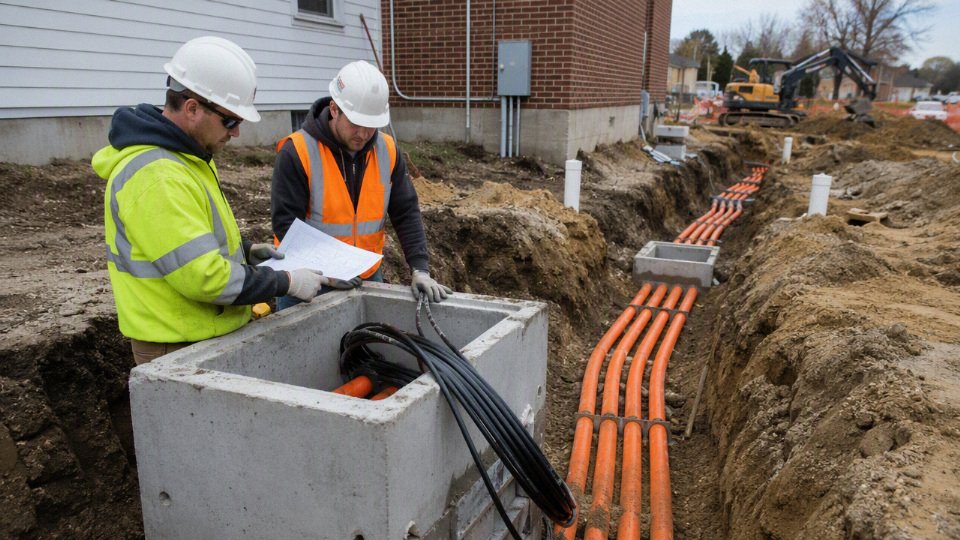
Grounding and bonding are part of the same approval decision. A 12/2 branch circuit normally includes an ungrounded conductor, a grounded conductor, and an equipment grounding conductor when sold as “with ground.” The equipment grounding conductor is not a spare neutral and should not carry normal load current. It must remain continuous through splices, boxes, devices, conduit transitions, and the final outlet. Metal boxes, metal fittings, metal raceways, and equipment grounding terminals need correct bonding hardware; a loose green screw in a damp box is not a grounding system. Terminations also need to match the conductor material and size, and stranded versus solid conductors can affect device selection.
Several common underground 12/2 applications add requirements beyond the cable jacket:
- Outdoor receptacles often require GFCI protection and weather-resistant devices with suitable in-use covers.
- Garage, shed, landscape, pump, and yard circuits may need GFCI protection depending on location, equipment type, voltage, and adopted code edition.
- Detached structures can trigger feeder rules, grounding electrode requirements, disconnect requirements, panelboard rules, and limits on multiwire or shared circuits.
- Swimming pool, spa, fountain, and agricultural areas have specialized rules that should not be treated as ordinary yard wiring.
- Motor loads such as small pumps or compressors may be code-compliant on ampacity but still suffer nuisance tripping or voltage drop if the underground run is long.
- Low-voltage controls and communications usually fall under different rules and separation requirements from power circuits.
Code compliance is also route-specific. A cable can be perfectly acceptable under the lawn and still be wrong at the garage wall, the riser up a post, the sweep into a panel, or the crossing under a driveway edge where future digging is likely. The design review should walk the route in pieces: panel exit, interior wall passage, exterior penetration, underground section, grade emergence, final enclosure, device termination, and any transition into another wiring method. That is where many otherwise decent installations lose approval, and it is why a good bill of materials includes not only the cable but also the raceway, sweeps, bushings, boxes, fittings, warning tape where required, GFCI device or breaker strategy, and labeling.
Depth and protection choices
Burial depth is not chosen from the wire gauge alone; it is chosen from the complete wiring method and the risk above the trench. A 12/2 underground branch circuit may need shallow, moderate, or deep cover depending on whether it is direct-buried cable, PVC conduit, rigid metal conduit, GFCI-protected 120 V residential wiring, or a route under vehicle traffic. The inspector will usually look at the method first, then the protection details at risers, crossings, entries, and disturbed soil areas.
The common mistake is treating “underground-rated” as if it means “protected from everything underground.” It does not. Underground approval addresses wet location and burial suitability, but not shovel strikes, crushed conduit, poor backfill, frost movement, or someone driving a skid steer over a shallow trench next spring.
How burial depth is usually determined
In NEC-style installations, cover depth is normally tied to a table or local amendment that considers:
- Wiring method: direct-burial cable, nonmetallic conduit, rigid metal conduit, intermediate metal conduit, or another approved raceway.
- Circuit voltage: lower-voltage residential branch circuits may be treated differently from higher-voltage feeders or commercial circuits.
- Overcurrent protection: a 12 AWG copper branch circuit is commonly protected at 20 A in many installations, but the final circuit rating still depends on conductor material, insulation, terminals, and the adopted code.
- GFCI protection: some 120 V residential branch circuits with GFCI protection and suitable overcurrent protection may qualify for reduced cover where the local code allows it.
- Surface use: lawn, garden, driveway, parking area, equipment yard, livestock area, or industrial traffic lane.
- Local inspection policy: two jurisdictions reading similar code language can still enforce details differently, especially around accessory buildings, detached garages, and outdoor equipment.
Typical cover-depth logic is simple even when the tables are not: direct-buried UF cable usually needs more earth cover because the soil itself is part of the protection system, while rigid metal raceway can often be shallower because the raceway provides stronger mechanical protection. PVC conduit generally sits between those two cases. Reduced-depth allowances for small residential GFCI-protected circuits are useful, but they are not a license to run cable carelessly through a future planting bed or under a gravel parking strip.
Putting UF-B cable inside a complete underground conduit run is not automatically a better installation than using individual wet-rated conductors in a properly designed raceway.True
UF-B has an overall jacket and a flat or compact cable shape that can make long conduit pulls difficult, increase friction at bends, and complicate replacement. In a full raceway system, individual wet-rated conductors are usually easier to pull, easier to derate and fill-calculate correctly, and easier to replace later.
Comparing the practical installation choices
| Method | Where it fits well | Main advantage | Main trade-off |
|---|---|---|---|
| Direct-buried UF-B cable | Simple residential yard runs where allowed and unlikely to be disturbed | Fewer materials, no full raceway system | Usually requires deeper cover and is harder to replace if damaged |
| UF-B sleeved in conduit at vulnerable points | Direct burial with protection at risers, building entries, exposed transitions, or short damage-prone sections | Protects the places that actually get hit | Sleeve transitions must be detailed correctly; not the same as a full conduit system |
| Individual wet-rated conductors in PVC conduit | Longer underground runs, planned routes, sites where replacement is valuable | Easier conductor replacement, cleaner pulling, good corrosion resistance | More trench planning, conduit fill, expansion, bends, and water management to handle |
| Individual conductors in rigid metal conduit | Shallow-cover needs, high physical exposure, industrial yards, building approaches | Strong mechanical protection | Higher material and labor cost; corrosion protection and bonding details matter |
For a short run from a house to a small garden receptacle, direct-buried UF-B may be commercially reasonable if the required cover can be achieved and the route is unlikely to be dug up. For a long run to a detached shop, pump, gate operator, sign, or outdoor process skid, I would lean toward conduit more often than not. Labor to trench is already being spent; the ability to pull replacement conductors later can save a miserable repair job.
The mechanism is straightforward: a raceway separates conductor protection from soil conditions. Soil can shift, settle, freeze, hold water, carry sharp stones, and hide future excavation. Conduit does not remove all those risks, but it gives the conductor a controlled path, reduces direct abrasion, and allows a damaged or undersized conductor set to be replaced without reopening the whole route. The trade-off is that the raceway becomes a system that must be designed, not just buried. Poor conduit work can be worse than clean direct burial.
Where extra physical protection is usually needed
Even when the underground run is properly rated, certain locations deserve more protection because damage probability is much higher:
- Risers from grade: protect cable or conductors where they emerge from the ground; this is where string trimmers, shovels, boots, and carts find them.
- Building entries: use approved fittings, bushings, seals where required, and strain relief so movement is not carried into the box.
- Driveway and parking crossings: account for vehicle loading, future resurfacing, and rutting in gravel areas.
- Garden beds and landscaped areas: assume someone will dig later, especially near irrigation lines and edging.
- Equipment pads: protect routes near condensers, pumps, compressors, EV equipment, and outdoor panels where service technicians work.
- Areas exposed to digging: fence lines, sign bases, drainage work, post holes, and future utility repairs.
- Industrial or farm lanes: pickup trucks are not the worst case; forklifts, pallet jacks, tractors, and loaded trailers are.
A plant maintenance habit worth remembering: people dig where the work is easiest, not where your drawing says the cable is safe. If the route crosses a “temporary” gravel laydown area, treat it like vehicle space unless the owner is willing to barricade it permanently.
Conduit details that decide whether the job is serviceable
Conduit gives excellent options, but only if it is installed like a pullable raceway. I have seen nice-looking underground PVC runs that no electrician wanted to touch because the installer used too many bends, undersized the conduit, and left no practical pull point.
Key design checks include:
- Conduit fill: verify conductor count, conductor size, insulation type, and allowable fill before choosing conduit size.
- Pulling friction: long runs, small conduit, flat cable, and tight bends raise pulling tension quickly.
- Bend count: keep bends within code limits and practical pulling limits; use accessible pull boxes where needed.
- Sweeps, not plumbing elbows: electrical sweeps reduce pulling damage and make replacement realistic.
- Expansion and contraction: PVC moves with temperature; above-grade transitions and long exposed sections may need expansion fittings.
- Drainage and water: underground raceways are wet locations in practice, even when glued well. Use conductors rated for wet locations and avoid layouts that trap water against vulnerable equipment.
- End fittings and bushings: protect insulation at entries, especially with metal conduit.
- Spare capacity: if the trench is expensive, oversizing conduit modestly can be cheaper than retrenching later.
A full conduit run with individual wet-rated conductors is usually the cleaner engineered solution for long or service-critical underground 12 AWG branch circuits. That statement stops holding when the run is short, simple, code-compliant as direct burial, and unlikely to require future changes; in that case, conduit may add cost without much operating value.
Route documentation and trench workmanship
Good underground electrical work is partly electrical and partly civil work. The cable can be correctly selected and still fail early because the trench was treated like a dumping slot.
Practical installation controls include:
- Warning tape: place detectable or clearly marked warning tape above the cable or conduit at a depth that gives a future digger a chance to stop before contact.
- Sand bedding where used: useful in rocky soil or where the trench bottom has sharp debris; local practice varies, but the purpose is to prevent point loading and jacket damage.
- Backfill quality: remove sharp rock, construction scrap, metal offcuts, and broken masonry from the immediate cable zone.
- Separation from utilities: keep required spacing from gas, water, communications, drainage, and other electrical systems; verify local utility rules before trenching.
- Route records: photograph the open trench with reference points, measure offsets from permanent structures, and keep the record with panel schedules or facility drawings.
- Surface markers: for longer facility routes, use markers, stakes, engraved tags, or drawing references that maintenance people can actually find.
Cold climate, rocky soil, corrosive soil, flooding, and pest exposure all push the decision toward more robust protection. Frost heave can work fittings loose. Flooded trenches make every underground raceway a wet raceway. Rocky fill can slowly damage cable jackets under settlement. Corrosive soils may make some metal raceways a maintenance liability unless coatings, wrapping, bonding, and material selection are handled correctly. Rodents are not impressed by neat drawings either.
On industrial sites, I would not choose the wiring method until I know who controls excavation, what drives over the route, how often equipment moves, and whether downtime matters more than first cost. For a homeowner, the question may be “Can I pass inspection safely?” For a factory owner, the better question is often “Can maintenance find it, protect it, and repair it five years from now without shutting down half the yard?”
Ampacity and load limits
A 12 AWG copper underground branch circuit is commonly used on a 20 A breaker in many NEC-style installations, but that is not the same as saying every 12/2 underground cable is good for every 20 A job. The allowable load depends on the conductor material, insulation system, termination temperature limits, installation conditions, connected equipment, and the code actually adopted where the work is inspected.
For a typical 12/2 cable with ground, the assembly gives you two insulated conductors plus an equipment grounding conductor. In a 120 V branch circuit, that usually means:
- One ungrounded conductor, usually the hot
- One grounded conductor, usually the neutral
- One equipment grounding conductor
That arrangement suits many small outdoor loads: a receptacle circuit, shed lighting, landscape controls, a small pump control panel, or a gate operator circuit, provided the load and protection match the cable and the installation method.
The same 12/2 with ground can sometimes serve a straight 240 V load that does not need a neutral, such as certain resistance heaters, small motors, or dedicated equipment with only line-to-line loads. In that case, both insulated conductors are used as ungrounded conductors, and the white conductor must be reidentified where required and allowed by code. That detail sounds minor, but inspectors do look for it, and maintenance people later depend on it.
Where 12/2 stops being the right format is any load that needs two hots, a neutral, and a ground. Many mixed 120 V and 240 V loads fall into that category:
- Subpanels
- Some outdoor HVAC units with controls or receptacle requirements
- Combination pump and control assemblies
- Equipment with 240 V power and 120 V internal controls
- Multiwire branch circuits requiring shared neutral arrangements
- Detached building feeds needing more than one branch circuit function
For those, conductor count is the problem before ampacity is even discussed. A larger gauge does not fix a missing neutral.
A 12 AWG copper underground branch circuit is automatically suitable for any 20 A load at any distance.False
Ampacity may allow a 20 A breaker in many installations, but voltage drop, continuous-load rules, motor starting current, termination temperature, adjustment factors, and equipment instructions can require a larger conductor or a lower connected load.
The common planning limit for continuous loads is also easy to overlook. Where the 80 percent rule applies, a 20 A circuit is planned around roughly 16 A of continuous load, not 20 A. That matters for loads that sit on for long periods rather than cycling briefly:
- Security lighting or site lighting
- Electric heat tracing
- Small space heating
- Battery charging equipment
- Circulation pumps
- Ventilation fans
- Irrigation or livestock-water systems that may run for hours
- Process or farm equipment left operating unattended
The mechanism is thermal, not just administrative. Current heats the conductor and terminations; underground cable sheds heat differently depending on soil, conduit fill, burial environment, and grouping with other circuits. A cable in cool, damp soil is not the same thermal case as several circuits packed through a sunny riser into a crowded outdoor panel. Code adjustment and correction factors are how that messy field condition gets translated into allowable current.
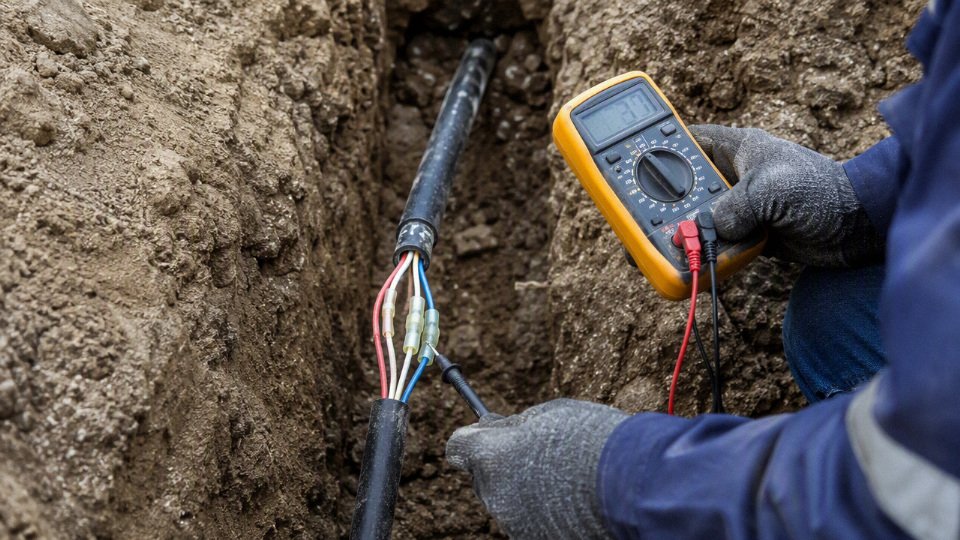
Voltage drop is the other limit that catches buyers after the trench is already backfilled. A 12 AWG circuit can be acceptable by ampacity and still deliver poor performance at the far end of a long run. The longer the run and the higher the load current, the more voltage is lost in the conductors before the power reaches the equipment.
In practice, voltage drop shows up as:
- Dim lights at a shed or gate entrance
- Slow motor acceleration
- Nuisance tripping during startup
- Contactors chattering under load
- Battery chargers running hot or failing to reach output
- Pumps that run but cannot build expected pressure
- Control electronics resetting when a motor starts
Many designers use 3 percent branch-circuit voltage drop and 5 percent total feeder-plus-branch voltage drop as practical targets, but those are design practices unless specifically adopted by the project specification or local rule. The exact calculation needs load current, one-way run length, conductor material, conductor size, operating voltage, allowable voltage-drop target, and whether the load is steady or has high starting current.
Motor loads deserve special respect. A well pump, compressor, gate operator, small hoist, or outdoor HVAC component may draw several times its running current during startup. The breaker may hold, yet the voltage dip can be enough to make the motor start sluggishly, pull even more current, and heat the windings. That is how a circuit that “worked fine on paper” becomes a maintenance complaint every hot afternoon in July.
There is a trade-off here. Staying with 12 AWG keeps cable cost, conduit fill, pulling effort, and termination size manageable. Moving up to 10 AWG or larger costs more and may require different fittings, larger conduit, and more careful handling, but it can reduce voltage drop and improve motor starting. The preferred choice flips toward larger conductors when the run is long, the load is continuous, the equipment has high inrush, or downtime costs more than the cable upgrade.
What should not be done is increasing the breaker size just to stop nuisance trips. A 12 AWG circuit must not be protected by a breaker larger than allowed by the applicable code and the equipment instructions unless a specific code rule permits that arrangement for the equipment type. Motor circuits can have special overcurrent and overload rules, but those are engineered exceptions, not permission to oversize protection on a general-purpose 12/2 branch circuit.
For procurement, “12/2 underground cable” is not a complete buying specification. A technical buyer should give the supplier or designer at least:
- Supply voltage and phase
- Load type and nameplate current
- Continuous or intermittent duty
- Motor horsepower or locked-rotor/start data, if applicable
- One-way trench length
- Desired voltage-drop limit
- Direct burial or raceway installation
- Number of circuits grouped together
- Ambient and soil conditions if unusual
- Required listing, standard, or local approval mark
- Termination temperature rating expected at the equipment
Conductor gauge tells you current capacity only under defined conditions; it does not guarantee acceptable performance at the end of a long underground run. For long feeders, pump circuits, gate systems, and outdoor equipment with motors or electronics, the cable size should be selected from both ampacity and voltage-drop calculations, then checked against the equipment manual and the local inspection basis before purchase.
Failure modes underground
Underground 12/2 circuits usually fail from water, mechanical damage, poor terminations, or bad splices—not because copper suddenly “wears out.” Properly listed cable, clean installation practice, and accessible documentation reduce the risk, but buried wiring remains hard to inspect after backfill, so small shortcuts can become expensive outages later.
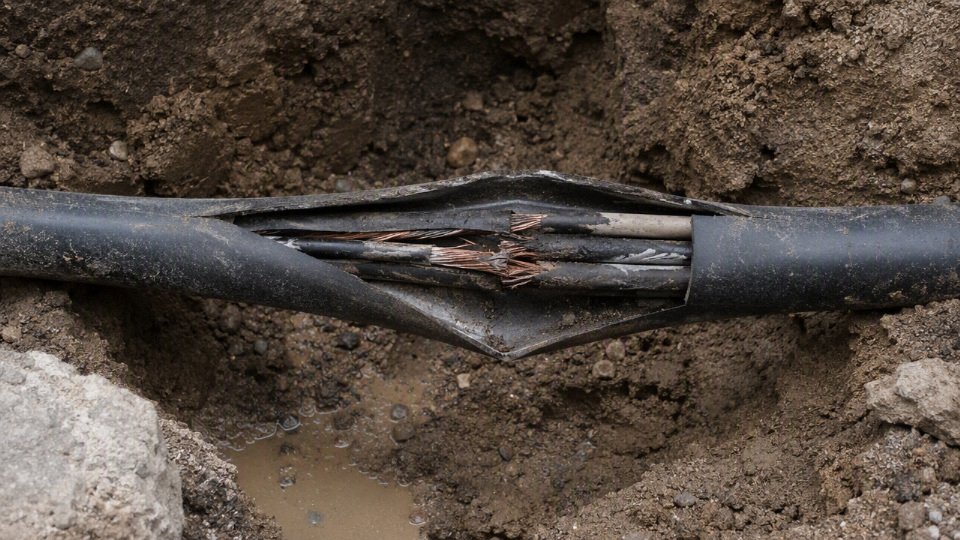
Main ways buried cable fails
- Moisture ingress into insulation or cable ends
Water does not need a dramatic flood path. It can enter through a nicked jacket, an unsealed splice, a damaged riser, or a poorly protected cable end left exposed during construction. Once moisture reaches insulation interfaces or conductor strands, leakage current can rise and GFCI devices may start tripping long before a conventional breaker sees a hard fault. - Jacket damage during installation
UF-style cable has a tougher outer construction than indoor NM cable, but it is not armor. Pulling it across broken concrete, dragging it through a trench with crushed stone, or stepping on it with a boot heel against a sharp rock can create a small cut that is invisible after backfill. Manufacturing defects
Reputable cable production controls reduce this risk, but they do not remove the need for incoming inspection and traceability on larger purchases. Defects that matter underground include inconsistent conductor diameter, eccentric insulation, voids in extrusion, weak jacket bonding, and poor print legibility that later prevents the installer or inspector from verifying the cable type.Improper splicing
Underground splices are high-risk points because they combine conductor joints, insulation restoration, mechanical restraint, and water exclusion in one buried location. A wirenut in a taped box, or a dry-location connector placed below grade, is asking for corrosion and leakage.Rodent and pest damage
Rodents are not the most common cause on every site, but in farmyards, landscaped areas, sheds, and outbuildings, gnawing damage is real. The risk increases where cable enters structures, runs near mulch beds, or passes through voids that stay warm in winter.Sharp stones and trench settlement
A cable laid directly on rubble may test fine on day one. After soil settles, vehicle vibration or freeze-thaw movement can press the jacket against a point load until insulation finally breaks down.Pulling damage
Excessive pulling force, tight bends, and yanking cable through elbows can stretch conductors or scar insulation. In practice, I see this most around risers, LB fittings, and short sleeves where the installer “just needs another two feet.”Chemical exposure
Some soils and site conditions are aggressive: fertilizer areas, de-icing salts, petroleum contamination, treated lumber runoff, industrial washdown zones, and animal waste around barns. Product selection should account for the actual environment, not only the word “underground.”Thermal stress
Heat comes from load current, ambient soil temperature, grouping with other circuits, conduit fill, and poor heat dissipation. The trade-off is familiar: conduit improves replacement and physical protection, but it can make pulling harder and may reduce heat dissipation depending on installation details and fill.
Splices, raceways, and the “dry conduit” misconception
A buried splice should use a listed direct-burial splice kit or an enclosure rated for wet locations and compatible with the actual cable or conductor type. Compatibility matters: a kit intended for individual wet-location conductors is not automatically suitable for flat UF-B cable, and a connector that grips round jacketed cable may not seal or strain-relieve a flat assembly correctly.
A buried conduit system can be treated as permanently dry if all joints are glued or tightened correctly.False
Underground raceways and outdoor enclosures commonly collect moisture from condensation, minor leakage, and water migration; conductors and fittings must be selected for wet-location conditions where code and listing require it.
Water can move through raceways in annoying ways. A conduit that starts at a warm building and ends at a cold yard box can breathe with temperature swings, then condense moisture inside. Outdoor boxes also get opened for service, gaskets age, hubs loosen, and installers sometimes drill “temporary” holes that become permanent.
Symptoms that point to underground cable trouble
Common field symptoms include:
- GFCI trips, especially after rain, irrigation, snowmelt, or morning condensation.
- Intermittent power when soil moves, loads vibrate, or a damaged splice heats and cools.
- Nuisance breaker trips that do not repeat under a light test load.
- Voltage sag under load, often noticed when motors struggle to start or outdoor equipment runs weak.
- Corrosion at terminations, including green copper oxide, rusted screws, or discolored lugs.
- Visible jacket cracking at risers, especially where cable exits soil and sees sunlight, mower impact, or unsupported bending.
- Failed outdoor equipment, such as pumps, gate operators, lighting transformers, receptacles, and small compressors that are blamed first even when the buried feeder is the actual weak link.
Those symptoms are not proof by themselves. A bad motor, loose breaker, undersized run, or water-filled device box can look similar, so troubleshooting should separate the load, the terminations, and the buried section.
Mechanical damage after installation
Many underground failures are created years after a correct installation. Shallow burial, missing route markers, and undocumented changes invite damage from:
- Landscaping spades, edging tools, and tree-root work.
- Fence posts, sign posts, tent stakes, and ground anchors.
- Trench settlement that pulls cable against fittings or leaves it unsupported.
- Driveway loading where cable or conduit was not protected for traffic.
- Freeze-thaw movement that flexes risers and shifts stones against the jacket.
- Later utility work where nobody has accurate route records.
This is where a cheap installation becomes expensive. A few dollars saved by skipping warning tape, sand bedding where needed, or proper riser protection can turn into a half-day fault hunt with two people, a trencher, and an annoyed production supervisor or property owner.
Termination and testing checks
UF-B and underground-rated conductors need careful termination. The most common workmanship problems are stripping cuts into conductor insulation, wrong box connectors, unsupported cable entering an enclosure, unsuitable dry-location boxes, and poor strain relief. Flat UF cable is especially easy to abuse with a knife; a shallow nick at the conductor insulation can become the future leakage point.
A practical inspection and test sequence should include:
- Visual route review at accessible sections, risers, boxes, sleeves, and transition points.
- Verification of markings at cable ends so the installer can confirm cable type, conductor size, rating, and listing information.
- Continuity checks to confirm conductor integrity before energizing.
- Insulation resistance testing where appropriate, using test voltage and procedure suitable for the cable, connected equipment, and local practice.
- GFCI testing with the installed protective device, not only a plug-in tester when the circuit feeds hardwired equipment.
- Voltage measurement under load, because an unloaded circuit can look healthy while a pump, heater, or motor start exposes voltage drop or a weak connection.
- Termination inspection for corrosion, torque, connector fit, box rating, support, and strain relief.
For bulk cable orders, prevention starts before the trench is opened. Manufacturer quality controls worth asking for include conductor consistency, controlled insulation extrusion, jacket integrity checks, routine electrical testing, batch traceability, and documentation that matches the purchased cable. Those controls do not replace proper installation, but they reduce the chance that a buried problem begins inside the reel rather than in the field.
Procurement requirements for projects
For purchasing, “12/2 underground wire” is not a sufficient specification. A workable purchase description should name the conductor material, cable type, grounding conductor, voltage rating, listing basis, burial suitability, jacket construction, packaging, and documentation package; otherwise the buyer may receive a cable that looks acceptable on a quote sheet but fails inspection or performs poorly after installation.
For a typical NEC-style residential or light commercial direct-burial branch circuit, the minimum description is usually along these lines: 12/2 copper UF-B cable with ground, rated for the required system voltage, listed for wet locations and direct burial, with a sunlight-resistant jacket where exposed before entering the ground. The exact wording should follow the destination code and the inspector’s accepted standard, not just a supplier’s catalog shorthand.
A purchase inquiry should give the supplier enough information to select the right construction and avoid a round of useless revisions. At minimum, provide:
- Application: lighting circuit, receptacle circuit, pump feed, gate motor, landscape equipment, outbuilding supply, control circuit, or industrial auxiliary load.
- Circuit voltage and phase: for example, 120 V single-phase branch circuit, 240 V split-phase load, or another local system.
- Expected load current: running current, continuous load, and any motor starting load.
- Run length: panel to load, not just trench length; voltage drop can drive a larger conductor before ampacity does.
- Burial method: direct burial, PVC conduit, rigid metal raceway, cable tray transition, duct bank, or mixed route.
- Conduit use: full-length conduit, sleeve only at risers, or no conduit.
- Local code basis: NEC edition, local utility rule, project specification, or national standard used by the authority having jurisdiction.
- Installation temperature: cold pulling and jacket handling matter; some compounds become less forgiving in winter work.
- Soil condition: dry sand, wet clay, rocky backfill, corrosive soil, or areas with standing water.
- Sunlight exposure: especially where cable exits grade before entering a box or enclosure.
- Packaging preference: coils, reels, wooden drums, cut lengths, or project-marked drums.
- Inspection requirements: listing marks, certificates, test reports, language requirements, and project file submittals.
There are cases where a straight 12/2 UF-B purchase is the wrong commercial decision even if it seems technically close. For long runs, ask for a voltage-drop check and consider larger copper conductors; the extra cable cost may be less than the cost of nuisance trips, weak motor starting, or dim lighting at the far end. If the route is entirely in conduit, individual wet-location conductors such as THWN-2 or XHHW-2 are often a cleaner specification than cable assemblies, depending on the local code and raceway fill. For industrial yards, traffic areas, rodents, chemical exposure, or repeated excavation risk, buyers may need armored direct-burial constructions, protective raceway, or a custom cable design rather than a retail-style branch-circuit cable.
Documentation should be treated as part of the product, not an afterthought. A project-grade cable order should request:
- Product datasheet with conductor size, material, insulation and jacket system, voltage rating, and temperature rating.
- Certificate of conformity tied to the purchase order or production batch.
- Routine test reports where required by the contract.
- Production traceability, including batch or drum identification.
- Packaging labels showing cable type, size, length, rating, and relevant markings.
- Drum schedule for multi-drum deliveries.
- Shipping marks aligned with the buyer’s receiving and customs process.
- Compliance declarations for the destination market, when applicable.
The cheapest quoted 12/2 cable can become the most expensive option if it lacks the listing, markings, or documentation required by the project inspector.True
Inspection rejection, rework, replacement cable, delayed energization, and missing project-file documents often cost more than the initial price difference between compliant and non-compliant cable.
For bulk procurement, I would look beyond the front-page price and ask how the supplier controls conductor resistance, insulation thickness, jacket dimensions, spark testing, length accuracy, and batch consistency. Small deviations may not show up when a contractor buys one coil from a local counter, but they matter when a project receives multiple drums and expects the same stripping behavior, marking quality, bend response, and electrical performance across the whole shipment. Packaging also matters: poor drum lagging, weak reel flanges, or water-damaged labels create receiving disputes before the cable even reaches the trench.
Shandong Jinda Special Cable Group Co., Ltd. is positioned for this kind of project purchasing rather than one-off retail supply. Established in 1987, with five production bases, 470,000 m² of manufacturing space, more than 1,000 employees, and integrated R&D, production, sales, technical support, and after-sales service, Jinda can support international buyers that need repeatable cable production, coordinated documentation, and long-term supply planning across large or phased projects.
Avoid inquiry language such as “outdoor wire,” “underground wire,” or simply “12/2 cable.” Those terms leave too much open: copper or aluminum, with or without ground, direct burial or conduit only, wet-location rated or not, listed or merely described, standard product or custom construction. The purchasing specification should remove those gaps before price comparison begins, because an underground cable is cheap only if it is accepted, installable, traceable, and fit for the actual route.
Frequently asked questions
Can 12/2 NM-B wire be buried underground?
No. 12/2 NM-B should not be used underground, either directly in soil or pulled through underground conduit. The issue is not only water touching the outer jacket; underground raceway is treated as a wet location, and NM-B is not designed or listed for that service.
12/2 NM-B cable becomes acceptable underground if it is installed inside PVC conduit.False
Underground conduit is normally considered a wet location. NM-B cable is intended for dry indoor use, so conduit does not convert it into a wet-location or direct-burial cable.
Can 12/2 UF-B be buried without conduit?
Yes, 12/2 UF-B is commonly made for direct burial, provided the cable marking and listing support that use. That does not remove the need for proper cover depth, GFCI rules where applicable, protection where the cable emerges from the ground, and approval by the local inspector.
In practice, the vulnerable spots are usually not the middle of the trench. They are risers near posts, garage walls, sheds, and landscape beds where a shovel, mower, or string trimmer eventually finds the cable path.
Can I run 12/2 UF-B through PVC conduit?
Short PVC sleeves are common for physical protection, especially where UF-B comes up out of the ground. Long conduit runs are a different matter because UF-B is flat, stiff, and unpleasant to pull through bends; it can also be hard to replace later without damaging the cable.
For a full conduit system, many electricians prefer individual wet-rated conductors, such as conductors approved for wet locations, sized and installed according to the applicable code. That usually pulls cleaner, terminates cleaner, and makes future troubleshooting less miserable.
How deep should 12/2 UF-B be buried?
Burial depth depends on the wiring method, circuit voltage, GFCI protection, mechanical protection, location, and the code adopted in that jurisdiction. Direct-burial cable often needs more cover than conductors in rigid metal raceway, while some residential GFCI-protected branch circuits may qualify for reduced cover if the local rules allow it.
Verify the current burial-depth table before trenching. Do not rely on a neighbor’s installation, an old inspection sticker, or a generic internet depth.
Is 12/2 wire enough for an outdoor outlet?
It can be enough for a 120 V, 20 A outdoor receptacle circuit when the conductor material, breaker size, GFCI protection, weatherproof box, in-use cover, burial method, and voltage drop are all acceptable. The catch is distance and load.
A short run to one receptacle for hand tools is a very different job from a long run feeding a freezer, pump, heater, or compressor. On longer underground runs, voltage drop may become the practical limit before ampacity.
Can 12/2 wire feed a shed?
Sometimes, but a detached structure is not just “one more outlet outside.” A simple branch circuit may be allowed in some cases, yet detached buildings can trigger requirements for a disconnecting means, grounding and bonding details, GFCI protection, burial depth, and limits on how many circuits are run to the structure.
Plan the loads before buying cable:
- Lighting only
- General receptacles
- Battery chargers or power tools
- Freezer or refrigerator
- Small HVAC, pump, or compressor
- Future subpanel possibility
If future expansion is likely, 12/2 may be a false economy.
Can I splice underground 12/2 cable?
Yes, but only with splice kits, boxes, or connectors specifically listed for direct burial or wet locations and suitable for the cable type. Ordinary wirenuts in a handhole, taped splices, or indoor junction boxes buried in soil are failure points waiting for moisture.
Avoid underground splices unless there is a good reason. If one is unavoidable, leave an accurate route record and make the splice accessible where the code requires it.
What is better underground, UF-B or conduit?
UF-B is usually simpler and cheaper for a straightforward direct-burial branch circuit. Conduit with wet-rated conductors is usually better where you want stronger mechanical protection, easier replacement, cleaner pulling on longer routes, or a more maintainable installation.
The better choice depends on the site. Rocky soil, vehicle areas, future landscaping, long pulls, and commercial maintenance expectations tend to push the decision toward conduit. Simple residential yard runs with low change risk often favor UF-B when the code and inspector agree.
Verify your burial-ready cable choice
Choose 12/2 UF-B copper cable for a direct-buried branch circuit only when the jacket markings, listing, grounding conductor, load calculation, burial depth, and local inspection requirements all line up. If any one of those items is uncertain, treat “12/2” as only a conductor-size description, not as permission to put the cable in the ground.
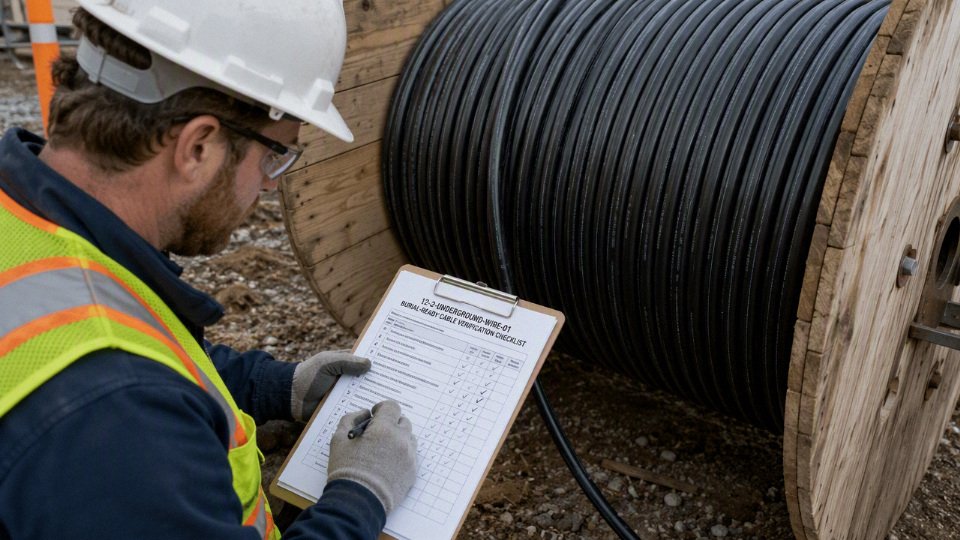
For a normal residential-style underground branch circuit, the decision should pass through a short, disciplined check before anyone issues a purchase order or starts trenching:
- Conductor size and material
- Confirm 12 AWG copper if the circuit is being designed around the common 20 A branch-circuit assumption used in many NEC-style installations.
- Do not substitute aluminum or copper-clad aluminum without recalculating ampacity, termination compatibility, and local acceptance.
- Cable type
- Confirm the cable is UF-B or another cable type specifically approved for direct burial under the applicable code.
- NM-B, indoor building wire, and “12/2” products without underground approval should be rejected for direct soil contact.
- Voltage rating and circuit configuration
- Match the cable voltage rating to the system voltage and installation standard.
- Verify whether the circuit needs 2 conductors plus ground, or a different conductor count for multi-wire, control, pump, or equipment circuits.
- Equipment grounding conductor
- Check that the cable includes the required grounding conductor and that it is correctly sized for the protective device.
- A missing or undersized ground is not a paperwork issue; it changes the fault-clearing behavior of the installation.
- Direct-burial and wet-location suitability
- Look for permanent jacket markings, not just catalog language.
- Underground raceways are normally treated as wet locations, so individual conductors in conduit must also be wet-rated.
- Burial depth and route protection
- Confirm cover depth against the installation method, voltage, GFCI protection, surface use, and local amendments.
- Add conduit sleeves, rigid protection, warning tape, or route changes where the cable passes under driveways, landscaped areas, slab edges, fence posts, or future excavation zones.
- Breaker, GFCI, and inspection documentation
- Verify breaker size, GFCI requirements, disconnecting means, and permit documents before installation.
- Keep product datasheets, listing information, and reel or jacket photos with the project file. Inspectors and owners both appreciate not having to guess what was buried.
When those checks do not fit, change the wiring method rather than forcing the job around a cheap cable. Properly sized wet-rated individual conductors in conduit are often the cleaner choice for repairability, mechanical protection, and future replacement. Longer runs may need larger conductors because voltage drop becomes the practical limit before ampacity, especially for pumps, motors, compressors, heaters, and continuous loads. Industrial yards, chemical exposure, rodent risk, frequent washdown, or export specifications may call for a specialized underground-rated cable rather than residential UF-B.
Detached buildings, commercial sites, pumps, motors, long trench runs, and export projects deserve review by the local authority, a licensed electrician, or the project engineer before procurement. The expensive mistake is not usually the copper itself; it is buying several reels that cannot pass inspection, cannot meet voltage-drop limits, or cannot survive the actual route.
For specification support or a bulk quotation, send Jinda the project standard, destination market, conductor size and material, voltage, load type, approximate route length, direct-burial or conduit method, environmental exposure, packaging requirements, and delivery schedule. Jinda can help confirm suitable manufacturing capability, provide technical documentation, and quote underground-rated cable matched to the approved project requirements.